

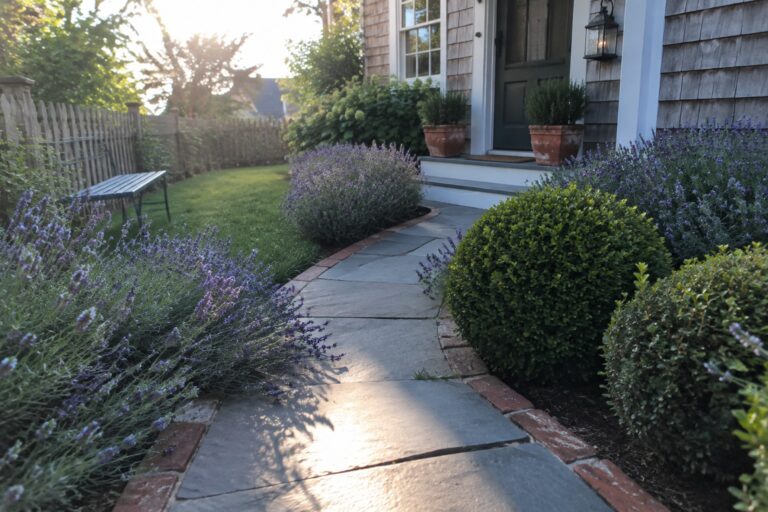
Lavender can bring color and fragrance to a small front yard, but the planting needs to fit the space rather than crowd the path or hide the entrance.
I find it helps to think about the yard in layers, with lavender shaping the edges while lower plants and open ground keep the layout from feeling too busy.
A clear walkway and tidy borders make a difference.
The ideas here show different ways to use lavender along paths, around steps, or in compact garden beds, with room to adapt the spacing and plant choices to your own home.
I’d start with an arrangement that suits the light and leaves enough space for the plants to spread over time.
Let Lavender Follow the Garden Path
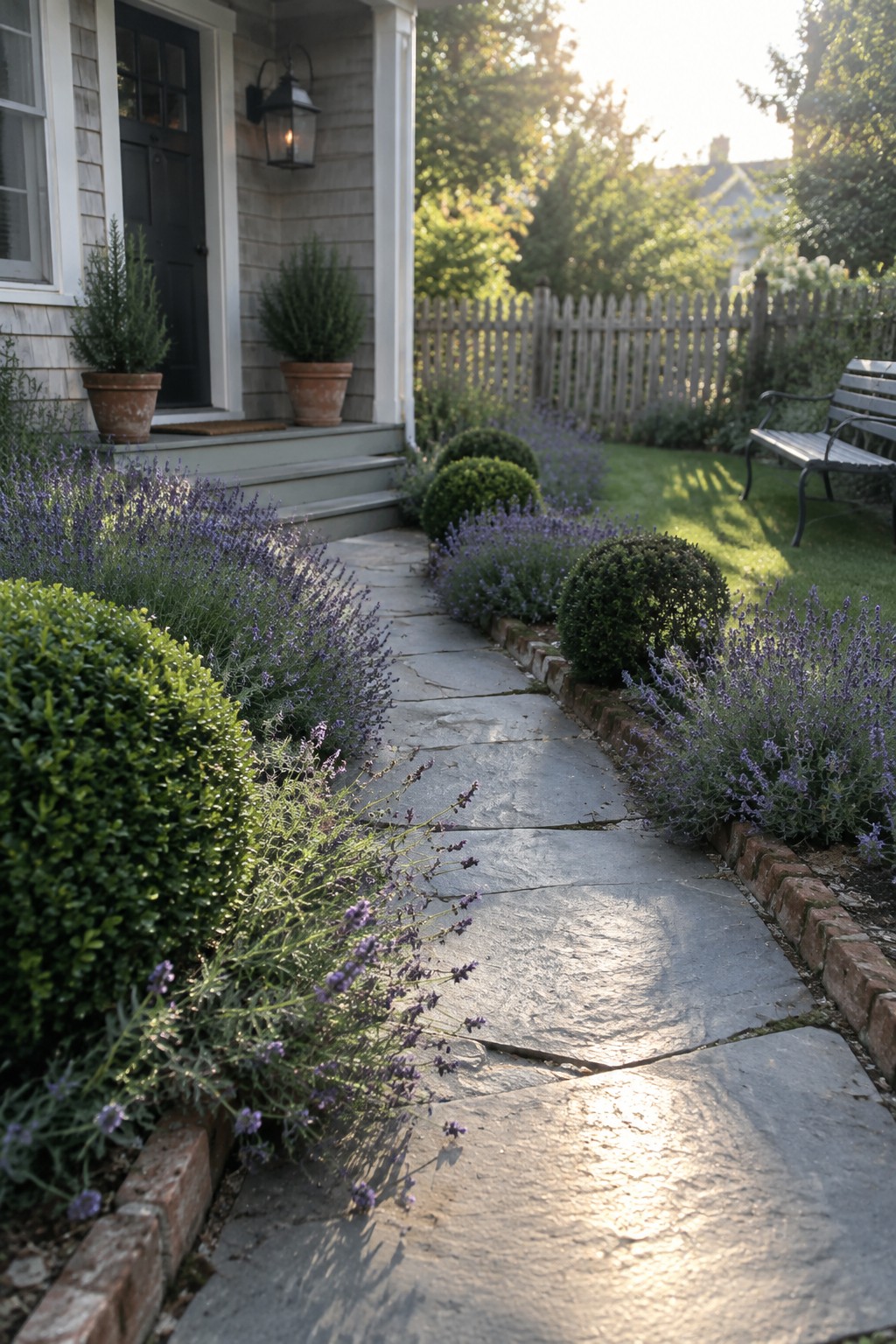
A gently curving path can make a small front yard feel more spacious and give lavender a clear place to grow. The stone walkway here bends through the planting rather than cutting straight across it, so the garden feels relaxed without losing its shape.
Use low lavender along the path’s edges, leaving enough room for plants to spread without narrowing the walkway. A simple brick border can help keep the bed tidy, especially where lavender grows near the paving.
Use Stepping Stones to Break Up a Gravel Garden

A gravel path can feel more welcoming when stepping stones give you a clear route to the front door. Lavender planted along the way adds color and helps the path feel like part of the garden, rather than a separate walkway.
For a small front yard, keep the stones wide enough for comfortable steps and leave a consistent gap between them. Choose low-growing lavender so it stays near the path without spilling over and making it hard to walk.
Use Curved Beds To Guide The Entry Path
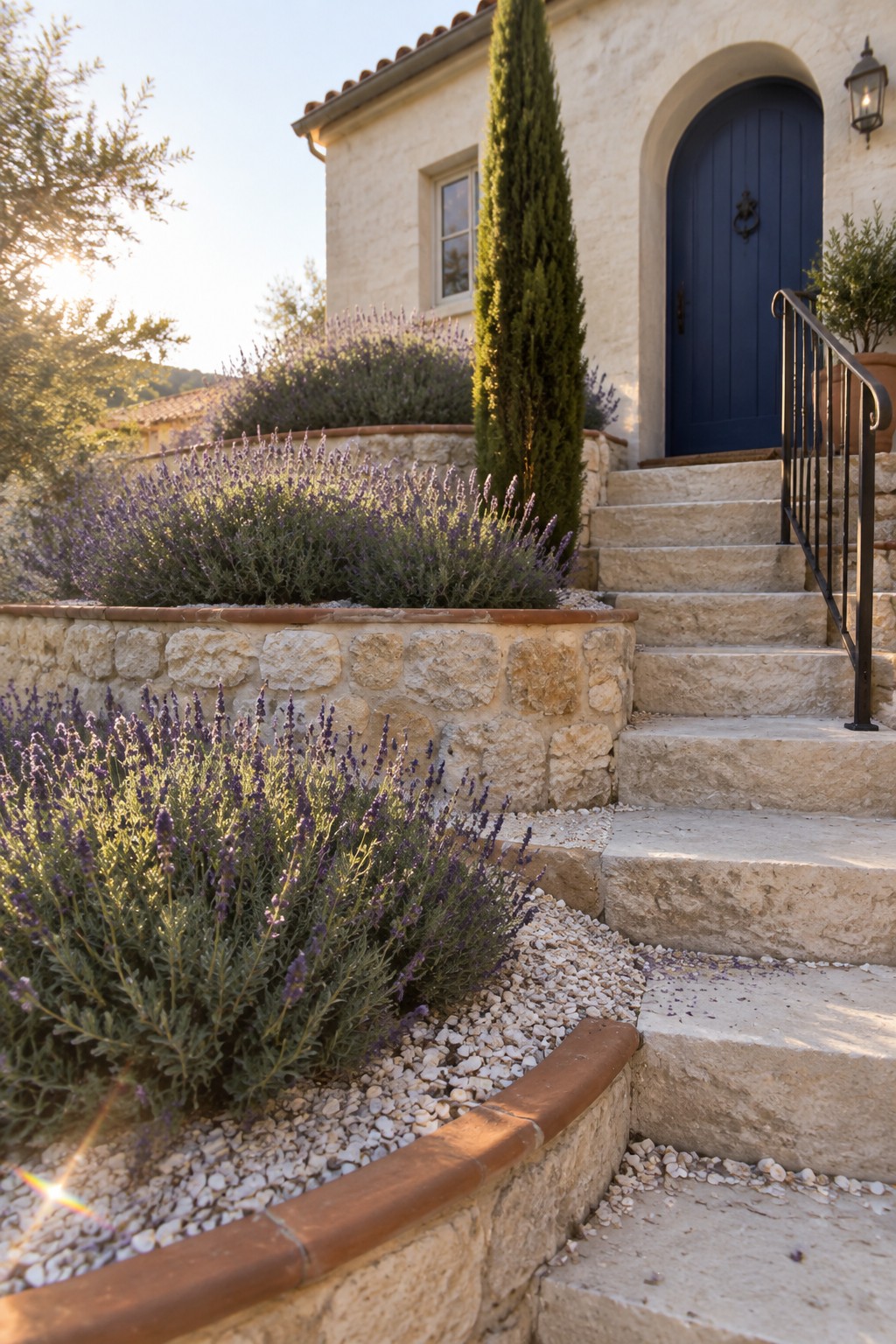
Curved planting beds can make a small front yard feel less like a narrow strip beside the walkway. Lavender works well along these edges, where its rounded shape and purple flowers give the path a clear, relaxed border.
Keep the bed wide enough for lavender to grow without spilling onto the steps, and leave room between plants for air to circulate. A low stone wall can help define the curve, but avoid making the planting too crowded.
Use A Brick Path To Guide The Planting
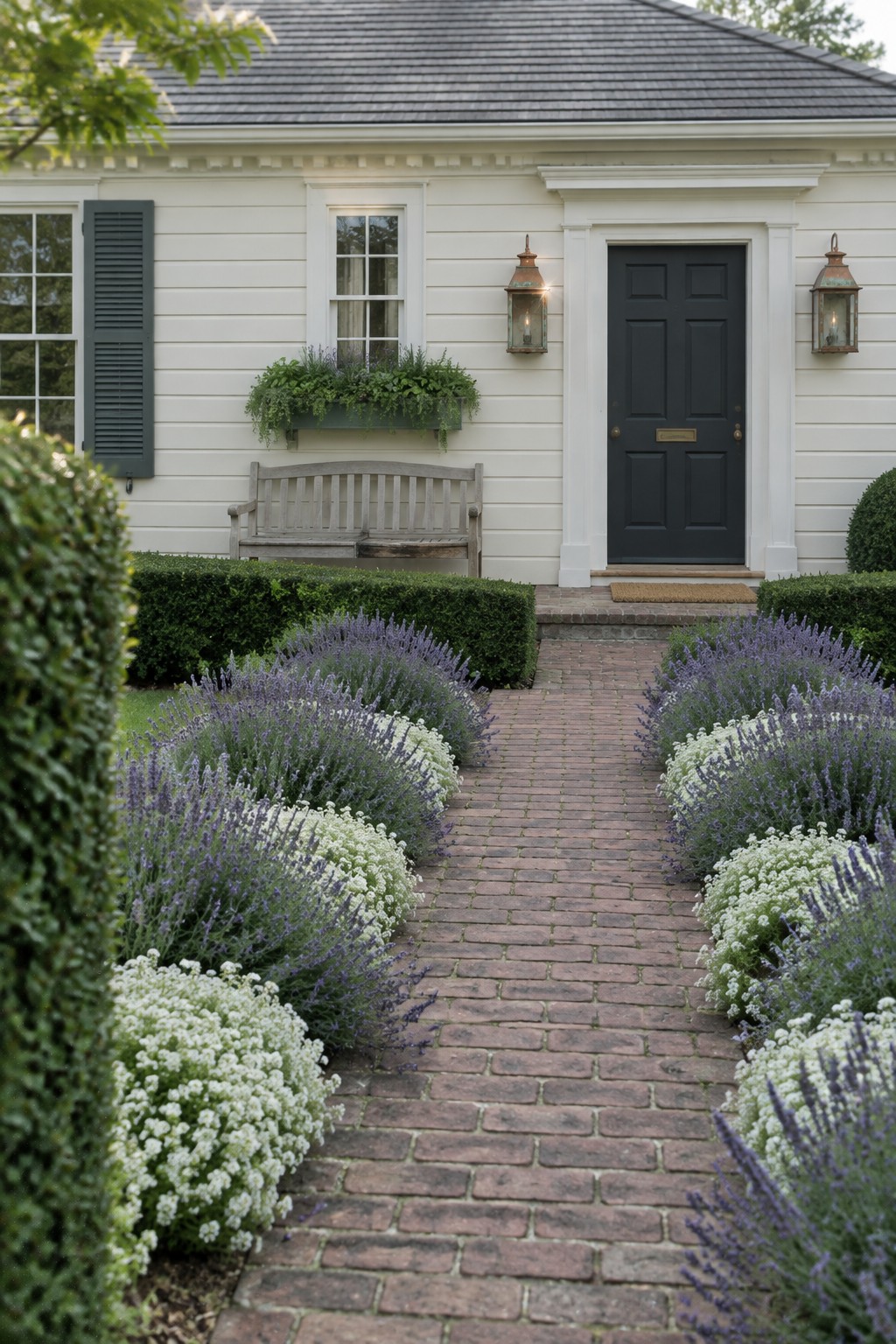
A brick path gives a small front garden a clear shape and makes it easy to reach the door. Lavender planted along the edges adds color and helps the walkway feel like part of the garden rather than a strip of paving.
For a similar look, leave enough room for the plants to spread without narrowing the path. Lavender suits a sunny, well-drained spot, and a few low white flowers nearby can provide contrast without crowding the walkway.
Use Stone Pavers to Make a Garden Path
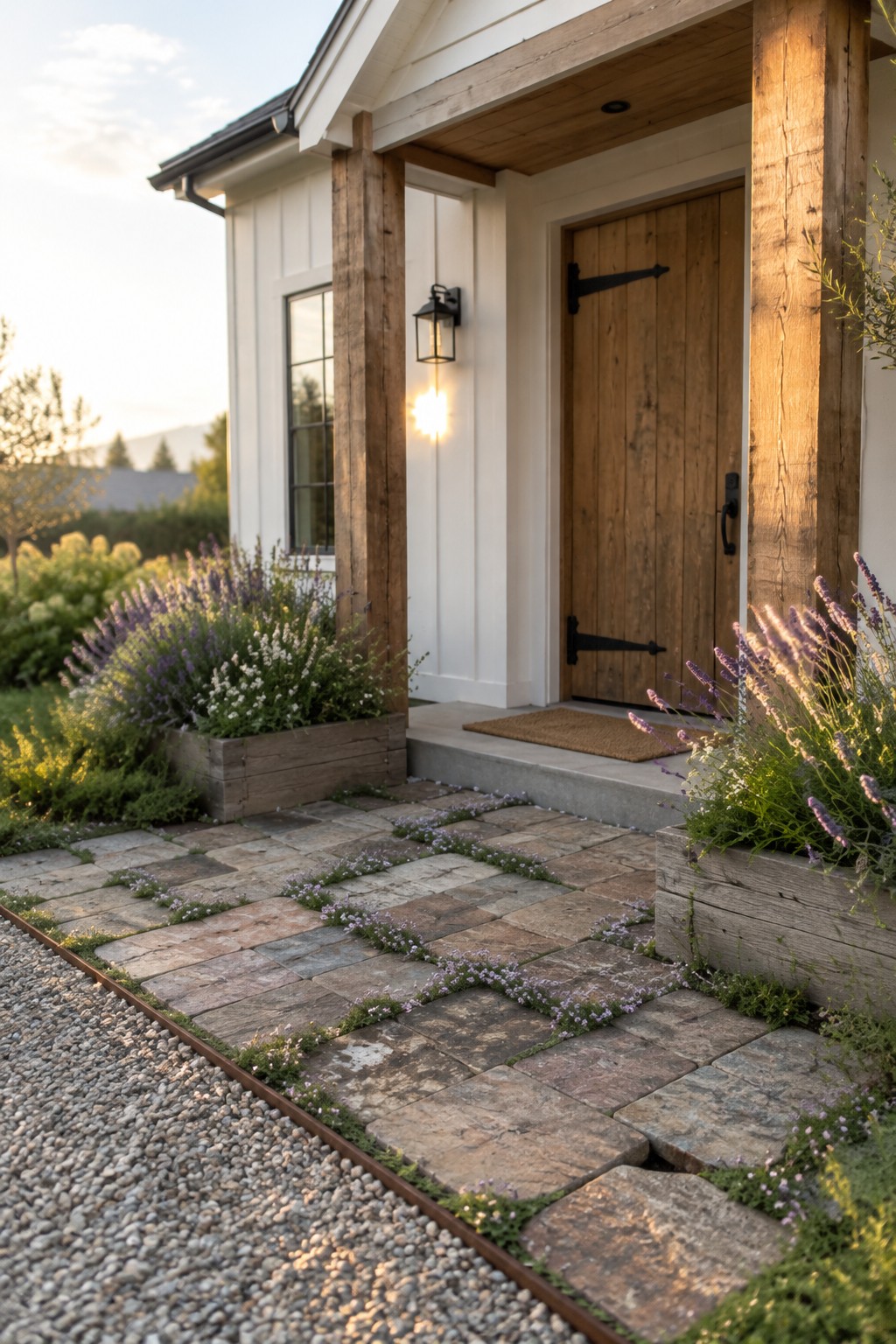
Stone pavers offer a practical way to guide visitors to the front door while leaving room for low-growing plants to spread between them. The mix of stone and greenery feels less formal than a solid paved walkway.
For a small front yard, lay broad pavers in a simple route from the sidewalk to the steps, with lavender or other low plants along the edges. Leave enough space between stones for easy footing, and keep the planting from creeping over the walking surface.
Plant Lavender Along a Stone Entry Path
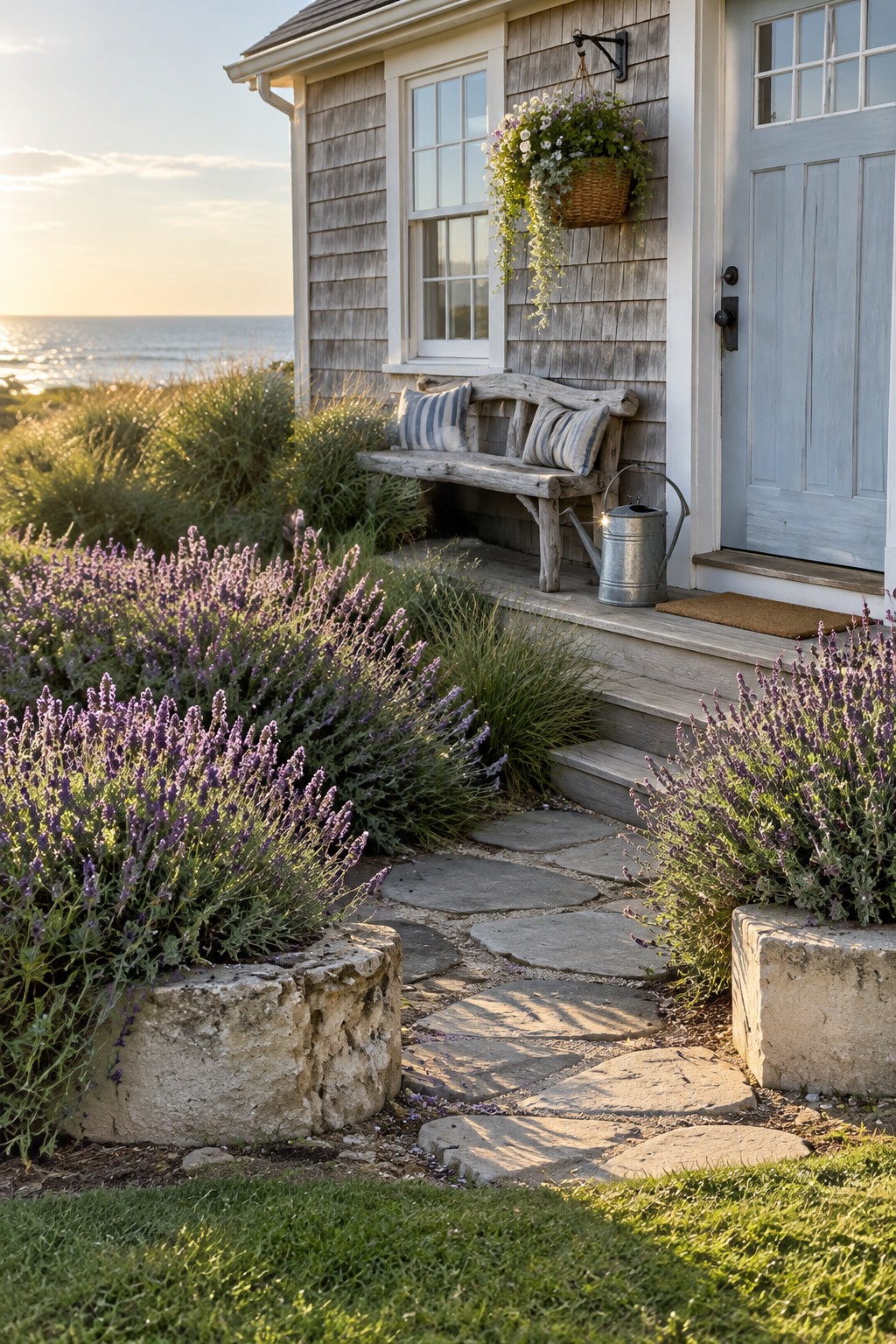
A simple stone path gives a small front yard a clear route to the door while leaving room for lavender on either side. The planting feels full without making the walkway hard to follow.
Use broad, irregular stepping stones and keep the lavender trimmed back from their edges. This approach suits a cottage-style entry, but leave enough space for the plants to spread without crowding the steps.
Use Gravel to Keep a Small Lavender Bed Simple
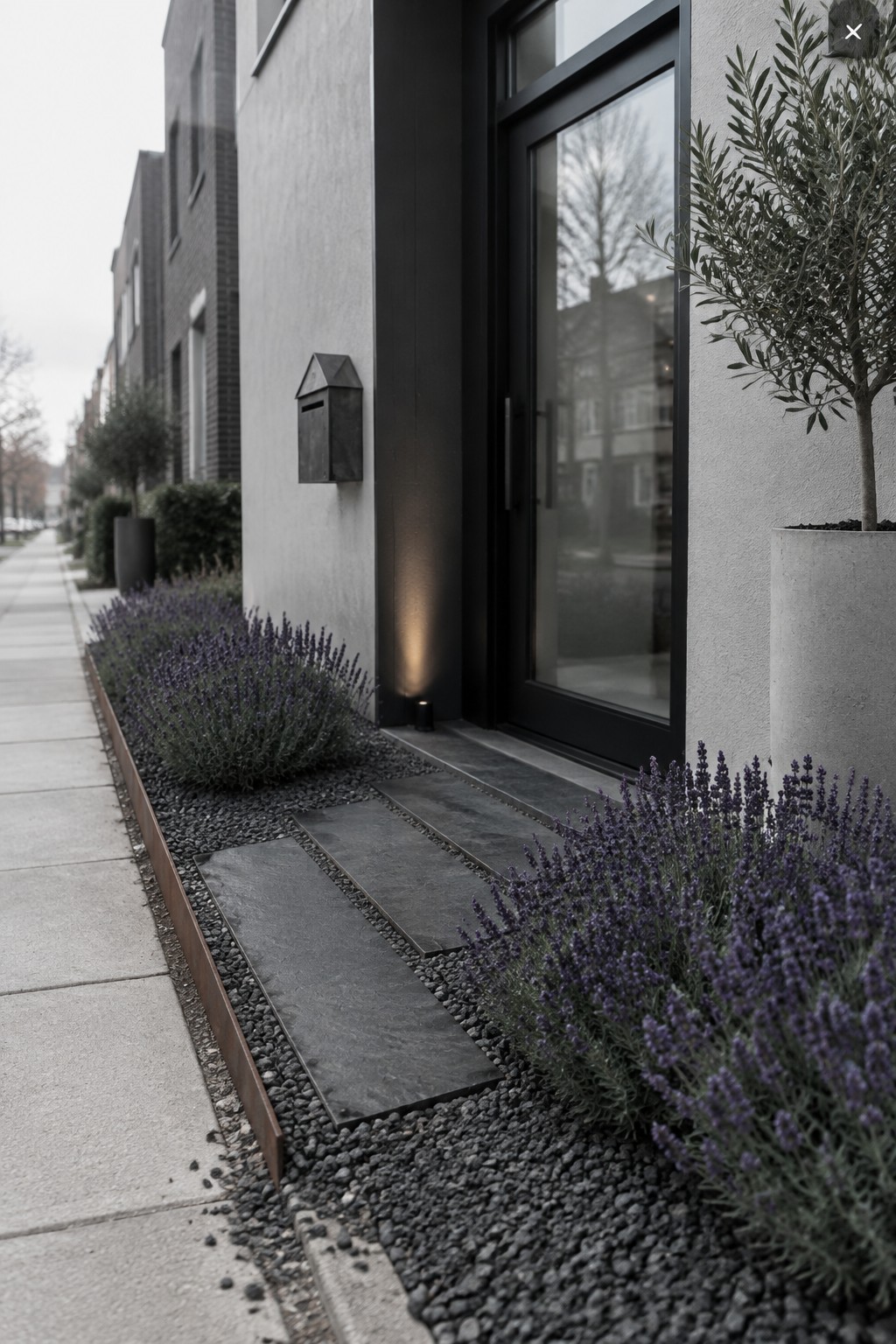
A narrow gravel bed is an easy way to make room for lavender without crowding a small front yard. The stones give the planting a tidy edge, while the purple flowers bring color close to the entry.
Use this approach along a walkway or beside a modern home, keeping the bed narrow so the path stays clear. A few large stepping stones can make it easier to reach the plants for trimming.
Use a Pebble Mosaic Path to Lead to the Front Door

A narrow pebble path gives a small front yard a clear route to the entrance without taking up much planting space. Its patterned surface also makes a simple walkway feel considered, while lavender beside it keeps the path connected to the garden.
This idea suits a compact entry where a straight route is more practical than winding stepping stones. Keep the path wide enough to walk comfortably, and use a firm, even surface so the pebbles stay in place.
Use Lavender to Line an Entry Stairway
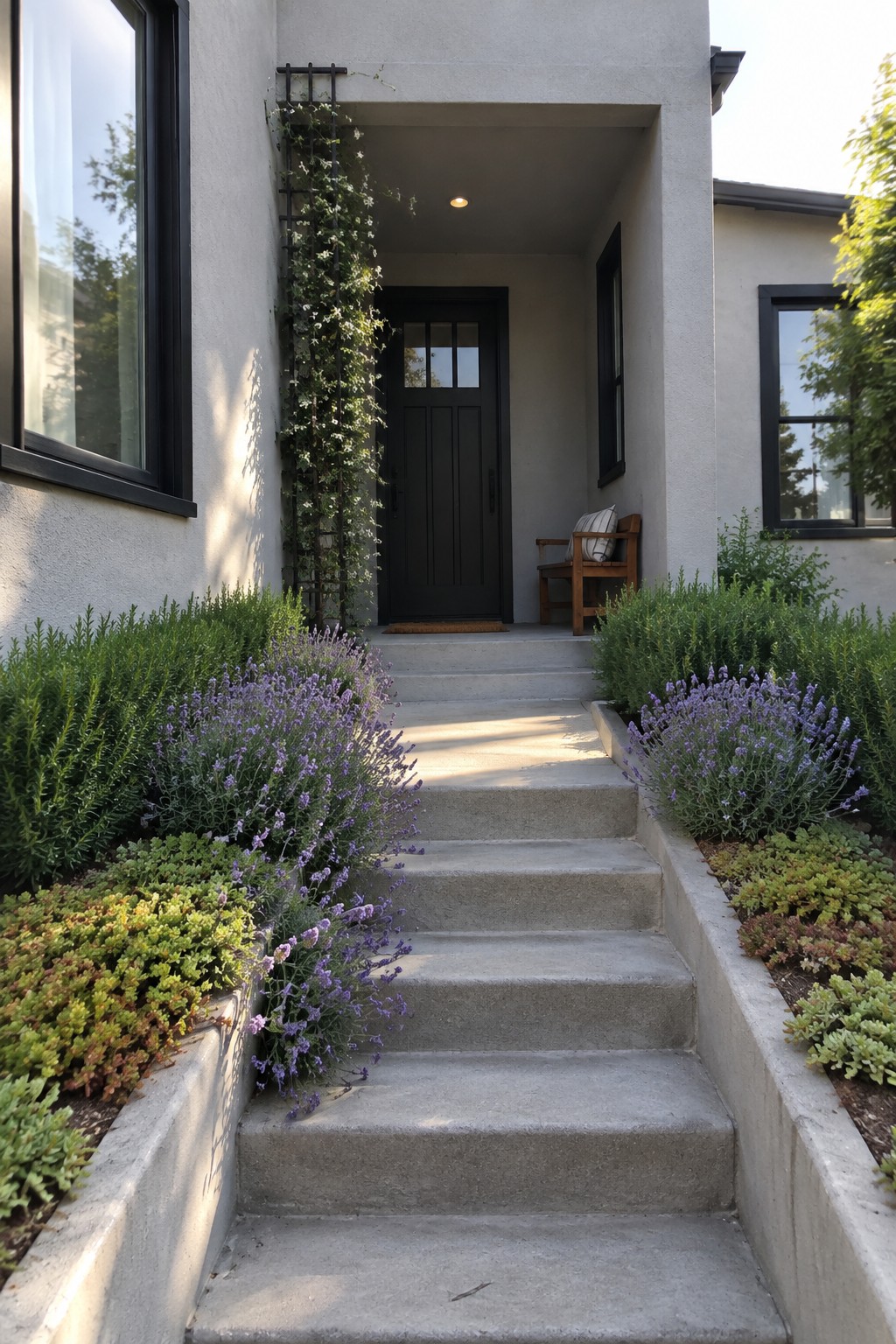
Lavender planted along both sides of an entry stairway gives a small front yard a clear, welcoming route to the door. Its purple blooms also make a simple set of concrete steps feel more connected to the garden.
Keep the plants in narrow beds beside the stairs, leaving enough room for walking and maintenance. A few compact varieties can suit a tight entry, and they are easier to manage than letting the planting spread across the path.
Use Lavender to Soften a Gravel Path
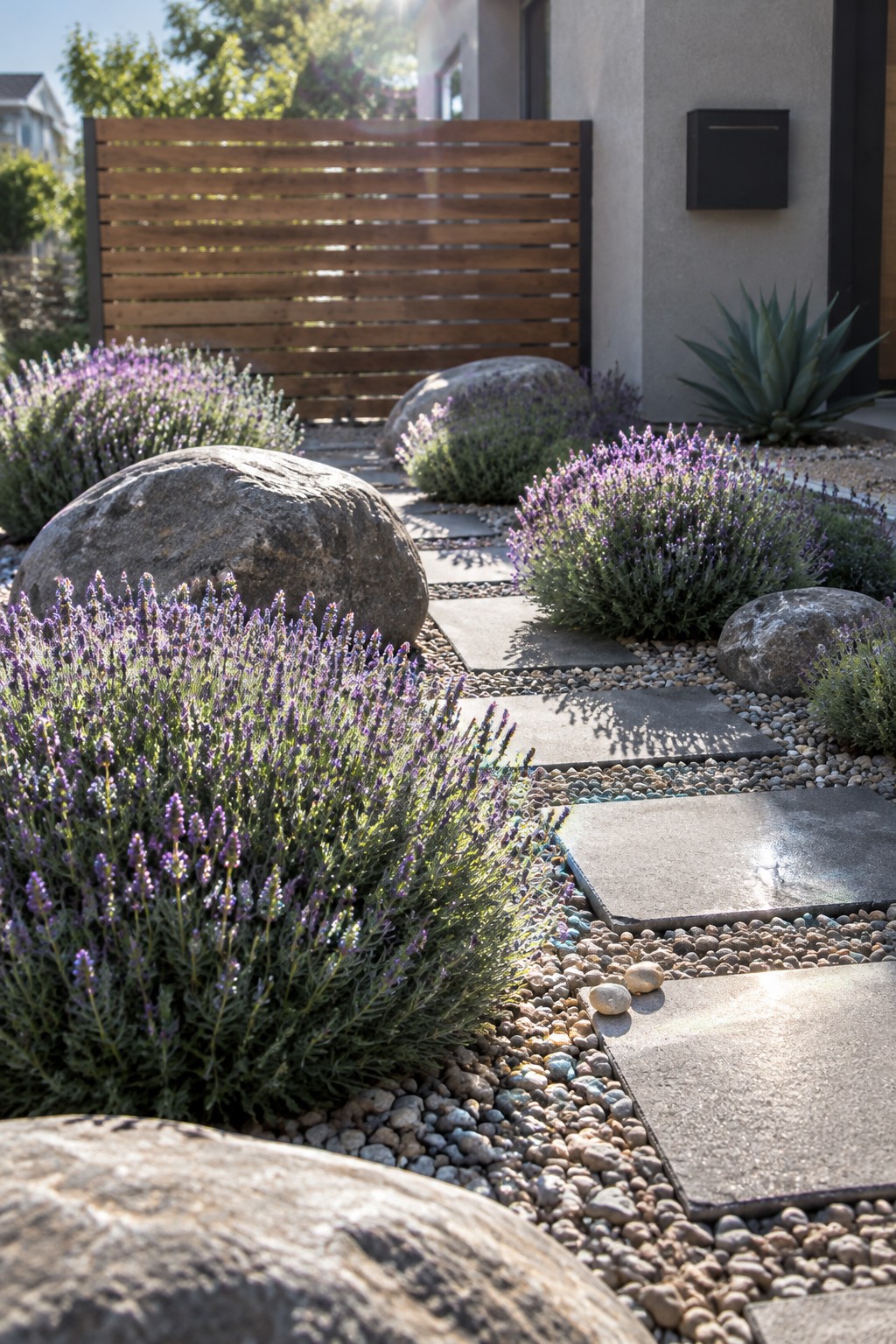
Gravel can be a practical choice for a small front yard, but it may look bare on its own. Planting lavender in rounded clumps beside the path gives the gravel garden a softer edge and brings in color without taking up much room.
Leave enough space between plants so they can grow without crowding the stepping stones. Lavender suits a sunny, well-drained spot, and gravel helps keep the area tidy, but avoid overwatering since the plants prefer soil that dries out between waterings.
Use a Curved Bed to Shape a Small Front Garden
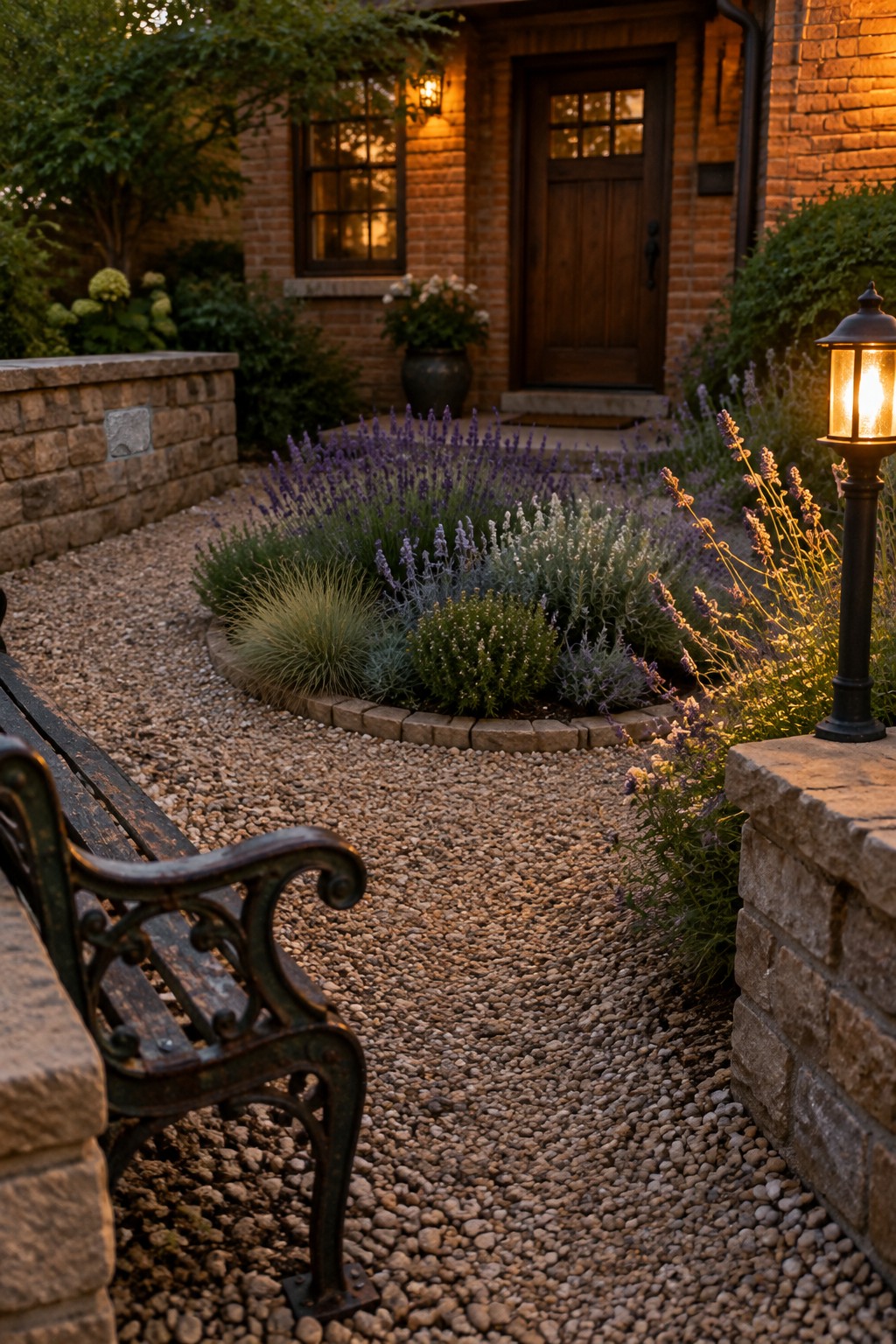
A curved planting bed can make a narrow entry garden feel less like a strip along the path. Here, the rounded edge gives the lavender and grasses a clear place to grow while leaving plenty of room to walk.
Use a similar shape beside a gravel path or near the front steps, and keep the bed modest so it does not crowd the route to the door. Lavender works well near the front edge, where its flowers are easy to see and enjoy.
Use Large Stepping Stones Through Lavender
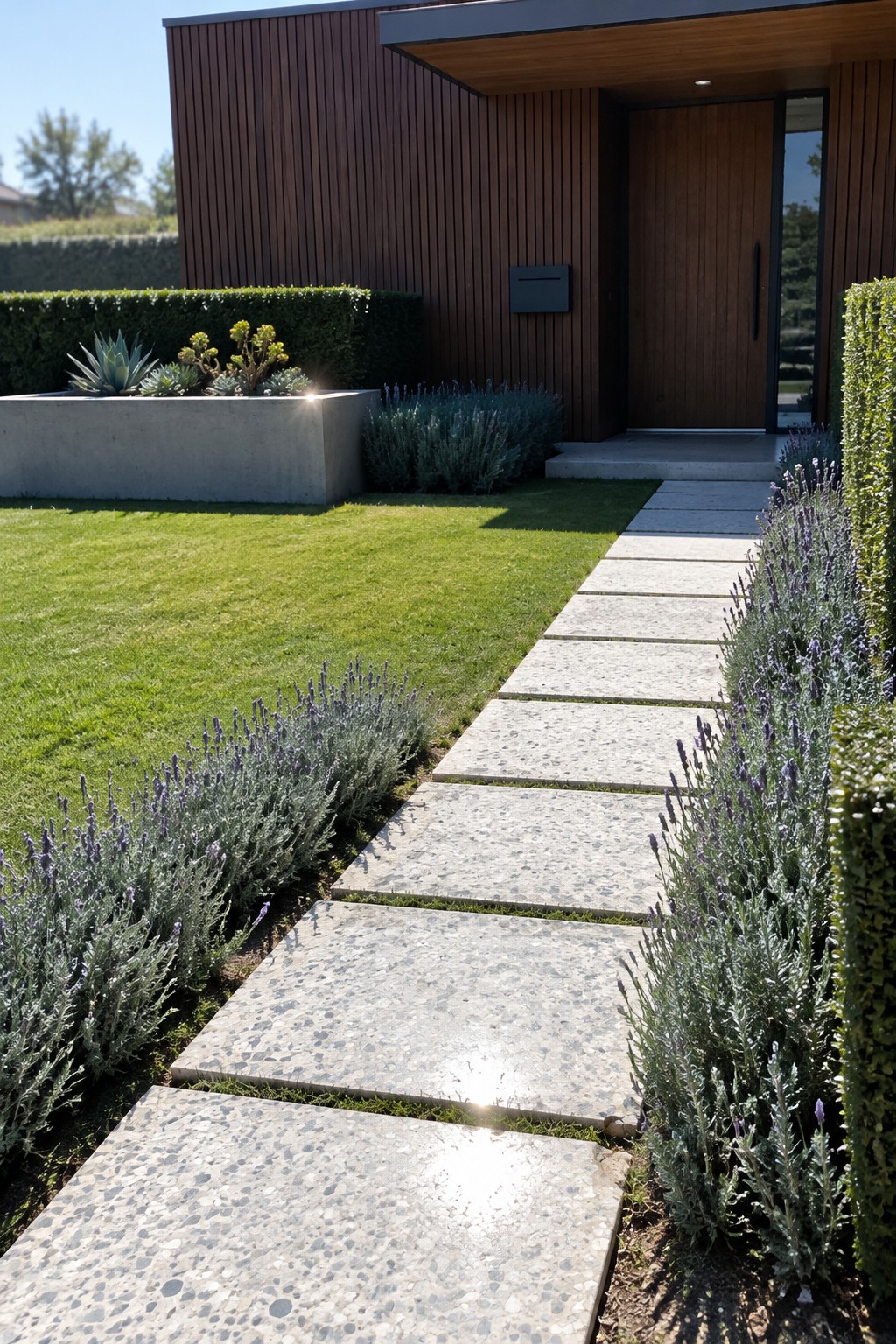
Large stone slabs make a small front yard easier to walk through without turning the path into a solid strip of paving. Lavender planted along the edges gives the route a clear shape and keeps the hardscape from taking over.
Leave enough room between stones for the plants to grow without spilling across the walking surface. This approach works well for a simple entry path, especially where a straight route suits the front yard.
Use Lavender to Edge a Stepping-Stone Path
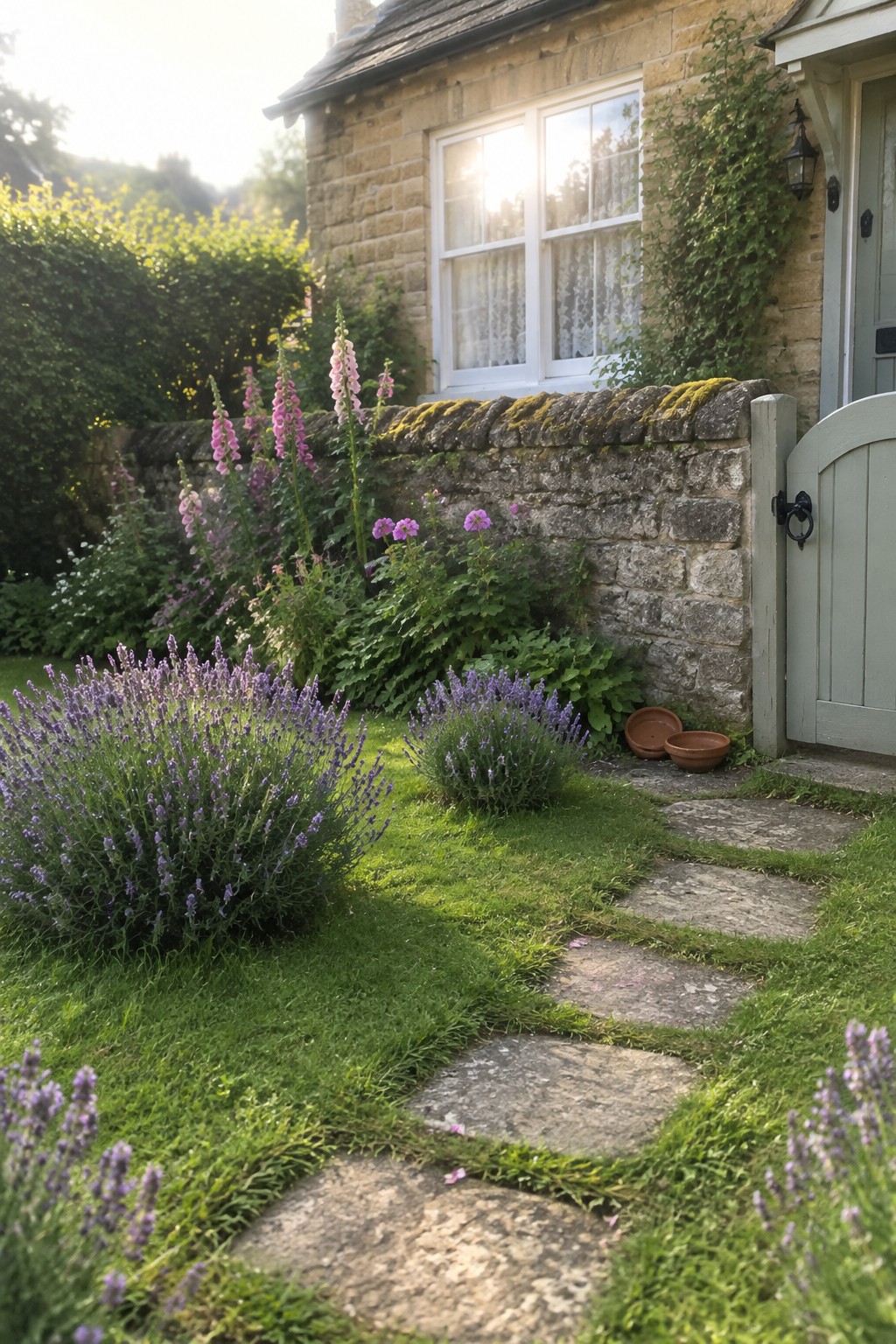
A stepping-stone path gives a small front yard a clear route to the door without covering much of the lawn. Lavender planted along its edges helps the stones feel like part of the garden rather than a walkway set apart from it.
Leave enough space between plants and stones so lavender can spread without spilling across the walking surface. This approach suits cottage-style entries and works best when the path is wide enough to walk comfortably.
Use Lavender to Edge a Front Entry
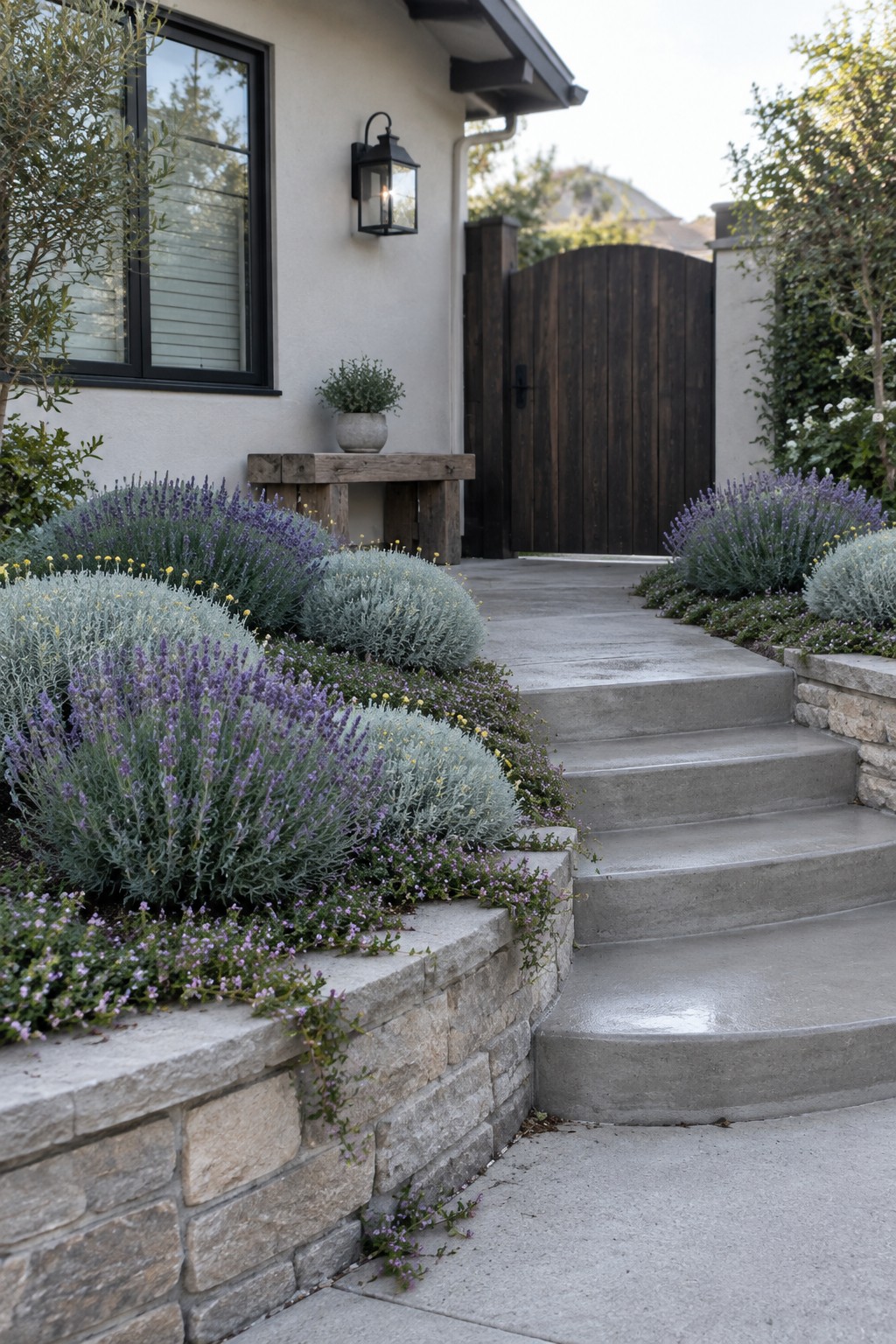
Lavender can make a small entry garden feel orderly without needing a lot of space. Planting it along the steps gives the walkway a clear edge, while its purple flowers bring color close to the front door.
Use a few compact varieties in a continuous bed, leaving enough room for them to spread and for people to walk comfortably. A low stone retaining wall can help keep the planting contained on a sloped entry.
Use Lavender To Line The Entry Steps
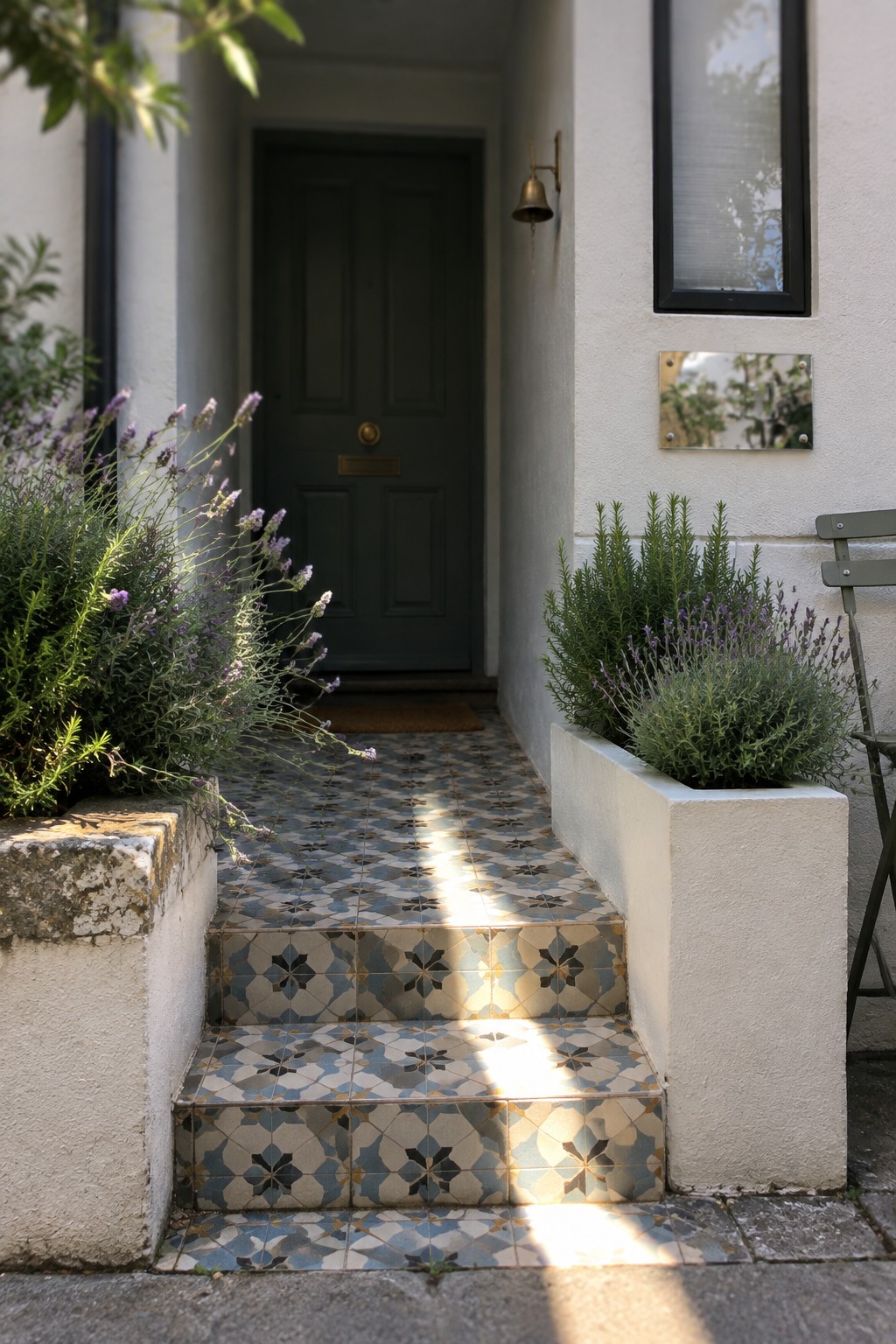
Lavender planted along an entry stairway makes a small front yard feel connected to the front door. Its purple flowers and tidy shape bring color close to the house without needing a large garden bed.
Plant it beside the steps where it has plenty of sun and well-drained soil. Leave enough room for the plants to spread, and keep them trimmed back so they do not crowd the stairs.
Use a Stone Path to Lead to the Front Door

A stone path can make a small front garden feel easy to walk through without taking up much planting space. Broad, irregular pavers give the route a relaxed look, while lavender and other low flowers can grow close along the edges.
Leave enough room between stones for comfortable steps, and keep the planting trimmed back so it does not crowd the walkway. This approach works especially well where a short path connects the sidewalk to a raised entry.
Frequently Asked Questions
Q: Will lavender grow in a small front yard with some afternoon shade?
A: Lavender blooms best in full sun, so aim for a spot that gets at least six hours of direct light. If your yard is partly shaded, try it in the sunniest, driest area and expect fewer flowers.
Q: How far apart should I plant lavender along a walkway?
A: Check the mature width of your variety, then leave enough room for plants to grow without spilling across the path. Small lavender varieties often work well about 18 to 24 inches apart.
Q: Can I grow lavender in pots by my front door?
A: Yes. Choose a pot with drainage holes and use a loose, well-draining mix. Water when the soil feels dry rather than keeping it constantly moist.
Q: What can I plant with lavender in a small border?
A: Pair it with compact plants that also enjoy sun and dry soil, such as creeping thyme or low-growing ornamental grasses. Keep the neighbors modest in size so the lavender still has room to breathe.
