

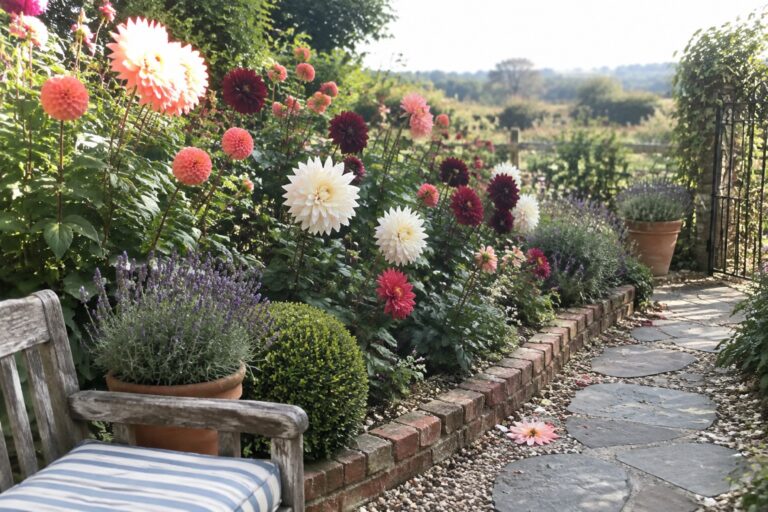
Dahlias bring a lot of color to a summer garden, so the way I arrange them matters as much as the varieties I choose.
I like beds that balance their bold blooms with greenery and a little breathing room, rather than crowding every plant together.
The first thing people tend to notice is the overall shape of the bed, especially where taller flowers sit and how the edges meet a path or lawn.
A clear layout also makes it easier to reach the plants for watering, deadheading, and support as the dahlias grow.
Some of these ideas are worth adapting to the space and sunlight you have, even if you start with just one small bed.
Plant Dahlias Along a Garden Path
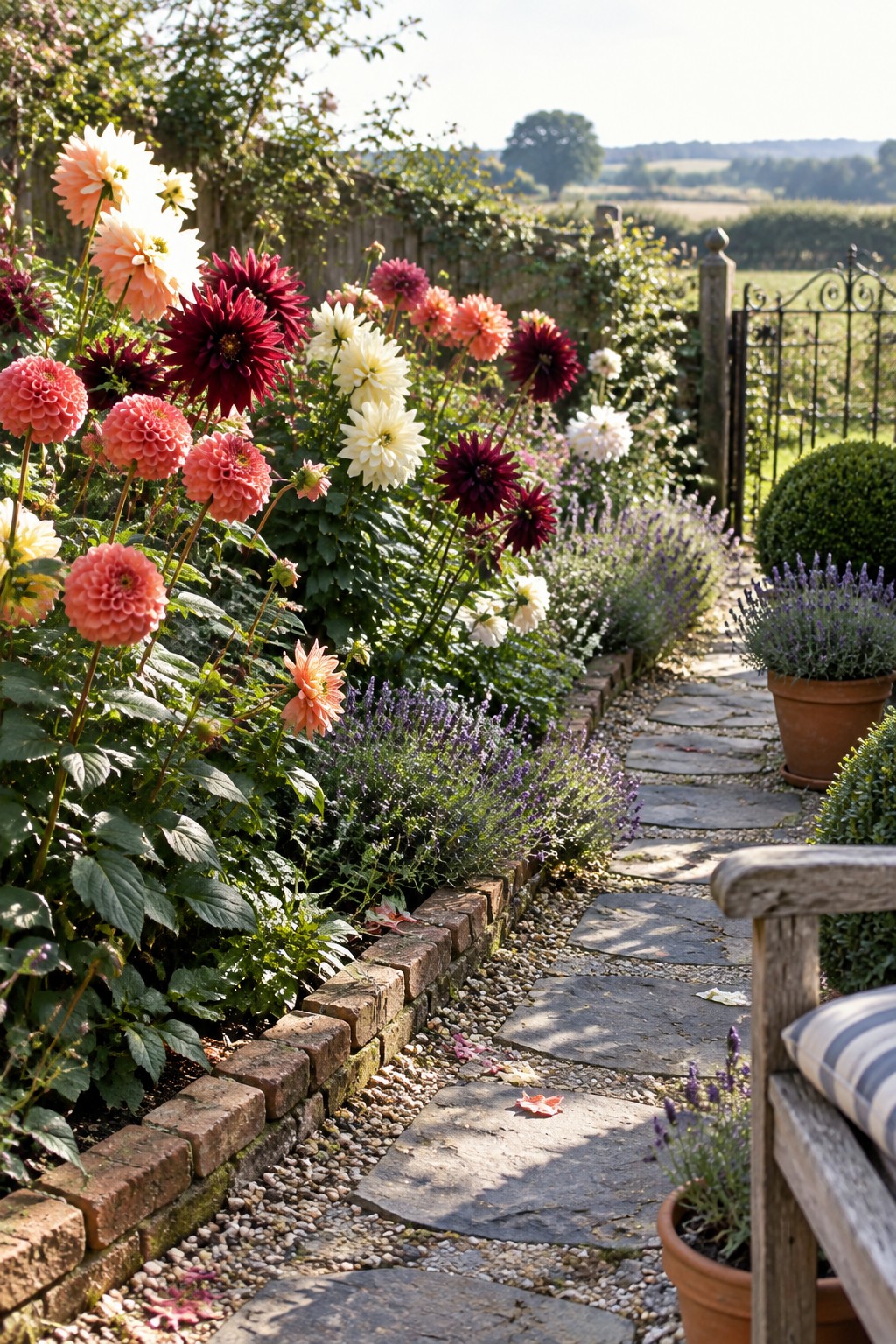
A dahlia bed beside a path lets you enjoy the flowers up close, while the walkway gives the planting a clear edge. Mixing bloom shapes and colors makes the bed feel lively without needing a complicated layout.
Keep taller dahlias toward the back and shorter plants near the path so the blooms are easy to see and the walkway stays open. A low brick border can help keep soil and plants in place, especially along a narrow path.
Give Dahlias a Dedicated Raised Bed

A raised bed gives dahlias their own space and makes it easier to group flowers by height or color. Here, the long metal bed keeps the planting organized while letting the blooms fill the garden.
This approach works well in a narrow yard where a defined bed can sit beside a simple path. Leave enough room to reach the plants for watering, tying up stems, and lifting tubers at the end of the season.
Use Formal Beds to Grow Dahlias

A formal garden layout can give dahlias a clear place to shine. Low clipped hedges divide the beds into neat shapes, so the flowers can bring color and a looser feel without the whole garden looking untidy.
Use this approach where you have room for defined beds and paths, such as a courtyard or a garden with a strong central axis. Plant dahlias in groups within the edged beds, and leave enough space to reach them for staking and deadheading.
Plant Dahlias Along a Poolside Bed

A narrow flower bed beside a pool can bring bright color right to the edge of a paved seating area. Dahlias are a good choice for the sunny parts of the bed, where their blooms can stand out without taking over the whole garden.
Leave enough room between the flowers and the pool edge to reach plants for watering and deadheading. The dahlias shown here grow among broad-leaved plants, but keep taller stems from leaning over the walkway or into the water.
Use Stone Walls to Create Dahlia Bed Levels

Terraced beds let you grow dahlias on a sloped yard without making the planting area feel like one long, steep strip. A low stone retaining wall gives each level a clear edge, so the flowers can be planted in generous groups.
This approach works best where a slope needs support and you want the beds to stay easy to reach. Leave enough room between the wall and the plants for stems to spread, and make sure water can drain through the soil.
Layer Dahlias Into a Cottage-Style Border
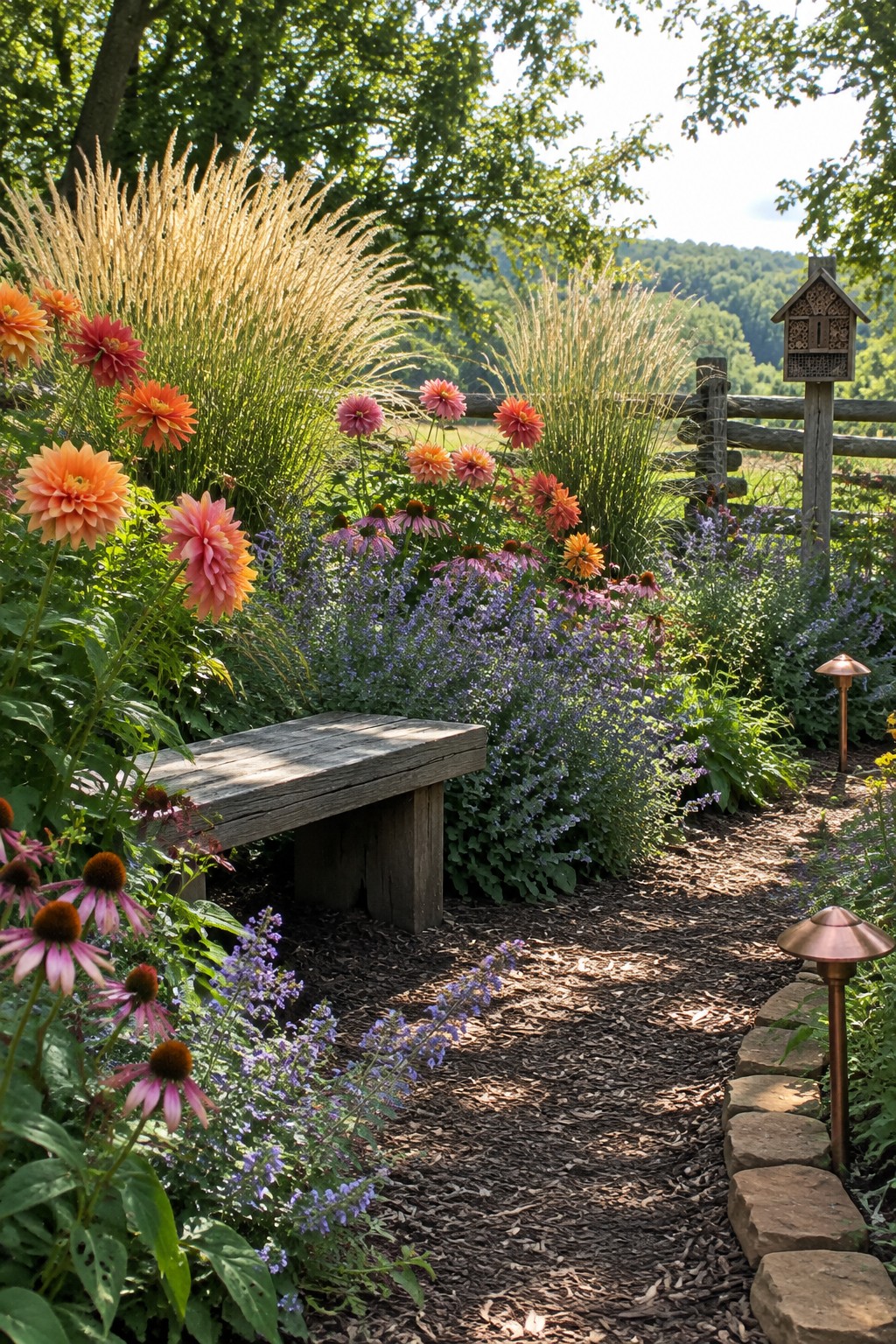
Dahlias stand out in a border when they grow among plants of different heights and textures. Tall ornamental grasses and lower purple flowers make the bed feel full without giving every plant the same job.
Use dahlias as the mid-height color in a mixed border, with taller plants behind them and smaller blooms near the edge. Leave enough room for air to move around the dahlia stems, especially in a dense bed.
Grow Dahlias in a Narrow Fence-Side Bed

A narrow bed along a fence is a useful way to grow dahlias when there isn’t room for a wide garden. The fence gives the planting a clear edge, while flowers at different heights help the slim space feel full rather than crowded.
Leave enough room to reach the plants for watering and deadheading, especially if the path beside the bed is narrow. A few wooden planter boxes can help define the planting area and keep soil contained.
Grow Dahlias in a Coastal Gravel Garden

A gravel garden can be a practical home for dahlias, especially where you want flowers without a large stretch of lawn or a formal border. Their broad blooms stand out against low, silvery foliage and the simpler ground cover.
Set the dahlias in a defined bed, then use gravel around the planting to keep the layout tidy and make access easier. Choose a spot with enough sun, and check that the soil beneath the gravel drains well so the tubers are not left sitting in water.
Add Dahlias Along a Stepping-Stone Path
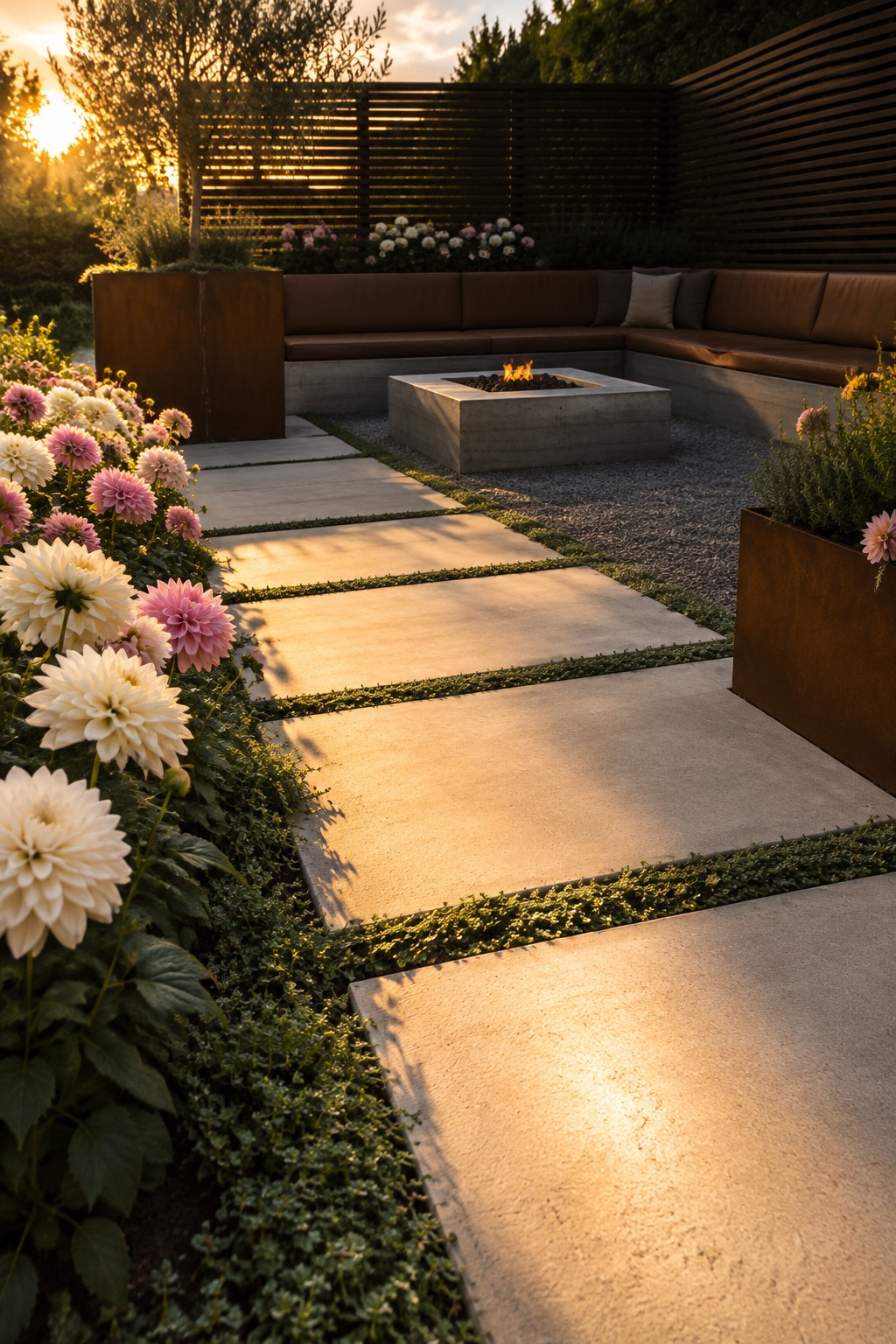
A stepping-stone path gives a dahlia bed a clear edge while leaving plenty of room for flowers to grow alongside it. The broad, simple slabs make a practical route through the garden, and dahlias can bring color right up to the walkway.
Leave enough space between the path and the plants so mature dahlias do not spill across the stones. This approach works well in a garden with a defined route to a seating area or patio, especially when the path is wide enough to walk comfortably.
Use Dahlias in a Curved Front Garden Bed

A curved bed along the front walk gives dahlias room to grow while keeping the garden connected to the house. The low brick edging makes the bed’s shape easy to see, and the mix of flower heights keeps a large planting from looking too uniform.
For a similar look, plant taller dahlias toward the back and shorter flowers along the edge. This works well beside a walkway or driveway, but leave enough space for the plants to spread without crowding the path.
Grow Dahlias in a Compact Side Garden
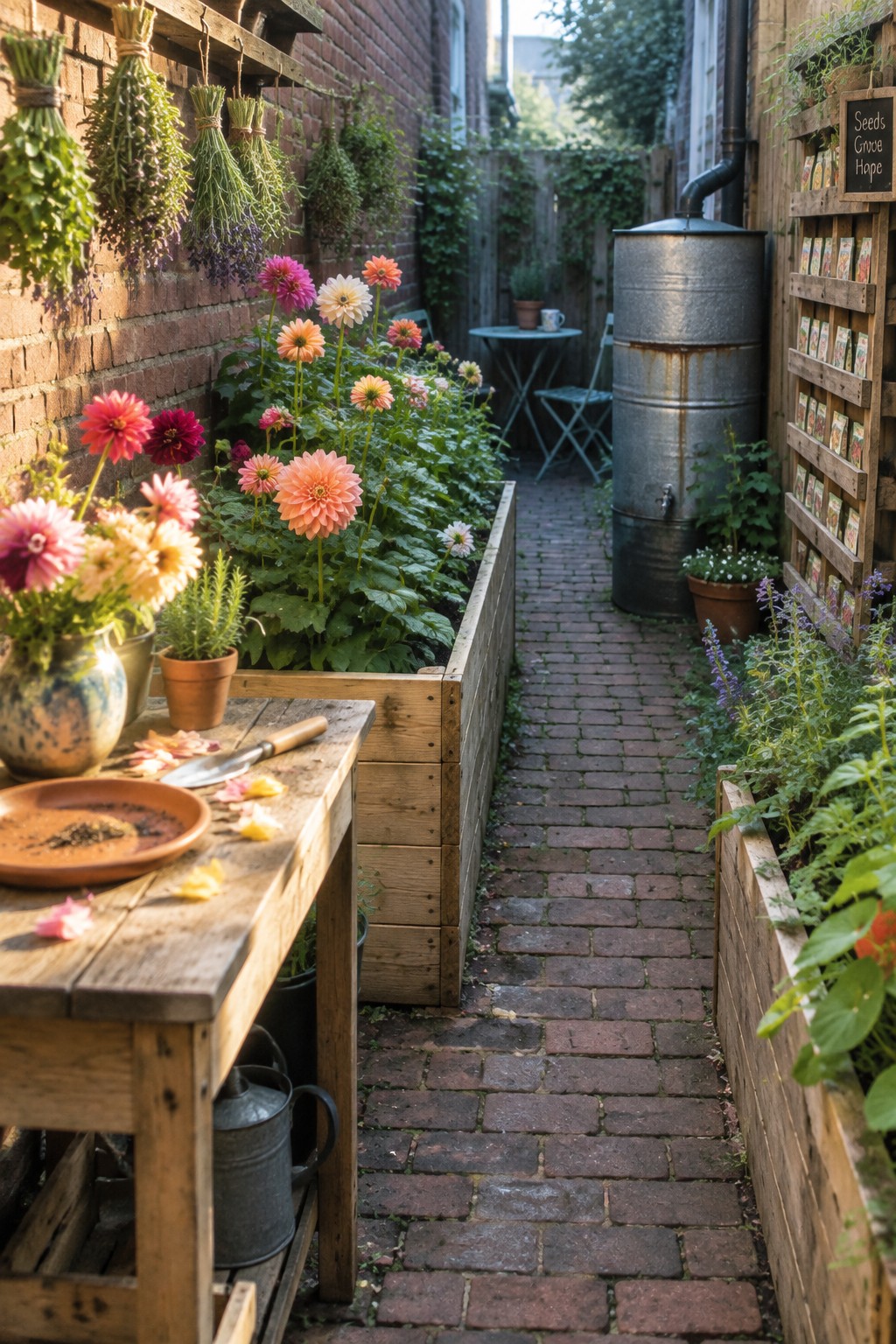
A narrow side garden can still hold a generous dahlia bed. Planting in a raised bed keeps flowers close together and gives them room to grow without taking over the brick path.
Use this layout where space is limited, but leave enough width for an easy-to-use walkway. Dahlias need regular watering and sturdy support, so make sure you can reach the plants for care.
Grow Dahlias in Large Patio Pots

Dahlias can bring plenty of color to a small patio when you grow them in generous containers. Large terracotta pots let the flowers fill out without needing a garden bed, and you can move the pots if the layout needs a change.
Choose a container with good drainage and enough room for the dahlia’s roots. Group a few pots near a dining area or along a sunny wall, but leave space to walk and pull up the tubers at the end of the season.
Edge a Dahlia Bed With Natural Stone
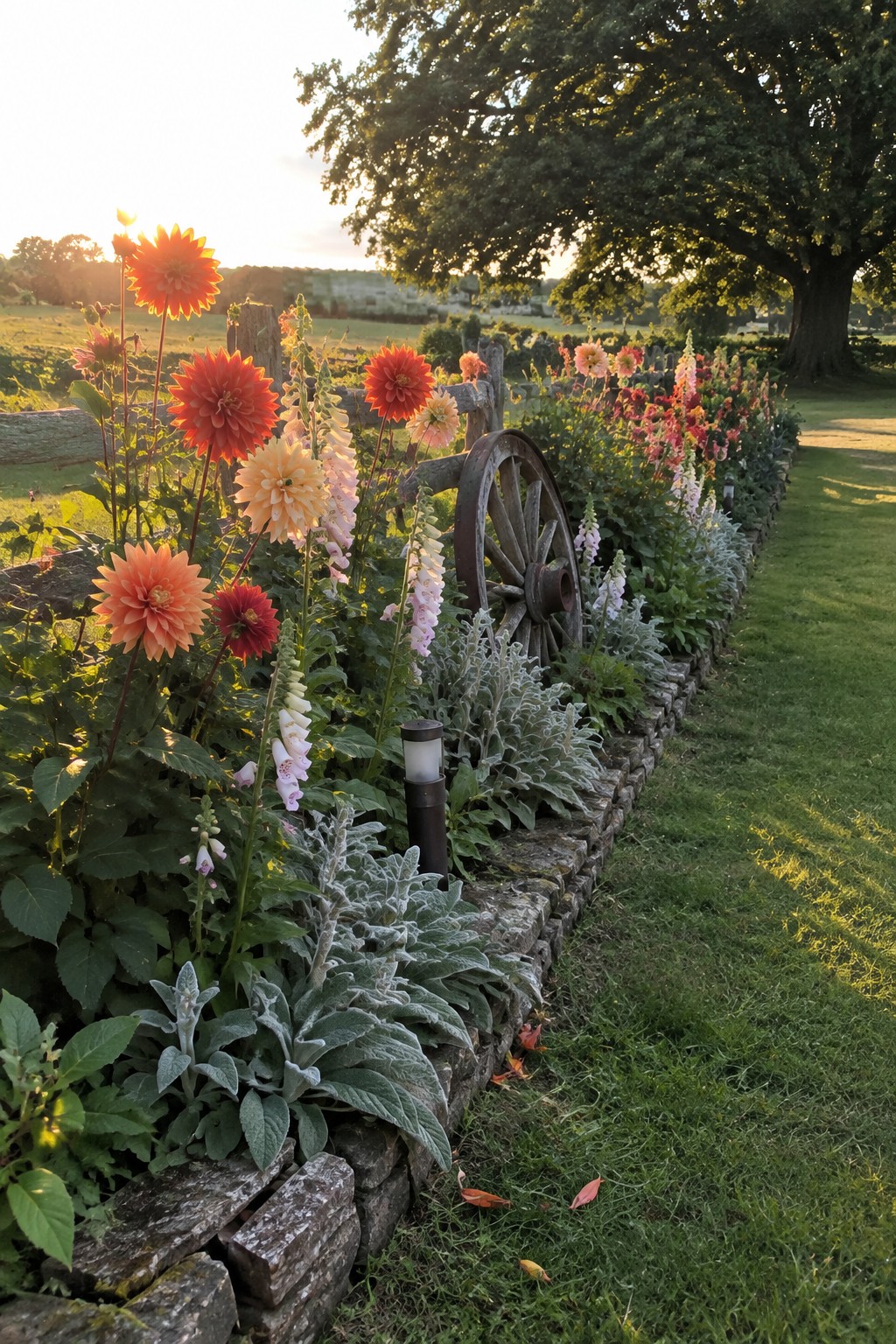
A low stone edge gives a flower bed a clear shape and helps keep soil and plants separate from the lawn. It also suits dahlias, which can grow tall and full through summer.
Use rough stone for a relaxed country garden, and keep the bed wide enough for plants to fill out without crowding the edge. A few dahlias can provide bold color among other flowers, while a large tree nearby may cast enough shade to limit their blooms.
Grow Dahlias in a Tiered Garden Bed

A sloped garden can make room for more dahlias by using raised beds at different levels. The terraced layout gives each group of flowers its own space, so the planting feels organized instead of crowded.
Use sturdy retaining boards to hold the soil on a gentle slope, and leave a clear path or steps for access. Dahlias need room to grow and regular watering, so make sure the beds are easy to reach and have good drainage.
Make Dahlias Part of a Working Garden

A narrow flower bed beside a garden work area can make dahlias easy to enjoy and tend. Planting them along the gravel path brings the flowers close without taking up much room.
This layout suits a side yard or a small garden beside a shed. Leave enough space for the plants to spread, and keep the path wide enough to carry tools and move around comfortably.
Use Stone Edging to Define a Dahlia Bed

A low stone edge gives a flower bed a clear shape and keeps it distinct from the path beside it. The stones also make a natural border for tall dahlias, which can otherwise look a little loose in a leafy garden.
Use this idea where a bed meets a walkway or lawn, and choose stones that suit the house and garden style. Leave enough room inside the edge for dahlias to grow and for you to reach in for staking and deadheading.
Repeat Dahlias Along a Long Street-Side Bed
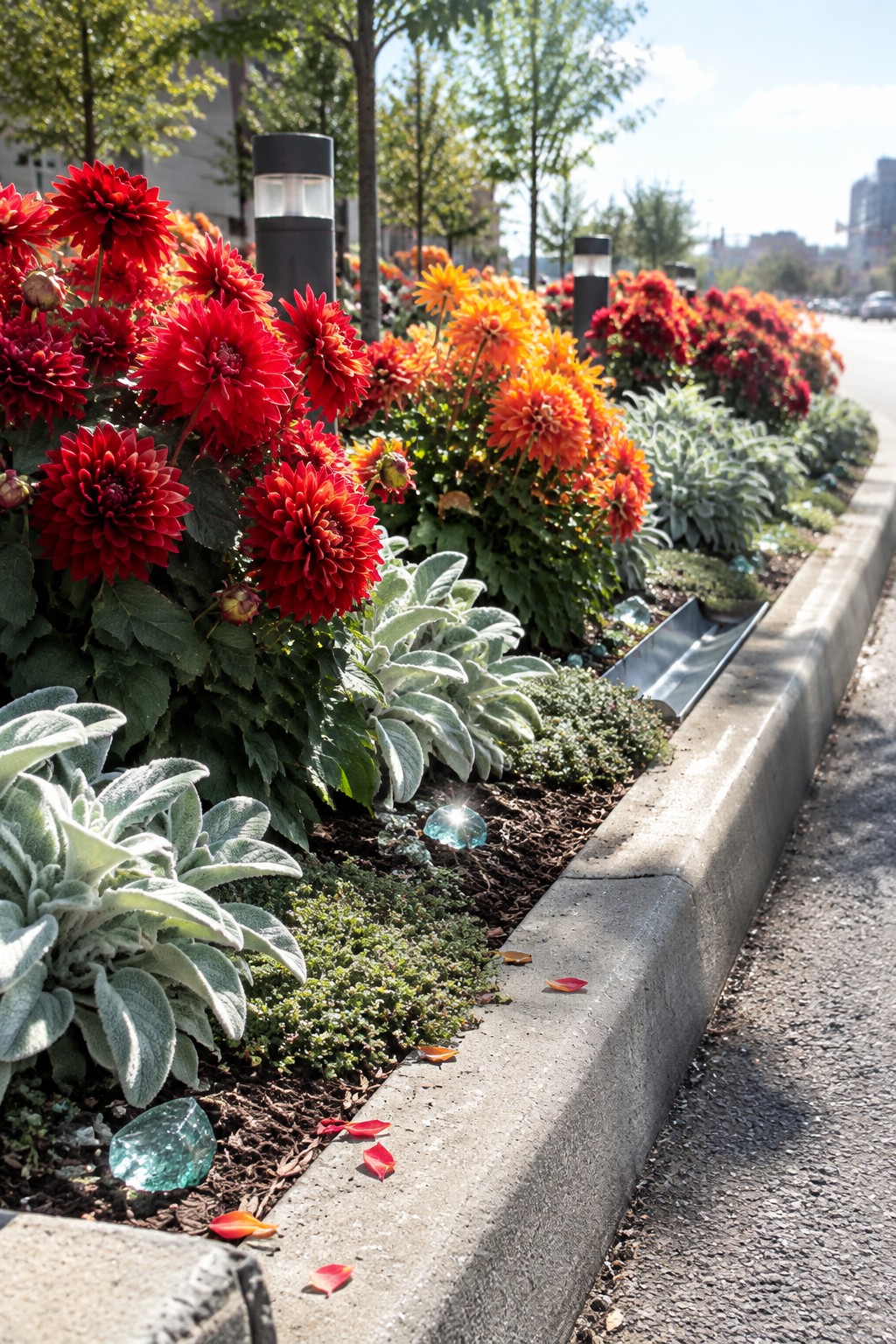
A long, narrow flower bed can make dahlias feel like part of the landscape rather than a single bright clump. Repeating red and orange blooms down the bed gives the planting a steady rhythm and lets the colors carry through the garden.
This approach works well beside a sidewalk or driveway, where a continuous bed can be seen from several angles. Leave enough room between plants for airflow, and keep the edge simple so the dahlias remain easy to reach for cutting and care.
Plant Dahlias Beside a Patio Dining Area

A flower bed along the edge of a patio can bring dahlias close to the places where people sit and eat. The flowers add color without taking over the seating area, and a curved bed edge can help the planting feel like a natural part of the yard.
This layout works well when there’s enough space for chairs to move back without bumping into plants. Leave a clear paved route around the table, and choose dahlias that won’t grow so tall or wide that they crowd the patio.
Grow Dahlias in a Long Balcony Planter

Dahlias can turn a narrow balcony into a small summer garden when they grow in a long planter along the railing. The row of blooms makes good use of limited space, while keeping the seating area open.
Choose a sturdy, deep planter and leave enough room between plants for air to circulate. Dahlias need regular watering in containers, so check the soil often during warm weather.
Grow Dahlias in a Working Garden

A dahlia bed can be part of a productive garden rather than a separate showpiece. Mixing dahlias with smaller flowering plants makes good use of a raised bed and keeps plenty of color close at hand.
Leave enough room between plants to reach in for cutting and care. This approach suits a home garden where flowers are meant to be enjoyed indoors too, but avoid packing the bed so tightly that the dahlias compete for space.
Create a Dahlia Bed Around a Small Fountain
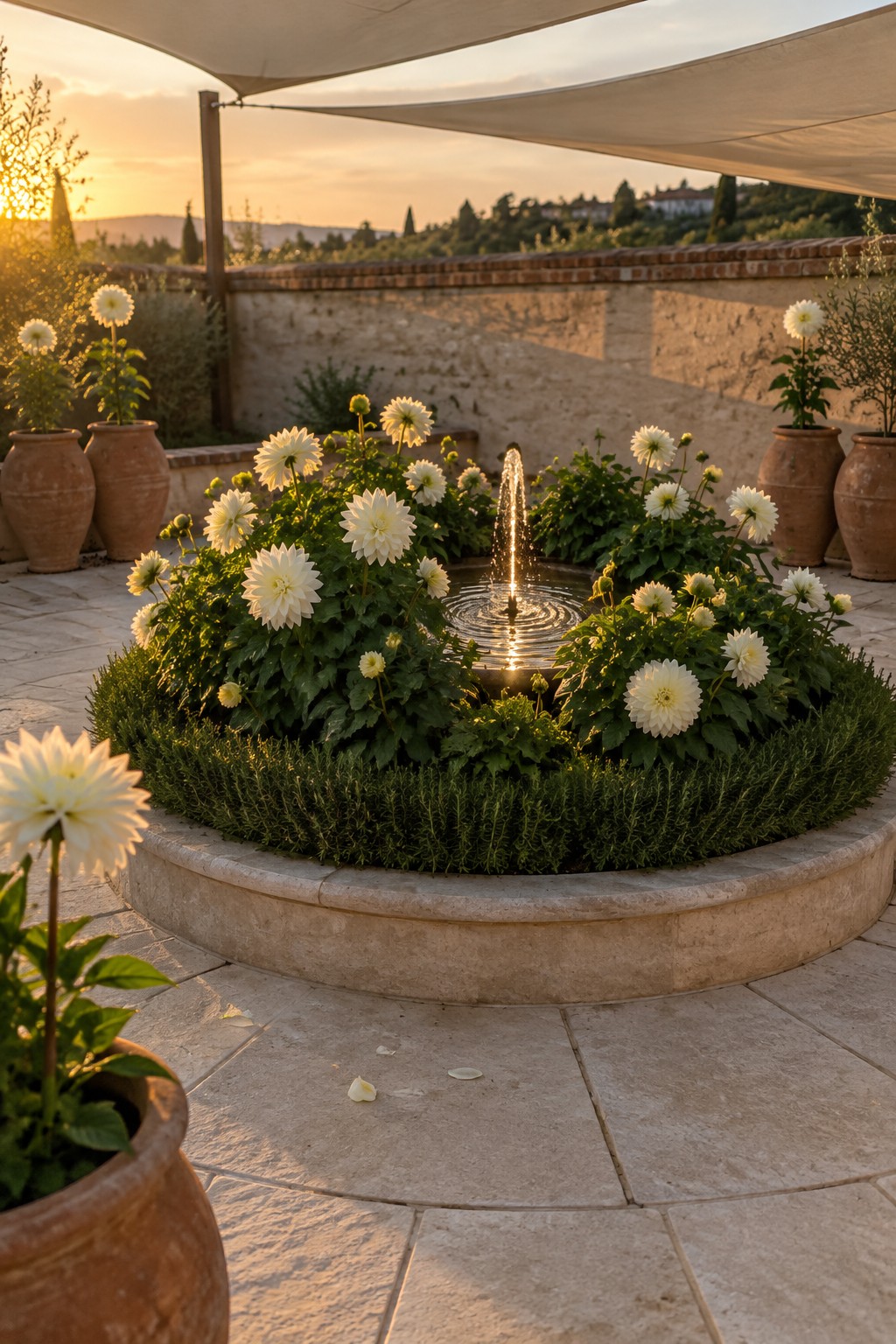
A round flower bed can give dahlias a clear place in a larger garden, and a small fountain makes the center easy to define. The circular layout lets the blooms be seen from all sides instead of facing just one path or wall.
Use a low stone edge to keep the bed tidy and make sure the fountain leaves enough room for plants to grow around it. This idea suits a courtyard or patio garden, but leave space to reach the fountain for cleaning and maintenance.
Frequently Asked Questions
Q: How much space should I leave between dahlias in a flower bed?
A: Give most dahlias about 18 to 24 inches of space so air can move between the plants and each one has room to fill out. Compact varieties can sit closer together, while tall dinnerplate dahlias need more elbow room.
Q: What can I plant beside dahlias to keep the bed colorful?
A: Pair dahlias with flowers that bloom at different heights, such as zinnias, cosmos, or low-growing alyssum. That keeps the bed lively while dahlias are still growing or between blooms.
Q: How do I keep tall dahlias from flopping over?
A: Add a sturdy stake when you plant each tuber, then tie the stem loosely to it as it grows. Waiting until a heavy stem leans can make it harder to support without damaging the plant.
Q: Can dahlias grow in a flower bed that gets afternoon shade?
A: They can, especially in a hot climate, though they usually bloom more freely with several hours of direct sun. Choose a bright spot and make sure the soil drains well.
