

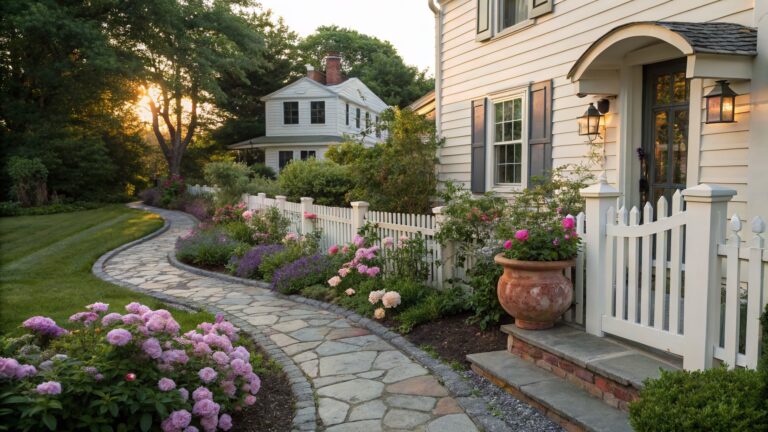
I remember glancing at neighbors’ front yards and realizing how a well-laid-out flower bed turns a cramped space into something that draws you in right away.
Those small areas work best when the planting follows a simple structure, with low edging that guides your eye along a path instead of crowding it.
Over a couple seasons, perennials fill in and make the beds feel grand without overwhelming the walkway.
What catches most people first is that clean border framing bold blooms against the house siding.
I’ve got a couple ideas from here marked to test in my own yard next spring.
Gravel and Stepping Stone Front Paths
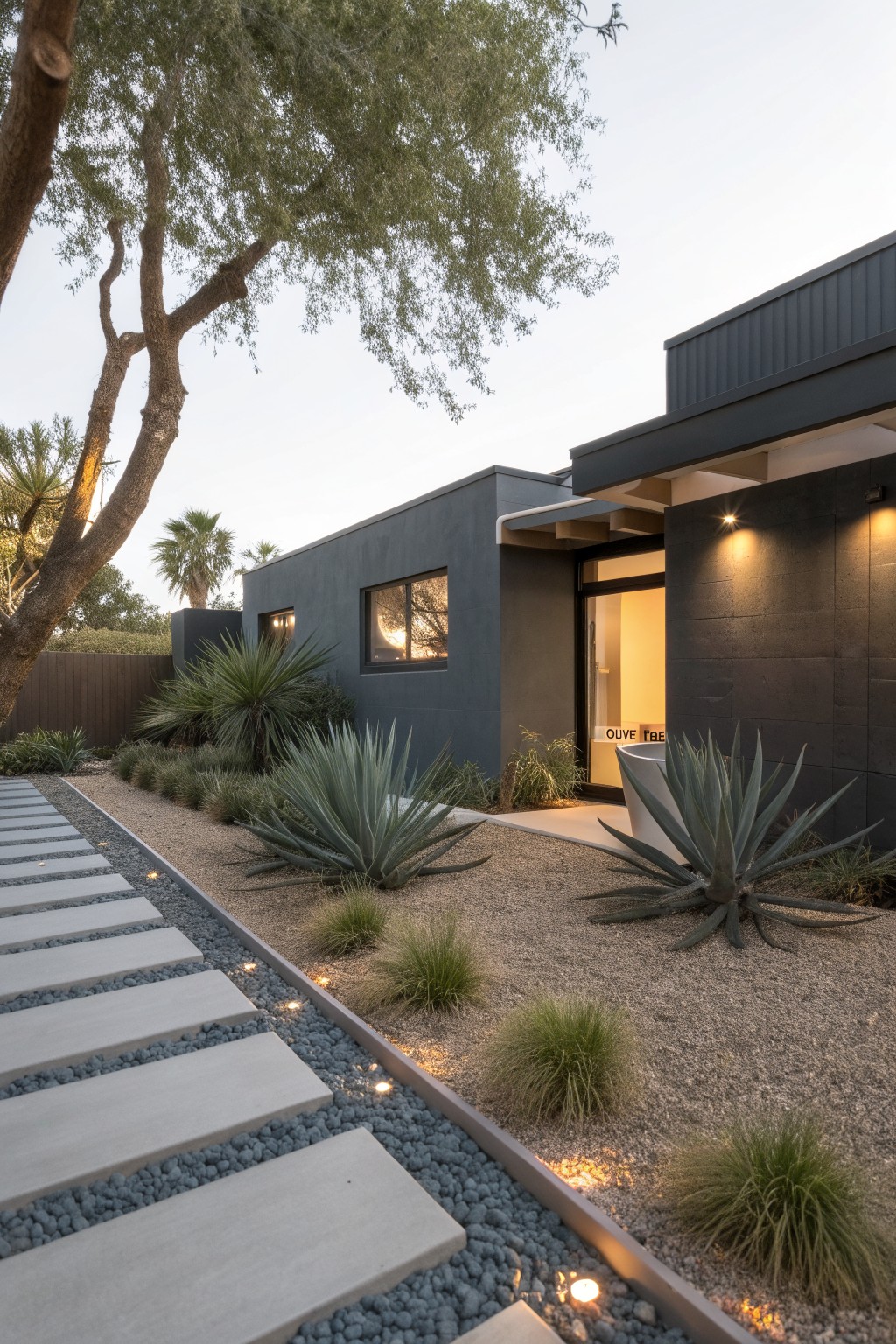
A straightforward path like this uses wide concrete stepping stones laid right into gravel. Tall agaves and low grasses line the edges, keeping things simple and tough. It pulls the eye to the entry door and makes even a tight front yard feel open and put-together. No fussy lawn to mow, just clean lines that say welcome without trying too hard.
This works best in sunny, dry spots where water is at a premium. Lay down gravel over fabric first, then set stones at stride-friendly spacing. Add a couple bold succulents for punch, but skip anything needy. Pairs well with modern houses or any setup wanting low upkeep. Watch the gravel doesn’t wander, though, a good edging keeps it neat.
Symmetrical Boxwood Hedges Frame a Welcoming Path
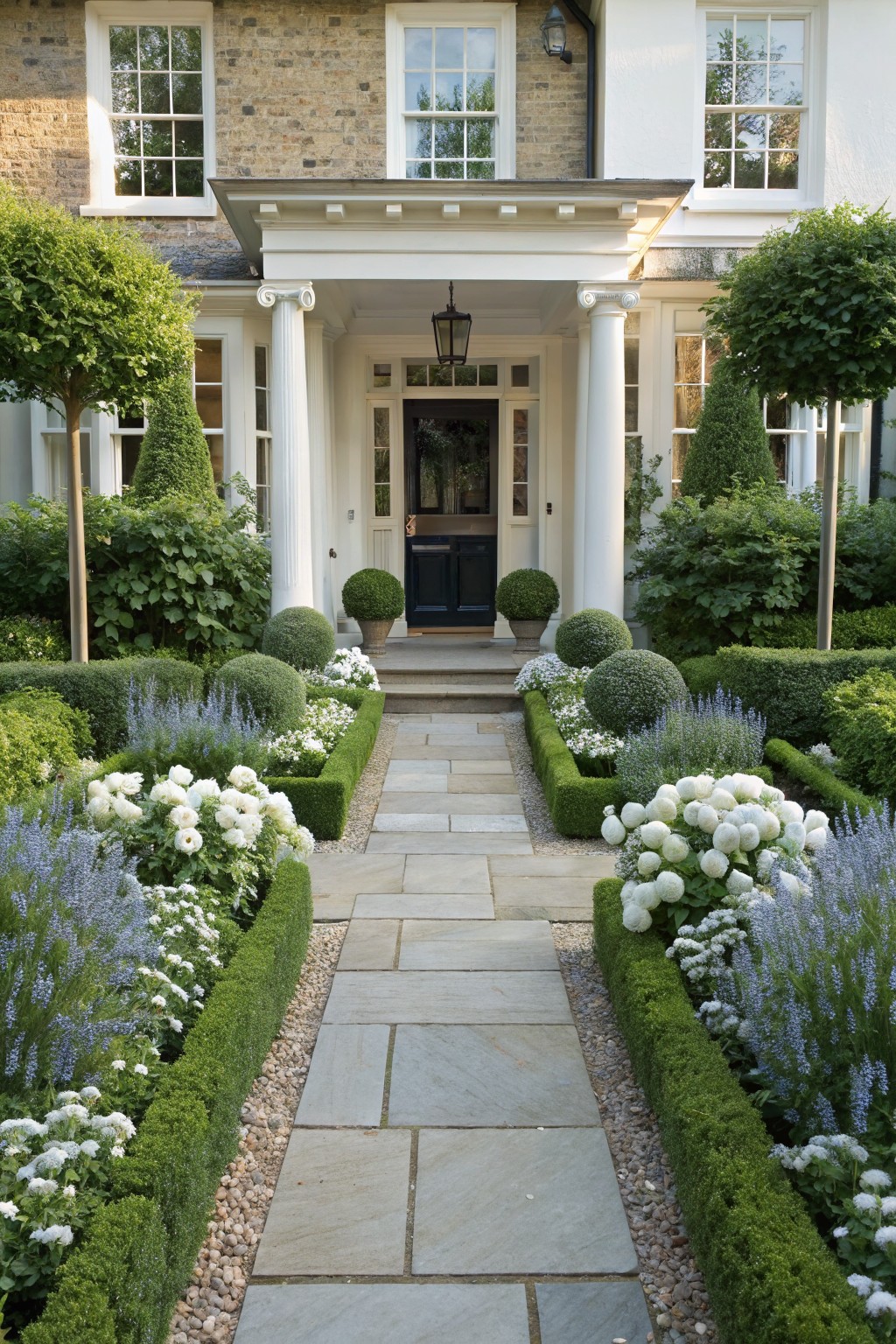
One simple way to make a small front yard feel bigger and more put-together is lining the walkway with neat boxwood hedges. Here they run right along both sides of a wide stone path, broken up by round topiaries and beds of white flowers and lavender. That repetition creates a sense of order that draws the eye straight to the door without overwhelming the space.
This setup works best on homes with a classic front porch or entry steps. Keep the boxwoods trimmed low, maybe knee-high, and fill the gaps with easy bloomers like gardenias or salvia for color through summer. It stays tidy with little work, though you might need to refresh the gravel edging now and then to keep it sharp.
Meandering Stone Path in a Flower Bed Border
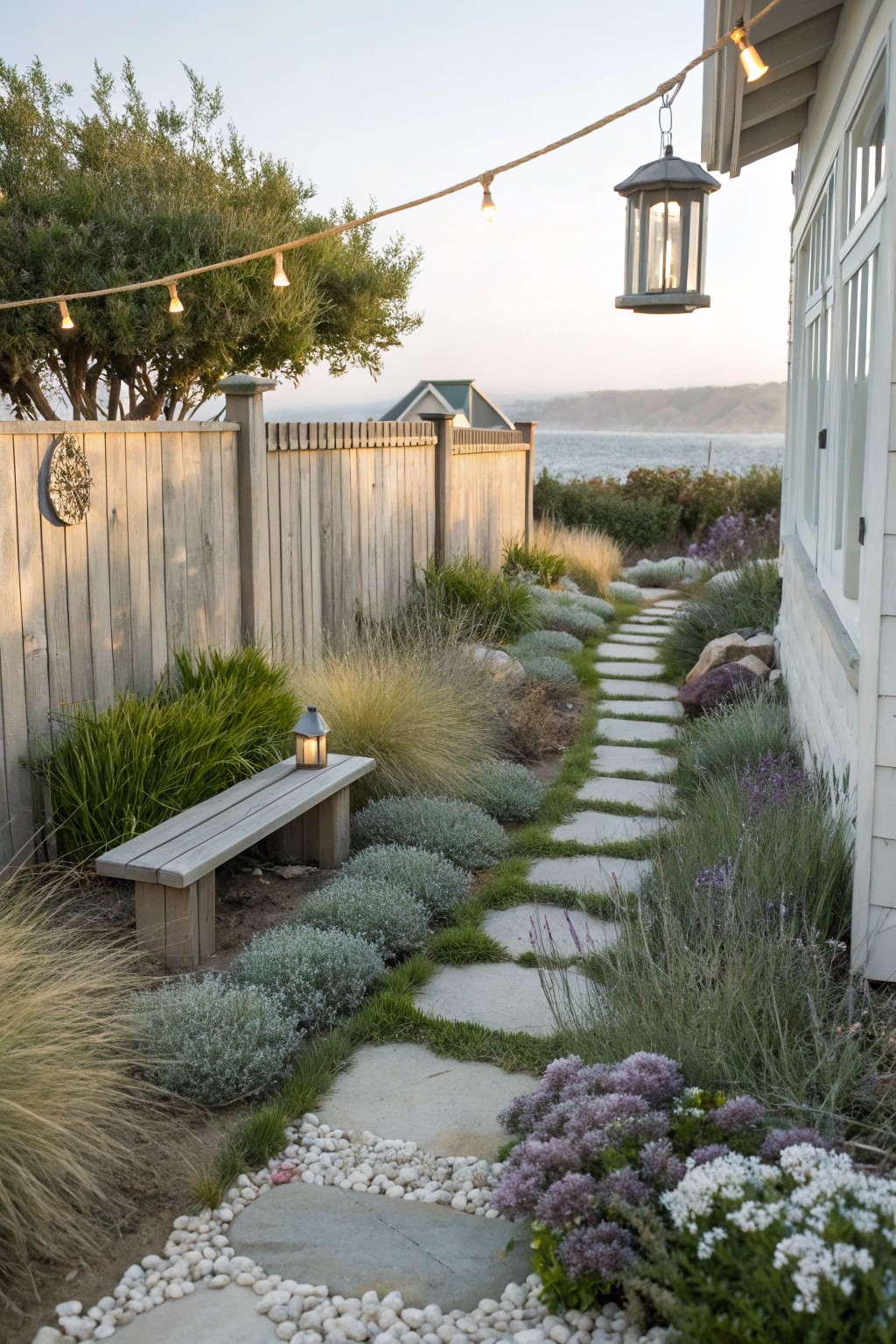
A meandering path like this one uses flat stones set right into the gravel and low plants. It pulls you along without taking up much room. Grasses sway on either side, mixed with lavender and silvery bushes that stay tidy year-round. The whole thing feels bigger than it is. Perfect for a narrow front yard strip.
Try this where you’ve got a straight walkway that looks boring. Lay stones in a gentle curve, leaving grass or gravel between them. Plant tough, drought-friendly stuff along the edges, nothing too fussy. Add a lantern or bench halfway… it invites a pause. Suits coastal spots or anywhere water’s short. Just keep the plants trimmed back so the path stays clear.
Rose-Covered Arch Over a Garden Path
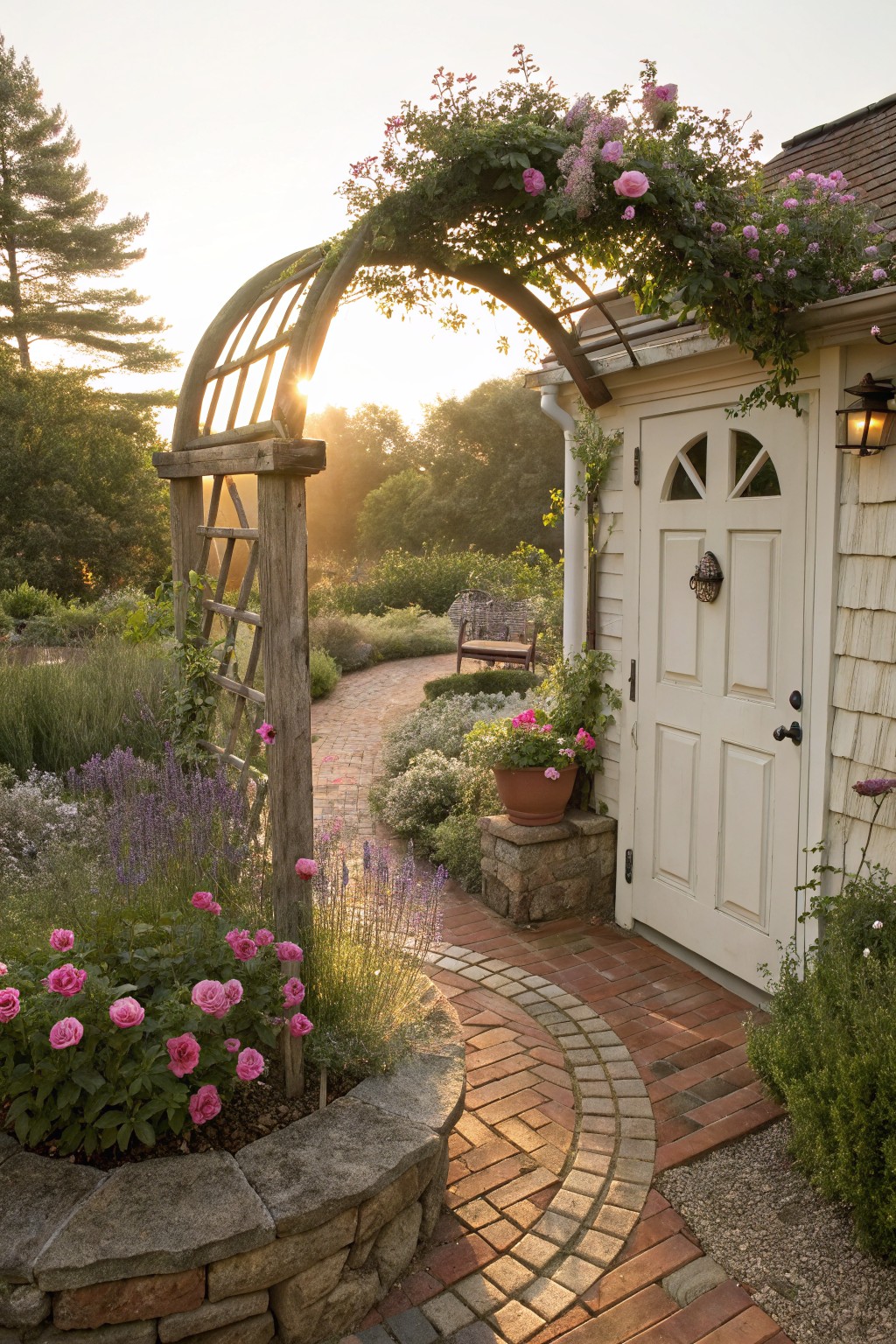
A simple wooden arch draped in climbing roses makes any small garden path feel special. It turns a plain walkway into something you actually want to stroll down. Here the pink roses spill over the top and sides, catching the light just right, while the path curves gently ahead. That arch pulls your eye forward and adds a bit of height without taking up much room.
Put one like this at the start of a front walk or leading to a side door. It works best in a yard with some sun for the roses to climb. Keep the beds around it filled with low stuff like lavender or sedum so the arch stays the star. Just trim the vines now and then… keeps it tidy. Good for cottage-style homes or anywhere you want that old garden feel on a small scale.
Winding Stone Path Through Front Yard Beds
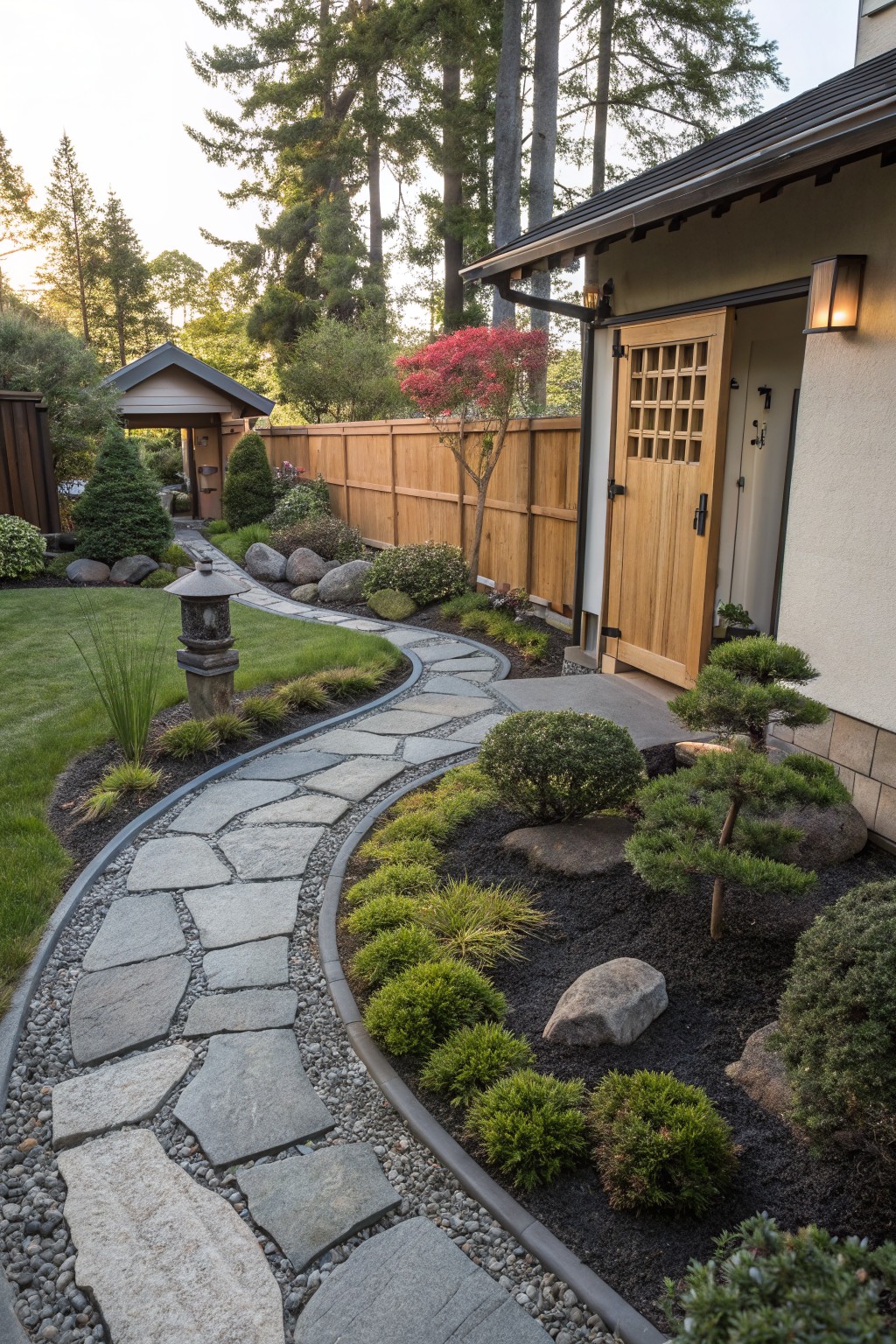
A simple winding path like this makes a small front yard feel bigger and more interesting. Made from irregular gray flagstones set into gravel edging, it curves gently past low grasses, clipped shrubs, and a few rocks. That natural flow pulls your eye right to the entry door without rushing you. It’s low fuss too. The plant borders stay tidy and fill in the edges nicely.
Try this in tight front yards where straight sidewalks feel boxy. Lay the stones loose at first to get the curve right, then plant low growers like sedum or carex along the sides. It suits most homes, even if you skip the bonsai. Just keep plants knee high so the path stays the star. Scale it down for really narrow spots.
Tiered Retaining Walls Turn Slopes into Gardens

Sloped front yards can be tough. But stacking stone retaining walls like these creates flat planting beds at each level. Flowers and shrubs fill them out, and wide steps connect it all to the house door. The result is a steady climb that feels planned and pretty, not just a fix for the hill.
This works best on smaller lots where you want height without crowding the yard. Pick durable block stone that matches your house, like the tan blocks here. Plant low in front beds, taller toward the back. Keep it simple with a mix of greens and a few blooms. Watch the drainage so water doesn’t pool.
Tiered Stone Walls Build Drama in Tight Front Yards
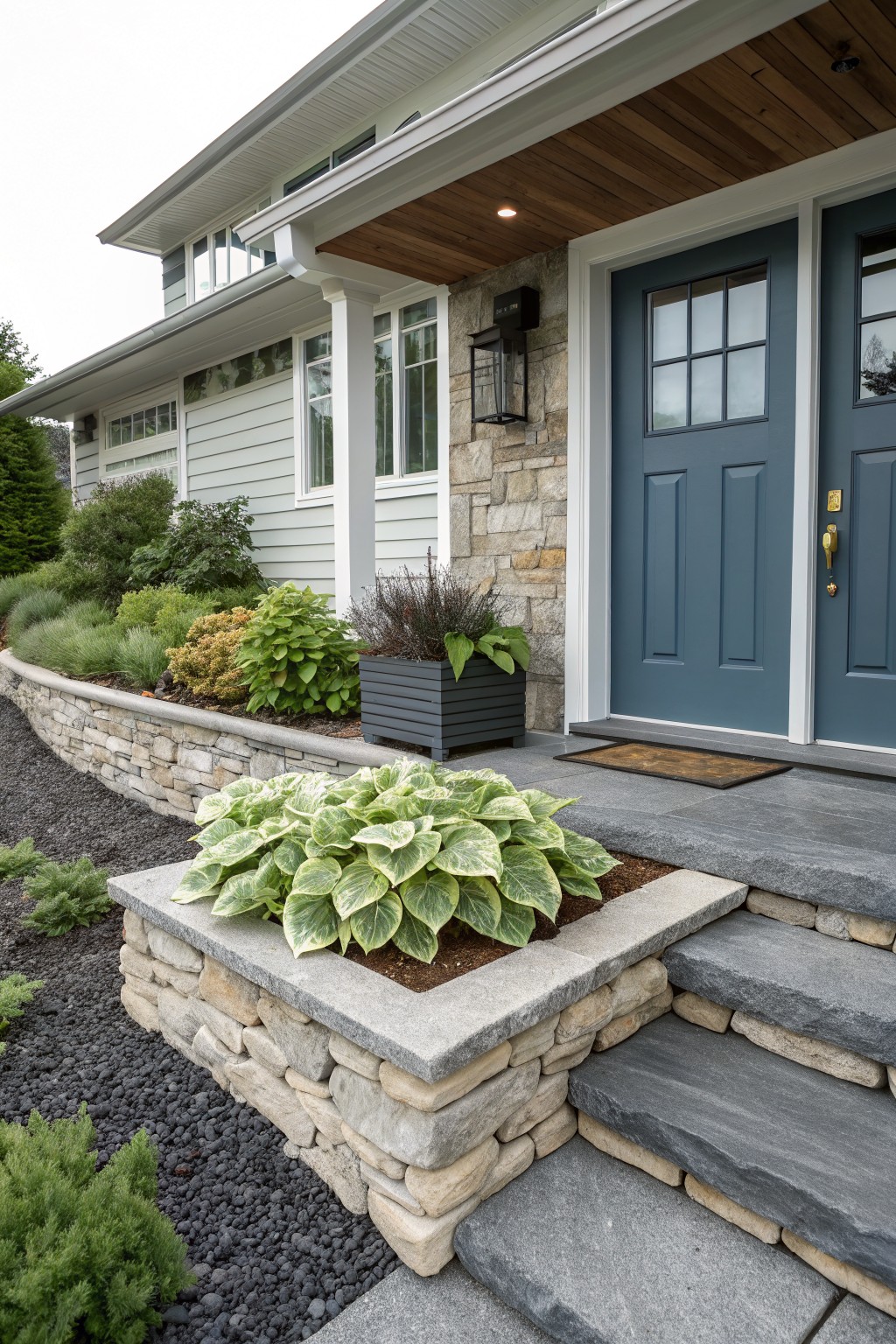
Layered stone retaining walls like these turn a narrow front entry into something with real presence. A sturdy raised planter holds lush hostas right at the steps, while the curving wall nearby mixes grasses and shrubs. That simple stacking pulls your eye upward and makes the space feel deeper than it is.
These walls work best on any slight slope or flat yard short on room. Use local fieldstone for an easy fit with most houses, then tuck in tough plants that handle part shade. Skip fussy flowers, stick to evergreens and bold leaves. One thing: make sure the stone caps are level so water drains right. Fits older homes or new builds without overpowering the door.
Stone Walls for Raised Flower Beds
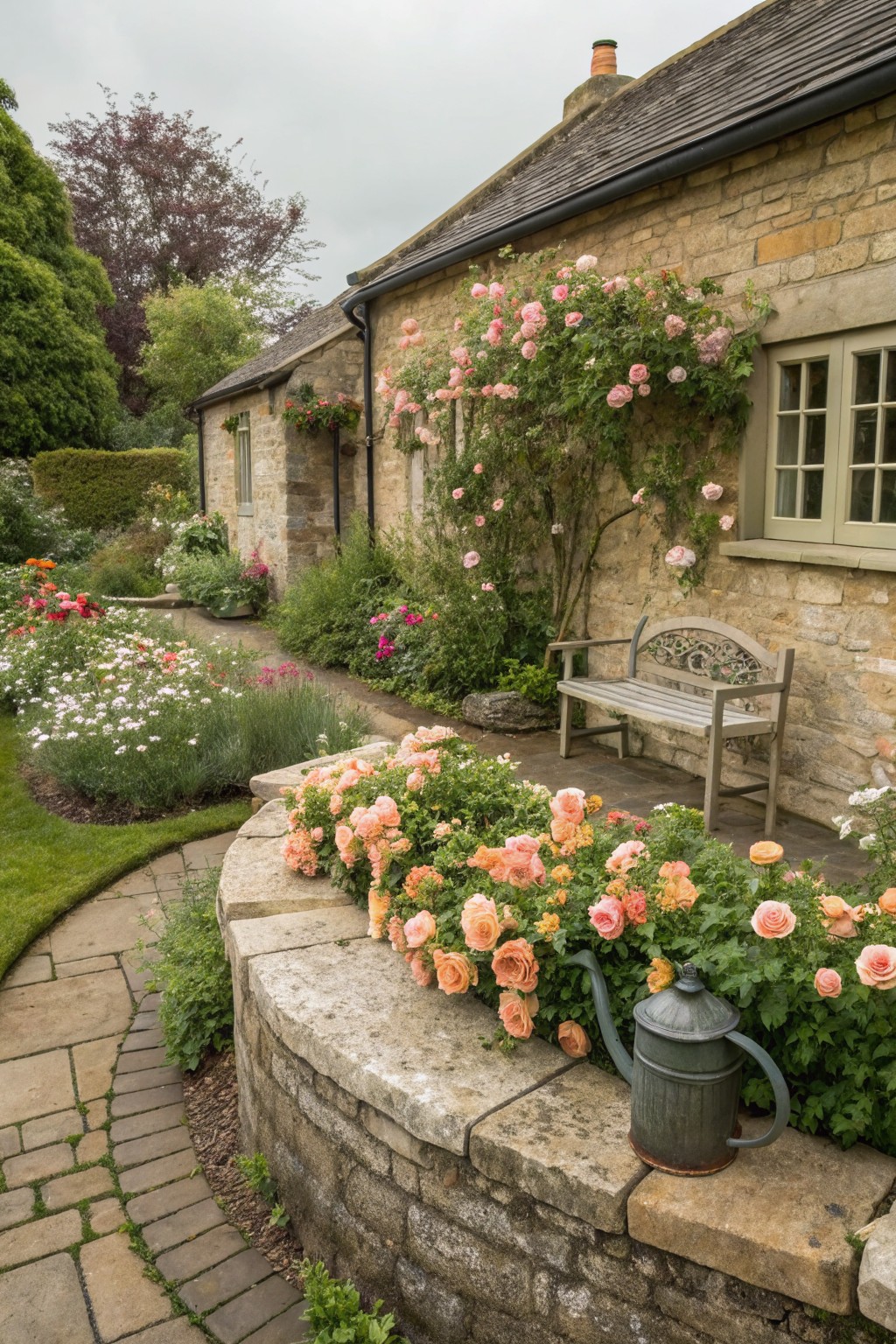
Low stone walls like this one make small front yards feel bigger and more put-together. They hold back soil for raised beds that let plants like these soft peach roses tumble over the edge in a natural way. The curve follows the path nicely, keeping everything contained while the house stone blends right in.
You can use this in any yard with a slope or flat spot near the entry. Source local stone to match your home, then fill with perennials and climbers that repeat through summer. Watch the height, though. Keep walls under two feet so they don’t block the view from inside.
Winding Path in a Desert Rock Garden

A concrete path that curves gently through a yard full of big boulders and tough desert plants like cacti and agaves makes even a small front area feel open and grand. The path itself is simple, just pale pavers set in gravel, but the way it winds around those rocks pulls you along slow, giving time to notice the plants poking up here and there. It turns a plain entry into something worth walking through.
This works best in sunny, dry spots where water is at a premium. Lay the path wide enough for two people, edge it with boulders for definition, and plant low clumps of succulents along the sides. Skip the flowers if you want easy care… just let the shapes and textures do the job. Fits modern homes or any place aiming for that clean Southwest look.
Cobblestone Path Edged in Hostas
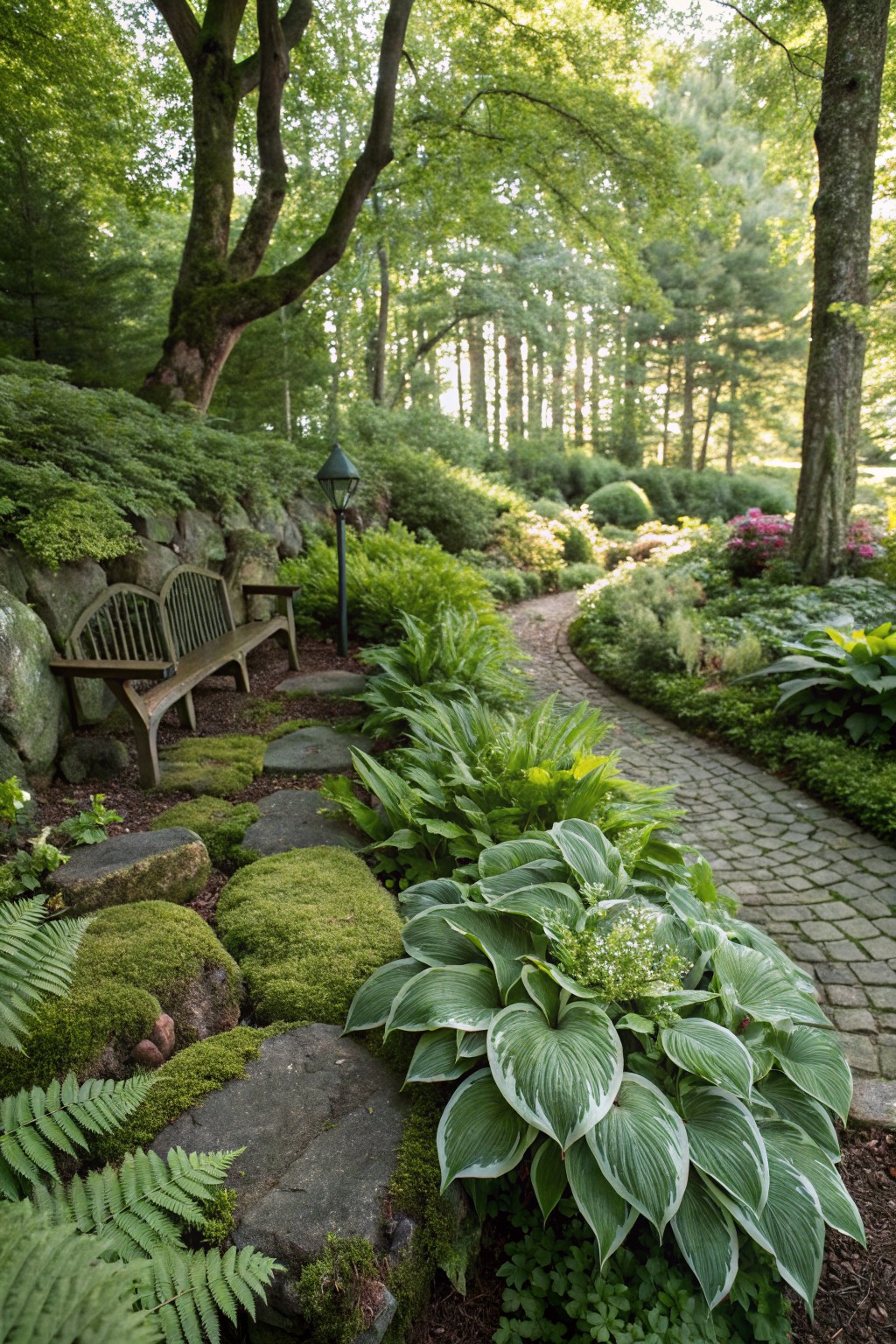
A curving cobblestone path like this one winds gently through thick plantings of hostas and ferns. Mossy boulders sit along the edges, giving the whole bed a natural, woodland feel. What stands out is how it makes a tight front yard space seem deeper and more exploratory. You follow the path without even thinking, past the bench tucked against the rocks.
This works best in shady yards where hostas thrive. Lay the stones in a loose curve to guide foot traffic toward your door or a seating spot. Mix in ferns and rocks for low upkeep. Skip it if your spot gets full sun. Hostas might struggle there.
Raised Beds Mulched with White Pebbles
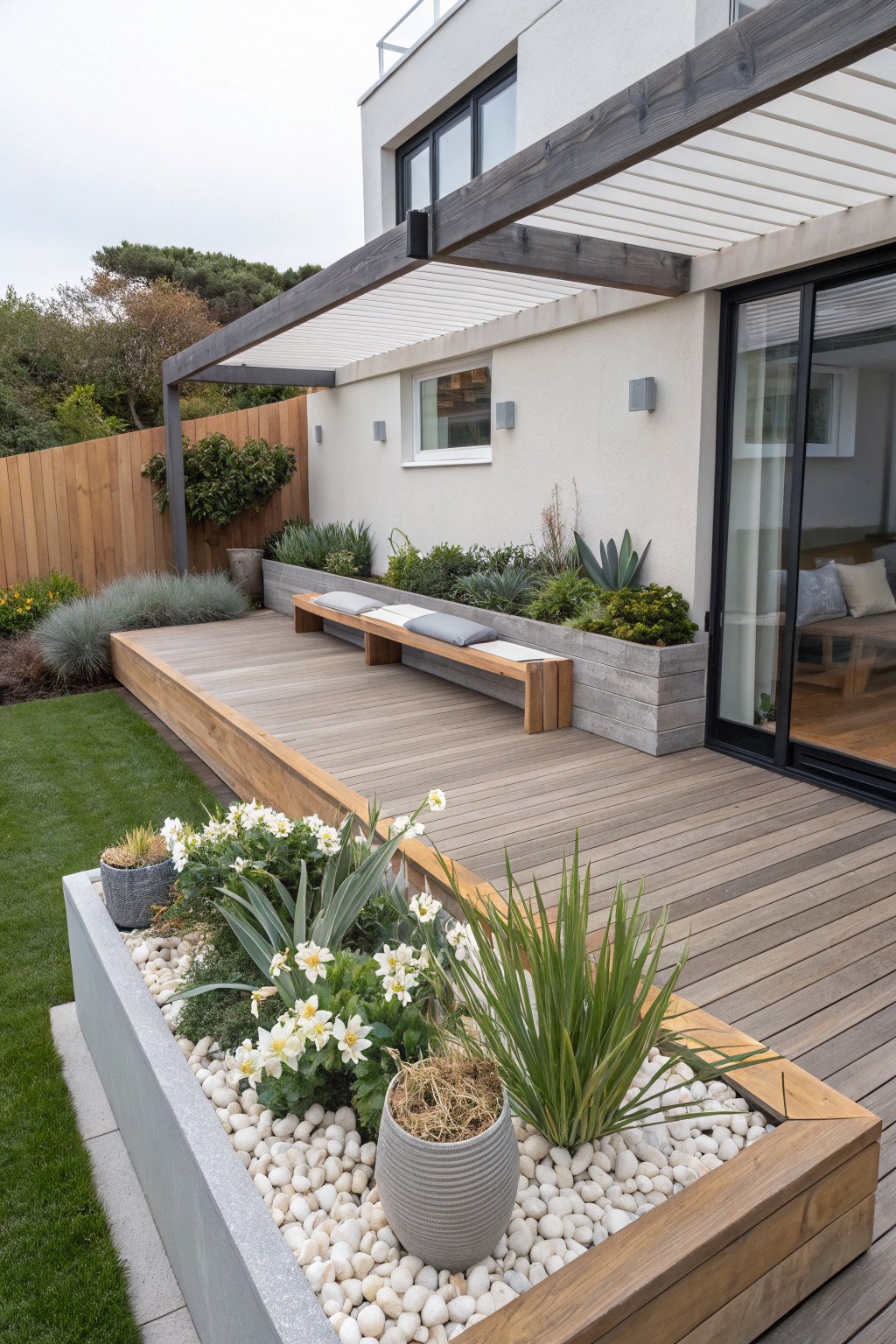
White pebbles make a raised bed look fresh and tidy, especially when you mix them with simple flowers and grasses. In this setup, the pebbles cover the soil around daisies and spiky plants, keeping weeds down while letting the blooms stand out. It’s a clean look that fits right next to a wooden deck or lawn, giving some brightness without much upkeep.
These beds work great in small front yards where you want definition without overwhelming the space. Build them low, about a foot high, using concrete or wood edges, then layer in drought-friendly plants like these. Just make sure the drainage is good so water doesn’t pool under the pebbles. Suits modern or clean-lined homes best.
Curved Stone Path with Flower Bed Edges

A simple curving path like this one makes even a narrow front yard feel deeper and more interesting. The low stone wall holds back colorful flower beds packed with whites and purples, while gravel fills the gaps for clean lines. It turns a basic walkway into something you actually want to stroll along.
This works best in small spaces where you need structure without crowding things out. Build the wall just knee-high, plant spillers like alyssum along the edge, and add tougher shrubs behind. Skip fussy maintenance by choosing drought-tolerant picks. Fits most homes with a sunny approach.
Raised Planters Frame Entry Steps
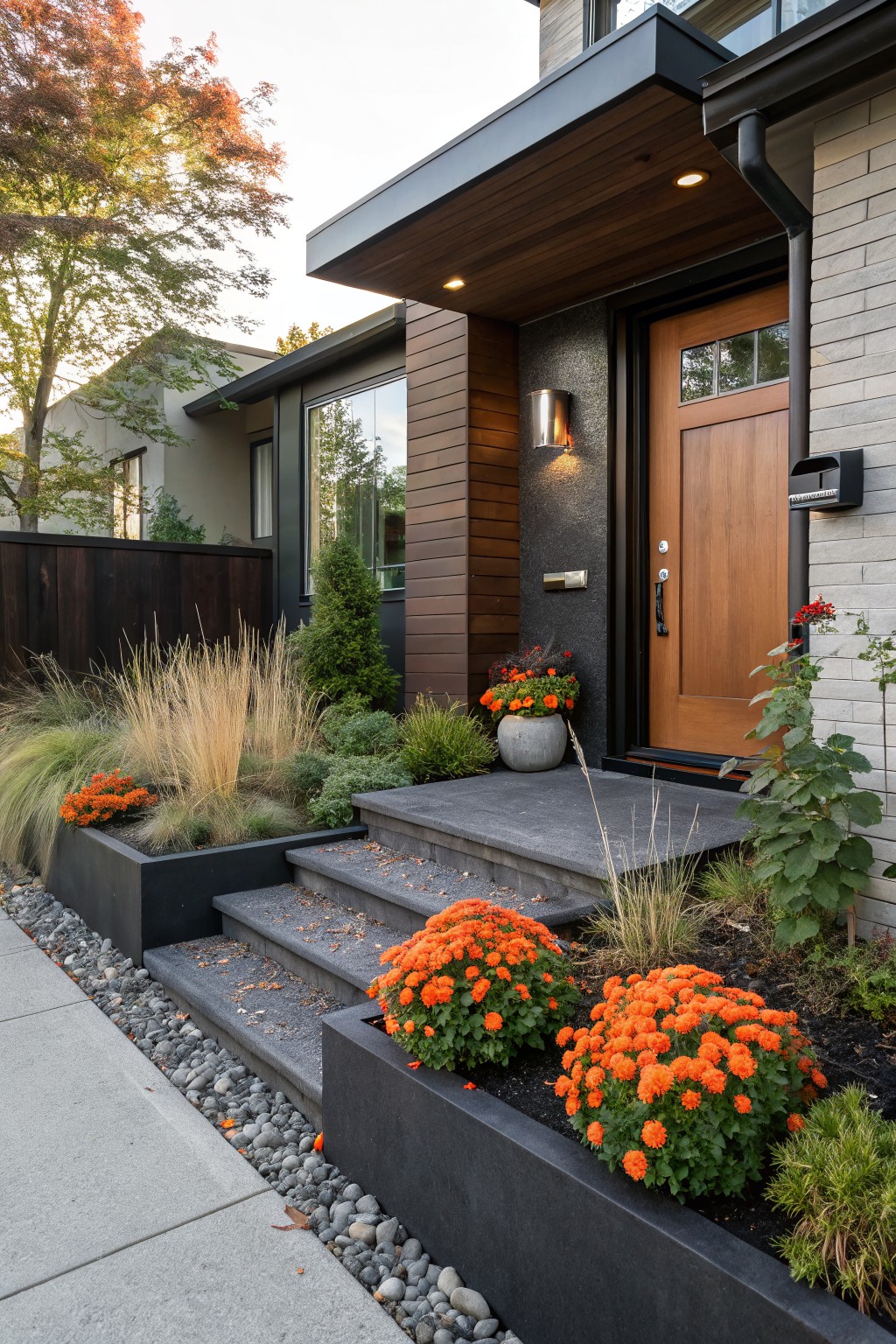
Those black raised planters tucked right along the front steps catch your eye first. Filled with tall ornamental grasses and clumps of orange mums, they add height and color without crowding the walkway. The dark boxes contrast nicely with the gravel path and stone steps. It keeps things neat and structured, especially in a small front yard.
You can pull this off in tight spaces next to your house entry. Go for drought-tolerant grasses as the base, then swap in seasonal flowers like mums for punch. It suits modern homes with clean lines. Just make sure the planters are wide enough for roots, or the grasses might flop over time.
Frequently Asked Questions
Q: How do I choose plants that stay small but look full and grand?
A:
Hunt for compact varieties like dwarf daylilies or creeping phlox.
They spread just enough to fill the bed without spilling over the edges.
Plant them in odd-numbered groups for that natural, abundant vibe.
Q: My front yard sits in partial shade – do these designs still pop?
A:
Shade-loving picks like heuchera and impatiens bring bold color and texture.
Tuck ferns in the back for height without crowding.
You get depth and drama even without full sun.
Q: What’s the best way to edge the bed so it looks polished?
A:
Grab some simple stone or brick from a garden center.
Dig a shallow trench and set them in snug.
This clean line makes the whole yard feel pulled together fast.
Q: How do I keep it low-maintenance once it’s planted?
A:
Mulch thickly right after planting – it locks in moisture and blocks weeds.
Water deeply once a week, and deadhead spent blooms to keep flowers coming.
