


A fence can make a garden feel neatly contained, but a bare stretch of it may also look a little flat.
I find dahlias work well along a fence when their height and spacing are planned around the light, the path, and the plants already in the yard.
A mix of bloom sizes and colors can add depth without making the border feel crowded.
Some gardeners use the fence as a simple backdrop, while others let taller varieties soften its lines or mark the edge of a seating area.
I’d start with ideas that suit the fence’s sun exposure and leave enough room to reach in for watering, deadheading, and end-of-season cleanup.
Plant Dahlias Along a Garden Path

Dahlias can make a fence border feel full and colorful without taking over the whole yard. Planting them in a generous bed beside a brick path gives the flowers room to stand out while keeping the garden easy to walk through.
Leave enough space between plants for air to move and for you to reach in for deadheading or cutting blooms. A simple clipped edge along the path helps keep the border tidy as the dahlias grow.
Plant Dahlias Along a Fence

A fence-side flower bed is a good place to grow dahlias in layers. Taller blooms can sit toward the back while lower plants edge the path, making the border feel full without taking over the walkway.
Leave enough room for the dahlias to grow and for you to reach them for staking and deadheading. A dark fence makes pale and deep-colored blooms easy to pick out, but the bed will need regular watering and care through the growing season.
Plant Dahlias Along a Fence

A fence-side flower bed is a simple way to give dahlias a clear place in the garden. The fence provides a steady backdrop, while the flowers bring color along its length instead of leaving one bare stretch of yard.
Plant dahlias in a loose row near the fence, leaving enough room between them for air to move and plants to spread. Mix in a few shorter flowers at the front, but keep the dahlias as the main feature. This works especially well along a plain picket fence.
Use Repeated Planters Along the Fence
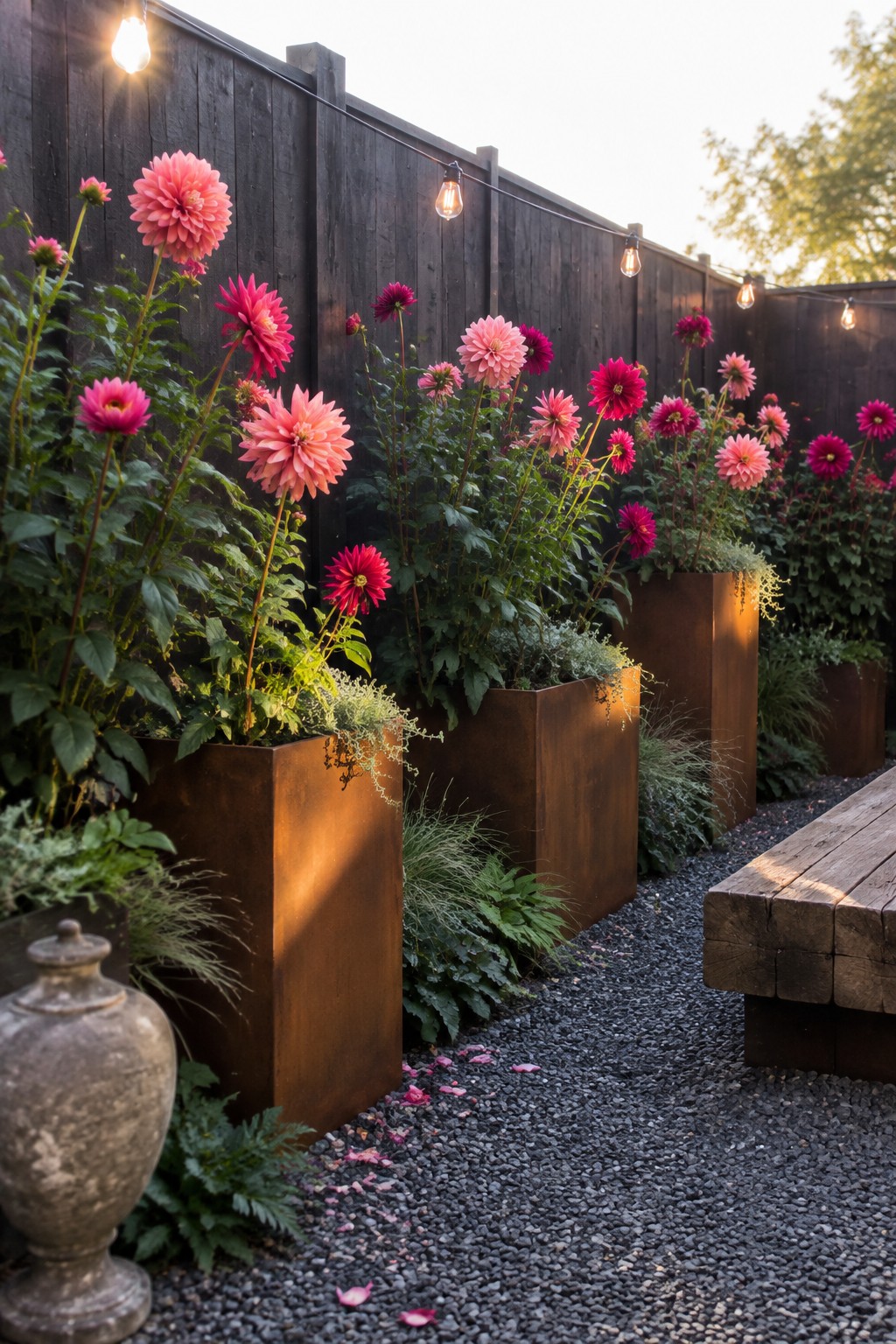
Tall planters set in a row make a simple way to grow dahlias along a fence. The repeating containers give the border a clear structure, while the flowers bring color up to eye level.
Choose planters with enough depth for dahlia roots, and leave room between them so each plant gets good airflow. This works well where a narrow path or hard surface makes an in-ground flower bed difficult to manage.
Use a Rope Edge to Define the Dahlia Border
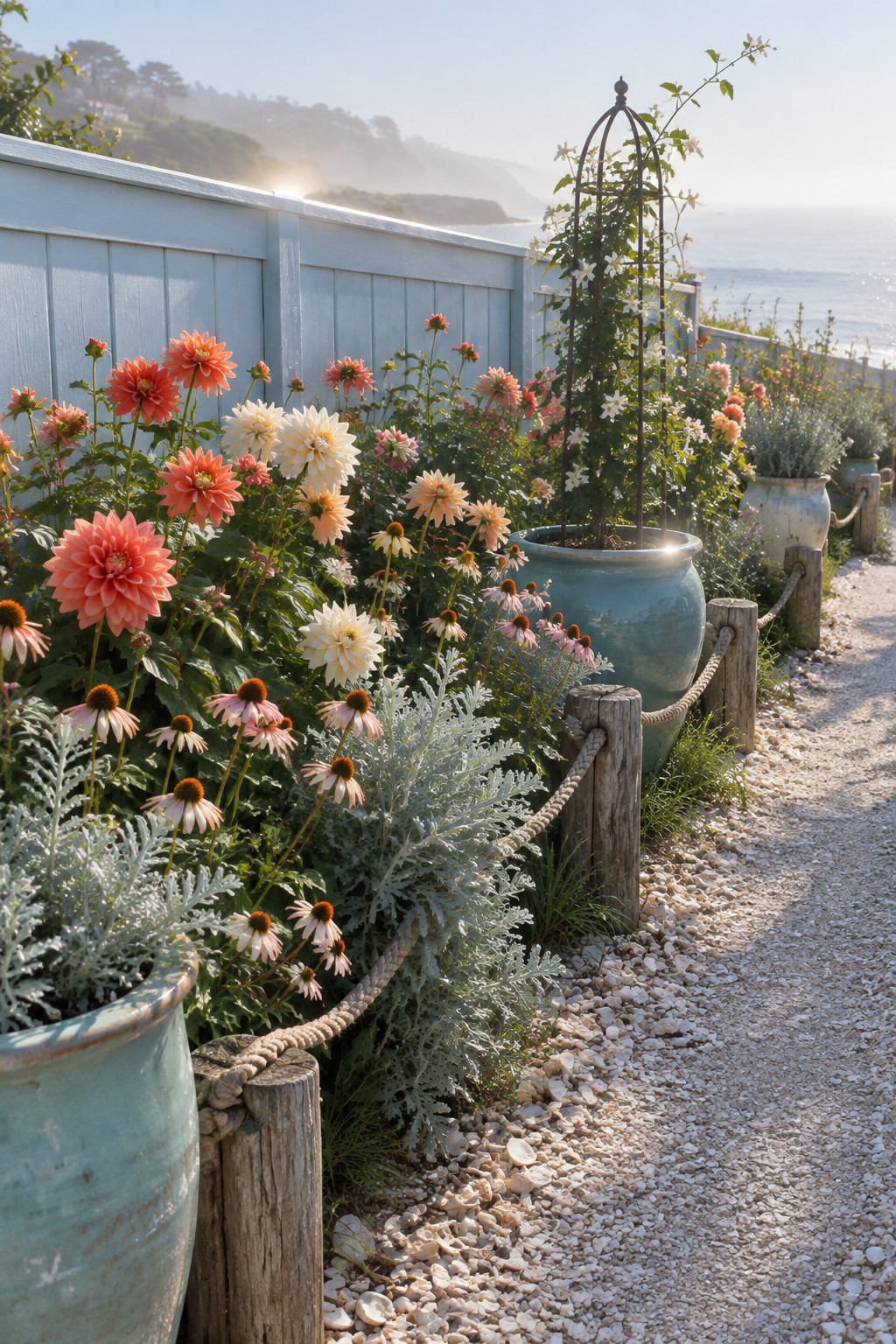
A simple rope edge helps keep a flower bed distinct from a gravel path without making the garden feel too formal. It also gives a long border a clear line, so dahlias and other flowers can fill in naturally behind it.
Use sturdy posts and taut rope along a path beside a fence, keeping the edge low enough that it does not hide the plants. Leave a little room for stems to spread, and check the rope now and then so it stays in place.
Use Dahlias To Build A Layered Fence Border
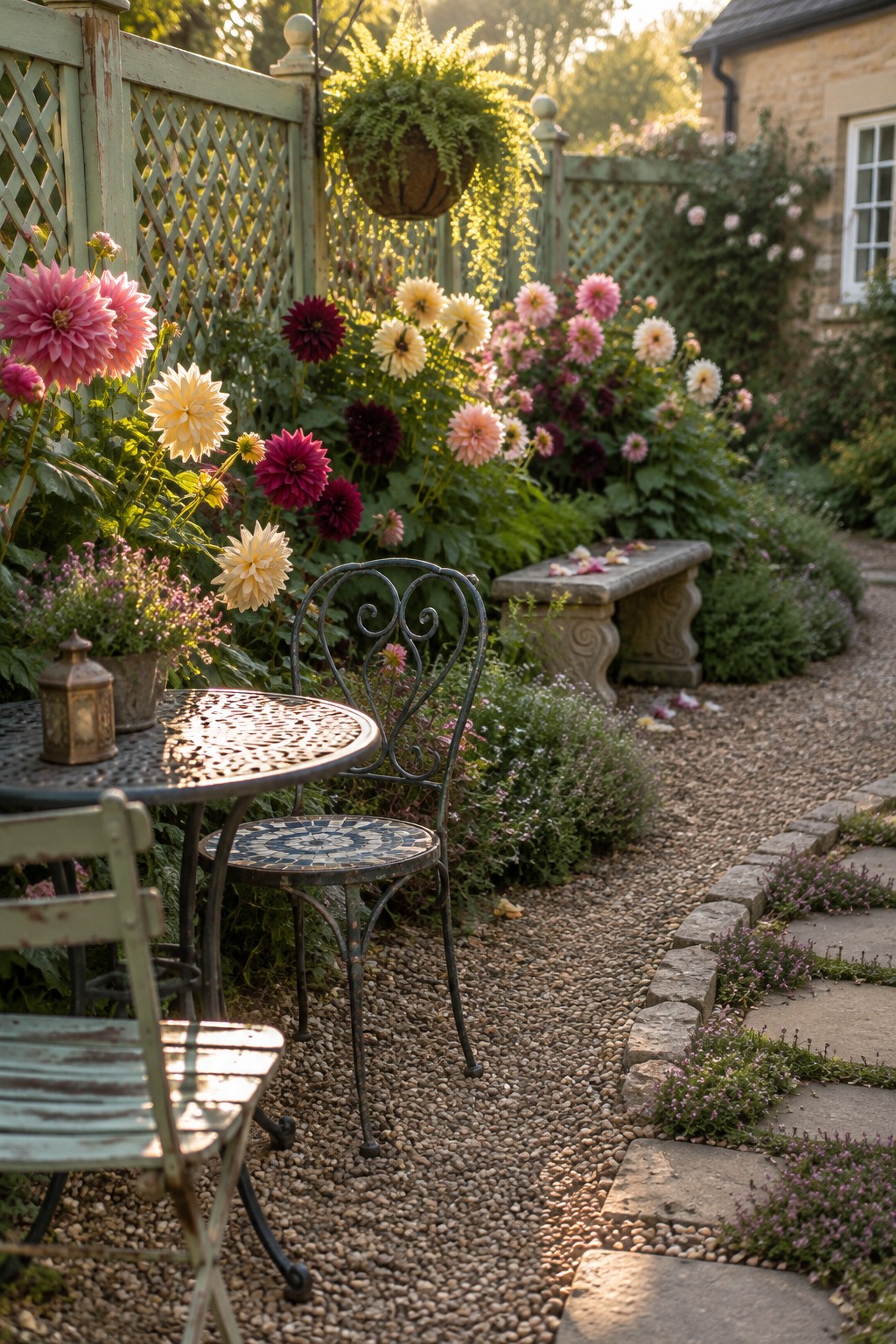
Dahlias look especially full when planted in a loose, layered border along a fence. Their large blooms rise above lower flowers and foliage, so the planting feels varied without needing a complicated layout.
Leave enough room between the dahlias for air to circulate, and use the fence as a backdrop rather than crowding plants against it. This approach works well in a cottage-style garden where you want a colorful border that changes through the season.
Layer Dahlias Along a Rustic Fence
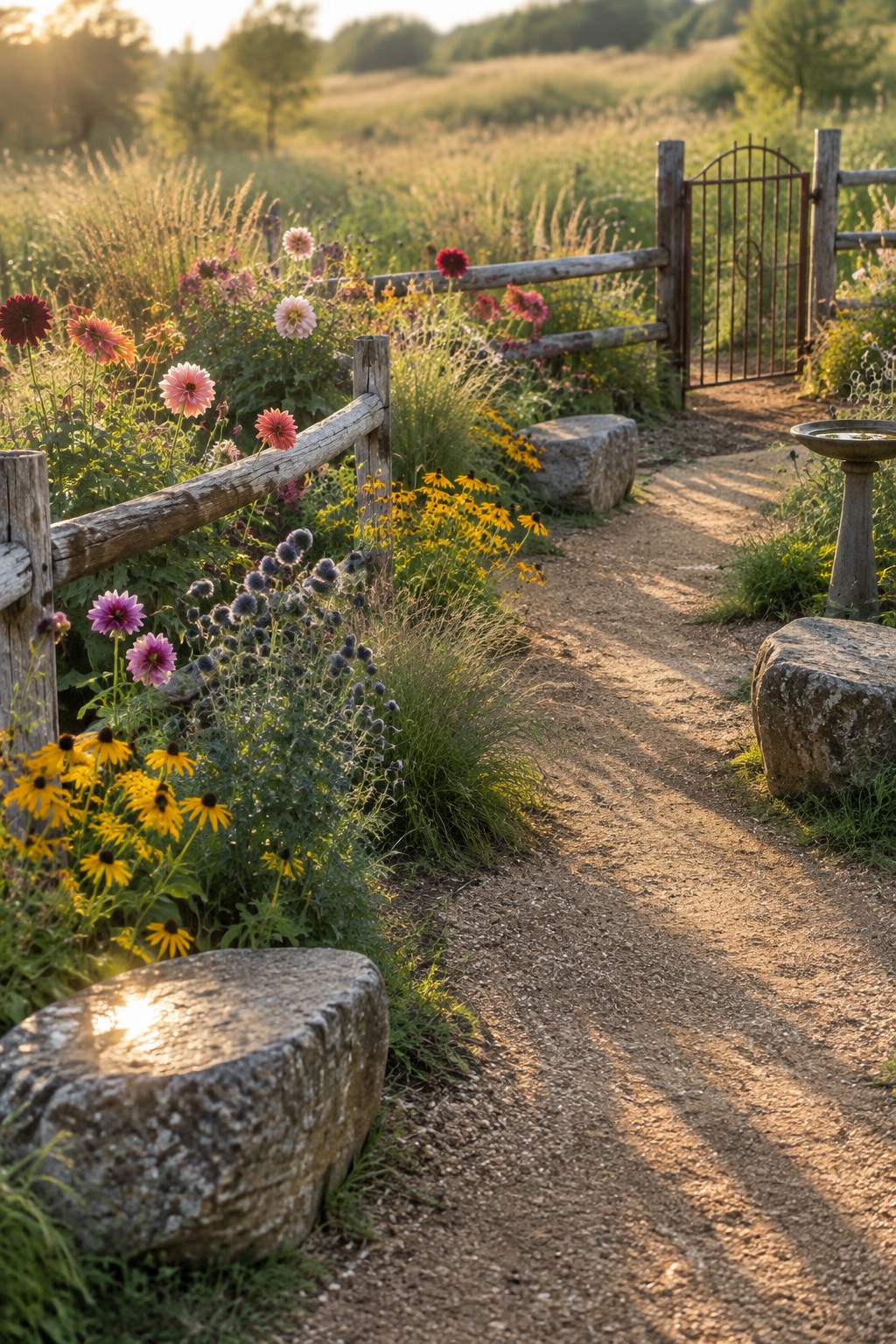
A loose, layered planting makes a fence border feel like part of the garden rather than a narrow strip beside it. Dahlias can bring the color, while grasses and lower flowers fill the spaces between blooms and give the bed a fuller look.
Plant taller dahlias toward the fence and leave enough room to reach them for tying and deadheading. This approach suits a cottage-style garden, but keep the path edge clear so the flowers don’t spill into the walkway.
Use Wall Planters To Grow Dahlias In A Narrow Border
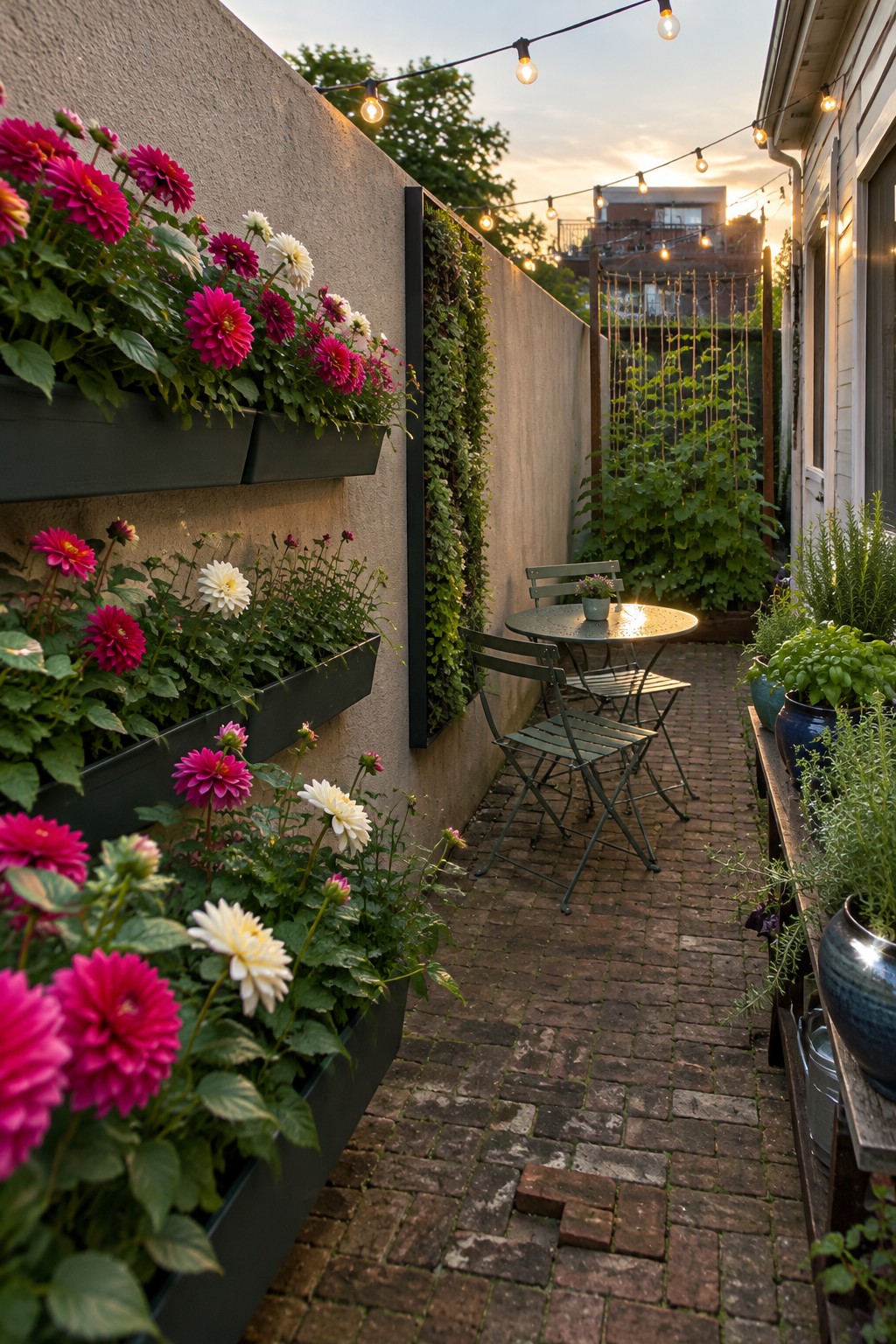
Wall-mounted planters make it possible to grow dahlias where a narrow path leaves little room for a traditional flower bed. Set along a fence or garden wall, they lift blooms up to eye level and keep the walkway clear.
Choose sturdy planters with good drainage, and give the dahlias enough room for healthy growth. This approach suits small courtyards and side yards, though containers will need regular watering.
Use Stone Edging to Define the Flower Border

A low stone edge gives a flower border a clear boundary and keeps it connected to the path beside it. Here, the raised stone planting area also provides a place for a simple bench, so the garden feels easy to use rather than purely decorative.
This approach works well along a fence or wall, where a defined bed can keep plants from spilling into a walkway. Use sturdy local stone if you can, and leave enough room for dahlias to grow without crowding the path.
Use a Low Fence to Define the Dahlia Border
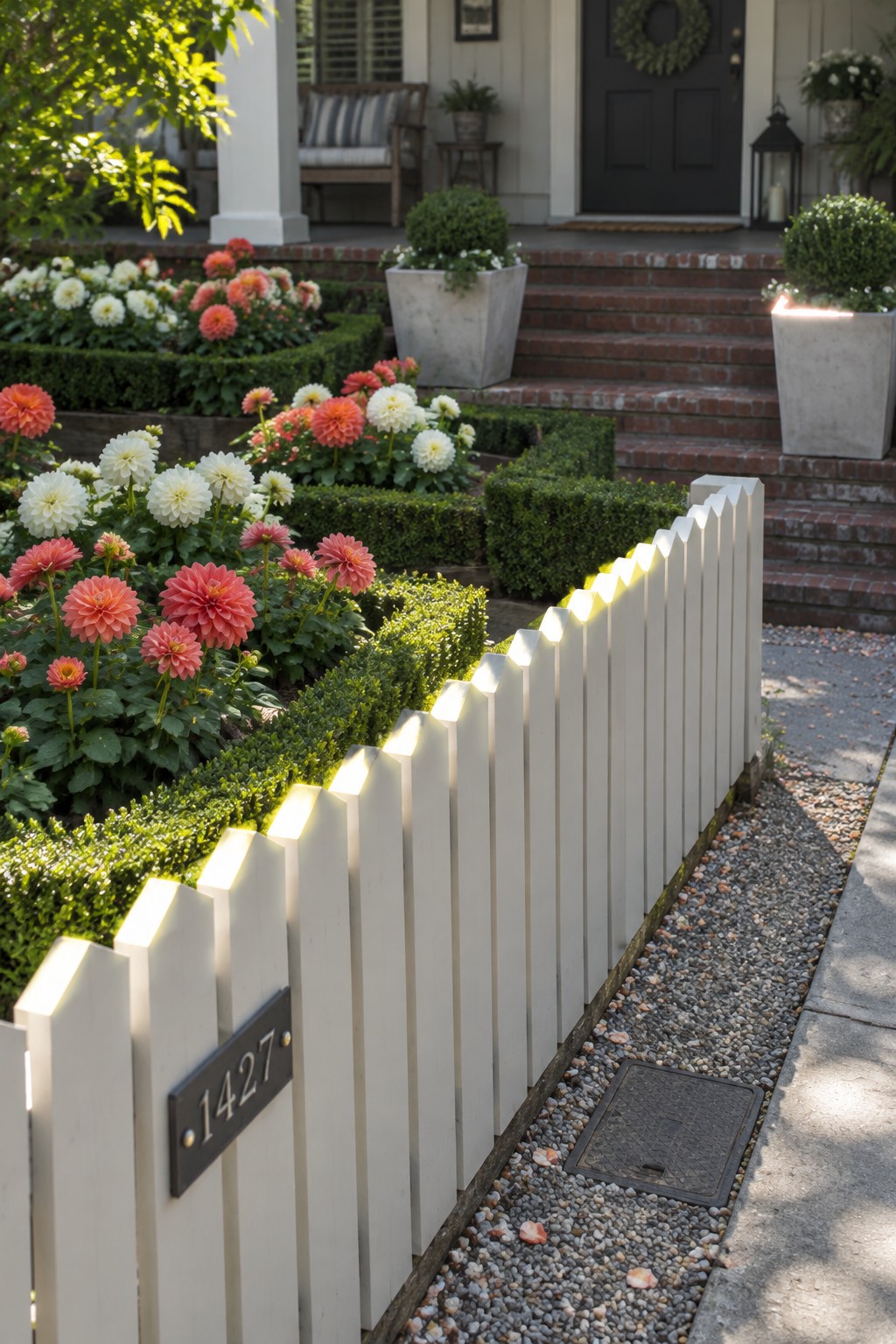
A low white picket fence gives a dahlia bed a clear edge without hiding the flowers. It also helps the planting feel like a tidy part of the front garden rather than a bed spilling onto the path.
This approach works well beside a walkway or near an entry, where a neat boundary is useful. Leave enough room behind the fence for dahlias to spread, and keep the fence low so the blooms remain visible.
Use Dahlias to Fill Out a Fence Border
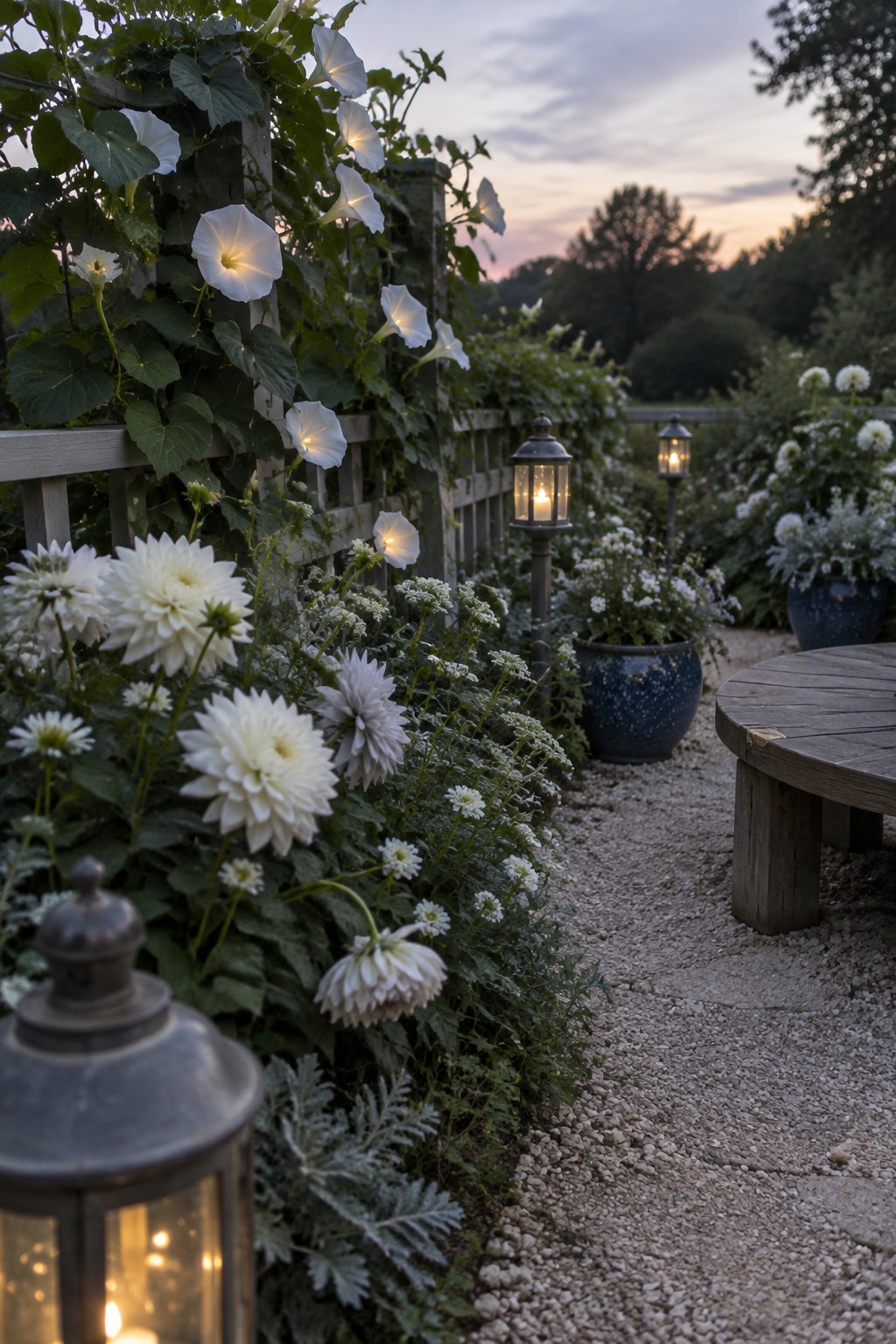
A fence border feels fuller when tall flowers grow in front of climbing plants. Dahlias can bring plenty of color and texture to the lower edge, while the fence gives the planting a clear line to follow.
Plant dahlias in groups along the fence, leaving enough room between them for air to move and for you to reach the plants. A gravel path beside the bed makes tending and cutting flowers easier.
Add Insect Hotels Along a Flower Border

Small insect hotels can make a flower border more useful to pollinators while adding a simple feature to a fence line. Set them among dahlias and other bee-friendly plants so the garden offers both nectar and shelter.
This idea suits a sunny fence border where there’s room for flowers to grow without crowding the path. Mount the hotels securely on the fence, and leave enough space around them for easy access and upkeep.
Use Clipped Hedges to Shape a Dahlia Border

A low clipped hedge gives a flower border a clear outline and keeps a generous planting from looking untidy. Dahlias can fill the space inside the hedge, while the crisp edge makes their loose blooms feel more organized.
This approach works well in a formal garden or along a long fence where you want the planting to feel structured. Keep the hedge low enough that it does not hide the flowers, and leave room for dahlias to spread as they grow.
Arrange Dahlias in Layers Along a Fence

A fence border looks fuller when dahlias grow at different heights instead of forming one even row. Taller flowers can rise behind shorter blooms, so the planting feels varied while still following the fence line.
Leave enough room for the taller plants to spread, and keep shorter varieties toward the front of the bed. This approach suits a long fence with a generous planting strip. A rustic rail fence works especially well because it lets the flowers remain the main feature.
Use a Curved Stone Edge Along the Dahlia Border

A curved strip of river stones gives a fence-side flower bed a clear edge while keeping the planting from running into the path. The gentle bend also makes a long border feel less rigid.
Use this idea where a path runs beside the bed, and keep the stone strip wide enough to contain loose soil and make mowing or trimming easier. Dahlias can fill the raised bed behind it, with room left between the plants and the edge.
Repeat Dahlias Along a Fence
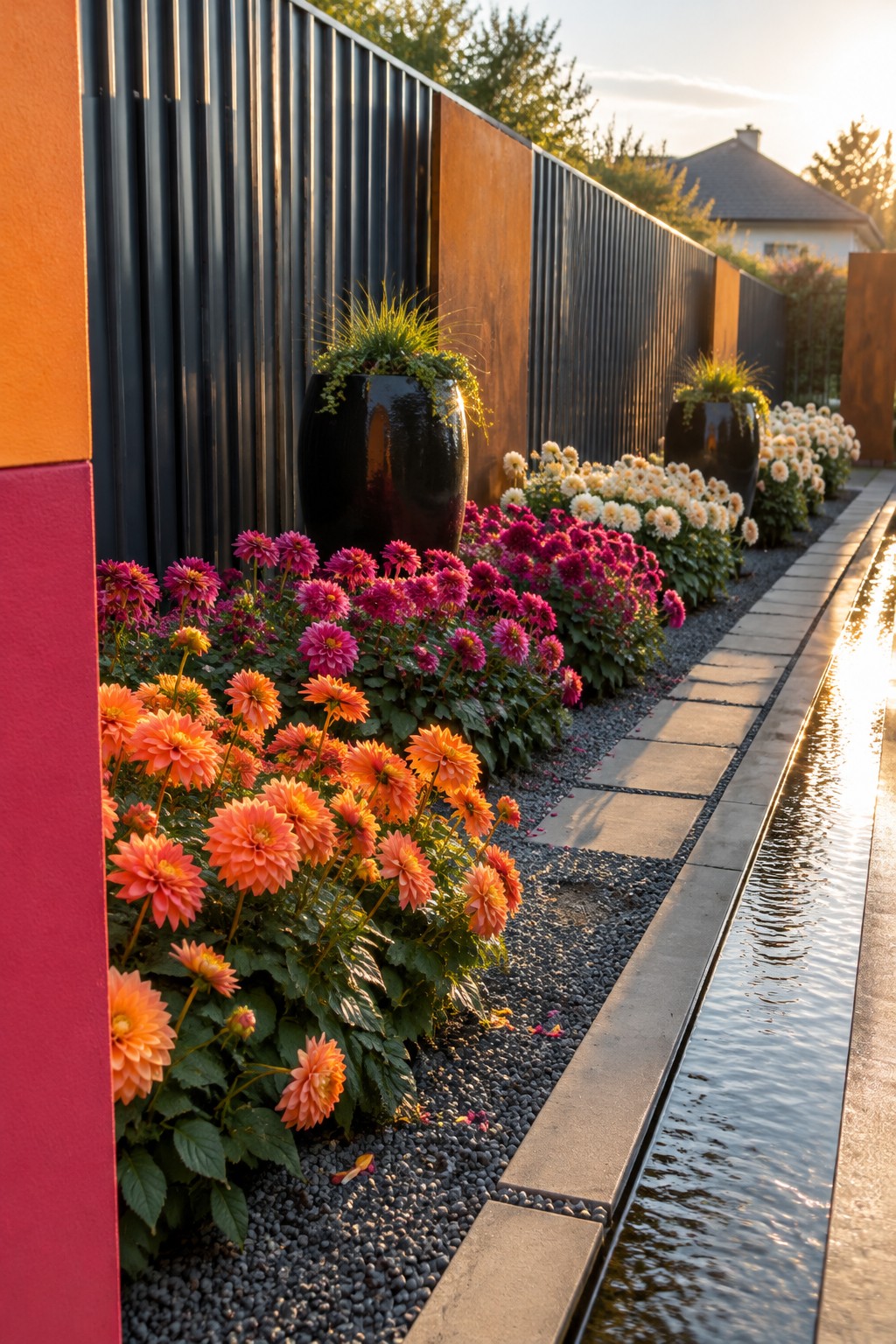
Repeating groups of dahlias along a fence gives a long border an easy rhythm. Here, orange blooms in front of pink and pale flowers make the planting feel varied without losing that sense of order.
Use the same few flower colors in separate patches rather than mixing every shade throughout the bed. Leave room between plants for airflow, and keep the border narrow enough that you can still reach in to deadhead and tidy it.
Use Dahlia Beds to Line a Garden Path
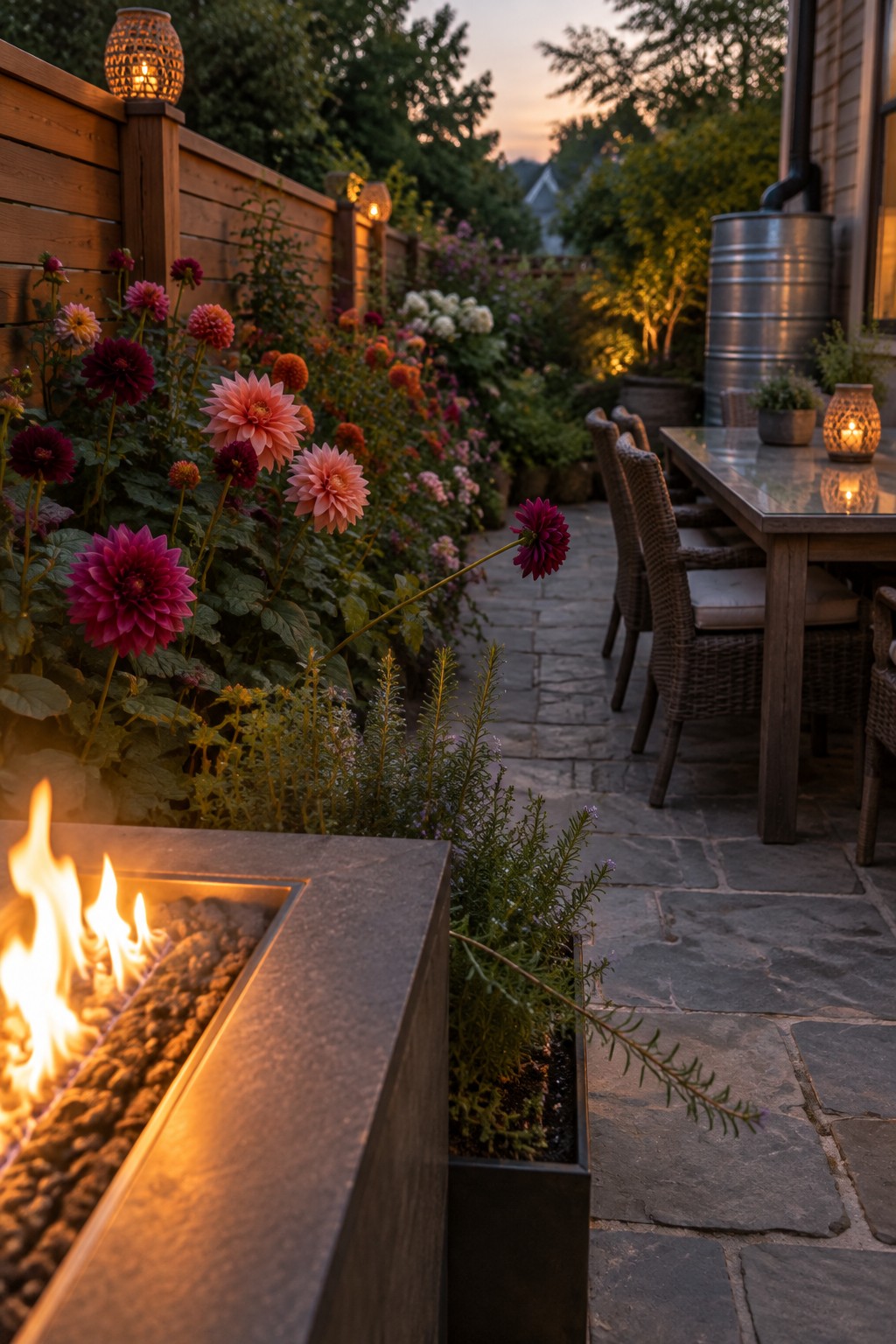
A flower bed beside a path lets dahlias become part of the route through the garden, rather than a border seen only from a distance. The blooms bring color close to the walkway, while taller plants behind them help the bed feel full.
Leave enough room for plants to spread without spilling across the paving, and keep the path wide enough for easy use. This approach suits a side yard or patio garden where a clear walking route matters as much as the planting.
Grow Dahlias in Wall-Mounted Planters

Wall-mounted planters can bring dahlias into a narrow garden where there isn’t much room for a deep border. Repeating the planters along a fence or wall gives the flowers a clear rhythm and keeps them easy to see.
Use sturdy, well-drained boxes and choose compact dahlia varieties that suit their limited soil. The wooden planters shown here sit at different heights, which can help make a plain wall feel more planted without taking up much path space.
Use a Stepping-Stone Path Through the Dahlia Border

A narrow path through a flower border makes it easier to reach plants for watering, deadheading, and cutting blooms. Here, spaced stone slabs leave room for groundcover and flowers to grow along the edges.
This approach suits a deep fence-side bed where a full-width walkway would take up too much planting space. Leave enough room between the dahlias and the stones so the plants can grow without blocking the route.
Frequently Asked Questions
Q: How much space should I leave between dahlias along a fence?
A: Check the mature width on the plant tag, then leave enough room for air to move between plants. Crowding them against the fence can make watering and deadheading harder, too.
Q: Will dahlias grow well beside a shady fence?
A: They flower best with plenty of sun, so a spot that gets about six hours of direct light is a good target. If the fence casts deep shade most of the day, try shorter dahlias in the brightest section instead.
Q: How can I keep tall dahlias from flopping into the fence?
A: Put sturdy stakes in when you plant, before the roots spread, and tie stems loosely as they grow. A little support early on saves a lot of untangling later.
Q: Can I leave dahlias in the ground over winter?
A: In mild-winter areas, they may survive with a thick layer of mulch. Where the ground freezes hard, lift and store the tubers after frost rather than risking the whole border.
