


I’ve noticed how bold rocks in flower beds instantly give a yard that grounded structure, especially when they follow the natural contours of the land. They create clean edges that guide the eye along pathways and prevent spillover into lawns over time. What catches most people’s attention first is the texture play between rough stones and softer plantings. A few years back, I layered oversized rocks in one of my beds to frame perennials, and it transformed a weedy patch into something that looks deliberate without much upkeep. Several of these ideas are practical enough to adapt to different yard sizes, worth sketching out for your next project.
Stone Retaining Walls Edging Winding Paths

Rugged dry-stacked stone walls like these give garden beds a bold, natural texture that fits right into the landscape. They hug the curves of a simple concrete path, holding back soil and plants without looking too formal. That rough stone texture stands out against softer gravel and drought-tolerant greenery, making the whole area feel grounded and easy on the eyes.
You can pull this off on any gentle slope around your home, especially where you want paths to meander through beds instead of cutting straight through. Pair the walls with low-water shrubs and grasses for low upkeep… it works best near a house with stucco or tile roofs, tying the yard to the architecture. Just source local stone to keep costs down and the look authentic.
Irregular Stepping Stones in Grassy Beds
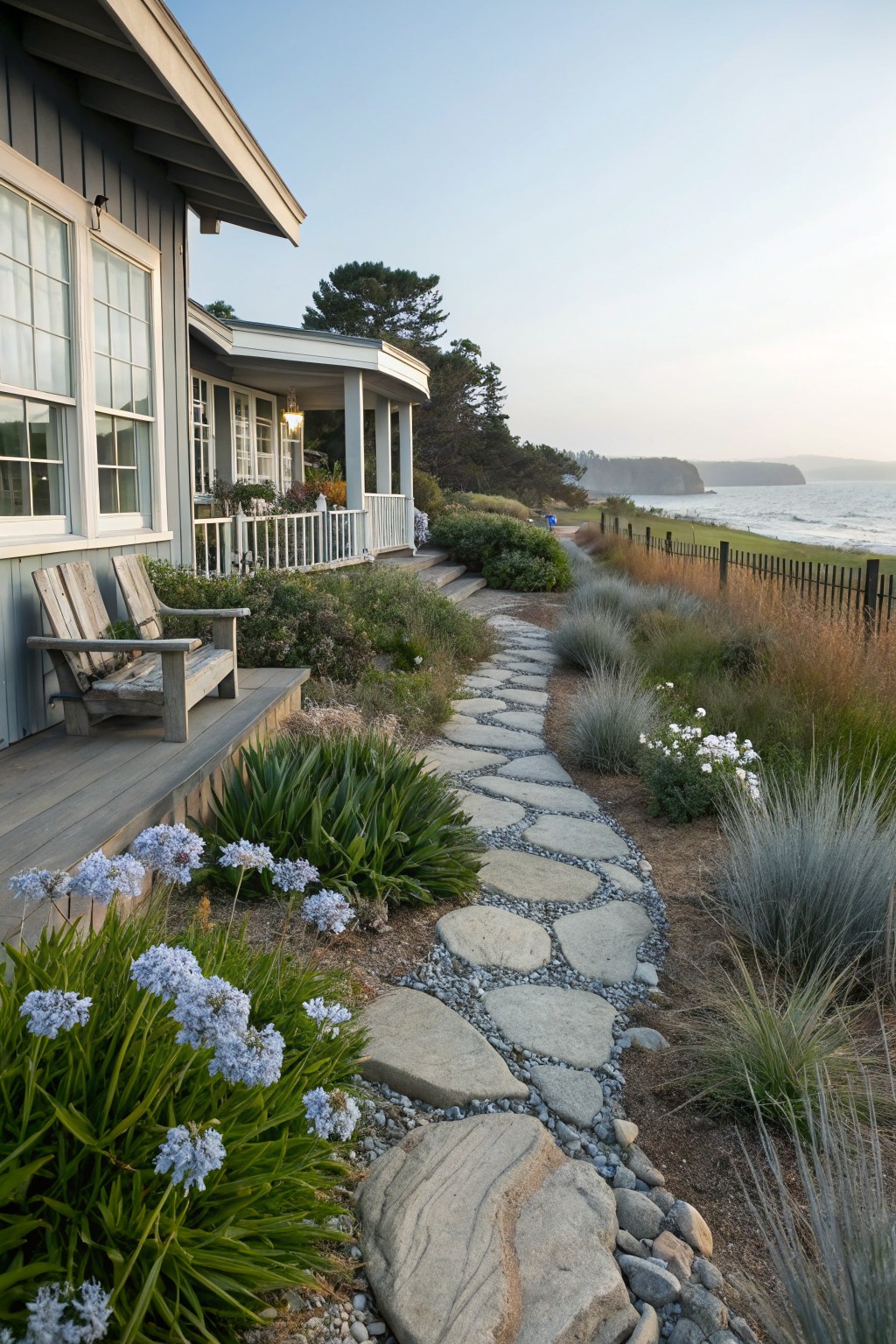
One simple way to add texture to a flower bed is with irregular stepping stones set right into the planting. Here large flat rocks wind through tall grasses and clumps of blue agapanthus, with gravel filling the gaps. The mix of rough stone edges and soft waving plants gives the bed real movement and interest without much upkeep.
This works best along a side yard or from a porch to the gate, especially in dry spots or coastal areas where drought-tolerant plants like these grasses thrive. Keep the stones uneven for a natural feel, and space them so you step from one to the next comfortably. Avoid overcrowding the bed… just let the path guide the eye through.
Rock Retaining Walls for Sloped Flower Beds

Big rock walls like these turn a tricky slope into usable planting space. They stack up rough and uneven, using local reddish boulders to hold soil in place and frame beds full of tough desert plants. That irregular shape adds real texture. It blends right into the terrain instead of fighting it.
Try this on hillsides near your house entry or patio. It suits dry climates with native stone on hand. Build wide enough beds for agaves or cacti. Check stability first…hire help if the slope is steep. Keeps everything low-water and natural-looking.
Textured Rock Beds with Boulders and Gravel
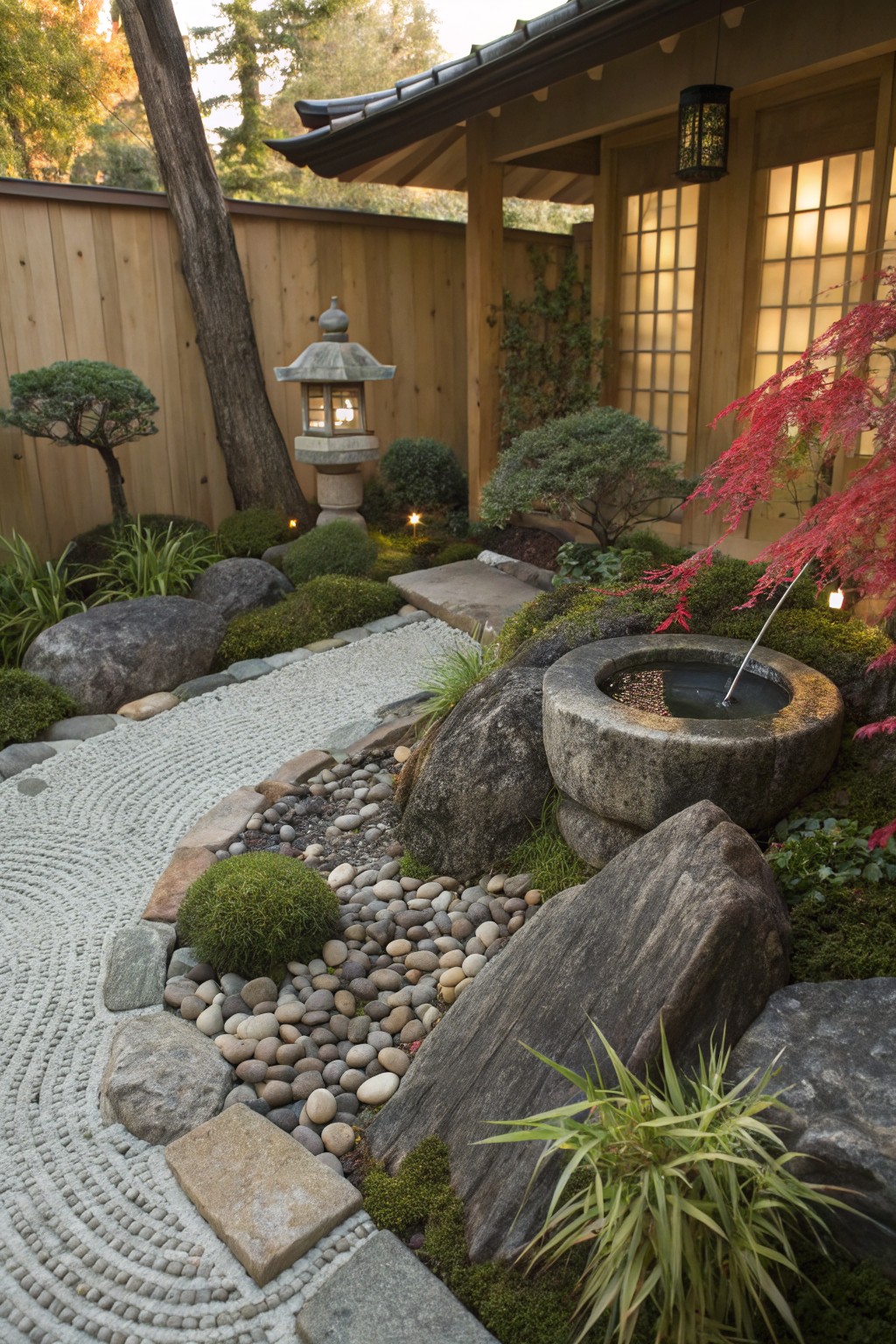
Big boulders mixed right into garden beds with smooth pebbles and raked gravel give this yard a lot of texture without much color. The rocks come in different sizes, from those heavy stones to handful-sized ones, and low mossy plants fill in the gaps. It keeps things simple and calm, like a little Zen spot next to the house.
You can pull this off in a side yard or entry path where space is tight. It fits older homes with a touch of Asian style, or even plain backyards wanting low upkeep. Just rake the gravel now and then… and pick rocks that weather to gray or brown so they blend over time.
Rugged Stone Borders for Flower Beds
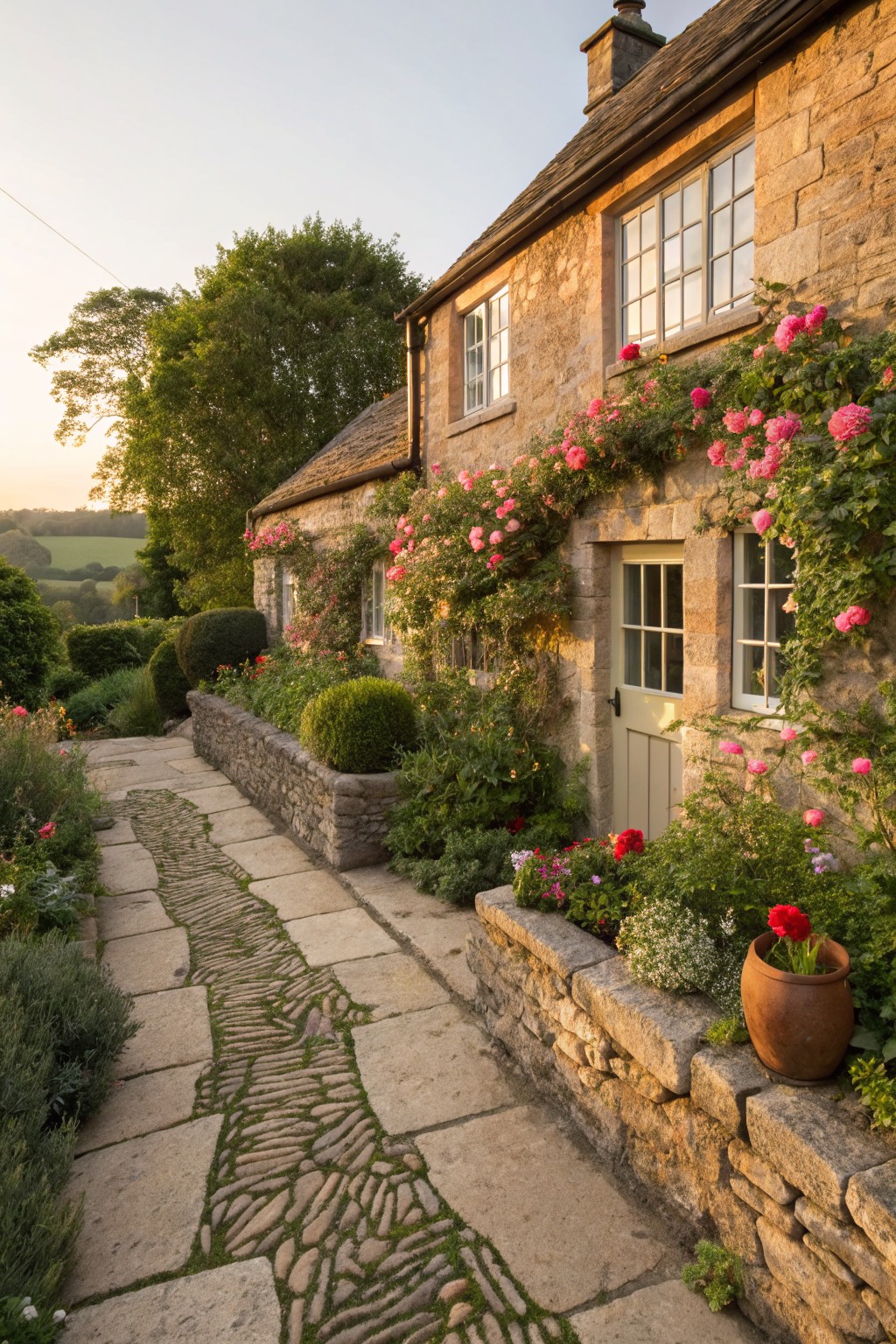
One simple way to add real texture to your landscaping is with low dry-stacked stone walls edging the flower beds. These rough borders hug the path here, letting plants like pink roses spill right over the top. The uneven stones catch moss and feel right at home next to a stone cottage, giving the whole garden a lived-in look without much fuss.
This works best in front yards or side paths where you want to guide people toward the door. Use rocks you find locally, stack them loosely two or three courses high, and fill the beds with tough bloomers that can climb or trail. It suits older homes or rural spots. Just keep soil back from the stones so they don’t get buried over time.
Stepping Stone Path Through Boulder Beds

One simple way to add texture to a yard is with a stepping stone path set right into a bed of boulders and gravel. Large rocks form the main structure, while low shrubs and pink flowers fill in the gaps for color and softness. A trickling stream alongside keeps it natural and cool. This setup stands out because it uses the rocks themselves as the bold feature, making the path feel like part of the ground.
Try this in rocky or sloped spots where grass struggles. Pick flat stones that match your local rocks, and tuck in hardy plants that take drought. It suits mountain homes or cabins best, leading right to the door without much upkeep. Just keep the stepping stones spaced for easy steps.
Stone Steps with Built-In Lavender Beds
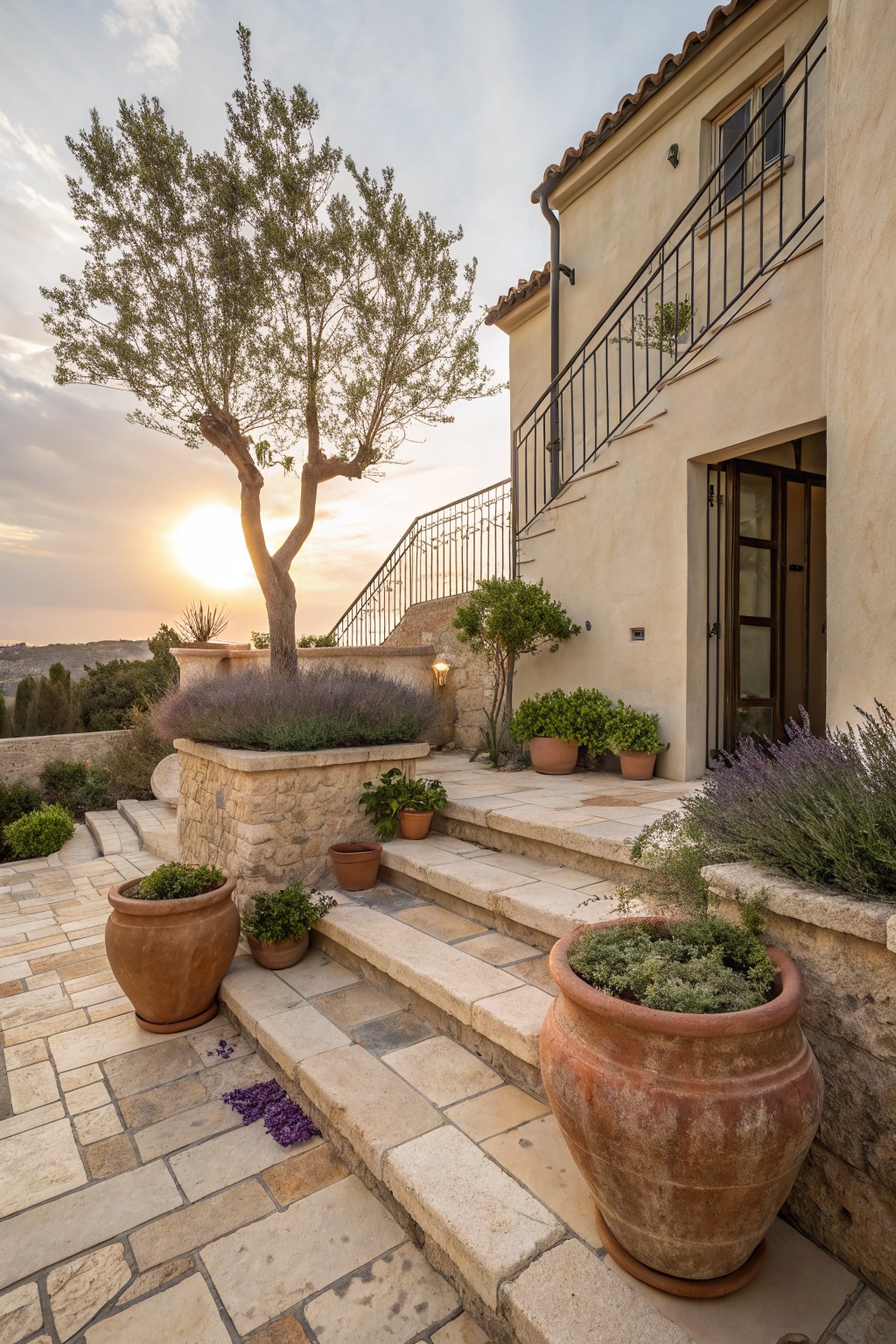
One smart way to add texture around entry steps is to build flower beds right into the stone walls. Here the rough limestone holds back soil for thick lavender plants that spill over softly. Those purple blooms contrast nicely with the stone’s beige tones, and a few big terracotta pots nearby fill out the look without much fuss.
This works best on sloped spots leading to a door, especially in dry climates where lavender thrives on neglect. Tuck in low shrubs or succulents too, but keep paths clear. It suits stone or stucco houses… makes the whole entry feel settled in. Just watch for overwatering those beds.
Large Boulders Edge Flower Beds

Large boulders make a solid edge for flower beds right along a path. They hold everything in place while letting plants tumble over in a natural way. You see pink coneflowers and tall grasses doing just that here, adding real texture without much fuss.
This idea fits sloped yards or spots needing some retaining. Go for rocks in sizes that feel right for your space, maybe sourced nearby to blend in. Pair with tough perennials that come back each year. Watch the scale though… too small and they get lost.
White Pebble Beds with Boxwood Balls

White pebbles make a clean mulch base for round boxwood shrubs in these skinny beds running alongside a pool. The combo gives real texture through the smooth stones and bumpy green shapes. It pulls the eye along without overwhelming the space.
Put this in a courtyard or entry path where you want low upkeep and some interest. Suits stone or modern homes best. Go for larger pebbles so they stay put, and keep the boxwoods trimmed round… easy enough.
Boulders Add Bold Texture to Flower Beds

Big boulders like these dark, rugged ones make flower beds feel more substantial and interesting. They sit right among the lush tropical plants, those giant elephant ear leaves and pops of red flowers, creating layers that catch your eye without much effort. The rocks ground everything, giving the whole path area a natural, almost wild rhythm that fits a relaxed backyard vibe.
Tuck them into beds along a stepping stone walkway for the best effect, especially in warmer climates with bold greenery. Go for uneven sizes to mimic nature, and pair with low-water plants so it’s easy to keep up. Watch the scale though. Too small and they get lost. These work on side yards or entries leading to the house.
Boulder-Edged Beds on Sloped Paths
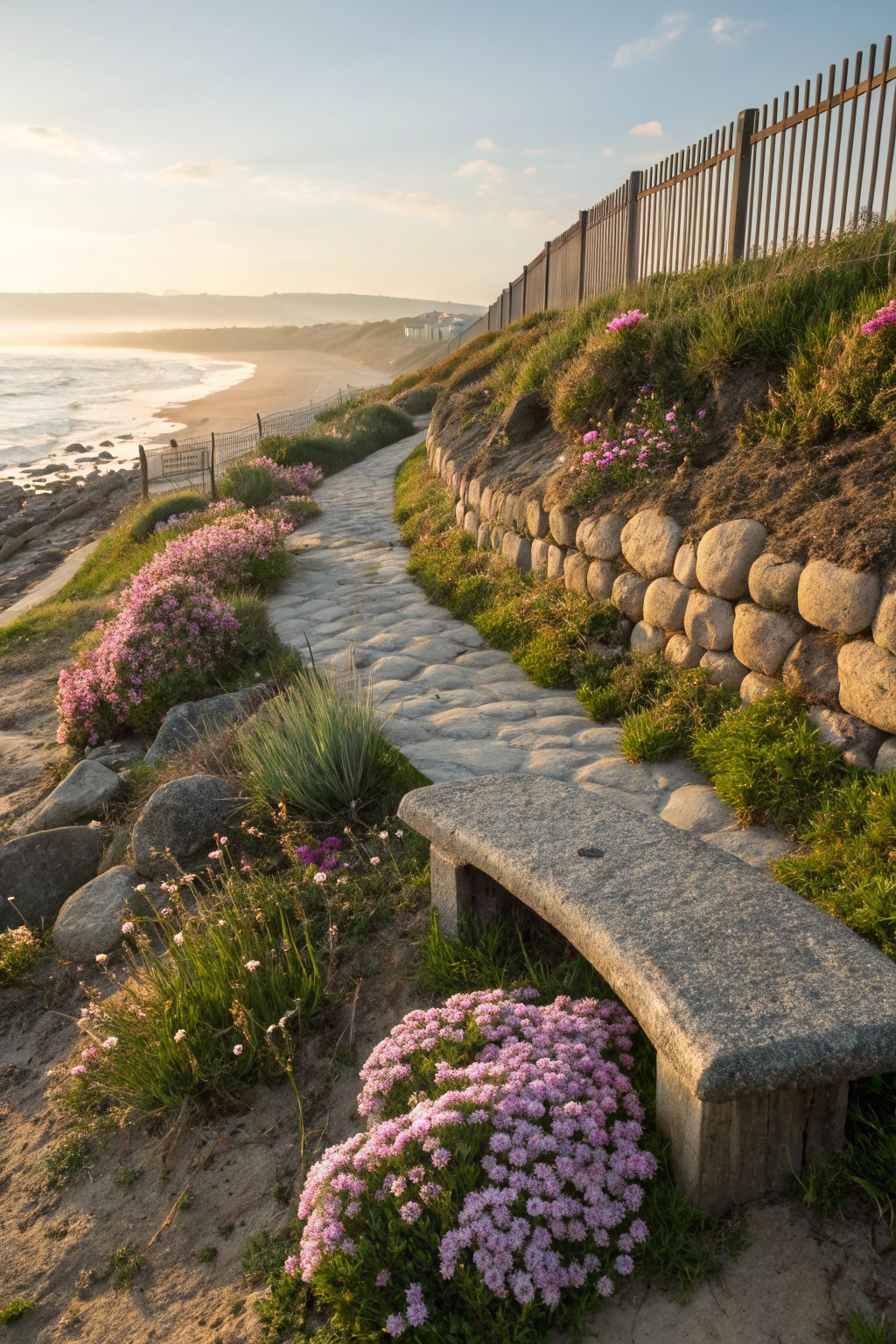
Big rounded boulders paired with dry-stacked stone walls make sturdy edges for flower beds along a winding path. They hold back the soil on slopes while letting pink blooms and grasses tumble over the top. That rough texture stands out against softer plants and pebbled walkways. It feels natural, not fussy.
Try this where you have hills or need erosion control, like coastal yards or hillside lots. Use tough, low flowers like ice plants in pinks and purples. Keep walls under three feet high unless you reinforce them. A simple bench nearby turns it into a spot to sit and watch the view.
Rock Garden Pathways with Stepping Stones

One easy way to add texture to your yard is lining a stepping stone path with gravel beds and big boulders. Those oversized rocks, like the glowing ones here, give the garden some weight and interest without much planting work. Mix in clumps of grasses for a bit of movement, and you get a path that pulls your eye right to the patio or seating area.
This setup works great in backyards with modern houses or sloped spots where you want low upkeep. Lay down landscape fabric first to keep weeds down, then add gravel around the stones and tuck boulders in for anchors. It suits smaller yards too… just scale down the rock sizes. Keeps things clean and walks easy on the feet.
Rock Beds with Lavender and Roses

Big boulders tucked right into flower beds add real texture without much work. Soft purple lavender drapes over the rocks, while pink roses pop against them. That mix of rough stone and flowering plants gives the garden edge a natural, lived-in look. It stands out more than plain dirt borders.
Use this along a path to a shed or back corner of the yard. It suits sloped spots where you need to hold soil back. Works best in country or cottage settings… just go for local stone so it blends. Keep plants low around the rocks to show them off.
Winding Stone Path in Terraced Beds
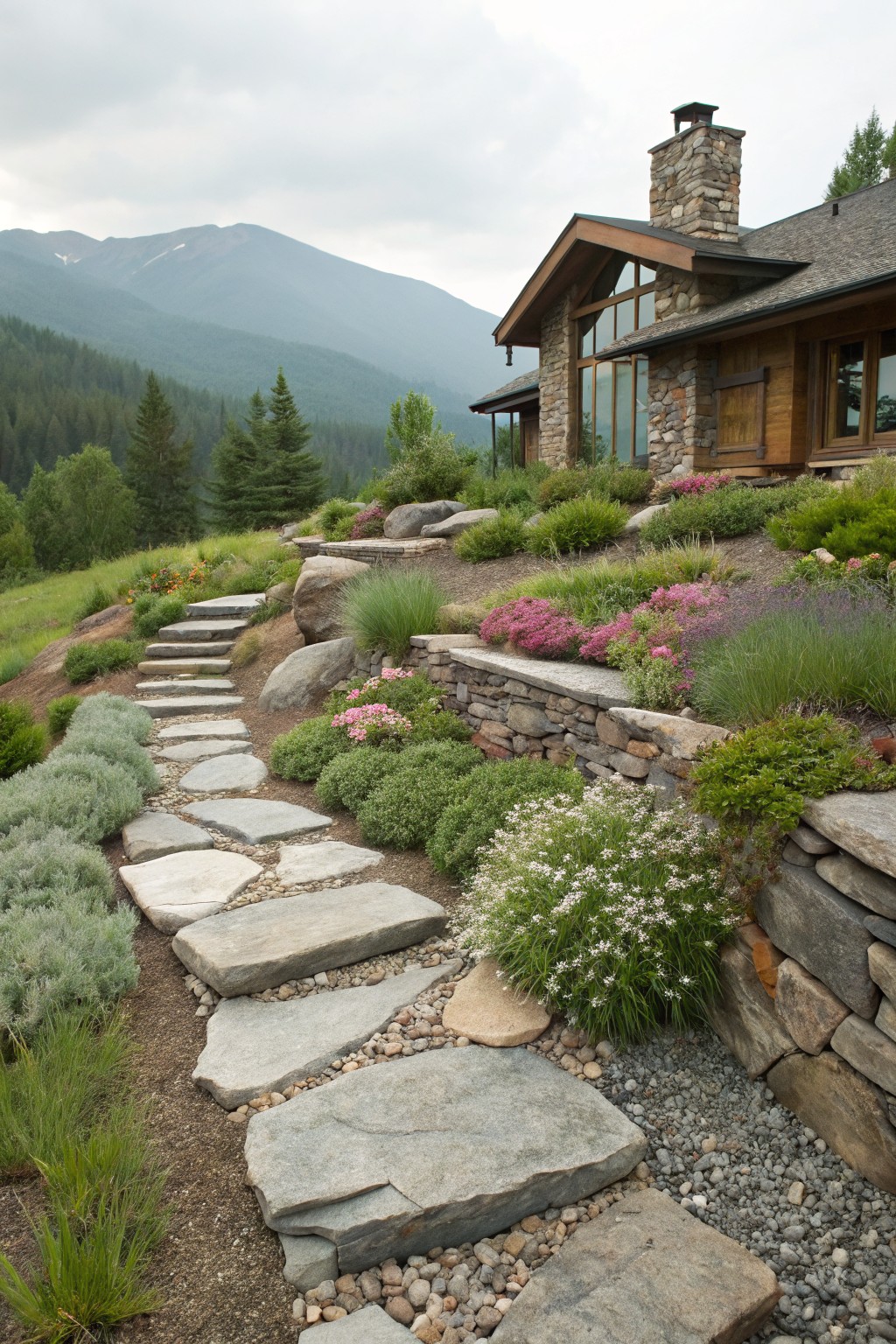
A simple way to handle a sloped yard is this winding path of large, rough-cut stone slabs set into gravel. It cuts right through flower beds held up by dry-stacked rock walls, mixing hard textures with soft plants like pink sedum and wispy grasses. The uneven stones make it feel natural, not forced, and they pull your eye up toward the house without much fuss.
Use this on hillsides to connect your home to the garden below. Pick low plants that spill over the edges for that lived-in look, and it suits cabin-style places or rocky lots. One thing: bed the stones deep so they don’t shift over time.
Rocky Edges Around Raised Garden Beds
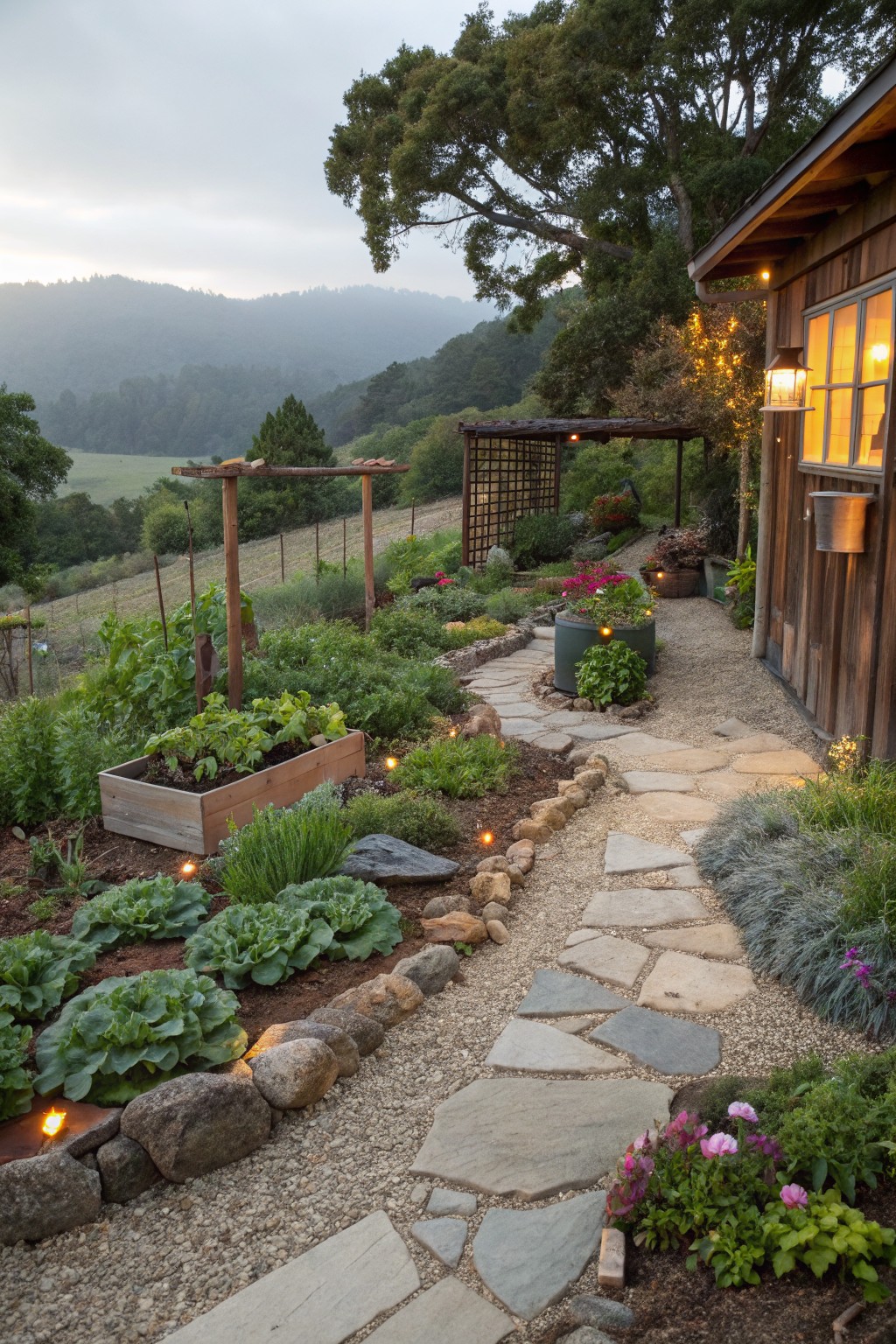
One simple way to add texture to your flower beds is lining them with mixed rocks and boulders. Here you see raised wooden planters edged in rugged stones of different sizes, right along a winding path. That rough border keeps things looking natural and holds back the soil without fancy materials. It stands out because the rocks echo the nearby gravel and larger landscape rocks, tying the whole garden together quietly.
Try this in a backyard veggie patch or hillside spot where you want low upkeep. Pick stones from your area to save money and fit the vibe, maybe bigger ones at corners for punch. It suits casual country homes best…just make sure the path stones are set firm so no one trips.
Slate Path with Gravel Borders

A simple way to add texture to narrow garden spaces is laying irregular slate slabs for the path, then edging them with gravel mulch right into the flower beds. Those rough stone edges paired with smooth pebbles give everything a rugged feel that looks natural, like it grew there. The dark slate stands out against the plants without overpowering them.
This works best in tight urban yards or side paths where you want definition but not fuss. Use drought-tolerant stuff like ornamental grasses and lavender in the beds, since the gravel cuts down on weeding. Just make sure the path slopes a bit for drainage, or you’ll end up with puddles.
Stone Steps Edged with Flowering Rock Beds
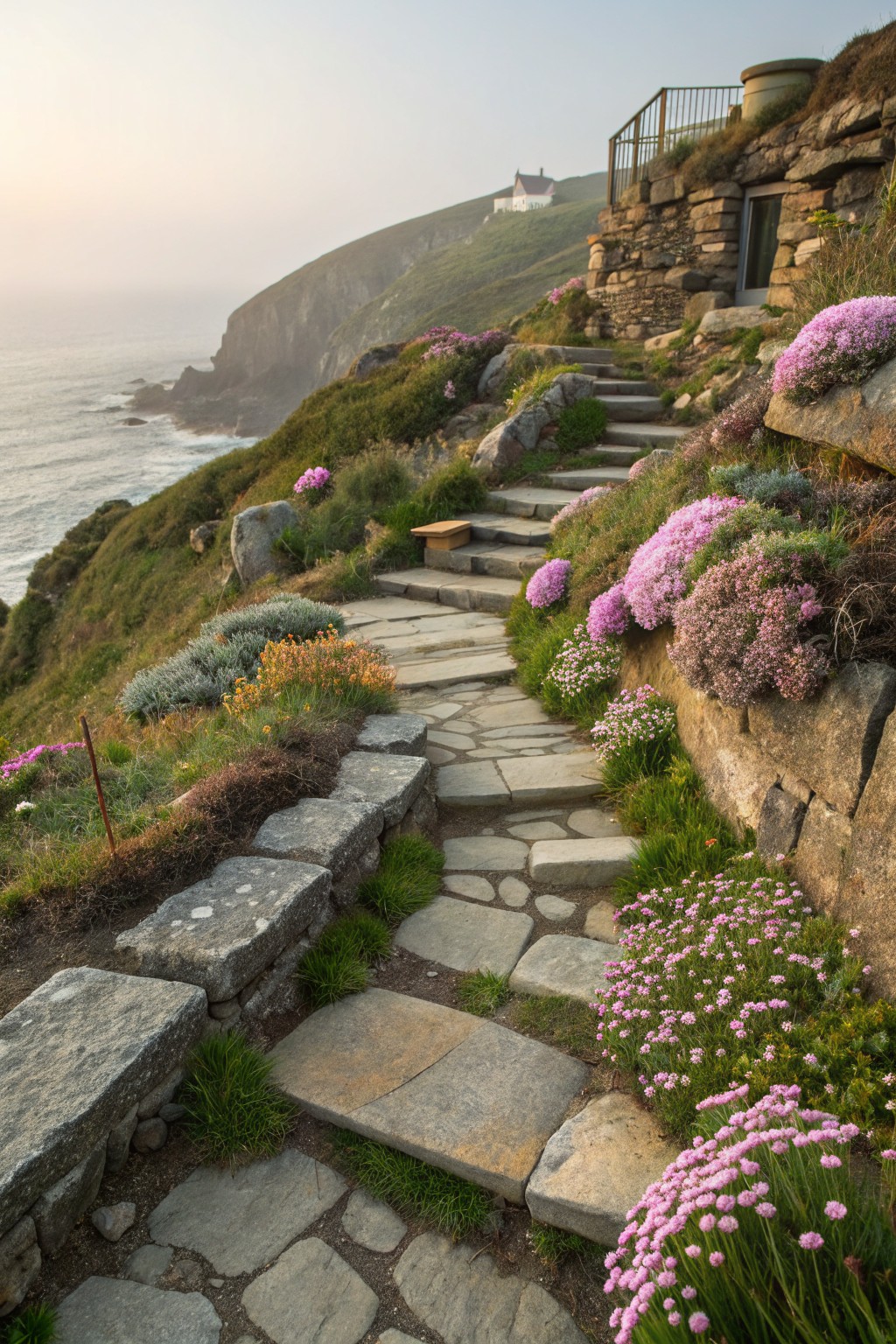
A good way to build texture into a sloped landscape is to line rough stone steps with low rock walls and tuck in pink flowering plants. Those blooms spill right over the edges, making the path feel softer and more inviting. The mix of hard stone and fluffy flowers gives the whole thing depth that lasts through seasons.
Put this on hillsides or coastal paths where erosion is an issue. It fits rocky yards or homes built into cliffs… just use sturdy local stone and tough plants like sea thrift that take wind and salt. Keeps walking easy and weeds down.
Irregular Stone Path in Rocky Flower Beds

Big rough-cut stone slabs make up this simple path that snakes through a flower bed. The edges are lined with mossy rocks and low plants like bluebells and ferns. It pulls the garden together without looking too planned out. That natural texture from the rocks keeps things interesting as you walk along.
Try this in a shady spot under trees where grass struggles. The stones handle uneven ground well, and you can tuck in tough flowers that like moisture. Skip it for super sunny open yards though. It suits cottage gardens or wooded backyards best.
Gravel and Pebble Beds Along Entry Paths

One straightforward way to add texture to your front yard is mixing white pebbles with darker gravel in skinny beds right next to a stone walkway. You see it here flanking the path to the door, where the smooth rounds of pebbles contrast the rougher gravel bits. Low grasses and clipped bushes tuck in without overwhelming, and it keeps things tidy while the rocks catch light at dusk.
This works best on smaller entry approaches or modern-style homes that don’t need busy planting. Lay down landscape fabric first to cut weeds, then layer the rocks two inches deep around your plants. Skip it in wet spots though… water can shift gravel around too much.
Rock Borders Along a Garden Path
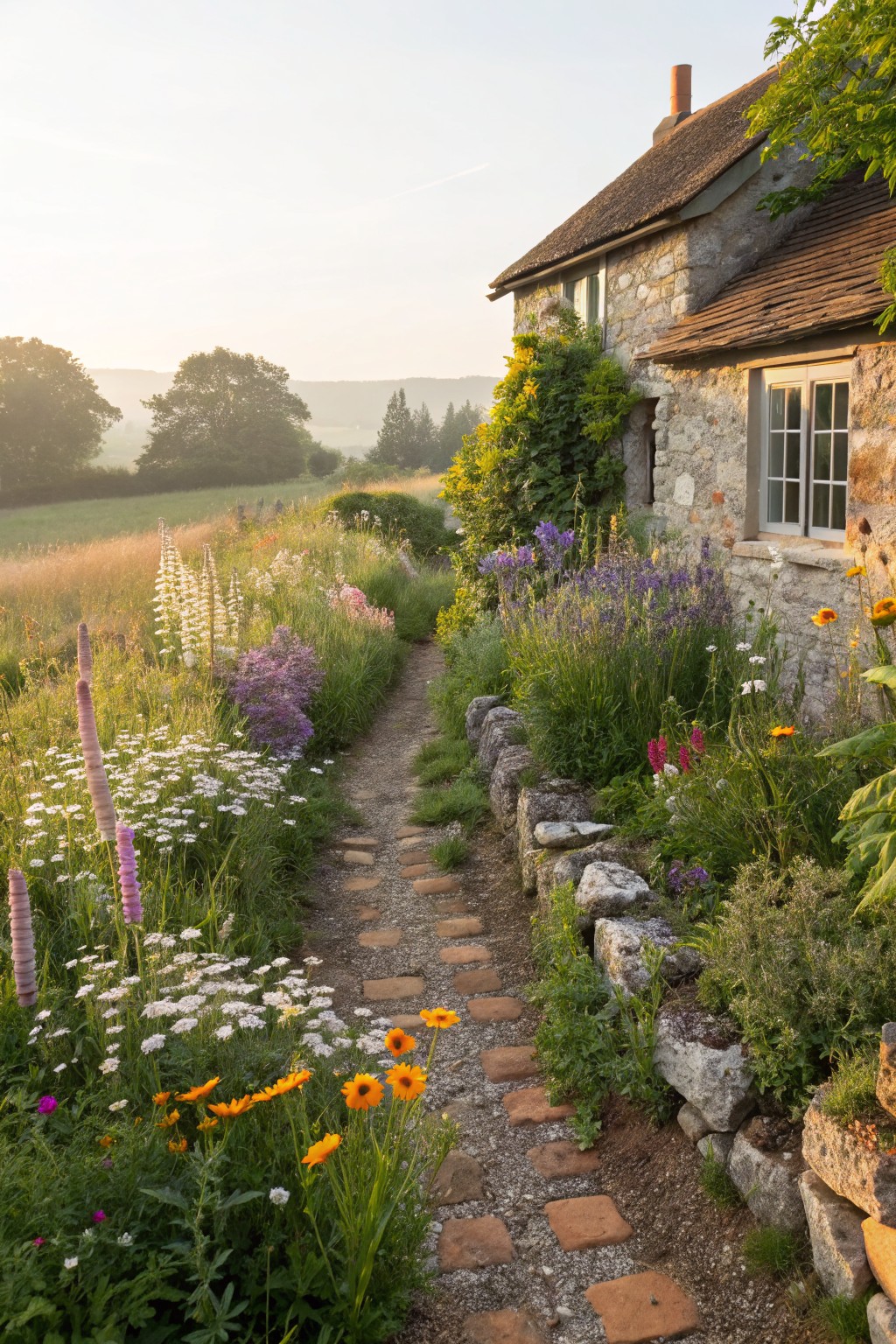
One straightforward way to add texture to flower beds is with low dry-stacked rock walls running right alongside a path. They hold back the plants without looking too fussy, and the rough stones pick up on a stone house nearby. Tall flowers like foxgloves and foxtail lilies poke up over the edges, while lower ones fill in the front for that layered feel.
This works great in cottage gardens or any spot where you want a bit of wildness tamed by stone. Source rocks from your property if you can, to keep it real and low-cost. Just make sure the path stays clear enough to walk, and plant for pollinators to keep the beds buzzing all season.
Spiral Pebble Paths for Courtyard Gardens

One simple way to add texture to a small yard is with a spiral path made from pebbles and flat stones. Here an olive tree sits in the center of stacked stone rings, and the path spirals out in gravel layers. It pulls your eye right to the tree and makes the space feel bigger and more thoughtful. The mix of rough pebbles and smooth slabs gives plenty of visual interest without much planting.
You can pull this off in any enclosed patio or side yard. Start with a round bed for a tree or large pot, then lay concentric pebble borders around it. It suits older stone houses or dry climates best. Just keep the gravel contained so it doesn’t wander.
Boxwoods Lined Up in Gravel Beds

Boxwoods shaped into neat spheres and lined up in a long concrete planter make a simple way to add texture to otherwise plain gravel areas. They stand out against the smooth stones and pebbles without taking over the space. The round shapes repeat along the path, giving the landscaping a calm rhythm that pulls your eye toward the pool steps.
This setup works best around patios or pool edges where you want low upkeep but some green interest. Plant them close together in a raised trough about two feet wide, then fill the surrounding ground with pea gravel for drainage and contrast. It suits modern homes with clean lines, but watch the watering on boxwoods in full sun.
Boulders Shape Textured Flower Beds

Big boulders like these make flower beds stand out without much effort. They add rough texture that pulls the eye and ties right into a stone house facade. Mix in river pebbles at the base and low plants around them. It keeps things low-maintenance too. The uplighting at night just highlights that natural feel.
Try this around entry steps or paths where you want some weight. It suits hillside lots or modern rustic homes best. Go for boulders about half your height so they don’t overwhelm. Skip tiny rocks alone… they look scattered.
Frequently Asked Questions
Q: Do I need special tools to add rocks to my flower bed?
A: Grab a shovel, gloves, and a wheelbarrow, that’s it. Dig shallow spots for larger rocks first. They settle in quick and boost texture without fuss.
Q: How do I keep weeds out once the rocks go in?
A: Roll out landscape fabric before rocks and flowers. Cut holes just for plants. Weeds struggle to push through, saving you time.
Q: What if my yard gets a lot of shade…will rocks still work?
A: Rocks reflect light and add interest even in shade. Pair with hostas or ferns for bold texture. Drainage stays great, no soggy roots.
Q: Can I refresh a boring old flower bed with just rocks?
A: Pull faded mulch and drop in mixed sizes. And tuck in a few perennials. Texture transforms it overnight.
