

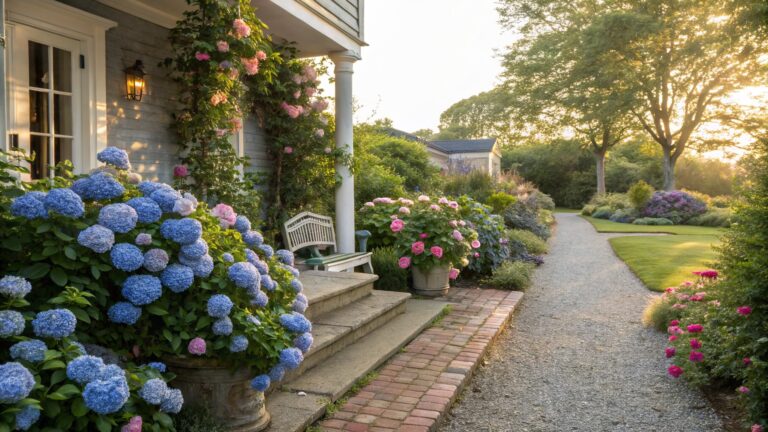
I’ve noticed that hydrangeas and roses work best in landscaping when you build the layout around their natural spreading habits and seasonal shifts.
They create reliable structure along pathways or as low hedges, filling in over a few years without much fuss if you get the spacing right.
In my yard, I once edged a rose bed with simple stone, and it made the whole area feel more defined and walkable right away.
People tend to notice first how these plants frame views or soften hard edges like fences.
Some setups in here make me want to sketch out a bed or two for testing come planting season.
Cascading Hydrangeas Over the Entry Door
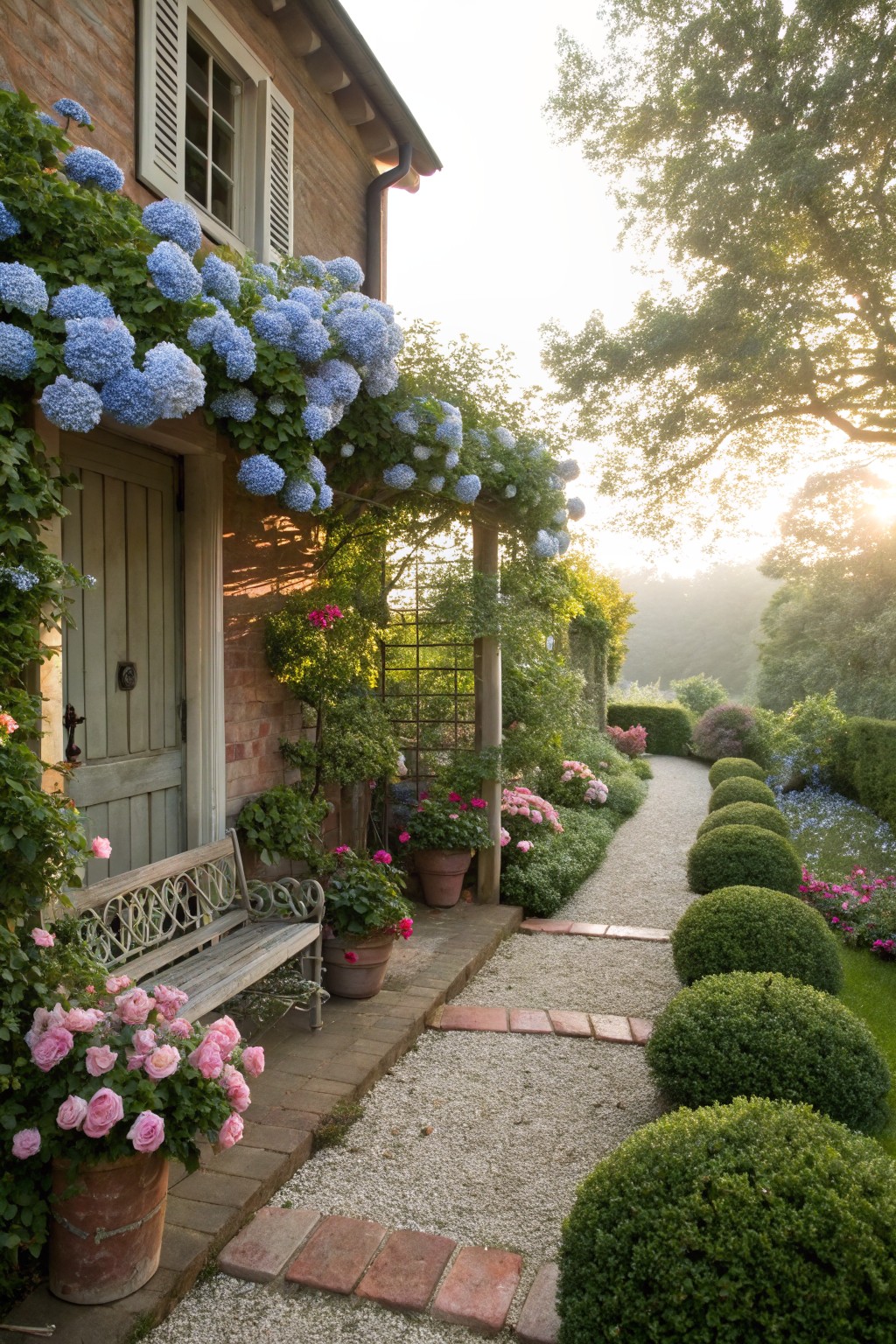
Nothing says garden charm like hydrangeas tumbling down over your front door. In this setup, big blue blooms cover the brick wall and frame the green door, pulling the house right into the garden. It softens hard edges and gives that full, overflowing look people love, especially with the morning light hitting them.
You can get this going by picking a climbing variety like Hydrangea petiolaris and training it up a simple trellis near the entrance. Add potted roses by a bench for pink accents and color through summer. It suits older brick homes or cottages best, where you want low-fuss curb appeal. Just prune lightly each year to keep the door clear.
Winding Paths Through Flower Beds
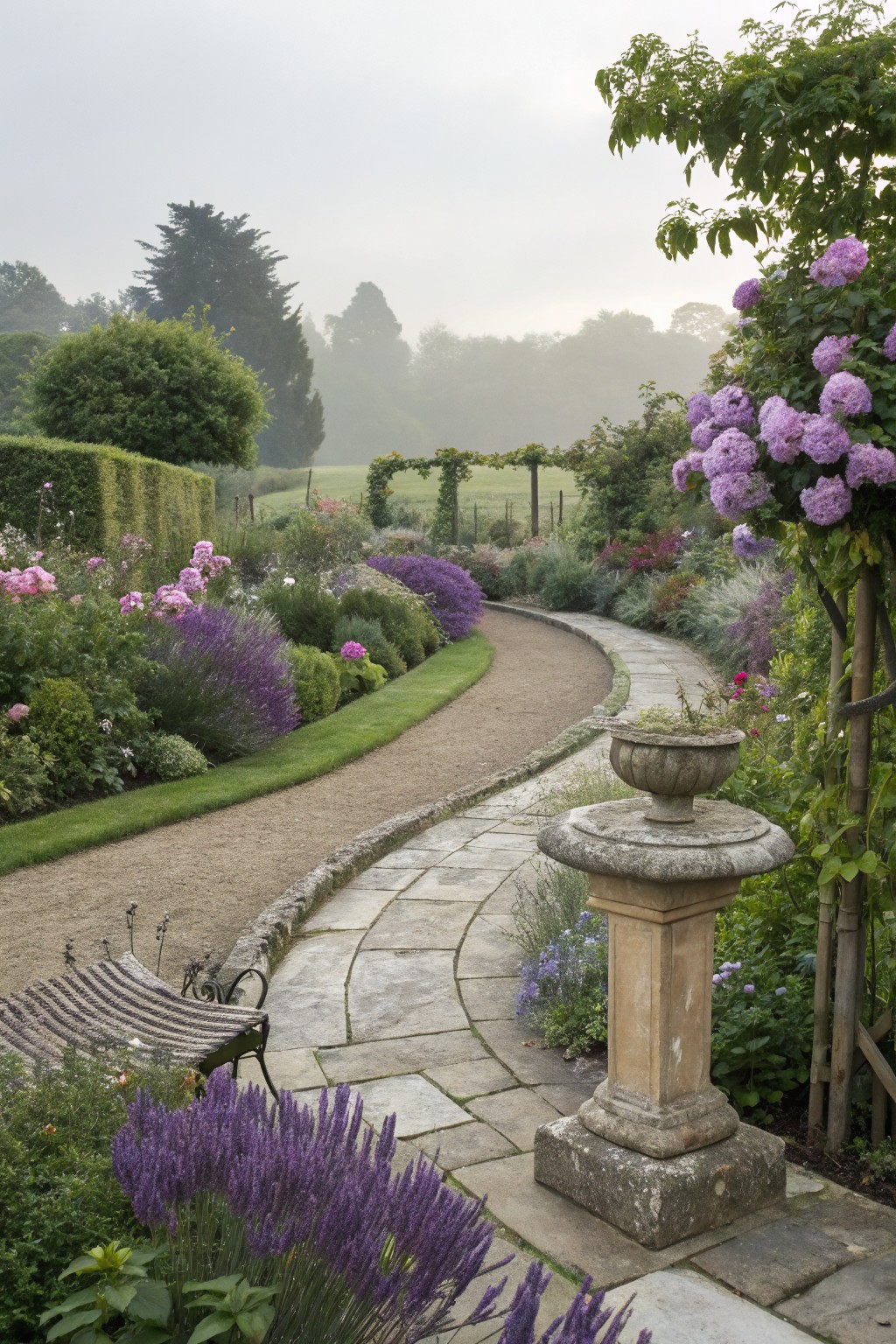
A simple gravel path that curves through the garden pulls everything together in this setup. It winds past beds full of pink hydrangeas, roses, and lavender, making the yard feel bigger and more peaceful. That gentle bend keeps it from looking too straight or stiff. You just want to follow it.
Put one like this in a backyard or along a side yard where you can add deep borders on both sides. Keep the path narrow, about three feet wide, and edge it with low plants so the flowers spill over a bit. It suits older homes with a cottage feel… just watch the gravel doesn’t wash away in heavy rain.
Boxwood Edging Frames a Rose Garden Path
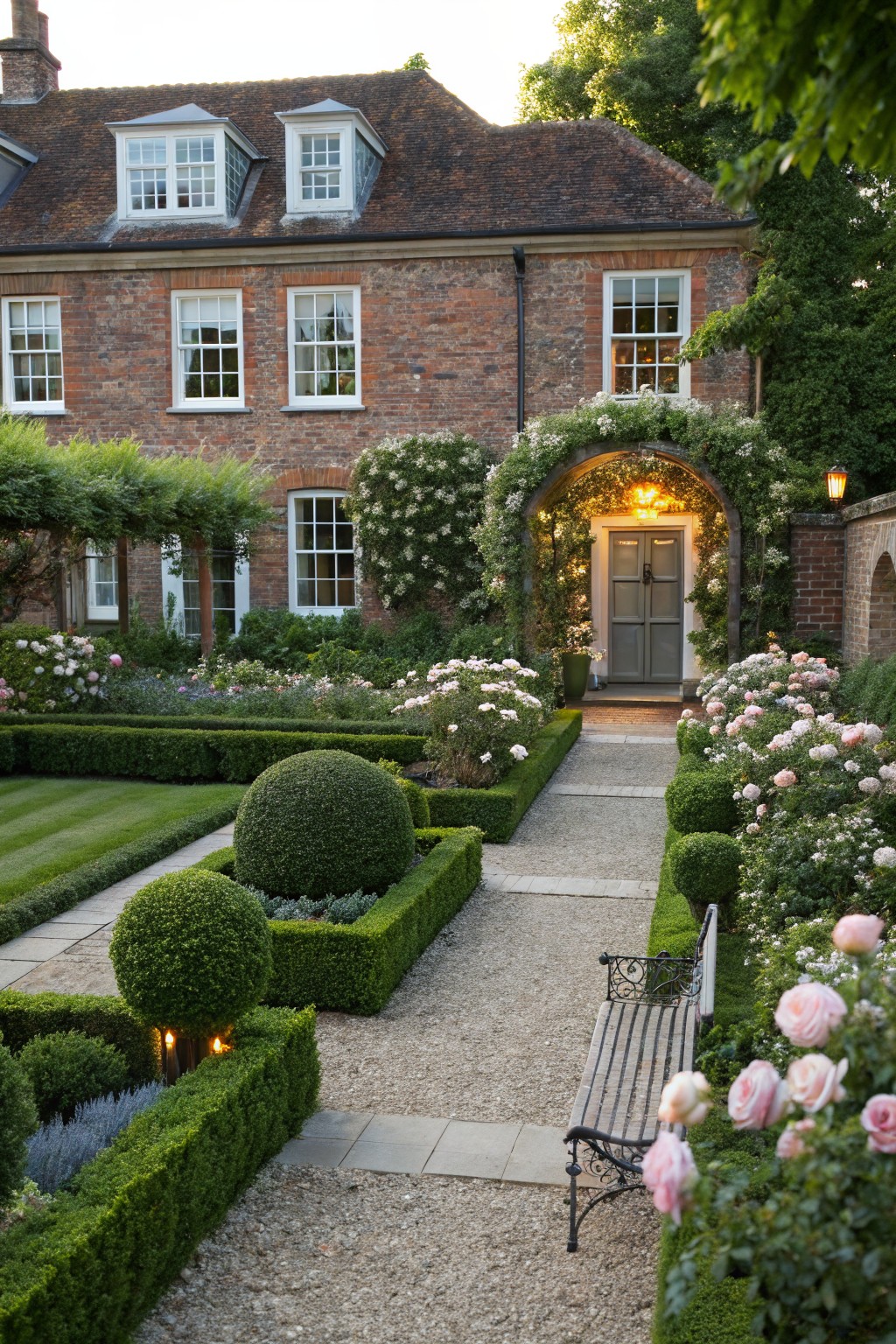
Boxwoods make such a solid choice for lining garden paths. You see it here with those neat clipped hedges and big round topiaries that keep everything in line, leading straight to the house. Then the pink roses tumble over the edges and climb the arch at the door. It gives that formal feel but stays pretty and not too rigid.
This works best in front gardens where you want to draw folks right up to the entrance. Go for low boxwoods along the gravel or stone path, space topiaries every few feet for rhythm. Plant rambling roses nearby so they soften things up. Keep it to sunny spots. Might need trimming a couple times a year.
Gravel Path Lined with Hydrangeas and Roses
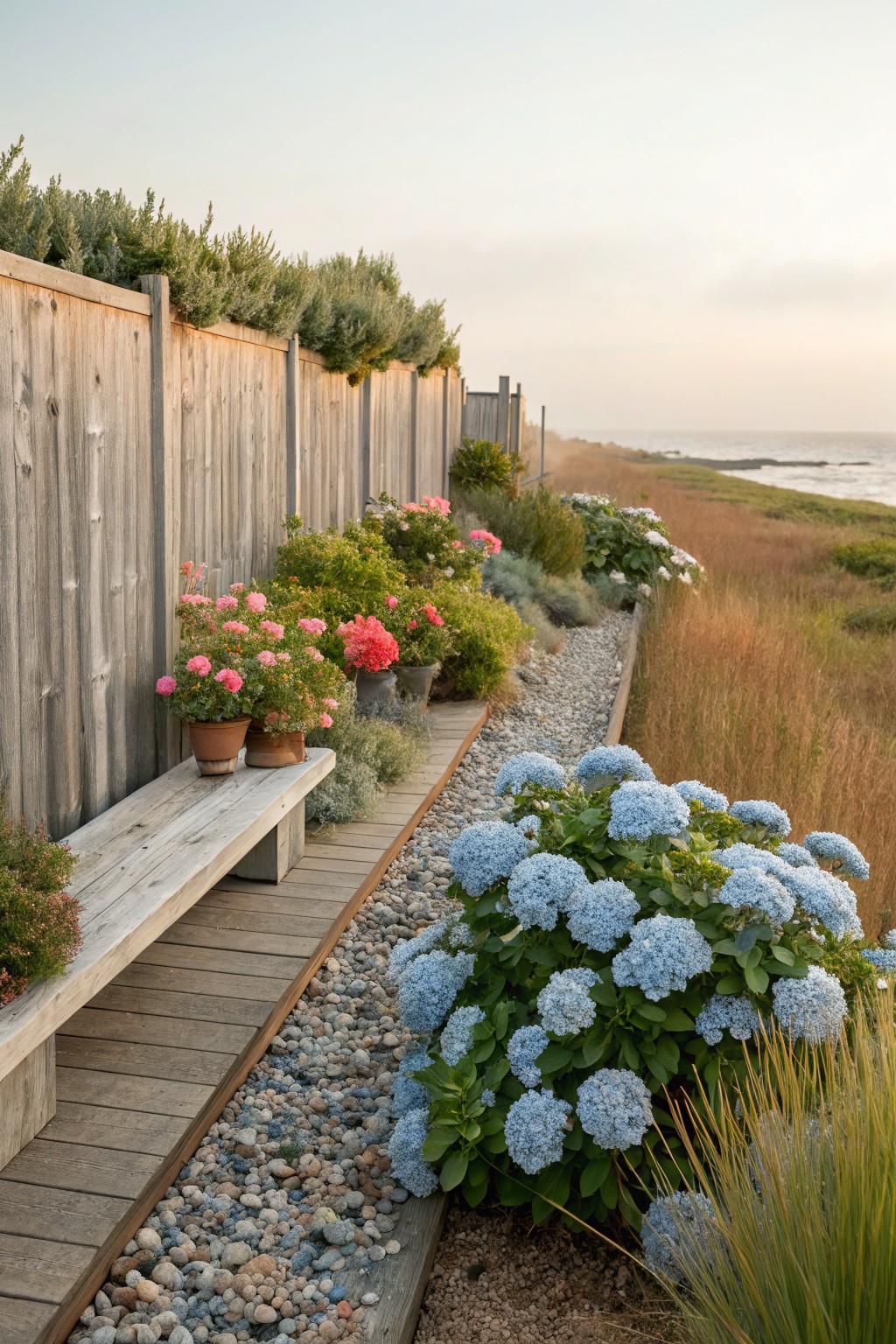
A gravel path like this runs right along a fence, edged with wood to keep things neat. Big blue hydrangea bushes sit at one side, while pink roses bloom in pots nearby. It makes a narrow space feel full and welcoming, especially with the ocean view. The gravel stays low fuss, and the flowers add steady color through summer.
This works best in side yards or coastal spots where you want a defined walk without much upkeep. Plant hydrangeas for height and roses in pots so you can move them if needed. Pair it with a plain bench for sitting. Just make sure the gravel drains well to avoid mud after rain.
Winding Stone Path Through Flower Beds
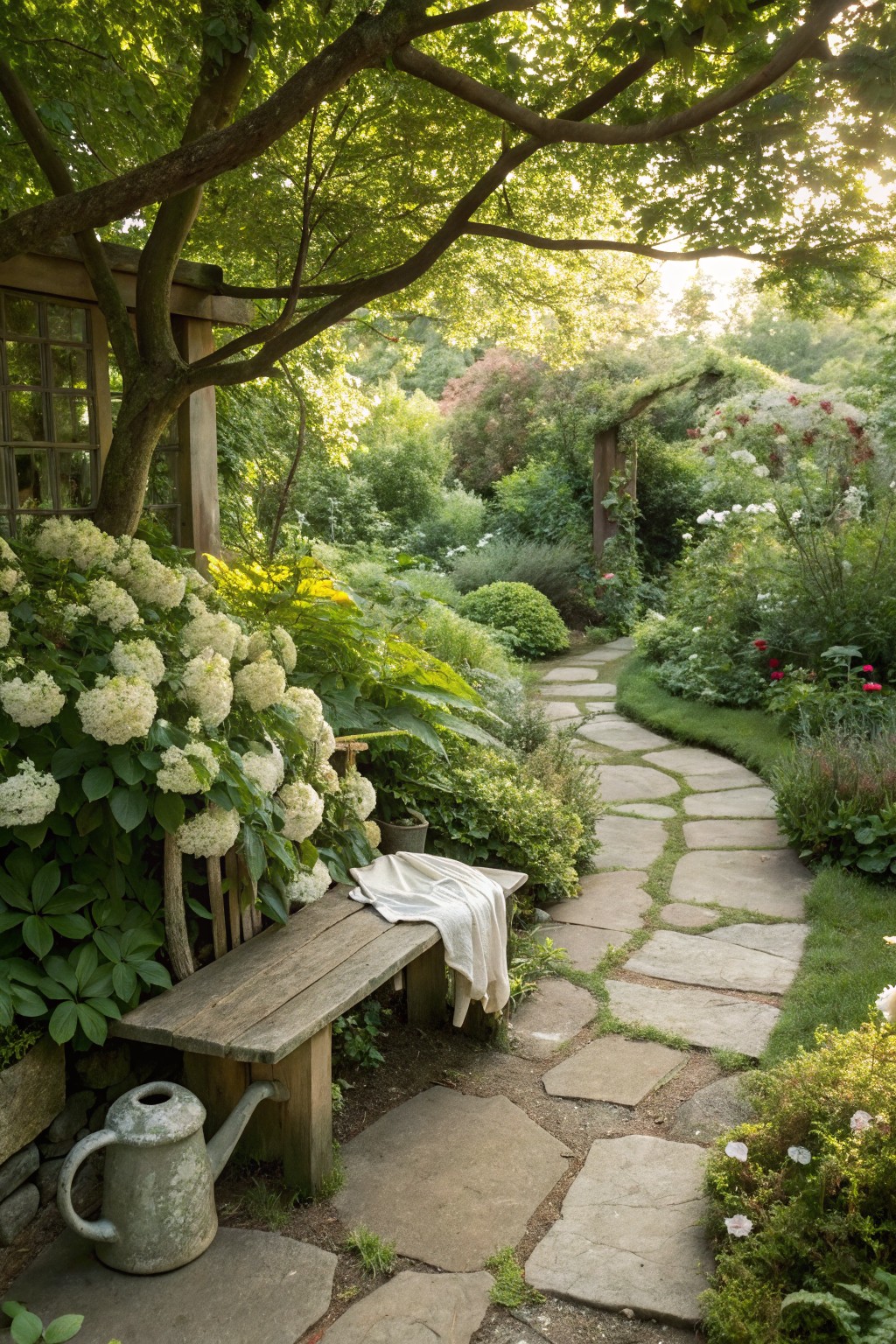
A winding stone path like this one draws you gently through the garden. Big clusters of white hydrangeas line one side, with red roses adding spots of color along the way. It turns a simple yard into something you want to explore step by step. That curve keeps it from feeling too straight or boring.
Set the path in a curve to fit your space, using flat stones for an easy walk. Plant hydrangeas close for that full, fluffy look, and tuck in roses where you want a little brightness. It suits cottage-style yards or any spot with some shade from trees. Just keep the edges trimmed so it stays neat.
Potted Roses Bring Garden Charm to Patios
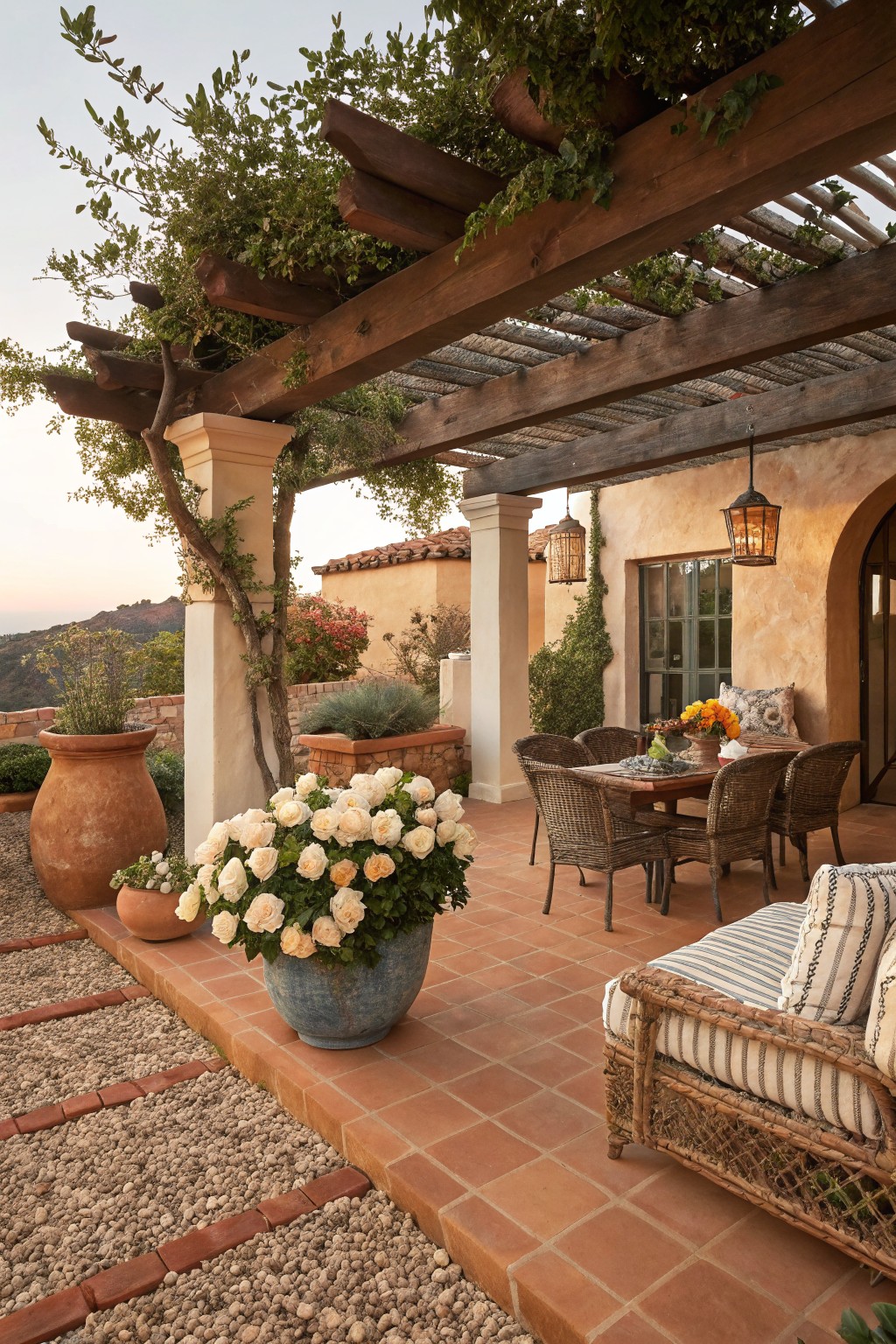
Big pots overflowing with white roses can turn a basic patio into a spot that feels more like a private garden. Here, they’re grouped right around the dining table and sofa, drawing the eye and adding soft layers without much effort. The blooms mix well with the simple wicker furniture and terracotta floor, keeping things relaxed yet pretty.
This works best on covered patios or terraces where you want low-fuss color. Pick large clay pots to hold the plants steady, and place a few near seating areas so they scent the air during meals. It’s ideal for homes with some sun but not full beds to plant, though watch that the roses get enough water in hot spots.
Hydrangea-Lined Garden Path
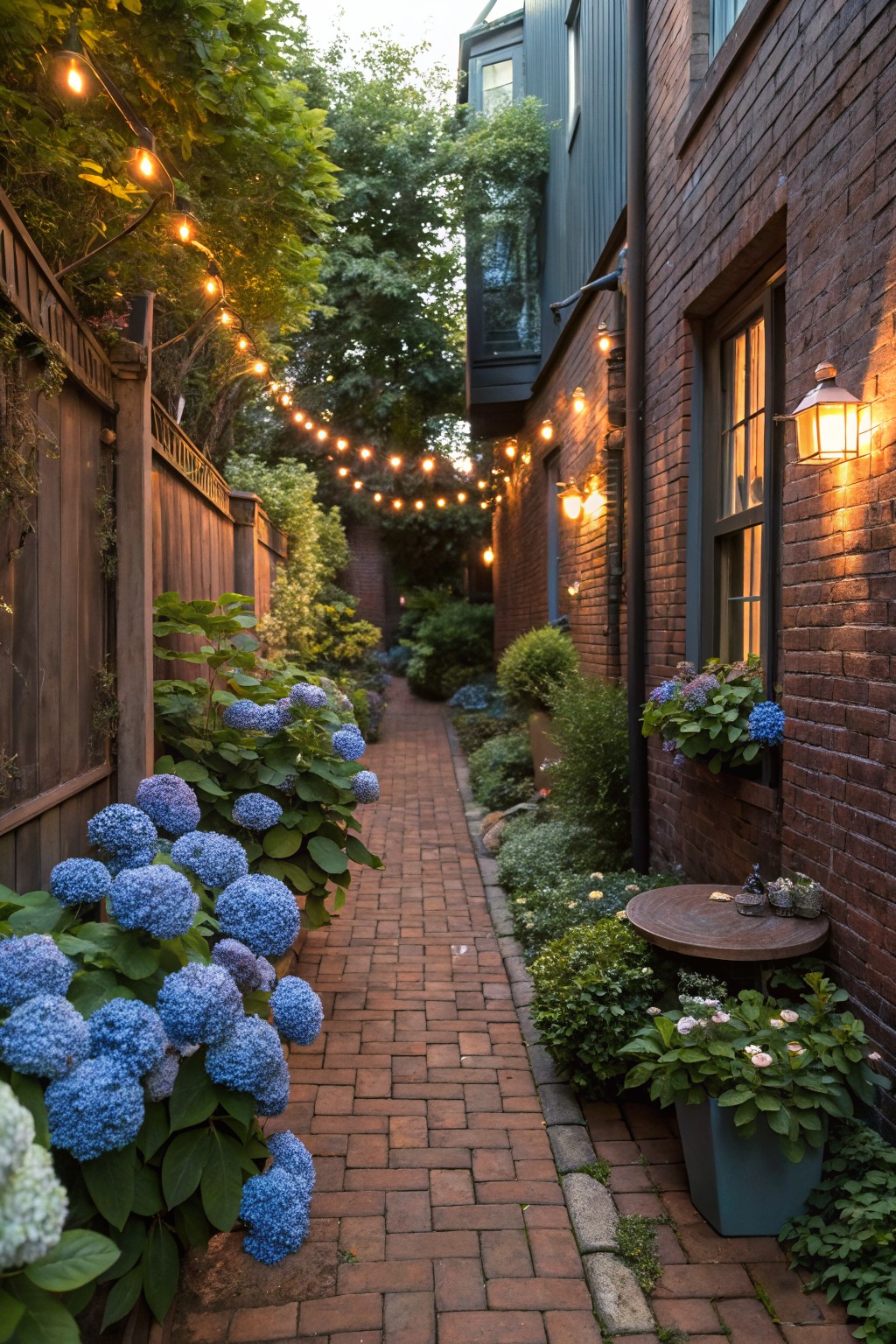
Big hydrangea bushes make a narrow path feel full and welcoming. Here, the blue blooms crowd right up to the brick edges, creating that tunnel effect without much space needed. String lights overhead turn it magical come evening, and it keeps things low fuss once established.
You can pull this off in skinny side yards or alleys next to the house. Plant hydrangeas about two feet from the path so they lean in over time. Go for brick or flagstone that matches your place, and string simple bulb lights along a fence or wall. Watch the watering those first years… they need it to bulk up.
Hydrangea Borders Along Pool Edges
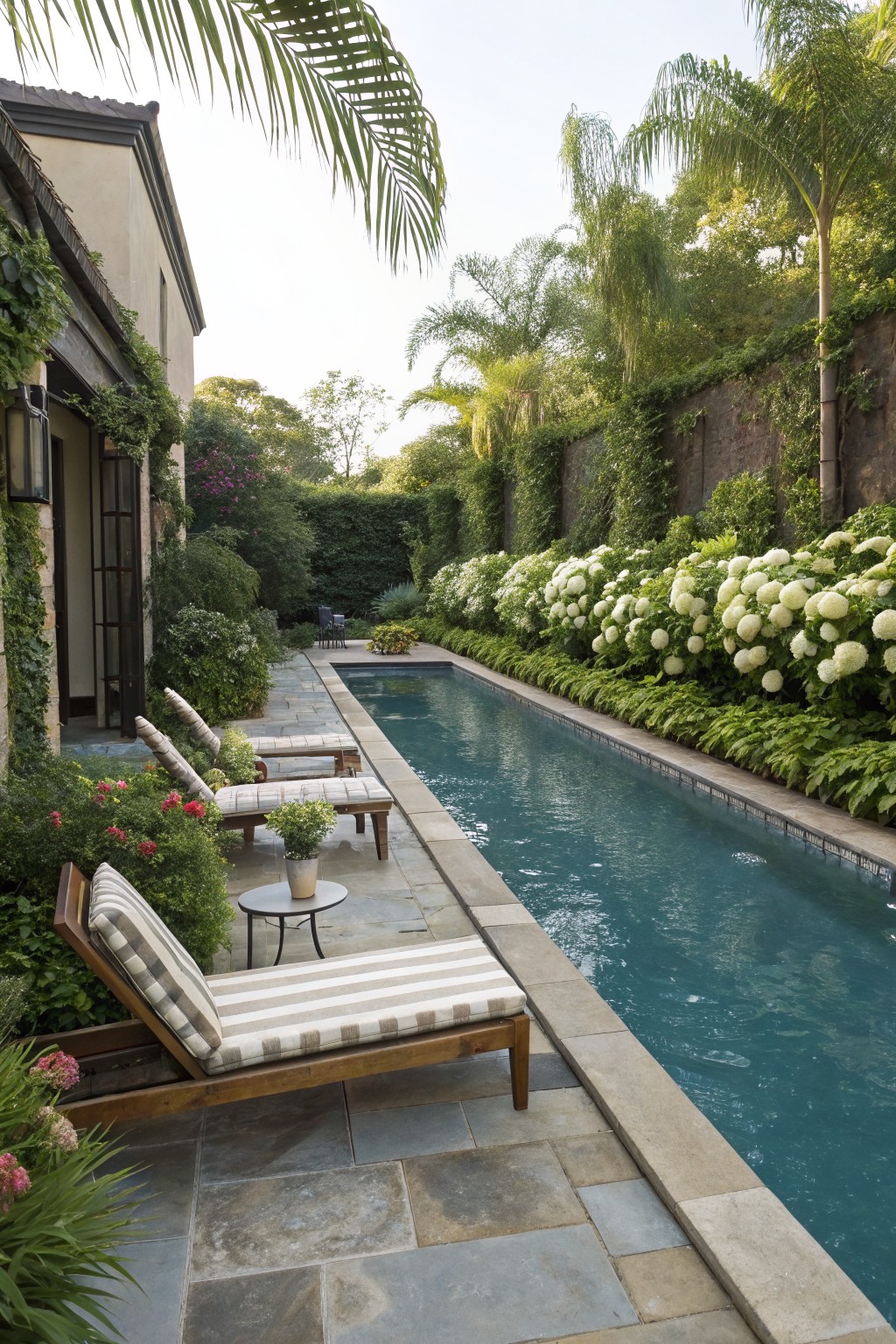
Big clusters of white hydrangeas planted right up to the pool make a soft green wall that hides the fence behind. They bloom full and round, spilling a little over the stone path without getting in the way. Paired with a few roses near the loungers, it turns a simple lap pool into something lush and easy on the eyes.
This works best in long, narrow pool areas like side yards. Space the hydrangeas evenly for rhythm, maybe 4 to 6 feet apart depending on variety. Add low plants underneath to fill gaps and keep weeds down. It’s low fuss once established… just right for warmer spots where they get steady water from the poolside.
Garden Paths Lined with Hydrangeas
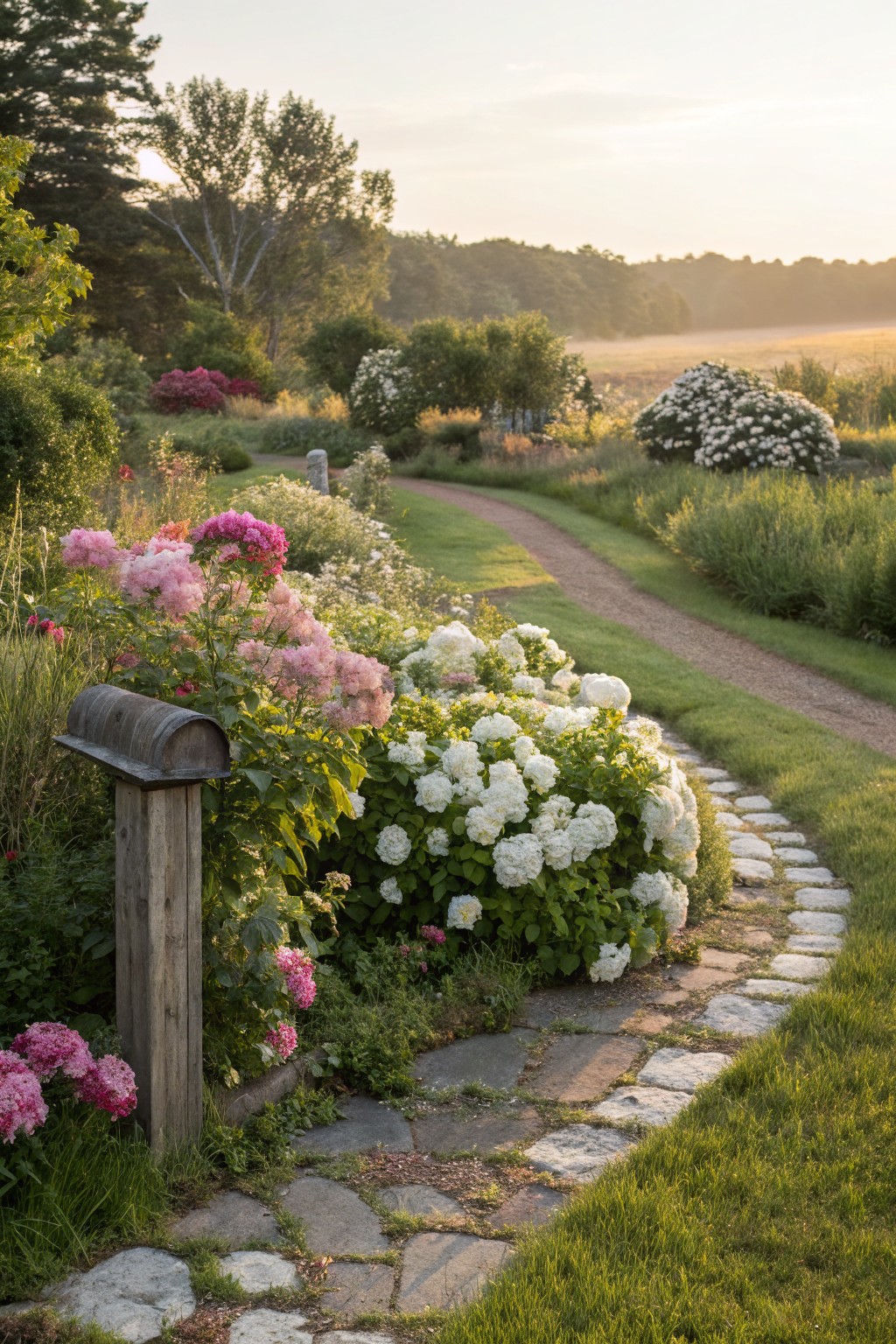
A gravel path like this one draws you through the garden in a natural way. Big hydrangea bushes in pink and white line both sides, their blooms spilling over onto the edges. That makes the whole walk feel full and easy on the eyes. A simple post with an old mailbox sits right at the start, tying it all to everyday garden life.
You can pull this off in most backyard setups, especially if you have room for curves. Start with gravel for good drainage, then plant hydrangeas close along the borders so they grow thick. Roses or other perennials fill in the gaps. It suits cottage gardens best… just watch that the path stays clear in wet weather.
Formal Courtyard Fountain Garden
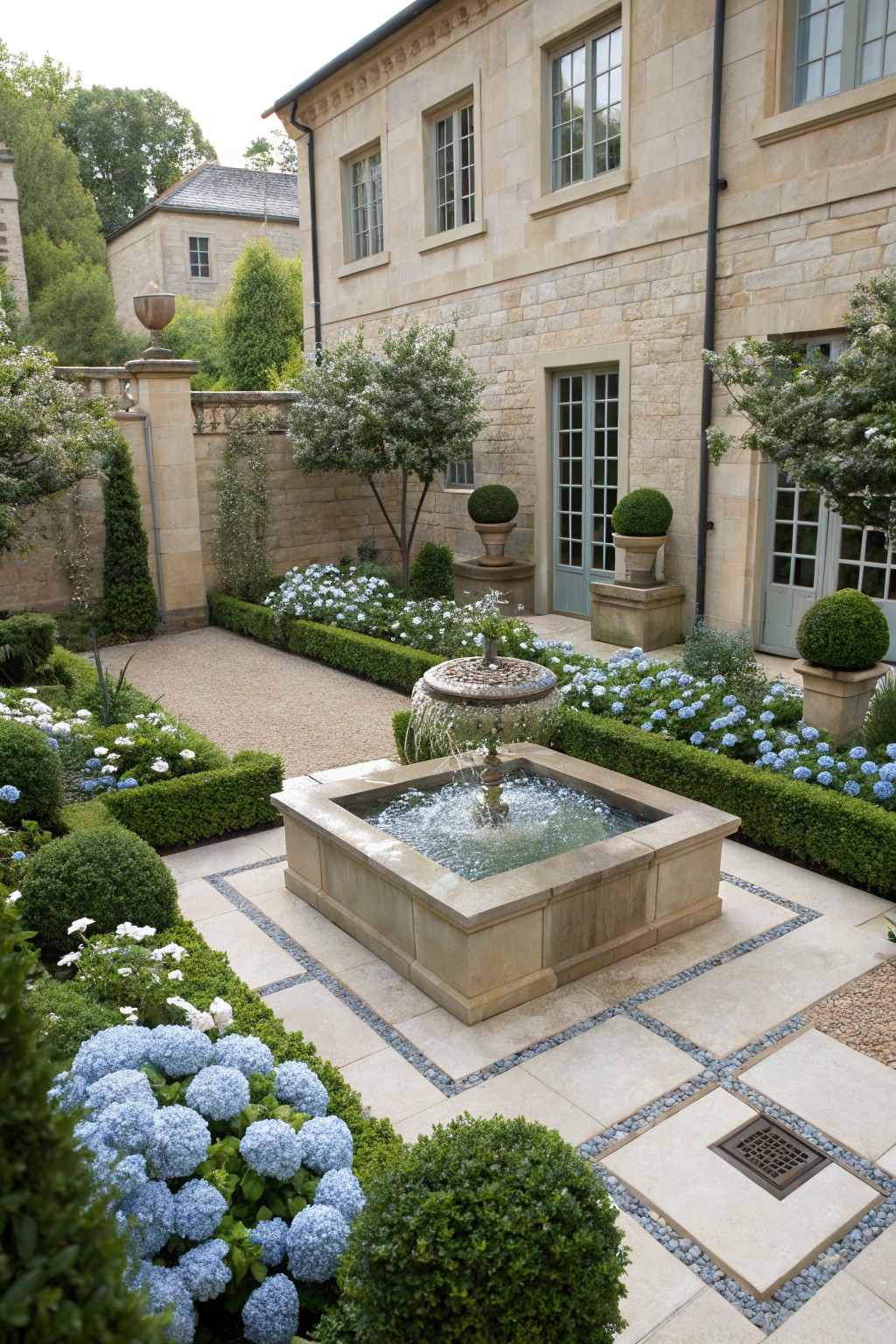
This kind of garden takes a small courtyard and turns it into something special with a central stone fountain as the focal point. Boxwood hedges outline neat geometric beds, and big blue hydrangea blooms fill them out along the edges. The gravel path leads right up to it all, keeping things simple and walkable. What stands out is how the structure feels tidy yet full of soft color from the flowers.
You can pull this off in any walled yard or patio area next to the house. Start with low boxwoods for the bones, then plant mophead hydrangeas where they get morning sun. Keep paths gravel for drainage, and it works best on older stone or brick homes. Just watch the scale, so the fountain doesn’t overwhelm a tiny spot.
Stone Pathways Lined with Hydrangeas
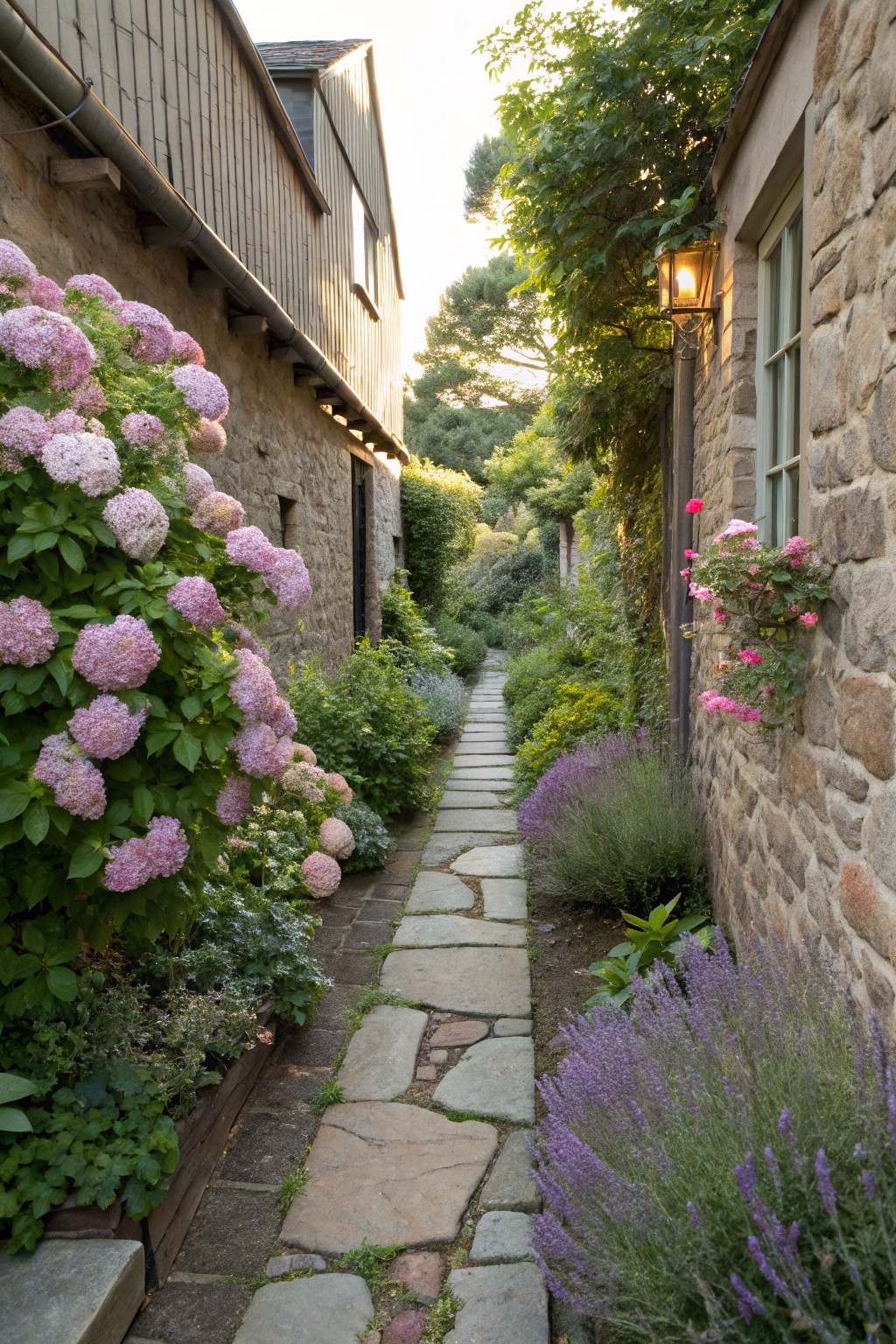
One simple way to turn a plain walkway into something special is to plant big hydrangea bushes right along the edges. Here, massive pink blooms spill over a narrow stone path between old walls. They soften the hard stone and fill the space with color. Add a few roses hanging from the wall and some lavender at the base, and you get that cozy cottage garden feel without much fuss.
This works best in skinny side yards or between buildings where you want a little romance on the way to the back door. Plant the hydrangeas against the base of the walls so they climb up a bit. Keep the path clear for walking, but let the plants lean in overhead. It’s low-key maintenance once established, though you’ll want good drainage so the roots don’t rot.
Vine-Covered Pergola for Outdoor Seating
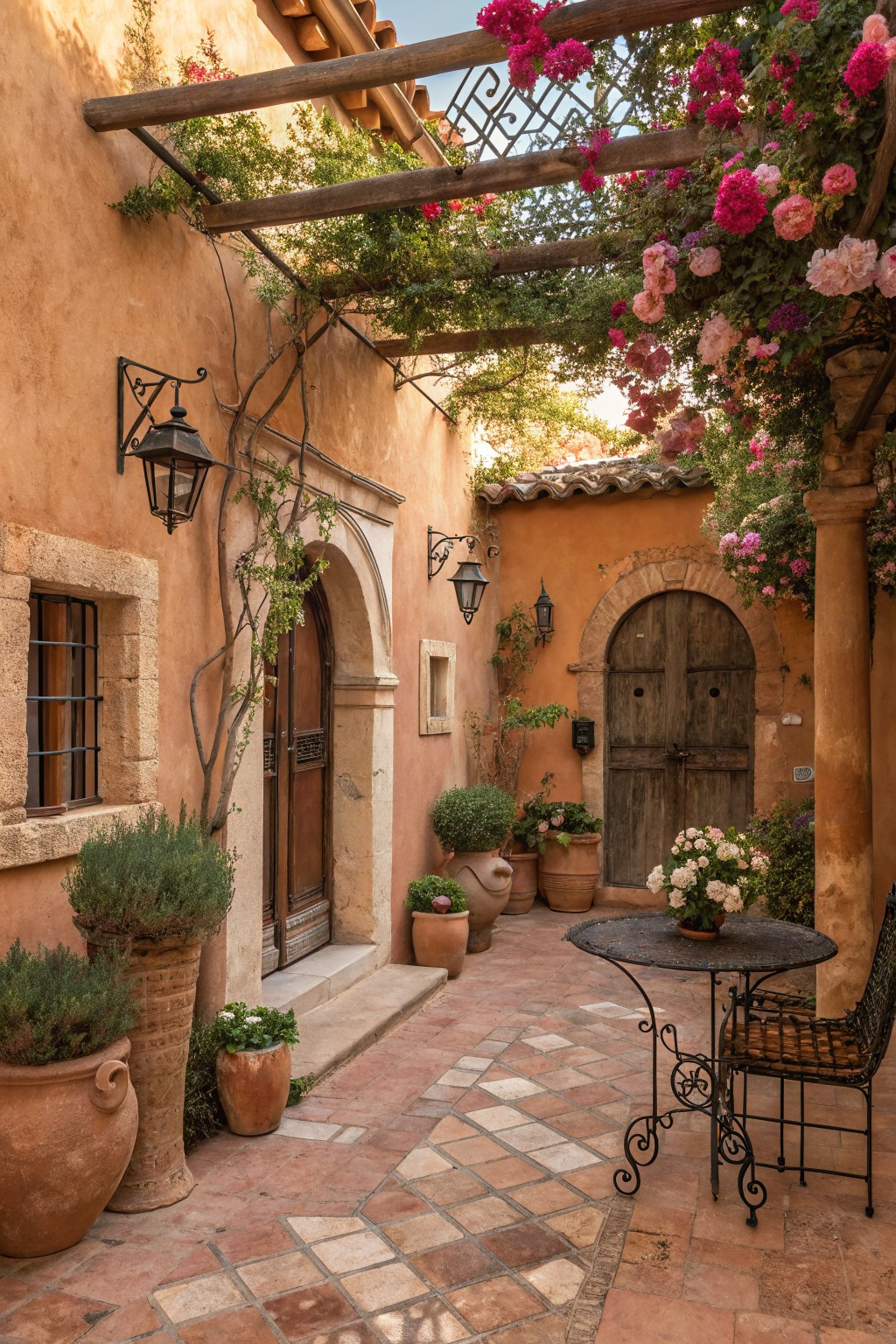
A wooden pergola overhead, heavy with climbing roses and bougainvillea, turns this courtyard into a shaded spot for coffee or a quiet read. The pink and fuchsia blooms spill down, mixing with the warm terracotta walls for that easy Mediterranean feel. It’s low-key shade without blocking all the sun.
Set one up over a simple bistro table in a small patio or walled garden. Choose vigorous climbers that grab onto rough wood beams fast. It fits older homes with stucco or stone, or any spot needing privacy and color. Just prune once a year to keep the flowers coming.
Lush Hydrangeas Around Terrace Seating
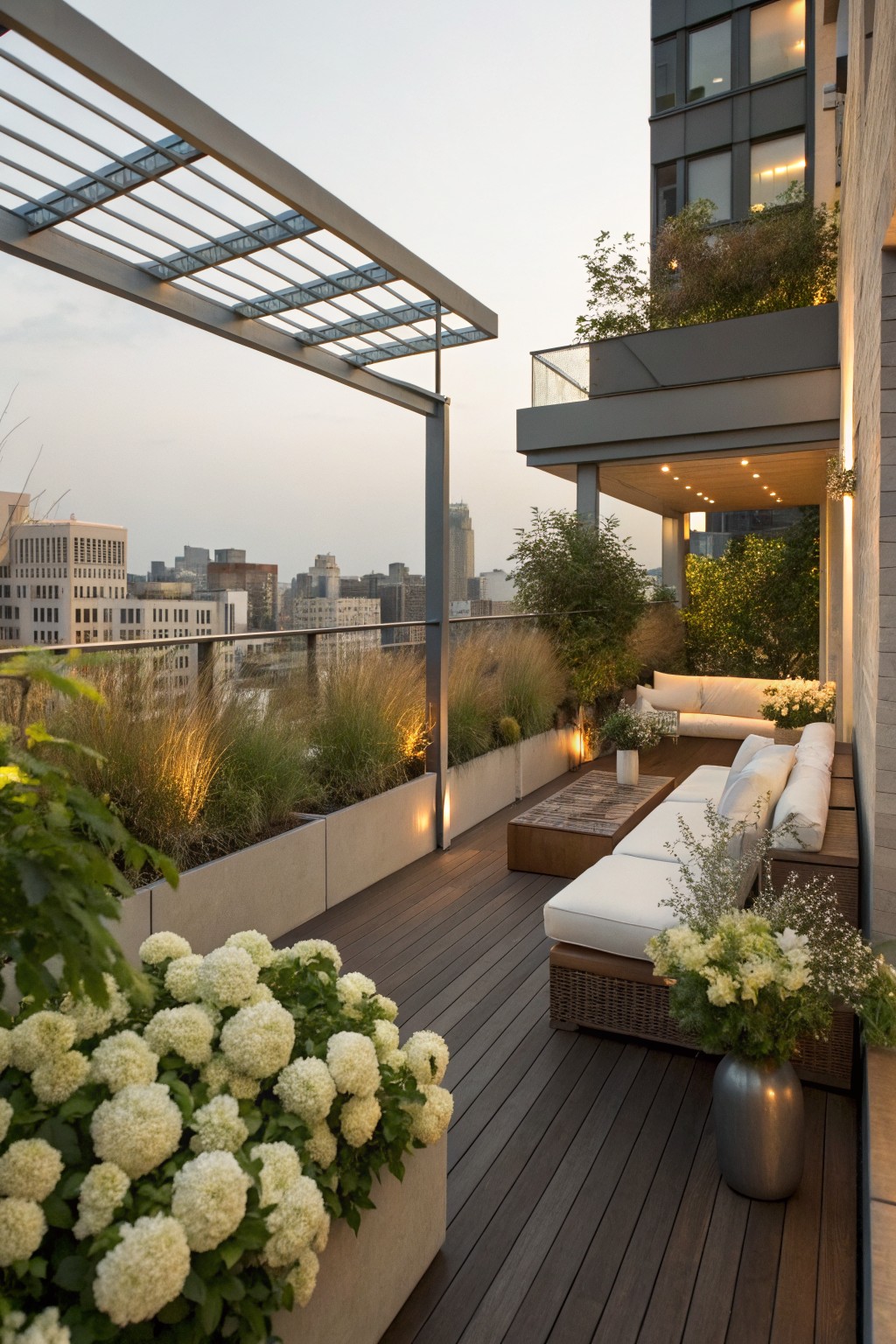
Big clusters of white hydrangeas planted in simple concrete planters make this balcony terrace feel full and welcoming. They line the edges right next to the wood deck, brushing against white sofas and a low table. The soft blooms contrast nicely with the hard surfaces and give a bit of privacy from the city view below.
You can pull this off on any rooftop or upper balcony with decent sun. Go for large planters to hold mature hydrangeas that bloom reliably, and tuck in some tall grasses nearby for structure. It suits modern homes best, but watch watering needs if it’s windy up high.
Driveway Edged with Hydrangeas
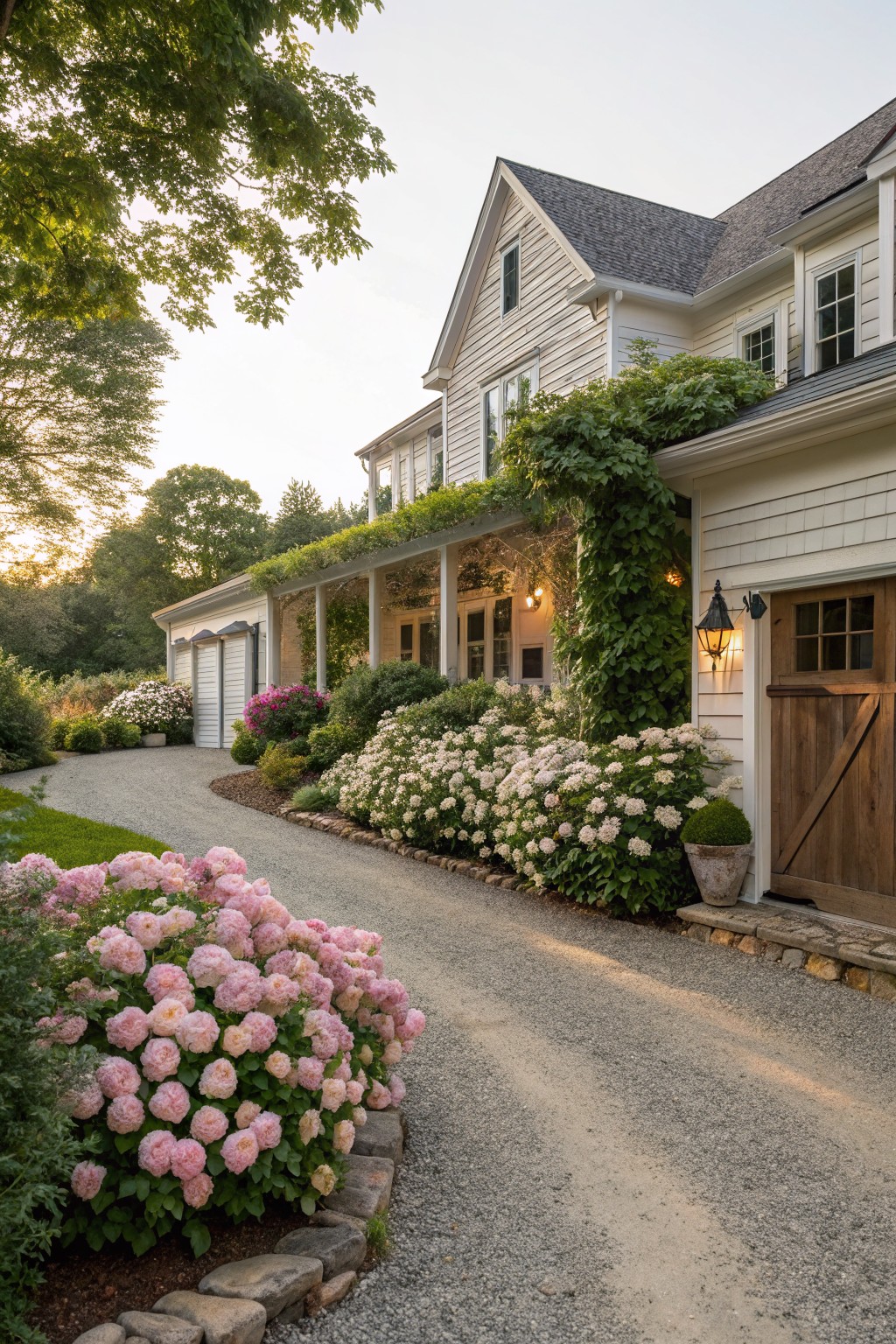
Big fluffy hydrangea bushes planted right along both sides of the driveway make a simple but pretty welcome. The pink blooms on one side mix with white ones nearby, and stone edging keeps the gravel path tidy. It turns a plain drive into something that feels full and lived-in, without much fuss.
This works best on a side or secondary driveway like this one, heading toward a garage. Plant them in full beds so they grow thick, and pick mophead types for those round flowers. Suits older homes or cottages. Watch the watering though, they need it to stay that plump.
Garden Pond with Hydrangea Clusters
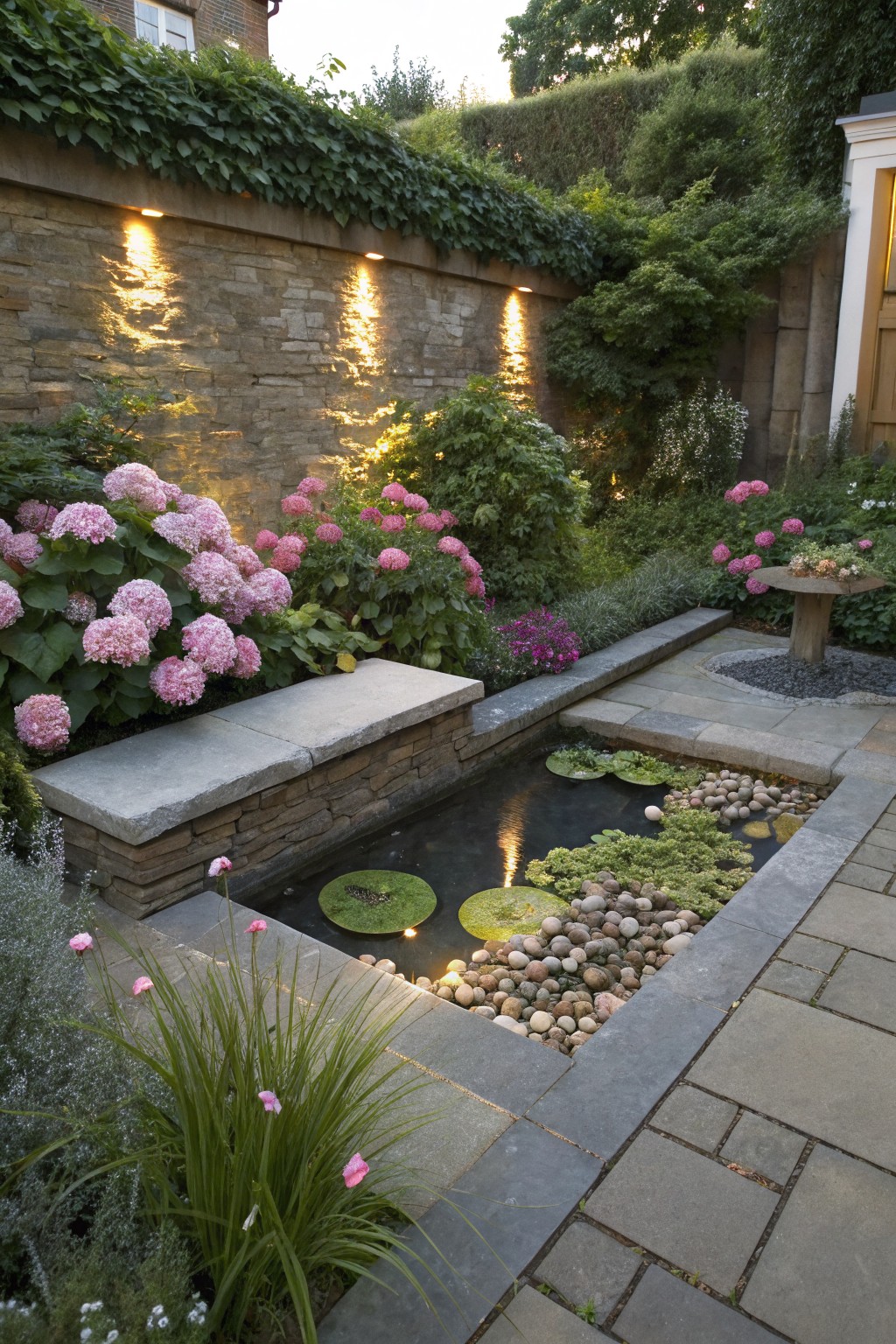
A small rectangular pond like this makes a perfect quiet spot in a backyard garden. Stone edges hold it in place, and big pink hydrangea bushes sit right alongside, blooming heavy with flowers. The built-in bench gives you a place to sit close, watching water lilies drift on the surface. It’s straightforward and pulls the garden together without much fuss.
This works best in a tucked-away corner where you want some calm. Line the pond with smooth pebbles and keep hydrangeas pruned back a bit so they don’t crowd the water. Stone paths around it keep things clean and easy to walk. Skip it if your yard floods easy… water features need good drainage.
Garden Potting Bench Setup
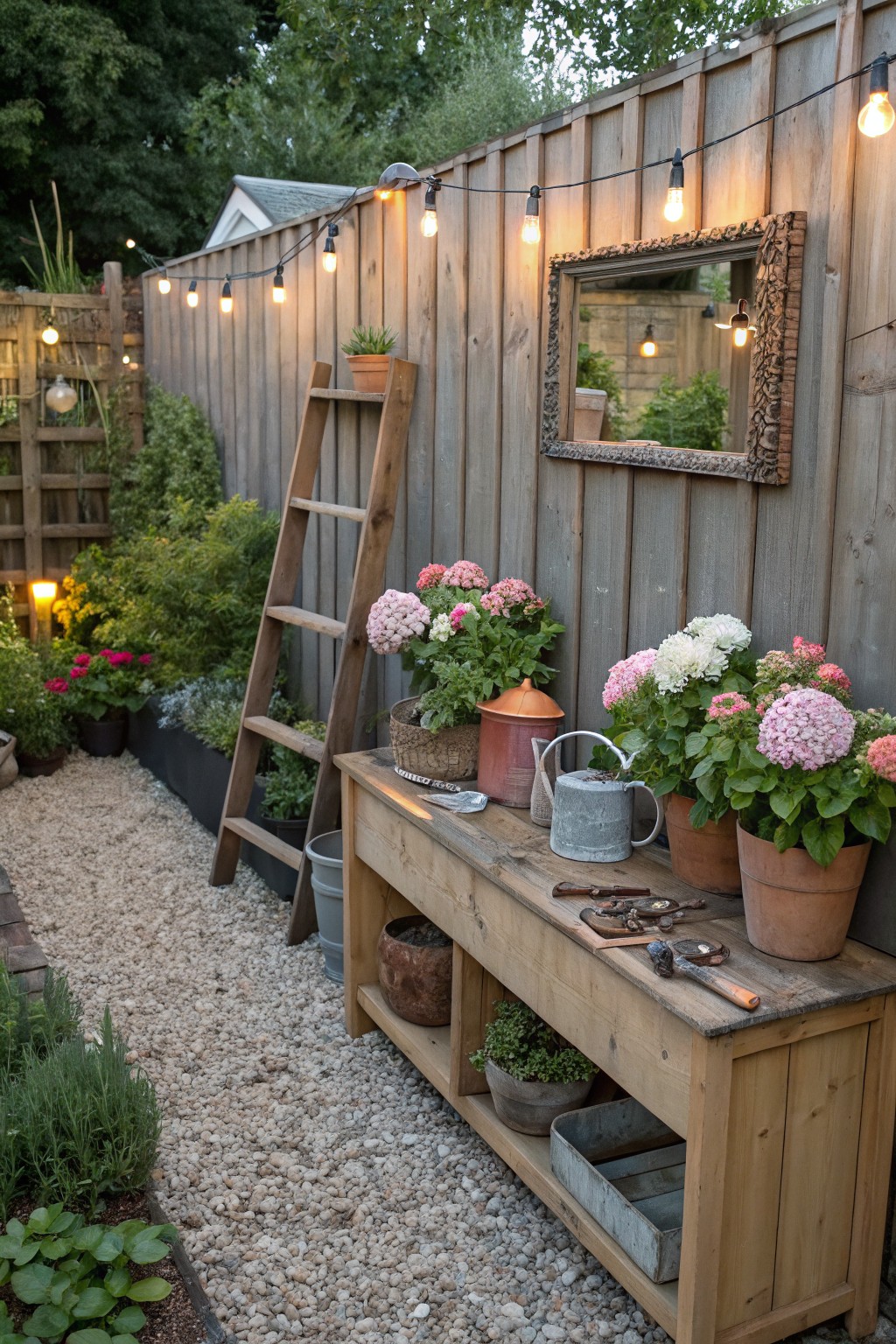
This potting bench is just a sturdy wooden table tucked against the fence. Potted hydrangeas in pinks and whites sit right on top, mixed with watering cans and simple tools. It turns a plain garden corner into a spot that’s both useful and full of flowers.
Put one like this along a side yard or backyard edge where space is tight. Reclaimed wood keeps costs down and fits cottage-style gardens best. Add string lights overhead for evening work… and watch how the hydrangeas make it pop without much effort.
Garden Path Lined with Hydrangeas
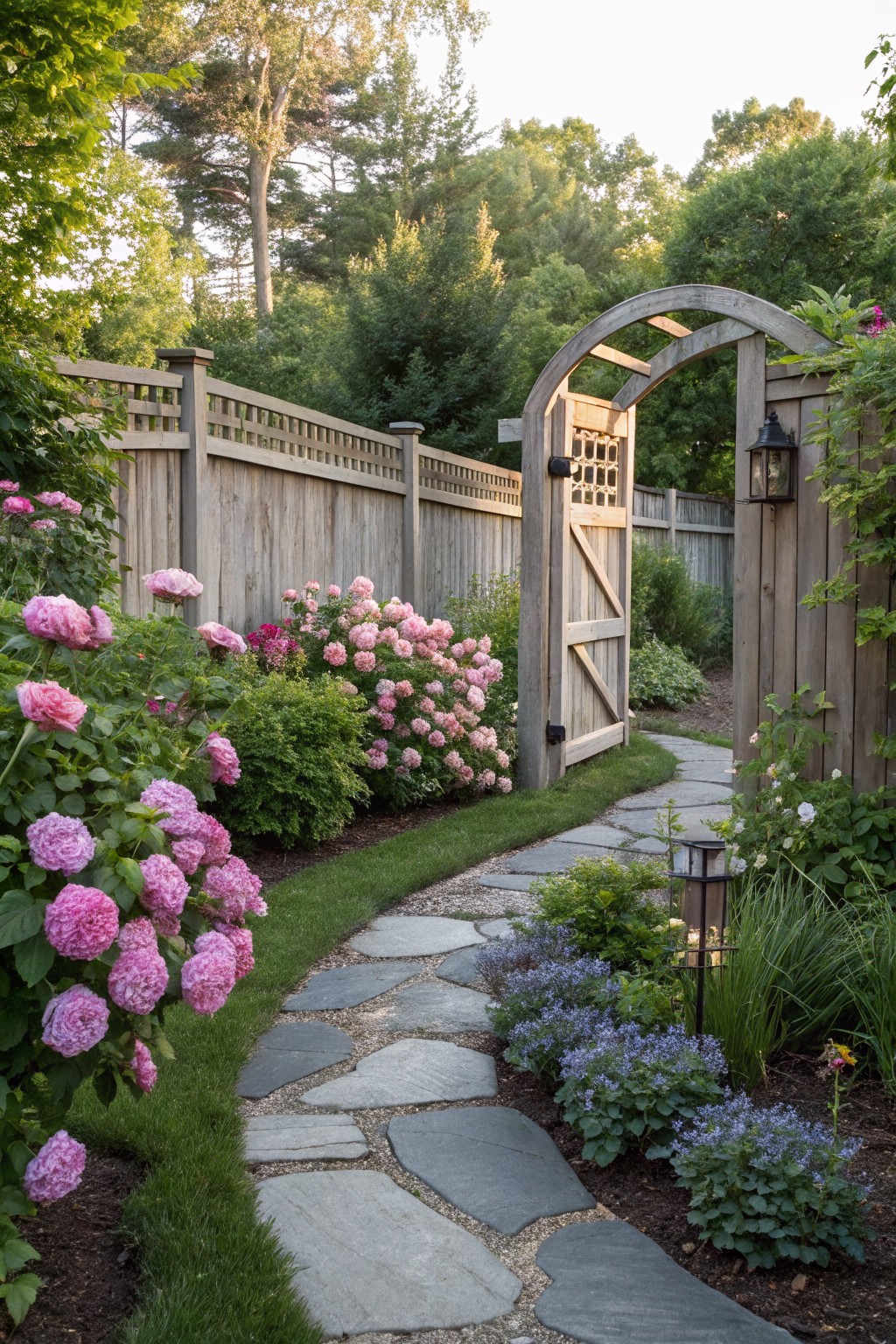
A simple stone path curves gently through thick borders of pink hydrangeas toward a rustic wooden gate. Those big blooms fill out the edges so the path feels tucked in and welcoming. Roses mix in here and there for extra color without stealing the show. It’s a quiet way to draw folks deeper into the yard.
Try this along a side fence or backyard edge where you want some privacy but still easy access. Space the hydrangeas about four feet apart so they grow full and touch. Add gravel between the stones to cut down on weeds. Suits shady spots best since hydrangeas like that. Just keep the path clear for walking.
Frequently Asked Questions
Q: Can I plant hydrangeas right next to my rose bushes without problems?
A: Go for it, they make gorgeous partners. Position shorter hydrangeas in front to shield their roots from hot sun that roses soak up. Keep the soil evenly moist, and watch them thrive side by side.
Q: How much sun do hydrangeas and roses really need for those big dreamy blooms?
A: Roses crave six hours of direct sun daily to burst with flowers. Hydrangeas do best with morning sun and dappled afternoon light. Plant them where taller roses cast just enough shade.
Q: When’s the best time to prune so they keep overflowing with color?
A: Snip roses hard in early spring before buds swell. Hold off on hydrangeas until flowers fade, since they bloom on last year’s growth. Clean cuts keep them shapely and blooming strong.
Q: My soil’s heavy clay. Will hydrangeas and roses still work here?
A: Mix in plenty of compost to loosen it up. And top with mulch… it helps drainage while feeding the roots slowly. They’ll reward you with lush growth anyway.
