

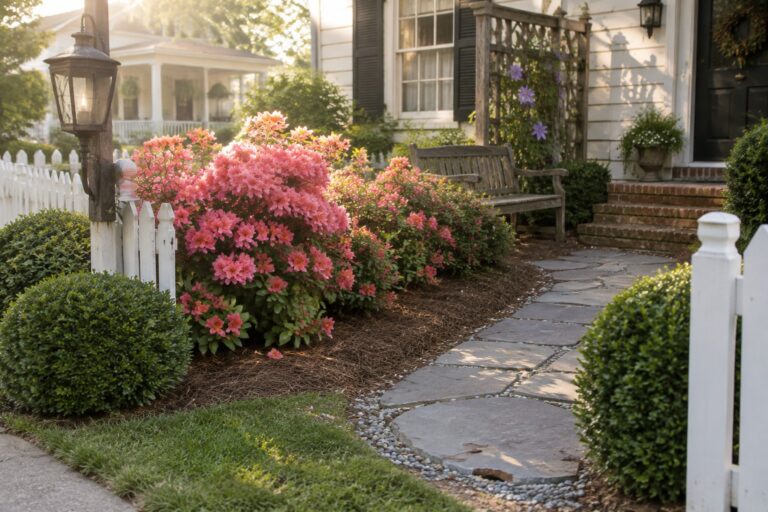
A fence can make a garden feel neatly framed, but a bare stretch of ground beside it can look a little forgotten.
I find azaleas work well along a boundary when their spacing leaves room for the plants to mature and keeps the garden from feeling crowded.
Their spring color can soften a long fence line, while evergreen varieties add structure through quieter seasons.
The right layout also depends on practical details, such as how much sun the area gets and whether there is space to walk or mow nearby.
Some designs are worth adapting to the shape of your yard, from a simple row to layered beds with paths and low edging.
Let a Stone Path Wind Through the Azaleas
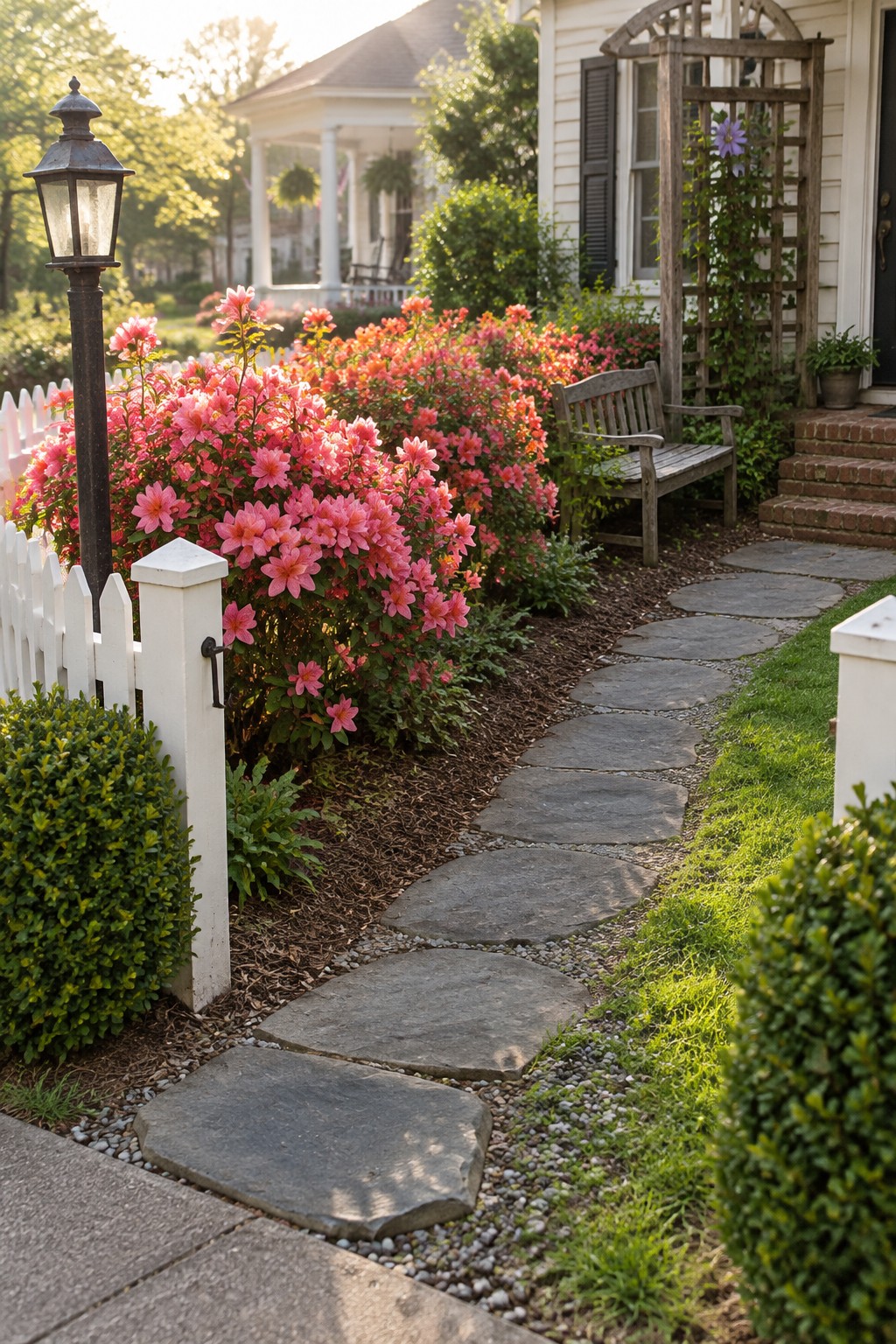
A curving stone path gives an azalea bed a clear shape while making it easy to walk through the garden. The route feels less formal than a straight walkway, and the broad stones leave room for the plants to spread along the edge.
Use this idea beside a fence or along a front garden bed, keeping the path wide enough for comfortable footing. Space the stones evenly and fill the gaps with gravel so water can drain and the walkway stays tidy.
Repeat White Azaleas Along a Fence

Repeating the same azalea along a fence gives a long planting bed a clear, steady rhythm. The rounded shrubs look tidy as a group, and their white flowers stand out against the dark fence without needing a mix of different plants.
Leave enough room between plants for them to reach their mature width, and check that the spot suits the azalea variety’s light and soil needs. This approach works well beside a path, where a simple row keeps the garden edge easy to follow.
Let Azaleas Follow The Fence Line
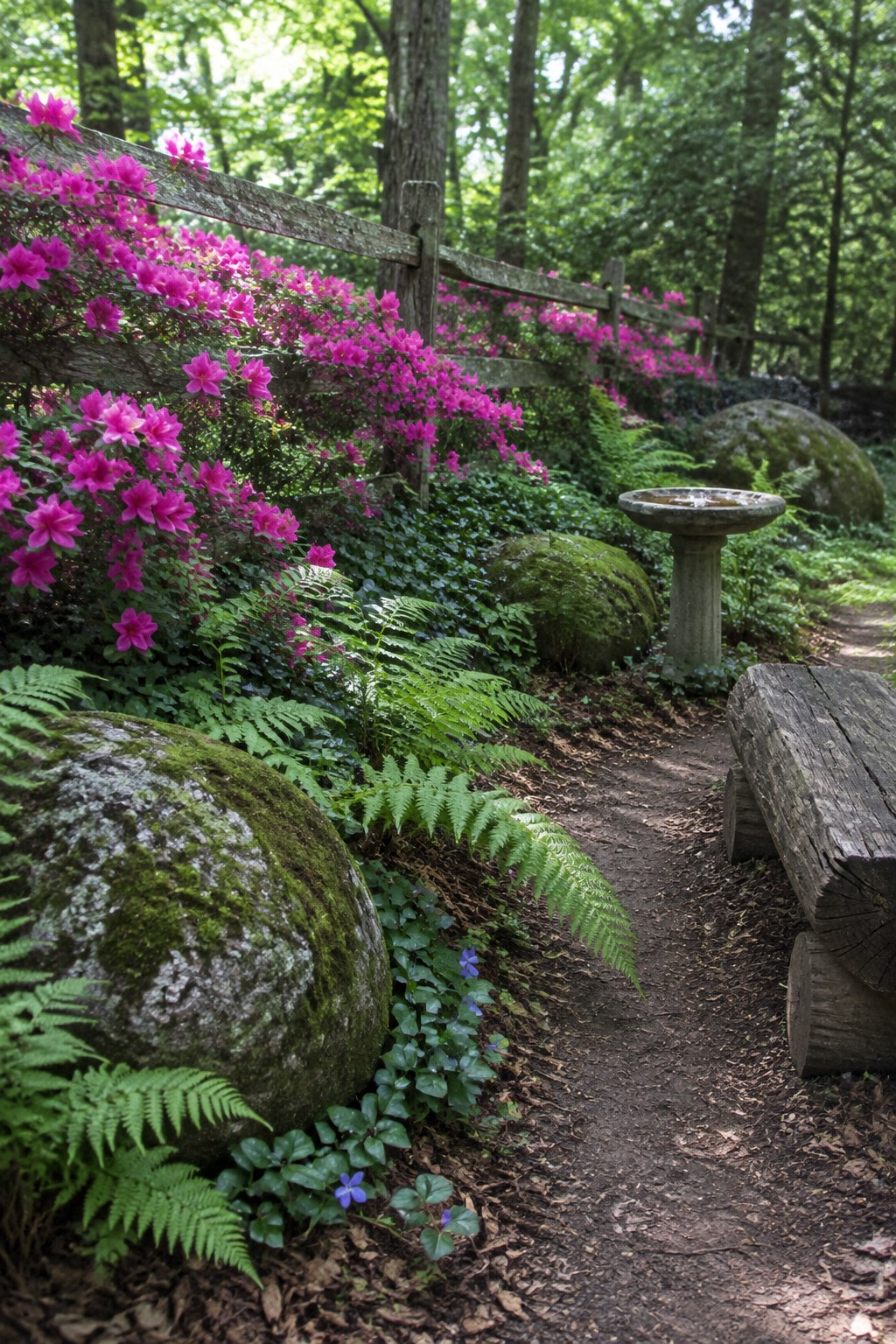
Planting azaleas along a fence gives the border a clear shape and lets the flowers repeat through the garden. The fence also provides a steady backdrop, so the bright blooms stand out without needing a formal bed.
Leave enough room for the shrubs to mature, and choose a spot with conditions that suit your azalea variety. Ferns or other low ground cover can fill the front edge, but keep the planting narrow enough that it does not crowd a path.
Use a Curved Brick Edge Along the Fence

A curved brick border gives an azalea bed a clear shape and keeps the planting from blending into the path. It also makes a long fence line feel less rigid, especially when the shrubs are planted in a loose row behind the edge.
Use bricks to follow the bed’s natural curve, and leave enough room for azaleas to spread without spilling over the path. This works well in a front garden or along a walkway. Keep the curve gentle so mowing and trimming stay manageable.
Use Gravel to Define the Fence Border

A gravel strip gives a fence-side planting bed a tidy edge and keeps the garden separate from the walking surface. Here, pale gravel makes the dark fence and green shrubs stand out without adding a lot of extra detail.
Use this approach along a narrow side yard or other space where a clear border helps keep things neat. Choose gravel that suits your plants, and add a solid edging strip to keep the stones from spreading into the path.
Use a Narrow Path Beside the Fence

A narrow brick path can make a fence-side garden easier to enjoy and maintain. It gives you a clear route through the planting, while azaleas along the fence form a colorful border.
This layout works well in a long, tight side yard where there isn’t room for a wide walkway. Leave enough space to reach the plants for pruning, and keep the path surface even so it stays practical underfoot.
Create a Gravel Garden Bed Along the Fence
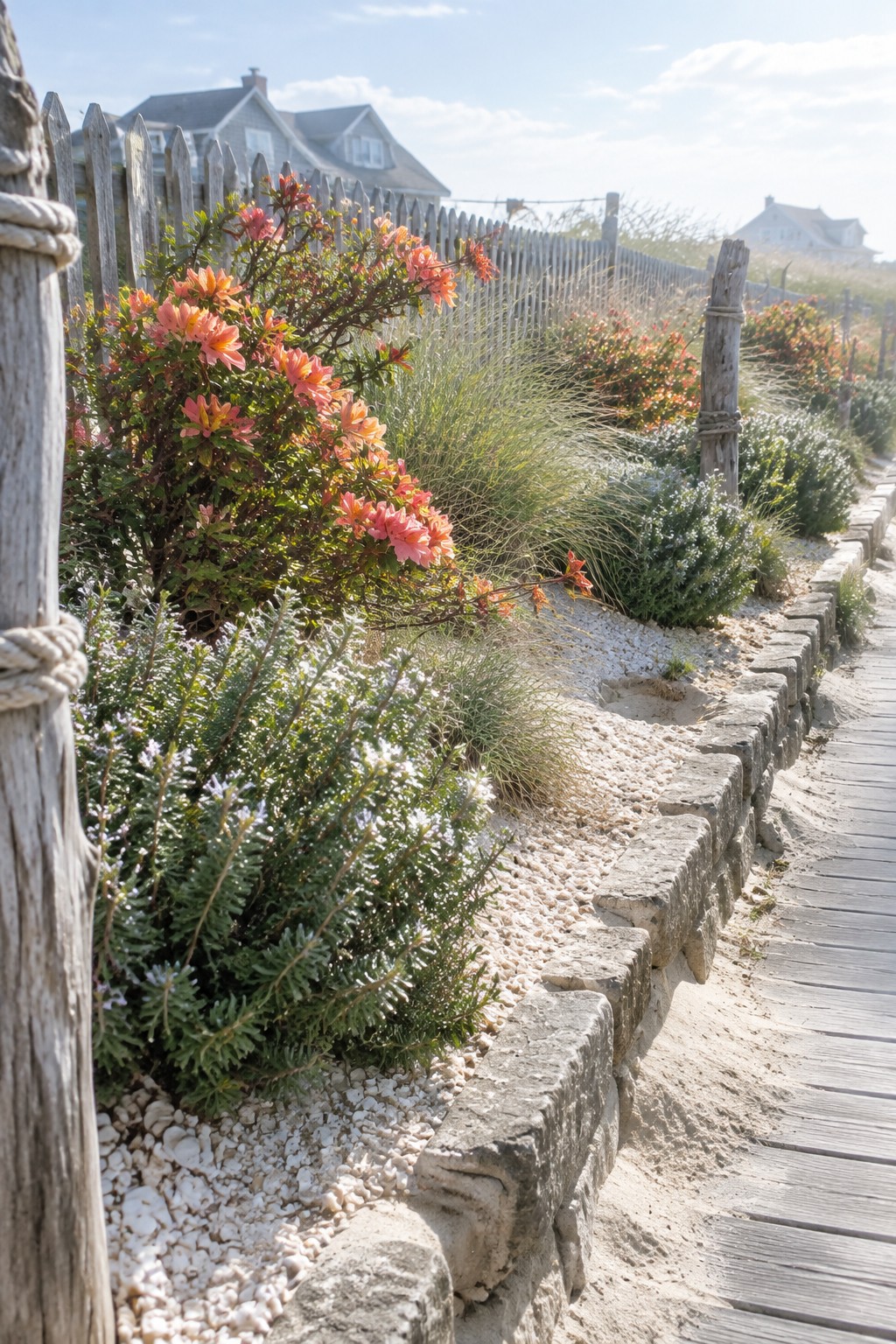
A gravel bed gives azaleas and other shrubs a tidy place to grow while keeping the planting area distinct from a path. Here, a low stone border holds the pale gravel in place and gives the garden a clear edge.
This approach suits a narrow strip beside a fence or walkway. Use gravel that drains well, and leave enough room around azaleas for their mature size so the plants do not crowd the path.
Use Stepping Stones to Break Up a Pebble Path

A few broad stepping stones make a garden path easier to walk while leaving room for a pebble bed to show through. This approach suits a narrow side garden, where a solid paved walkway might feel too heavy.
Set the stones far enough apart for a comfortable stride, and use smooth pebbles to fill the gaps. Along a fence, azaleas can grow beside the path, but keep them trimmed back so branches do not crowd the walking space.
Add Stone Steps to a Sloped Azalea Garden

Stone steps make a sloped garden easier to walk through while keeping the planting beds intact. Their loose, staggered layout feels natural in a garden, and it gives you a practical way to reach the fence and tend the azaleas.
Use broad, stable stones and leave enough room between them for mulch or low groundcover. On a steep slope, set the steps firmly and keep the route clear of irrigation lines and spreading plants.
Layer Azaleas Along a Black Fence

Planting azaleas in a long bed beside a fence gives the border a clear shape and lets the flowers stand out. Here, pink azaleas repeat along the black metal fence, with smaller evergreens filling the spaces between them.
For a similar look, use azaleas that suit your climate and leave room for their mature width. A dark fence makes bright blooms easy to see, but keep plants trimmed back so they do not crowd the fence or path.
Use Pots to Fill Gaps Along the Fence

A few large pots can bring lavender and other low-growing plants into a fence-side azalea bed. They add a change in height and let you place extra color where the border looks sparse, without reworking the whole planting area.
Set the pots beside the path or near the front of the bed, leaving enough room to reach the azaleas for pruning. Choose plants with similar sun and watering needs, and make sure each pot has drainage holes.
Add Fence Lighting to an Azalea Bed

Small lights attached to a fence can make an azalea bed easier to enjoy after dark. Spacing them along the boards gives the planting a steady line of light without needing tall fixtures in the garden.
Use warm, low-voltage lights and leave enough room between them so the glow stays gentle. They work well along a fence beside a lawn or seating area, but aim them away from nearby windows.
Use Wall Planters to Add Height Along the Fence

Wall-mounted planters let you grow greenery above the ground-level flower bed, which is useful in a narrow space where there isn’t room for a wide border. The wooden boxes shown here bring trailing plants up the fence while leaving the walkway clear.
For an azalea border, use a few planters as accents rather than filling the entire fence. Choose plants suited to the amount of sun the fence gets, and keep the boxes easy to reach for watering and pruning.
Let the Azaleas Follow a Rustic Fence

Planting azaleas in a long bed beside a fence gives the garden a clear, easy-to-follow shape. The fence marks the edge while the blooms make the border feel full, without needing a complicated layout.
This approach works well along a gravel path or beside a simple wooden fence. Leave enough room for the shrubs to spread, and use a low stone edge to keep the bed from creeping into the walkway.
Mix Azaleas With Succulents Along the Fence
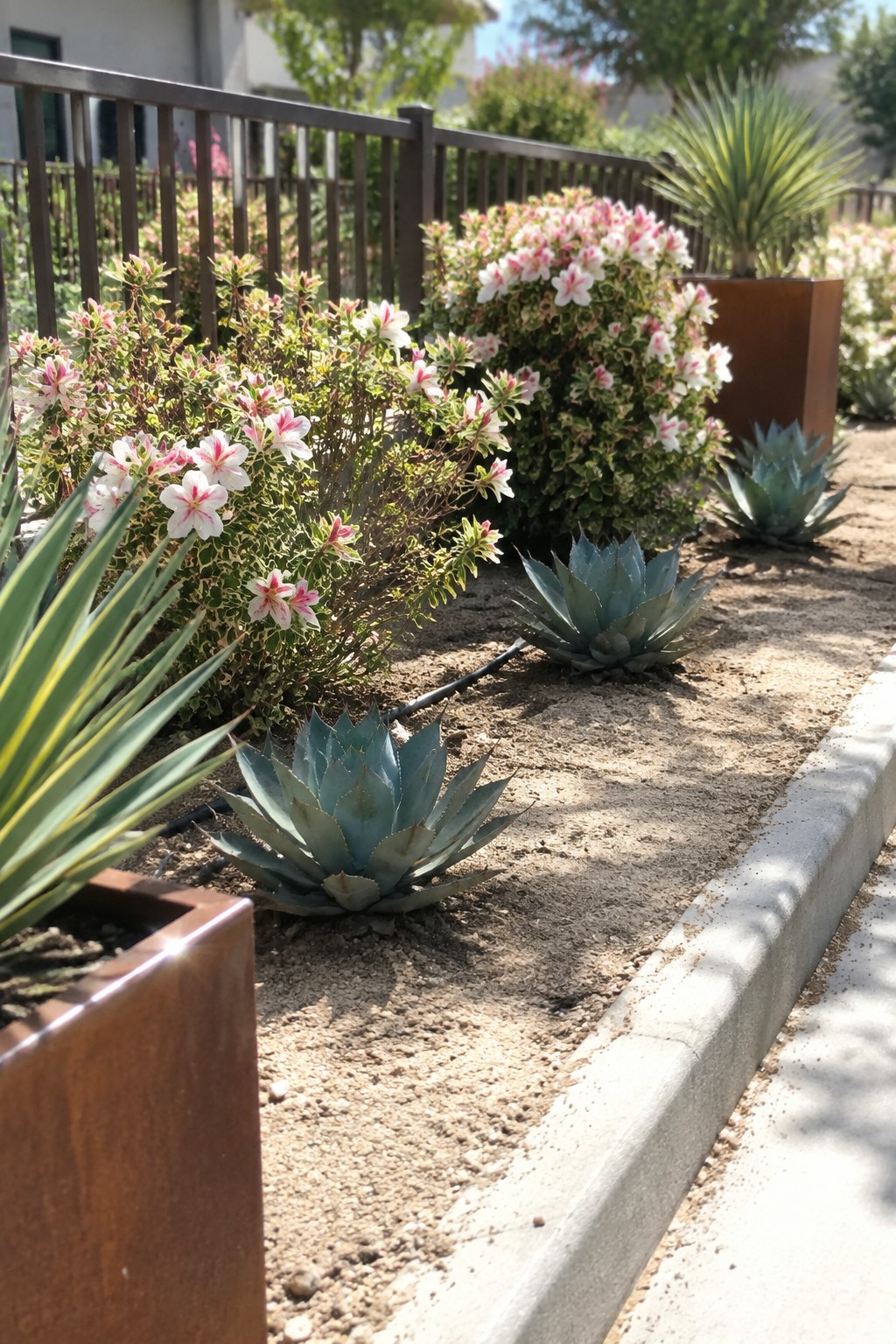
Azaleas do not have to fill the whole fence border. Mixing flowering shrubs with compact succulents gives the bed a varied planting pattern, and the succulents leave more open space around the larger plants.
Use this approach in a sunny, well-drained section of the yard, and check that the plants have compatible water needs. Agaves can be a striking choice, but leave room for their spread and keep their sharp leaf tips away from paths.
Plant Azaleas in a Narrow Fence Border
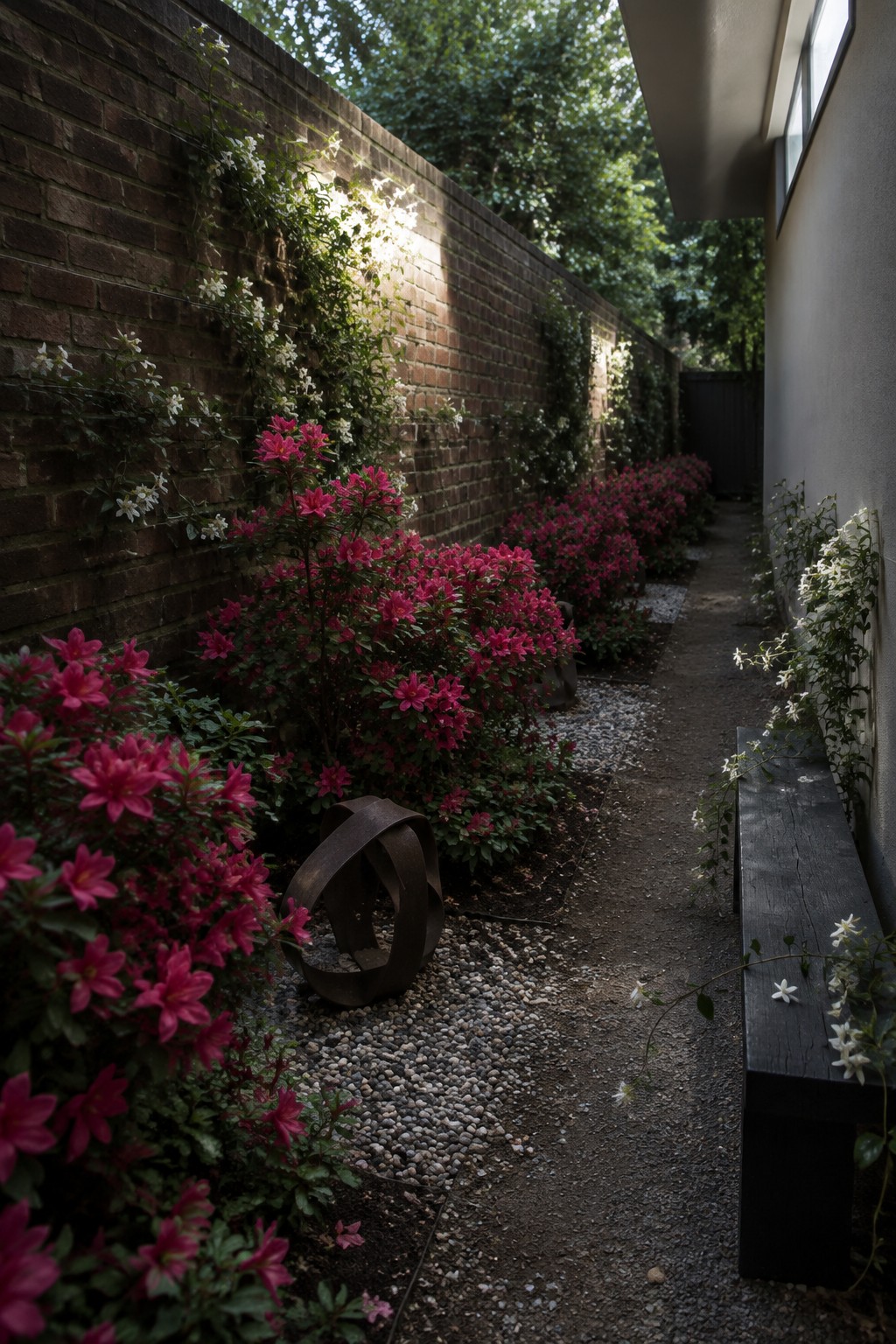
A narrow planting bed can make a side yard feel less like a passageway. Azaleas planted along the brick fence give the space a clear garden edge, while leaving a simple walking route beside the house.
This layout suits a tight side yard where there isn’t room for a wide bed. Keep the azaleas trimmed back from the path, and leave enough space between plants for air to move through.
Add a Fire Pit Beside the Garden Border

A small fire pit can make a planted poolside garden useful after the sun goes down. Set it on a gravel pad near the flower bed, and the planting still has room to grow without crowding the seating area.
Leave enough clear space between the fire pit and fence, plants, and pool edge. This setup suits a yard with a defined garden border, but check local fire rules and choose a fuel type that fits your space.
Layer Azaleas Along the Entry Walk
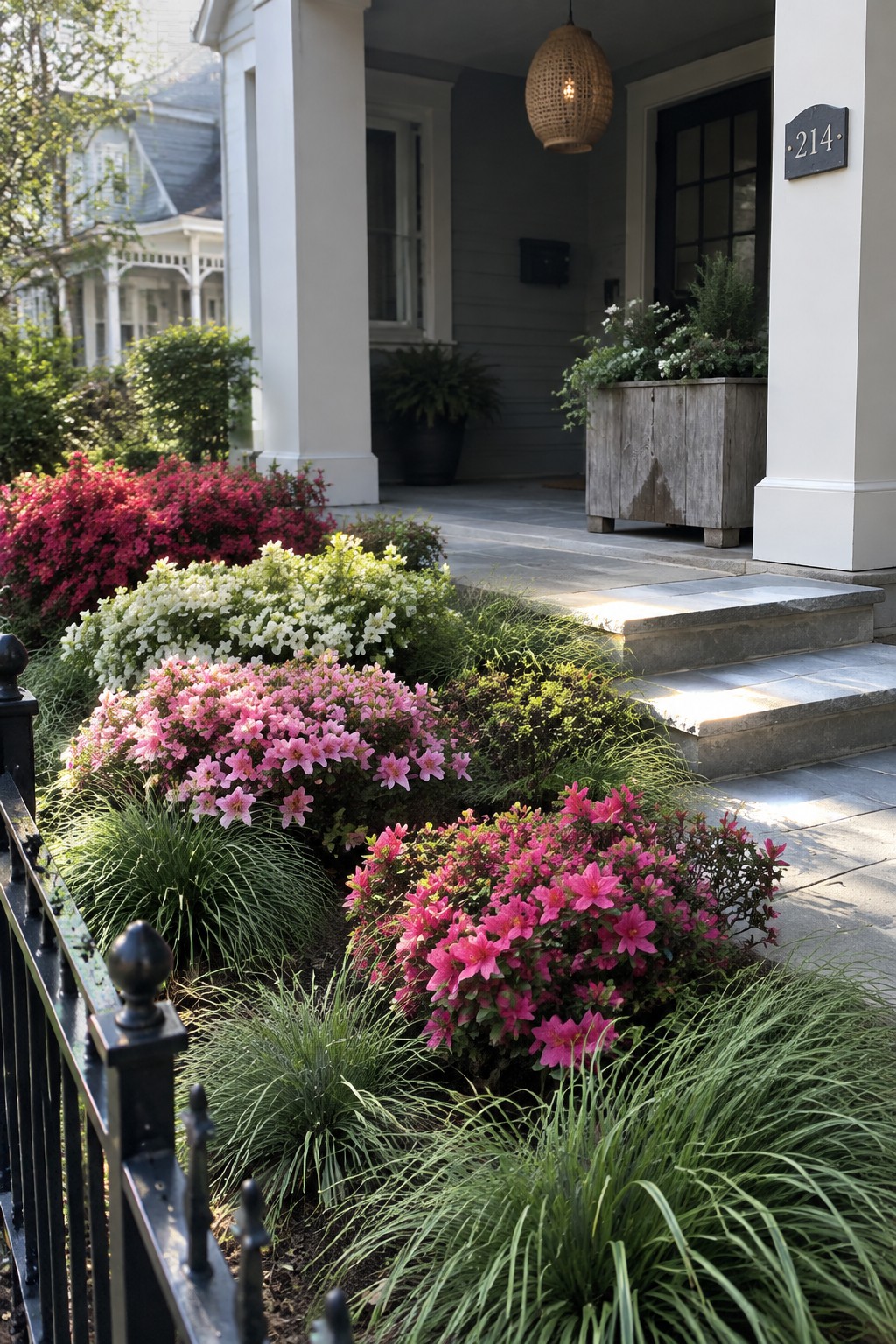
Azaleas look especially full when planted in generous clusters along a walkway instead of spaced out as single shrubs. Mixing pink and white blooms with low grasses gives the bed a loose, layered shape that feels welcoming without looking too formal.
This approach works well beside front steps or along a fence near the entrance. Leave enough room for the plants to spread, and keep them trimmed back from the path so the walkway stays clear.
Use a Fence Border to Carry Azaleas Into a Patio

Azaleas can make a fence feel like part of the garden rather than just a boundary. A continuous bed of pink shrubs gives the planting a clear line and brings color close to an outdoor cooking and dining area.
This approach works well where a patio runs alongside a fence. Leave enough room for the shrubs to grow without crowding the walkway or work surfaces, and choose varieties suited to the light and space.
Use Azaleas to Mark a Garden Entrance
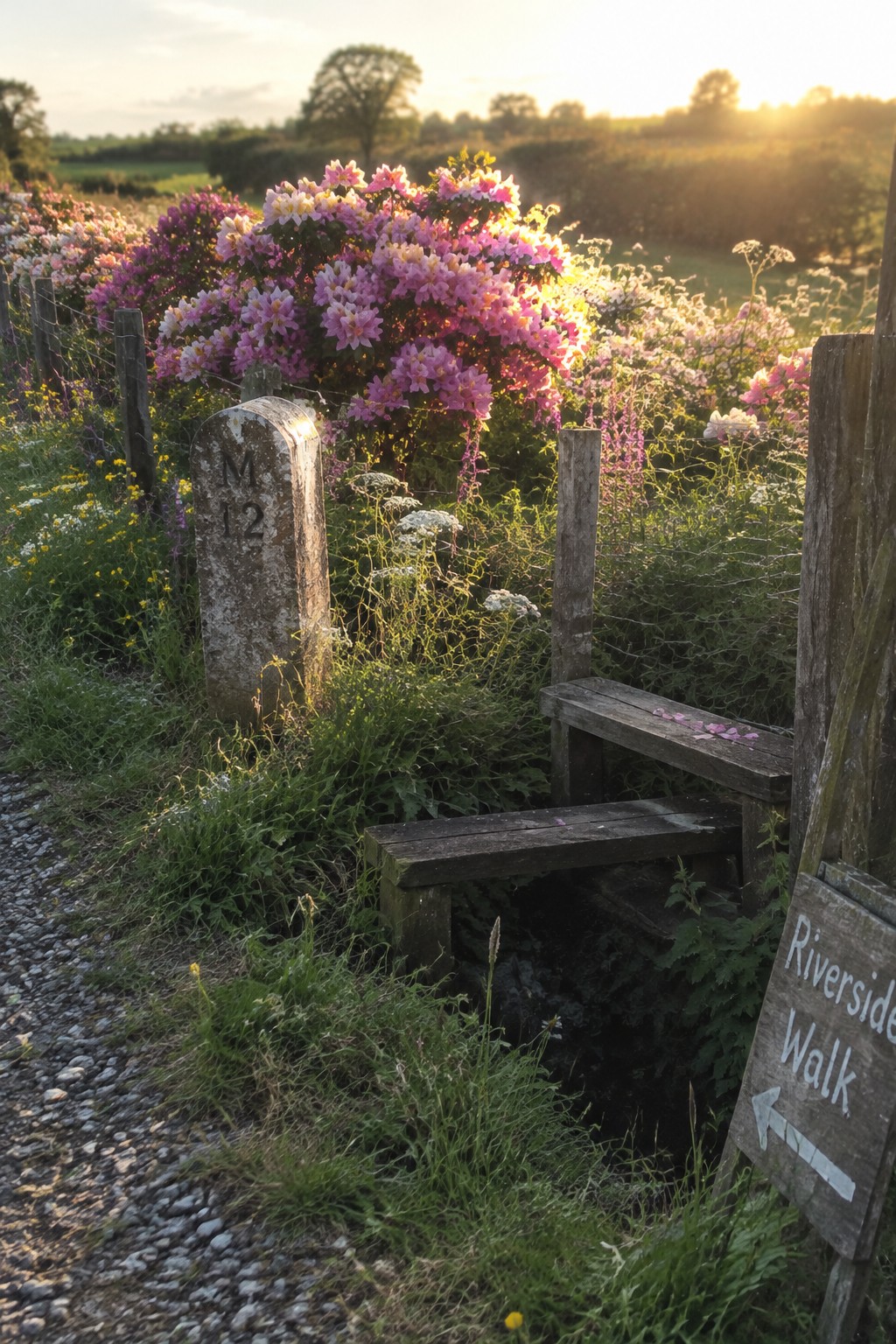
Azaleas can make a simple garden entrance feel like part of the planting rather than just a way through a fence. A large flowering shrub beside a narrow gate gives the entrance a clear focal point and brings color right to the path.
This idea suits a cottage garden or a fence line with room for a generous shrub. Leave enough space for the azalea to spread, and keep the gate easy to open and the path clear.
Frequently Asked Questions
Q: How far from the fence should I plant azaleas?
A: Leave enough room for the mature shrub to grow without pressing against the fence. Check the plant’s expected width, then space it so you can still reach behind it for pruning and fence repairs.
Q: Will azaleas grow along a fence that gets afternoon sun?
A: Some varieties handle more sun than others, but hot afternoon light can scorch leaves and dry the soil. Choose a sun-tolerant azalea and keep it watered, or use taller plants or a fence panel to provide some shade.
Q: What should I plant in front of the azaleas?
A: Low-growing ferns, hostas, or groundcovers can soften the edge without hiding the flowers. Leave a little open space around each azalea so air can move through the planting.
Q: Can I plant azaleas under a wooden fence?
A: Yes, as long as the spot drains well and the fence does not block too much light. Keep mulch and soil from piling against the wood, which can hold moisture and encourage rot.
