

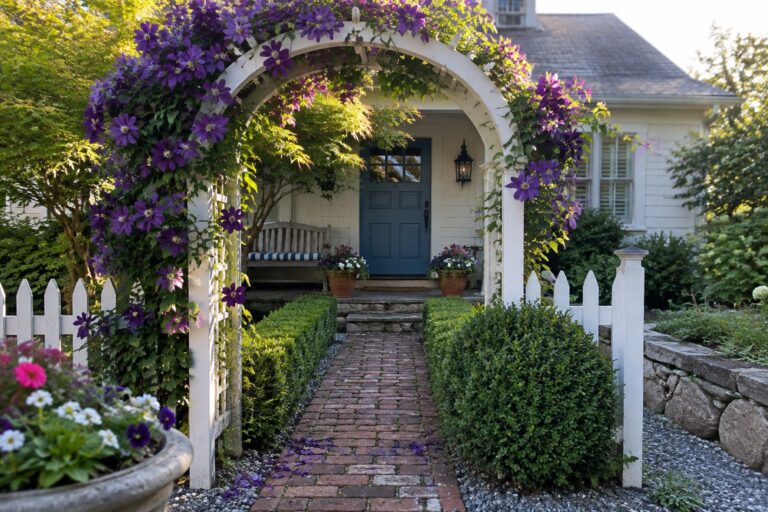
Clematis can soften a front yard trellis, but the placement matters as much as the flowers.
I find they look most at home when the trellis frames an entry or marks a transition without narrowing the path.
The first thing people notice is often the shape of the vine against the house, so it helps to consider the facade, nearby plants, and how much room the clematis will have to climb.
Some designs keep the planting tidy along a walkway, while others let the vines add height near a porch or fence.
I’d be inclined to test a simple trellis placement first and watch how it changes as the clematis grows through the seasons.
Let Clematis Grow Over a Garden Arch
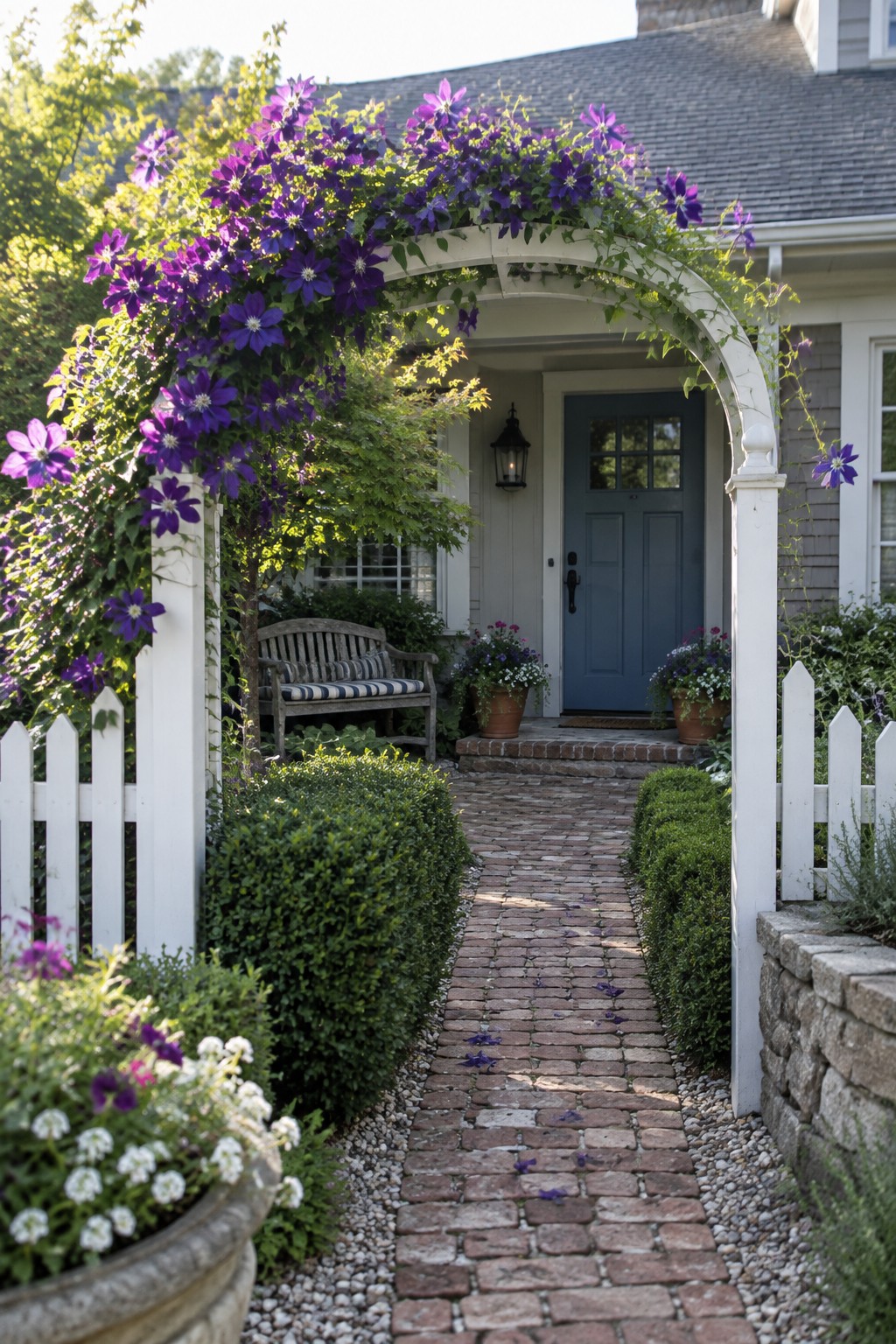
A clematis-covered arch gives the front path a clear entrance and lets flowering vines become part of the garden structure. The blooms are easy to notice, but the arch also helps define the route to the front door.
Choose a sturdy trellis arch that fits the path without making it feel narrow, and plant clematis where its roots can stay cool while the vine reaches the top. Tie in young stems as they grow, and leave enough room to prune and maintain the arch.
Train Clematis Along an Entry Path
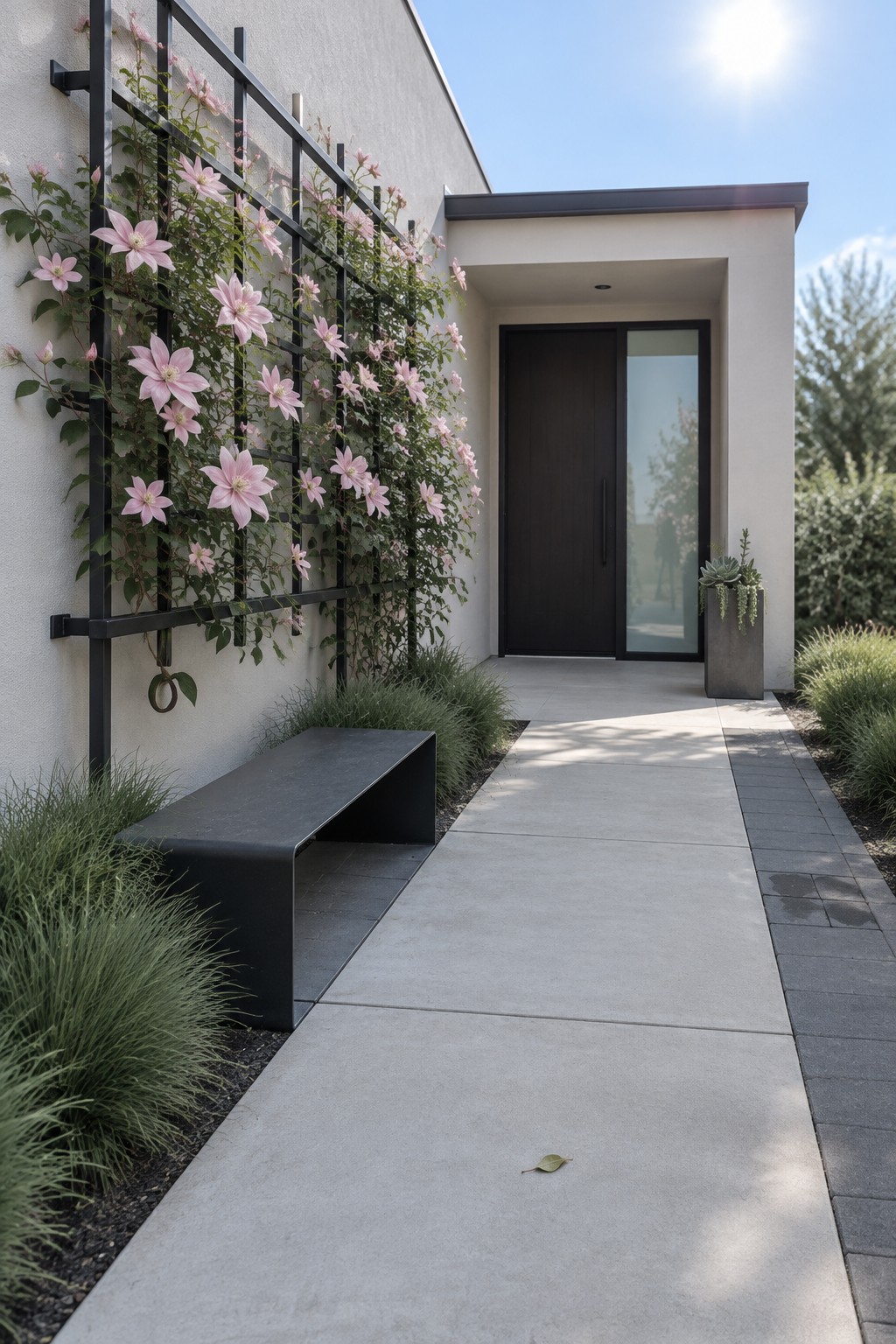
A trellis lets clematis grow upward instead of spreading across a planting bed. Along a front walk, it adds flowers near the entrance without taking up much ground space.
Attach a sturdy trellis to a wall or set one just beside the path, leaving enough room for people to pass and for the plant to be pruned. The black metal grid here gives the vines clear support and suits a simple, modern entry.
Train Clematis Along A Front Porch
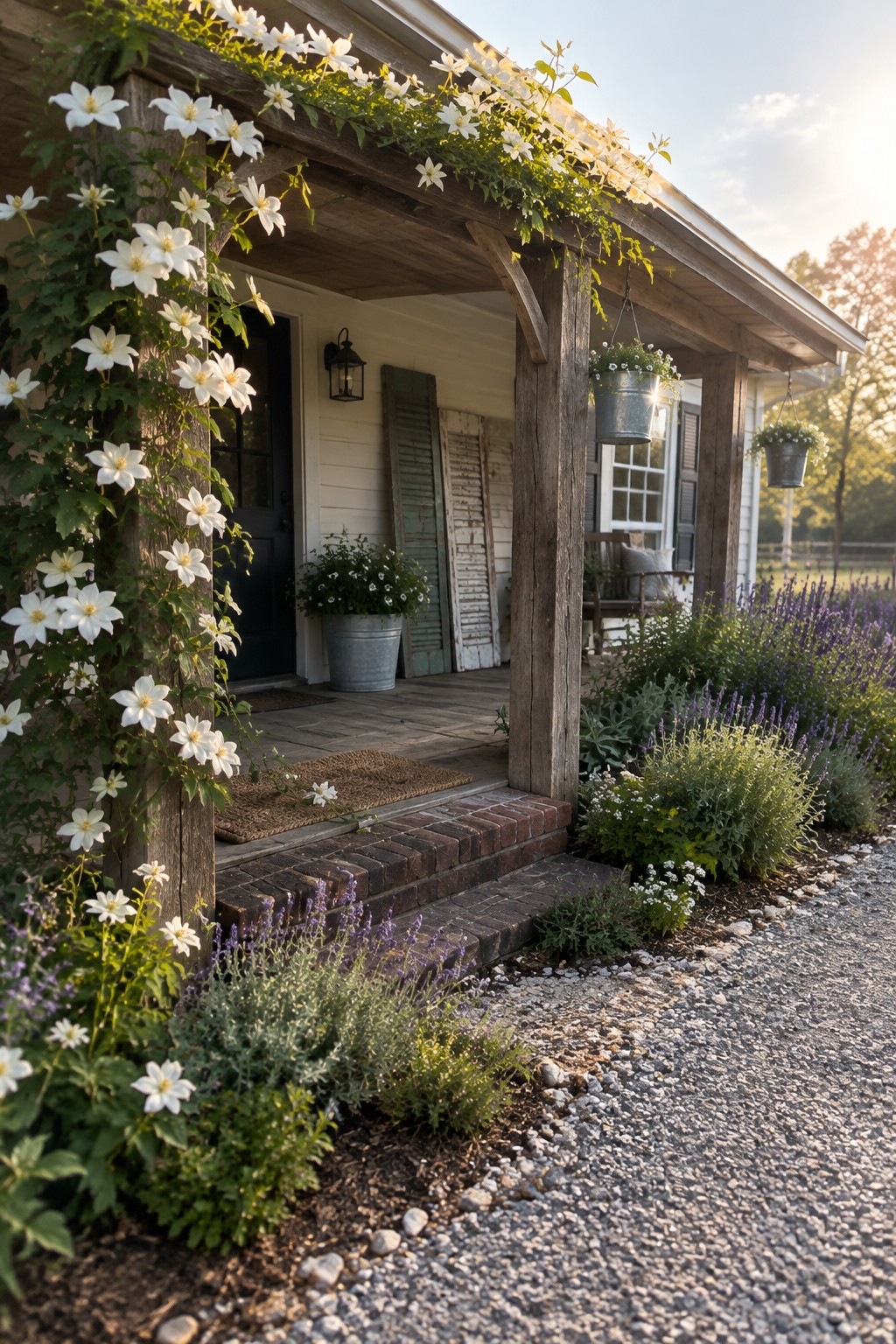
Clematis can turn a simple porch post into part of the garden. Letting the vine climb a support near the entry gives it room to grow while keeping the flowers close to the house.
Use a sturdy post or trellis that gives the stems something to grip, and leave enough space for the vine to spread without crowding windows or the walkway. This idea suits a cottage-style front yard, especially where a porch already has simple vertical supports.
Grow Clematis on a Front Yard Trellis
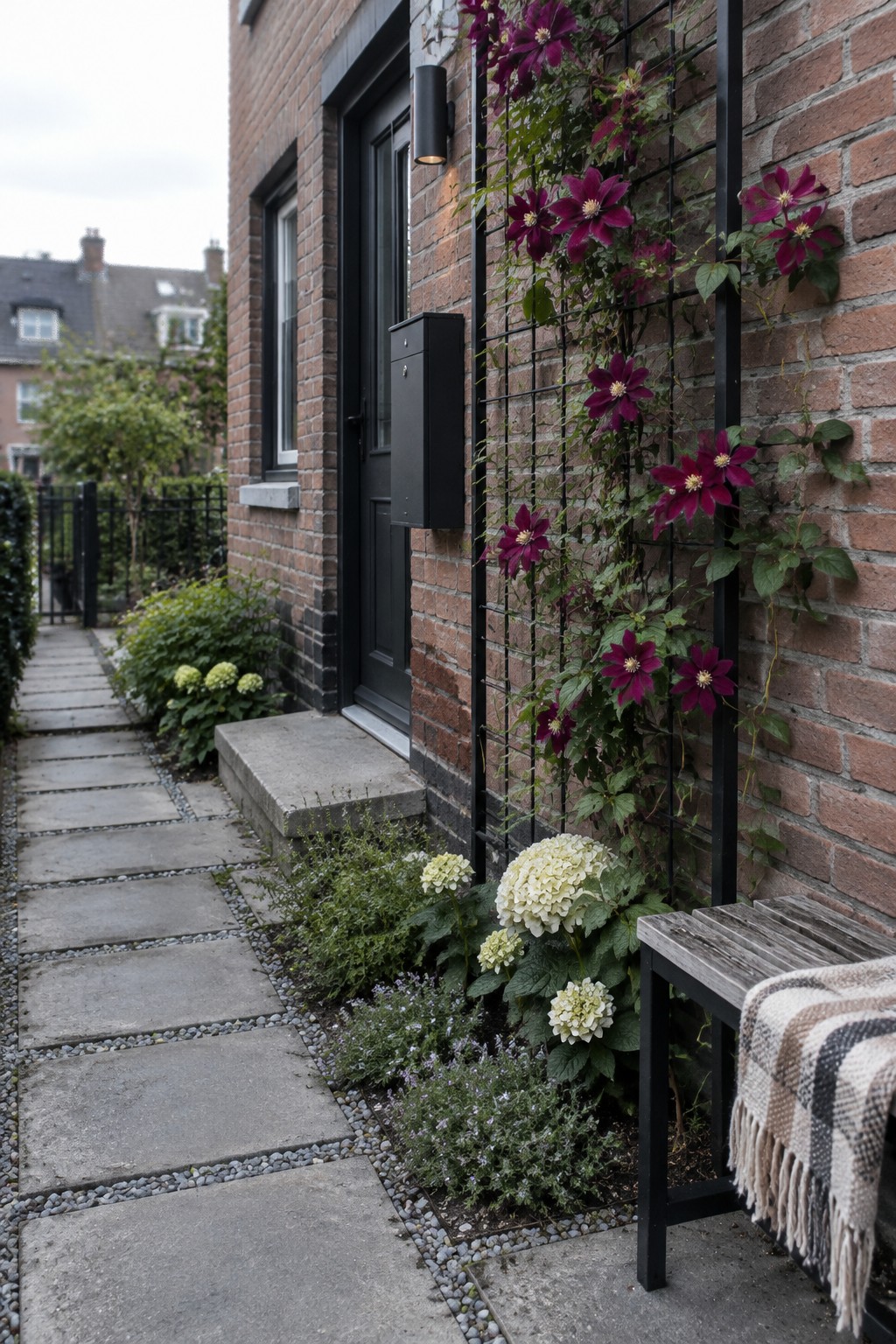
A wall trellis gives clematis a place to climb without taking up much room in a front garden. The flowers bring color close to the entry, while the open structure lets the brickwork remain visible.
Attach a sturdy trellis to the wall and leave a little space behind it for airflow and plant growth. This works well beside a doorway or along a narrow path, where a sprawling plant might otherwise get in the way. Check the mature size of the clematis before choosing a variety.
Grow Clematis on a Patio Trellis
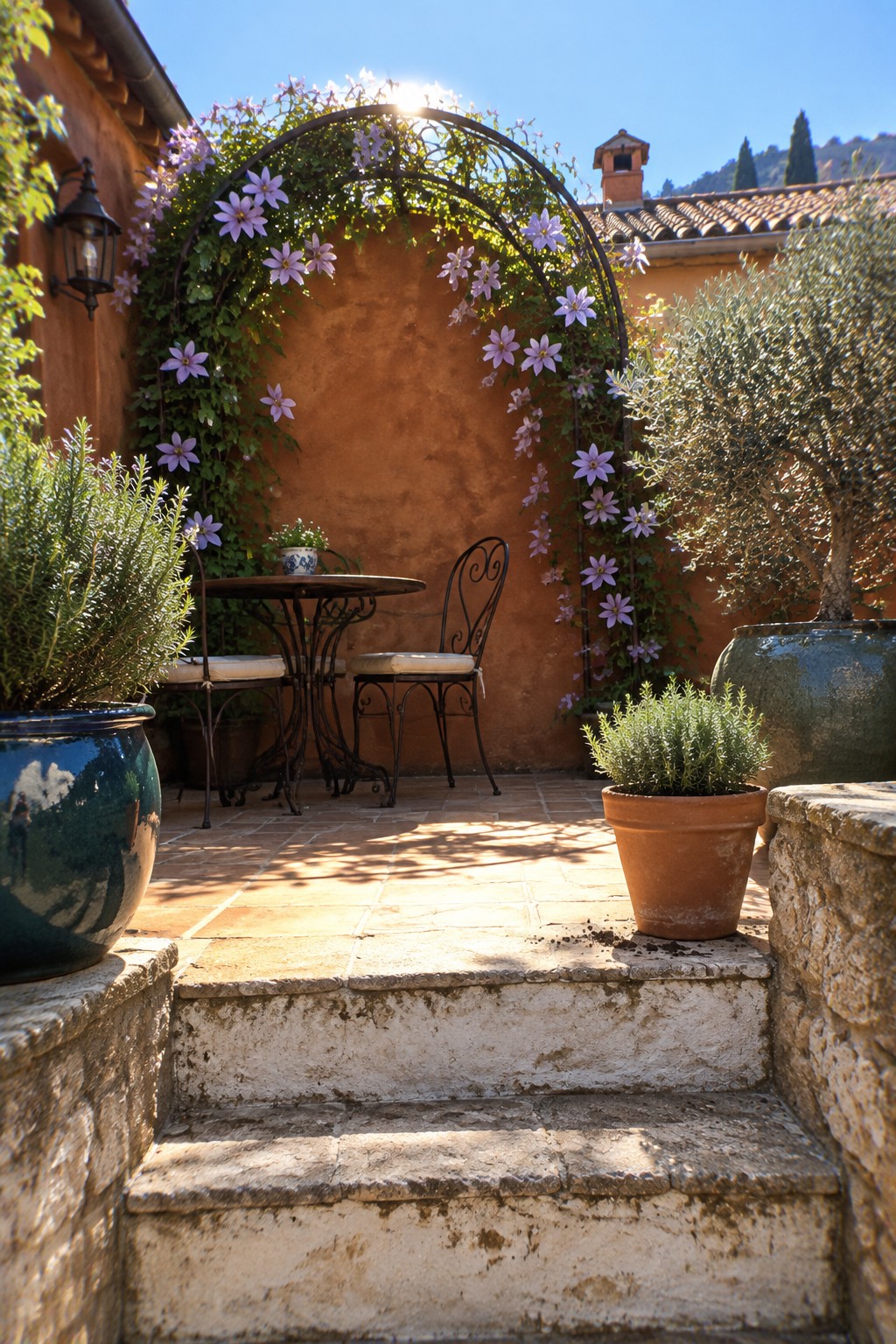
A trellis gives clematis a clear place to climb and can turn a plain garden wall into a flower-covered backdrop. An arched metal support is especially useful when you want the planting to feel part of a small patio, rather than a separate flower bed.
Set the trellis where the vine can climb without crowding a table or walkway, and check that it is firmly secured. Clematis can grow well in a courtyard garden, but leave room to reach the base for watering and pruning.
Add Clematis to a Pergola
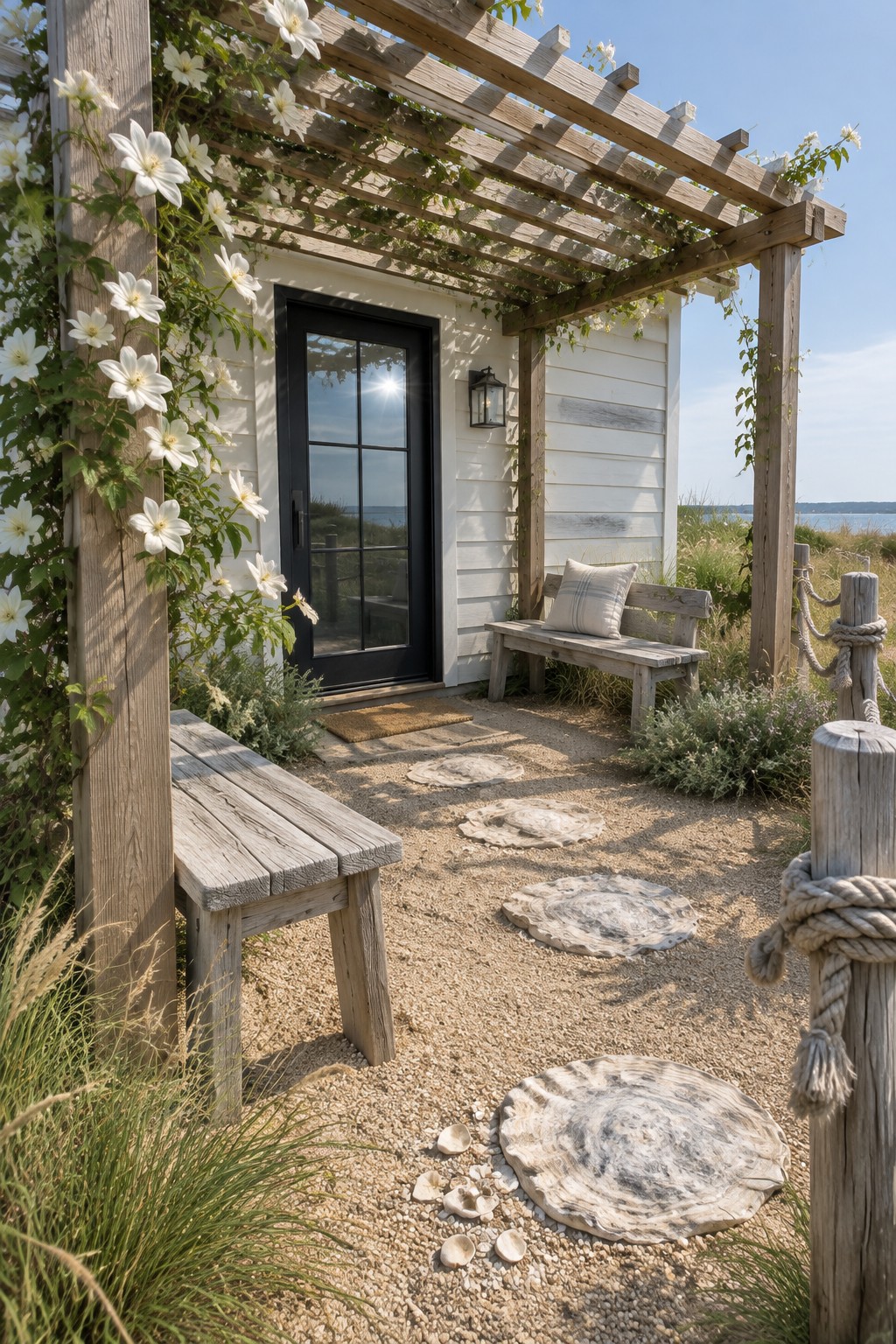
A pergola can give clematis a sturdy place to climb while adding shade and structure to a small garden seating area. The overhead beams make room for the vine to spread, and the flowers can bring color close to the house.
Choose a pergola built to support mature vines, and guide new growth along the posts and crossbeams. This idea works well beside an entry or patio, but leave enough space to sit and walk comfortably as the clematis fills in.
Use a Flowering Arch to Mark the Front Walk
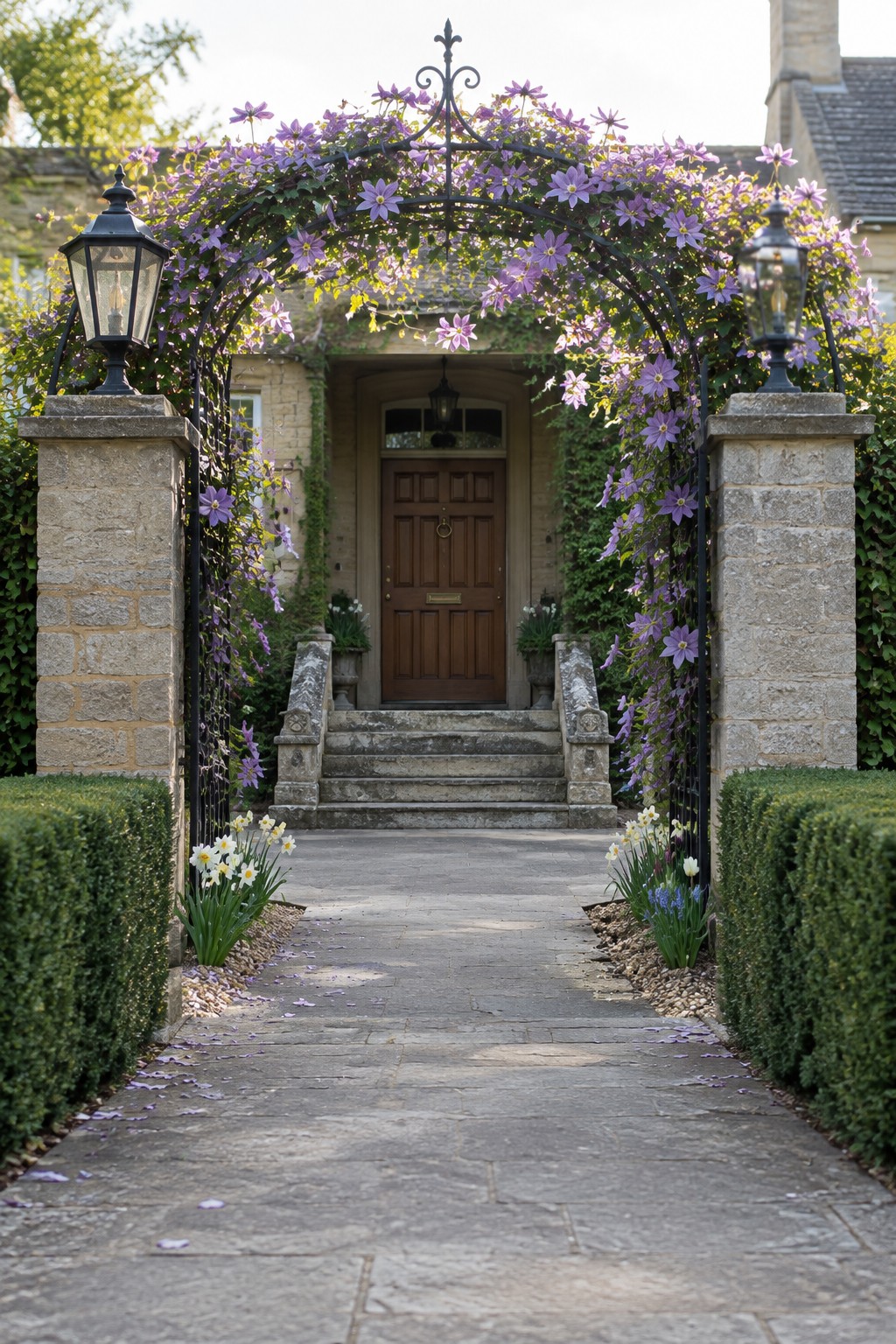
A clematis-covered arch gives a front path a clear beginning and makes the entrance feel more connected to the garden. It is a simple way to add height without taking up much room.
Set the arch where the path meets the entry, and train the vines across its top as they grow. Choose a sturdy support and leave enough room for people to pass comfortably. A stone-fronted home suits this classic garden feature well.
Use Clematis to Add Color Along a Garden Path
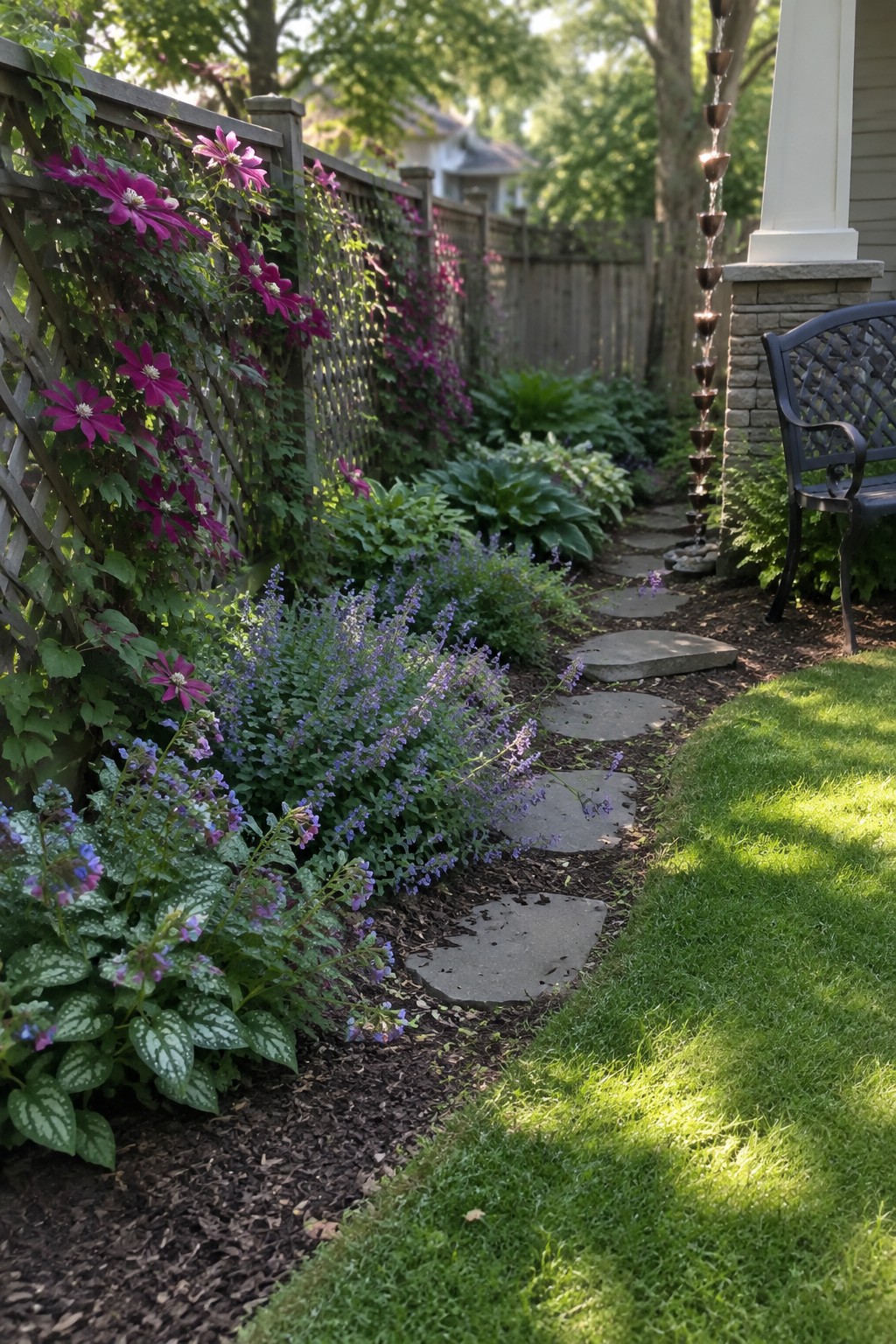
A flower-covered fence can bring clematis color right beside a garden path without taking up much walking space. The vines grow upward, while low plants along the edge fill in the bed below.
Train clematis on a sturdy fence trellis where it can get the light it needs, and leave room to reach the stems for pruning. This approach works well along a narrow side yard or front walk, especially when you want flowers to guide the route.
Use a Trellis to Add Height to a Front Garden
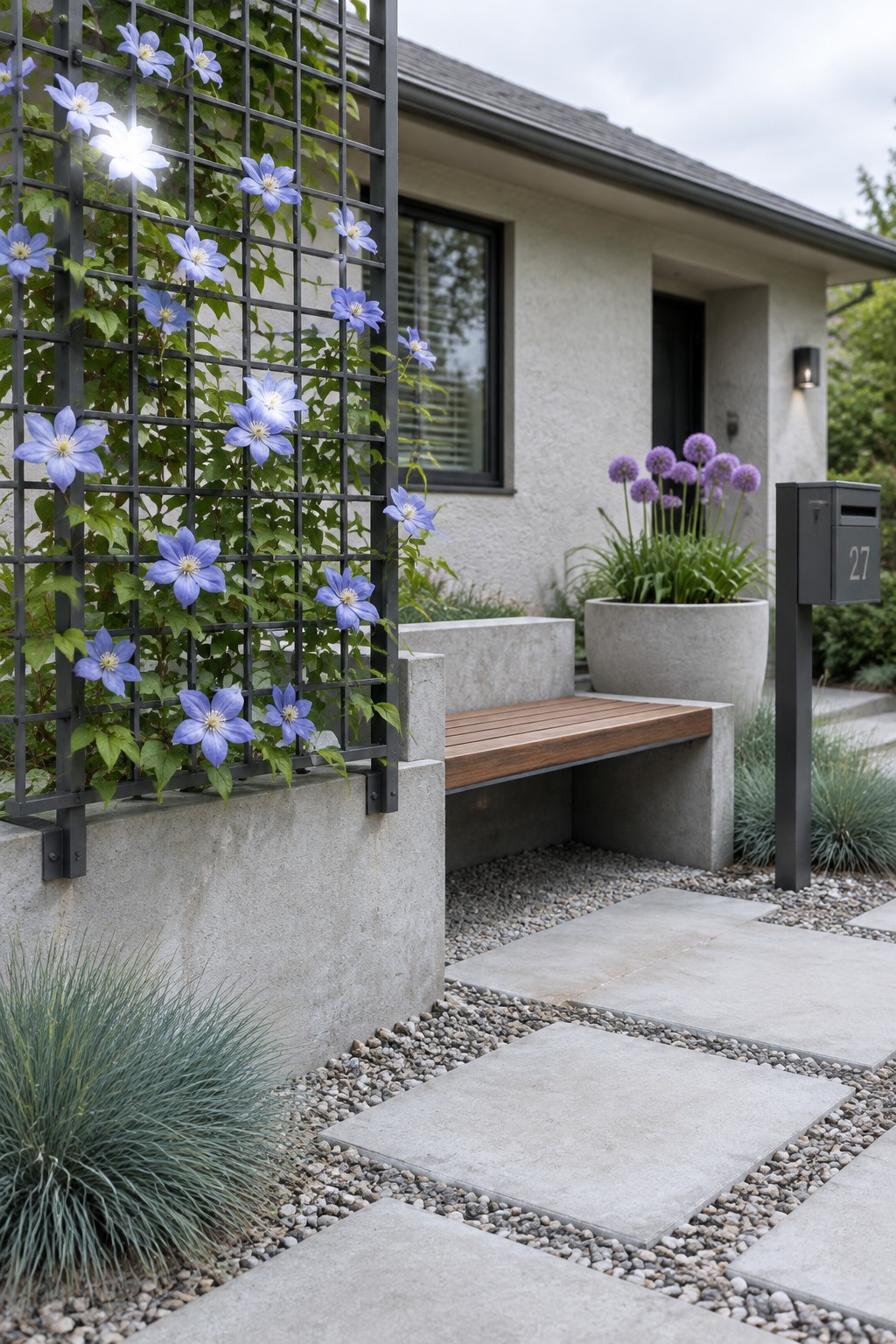
A wall trellis gives clematis a place to climb without taking up much ground space. It also brings flowers closer to the entry, where they are easy to enjoy.
Attach a sturdy trellis beside a front walk or driveway, and guide the stems as they grow. Leave room for the plant to spread, and check that the support is secure enough to carry mature vines.
Grow Clematis Around the Front Door
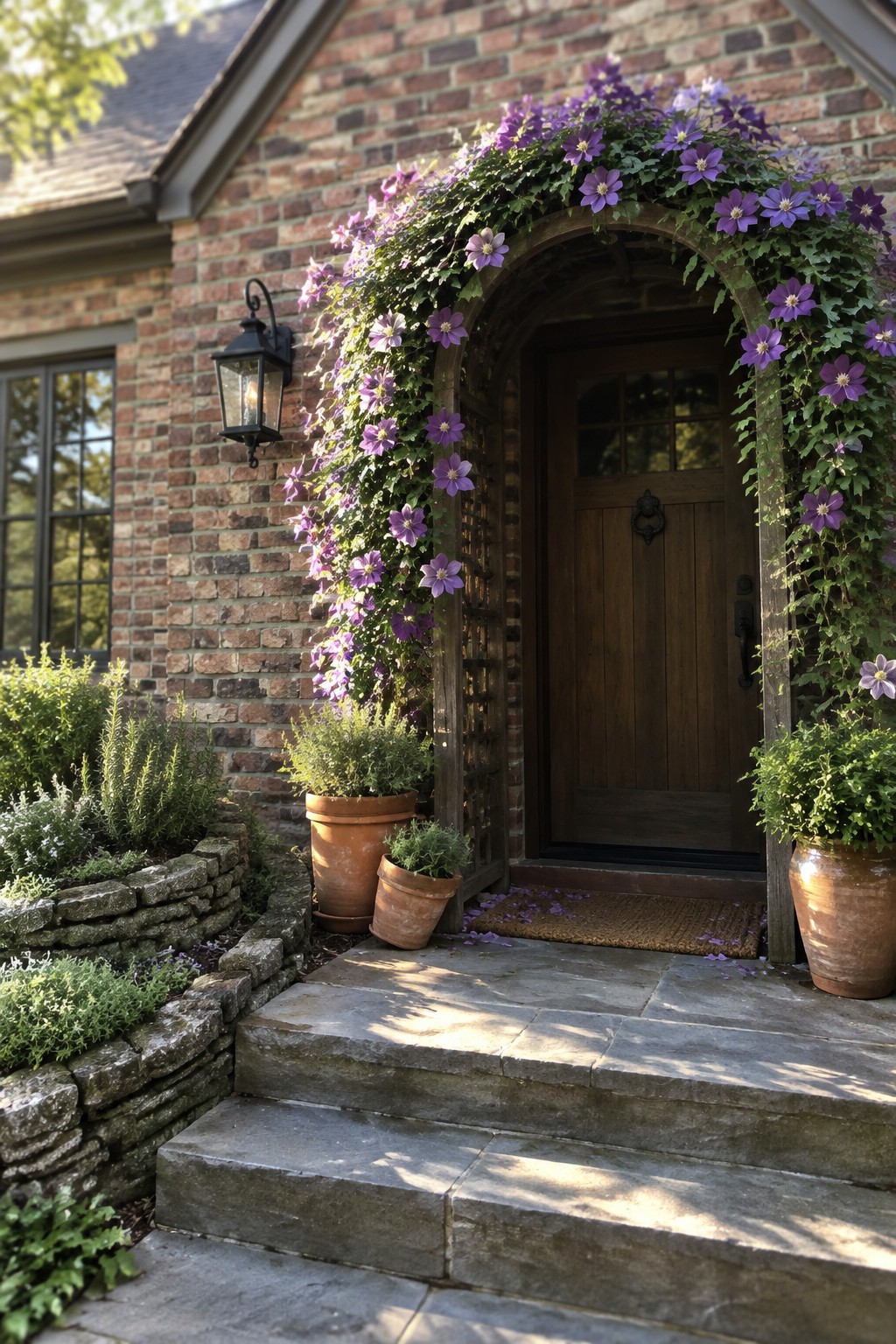
Clematis can turn a plain entry into a garden feature when it climbs around the doorway. The purple flowers make the entrance easy to notice, while the leafy growth gives the arch a softer look.
Use a sturdy arch or trellis beside the door, and leave enough room for people to pass without brushing against the vines. This idea suits brick homes especially well, but keep the clematis trimmed so it does not crowd the doorway or cover hardware.
Use Clematis To Mark the Front Door
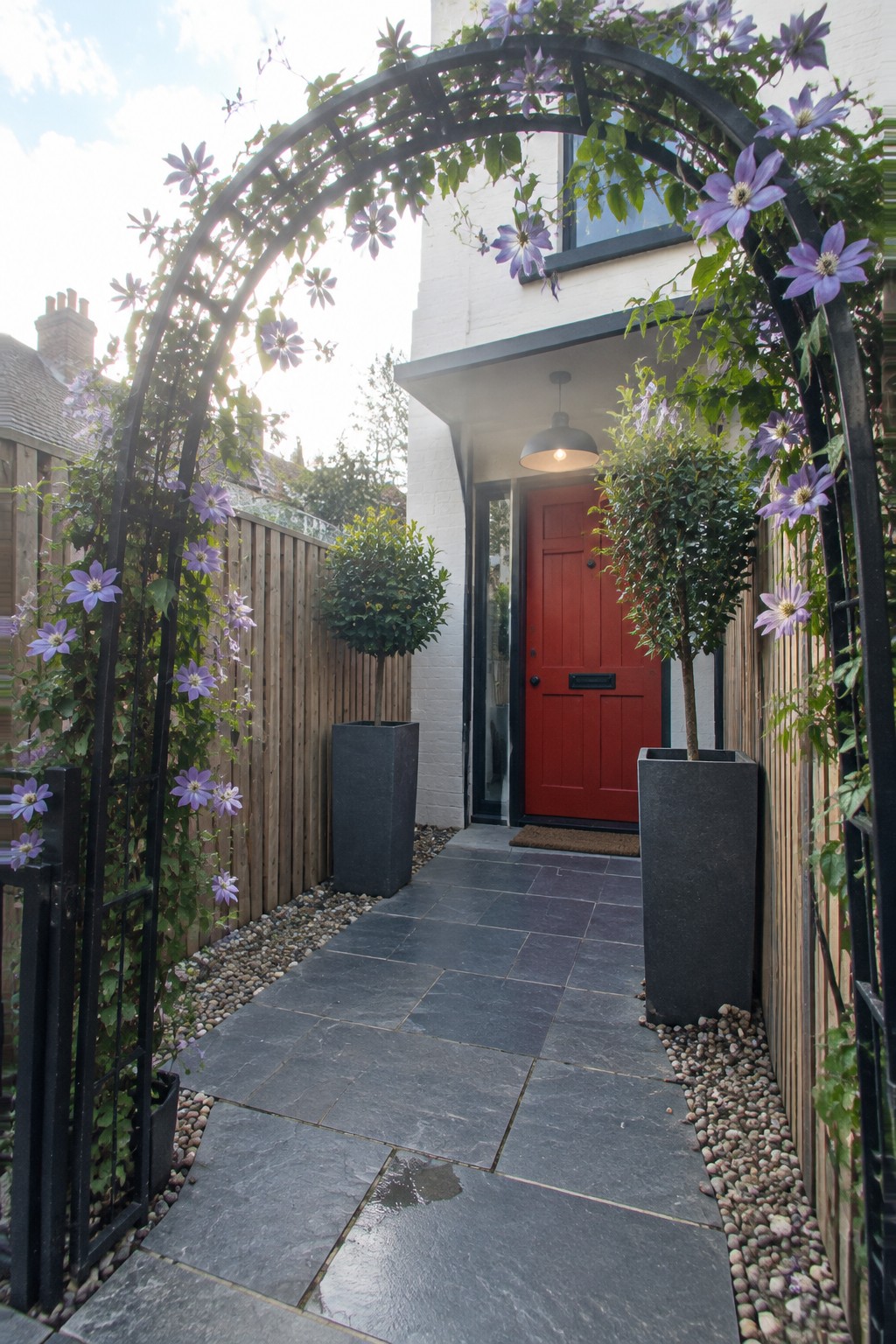
A metal arch can give a narrow front path a clear sense of arrival. Let clematis climb over the structure, where its flowers can frame the approach without taking up much ground space.
This works well in a small entry garden bordered by fences or walls. Choose a sturdy arch and guide new growth along its sides, keeping the path clear and leaving room to reach the door.
Train Clematis Along a Front Yard Border
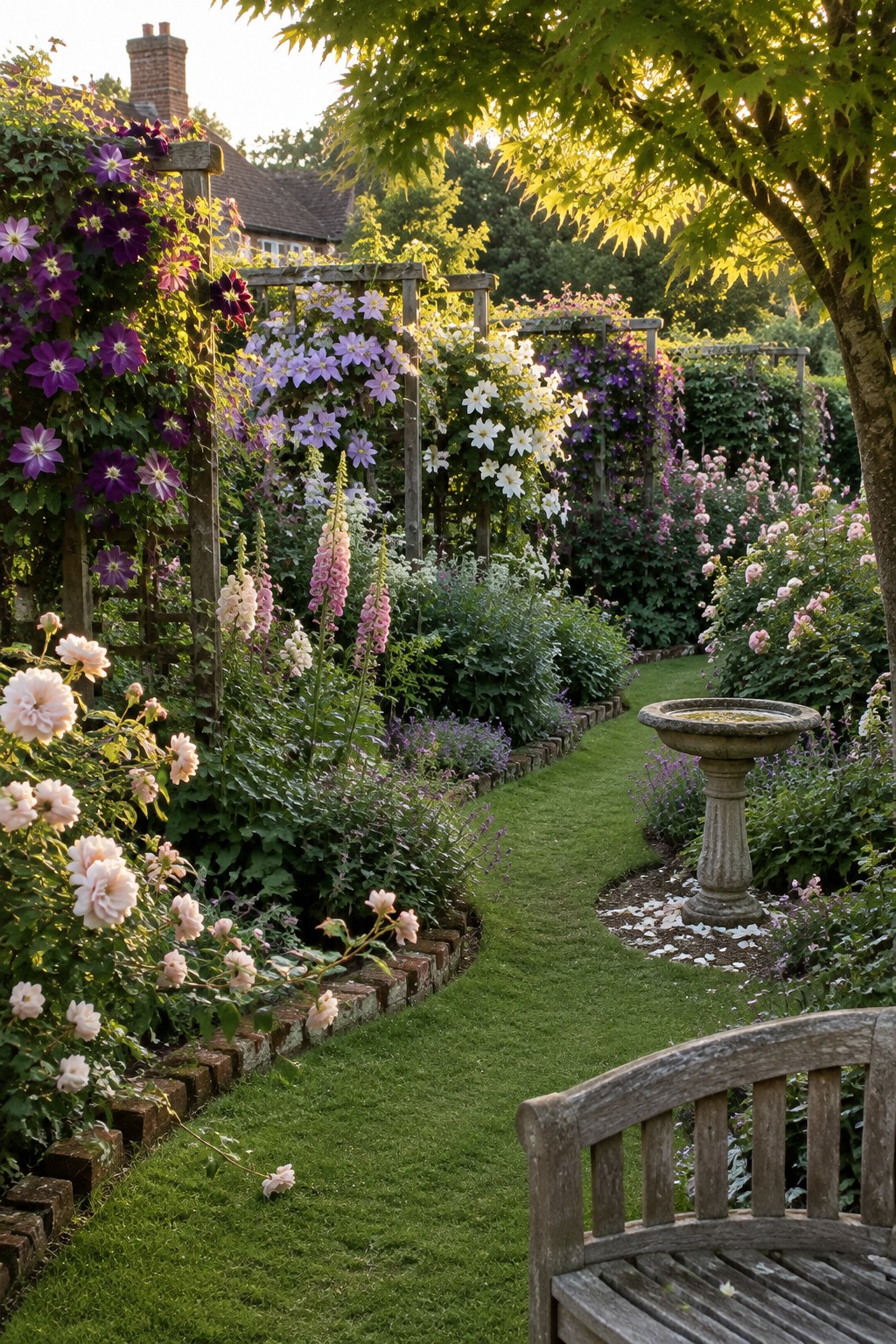
A trellis can turn a narrow flower bed into a layered front yard border. Clematis adds flowers at eye level, while the planting below keeps the base of the trellis from looking bare.
Set the supports along a path or garden edge where the vines can climb without blocking the way. Leave room to reach the plants for pruning, and choose a trellis sturdy enough to handle mature growth.
Let Clematis Climb a Front Entry Wall
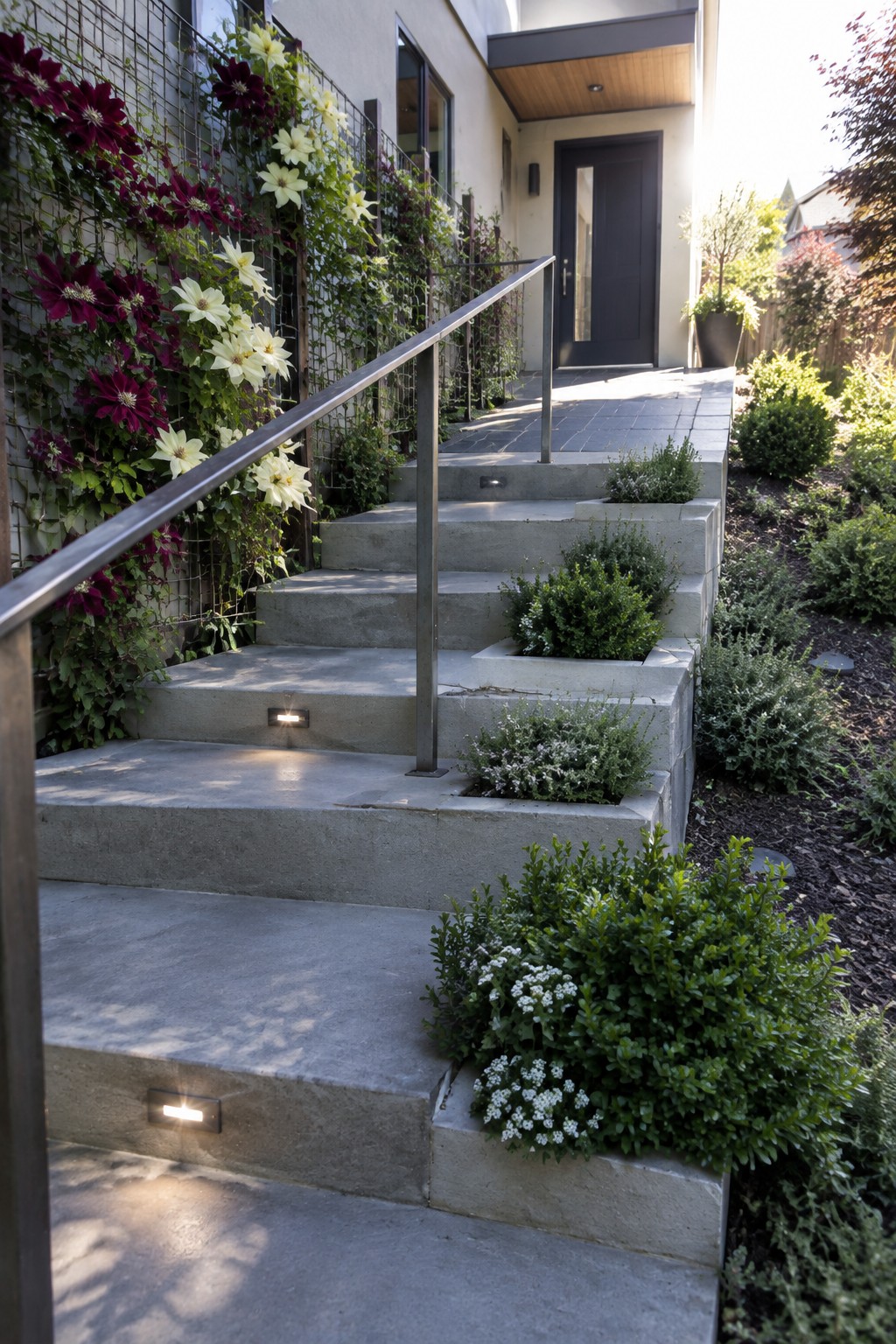
A trellis beside the front steps gives clematis a clear place to grow and helps bring flowers right up to the entrance. The climbing plants add color along an otherwise plain wall without taking up much room on the steps.
Use a sturdy wall-mounted trellis, leaving enough space behind it for air to circulate. This works well beside a narrow entry path, but keep the vines trimmed away from handrails, lights, and the doorway.
Train Clematis on a Front Entry Trellis
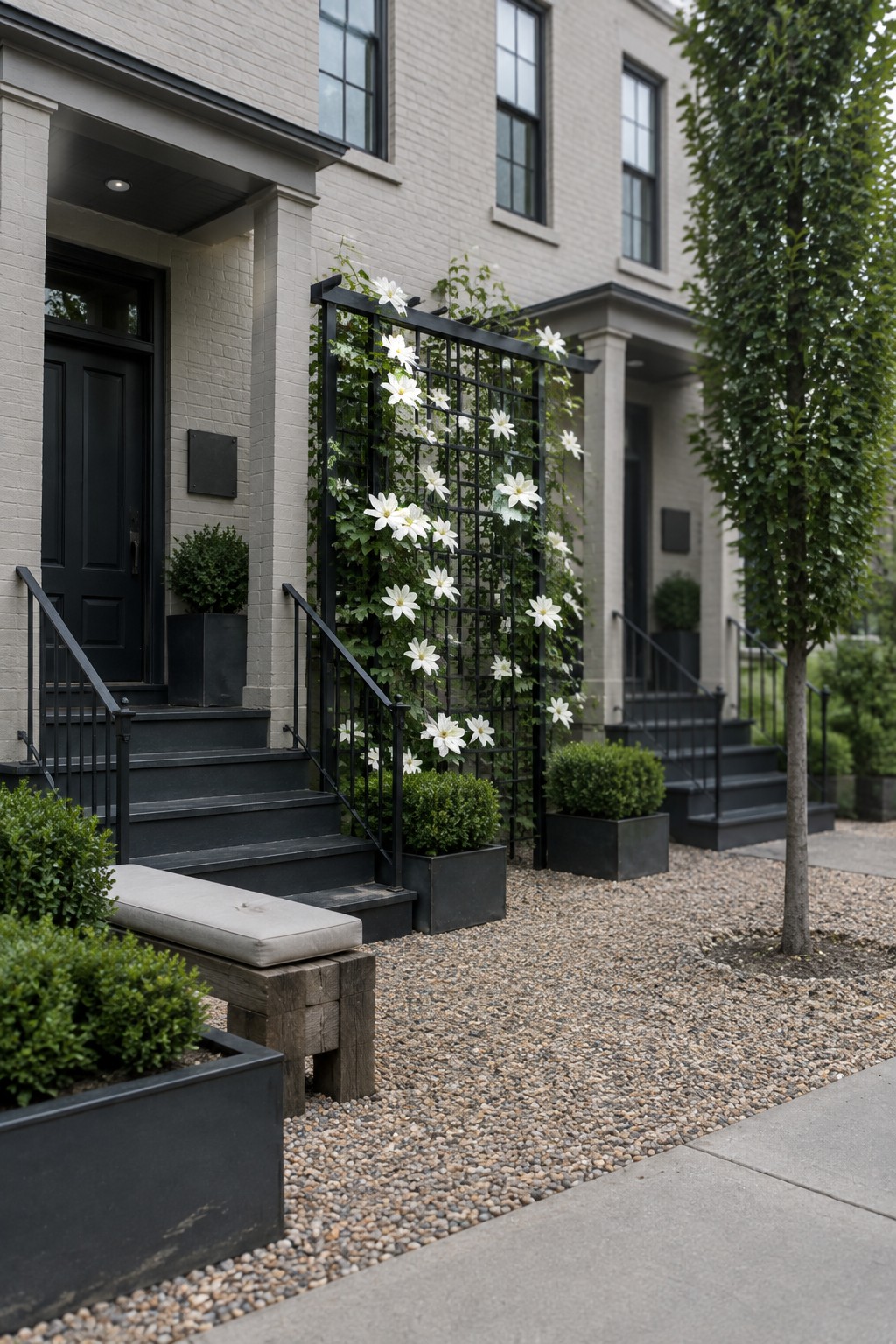
A trellis beside the front steps gives clematis a place to climb without taking up much ground space. It also brings flowers close to the entry, where they can add color to a simple brick facade.
Choose a sturdy trellis and set it where the vine can get the light it needs. Keep it clear of the steps and handrail, and guide new growth through the grid as it develops.
Train Clematis Along a Front Entry Trellis
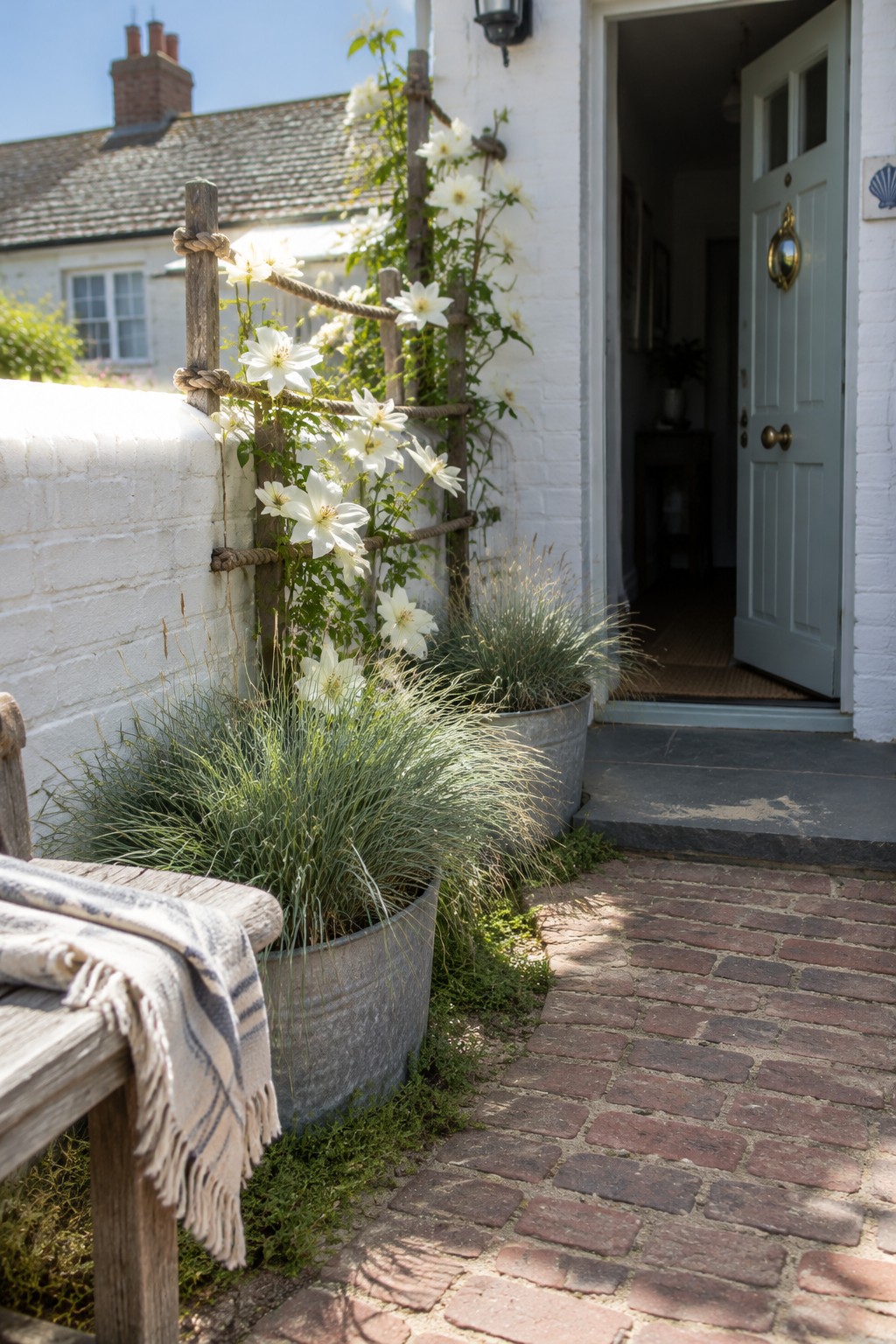
A simple trellis beside the front door gives clematis a place to climb without taking up much room. It also helps tie the planting to the house, so the entry feels settled into the garden rather than separate from it.
Use a narrow trellis against a wall or fence near the path, and guide the stems as they grow. Leave enough space around the doorway, and choose a clematis suited to the light and the size of the spot.
Use Clematis to Create a Garden Gateway
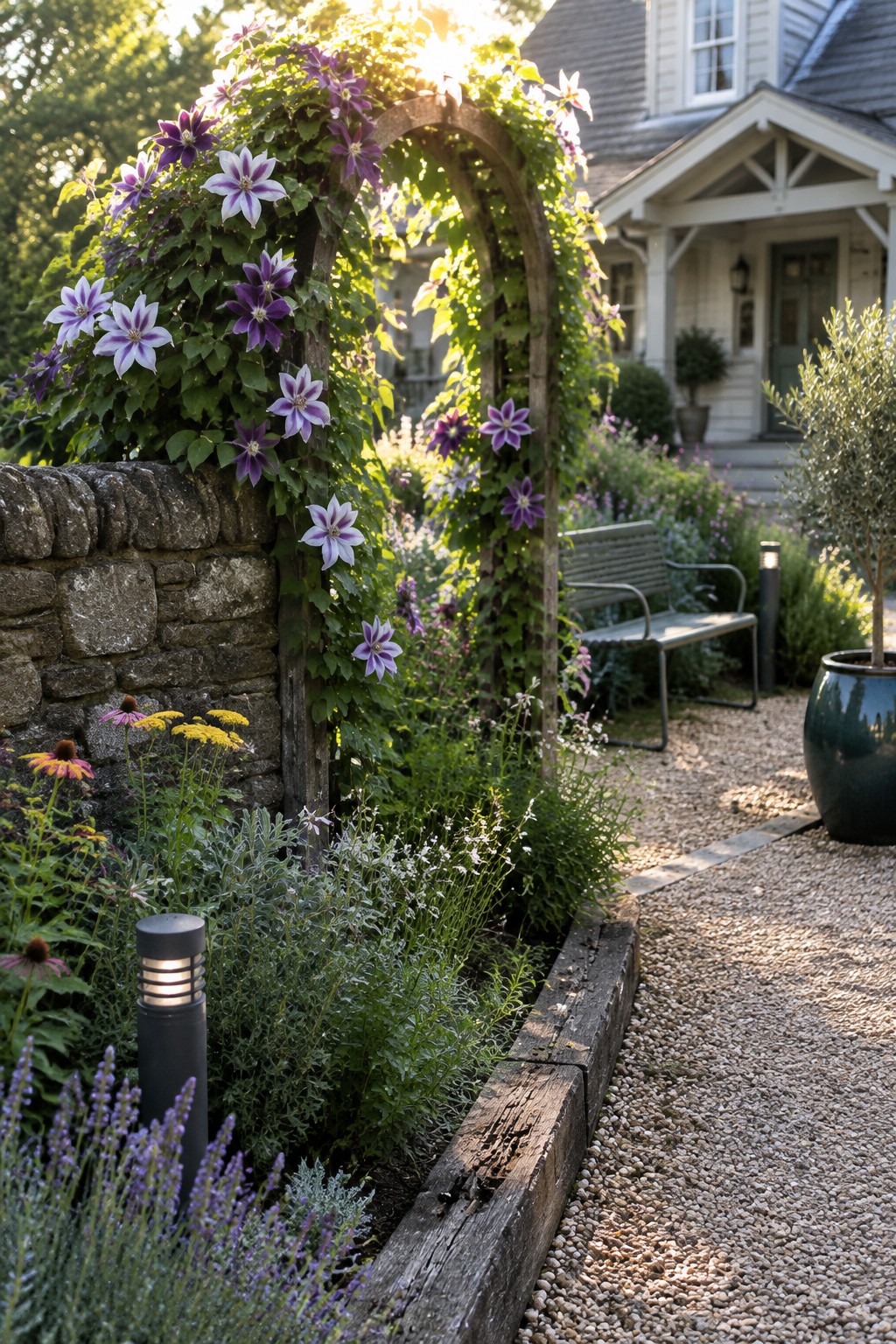
A flower-covered arch gives a front garden a clear focal point and marks the transition from the path to the rest of the yard. Clematis is a good choice for this kind of structure because its climbing stems can fill the sides and top with blooms.
Place the arch where it naturally guides people along a walkway, and leave enough room to pass beneath it as the vine grows. A sturdy wooden arch can suit a traditional home, but keep the base open enough to avoid crowding the path.
Use a Wooden Trellis to Support Clematis
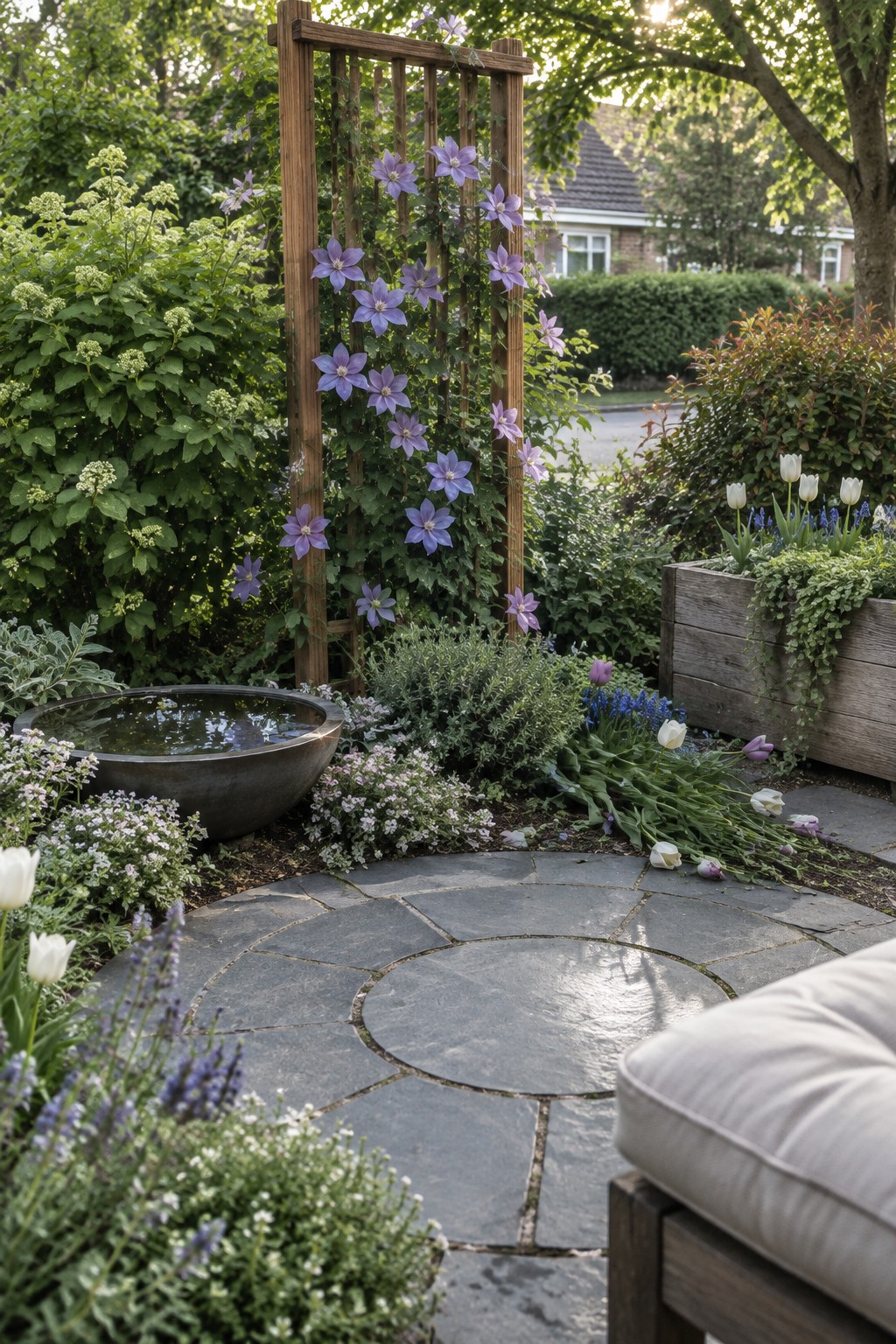
A simple wooden trellis gives clematis a clear place to climb and brings a vertical feature to a garden bed. The open slats let the vine spread without hiding the structure, so the planting can add height without taking up much ground space.
Choose a sturdy trellis and set it where the clematis gets suitable light for its variety. Leave room around the base for other plants, and check the vine’s growth now and then so it stays on the trellis rather than wandering into nearby shrubs.
Grow Clematis on a Front Porch Trellis
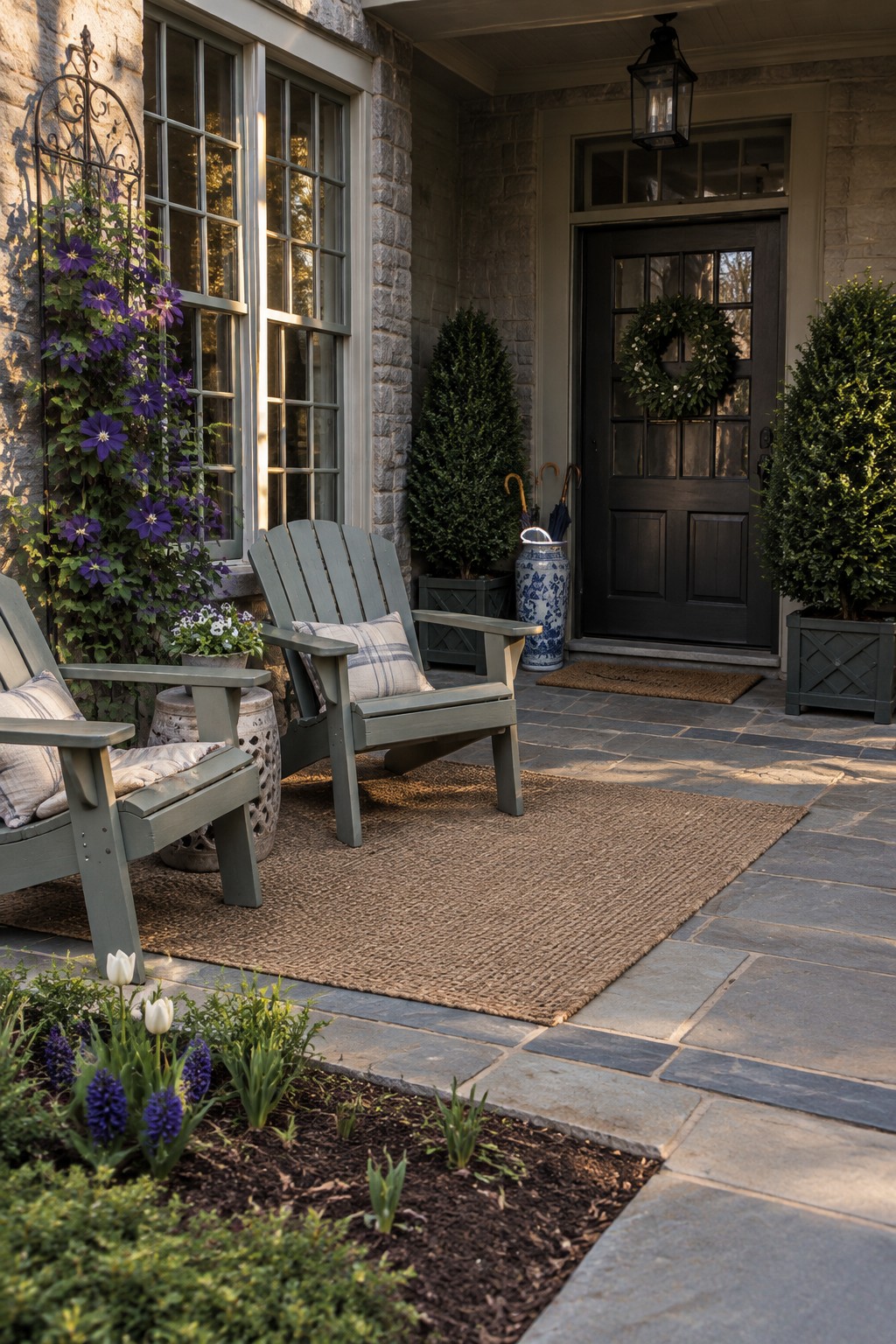
A trellis beside the porch gives clematis a place to climb and brings flowers close to the front entry. It’s a simple way to add vertical planting without taking up much of the walkway.
Place the trellis where the vine can grow without covering windows or blocking the door. A wall-mounted trellis near a porch seating area can work well, as long as the clematis has room to spread.
Frequently Asked Questions
Q: How much sun does a clematis need on a front yard trellis?
A: Most clematis bloom best with about six hours of sun, though some varieties prefer a little afternoon shade. Keep the roots cool with mulch or low-growing plants while letting the vine climb into the light.
Q: Can I grow clematis in a pot beside my porch?
A: Yes, as long as the pot has drainage holes and room for the roots. Choose a compact variety, water it regularly, and give it a sturdy trellis to climb.
Q: How do I keep a clematis from tangling around a gutter or downspout?
A: Put the trellis a few inches away from the downspout and guide new stems toward it as they grow. Clematis climbs by wrapping its leaf stems around thin supports, so wide surfaces like walls and posts may need added wire or netting.
Q: When should I prune my clematis?
A: Check the variety’s pruning group before you cut. Some bloom on old growth and need only light trimming, while others flower on new growth and can be cut back more firmly in late winter or early spring.
