

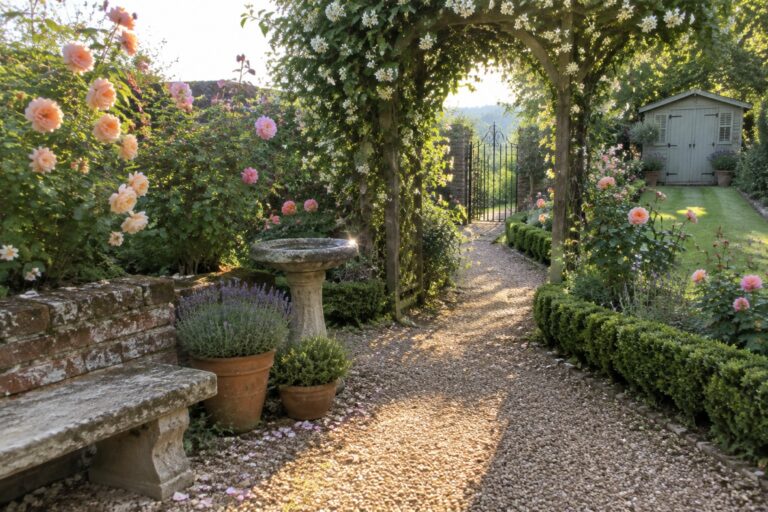
Jasmine and roses can make a garden feel romantic, but their placement matters just as much as their flowers.
I find they work best when their shapes have room to show, with paths, borders, and supports guiding the eye without making the yard feel crowded.
A rose-covered arch might draw you toward a seating nook, while jasmine near a walkway can release its fragrance as you pass.
The right layout also leaves space for plants to grow and for people to move comfortably through the garden.
Some ideas are worth adapting to the light, soil, and scale of your own yard.
Let a Garden Path Lead Through the Planting
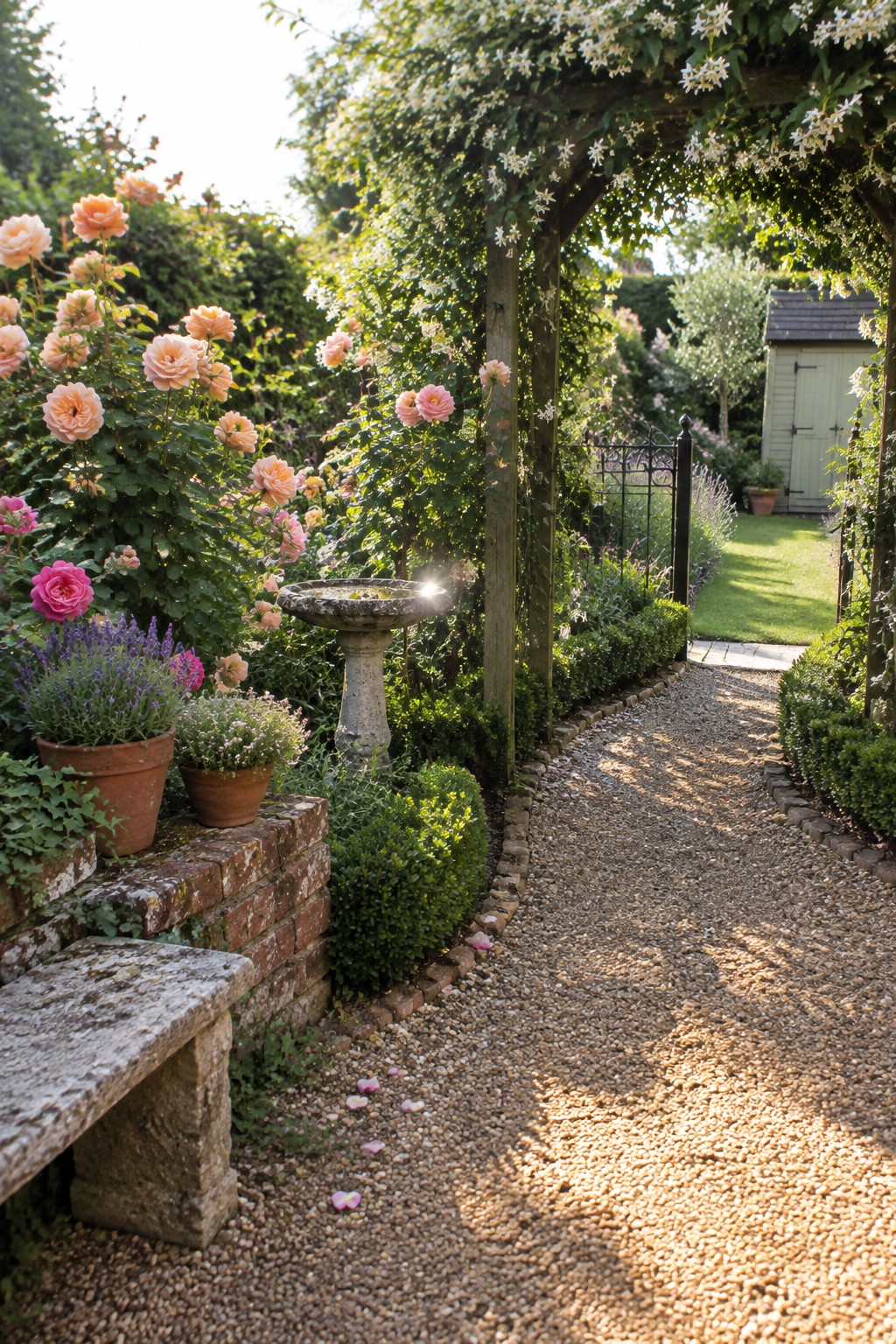
A narrow gravel path can make a flower garden feel more like a place to wander, rather than a bed viewed from the edge. It also gives roses and jasmine room to grow around the route without making the garden hard to navigate.
Use a clear, gently curving path through a border or side garden, and edge it with stone or brick to keep the gravel in place. Leave enough width for comfortable walking, especially where plants may spread over the path in summer.
Create a Romantic Garden Dining Area

A pergola covered in jasmine and climbing roses can turn an ordinary patio into a garden dining area that feels tucked away. The flowering canopy provides shade and makes the space feel connected to the planting around it.
Use a sturdy pergola over a table or small seating area, then train climbers along its beams and posts. Leave room for airflow and choose plants suited to your climate, since a dense canopy needs regular pruning.
Use a Stepping-Stone Path to Guide the Garden

A stepping-stone path gives a flower garden a clear route without covering the planting with too much hardscape. Here, irregular stone slabs lead through the beds toward the gate, making the garden easier to walk through and care for.
This approach works well in cottage-style gardens where roses and jasmine grow along the path. Leave enough room between stones for comfortable steps, and keep the edges trimmed so plants do not take over the walkway.
Let Climbing Roses Shape a Garden Patio

Climbing roses can make a small patio feel tucked away without taking up much floor space. Letting them grow along a wall brings the planting close to the seating area, where the blooms are easy to enjoy.
Use a sturdy trellis or wall supports, and leave room to prune and reach the plants. This works well in a narrow courtyard; jasmine can share the wall for added flowers, but keep both plants trimmed so they don’t crowd the seats.
Use a Gravel Path to Organize Rose Beds

A gravel path gives a flower garden a clear route through the planting, so it feels orderly without being formal. Here, clipped hedges edge the path while roses spill over the borders, making the route easy to follow.
This approach works well in a long garden or anywhere you want to guide visitors toward a focal point. Choose compacted gravel and firm edging to keep the surface in place, especially where the path meets steps.
Use a Pergola to Support Climbing Roses

A pergola gives climbing roses a place to grow overhead, turning a simple garden route into a covered path. It works especially well when you want flowers to guide visitors through the garden rather than keep them in one bed.
Choose a sturdy structure and train the roses along its top and sides as they grow. Leave enough open space for walking, and keep the path easy to use by trimming back stems that begin to crowd it.
Create a Secluded Garden Lounging Area

A small lounging spot can make a rose garden feel like a place to spend time, not just admire from a path. Here, woven chaise lounges sit beside a long stone trough, while climbing roses cover the brick wall nearby.
This kind of setup works well in a courtyard or a sheltered corner with enough room to walk around the seating. Choose outdoor cushions that can handle damp weather, and keep the planting trimmed back so the chairs stay comfortable to use.
Use a Flowering Screen for Patio Privacy

A planted screen can make an outdoor seating area feel more private without closing it off completely. Here, jasmine and white roses climb a dark slatted fence, adding flowers and greenery while still letting a little light through.
Use a sturdy trellis or slatted fence beside a patio bench or dining spot, and train the vines along it as they grow. Leave enough room for airflow and pruning, especially where roses and jasmine share the same screen.
Use Retaining Walls to Shape Flower Beds

Terraced flower beds make a sloped garden easier to organize and give roses and other flowers room to grow in layers. Low retaining walls also help define the planting areas without hiding the plants behind a tall barrier.
Use sturdy stone or timber walls that suit the garden, and leave enough space for plants to spill over the edges. This approach works well on uneven ground, but make sure the walls are properly supported and the steps remain clear.
Grow Jasmine Along a Balcony Trellis

Jasmine trained up a trellis is a practical way to bring a climbing flower into a small balcony garden. It uses vertical space instead of taking up more floor area, and the foliage can provide a little privacy.
Choose a sturdy trellis that fits the wall or railing, and guide the stems as they grow. A climbing rose in a nearby pot can add another layer of flowers, but leave enough room to reach the plants for watering and pruning.
Add Garden Lighting Along a Curving Path
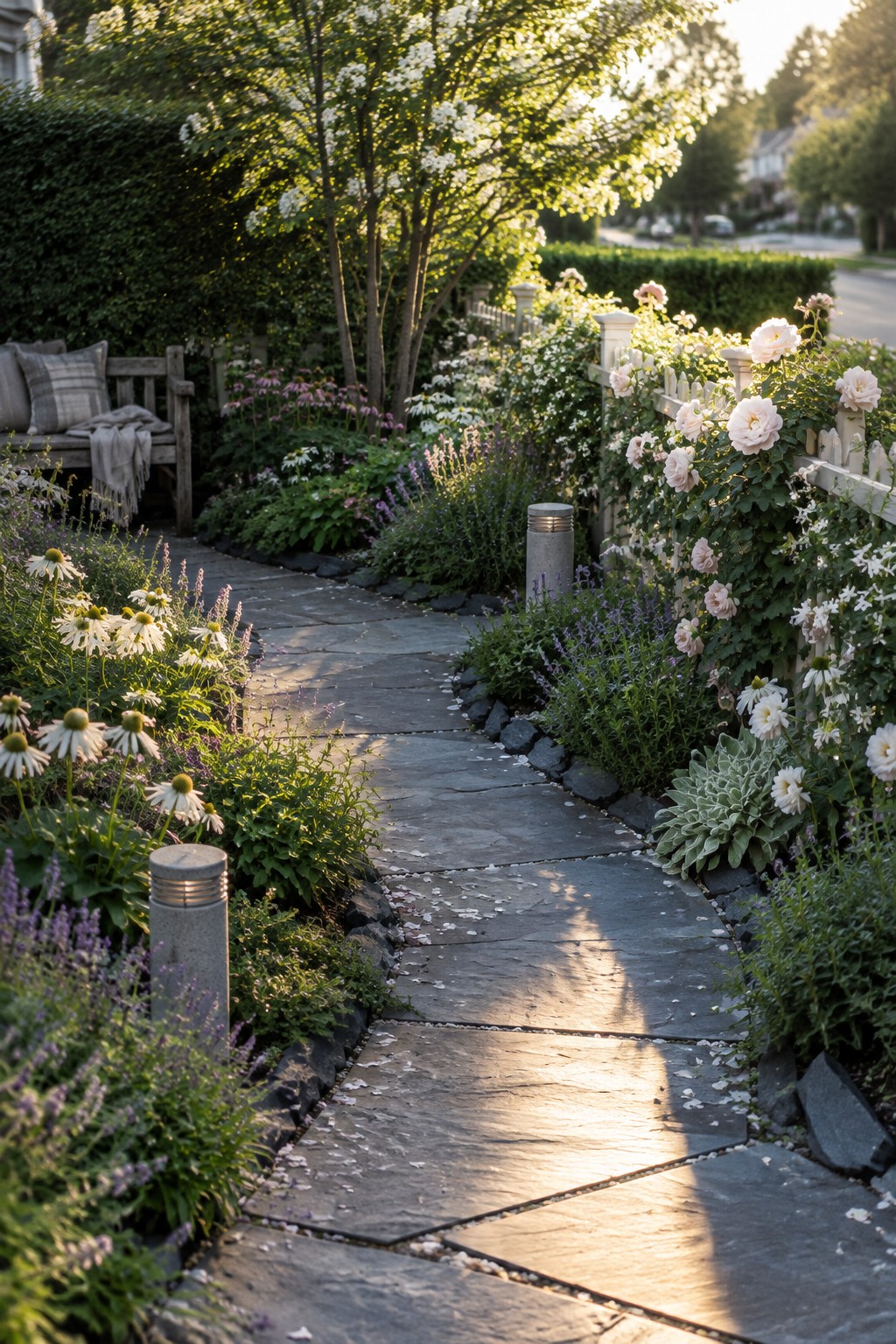
Low path lights make a garden walkway easier to follow after dusk and give the route a clear place in the planting plan. Here, small lights sit beside broad stone slabs, where they mark the edges without taking attention from the flowers.
Use a few lights at intervals rather than lining every stone. This works well along a winding path through dense beds, but keep fixtures low and aim their glow toward the ground.
Plant Roses Around a Poolside Lounge

A poolside lounge can feel tucked away when roses grow along the edges. Here, climbing roses rise beside the seating, making a simple place to rest feel connected to the garden.
Use a compact daybed or bench where there’s room to sit without narrowing the pool deck. Train roses on a sturdy support, and leave enough space to prune them and keep fallen petals out of the water.
Use a Central Flower Bed to Organize the Garden
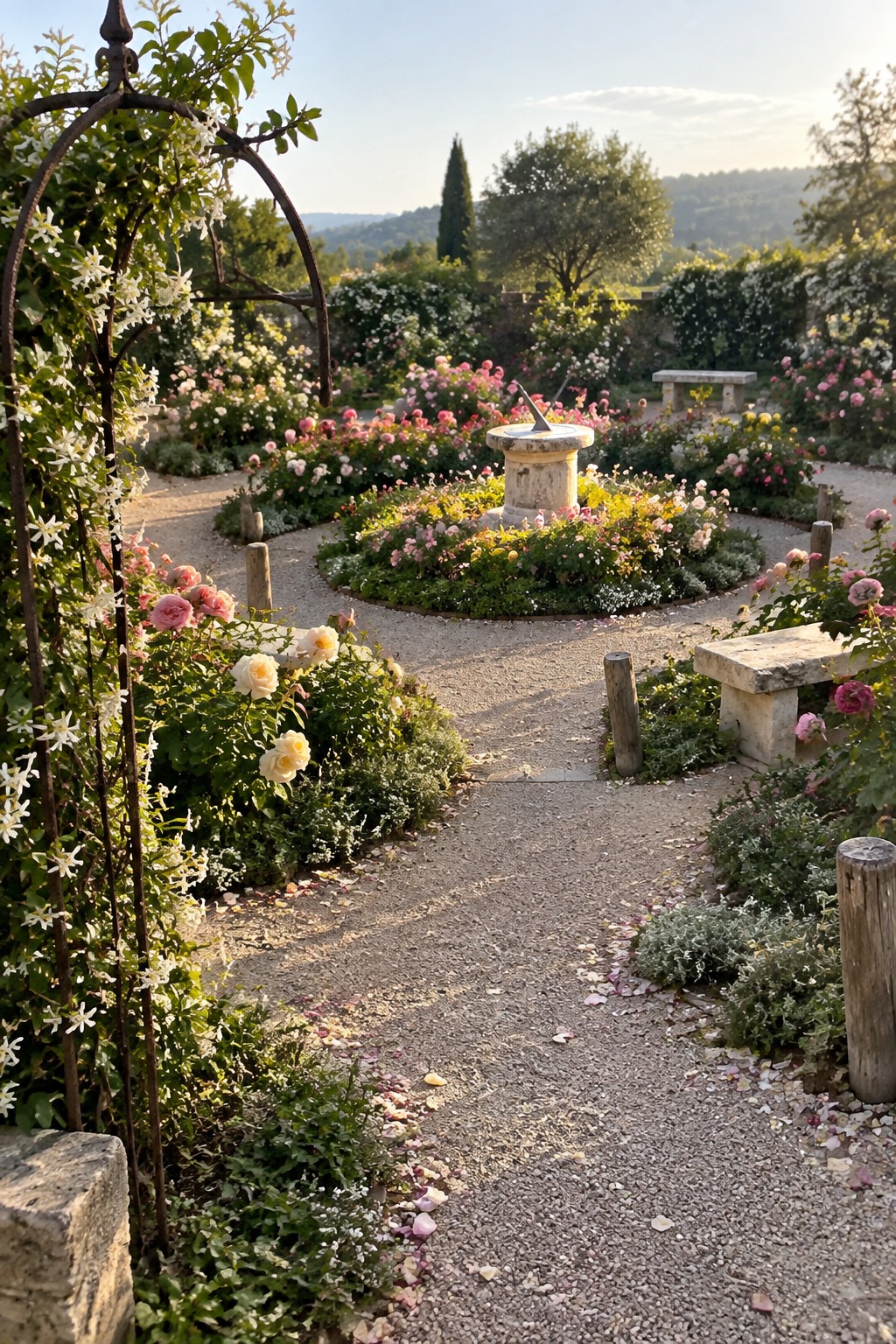
A round flower bed can give a romantic garden a clear center and make the surrounding paths feel more purposeful. Roses and low-growing flowers work well here, with taller shrubs or jasmine placed farther back so the planting has a gentle change in height.
Leave enough room around the bed for an easy walking path, and keep the shape simple to maintain. This layout suits a cottage-style garden, especially when gravel paths separate the central planting from the outer beds.
Use a Rose Arch to Mark the Garden Entry
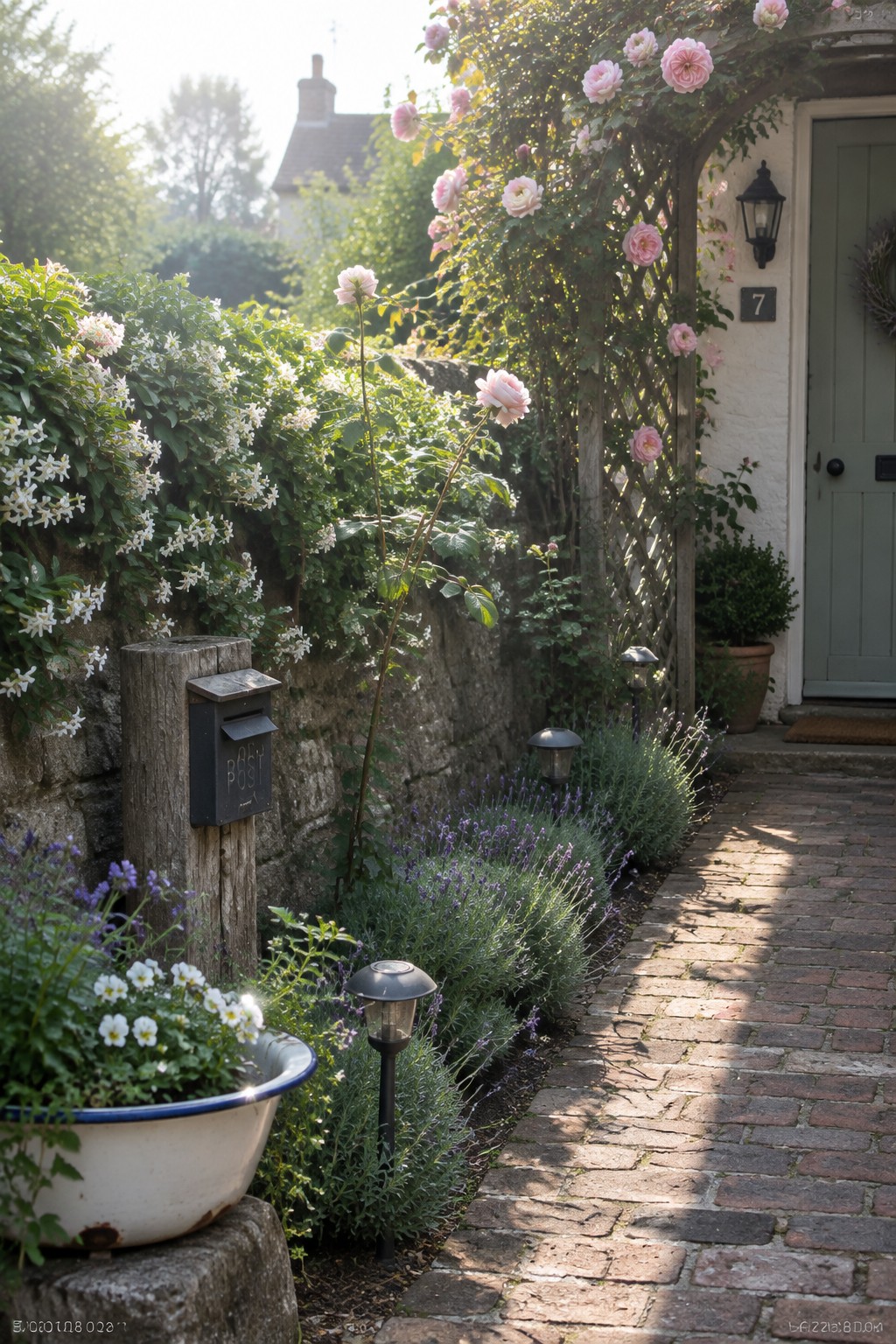
A climbing rose arch can make a simple entrance feel like part of the garden, rather than just a way to reach the door. It also gives flowering vines a clear place to grow, so the planting feels intentional.
Use a sturdy trellis or arch beside a path, and train the roses along it as they grow. This works especially well near a front door or gate. Leave enough room for the walkway, and prune regularly so the stems do not crowd the entrance.
Grow Jasmine Along a Garden Arch

A garden arch gives climbing jasmine and roses a place to grow while making a simple path feel more sheltered. The flowers become part of the garden’s structure, rather than sitting only in separate beds.
Use sturdy posts and overhead supports, and leave enough room for plants to spread without blocking the walkway. This works well along a gravel path or at the entrance to a garden, but keep the arch open enough to walk through comfortably.
Grow Climbing Roses in Raised Planters
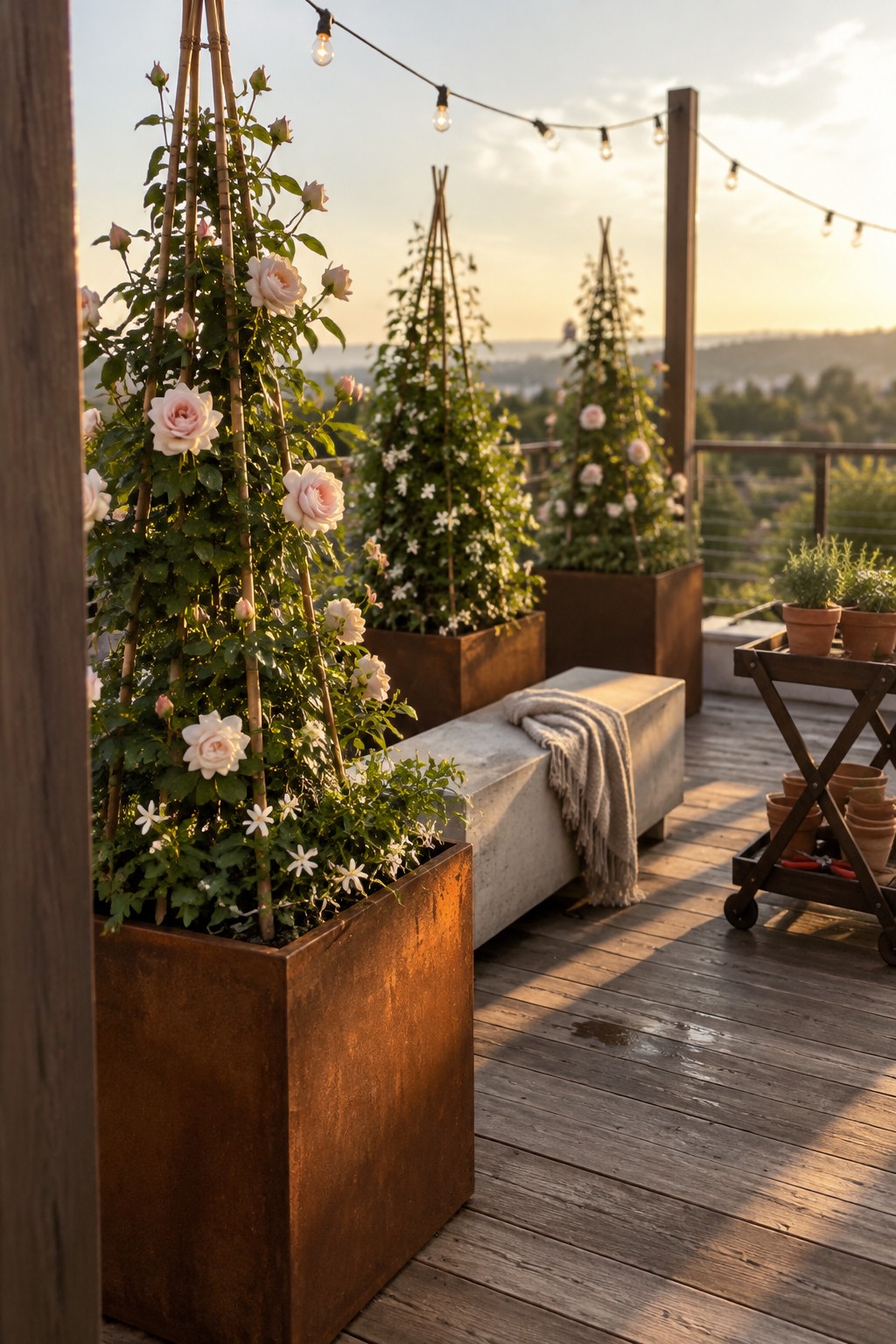
Raised planters give climbing roses a clear place to grow, which works especially well on a deck where there is no garden bed. A simple trellis lets the stems climb upward and keeps the planting from spreading across the floor.
Choose a planter deep enough for the rose’s roots and secure the trellis so it can support mature growth. This approach suits a terrace or small patio, though the plants will need regular watering in containers.
Use Raised Planters to Define a Garden Path

Raised planters can give a gravel path a clear shape while keeping flowers grouped neatly along the way. This layout works especially well in a compact garden, where defined planting areas help the path feel planned rather than squeezed in.
Use sturdy planters beside stepping stones, and leave enough room for comfortable passage. Roses can bring height and color to the beds, while lower flowering plants fill the edges. Keep the planting from spilling too far over the path so it stays easy to walk.
Use Wall Planters to Grow Jasmine and Roses
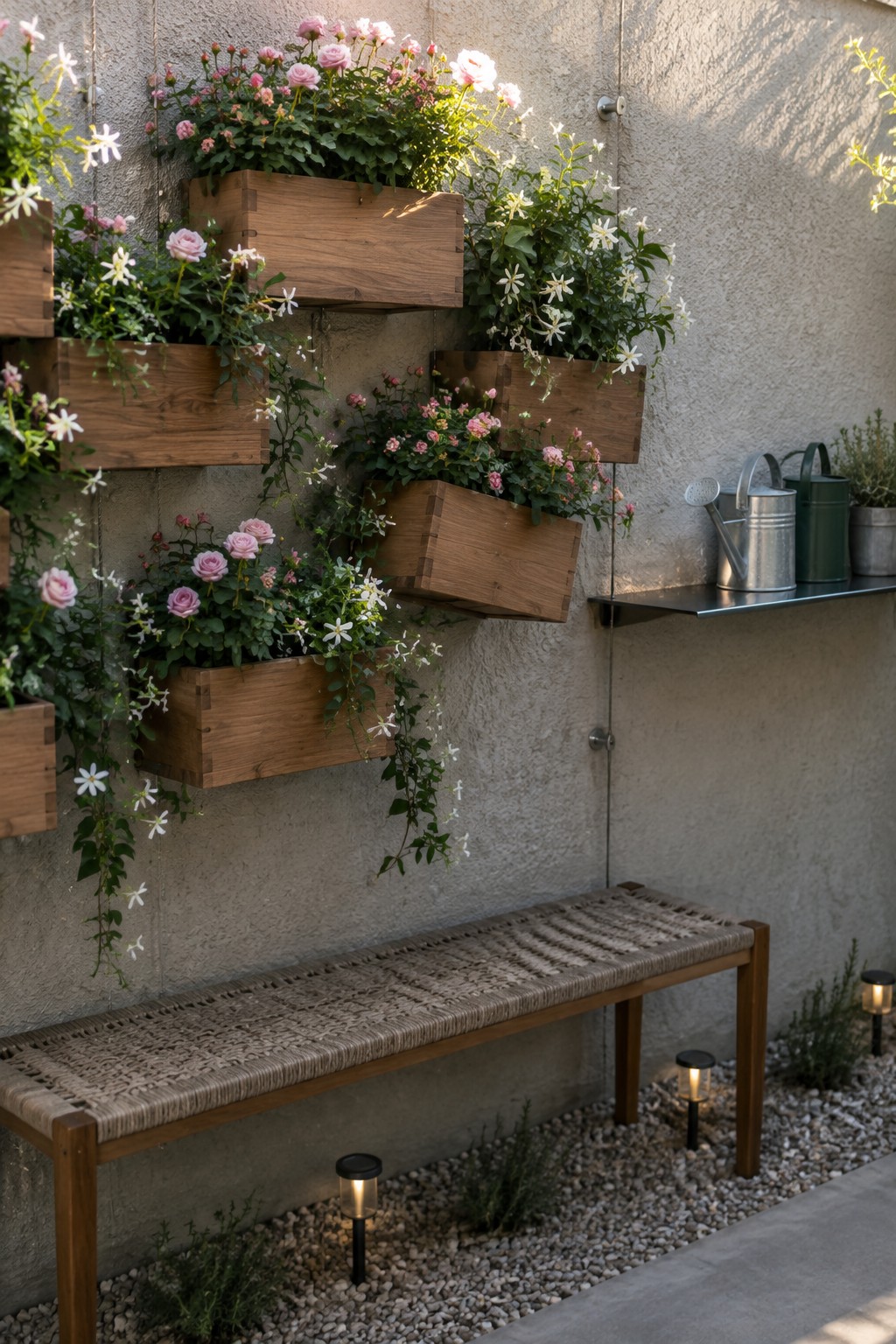
Wall-mounted wooden planters let you grow flowering vines and roses where ground space is limited. The staggered arrangement gives each box room for plants to spill over the sides, making a plain garden wall part of the planting.
This approach suits a narrow courtyard or small patio. Choose sturdy planters with drainage holes, and leave enough space between them to tend the plants as they grow.
Frequently Asked Questions
Q: Can I plant jasmine and roses together in the same bed?
A: Yes, as long as they have room for air to move around them. Give roses enough space to spread, and train climbing jasmine onto a separate support so it doesn’t tangle through the rose canes.
Q: Will jasmine and roses bloom at the same time?
A: Often, but it varies by variety and climate. Choose types with overlapping bloom seasons if you want a long stretch of flowers, and mix in a few fragrant varieties for scent at different times.
Q: How much sun do a rose and jasmine garden need?
A: Most roses bloom best with at least six hours of direct sun. Many jasmines also like a sunny spot, though some tolerate light afternoon shade in hot climates.
Q: What can I plant around them to fill bare spots?
A: Try low-growing plants such as thyme or catmint, leaving a little open space around each rose’s base. That keeps the bed from feeling crowded and makes watering easier.
