


Azaleas can bring a front yard to life in spring, but their placement matters just as much as their color.
I find they look best when their rounded blooms have room to stand out without hiding the entry or crowding a path.
Pairing them with evergreen shrubs, simple edging, or a clear walkway helps the planting feel settled after the flowers fade.
A mix of bloom colors and heights can also add depth while keeping the yard easy to read from the street.
I’d save the ideas that suit your home’s light, space, and existing garden, then adapt them to make the front approach feel personal.
Use a Curved Path to Guide the Garden

A gently curving stone path makes a front garden feel less like a straight route to the door and gives flower beds room to follow its shape. Brick edging helps keep the path and planting area clearly defined.
This layout suits homes where there is enough space for the path to bend without making the walk awkward. Let azaleas fill the beds beside it, and leave enough width for people to pass comfortably.
Use Raised Beds To Shape The Entry Path
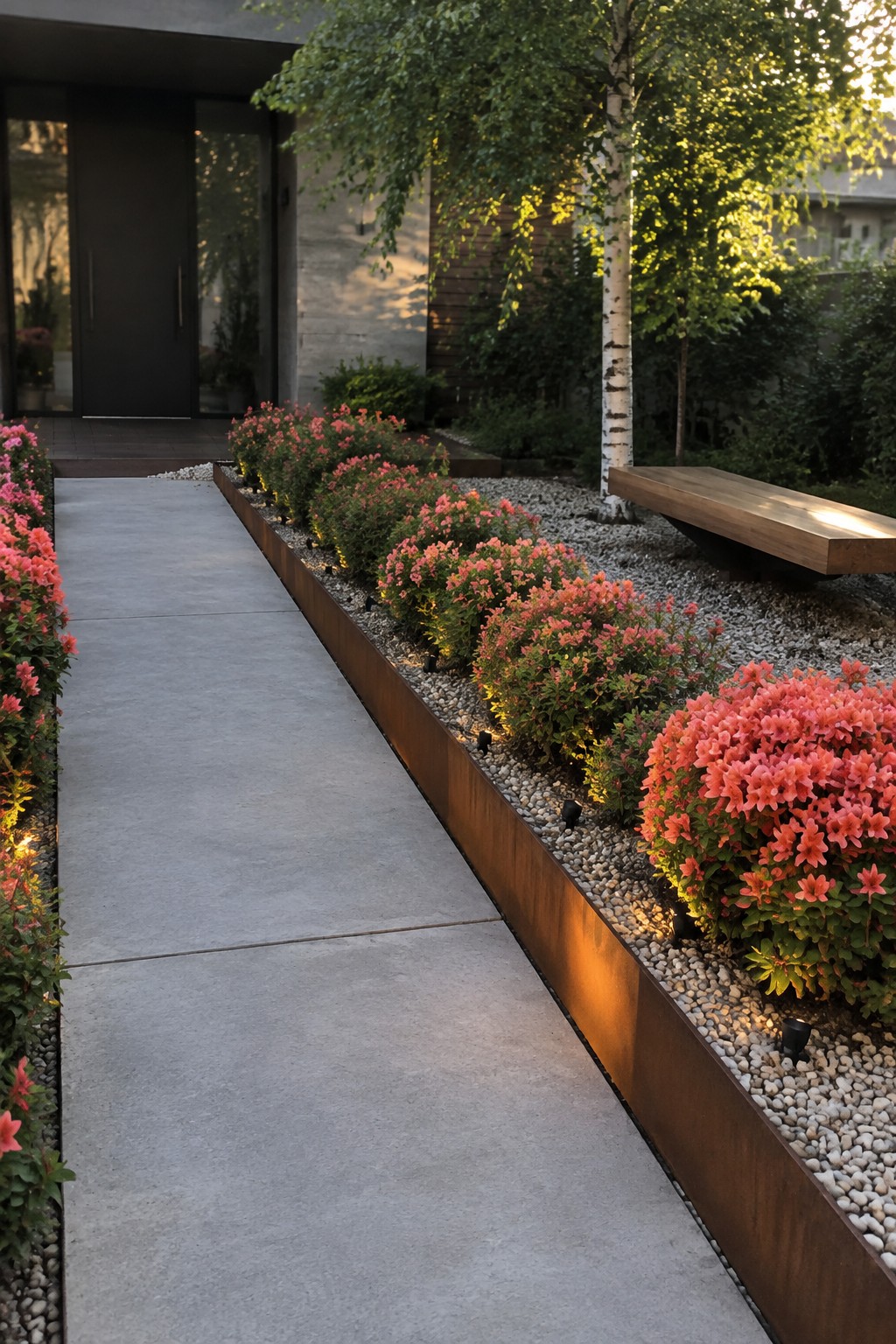
A raised flower bed can give an entry walk a clear edge and make azaleas feel like part of the garden plan rather than scattered color. The long, defined bed here keeps the path tidy while giving the flowering shrubs room to form a continuous border.
This approach works well along a straight front walk, especially where the yard needs a little structure. Keep the bed wide enough for mature plants, and choose an edge material that suits the house. A raised edge that is too tall can make the walkway feel narrow.
Use Azaleas to Line a Garden Path

Azaleas can give a garden path a clear, colorful edge without making the walkway feel too formal. Their rounded blooms create a band of spring color, while a low stone wall helps define the planting area.
This approach works well along a winding path or beside a front walk. Leave enough room for the shrubs to mature, and keep the walking surface clear so branches do not crowd the route.
Use Azaleas Along a Curving Garden Path
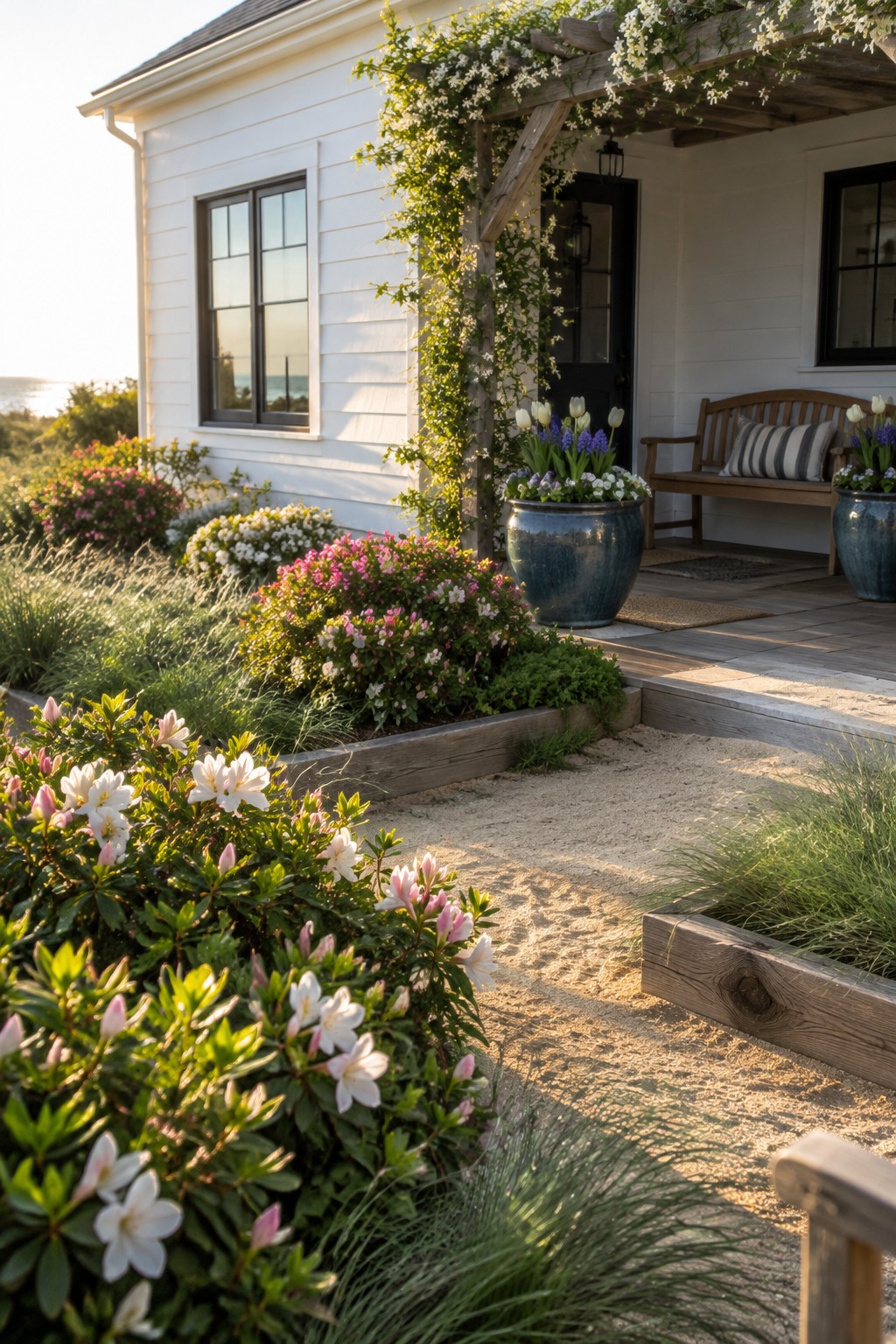
Azaleas can make a front-yard path feel like part of the garden instead of just a way to reach the door. Planting them in generous, curved beds gives the walk a softer outline, while clusters of pink and white blooms bring color close to the path.
Leave enough room for the shrubs to grow without crowding the walkway, and choose varieties suited to your sun and soil. This approach works especially well when a straight path feels too formal for the house.
Shape the Entry Garden With a Brick Edge

A low brick border gives a front garden a clear shape and keeps the planting bed distinct from the path. It works especially well with azaleas, whose spreading blooms can fill the bed without spilling onto the walkway.
Use the edging to follow the path or curve around a tree, and keep it low enough that the flowers remain the main feature. A gravel path and a simple brick edge suit both traditional homes and more informal cottage gardens.
Add Stepping Stones Through a Narrow Garden

Stepping stones make a narrow side garden easier to walk through without paving over the planting space. Here, long stone slabs sit among gravel and mulch, giving the path a clear direction while leaving room for flowers along the edges.
For a similar layout, leave enough space between the stones for a comfortable stride and keep the route fairly straight in a tight area. This works well beside a house or fence, where a full-width walkway would take up too much room.
Add Stone Steps to a Sloped Azalea Garden

Stone steps make a sloped garden easier to walk through while giving the planting beds a clear structure. Here, broad stone treads sit among pink azaleas, so the steps feel like part of the garden rather than a path cut through it.
This approach works well on a hillside or uneven front yard. Set the steps at a comfortable rise and leave enough space beside them for azaleas to grow without narrowing the route.
Use Azaleas to Define the Garden Beds

Azaleas can do more than add spring color. Planted in generous clusters along a walkway, they give the garden beds a clear shape and make the path feel like part of the landscape.
This approach suits an entry garden with room beside the walk for shrubs to spread. Leave enough space between the azaleas and the path so they do not crowd the paving as they grow, and choose a variety suited to your light and soil.
Use Planters to Define a Narrow Garden Path

Wooden raised planters can give a narrow side yard a clear shape while keeping flowers close to the walkway. Azaleas are a good choice for this setup, since their spring blooms bring color along the route without needing a wide garden bed.
Leave enough room between the planters for comfortable walking, and keep taller shrubs toward the back so the path does not feel crowded. This approach suits a side entry or other slim passage where planting space is limited.
Use Azaleas to Frame the Front Steps
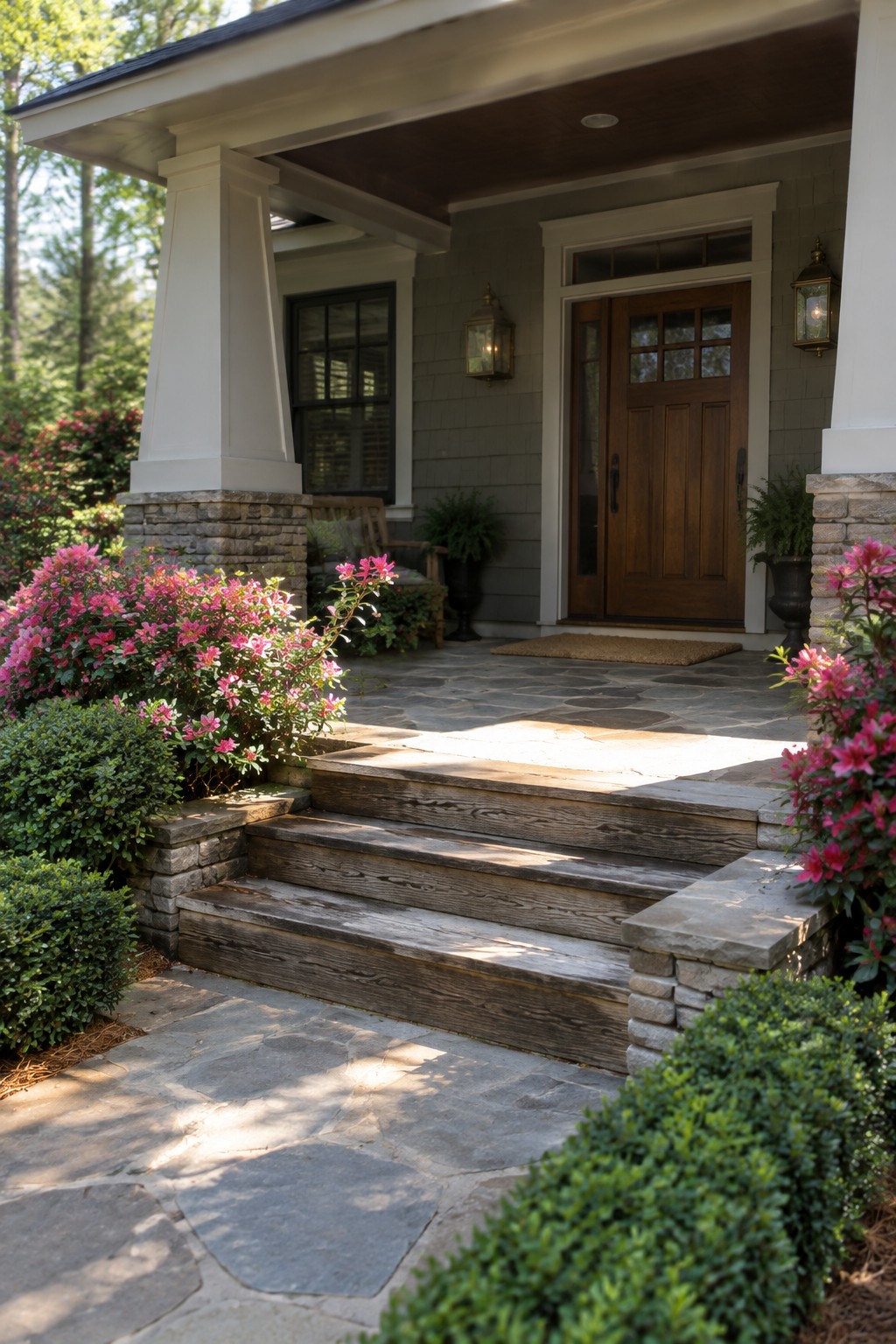
Azaleas planted along the sides of front steps bring spring color right up to the entry. The flowers stand out against the stone and wood, while the steps still provide a clear route to the porch.
For a similar look, plant azaleas in broad beds beside the stairs and leave enough room for the shrubs to grow without crowding the steps. Choose varieties suited to your light and soil, and keep the path edge trimmed so it stays easy to use.
Layer Azaleas Along the Entry Steps
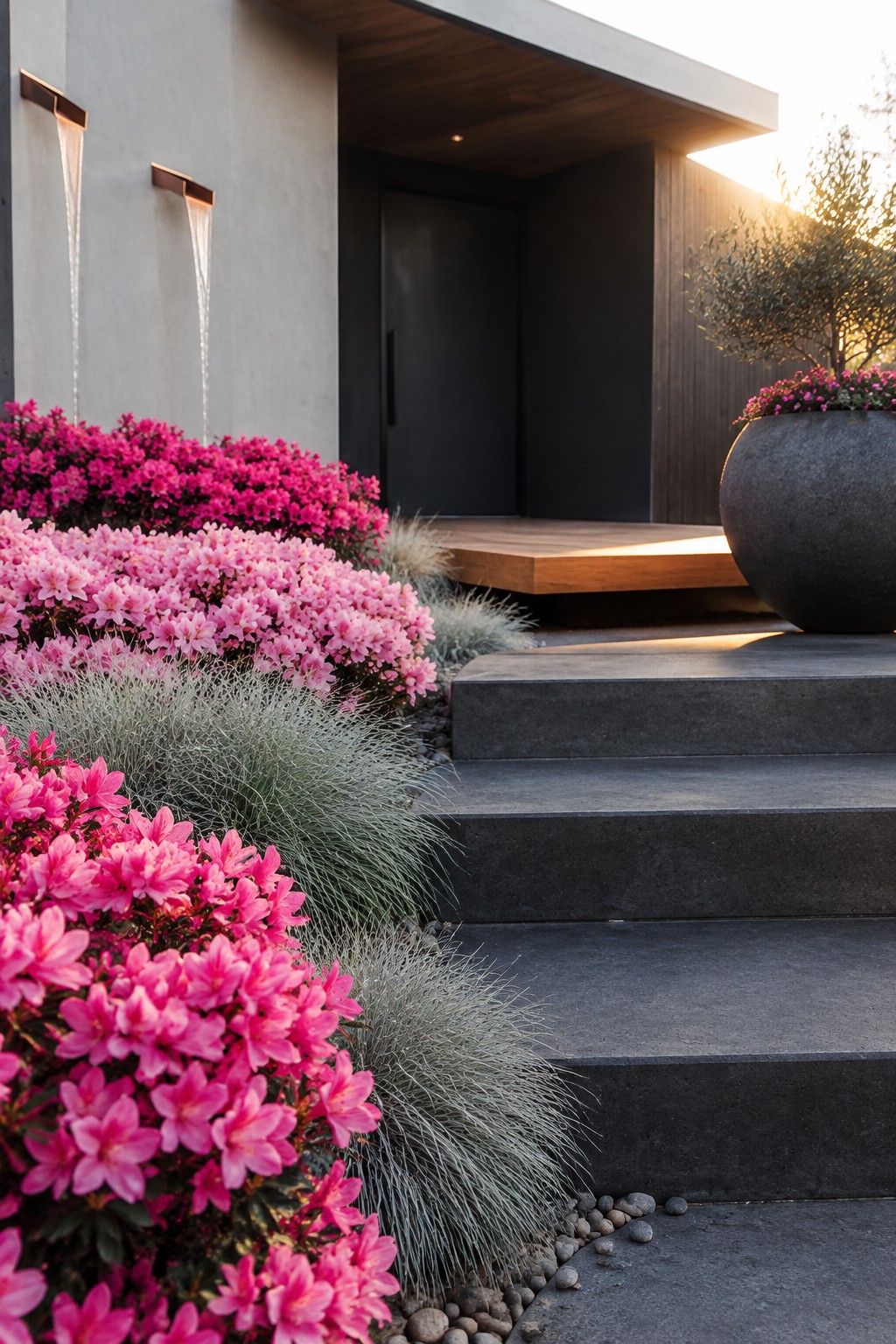
Azaleas planted in broad layers can make a front entry feel like part of the garden rather than a separate walk to the door. Their dense spring color stands out against simple stone steps, while low grasses help vary the planting without competing with the blooms.
Use this approach beside a wide stairway or raised entry, keeping the plants low enough to leave the steps clear. Choose a few azalea colors that work together, and leave room for mature shrubs so the path does not become crowded.
Use Azaleas to Edge a Stone Garden Path
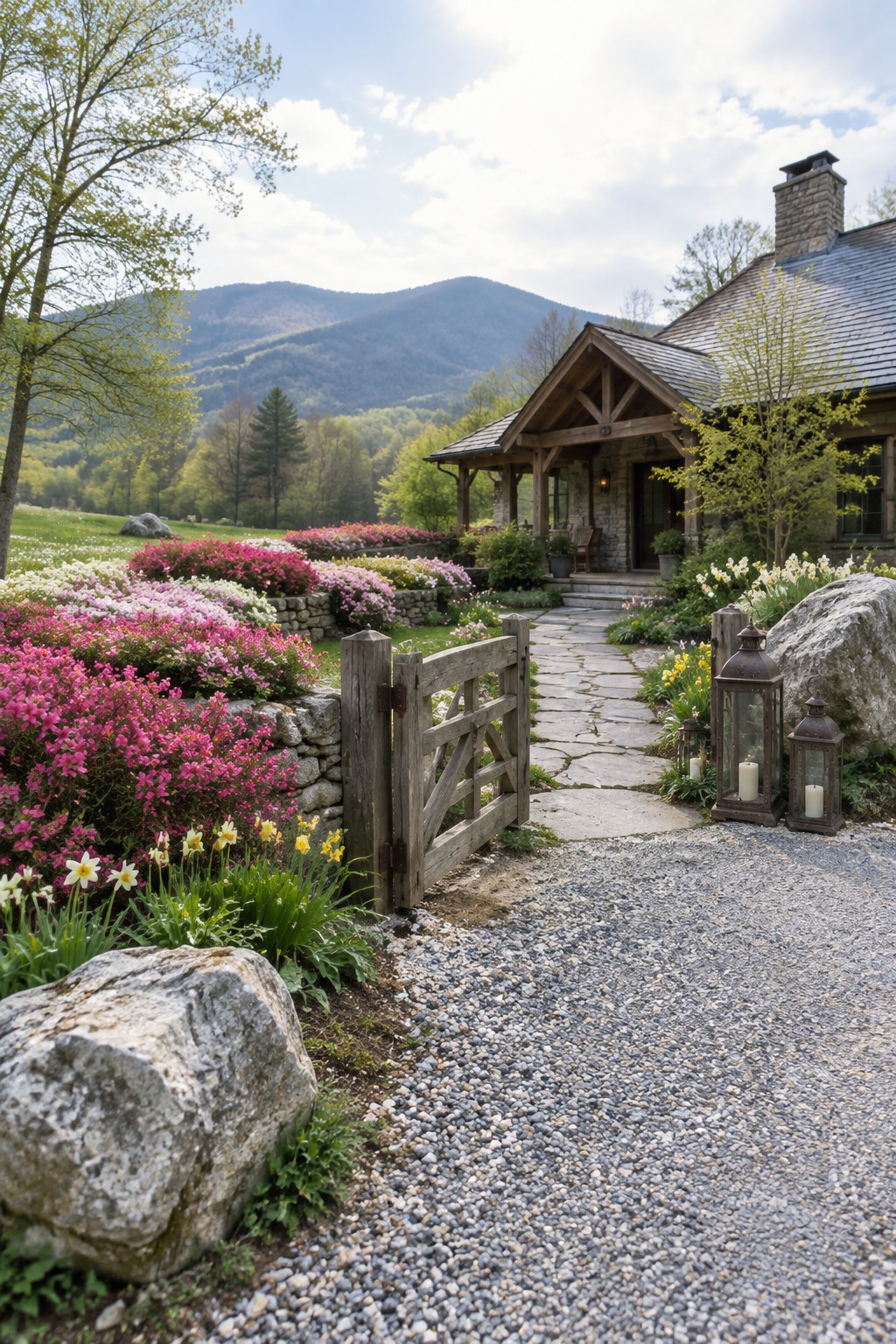
Azaleas make a useful border for a garden path, marking its edges while bringing spring color close to the walkway. A low stone edging helps keep the flower beds neat without making the path feel boxed in.
This approach works well along an entry walk, especially where the path bends through the garden. Leave enough room for the azaleas to spread, and keep their branches clear of the walking surface.
Use Garden Lighting to Highlight Azalea Beds

Low garden lights can make an azalea bed easier to enjoy after dark while giving the flowers a clear place in the landscape. Aim the light toward the plants rather than straight at the path, so the blooms stand out without creating glare.
This works well beside a front walk or near an entry, especially where shrubs could otherwise disappear into the evening shadows. Space fixtures evenly and use warm, low-level bulbs to keep the effect gentle.
Create a Garden Path With Stepping Stones

A stepping-stone path gives a garden a clear route without covering the whole yard in paving. The irregular stones suit a natural planting style, and azaleas along the edge can bring color close to the walk.
Use stones with enough space between them for groundcover or mulch, while keeping each step comfortable to walk on. This approach works especially well on a winding route through a planted yard, but avoid letting ferns or other plants grow so far over the stones that the path becomes hard to use.
Use Gravel to Set Off Azalea Beds

A gravel entry path gives bright azaleas a clear place to shine. The pale stones contrast with the flowers and make the planting feel tidy without needing a solid paved walkway.
For a similar look, keep the gravel path wide enough to walk comfortably and contain it with a firm edge so stones stay out of the beds. This works especially well at a front entry where you want a simple path through colorful planting.
Frequently Asked Questions
Q: Where should I plant azaleas so they bloom well in my front yard?
A: Choose a spot with morning sun and afternoon shade, especially in warmer climates. Azaleas also like moist, well-drained, acidic soil, so avoid low areas where water tends to sit.
Q: Can I plant azaleas along my front walkway?
A: Yes, just leave room for the shrubs to spread so they don’t crowd the path. Check the mature width on the plant label and space each azalea accordingly.
Q: How do I keep my azaleas blooming year after year?
A: Water during dry spells, particularly while the plants are getting established. Add a layer of mulch to hold moisture, but keep it pulled back from the stems.
Q: When should I prune azaleas?
A: Prune soon after the flowers fade in spring. Late-season pruning can remove the buds for next year’s blooms.
