


A jasmine-covered entrance can soften a gate and make a walkway feel connected to the garden beyond it.
I find the best designs leave enough room for people to pass comfortably while giving the vines a clear structure to climb, such as a trellis, arch, or sturdy fence.
The balance matters because jasmine can quickly spill across a path or hide details that give the entrance its character.
The ideas that catch my eye pair thoughtful planting with practical choices about spacing, support, and how the gate opens.
Some are worth adapting to a small side path, while others could shape the first view of a whole garden.
Use Jasmine to Mark the Garden Entrance
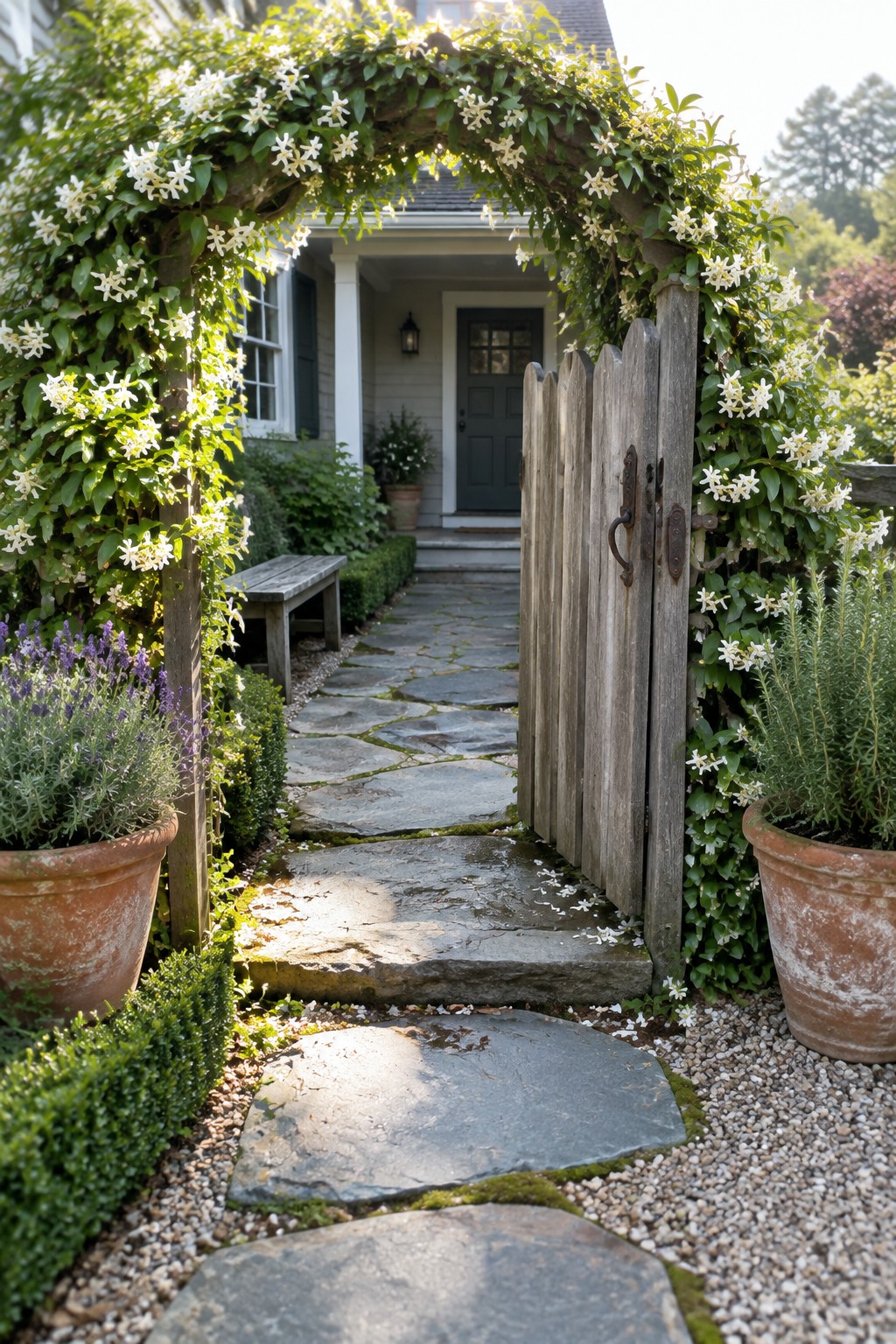
A jasmine-covered arch gives a garden path a clear starting point. It makes the entrance feel established while keeping the planting overhead, so the walkway stays open and easy to use.
This idea suits a cottage-style garden or a simple path leading to a front door. Choose a sturdy arch or trellis, and guide jasmine along it with regular pruning so growth does not crowd the passage. A wooden gate can add a clear boundary without hiding the flowers.
Let Jasmine Mark the Garden Gate

Jasmine can turn a plain garden gate into a natural entrance feature. Letting it grow around the gate makes the transition into the garden feel more established, while the flowers give the greenery a clear focal point.
Choose a sturdy gate or arch that can support mature vines, and leave enough room to walk through without brushing against the growth. Jasmine suits a narrow side path or courtyard entrance, but it will need regular trimming to keep the opening clear.
Use Jasmine to Line an Entry Path
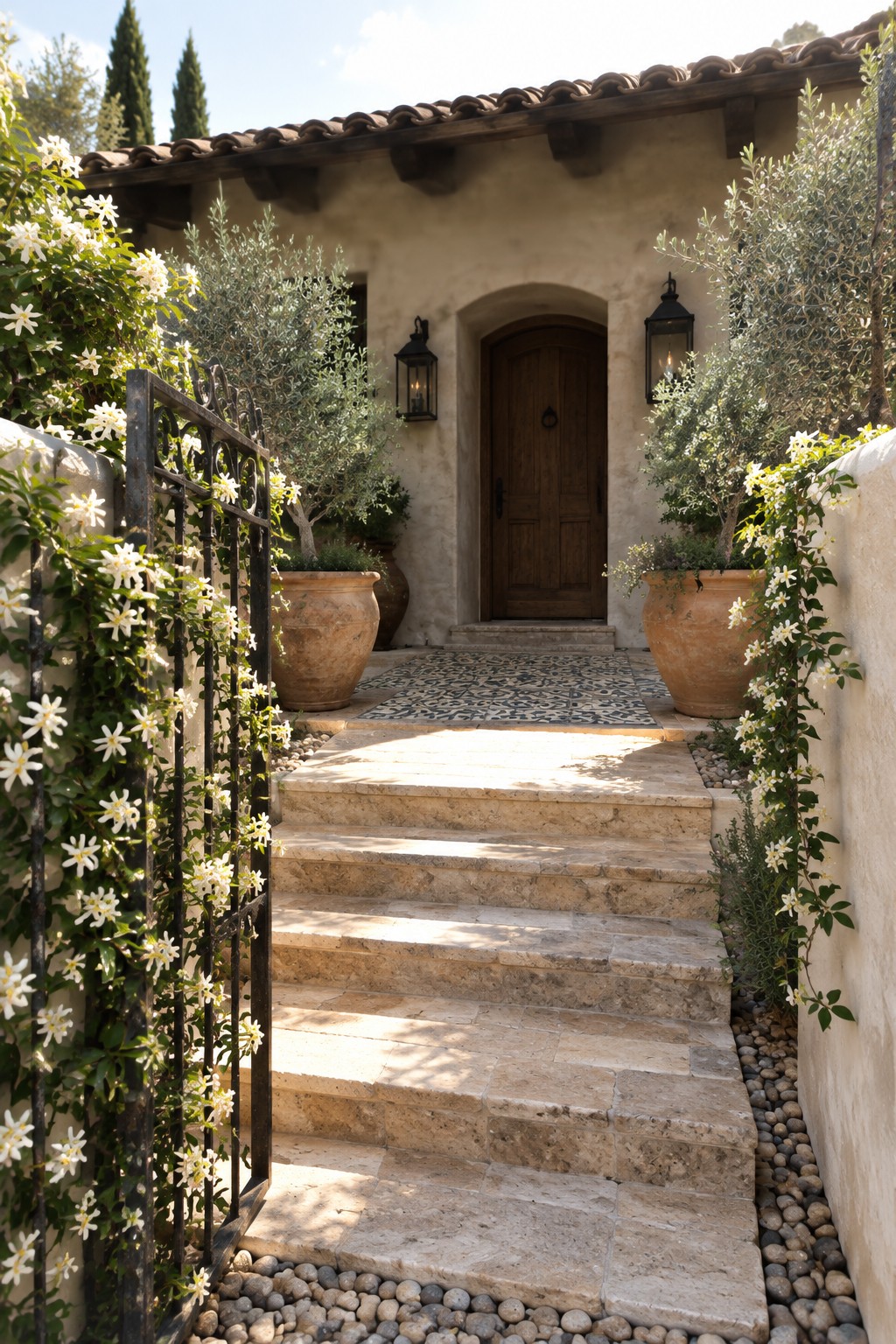
Jasmine can make a front walkway feel like part of the garden rather than a plain route to the door. Trained along a simple metal gate or trellis, it gives the entrance a clear edge while keeping the path open.
This works well beside steps or a narrow walkway, where planting space is limited. Give the vine a sturdy support and trim it back often enough to keep it from spilling across the path.
Use a Flowering Arch To Mark the Garden Entrance
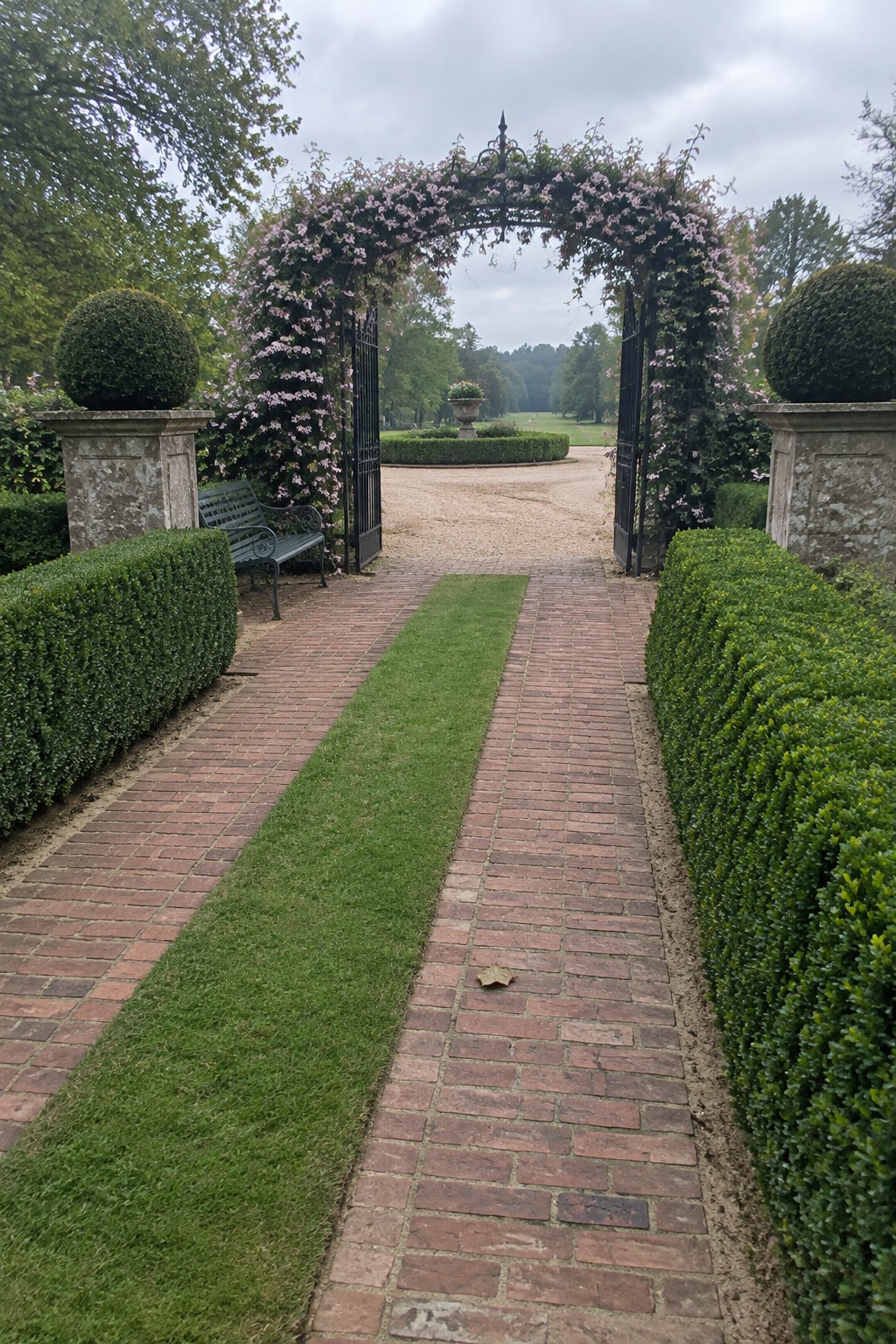
A flowering arch gives a garden path a clear beginning and makes the entrance feel special without needing a gate. Jasmine can climb over the structure and bring fragrance close to the walkway.
Use a sturdy metal arch where a path meets a larger garden or lawn. Keep the planting trimmed enough to leave the opening clear, and make sure the structure is firmly secured as the vines grow.
Add a Wooden Gate to a Garden Path

A simple wooden gate gives a garden path a clear entrance without making it feel closed off. Let jasmine climb over the gate’s overhead beam, where its flowers can mark the passage and bring a little fragrance along the walk.
This idea suits a cottage-style garden or a path that winds through dense planting. Choose sturdy, weather-resistant wood, and leave enough room around the gate for jasmine to grow without making it hard to open.
Train Jasmine Along a Pergola Walkway

Jasmine can turn a simple garden path into a more defined entrance. Growing it over a pergola gives the walkway a leafy overhead line, while white flowers make the route feel connected to the garden.
Use a sturdy pergola beside a gate or along a path that gets regular foot traffic. Give the vine room to grow and trim it back when it starts to narrow the walkway. Check the variety’s mature size before planting, since some jasmines spread quickly.
Grow Jasmine Along a Garden Entry

Training jasmine beside an entrance gives a plain path a softer, more welcoming edge. Here, the climbing vine covers a dark entry panel, while its small white flowers make the planting easy to notice.
This idea suits a narrow walkway or gate where there’s a sturdy surface for the vine to climb. Give jasmine enough room and trim it back from the path so it doesn’t snag passersby.
Train Jasmine Over an Arched Garden Gate

A jasmine-covered arch gives a garden entrance a clear focal point and makes the path feel like a distinct route into the garden. The dark metal frame supports the climbing plant while keeping the entry open.
Use a sturdy arch at the start of a stone walkway, and guide jasmine along both sides as it grows. Leave enough room beneath it for easy passage, and trim the vine regularly so it does not crowd the path.
Use a Tiled Walkway to Lead to the Gate
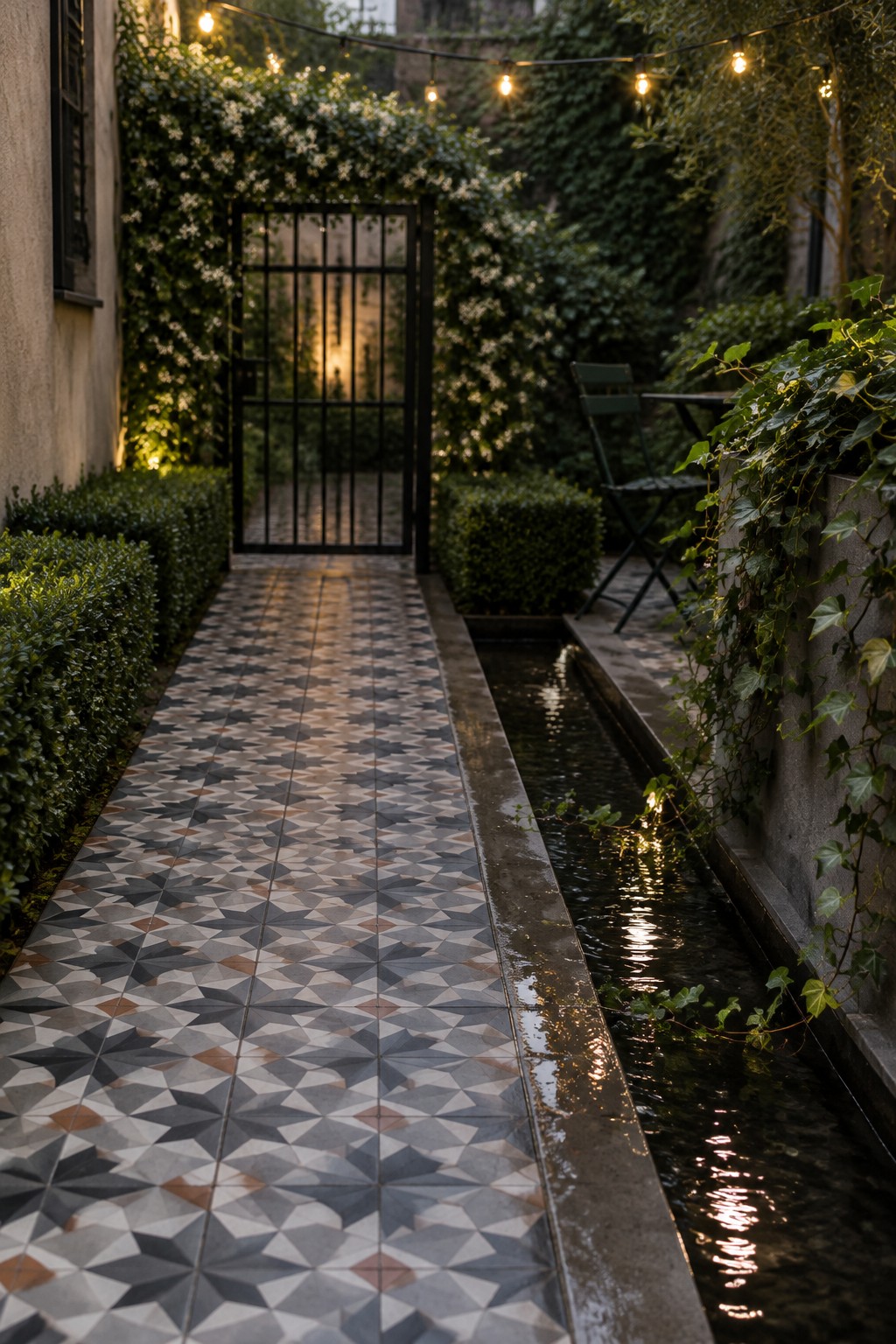
A patterned walkway gives a garden entrance a clear route to follow. Here, the geometric tiles make the path feel like part of the design, while jasmine around the gate brings flowers close to the point of arrival.
This idea works well in a narrow side garden or courtyard where a simple path might otherwise feel like an afterthought. Choose outdoor-rated tile with a finish that is not too slippery, especially if the path may get wet.
Use Jasmine to Soften a Stone Entry Path
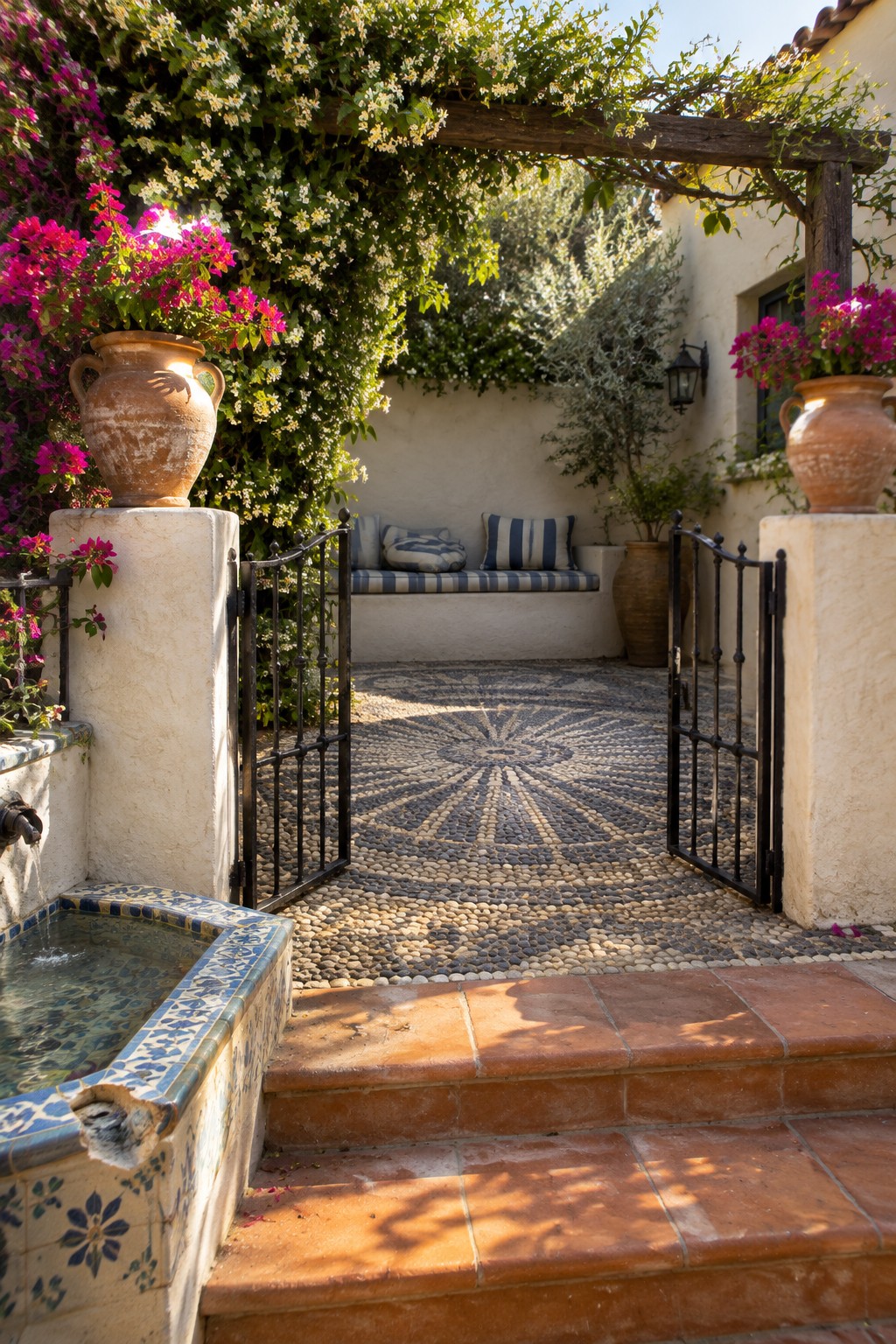
Jasmine can make a gated walkway feel like part of the garden rather than just a route to the door. Letting it grow over a simple wooden pergola gives the entry a leafy canopy, while stone paving keeps the path practical.
This works especially well in a courtyard or along a narrow garden entrance. Train jasmine along sturdy supports, and leave enough room for the gate to swing freely and for people to pass without brushing against the vines.
Add Jasmine to a Stone Garden Walkway

Jasmine can turn a simple stone path into a more welcoming garden entrance. Let it climb along a nearby arch or wall, where its flowers can mark the route without crowding the walkway.
This idea works well beside a narrow path leading to a gate or seating area. Keep the paving clear and give the jasmine support and room to grow, so the walkway stays easy to use.
Use a Pebble Path to Set Off the Jasmine Gate

A stepping-stone path set into small pebbles gives a garden entrance a clear route without making it feel too formal. The mixed tiles and stone slabs bring a little variation to the walk, while jasmine growing along the wooden gate helps tie the path into the planting.
This approach works well in a cottage-style garden or a narrow side yard. Keep the stones level and leave enough room between them for an easy stride, then let jasmine climb the gate or nearby supports. It will need occasional pruning so the walkway stays clear.
Train Jasmine Around a Garden Gate

Jasmine can turn a simple gate into a natural entrance marker. Letting it climb the wooden posts and overhead beam gives the entry a softer, more established look, while the gate still stays easy to see and use.
This works well in cottage-style gardens and along narrow paths where a large arch might feel out of place. Guide young stems onto a sturdy support, and trim them back from the latch and hinges so the gate can open freely.
Use Jasmine Along a Pebble Garden Path

Jasmine can make a narrow entrance path feel like part of the garden rather than just a way through it. Letting it grow along a fence beside stepping stones gives the walk a softer edge, while the path itself stays easy to follow.
This approach suits a small courtyard or side entrance where there is little room for wide planting beds. Choose a variety suited to your climate, and give it support so it does not spread across the stones or make the route awkward to use.
Use Large Stepping Stones for a Garden Approach

Large stone slabs make a garden entrance easier to walk through while letting planting remain the main feature. Their simple shape gives the path a clear route to the gate, and gravel between them helps the surface feel less formal.
This layout suits a narrow, leafy entry where a solid paved path might feel too heavy. Leave enough room between stones for comfortable steps, and keep the jasmine trimmed back so it does not spill across the walking surface.
Let Jasmine Cover a Garden Passage

A jasmine-covered arch can turn a narrow passage into a clear garden entrance. The greenery overhead gives the walkway a sheltered feel, while the brick arch makes the opening easy to notice.
This idea suits a side path or a passage between garden areas. Train jasmine over a sturdy support, and trim it back regularly so it does not block the way or overwhelm the arch.
Use Jasmine to Light a Garden Walkway

A few well-placed lights can make a jasmine-lined entrance easier to follow after dark. Here, warm uplighting catches the climbing flowers on a perforated metal screen, giving the planting a clear place along the path.
Use low-voltage lights at the base of a trellis or gate, aimed toward the jasmine rather than straight into visitors’ eyes. Keep the path itself evenly lit too, so the flowers are a welcome accent, not the only thing people can see.
Frequently Asked Questions
Q: Will jasmine damage my gate or walkway?
A: Star jasmine can cling to nearby surfaces, so give it a trellis or wires to climb instead of letting it scramble over a wooden gate. Keep stems trimmed away from hinges and latch areas so the entrance stays easy to use.
Q: Which jasmine works well for an entrance that gets only part sun?
A: Star jasmine usually does well with a few hours of sun and some afternoon shade. It may flower less than it would in a sunnier spot, but its glossy leaves still make a lovely frame for a path or gate.
Q: How do I keep jasmine from taking over a narrow walkway?
A: Train it upward on an arch or fence, and prune any shoots that reach across the path. A quick trim after flowering keeps the entrance neat without sacrificing the soft, leafy look.
Q: Can I grow jasmine in a pot beside my front gate?
A: Yes. Choose a roomy pot with drainage holes and add a small trellis for support. Check the soil regularly, since pots dry out faster than garden beds.
