


A fence can feel stark on its own, but jasmine softens the boundary while bringing fragrance close to the places I use most in the yard.
The planting works best when the vine has room to climb and the layout leaves paths, gates, and nearby beds easy to reach.
I’d also think about how much sun the fence gets, since that can shape how well jasmine grows and flowers over time.
Some approaches keep the planting neat and contained, while others let the greenery form a fuller screen.
I’d save the ideas that suit the fence’s light and structure, then adapt them to make privacy feel like a natural part of the garden.
Train Jasmine Along a Garden Fence

Growing jasmine on a fence gives you a leafy screen and fragrant flowers without taking up much ground space. The climbing stems also help tie the fence into the garden, especially when the planting bed runs along its base.
Use a sturdy trellis or wire supports so the vines have somewhere to climb, and leave room to prune them as they spread. This works well beside a path or seating area, where the scent can be enjoyed, but keep the walkway clear.
Train Jasmine Along a Fence for Privacy

A fence can do more than mark a boundary. Train jasmine across a simple support system, and the leafy growth helps screen nearby views while its flowers bring fragrance close to the path.
Use wires or a trellis to guide the stems, and leave enough room to prune and reach the fence. This approach works well in a narrow side yard where there is little space for a deep hedge.
Grow Jasmine Over a Garden Arch
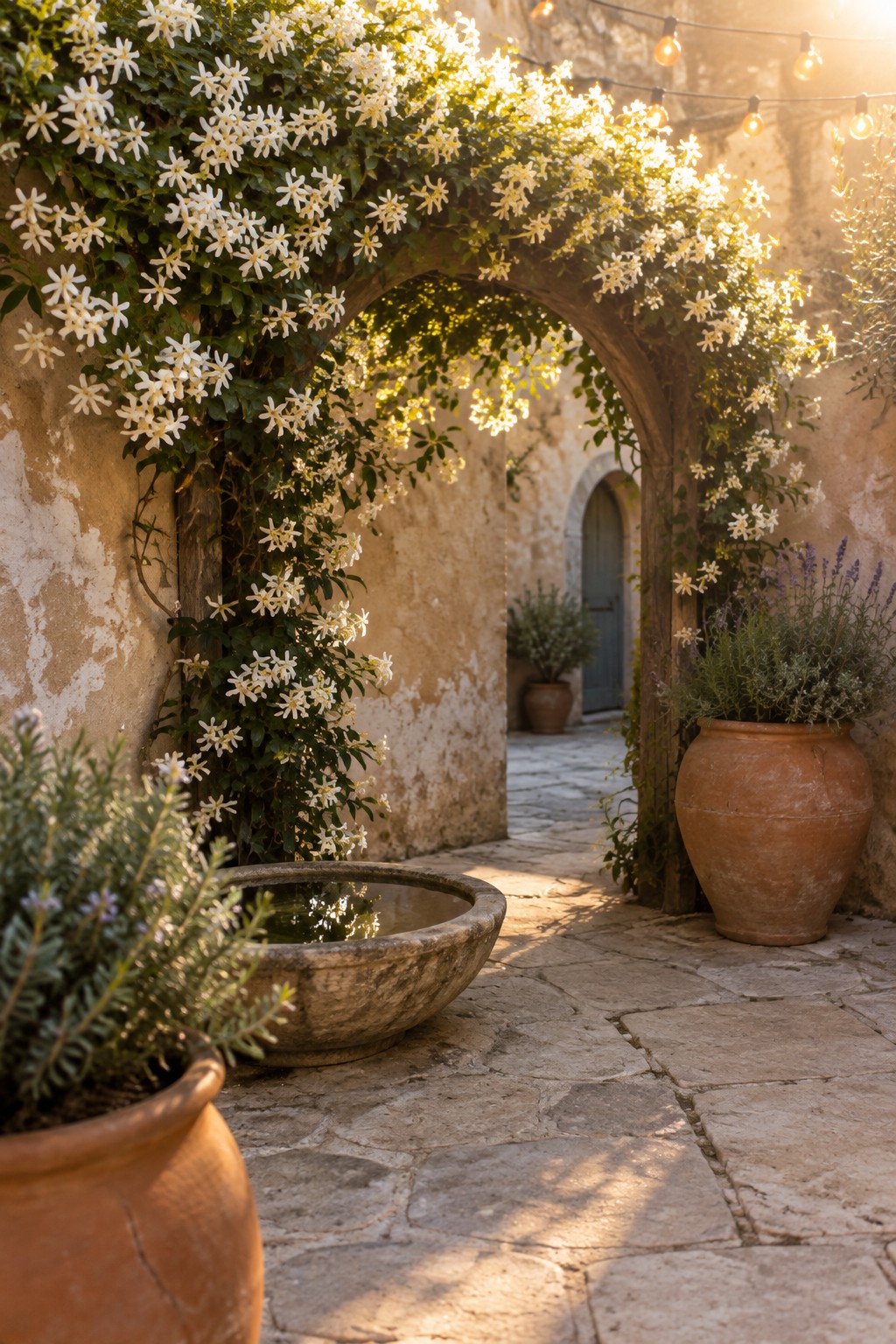
Training jasmine over an arch is a simple way to make a garden path feel more private and established. The dense foliage and white flowers create a leafy screen without needing a solid fence.
Choose a sturdy arch near a path or entrance, then guide the stems along the sides and across the top as they grow. This works well in a small courtyard or along a fence, but leave room to prune the plant so it does not block the walkway.
Use Jasmine Along a Garden Gate

A garden gate can feel more private and welcoming when jasmine grows along the fence beside it. The flowers soften the boundary, and their fragrance makes a small entry feel special without needing a wide planting bed.
Train jasmine on a sturdy trellis or fence near a path or gate where you can enjoy its scent. Leave the latch and hinges clear, and check that the plant gets the light and support its variety needs.
Add Jasmine to a Secluded Patio
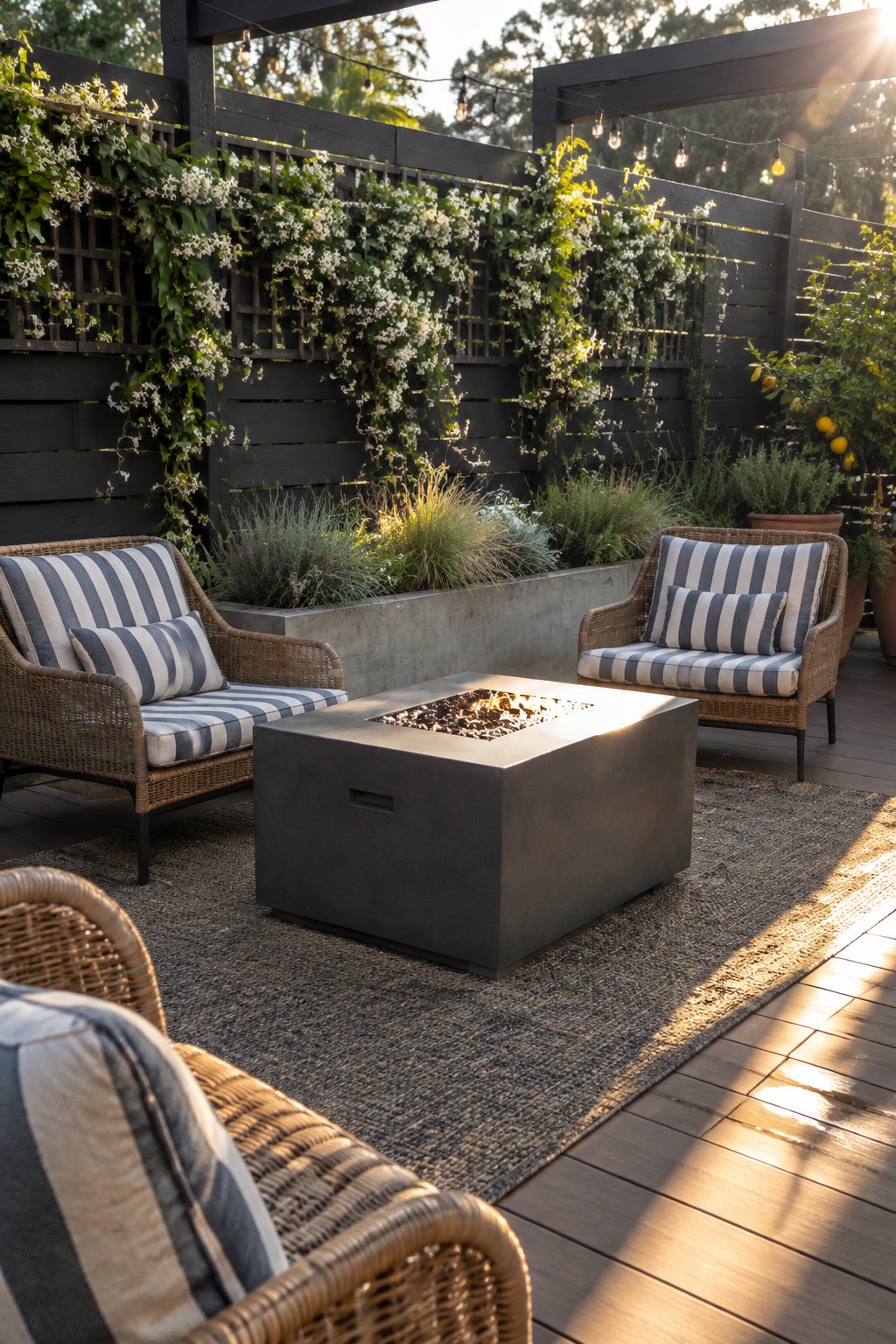
Jasmine along a fence can make a patio feel more private without turning the boundary into a plain wall. Here, flowering vines cover sections of a dark fence, bringing greenery and small white blooms right behind the seating.
Use a sturdy trellis or horizontal supports to guide the vines, and leave room for airflow as they fill in. This approach works well behind a deck or patio seating area, where the fragrance is easy to enjoy.
Add a Gravel Path Along a Flowering Fence

A simple gravel path makes a planted fence easier to enjoy and maintain. The stepping stones give you a steady route beside the jasmine, while the open gravel keeps the planting from feeling crowded.
This works well in narrow side gardens or along a boundary where you want access for pruning and watering. Leave enough room between the path and the fence for the jasmine to grow without spilling across the walkway.
Use Fence Planters To Layer Jasmine

Fence-mounted planters let jasmine fill a narrow garden without taking up much ground space. The wooden boxes shown here sit at different heights, giving climbing stems plenty of places to spread along the fence.
This approach suits a small patio or side yard where privacy is needed but floor space is limited. Secure the planters firmly, and leave room to guide the vines as they grow.
Let Jasmine Follow a Garden Path

A fence-side planting can make a garden path feel tucked away without closing it off. Let jasmine climb a section of the fence, then mix in lower flowers nearby so the path still feels open and easy to walk.
This works well along a narrow side yard or a walkway that needs more privacy. Give the jasmine a sturdy support and room for airflow, and keep it trimmed back from the stones so it does not spill into the walking space.
Use Horizontal Wires to Train Jasmine Along a Fence

Training jasmine along horizontal wires lets it cover a fence without taking up much garden space. The stems can spread into a neat, flowering screen, bringing privacy while keeping the planting bed fairly narrow.
Attach sturdy wires to fence posts and guide young stems along them as they grow. This works well beside a path or seating area, but leave enough room to prune the vine and keep it from becoming tangled.
Use A Poolside Fence As A Backdrop For Jasmine

A fence beside a pool can give jasmine a clear place to climb while helping the seating area feel more private. The flowers and foliage bring a softer garden edge to the hard paving.
Choose a climbing jasmine suited to your climate, and provide a sturdy trellis or wires for support. Keep the plants trimmed back from the pool and shower so they do not crowd the walkway or drop too many leaves into the water.
Build a Layered Fence-Side Garden

A narrow planting bed can make a fence feel like part of the garden rather than a bare boundary. Here, flowering vines climb the dark slats while lower flowers and grasses fill in the space at ground level.
For a similar look, plant jasmine where it can climb a sturdy fence, then leave enough room for lower plants to spread without crowding it. This approach suits a front walk or side yard, but keep the path clear and check that the jasmine variety is suited to your climate.
Make a Small Patio Feel Private
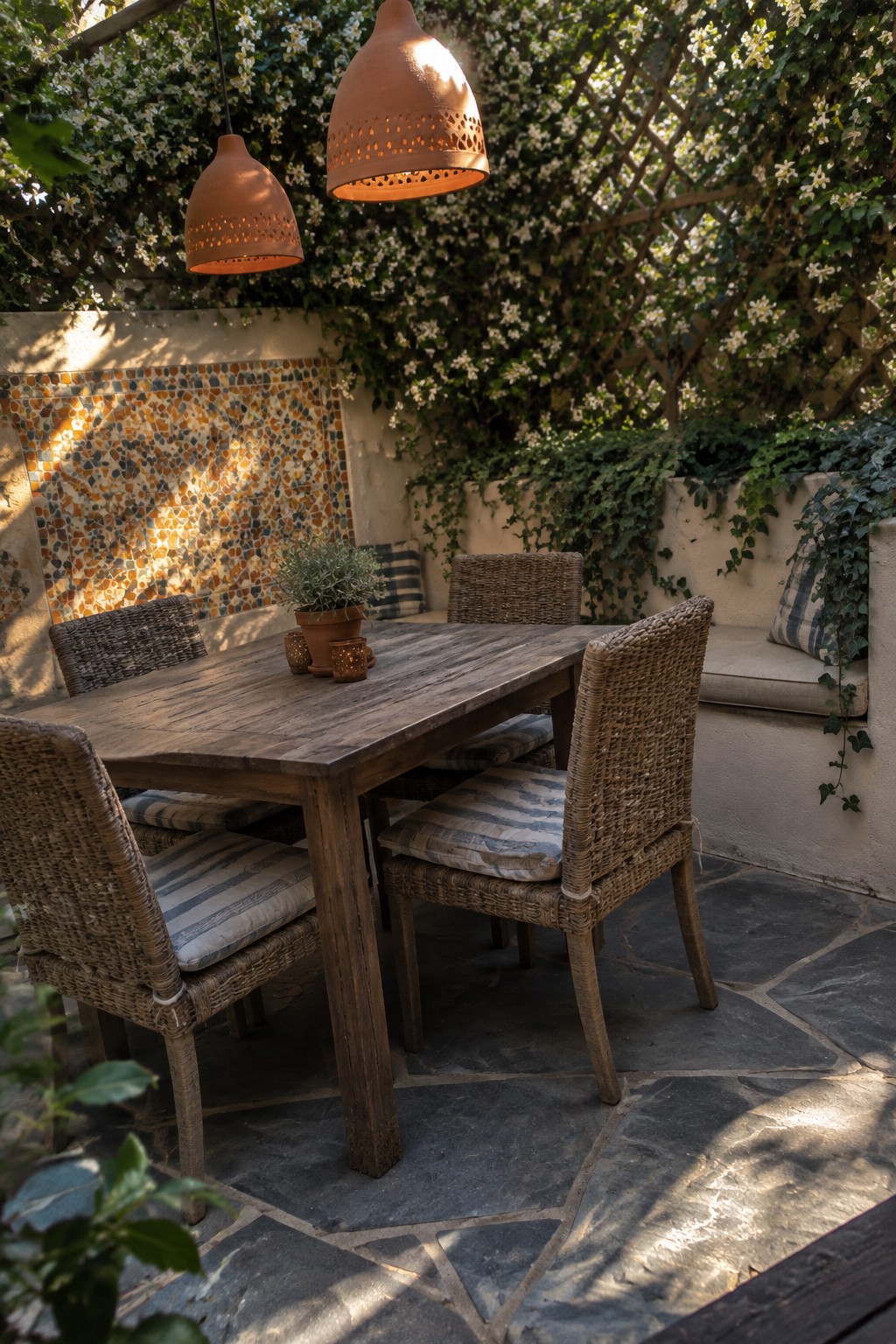
A jasmine-covered fence can help a dining patio feel tucked away without building a solid wall. Let the vine fill a trellis or open fence behind the seating, where its flowers can be enjoyed up close.
This works especially well in a courtyard or narrow outdoor dining area. Leave enough space to reach the fence for pruning, and keep the vine trained so it does not spread across the table or chairs.
Create a Garden Path Through Jasmine
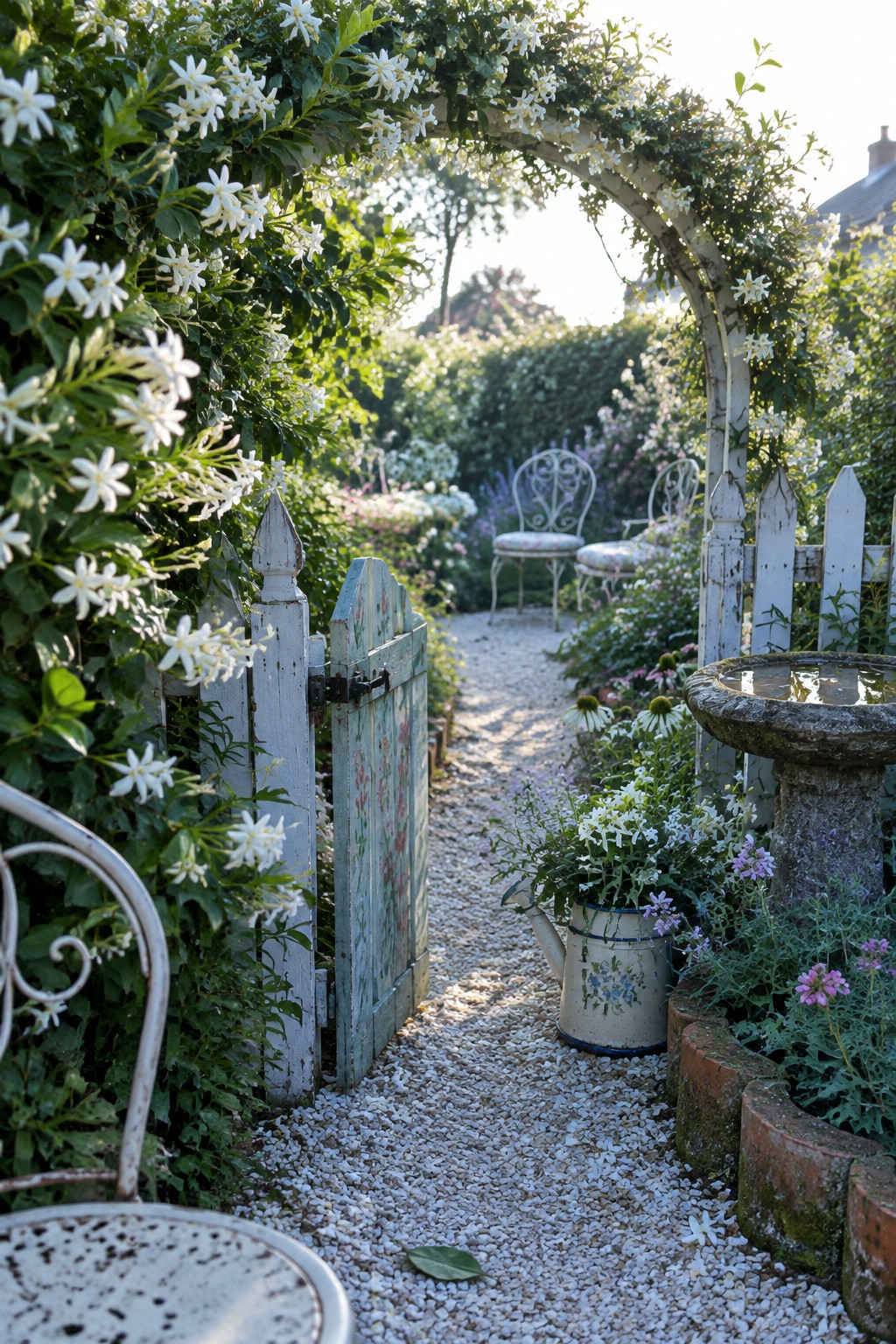
A narrow gravel path can make a fence-side planting feel like a place to wander, not just a boundary to cover. Jasmine trained along an arch overhead gives the path a clear entry and brings its fragrance close as you pass through.
This works well in a small garden where a straight route can lead to a tucked-away seat or planting area. Keep the path wide enough to walk comfortably, and leave room to trim the jasmine so it does not crowd the entrance.
Add Low Garden Lights Along a Jasmine Fence

Low lights along the path make a fence-side jasmine garden useful after dusk, while bringing attention to the plants without needing bright overhead fixtures. The warm pools of light also help mark the edge of a gravel walkway.
Place small, shielded lights at intervals along the path, aimed down so they guide footsteps rather than shine into the house. Keep them clear of spreading vines and leave enough room to tend the jasmine as it grows.
Use Stepping Stones Through a Gravel Garden

A gravel path with stepping stones is an easy way to make a fence-side garden feel more usable without paving the whole area. The stones give you a clear route through the planting, while the gravel keeps the path simple and informal.
Use stones that are broad enough to step on comfortably, and leave an even gap between them. This approach works well in a narrow garden where you want access to fence-side plants without sacrificing the soft look of a gravel surface.
Add a Built-In Bench to a Fence-Side Garden
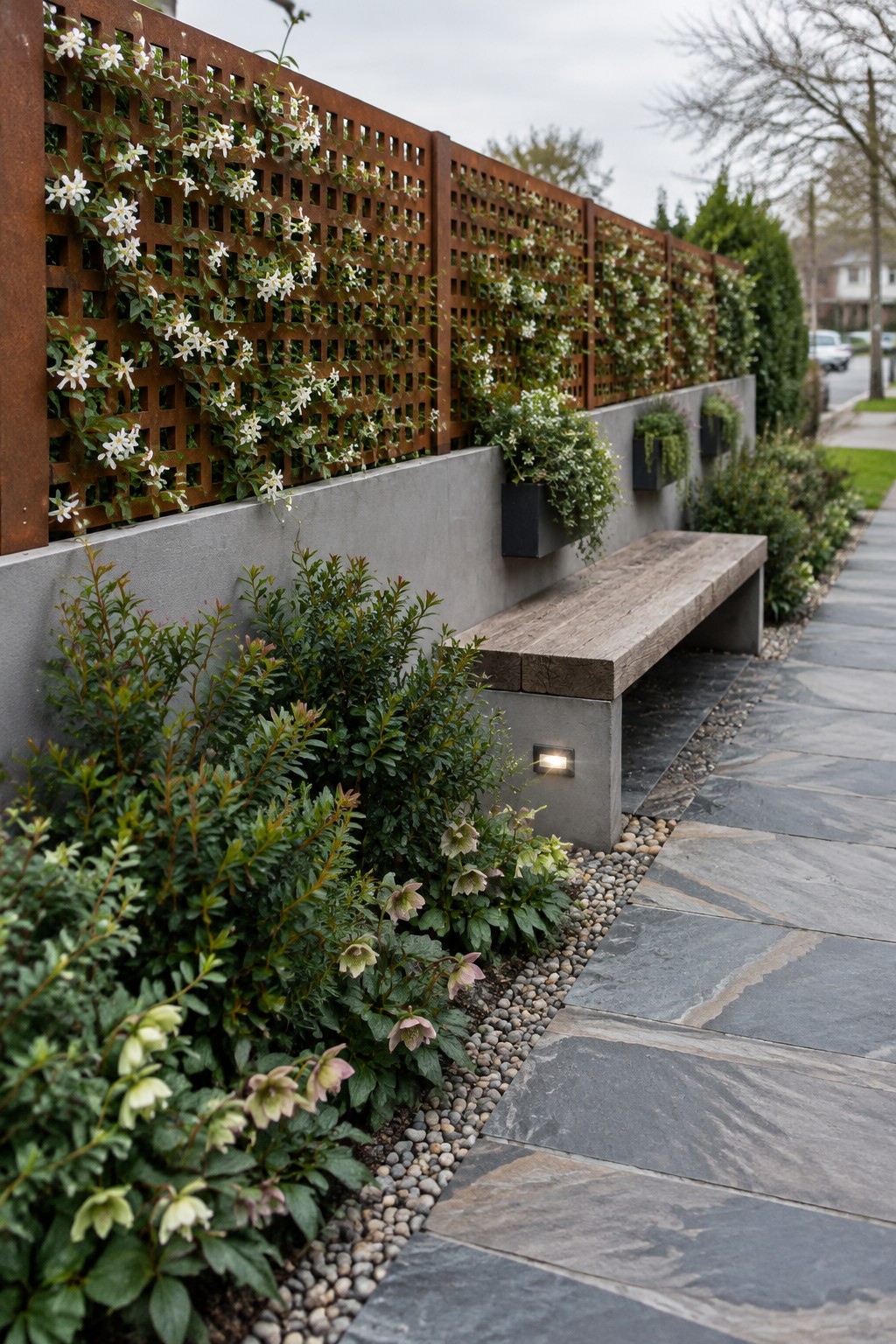
A simple bench built into a fence-side garden gives you a place to pause without taking up much room. The concrete base and wood seat here sit beside a jasmine-covered trellis, making the seating feel like part of the garden rather than a separate piece of furniture.
This idea works well along a narrow path or in a small front garden where space is limited. Keep the seat clear of the plants as they grow, and leave enough room nearby to reach the fence for pruning and care.
Create a Shaded Dining Spot Beneath a Pergola

A pergola can turn a fence-side garden into a comfortable place to eat outdoors. When jasmine grows across the overhead beams, it gives the dining area a leafy canopy and makes the space feel more tucked away.
For a similar setup, place a long table beneath the pergola and leave enough room to pull chairs out easily. Jasmine suits a sturdy trellis or pergola, but keep its growth trimmed so it does not crowd the seating or block the path.
Frequently Asked Questions
Q: Which jasmine works best along a fence?
A: Star jasmine is a popular choice for a leafy, fragrant screen in mild climates, while winter jasmine offers bright flowers but little scent. Check your local growing conditions before planting, since some jasmine types need warmer winters than others.
Q: How far apart should I plant jasmine along a fence?
A: Space plants according to their expected mature width, often about 3 to 5 feet apart for a continuous screen. Give each one room to spread, and guide the new stems onto the fence as they grow.
Q: Will jasmine grow in shade beside a fence?
A: It can manage light shade, but most jasmine flowers more freely with several hours of sun. If the fence blocks much of the light, choose a spot that gets morning sun or try a less demanding climber.
Q: How do I keep jasmine from taking over the fence?
A: Trim stray stems after flowering and tie in the growth you want to keep. Regular, light pruning is easier than cutting back a tangled mass.
