


A dahlia border can make a walkway feel more settled, but the planting needs to leave enough room for people to pass comfortably.
I find that the best path borders balance color with a clear edge, so the flowers soften the route without spilling into it.
Dahlias bring varied heights and shapes, which can help define a garden path or make a plain stretch of paving feel more connected to the rest of the yard.
The layout matters as much as the blooms, especially where a path bends, narrows, or meets a gate.
I’d save ideas that suit the space you have and consider how the border might look as the flowers grow through the season.
Let Dahlias Guide the Path
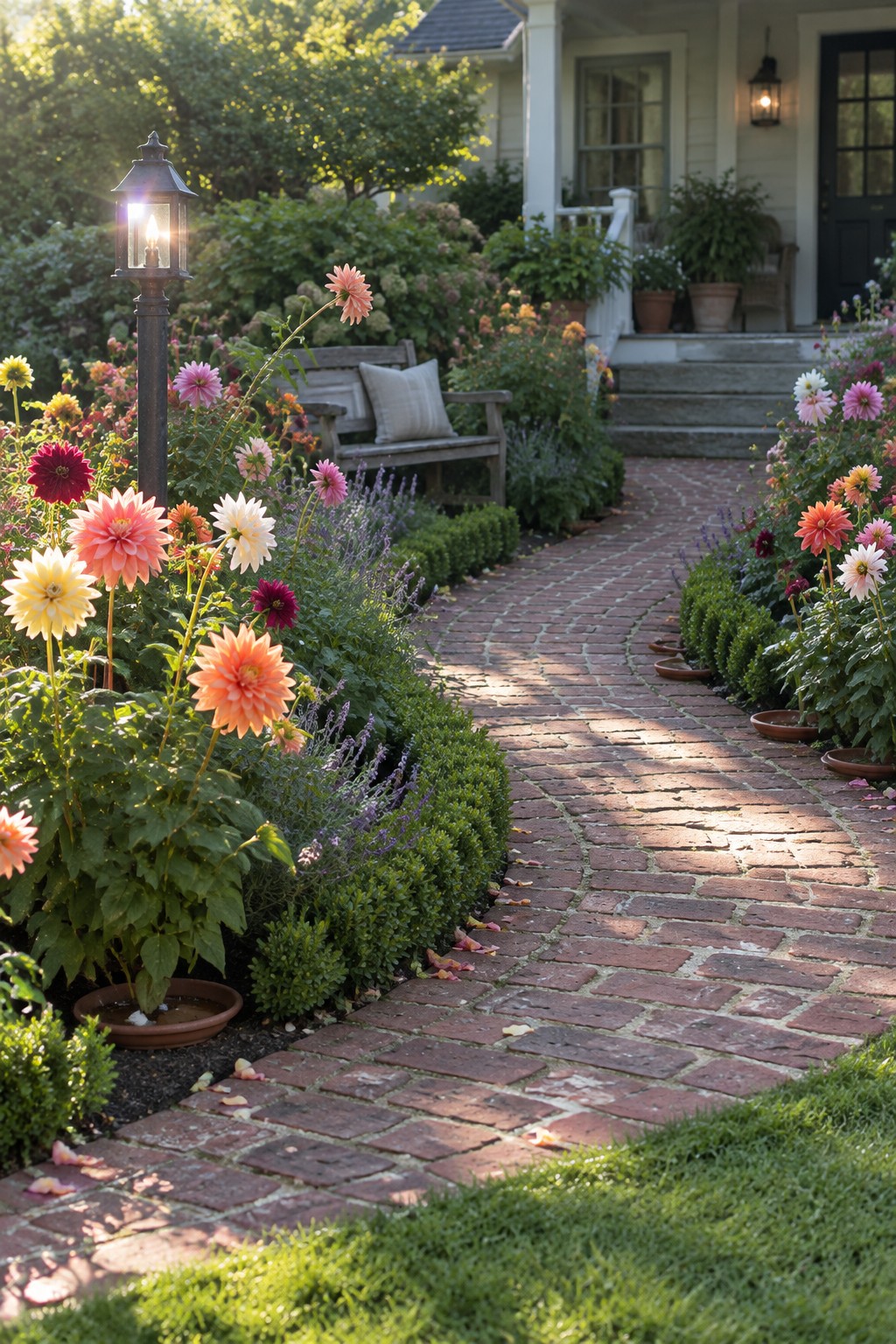
A brick walkway feels more settled when flower beds follow its curve, and dahlias bring color right to the edges. Planting them in loose groups gives the path a natural rhythm without making it feel too formal.
Give dahlias enough room to grow, and leave a clear border along the bricks so plants do not spill into the walking space. This approach works well on garden paths that already have a gentle bend.
Plant Dahlias Along a Clear Garden Path

A straight path through a dahlia border makes the garden easy to walk through while keeping the flowers close on both sides. The row of white blooms gives the route a clear shape without making the planting feel too formal.
Use this layout where you have enough room for a comfortable path and a wide flower bed on each side. Keep plants from leaning into the walkway, and leave a narrow gravel edge to help separate the planting from the concrete.
Use Large Stepping Stones Along a Dahlia Border

Large, irregular stepping stones make a garden path easy to follow without taking over the planting. Dahlias can grow along one side, while the stones leave room to see the flowers and move through the bed.
Set the stones at a comfortable walking distance and keep them level so the path is practical to use. This layout suits an informal garden, but leave enough space between the dahlias and stones to prevent stems from crowding the walkway.
Use Dahlias to Mark a Garden Path
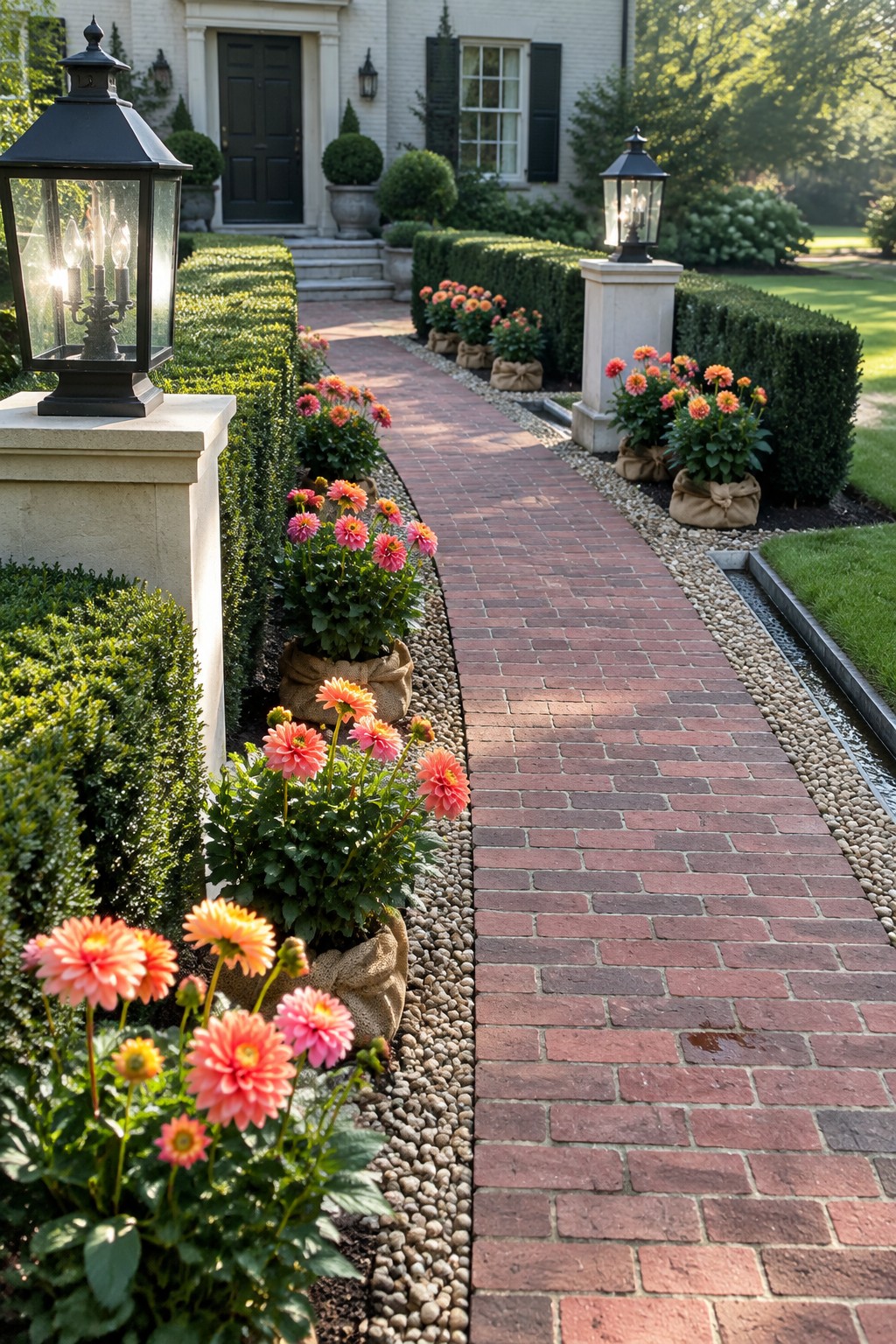
Dahlias planted along a walkway make the route feel colorful and clearly defined. Here, the flowers sit in small groups beside a brick path, while low hedges keep the planting tidy.
Use dahlias along a path that gets enough sun, leaving room for the plants to grow without crowding the walking space. Repeating a few flower colors in spaced groups can make a long walkway feel connected without filling every inch.
Use Stone Paths Through Dahlia Borders
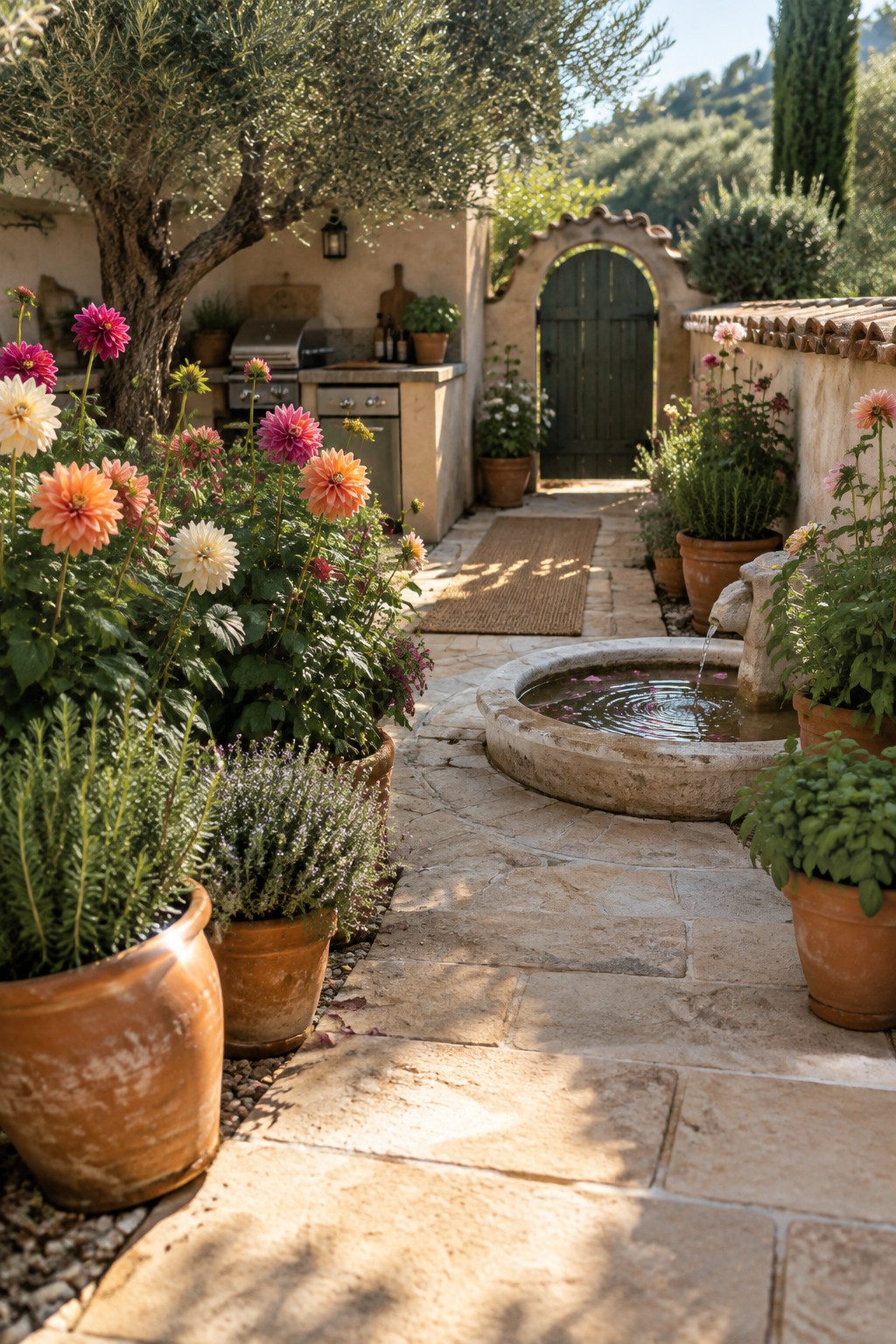
A stone path gives a dahlia border a clear route to follow. The firm surface is practical for walking and tending the flowers, while the large paving stones let the planting stay full along the edges.
Leave enough room between the path and the dahlias so stems do not lean into the walking space. This approach suits informal garden paths, especially where flowers grow in generous beds on either side.
Use Gravel to Define a Garden Path

A gravel path gives a flower border a clear edge and keeps the route through the garden easy to follow. It works especially well beside informal plantings, where flowers can spill naturally toward the walkway without narrowing it.
Choose compact gravel that feels comfortable to walk on, and install a firm edging to keep stones from drifting into the beds. Leave enough width for people to pass without brushing against the plants.
Use Stone Steps Through a Dahlia Border
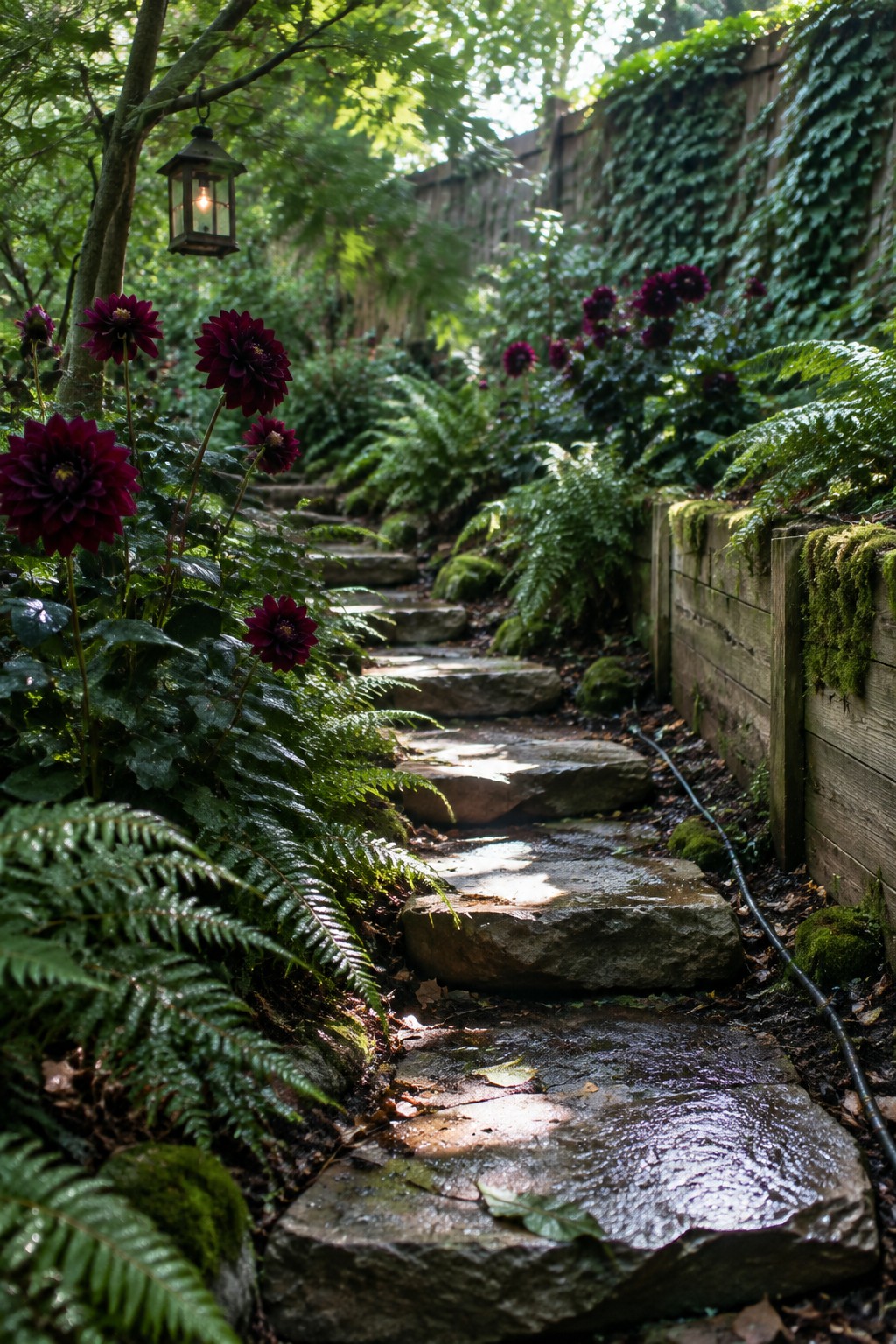
A stepping-stone path gives a flower border a clear route through the garden while keeping the planting close by. Dahlias can line the edges, where their blooms stand out against the broad stone treads.
Leave enough room between stones for comfortable steps, and keep the dahlias set back so leaves and flowers do not crowd the walking surface. This approach suits a winding garden path, especially where the ground slopes or gets muddy.
Use Wall Planters to Bring Dahlias Along a Narrow Path

Wall-mounted planters let you grow dahlias where a narrow walkway leaves little room for a traditional border. The flowers bring color close to the path without taking up much of its walking space.
Use sturdy containers and secure them well, especially when they’re filled with damp soil. Leave enough clearance for people to pass, and choose a sunny wall so the plants can flower well.
Use a Gravel Path to Separate Dahlia Borders
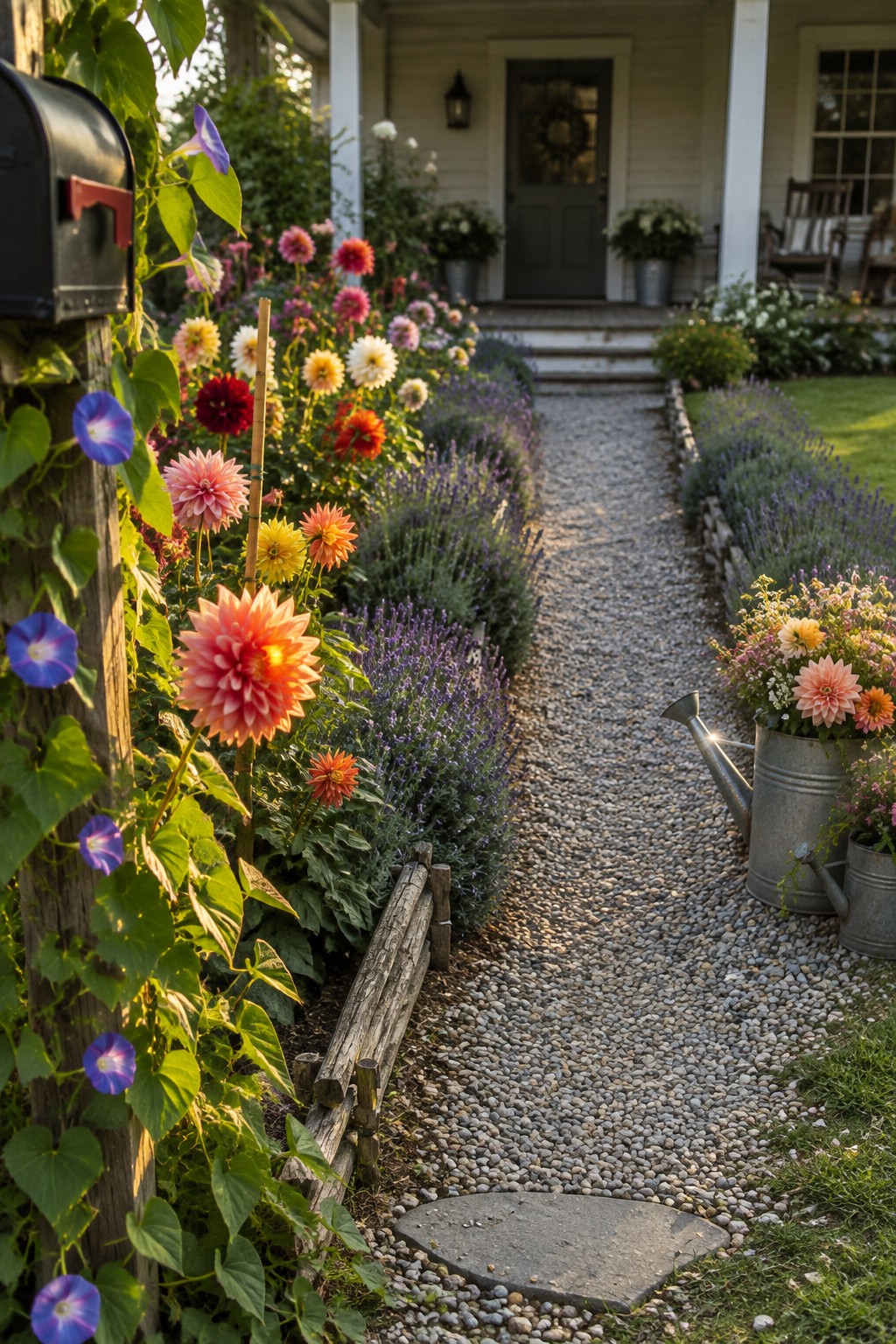
A gravel path gives a dahlia border a clear shape and makes it easy to walk through the garden. The loose stone surface feels informal beside the full, colorful blooms, while keeping the planting beds distinct.
This layout works well along a front walk or a side garden where you want flowers close to the route without crowding it. Keep the path wide enough for comfortable passage, and use edging to stop gravel from spilling into the beds.
Add a Narrow Flower Bed Beside the Path

A slim planting bed running alongside a walkway gives dahlias room to grow without taking over the walking space. It also makes a long path feel more connected to the garden, especially when the flowers repeat at intervals rather than crowding every inch.
Leave enough clear paving for people to pass comfortably, and choose dahlias that suit the bed’s width. This approach works well in a narrow garden; mix in a few compact plants so the border still looks full between blooms.
Plant Dahlias Along a Curving Garden Path

A gently curving path gives a dahlia border a more natural shape than a straight run. The bend also reveals the flowers a little at a time as you walk, which works especially well when taller dahlias grow behind lower plants.
Leave enough room for blooms to spill toward the path without narrowing it. A gravel or small-stone surface suits this relaxed garden style, but keep the walking area clear so it stays easy to use.
Use Stone Steps on a Sloped Garden Path
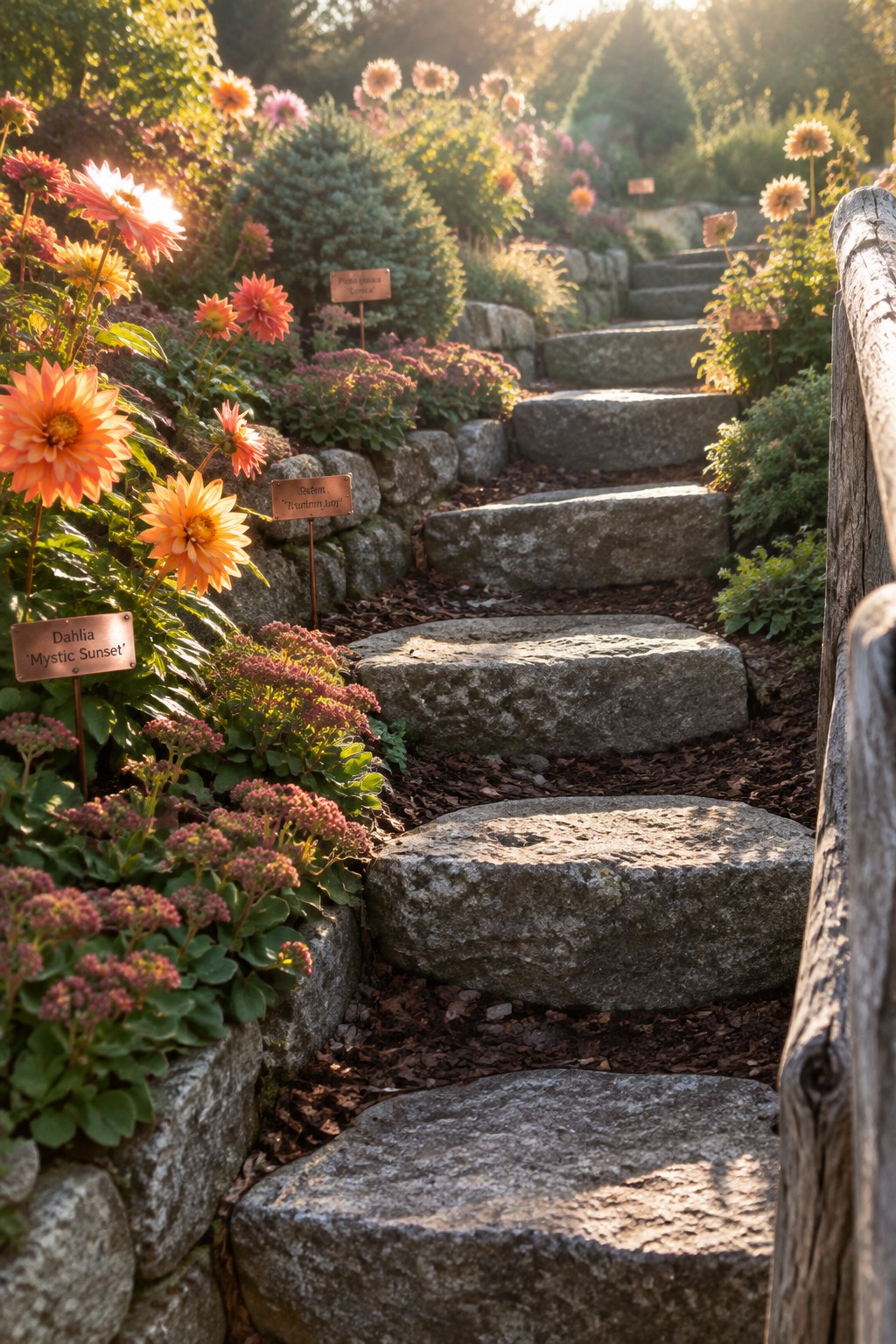
Large stone steps make a sloping garden path easier to walk while keeping the route simple and natural. Dahlias planted along the edge bring color close to the stones without taking over the walking space.
Leave enough room between plants and steps for dahlia foliage to spread, and keep the stone surfaces level and stable. This approach works well on a hillside where a flat path would be difficult to build.
Use a Brick Path Beside a Dahlia Border
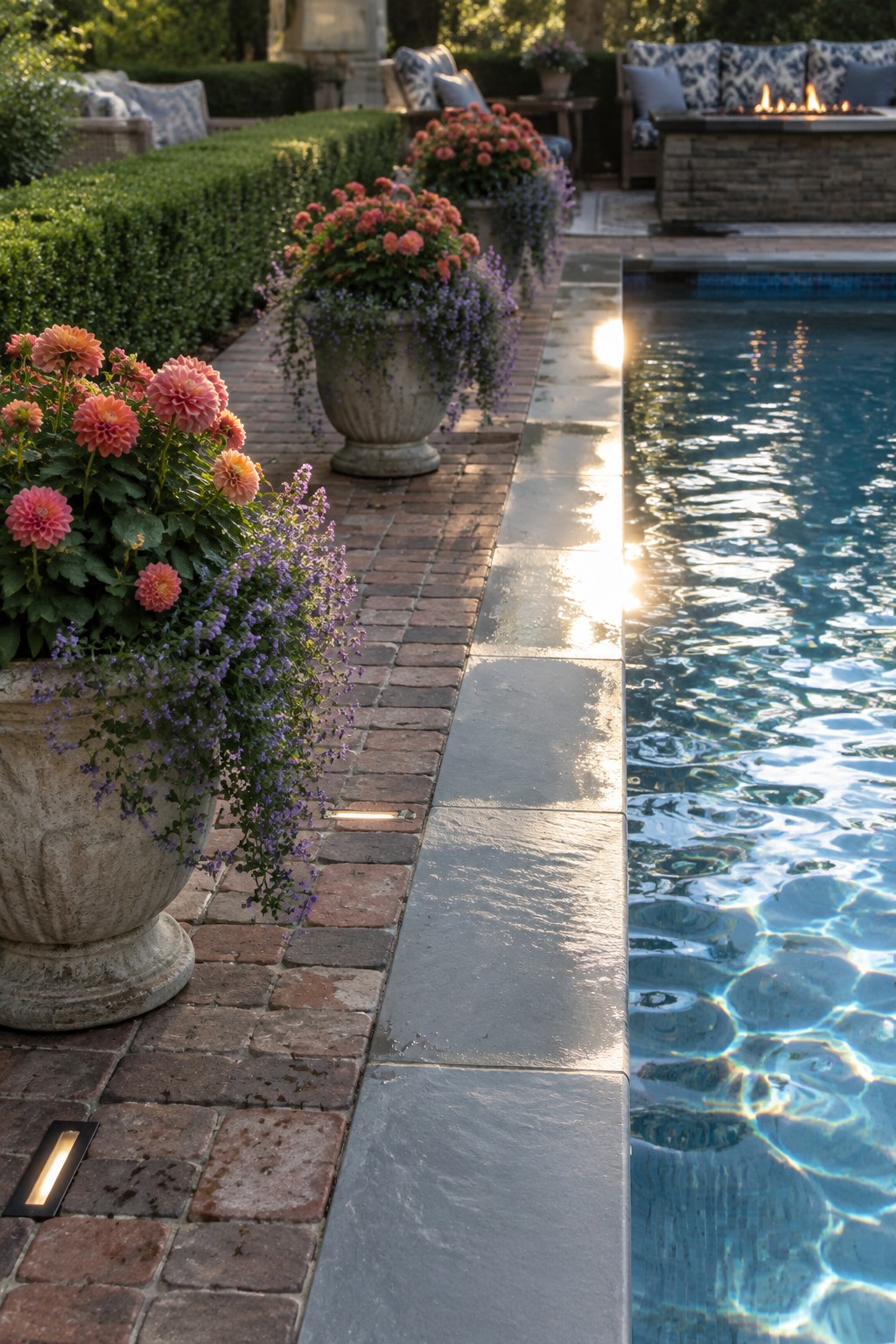
A brick path gives a dahlia border a clear edge and makes it easy to walk alongside the flowers. The warm, uneven surface also suits an informal garden better than a perfectly uniform walkway.
For a similar look, lay bricks beside the planting bed and leave enough room for comfortable walking and plant growth. Dahlias can fill the border, but keep stems from spilling too far onto the path.
Keep the Dahlia Border Beside a Narrow Path

A narrow brick path can feel tucked into the garden when dahlias grow close along one side. Their tall stems and full blooms make the route feel connected to the planting, without needing a wide bed or a formal border.
Leave enough clear space for walking and tending the flowers, especially where the path narrows. This approach suits cottage gardens and small yards, where a simple brick walkway can run beside an abundant flower bed.
Use Large Pavers Along a Dahlia Border

Large stepping stones make a garden path easy to follow while leaving room for a dahlia border beside it. The broad pavers also help keep the route tidy without covering the whole garden in hardscape.
For a similar layout, set the stones with comfortable, even spacing and plant dahlias along one edge. Gravel can fill the gaps, but keep it level with the pavers so the path stays easy to walk on.
Use a Stone Path Through a Layered Dahlia Border
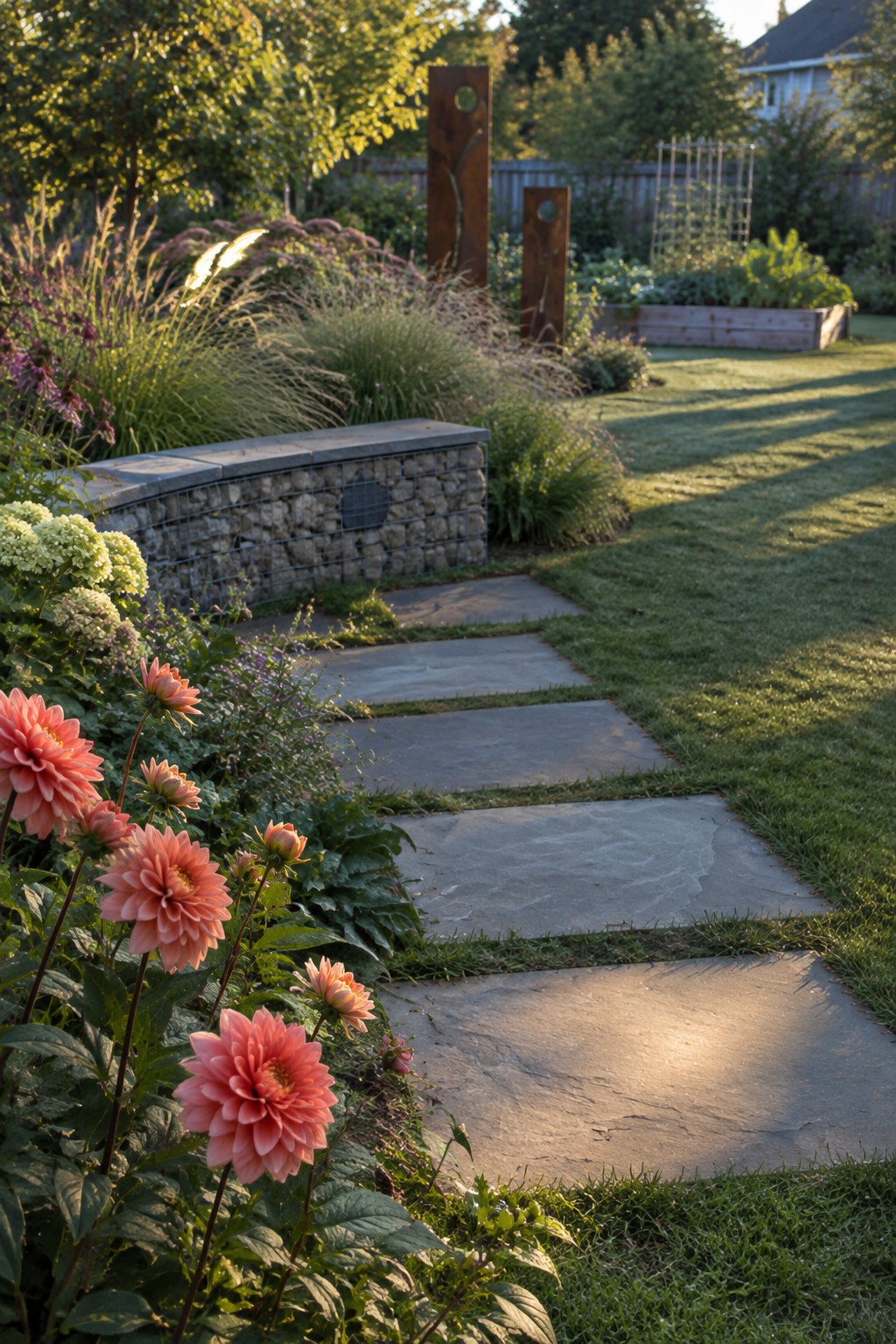
A path made from spaced stone slabs gives a garden a clear route without making the planting feel too formal. Dahlias can sit near the edge among grasses and other flowers, so the border feels full while the walkway remains easy to follow.
Leave enough room between the stones for comfortable steps, and keep plants from leaning too far over the walking surface. This approach suits a cottage-style garden or an informal backyard path; choose stable, level stones to make it practical in wet weather.
Grow Dahlias Along a Gravel Garden Path

A gravel path gives a dahlia border a clear edge and keeps the flowers from taking over the walking space. The loose stone also suits an informal garden, where a straight, paved walkway might feel too rigid.
Leave enough room for the dahlias to spread without leaning into the path, and use brick or stone edging to hold the gravel in place. This works well for a winding garden walk, but gravel needs occasional raking and topping up.
Let the Path Wind Through the Flower Border

A gently curving stone path makes a flower border feel like part of the garden, rather than a bed to look at from the edge. The changing direction also gives the dahlias and smaller flowers room to show from different angles.
Use broad, steady pavers where people walk most, and leave enough space beside them for plants to spread without crowding the route. This layout works especially well in a cottage-style garden, but keep the path wide enough to pass comfortably as the border fills in.
Frequently Asked Questions
Q: How much space should I leave between dahlias along a walkway?
A: Check the mature width on the plant label, then leave enough room for each plant to fill out without spilling across the path. Compact varieties work well beside narrow walkways, while larger dahlias need a wider border.
Q: Will dahlias cope with people brushing past them?
A: Their stems can snap, so avoid planting tall varieties right against a busy path. Set them a little farther back, and stake them early so they stay upright as they grow.
Q: What can I plant at the front of a dahlia border?
A: Low-growing edging plants, such as alyssum or compact marigolds, soften the edge without hiding the dahlias. Leave a little open space between them so you can reach in to water and remove faded blooms.
Q: Can I keep dahlias in a walkway border from year to year?
A: Yes. In colder areas, lift the tubers after frost blackens the foliage, let them dry, and store them somewhere cool and frost-free. In mild climates, you can often leave them in the ground under a layer of mulch.
