


Hydrangeas can soften a porch entrance, but the planting needs to suit the space rather than crowd the steps or hide the path.
I find that the best layouts balance full blooms with clear edges, easy access, and room for plants to grow over time.
The porch itself matters too, since its color, trim, and scale shape how the garden reads from the street.
Some designs use a few generous shrubs, while others layer hydrangeas with low borders, paths, or containers.
I’d save the ideas that fit your porch’s light and layout, then adapt the planting to what will thrive there.
Layer Hydrangeas Along the Entry Path
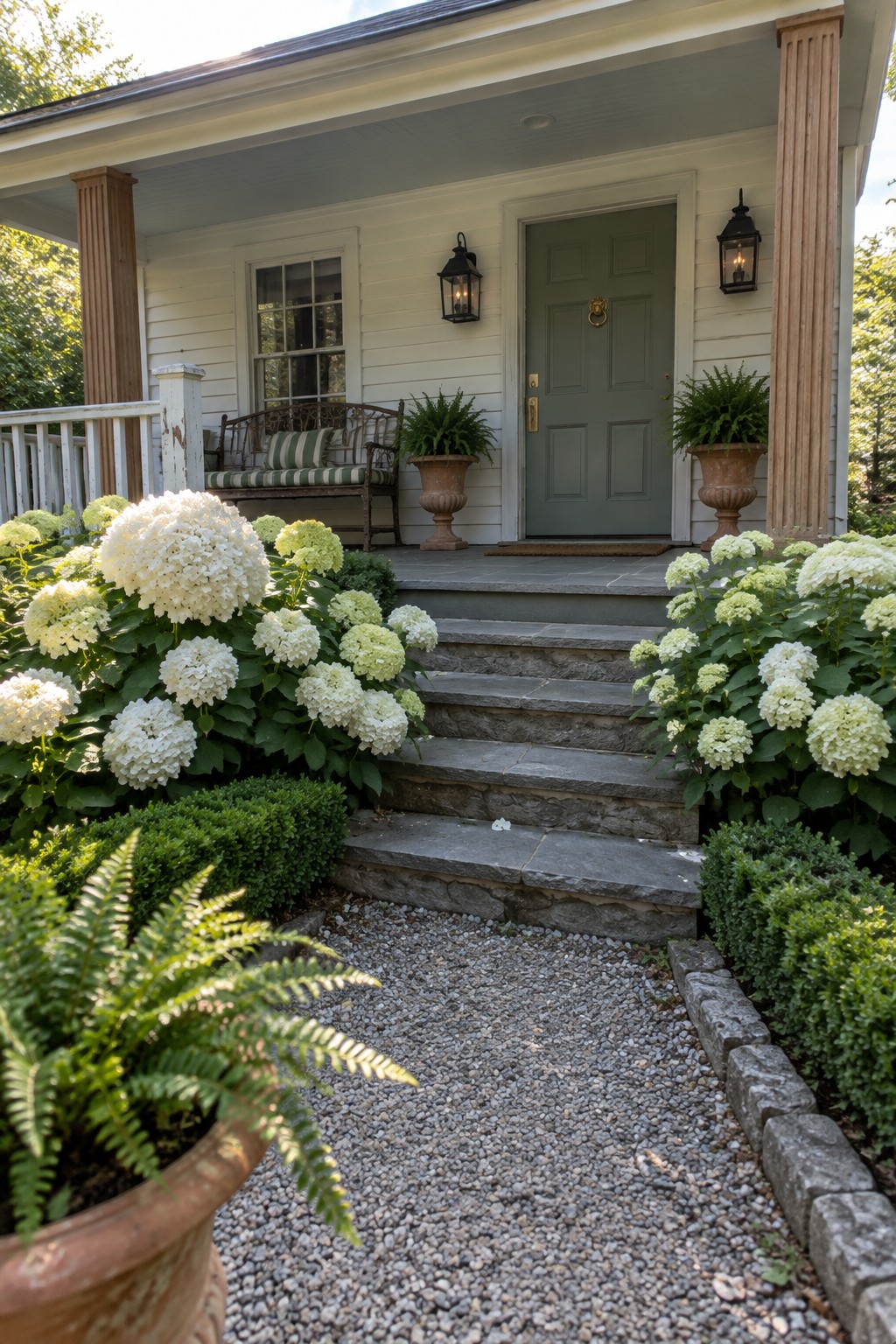
A generous border of hydrangeas can make a front walk feel like part of the garden, rather than just a way to reach the door. Planting them in broad, informal groups gives the path a lush look while keeping the entrance easy to find.
Use a gravel or stone path to leave a clear route through the flowers, and check the mature width of each hydrangea before planting so it does not spill onto the walkway. This approach suits cottage-style homes especially well; a few evergreen shrubs can help the beds look tidy when the hydrangeas are out of bloom.
Use Hydrangeas To Mark The Porch Entrance

Large planters of white hydrangeas give the porch steps a clear, welcoming edge without blocking the path. Repeating the same kind of flower on both sides makes the entrance feel planned and keeps the planting simple.
Place the pots where they won’t narrow the stairs, and leave enough room for the plants to grow. Hydrangeas also work well in nearby garden beds if you’d rather avoid watering containers.
Use Hydrangeas Along Porch Steps
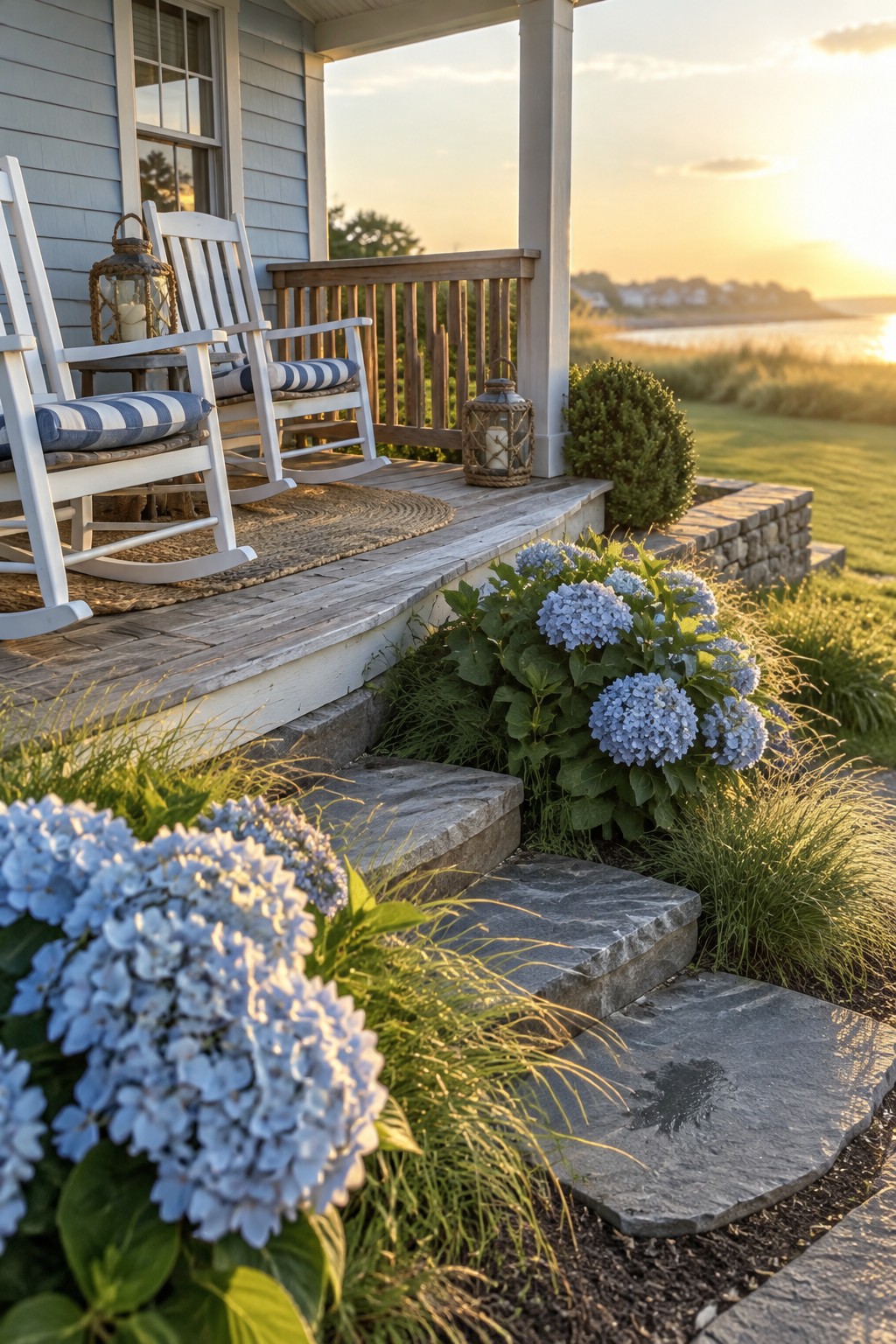
Hydrangeas planted beside porch steps make the entrance feel connected to the garden. Their rounded blooms bring plenty of color to the edge of a simple stone path without needing a formal planting scheme.
Give the shrubs enough room to grow, and leave a clear walking surface on the steps. This approach works especially well beside a raised porch, where flowers can follow the change in level.
Use Hydrangeas to Line the Entry Path
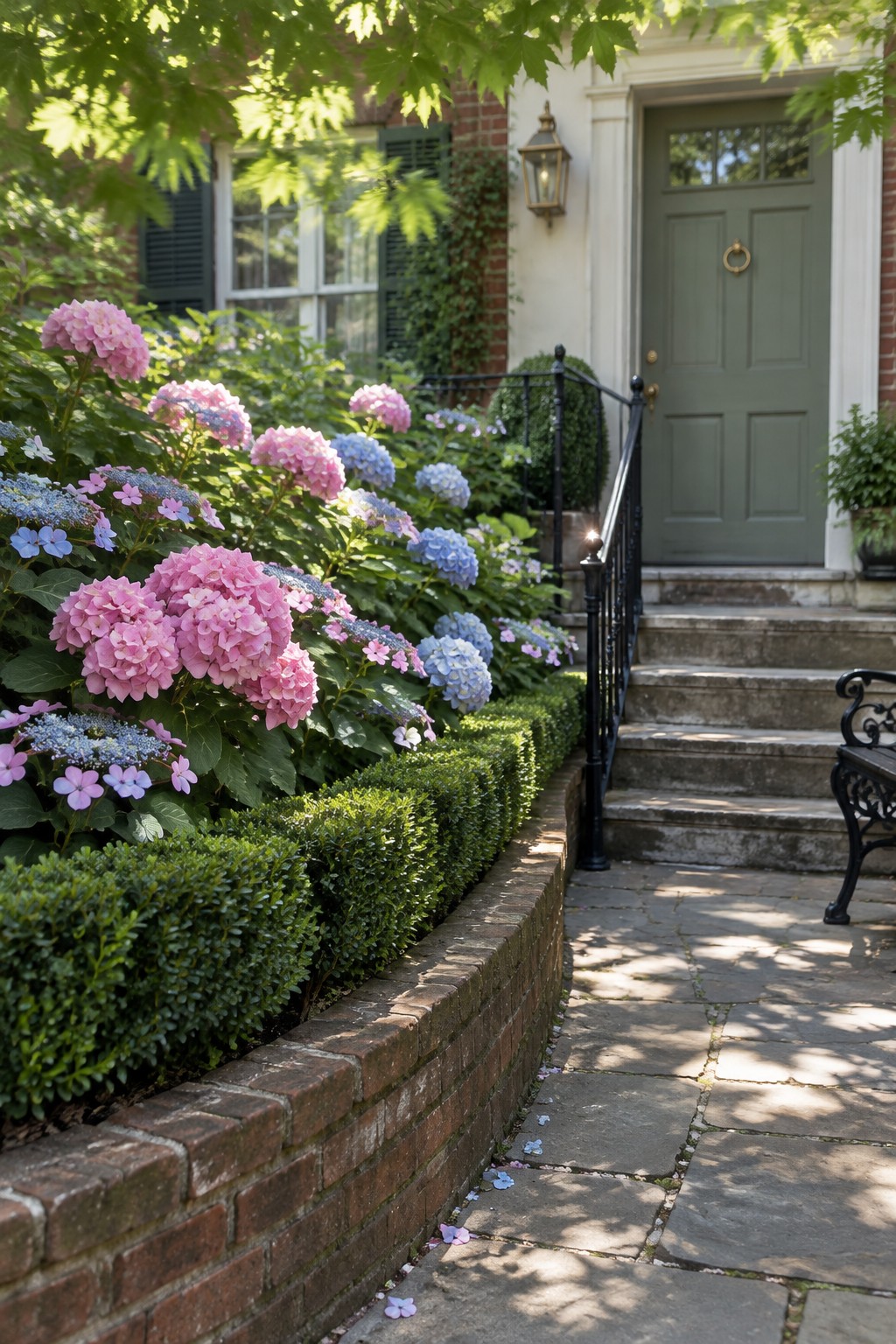
Hydrangeas can make a front walk feel lush without taking over the whole yard. Planting them along one side of the path gives the entrance a clear garden edge, while pink and blue blooms bring color close to the front door.
Give the shrubs enough room to spread, and keep a lower hedge or edging in front if you want a tidy boundary. This approach suits a traditional home with a narrow entry walk, but leave the path wide enough for people to pass comfortably.
Plant Hydrangeas in Porch-Side Planters

Large planters can bring hydrangeas close to the porch without changing the garden bed layout. The flowers feel part of the entrance, and the pots are easy to move if you need to adjust the arrangement.
Choose sturdy containers with drainage holes, and give each hydrangea enough room for its roots. This works well beside a covered porch, where the plants get some shelter, but check that they still receive enough light and water.
Use Hydrangeas To Dress Up Brick Porch Steps
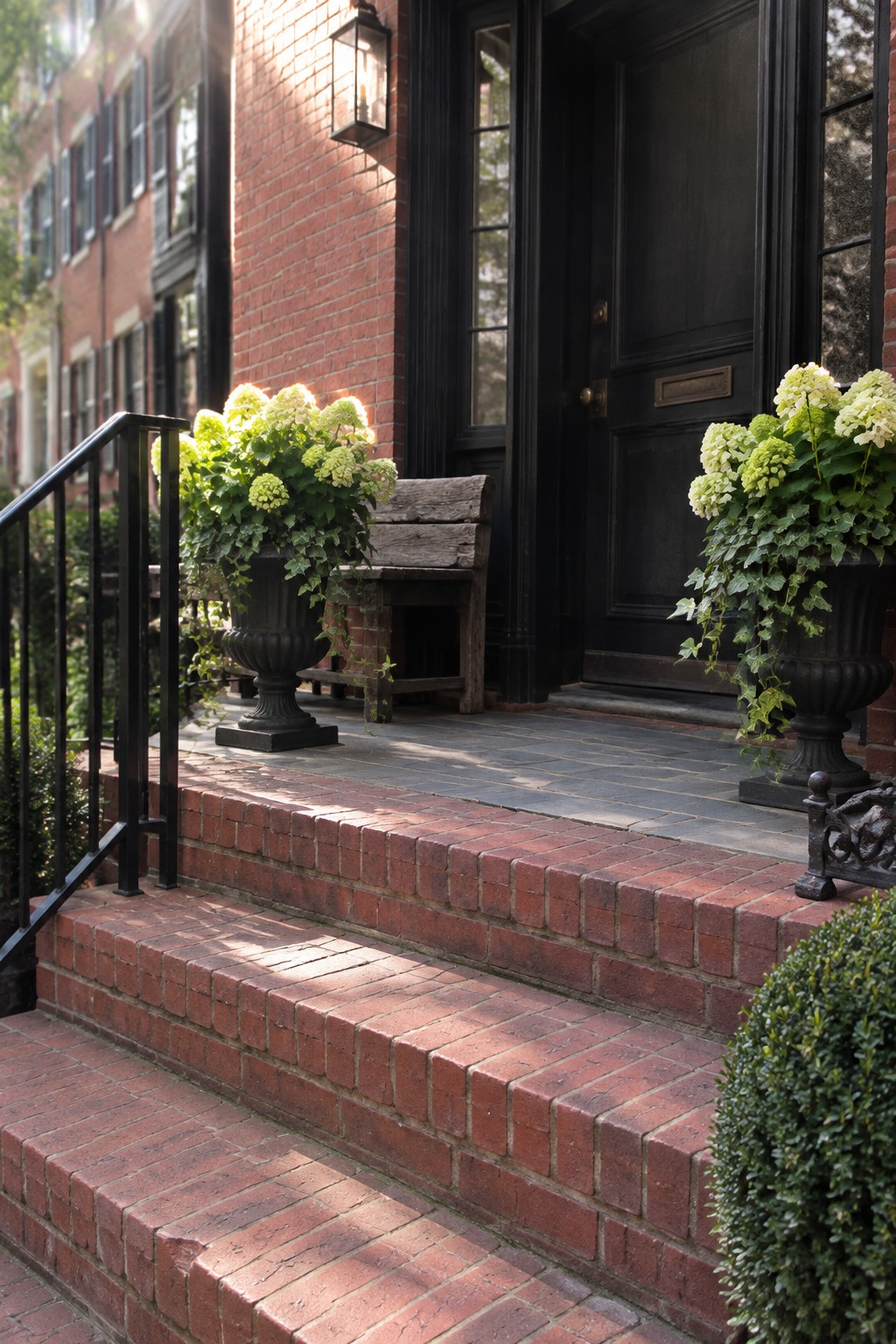
Hydrangeas in large planters can bring color right to the porch entrance without taking up space in the garden beds. Setting them on either side of the steps gives the entry a clear, welcoming feel.
Choose sturdy pots that leave enough room for people to pass, and keep them near the top landing so they do not crowd the stair treads. This works especially well on brick steps, where the blooms stand out against the warm, textured surface.
Use Potted Hydrangeas Along the Porch Steps

Hydrangeas in pots bring color right up to a porch entrance without needing a garden bed. Here, blue and pink blooms sit beside the terracotta steps, making the climb to the door feel more finished.
Use pots of different sizes along broad steps or on a small landing, leaving enough room to walk safely. Hydrangeas need regular watering, especially in containers, so place them where you can reach them easily.
Use Large Planters to Mark a Modern Entry

A substantial planter can give a front entrance a clear focal point without changing the porch itself. A white-flowering hydrangea in a dark pot is an easy way to bring greenery close to the door.
This works well beside a simple entry where there may not be room for a garden bed. Choose a pot large enough for the shrub’s roots, and make sure it has drainage so the soil does not stay soggy.
Use Large Planters to Mark a Porch Entrance
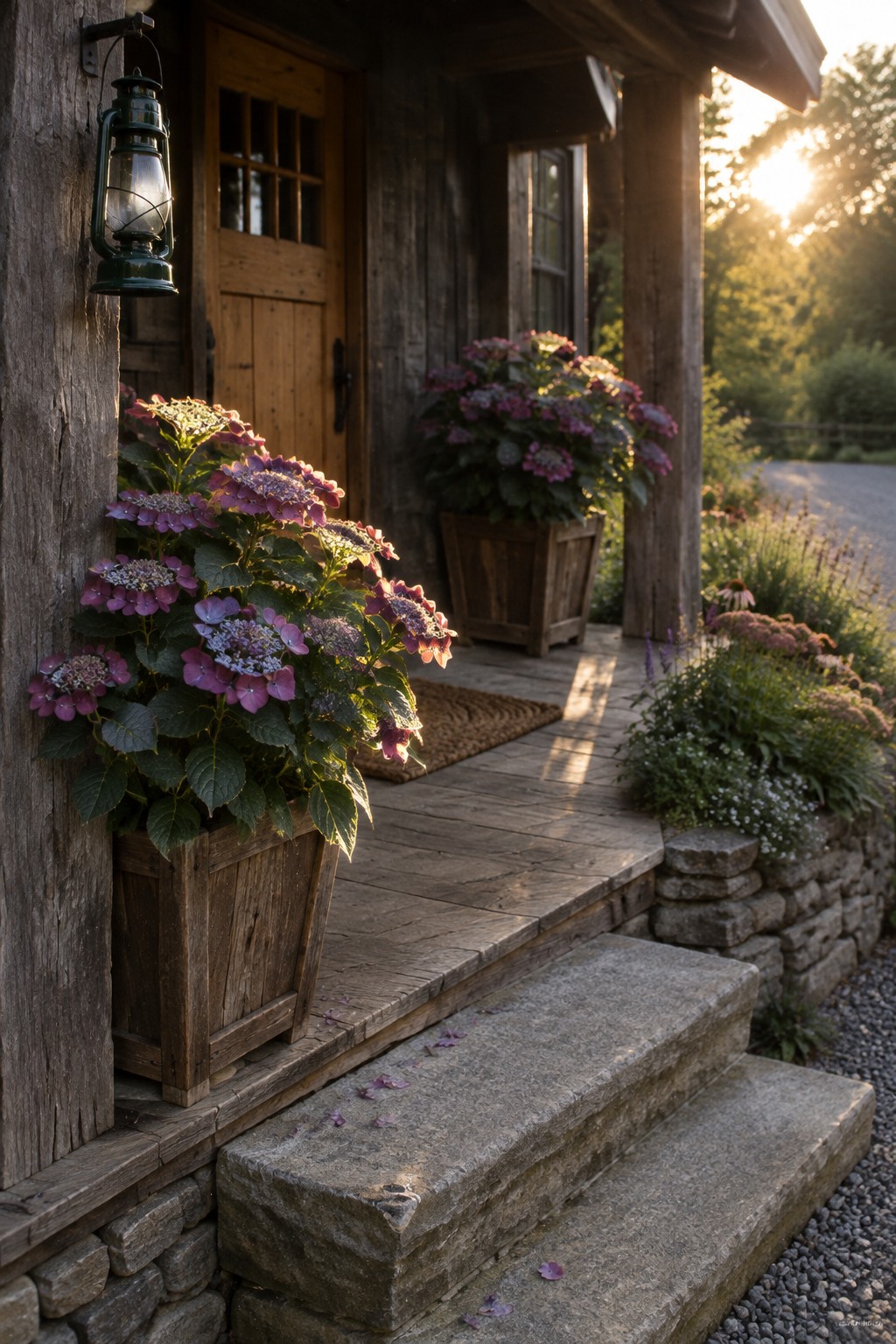
Big hydrangea planters make a porch entry feel established without changing the garden beds. Their height brings the flowers close to the doorway, where they are easy to enjoy.
Try sturdy wooden planters beside the entry or at the top of a few steps. Give each hydrangea room to spread, and make sure the containers have drainage so the roots do not sit in water.
Plant Hydrangeas Along the Porch Steps
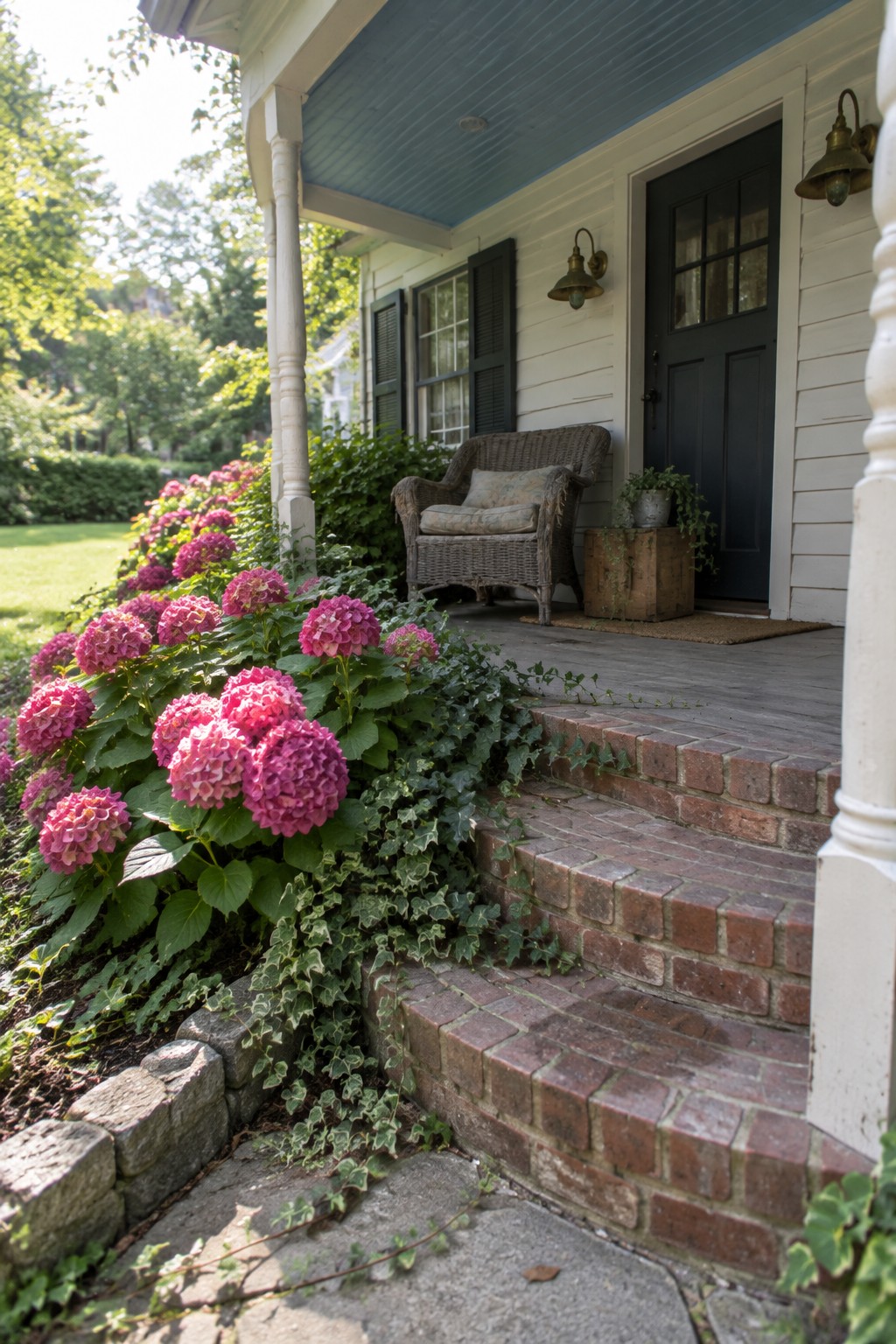
Hydrangeas planted beside porch steps make the entrance feel connected to the garden. Their rounded blooms bring color right up to the walkway, while the steps give the planting a clear edge.
This works well where there’s a narrow bed beside the stairs. Leave enough room for the plants to spread without covering the step edges, and choose a variety that suits the available light.
Build Garden Beds Into the Porch Steps

Raised beds built alongside porch steps make room for hydrangeas and other flowers without taking up much of the walkway. The stone edges give the planting a clear shape, and the blooms sit close enough to the steps to feel connected to the entrance.
This approach works well on a sloped front yard or where a porch sits above the path. Use sturdy stone or timber for the bed edges, and leave the steps wide and clear for everyday use.
Use Large Hydrangea Pots Beside the Porch
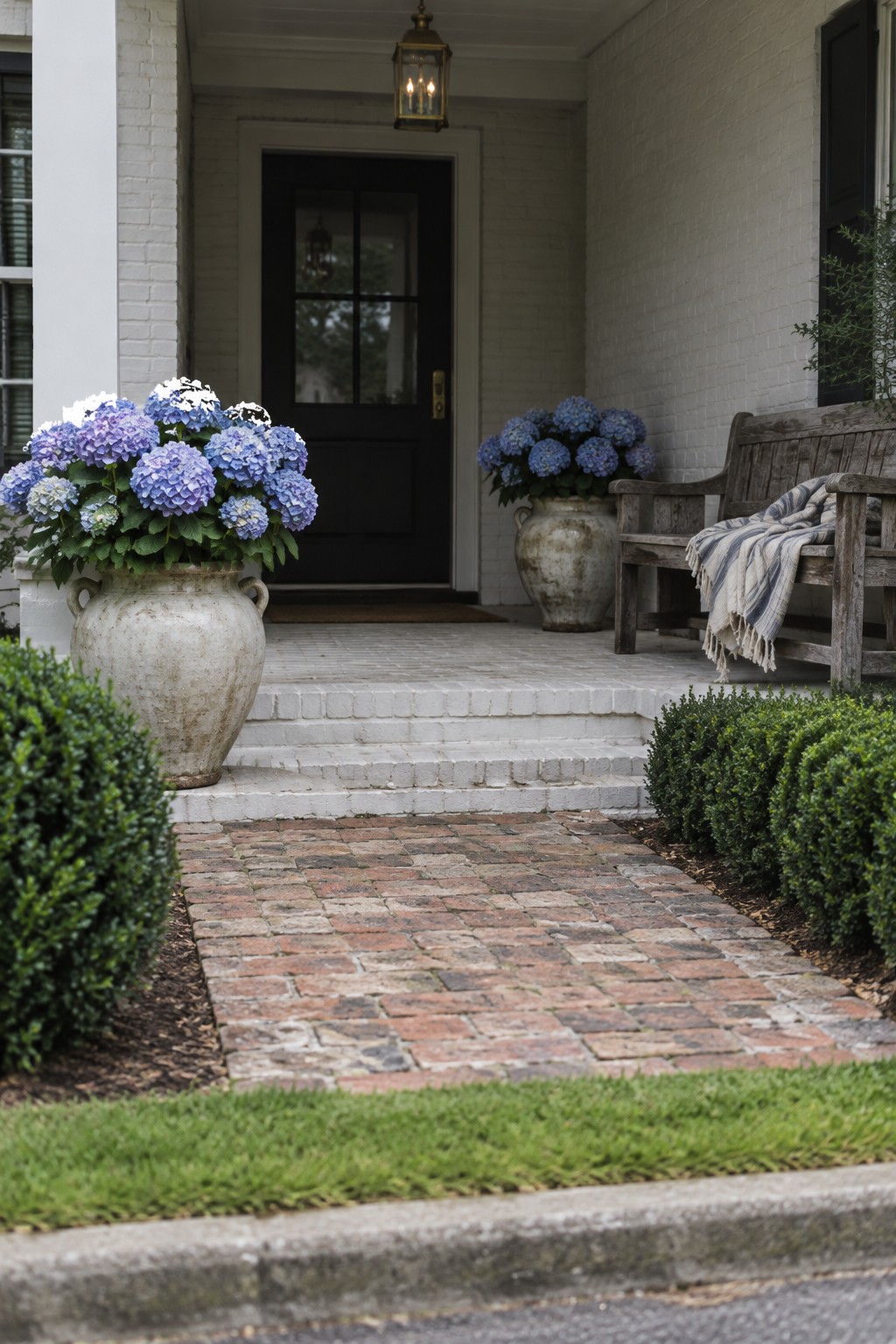
Large pots let you bring hydrangeas right up to a porch entrance without changing the garden beds. They make the entry feel planted and welcoming, and the flowers are easy to switch out or move as needed.
Choose sturdy containers that suit the scale of the porch, and place them where they won’t narrow the walkway. Blue hydrangeas look especially at home beside a dark front door, though they’ll need regular watering in pots.
Let Hydrangeas Fill the Bed Beside the Porch

A full flower bed along the porch gives the entrance a garden-like feel without blocking the steps or path. Hydrangeas work well here because their broad leaves and clusters of blue and lavender blooms make a generous border.
Plant them in a bed that gets the right amount of sun for the variety, and leave room for their mature spread. A few smaller flowers at the front can fill gaps, but keep the path edge clear so the entrance stays easy to use.
Plant Hydrangeas Along a Porch Walkway
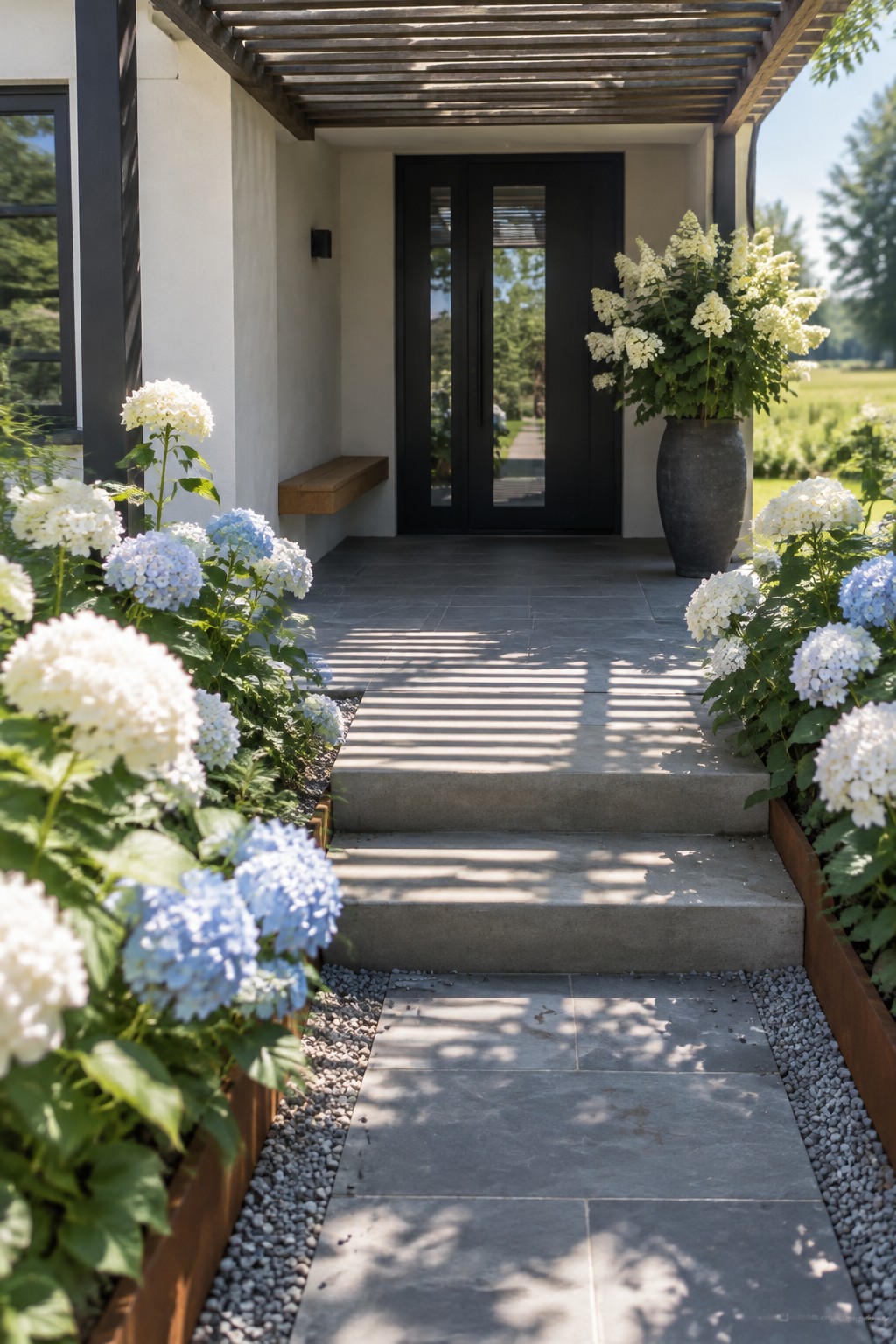
Hydrangeas planted beside an entry path make the walk to the porch feel like part of the garden. Repeating the same flowering shrub along both sides gives the entrance a clear, welcoming route without needing elaborate landscaping.
Leave enough room for the plants to spread so they do not crowd the paving. This approach suits a straight walkway leading to a porch, especially when a simple stone path and low edging keep the planting beds tidy.
Let Hydrangeas Edge a Porch Stairway

Plant hydrangeas in a porch-side bed to bring flowers right up to the steps. The blooms make the entrance feel connected to the garden without taking away from the tiled stair risers.
This works especially well where a raised porch meets a planting bed. Leave enough room for the hydrangeas to spread, and keep their foliage clear of the stair treads so the steps stay easy to use.
Create a Gravel Walkway to the Porch

A gravel path gives a porch approach a simple, informal feel. Timber edging keeps the stones in place, while hydrangeas planted beside the walkway make the route feel like part of the garden.
This works well in a cottage or country-style yard, especially where a paved path would feel too formal. Use compacted, well-draining gravel and sturdy edging so the walkway stays easy to maintain.
Add Curved Brick Steps to the Porch

Curved brick steps give a porch entrance a softer shape than a straight stairway. They also make a useful transition between the porch and a winding garden path, especially when hydrangeas fill the nearby bed.
This approach suits a cottage-style home or any entry with enough room for a broad stair curve. Keep the path clear and leave space between the brick and plants so the steps stay easy to use as the hydrangeas grow.
Frequently Asked Questions
Q: Will hydrangeas grow well beside a covered porch?
A: They can, as long as they get enough light and rain reaches the soil. A deep porch roof may keep them too dry, so check the soil often and water when the top inch feels dry.
Q: How much space should I leave between hydrangeas and the porch?
A: Leave enough room for the mature shrub to spread without brushing the siding or blocking the path. Check the plant tag for its expected width, then give it breathing room rather than planting it tightly against the steps.
Q: Can I mix different hydrangea colors around the entrance?
A: Yes, but a few repeated colors usually feel calmer than a mix of every shade. White blooms pair easily with colored varieties and help the porch feel bright.
Q: What can I plant in front of hydrangeas?
A: Try low-growing plants that won’t hide the hydrangea’s stems, such as small ferns or flowering ground covers suited to your light. Keep the area around each shrub open enough for watering and airflow.
