

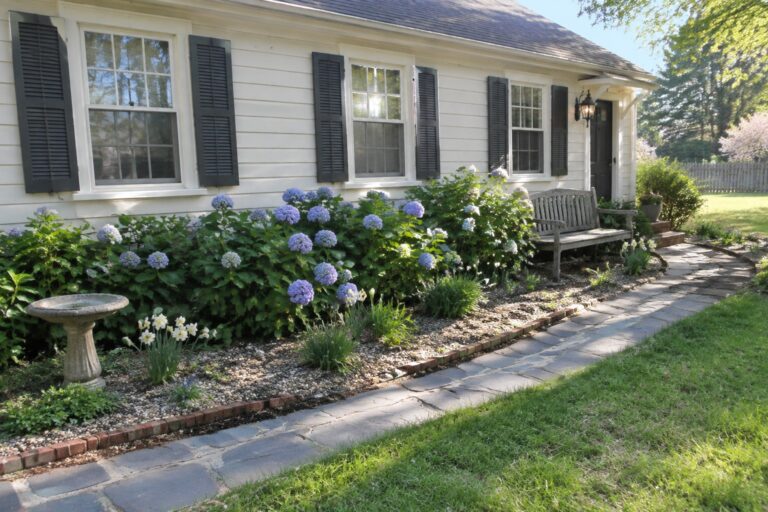
Hydrangeas can soften the space beneath a window, but the bed works best when its shape and height suit the house as well as the flowers.
I pay attention to what you see from indoors, since tall blooms can frame a view beautifully or block too much light.
A clear edge, a little room for the plants to spread, and a mix of heights help the planting feel settled rather than crowded.
Color matters, but so do bloom time and the way hydrangeas look alongside the home’s siding, trim, and foundation.
I’d save the ideas that fit your window height and growing conditions, then adapt the details to your own yard.
Give Hydrangeas Room to Grow Along the House
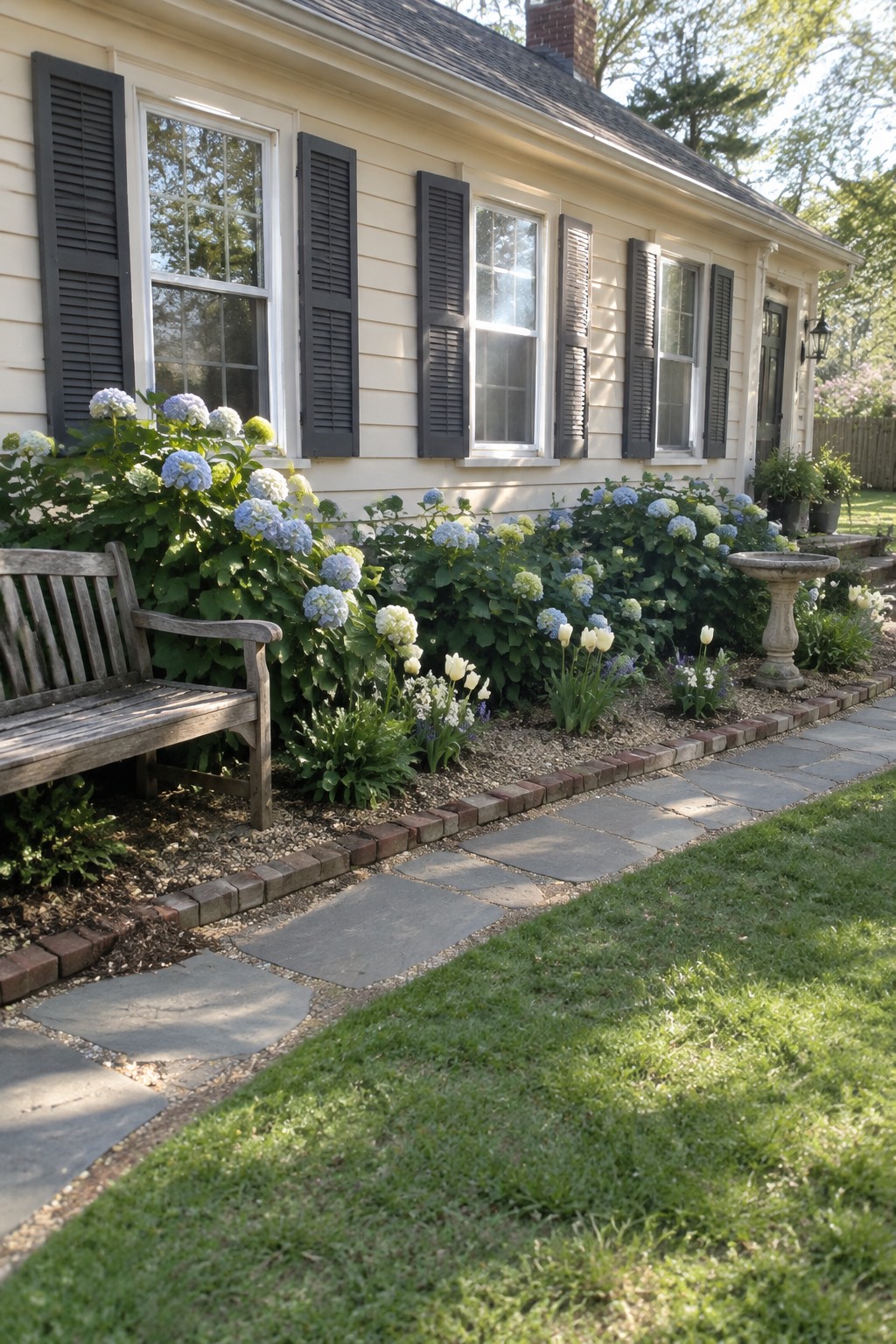
A long flower bed can make good use of the space below a row of windows. Hydrangeas bring color through the bed, while their rounded shape helps the planting feel full without needing a complicated layout.
Leave enough space between the shrubs and the house so air can move around them and branches are easy to reach for pruning. A simple brick edge can keep soil and mulch in place, and a nearby path makes the bed easier to tend.
Use Hydrangeas to Define a Front Entry
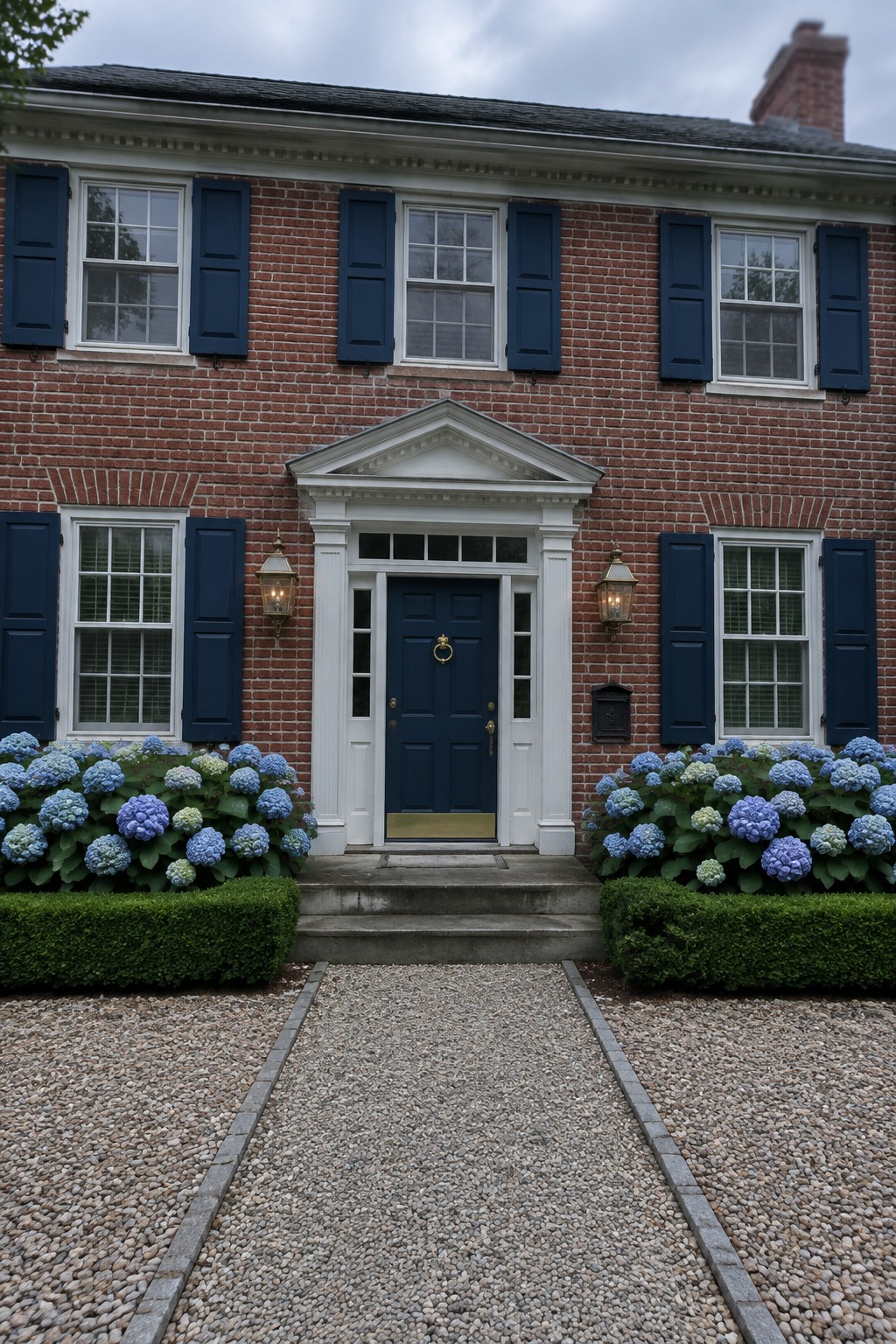
Hydrangeas can make a front entrance feel connected to the rest of the garden. Planted in generous beds near the doorway, their rounded blooms bring color close to the house without hiding its details.
Give the shrubs enough room to grow, and leave a clear path to the steps. This approach suits traditional brick homes especially well, but check the mature size of the variety so the plants do not crowd windows or walkways.
Plant Hydrangeas in a Long Bed Below the Windows
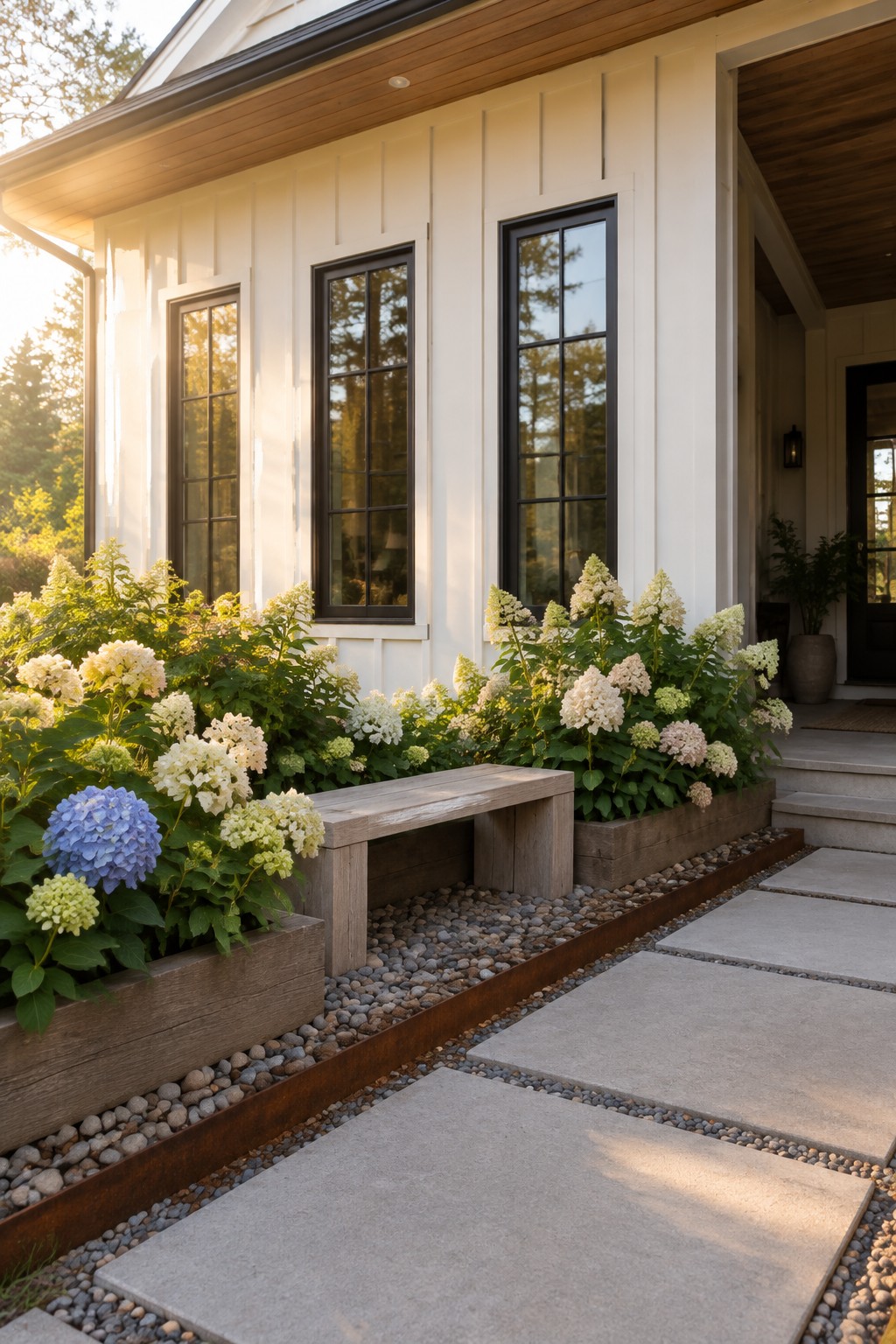
A long flower bed can make the space beneath several windows feel connected without hiding the house. Hydrangeas suit this layout because their rounded blooms fill the bed while leaving the windows visible.
Use a mix of hydrangea sizes, keeping taller plants toward the back and allowing enough room for mature growth. A raised wooden edge can help define the bed, but leave space to reach the plants for pruning and upkeep.
Layer Hydrangeas Along a Stone Garden Edge
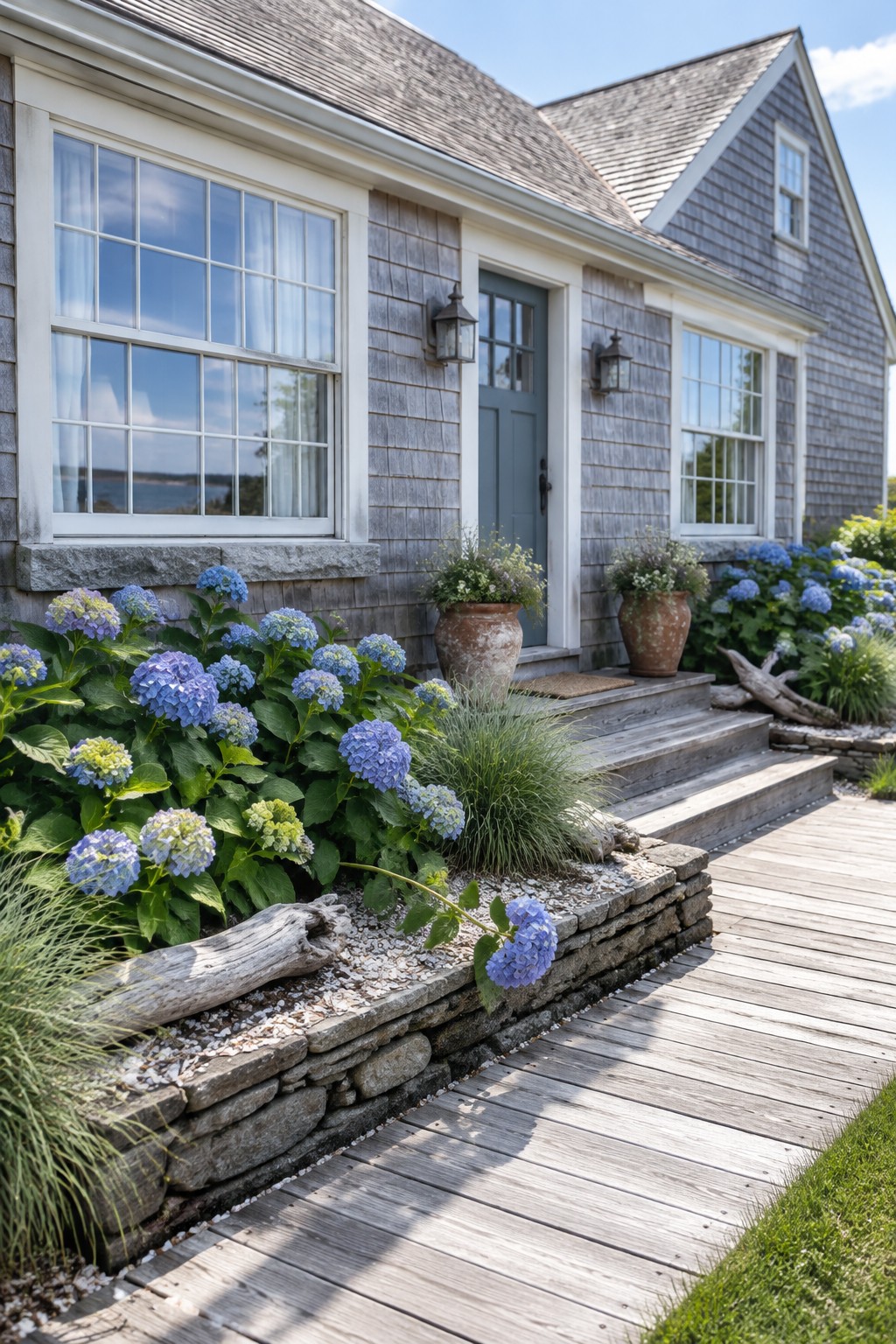
A low stone retaining wall gives a hydrangea bed a clear boundary and helps keep the planting tidy beside a walkway. The flowers can spill a little over the edge, while the wall adds a practical transition between the garden and the path.
This approach works well along a front walk or beside a house where the ground slopes slightly. Plant hydrangeas behind the wall, leaving enough room for them to spread, and choose a path material that is easy to walk on in wet weather.
Use Window Boxes to Bring Hydrangeas Close to the House
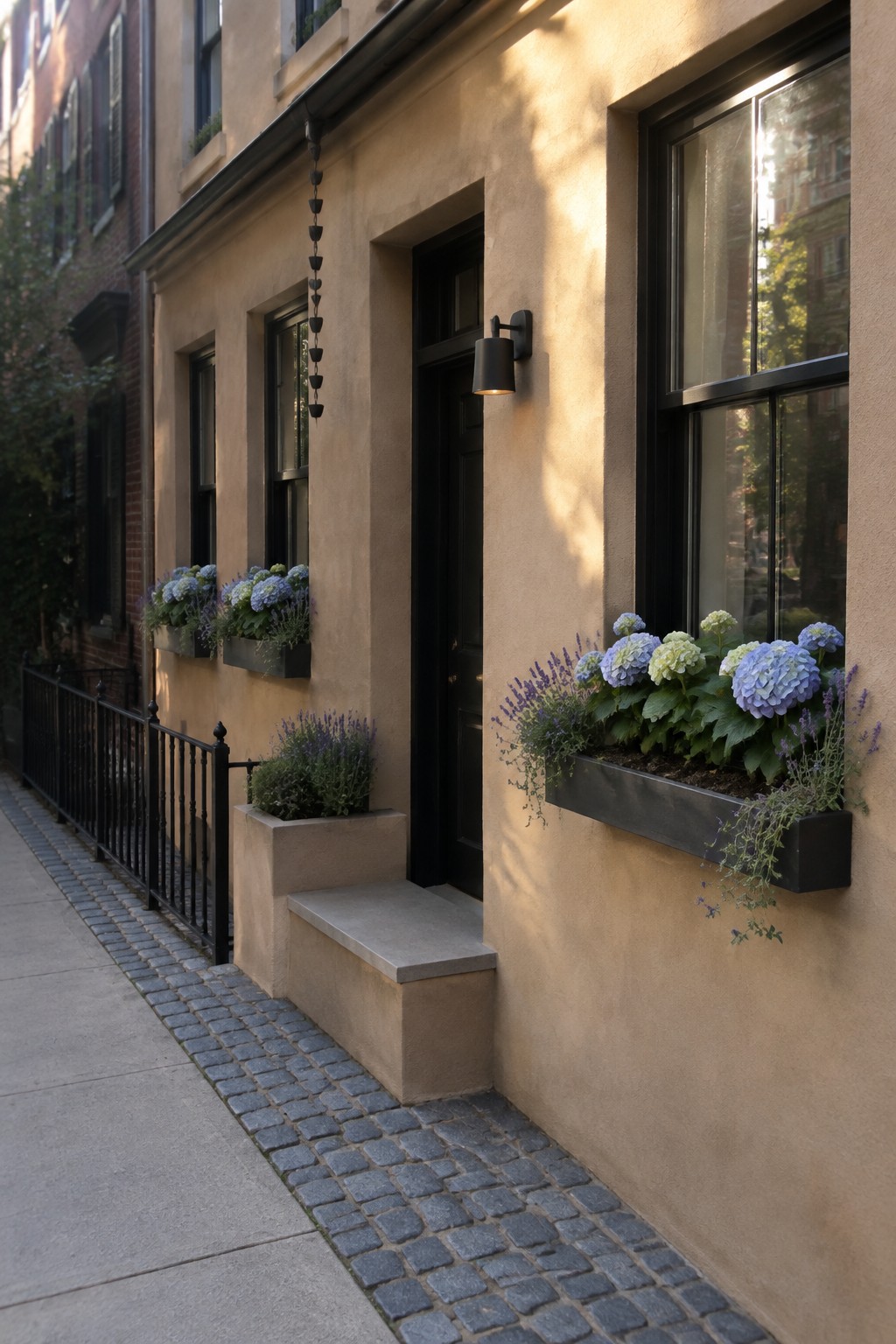
Window boxes make it easy to enjoy hydrangeas right beside the windows, especially where there isn’t room for a wide garden bed. Their rounded blooms stand out against a simple stucco facade without taking up space along the walkway.
Choose sturdy boxes with good drainage, and leave enough room for the plants to grow. This approach suits narrow city homes, but hydrangeas may need regular watering since containers dry out faster than garden soil.
Use Hydrangeas to Link the House and Garden
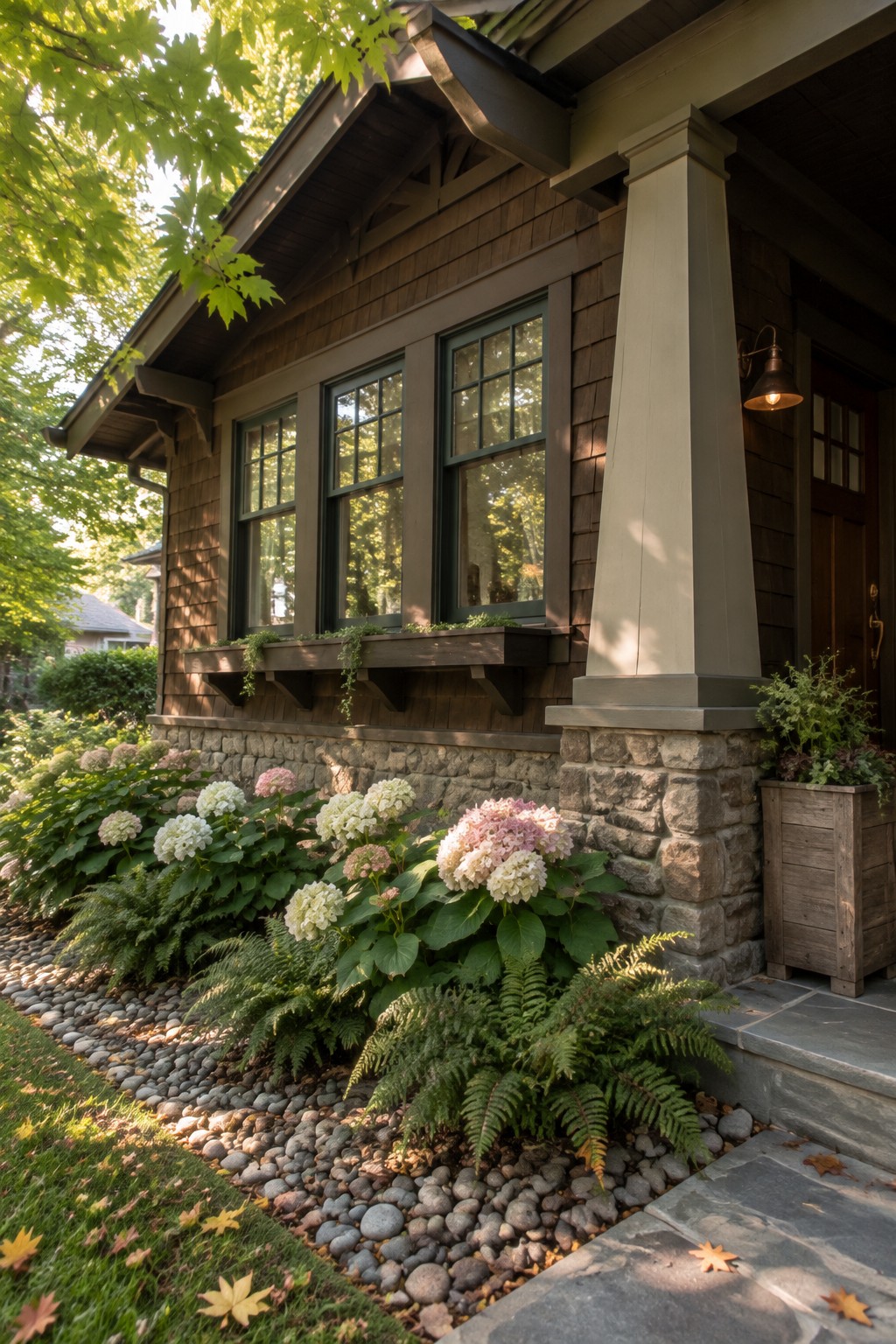
Plant hydrangeas in a loose row along the foundation to connect the house to the garden. Their broad leaves and rounded blooms suit a cottage-style exterior, and the stone base gives the bed a clear edge.
Leave enough room for each shrub to reach its mature width, especially near windows and walkways. A few ferns between the hydrangeas can fill the lower parts of the bed without crowding the flowers.
Add a Built-In Bench to a Hydrangea Bed
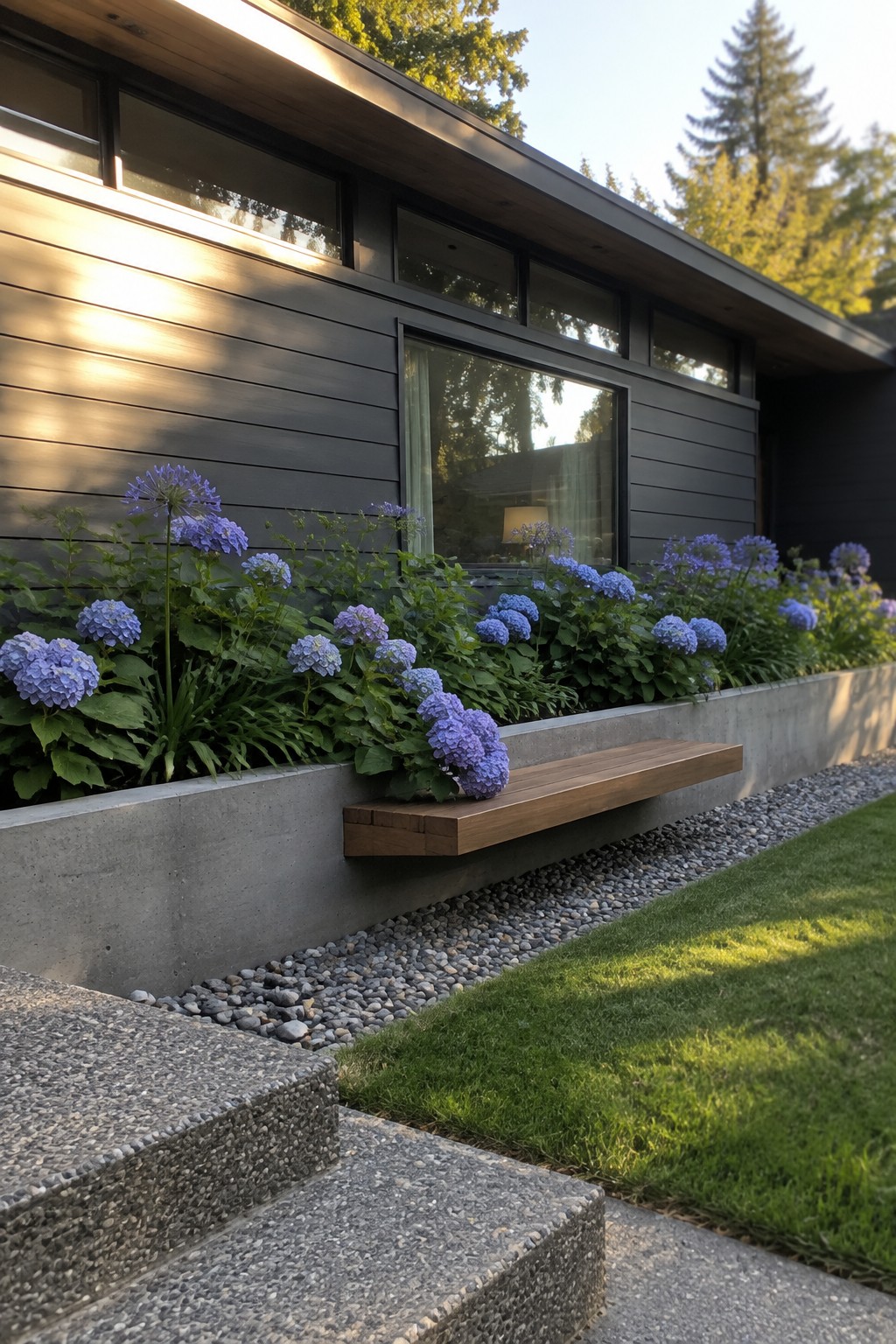
A low wall can do more than hold a flower bed in place. Extending part of it into a simple bench gives a hydrangea planting a useful place to sit, and the flowers feel close without taking over the lawn.
This works well beside a house where there’s room for a long, raised bed. Leave enough space for hydrangeas to grow and for someone to sit comfortably, and keep the bench sturdy enough to handle outdoor use.
Use a Raised Bed for Hydrangeas in a Narrow Space
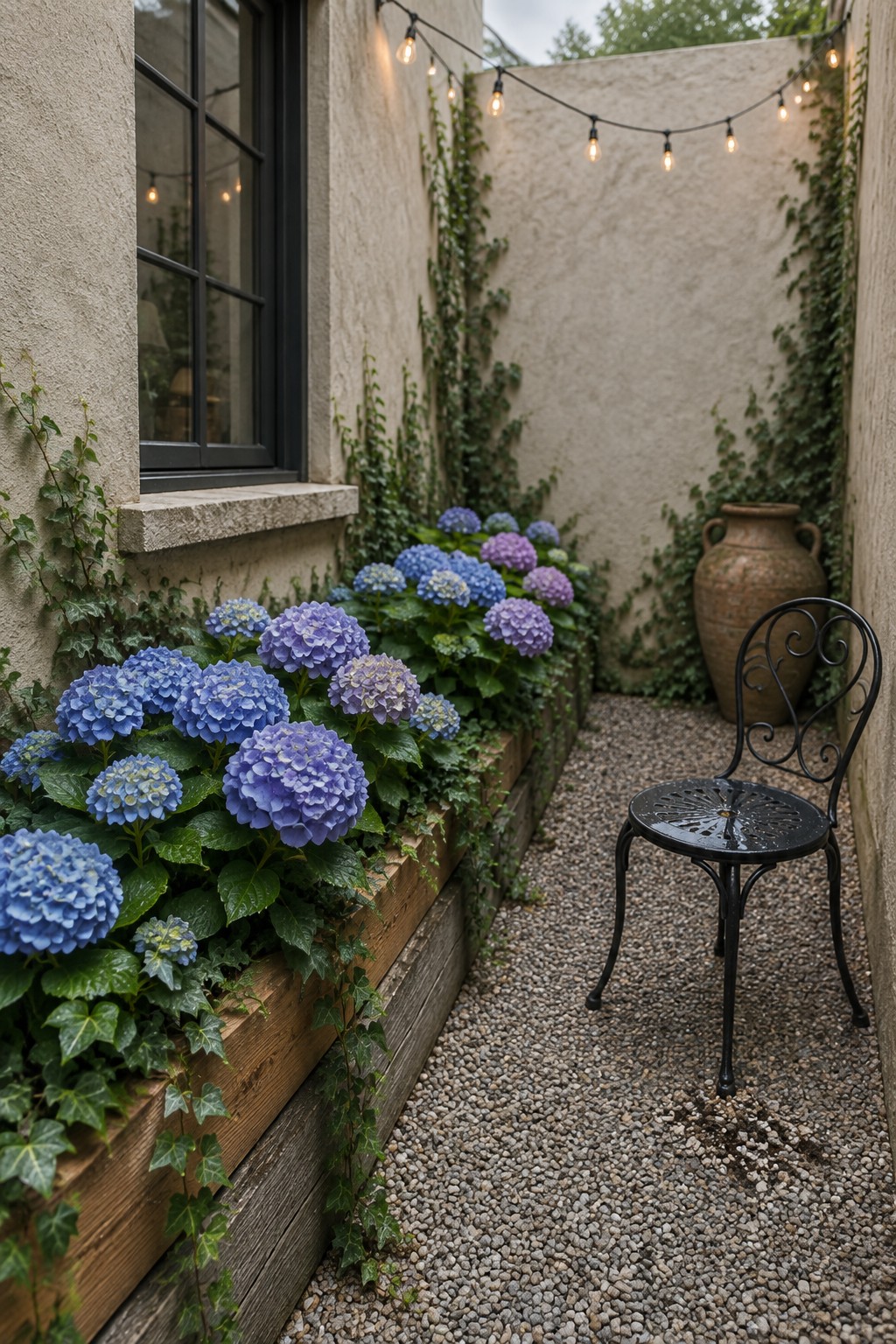
A raised bed can make hydrangeas work in a slim side yard where there isn’t room for a wide garden. Here, the timber edge keeps the planting in a clear line along the house, while the blooms fill the space below the window.
This approach suits side passages and other tight spots beside a home. Leave enough room for the path and for mature plants to spread, and choose a bed depth that works for the hydrangea variety.
Add Landscape Lighting Along a Hydrangea Bed
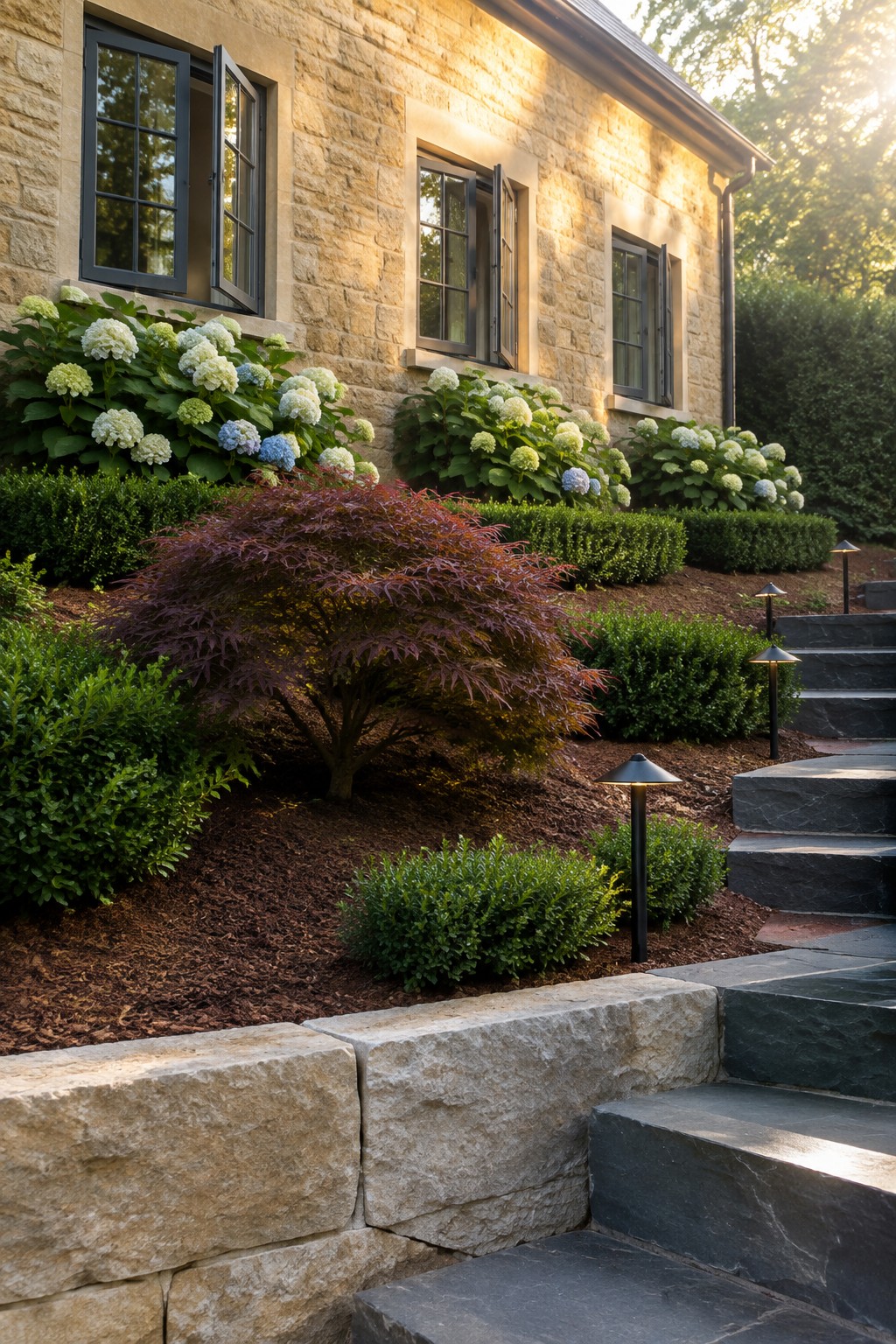
Low path lights can make a hydrangea bed easier to enjoy after dark while also helping people see steps and changes in level. Here, small fixtures sit among the plants rather than taking attention away from them.
Use this approach beside a walkway or garden steps, spacing the lights so the route is clear without making the bed feel crowded. Keep fixtures low and aim them down to avoid glare on nearby windows.
Plant Hydrangeas Along a Brick Garden Path
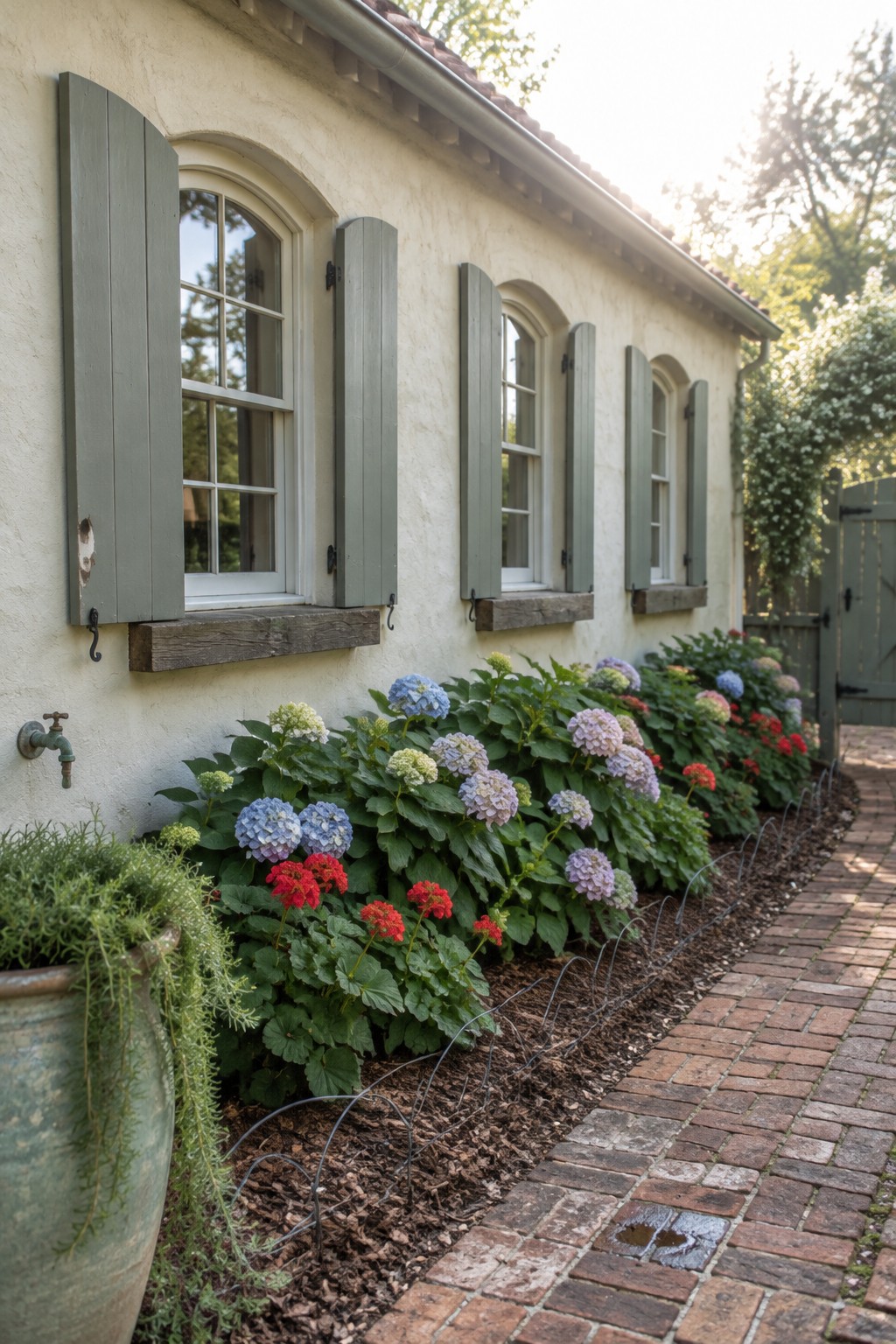
A long hydrangea bed can follow a path and make the route beside the house feel like part of the garden. Here, the mix of rounded blooms and leafy plants gives the narrow space a fuller look without taking over the walkway.
Use this approach where a path runs close to a wall or fence. Keep plants far enough back that they can spread without spilling onto the bricks, and leave room to reach windows and handle garden upkeep.
Plant Hydrangeas in Raised Beds Along a Narrow Walkway
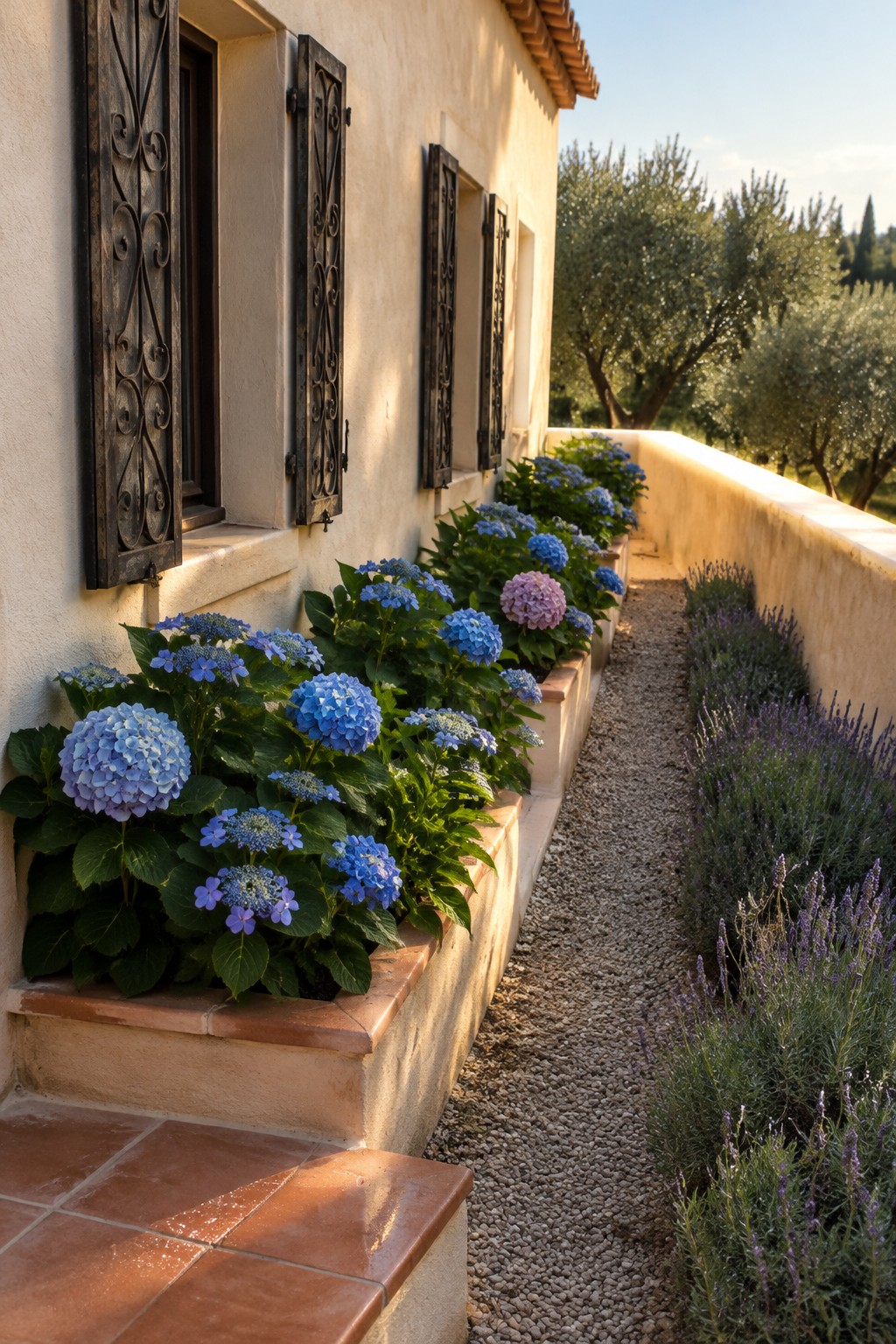
Raised beds make it easier to grow hydrangeas in a slim space beside the house. The built-up soil gives the shrubs room without taking over the gravel path, and the terracotta edging gives the bed a neat, finished edge.
This approach works well along a side passage or below windows where ground space is limited. Leave enough room for hydrangeas to spread, and keep the path wide enough to use comfortably.
Use a Raised Planter to Keep Hydrangeas Close to the House
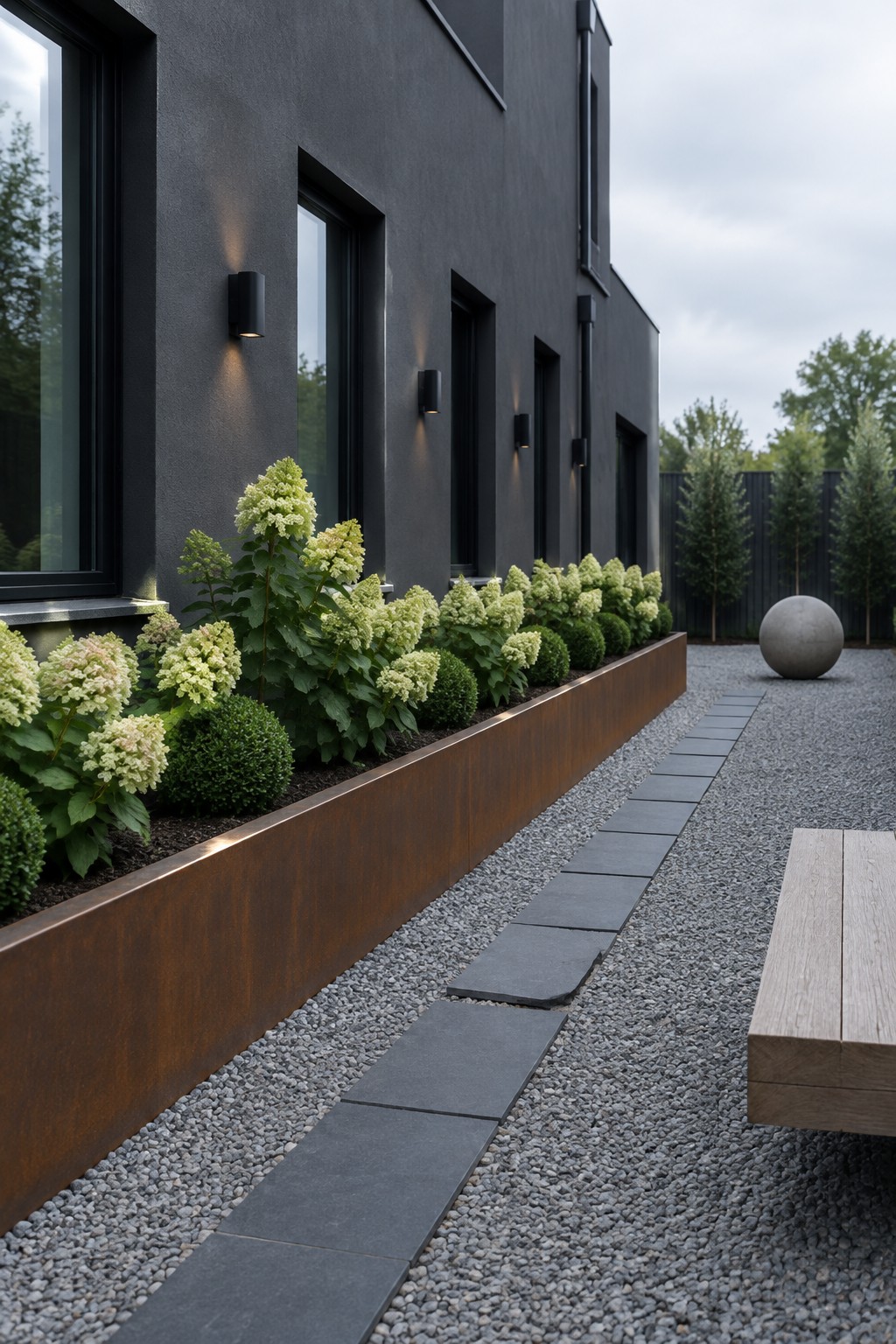
A long raised planter makes a narrow bed easier to define along a house. Hydrangeas can fill the space below the windows without spreading into the path, and the metal edging gives the planting a clear boundary.
This approach works well beside modern homes or anywhere the ground-level bed needs a tidy edge. Leave enough room for the hydrangeas to grow, and keep the planter deep enough to support their roots.
Plant Hydrangeas Along a Narrow House-Side Path
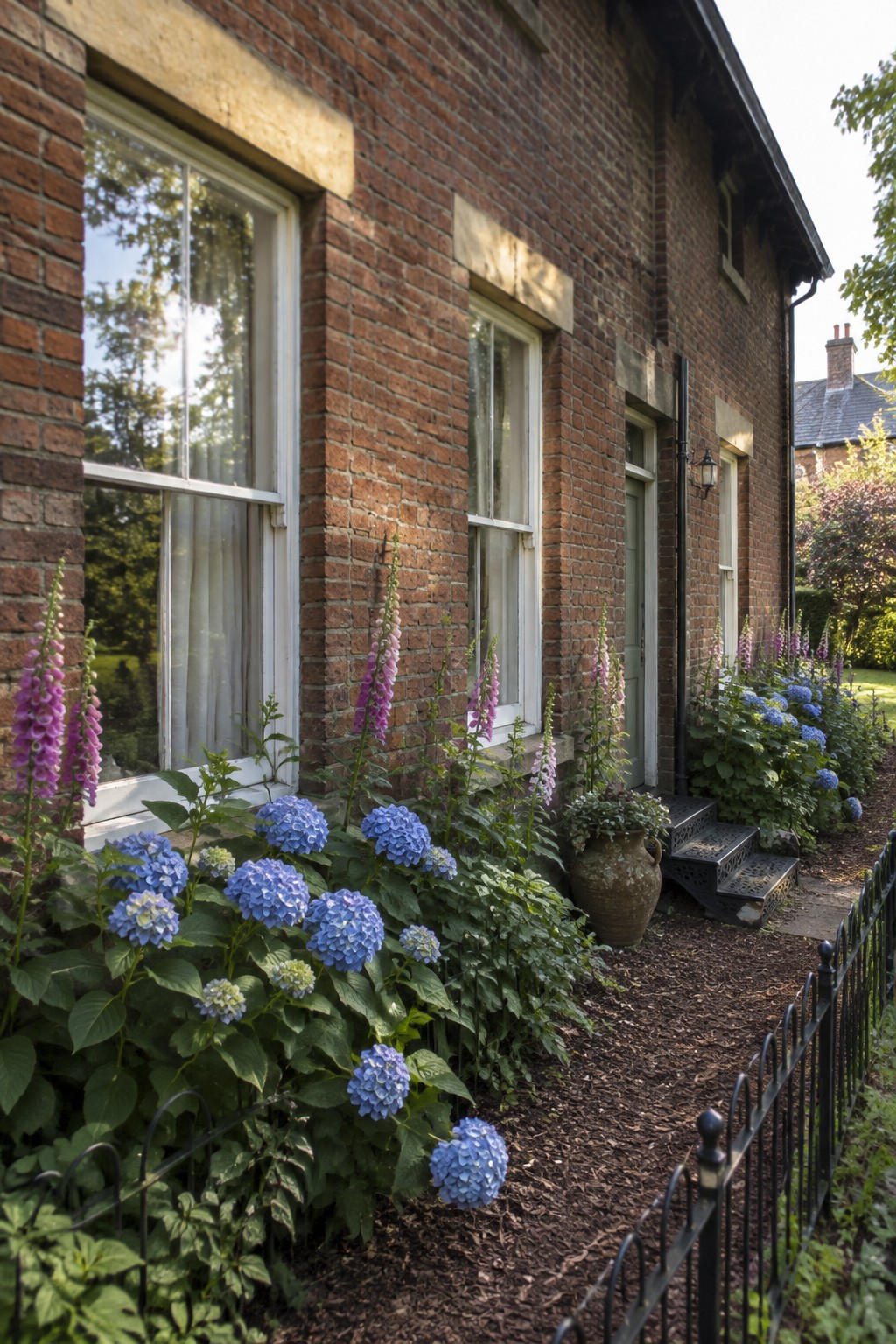
A narrow path can sit comfortably beside a hydrangea bed when the planting stays close to the house and the route remains clear. Blue hydrangeas and tall foxgloves make the brick wall feel connected to the garden without taking over the walkway.
Leave enough room for people to pass and for hydrangeas to spread as they grow. This layout suits side yards and other tight spaces, but keep plants from crowding doors or steps.
Use Tiered Planters to Add Depth Along the House
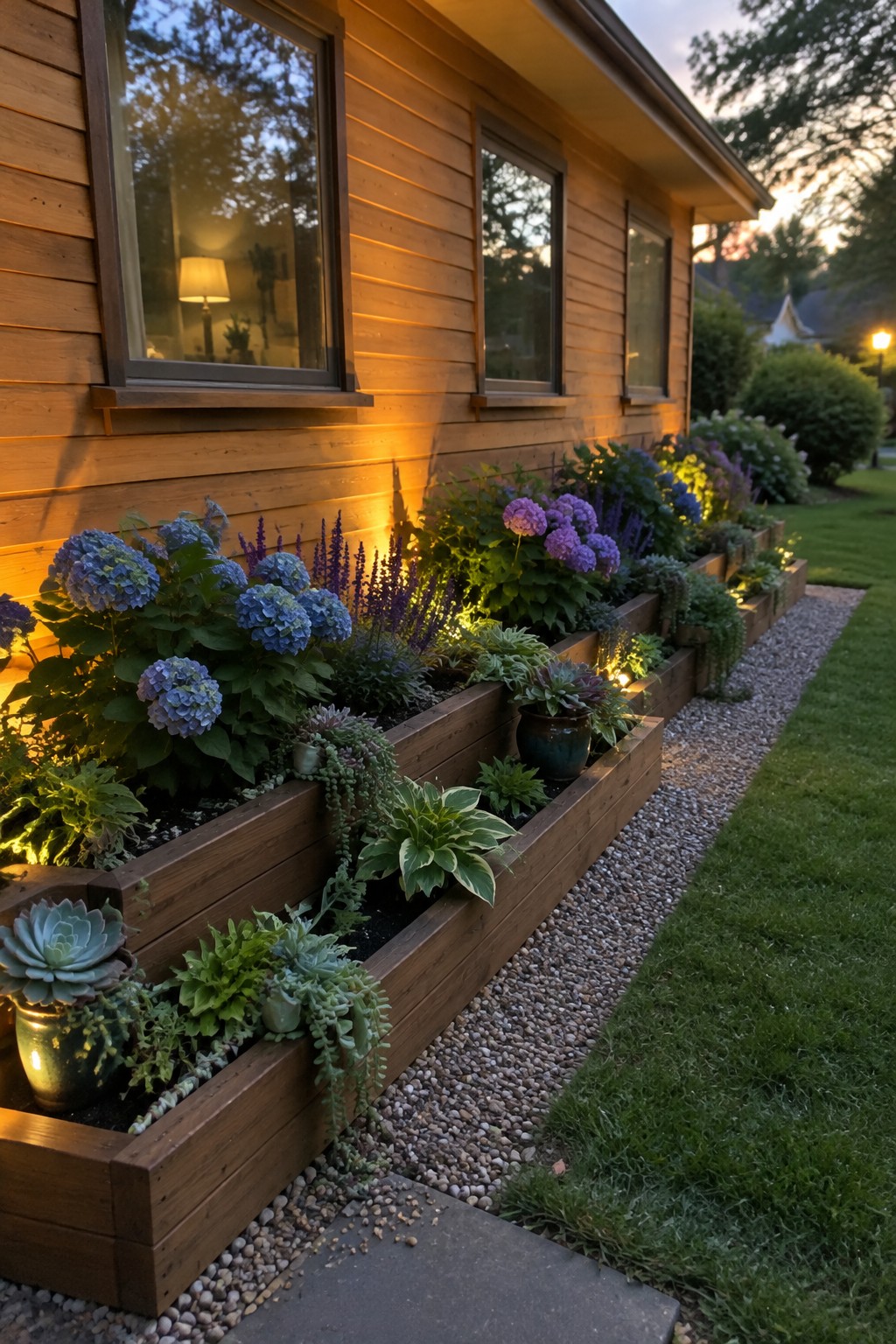
A tiered raised bed is a practical way to fit a generous flower garden into the narrow strip beside a house. Hydrangeas can fill the main planting area, while the raised levels give smaller plants room without spreading the bed too far into the yard.
Keep the tallest plants toward the wall and leave enough space for air to circulate around them. This setup suits homes with a slim side yard, though the beds should be deep enough to support healthy roots and easy to water.
Use Hydrangea Window Boxes on a Narrow Front Walk
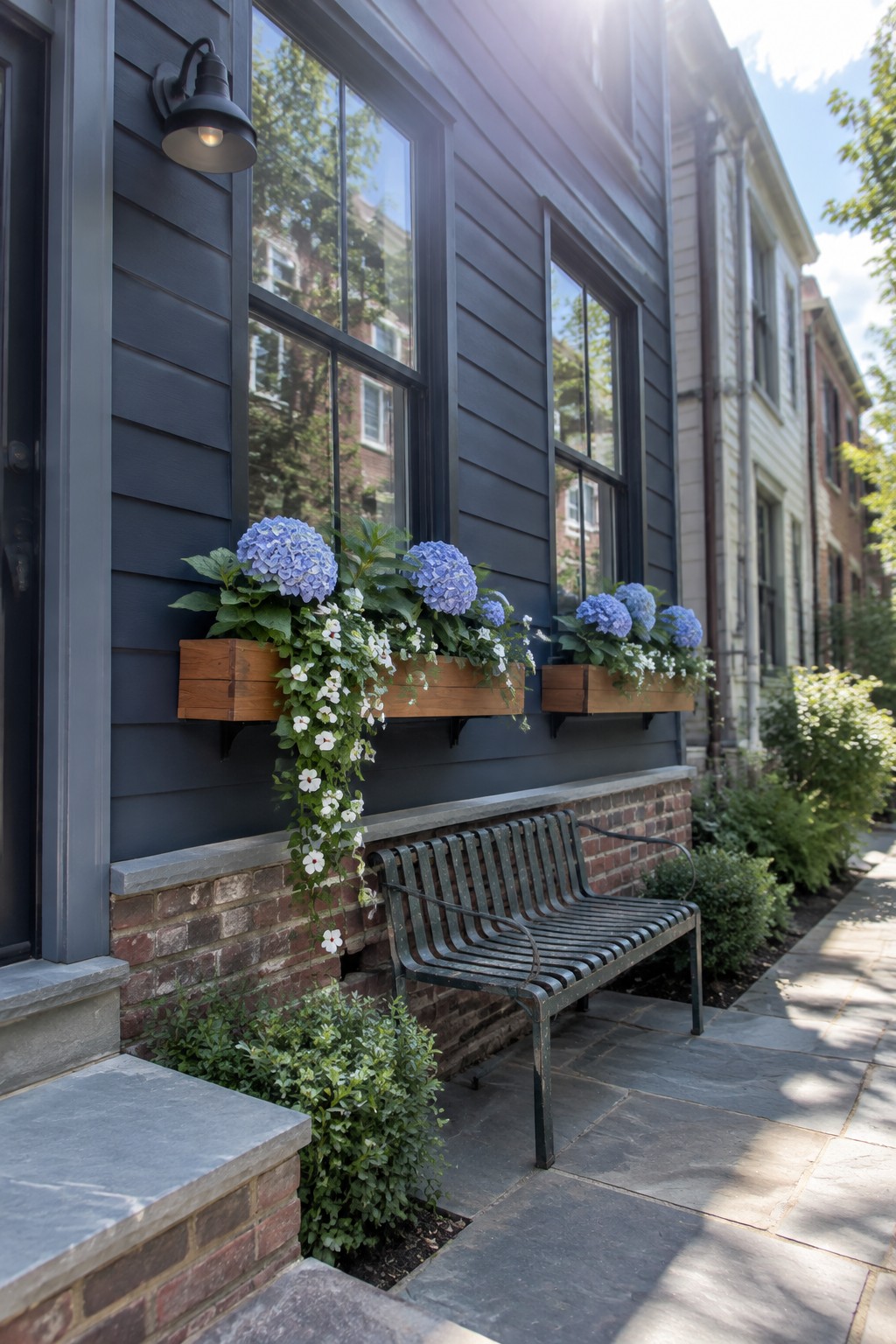
Window boxes let hydrangeas sit close to the house without taking up much space in a narrow planting strip. They also bring the flowers up to window level, where they’re easy to enjoy from indoors and along the walk.
Choose sturdy boxes with enough depth for the plants’ roots, and make sure they have drainage. Blue hydrangeas work well among lower trailing flowers, but leave room for growth and check that the wall and brackets can support the weight of wet soil.
Edge a Cottage Flower Bed With Stone
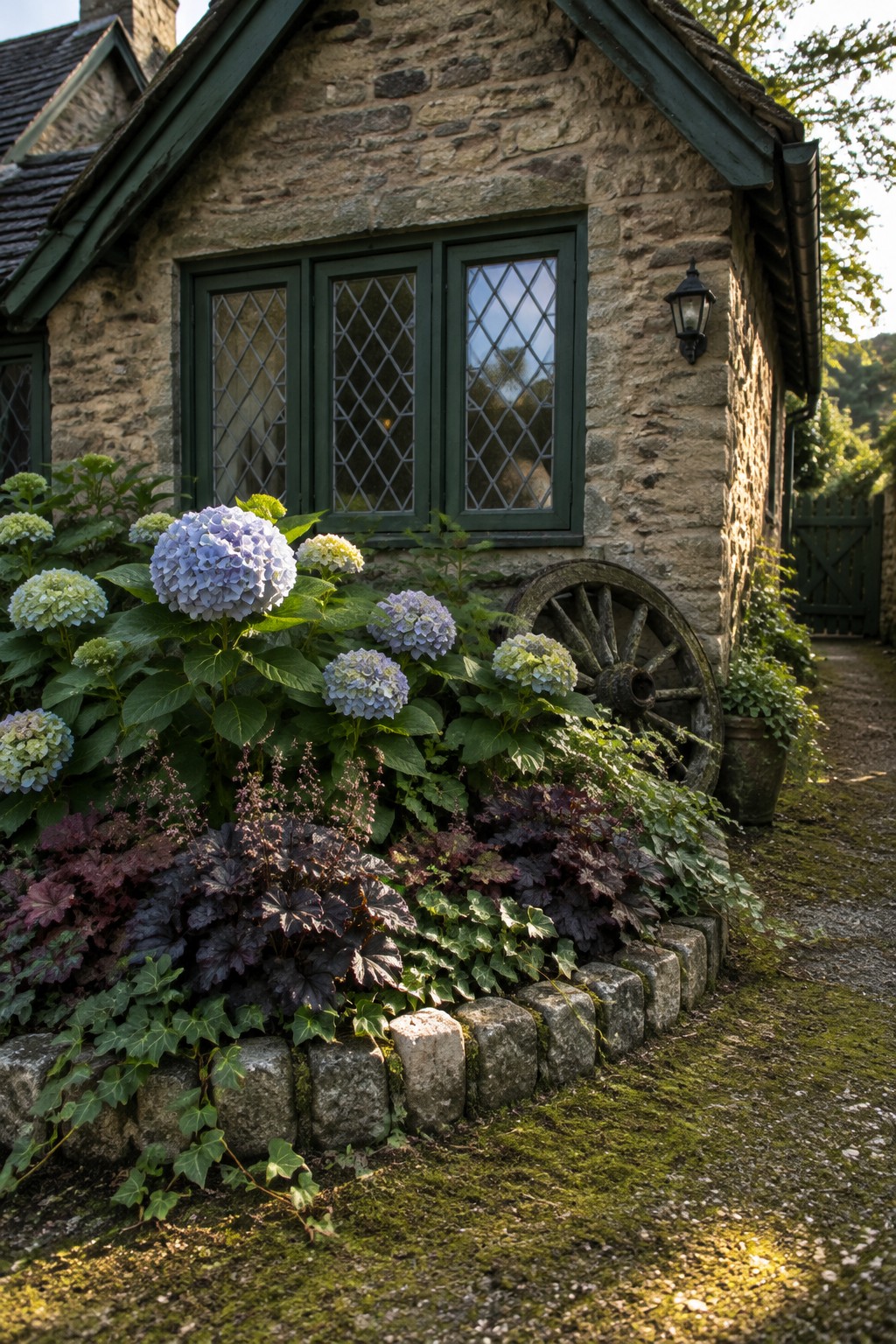
A low stone border gives a hydrangea bed a clear shape and helps keep soil and mulch in place. It suits an older cottage especially well, since the rough stone feels at home beside a stone wall.
Use a simple curved edge where a path runs beside the planting, and leave enough space for hydrangeas to spread without crowding the walkway. The border should be low enough that it does not block the view of the flowers.
Create a Long Hydrangea Bed Along the House
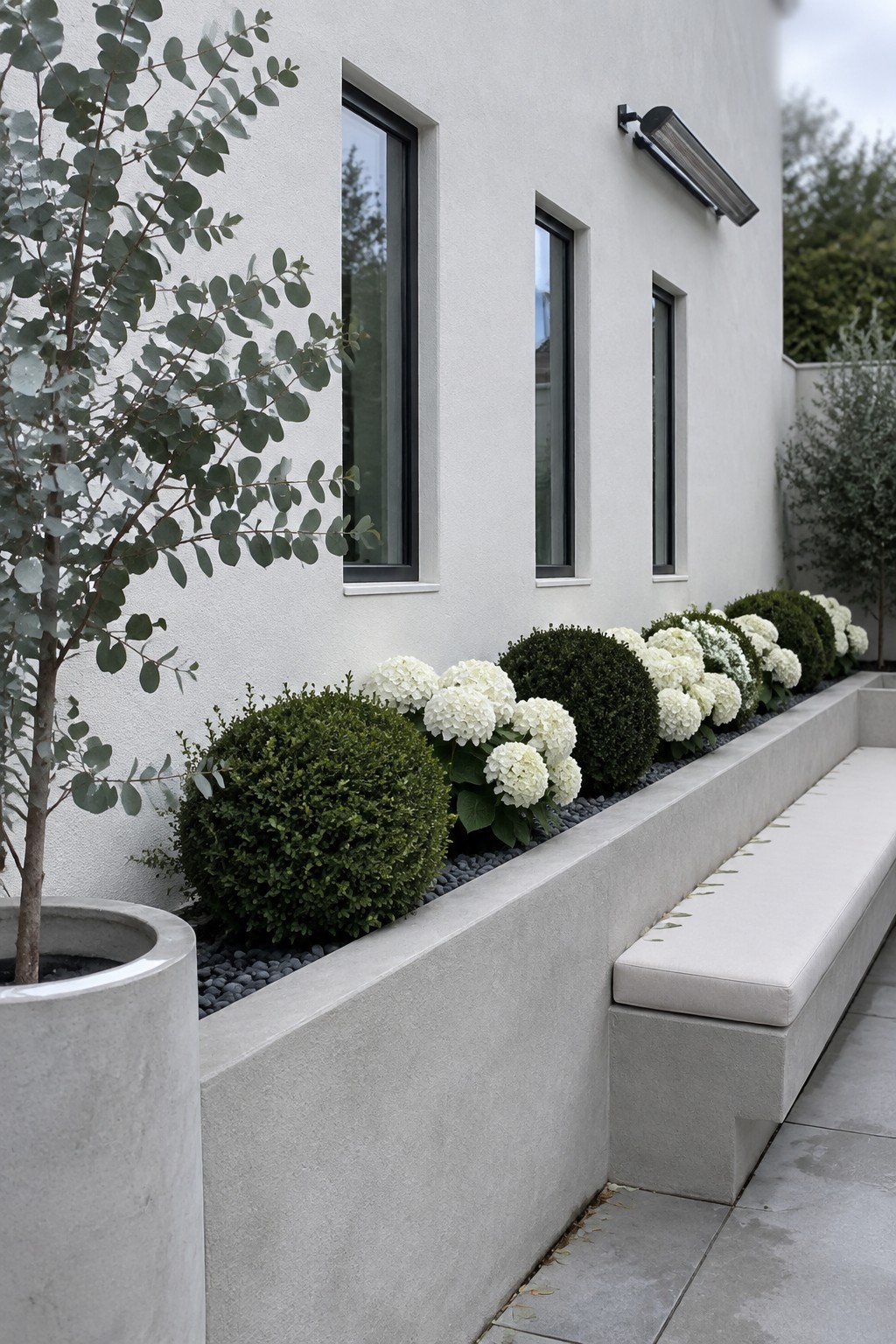
A long, narrow bed is a practical way to bring hydrangeas close to the house without taking up much walkway space. Repeating the white blooms between rounded shrubs gives the planting a steady rhythm, and the raised concrete edge keeps the bed tidy.
This layout works well beneath a row of windows or along a side path. Leave enough room for hydrangeas to reach their mature width, and choose a variety that suits the light and growing conditions on that side of the house.
Plant Hydrangeas in a Long Bed Along the House
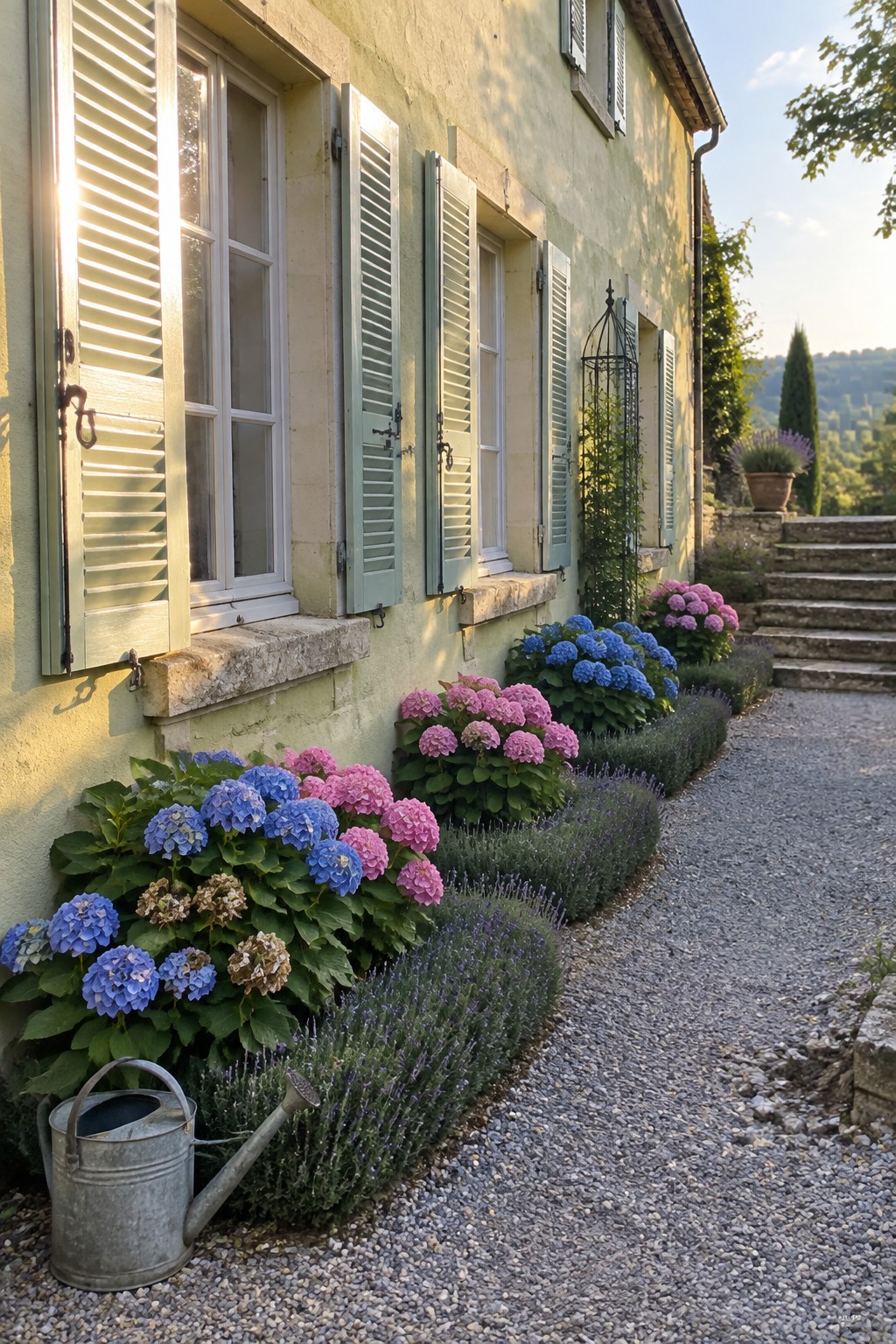
A continuous flower bed can make a plain stretch of wall feel connected to the garden. Hydrangeas bring the color, while a low border of lavender keeps the planting neat along the path.
This layout works well beside cottage-style homes with a walkway running close to the windows. Leave enough room for hydrangeas to reach their mature width, and keep the path clear so branches do not spill into the walking space.
Plant Hydrangeas Along a Stepping-Stone Path
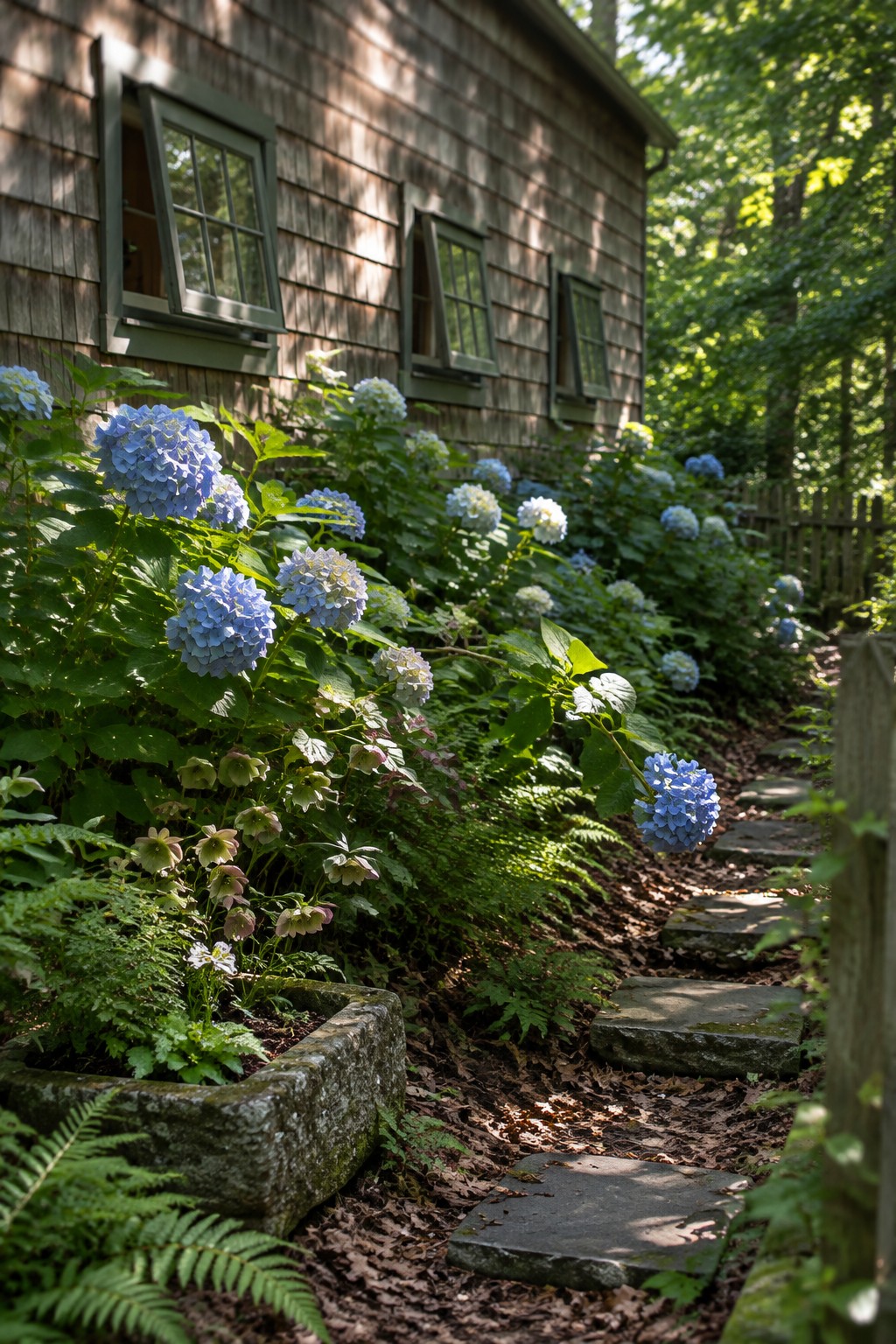
A stepping-stone path can make a hydrangea bed easier to enjoy and care for. The stones give you a clear route through the planting, while the flowers can grow along the edge without blocking the way.
This idea suits a narrow side garden where there isn’t room for a wide paved walk. Leave enough space between stones for comfortable steps, and keep hydrangeas trimmed back from the path as they fill out.
Build Hydrangea Beds Along a Narrow Walkway
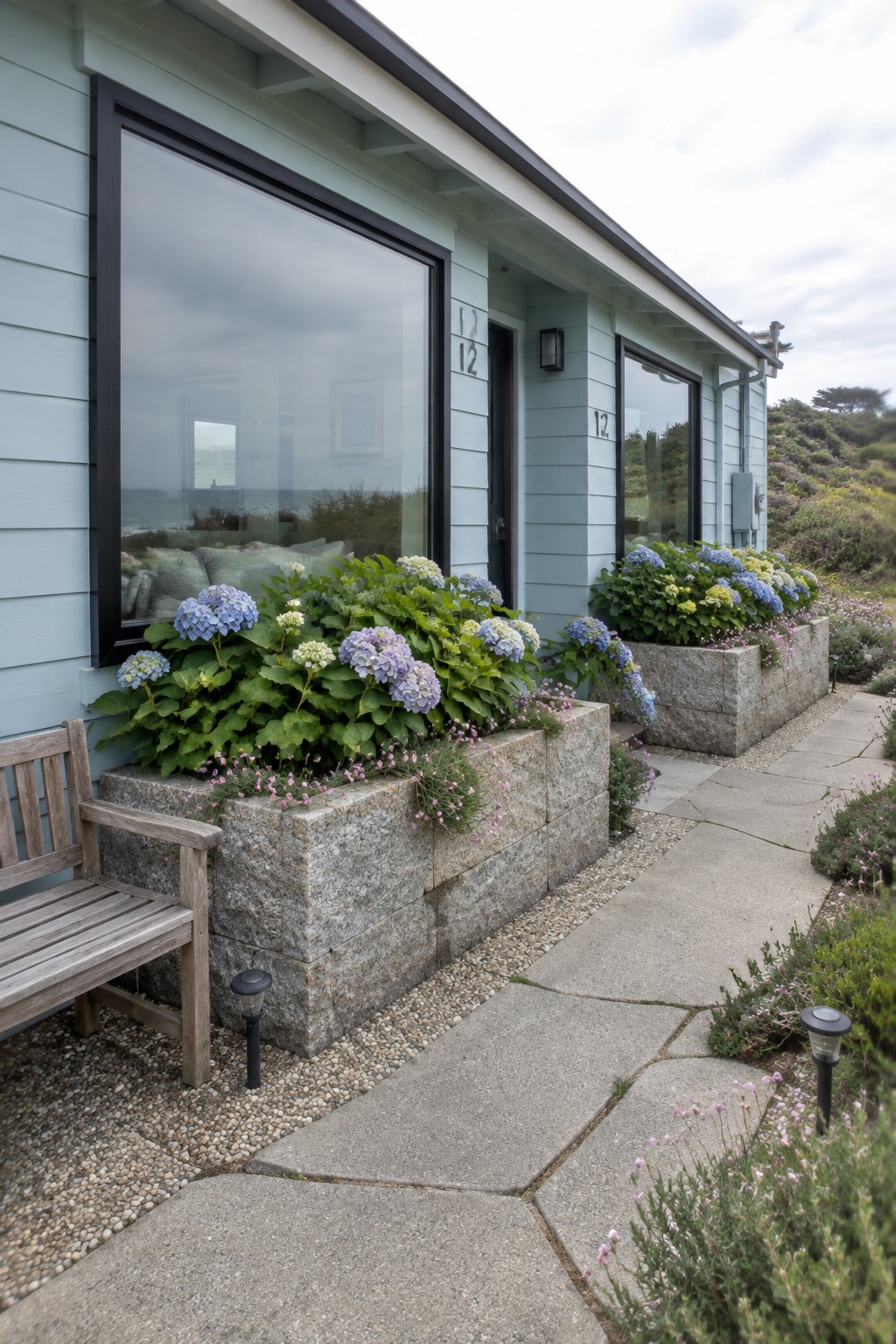
A raised stone bed lets hydrangeas grow close to the house without taking over the path. The clear edge also gives a narrow side walkway a more finished look.
This approach works well where there is little room between the wall and the path. Leave enough space for people to pass and for mature plants to spread, and choose a bed height that does not block the windows.
Frequently Asked Questions
Q: How much space should I leave between hydrangeas and the house?
A: Leave enough room for the variety to reach its mature width without brushing the siding or blocking windows. Check the plant tag before planting, since compact and full-size hydrangeas need very different amounts of space.
Q: Which hydrangeas work well under windows that get afternoon sun?
A: Panicle hydrangeas usually handle more sun than bigleaf types, as long as the soil stays evenly moist. If the bed gets hot afternoon light, a little shade during the hottest part of the day can help protect the leaves.
Q: Can I plant flowers in front of the hydrangeas without hiding the windows?
A: Yes. Keep taller plants near the house and choose low-growing flowers or foliage plants along the front edge. Leave the area directly below each window open enough to keep the bed from feeling crowded.
Q: Why are my hydrangeas wilting in the afternoon?
A: They may need a deeper drink, especially during hot, dry weather. Water the soil at the base of the plant, and add mulch to slow moisture loss.
