

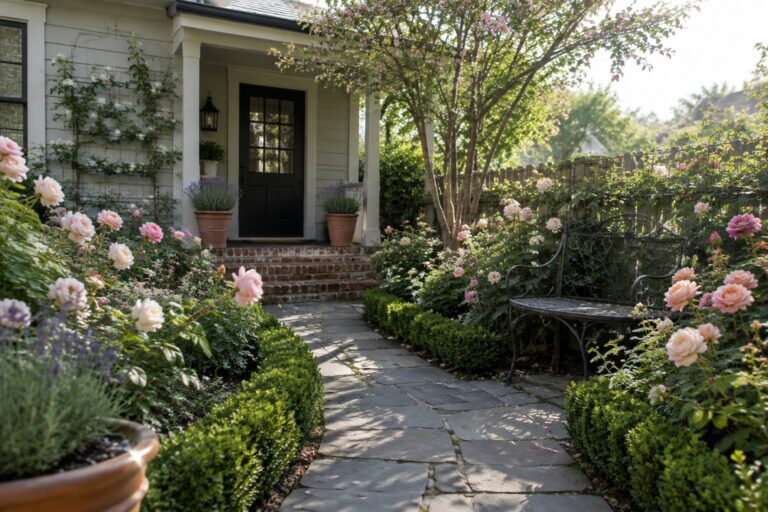
In a small front yard, roses can add color and shape, but their placement matters just as much as the flowers themselves.
I find that a clear path, a defined edge, and enough room around each plant help a compact garden feel cared for rather than crowded.
The first thing visitors notice is often how the planting frames the entry, so even a modest arrangement can change the way the whole home looks from the street.
Some layouts keep roses low along a walkway, while others use them to soften a fence or anchor a small bed.
I’d save the ideas that suit your yard’s light and upkeep needs, then adapt the spacing and plants to fit your home.
Use a Curved Path to Lead Through the Garden
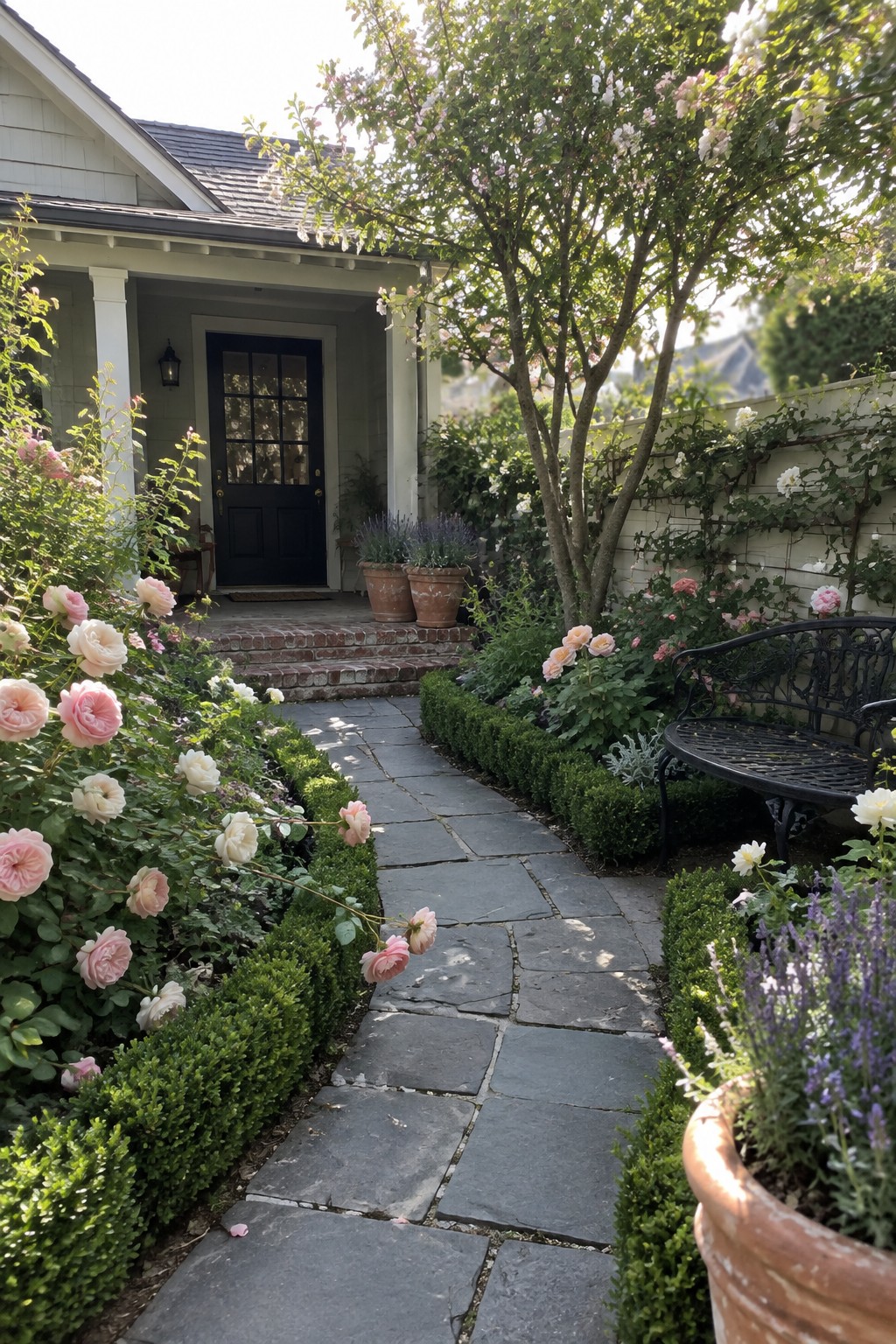
A gently curving stone path gives a small front yard a little more interest than a straight walkway. It also lets the roses sit close to the route without making the space feel like one long flower bed.
For a similar look, use a few broad stepping stones and edge the path with low plants to keep it tidy. Leave enough room to walk comfortably, and choose roses that won’t spill too far over the stones.
Use a Gravel Path for a Small Rose Garden
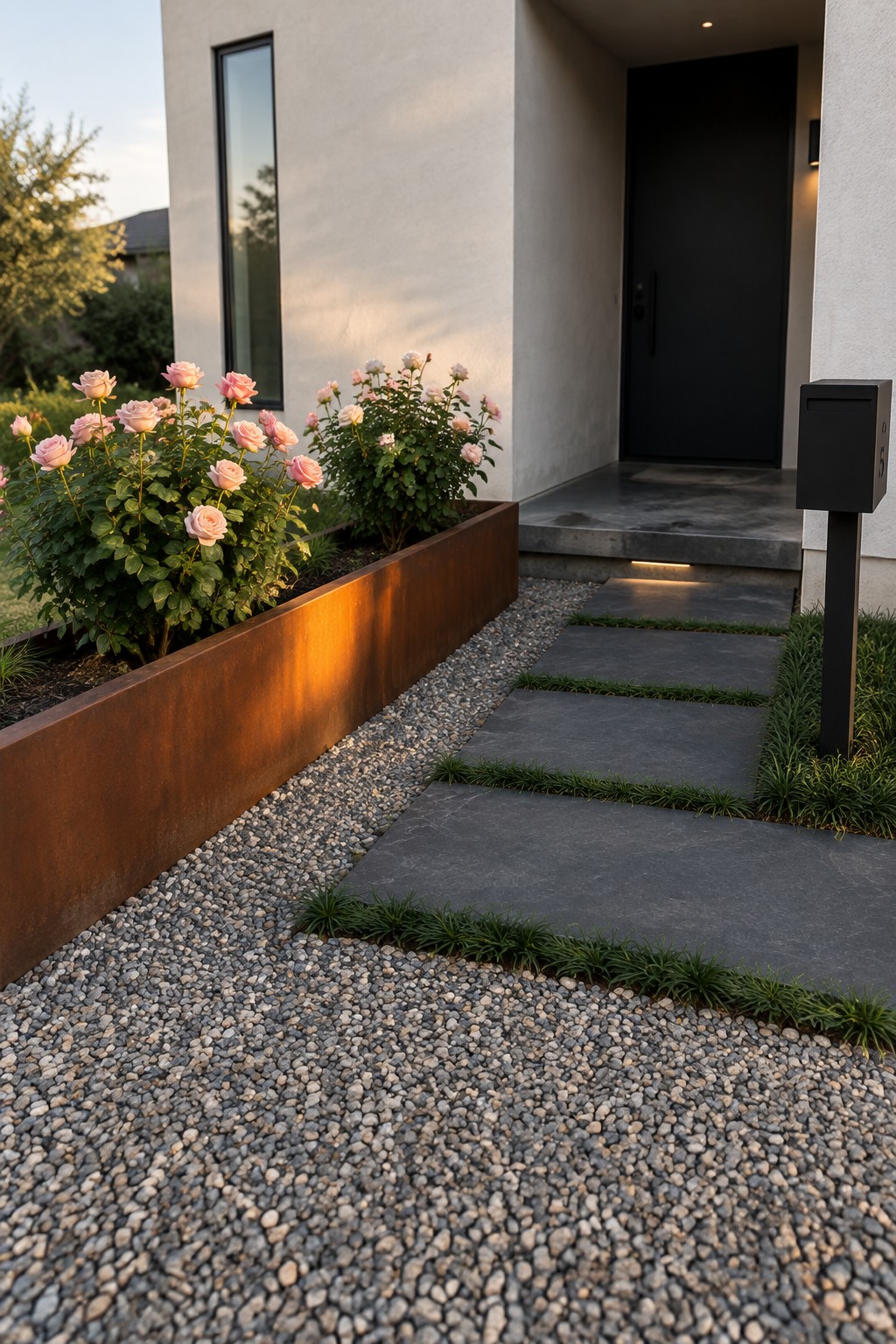
A gravel path can make a small front-yard rose bed feel tidy without taking up much room. Here, the narrow strip of stones runs beside a raised planter, keeping the planting area and the route to the door clearly defined.
For a similar look, use compact gravel and simple stepping stones so the path is easy to walk on and maintain. Keep the rose bed narrow enough that you can still reach in to prune and weed.
Grow Roses In Wall-Mounted Planters
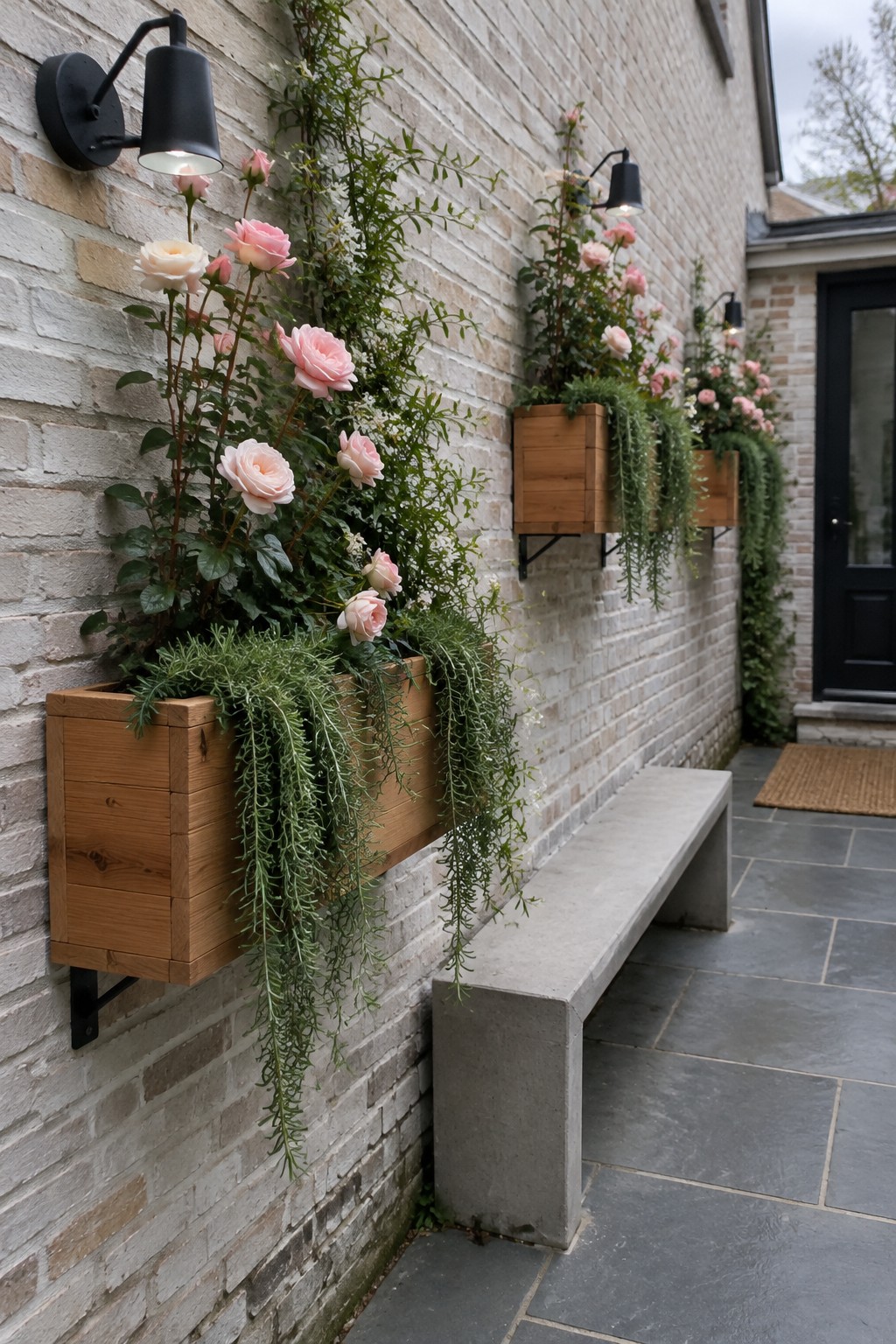
Wall-mounted planters let you grow roses in a narrow front yard without giving up floor space. They also make it easier to bring flowers up to eye level, where their color is easy to enjoy.
Choose sturdy planters with good drainage and enough room for rose roots, and secure them firmly to the wall. This works well beside an entry or along a slim walkway, though roses will need regular watering in containers.
Let a Garden Path Lead Through the Roses
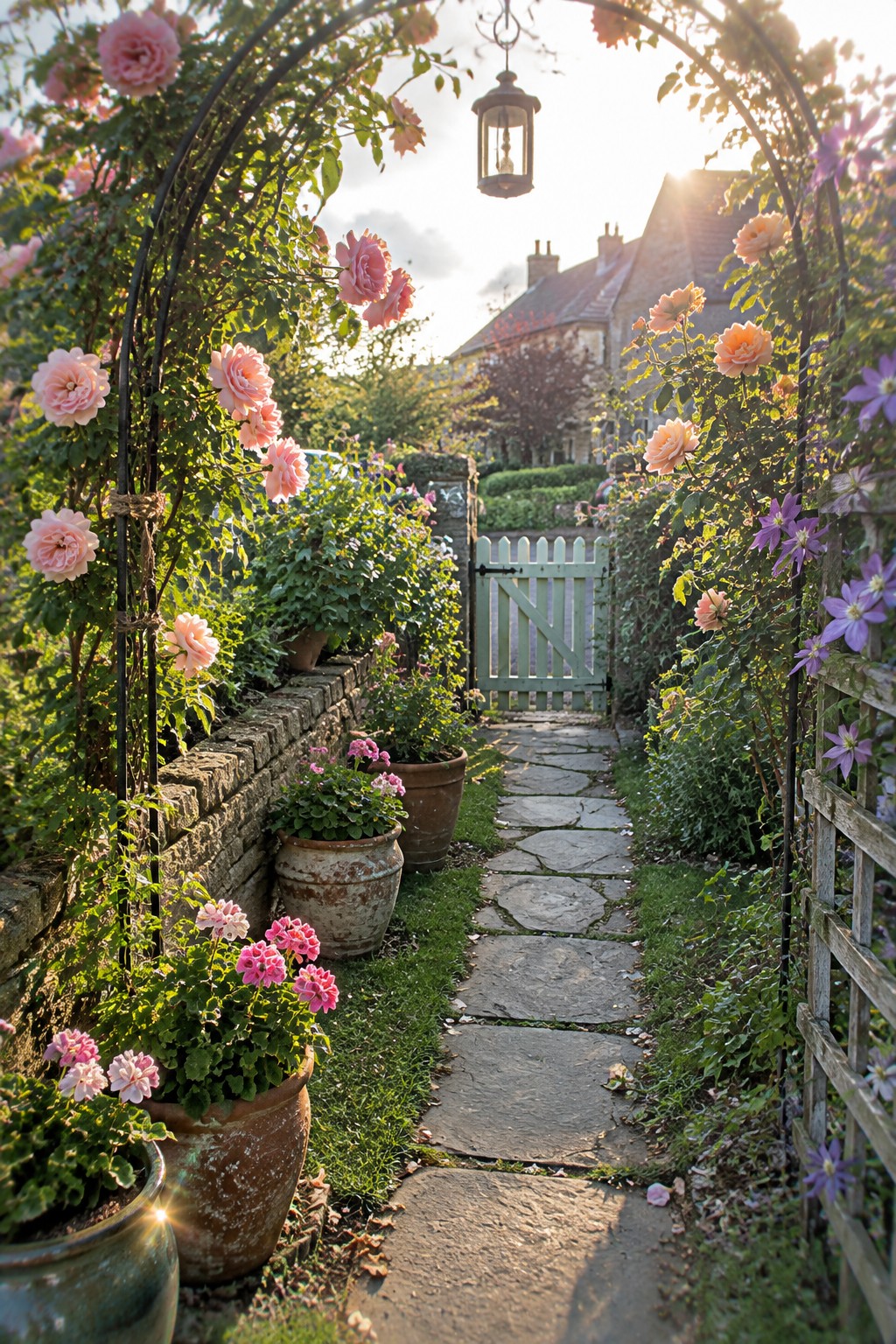
A narrow path can make a small front yard feel planned rather than crowded. Roses planted along its edges bring color close to the walkway, while the path gives visitors a clear route to the gate.
Use stepping stones or another simple paving material, and leave enough room to walk comfortably as the roses grow. This idea works especially well in a compact yard where a winding path can guide the eye without taking up much planting space.
Add Roses Along a Raised Garden Bed
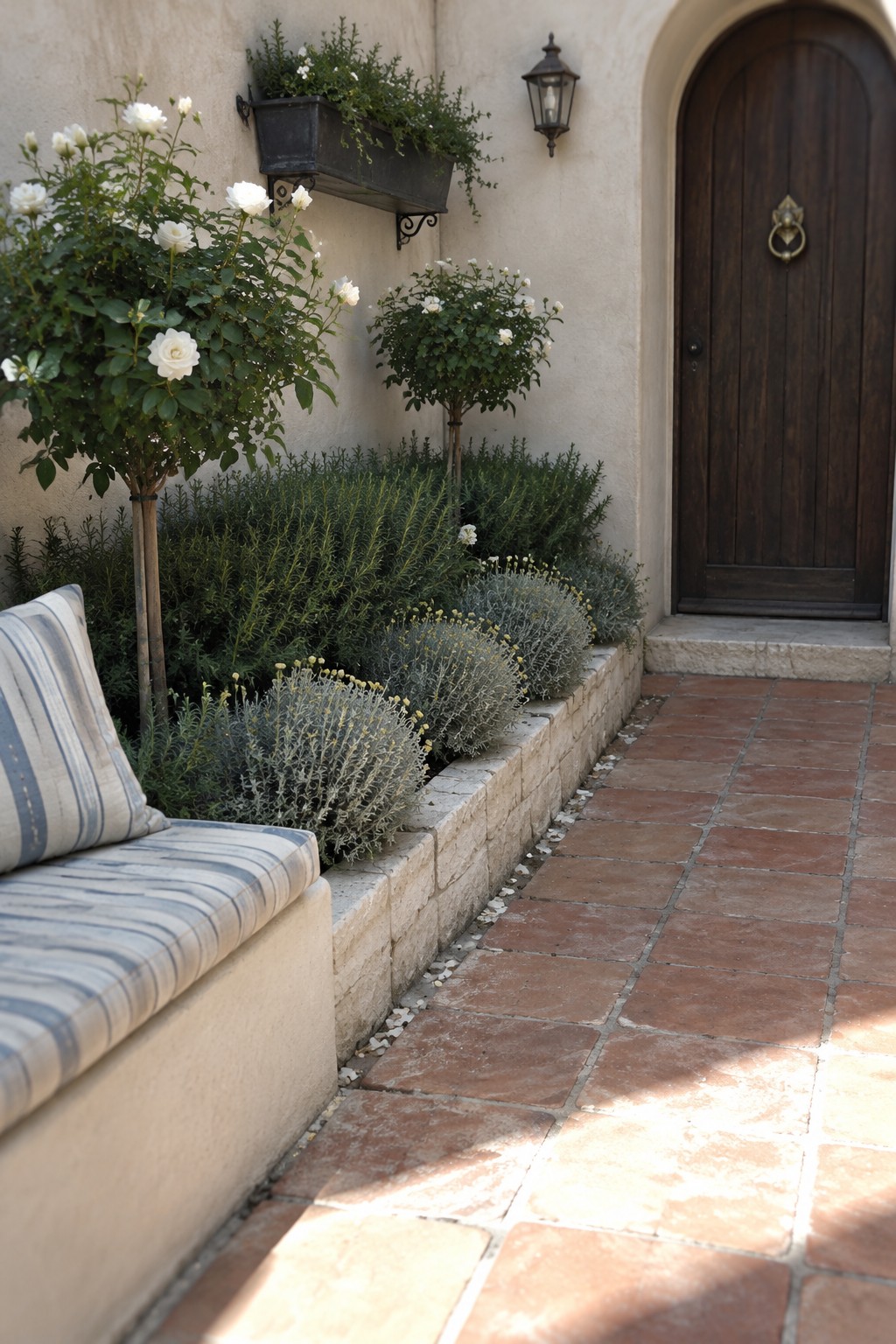
A low raised bed makes it easier to give roses a clear place in a small front yard. The stone edge keeps the planting area neat, while roses can add height and flowers without taking over the path.
Use a narrow bed beside an entry walk or along the front of the house. Leave enough room for the roses to mature and for people to pass comfortably, and keep lower plants near the edge so the bed does not feel crowded.
Divide a Small Yard Into Rose Beds
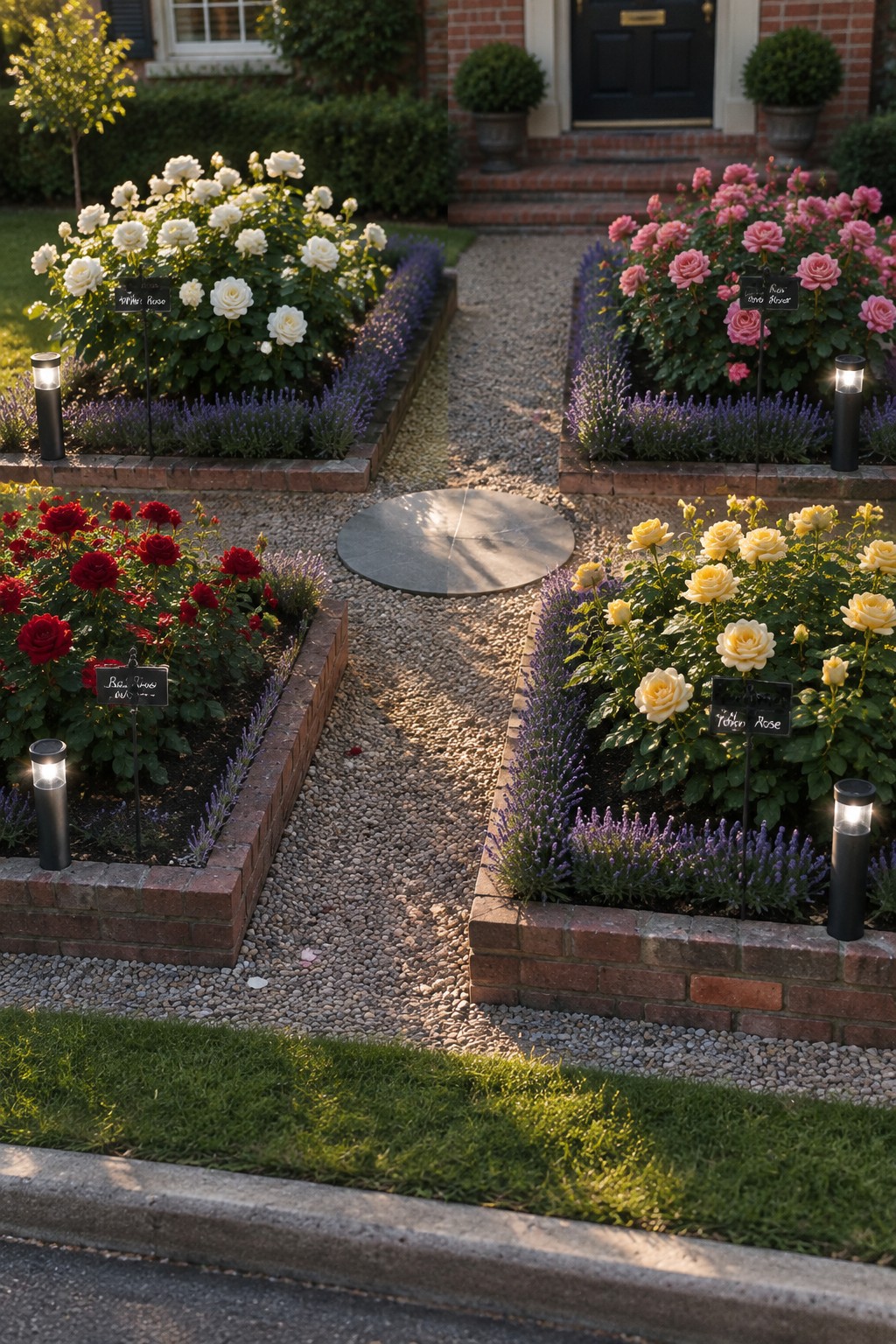
Separate rose beds make a small front yard feel organized without crowding the planting. Here, low brick walls define four beds, while lavender edges the gravel paths and gives each section a clear border.
Use this layout when you want to grow several rose colors but still keep the yard easy to walk through. Keep the paths wide enough for basic care, and choose compact rose varieties so the beds do not spill into the walkway.
Use a Pebble Path to Edge a Rose Bed
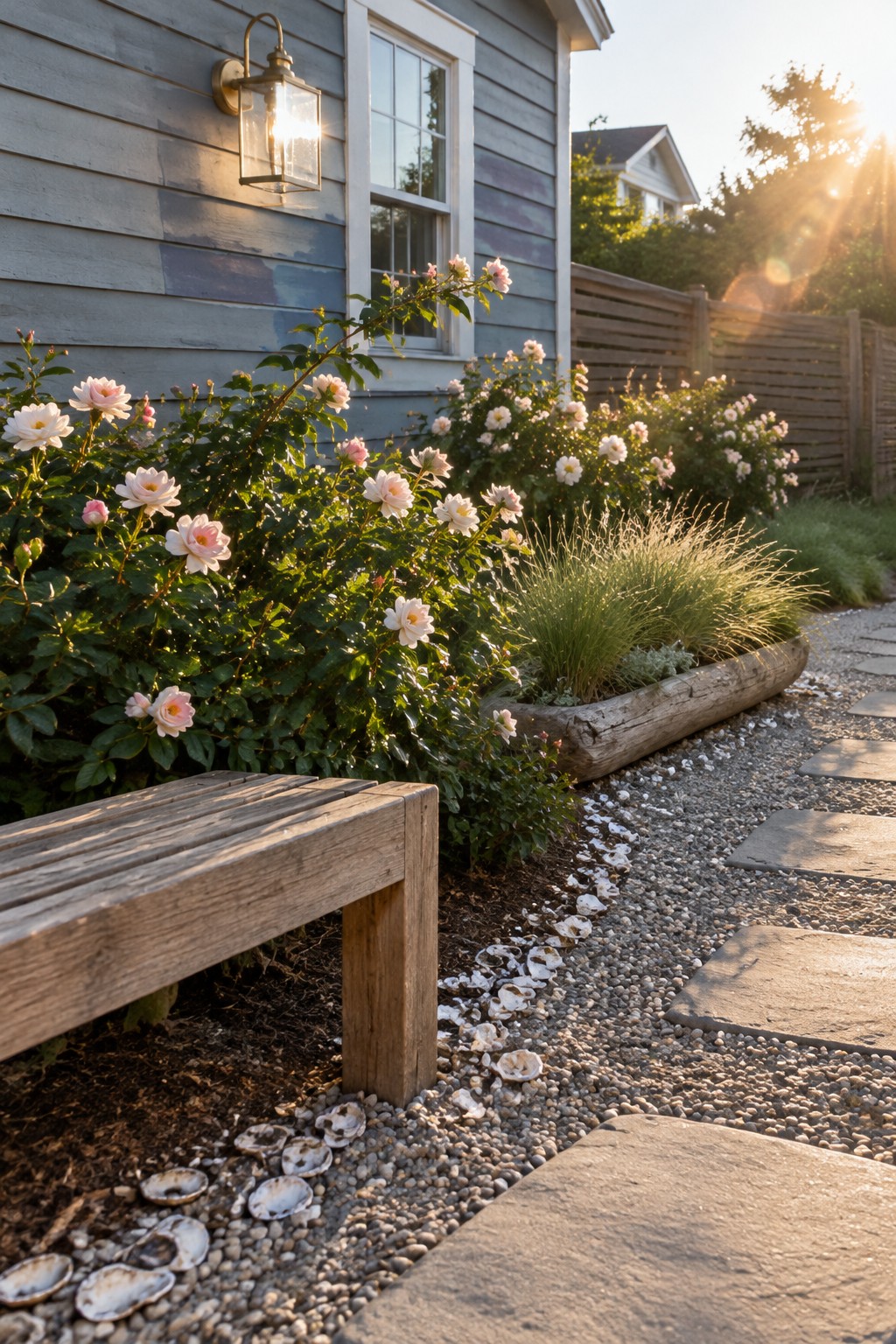
A narrow pebble path can make a small rose bed feel tidy without taking up much room. The pale stones give fallen petals a place to land, while the planted border stays easy to see and reach.
For a small front yard, keep the path just wide enough to walk through and use stepping stones where you need firmer footing. A simple timber edge can help hold the pebbles in place and keep them out of the planting bed.
Train Roses Over a Garden Pergola
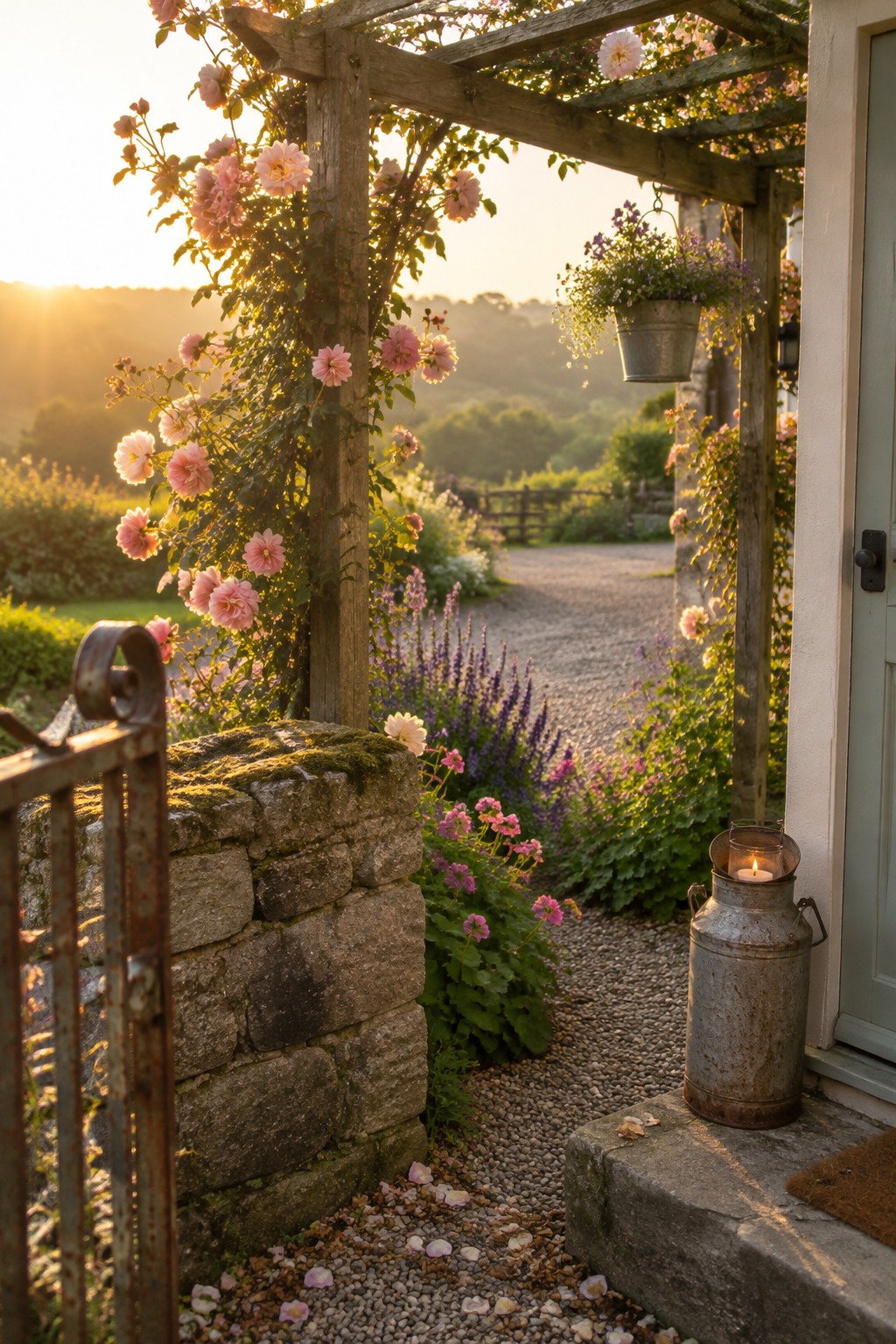
A pergola can give climbing roses a place to grow upward, which is useful when a small front yard has limited room for wide flower beds. The wooden structure adds height to the planting without taking up much more ground space.
Train roses along the posts and across the top, and keep the path beneath clear so the entry stays easy to use. Choose a variety suited to your climate and prune it regularly to prevent the growth from crowding the walkway.
Plant Roses in a Raised Front Garden Bed
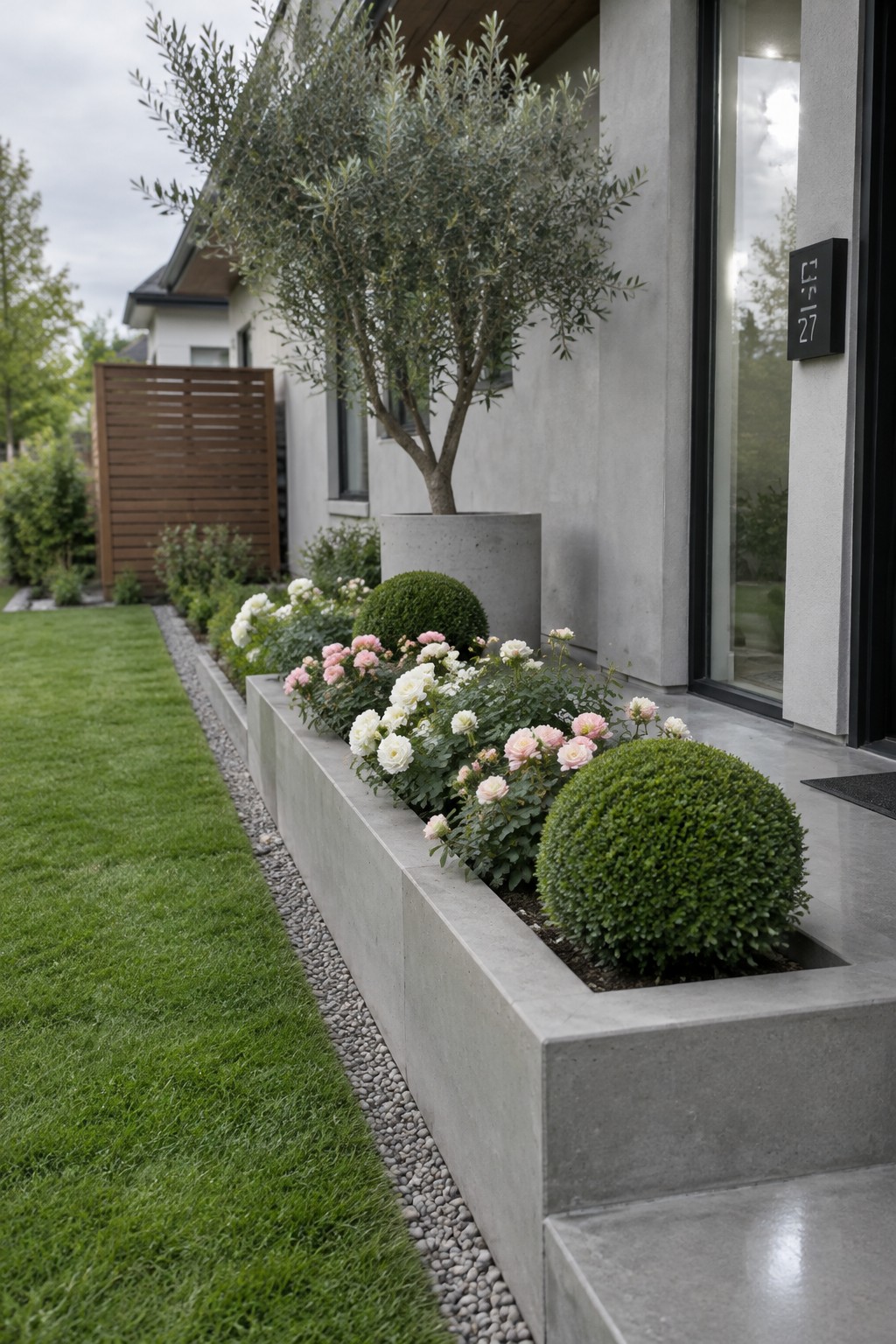
Raised beds make it easier to give roses a neat, defined place in a small front yard. A simple concrete planter keeps the planting close to the house, while the low border gives the bed a tidy edge.
Use a narrow raised bed along an entry or walkway, and leave enough room for the roses to grow without crowding the path. Choose compact varieties for a small space, and make sure the bed has good drainage.
Plant Roses Along a Curved Front Walk
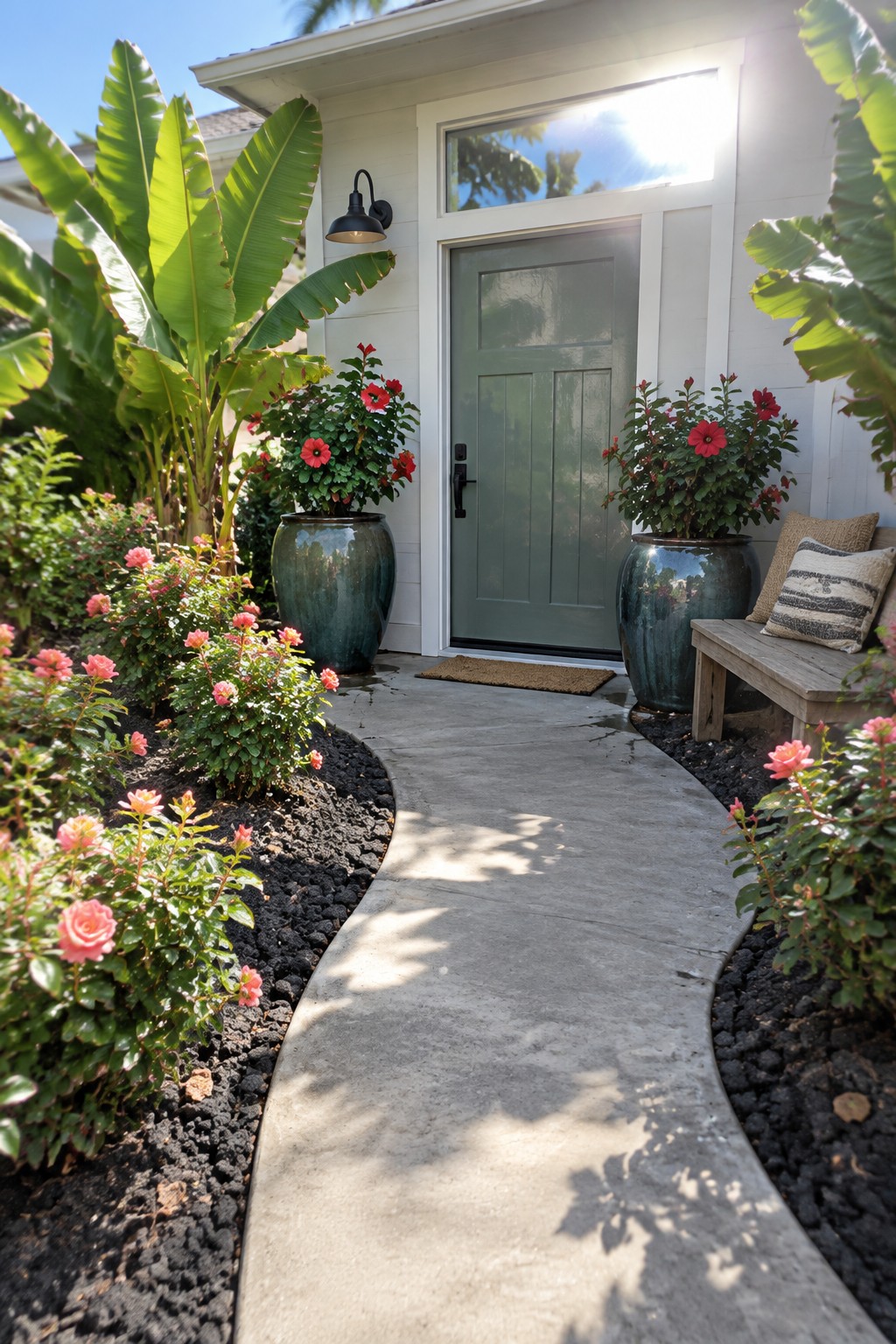
A gently curving path gives a small front garden a little more shape and lets visitors enjoy the planting as they approach the door. Roses along the edges can bring color close to the walkway without taking up much lawn space.
Keep the path wide enough for two people to pass, and leave room between roses and the concrete so branches do not spill into the way. Low-growing varieties work especially well in narrow beds like these.
Use Stepping Stones to Make a Small Rose Garden Easier to Walk Through

A stepping-stone path gives a small front garden a clear route to the door without taking up much planting space. The round stones here sit among low groundcover, while pink roses add color along the edge.
Leave enough room between stones for comfortable steps, and choose a groundcover that can handle occasional foot traffic. This approach works well in a narrow yard, but keep the path direct enough that visitors do not have to step through the roses.
Use a Brick Walk to Set the Garden’s Layout

A straight brick path gives a small front garden a clear route to the door and a simple shape to build around. Here, pink roses grow along both sides, making the path feel like part of the garden rather than just a way through it.
This approach works well in a narrow yard where winding paths would take up too much room. Keep the planting close to the edges, and leave enough width for people to walk comfortably.
Use Gravel to Fill a Small Rose Garden
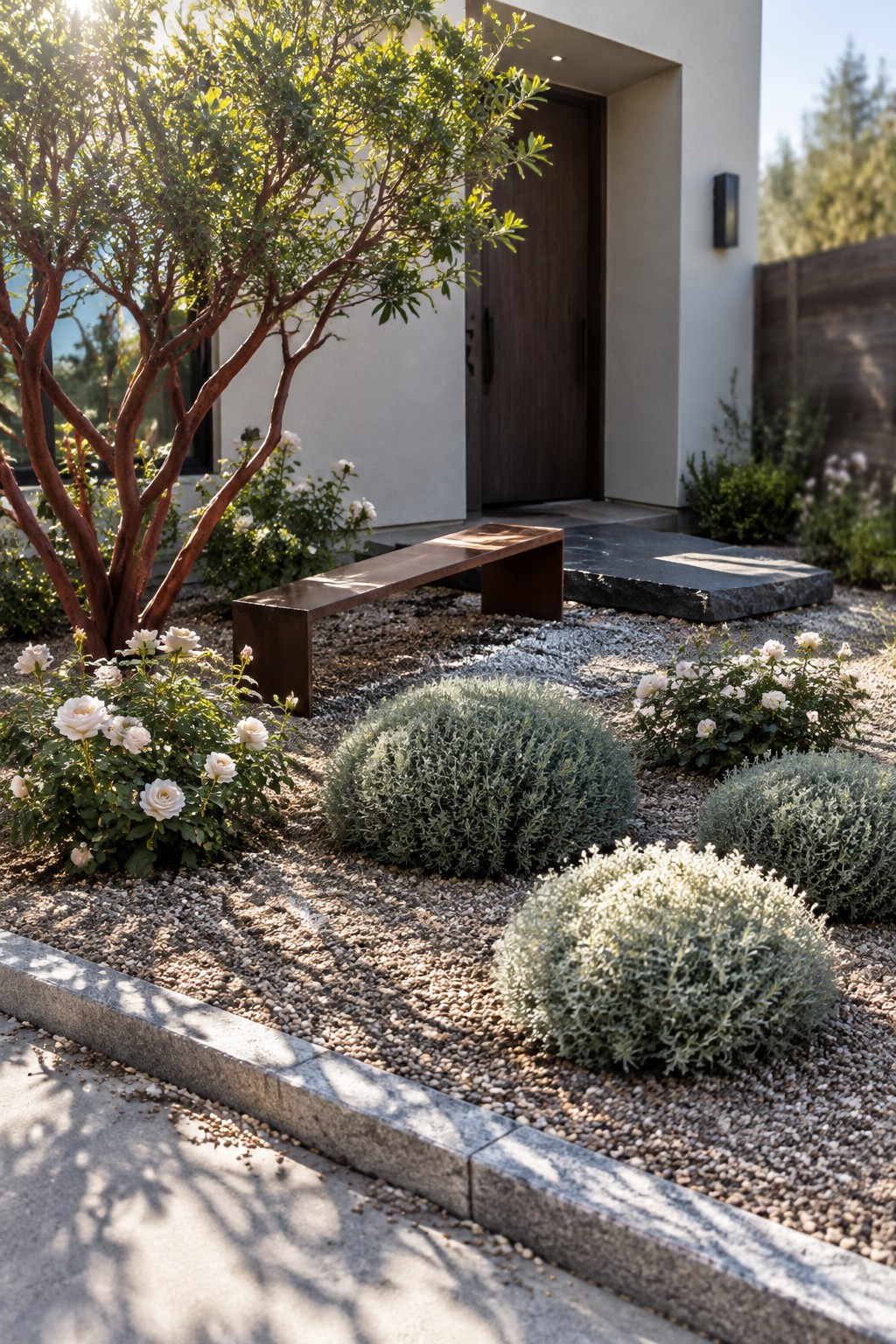
A gravel base can give a small front garden a tidy, low-fuss layout while leaving room for roses and other plants. Here, pale gravel sits between rounded shrubs and white roses, making the planting beds feel open rather than crowded.
Use gravel around established plants and keep it away from rose crowns and stems. A clear stone or metal edge can help keep the gravel in place, and a simple bench can offer a place to pause without taking up much room.
Use Tall Roses to Mark the Front Walk
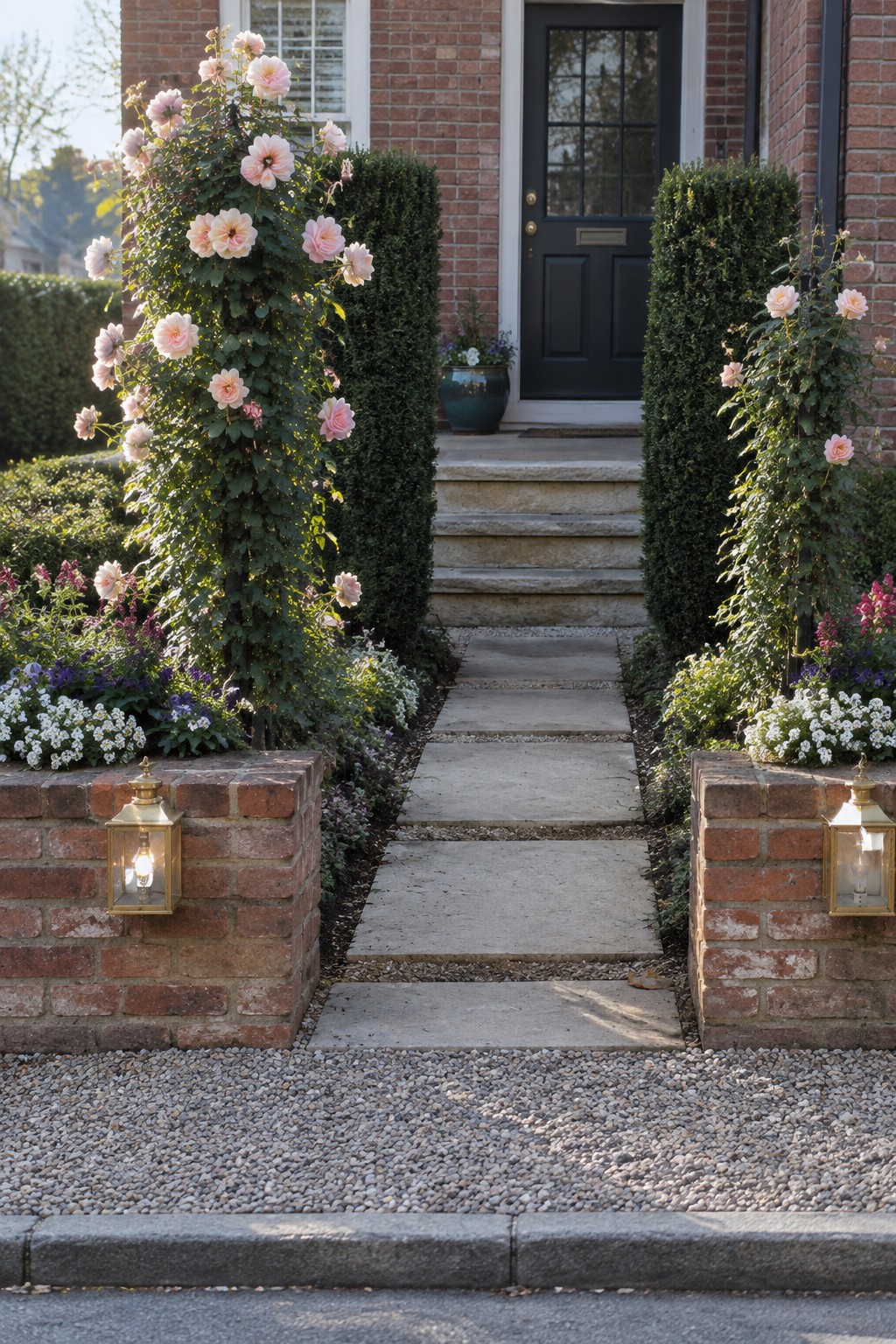
Tall rose bushes can give a small front yard a clear sense of entry without taking up much ground space. Train them upward along the sides of a straight path, and they help guide visitors toward the door.
This works best where roses can grow beside a walkway without narrowing it. Keep the plants trimmed back from the paving, and use compact varieties if the path is especially tight.
Use a Stone Path to Set the Garden Layout
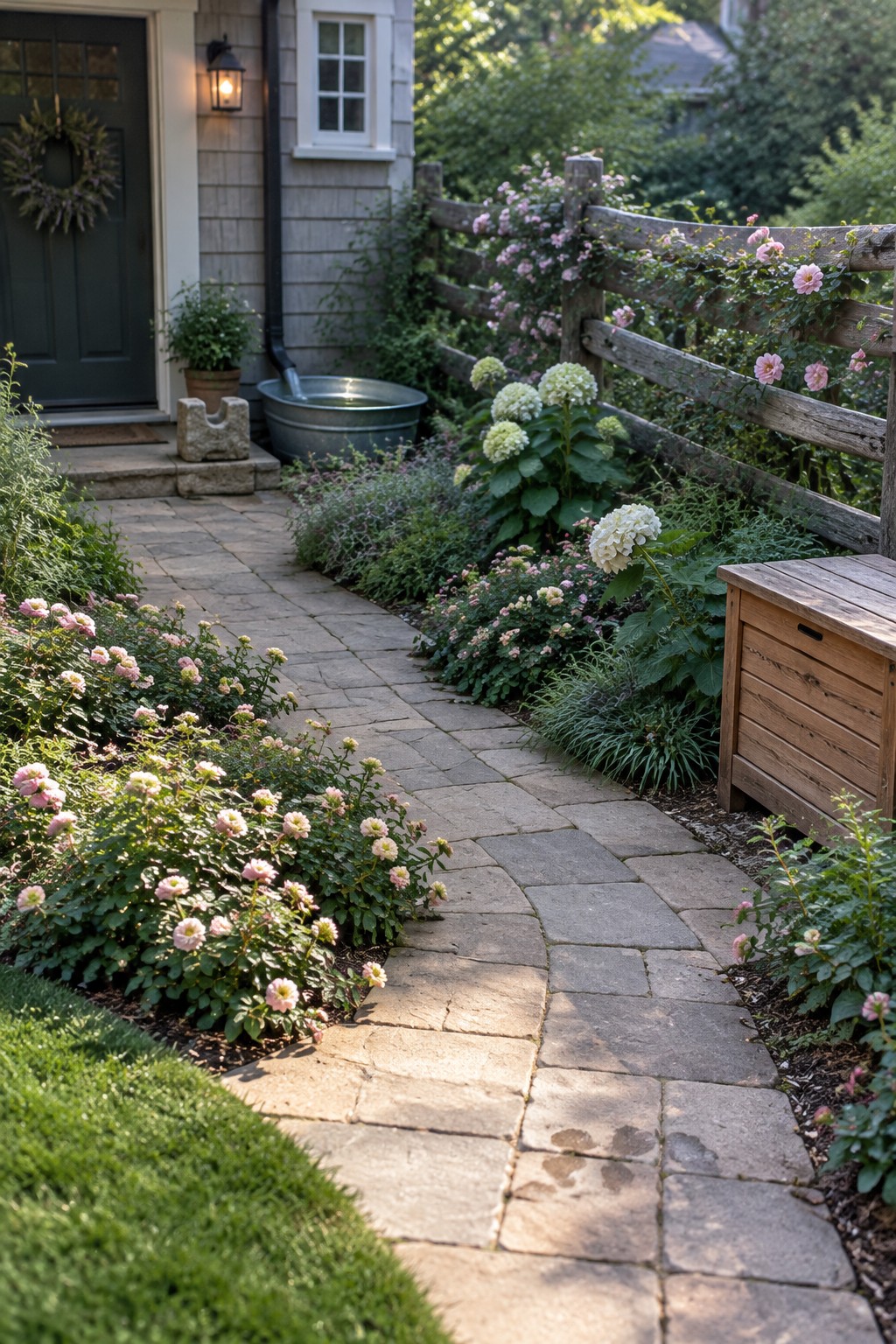
A stone path gives a small rose garden a clear route through the planting, so the flowers can fill the beds without making the yard hard to cross. Its solid surface also makes it easier to reach plants for pruning and care.
For a front yard, lay stones in a gentle curve and leave enough room to walk comfortably. Plant roses along the edges, but keep them trimmed back from the path.
Train Climbing Roses Along a Front Wall
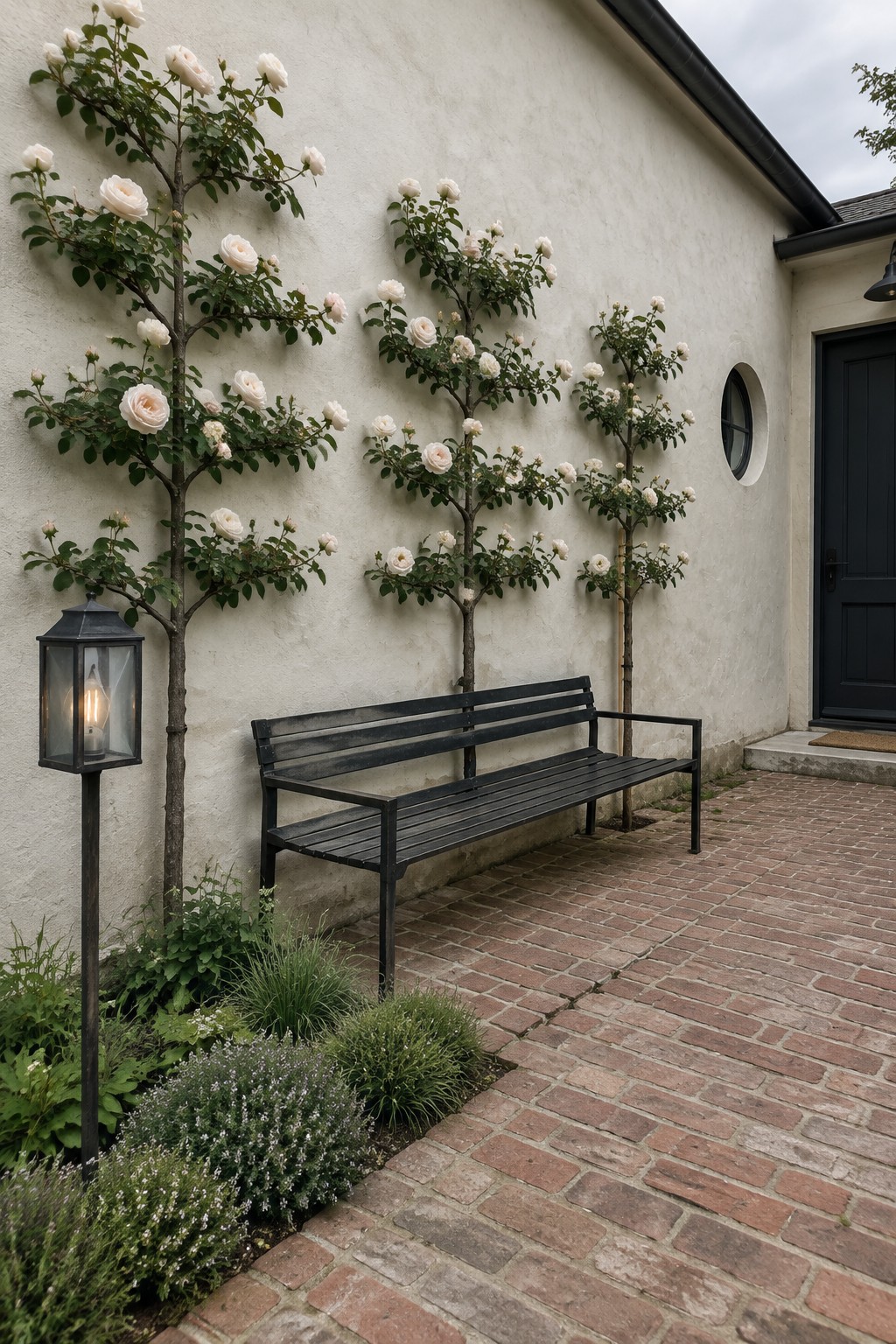
Training roses flat against a wall lets you grow a generous display without using much yard space. The wall supports the canes, while the flowers bring color to an otherwise plain stretch of exterior.
Use a sturdy trellis or horizontal wires, and tie the canes in as they grow. This works especially well beside a front entrance or along a narrow path, but leave room to prune and keep the walkway clear.
Use a Pergola to Mark a Garden Path
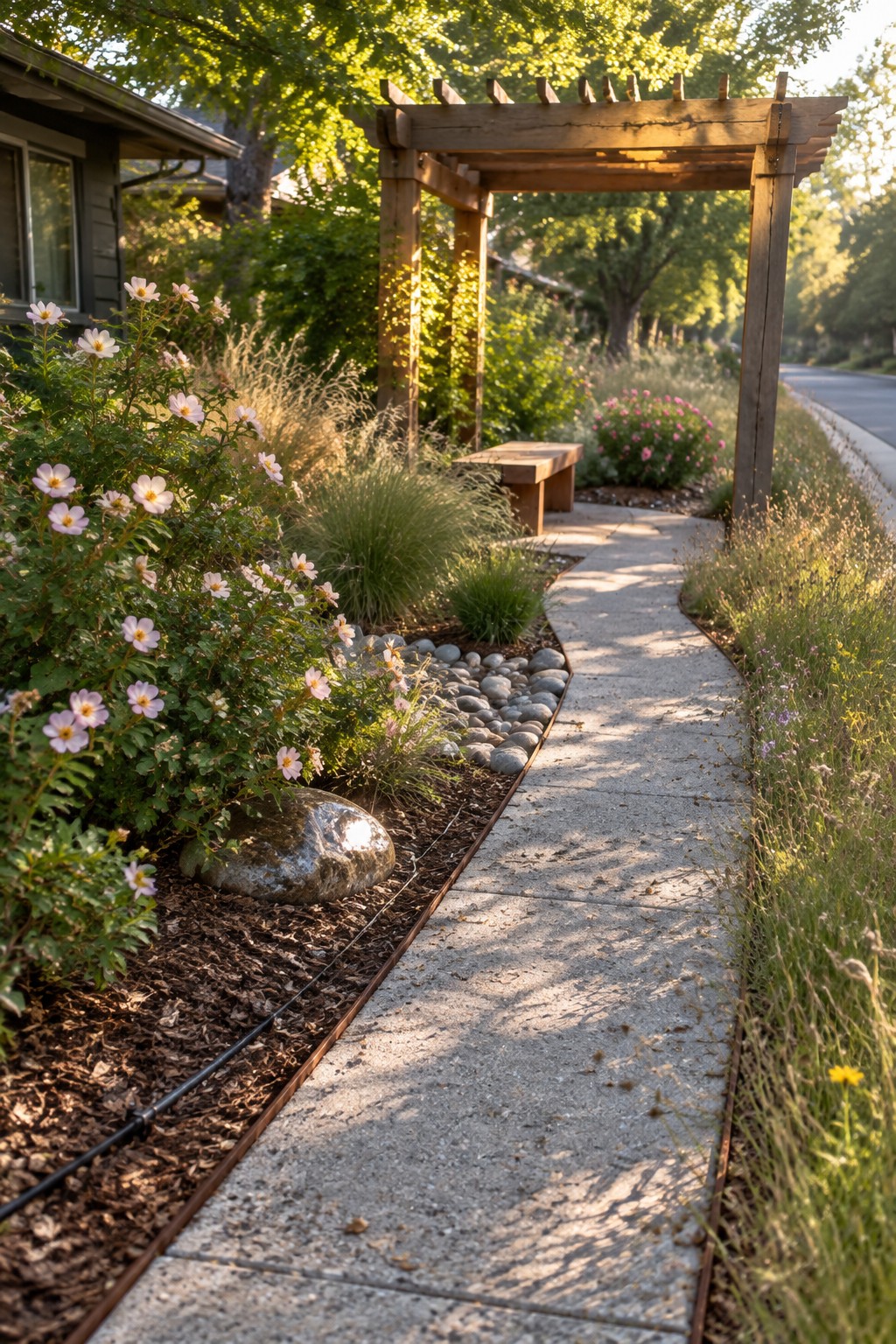
A pergola can give a small front-yard path a clear destination without taking up much planting space. Here, the wooden structure marks the entrance to the walkway and gives the garden a simple focal point.
For a similar look, place a compact pergola where a path changes direction or reaches the front entry. Keep the structure open so it does not crowd the yard, and let low plants or roses grow nearby rather than covering the walkway.
Build a Small Rose Bed With Stone Retaining Walls
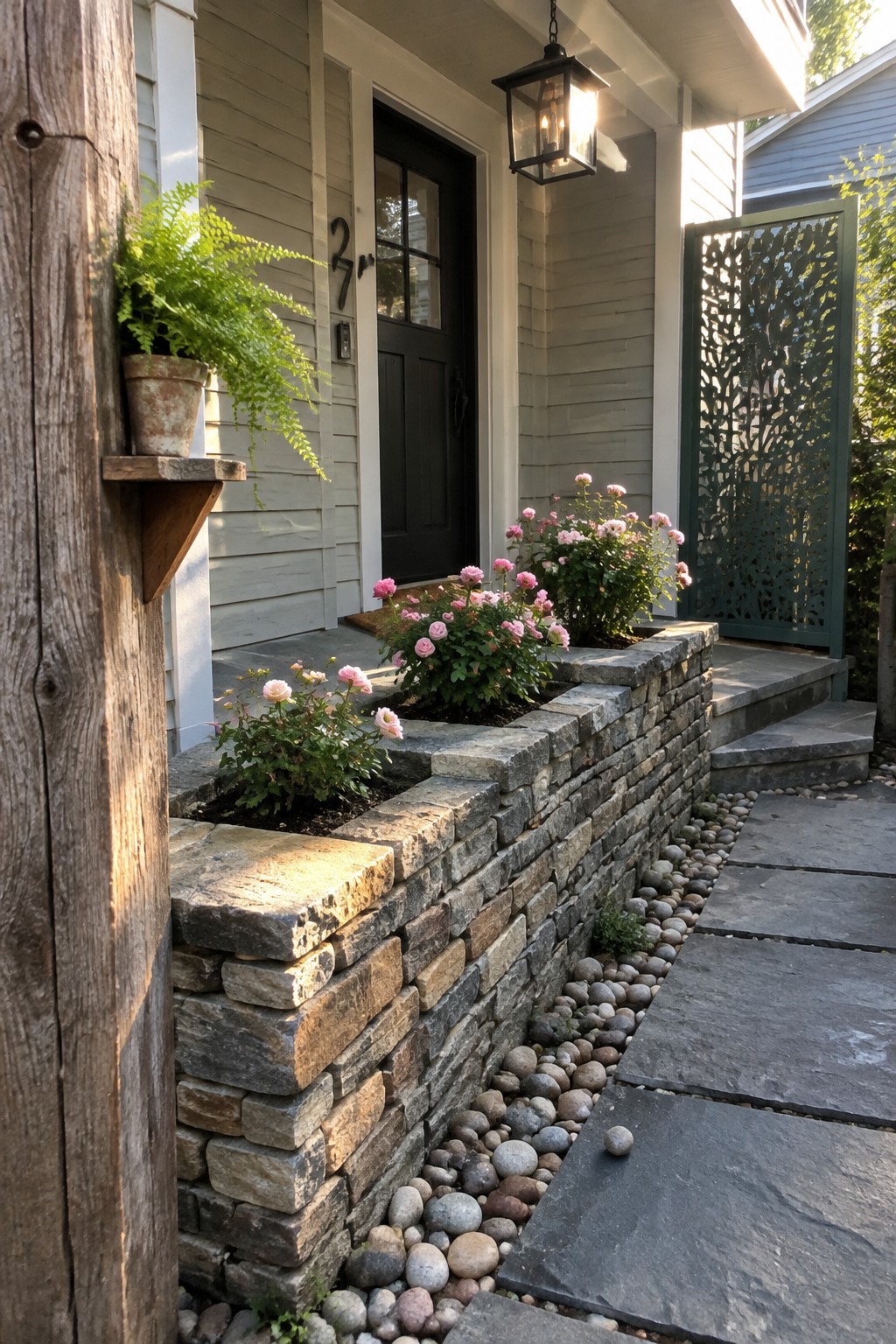
A low stone wall can give a small front garden a clear shape and make room for roses without taking up much of the yard. The raised bed keeps the planting area separate from the walkway, and the stone suits a traditional home.
Use a wall like this where the ground slopes or where you want to define a narrow planting strip. Leave enough room for the roses to grow and for you to reach in for pruning and care.
Frequently Asked Questions
Q: Can I grow roses in a small front yard without making it feel crowded?
A: Yes. Choose a compact shrub rose or a climbing rose trained along a fence, then leave enough space around it for air and access. A few well-placed plants usually look better than squeezing in a full row.
Q: What roses work well beside a front walkway?
A: Look for compact varieties with a tidy shape, and plant them far enough back that stems won’t brush people as they pass. If the path is narrow, low-growing roses can add color without getting in the way.
Q: How much sun do roses need in a small yard?
A: Most roses bloom best with about six hours of direct sun a day. If your front yard gets less, try a spot with the brightest light and choose a rose known to tolerate partial shade.
Q: How can I keep a rose bed looking neat between blooms?
A: Add a simple layer of mulch and edge the bed so it stays distinct from the lawn or path. Low-growing plants around the roses can fill bare soil without competing for too much attention.
