

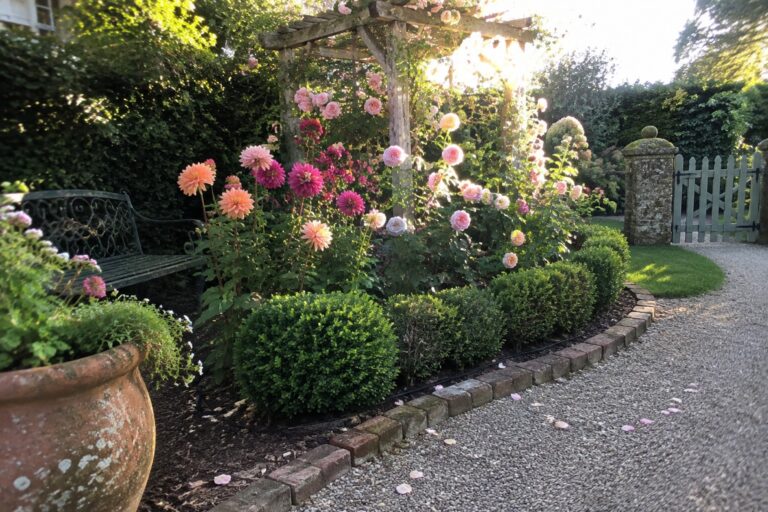
Dahlias and roses can bring a garden plenty of color, but the way they sit together matters just as much as the blooms themselves.
I find these beds work best when taller flowers have room to rise behind lower plantings, with clear edges or a path to keep the garden from feeling crowded.
Color is usually what catches my eye first, though foliage, bloom timing, and the shape of the bed help the display feel balanced over the season.
Some pairings look lovely in a photo but need more space or support in a real yard, so I’d pay close attention to how each planting fits your conditions.
A well-planned flower bed can feel romantic without making upkeep difficult.
Use A Pergola To Support Climbing Roses
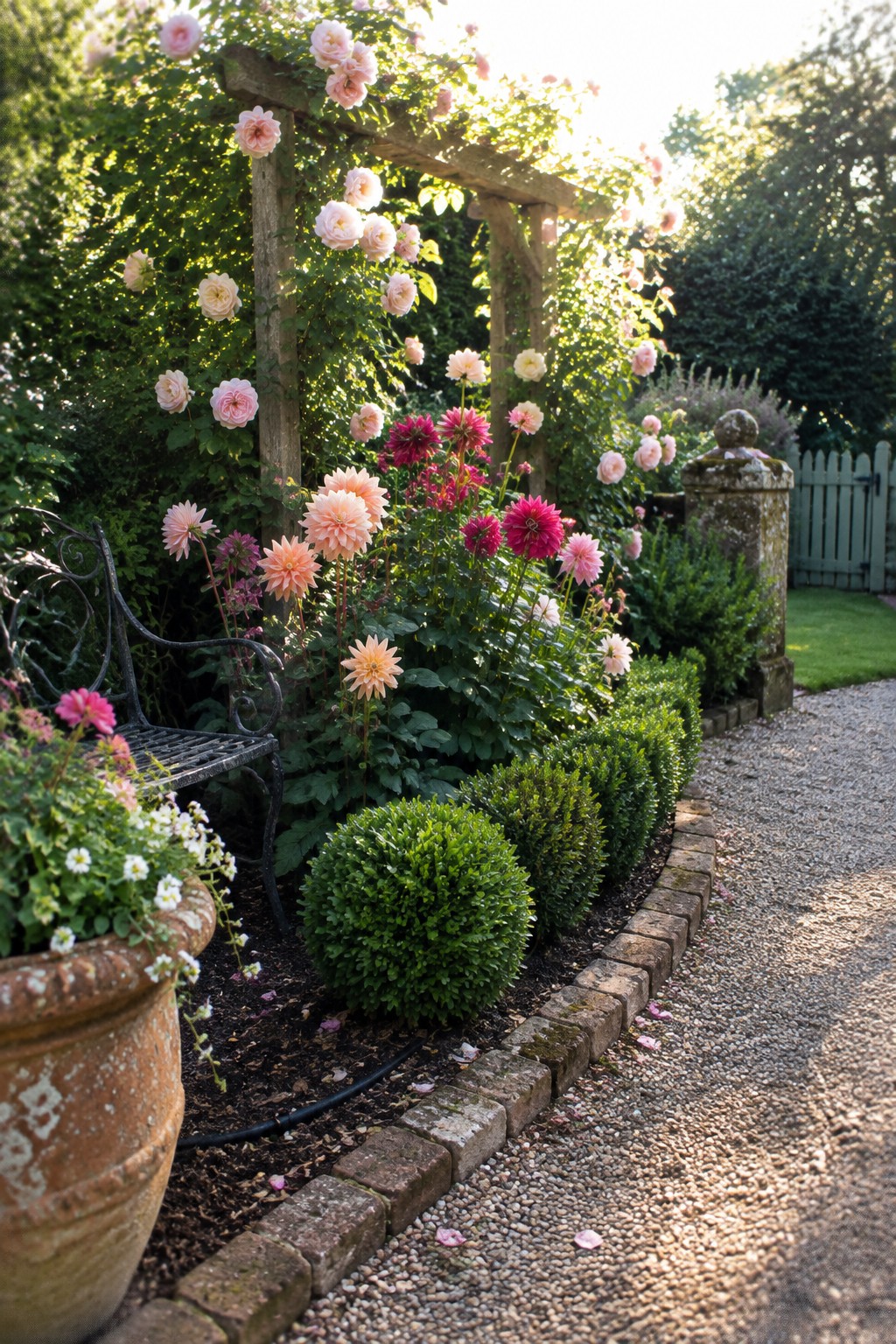
A pergola gives climbing roses a clear place to grow and helps bring height into a flower bed. It also makes a garden path feel more settled without needing a large structure.
Train roses along the posts and across the top, then keep taller flowers nearby so the planting feels connected. This works well beside a path or at a garden entrance. Leave enough room to walk beneath it, and prune regularly so the growth does not become crowded.
Use Stone Paths to Shape Romantic Flower Beds
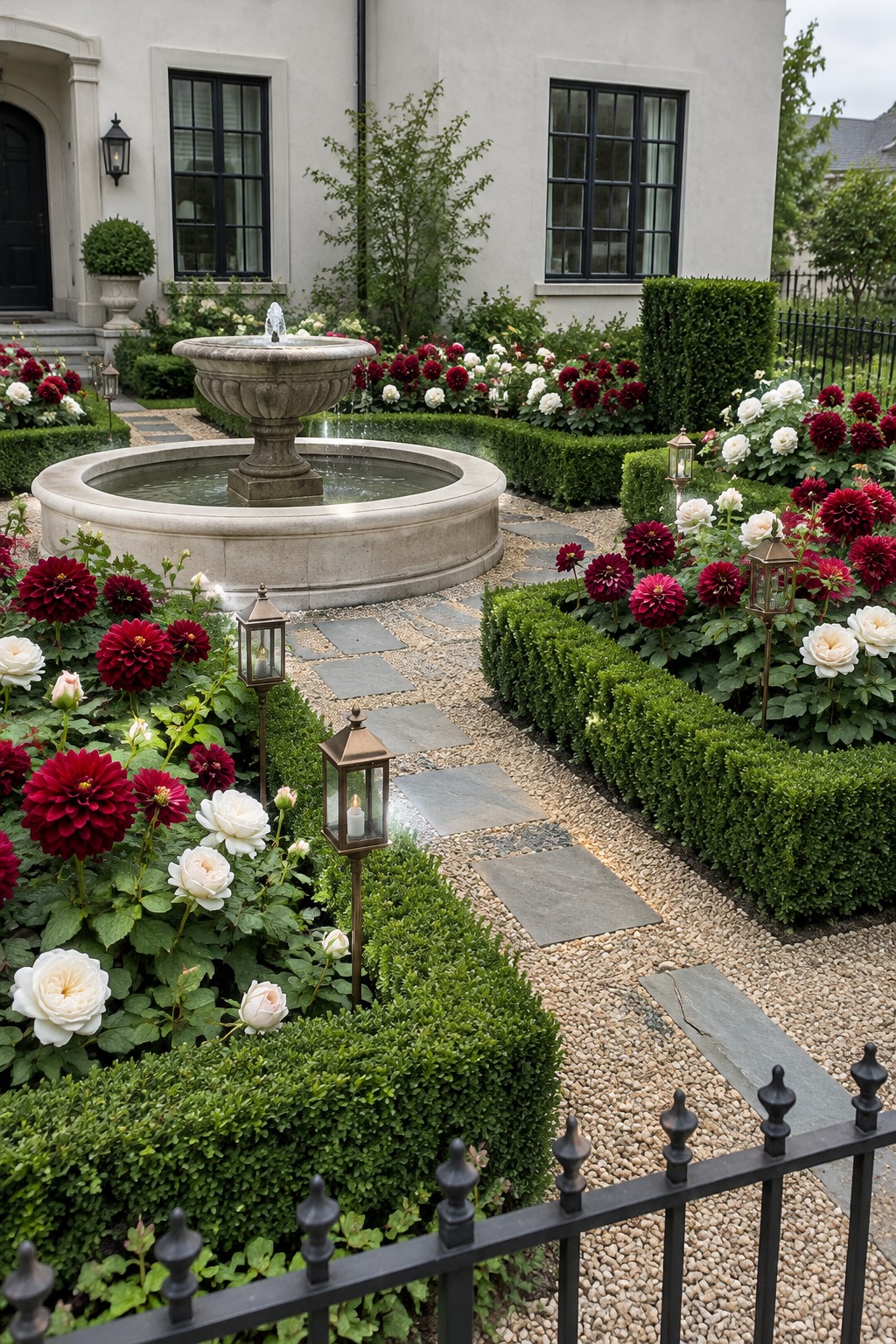
A stone path can give a flower garden a clear route without making the beds feel too formal. Here, rectangular stepping stones sit in pale gravel, while clipped hedges keep the dahlias and roses in tidy borders.
This approach works well in a small courtyard or along a narrow side garden. Leave enough space between plants and the path so flowers can spread without blocking the walk.
Use a Stone Path to Lead Through the Flower Beds

A stone path gives a flower garden a clear route while letting the planting stay full and informal. Here, the large, irregular paving stones sit beside deep dahlia and rose beds, so the path feels like part of the garden rather than a separate walkway.
Use this approach where you want to wander among the flowers or reach a tucked-away seating spot. Leave enough space between stones for comfortable footing, and allow for plants to spill toward the edges without blocking the route.
Build Flower Beds Into a Gentle Slope

Terraced beds make a sloped garden easier to plant and enjoy. The short stone walls hold the soil in place, while raised wooden beds give dahlias and other flowers room to grow without spreading across the hillside.
This approach works well where a flat lawn is hard to maintain. Keep the steps wide enough to walk along, and leave space between beds for a gravel path or sturdy stepping stones. The levels can follow the natural slope rather than forcing the whole garden into a rigid pattern.
Make a Curved Flower Bed the Garden’s Centerpiece

A curved stone bed gives dahlias and roses room to grow while making the planting feel like part of the garden layout. The rounded edge also works well in a small courtyard, where a straight bed can feel a bit rigid.
Use a low stone wall to define the bed, and leave enough space around it for a clear path. Plant taller flowers toward the back and shorter ones near the edge so the bed stays easy to enjoy from different angles.
Layer Dahlias Along a Garden Path

A narrow stone path can give a romantic flower bed a clear shape without making it feel too formal. Dahlias and roses look at home along the edges, where their blooms can spill toward the walkway.
Use broad, spaced stones so there is room to walk and tend the plants. Leave enough space beside the path for flowers to grow without brushing against passersby.
Make a Narrow Path Between Flower Beds

A narrow garden path lets you enjoy flowers from both sides without stepping into the beds. Brick edging gives the route a clear shape and helps keep soil and mulch in place.
This layout suits a small garden or side yard. Leave enough room to walk comfortably, and choose a simple path surface that stays easy to maintain.
Add a Narrow Water Channel Beside the Flower Bed

A slim water channel can give a flower bed a clear edge and make a narrow courtyard feel more considered. Here, dahlias and climbing flowers grow along the concrete wall, while the dark stone border keeps the water feature separate from the gravel bed.
This idea works well in a small, modern garden where a wide pond would take up too much room. Keep the channel narrow and use simple paving around it so the planting remains the main focus.
Use a Garden Gate to Mark the Path

A simple gate gives a flower garden a clear entrance and makes the path feel like a place to wander, rather than just a route through the yard. It works especially well among tall planting, where the opening can feel tucked away without blocking the view.
Place the gate where a stone path enters the beds, and leave enough room for it to swing freely. A narrow iron gate suits a cottage-style garden, but keep nearby flowers trimmed back so the entrance stays easy to use.
Use a Round Stone Paving Area for a Flower Bed

A circular area of stone paving gives a flower bed a clear place in the garden without making it feel separate from the path. Here, the round pattern draws attention to a central planter, while nearby beds of lavender show how flowers can soften the edges of hard paving.
This layout works well in a courtyard or small formal garden where a straight path needs a focal point. Leave enough room around the planting for easy walking, and choose flowers in a restrained mix of colors so the stone pattern remains visible.
Use Rustic Steps to Follow a Sloped Flower Bed

Rough stone steps make a sloping flower garden easier to walk through and give the planting a clear route. Here, the path winds between thick beds of flowers, including tall foxgloves and roses growing along the stone wall.
This approach works well on a hillside where a flat path would be difficult to build. Set the steps firmly, keep them wide enough for comfortable footing, and leave room beside the path for flowers to grow without crowding it.
Use Poolside Seating to Make Flower Beds Part of the View

A poolside seating area can feel more connected to the garden when flower beds sit close to the loungers. Here, dahlias and roses line the patio edge, so the flowers become part of the view rather than a separate planting area.
Use this approach where there is enough room to keep a clear walking route between the beds and the pool. Leave space for plants to spread, and choose flowers that suit the sun and watering needs of the spot.
Add a Gravel Path Through the Flower Beds

A narrow gravel path can make a flower garden feel like a place to wander, not just a bed to look at from the edge. Its loose, informal surface suits a romantic planting style, and pale gravel gives flowers room to stand out.
Keep the path wide enough to walk comfortably, and use a firm, well-contained base so the stones stay in place. It works especially well in a small cottage garden where a gentle curve can lead to a bench or another quiet stopping spot.
Train Roses Along a Narrow Garden Bed

Climbing roses can make a slim side garden feel full without taking over the walking space. Training them along a wall or trellis keeps the flowers upright and lets lower plants, such as dahlias, fill the bed beneath.
This approach suits a narrow passage where every bit of space matters. Give the roses a sturdy support and leave enough room along the path for easy walking and pruning.
Grow Dahlias in a Raised Flower Bed

A raised bed is a practical way to keep dahlias together and give them room to grow. The clear edges make a flower bed easier to tend, while a mix of taller blooms and low herbs gives the planting a relaxed, cottage-garden feel.
Use a raised bed where the soil needs improvement or the ground is awkward to work. Leave enough space between plants for airflow, and make sure the bed drains well so dahlia tubers do not sit in soggy soil.
Add a Built-In Bench Beside the Flower Bed

A built-in bench can make a flower bed feel like part of the patio instead of something to admire from a distance. Here, the bench sits right beside climbing dahlias, giving the planting a practical place to pause and enjoy.
This idea suits a courtyard or narrow terrace where there isn’t much room for separate seating. Keep the bench simple and leave enough space in front for walking, so the flowers don’t crowd the seating area.
Let a Stone Path Wind Through the Flower Beds

A gently winding stone path gives a flower garden a clear route without making it feel too formal. Dahlias and roses can grow in generous beds along the edges, so the flowers feel close as you walk through.
Use irregular stepping stones to suit a cottage-style garden, and leave enough room between the beds for plants to spread without crowding the path. A simple layout like this works well in a narrow yard, too.
Plant Dahlias and Roses Around the Front Steps

A flower bed beside the front steps can make the entrance feel cared for without changing the house itself. Tall rose supports add height, while dahlias bring fuller color closer to the path.
Use roses where they can climb a trellis or other sturdy support, then plant dahlias along the lower edge of the bed. Leave enough room for people to pass and for the plants to be pruned without crowding the steps.
Use a Pergola to Create a Garden Dining Spot

A pergola can make a flower garden feel like a place to sit and spend time, not just something to look at. Here, climbing roses cover the wooden structure above a dining table, linking the seating area to the surrounding beds.
This works well in a garden with enough room for a table and a clear path to it. Train roses along the posts and beams, but leave enough open space overhead for air and light.
Frequently Asked Questions
Q: Can dahlias and roses grow together in the same flower bed?
A: Yes, as long as the bed gets plenty of sun and has soil that drains well. Give each plant room for airflow, and avoid crowding roses with tall dahlias that might shade them.
Q: Which flowers should I plant in front of dahlias and roses?
A: Try low-growing plants such as alyssum, catmint, or compact salvias along the front edge. They soften the bed without hiding the flowers, and they make it easier to reach in and tend your roses.
Q: How do I keep the flower bed blooming through summer?
A: Remove faded rose blooms and dahlias regularly so the plants keep putting energy into new flowers. Water deeply at the base during dry spells rather than sprinkling the leaves.
Q: Will dahlias come back next year?
A: In mild climates, they may survive in the ground, but cold winters can damage their tubers. In colder areas, lift and store the tubers after frost, or treat dahlias as annuals and replant next spring.
