

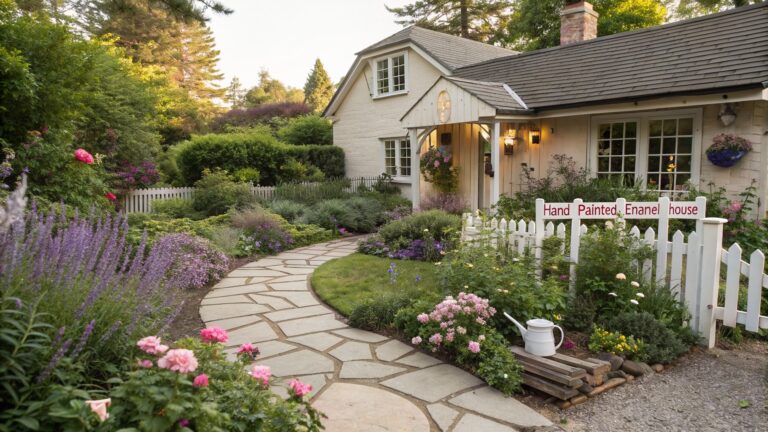
I’ve noticed over years of tending cottage-style gardens that the flower beds set the tone for the entire yard, framing paths and softening hard edges in ways that evolve beautifully with the seasons. You build them right by starting with a thoughtful layout, layering low growers at the front with taller blooms behind, and using simple stone or brick edging to hold it all together as plants spread. In my own yard, I once skipped proper structure for more flowers, only to see it turn chaotic by midsummer, which taught me whimsy needs those quiet bones underneath. Walkers through the garden always spot the gentle curves of the beds first, drawing them in before they even reach the cottage door. These approaches give solid starting points worth sketching out and adapting to your soil and sunlight.
Winding Stone Path Through Flower Beds
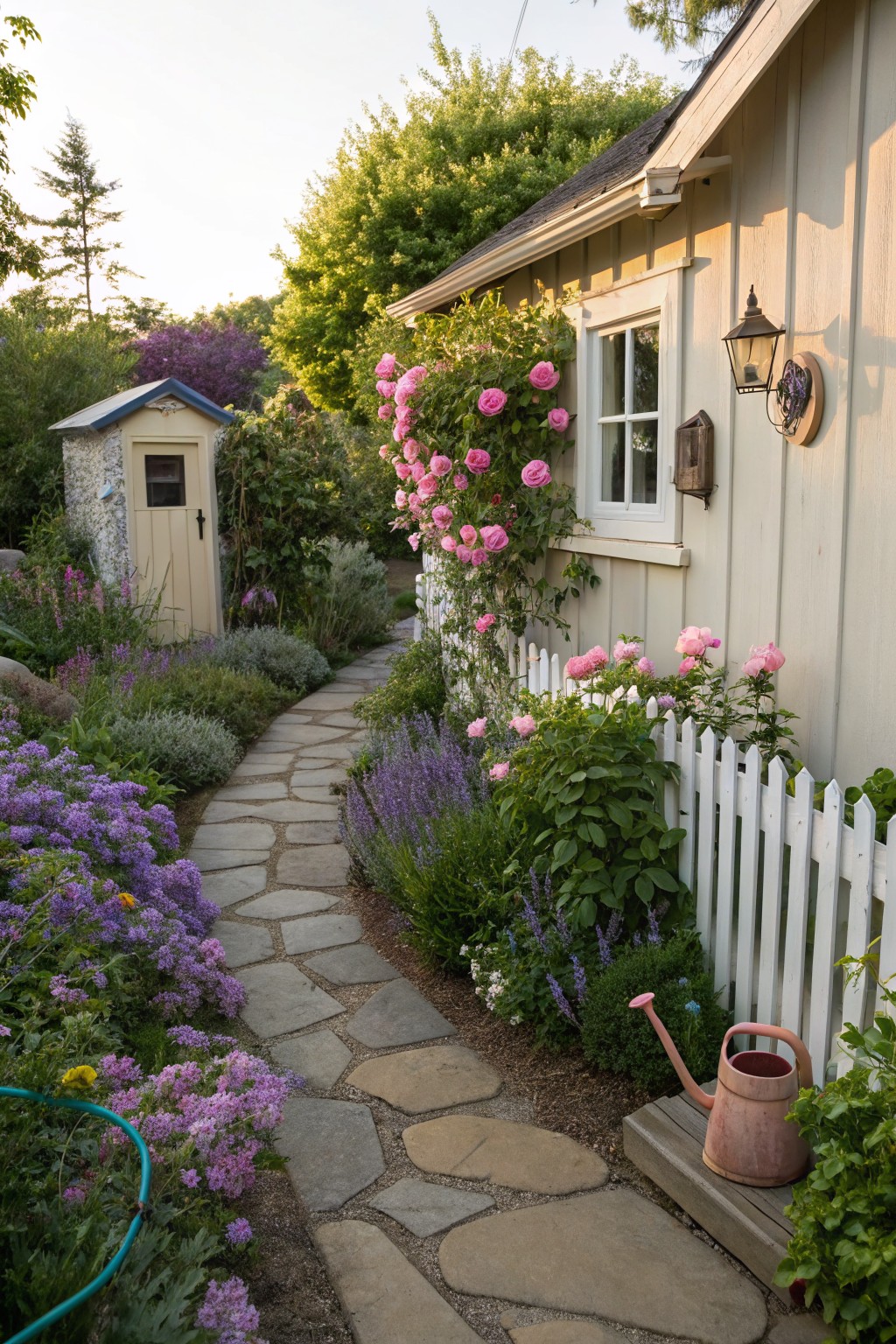
A simple flagstone path that curves through thick flower beds gives any cottage garden that perfect rambling feel. Here it’s edged with clumps of purple asters and pink roses spilling over, leading right up to a little outbuilding. That loose layout keeps things from looking too planned out. It just feels right, like you’ve stepped into an old country spot.
Set these paths in side yards or toward a garden shed where foot traffic is light. Use irregular stones for the walk and fill beds with easy perennials like lavender or salvia that come back each year. Tuck in climbers on nearby fences or walls to tie it to the house. Skip straight lines though. Straight paths work better for formal spots.
Stone-Edged Gravel Paths
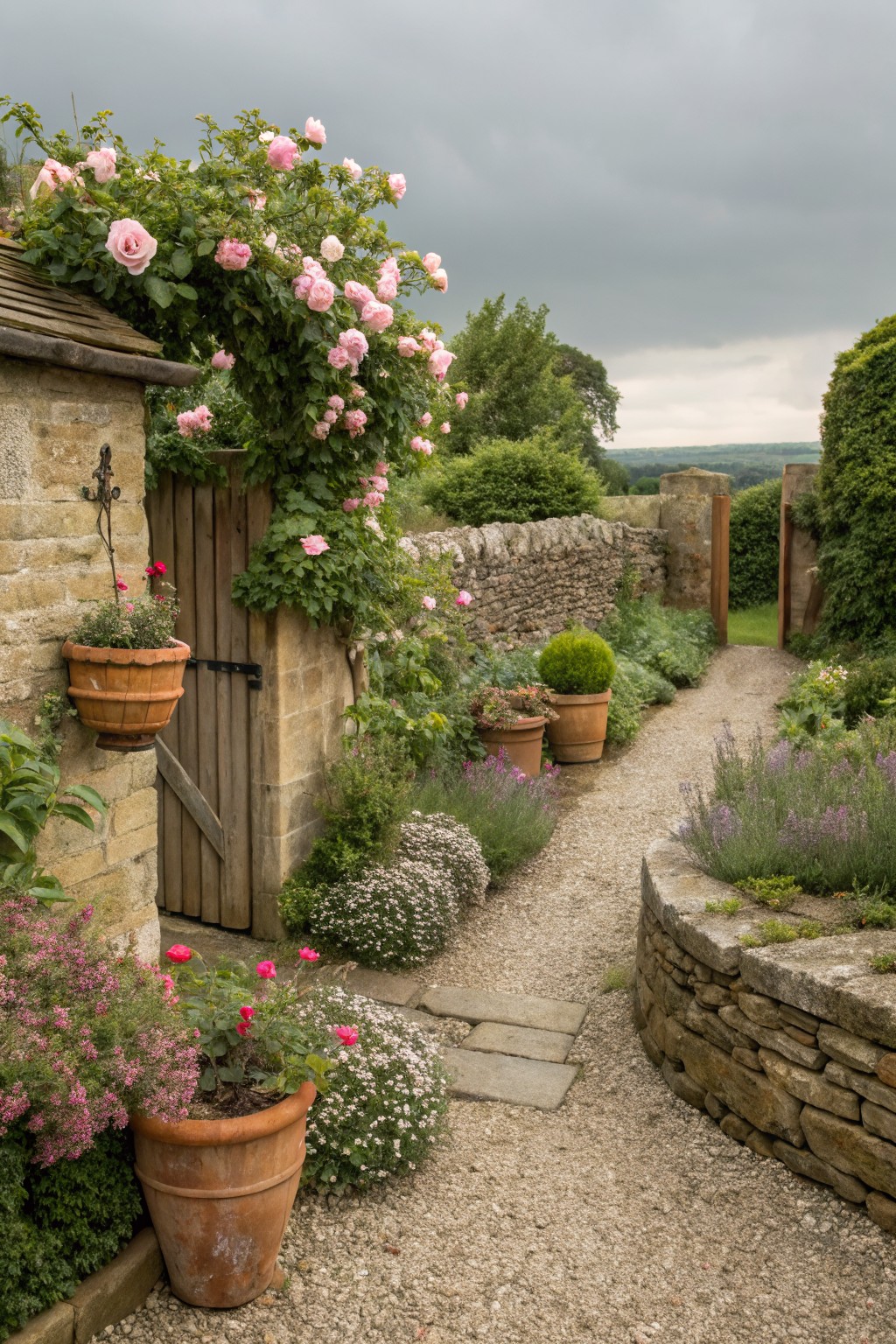
A gravel path like this one winds gently through flower beds, with low dry-stone walls holding back the plants on either side. Climbing roses spill over an old stone outbuilding door, framing the entry just right. It pulls the garden together without much fuss, letting the path become the main line your eye follows.
These paths work best in cottage-style yards or narrow side areas where you want easy access without mowing everything. Lay down gravel over fabric for drainage, stack local stone for the edging, and tuck in tough perennials like lavender or heather. They stay pretty with little upkeep… just rake now and then.
Raised Flower Beds Along a Stone Wall
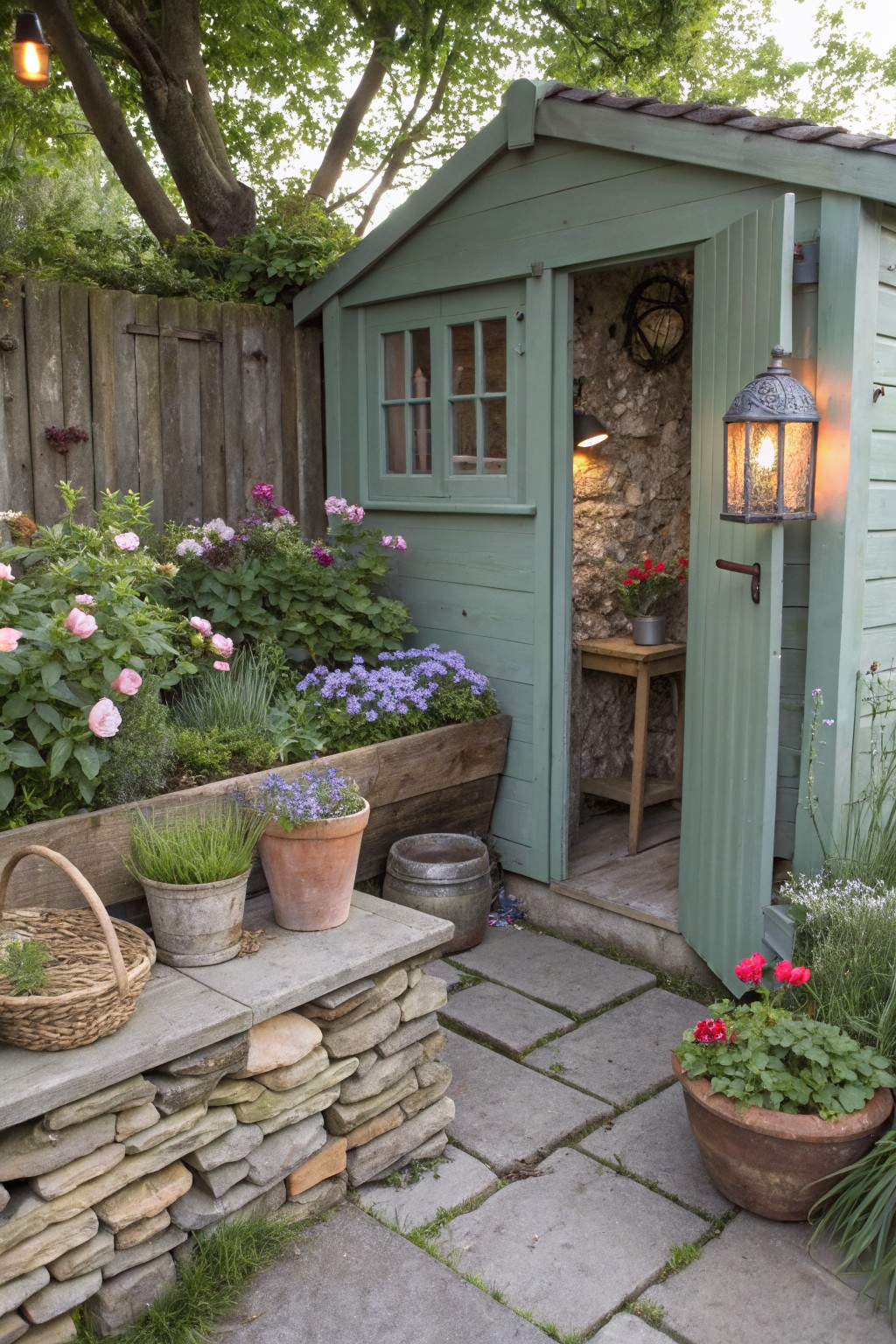
One simple way to add cottage charm to your yard is raised flower beds built right against a low stone wall. In this setup, a wooden planter sits on top of the rough stones, filled with pinks, purples, and greens that spill over the edges. It works so well because the stone gives a sturdy base while the plants soften everything up, making the area feel lived-in and welcoming without much fuss.
These beds shine next to a garden shed or fence where space is tight. Fill them with easy bloomers like roses and lobelia for color all season. They suit older homes or any spot needing a bit more whimsy. Just keep the soil rich and trim back in spring to avoid overcrowding.
Tiered Flower Beds on Slopes
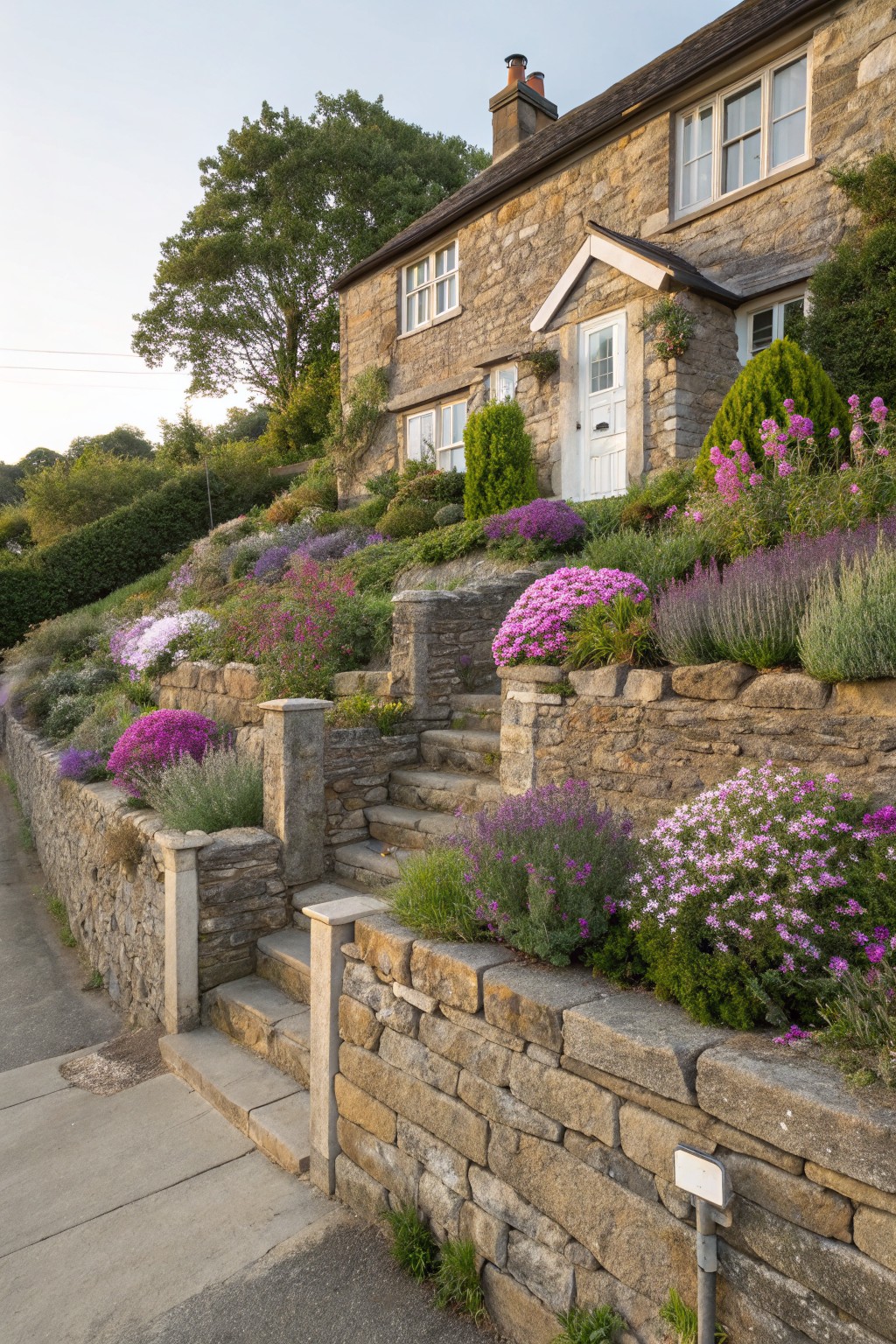
One smart way to handle a hillside next to a cottage is building tiered flower beds with stone retaining walls. You end up with level planting spots that hold colorful perennials like pinks and lavenders. The stone ties right into the house look, and steps make it easy to get up to the door without slipping around.
This works best on sloped yards where flat ground is hard to come by. Match the wall stone to your home for a smooth fit, then layer in low plants at the front and taller ones behind. Just make sure good drainage so water doesn’t pool… keeps everything healthy longer.
Lush Foliage Beds Along the Entry Path
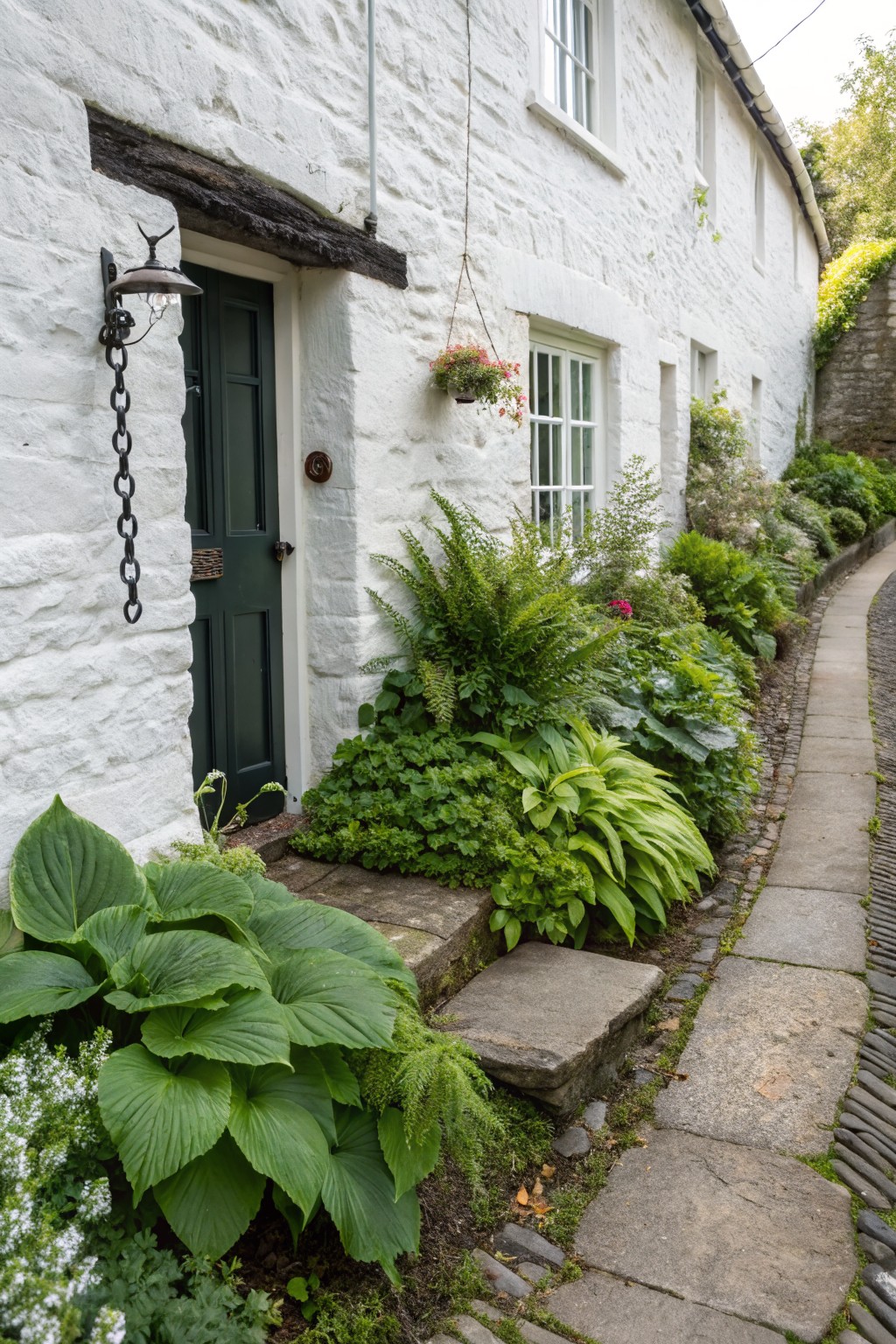
One simple way to give a cottage that storybook feel is packing bold green plants right up against the house along a narrow path. Here you see big hosta leaves and ferns spilling over stone steps toward a green door on white walls. It pulls the eye along the path instead of straight at the house. That tucked-in look makes even a plain entry welcoming and a little wild.
This works best on shady spots next to older homes with stone or brick paths. Layer in ferns ferns, hostas, and smaller greens for height and texture. Plant dense but leave room to walk. Watch that bigger leaves don’t flop over the door… just trim them back in summer. Suits small yards perfectly.
Entry Paths Lined with Flower Beds
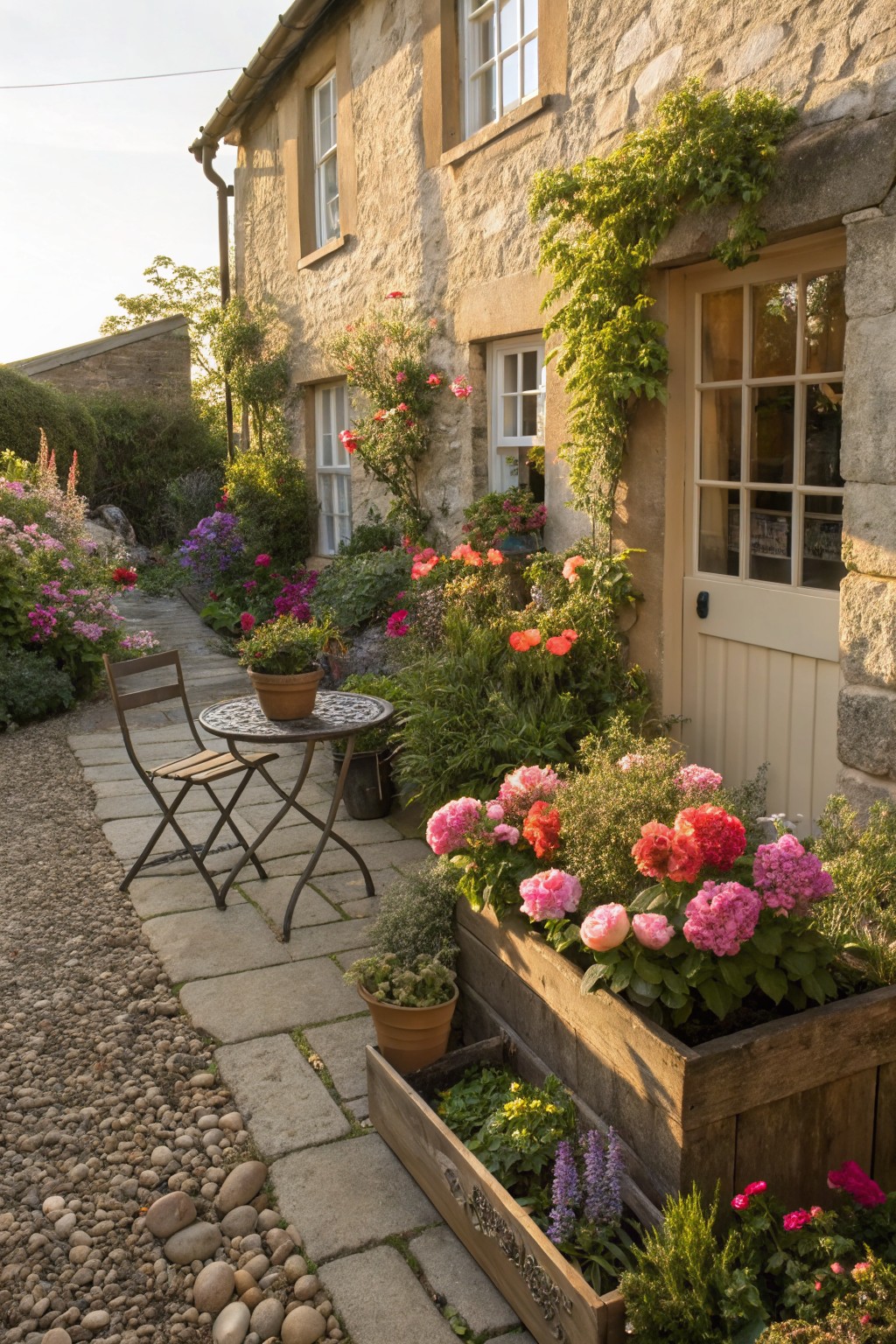
A simple gravel and stone path edged with dense flower beds turns a plain cottage walkway into something special. The mix of tall foxgloves, low-growing herbs, and bushy blooms in pinks and reds fills out the space right up to the house walls. It softens the stone facade and pulls you toward the door without much effort.
This works best on small front approaches where you want color close up. Plant perennials like peonies in raised wooden boxes for easy height, and let climbers hug the corners. Skip it if your path gets heavy foot traffic… those petals won’t last. Fits older homes with character.
Winding Paths in Cottage Gardens
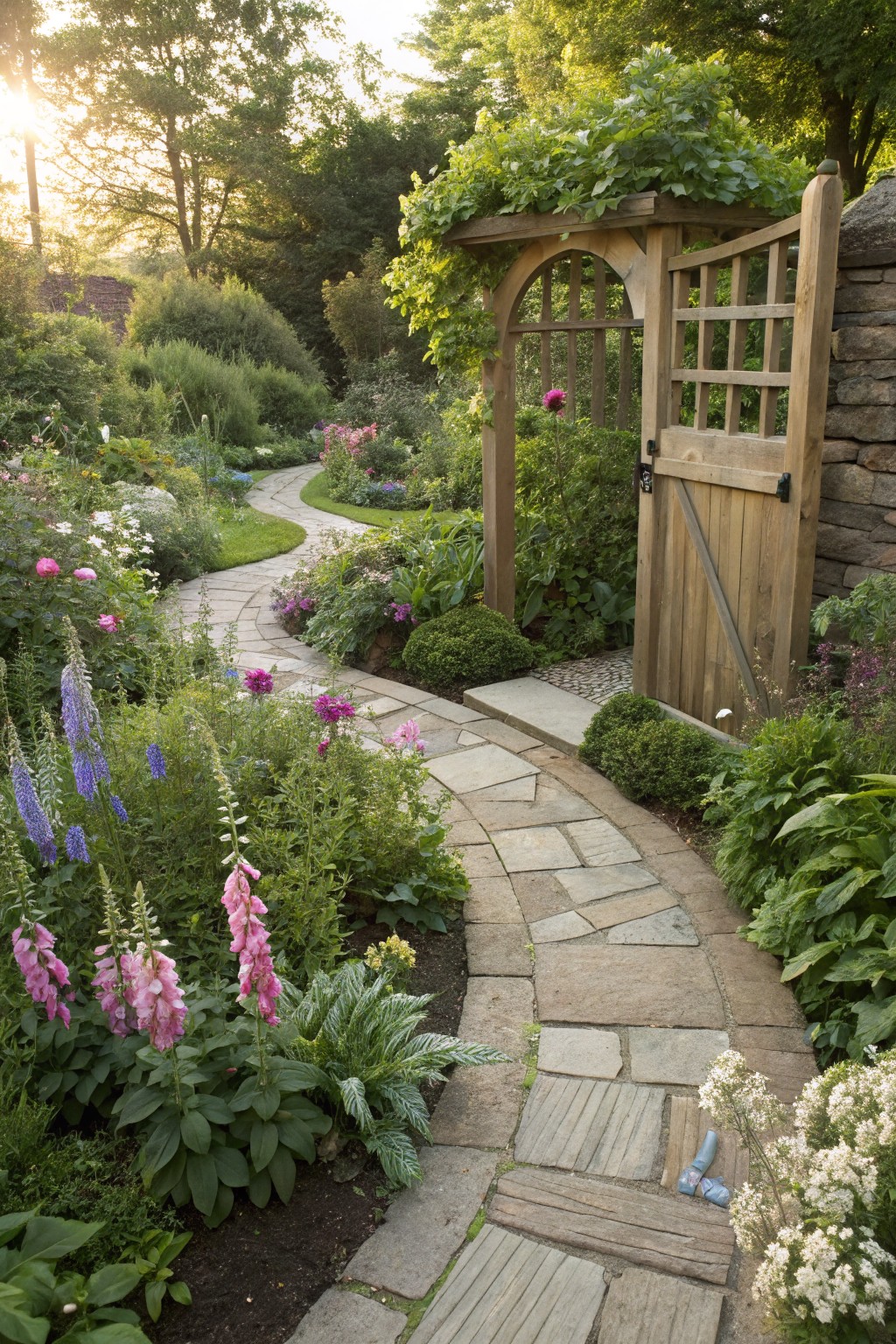
A simple winding path like this one makes a cottage garden feel alive and full of surprises. Made from irregular flagstones, it curves gently through thick flower beds packed with tall foxgloves and soft pinks. That meander pulls you along, past layers of blooms, right up to a wooden arched gate. It’s an easy way to add whimsy without much fuss.
You can fit this into small backyards or along a side yard, especially near a fence or wall. Lay the stones loose on soil or gravel for drainage, then plant right up to the edges with perennials that spill over a bit. Keep the path narrow, maybe three feet wide. It works best in shady spots… just watch for moss on those stones after rain.
Layered Borders Along the House
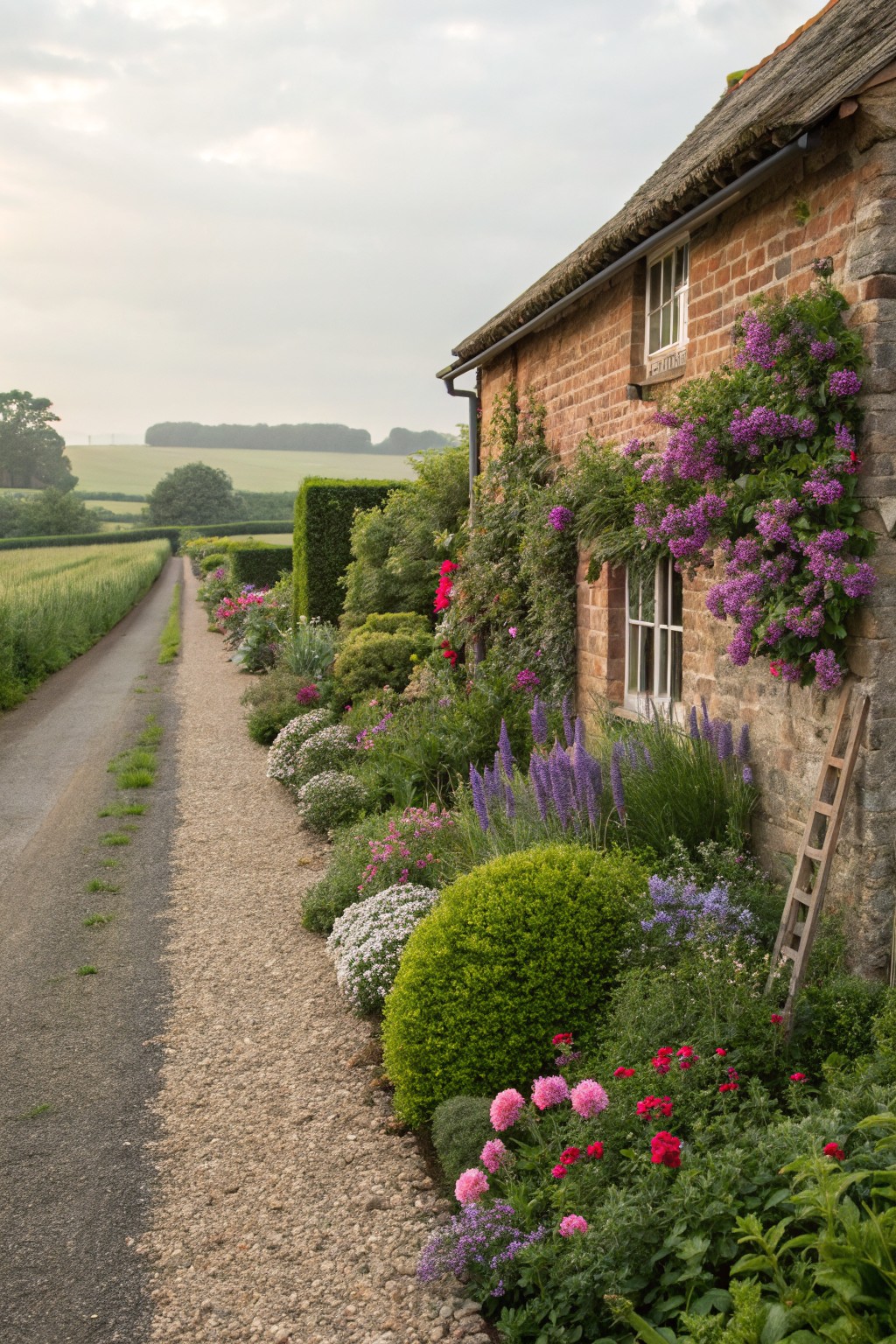
A narrow gravel path runs right next to the cottage, edged with dense flower beds that climb straight up the brick walls. Purple-flowered vines cover the upper part, lavender spikes add height in the middle, and low pink and white mounds spill toward the path. This layering makes the walk feel tucked away and full of life, tying the house right into the garden.
It’s perfect for tight spaces beside an older home. Start with climbers that suit your wall texture, then fill in with perennials in repeating groups for rhythm. Keep taller plants away from the path edge so you don’t brush against them. Suits country cottages best, but watch for too much shade under big climbers.
Circular Stone Well in Cottage Gardens
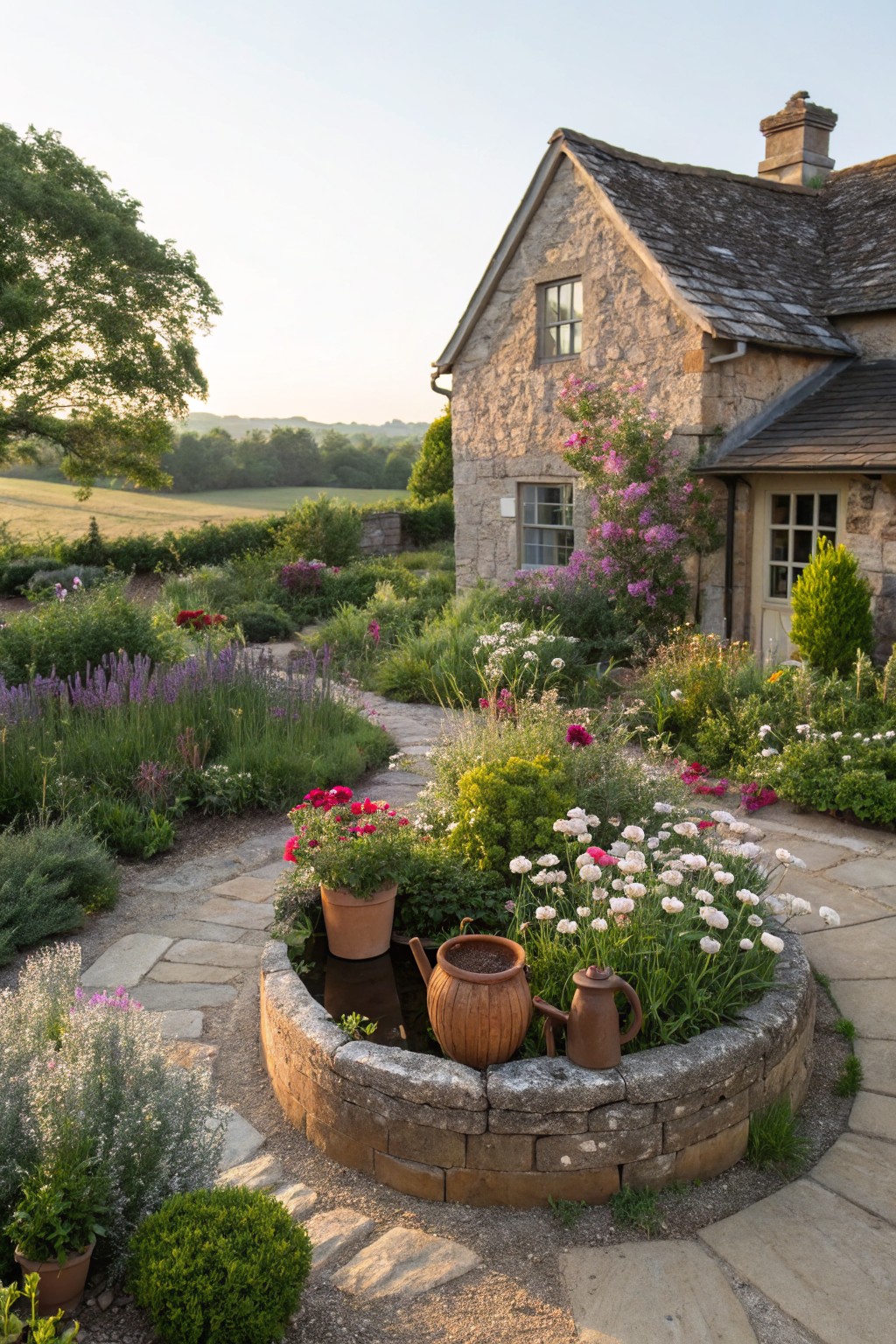
One simple way to add whimsy to cottage flower beds is with a circular stone well right in the center. It acts as a natural focal point, where you can tuck in potted geraniums and old watering cans on the edge. Plants like white daisies and lavender flow around it, making the whole bed feel full and inviting without looking too planned out.
This works best in a small front garden near the house path. Build it low with reclaimed stone, add a bit of water if you want birds around, and edge it with soft perennials that come back each year. It suits older stone homes but gives any yard that lived-in cottage feel. Just keep the scale right so it doesn’t overwhelm the space.
Meandering Stone Paths Through Flower Beds
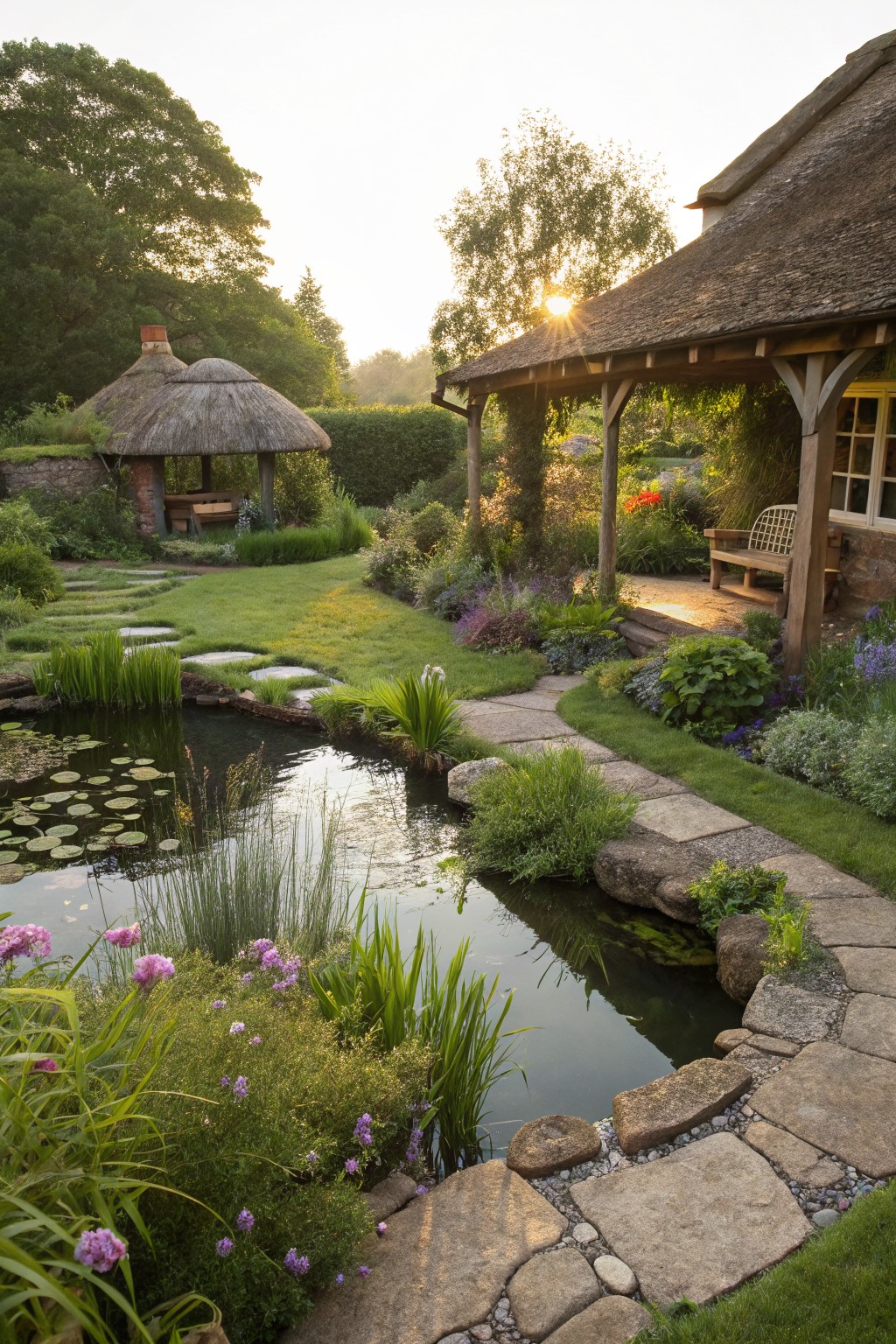
One simple way to give your cottage garden that whimsical feel is with meandering stone paths. These aren’t straight lines. They curve gently around flower beds and water features, like the dark pond edged with reeds and pink blooms here. It draws the eye along without rushing you, making the space feel bigger and more alive.
You can use this in small backyards or along a side garden. Pick flat stones in mixed sizes for a natural look, set them into grass or gravel with plants spilling over the edges. It works best where you want low upkeep… just mow around them and let the flowers do their thing. Avoid tight spots, though. Give the path room to breathe.
Cottage Flower Beds Edged in Brick
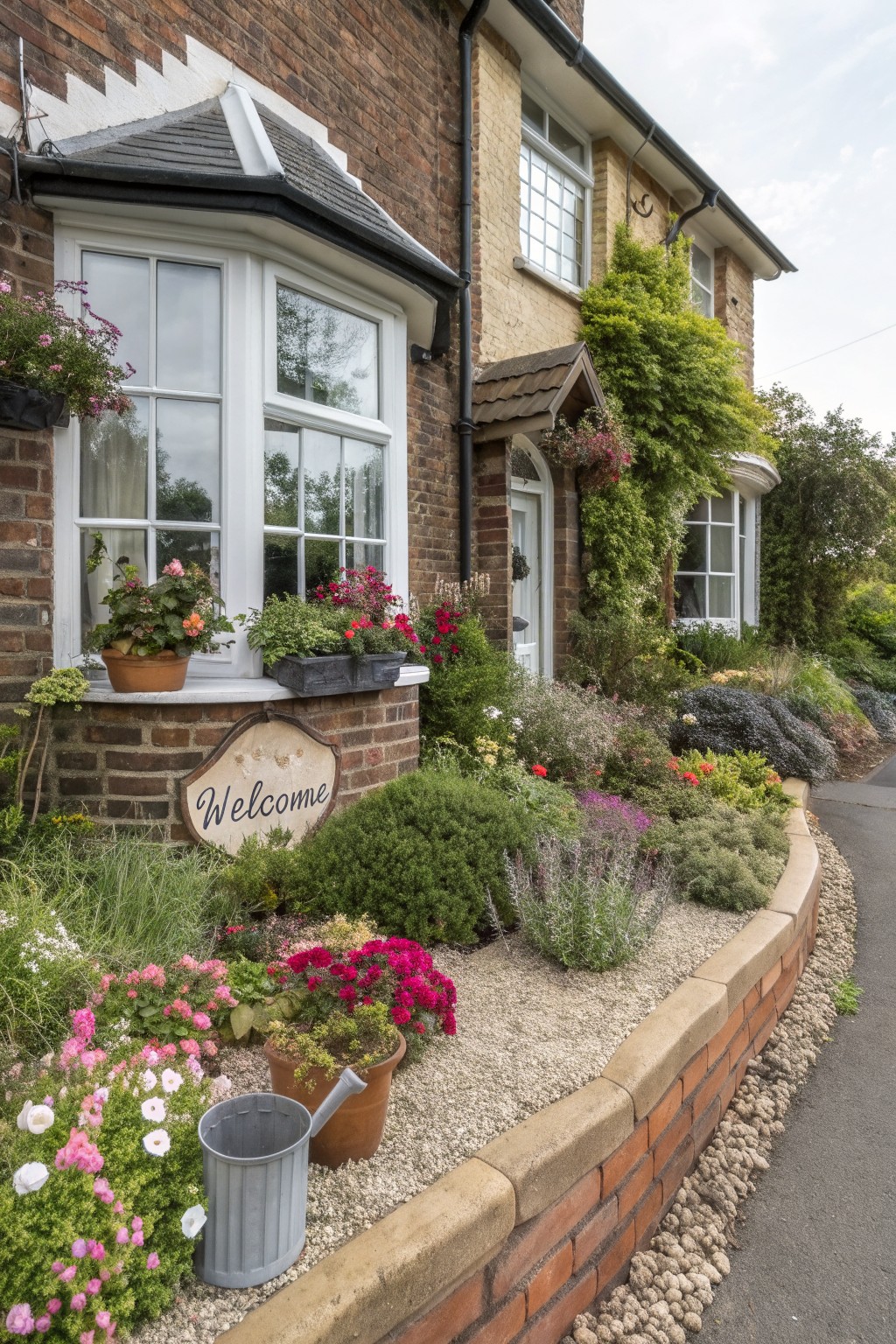
One straightforward way to give your front yard that cozy cottage feel is edging flower beds right up against the house with low brick walls. It matches the brickwork on older homes nicely and keeps soil and mulch from spilling onto the walkway. You see it here with beds curving along the drive, packed with pinks, roses, and trailing plants that spill over just enough for whimsy without getting wild.
These work best on homes with some brick or stone already, like bungalows or semis. Pick tough perennials and herbs for low fuss, and layer heights so taller stuff goes in back. Keep the edging about knee-high to avoid big retaining jobs. Just watch drainage so water doesn’t pool against the foundation.
Flower Beds Edged with Stone Walls
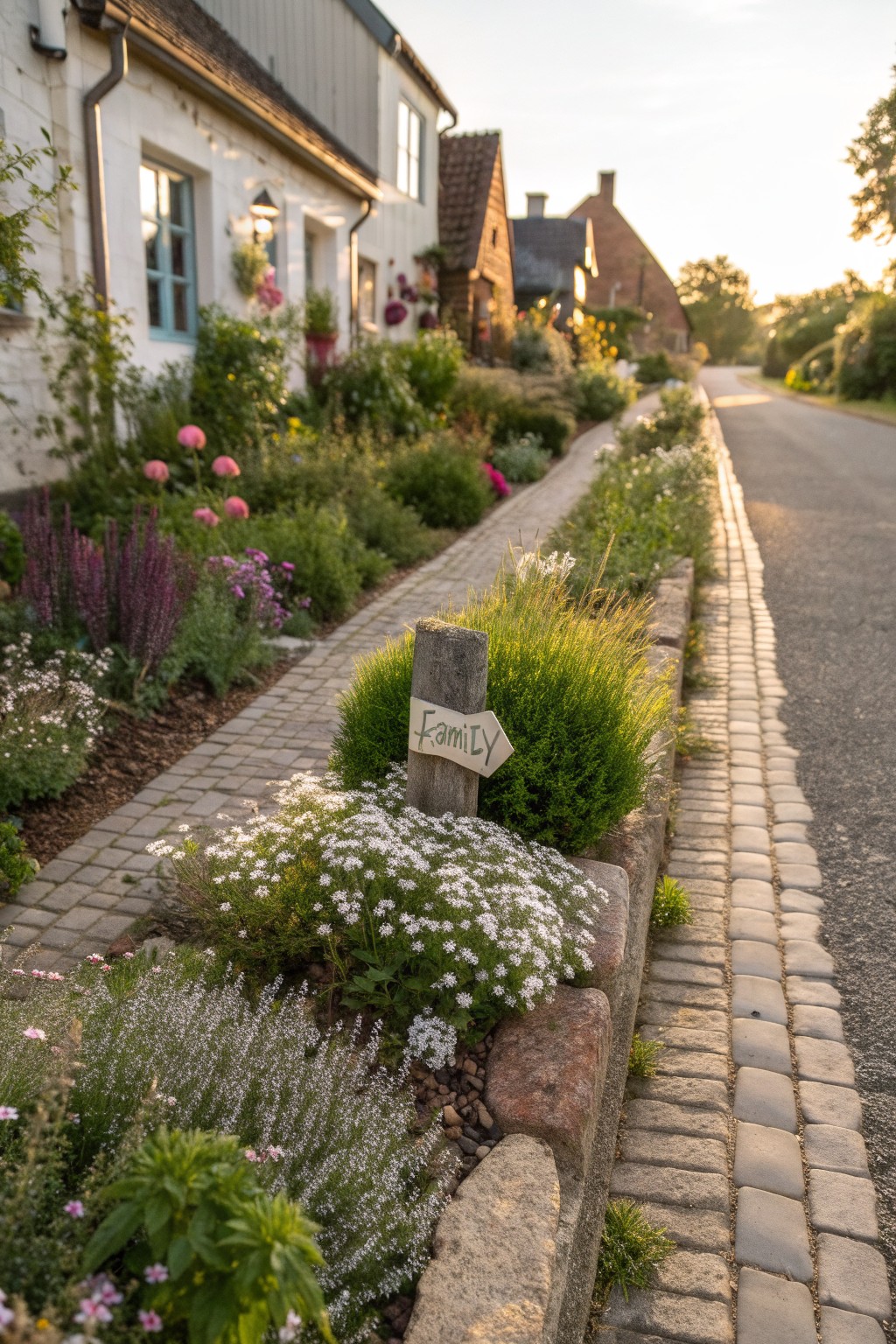
Tucked right along a cobblestone path, these flower beds use a low stone wall to keep everything neat and contained. The mix of tall grasses, pink blooms, and white clusters fills the space without spilling over. That simple edging ties the planting to the path, making the whole walkway feel like part of the garden. And that wooden post with the “Family” sign? It adds a sweet personal touch.
You’ll want this along side paths or front entries where space is tight. Pick tough perennials and shrubs that handle foot traffic nearby. Stone walls work on any slope, but keep them low so they don’t block the view. Watch the scale though. Too high, and it starts looking like a barrier instead of a frame.
Raised Beds Framing Garden Paths
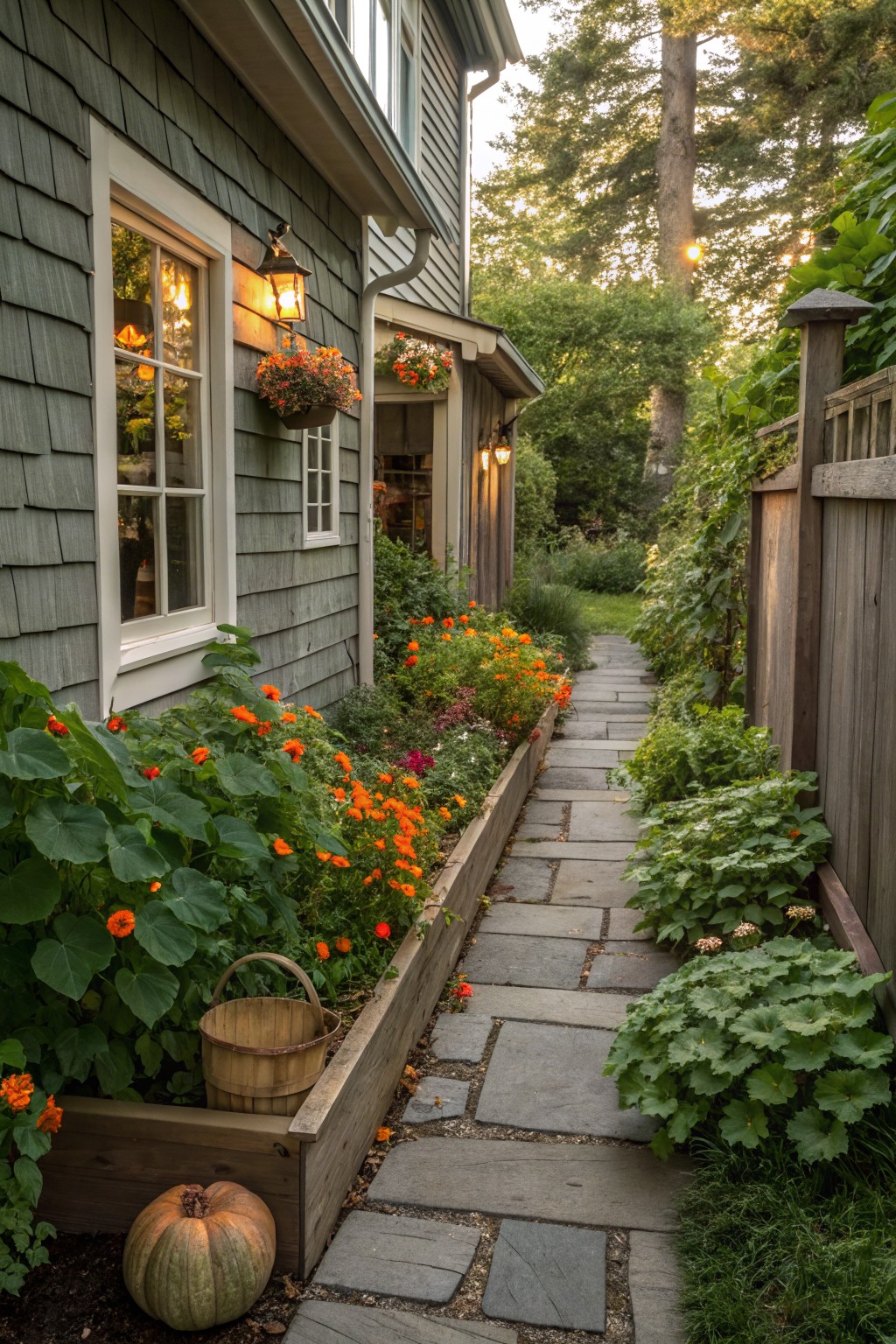
One straightforward way to build whimsy into a cottage garden is lining a walkway with wooden raised beds. These low planters hug the stone path here, packed with marigolds and pumpkin vines that spill right over the edges. The setup feels tidy yet overflowing, guiding you naturally toward the house without much fuss.
This works best in narrow side yards or along fences, where you want color close up but not crowding the way. Go for rough-sawn cedar boxes about a foot high, fill with easy annuals like nasturtiums or calendulas. Keep the path clear for walking, and add a pumpkin or two come fall… it nods to harvest without trying too hard.
Winding Paths Through Flower Beds
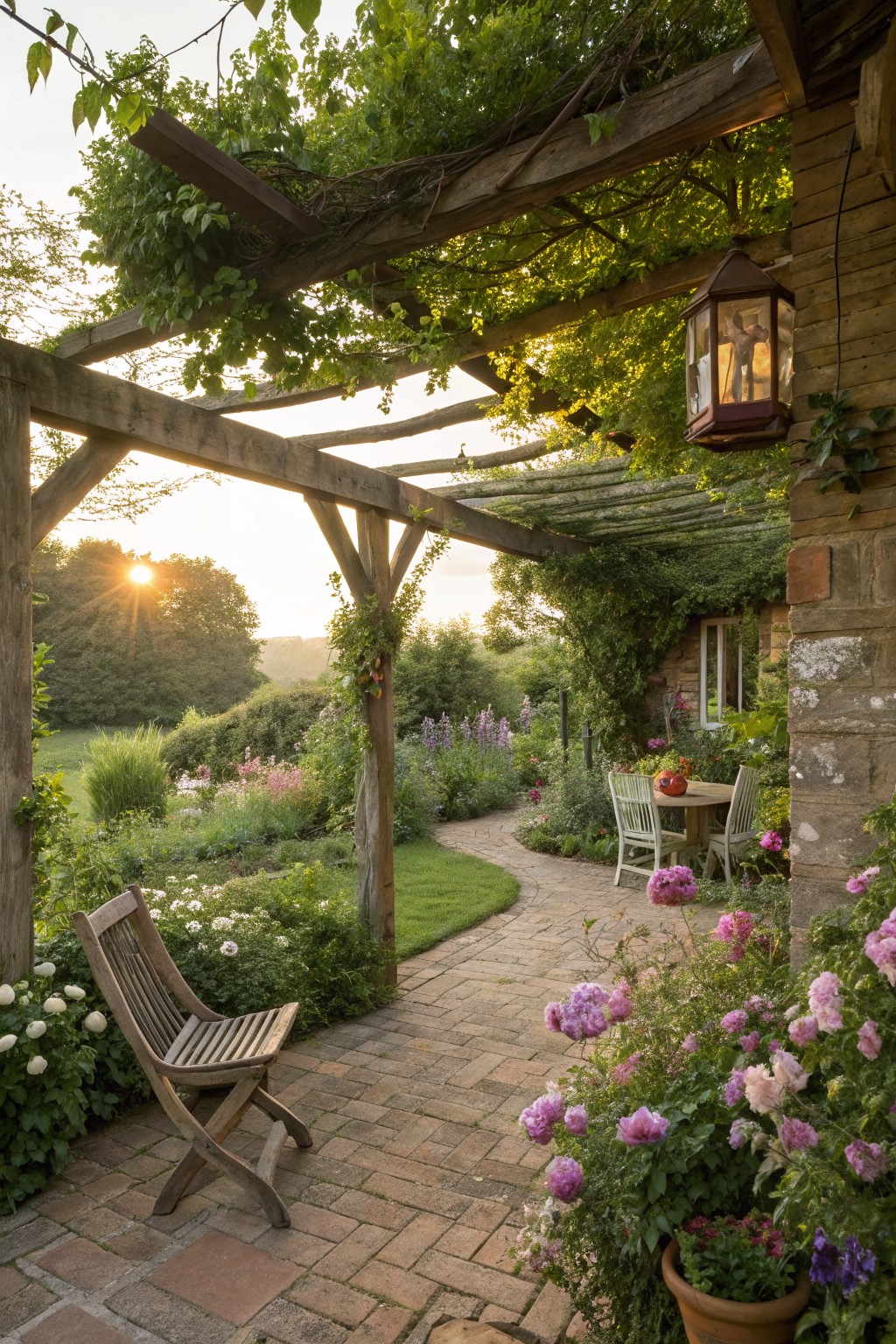
A simple winding brick path works wonders in a cottage garden. It pulls you along past beds full of pink roses and blue delphiniums, without feeling too straight or formal. Overhead vines on a wooden pergola keep it shady and tucked away, like a secret walk in your own yard.
Lay this out in side yards or along the house where space is tight. Use reclaimed bricks for that worn look, and plant drifts of perennials that spill over the edges. It fits older homes best… just watch that the path stays clear for easy walking.
Winding Gravel Paths Through Flower Beds
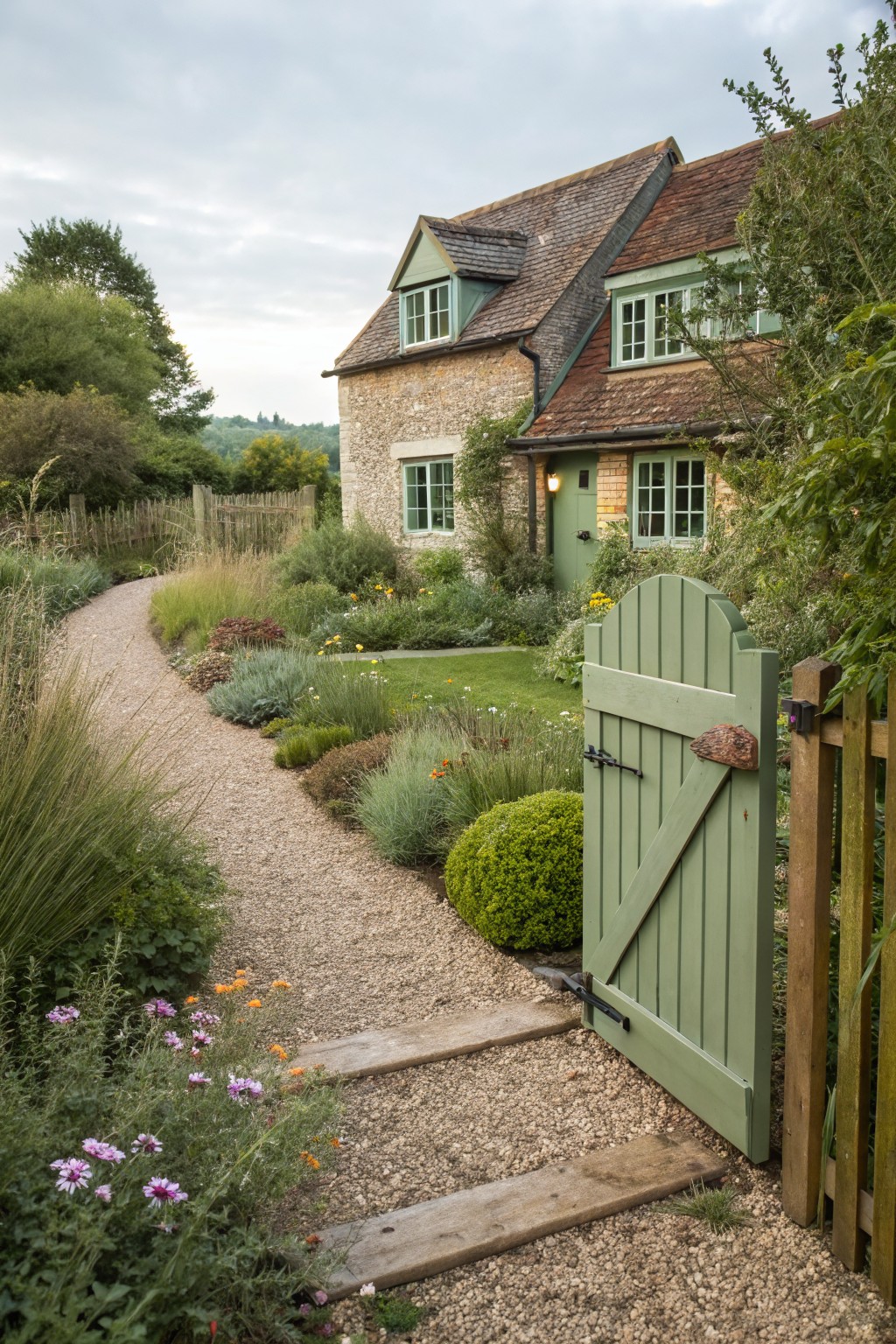
A gravel path like this one curves gently past beds packed with perennials, grasses, and low shrubs. It works so well because the loose stones fit the cottage feel, and the plants spill over just enough to soften the edges. That green arched gate at the end ties it all to the house without trying too hard.
Lay one out along your front walk or side garden. Use bigger gravel for less upkeep, plant drought-tough flowers like lavender or cosmos along the sides. Suits older homes or any spot wanting a relaxed garden vibe. Keep the path two feet wide so it’s easy to walk.
Brick Pathway Edged with Cottage Flowers
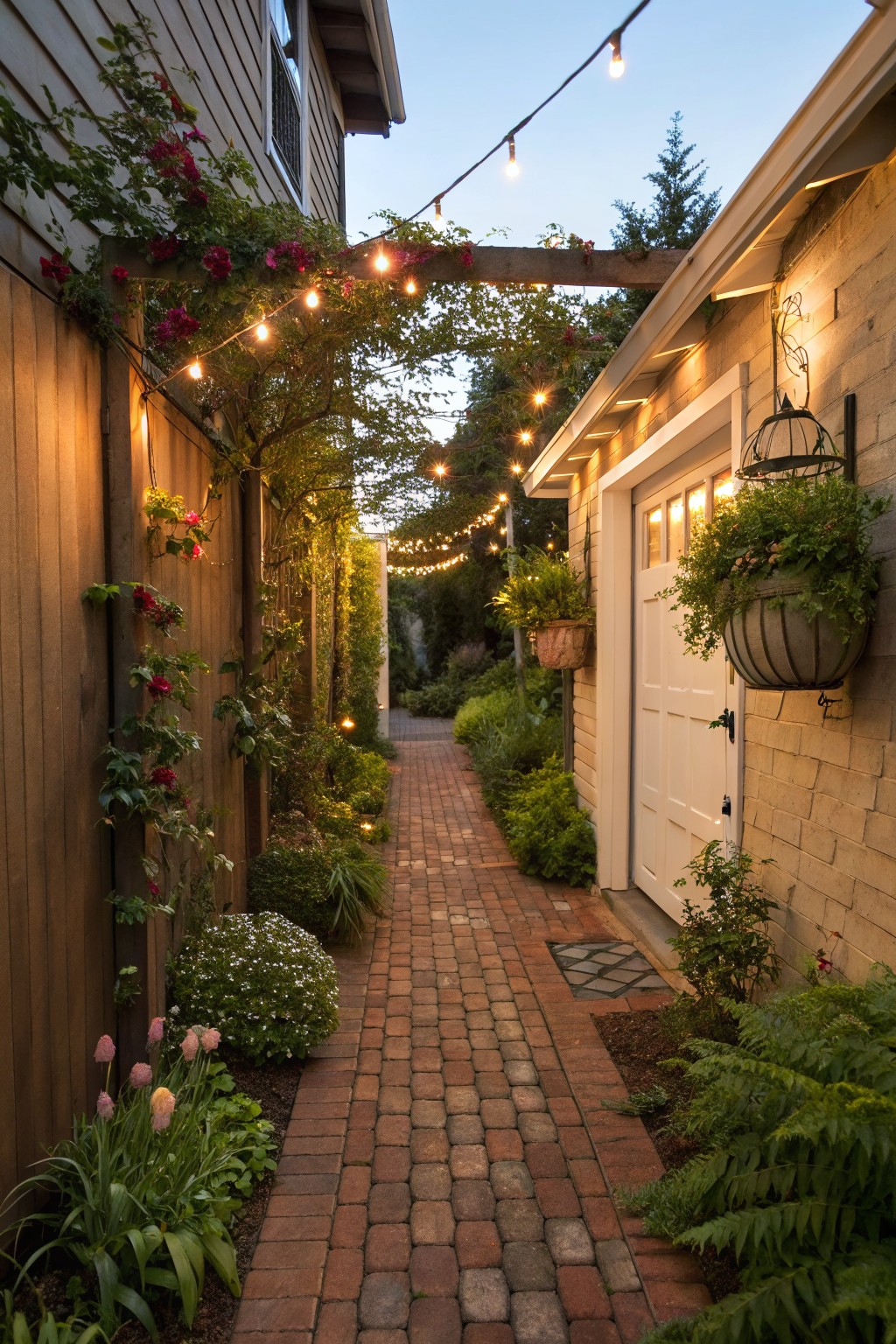
A narrow brick path like this turns a plain side yard into a cozy garden stroll. Flowers and climbers hug the edges tight, with roses spilling over the fence and little plants like tulips and ferns right up against the bricks. String lights overhead make it magical at dusk, but the real charm comes from how the beds frame the walk without taking extra space.
This works best in skinny alleys or paths to garages and back doors. Pick tough, repeat bloomers for the beds – nothing too floppy near the path. It suits older homes or cottages with wood fences, keeps mud off shoes, and feels private. Just keep the plants trimmed back so folks don’t brush against them.
Winding Stone Paths in Cottage Gardens
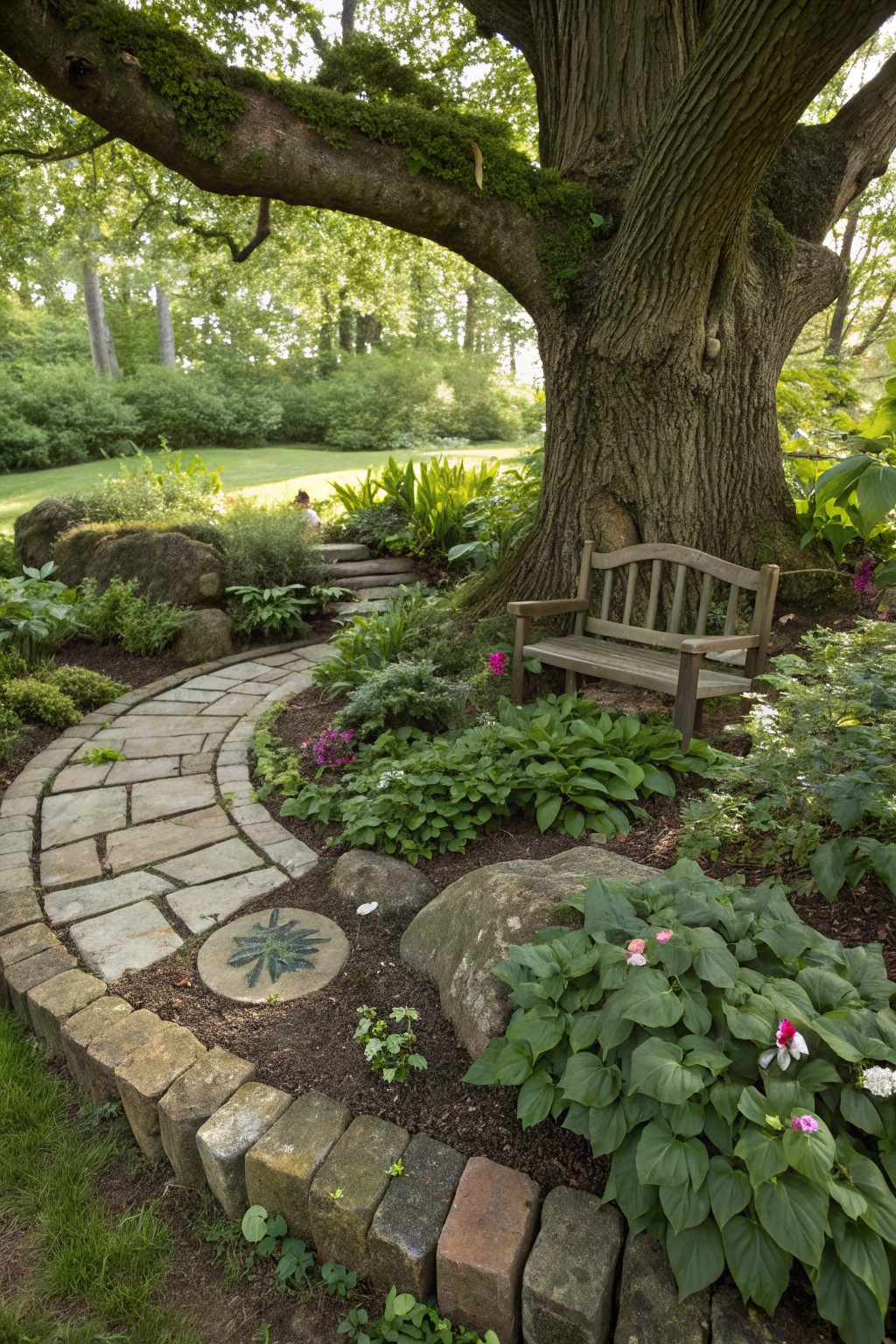
A winding stone path like this one feels just right for a cottage garden. It curves softly through flower beds packed with hostas and fuchsias, edged by simple bricks that keep things neat without being fussy. Leading to a bench under a big old oak, it makes the space feel secret and inviting, like you’re wandering into a storybook spot.
Set flagstones in a bed of sand for easy curves, then add brick edging from reclaimed pieces for that worn-in charm. This works great in smaller yards where straight paths would feel too rigid. Just watch the scale, so the path stays wide enough for two to walk side by side.
Flower Beds Along a Curved Path
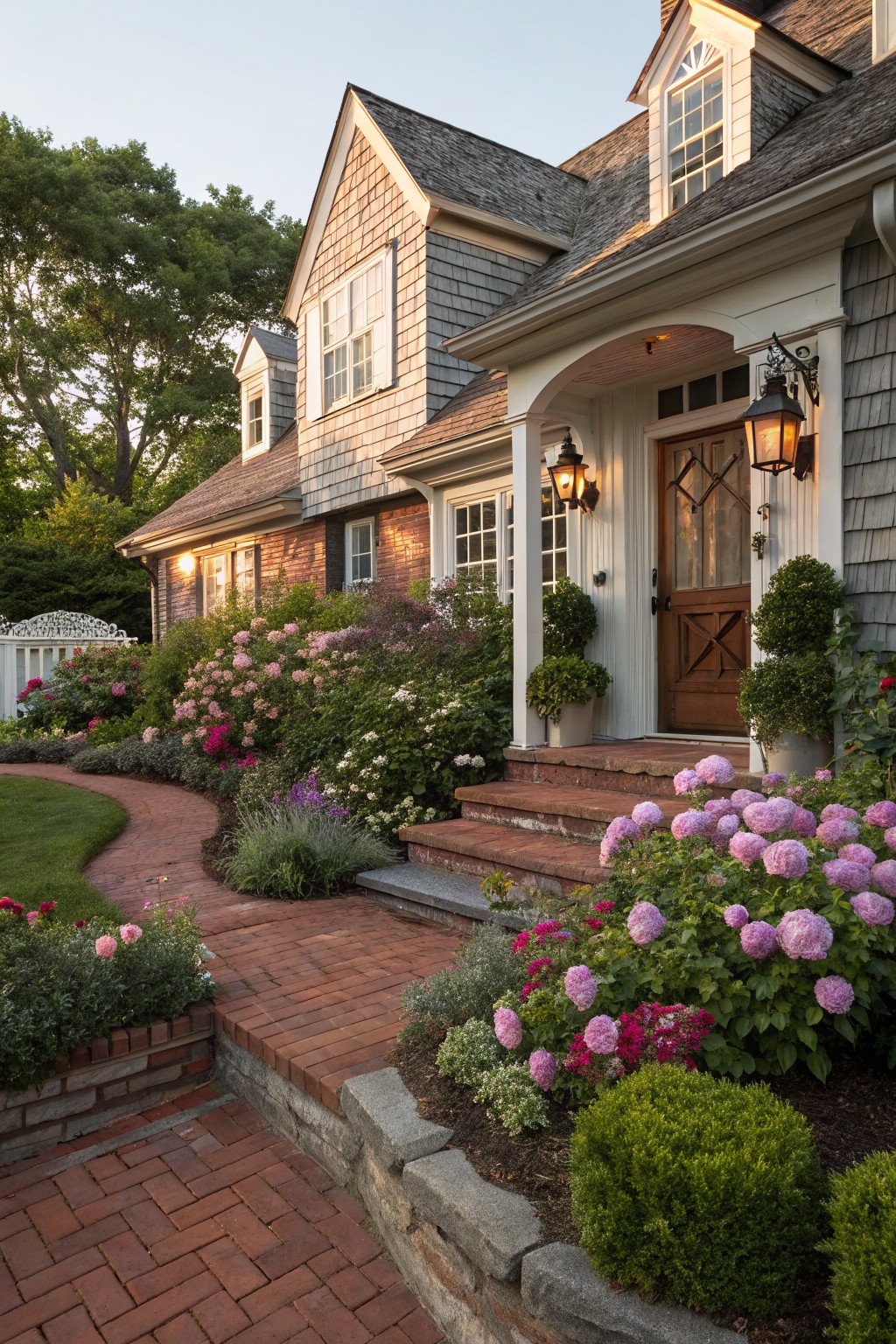
One simple way to give your cottage entry some charm is to plant flower beds right along a curving path. Here you see pink hydrangeas spilling over the edges, mixed with other bloomers like roses and lavender. It draws the eye up to the door without much fuss. The beds feel full but not crowded, and that soft curve makes the walk feel welcoming.
This setup works best on smaller front yards where you want to soften hard lines from steps or walls. Use low edging like brick to keep it neat, and pick plants that bloom over months for steady color. Stick to pastels if your house has shingles or clapboard. Watch the scale though. Too much height near the path can block the view.
Rustic Raised Beds for Cottage Gardens
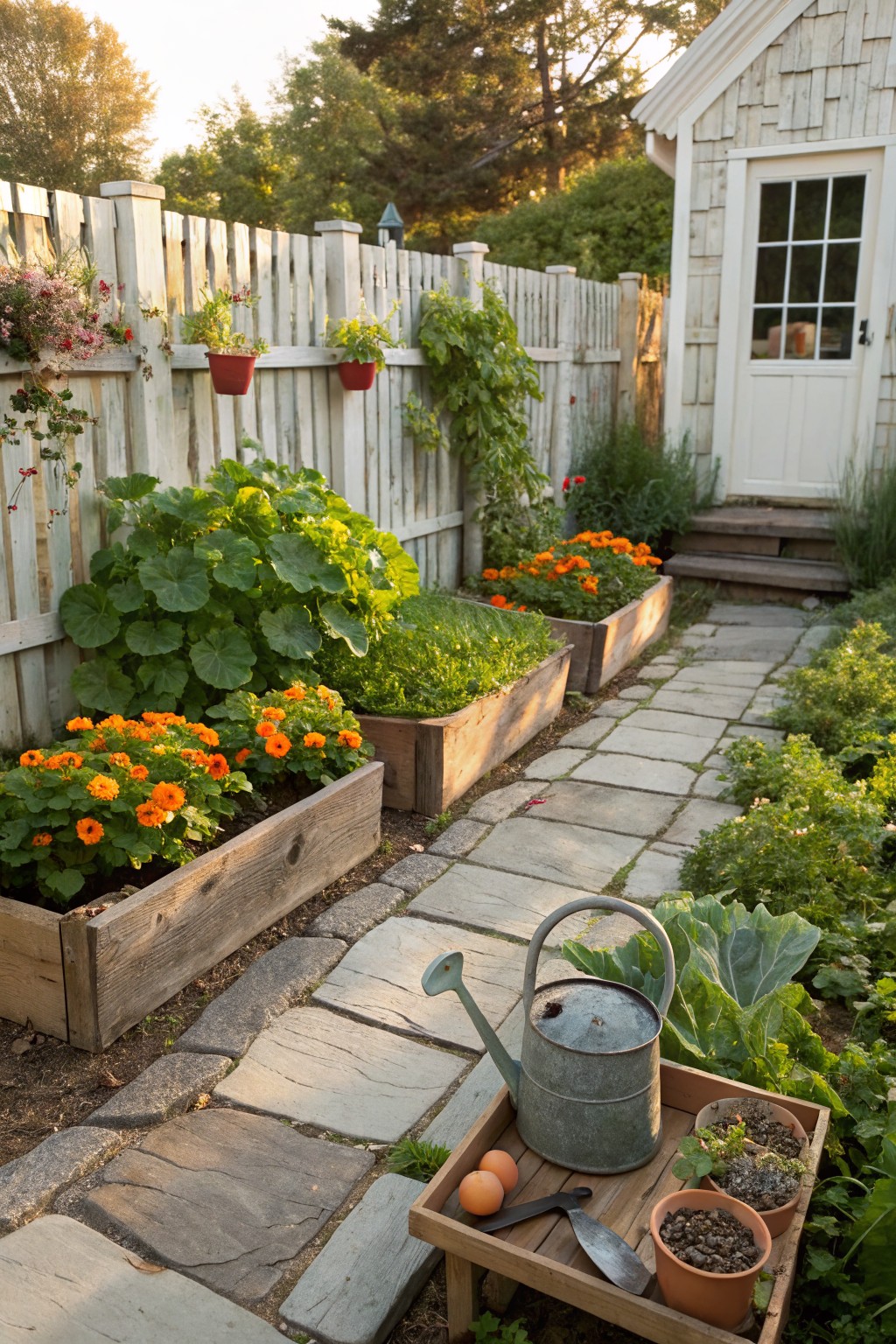
Raised beds like these, built from simple weathered wood, keep a cottage garden looking neat and productive. They’re lined up right along the path, packed with cheerful orange flowers and leafy greens that spill over just enough to feel relaxed. The wood blends right in with the natural setting, making the whole space feel tended but not fussy.
You can set these up in any sunny backyard spot, especially where ground is uneven or you want better drainage. Use old crates or lumber for that worn look, fill with good soil, and plant in layers for color all season. They suit smaller properties best, since they make weeding and harvesting straightforward without much stooping.
Frequently Asked Questions
Q: How do I squeeze a cottage flower bed into a tiny yard without it looking messy?
A: Choose a curved edge along your fence or path. Plant billowy fillers like cosmos in the back and spillers like creeping phlox upfront. This pulls the eye around and makes space feel bigger.
Q: What easy flowers give that whimsical cottage vibe right away?
A: Scatter zinnia and nasturtium seeds for quick pops of color. They tumble over edges and attract butterflies. Pair with lavender for scent that lasts.
Q: How do I fight weeds but keep the wild, untamed look?
A: Lay cardboard under mulch at setup. Pull weeds weekly by hand before they root. And… that loose charm stays put.
Q: What’s the cheapest way to fill out my flower bed fast?
A: Swap cuttings with neighbors or grab free divisions from local garden clubs. Seed annuals like bachelor’s buttons for budget blooms. They fill gaps while perennials settle in.
