


Hydrangeas can soften the space beneath a tree, but the planting works best when it respects the tree’s roots, shade, and mature size.
I find that a garden bed feels more settled when its layers have clear roles, with taller foliage near the trunk and lower plants or edging guiding the view outward.
The balance matters because hydrangeas need enough room and moisture, while crowded roots or a messy border can make the whole area look harder to care for.
These designs offer practical ways to combine shrubs, groundcovers, and paths while keeping the shape of the bed in mind.
I’d start with the layouts that suit the light and space already in my yard, then adapt the plant choices as the garden grows.
Layer Hydrangeas Around Mature Trees
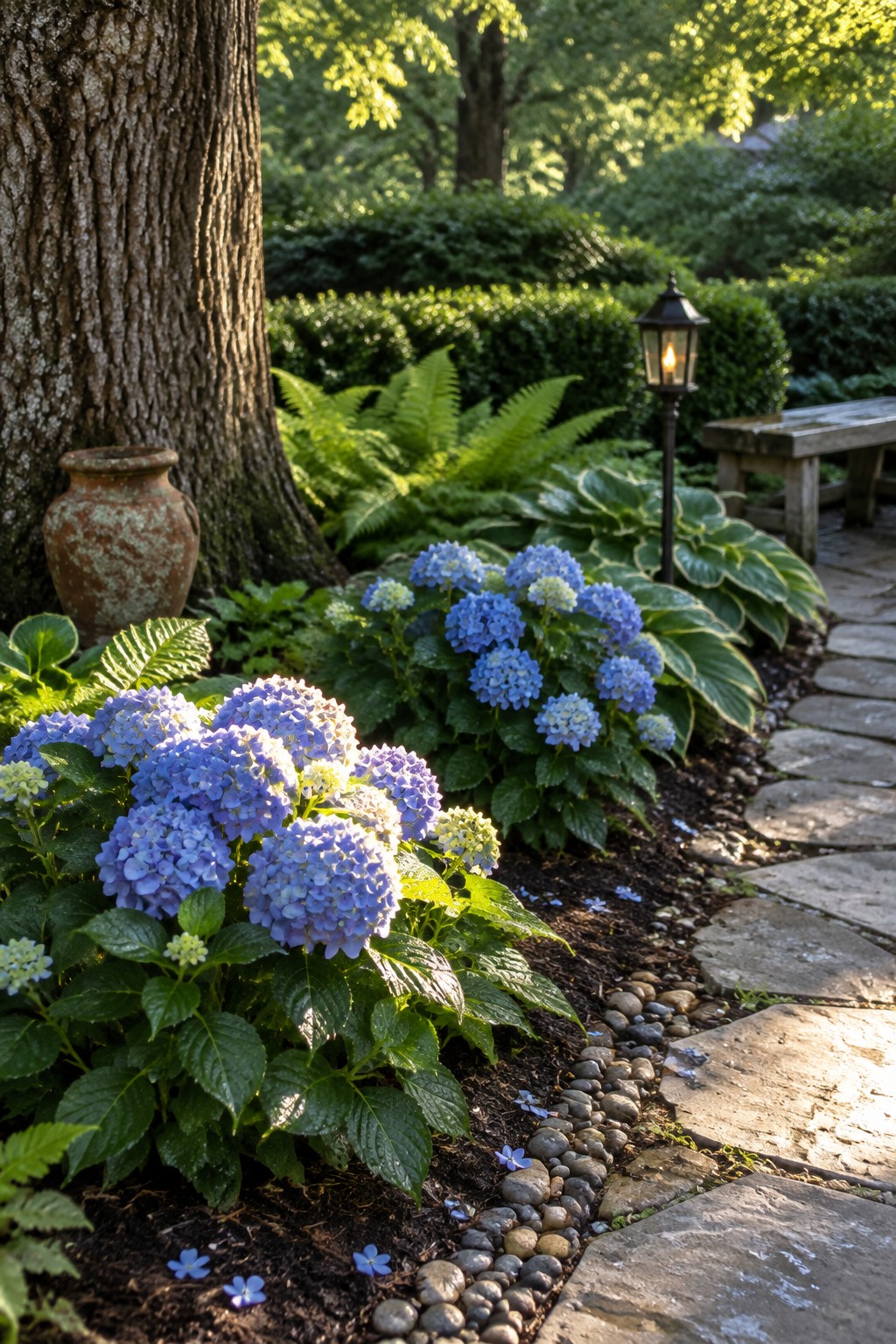
Layering hydrangeas around a mature tree gives a garden bed a fuller look without hiding its natural shape. Blue blooms stand out against the tree’s trunk and nearby leafy plants, while lower flowers help fill the front of the bed.
Plant hydrangeas where they’ll get enough light for good blooms, and leave room for each shrub to grow. Add smaller plants along the edge of the bed, but keep the tree’s base clear so the roots have space and the trunk stays easy to maintain.
Layer Hydrangeas Around a Tree
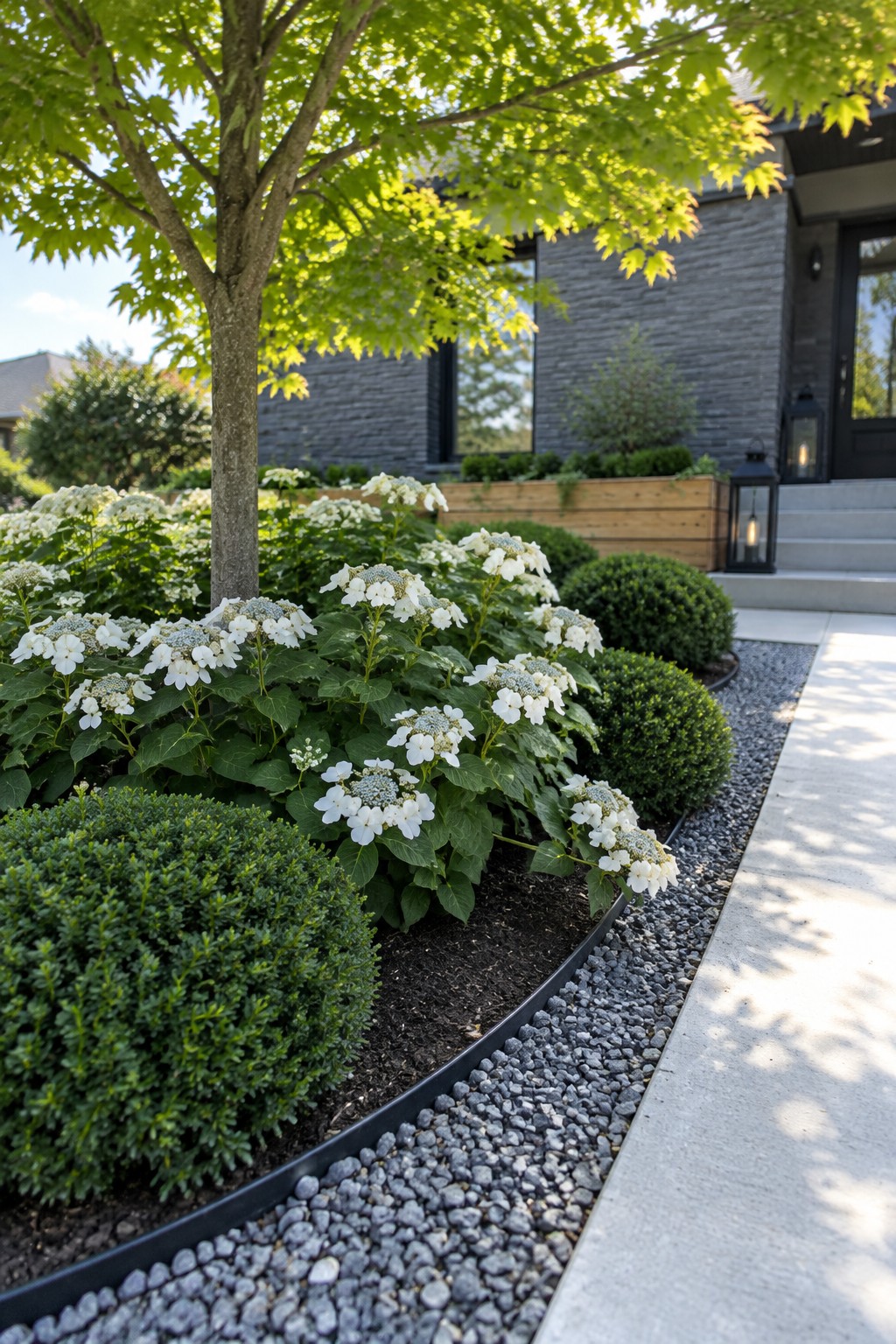
Hydrangeas planted in a curved bed around a tree make a simple way to give the garden more shape. The taller tree provides an upper layer, while the flowering shrubs fill the space below and form a soft border along the bed.
Keep enough room around the trunk for airflow and growth, and avoid piling soil or mulch against the bark. A curved bed works well beside a front walk, where a clean edge can keep the planting tidy without making it feel too formal.
Layer Hydrangeas Around Tree Bases
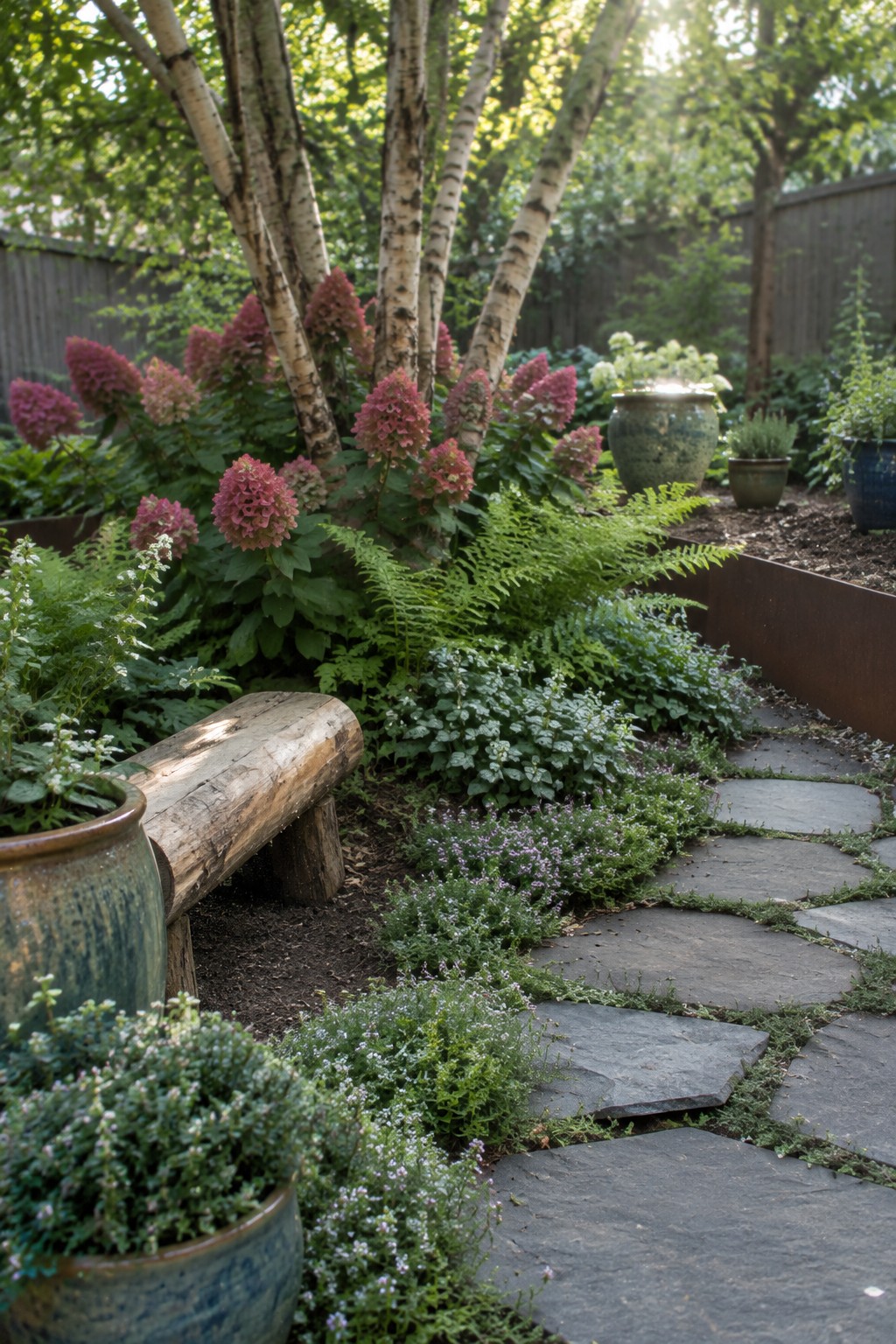
Planting hydrangeas around trees is an easy way to make a garden bed feel fuller without crowding it with too many kinds of plants. Their broad leaves and flower clusters stand out beneath the tree trunks, while lower groundcover can fill the gaps near the edge of the bed.
Give hydrangeas room to spread, and choose varieties suited to the light and soil beneath your trees. Ferns or other shade-tolerant plants can fill the front of the bed, but avoid planting too close to the trunks, where roots compete for water.
Build Layers Around a Coastal Tree
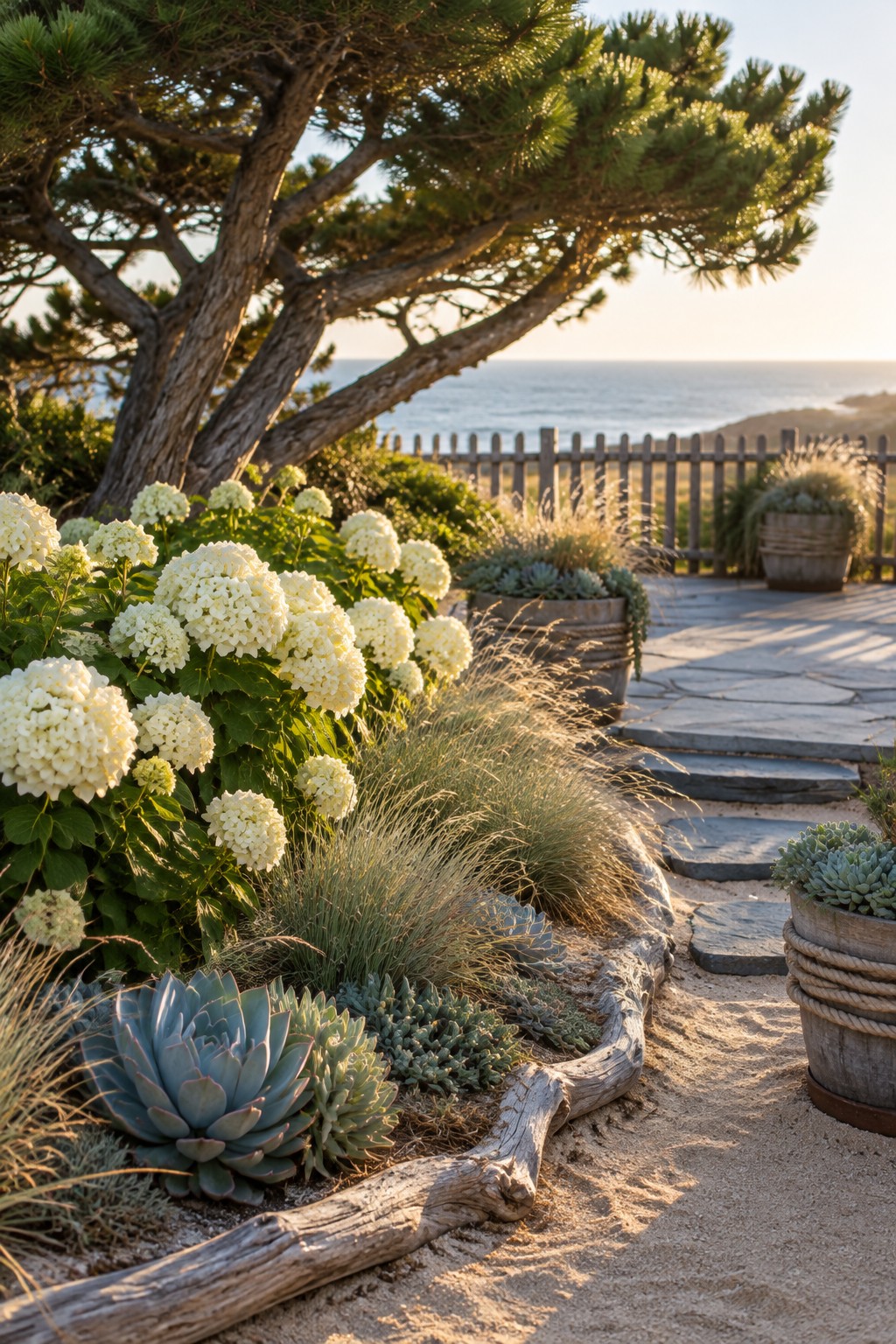
Hydrangeas and succulents can share a garden bed when they’re planted in distinct layers. The tall tree sets the structure, while the rounded hydrangea blooms fill the middle and low-growing succulents cover the front edge.
Use this approach where a tree leaves room for a generous bed, and choose plants that suit the light and soil beneath it. A curving stone or log edge can help separate the planting from a path, but leave enough space around the trunk.
Create a Small Garden Bed Around a Tree
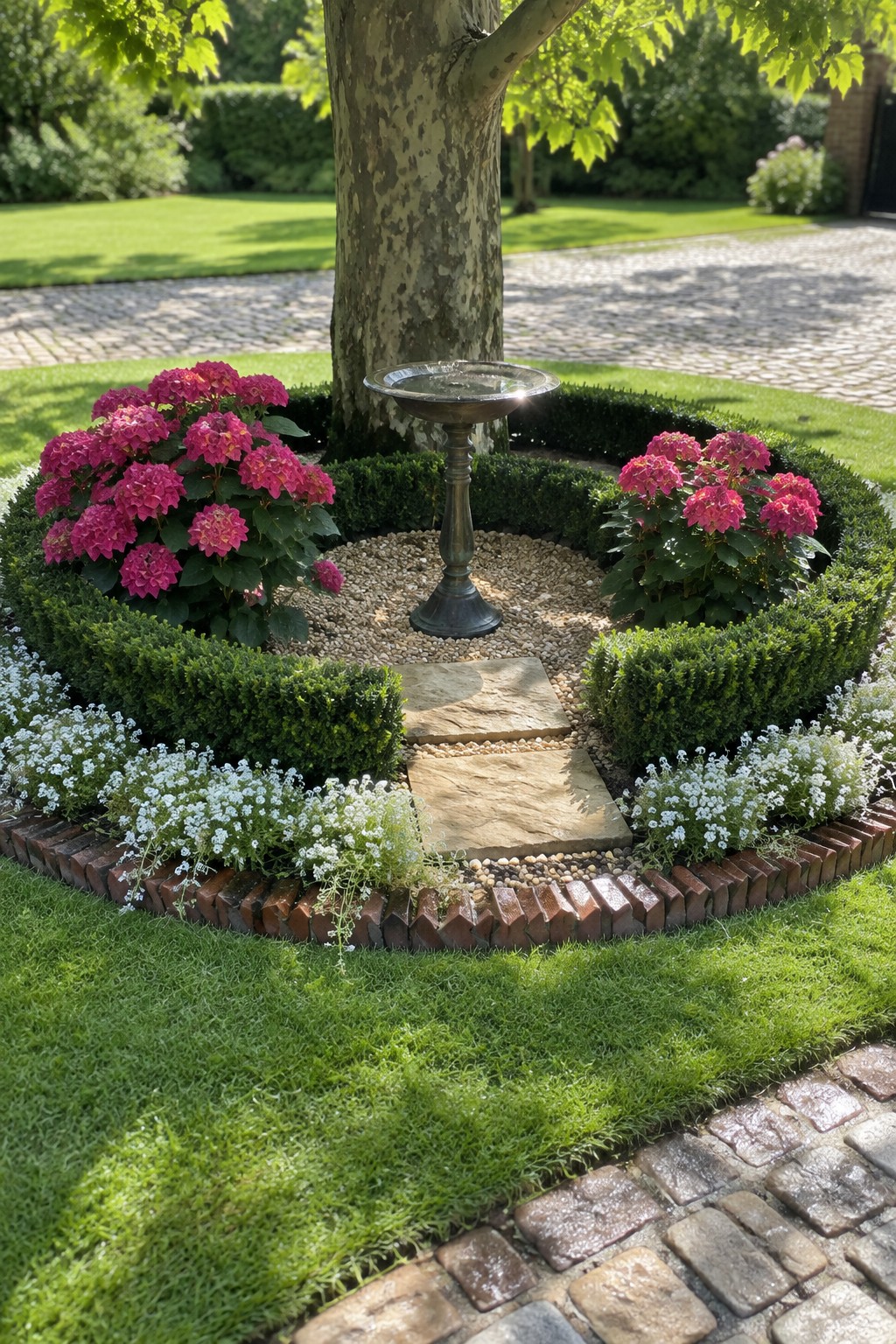
A circular bed can make a mature tree feel like part of the garden rather than something to mow around. Low boxwood edging gives the bed a clear shape, while hydrangeas add color in the open space near the trunk.
Keep the hydrangeas far enough from the tree to leave room for roots and airflow. This layout works well in a lawn where you want a defined planting area, but avoid crowding the trunk or letting the edging block water from reaching it.
Use a Curving Path to Shape the Garden Bed
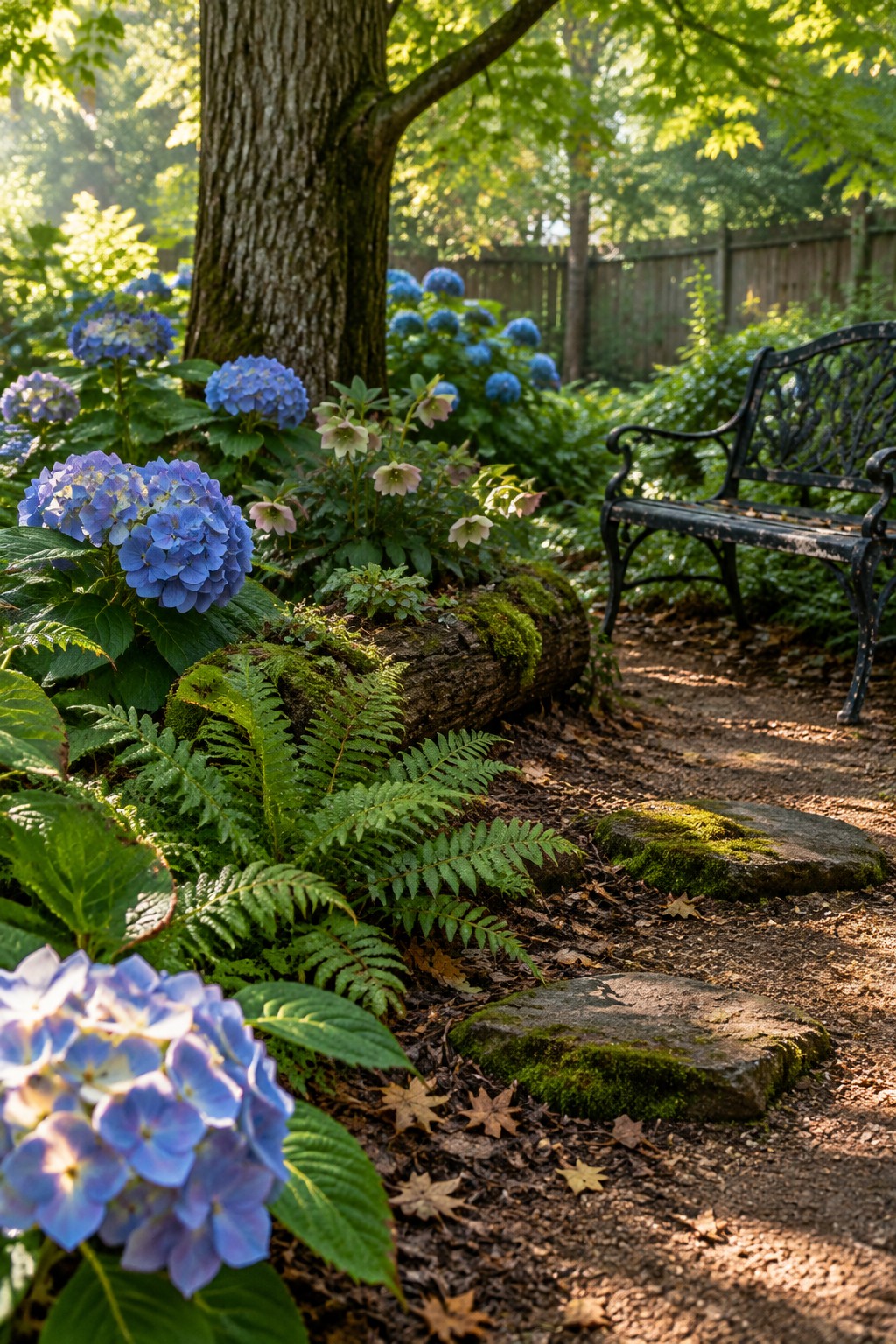
A simple stepping-stone path can give a tree-centered planting bed a clear shape without making it feel formal. The stones guide the eye through the garden, while hydrangeas and ferns fill the space alongside them.
Keep the route wide enough to walk comfortably, and set the stones firmly so they do not shift. This approach works well in a shaded garden where you want an easy way through the planting rather than a large paved area.
Build a Flower Bed Along a Garden Path
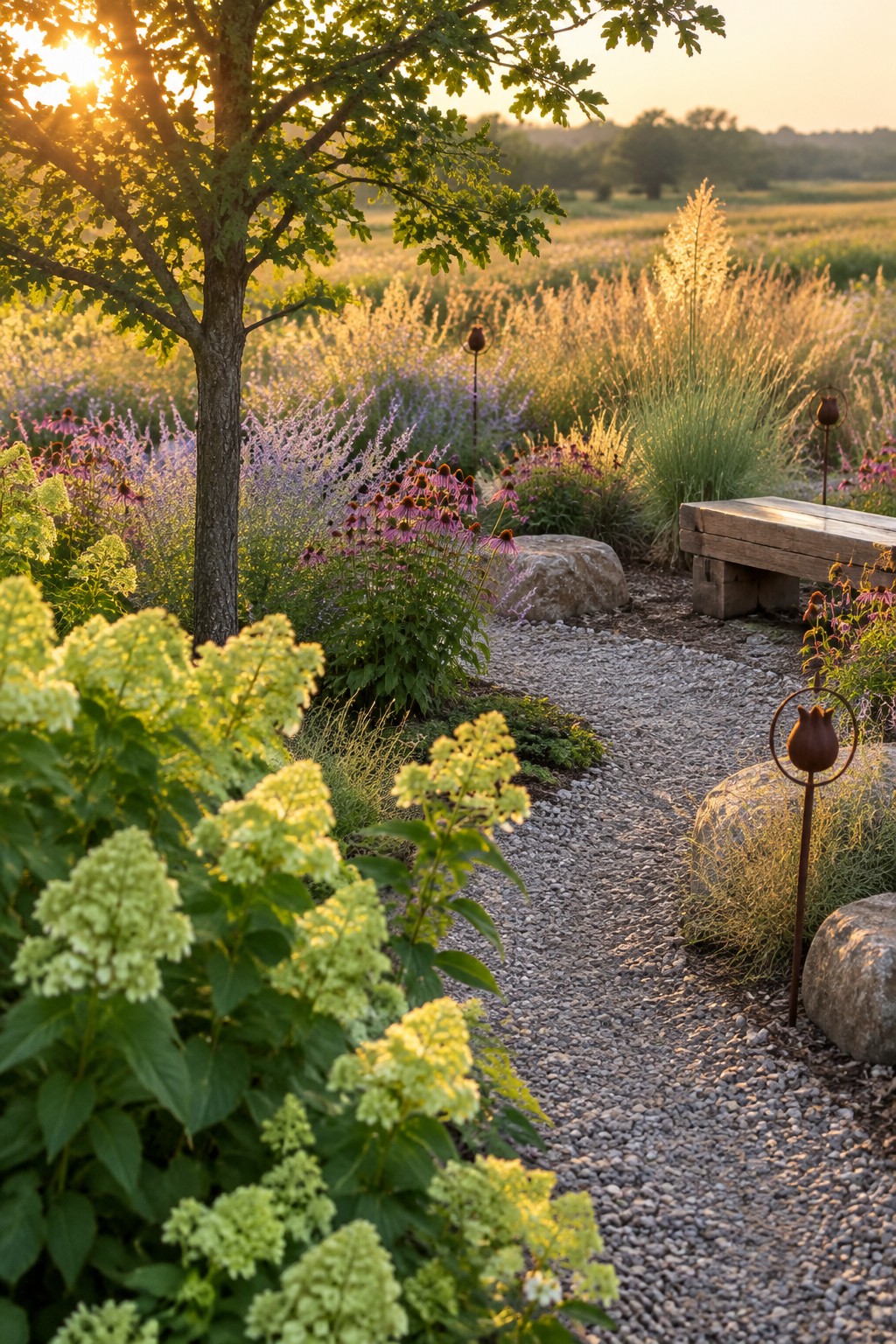
A winding path works well when plants grow in loose layers along its edges. Taller grasses and flowers can sit behind lower blooms, while a tree gives the bed a natural focal point. The planting feels full without blocking the route.
For a similar look, leave enough room for walking and choose plants that suit the light beneath the tree. Hydrangeas can fill the middle or front of the bed, but avoid packing them too close to the trunk, where roots compete for water.
Use a Curved Path to Shape Garden Beds

A gently winding path gives layered planting a clear edge and makes the garden feel easy to move through. Hydrangeas can spill slightly toward the terracotta paving, while low, clipped shrubs keep the bed neat around a mature tree.
This approach works well in a courtyard or narrow side garden where a straight path might feel rigid. Leave enough room for the hydrangeas to spread, and keep plants beside the paving trimmed back so the walkway stays clear.
Plant Hydrangeas Along a Garden Path
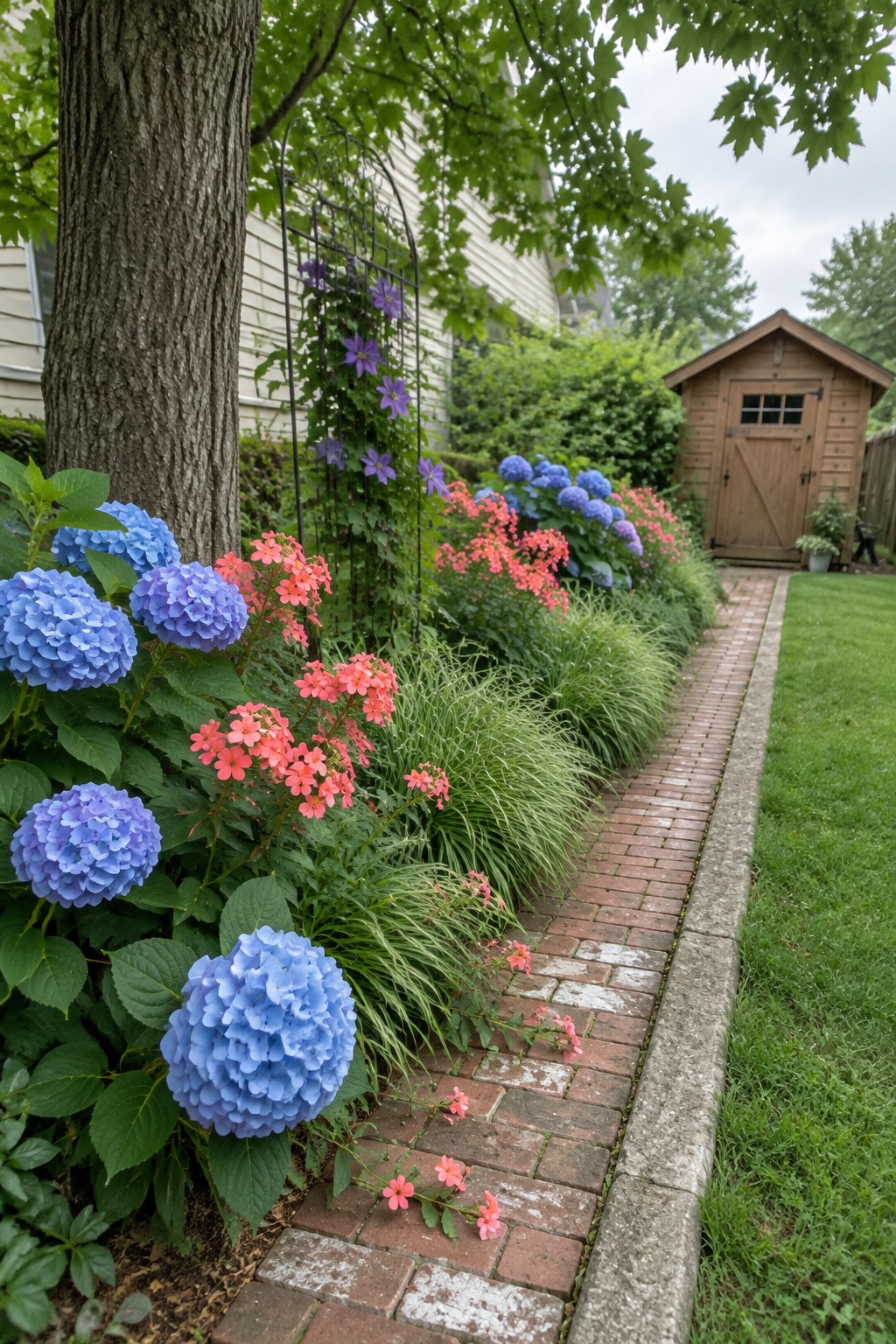
A narrow planting bed beside a brick path is a simple way to make a garden walk feel settled into the landscape. Hydrangeas bring broad patches of color, while smaller flowers and grasses fill the spaces closer to the path.
For a similar bed, plant taller shrubs toward the back and keep low-growing plants near the edge so they don’t spill across the walkway. This approach works well along a side yard path, especially where a mature tree provides some shade.
Use a Stone Edge to Define the Bed
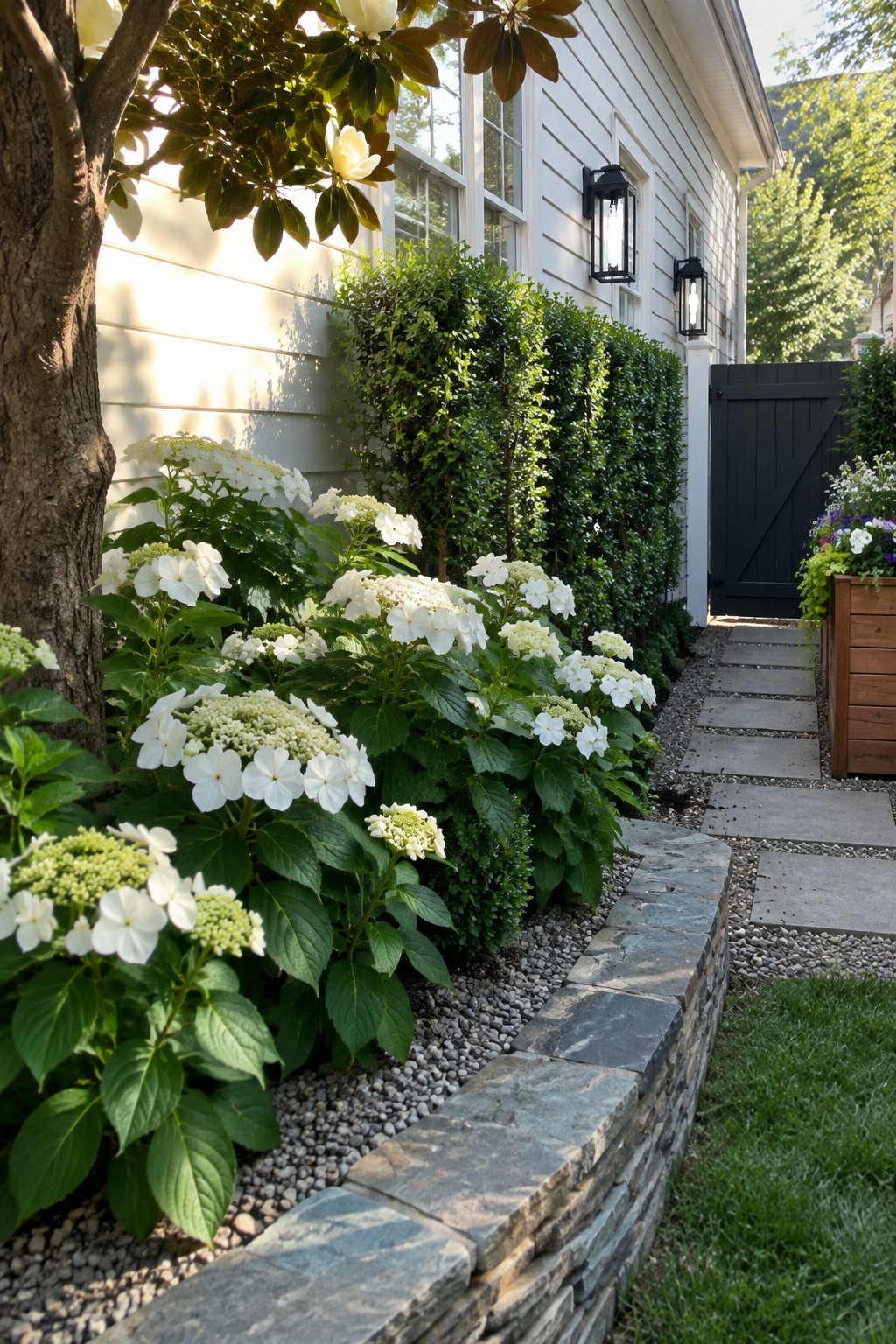
A low stone wall gives a hydrangea bed a clear shape and helps keep gravel and soil in place. It also makes a gentle curve feel deliberate without needing a formal garden layout.
This approach works well along a house or path where the bed needs a tidy boundary. Choose stones that sit comfortably with the home, and keep the wall low enough that it does not block the flowers or make the planting area hard to reach.
Use Stone Edging to Shape a Layered Bed
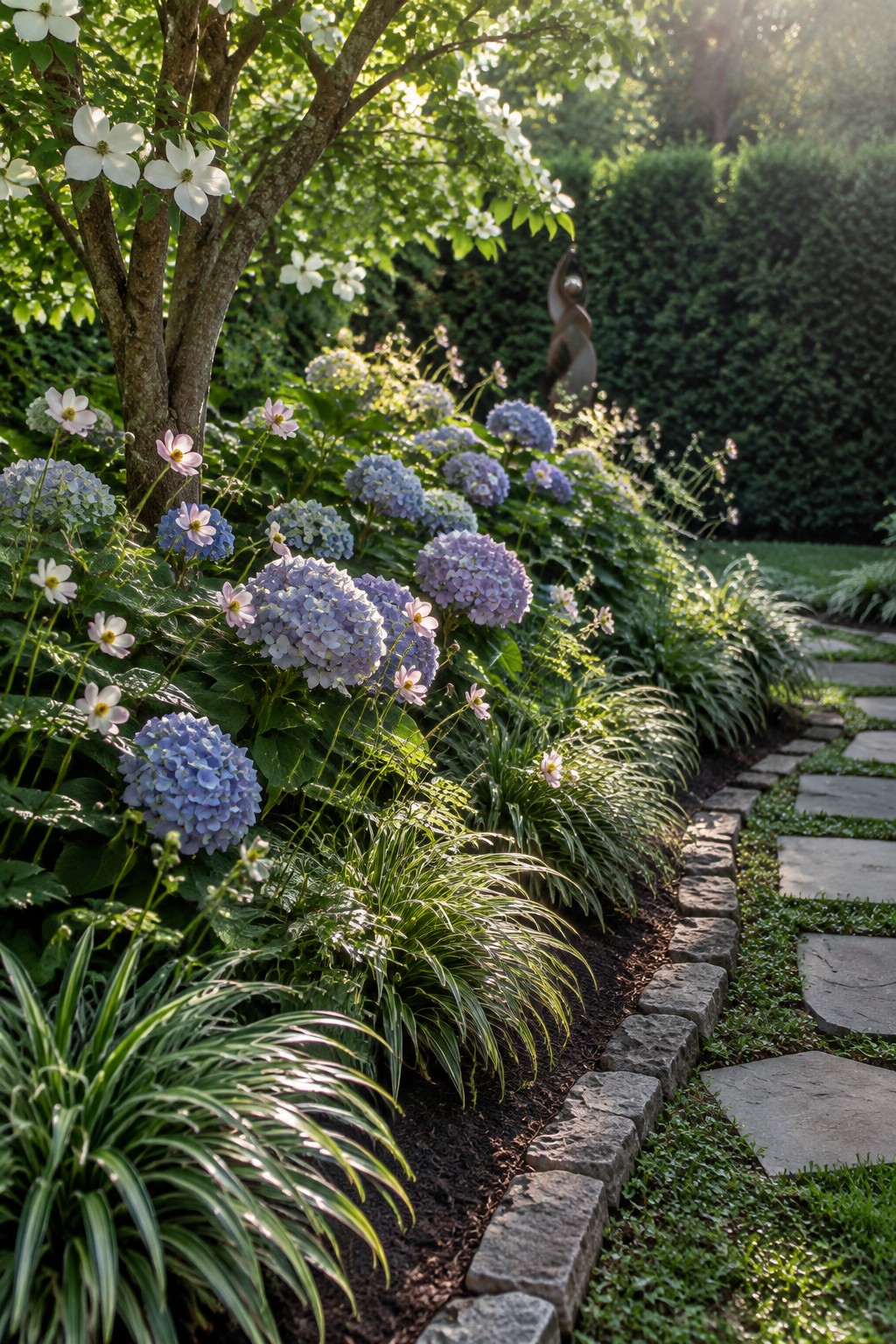
A low stone edge gives a planting bed a clear boundary while letting flowers and grasses spill naturally toward the path. It also helps keep mulch in place and makes a curved garden bed look tidy without feeling too formal.
This approach works well along a walkway or around a tree where the bed needs a little definition. Choose stones that sit low, and leave enough room inside the edge for hydrangeas to grow without crowding the path.
Let Hydrangeas Edge a Stone Garden Path
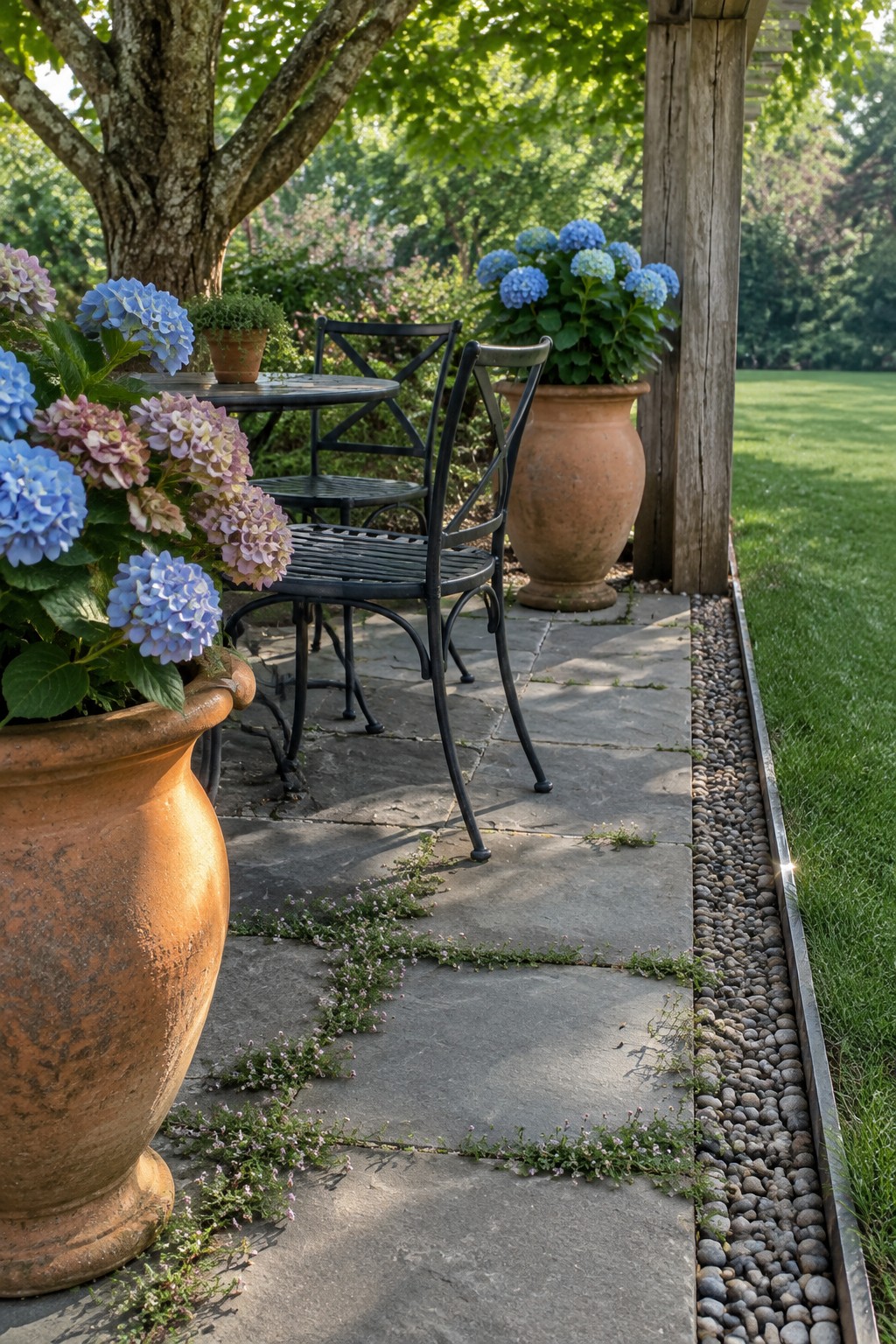
Hydrangeas planted beside a stone path make the route through a garden feel settled and established. Their broad flower heads and leafy growth soften the edge of the paving without hiding the path itself.
Use this approach along a walk near a mature tree, leaving enough room for the hydrangeas to spread and for people to pass comfortably. A few plants can be enough, especially where the path already has a clear, simple shape.
Build Garden Beds Around a Stone Terrace

A stone terrace can sit comfortably in the garden when planting beds rise around it in gentle layers. Hydrangeas beneath a mature tree bring a fuller edge to the stonework without blocking the steps.
Keep taller plants near the tree and lower growth along the terrace wall so the bed stays easy to see and care for. This approach suits sloped yards, but leave enough room beside steps for clear footing.
Use Stepping Stones to Lead Through a Tree Bed
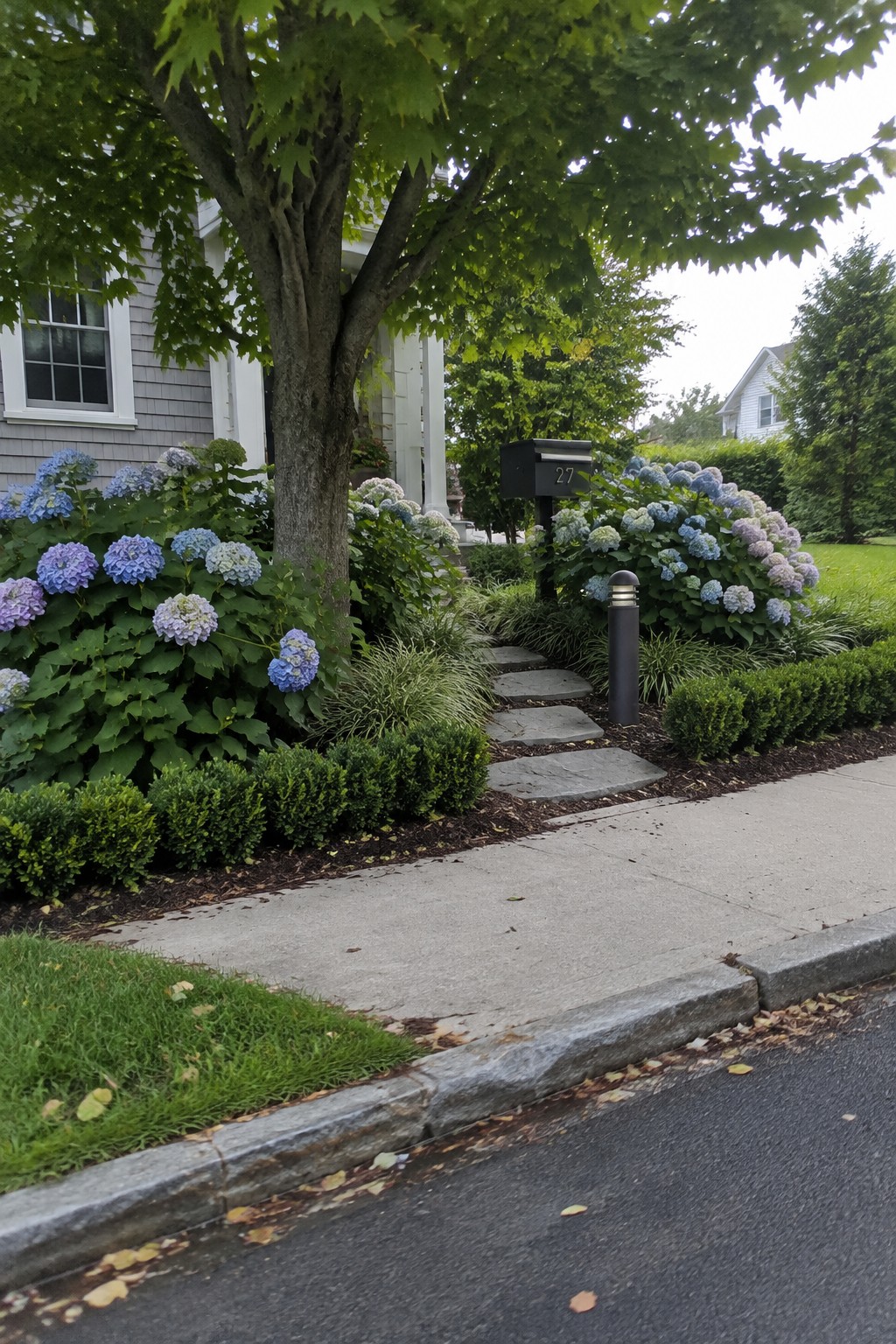
A few broad stepping stones make a practical route through a planted bed without cutting a wide path through the flowers. Here, they pass between hydrangeas and low grasses, making it easier to reach the house while keeping the planting full.
This works well in a small front garden where a walkway needs to fit around an established tree. Set stones far enough apart for a comfortable stride, and leave room for plants to spread without covering the walking surface.
Use Hydrangeas to Link Garden Beds and the Pool
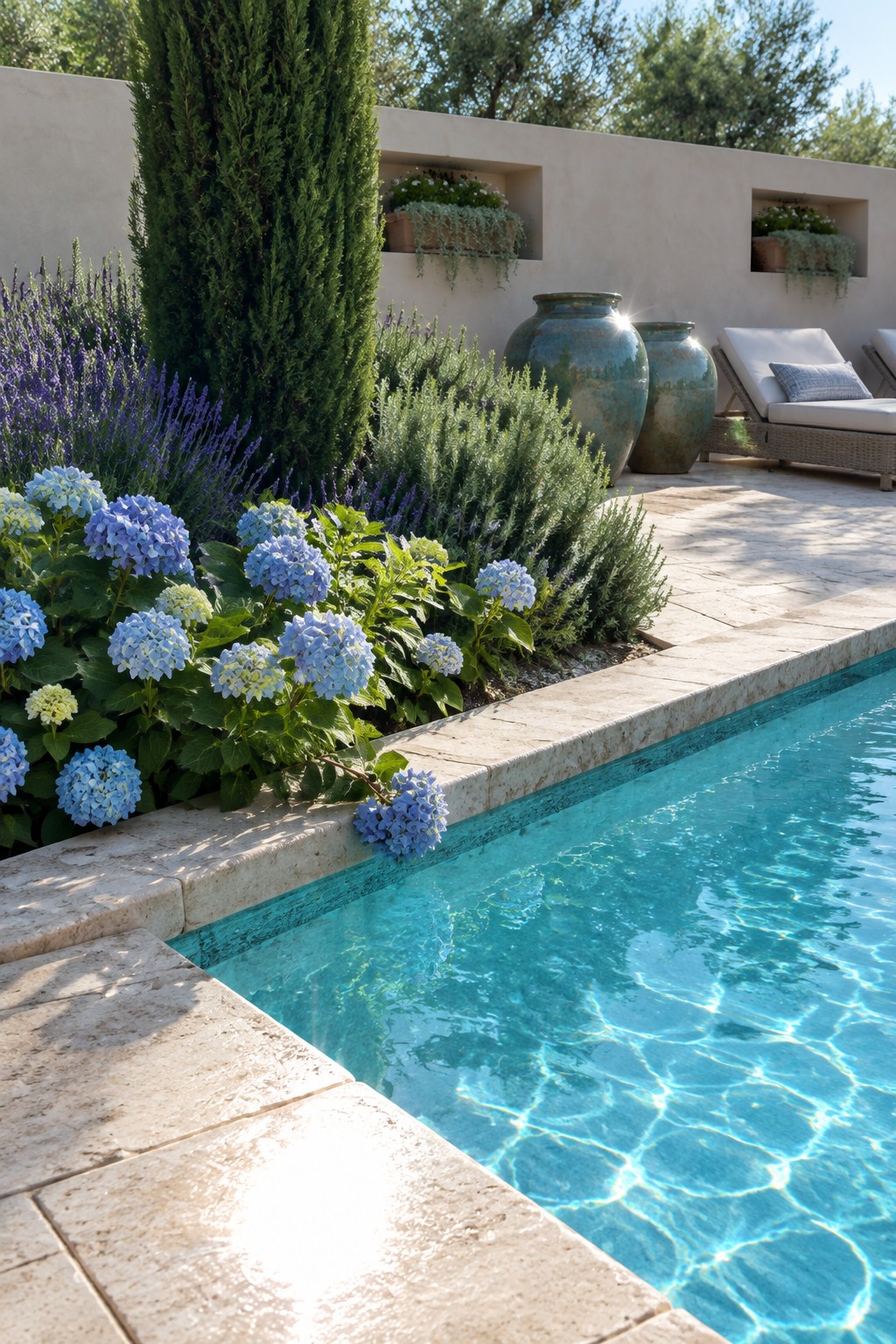
Hydrangeas can help a planted bed feel connected to nearby hardscaping. Here, blue blooms spill toward the pool edge, while taller shrubs behind them give the planting a clear layered shape.
This approach works well beside a pool or patio where a garden bed meets a paved surface. Leave enough room for plants to spread without blocking the walkway, and choose varieties suited to the amount of sun and moisture in the spot.
Give Hydrangeas Room Around the Tree
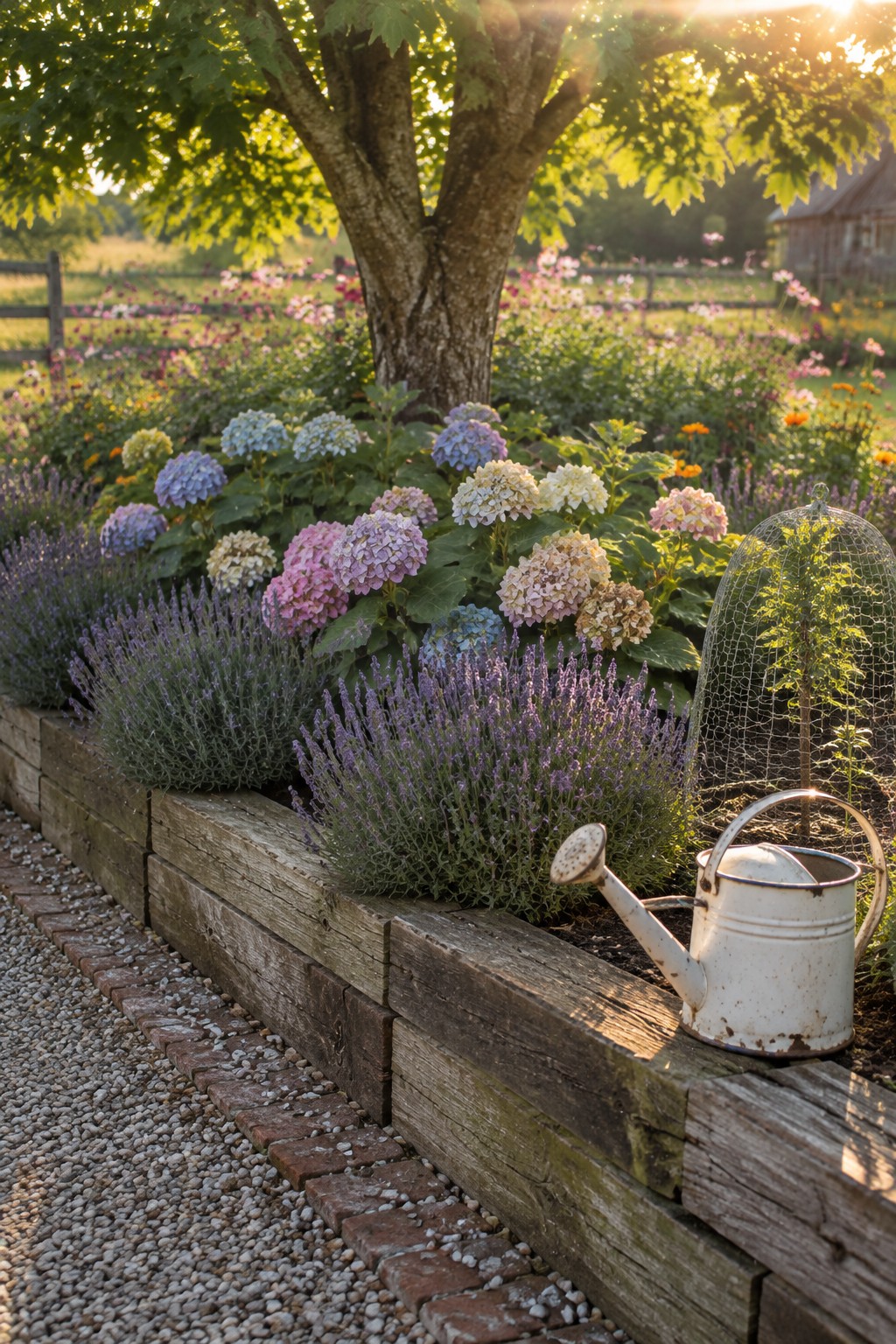
Layering hydrangeas around a mature tree makes a garden bed feel full without relying on one kind of plant. The broad flower heads stand out among lower plants, while the tree gives the bed a natural center.
Leave space around the trunk so air can circulate, and choose hydrangeas suited to the light beneath the canopy. A low edging or path can help keep the planting contained as it fills in.
Use Stepping Stones to Shape a Garden Path

A gravel path with broad stepping stones gives a garden bed a clear route without making it feel formal. Hydrangeas can soften the edges, while a small tree adds height and shade to the planting.
This approach suits a narrow side garden or a tucked-away corner. Leave enough space between the stones for a comfortable stride, and keep taller plants from leaning into the walking area.
Frequently Asked Questions
Q: Can hydrangeas grow under a tree?
A: Yes, if the spot gets enough light and the tree’s roots don’t crowd the planting area. Choose a hydrangea suited to the shade level, and water it regularly while it gets established.
Q: How far from the trunk should I plant hydrangeas?
A: Leave space around the trunk rather than planting right against it. A few feet gives the hydrangea room to grow and helps you avoid digging into large tree roots.
Q: Will hydrangeas compete with tree roots for water?
A: They can, especially beneath thirsty trees or in dry weather. Check the soil often and water slowly at the base of the shrubs when it feels dry.
Q: What can I plant between hydrangeas and the tree trunk?
A: Low-growing shade plants or a layer of mulch can fill the gap without crowding the hydrangeas. Keep mulch a little away from both the trunk and the shrub stems.
