

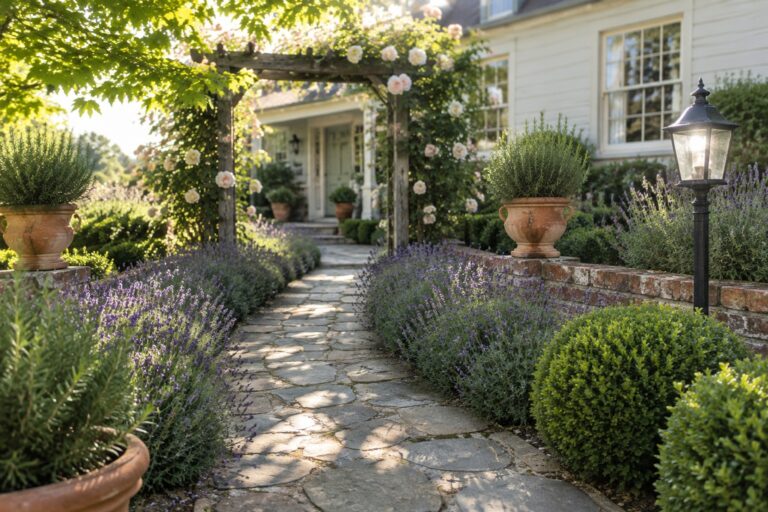
A walkway can feel welcoming before anyone reaches the door, and the planting along its edges shapes that first impression.
I like lavender for this setting because its scent, soft color, and upright form add character without making a path feel crowded.
The layout matters, though: plants need enough room to grow, and clear edging helps keep the route easy to follow.
A simple border may suit a narrow entrance, while staggered clumps or mixed plantings can bring more depth to a wider path.
These ideas offer practical ways to adapt lavender to your walkway, from choosing a planting pattern to deciding where a little structure would help.
Let Lavender Edge a Garden Path
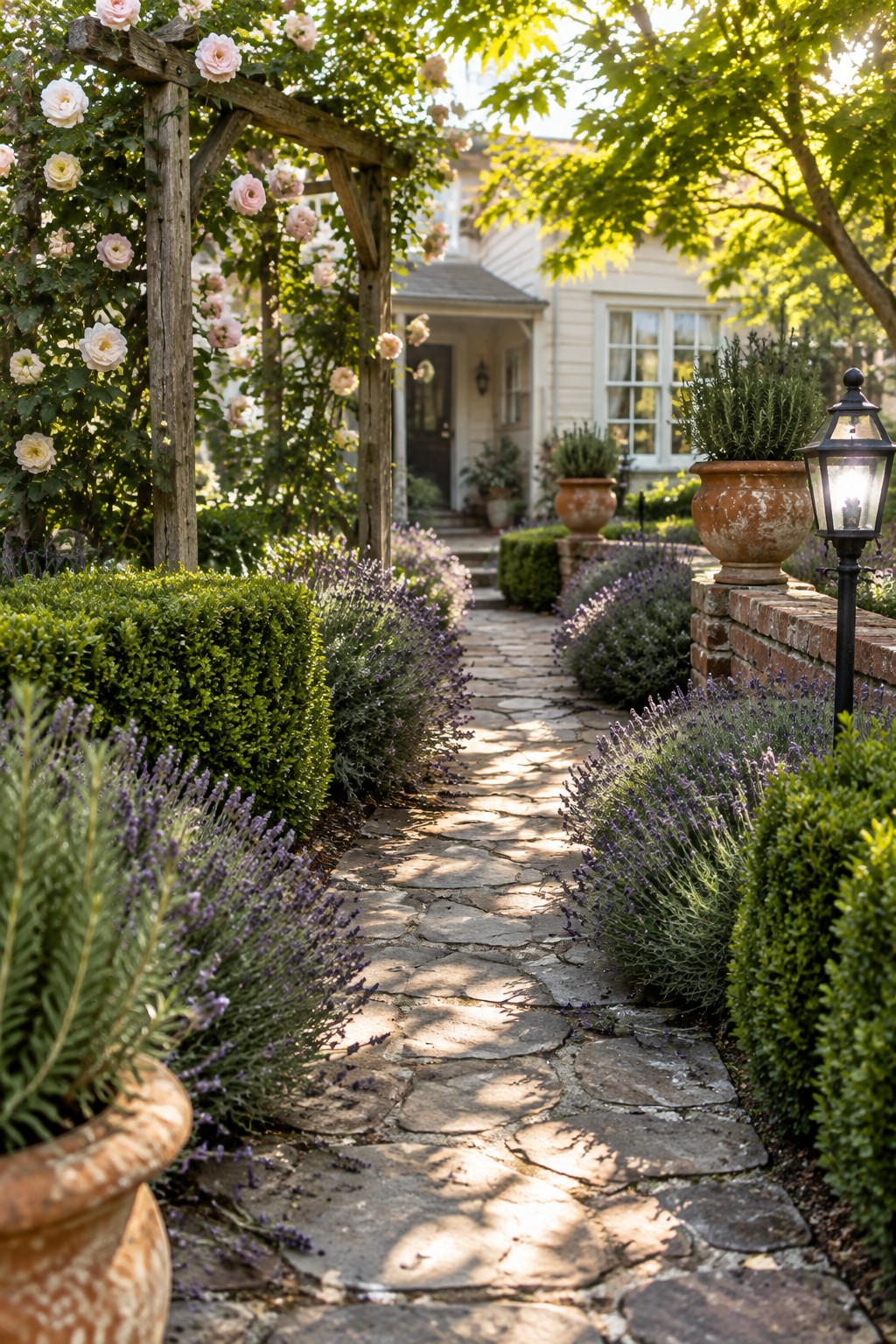
Lavender planted along a walkway gives the entrance a clear shape and a pleasant scent as people pass. Its low, spreading form also works well beside a stone path, where it can soften the hard edge without hiding the paving.
Plant it in sunny, well-drained soil and leave enough room for the plants to widen as they grow. A clipped hedge or other low border can help keep lavender from spilling onto a narrow walkway.
Use Lavender to Mark the Walkway
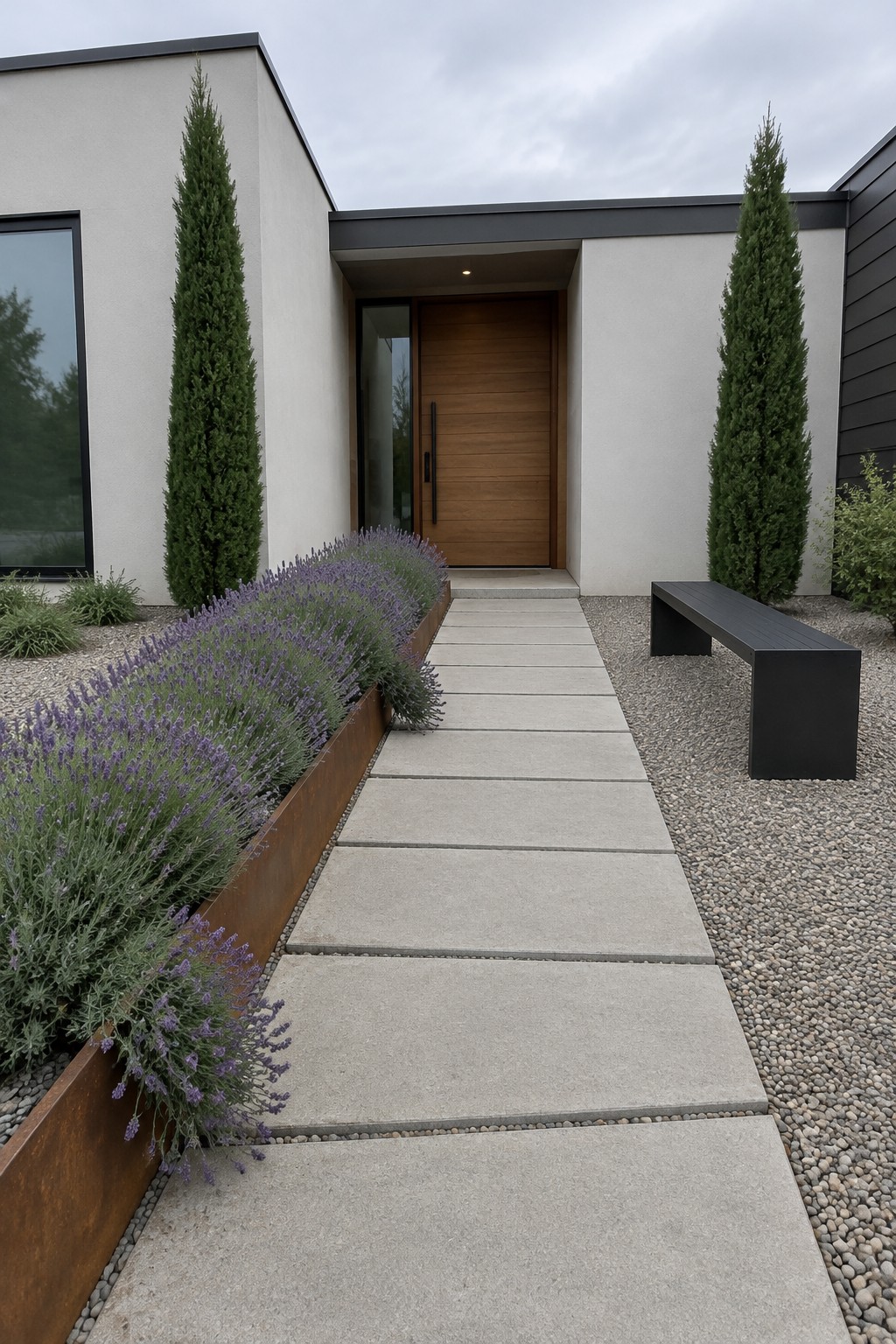
A long lavender bed makes a walkway feel like part of the garden, rather than just a route to the front door. The planting gives the path a clear edge, and its fragrance is a welcome bonus near an entrance.
Plant lavender in a continuous strip beside the path, leaving enough room for the mature plants to spread without spilling onto the walking surface. A raised metal bed can help define the edge, but make sure the lavender has good drainage and plenty of sun.
Use a Stone Path to Guide the Planting
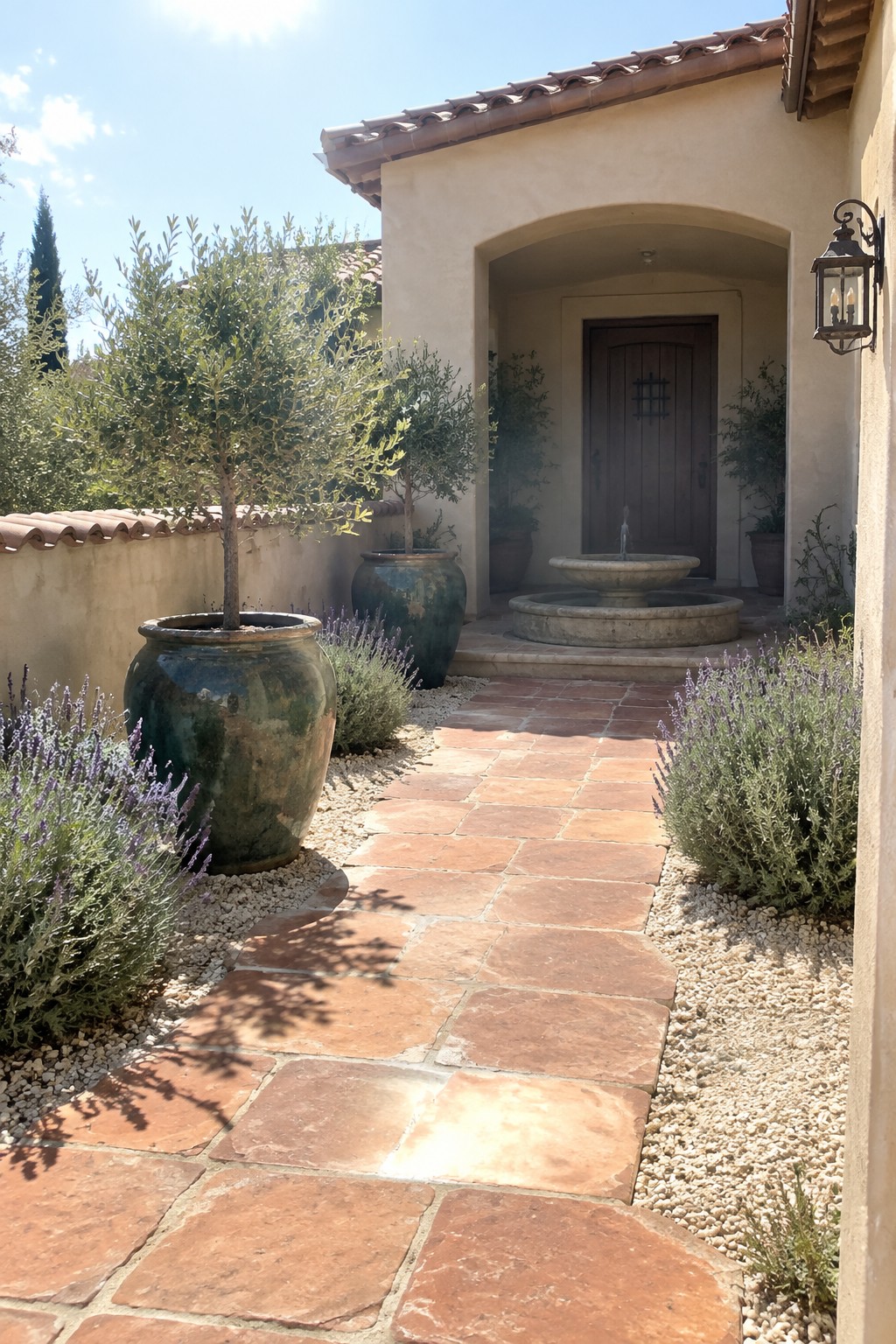
A stone walkway gives a lavender garden a clear shape and makes the plants easier to enjoy as you come and go. The broad, irregular pavers here leave room for gravel and low planting along the edges, so the path feels settled into the garden rather than laid over it.
For a similar look, set lavender beside the path where it can spill slightly toward the edges without narrowing the walking space. This approach suits a sunny entry with well-drained soil. Leave enough room between plants for air to circulate and for lavender to grow without crowding the stones.
Use a Brick Walkway to Guide Garden Planting
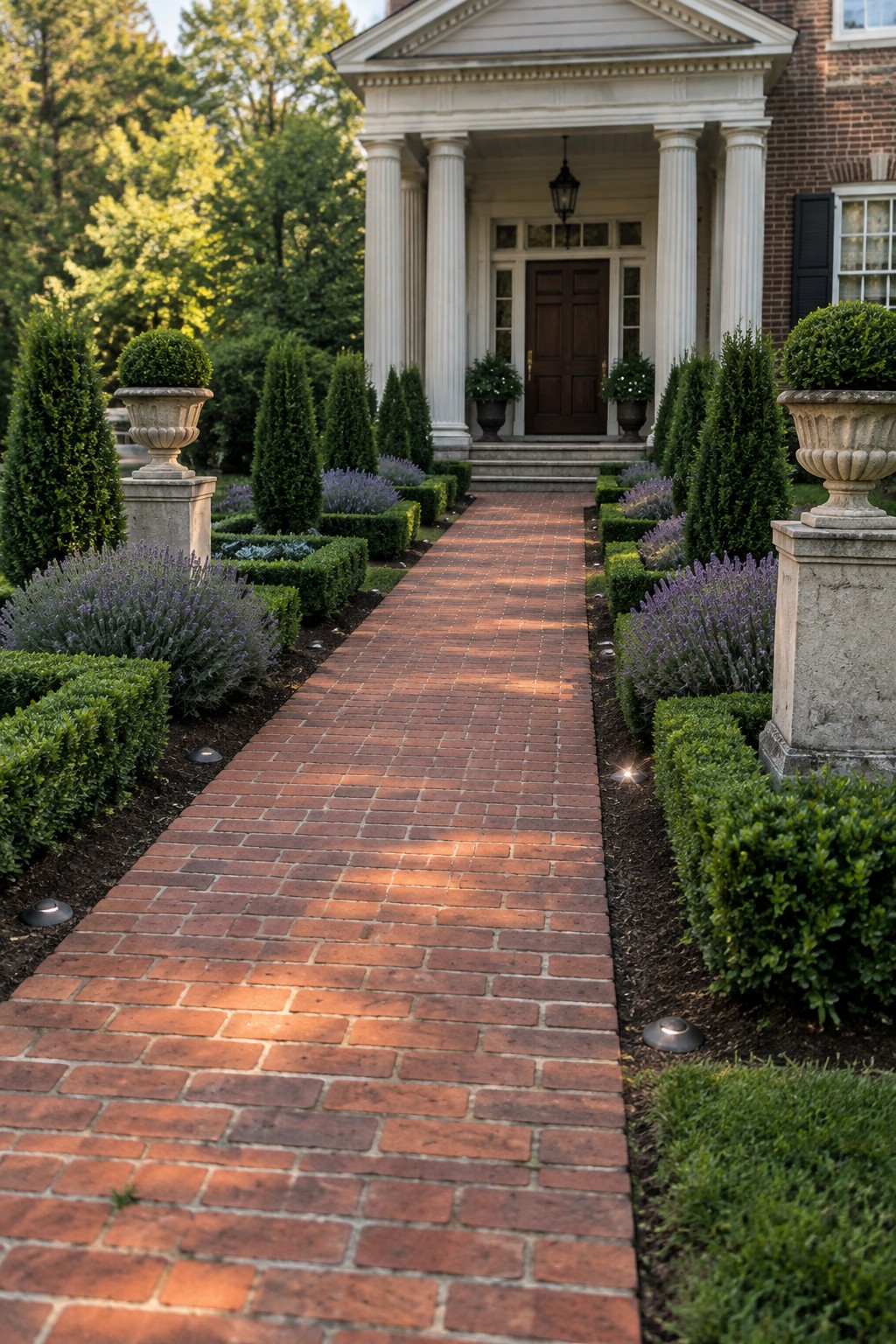
A straight brick path gives a front garden a clear structure, and the lavender along its edges feels more intentional than scattered through the beds. The repeating rows of brick also make a simple, sturdy route to the front door.
Plant lavender in loose runs beside the path, leaving enough room for it to spread without spilling too far onto the bricks. This approach suits a traditional entry and works best where the path gets good sun and the soil drains well.
Add Stepping Boards to a Pebble Walkway

Wooden stepping boards break up a pebble path and make it easier to walk through a planted entrance. The simple change also gives the path a clear rhythm without covering the ground in solid paving.
Use boards wide enough for a comfortable step and set them level with the pebbles so they do not become a tripping hazard. Lavender can grow along the edges, where its flowers and scent are easy to enjoy as people pass.
Use Wide Stone Slabs for a Lavender Walkway
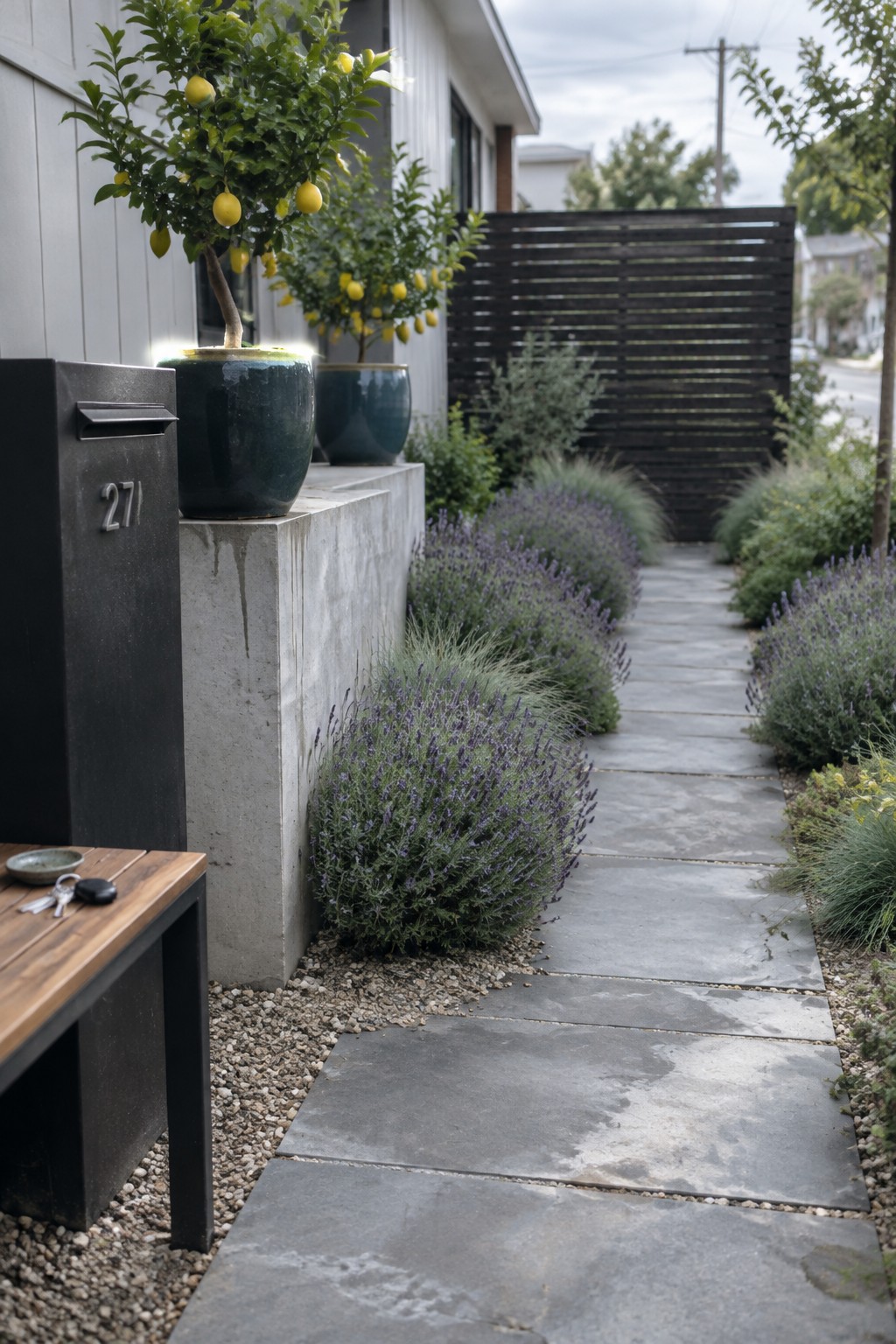
Large stone slabs make a garden path feel clear and easy to follow, while lavender planted along the edges brings a softer, fragrant border. The broad stones also leave room for the planting to grow without making the walkway feel crowded.
This approach works well at a front entrance, especially where a straight path needs a little garden character. Leave enough space between the lavender and the stones so plants can spread without spilling over the walking surface.
Let Stepping Stones Lead Through Lavender

A stepping-stone path gives a garden walkway a relaxed, informal feel. The gaps between stones leave room for low plants to grow, while lavender along the edges makes the route fragrant as you pass.
Use this approach for a narrow side garden or a winding path to a gate. Set the stones firmly and leave enough space for a comfortable stride; lavender can spread, so keep it trimmed back from the walking surface.
Use Stepping Stones to Shape a Lavender Walkway
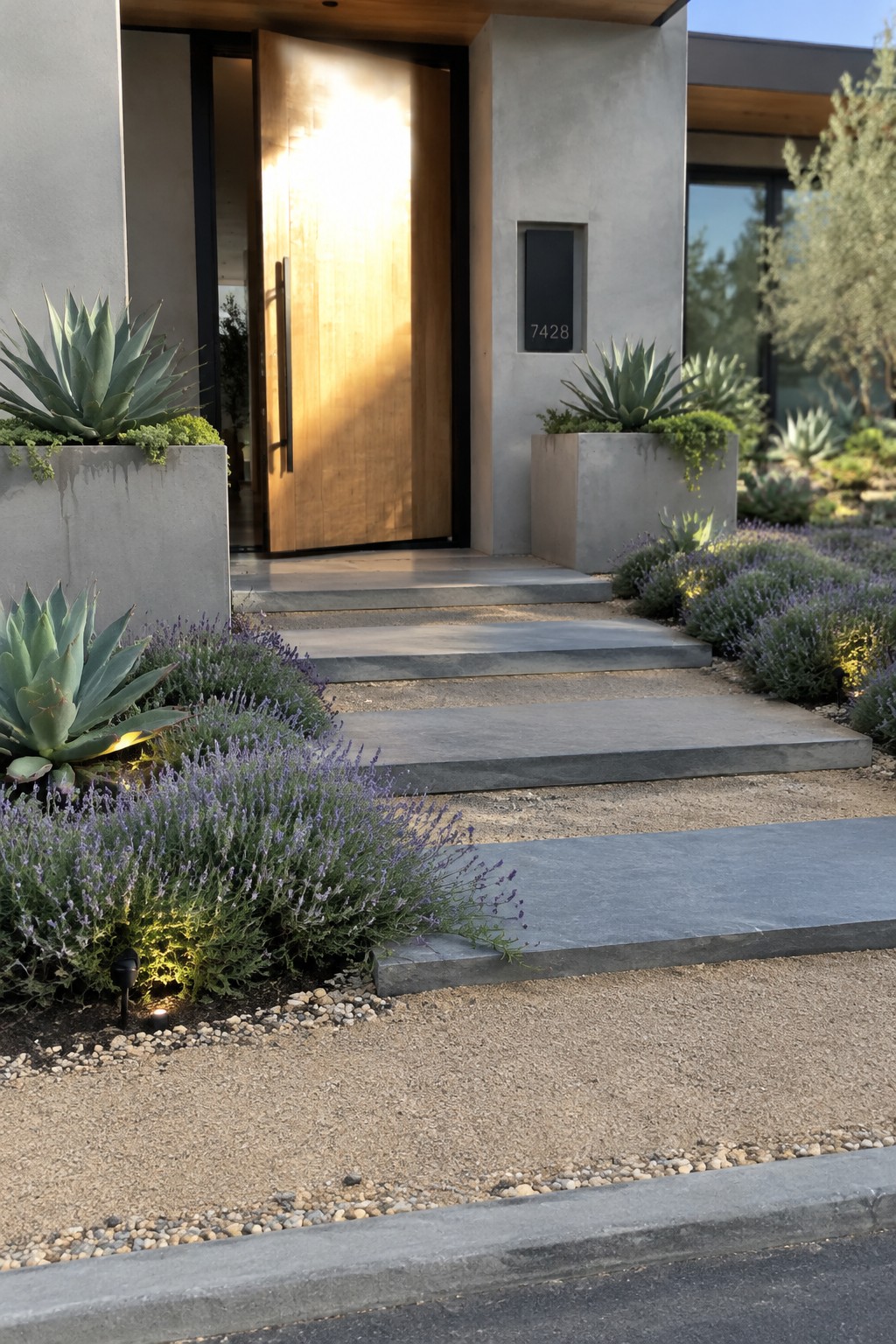
Large, widely spaced stone pavers give a garden path a relaxed rhythm and leave room for gravel and planting between them. Lavender along the edges adds color and fragrance without covering up the simple path.
This approach suits an entry where you want a clear route but not a solid paved surface. Set the stones level and keep the gaps comfortable to step across, then plant lavender where it has enough sun and space to grow.
Let a Curved Brick Path Shape the Garden
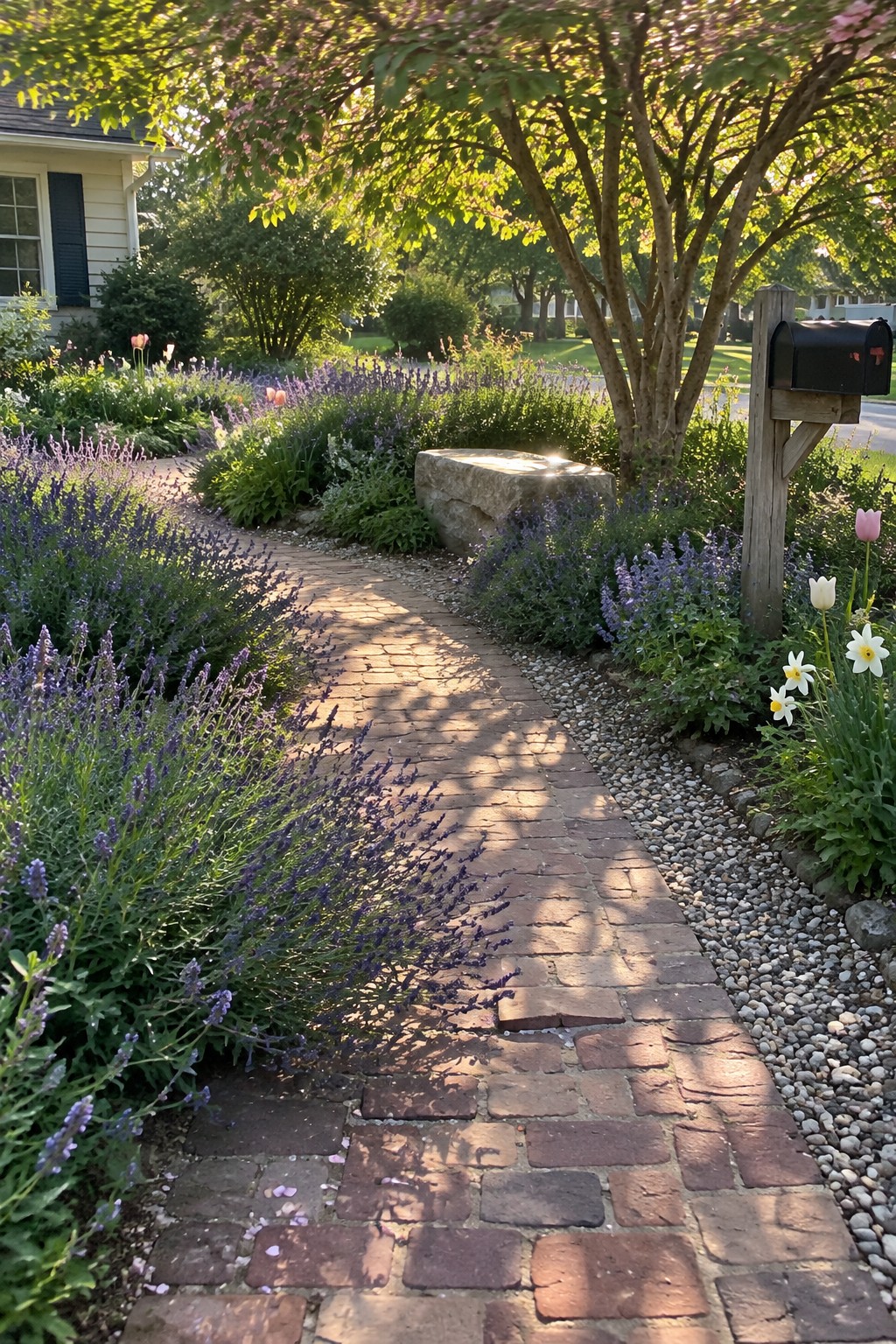
A curved brick path gives a lavender walkway an easy, meandering route through the planting. The bend makes the garden feel less formal, while the brick provides a clear surface to follow.
This approach works well in a front garden where you want a path to feel like part of the planting rather than a straight route across the yard. Keep the lavender trimmed back from the bricks so the walkway stays easy to use.
Use Stone Steps to Manage a Sloped Walkway
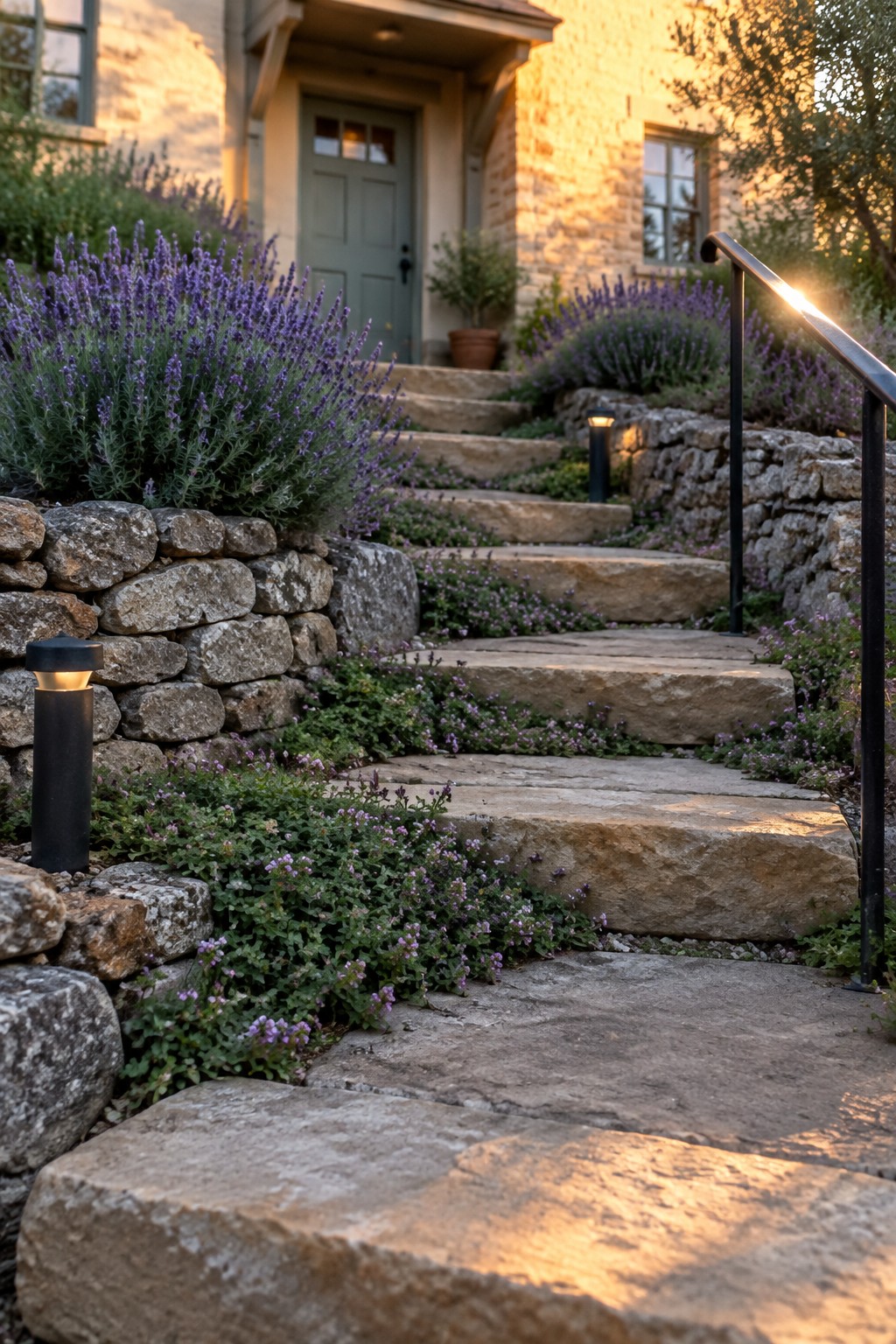
Stone steps make a sloping entrance easier to walk while giving the planting a clear shape. Lavender and low-growing flowers can fill the spaces along the edges without crowding the route.
Use broad, stable stones and keep each rise comfortable, especially on a path used every day. A simple handrail can help on steeper sections, and low path lights make the steps easier to see after dark.
Build a Gravel Walkway Around Stepping Stones
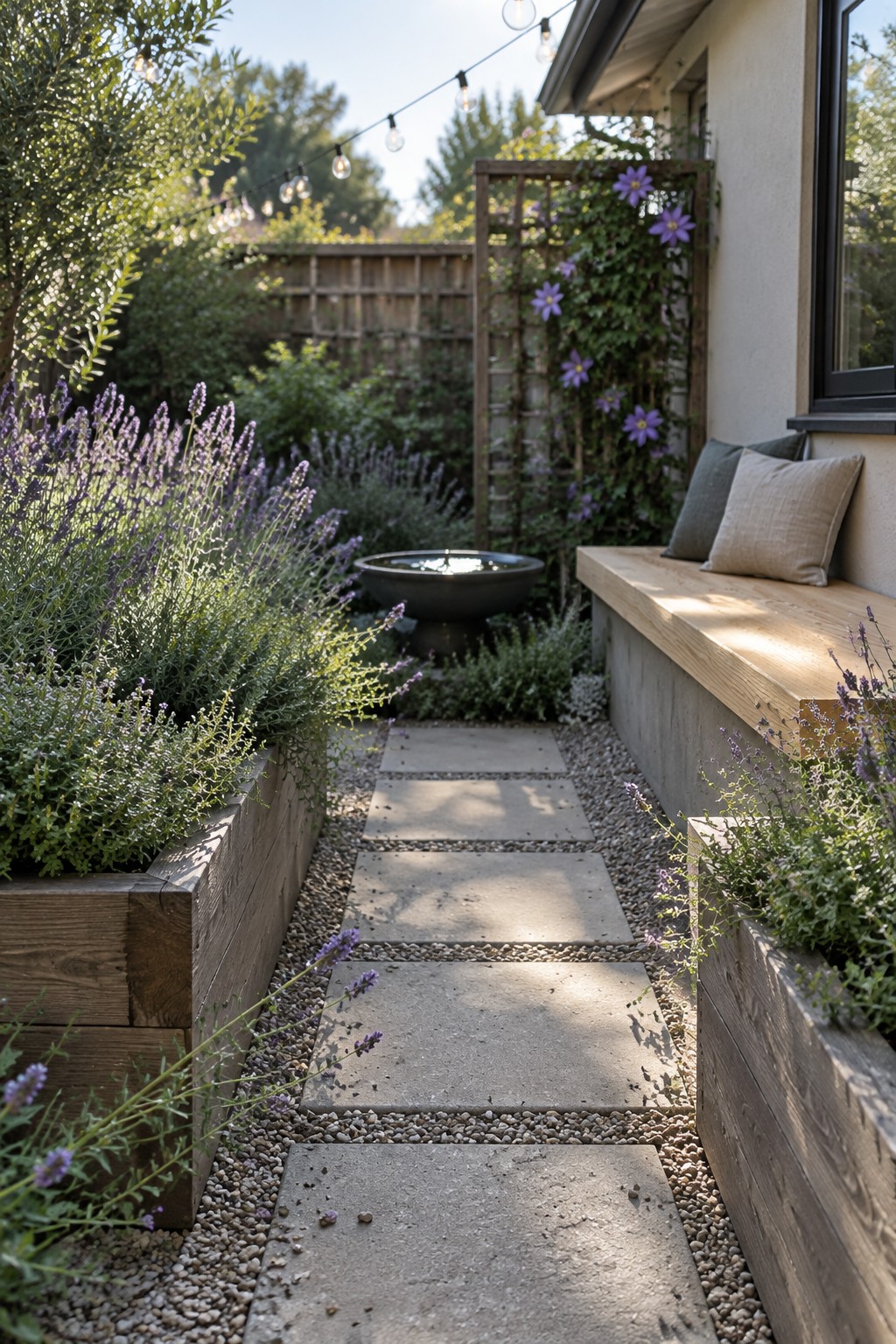
A gravel path with broad stepping stones is a practical way to make a garden walkway feel informal while still giving people a clear place to walk. Lavender along the edges brings fragrance close to the path without taking up the walking surface.
Use this layout in a narrow side yard or small entrance garden, where a solid paved path might feel too heavy. Leave enough room between the stones for comfortable steps, and keep the lavender trimmed back so it does not spill over the edges.
Use Timber Slabs to Shape the Garden Path
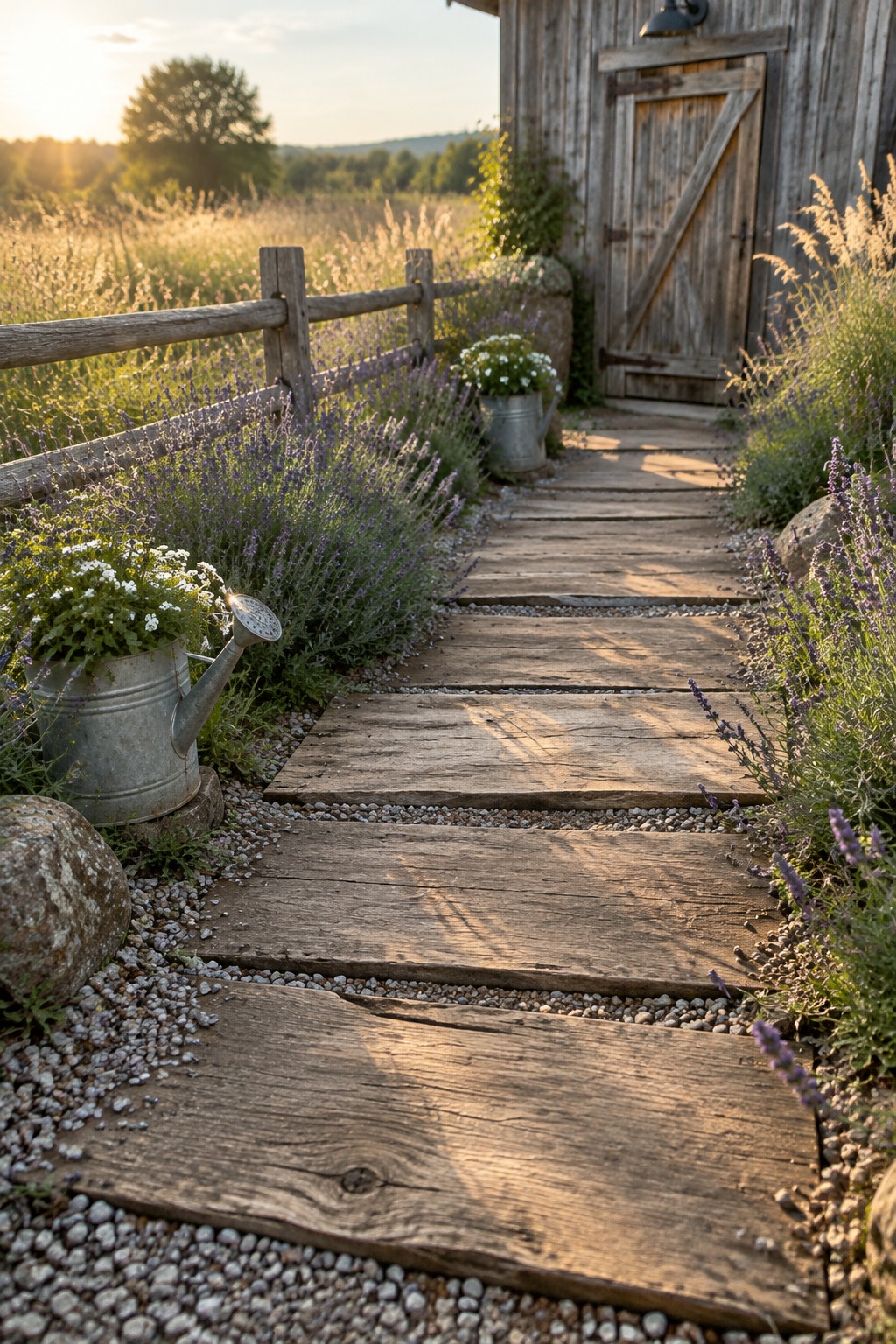
Broad timber slabs set into gravel make a clear route through the lavender without needing a continuous paved walkway. The gaps keep the path informal, while the lavender along the edges gives it a fragrant, planted feel.
This approach suits a cottage garden or a side path leading to a shed or gate. Choose sturdy, weather-resistant wood and set each slab level so the walk stays comfortable underfoot.
Use Irregular Stone Slabs for a Garden Path
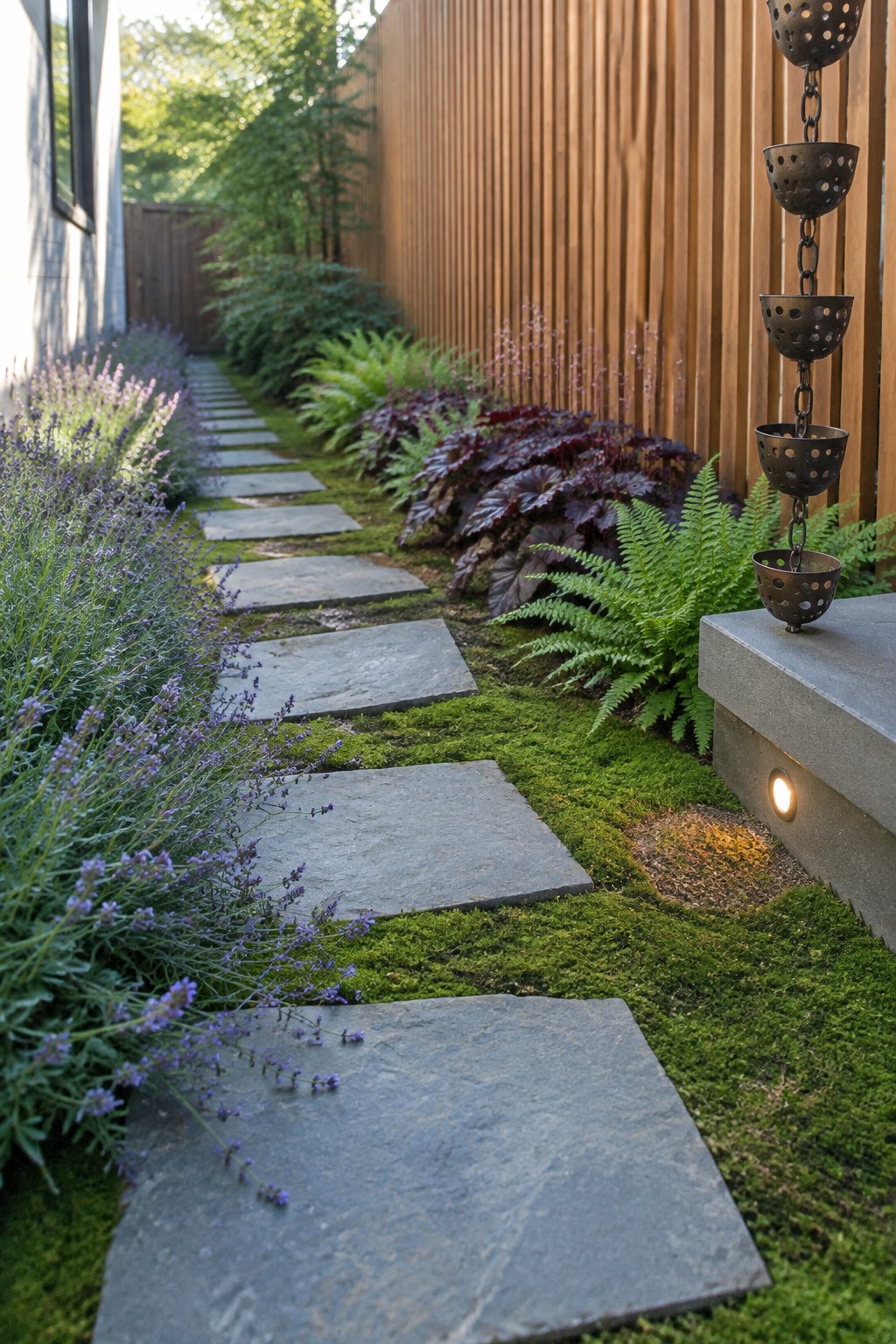
Large, irregular stone slabs make a walkway feel relaxed and natural, especially when moss grows in the gaps. Lavender planted along one edge brings fragrance close to the path without making it feel crowded.
Leave enough space between slabs for comfortable, steady steps, and keep the surface level where people will walk. This approach suits a narrow side garden, where a simple path can guide visitors through the planting.
Use a Straight Walkway to Organize Lavender Planting

A straight path gives a lavender garden a clear route to the entrance and makes the planting feel orderly. Lavender shrubs can line the edges without narrowing the walkway, so the scent is close as people pass.
This layout suits a compact entry garden, especially where a direct approach to the door is practical. Leave enough room for the plants to spread, and keep the path surface firm and even for everyday use.
Use a Pebble Path to Connect the Garden

A pebble path gives a cottage garden a relaxed route through the planting, while staying practical underfoot. Here, broad stone slabs cross a narrow water channel, making the change in level easier to manage.
Use a similar path where you want lavender and other flowers to grow close to the walkway without crowding it. Keep the gravel compact and the edging firm so the loose stones stay in place.
Use a Patterned Tile Path for the Entry
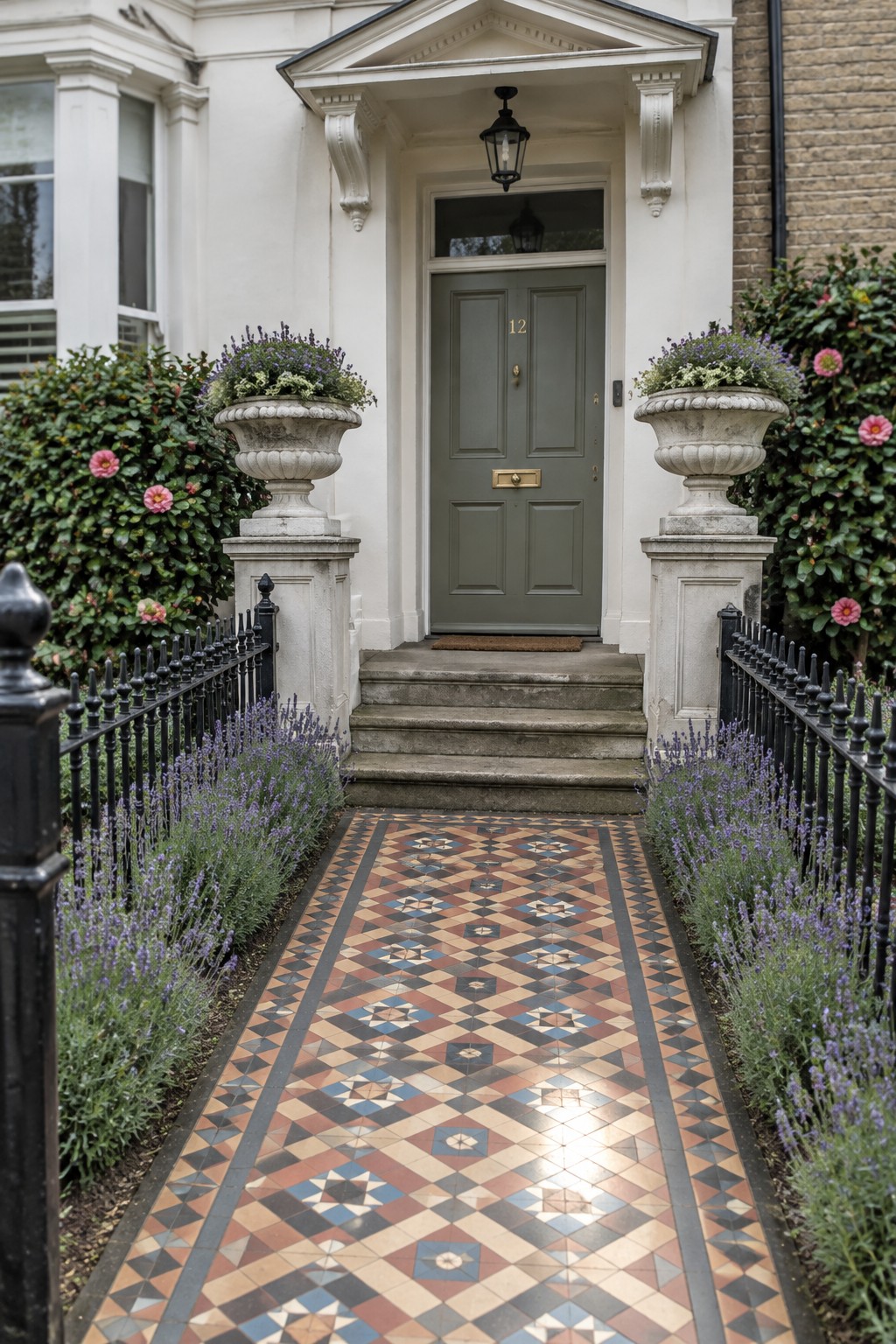
A patterned walkway can give a front entrance a clear sense of direction while making the approach feel considered. Here, the geometric tiles stand out against the lavender planted along both sides.
This idea works especially well for a short path leading to a traditional doorway. Choose outdoor-rated tile with a surface that is safe when wet, and keep the pattern simple enough that it does not compete with nearby flowers.
Use Large Stone Slabs to Set the Path
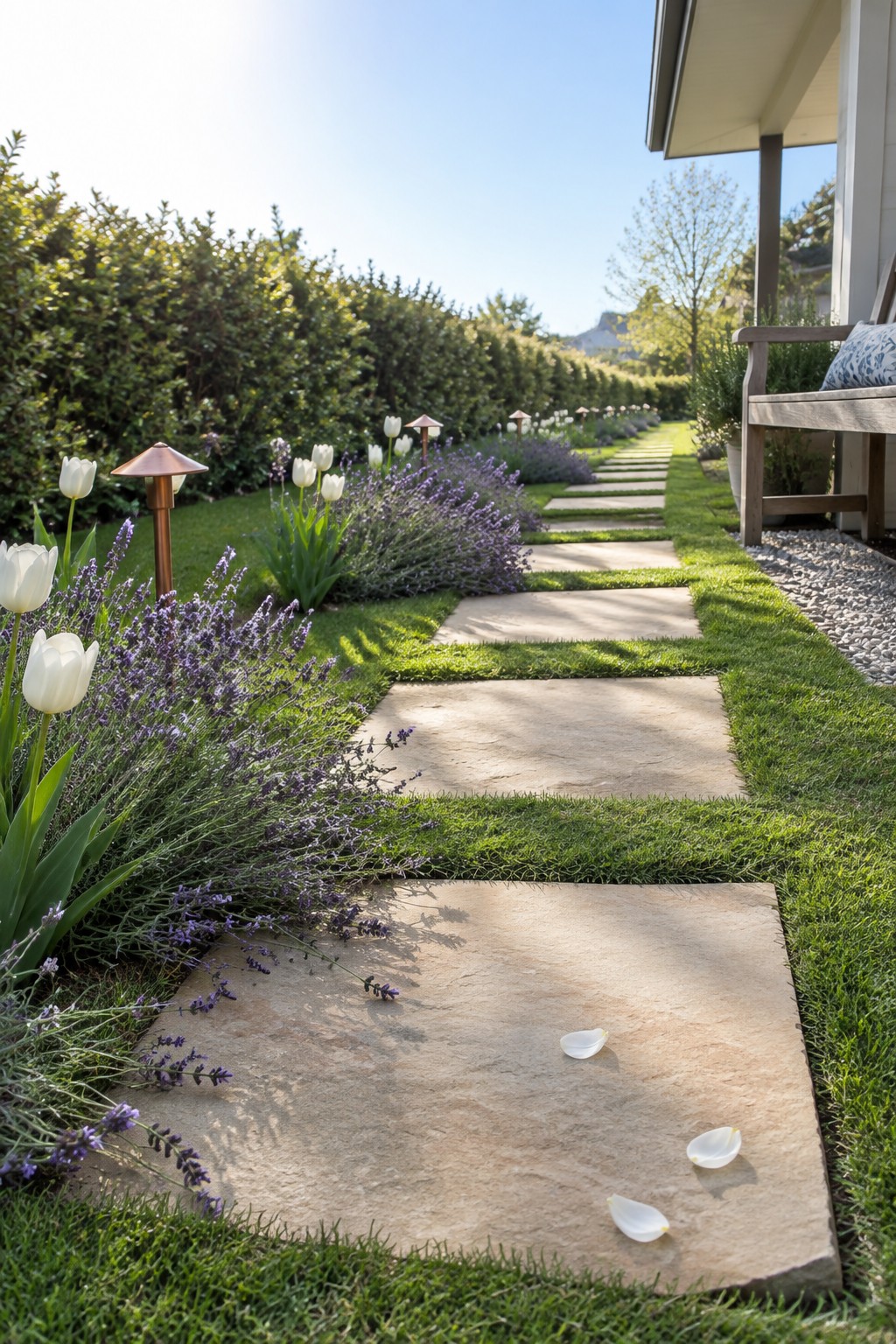
Large stone slabs give a garden walkway a steady rhythm without making it feel too formal. Here, the generous gaps between stones leave room for grass, while lavender growing alongside the route brings fragrance close to the entrance.
This approach works well in a narrow side yard or anywhere you want a clear path through planted borders. Leave enough space between slabs for a comfortable stride, and keep the edges trimmed so lavender does not spill onto the walking surface.
Use Lavender Along a Pebble Walkway
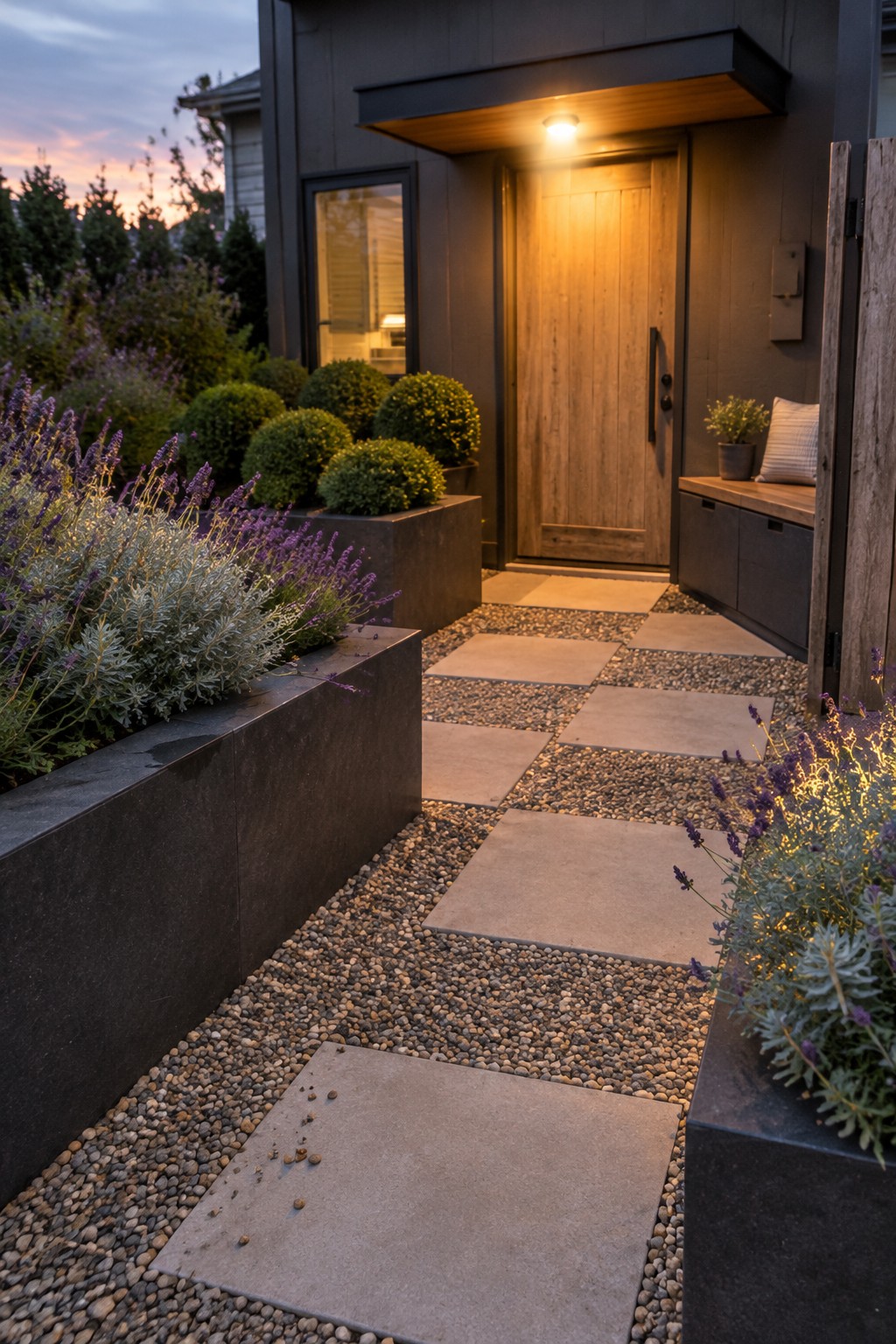
A pebble path with broad stepping stones gives lavender a clear place to grow along the edges. The open gravel keeps the walkway from feeling crowded, while the plants bring scent close to the route to the front door.
Leave enough room for lavender to spread without brushing against people using the path. This approach works well for a narrow entry garden, but choose a compact variety if the walkway gets frequent foot traffic.
Add Broad Stone Steps to a Sloped Garden Path
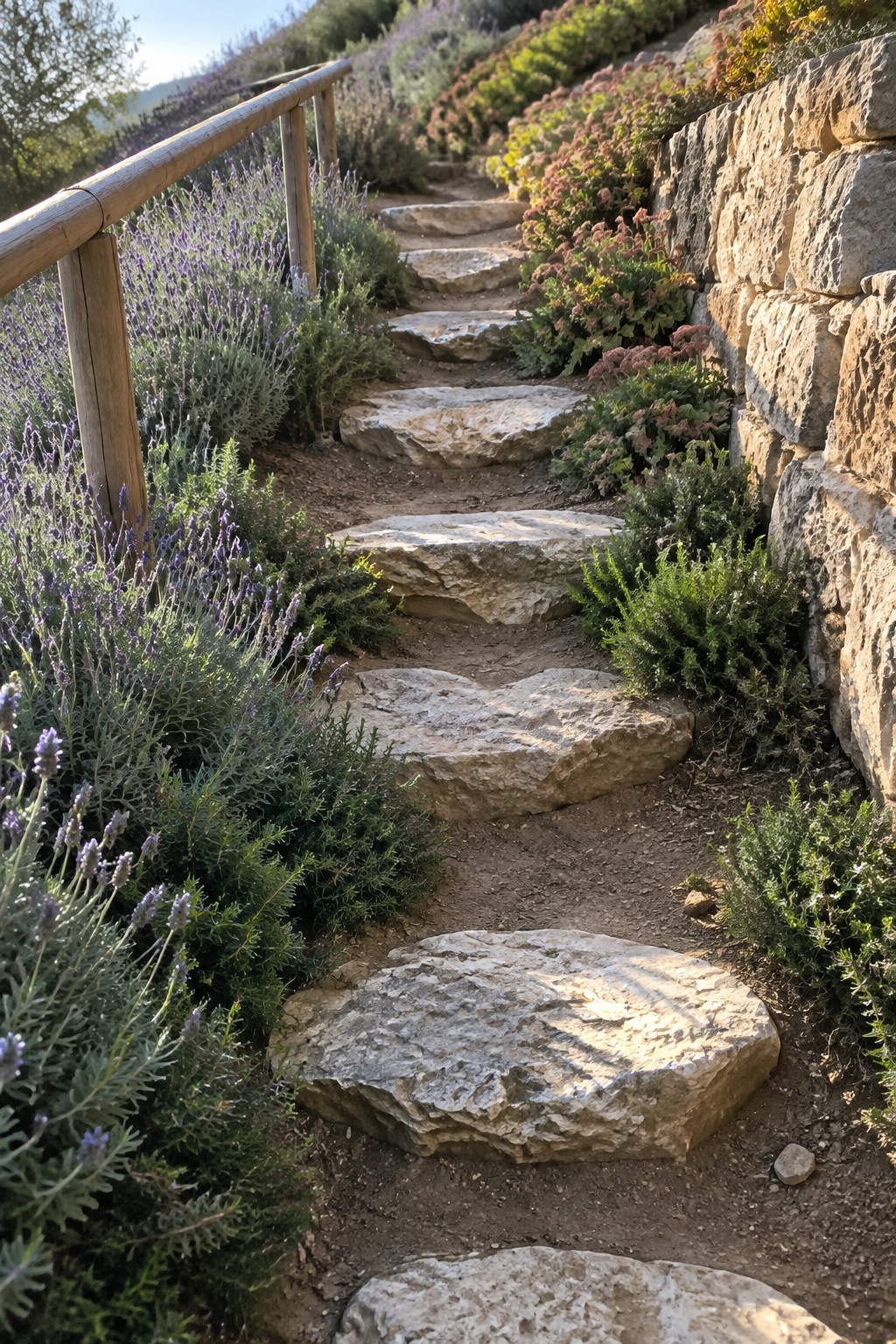
Large stone treads make a sloping walkway easier to use while keeping the path in step with the garden. Their irregular edges suit a natural planting style, and lavender beside the route gives visitors a fragrant welcome.
Use broad, stable slabs where the ground rises, with enough level space between them for a comfortable stride. Lavender can line the edges, but leave room for it to spread without narrowing the walking surface.
Add Brick Steps to a Lavender Entry Path
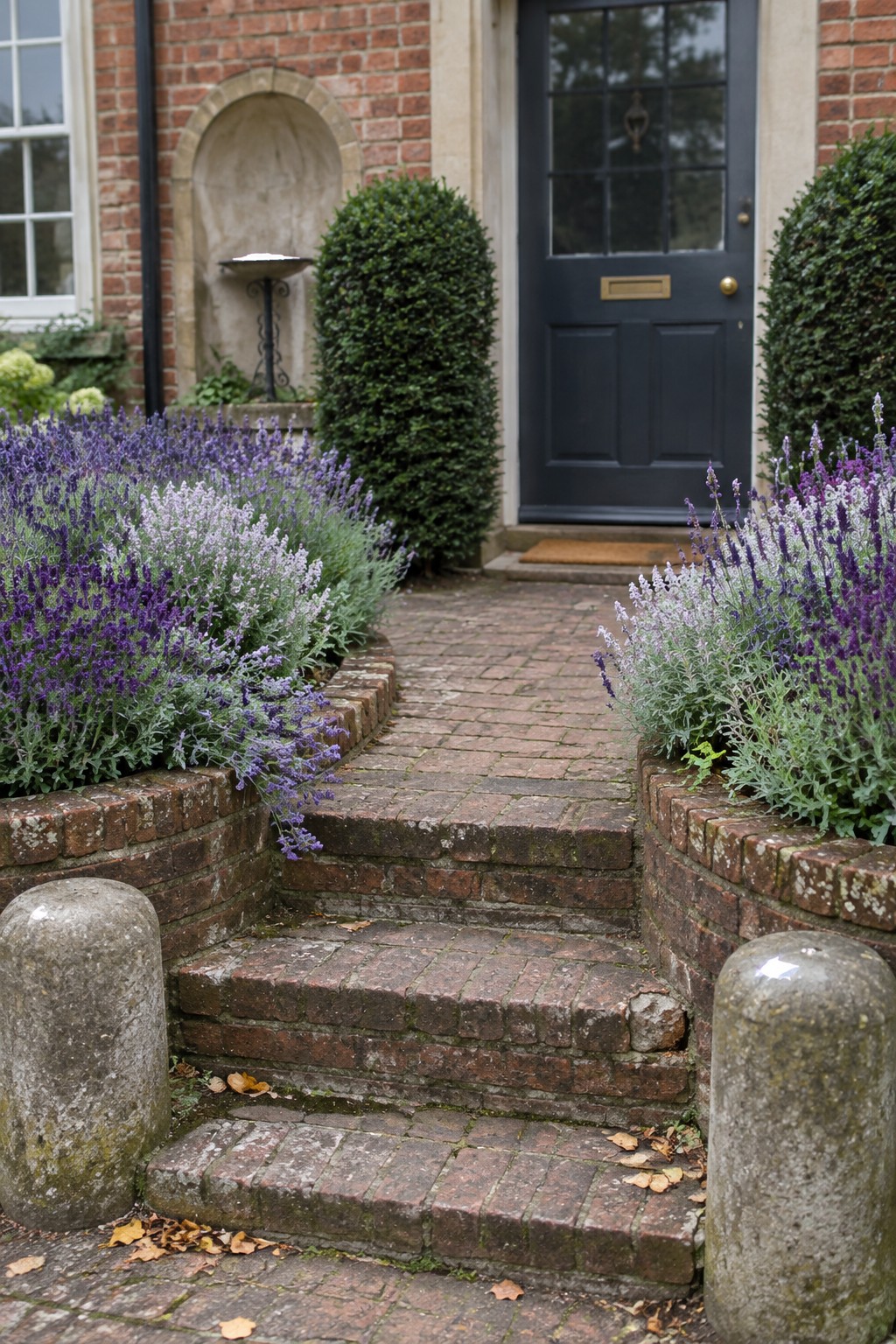
Brick steps carry the walkway up to the front door and give a sloping entrance a clear, practical route. Lavender planted along the raised edges makes the path feel settled into the garden without taking space away from the walking surface.
This approach suits older homes and uneven front yards. Keep the steps broad enough for comfortable footing, and leave room between the lavender and the path so the plants do not spill over the edges.
Use Raised Planters to Line the Walkway
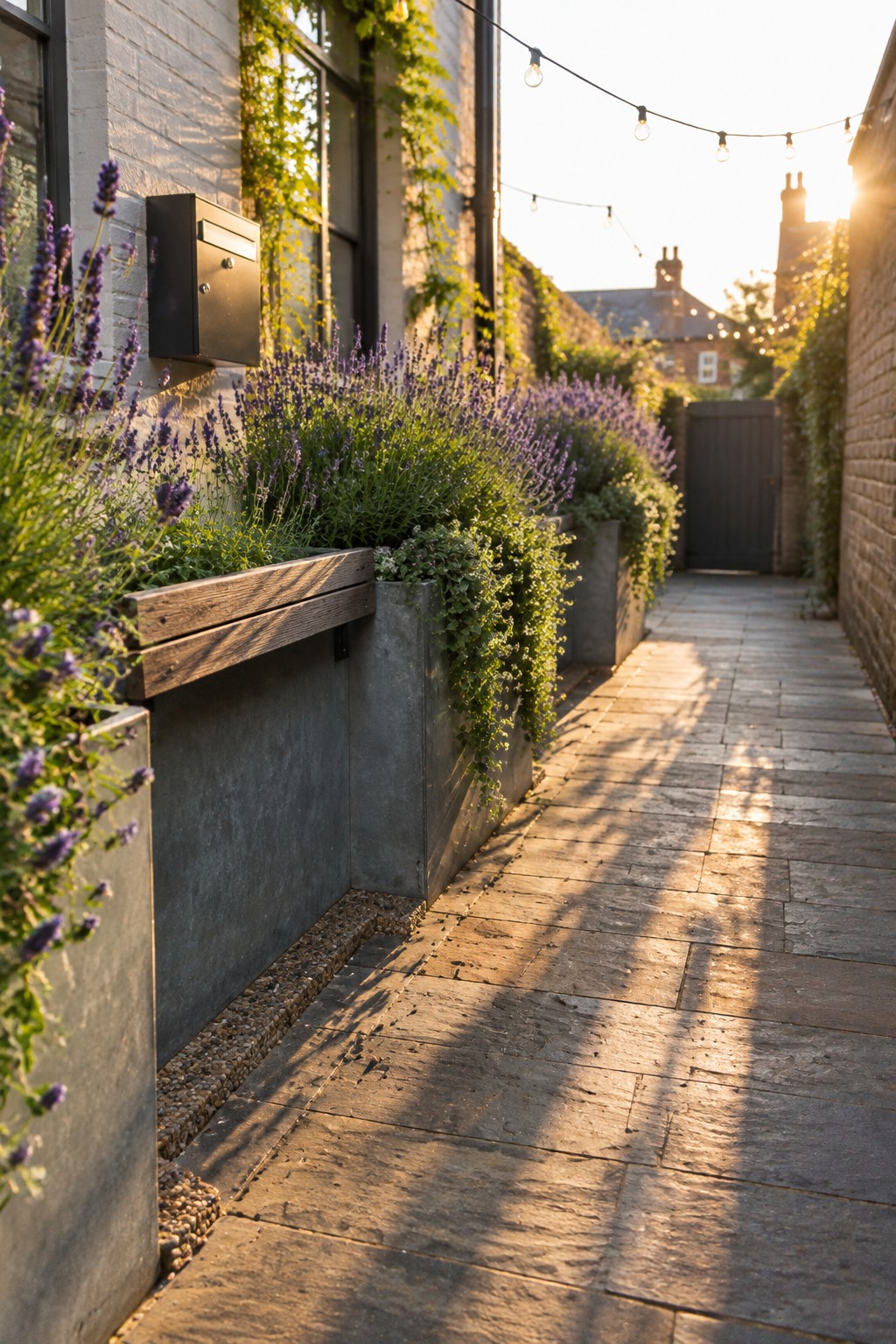
Raised planters give lavender a clear place to grow along an entry path. They keep the planting tidy beside the paving, and the flowers spill over the edges without taking over the walking space.
This approach suits a narrow side passage or front walk where planting directly in the ground is awkward. Choose planters deep enough for lavender’s roots and leave room for the plants to spread; crowded lavender can become harder to maintain.
Frequently Asked Questions
Q: How far apart should I plant lavender along a walkway?
A: Space plants about 18 to 24 inches apart, checking the variety’s mature width before you dig. That gives each plant room to grow without crowding the path.
Q: Will lavender handle being brushed by people walking past?
A: Choose a compact variety and leave enough space between the plants and the walkway. Lavender can spill over as it grows, so keep a little breathing room for both the plants and passing feet.
Q: What should I do if the soil beside my path stays wet?
A: Lavender dislikes soggy roots. Improve drainage with a raised planting strip or a gravelly soil mix, and avoid placing it where rainwater collects.
Q: Can I plant lavender in a shady walkway?
A: Lavender needs plenty of sun to flower and stay sturdy. If the path is shaded for much of the day, try a sun-loving spot nearby and use a shade-tolerant plant along the walkway instead.
