

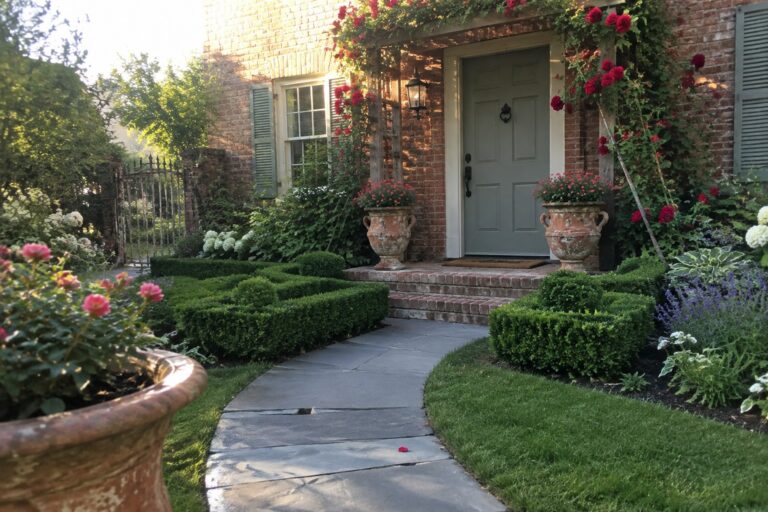
Red roses can give a front yard a strong focal point, but their color works best when the surrounding planting has enough shape and breathing room.
I find that the first thing people notice from the street is often the balance between the blooms, the greenery, and the path leading to the front door.
A rose bed can feel crowded if every plant competes for attention, while clear edges and varied heights help the whole garden read as intentional.
Some of these approaches keep the roses bold without letting them overwhelm the rest of the yard.
I’d start by adapting the layout to the sunlight, walkway, and space you actually have.
Let Red Roses Lead the Front Path
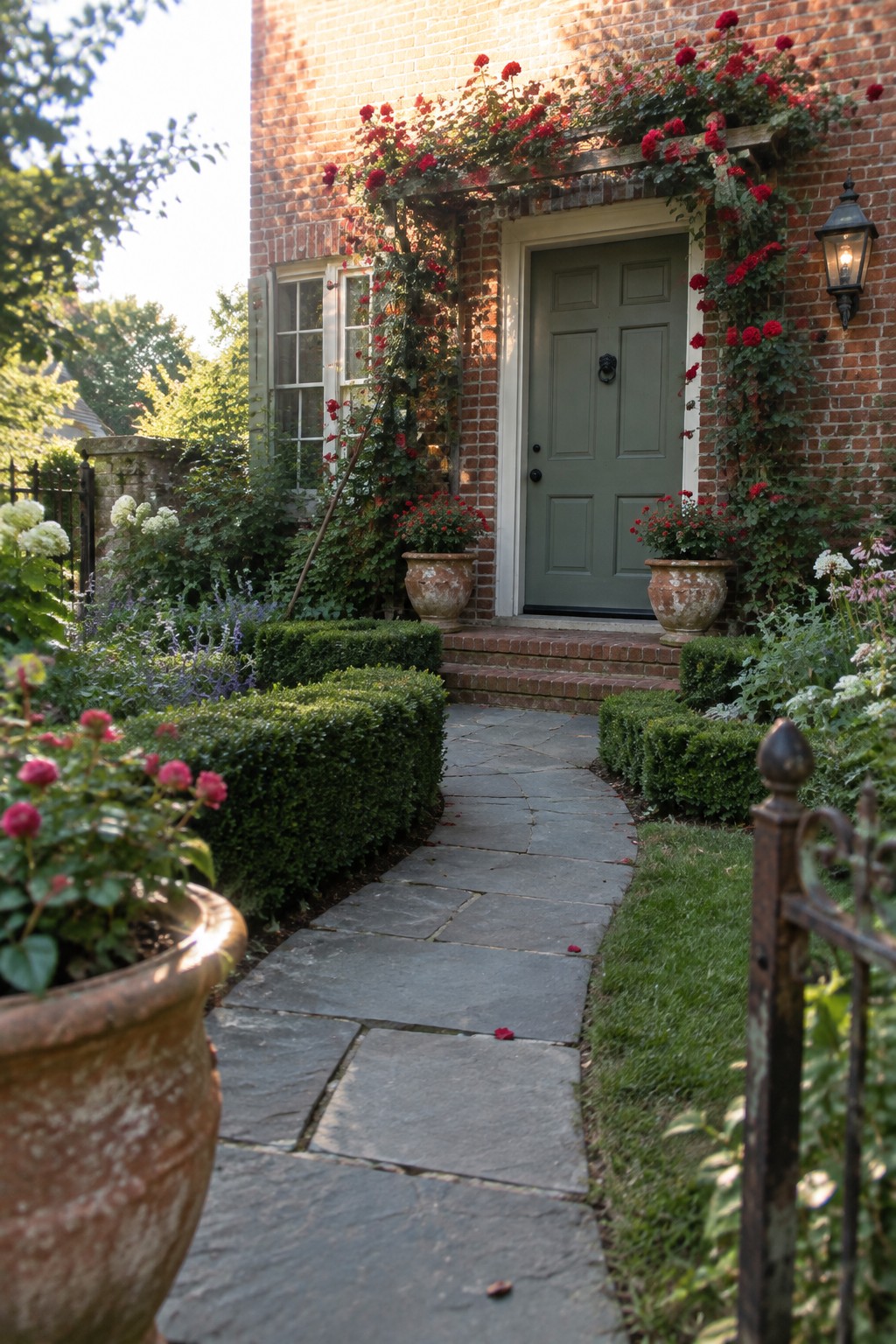
Red roses can give a front yard a clear sense of direction when they grow along the entry path. Here, climbing roses carry the color up the brick wall, while smaller rose plantings echo it near the walk.
For a similar look, use roses to mark the route to the front door, but leave enough room for people to pass and for the plants to be pruned. A stone path and clipped edging help keep the planting tidy.
Use a Gravel Path to Lead to the Front Door
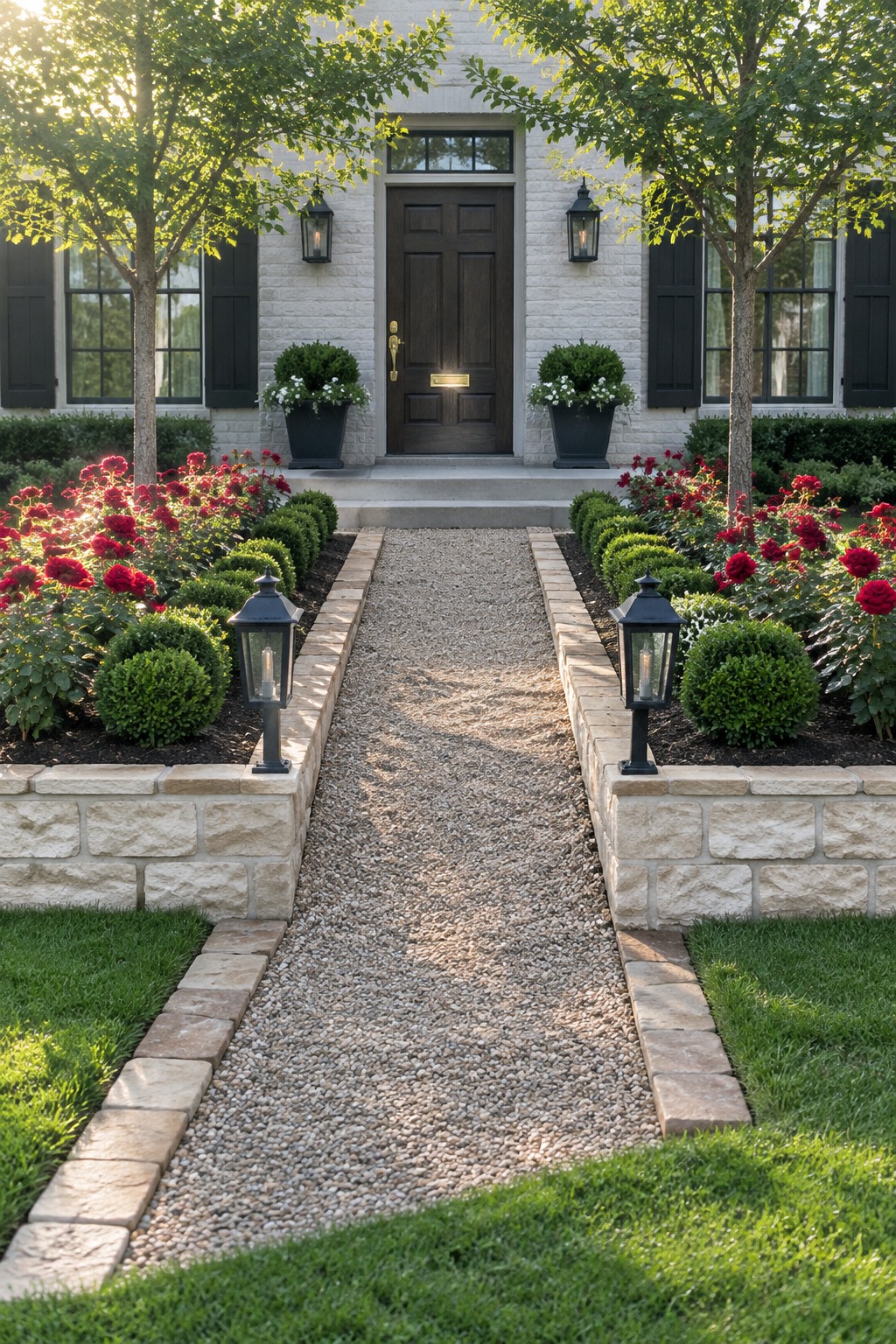
A gravel path gives a front garden a clear route to the entrance while keeping the planting beds as the main feature. In a rose garden, it also makes room for bold color along the walk without making the whole yard feel crowded.
Use stone edging to keep the gravel in place and give the path a tidy outline. Red roses work well along the sides, with low shrubs between them to fill out the beds. Leave enough width for two people to walk comfortably and make sure the path surface is firm underfoot.
Use Red Roses Along a Simple Front Walk
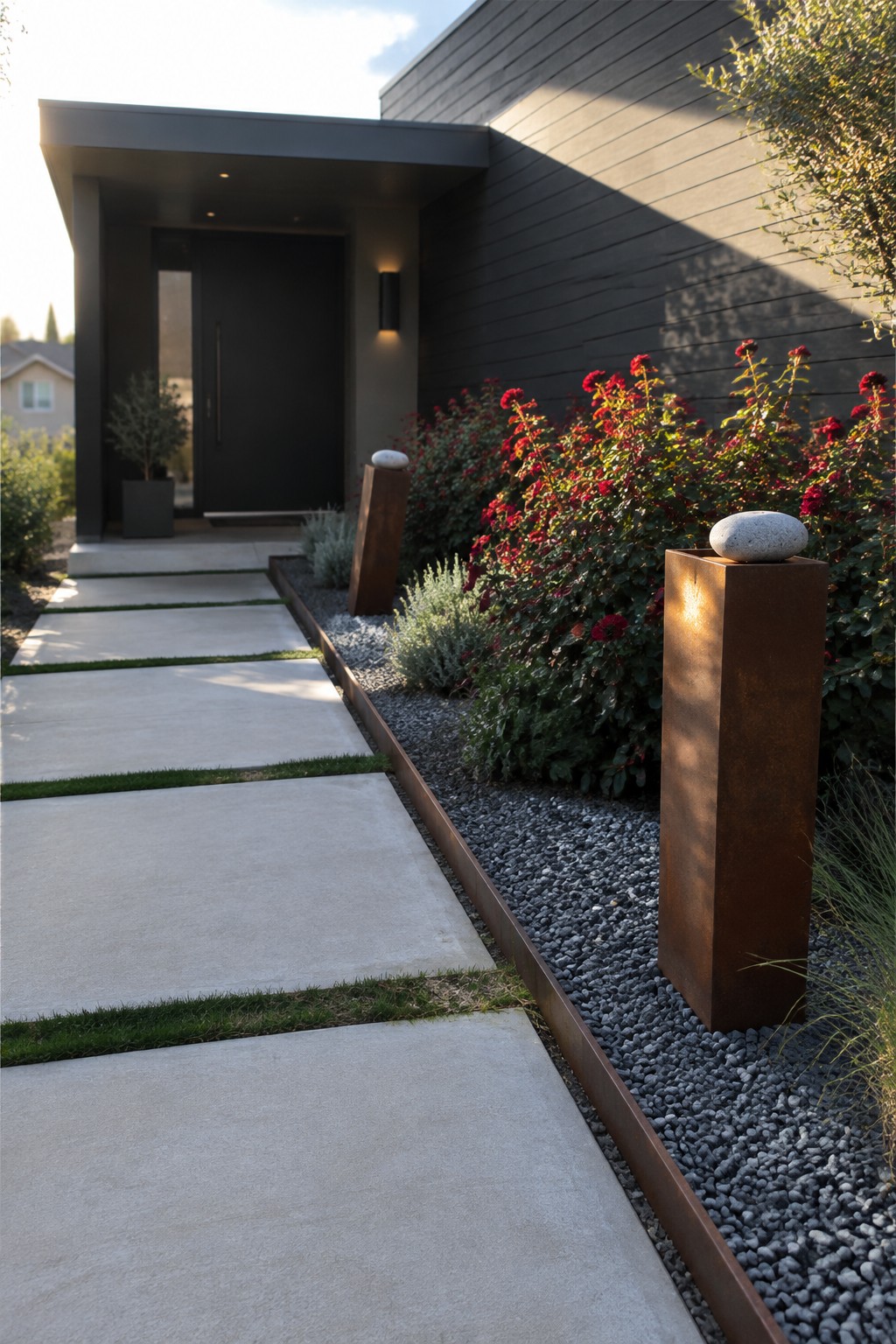
A straight path bordered by red roses gives a front yard a clear, welcoming shape. The roses bring strong color to the planting bed, while simple concrete pavers keep the look neat rather than busy.
This approach works especially well beside a modern home, where a restrained path lets the flowers stand out. Leave enough room for mature rose bushes, and keep them trimmed back from the walkway so the route stays easy to use.
Use a Garden Path to Lead Through the Roses
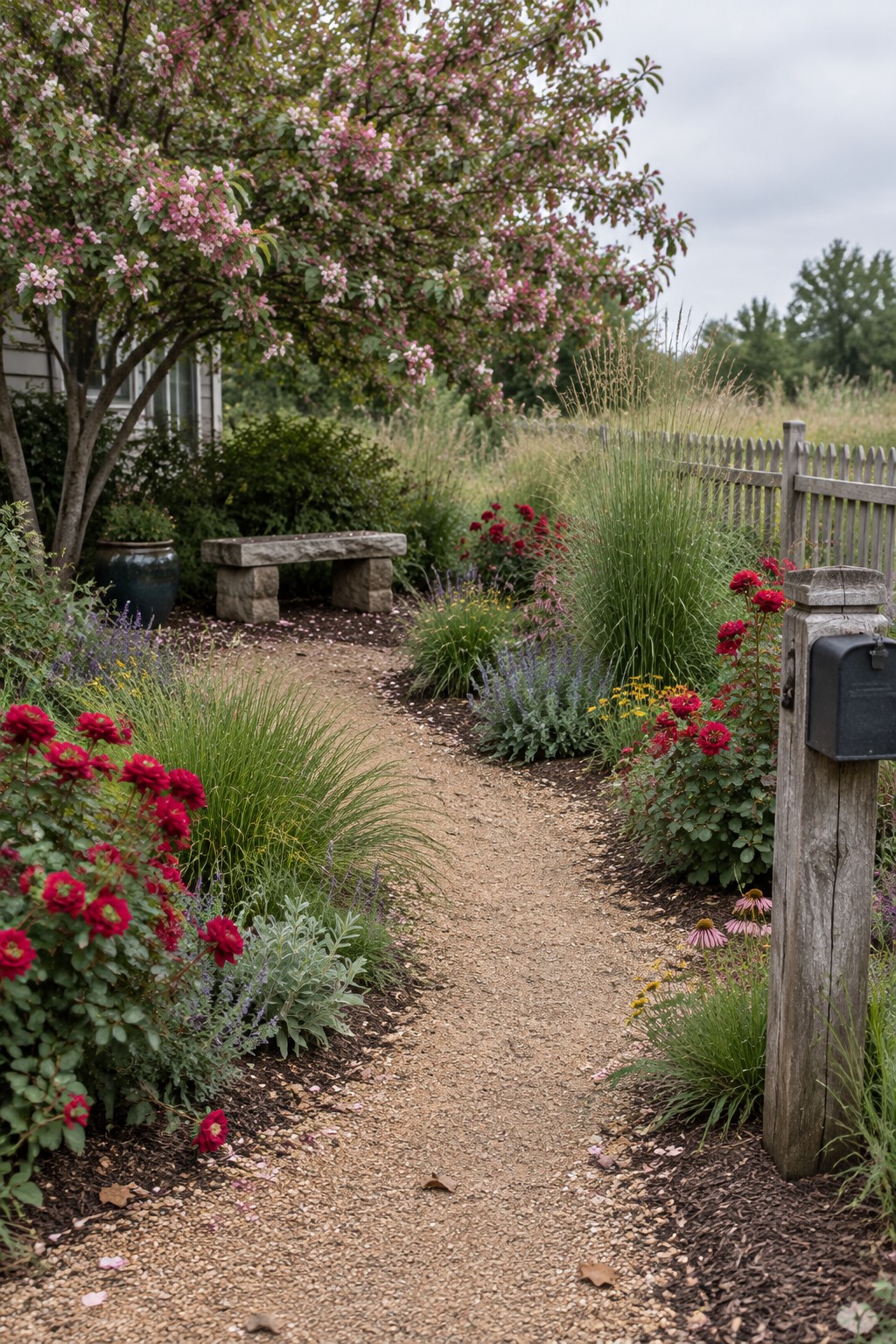
A clear path gives a rose garden a natural shape and makes it easy to enjoy the flowers up close. Red roses along the edges bring strong color, while the walkway keeps the planting from feeling crowded.
For a front yard, choose a path wide enough for comfortable walking and let the rose beds follow its curve. Leave room between the roses and the path so the plants can grow without spilling too far into the walkway.
Use Red Roses Around a Welcoming Entry
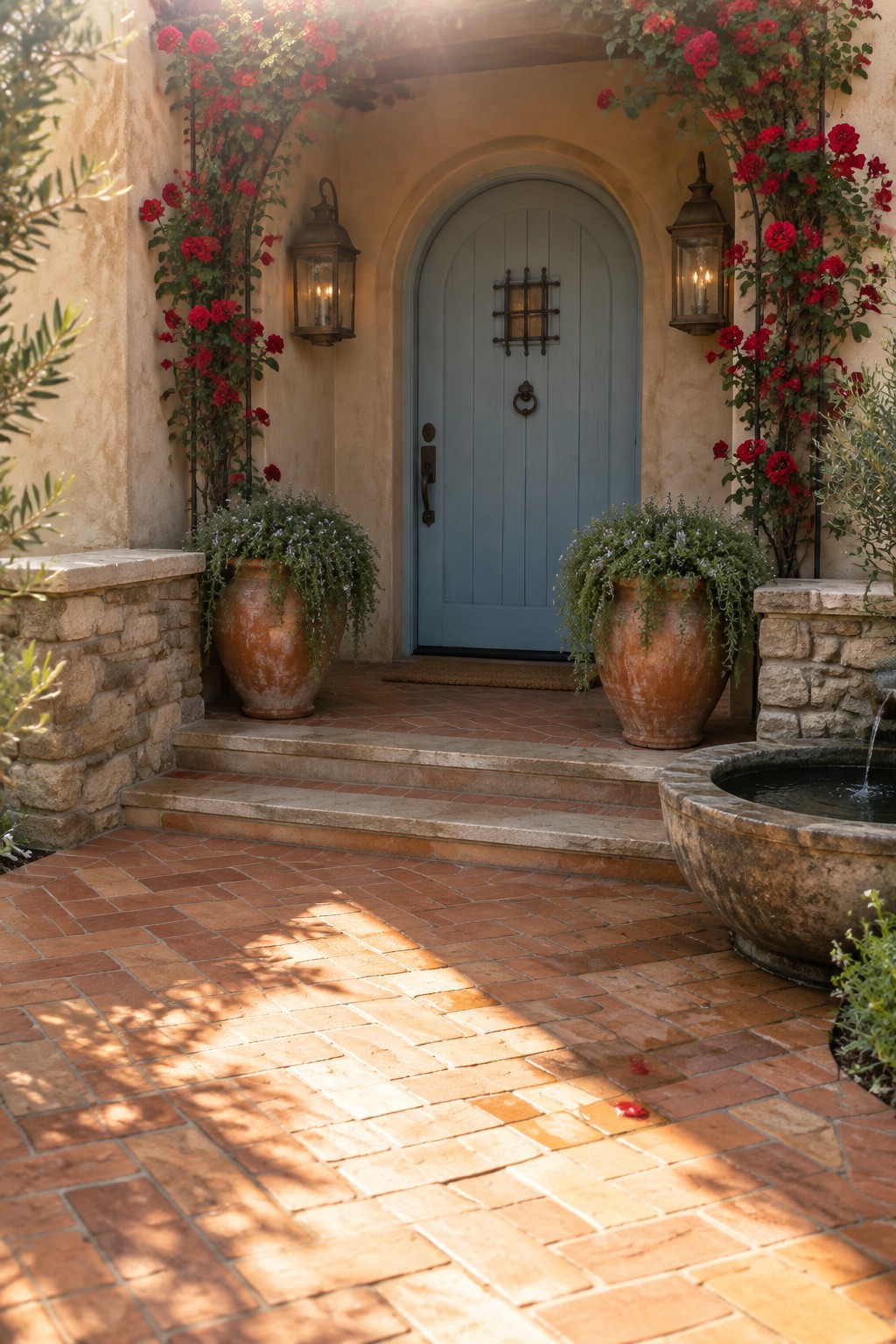
Red roses can bring bold color to a front entry without taking over the whole yard. Climbing them around the doorway gives the entrance a clear focal point, while the warm stone keeps the red from feeling too stark.
Use a sturdy trellis or other support to guide the canes, and leave enough room near the door for easy access and upkeep. This approach suits a stucco or stone home especially well.
Plant Red Roses in Large Entryway Beds
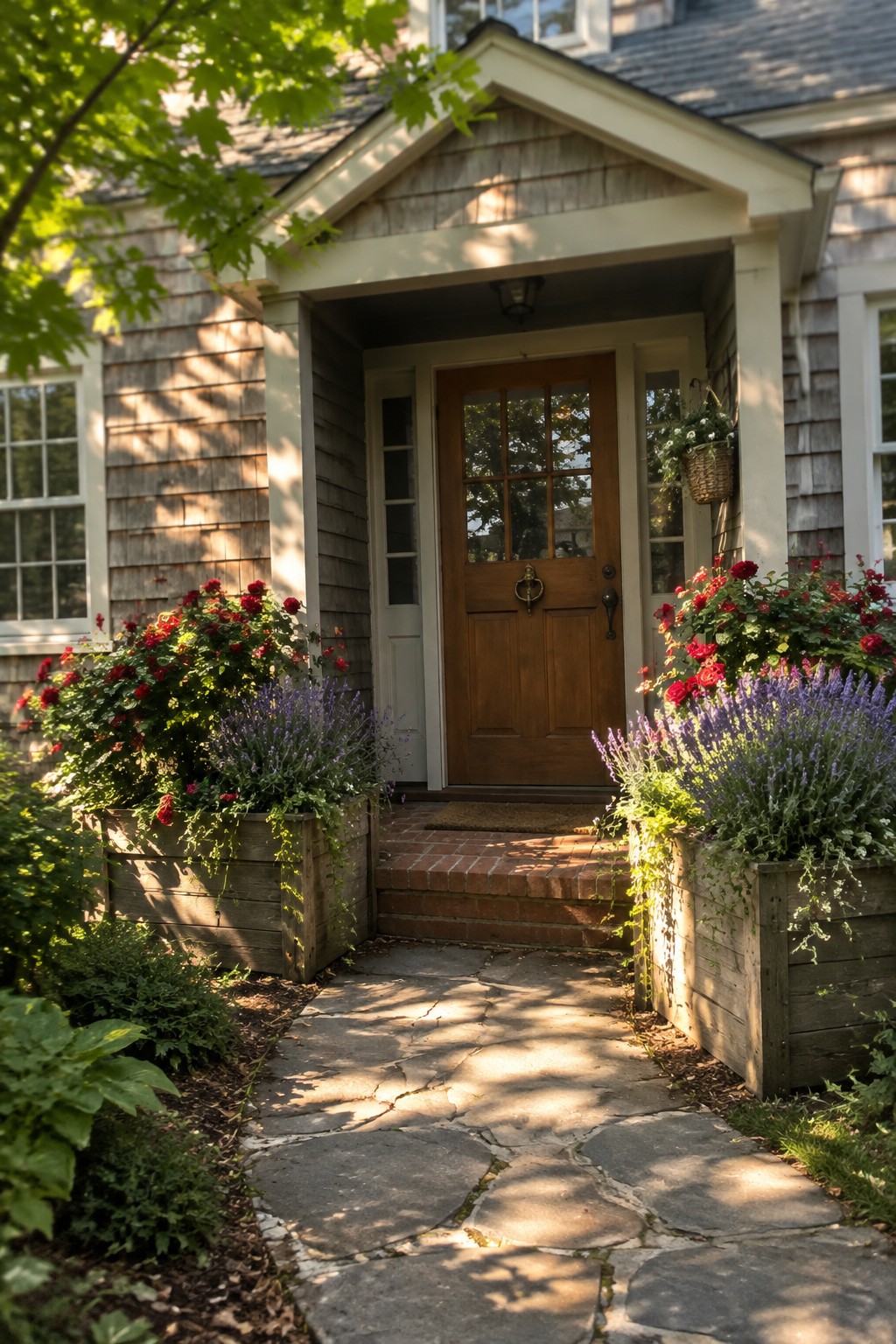
Red roses make a strong choice for the beds beside a front entry. Planted in generous groups, they give the doorway a clear burst of color without needing a complicated garden plan. Purple flowers nearby can add a softer contrast.
Use sturdy raised beds or broad ground-level borders on either side of the steps. Leave enough room for the roses to grow and for people to pass comfortably, and keep their watering and pruning needs in mind.
Plant Red Roses Along a Low Stone Wall
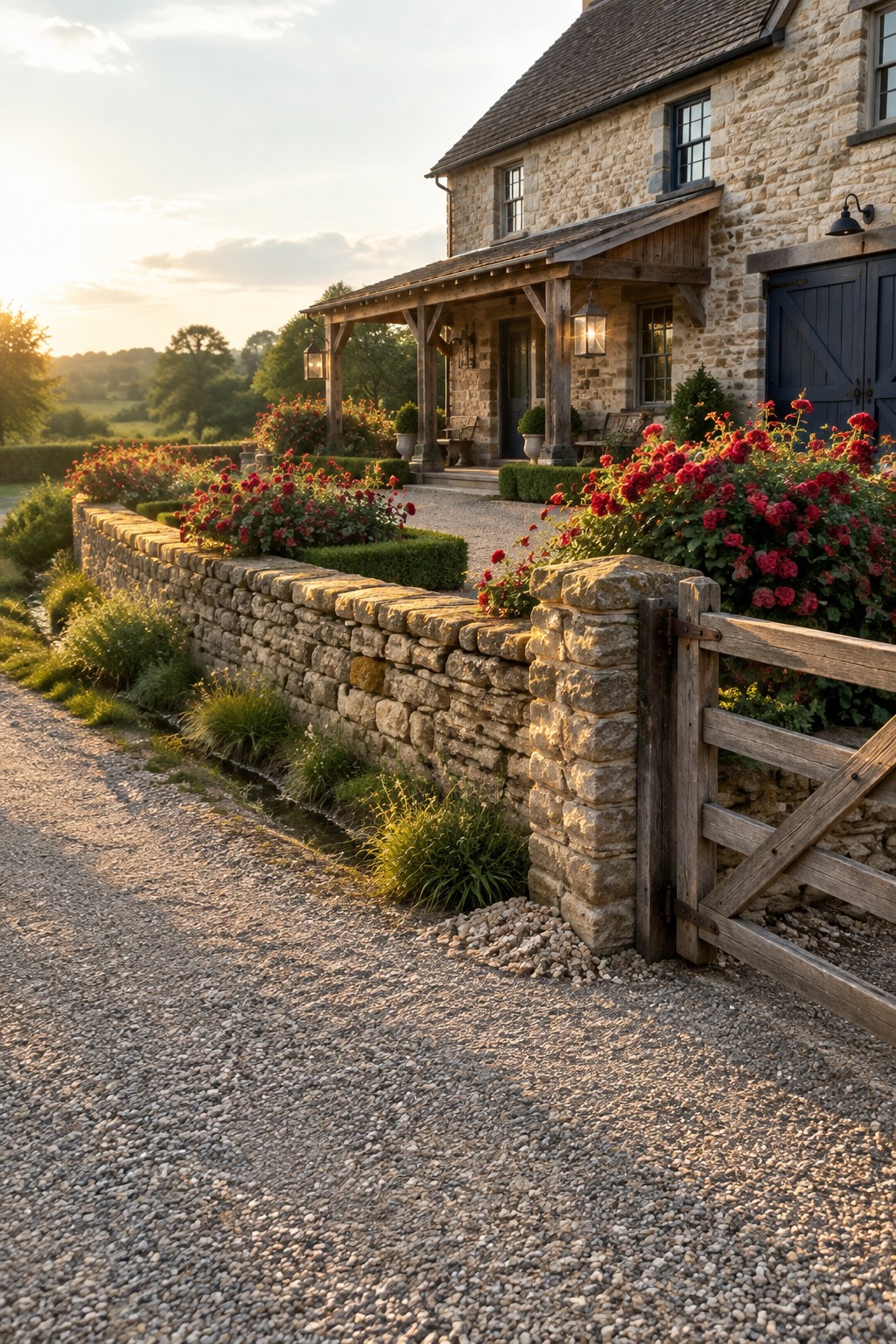
A low stone wall gives a front garden a clear edge and a good place to plant red roses. The flowers stand out against the stone, while the wall keeps the bed from spilling into the path.
Use this idea beside a gravel drive or front walk where the garden needs a tidy boundary. Leave enough space for the roses to grow without crowding the path, and choose a wall height that still lets the flowers be seen from the road.
Use a Stone Path to Shape the Rose Garden

A winding stone path gives a flower bed a clear route through it, so red roses feel like part of the garden rather than a row along the edge. The broad stones also leave room for low flowers to spill toward the walkway.
This approach suits a cottage-style front yard where a straight path might feel too formal. Leave enough space between the stones for easy walking, and keep roses trimmed back so their branches do not narrow the route.
Use a Raised Bed to Keep Roses Neat
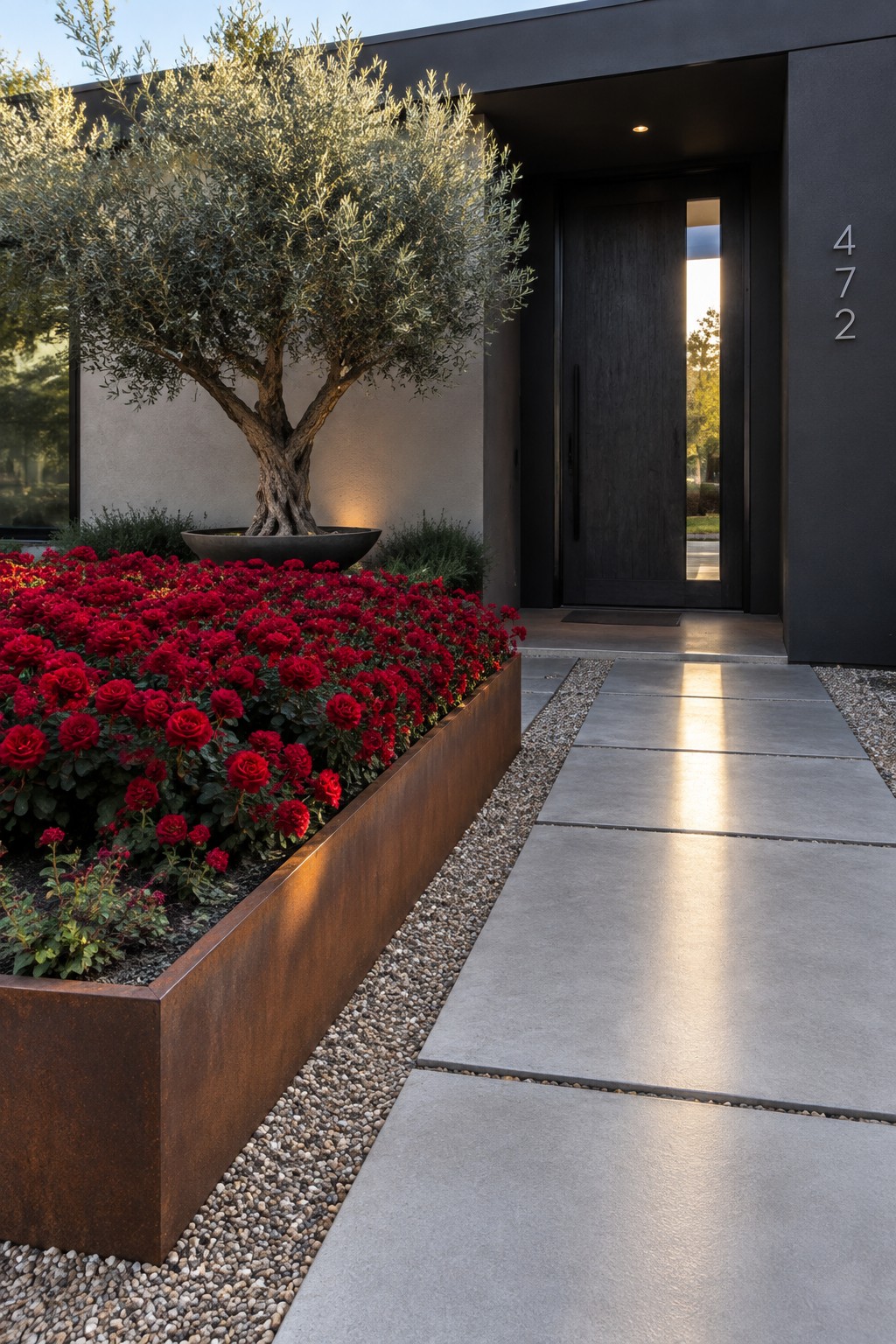
A raised bed gives a large rose planting a clear shape, which helps keep bold color from spreading across the whole front yard. Here, the rust-colored metal edge makes a tidy boundary for the red roses.
This approach works well beside a front walk, especially when you want plenty of flowers without crowding the path. Choose edging that suits the house, and leave enough room for roses to grow and for you to reach in for pruning.
Use Boxwood Edging to Shape Rose Beds
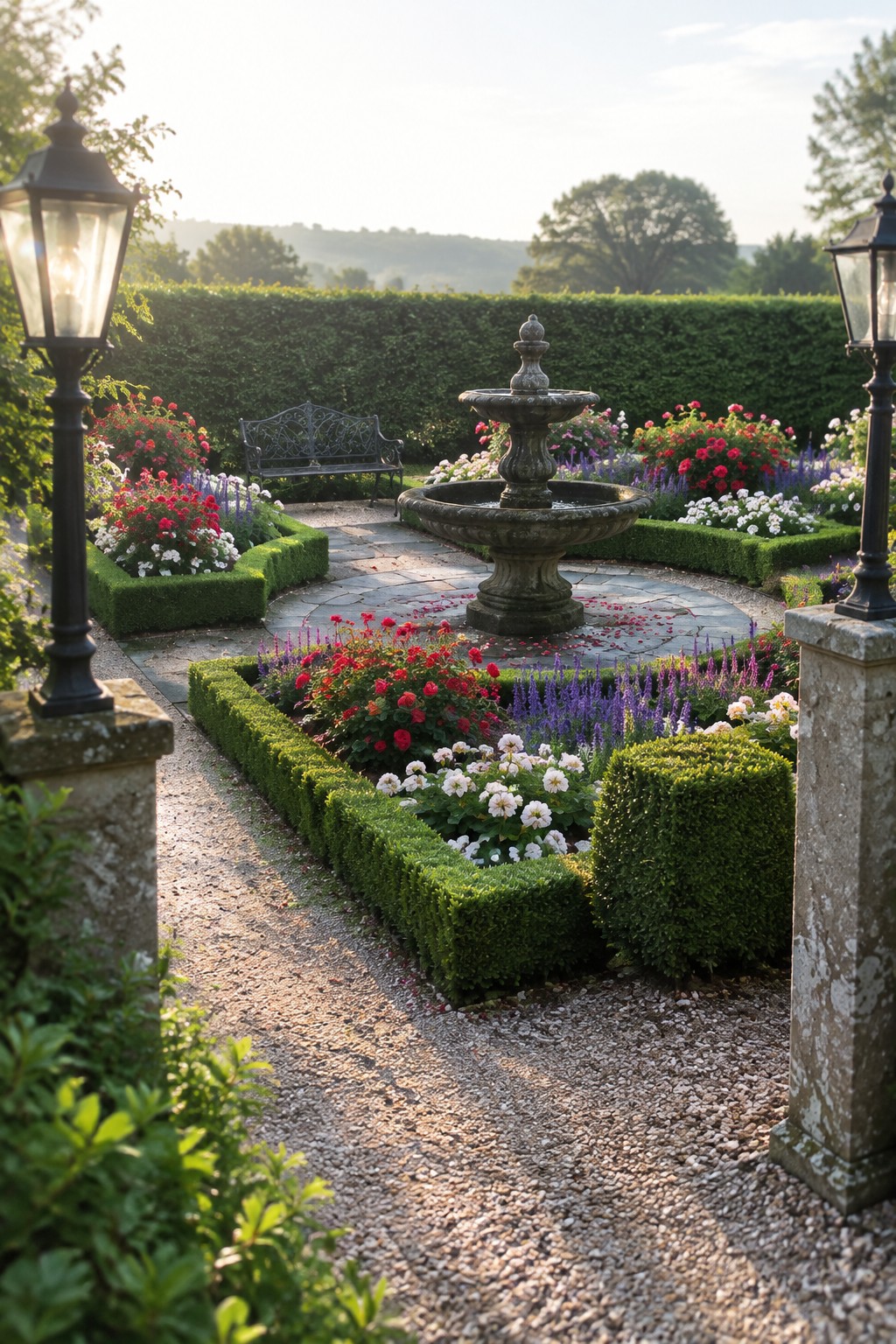
Clipped boxwood edging gives flower beds a clear shape and keeps colorful roses from looking scattered across the yard. It also makes a traditional garden feel tidy without needing a complicated layout.
Use a low hedge to outline a front-yard bed near a walk or entry, then plant red roses inside it for a strong patch of color. Leave enough room for the shrubs to grow, and keep the edging low so it does not hide the flowers.
Use Red Roses in Large Entry Planters
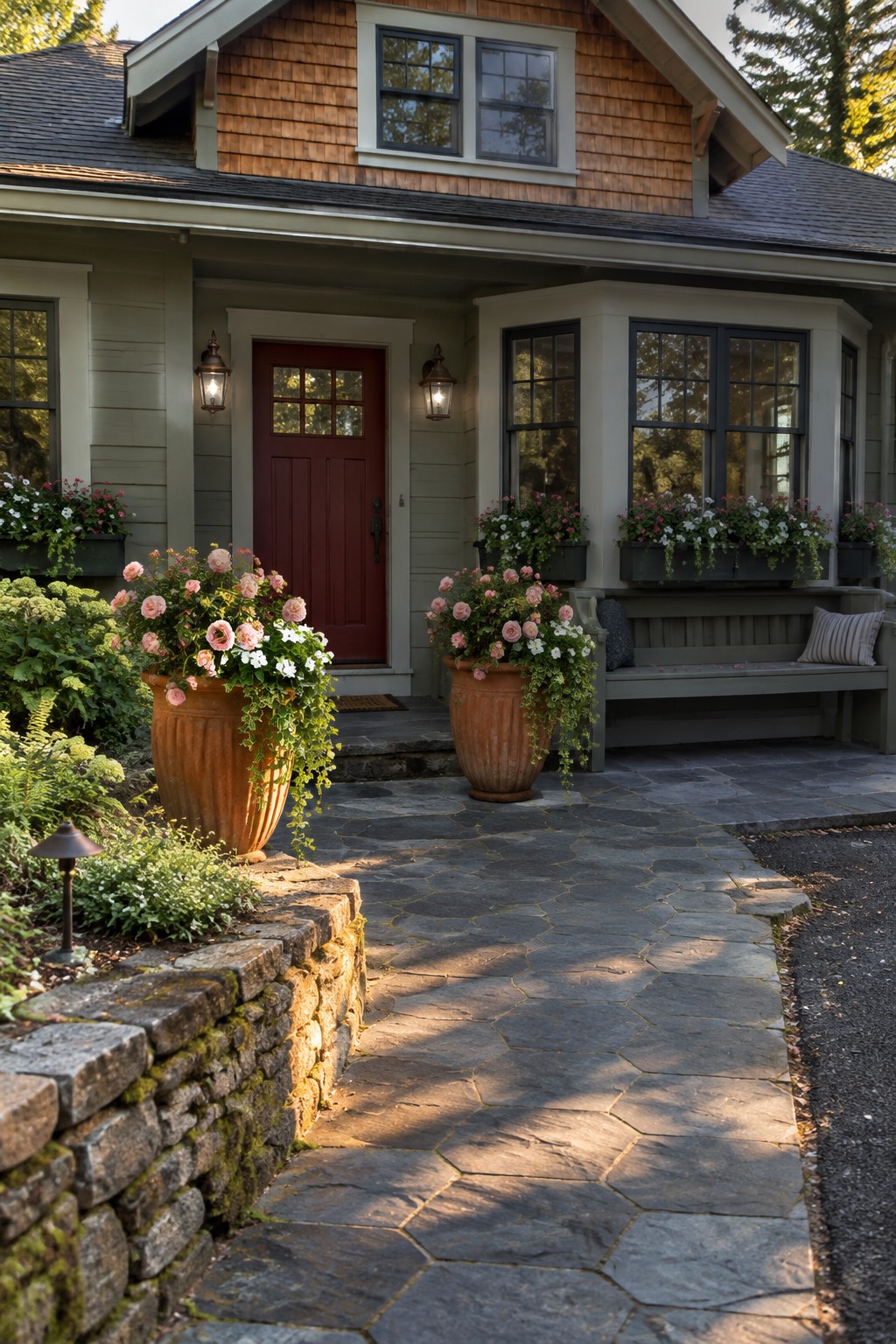
Large planters near the front door give red roses a clear place to stand out without reworking the whole garden. The tall terracotta pots shown here make a strong entry feature, and roses can bring the same bold color to the doorway.
Choose sturdy containers with good drainage and enough room for rose roots. Place them where the plants will get plenty of sun, and leave space around the door so the pots do not crowd the entry.
Use Red Roses to Add Color Along a Gravel Garden

Red roses can bring a welcome burst of color to a gravel garden, where the surrounding stone and foliage tend to stay subdued. Planting them along one side of a path gives the blooms a clear place to stand out without filling the whole yard with color.
Keep the rose bed grouped and leave enough room for plants to spread, especially beside a narrow path. A few red roses among soft, silvery foliage can suit a modern entry garden; just make sure the roses have suitable sun and care.
Use a Curving Brick Path Through the Rose Beds
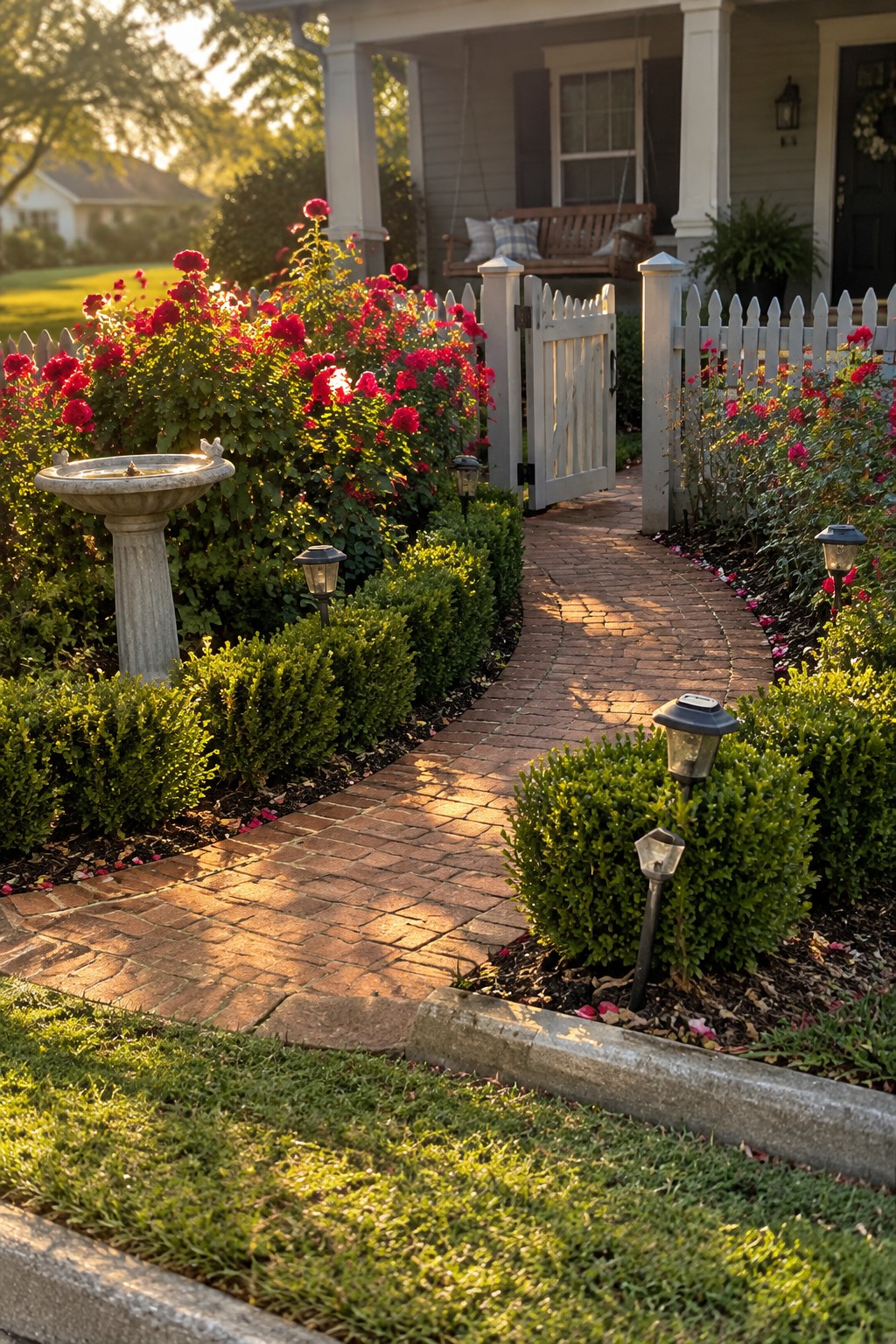
A gently curving path gives a front garden a more relaxed feel than a straight walk. Red roses along its edges bring strong color close to the route without making the walkway feel crowded.
Use brick or another textured paving material, and leave enough width for two people to walk comfortably. This layout suits a traditional home, especially when the rose beds have clear edges and room for regular pruning.
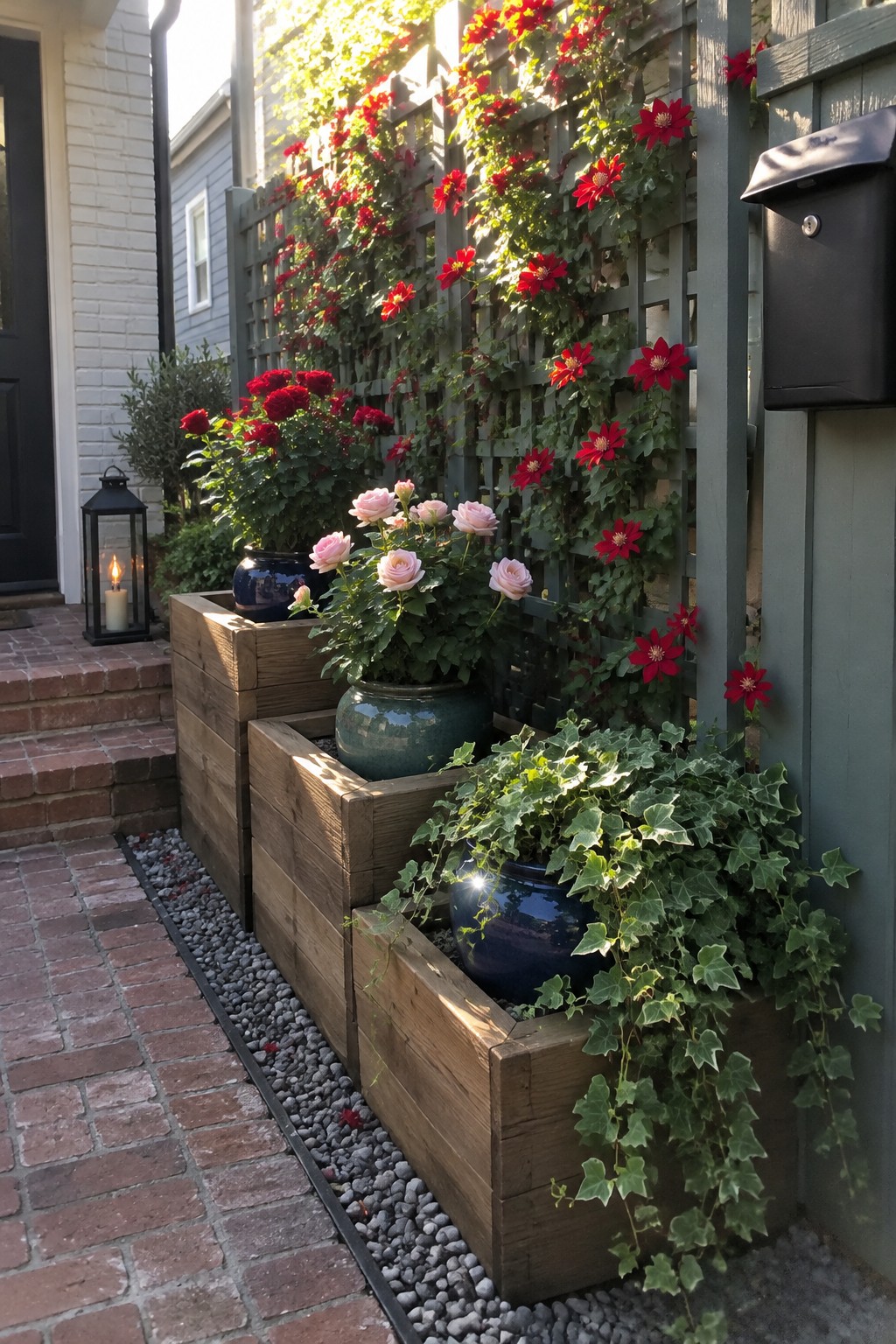
Use Tiered Planters to Add Red Roses to a Small Entry

Raised wooden planters let you grow red roses in a narrow front yard without giving up much lawn space. Placing them at different heights also gives the entry garden a clear, orderly shape.
Use this approach beside steps or a front walk where in-ground beds are limited. Leave enough room for the roses to grow and for people to pass, and add trailing or compact plants near the edges to fill the planters without crowding the flowers.
Train Red Roses on a Garden Trellis
Trellises let climbing red roses grow upward instead of spreading across a narrow planting area. The vertical display brings color close to the house and makes a small entry path feel more garden-like.
Use a sturdy trellis along a fence or beside a walkway, and leave enough room to reach the plants for pruning. Choose a climbing rose suited to your climate, then tie new canes loosely as they grow.
Add Step Lighting Beside Red Rose Beds
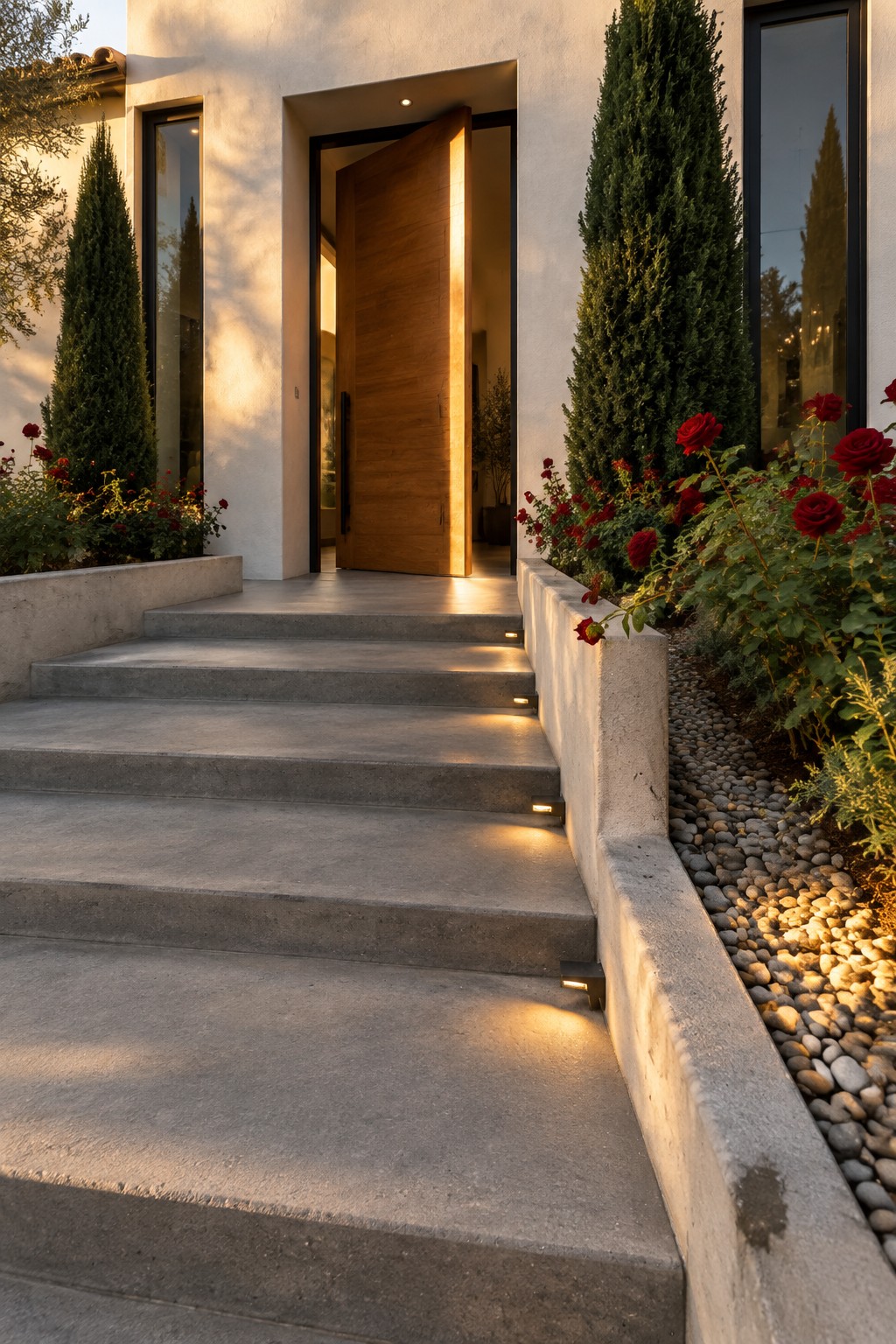
Low lights set into the steps make a front approach easier to use after dark, while red roses along the border bring color right up to the entry. The lighting is practical, and it helps the path feel connected to the garden.
Use small, shielded fixtures along the sides of concrete steps, spacing them so each tread is easy to see. Keep the roses trimmed back from the walking area, and choose warm bulbs that do not overpower the flowers.
Use a Pergola to Support Climbing Roses
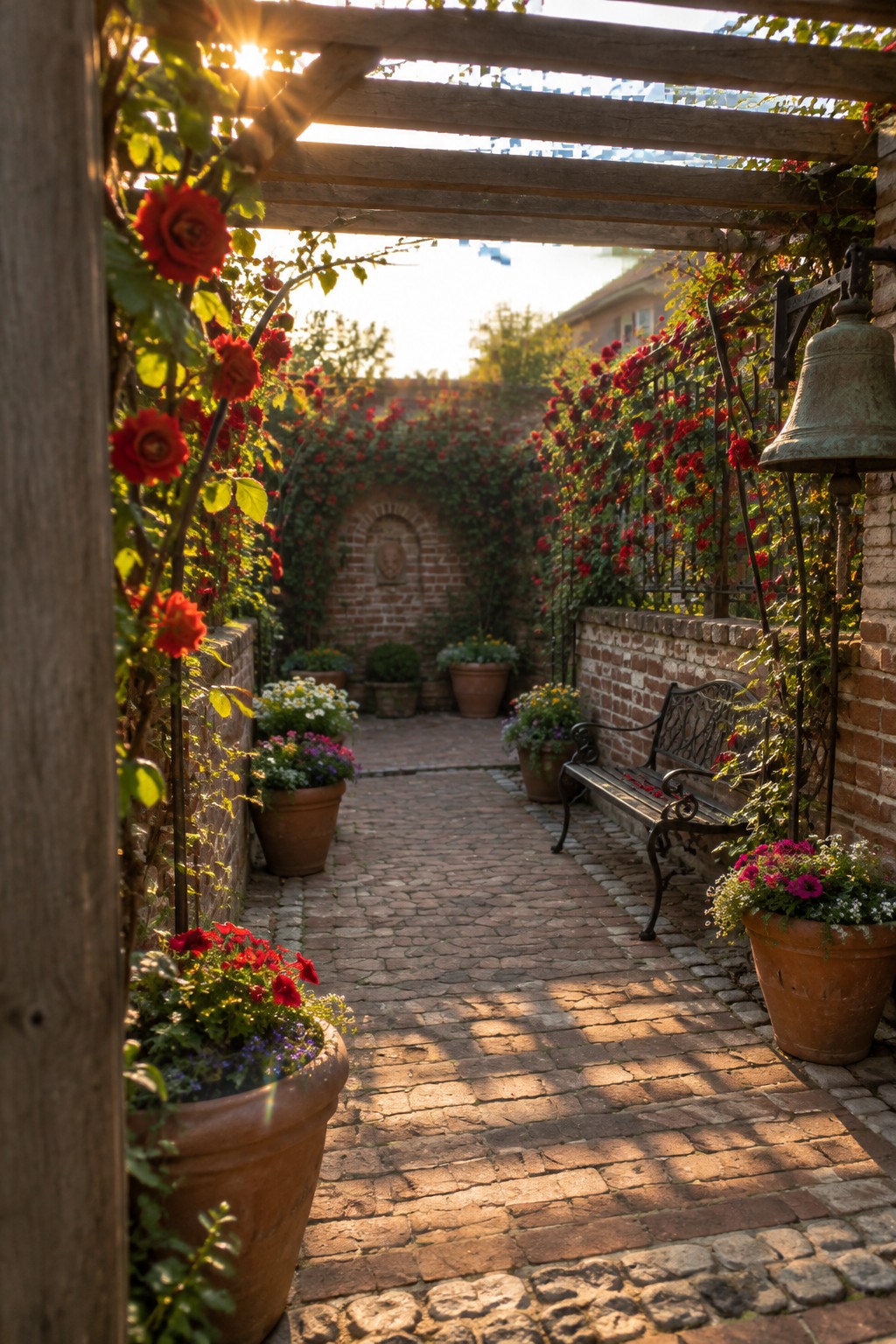
A pergola can give climbing roses a clear structure to grow along, turning a simple garden path into a more defined route. The overhead beams and rose-covered sides make the walkway feel enclosed without closing it off.
This idea works well in a narrow side garden or a long path where roses might otherwise spread into the walking space. Train the canes along sturdy supports, and leave enough room overhead for comfortable passage.
Add Red Roses to a Layered Front Garden
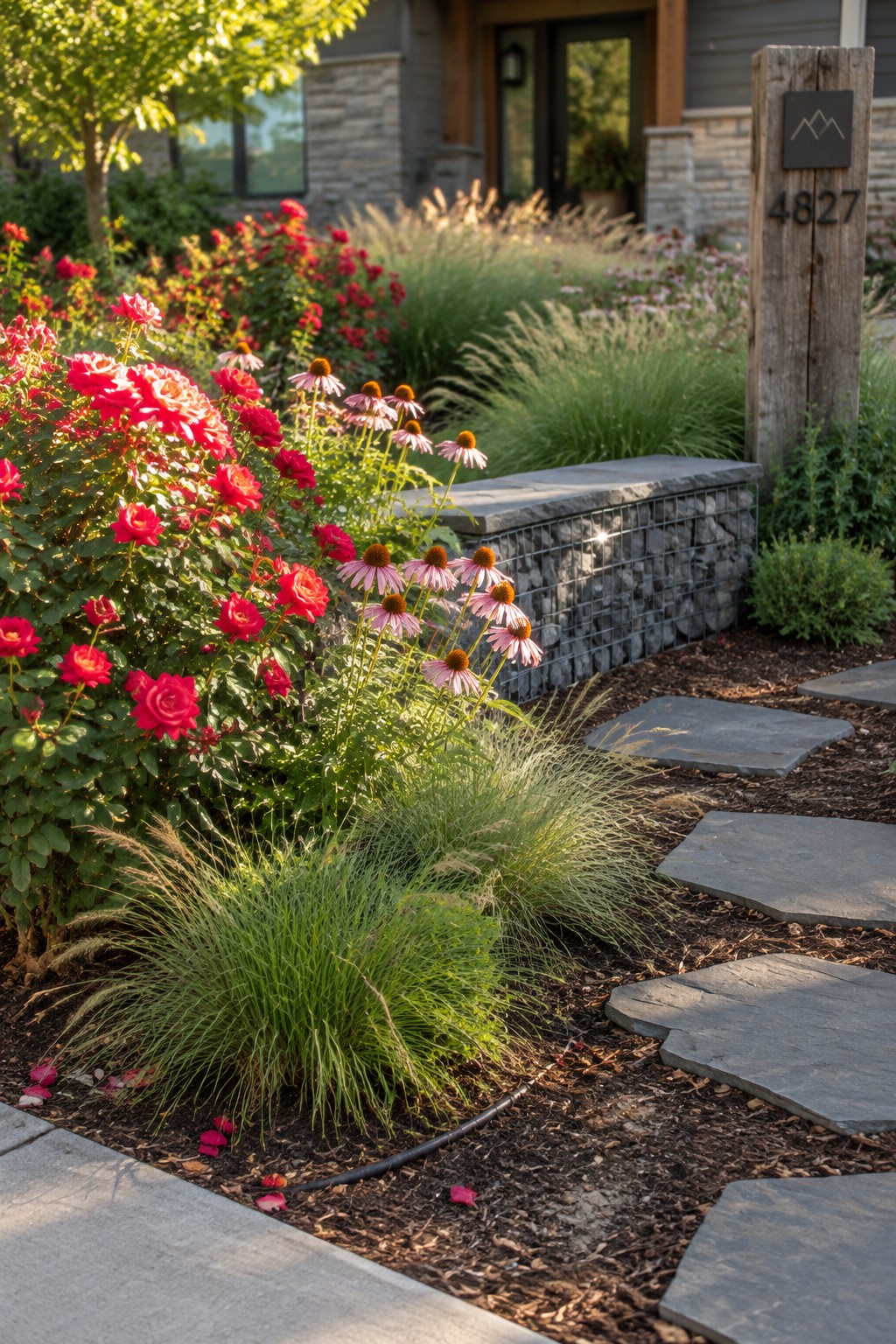
Red roses stand out in a front garden when they grow among softer grasses and flowering perennials. The mix gives the roses room to shine without making the whole bed feel like one solid block of color.
Plant roses in generous groups along the front of the house, then leave enough space for air to move between the shrubs. This approach suits an entry bed with room to spread, but keep roses clear of the walkway so their stems do not crowd the path.
Frequently Asked Questions
Q: How much sun do red roses need in a front yard?
A: Most roses bloom best with at least six hours of direct sun a day. If your front yard gets afternoon shade, choose a spot that catches the morning light and has good airflow.
Q: What can I plant beside red roses so the color doesn’t feel too overpowering?
A: Try soft-colored flowers or silvery foliage nearby to give the red blooms some breathing room. White alyssum, lavender, and dusty miller are easy choices that won’t compete too much.
Q: How do I keep red roses from looking messy along a walkway?
A: Leave enough room for each rose to grow without spilling into the path, and trim back branches that reach across it. A neat border of low plants can help define the edge, too.
Q: Will red roses work in a small front yard?
A: Yes. A compact rose variety in a pot or a small bed can make a strong focal point without taking over the space.
