

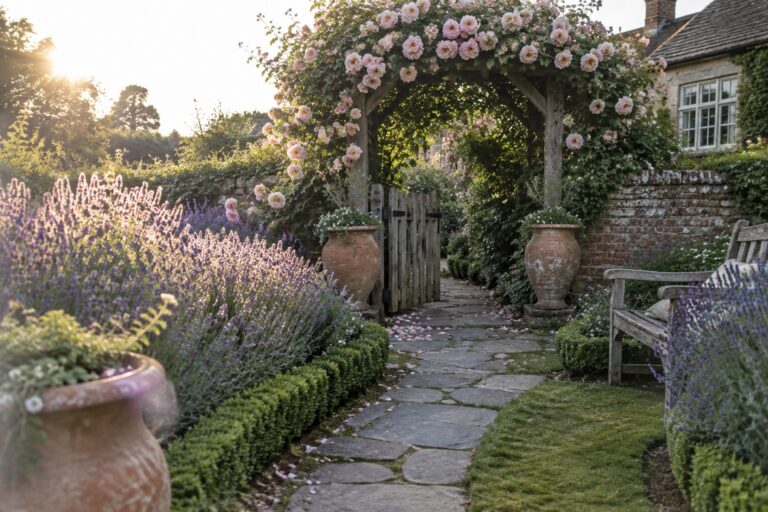
Lavender and roses can make a garden feel romantic, but their placement matters as much as their color and fragrance.
I find the combination works best when taller roses give the beds some structure and lavender softens the edges or lines a path.
The first thing I notice in a cottage garden is often how the planting guides the eye from the entrance through the space, rather than how many flowers are packed into it.
Spacing, edging, and a clear route to walk can keep the garden practical as the plants fill out over time.
Some of these arrangements are worth adapting to your own yard, whether you have a deep border or just room for a small, fragrant bed.
Use a Stone Path to Shape the Garden
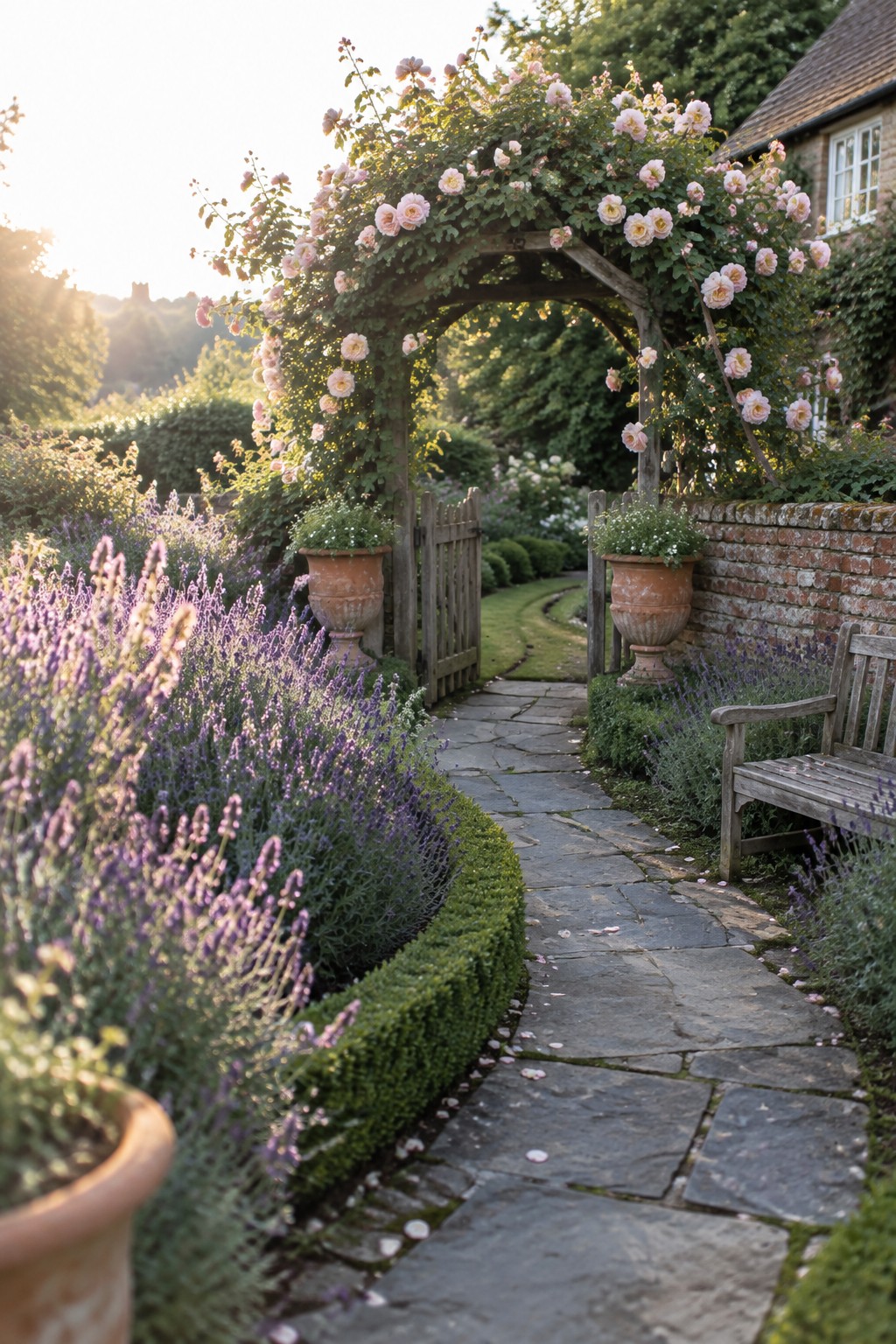
A narrow stone path gives a cottage garden a clear route through all the planting. It also lets flowers and herbs grow close to the walkway without making the space feel untidy.
This works well in a small garden or beside an older home, where a straight, wide path might look too formal. Choose stones with a natural finish, and leave enough room to walk comfortably, even as plants spread.
Use A Gravel Path To Shape The Garden
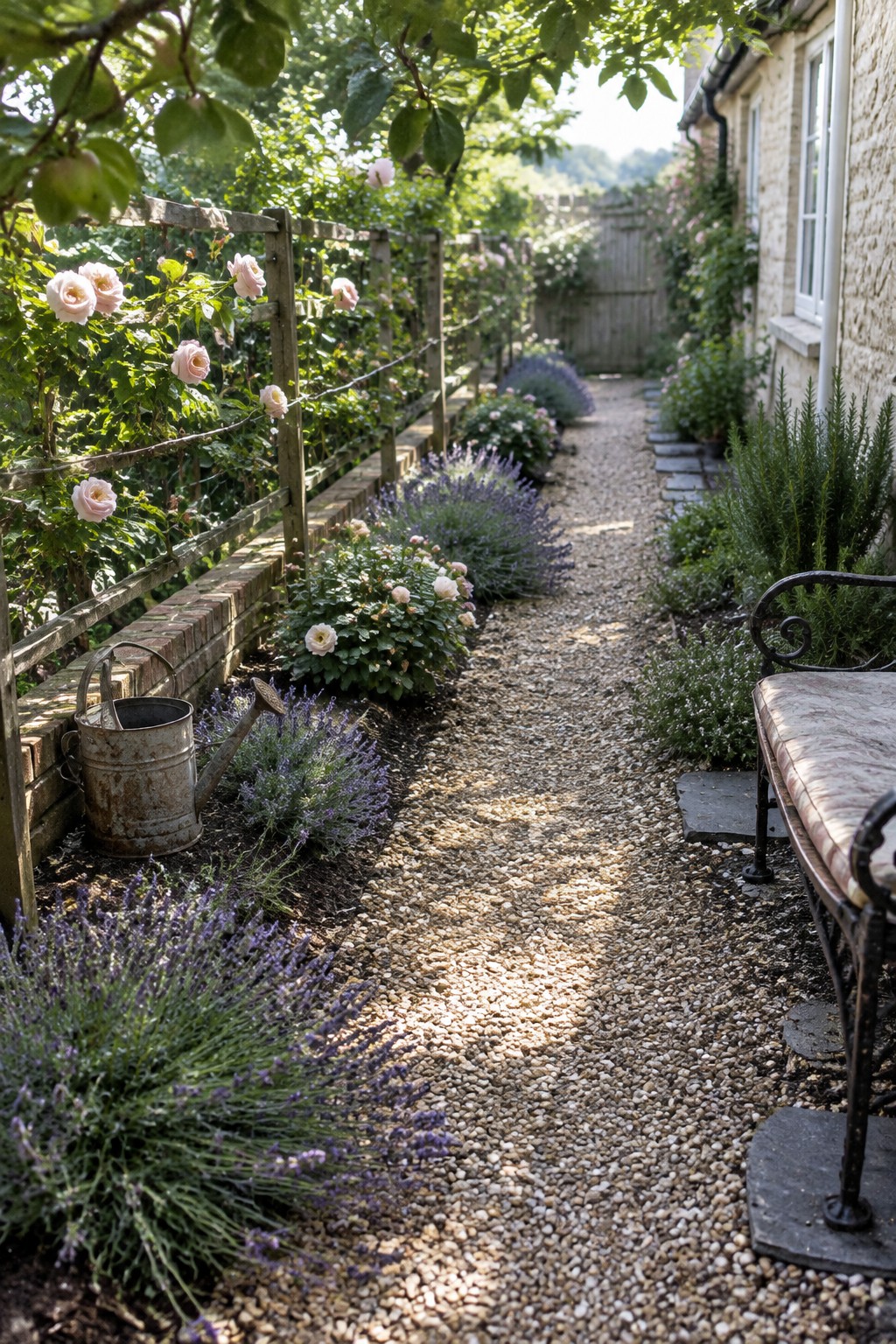
A narrow gravel path gives a cottage garden a clear route through the planting without making it feel formal. The pale roses and lavender along the edge make the path feel like part of the garden, rather than just a way to get from one end to the other.
This works well in a side garden where space is limited. Keep the path wide enough to walk comfortably, and use a firm base so the gravel stays in place and is easy to maintain.
Use a Stone Path to Shape the Garden
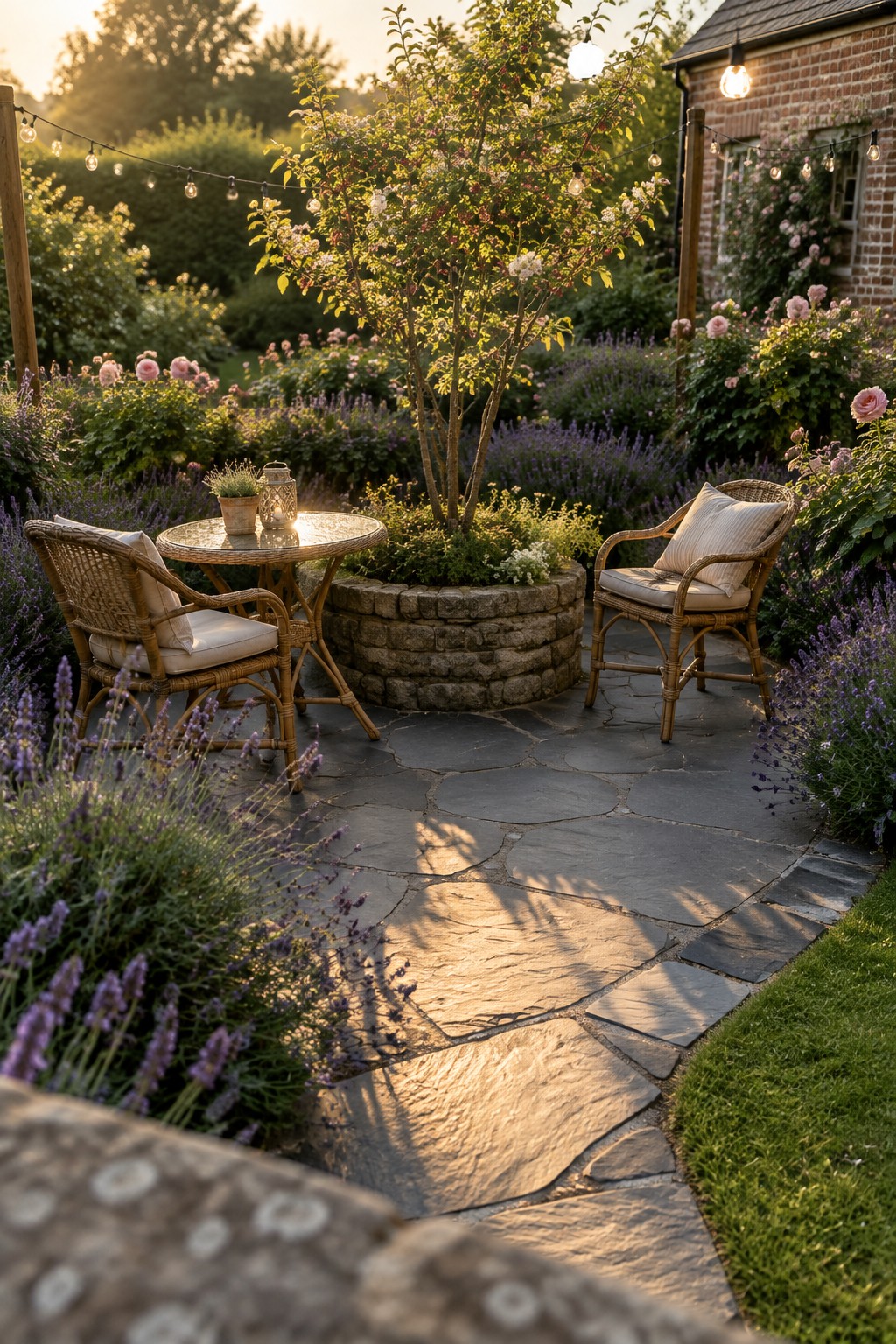
A flagstone path gives a flower garden a clear route through the planting. It also makes a practical spot to pause and enjoy the roses and lavender without stepping into the beds.
For a similar look, let the path curve gently between planted areas and choose stones with a surface that stays safe underfoot. Leave enough room for comfortable walking, especially where the path meets a seating area.
Use a Stone Path To Shape The Garden

A winding stone path gives a cottage garden a clear route without making it feel too formal. Here, the irregular paving leads past lavender and roses, making the planting feel like part of the walk rather than a border to look at from afar.
This approach works well in small courtyards and narrow side gardens, where a path can guide people through the space and leave room for planting along the edges. Choose stones with a comfortable, fairly even walking surface, and leave enough space for plants without letting them spill across the route.
Bring Lavender and Roses to the Front Steps
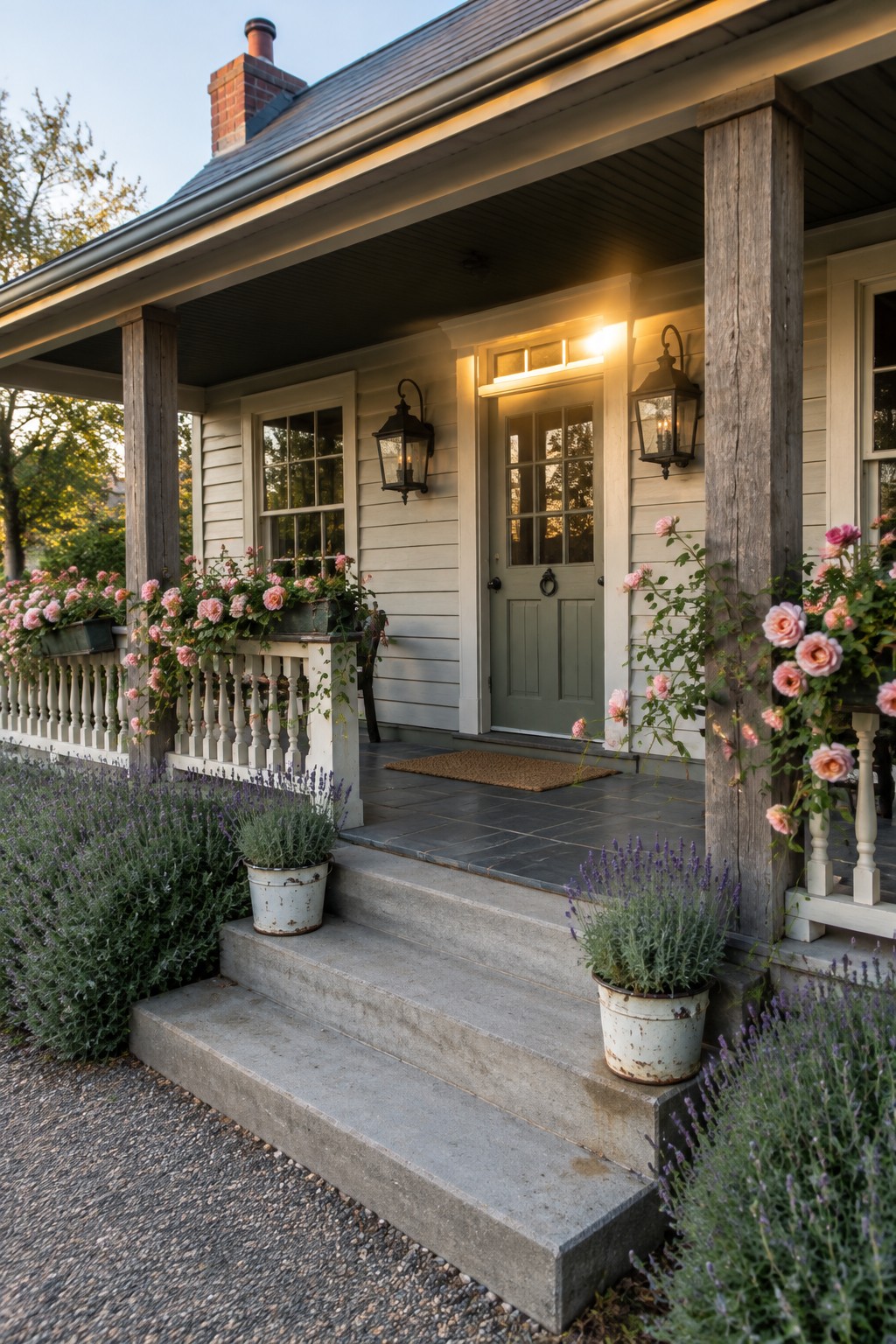
Planting lavender along a porch and letting roses grow through the railing makes the entrance feel like part of the garden. The lavender gives the edge a clear shape, while the roses add height and a softer, more cottage-like look.
Use this idea beside front steps or along a porch where the plants can be seen from the path. Leave enough room for people to walk and for the roses to be pruned, and check that the spot gets suitable sun for both plants.
Create a Layered Cottage Garden
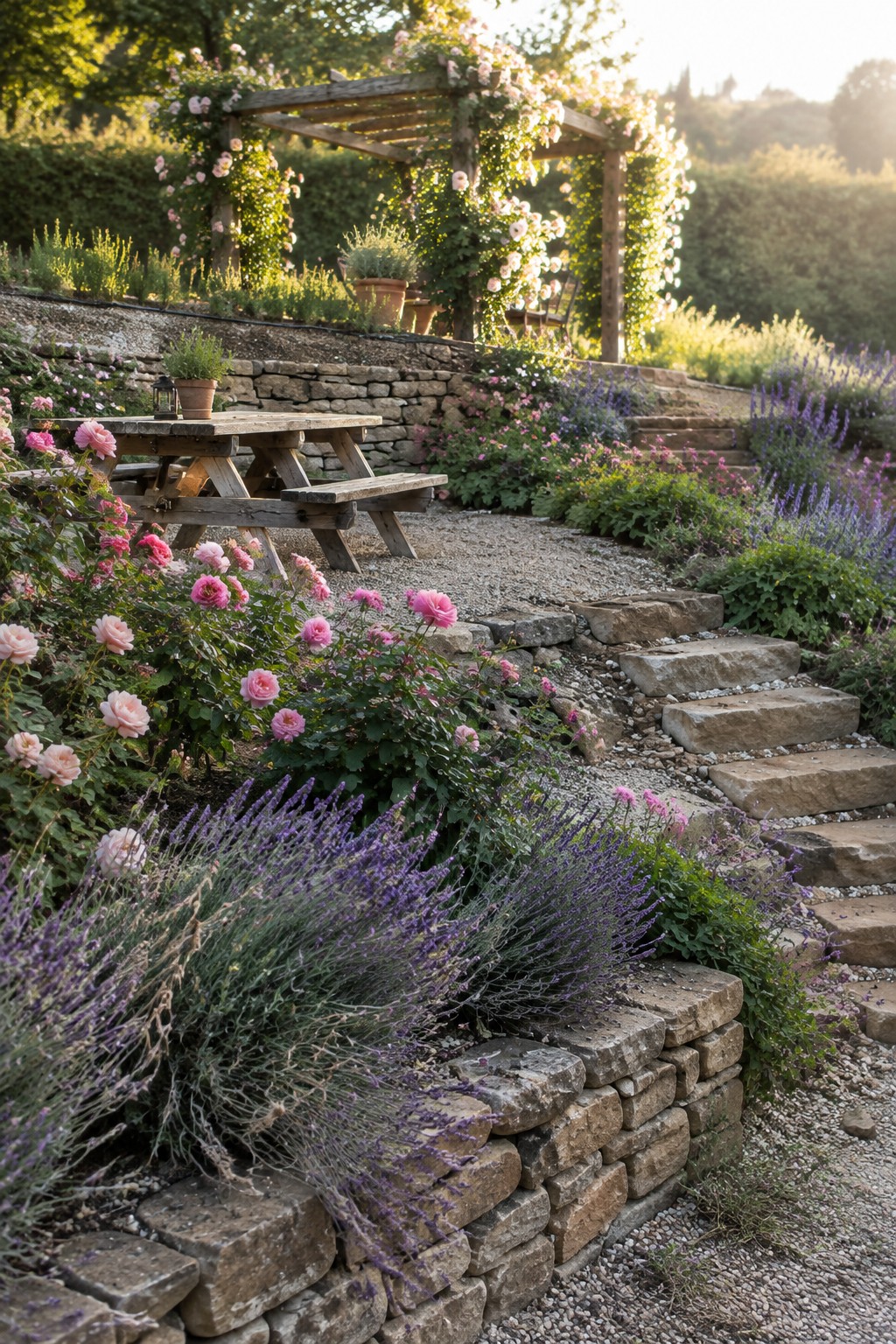
A cottage garden feels fuller when flowers grow in distinct layers rather than in one low border. Pink roses near the path and taller lavender behind them give the planting a relaxed, abundant look while leaving the garden’s stonework visible.
Use this approach along a gravel path or beside a retaining wall, placing taller plants toward the back and roses where they can spill gently toward the edge. Leave enough room to walk and tend the beds, since crowded paths can become difficult to use.
Add a Rose Archway Along the Garden Path
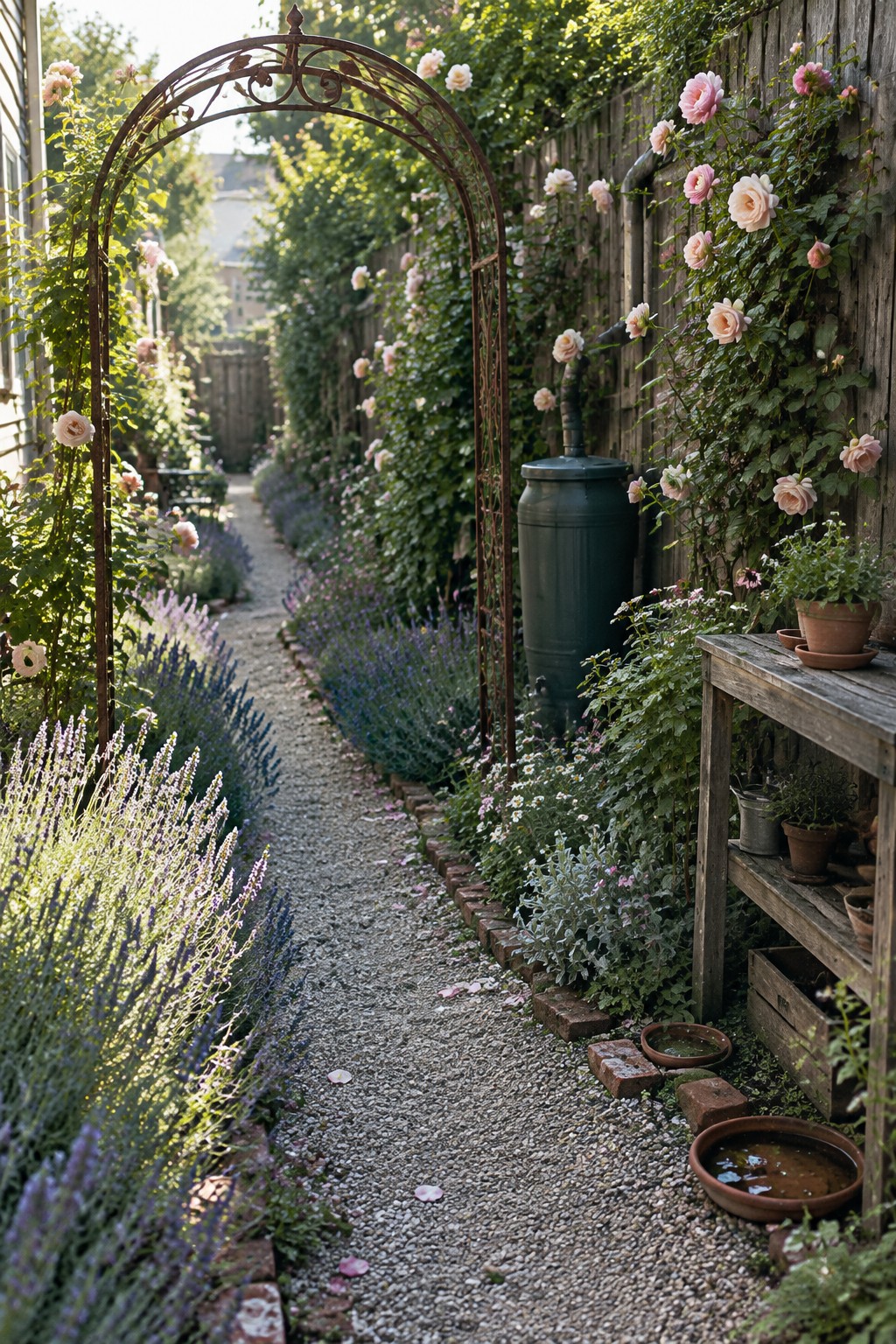
A rose-covered arch is a simple way to mark the start of a garden path and give the planting a little structure. Here, the iron arch also gives climbing roses a place to grow, so the walkway feels tucked into the garden without needing a solid divider.
Use an arch where a path passes between flower beds or changes direction. Choose a sturdy frame and leave enough room for plants to grow without narrowing the walkway. Lavender along the edges makes a useful companion planting.
Use a Raised Flower Bed to Organize the Garden
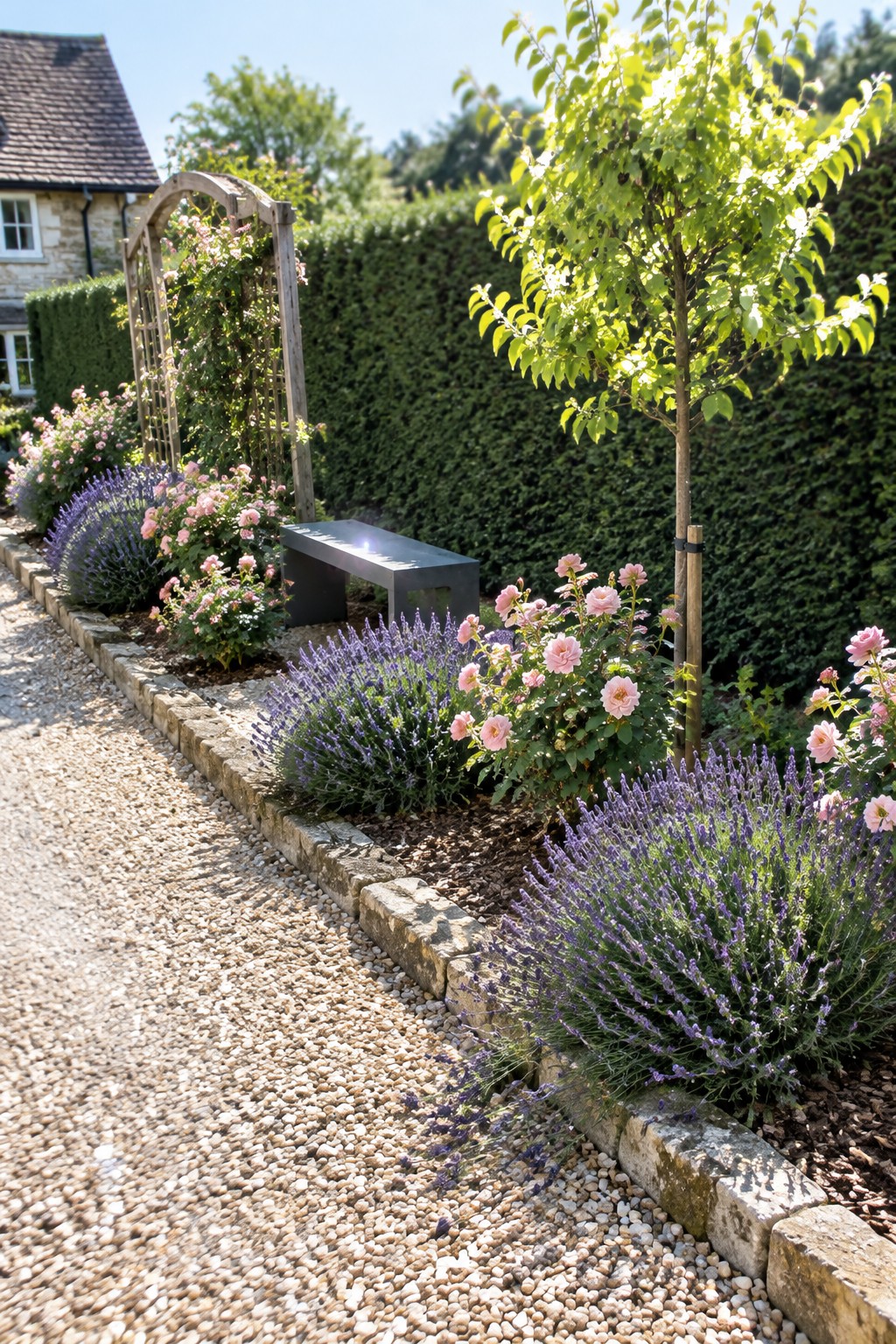
A low stone edge gives a flower bed a clear shape and keeps it distinct from the gravel path. It also makes a mixed planting of lavender and roses feel planned without looking too formal.
This approach suits a cottage garden where flowers spill a little over their borders. Choose stones that fit the house and keep the edge low enough to reach the plants easily.
Make a Lavender Garden Part of the Patio

A lavender border can make an outdoor dining spot feel settled into the garden rather than set apart from it. Planting it along a stone edge also gives the patio a clear boundary, while roses climbing a nearby wall bring cottage character without taking up much ground space.
This idea works well beside a small terrace or courtyard table. Keep lavender close enough to enjoy its scent, but leave a little room between the plants and paving so they are easy to trim and don’t crowd the seating.
Use Planter Boxes to Define a Cottage Garden Path
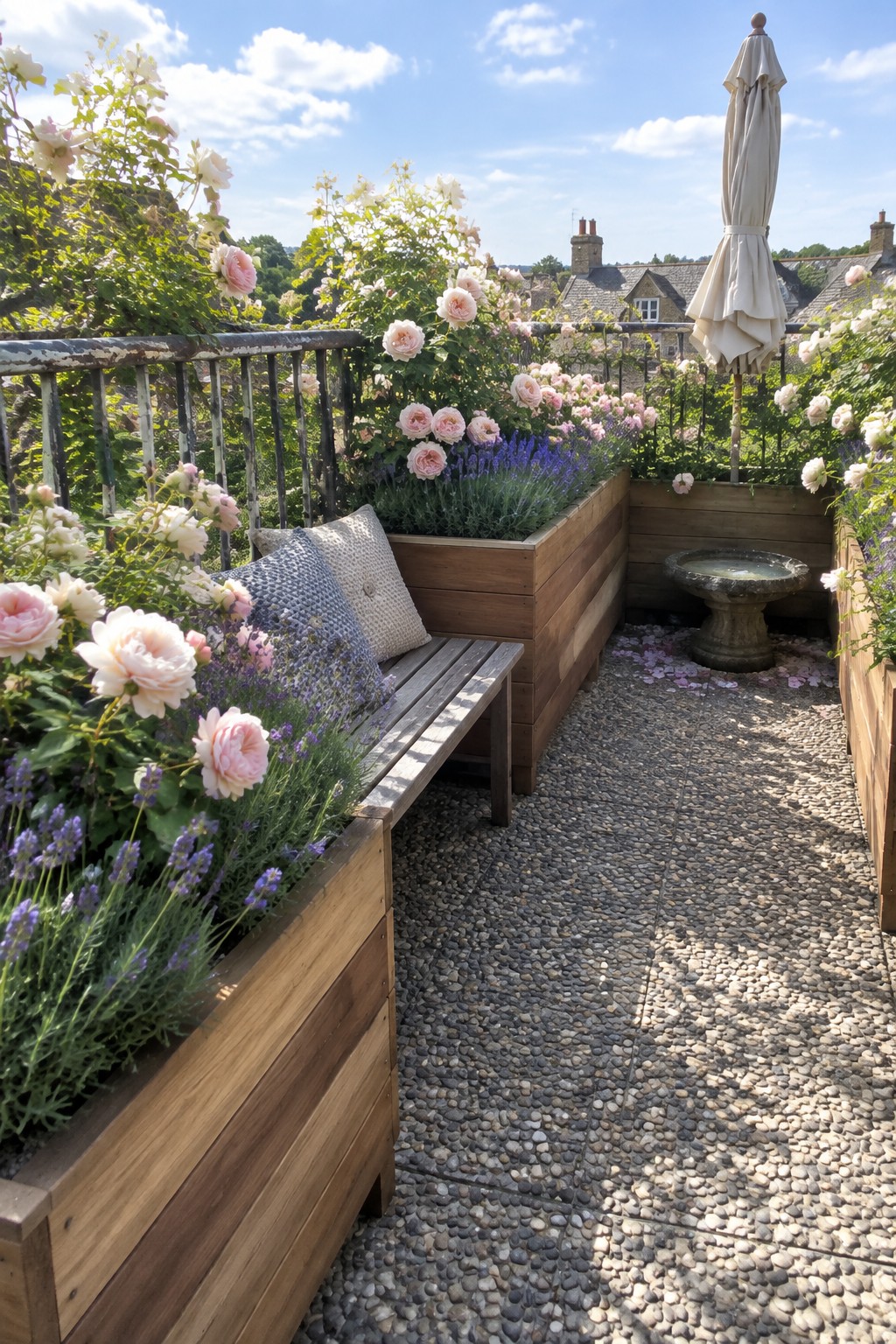
Raised wooden planters can give a narrow garden a clear shape without making it feel formal. Planting lavender and roses along the edges brings color and scent close to the path, while the planter sides keep the beds tidy.
This idea works well on a balcony or small terrace where planting space is limited. Leave enough room between the boxes for an easy walkway, and vary the flowers so the lavender has space to grow rather than getting crowded by roses.
Use a Garden Gate to Mark the Entry
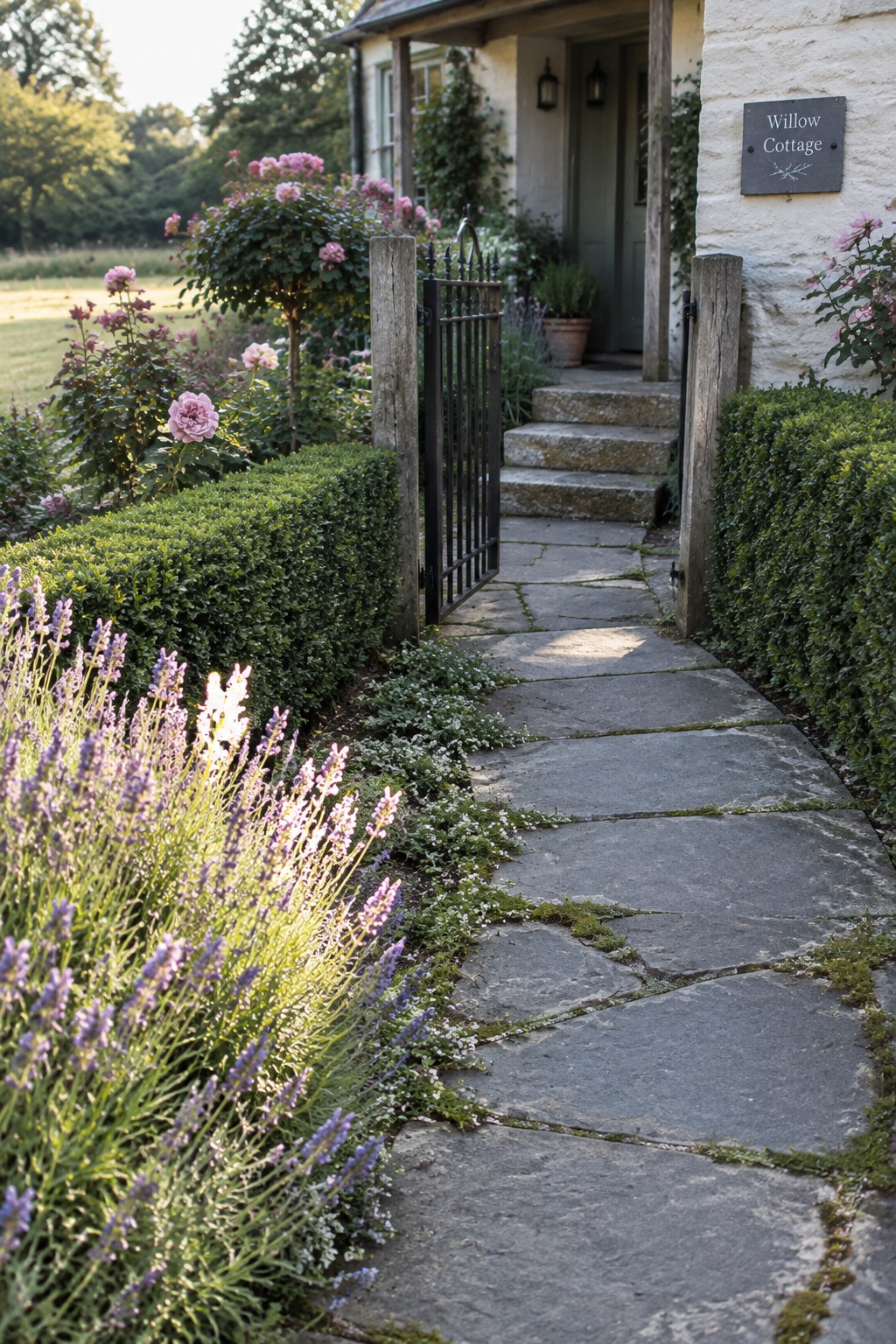
A simple gate can give a cottage garden a clear entrance without making it feel formal. Here, the narrow iron gate sits between clipped hedges, giving the stone path a natural stopping point before it reaches the front steps.
This works well where a path passes through a flower bed or hedge. Keep the gate easy to open and leave enough room for plants so they do not crowd the walkway.
Use a Stone Stairway to Follow the Garden Slope
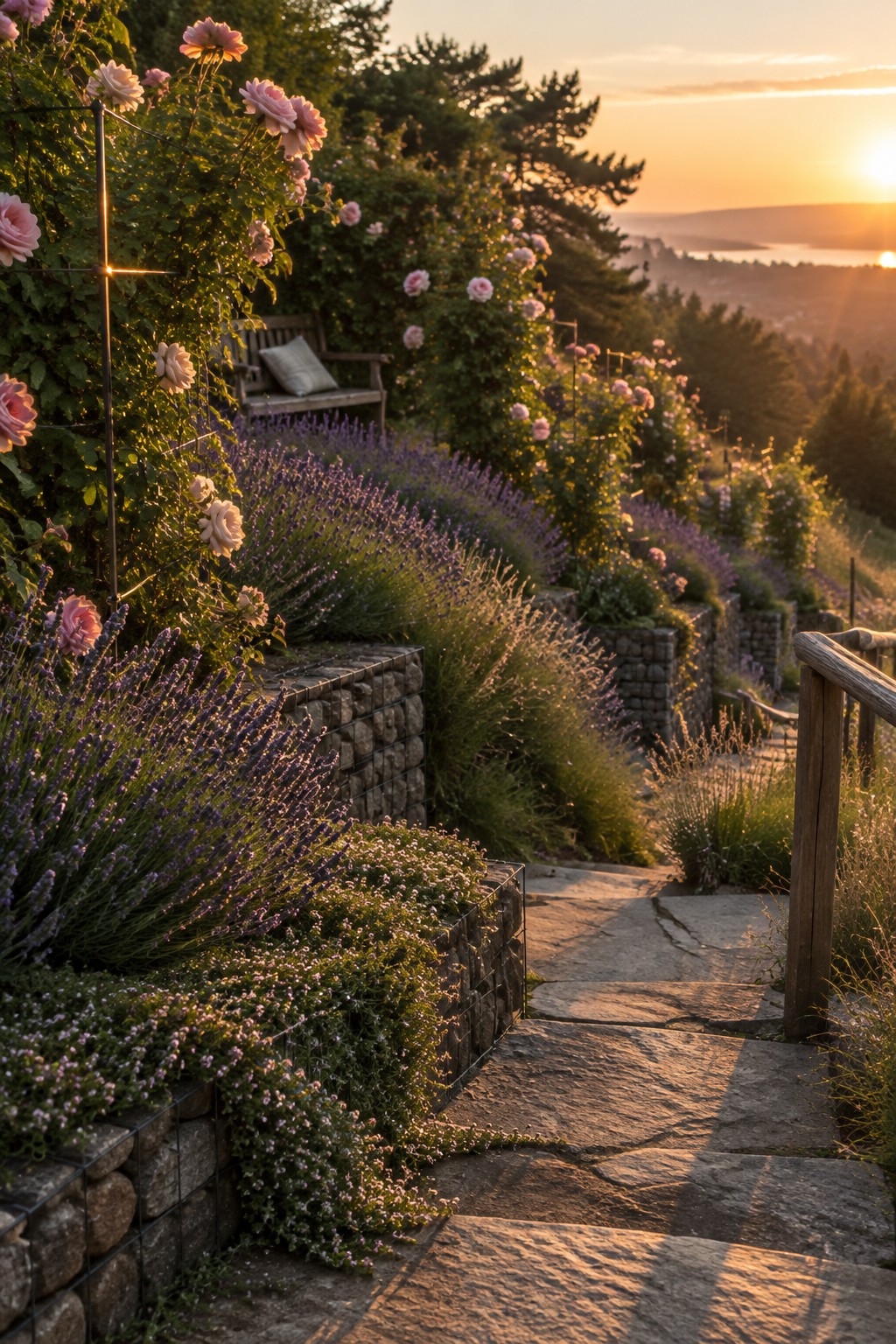
A stone stairway makes a sloping garden easier to move through while giving the planting beds a clear shape. Here, the steps run between gabion walls and flowering borders, so the path feels like part of the garden rather than a route cut through it.
For a similar setup, keep the steps wide enough for comfortable footing and use a rough, slip-resistant surface. Lavender and roses can edge the route, but leave enough space for plants to grow without crowding the steps.
Shape the Garden With Curved Paths
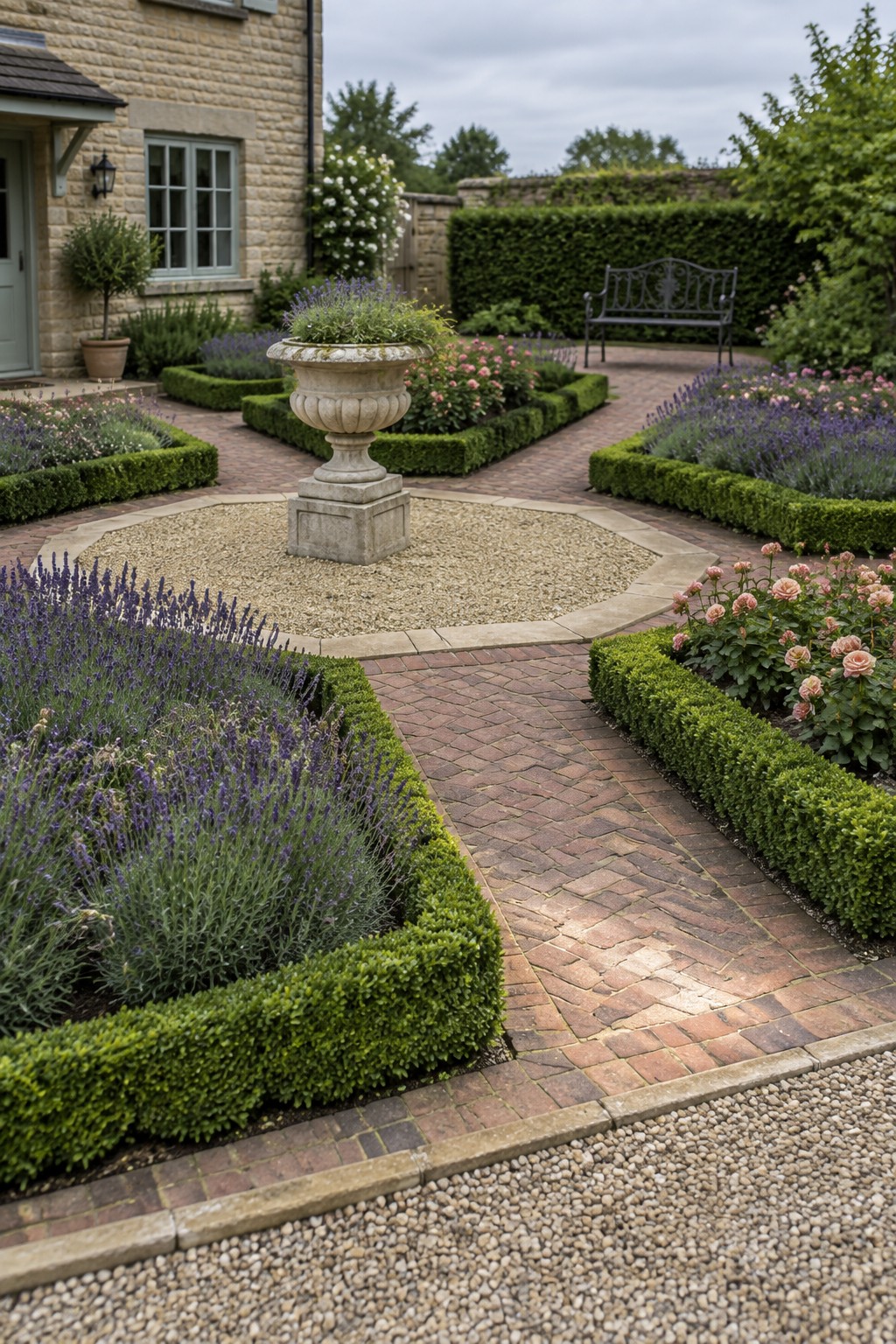
Curved paths give a cottage garden an easy, informal flow. Here, the brick route winds around clipped boxwood beds and a small gravel circle, making the planting feel organized without looking too rigid.
Use gentle curves to guide people between flower beds or toward a quiet spot in the garden. Brick works well for a traditional home, but make sure the path is wide and even enough to walk comfortably.
Let a Brick Path Lead Through the Garden
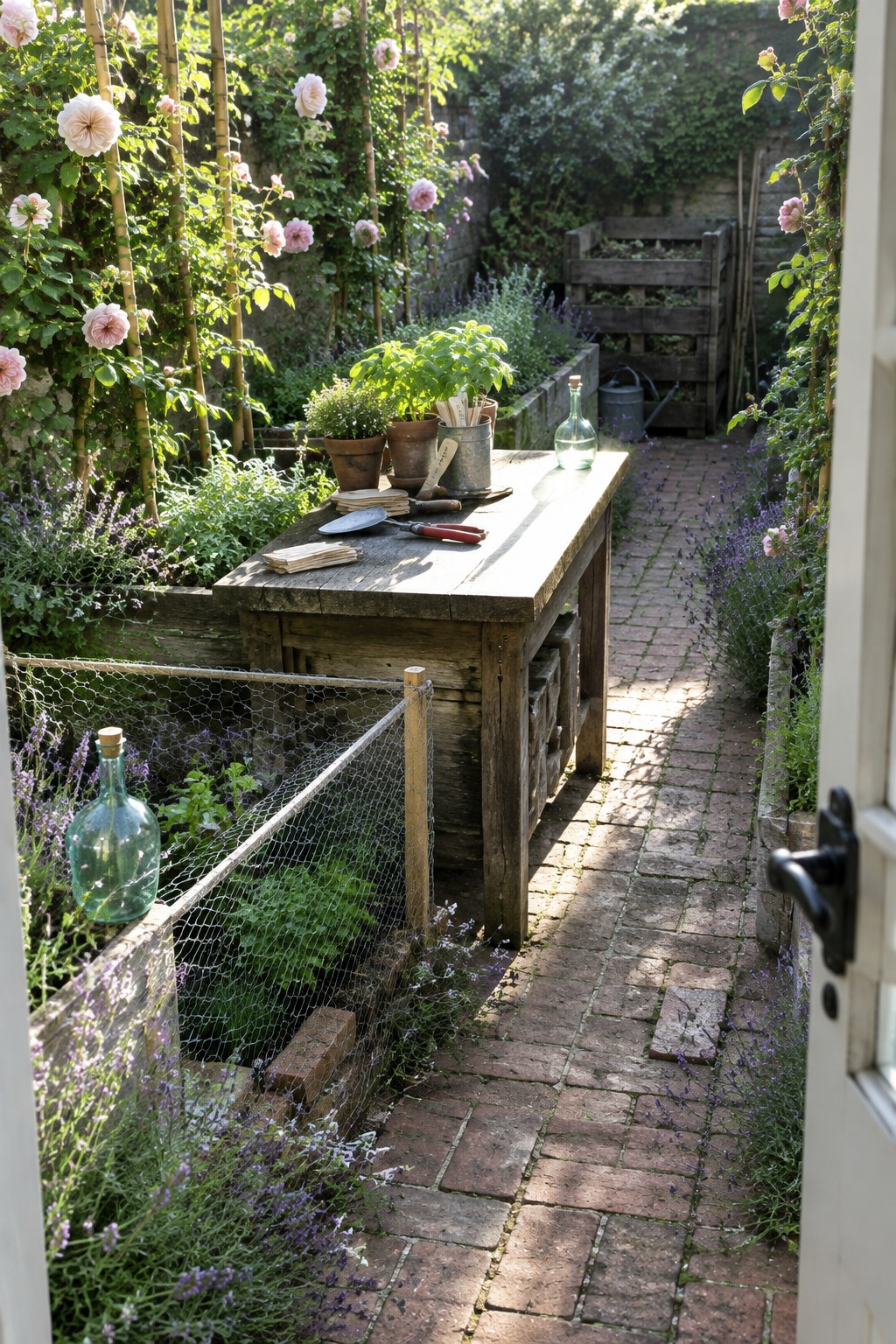
A simple brick path gives a cottage garden a clear route without making it feel too formal. It helps visitors move through the planting beds, while lavender and roses growing along the edges bring flowers close to the walkway.
This works especially well in a narrow garden, where a straight path can make the space easier to use. Leave enough room to walk comfortably, and keep plants trimmed back so they do not crowd the bricks.
Add a Poolside Shower to a Cottage Garden

A simple outdoor shower makes a pool area easier to use without taking attention away from the garden. A plain stucco wall gives the shower a practical place to sit, while climbing roses help it fit into the planting.
This works best where swimmers can rinse off without crossing the whole yard. Choose weather-safe fixtures and leave enough room to move around them, especially if the shower sits beside a narrow path or pool deck.
Set Up a Small Cottage Garden Dining Area
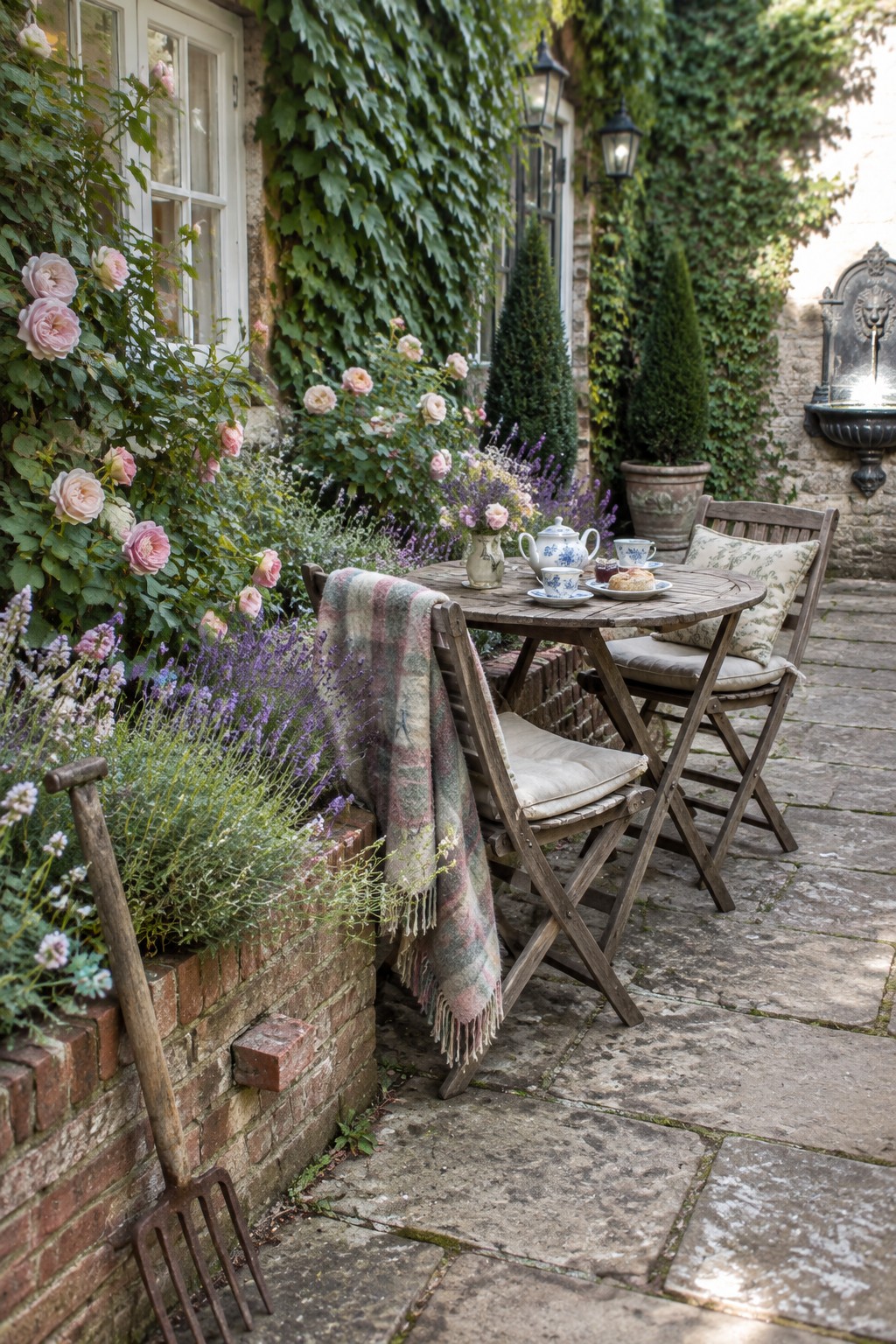
A simple table tucked beside a flower bed makes a garden useful for more than looking at. Lavender and roses bring color around the seating without taking away from the space needed to sit and eat.
This setup works well on a narrow stone patio beside the house. Keep the table modest in size, and leave enough room to pull out chairs and walk past the planting. A few sturdy plants along the edge can make the seating feel settled without crowding it.
Use Stone Walls to Build Up a Cottage Garden
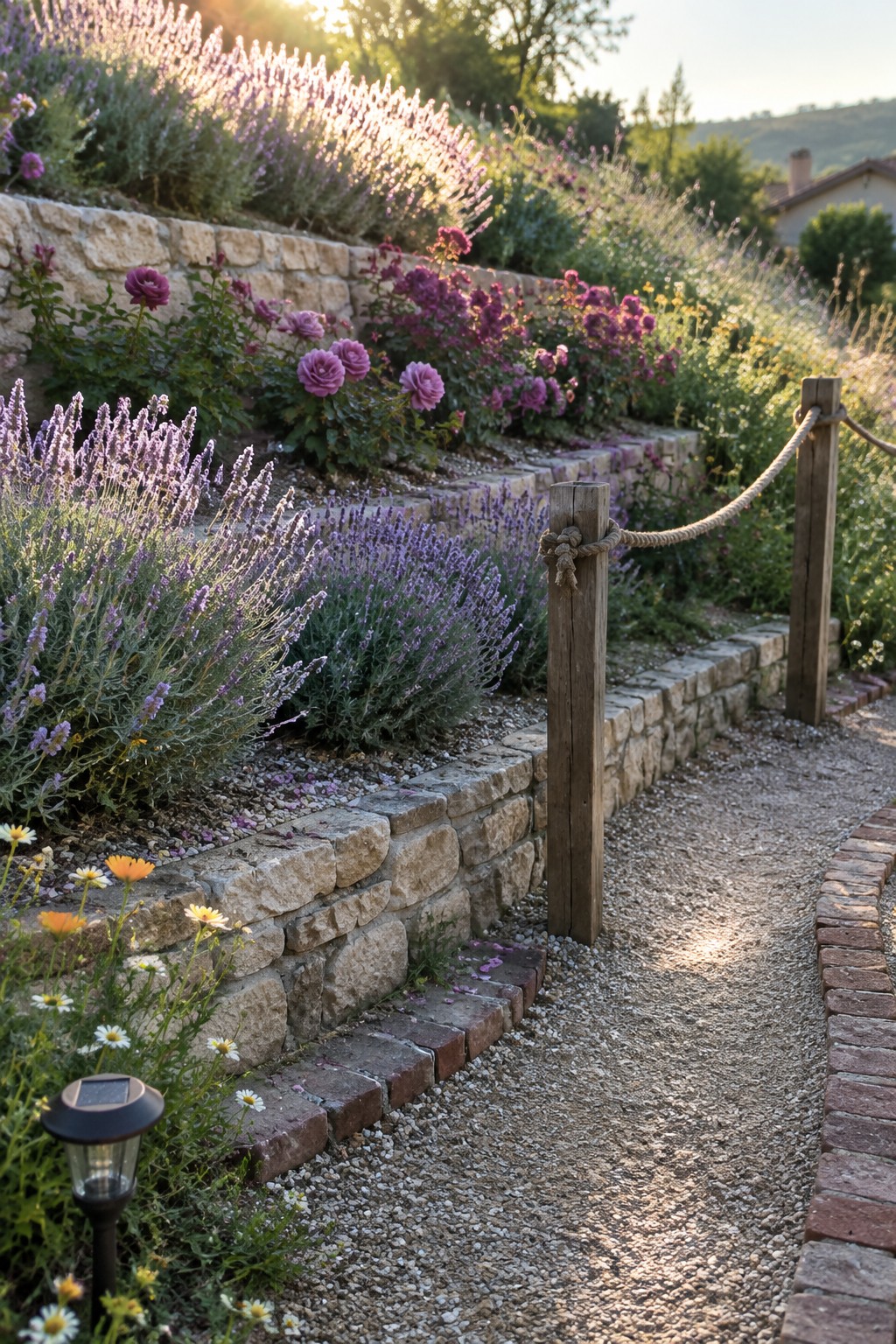
Low stone retaining walls make a sloped garden easier to plant and give each bed a clear edge. Lavender and roses look at home in this setup, with the flowers spilling over the stone rather than sitting in one flat row.
Use the walls to create shallow planting levels along a path, keeping the stones low enough to tend the beds comfortably. A gravel walkway can sit below the planting, but leave enough room for people to pass without brushing against the roses.
Frequently Asked Questions
Q: Can lavender and roses grow well together?
A: Yes, if you give them plenty of sun and soil that drains well. Lavender prefers drier conditions than roses, so plant it where it won’t get soaked every time you water the roses.
Q: What kind of roses work best for a cottage garden?
A: Shrub and climbing roses both suit the relaxed cottage style. Choose varieties that flower repeatedly if you’d like color alongside lavender through much of the season.
Q: How far apart should I plant lavender and roses?
A: Leave enough room for each plant to reach its mature width without crowding. Good airflow helps roses stay healthier, and lavender looks better when it has space to form its natural shape.
Q: How can I keep lavender from looking messy after it blooms?
A: Trim off the spent flower stalks, then lightly shape the plant. Avoid cutting into the old woody stems, since lavender may not grow back from those.
