

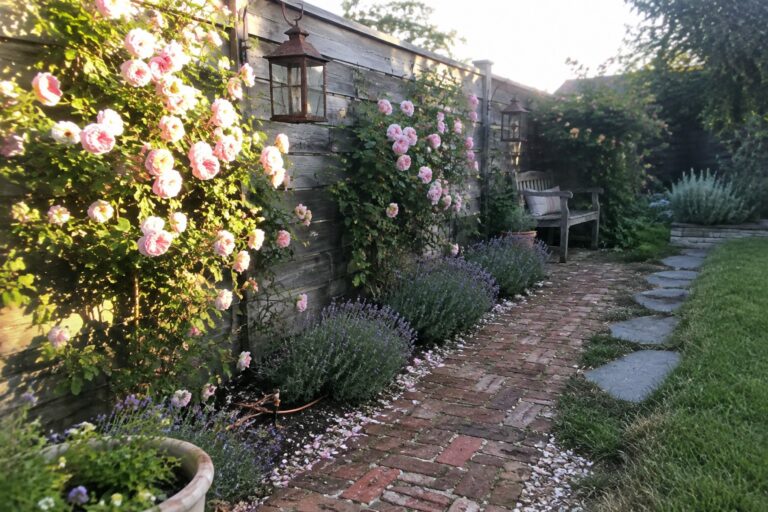
A fence can make a garden feel boxed in if its length and height are left bare, but roses soften that edge and give the planting a clear shape.
I find that the best layouts leave enough room for stems to spread, paths to stay open, and other plants to add texture around the blooms.
Climbing roses can draw the eye upward, while lower varieties create a softer border along the fence line.
Small choices, such as spacing and support, often matter as much as the flowers themselves once the garden fills in.
I’d start with ideas that suit the fence, light, and space you already have, then adapt the planting as it grows.
Grow Roses Along A Fence
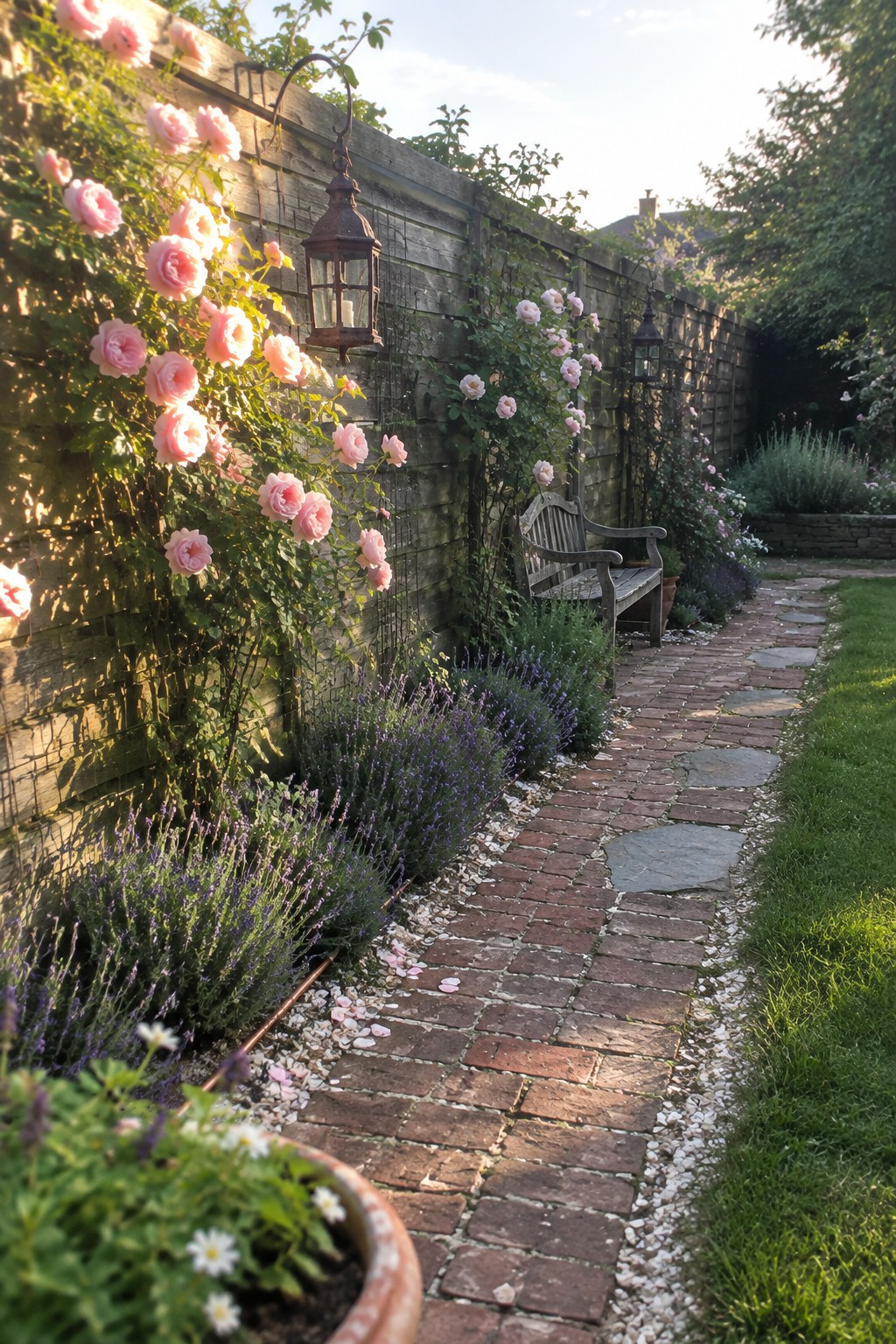
Training roses along a fence makes use of a narrow garden edge while giving the plants a sturdy support. The flowers bring color to the fence, and repeating them along its length helps the planting feel connected.
Choose a fence that gets enough sun, and tie the rose canes loosely to horizontal supports as they grow. Leave space between plants for airflow and pruning, especially where the path runs close to the bed.
Let Roses Climb Along a Garden Fence
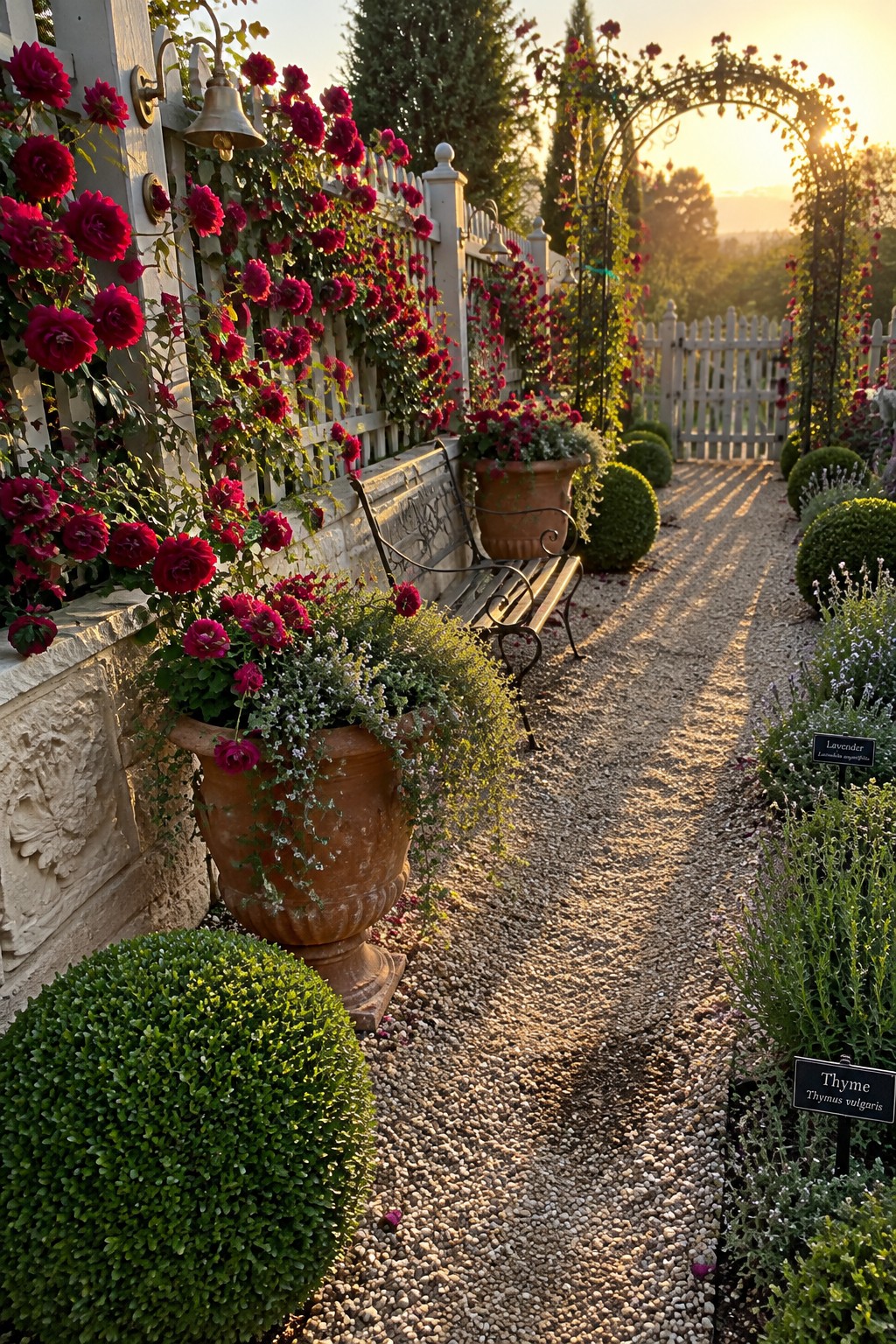
Training climbing roses along a fence turns a plain boundary into part of the garden. The blooms add color at eye level, while the fence gives the plants a clear structure to grow on.
Choose a sturdy fence and tie the canes loosely as they grow. Leave room for airflow and pruning, and check that the roses get enough sun. A gravel path beside the planting can also make routine care easier.
Let Roses Follow the Fence
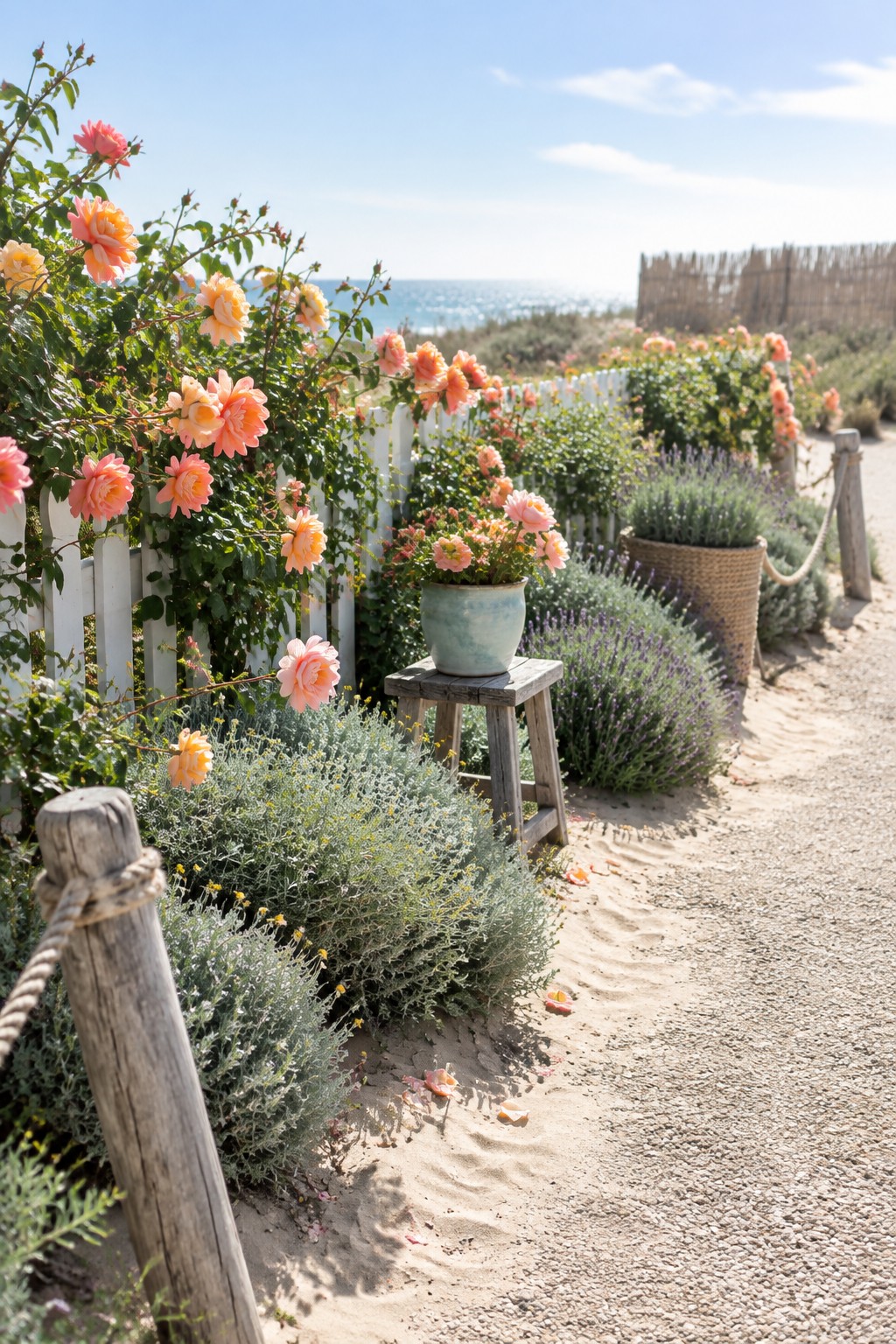
Planting roses along a fence gives a garden a clear, romantic edge without taking up much of the path. Here, the flowers climb through a white picket fence, while lower plants fill the bed beneath them.
Choose a fence with sturdy supports and leave enough room to prune and tie in new growth. This approach suits a narrow garden border, but keep the path clear so thorny stems do not brush against people walking by.
Train Roses Along a Garden Fence
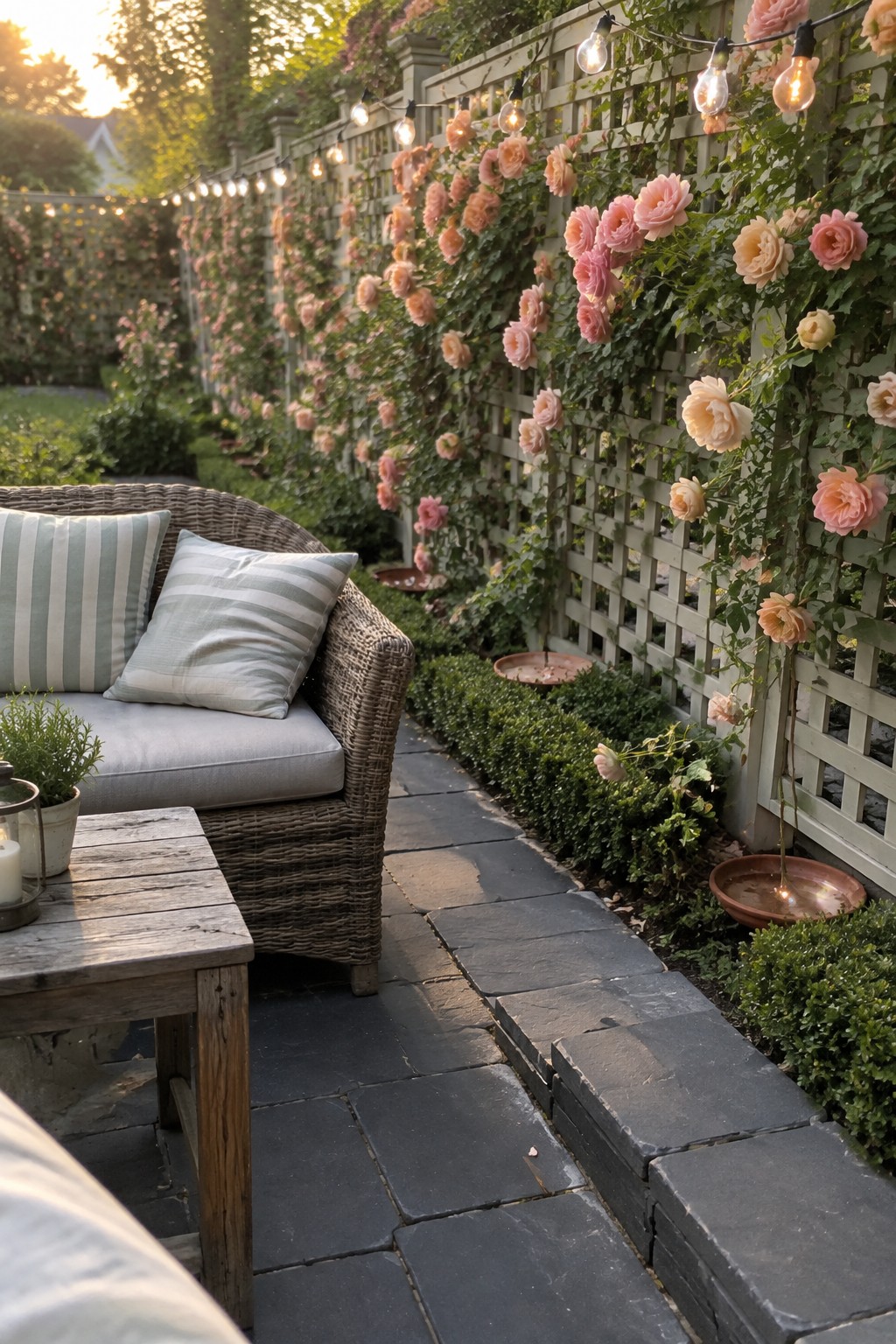
Training climbing roses along a fence turns a plain boundary into a flowering garden feature. The trellis gives the stems room to spread, while the repeated blooms help make a narrow garden feel more finished.
Use sturdy supports and tie new growth loosely as it develops. This works well along a side path or in a small yard where there is little room for a deep flower bed. Leave enough space to reach the roses for pruning and upkeep.
Use a Raised Bed to Grow Roses Along the Fence
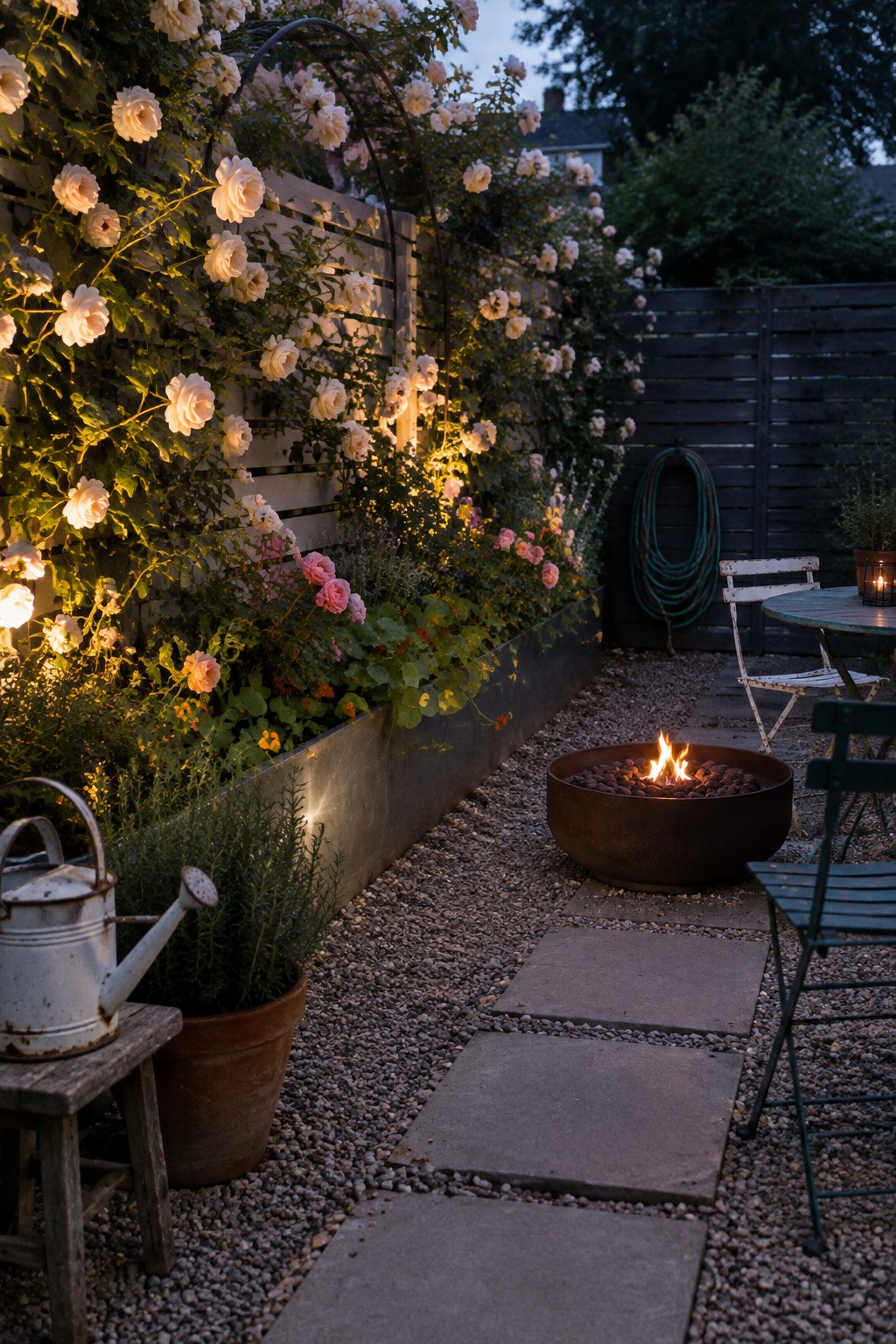
A raised bed makes it easier to plant roses right beside a fence and train their canes upward. Here, pale roses fill a long bed, so the fence becomes a support for the planting rather than a bare backdrop.
Use this approach where you want a clear planting strip along a boundary. Leave enough room to reach the roses for pruning, and choose a bed deep enough for healthy roots.
Use a Path to Define the Rose Border
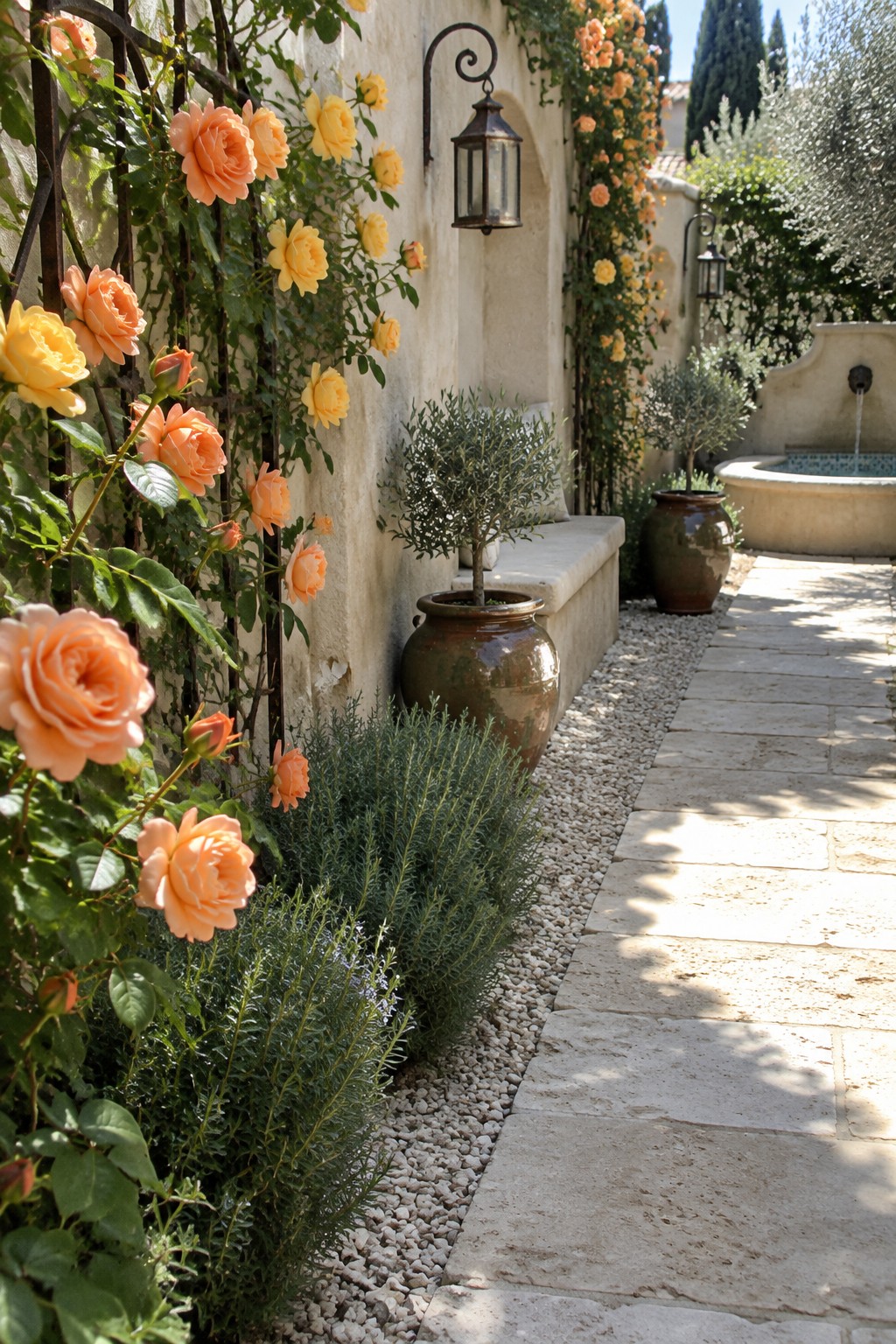
A narrow path beside a fence gives climbing roses a clear place to grow without taking over the garden walkway. Here, pale paving stones run alongside roses trained on a trellis, keeping the planting neat and easy to enjoy.
This layout works well in a side garden or along a courtyard wall. Leave enough room for walking and pruning, and keep the rose canes tied back so they do not reach across the path.
Use a Path to Set the Garden’s Rhythm
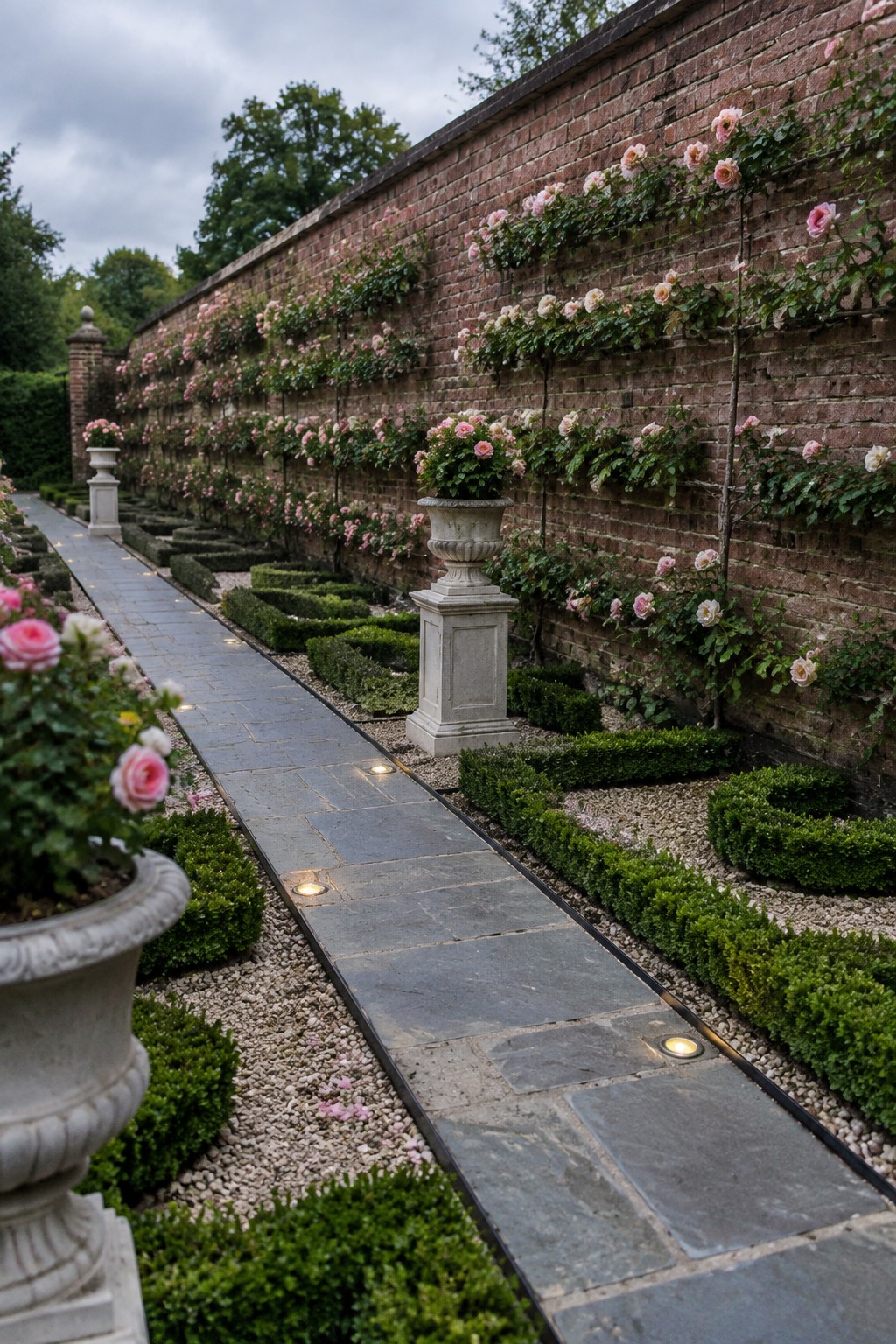
A narrow path beside a rose-covered fence gives a long garden a clear route and makes the planting easier to enjoy. Here, the stone walkway runs alongside clipped beds and climbing roses, so the garden feels organized without losing its old-fashioned character.
This layout works well in a side garden or along a boundary wall. Keep the path wide enough to walk comfortably, and leave room to prune the roses without stepping into the beds.
Use A Fence For Layered Flower Planting

Planting roses along a fence gives them a place to climb while making the garden feel full without taking over the path. Add lower flowers in front of the roses to create a layered bed, as the orange blooms do here.
Leave enough room to reach the fence for pruning and tying stems in place. This approach works well along a plain wooden fence, but keep the path clear so the planting is easy to tend.
Add Lights to a Fence-Side Rose Bed
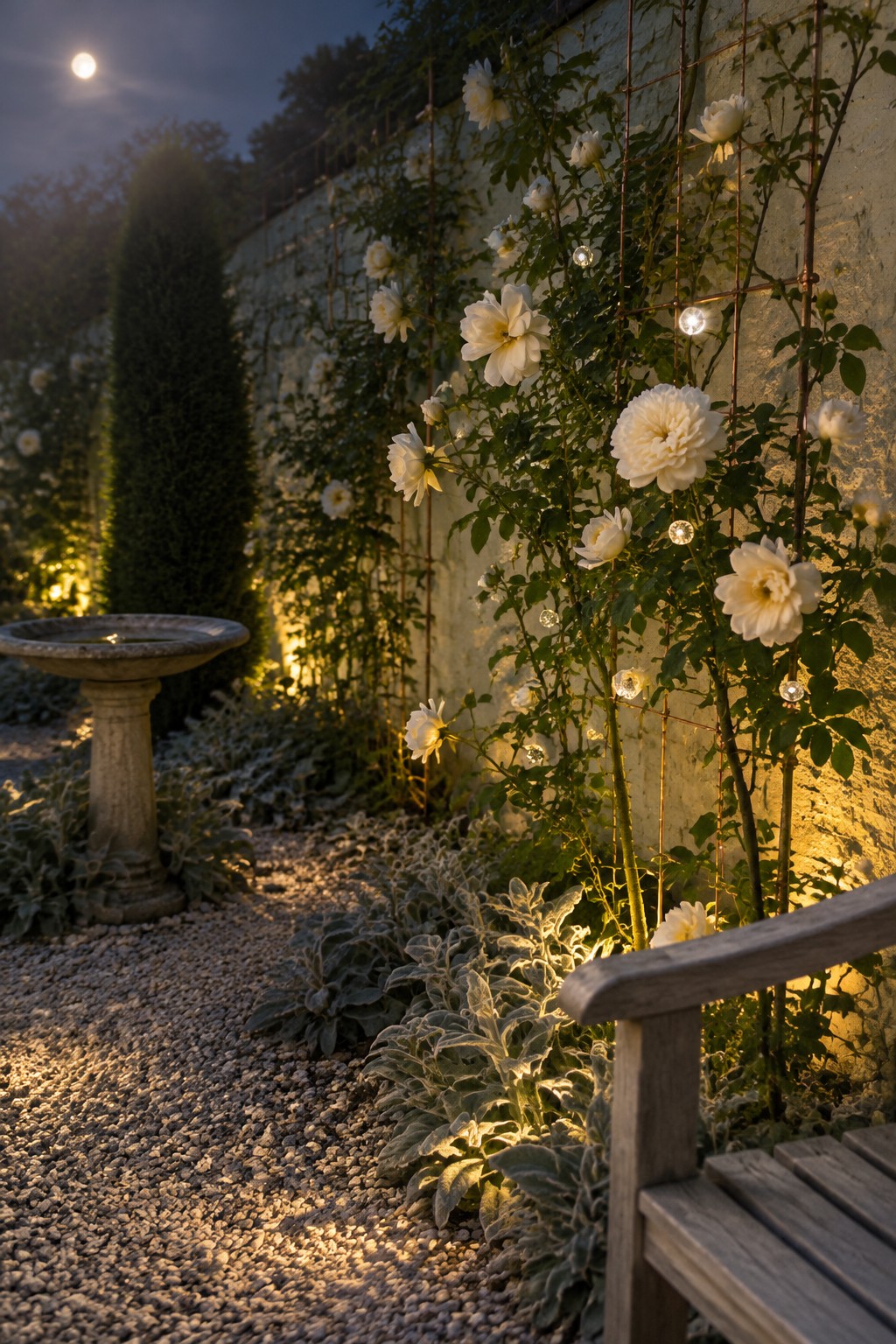
Small lights tucked among climbing roses make a fence-side planting easier to enjoy after dark. Here, warm bulbs sit among the white blooms, while the fence gives the rose canes a clear place to grow.
Use weather-rated string lights or discreet garden lights, and keep cords secured away from stems and walking areas. This works well along a path or narrow border, where the fence already supports the roses and the lights can stay focused on the planting.
Add a Pergola Over the Garden Path
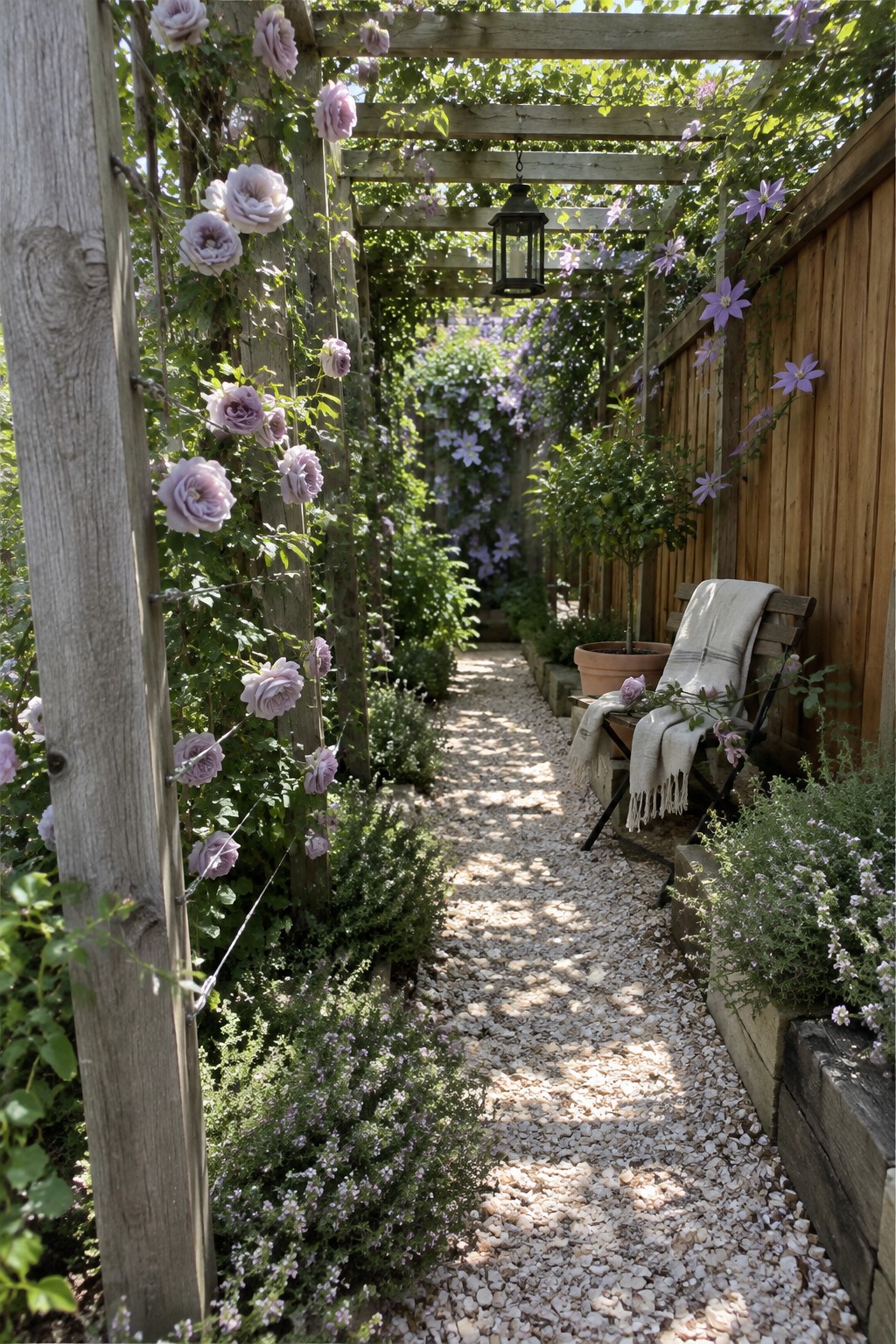
A pergola can turn a simple garden path into a leafy walkway and give climbing roses a place to grow overhead. It also adds a sense of direction, guiding visitors through a narrow garden without taking up much ground space.
Use sturdy posts and crossbeams, then train rose canes along the sides and across the top as they grow. This works especially well beside a fence, but leave enough open space for the path and prune regularly so the roses don’t crowd it.
Use a Garden Gate as a Rose-Covered Entry
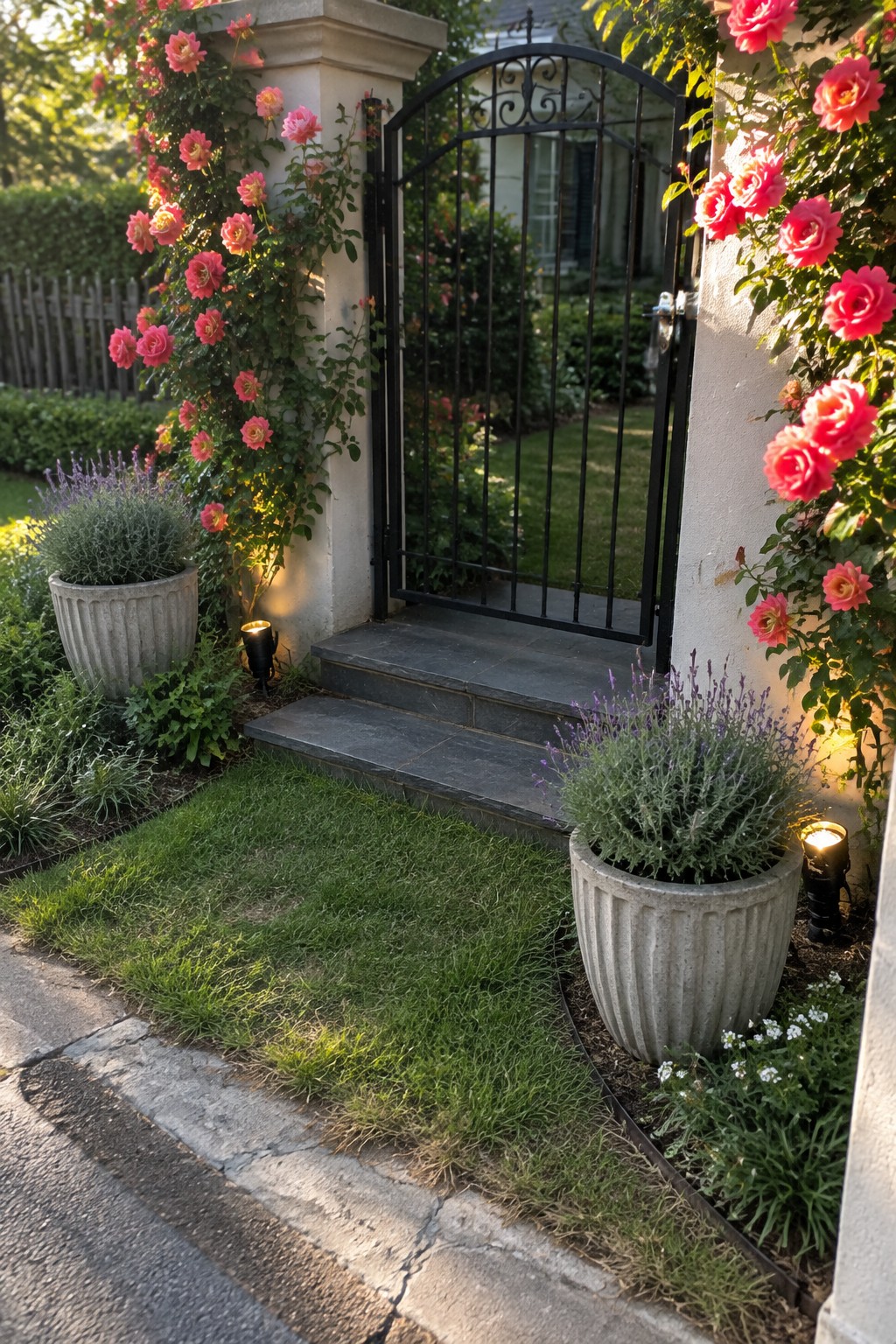
A garden gate can feel like a natural opening in a rose border, rather than just a way to get through the fence. Letting climbing roses grow up the posts makes the entry feel connected to the planting around it.
This approach works well at a garden entrance where you have room to train roses on both sides. Keep the gate clear of loose canes, and prune the plants back enough for the latch and walkway to stay easy to use.
Use a Stone Edging to Shape the Rose Bed
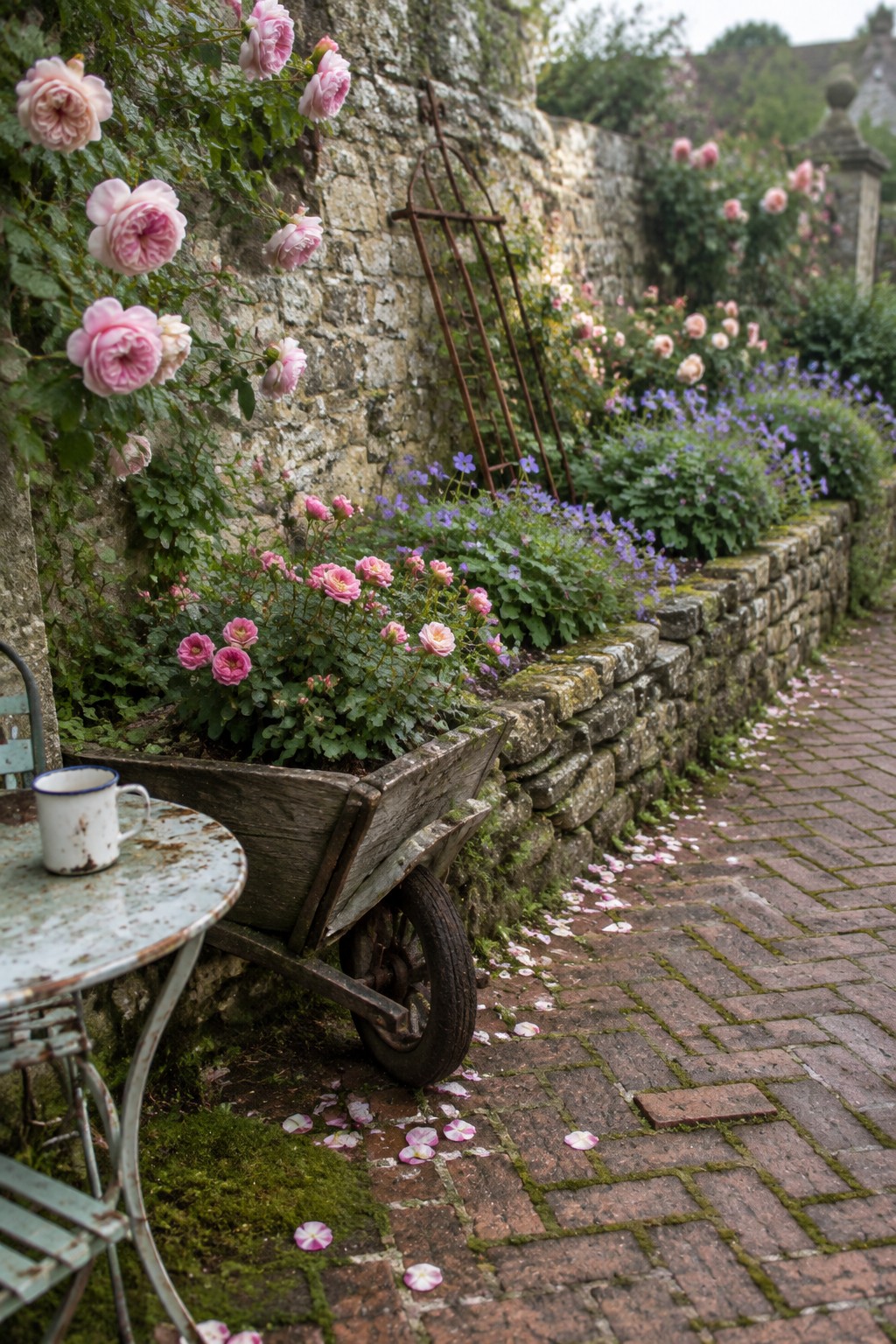
A low stone edge gives a rose border a clear shape and keeps the planting distinct from the path. It also suits an older garden, where rough stone feels at home beside climbing roses.
Use a similar edge along a brick walkway or wherever you want to keep soil and plants from spilling into a route. Leave enough room for roses to grow, and make sure the path remains comfortable to walk along.
Use Raised Planters to Set the Rose Border
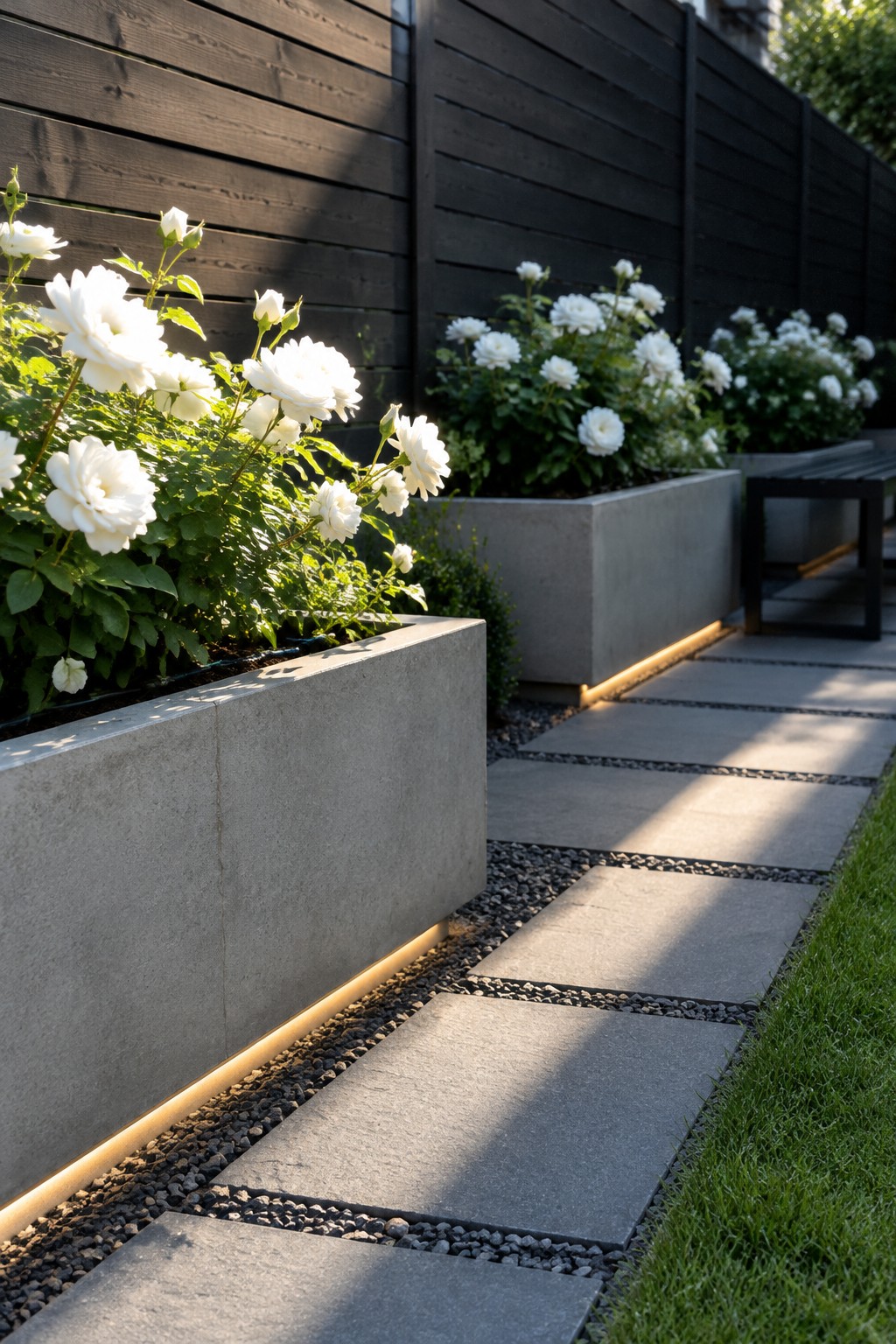
Raised planters can give a fence-side rose bed a clear shape without making the garden feel too formal. Here, the long concrete beds keep the planting contained, while the white roses stand out against the dark fence.
This approach works well in narrow side yards where a defined edge helps keep the path clear. Choose planters deep enough for rose roots, and leave room to reach in for pruning and care.
Layer Herbs Beneath Fence-Line Roses

Planting herbs beneath climbing roses makes a fence-side bed more useful and gives it a fuller look without relying on flowers alone. The leafy lower layer also helps fill the space below the rose stems.
Try herbs such as mint, but keep vigorous growers in pots or use a barrier so they do not spread through the bed. This layered planting suits a sunny fence where the roses have room to climb and the herbs can be reached for picking.
Grow Roses Against a Garden Wall
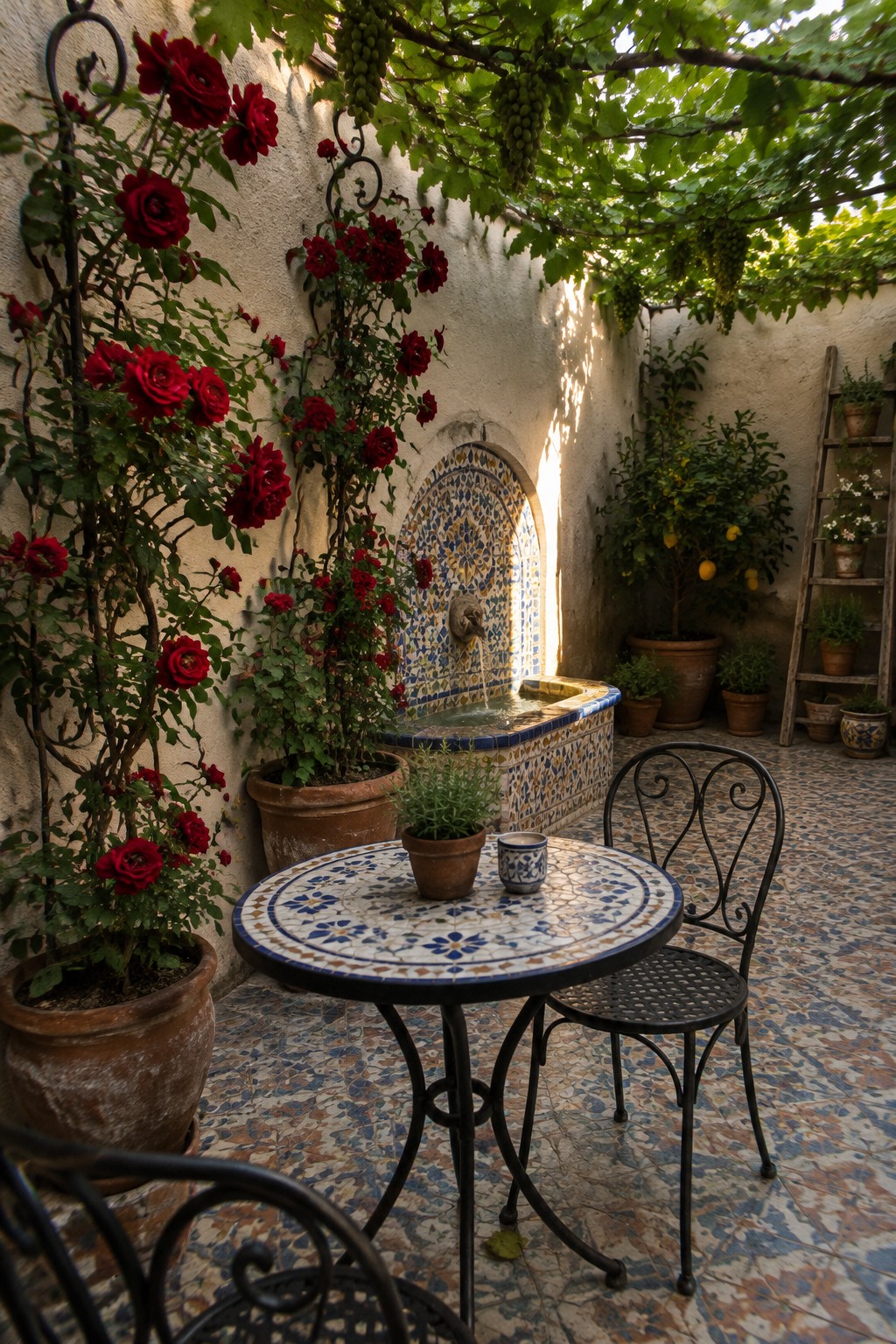
Training climbing roses along a wall is a lovely way to make a narrow courtyard feel like a garden. The flowers bring color up to eye level, while a simple support helps keep the stems tidy and encourages them to spread.
Use a trellis or sturdy wall-mounted wires, and tie in new canes as they grow. Leave enough room for air to circulate, especially in a sheltered spot, so the plants are easier to care for.
Make a Rose Border Along the Garden Path

A rose border can turn a simple garden path into a pleasant route through the yard. Planting roses along a fence gives them room to climb while keeping the path edge full of flowers.
Leave enough space for people to pass and for you to prune the roses without stepping into the bed. A narrow strip of lavender or other low-growing plants can fill the front edge, but keep the path clear so the roses don’t become difficult to manage.
Use Fence Roses to Create a Private Dining Patio
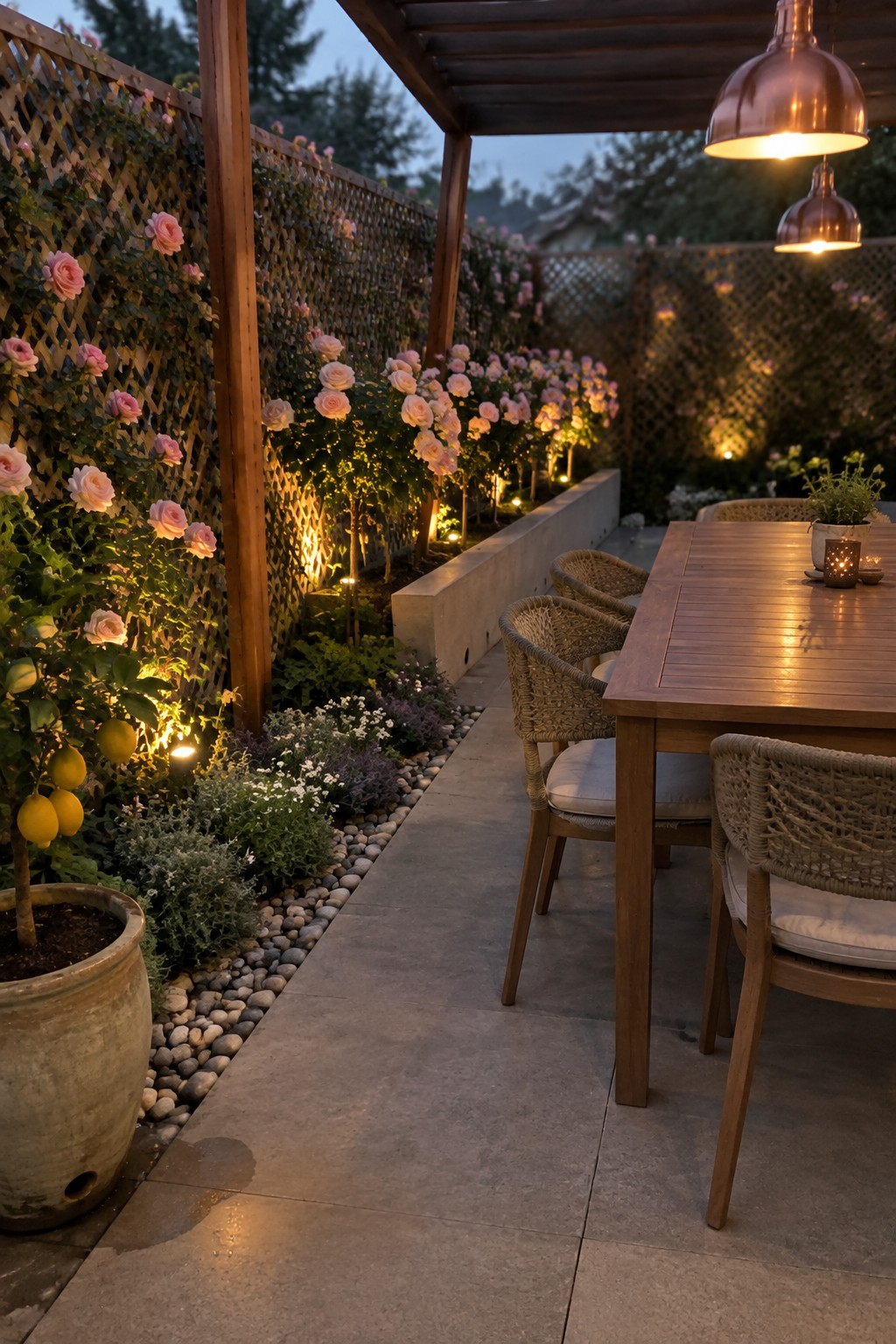
Fence-line roses bring color and privacy to an outdoor dining area without taking up much patio space. Training them along a lattice fence makes the planting feel like part of the seating area, rather than a separate garden bed.
This idea works well in a narrow courtyard or beside a small patio. Leave enough room for chairs to move comfortably, and prune the roses regularly so their growth stays along the fence instead of spilling into the walkway.
Use Potted Rose Trees Along the Path
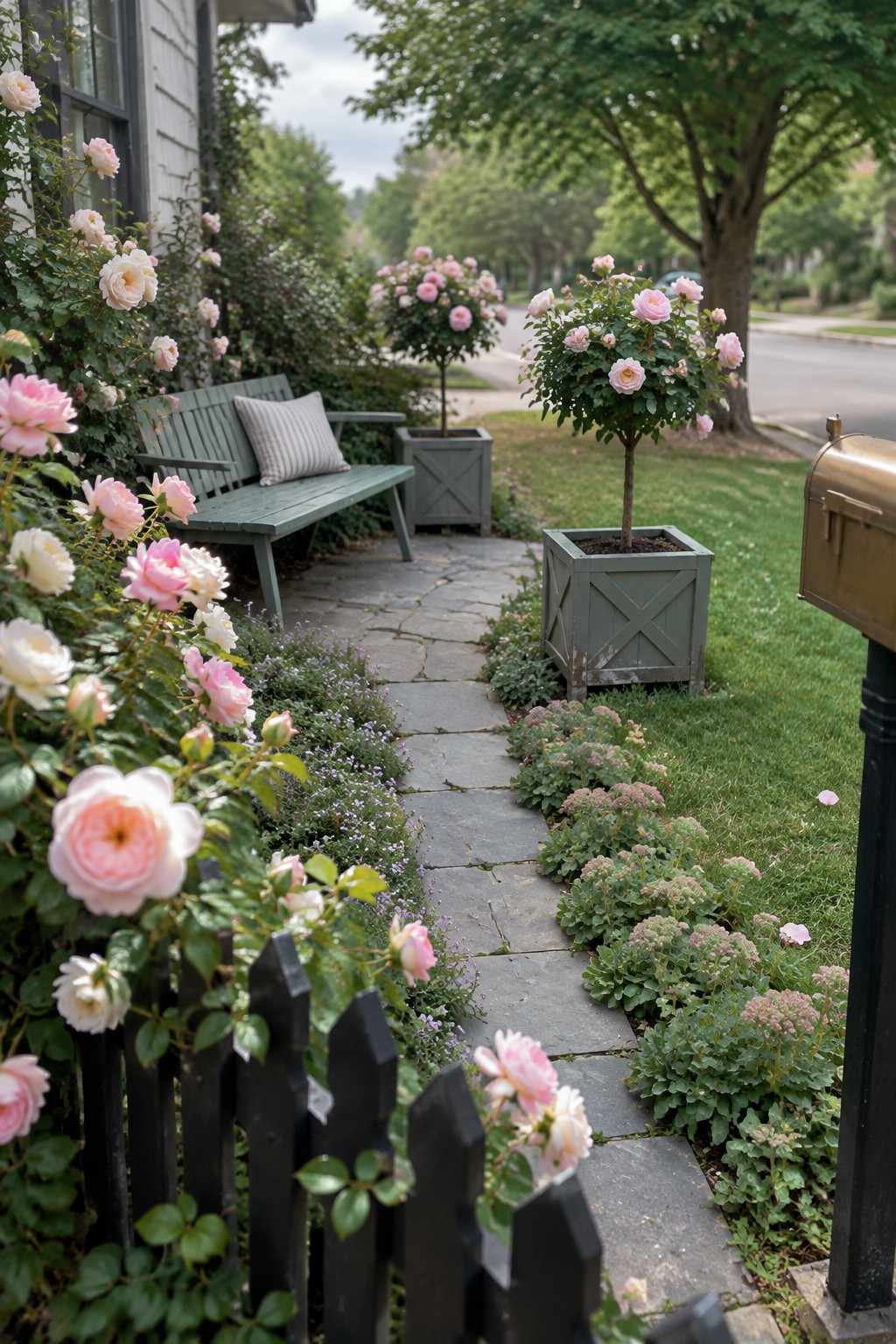
Potted rose trees can bring height to a garden path without taking up space in the flower bed. Their form makes them a useful choice when you want roses to mark the route while keeping the walkway open.
Set the pots beside a path or near a seating area, and leave enough room to pass comfortably. Matching square planters help the arrangement feel settled, but choose containers with drainage and enough soil for the roses to grow well.
Use Raised Beds Along a Fence

Raised beds make a fence-side rose garden easier to organize and care for. Here, the wooden beds give the planting a clear shape, while the fence provides a place to train climbing roses.
Use this setup where soil is poor or drainage needs attention. Leave enough room to reach the plants for pruning, and choose a bed deep enough for rose roots.
Grow Roses in Raised Fence-Side Beds
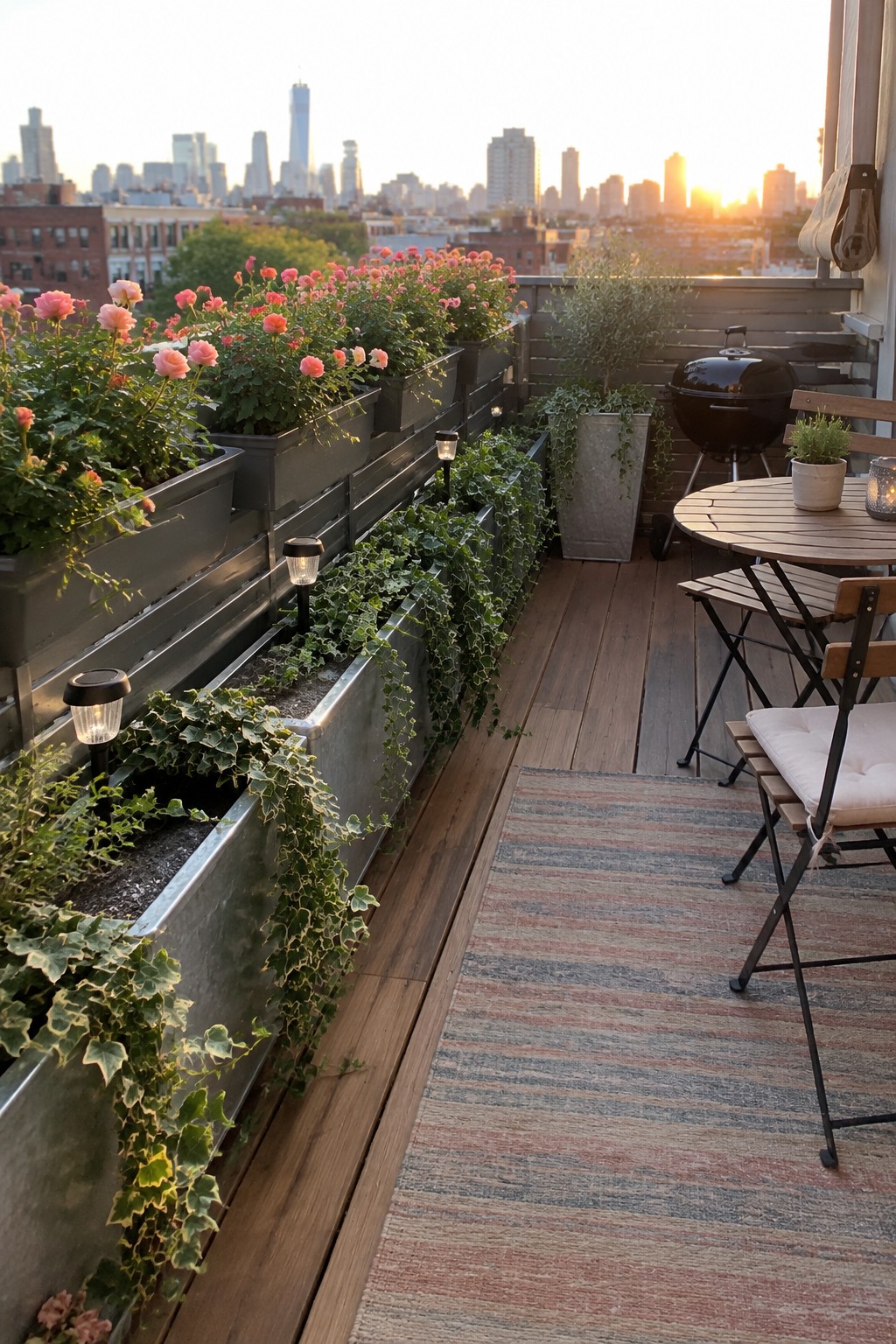
Raised planters make it easier to create a defined strip of roses along a fence, especially where a deck or paved area leaves little room for a traditional garden bed. The built-up planting also brings blooms closer to eye level.
Choose a bed deep enough for the rose roots, and leave space for air to move around the plants. This setup suits a terrace or narrow yard, but roses still need regular watering and enough sun to flower well.
Add a Winding Path Through the Rose Garden
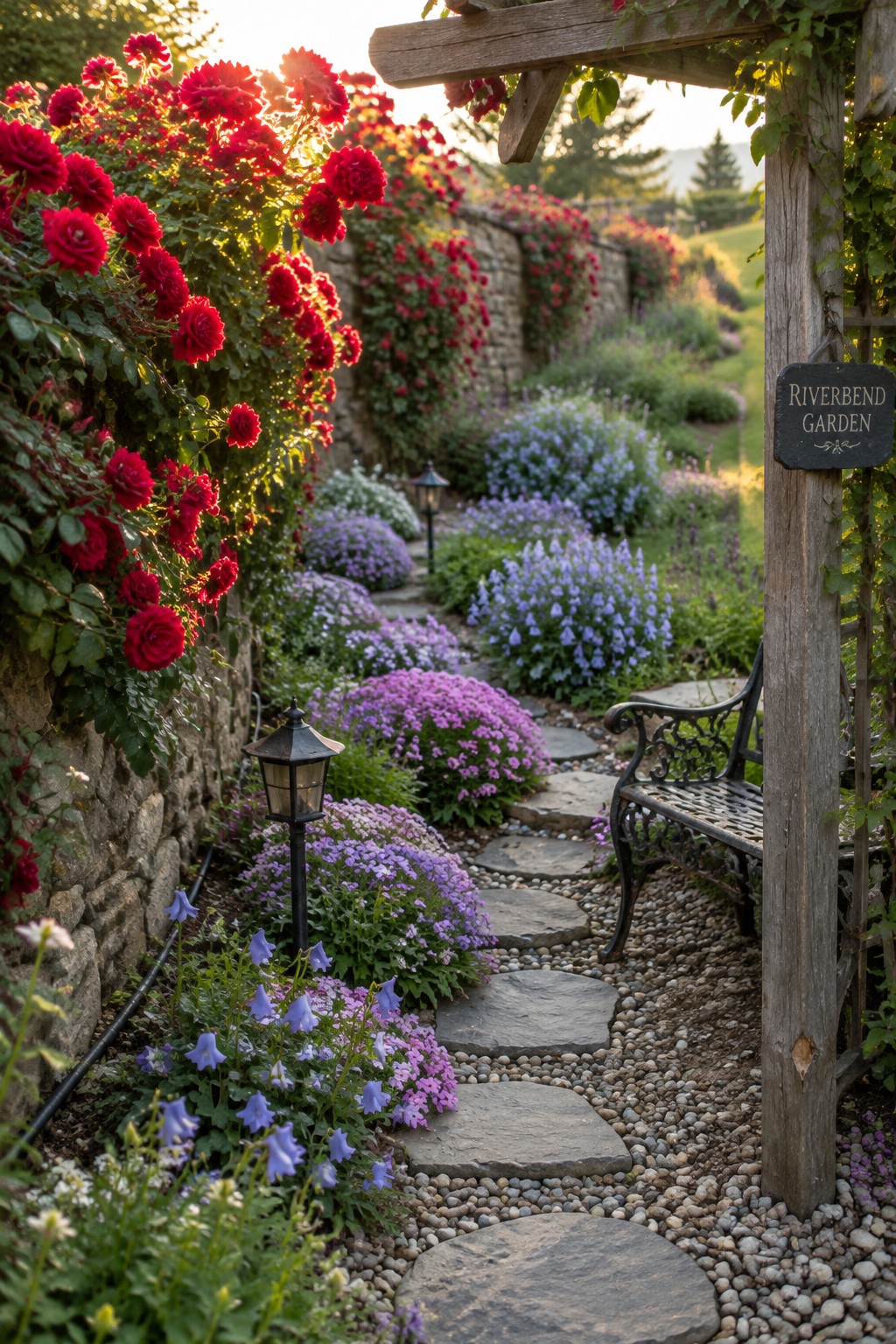
A stepping-stone path gives a flower border a clear route through the garden. Here, roses grow along the stone wall while the path curves past smaller blooms, making the planting feel connected rather than like separate beds.
Use this approach where there is room for a gentle curve, such as beside a fence or along a garden wall. Set the stones far enough apart for comfortable steps, and leave space for plants so they do not crowd the walking surface.
Frequently Asked Questions
Q: How far apart should I plant roses along a fence?
A: Check the mature width on the plant label, then leave enough room for each rose to reach that size without crowding its neighbors. Give climbing roses extra space to spread along the fence, and leave a little room behind them for pruning.
Q: Can I grow climbing roses on any kind of fence?
A: Roses need something sturdy to support their canes, so a weak or wobbly fence may need reinforcing first. On a solid fence, attach wires or a trellis and tie the canes loosely as they grow.
Q: What should I plant at the base of fence-line roses?
A: Low-growing plants like catmint or hardy geraniums can soften the bare soil without hiding the rose stems. Keep them a little way from the roses so you can water, mulch, and prune easily.
Q: How do I keep roses from taking over a narrow path?
A: Train the main canes along the fence instead of letting them arch across the path, and trim back any wayward growth after flowering. Wear gloves when you prune, since rose thorns love catching sleeves and skin.
