

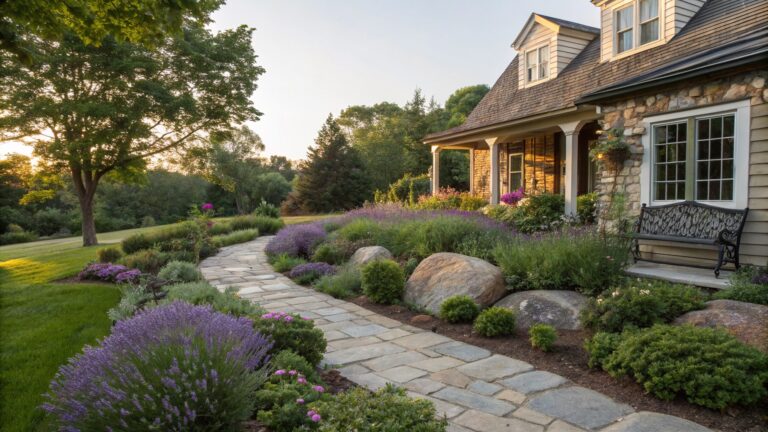
When you place boulders in flower beds, they anchor the layout with a sense of permanence that soft plants build upon over the seasons.
This creates subtle edging and pathways that guide movement through the yard naturally.
Those bold rocks catch the eye first from the street or sidewalk.
I shifted a few larger ones in my front bed recently, and it grounded the whole space in a way mulch never could.
The setups that mix scale and color best are worth sketching for your own plot.
Large Boulders in Flower Beds
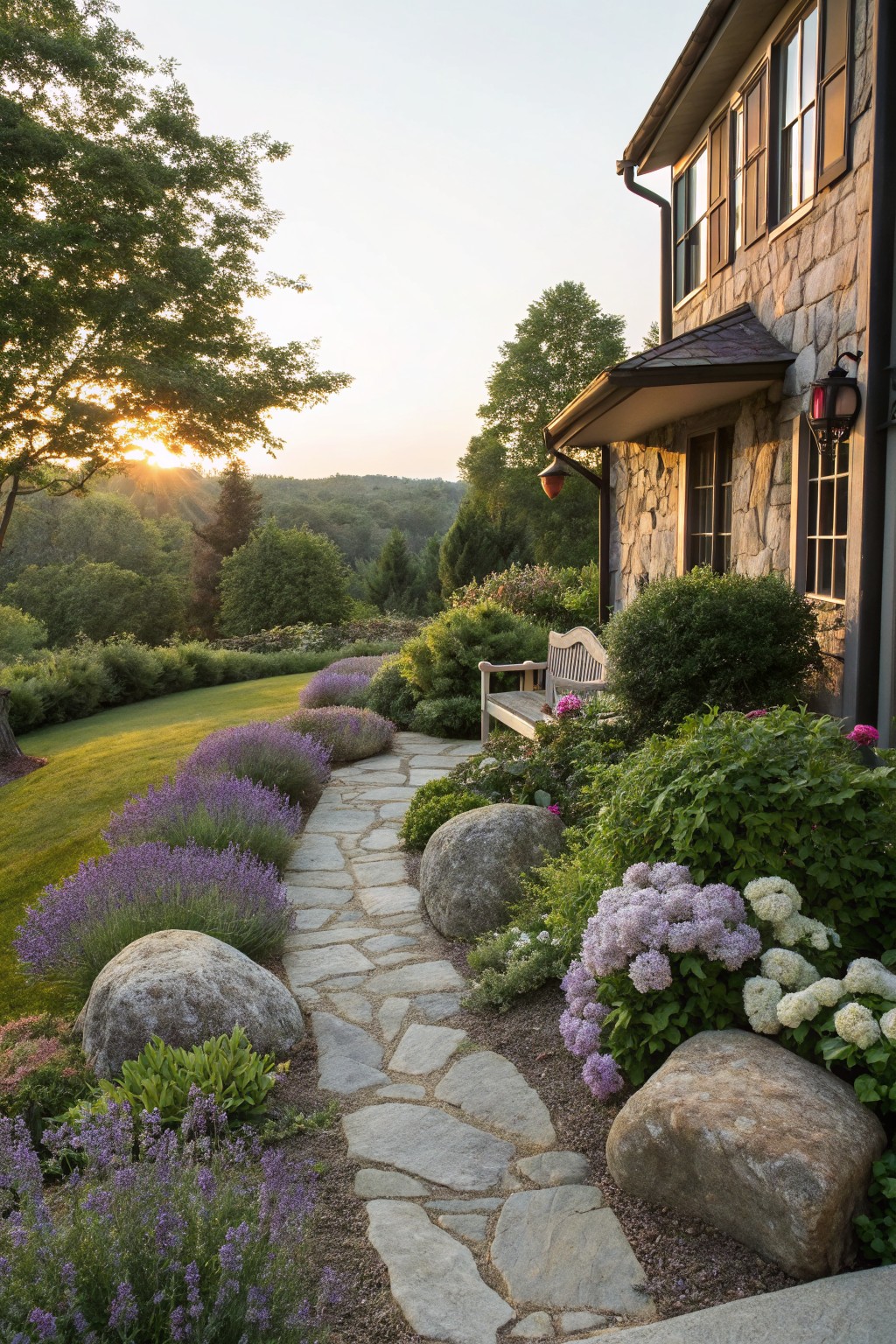
Large boulders tucked into flower beds give your garden some real weight and presence. They mix right in with the plants without taking over, like how these gray rocks sit among rows of lavender and hydrangeas. That contrast in size and texture makes the whole bed feel more put-together and natural.
You can pull this off in front yards or side gardens where you want definition without a lot of upkeep. Size them to about one-third the height of your plants, and cluster a few along edges or curves. It suits stone houses or wooded lots best… just source rocks that match your soil tones.
Boulders Bring Structure to Gravel Beds
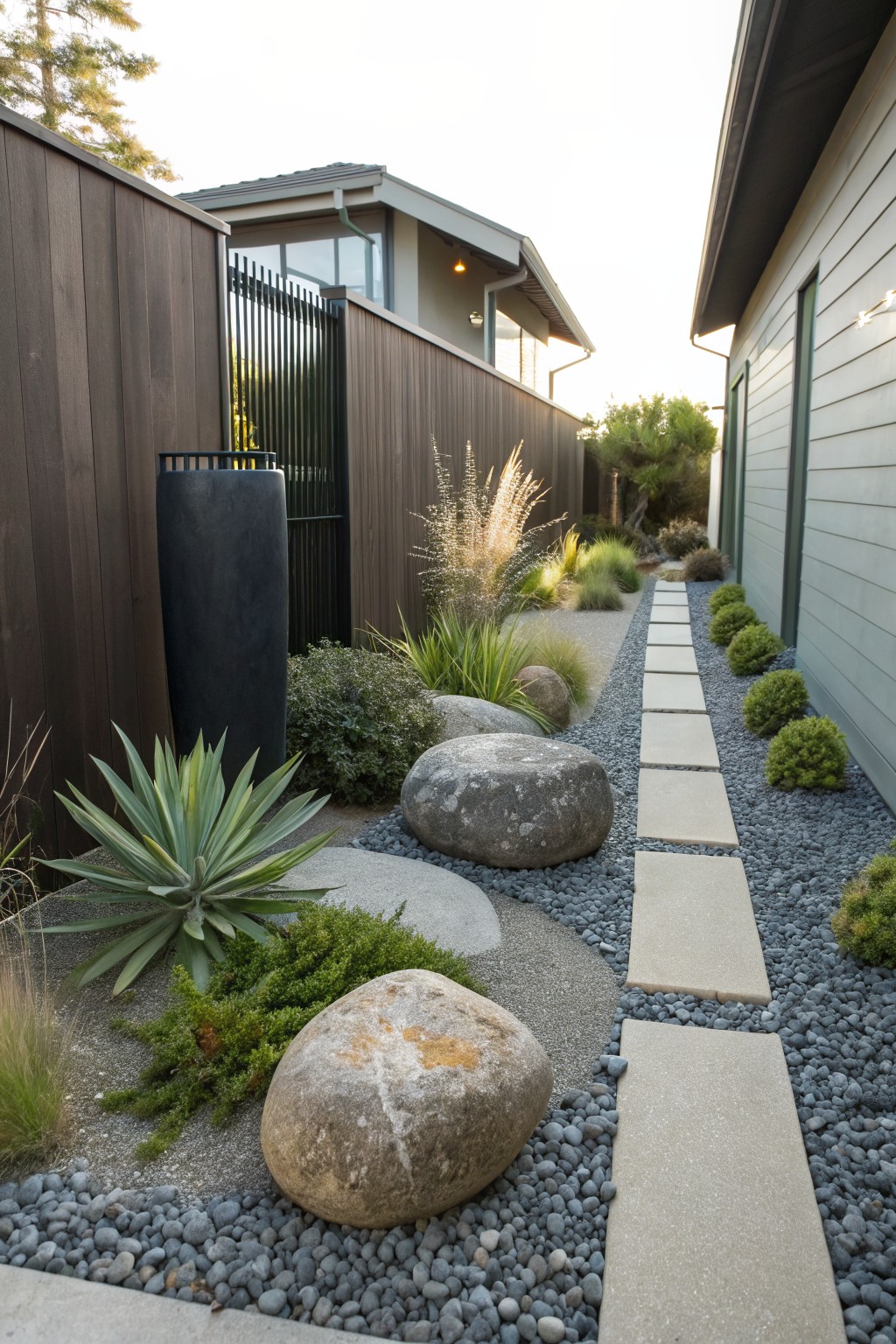
Big boulders like these give gravel garden beds a solid backbone. They sit there heavy and natural, breaking up the finer gravel and plants without taking over. In this narrow spot, they add scale and keep things from looking too sparse. Drought-tolerant picks like agave and grasses fill in around them nicely.
Try this in side yards or paths where space is tight. Source local rocks for that authentic feel, then mulch with dark gravel to make them pop. It suits modern homes with clean lines. Just space them out so walking stays easy.
Boulders in Curved Raised Beds
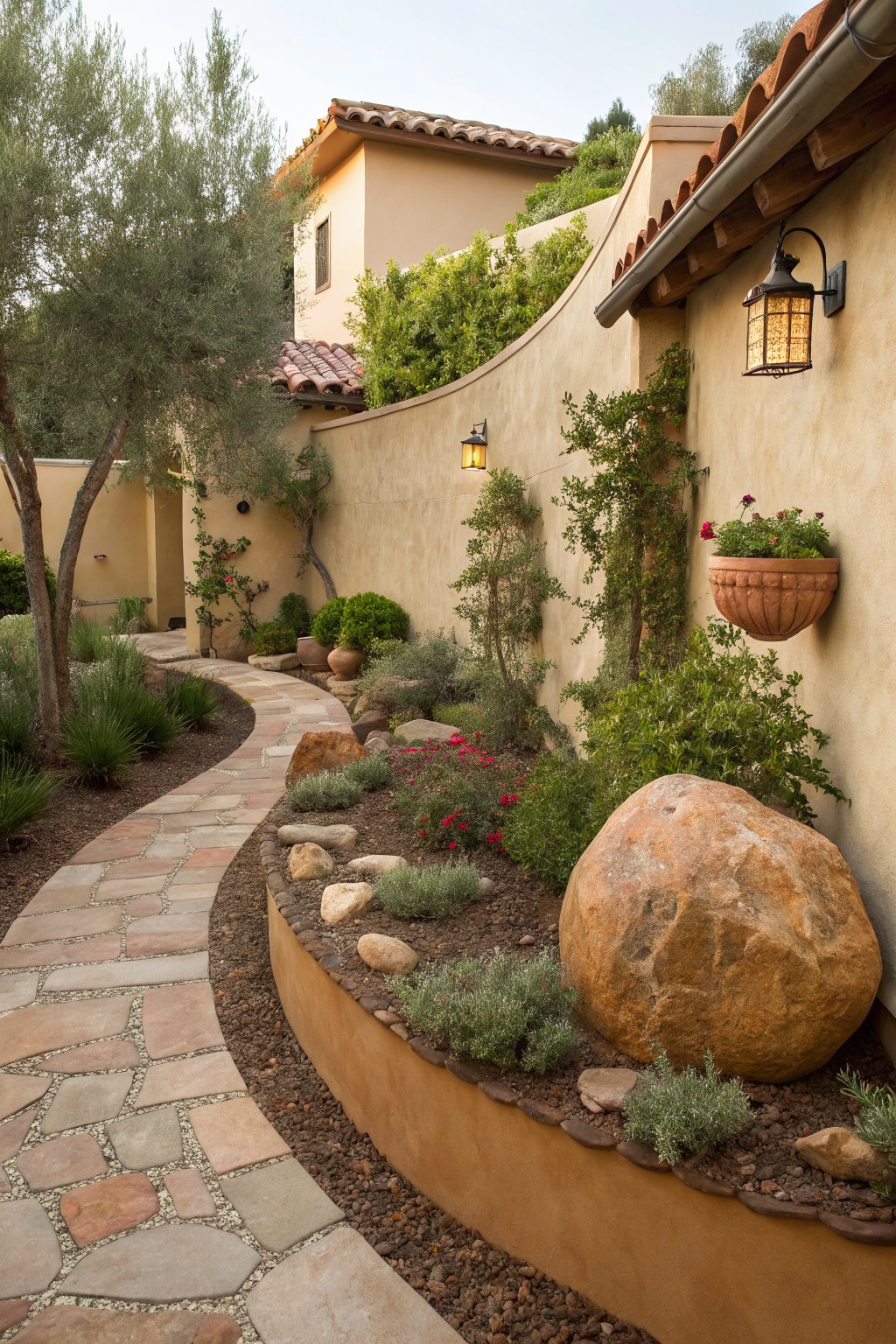
Big boulders tucked into a curved raised bed like this one make a garden path feel more established and interesting right away. The large round rock pulls your eye down the winding stone walkway, while smaller stones and plants fill in around it without much fuss. It’s a simple way to add weight and texture to what might otherwise be a plain border.
This works best in dry yards or spots with sloped ground where you want to hold soil in place. Hunt for boulders that match your local stone, set them into a low curved wall, then plant tough stuff like lavender or grasses nearby. Skip it if your space is too small. The boulders can overwhelm tight spots.
Boulders Along a Winding Stone Path
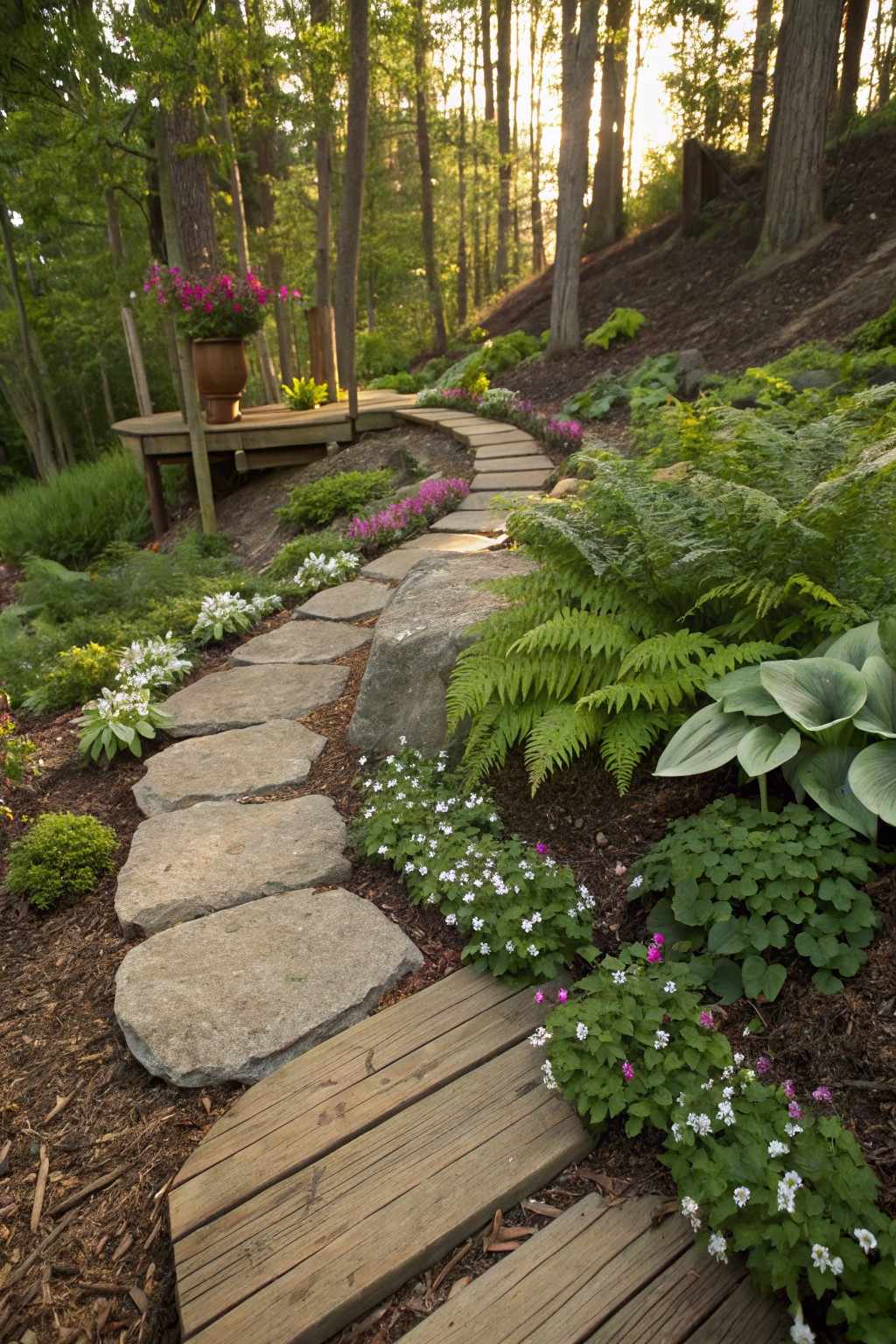
Large boulders tucked into flower beds make a simple path feel established and natural. They add solid shape without overpowering the plants, like ferns and hostas that spill around them. The flat stepping stones keep things practical for walking, and that short wooden bridge section fits right in on a slope.
This works well in wooded backyards where you want low-key structure. Pick boulders that match your local stone, set them partway into the soil so plants can grow up close. Skip super smooth ones, they look too polished out here. Good for shady spots too.
Boulders Shape Sloped Flower Beds
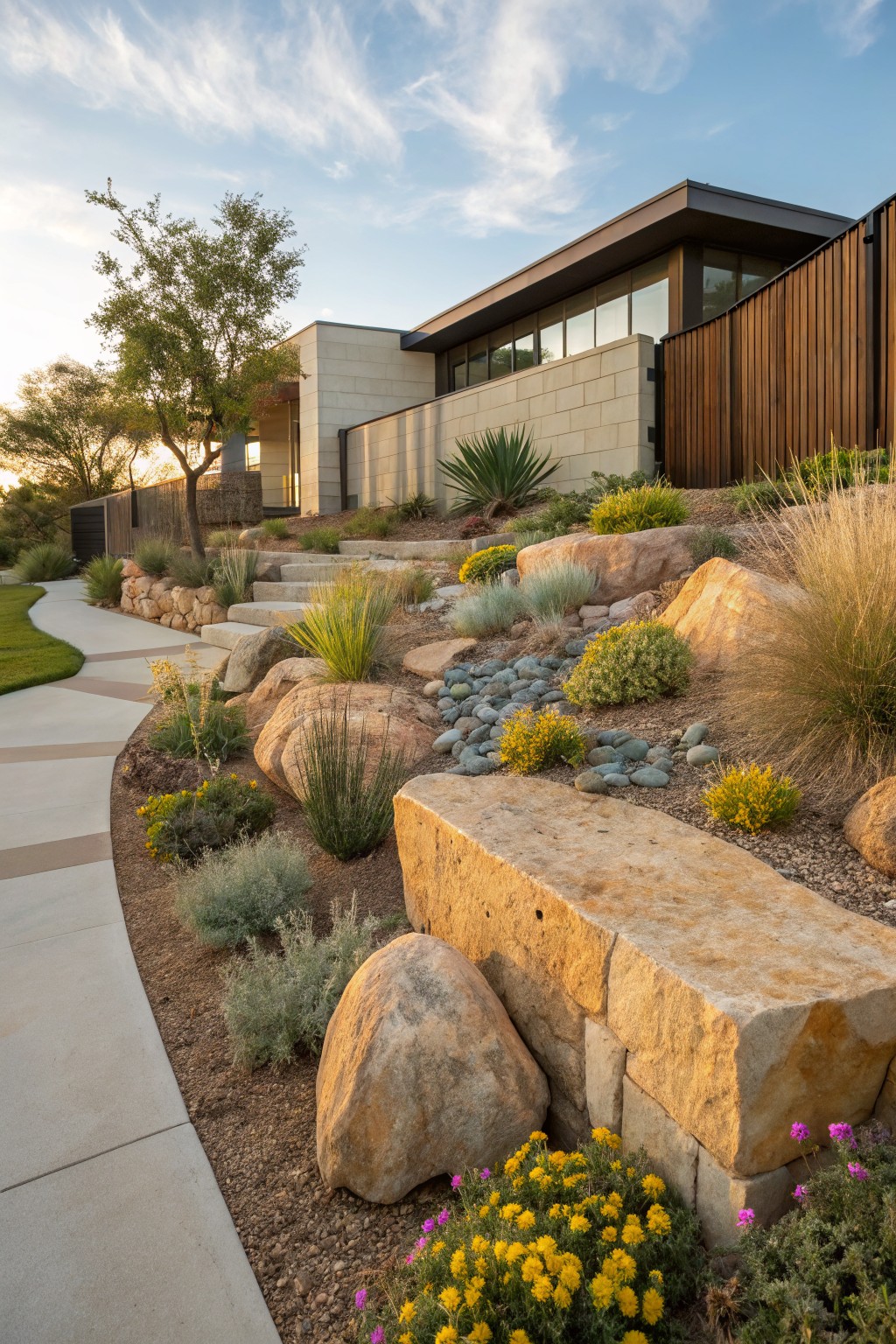
Large boulders tucked into flower beds on a slope can turn a tricky hillside into something striking. They hold everything together. Soil stays put, and the plants get a rugged frame that looks natural. Mix in gravel, tough grasses, and a few colorful blooms like those yellow clusters, and it feels right at home next to a modern house.
Try this where you’ve got a dry yard or want low upkeep. Bigger rocks go toward the bottom to fight washouts. It fits southwestern styles best, but scale it down for gentler slopes anywhere. Just pick local stone so it blends.
Sloped Stone Steps with Boulders
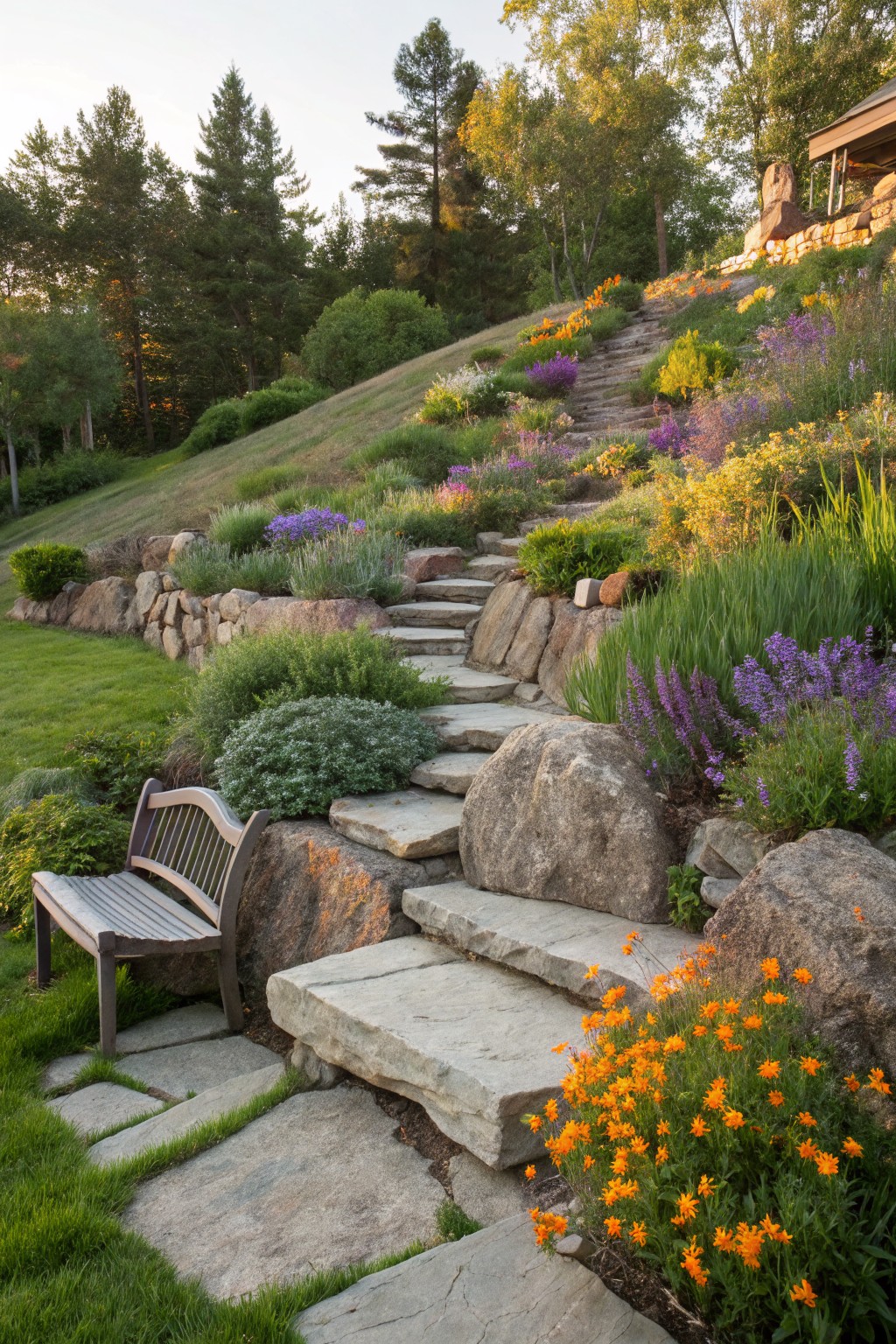
Large boulders work well as retaining walls for steps on a hillside. They hold back the soil naturally and give the path a rugged look that fits right into the landscape. Here purple lavender and orange flowers tuck in around the stones, adding color without much fuss. It’s a solid way to handle a steep yard and still have room for plants.
This kind of setup suits homes on slopes where you need to get from yard to house without it feeling like work. Pick boulders from nearby to keep costs down and plant tough perennials that come back each year. Watch the drainage so water doesn’t pool on the steps. A bench halfway up gives a spot to pause.
Winding Stone Path Through Boulder Flower Beds
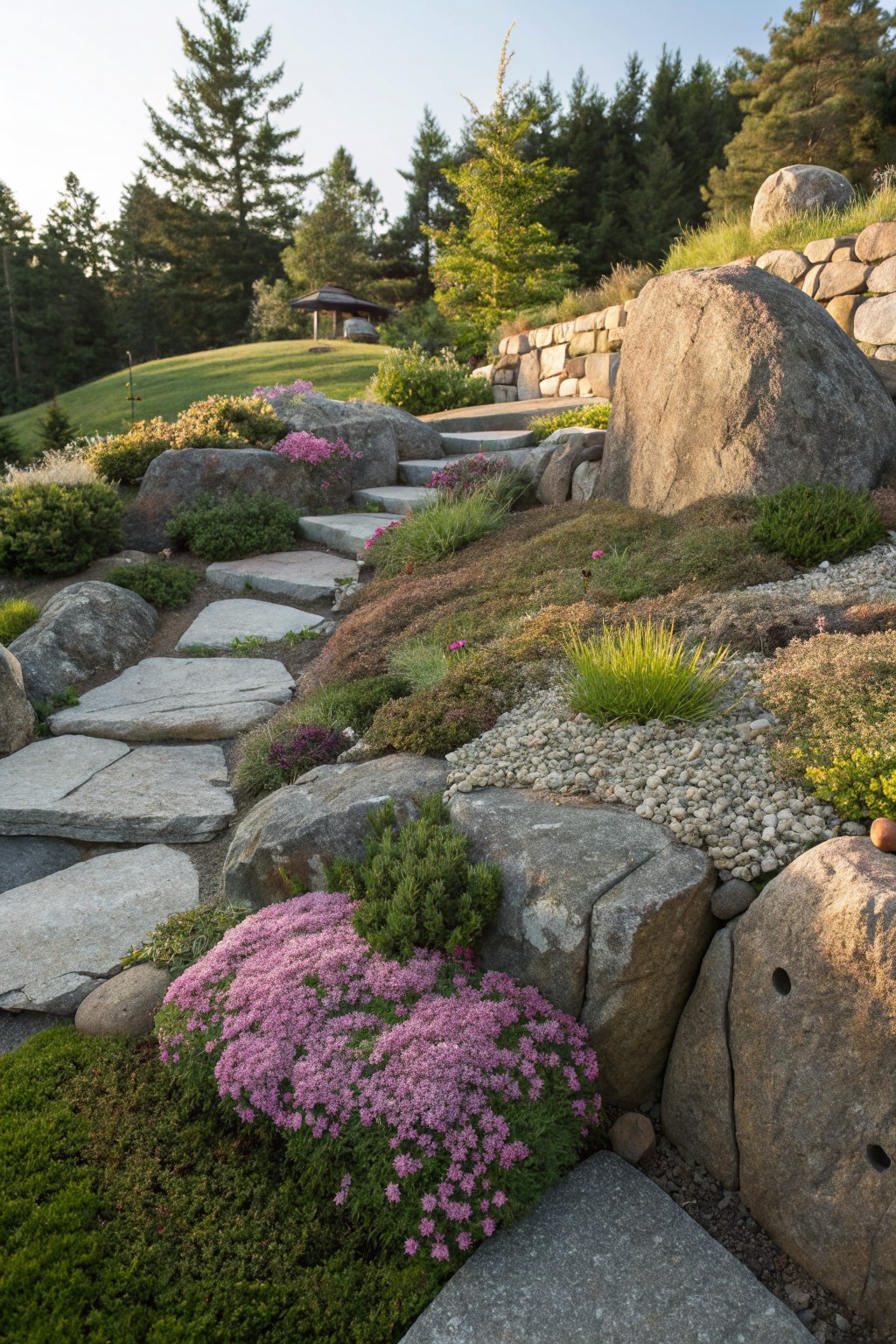
One simple way to handle a sloped yard is with a stepping stone path that weaves right into boulder-filled flower beds. Here, rough flagstone steps climb gently amid big rounded boulders, with pink sedum and tufted grasses spilling over the edges. It keeps the path feeling part of the landscape, not carved out of it, and draws you up the hill without much effort.
This works best in rocky or hilly spots where you want low upkeep. Pick boulders that match your local stone, set them into beds with drought-tough plants, and space the steps for easy walking. Avoid overcrowding… just enough plants to soften things. Suits casual homes with natural views.
Large Boulders in Walkway Flower Beds
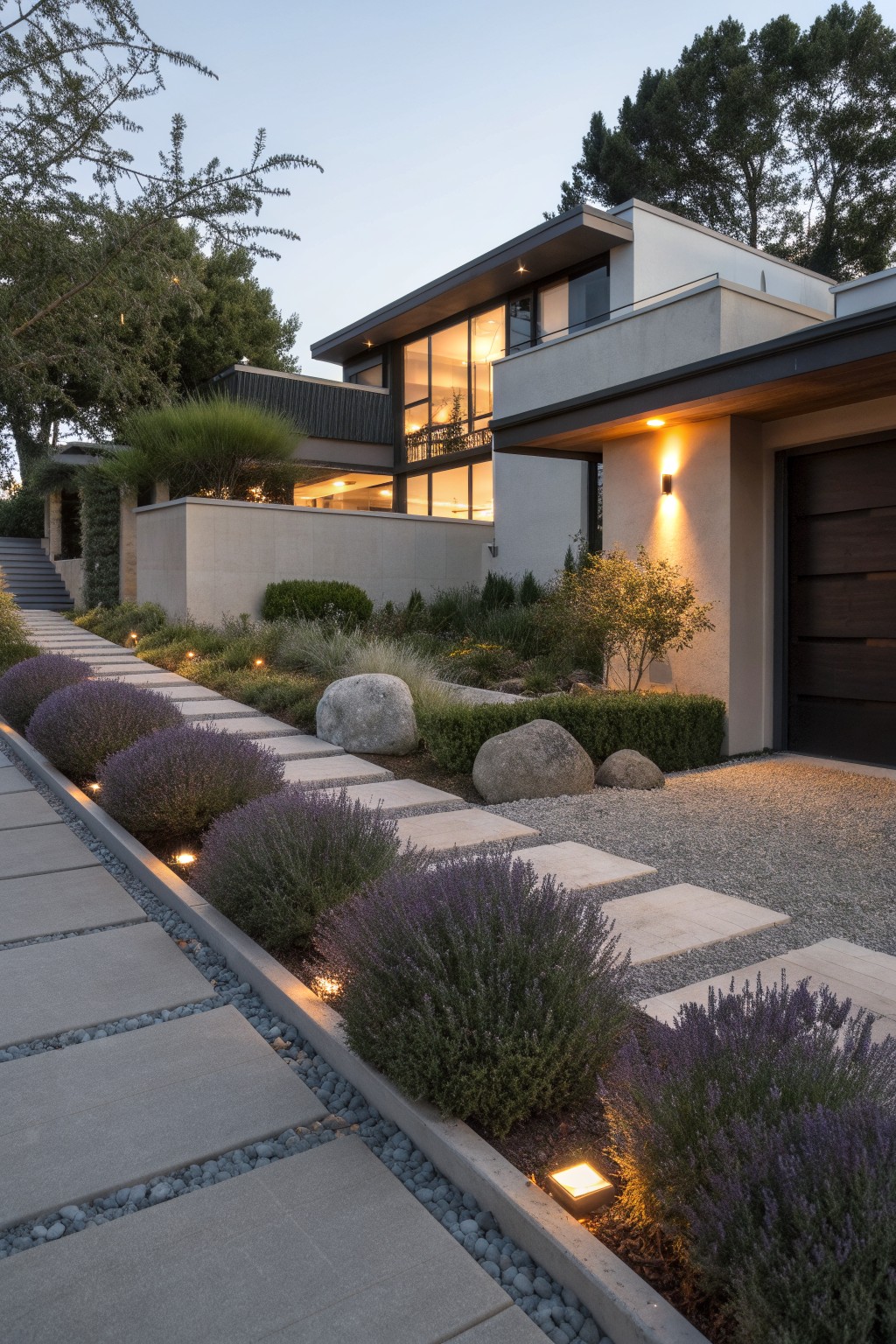
Big boulders work well when placed right in the flower beds along a walkway like this. They sit among low lavender bushes and gravel mulch, giving the planting beds some solid structure. That heft from the rocks makes the whole edge feel intentional and sturdy, especially with the path stepping stones running parallel.
You can pull this off in any front yard entry or driveway approach. It suits modern homes or cleaner traditional ones, keeping things low fuss once planted. Pick boulders that match your local stone if you can. And space them so they don’t crowd the walking area.
Boulder Retaining Walls Shaping Flower Beds
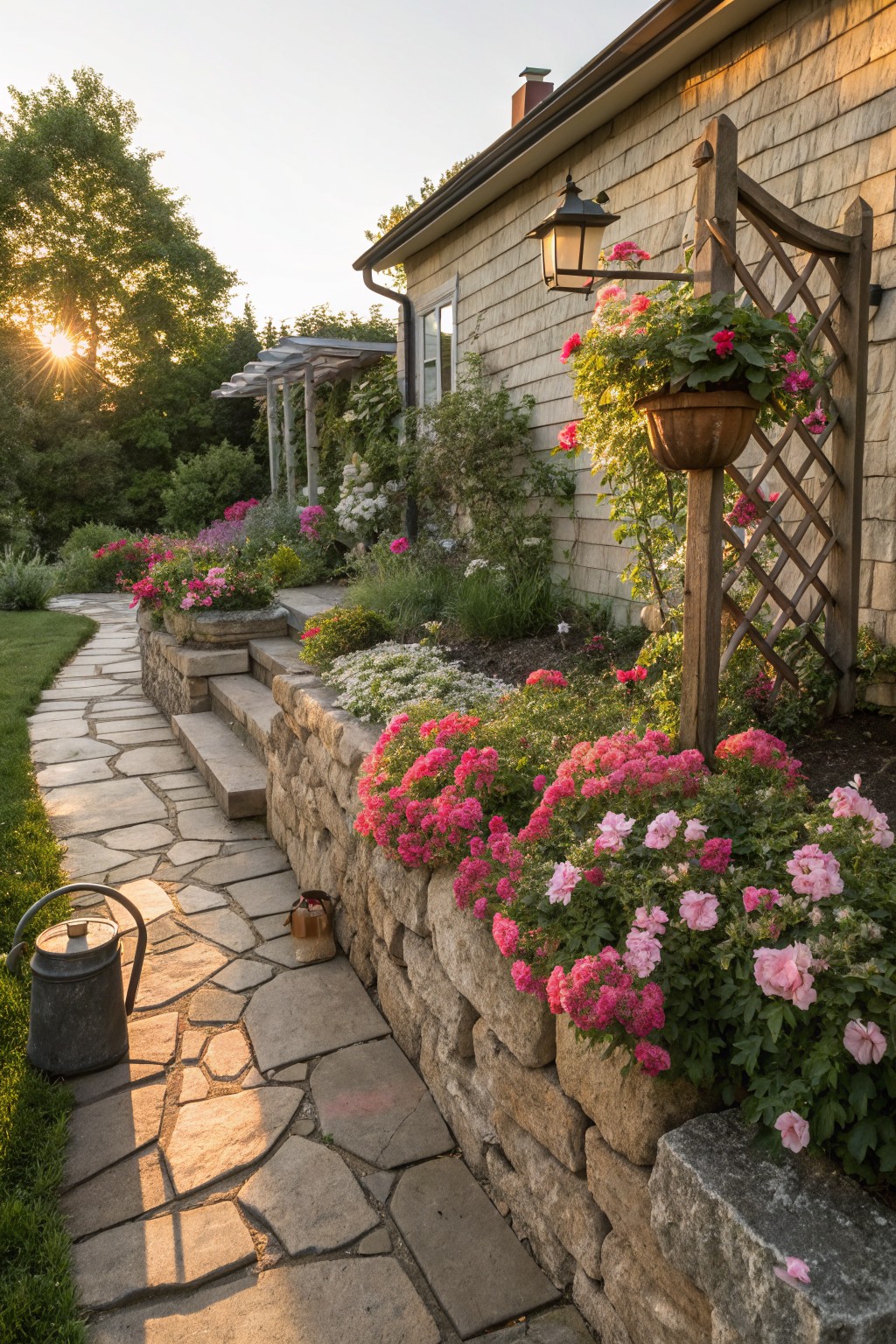
One simple way to add structure to a sloped garden is with low retaining walls made from natural boulders. These stack up casually to hold back soil and plants, letting flowers tumble over the edges in a soft, overflowing way. The rough stone texture contrasts nicely with the blooms, giving the whole bed a grounded, lived-in feel that draws the eye along the path.
This works best in yards with some drop-off, turning tricky terrain into usable planting space. Use it near a house entry or side yard, especially if the home has shingle or wood siding. Just make sure the boulders are stable, and mix in perennials like geraniums for easy color year after year.
Boulders Anchor Beds Along a Path
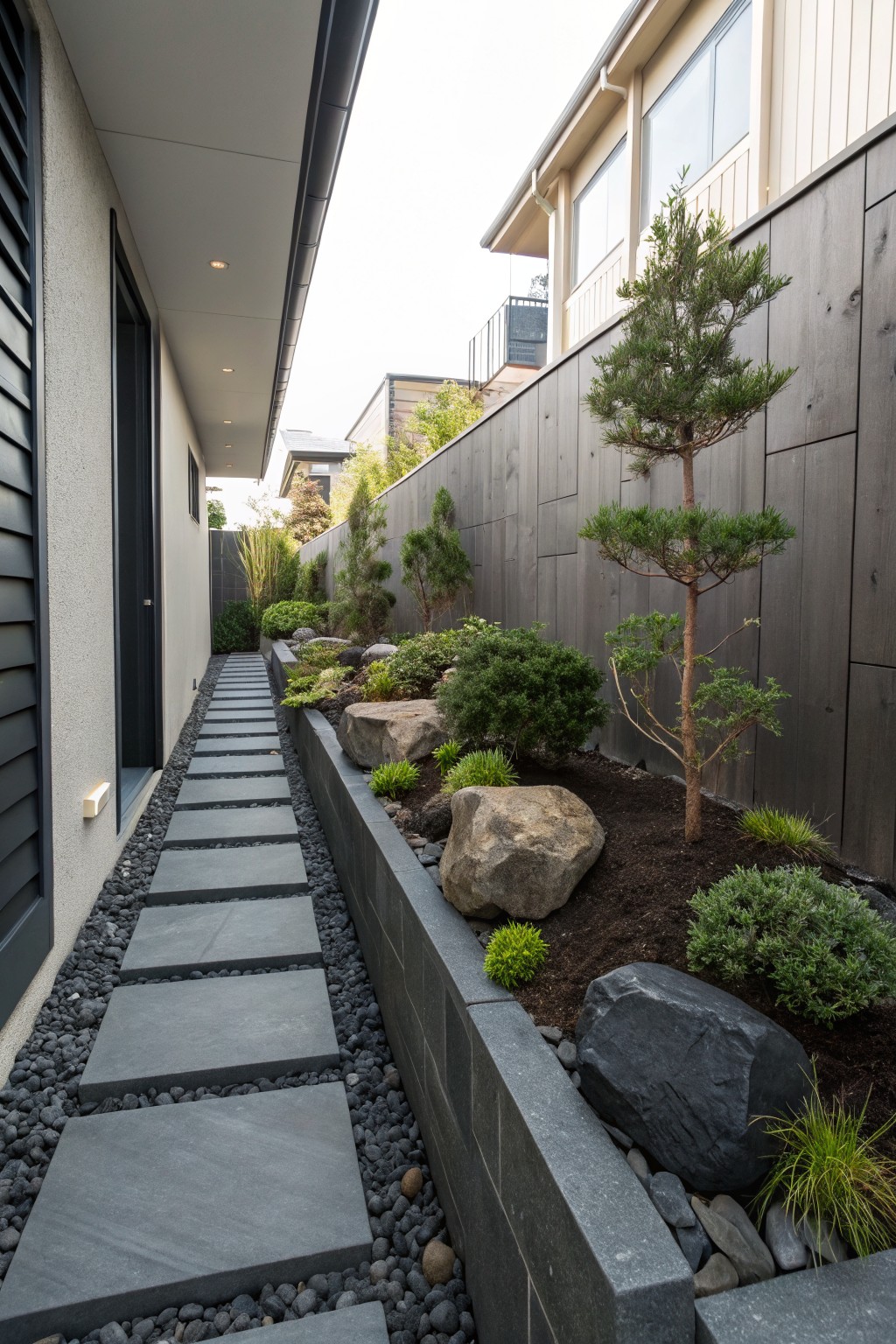
Big boulders tucked into raised beds make a narrow side path feel solid and finished. Here they sit low in the soil mix with clipped pines and grasses, set off by black gravel and dark pavers. That weight keeps the planting from looking skimpy in a tight spot.
Try this where you need to dress up a walkway to a gate or garage without taking up room. It suits modern homes with clean lines, or even older ones wanting less mowing. Just pick rounded rocks that match your stone path, and stick to tough evergreens so it stays neat year round.
Meandering Boulder Path in Flower Beds
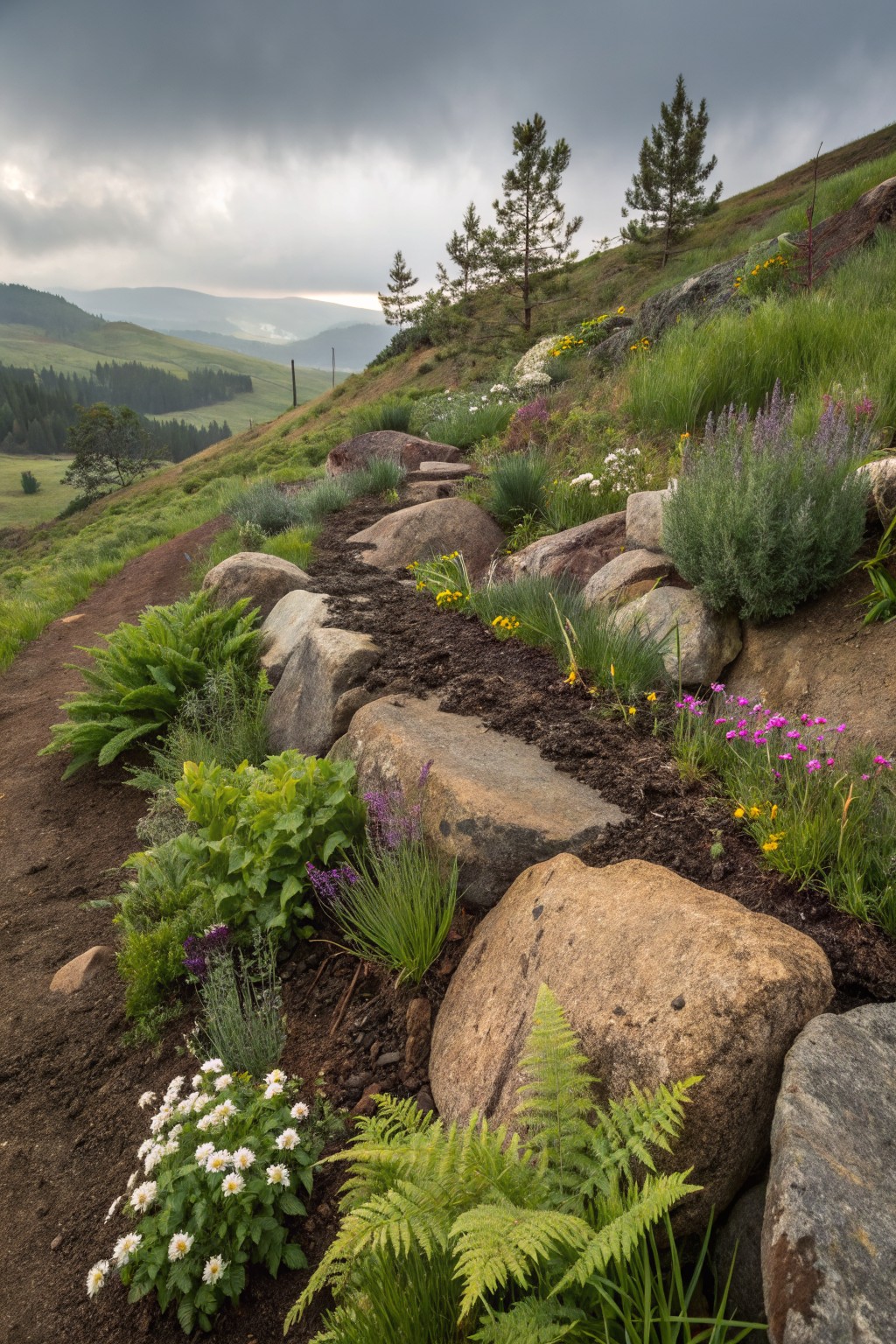
Big boulders like these make a simple path that winds right through the garden. They hold back the soil and plants without looking stiff or man-made. Flowers and grasses tuck in around them, so the whole thing feels part of the hill. It’s a quiet way to guide people along without mowing everything flat.
This works best on slopes or uneven ground where you want some structure. Source boulders from nearby to blend in, then add tough plants like lavender, ferns, and daisies that don’t mind dry spots. Keep the path narrow for that wild feel… suits country homes or natural yards. Just watch the footing after rain.
Boulders in Beds Around the Fire Pit
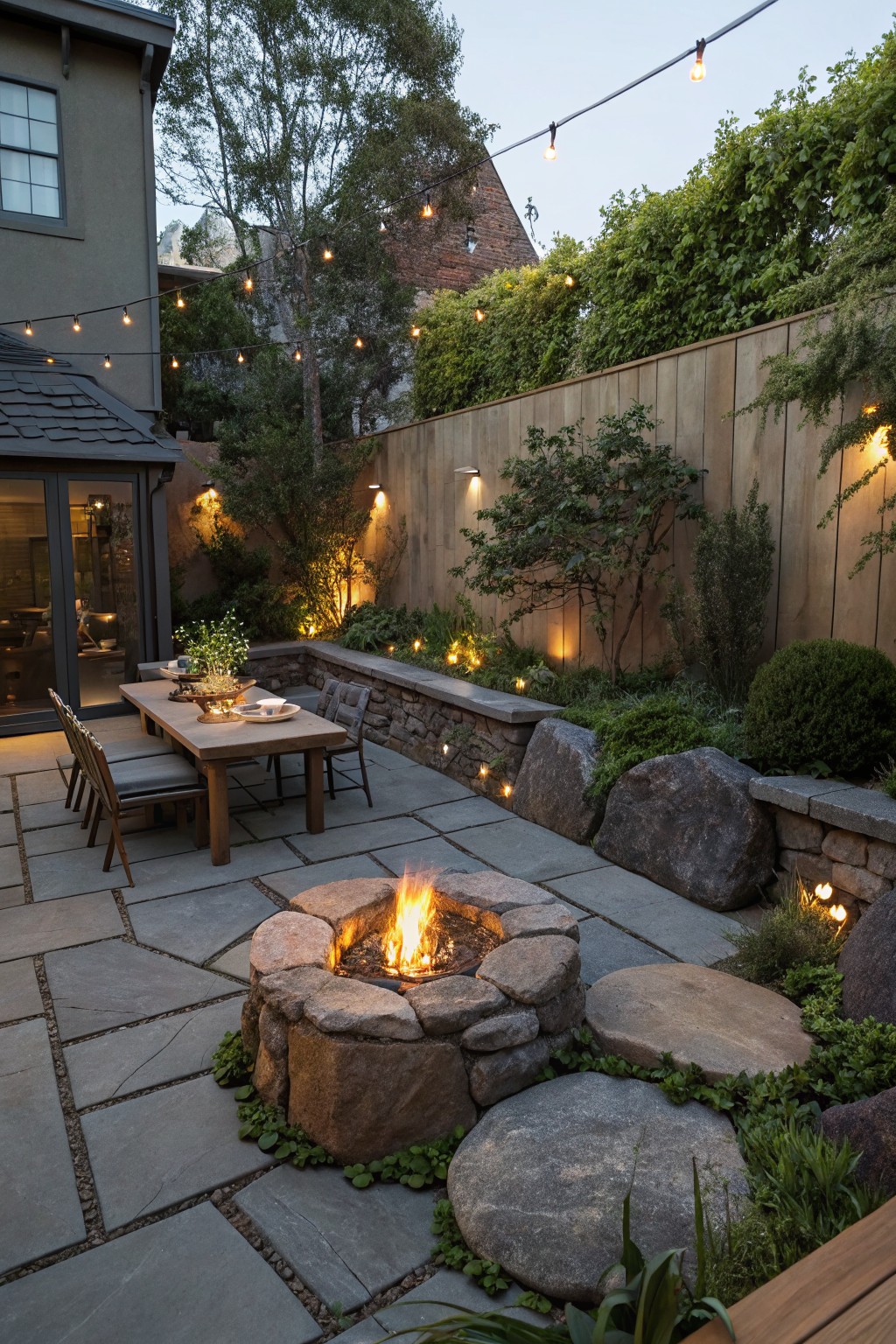
Large boulders tucked right into flower beds make a yard feel instantly mature and rugged. Here they’re layered along a low stone wall next to the patio, mixing with low plants and grasses. That contrast between the rough rocks and softer greenery pulls your eye around without trying too hard. It’s a simple way to add scale to smaller spaces.
Put these in spots where you want definition, like edging a patio or fire pit zone. They hold soil on slopes and let plants spill over naturally. Go for local stone to keep costs down, and pair with pavers for a clean tie-in. Just don’t overcrowd, or it’ll feel heavy.
Boulders Edging Flower Beds Along a Driveway
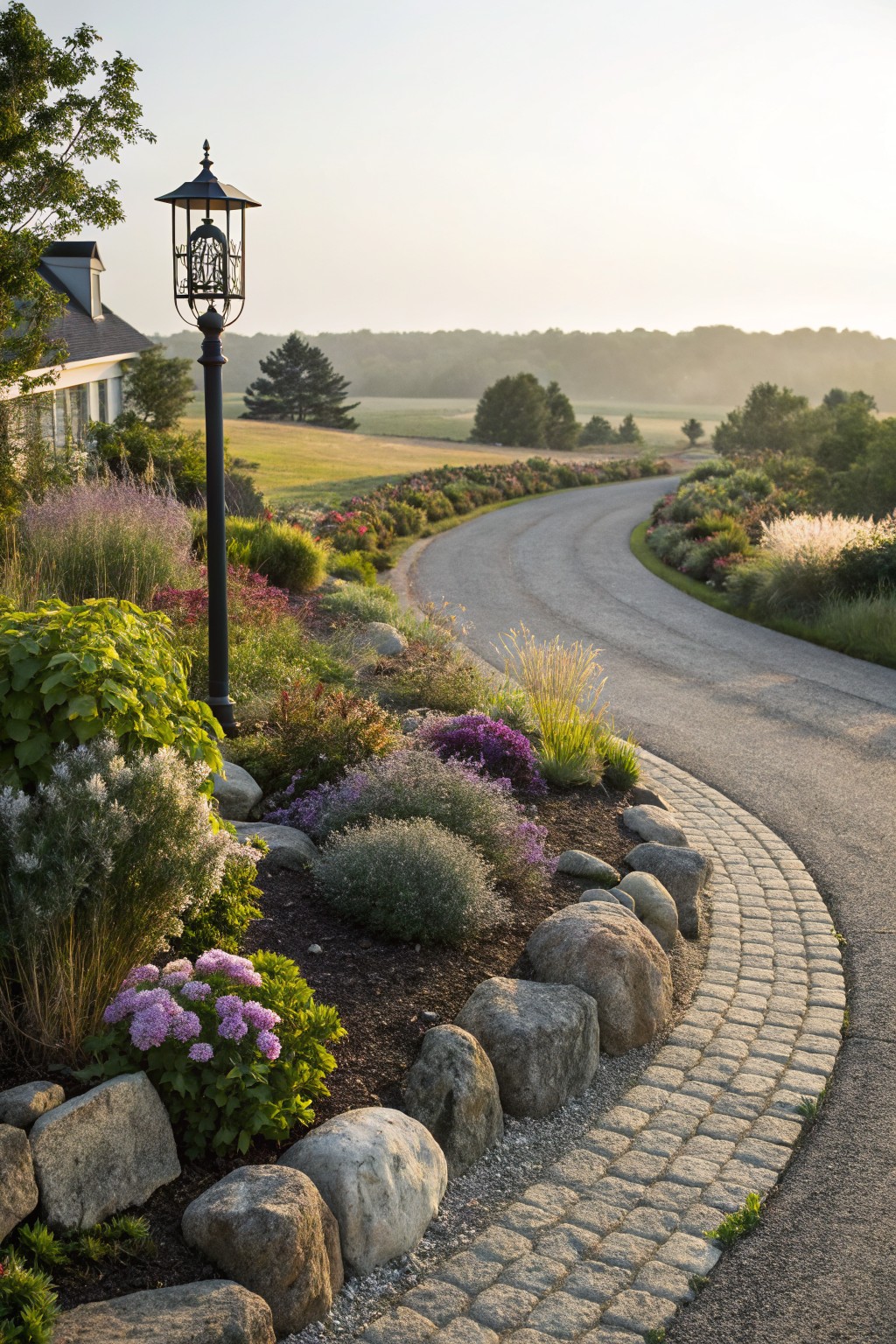
Big boulders worked into flower beds make a simple border for driveways like this one. They hold the soil back and let plants spill over naturally, which keeps things looking rugged yet tidy. That mix of rocks, perennials, and grasses gives the edge some weight without feeling forced.
This works well on rural lots or homes with winding paths where you want low upkeep. Pick boulders in a few sizes to nestle among drought-tolerant plants… space them so roots aren’t crowded. It suits spots with some slope too, since the rocks help with erosion.
Boulders Edge Flower Beds Along a Path
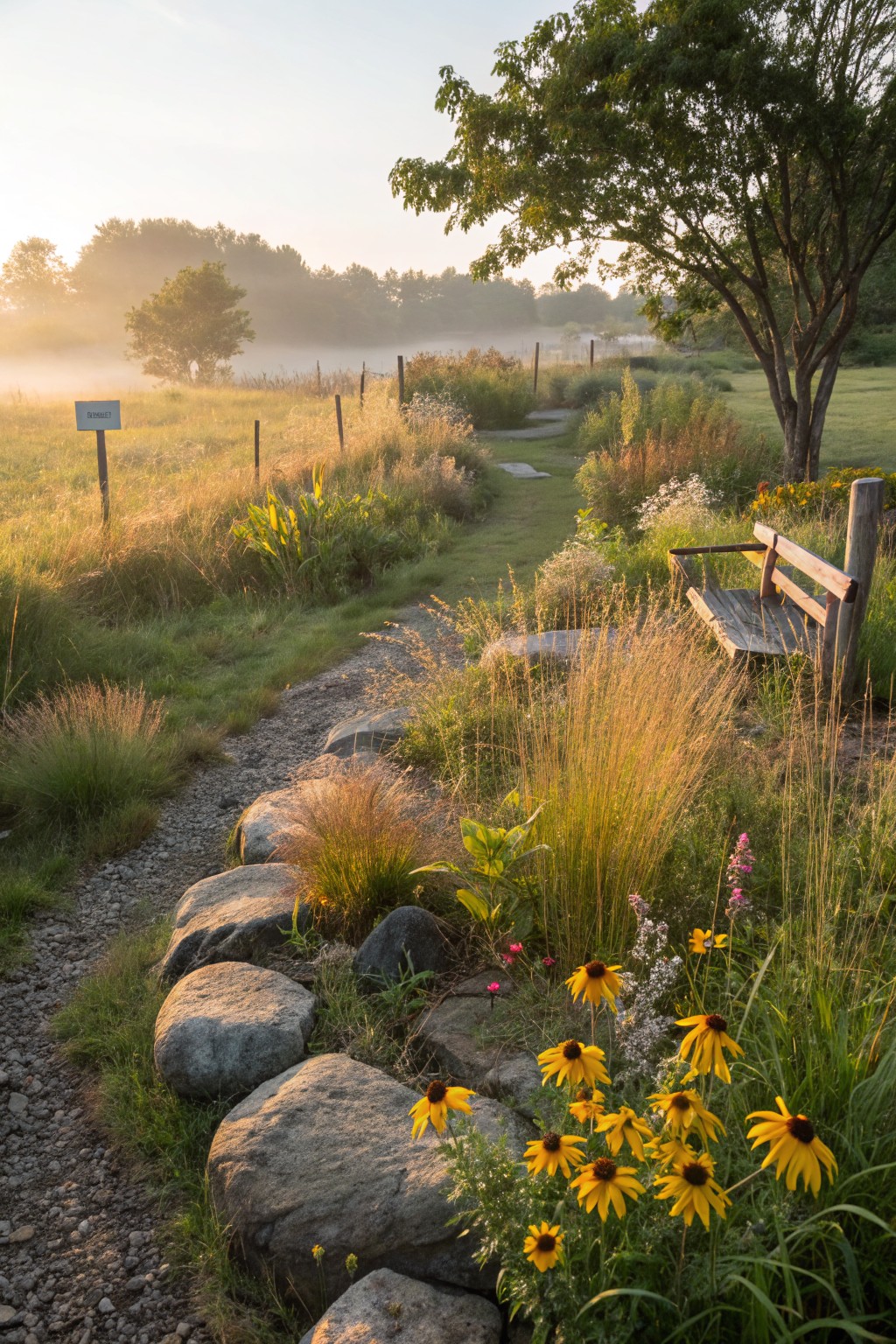
Big boulders work great as edging for flower beds. They hold back the soil and plants without looking forced. In this garden, the stones line a gravel path, letting yellow coneflowers and tall grasses spill over just a bit. That mix keeps things wild but organized.
You can pull this off in most yards, especially ones with a meadow feel. Hunt for local fieldstone to fit right in. Just space them so plants have room to grow… and avoid piling them too high or they might block the view. Works best where you want low upkeep with some punch.
Boulders Shape Sloped Coastal Plantings
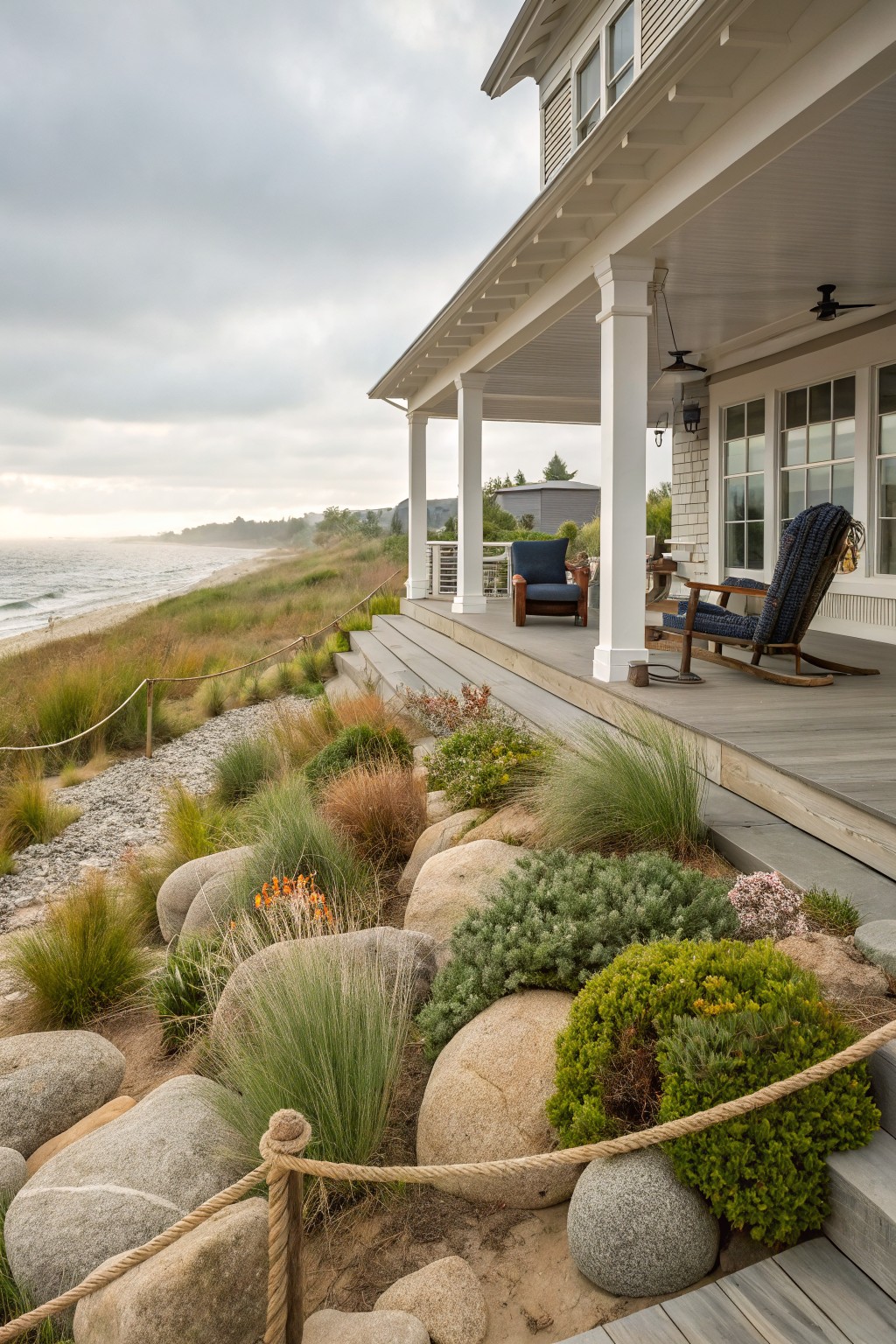
Big boulders mixed right into beds of grasses and low shrubs make this sloped drop-off from the deck feel solid and natural. They add weight and structure without looking forced, especially with the beach right there. The rope railing ties it all together, keeping it casual.
This works best on slopes near water or in dry spots where you want low upkeep. Pick roundish local rocks and tough plants like dune grass or ice plant. It suits beach houses or any yard with a grade, but watch the scale, bigger rocks need space to breathe.
Boulder Accents in Flower Beds
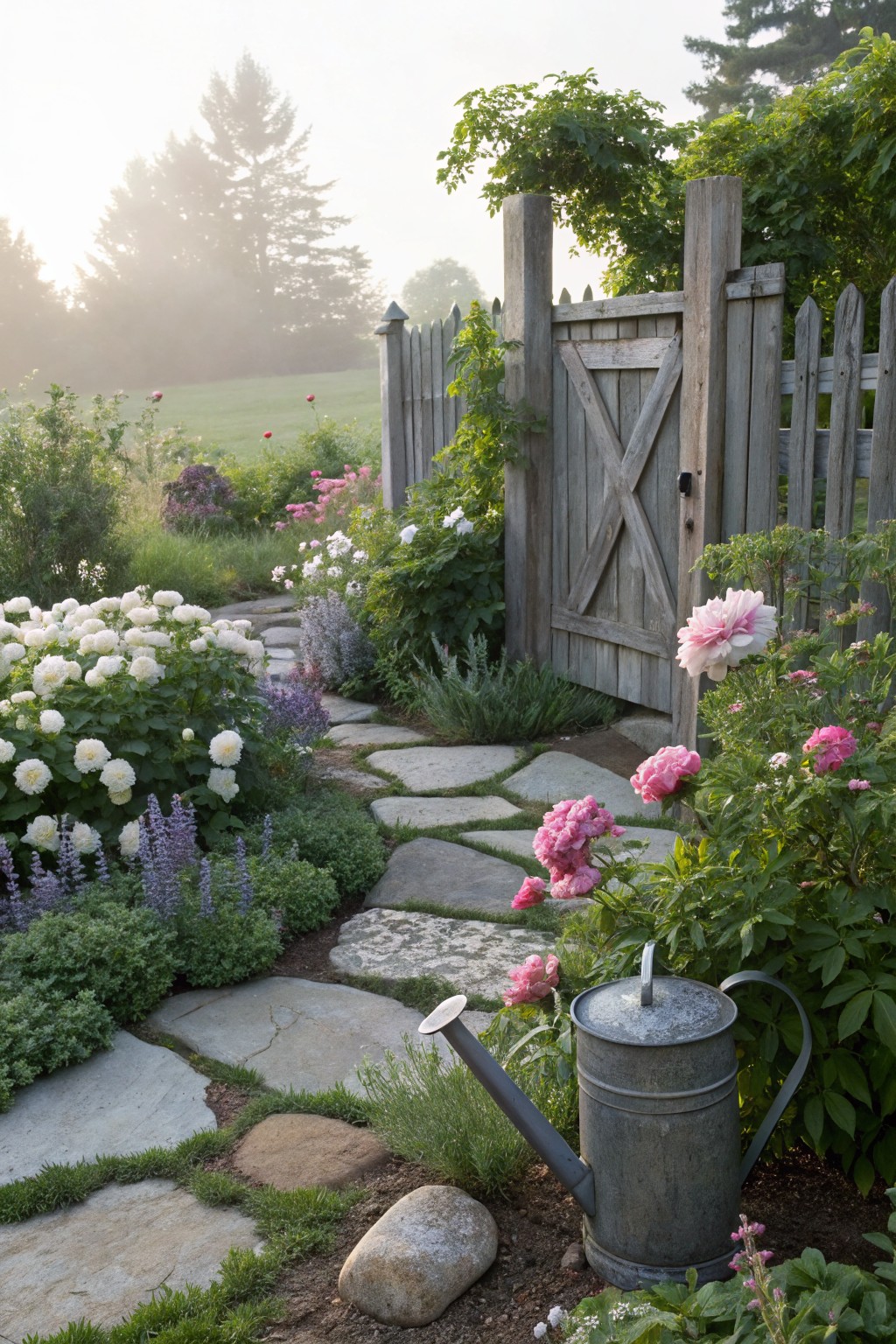
Large boulders tucked into flower beds like these give a garden that solid, natural backbone. They sit low among the peonies and salvia, almost like they’ve always been there, and mix right in with the stepping stone path. It’s a simple way to add texture without much upkeep.
Use this in smaller yards or cottage-style spots where you want some heft amid the flowers. Pick rounded local stones so they blend with your plants, and keep them partly buried for stability. Just don’t overcrowd. The plants will fill in around them over time.
Boulder Walls Edge Raised Flower Beds
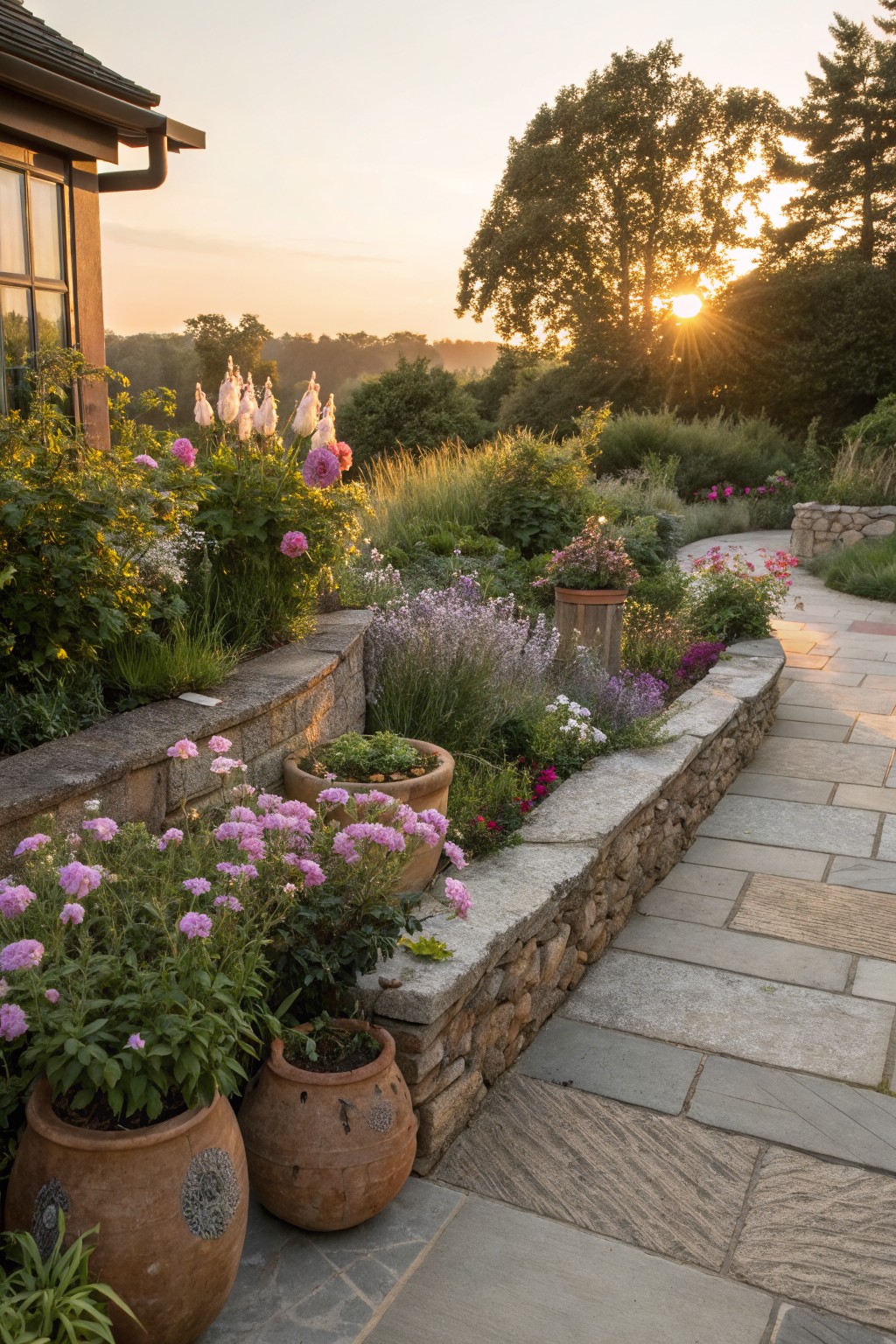
Boulder walls like this one make a simple way to create raised flower beds without much fuss. Stacked fieldstone holds back the soil and plants, giving everything a neat edge that looks natural. The low height keeps it approachable, and the rough texture fits right into a country or cottage garden.
You can use this in sloped spots to level things out or just add some structure near a house or path. Fill the bed with perennials and annuals for color, then tuck in terracotta pots along the base. It works best where you want low upkeep… the boulders won’t rot or shift much.
Frequently Asked Questions
Q: Where do I find boulders that won’t break the bank?
A: Hunt at local quarries or stone yards first. They deliver truckloads cheap, and you snag pieces that blend with your yard’s vibe.
Q: How do I wrestle those big boulders into my flower bed without hurting myself?
A: Grab a heavy-duty dolly and rope them secure. Roll them close, then tip and nudge with a pry bar. Team up with a friend. Saves trips to the ER.
Q: Do boulders mess up drainage around my flowers?
A: Not if you dig shallow pockets and set them level. Water runs right past, keeping roots happy.
Q: What plants pair best right up against boulders?
A: Go for spilling sedums or hardy perennials like daylilies. They hug the curves and hide any soil gaps fast. And… they thrive in that rocky microclimate.
