

Roses can bring color and structure to a garden, but they work best when their placement suits the space and the care you can realistically give them.
I find that the first thing people notice is often the overall shape of a rose bed, from its edges and paths to how the plants sit against a fence or border.
Choosing sturdy varieties and grouping them thoughtfully can make the garden feel considered without turning routine pruning and watering into a chore.
Some ideas may suit a sunny walkway, while others can soften a boundary or add height near a patio.
I’d save the layouts that fit your yard, then adapt the planting and edging to make them easy to live with.
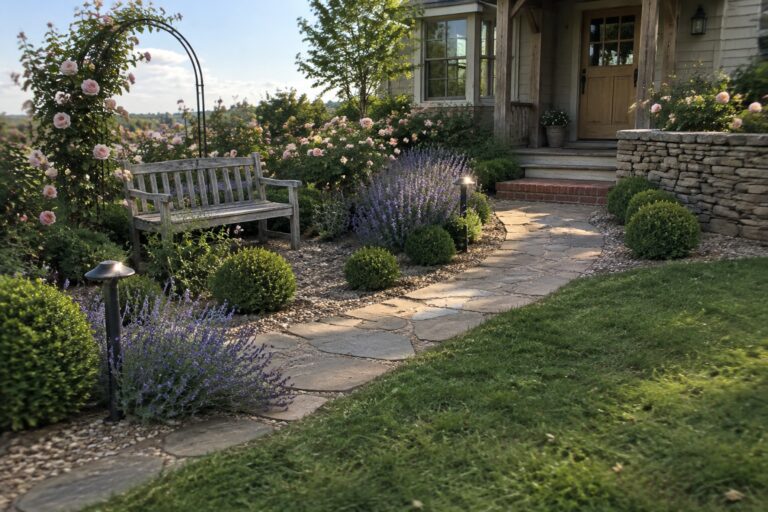
Use a Stone Path to Organize a Rose Garden

A winding stone path gives a rose garden a clear route to the front door and makes it easier to reach plants for pruning and care. The irregular paving also suits a relaxed garden, where roses can grow alongside smaller, low-maintenance plants.
Keep the path wide enough to walk comfortably and leave room beside it for rose bushes without letting them crowd the paving. Gravel between the stones helps with drainage, but plan to pull weeds from the joints now and then.
Use Roses in a Gravel Garden
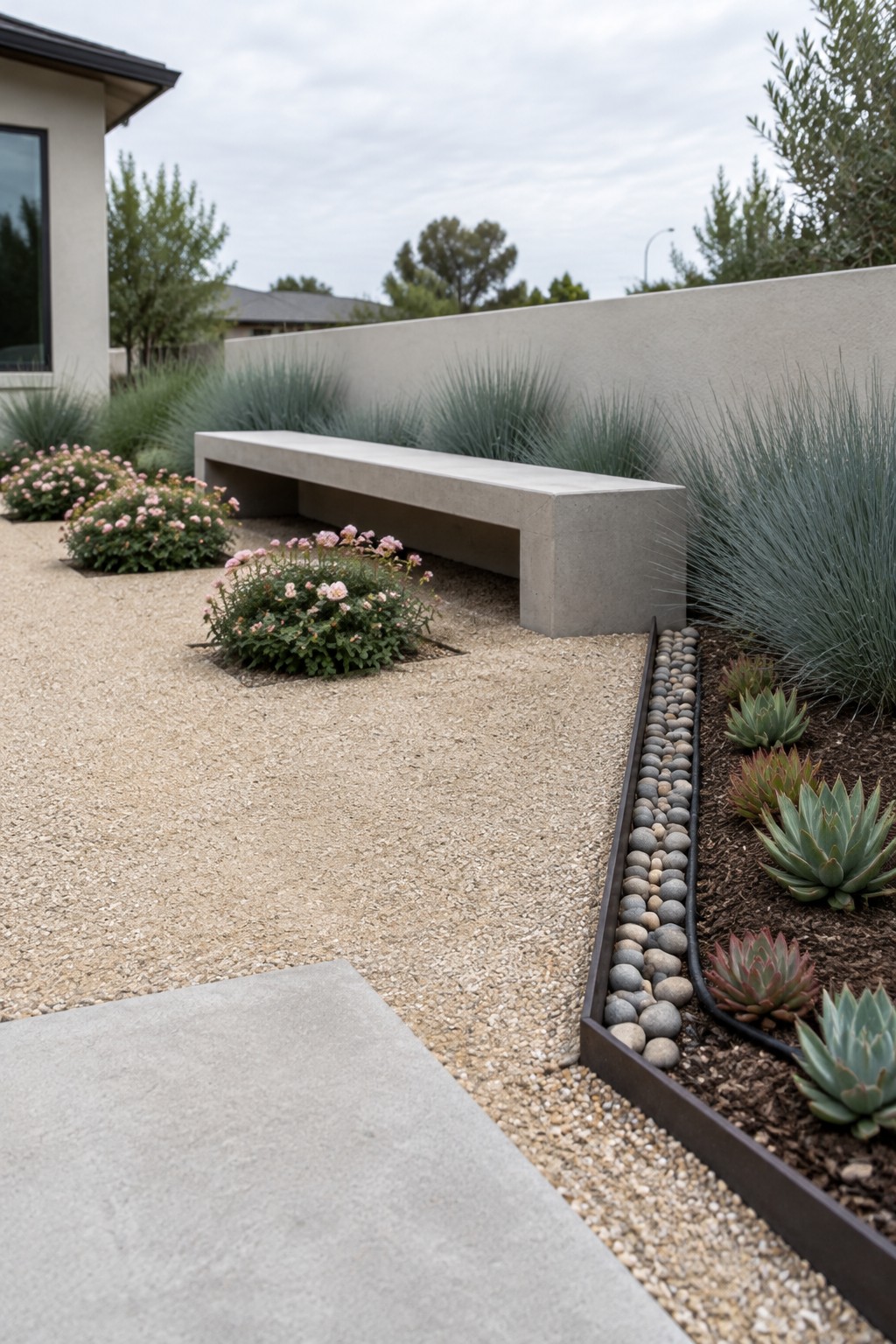
Gravel can make a rose garden easier to care for by reducing the area that needs mowing and giving the planting beds clear edges. Compact roses add color against the simple ground cover, while ornamental grasses can fill out the garden without needing constant attention.
Use gravel in sunny areas with well-draining soil, and choose rose varieties suited to your climate. Keep roses in defined beds so you can water and prune them easily, and leave enough space around each plant for airflow.
Grow Roses Along a Garden Wall
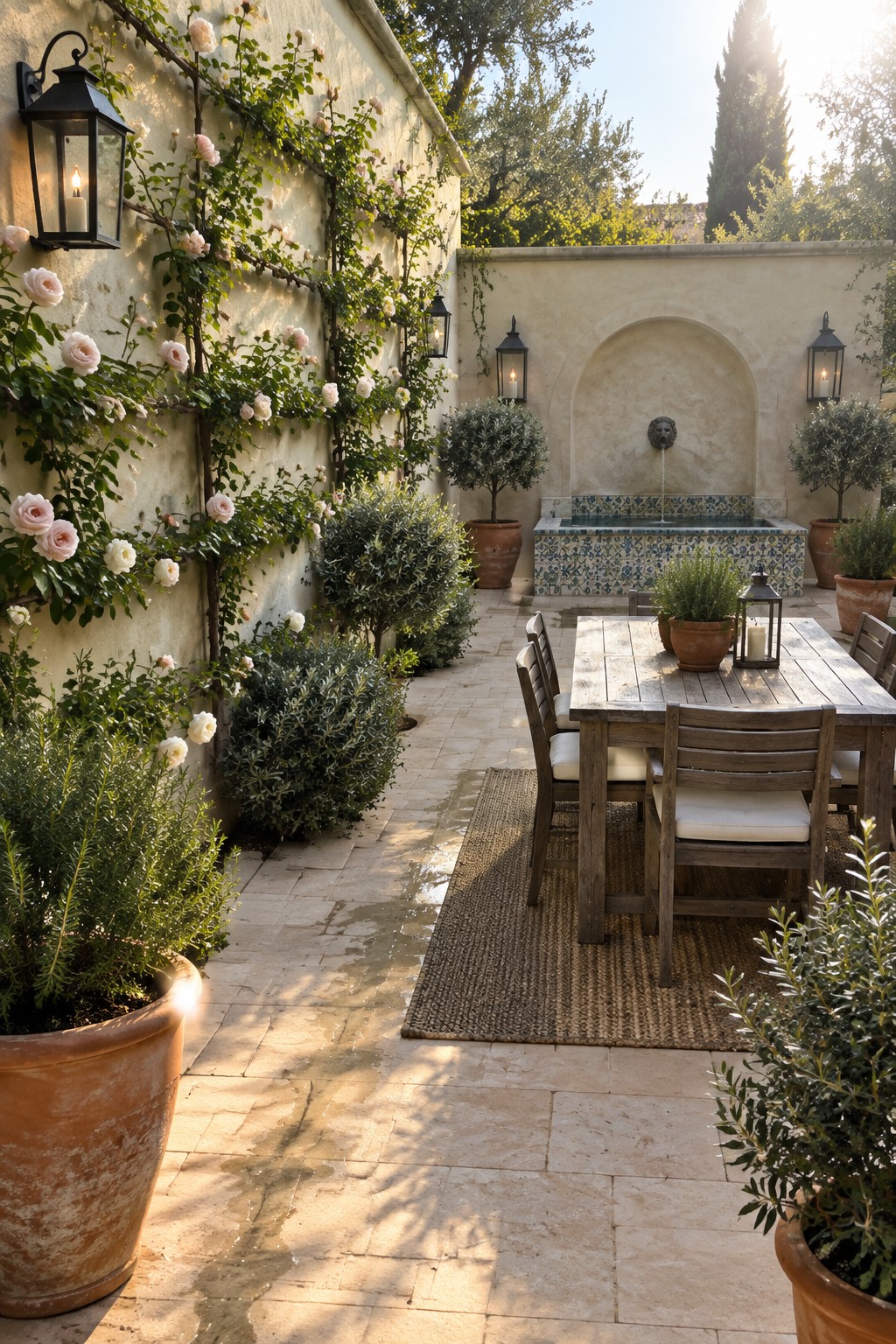
Training climbing roses along a wall gives them a clear place to grow and keeps their stems from sprawling across paths. It also makes good use of a narrow space, so this approach can work in a small courtyard as well as a larger garden.
Set a sturdy support a little way from the wall so air can move around the plants, and guide new stems along it as they grow. Choose repeat-blooming roses suited to your climate, and leave enough room to prune and reach the wall.
Let the Path Shape the Rose Garden
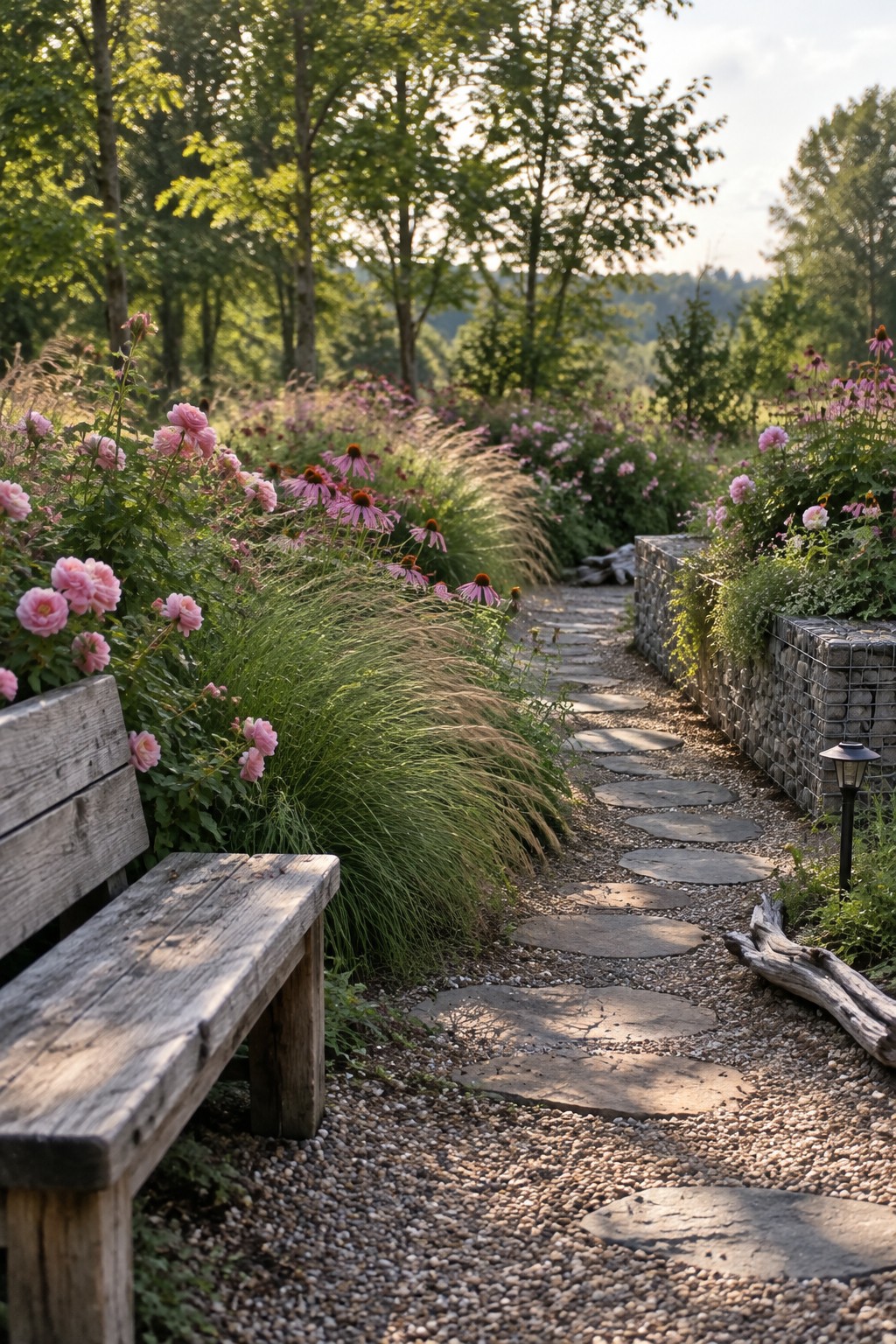
A simple stepping-stone path can make a rose garden easier to use and easier to maintain. It gives you a clear route through the planting beds, so you can reach roses for pruning and deadheading without stepping on nearby plants.
Keep the path wide enough to walk comfortably, and leave room beside it for roses that will spread as they grow. In the pictured garden, loose gravel and spaced stone slabs make a practical route through the flowers.
Use Raised Beds to Keep Rose Planting Neat
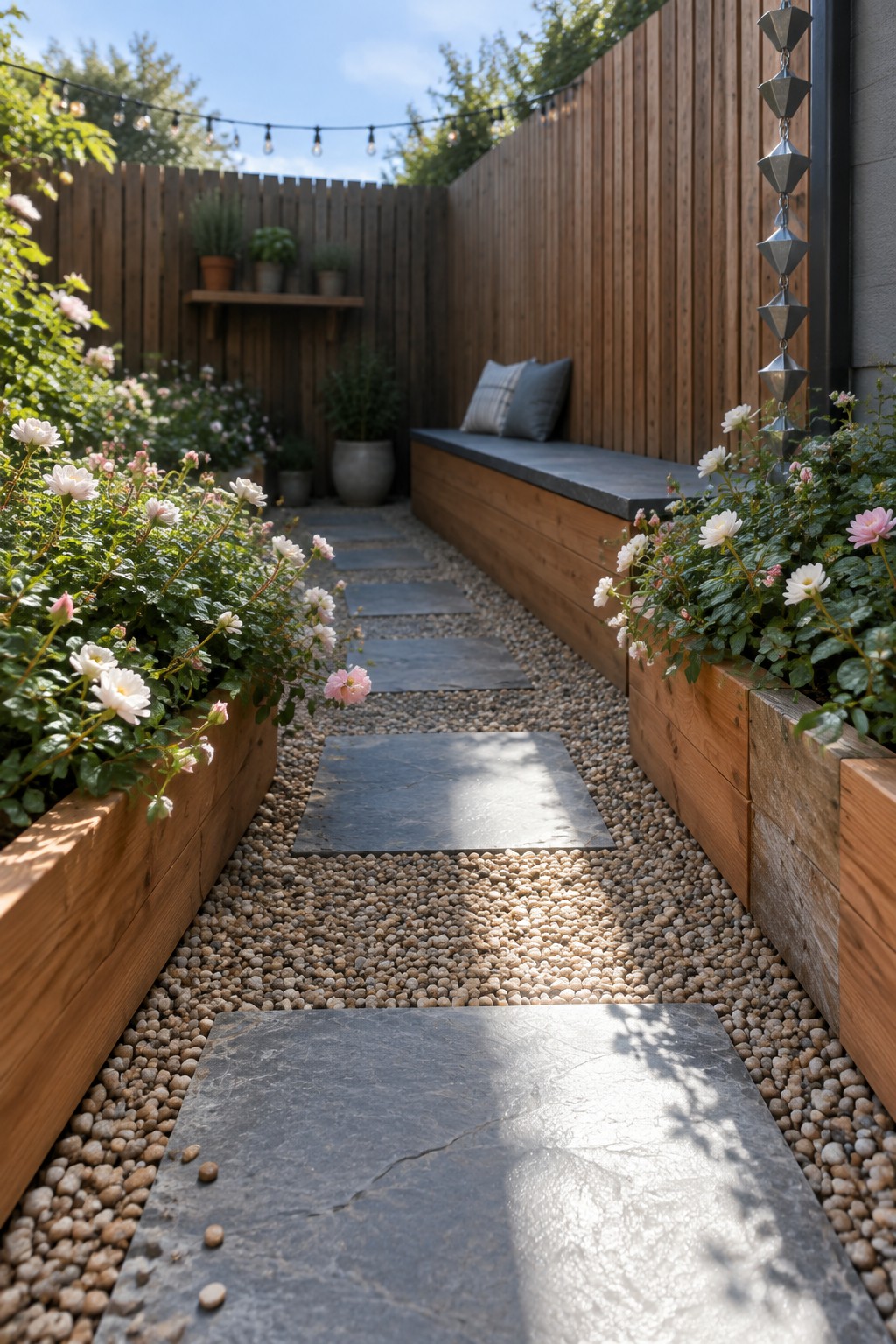
Raised wooden beds give a narrow garden a clear planting edge and keep flowers from spilling across the gravel path. This simple layout can make a rose garden easier to care for, especially where space is tight.
Use raised beds along a fence or walkway, leaving enough room to reach in and prune. Choose roses suited to the bed’s depth and sunlight, and avoid packing plants too closely.
Add a Lawn Edge to a Gravel Rose Garden
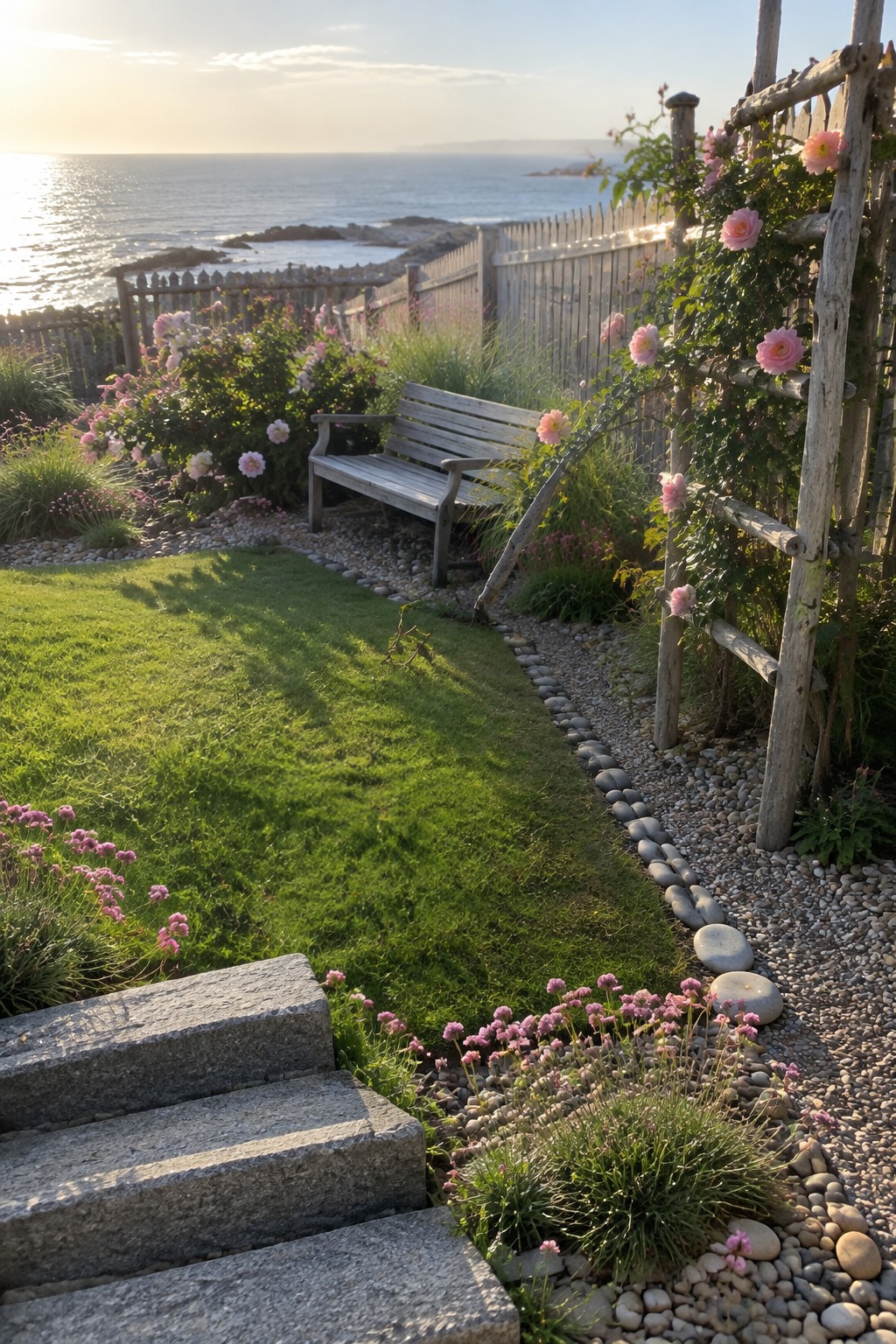
A narrow gravel border can give a rose garden a tidy edge while keeping the planting beds separate from the lawn. Pink roses and low flowers sit comfortably beside the stone, and the open lawn leaves room to enjoy the garden without adding more planting to maintain.
Use a clear boundary between grass and gravel so the lawn is easier to mow and stones stay out of the grass. This approach works well in a small coastal garden or any yard where you want roses without a large, demanding flower bed.
Use Low Hedges to Shape Rose Beds
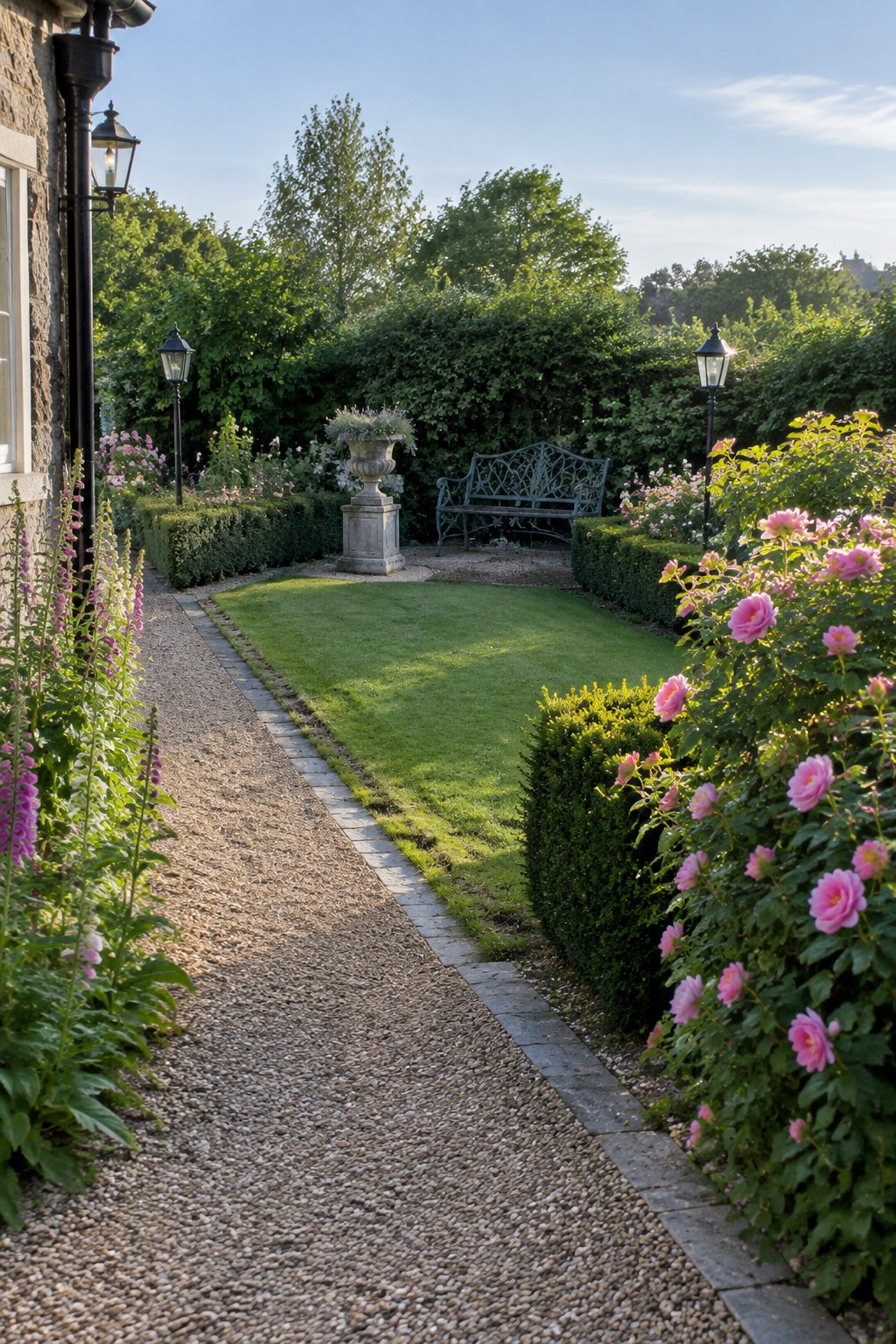
Low hedges give a rose garden a clear outline without making the planting feel crowded. Here, clipped greenery separates the lawn from the rose beds and keeps the garden looking orderly.
Use a similar edge around a small lawn or along a path, choosing a compact hedge that is easy to trim. Leave enough room for roses to grow and for you to reach in for pruning and deadheading.
Plant Roses Along a Paved Garden Walk
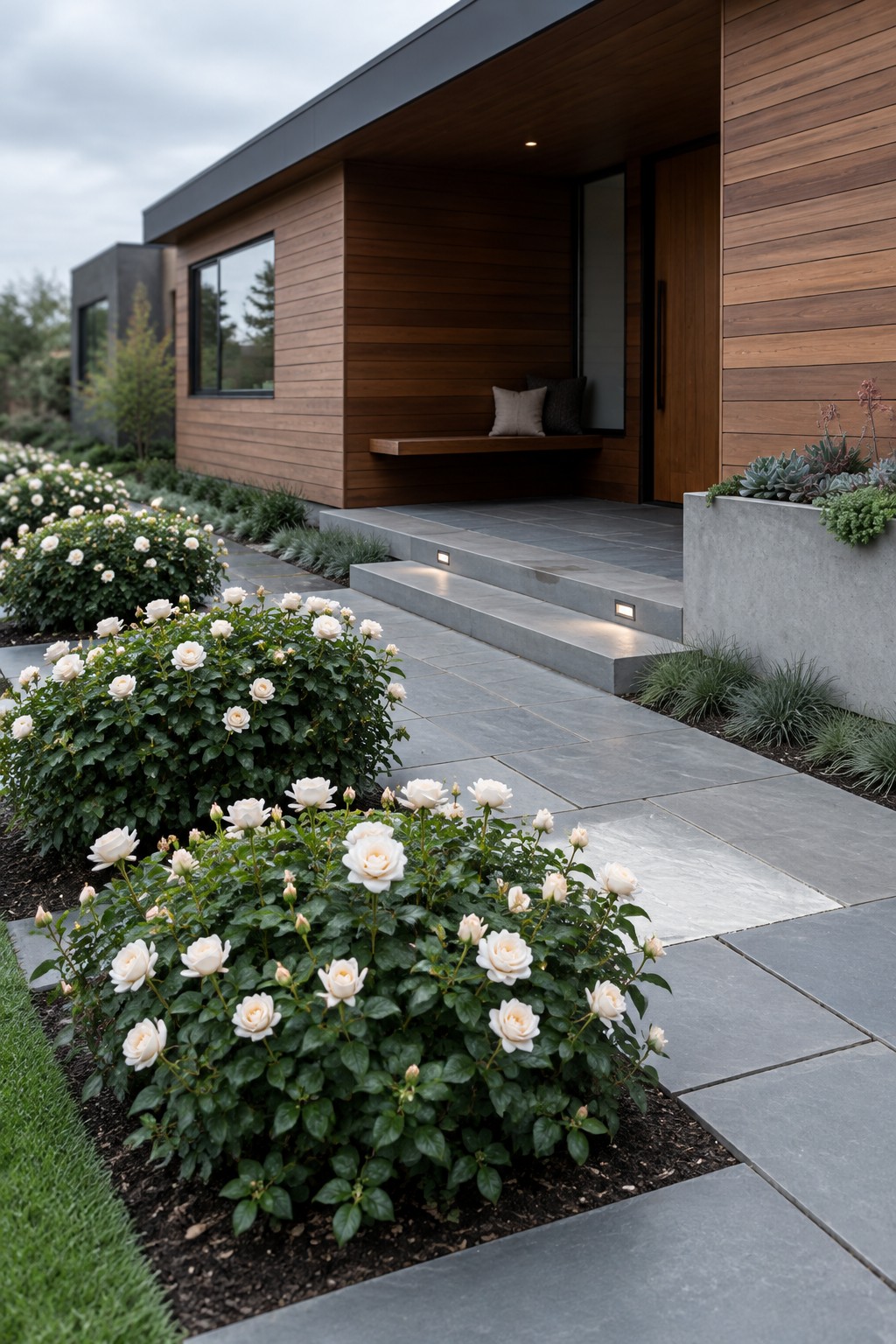
A paved walk can give a rose garden a clear shape and make it easier to move through and care for. The broad stone surface also leaves less ground to weed than a fully planted path.
Use rose beds along the edges of a walk near the front door or through a side garden. Leave enough room for the plants to grow without spilling over the paving, and choose roses suited to your climate so they need less fuss.
Add a Pergola for a Shaded Rose Seating Area
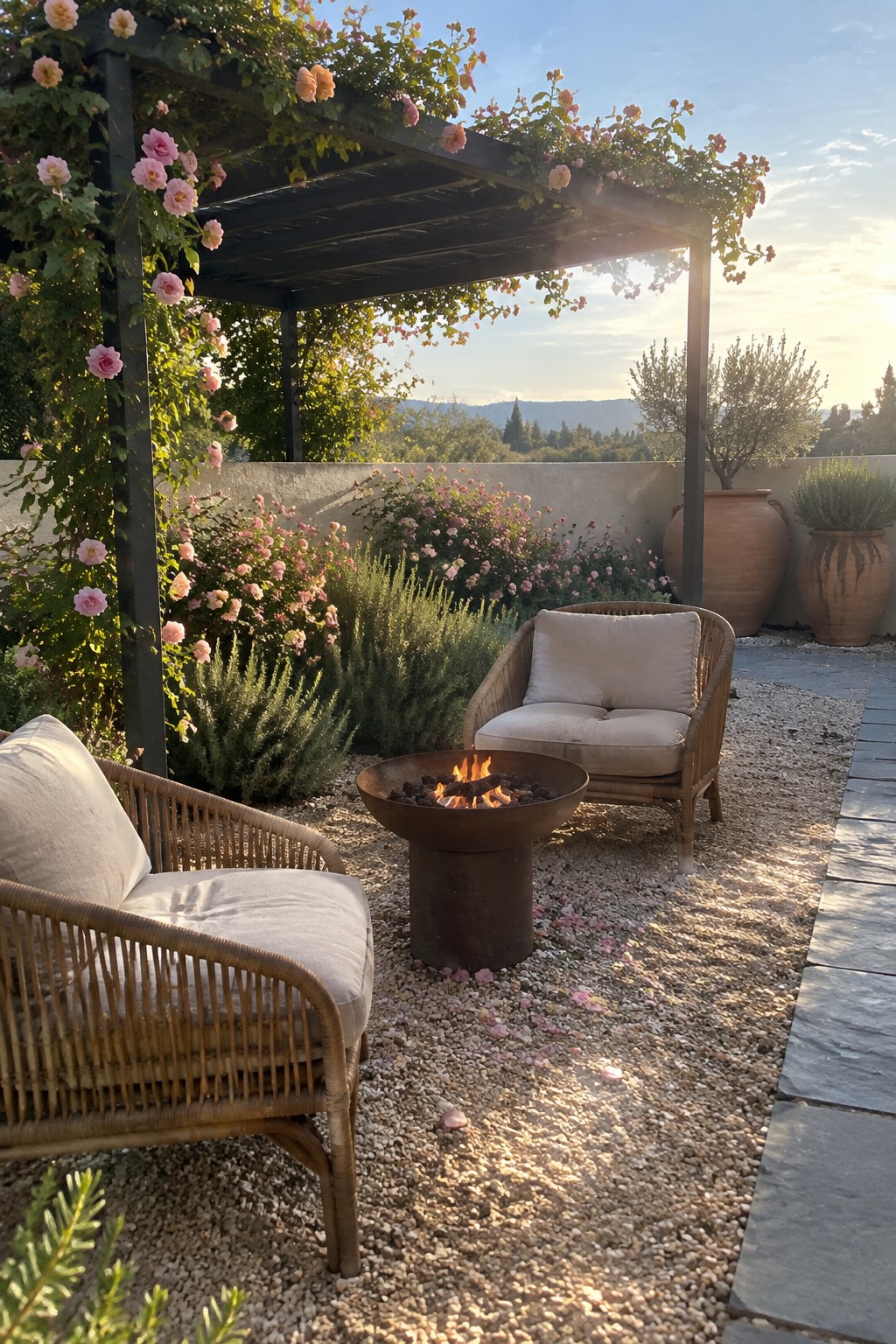
A pergola covered with climbing roses can make a simple seating spot more comfortable and give the plants a clear place to grow. The overhead structure adds shade, while the roses bring color close to where you sit.
Use a sturdy pergola where you want a defined place to relax, and choose climbing roses suited to your climate. Keep the seating area open enough for easy access, and leave room to prune and tie back new growth.
Train Climbing Roses Along a Fence

A fence can give climbing roses a clear structure, so they grow neatly instead of spreading into the path or nearby plants. Horizontal wires make it easier to guide the canes and keep flowers visible.
Use this approach along a garden boundary where roses can get enough sun and airflow. Tie new growth loosely to the wires, and leave space between the fence and surrounding plants so pruning and care stay manageable.
Add Subtle Lighting Along Rose Beds
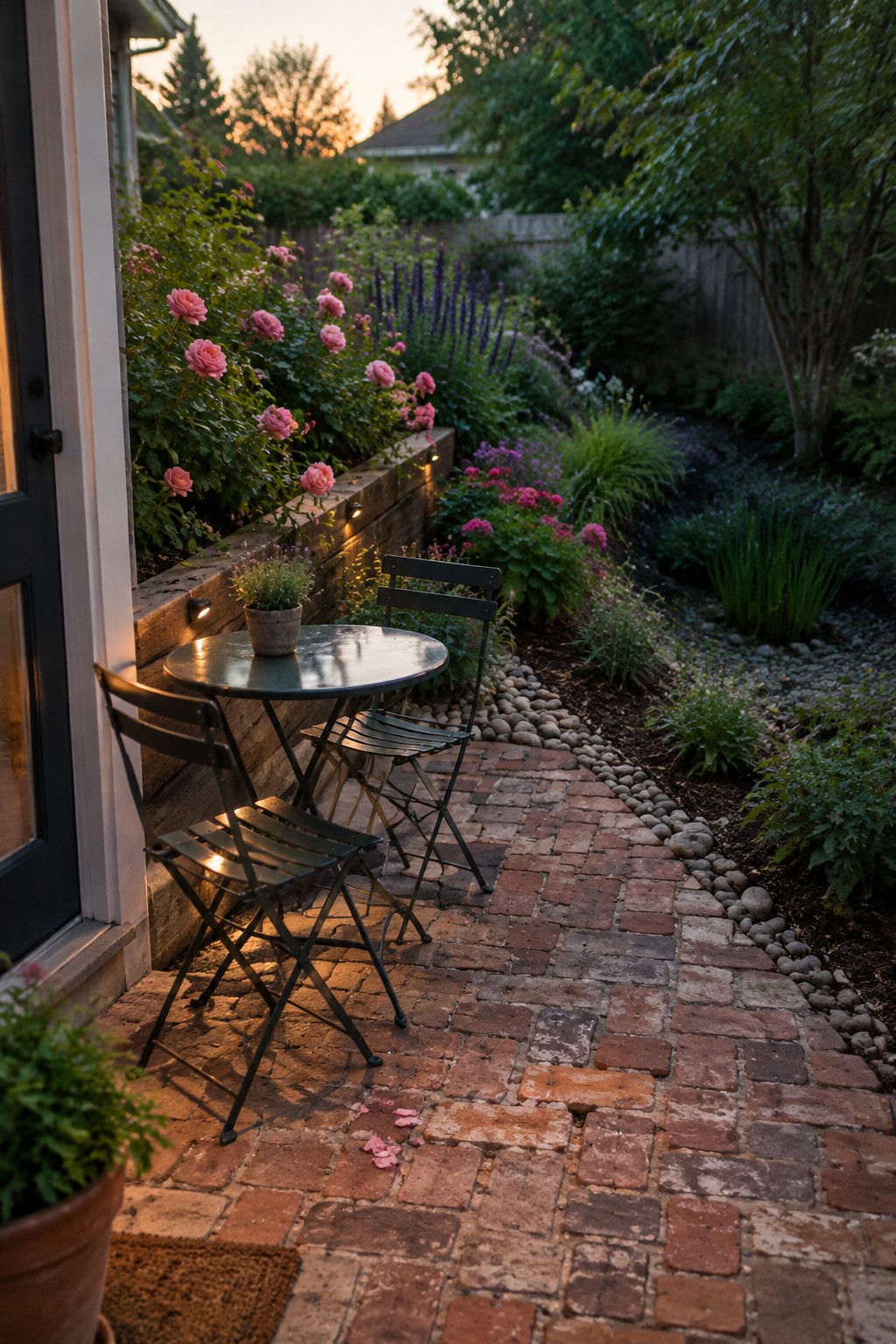
Small lights set into a raised bed can make a rose garden easier to enjoy after dusk. They also help define the edge of the planting without adding another feature that needs much care.
Use low, shielded lights along a wall or bed edge, spaced far enough apart to avoid a runway effect. They work especially well beside a narrow patio path, where soft illumination helps people see their footing without lighting the whole garden.
Use Gabion Edging to Shape Rose Beds
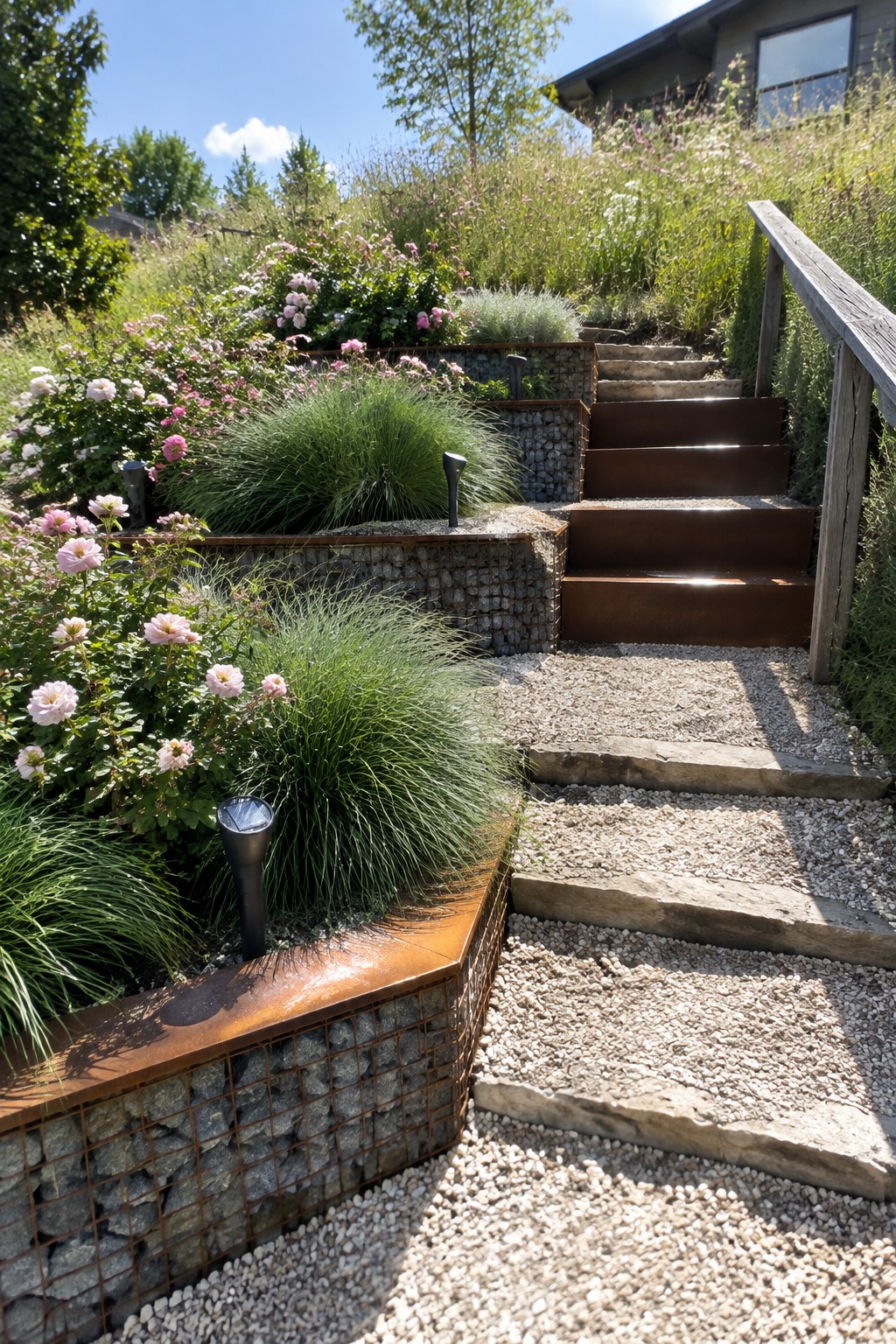
Wire gabion walls make a practical edge for a sloped rose garden. They hold the planting beds in place and give the roses and grasses a clear boundary, without relying on a clipped hedge.
Use this approach where the ground changes level, and keep the rose beds wide enough to reach for pruning and deadheading. A gravel path can help with drainage and make access easier, but choose roses that suit your sun and soil.
Grow Roses in Balcony Planters
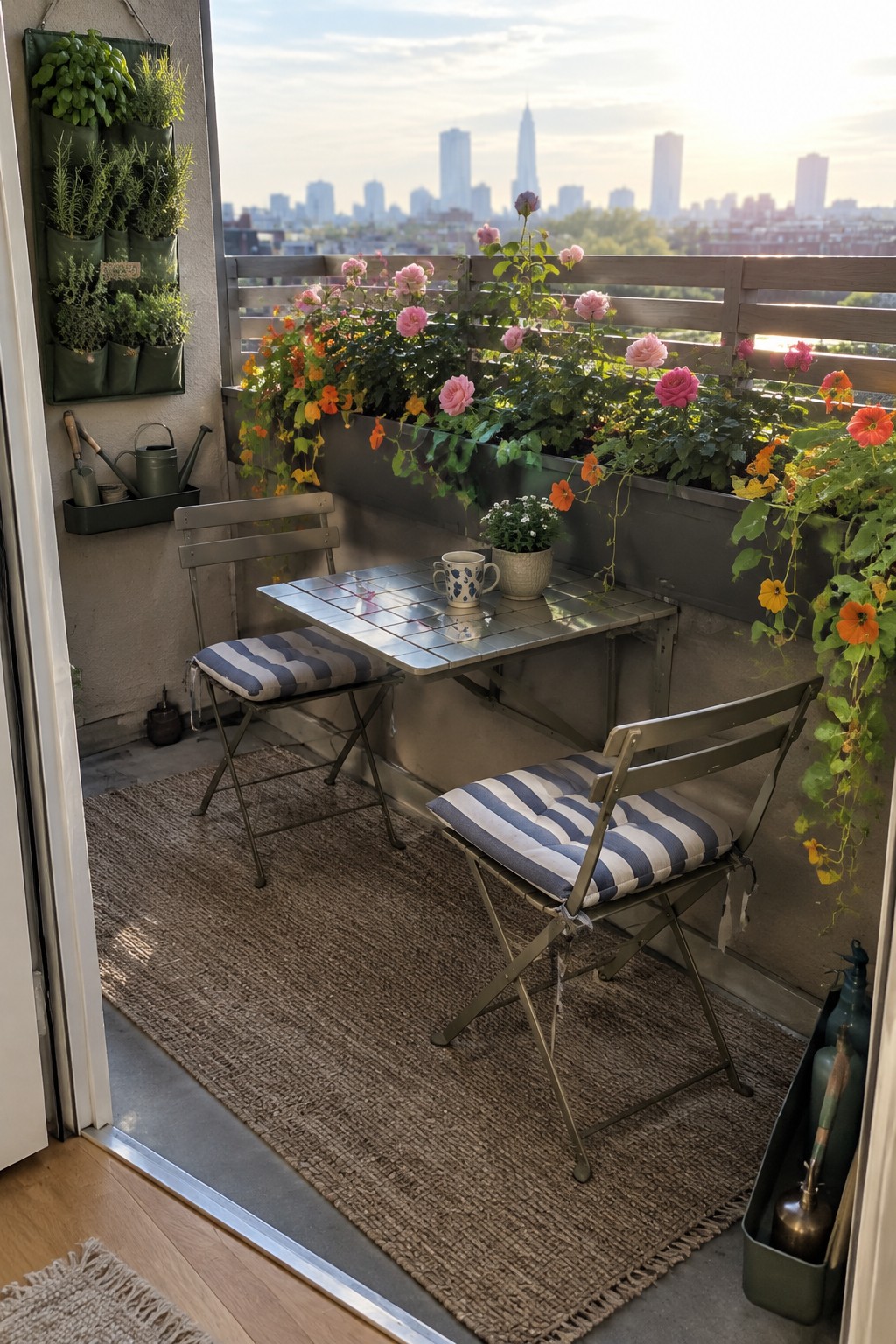
A long planter can hold several roses in a small outdoor space, giving them room to grow without taking over the balcony. This works especially well when the flowers can trail along the railing, where they are easy to enjoy and tend.
Choose compact or patio rose varieties, and make sure the planter has drainage holes and enough soil depth. Check how much sun the balcony gets before planting, since roses need several hours of direct sunlight to flower well.
Plant Roses Along a Poolside Border

A narrow planting bed beside a pool can make good use of space while keeping the water’s edge clear. Roses add color along the border, and low, rounded shrubs help keep the planting from sprawling onto the paving.
Choose compact, disease-resistant rose varieties and leave enough room for airflow and pruning. This setup suits a sunny poolside or patio, but avoid thorny varieties right beside a busy walkway.
Use Gravel to Separate Rose Beds From the Lawn
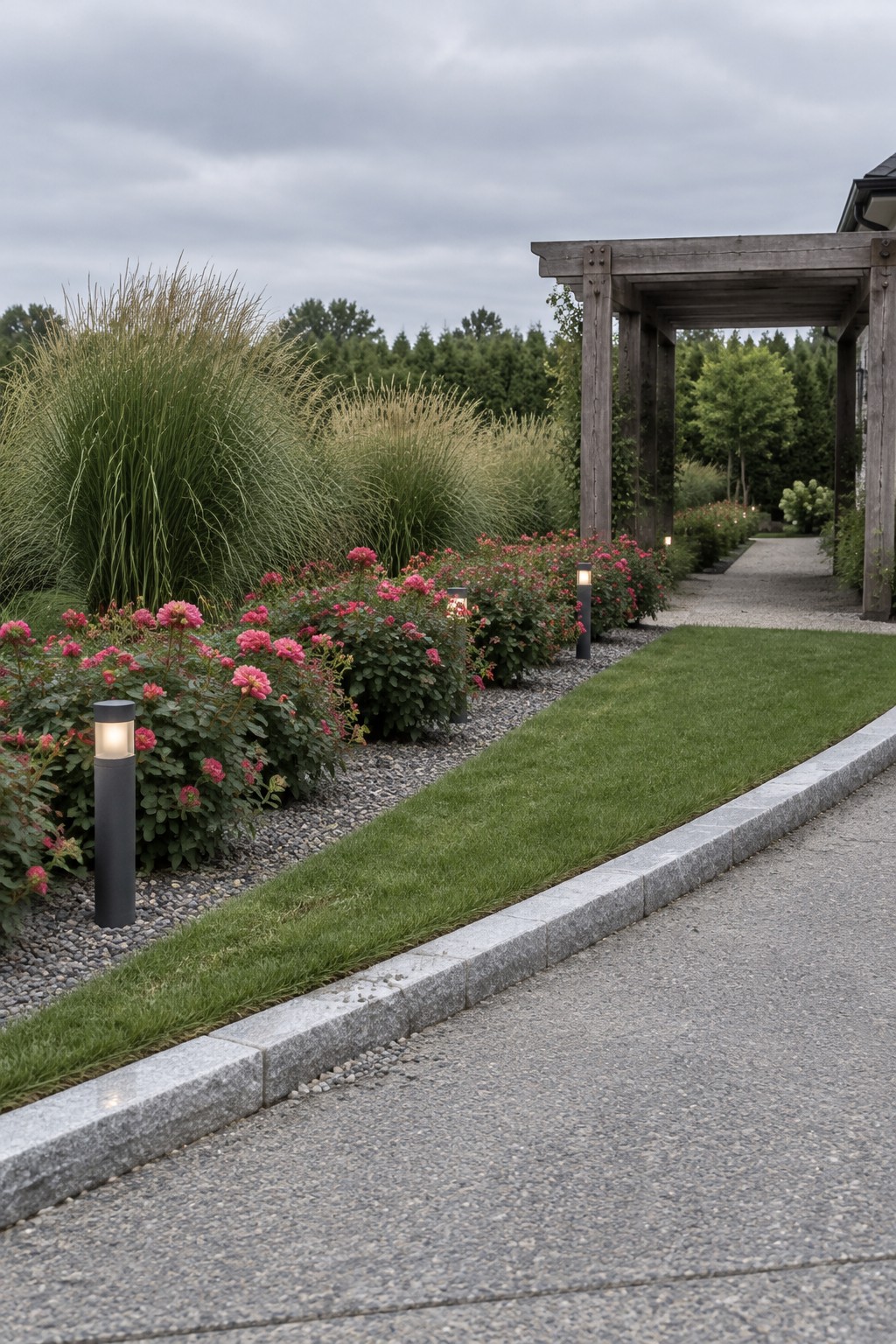
A gravel strip gives rose beds a tidy edge without needing a formal border. It also keeps the planting area distinct from the lawn, while leaving room for roses and taller grasses to grow in loose layers.
This approach works well beside a path or driveway, especially in a garden where you want clear edges but not much trimming. Choose gravel that suits your paving, and allow enough width to keep grass from creeping into the bed.
Use a Garden Gate to Mark the Rose Path

A simple gate can give a rose garden a clear entrance and make the path feel like its own part of the yard. It works especially well when flowers grow close to the walkway, since the entrance helps the planting feel planned rather than overgrown.
Set the gate where the path naturally begins, and leave enough room for easy access and routine pruning. A small, open metal gate suits a cottage-style garden without making the entry feel closed off.
Use Potted Roses to Define a Patio Edge

Large planters are a simple way to bring roses into a patio without planting a full garden bed. Set along the edge, they mark the boundary and keep the flowers easy to reach for watering and pruning.
Choose sturdy containers with drainage holes and enough room for the rose’s roots. This works well on paved patios where there is little planting space, though roses in pots may need more frequent watering than those in the ground.
Frequently Asked Questions
Q: Which roses are easiest to care for in a small garden?
A: Look for disease-resistant shrub or landscape roses that stay a manageable size. They usually need less pruning and fuss than traditional hybrid tea roses.
Q: How can I keep a rose bed from turning into a weeding chore?
A: Add a few inches of mulch around the roses, keeping it away from the stems. Ground covers or low-growing perennials can fill open spaces, too, so fewer weeds take hold.
Q: Do low-maintenance roses still need pruning?
A: Yes, but many only need a light trim in early spring to remove dead or damaged stems and tidy their shape. Check the tag for the variety’s specific pruning needs.
Q: Can I grow roses in a spot that gets only part-day sun?
A: Roses bloom most reliably with plenty of direct sun, so choose the sunniest spot you have. In a shadier area, expect fewer flowers and give the plants good airflow.
