

I often notice that a yard starts to feel scattered once the beds and paths lose their shape over a season or two.
A few layout adjustments can bring back a sense of order without needing to start from scratch.
I would test edging and storage spots first in my own space.
Clearing clutter and defining zones tends to matter more than adding extra features that might not hold up.
It is satisfying to step outside and find everything easier to navigate after those practical steps.
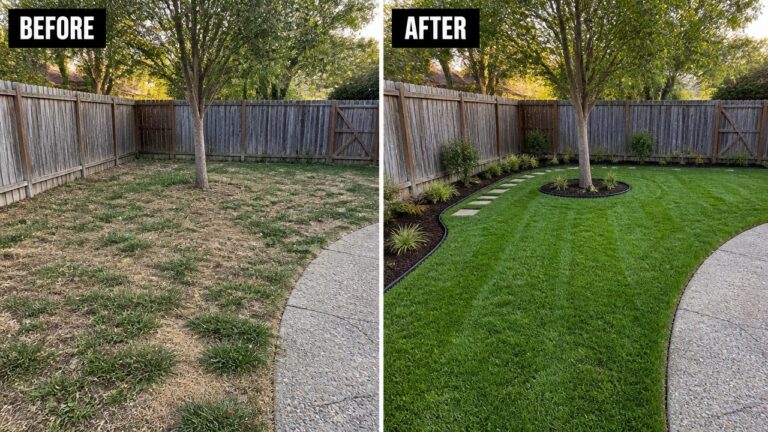
Add Structure To An Overgrown Backyard
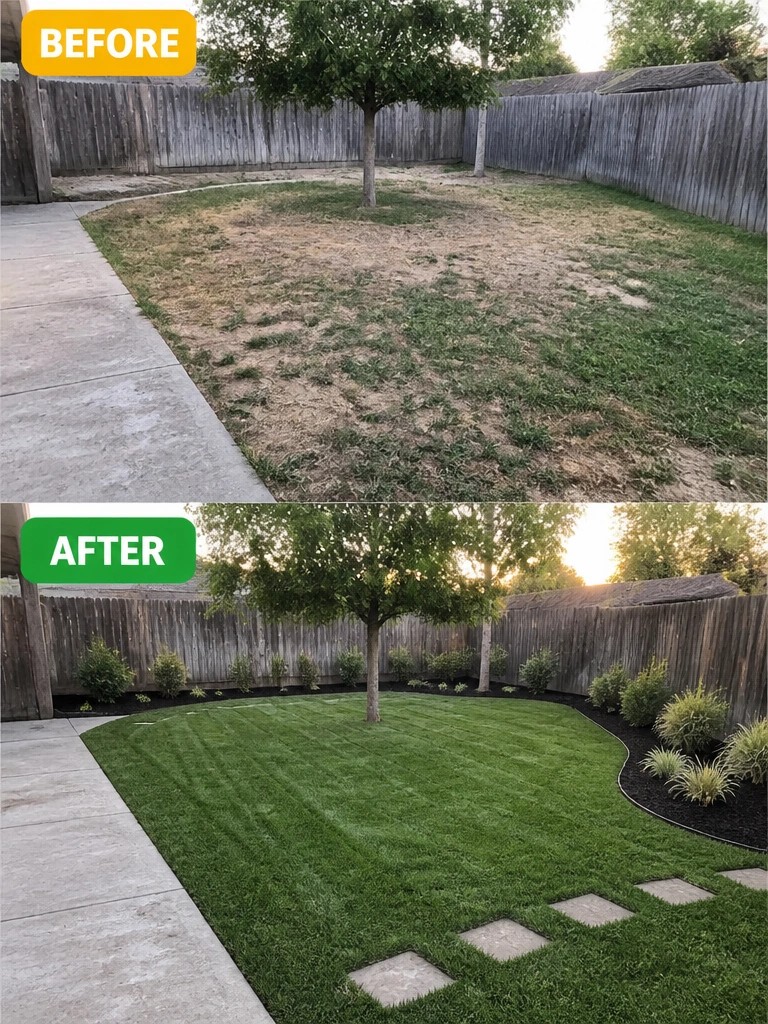
A patchy lawn often makes the whole yard feel unfinished. Here the before shows uneven grass and bare dirt, while the after replaces it with a full lawn and a clear border of shrubs along the fence. That one change gives the space a planned look instead of a neglected one.
This works best in backyards where the lawn is the main feature. Clear the old growth first, then focus on creating a clean edge with mulch and a few shrubs. The result stays simple to maintain and leaves room to walk or play without crowding the space.
Add Wall Storage To Organize Garden Tools

A messy pile of tools, hoses, and pots left on the ground makes any yard feel neglected and hard to use. Mounting a simple pegboard wall with hooks and a few shelves turns that same corner into a place where everything has a spot and stays easy to reach.
This approach works well in small yards or along a fence where floor space is limited. Start by clearing the clutter first, then build or buy a basic panel sized to fit your tools. It keeps the ground clear for walking and makes seasonal cleanup much faster.
Add Raised Beds To Organize A Narrow Side Yard

A narrow side yard often ends up as wasted space because it gets overgrown and hard to maintain. Adding raised beds creates clear boundaries, makes planting easier, and turns the area into something you can actually use instead of fighting weeds every season. The simple change from bare dirt and scattered growth to boxed beds with a central path keeps everything contained and looking intentional.
This approach works best along fences or between the house and property line where space is tight. Stick with straight beds that follow the existing walkway, and choose materials like cedar that hold up outdoors. Leave enough room in the middle for stepping stones so you can reach both sides without trampling the plants.
Turn A Bare Patio Into A Defined Seating Area
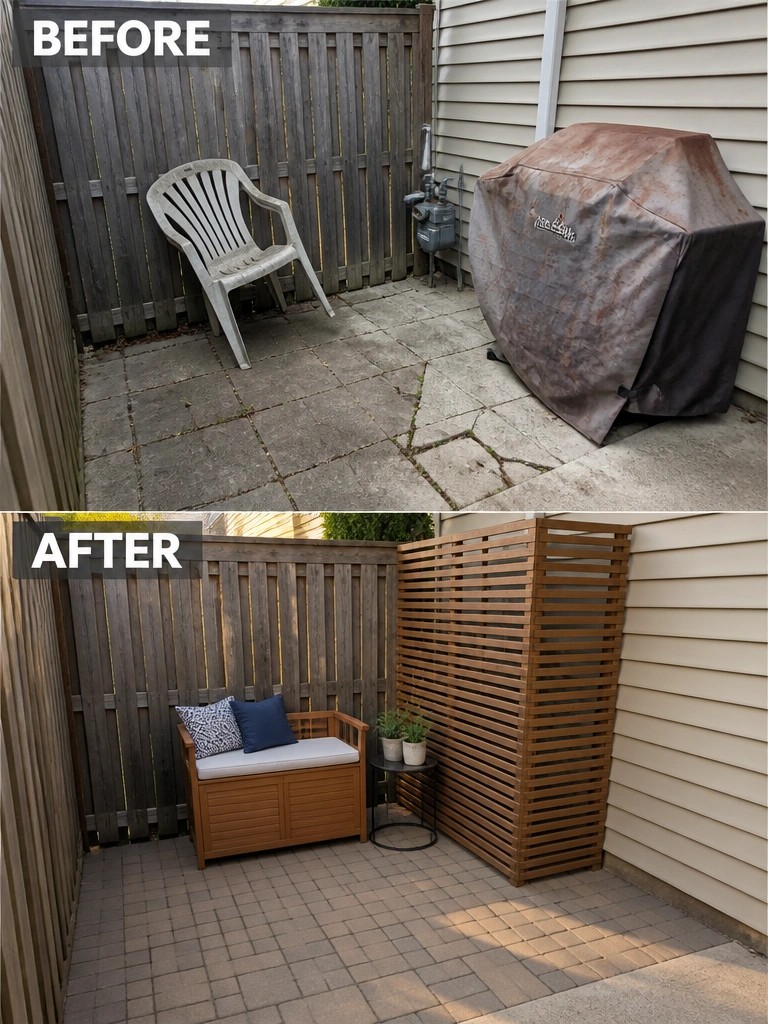
A plain patio often ends up as leftover space because there is no clear purpose or boundary. Adding a simple slatted screen gives the area structure and instantly separates it from the rest of the yard. In this case, the open concrete corner with just a lone chair became a small seating spot once the screen was added and a bench was placed against the fence.
This idea works best on small or awkward patios where you want to hide utilities or block a view without building a full enclosure. Keep the furniture to one or two pieces so the space still feels open, and choose a screen height that matches the scale of your seating. The same approach can tidy up a side yard or a back corner that currently feels like dead space.
Add Edging To Define Garden Beds
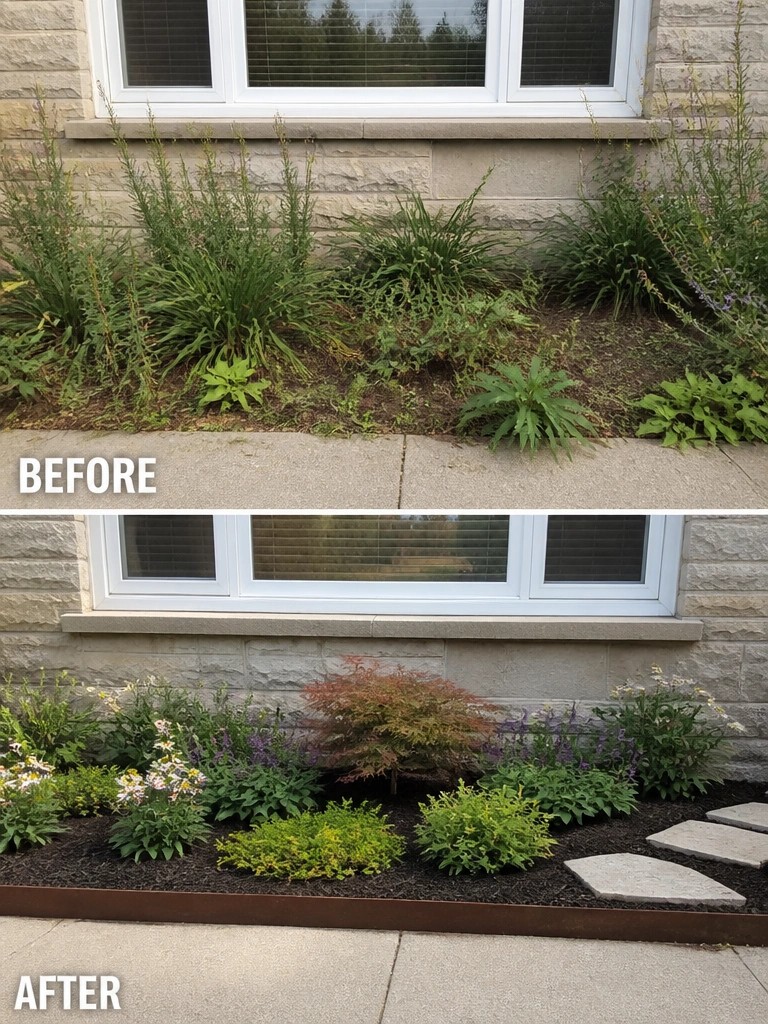
Adding a clean edge turns a messy strip of plants into an organized bed that stays in place. The metal border holds the mulch and keeps everything from spilling onto the walkway or up against the foundation.
This idea works best along the house where space is narrow and plants tend to wander. Clear out the worst of the overgrowth first, then install simple edging and a layer of mulch. The result feels planned without needing a full redesign.
Add Structure To A Sloped Yard With Terraced Beds
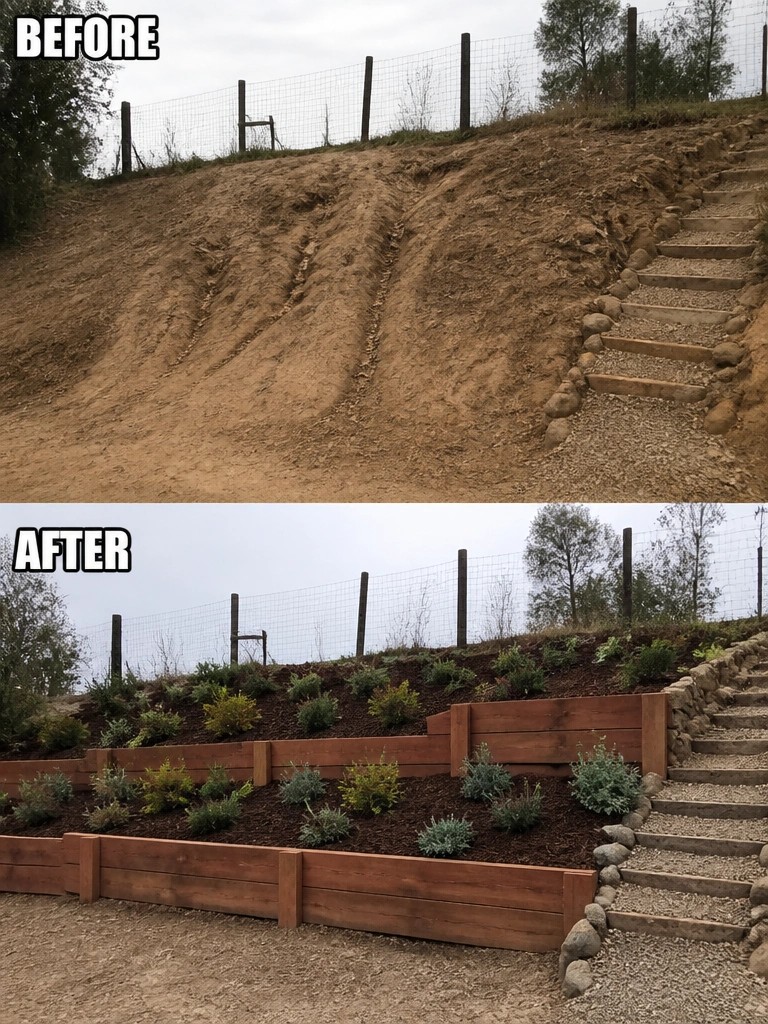
A bare hillside tends to erode and look unfinished over time. Adding a few levels of retaining walls creates flat garden beds that hold the soil and give the slope a clear shape.
This works best on moderate slopes where you want planting space without fighting runoff. Use simple wood walls, fill with mulch, and keep the plant choices low so the beds stay easy to maintain.
Add Structure With Planters Along The Boundary

A plain chain link fence often leaves the edge of a yard feeling unfinished. Swapping it for a simple panel fence and adding two long planters creates a clear line that organizes the space and gives plants room to grow upward.
This approach works well along sidewalks or shared property lines where you want some privacy without losing light. Start with sturdy planters that match the fence color, then choose a mix of upright and trailing plants so the bed fills in evenly over time. Keep the rest of the lawn open so the new border feels intentional rather than crowded.
Give A Bare Porch A Clear Purpose
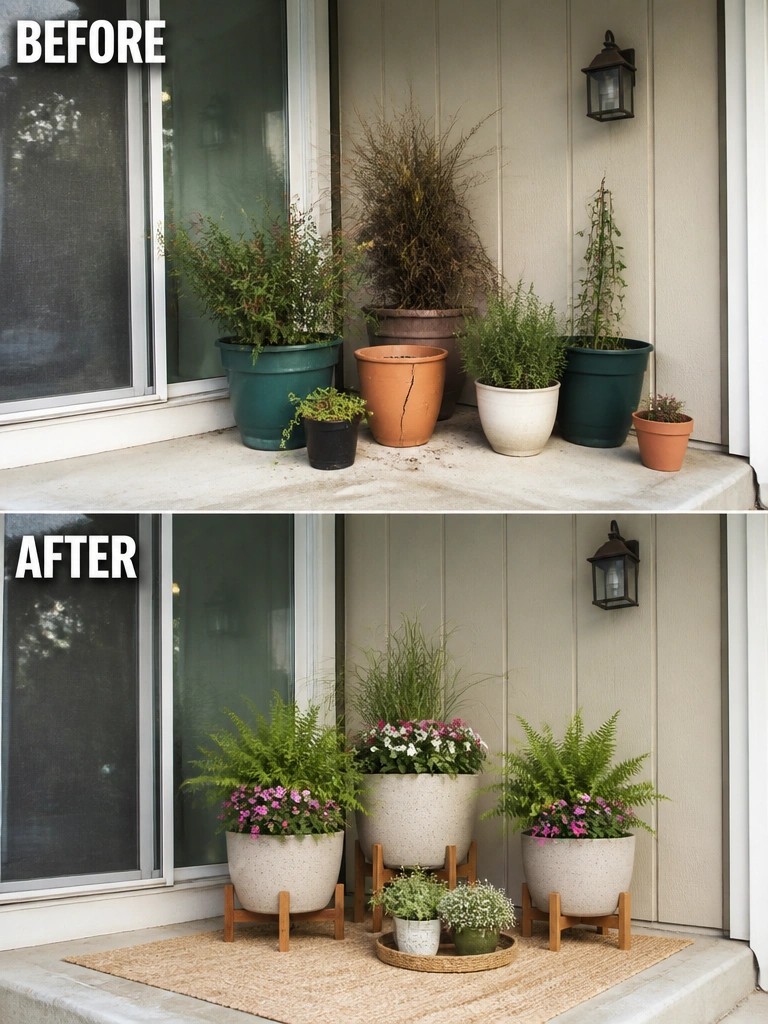
A porch often collects random pots over time until the space feels messy rather than useful. Switching to matching planters placed on simple stands and adding one rug underneath creates a clear, organized entry instead of scattered clutter.
This idea works well on small front porches where space is limited. Start with a few larger pots in the same finish, keep the number of plants modest, and choose pieces that can stay outside year-round. The rug helps mark the area so it feels like a deliberate spot rather than leftover concrete.
Give A Bare Backyard Clear Structure
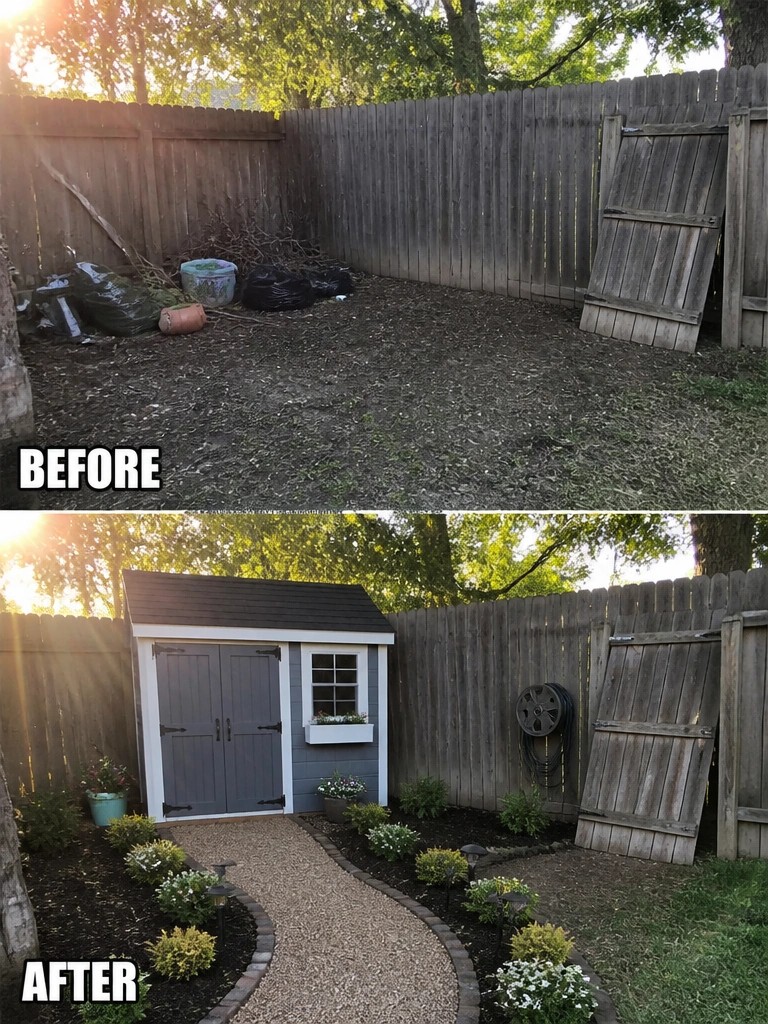
A messy yard with nothing but dirt and scattered debris feels unusable. Adding a simple path and a few planted beds gives the space shape right away. The gravel walkway leads the eye and makes it easy to walk through, while the beds keep plants from looking scattered.
This idea works well in small or medium yards where you want function without crowding the space. Start with a basic cleanup, then lay out the path and beds before adding plants or accessories. Keep the beds modest in size so there is still room to move around and mow if needed.
Add A Defined Path To Organize An Open Yard
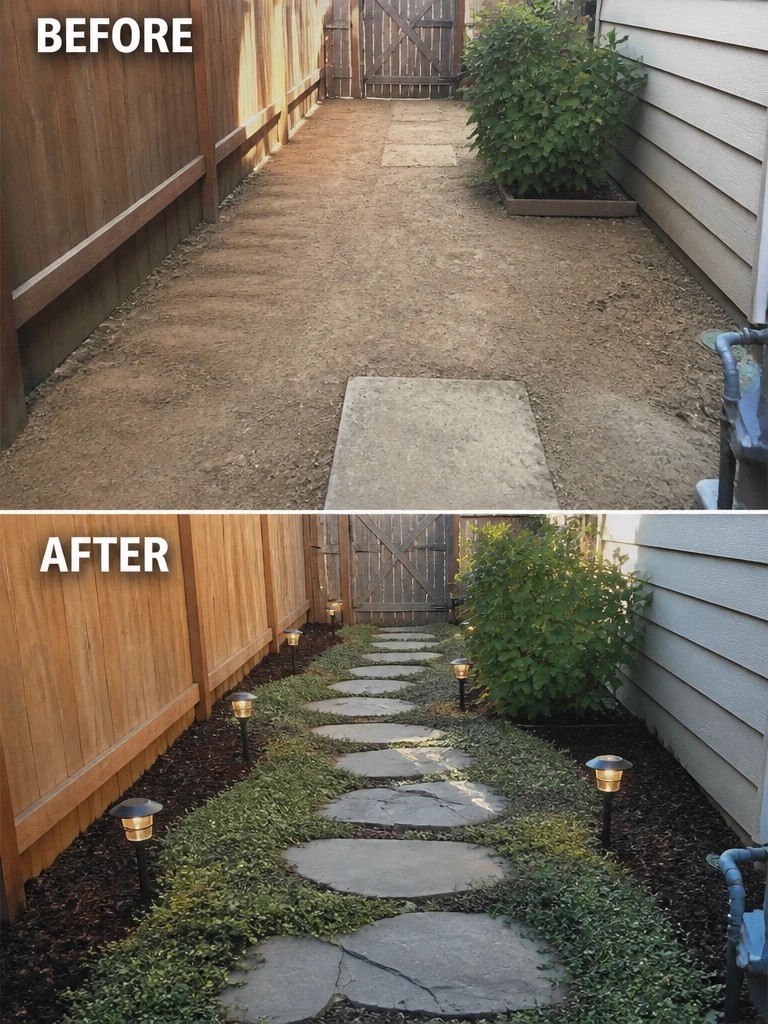
A bare dirt walkway makes even a small yard feel unfinished and hard to use. Laying down a row of stepping stones with a simple border of ground cover and a few lights turns the same space into something you can actually follow. The path gives the yard a clear route without needing a full redesign.
This idea works well in narrow side yards or back areas where you want to connect one spot to another. Start with the path itself before adding too many plants or extras. Keep the stones level and the edging low so the walkway stays practical for walking through.
Create A Defined Bed In A Narrow Side Yard
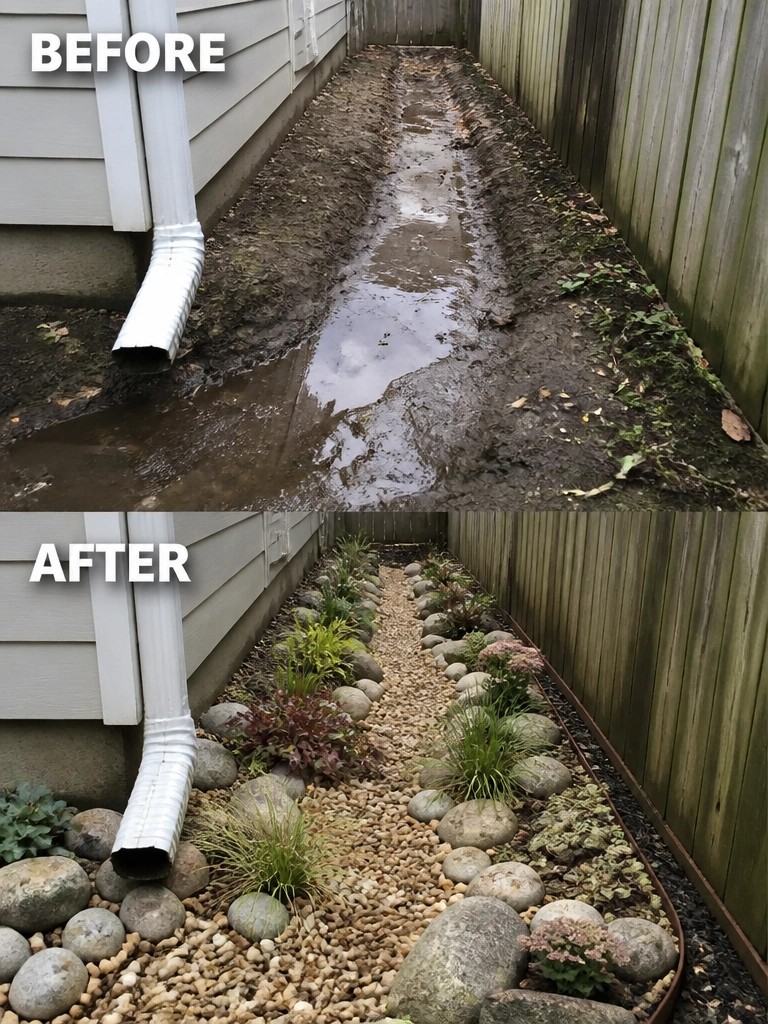
A muddy strip next to the house often collects water and looks messy because there is no clear edge or surface to manage runoff. Adding a simple border with gravel and larger rocks turns the same space into a planted bed that drains better and stays looking intentional.
This approach works well along the side of a house where space is tight. Start by setting a firm edge and filling the area with gravel before adding plants. It keeps the bed from spreading into the lawn or walkway and makes maintenance easier over time.
Shape An Overgrown Hedge Into A Clean Border
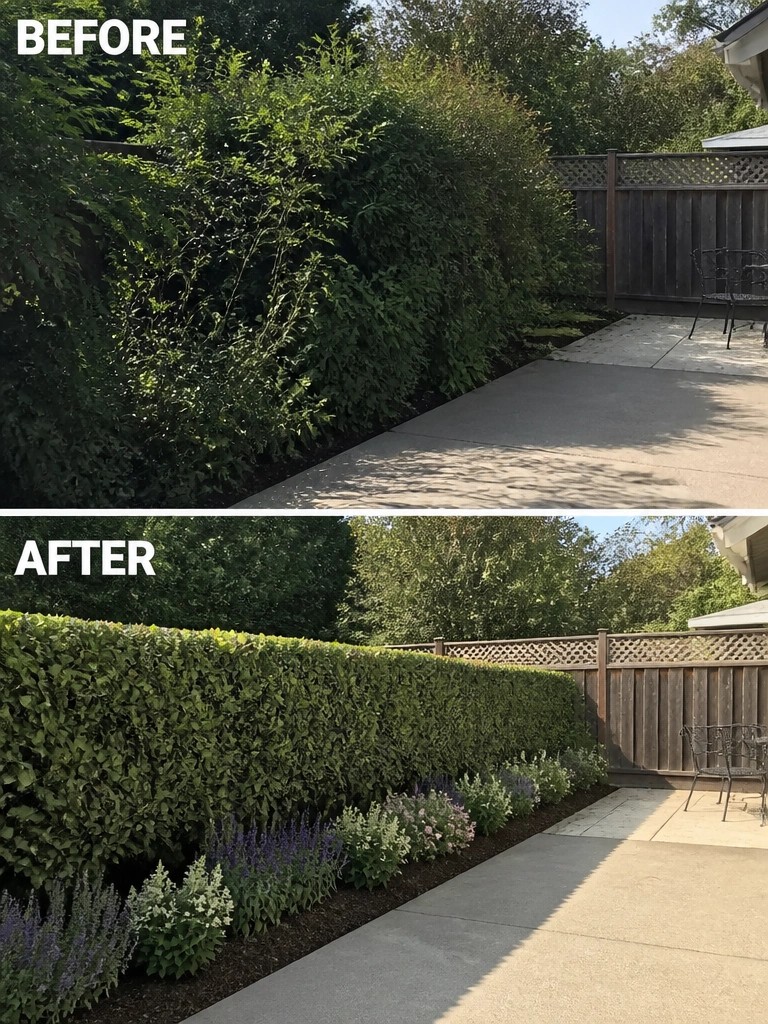
An overgrown hedge can quickly make a yard feel messy and closed in. Cutting it back to a straight, even line opens up the space and gives the whole border a finished look. Adding a row of lower plants in front then creates a simple layered effect that feels much more intentional than the original tangle of branches.
This approach works well along fences, patios, or property lines where you want some privacy without losing control of the planting. Focus first on getting the main hedge cut to a consistent height and depth. Once that shape is set, choose shorter perennials or shrubs that can fill in the front without crowding the walkway or patio edge.
Add Structure To An Overgrown Backyard

Clearing the weeds first and then adding raised beds gives an unruly yard a clear purpose. The wooden frames keep the soil contained while the simple trellises let vines grow upward instead of sprawling across the ground.
This idea works best in smaller yards where you want to grow food or flowers without constant weeding. Start with a few basic beds made from untreated lumber, place them on level ground, and add basic wire supports for tomatoes or beans. Leave enough space between the beds for easy walking and mowing.
Edge Your Garden Beds For A Cleaner Look
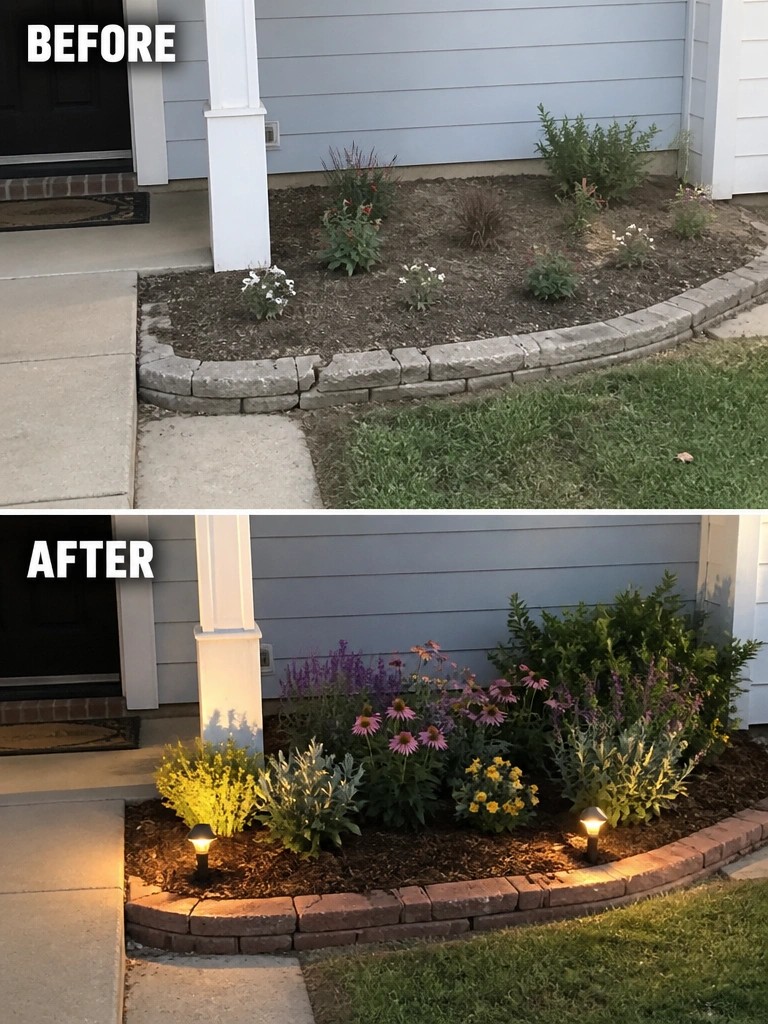
A messy garden bed often looks worse because it lacks a clear boundary. In this case the bed went from scattered plants in loose soil to a full planting with a solid brick edge and mulch. The edging gives the whole area shape and stops the lawn from creeping in.
This idea works best along the front of a house or beside a walkway where the bed is visible every day. Start by deciding on the shape you want, then install the edging before you add plants or lights. Keep the bed a consistent width so it stays easy to maintain.
Add Outdoor Storage To Organize The Yard
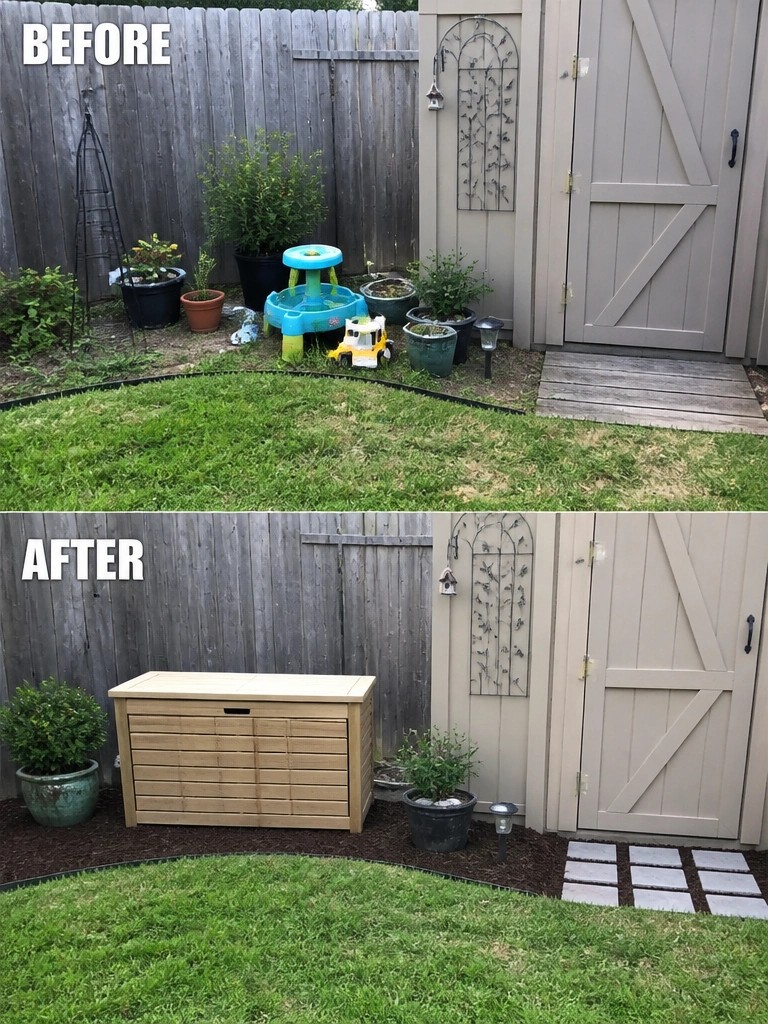
A common issue in small backyards is pots, toys, and tools ending up scattered across the grass. Placing a storage bench along the edge gives those items a single home and creates a clear border between the lawn and the planting area.
This approach works best when you start with a cleanup first. Choose a bench sized for the things you actually need to store, set it on a simple mulch bed, and keep the rest of the space open so the yard still feels usable rather than crowded.
Contain Garden Waste With Simple Bins
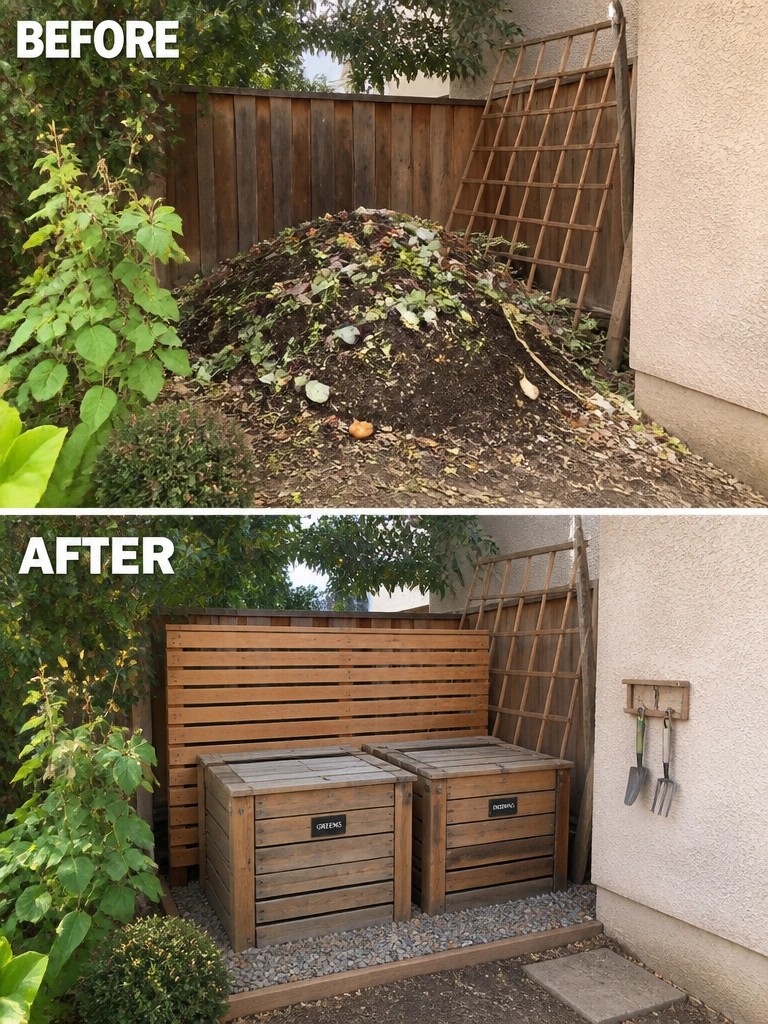
A loose pile of leaves and soil quickly turns into an eyesore and makes the yard feel neglected. Switching to two enclosed wooden bins keeps everything in one place, gives the area a cleaner edge, and turns waste into something you can actually use later.
This approach works best in small side yards or corners where space is tight. Start with a gravel base to stop mud, then choose bins that match your fence so the whole spot feels intentional rather than temporary.
Turn An Overgrown Yard Corner Into A Fire Pit Area
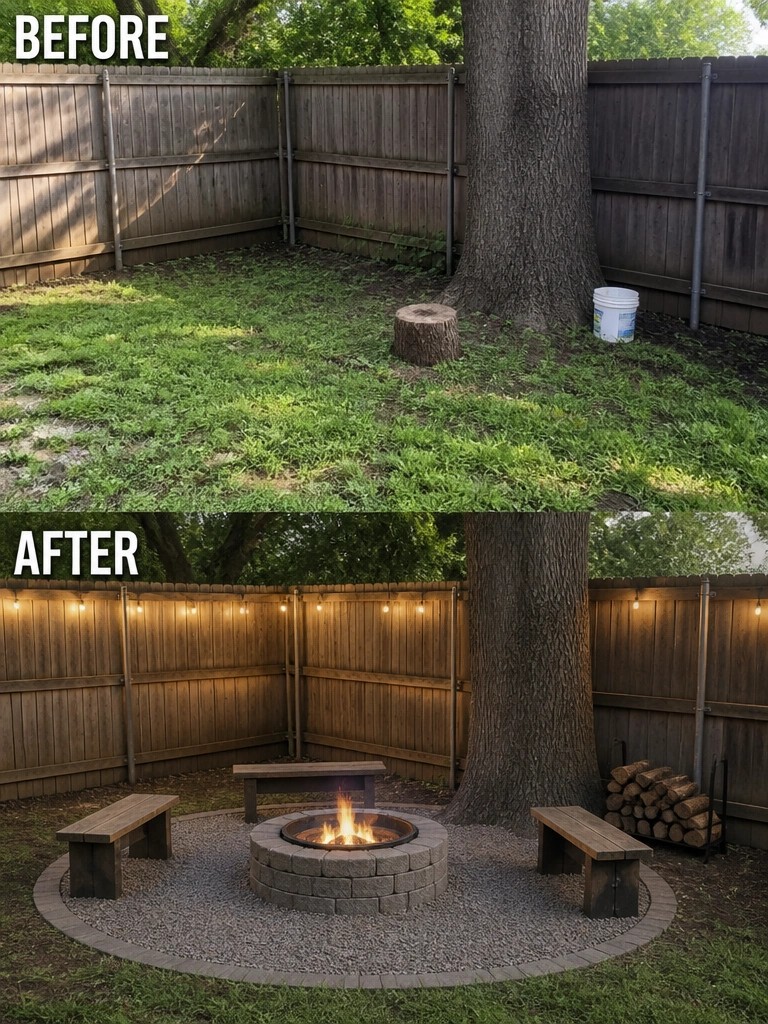
A simple gravel base and a few benches can turn an empty patch of grass into a place where people actually want to sit. The before photo shows a basic backyard with nothing but a tree and some weeds. Adding a stone fire pit, a bordered gravel circle, and three wooden benches gives the space a clear purpose without needing a big budget.
This idea works well in smaller yards where you want one usable spot rather than trying to landscape the whole area at once. Start with the hard surface first so the fire pit has a clean edge, then add seating that fits the scale of the space. String lights help in the evenings but are optional if you want to keep it even simpler.
Use Lighting To Make A Patio Feel Cozy
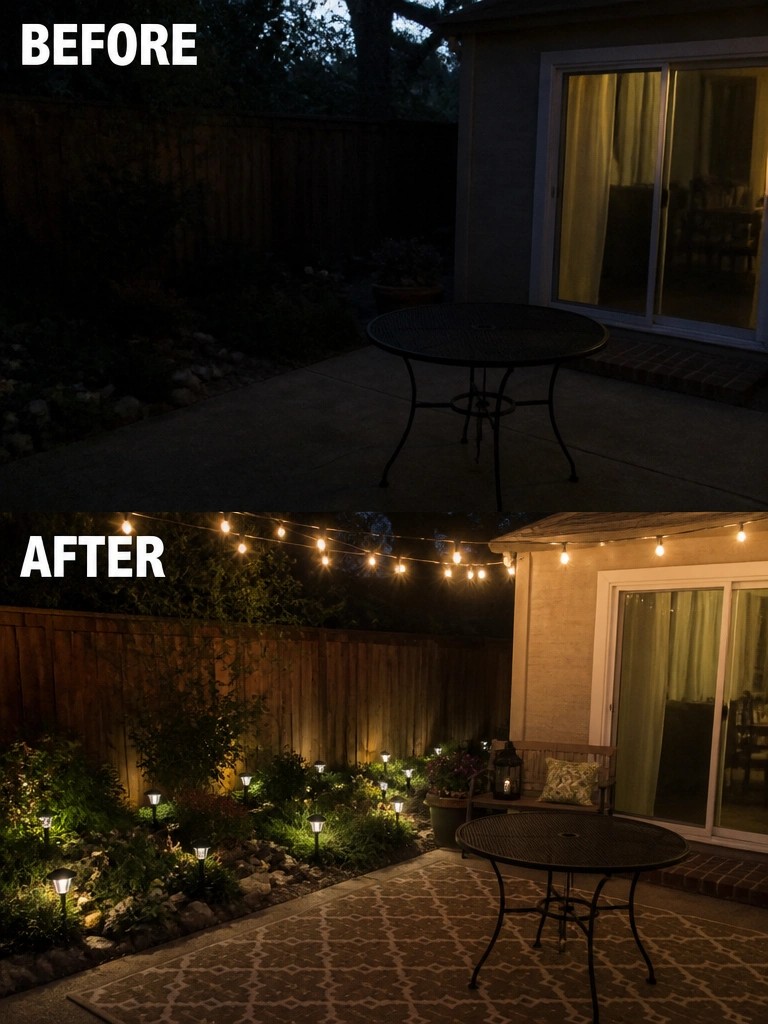
Adding simple outdoor lighting can turn a dark, underused patio into a space that feels inviting after sunset. In this case, string lights overhead and small path lights along the garden beds made the area feel much more welcoming without any major construction.
This idea works well on patios or decks that already have basic seating but lack warmth at night. Start with one string of lights across the main seating zone, then add a few low solar lights to mark paths or highlight planting. Keep the number of lights modest so the space stays comfortable rather than overly bright.
Define Foundation Beds With Mulch And Shrubs

The main change here is turning a messy strip of gravel and weeds into a clean, edged bed filled with mulch and evenly spaced shrubs. That simple switch gives the whole side of the house a much tidier look without any big construction.
This idea works well on any narrow strip next to the house where you want low maintenance. Start by laying down a solid edge, add fresh mulch to smother weeds, and plant a row of tough shrubs that can handle the sun exposure. Keep the plants spaced evenly so the bed stays neat as they grow.
Bring Order To A Messy Entry With Raised Beds
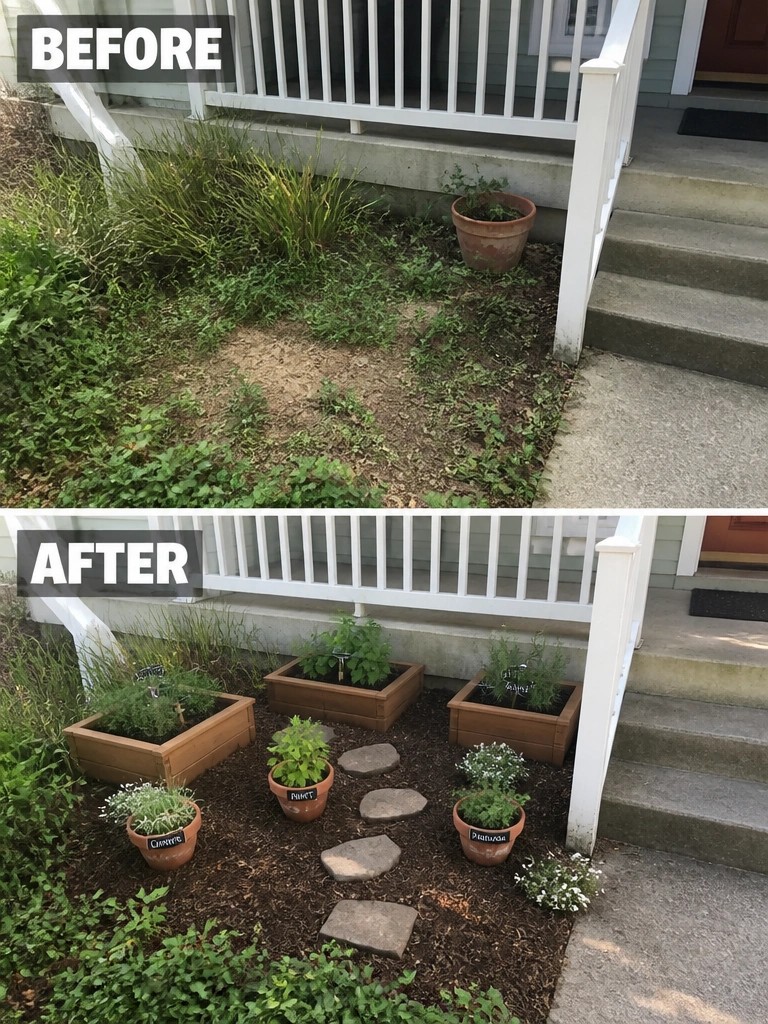
The space next to the front steps was mostly weeds and loose dirt with one lonely pot. Adding a few wooden raised beds and setting the smaller pots in a clear pattern turned the same spot into something that looks intentional instead of forgotten.
This approach works well on narrow strips of ground that sit right against the house. Start with the beds or large containers first so the area has shape, then fill in with smaller pots and a few stepping stones. Keep the number of plants modest so the walkway stays open and the beds do not crowd the steps.
Turn A Plain Fence Into A Vertical Garden Wall
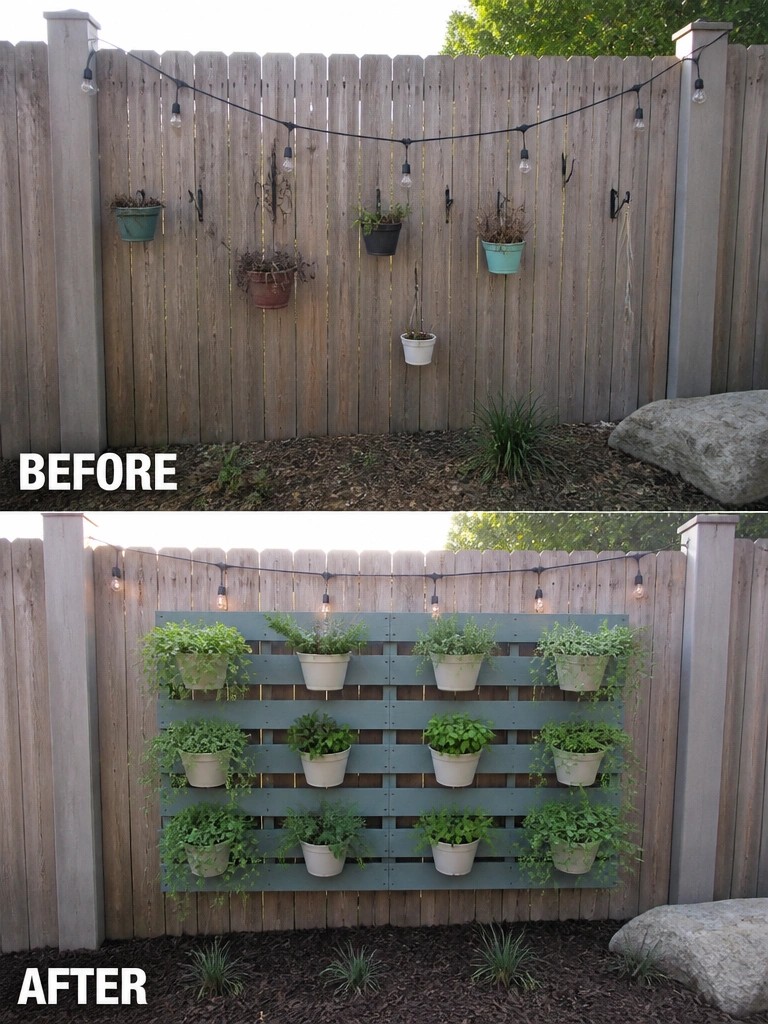
A fence with just a few scattered pots can feel unfinished and hard to manage. Adding a simple slatted panel painted in a soft color gives the plants a clear home and turns the whole area into something more intentional. The change from random hanging pots to neat rows makes the space look planned instead of thrown together.
This idea works well on any fence that faces a seating area or path. Start with a basic wood frame or pallet section, secure it firmly, and use lightweight pots that can handle weather. Keep the layout even so it stays easy to water and maintain over time.
Define A Garden Path With Mulched Planting Beds
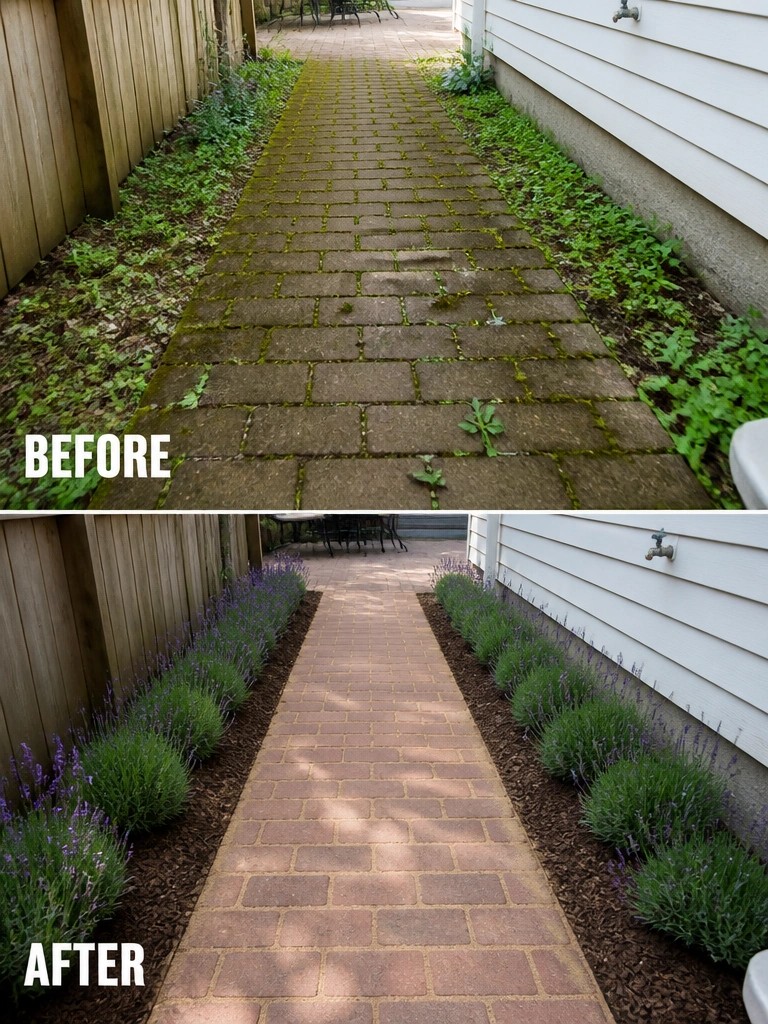
Clearing the weeds and moss first made the biggest difference here. Adding a simple border of mulch and repeating lavender plants on both sides turned a messy walkway into something that feels intentional and easy to maintain.
This idea works best in narrow side yards where the space is tight. Focus on one plant type, keep the beds the same width, and use mulch to stop weeds from coming back quickly. It keeps the path usable while making the whole area look planned rather than neglected.
Turn A Bare Patio Into A Functional Seating Area
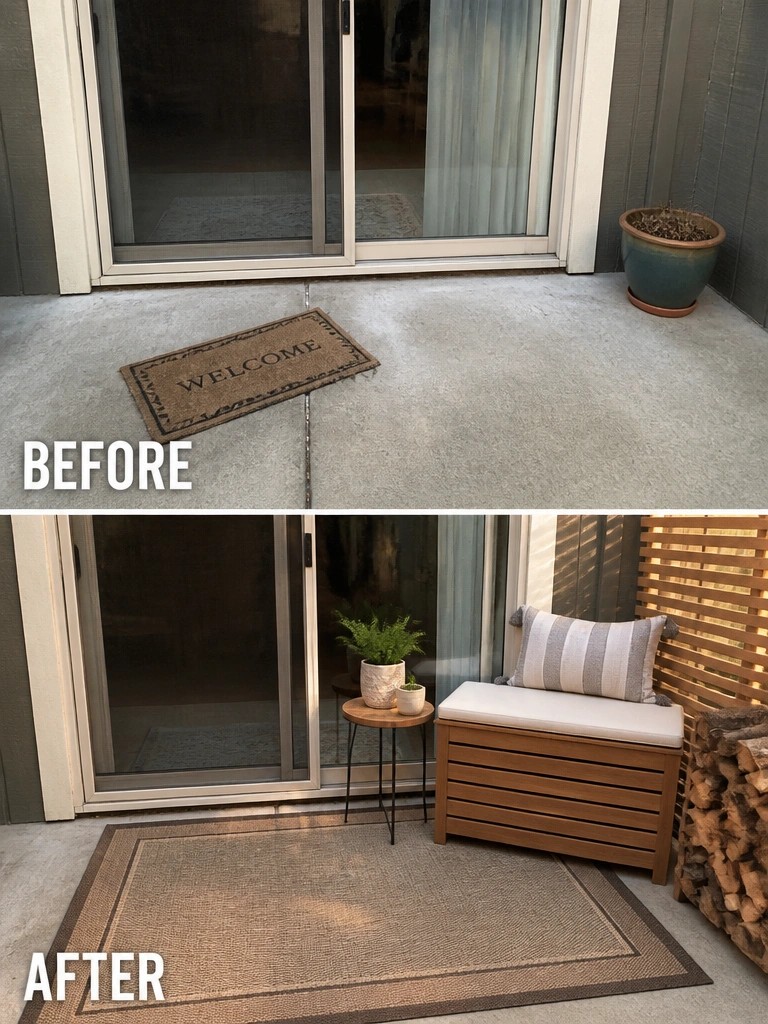
A plain concrete slab next to sliding doors rarely feels like a place to linger. Placing a large rug and a simple bench with storage creates a clear spot for sitting without crowding the space.
This idea works best on small porches or patios where you want one main use rather than many scattered items. Keep the furniture scale modest and leave room to walk around the seating area.
Frequently Asked Questions
Q: Where do I start if my yard feels completely out of control?
A: Pick the one spot you walk past every day and fix just that. Clear the clutter there first so you see progress right away. Then move to the next area once this one stays neat.
Q: How do I store tools without building a whole shed?
A: Lean a few sturdy hooks on the fence or garage wall and sort tools by how often you grab them. Put the daily ones within easy reach and tuck the rest behind. Check the hooks every couple weeks to keep things from piling up on the ground.
Q: What if my kids and dog keep knocking things over?
A: Use low bins with lids for loose balls and toys so they slide back in fast. Place heavier pots along the edges to block paths they usually cut through. A quick reset at the end of each play session keeps the yard from turning messy again.
Q: Do these ideas cost much to pull off?
A: Grab free crates from stores and old boards from the garage to make dividers. Focus on one cheap fix at a time instead of buying everything upfront.
