


I often notice that a yard starts to feel a bit lost when the planting has no clear lines or layers to hold it together.
Taking the time to fix the basic layout first, whether that means edging a lawn or adding a simple path, usually makes everything else fall into place more easily.
In my own yard I found that clearing out the mess before choosing new plants saved a lot of second guessing later on.
Some of the ideas here focus on steady improvements like better privacy or a more workable lawn shape that develop over a season or two.
Small adjustments tend to matter most.
Shape The Front Entry With A Curved Path And Border Beds
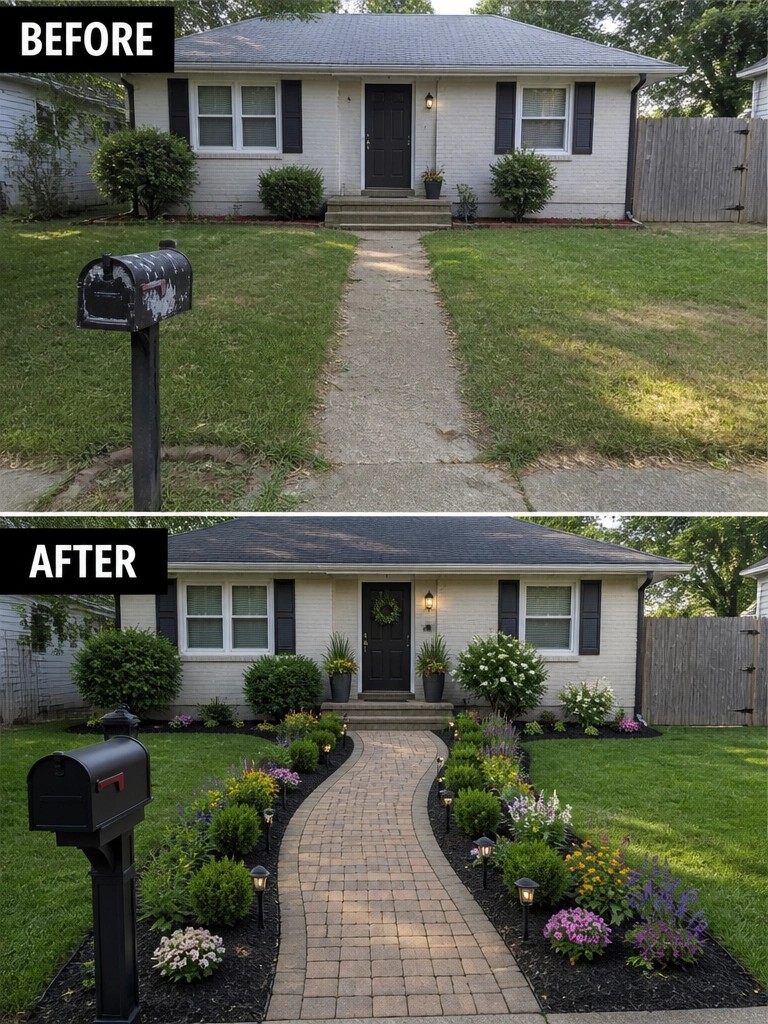
A straight concrete path often leaves the front yard looking plain and unfinished. Switching to a curved paver walkway with planted beds along both sides gives the entry a clear route and makes the whole space feel more planned.
This idea works best on small to medium front yards where the lawn is still the main view. Keep the beds a consistent width so mowing stays simple, and use the path width to make sure two people can walk side by side without stepping on the plants.
Add Structure To An Overgrown Backyard
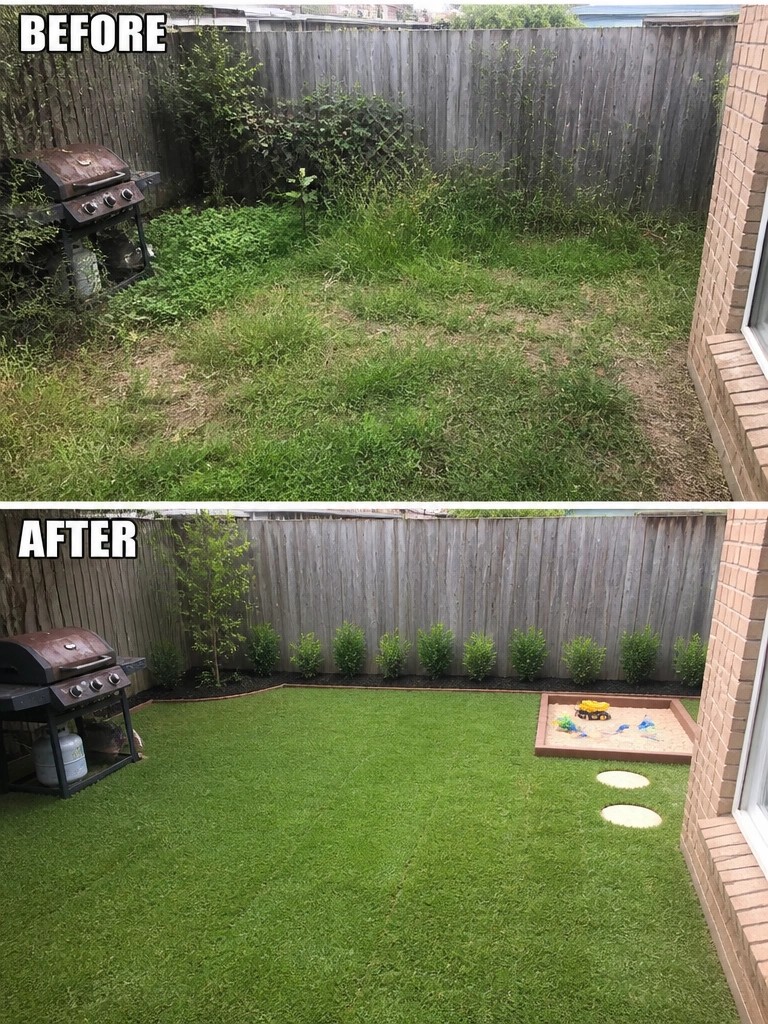
The biggest change here comes from clearing the patchy, overgrown grass and replacing it with a clean lawn surface. Adding a simple row of shrubs along the fence gives the whole space clear edges and makes it feel more intentional instead of just empty yard space.
This approach works well in small or narrow backyards where the goal is to create usable lawn without crowding it with too many features. Start with the lawn and basic planting first. Once the structure is in place, you can add smaller elements like a play area or stepping stones without the space feeling scattered.
Add Raised Beds To A Narrow Side Yard
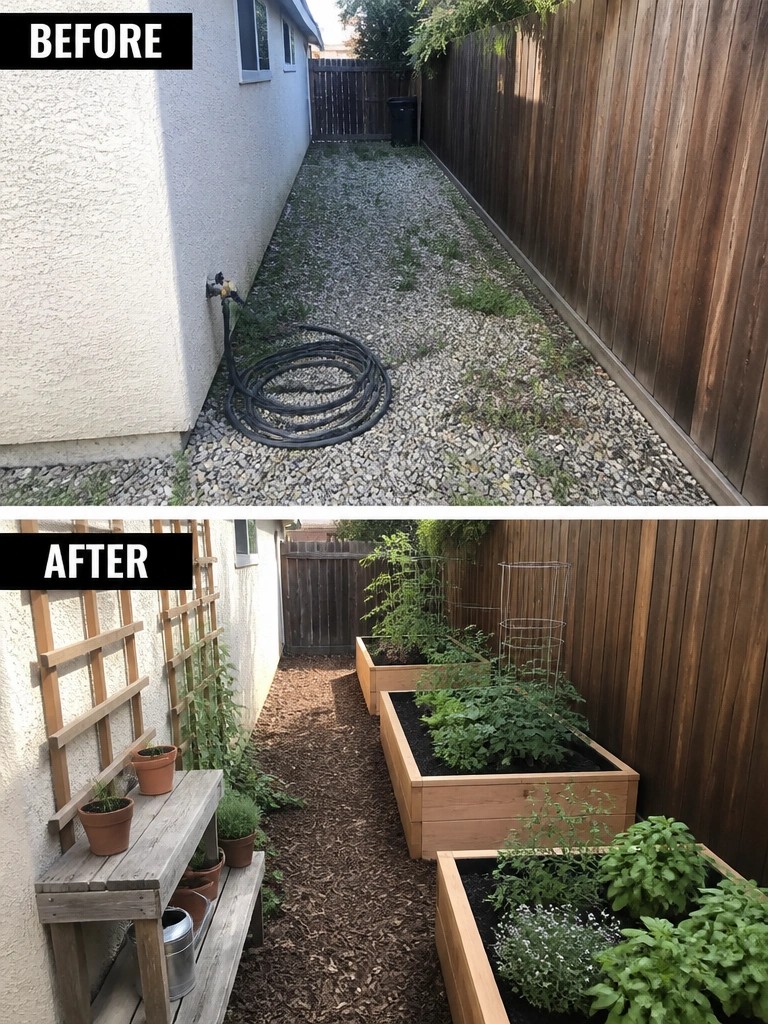
A narrow strip of gravel between the house and fence rarely gets used for much. Raised beds solve that by giving the space clear boundaries and turning it into an actual growing area instead of a weedy path.
This idea works best in tight side yards where digging is difficult. Keep the beds a reasonable width so you can reach across them, and use the remaining ground for a simple mulch path. A small bench or a few pots along the house wall can add extra planting room without crowding the walkway.
Add Defined Garden Beds To Give The Yard Structure

The front yard looked scattered before, with hostas sitting in the middle of patchy grass and no clear edge around the big tree. Adding a simple stone border and mulch turned the same area into a planted circle that feels intentional instead of leftover space.
This approach works well on small front lawns where the tree already takes up room. Start with the edging and mulch first, then fill in with shade plants that can handle the roots. It keeps the lawn looking neat without needing a full redesign.
Turn A Bare Patio Into A Usable Outdoor Room

A plain concrete slab with just a couple of chairs feels like wasted space. Adding a rug, a small dining set, string lights, and a fire pit gives the area a clear purpose and makes it comfortable to use after dark.
This approach works on any small backyard or side patio that gets some evening use. Keep the furniture scale modest, stick to one rug to mark the sitting zone, and test the lights before adding more. Leave enough open space around the edges so the area still feels open rather than crowded.
Add Structure To A Bare Front Yard
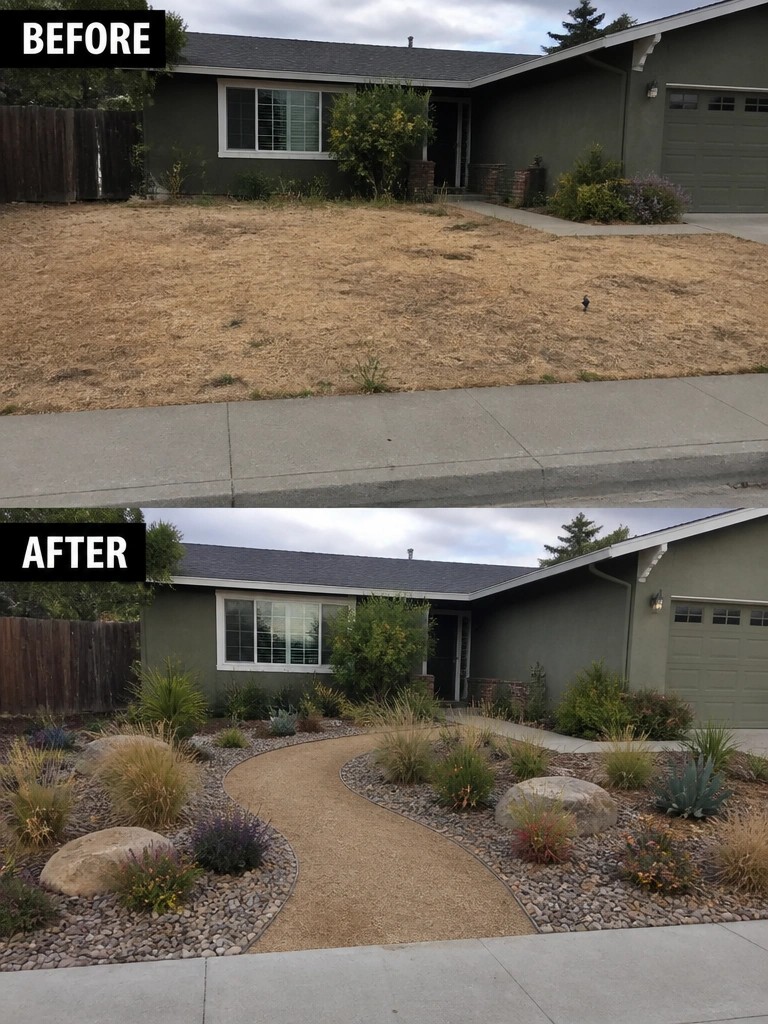
A flat, empty lawn often looks unfinished because there is nothing to guide the eye or mark where the space begins and ends. Adding a simple path with bordered planting areas gives the yard a clear layout that feels intentional instead of leftover.
This works best in front yards that sit right against the sidewalk, where a path can lead visitors toward the door while leaving room for low planting on either side. Start with the path first, then fill the beds with a few repeated plant types and some larger rocks so the whole area stays easy to maintain.
Add Structure To A Fence Line With Trellises And Lights

A long fence with nothing but dirt along the base often looks unfinished. Adding a few trellises, some evergreen shrubs, and a row of low lights turns that same stretch into a clear garden border. The vines soften the wood while the shrubs give the line weight and the lights keep it useful after dark.
This idea works best in backyards where the fence is the main boundary. Start with a clean mulch bed so the planting looks intentional instead of scattered. Repeat the same trellis style and a simple evergreen shape along the full length to keep the look calm instead of busy.
Add Planters To Give A Front Porch A Finished Look

A bare porch often looks unfinished even when it is clean. In this case the before photo shows a few scattered pots and a basic mat that did not pull the space together. The after photo shows how two large matching planters filled with flowers and greenery, plus a simple bordered rug, give the entry a clear sense of purpose.
This idea works well on any front porch that feels empty or uneven. Start with two or three pots in the same color and size, then add plants that bloom at different times so the look stays fresh. Keep the rest of the styling light so there is still room to walk through.
Turn A Steep Slope Into Terraced Garden Beds

A bare, sliding hillside is hard to use and hard to maintain. Adding wooden retaining walls creates flat planting areas that hold soil in place and give you room to grow. The new stairs also make the space reachable instead of just a view from above.
This approach works best on yards where grass or simple planting never quite takes hold. Start with the structure first, then fill the beds with gravel and plants that can handle the slope and sun. Keep the beds narrow enough that you can reach everything without fighting the grade.
Turn A Bare Backyard Into A Defined Outdoor Room
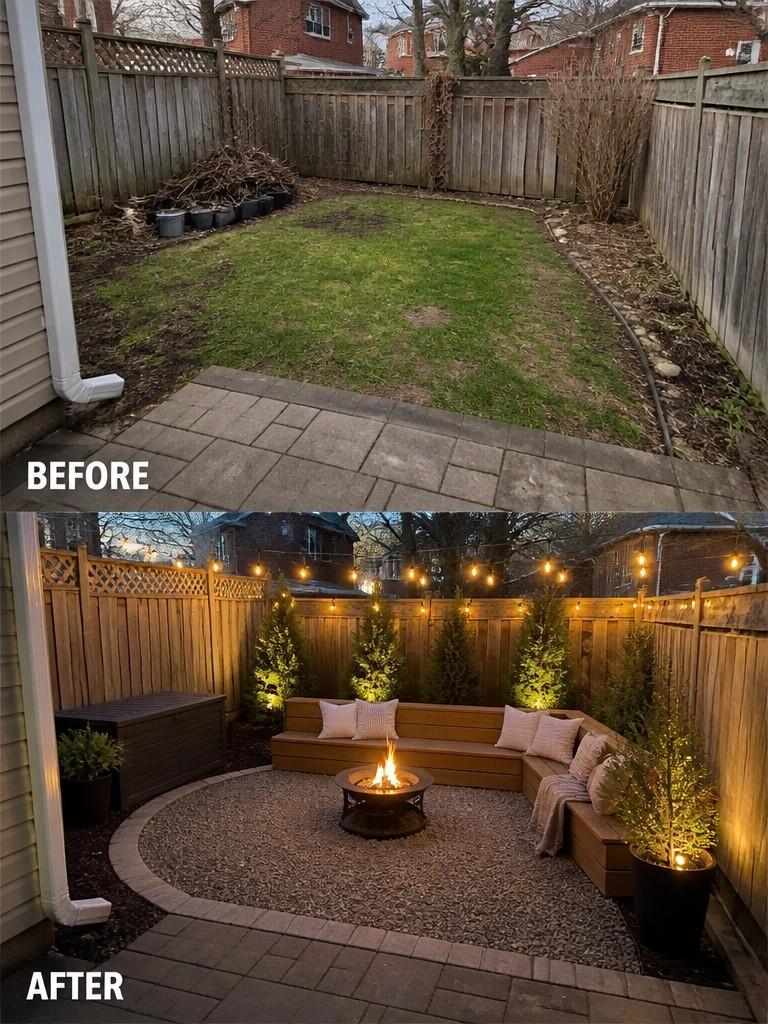
A simple grass patch often sits unused because nothing marks where to sit or gather. Adding a gravel base, a curved bench, and a central fire pit gives the space a clear purpose and makes it feel like an actual room outside.
This approach works well in smaller yards where you need to keep movement easy around the edges. Start with the hard surface and seating first, then add a few lights and plants so the area stays comfortable after dark without crowding the space.
Define Lawn Edges With Simple Garden Borders

A plain stretch of grass meeting the driveway often looks unfinished. Adding a low brick border turns that line into a raised bed that can hold flowers, mulch, and a few lights. The change gives the front yard a clear shape without needing a full redesign.
This works best along driveways or walkways on smaller lots. Lay the edging first so the curve feels natural, then choose plants that stay mostly low and repeat a few colors. Keep the bed narrow enough that it does not crowd the walking area or block the view from the street.
Add Structure To An Overgrown Pond
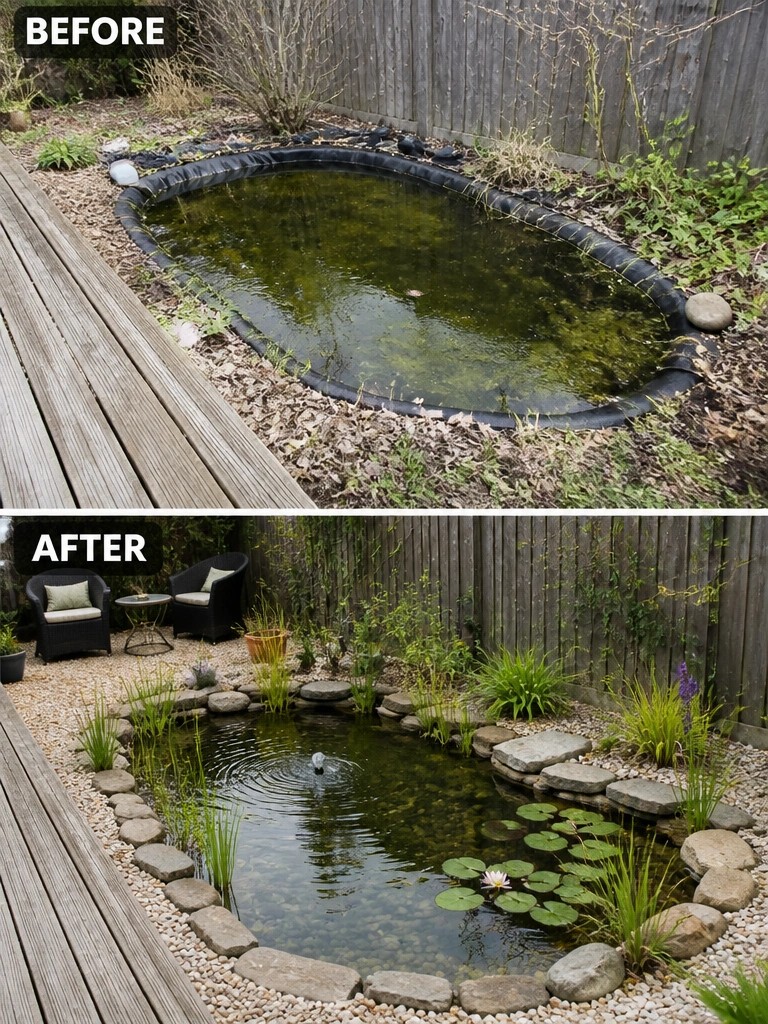
Many small ponds lose their shape after a few years. Leaves pile up, the water turns green, and the edges fade into the surrounding dirt and weeds.
A simple stone border and fresh gravel can fix that quickly. The stones give the pond a clear outline while the gravel keeps the surrounding area neat and easy to maintain. This approach works best in modest backyards where you want the water feature to stand out without crowding the space with extra furniture or decor.
Add Structure To An Overgrown Border

A long strip along a fence often ends up as a weedy mess because there is no clear edge or plan. The simple fix shown here is to lay down mulch and plant in groups so the space reads as one intentional bed instead of random growth.
This approach works well on any narrow side yard or back fence line where you want low maintenance and a tidy look. Start by clearing the weeds and adding a defined edge, then choose a mix of heights and bloom times so the bed stays interesting without constant replanting.
Add Structure To An Overgrown Front Yard With Low Hedges And A Path
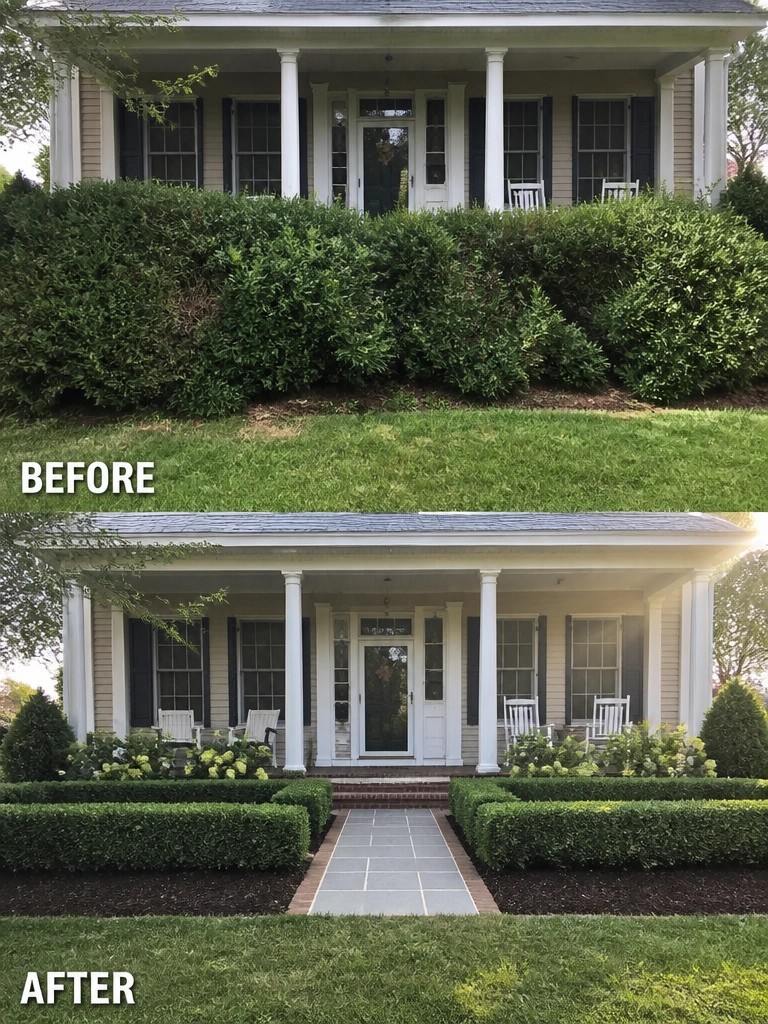
The tall, wild hedge across the front hid the house and made the entrance feel closed off. Replacing it with low, trimmed borders and adding a simple stone path opened everything up and gave the yard a clear layout.
This idea works best on older homes where planting has been left to grow unchecked. Remove the biggest overgrown sections first, then lay out straight beds along the house and run a path from the lawn to the door. Keep the new plants low so the windows stay visible.
Turn An Empty Deck Into A Seating Area

A deck right next to a pool often looks unfinished when it only has one or two stray pieces of furniture. Here the space went from holding just a single lounge chair to having two chairs with cushions and a few large pots that make the area feel ready to use.
The same idea works on most decks and patios that feel too open. Keep the furniture simple and weatherproof, place the pieces so they face the pool or each other, and use tall plants in pots to add some privacy without crowding the space.
Turn A Bare Patio Into A Usable Seating Area
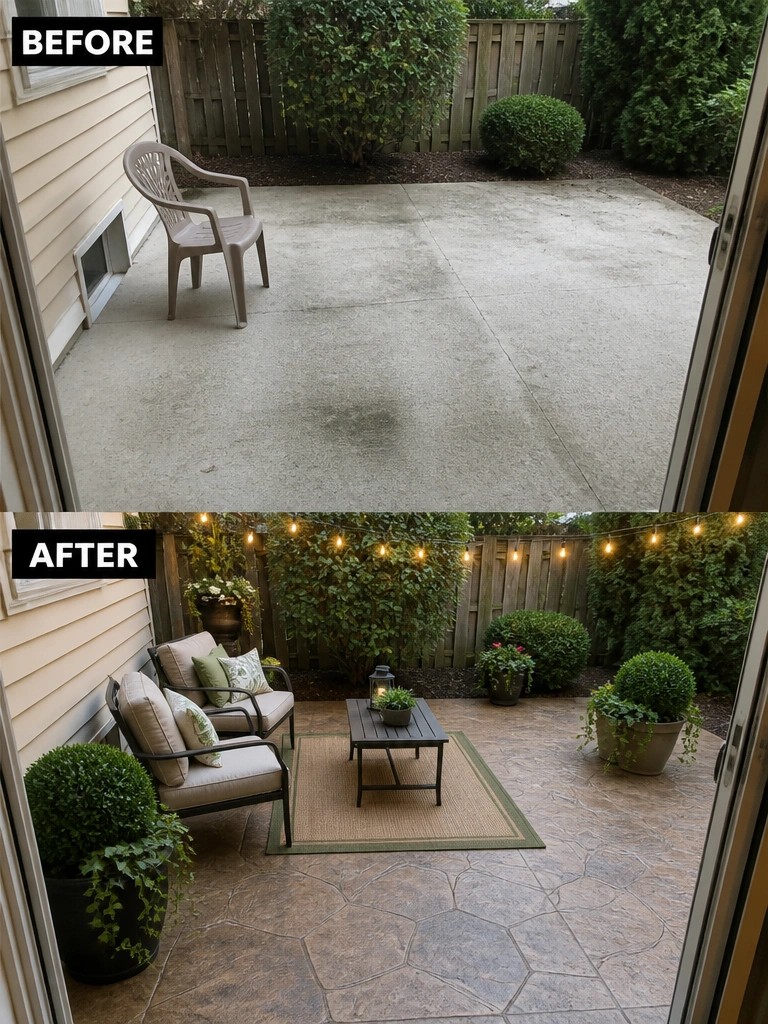
A plain concrete slab often sits unused because it lacks any sense of purpose. Adding a rug, a small table, and a couple of chairs turns the same surface into a place where people actually want to sit.
This idea works on any flat outdoor area that already has decent access from the house. Keep the furniture simple and weatherproof, place the rug first to mark the seating zone, and add one string of lights if you plan to use the space after dark. Avoid crowding the area so there is still room to walk around the chairs.
Add Pavers To Give A Front Yard Clear Structure
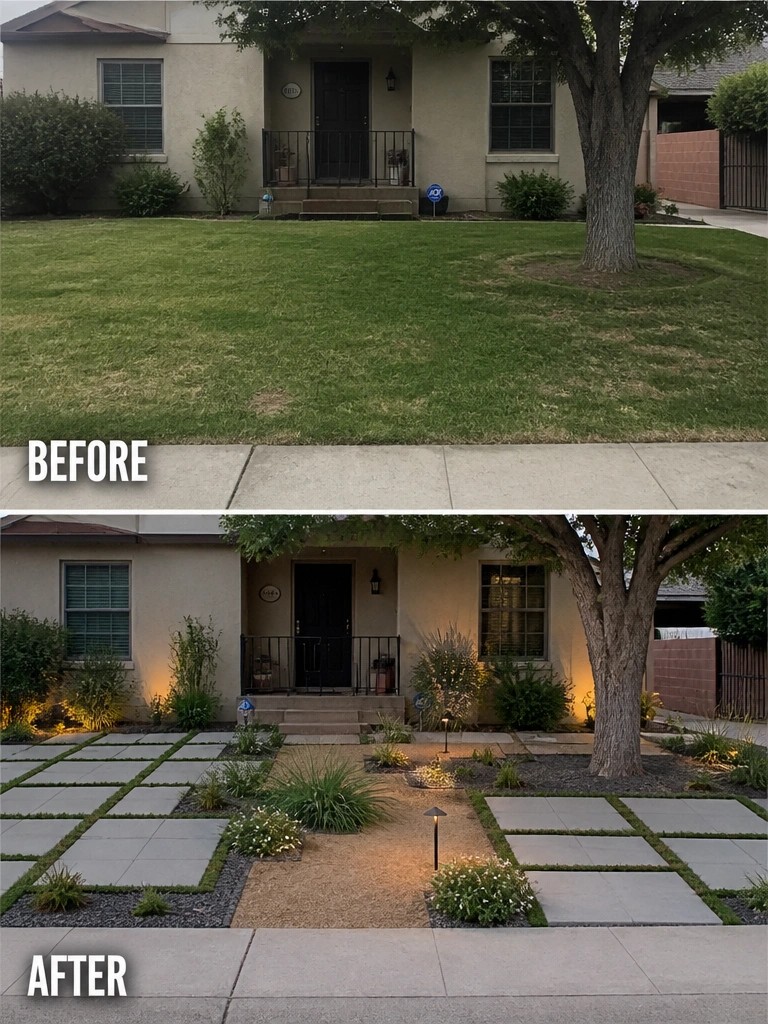
A wide lawn often looks unfinished when there is nothing to break it up. Adding a grid of pavers with gravel between them turns the same space into something that feels planned rather than empty. The plants now sit in defined spots instead of floating along the edges.
This idea works best on front yards that are mostly grass and need a simple way to look more finished. Lay the pavers first to set the pattern, then add gravel and a few planted areas. It cuts down on lawn care while still leaving room to walk through the space.
Use Pots And A Vertical Planter To Clean Up A Backyard Corner

A messy corner with stacked pots and weeds can quickly feel like wasted space. The simple fix here was moving the pots into a clear layout, labeling the herbs, and adding a basic pallet planter on the fence. The gravel on the ground finished the job by giving the area a tidy base instead of bare dirt.
This approach works well in small yards where you want fresh herbs without building big beds. Start with a few reliable plants like basil and rosemary, keep the number of pots manageable, and use the fence for extra growing room. It keeps the space practical and easy to maintain without crowding the area.
Create A Flower Border Along The Sidewalk
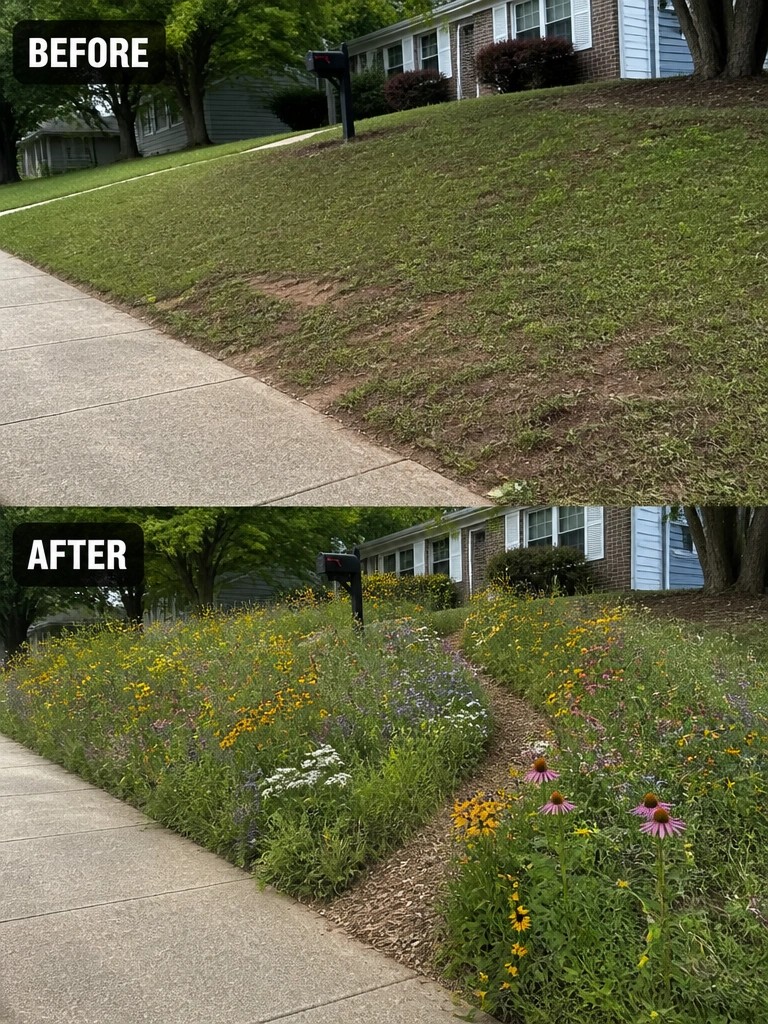
One easy way to add interest to a front yard is to swap a plain strip of grass for a planted flower border. The area next to the walk went from mostly bare grass with a few worn spots to a long bed filled with colorful flowers and a narrow mulched path.
This idea works well on sloped lots where mowing is tricky. Clear the grass first, add a clean edge, and choose a mix of perennials that bloom at different times so the border stays full without constant work.
Add Storage To Organize Garden Tools

A cluttered corner full of leaning tools and scattered pots makes any garden feel smaller and harder to use. Adding a simple shed plus wall racks and open shelves turns the same space into a working area where everything has a place and the ground stays clear for walking or planting.
This approach works best in small backyards or side yards where tools need to stay close but out of the way. Start with one solid storage piece sized for your space, then hang the items you reach for most often so the shed does not become another pile. Leave a little floor room around the shed so the area still feels open rather than crowded.
Add Edging To Create Clean Beds Around Trees
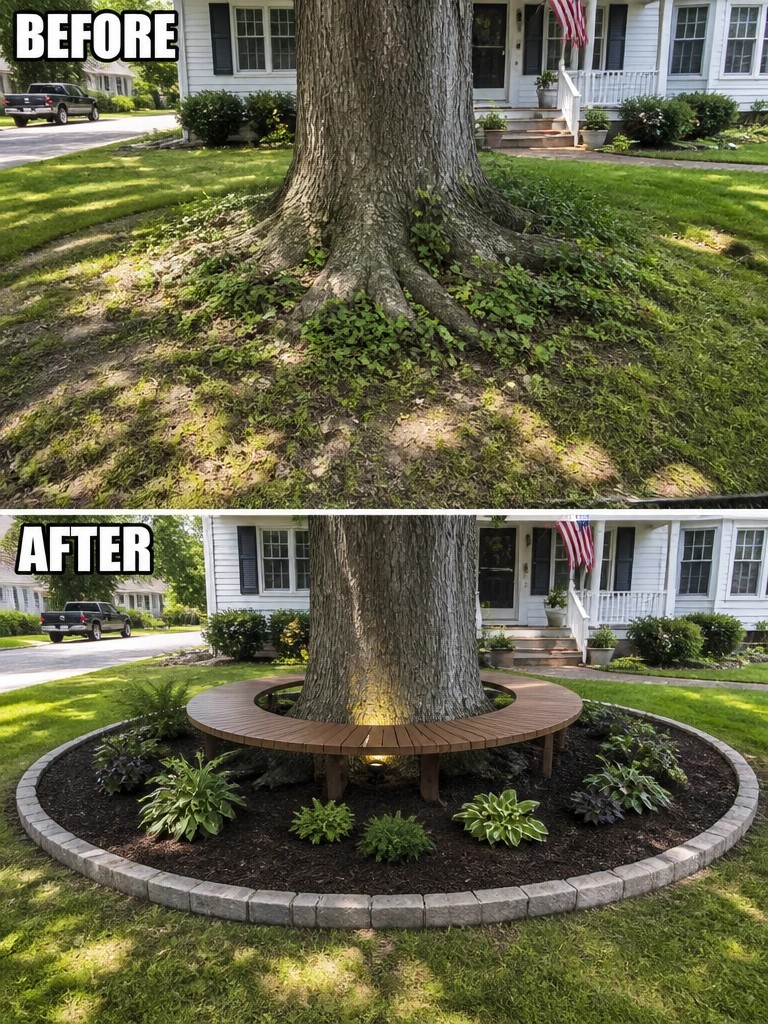
Large trees often end up with weeds and ivy creeping right up to the trunk. A simple stone border and fresh mulch pulls the area together and stops the overgrowth from spreading.
This approach works best on sloped front yards where the tree already takes up a lot of space. Clear the weeds first, then lay edging that follows the natural curve of the roots. Once the bed is defined, you can add shade plants and even a bench without the whole thing looking scattered.
Turn An Empty Deck Into An Outdoor Dining Area
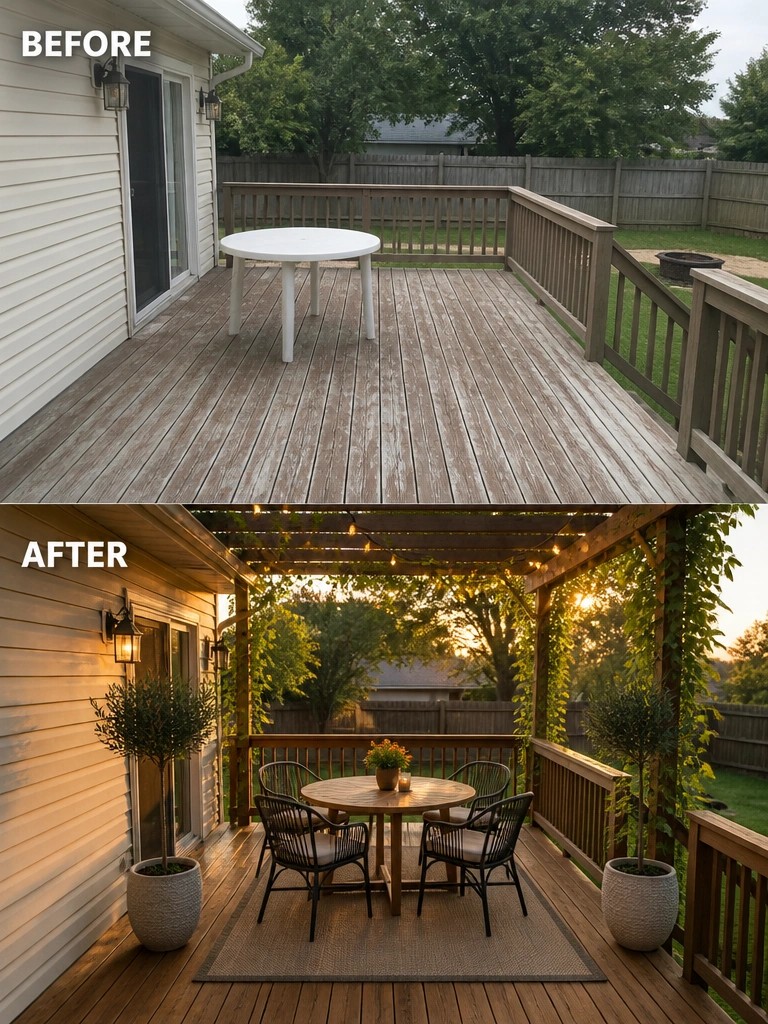
A deck that sits mostly empty rarely gets used. In this case the space went from holding just one small table to having a full dining setup with chairs, a rug, and an overhead pergola that defines the area. The simple addition of furniture and a clear zone makes the deck feel like an actual room instead of leftover space.
This idea works best on decks or patios that already have a solid floor but lack purpose. Start with a table and chairs sized for how you actually eat outside, then add one overhead element like a pergola or shade sail if sun or rain is an issue. Keep the rest minimal so there is still room to move around the table.
Frequently Asked Questions
Q: How do I choose plants that fit my local conditions without much trial and error? A: Check your yard’s sun exposure and soil drainage first. Match those details to plants that naturally prefer the same setup. This approach cuts down on replacements later.
Q: Can I tackle a transformation if my yard is tiny? A: Pick one or two compact ideas like container groupings or a narrow border path. Scale them to your space and add layers over time. Small starts still create noticeable shifts.
Q: What kind of upkeep do most of these changes need after the first year? A: Water new additions steadily through the initial season. Then shift to light weekly weeding and seasonal trimming. (A quick check on any built features keeps them solid too.)
