

I’ve spent time in backyards where the grass grew uneven and everything felt scattered with no real flow from one area to the next.
A solid round of clearing and reshaping the beds usually brings some order before any new plants go in.
Structure comes first.
Once the layout settles into place with better edges and a few simple paths, the space starts to feel like it can actually be used instead of just looked at from the window.
I tend to try those layout steps early because they hold up better than adding more plants on top of a messy base.
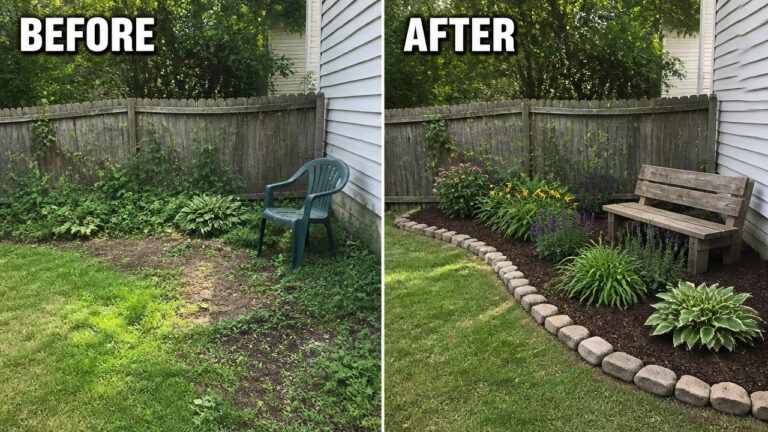
Add Defined Beds To An Overgrown Yard
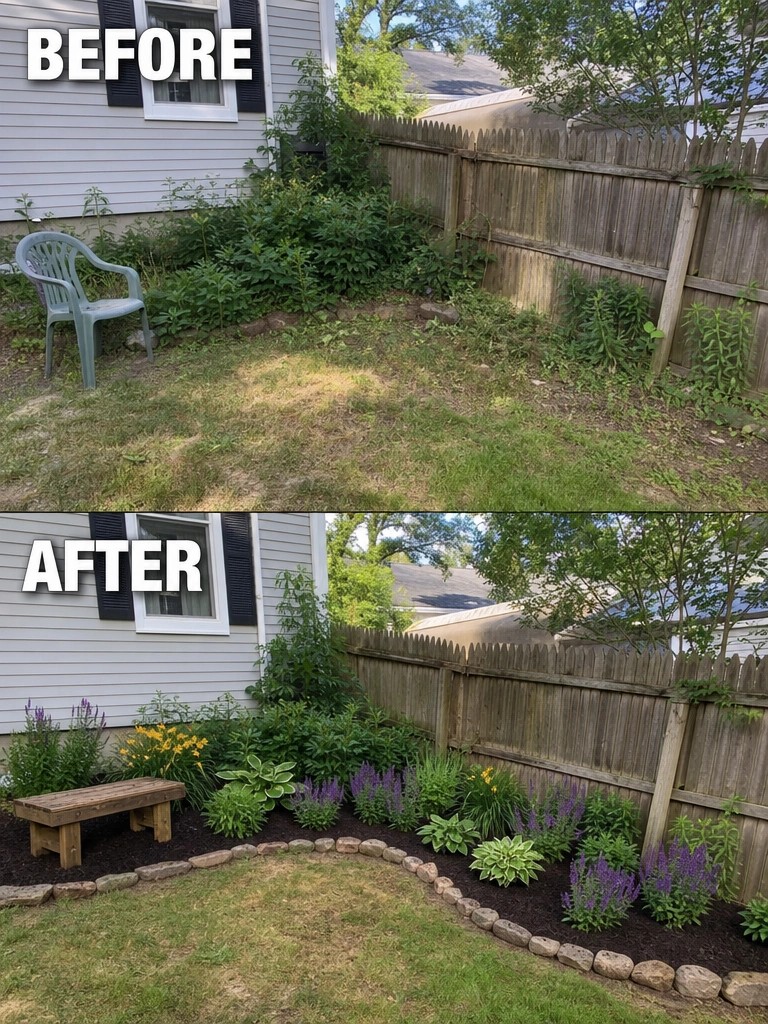
A messy strip of grass and weeds next to the house often stays that way because it has no clear edge. Adding a simple stone border and a layer of mulch gives the space a purpose and makes it much easier to maintain.
This idea works best in narrow side yards or along fences where you want planting without losing the lawn. Mark the shape you want first, lay the edging, then plant in groups and cover the soil. The bench in the after photo shows how the same area can now hold a seat without looking out of place.
Add Gravel And Stepping Stones To Define A Neglected Yard

Replacing patchy grass and bare dirt with gravel gives the yard a clean, usable surface right away. The stepping stones add a clear path that keeps people from walking across loose rock, and the border planting keeps the edges from looking unfinished.
This idea works best in small backyards that get little use because of poor ground conditions. Clear everything first, lay down landscape fabric, then add the gravel and stones. It keeps maintenance low while still leaving room for a few plants along the fence.
Use String Lights To Make A Patio Feel Cozy
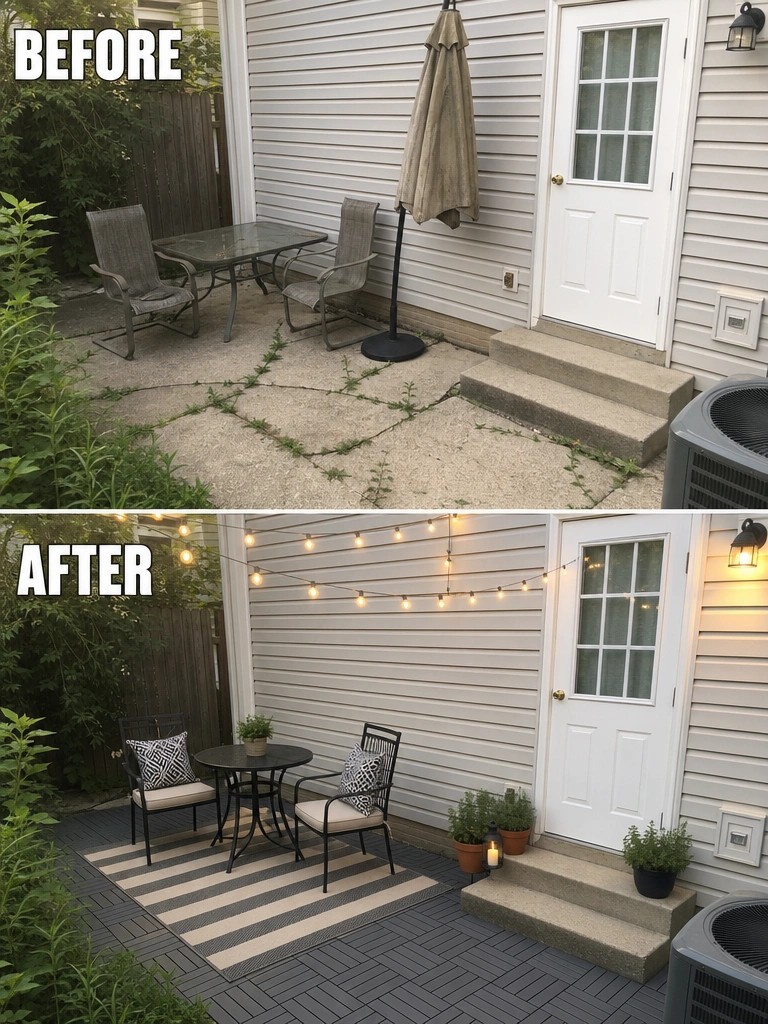
A plain concrete patio often stays empty because it lacks any sense of enclosure or purpose. String lights overhead and a simple rug underneath the seating instantly create a defined zone that feels usable in the evening.
This idea works best on small side yards or slabs right next to the house. Start with the lights and rug before adding more furniture, and keep the layout open enough for easy movement between the door and the yard.
Add Planters To A Fence For Easy Vertical Planting

A weathered fence often looks worse once the ivy and debris are cleared away. Painting it a solid dark color and mounting a few wooden planters gives the same stretch of fence a clear purpose and brings the planting right up to eye level.
This approach works well along side boundaries or back fences where ground space is limited. Start with a simple paint job, then fix the planters at different heights so the plants can trail and fill in. Choose weatherproof wood and repeat the same planter style to keep the look tidy rather than crowded.
Create A Garden Border In The Strip By The Road

A narrow strip of grass between the sidewalk and the street often ends up looking messy because it is hard to mow and easy to ignore. Adding a simple border turns that awkward space into something intentional. The rocks give the bed a clear edge, and the planting replaces the patchy grass with a mix of flowers and foliage that stays neat with far less work.
This idea works best on any long, thin area that sits between hard surfaces. Start with the edging first so the shape stays clean, then fill in with plants that can handle the sun and traffic along the front. Keep the bed narrow enough to reach from both sides and use mulch to hold down weeds. The same approach can tidy up the edge of a driveway or the strip beside a fence.
Add A Gravel Path To Clear Up A Neglected Side Yard
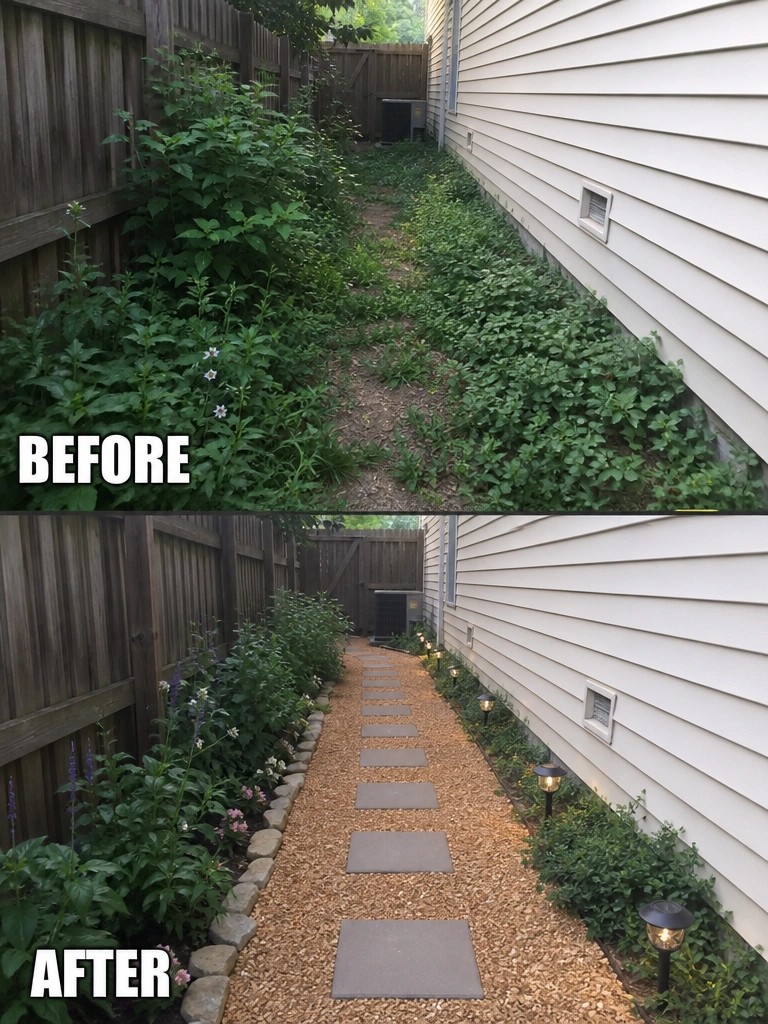
An overgrown side yard often becomes a forgotten strip of weeds that feels unusable. Adding gravel and a line of stepping stones gives the space a clear purpose and makes it easy to walk through without getting tangled in plants. The simple change from thick growth to a clean surface instantly makes the area feel intentional rather than neglected.
This idea works well on narrow lots where you need access along the house or fence. Start with a thorough cleanup, then lay down a base and gravel before placing the pavers. Keep the edges neat with a simple border so the path stays defined even as nearby plants fill in.
Add A Vertical Garden To A Blank Wall

A bare wall next to a door or entry often ends up with a few pots pushed against it and not much else. Mounting a simple wooden frame turns that same wall into usable growing space and pulls the scattered pots into a cleaner arrangement.
This idea works best on small side yards or concrete entries where floor space is tight. Build or buy a basic vertical planter, secure it to the wall, and fill it with plants that can handle your local conditions. Keep a few pots on the ground below to add depth without crowding the walkway.
Refresh An Old Shed With Paint And Simple Planting

An old shed often becomes an eyesore when the paint peels and weeds creep right up to the walls. Giving the shed a fresh coat of paint and clearing the overgrowth around it turns the structure back into a useful part of the yard without any major construction.
This idea suits small yards where the shed sits in plain view. Pick a color that matches the house, then add a few low plants along the front edge so the space feels planned rather than neglected.
Add Structure To An Overgrown Garden Bed

An overgrown bed often needs organization before anything else can grow well. Clearing the weeds and laying out straight rows with mulch makes the space easier to maintain and gives each plant room to develop. Simple wooden supports for tomatoes and a few labeled markers keep everything in place without much extra effort.
This idea suits any neglected raised bed or small yard where plants have started to compete. Start by dividing the bed into rows, then add supports only where taller crops will need them. Mulch helps control weeds afterward, so the focus stays on the plants rather than constant cleanup.
Add Structure To An Overgrown Garden Path

A wide concrete path often feels heavy once the hedges around it fill in. Switching to stepping stones set in gravel lightens the look and gives the walkway a clearer shape without losing the garden feel.
This change suits narrow side yards or entries where you want a natural route rather than a slab. Clean out the old surface first, add a gravel base for drainage, and keep the stones spaced so the planting can still soften the edges. A single low light is enough if the path gets used in the evening.
Turn A Bare Backyard Into A Fire Pit Seating Area
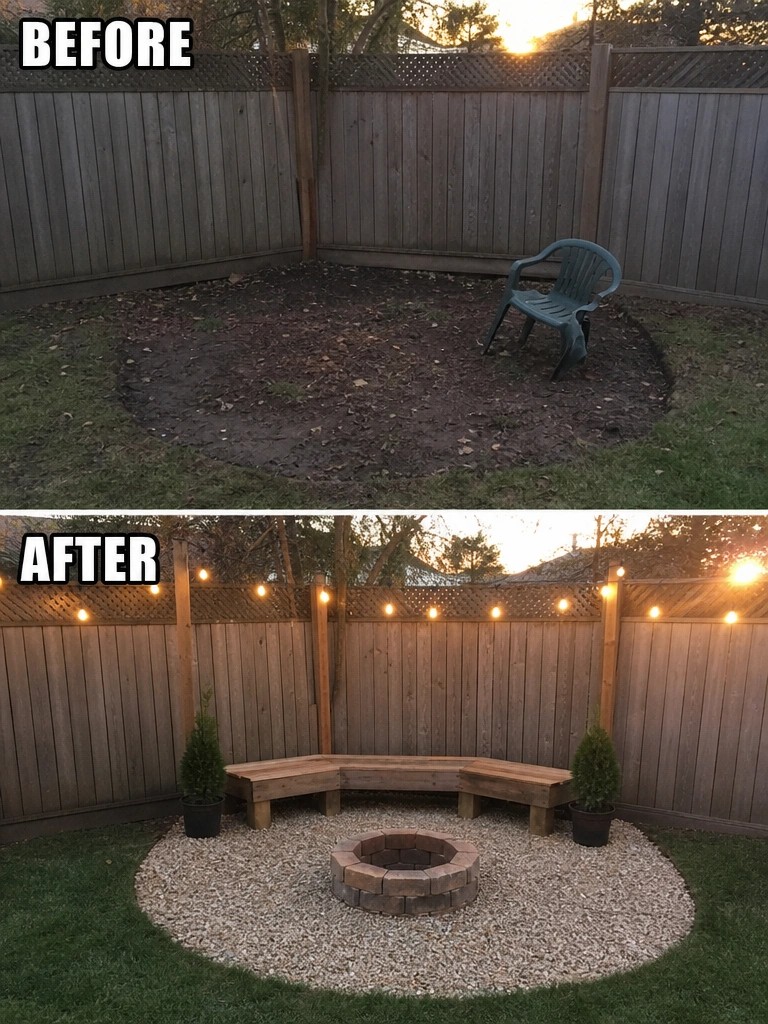
A dirt patch with nothing but a single plastic chair does not invite anyone outside. Adding a fire pit, a ring of gravel, and a simple curved bench gives the space a clear purpose and a place to sit.
This idea works well in small or average yards where you want one spot that feels finished. Keep the seating low and sturdy, add a few pots if you like, and string lights along the fence so the area can be used after dark.
Add Structure To A Steep Slope

A bare, sliding hillside is hard to plant and even harder to maintain. Simple wooden retaining walls turn the slope into level beds that hold soil in place and give plants room to grow. The stone channel at the base also helps with drainage so water does not wash everything away.
This approach works best on yards that drop sharply behind or beside the house. Start with the walls, add a layer of mulch, and keep the planting simple at first. Once the beds are stable you can fill them in over time without fighting erosion every season.
Turn A Bare Balcony Into A Simple Seating Area

A concrete balcony with just one chair often feels like dead space. Adding a small table and a couple of chairs gives the area a clear purpose so it can actually be used.
This idea works best on apartments or small outdoor spots where you want function without clutter. Keep the furniture compact and add a few plants that can handle the conditions. Artificial turf can also help soften the floor and make the space feel more finished.
Turn An Empty Deck Into An Outdoor Seating Area

Many decks stay bare because they feel unfinished without anything on them. Adding a couple of chairs with cushions and a rug gives the space a clear purpose and makes it feel like an actual room outdoors instead of just a wooden surface.
This idea works on decks of almost any size. Keep the furniture simple and weatherproof, and make sure there is still room to move around the seating area. One or two potted plants can help soften the look without crowding the space.
Add Defined Garden Beds Along A Fence Line

A long fence often leaves an awkward strip of weeds and bare soil that makes the whole yard feel unfinished. Adding a mulched garden bed with layered plants and a few shrubs turns that neglected edge into a clear border that looks intentional and stays easier to manage.
This idea works best in yards where the lawn runs straight into a fence or property line. Clear the weeds first, spread mulch to keep things tidy, and choose plants that suit the light and your climate so the bed stays low maintenance over time.
Add Structure To An Overgrown Corner
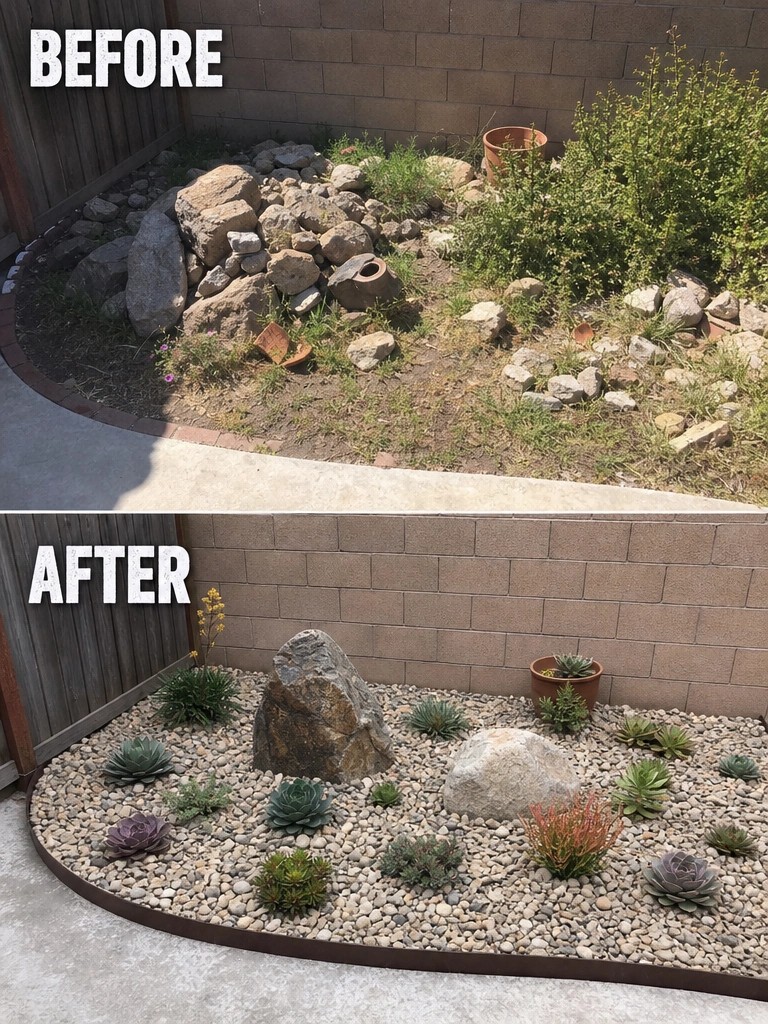
A messy patch of dirt, scattered rocks, and random weeds can make any yard feel unfinished. Laying down a simple gravel base with a clean metal edge turns the same spot into something that looks intentional. The succulents and larger rocks now sit in a clear shape instead of fighting with the weeds.
This approach works well in small side yards or tight corners where you want low maintenance. Start by clearing everything out, then add the edging and gravel before choosing a few tough plants. It keeps the area from looking neglected without requiring constant weeding or watering.
Add Structure To An Overgrown Backyard

A patchy lawn with no clear edges often makes a backyard feel unfinished. Adding a planted border along the fence creates a clean line that frames the grass and turns the whole space into something that feels planned rather than left alone.
This approach works best when you start with basic cleanup before adding plants. Keep the border simple with a mix of shrubs and low perennials that match your growing conditions, and make sure the bed is wide enough to look full but narrow enough to leave plenty of open lawn for walking or play.
Turn An Overgrown Patio Into A Simple Dining Spot

The pavers were mostly hidden under weeds and grass, so the space sat empty and unused. Adding a table with chairs and a pair of potted trees on the sides gave the area a clear purpose without much extra work.
This idea works best on small patios where you want a place to eat or sit outside. Clear the growth first, then keep the furniture scale modest so there is still room to move around the table.
Use String Lights To Make A Pergola Feel Cozy
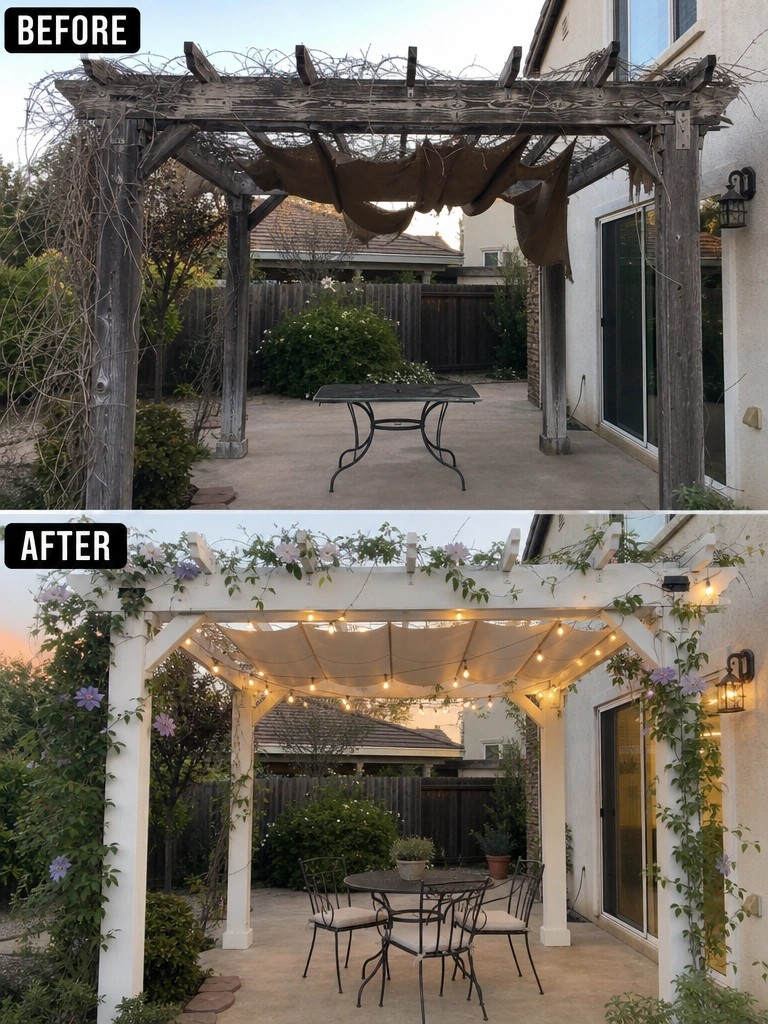
An old pergola often sits unused when the frame looks tired and there is no clear reason to spend time underneath it. In this case the structure was cleaned up, painted, fitted with fresh shade fabric, and surrounded with string lights. The simple addition of seating underneath turned the space into a place where people actually want to sit in the evening.
String lights work well on pergolas because they add warmth without much cost or effort. Place the lights along the beams so they highlight the seating area rather than the whole yard. This approach suits homes with a basic concrete patio or deck where the main goal is to create one usable spot instead of redoing the entire garden.
Add Potted Plants To Frame A Porch Seating Area
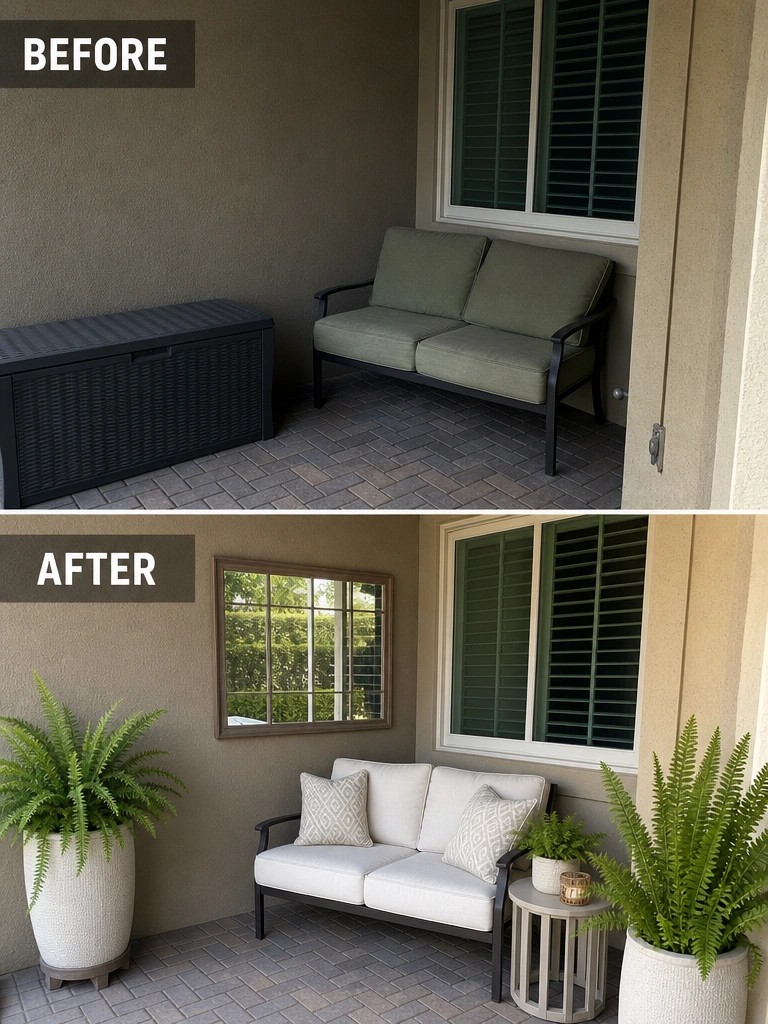
A basic sofa on its own can leave a porch feeling unfinished. Placing large ferns in matching pots on either side of the seating instantly gives the area structure and makes it feel more like a defined outdoor room.
This idea works best on covered porches or patios where you already have a seating piece in place. Use two or three planters of similar size and color, and keep the rest of the accessories simple so the plants stay the main feature.
Frequently Asked Questions
Q: My yard has terrible soil. Can I still try some of these ideas?
A: Mix in compost to improve the dirt before planting. Many makeovers focus on containers or raised beds that let you add good soil yourself.
Q: How long will these changes take to show results?
A: Some ideas like new pots or furniture give an instant update. Others with seeds or small plants need a few weeks to fill in.
Q: What if my space gets little sunlight?
A: Choose shade loving plants such as ferns or hostas for those spots. Add string lights to brighten the area in the evenings.
