


Patchy areas in the garden tend to make the whole space feel a bit overlooked until the ground itself gets some attention.
I usually begin by sorting out those bare or uneven sections first because a steadier base seems to let other changes hold up better.
Focusing on basic layout fixes like better edging or thoughtful plant placement can build a more even appearance without rushing into major work.
Small tests often show me what actually suits the spot.
These steps tend to add up gradually and leave the yard looking more settled through different seasons.
Add A Path And Border To Shape A Patchy Yard
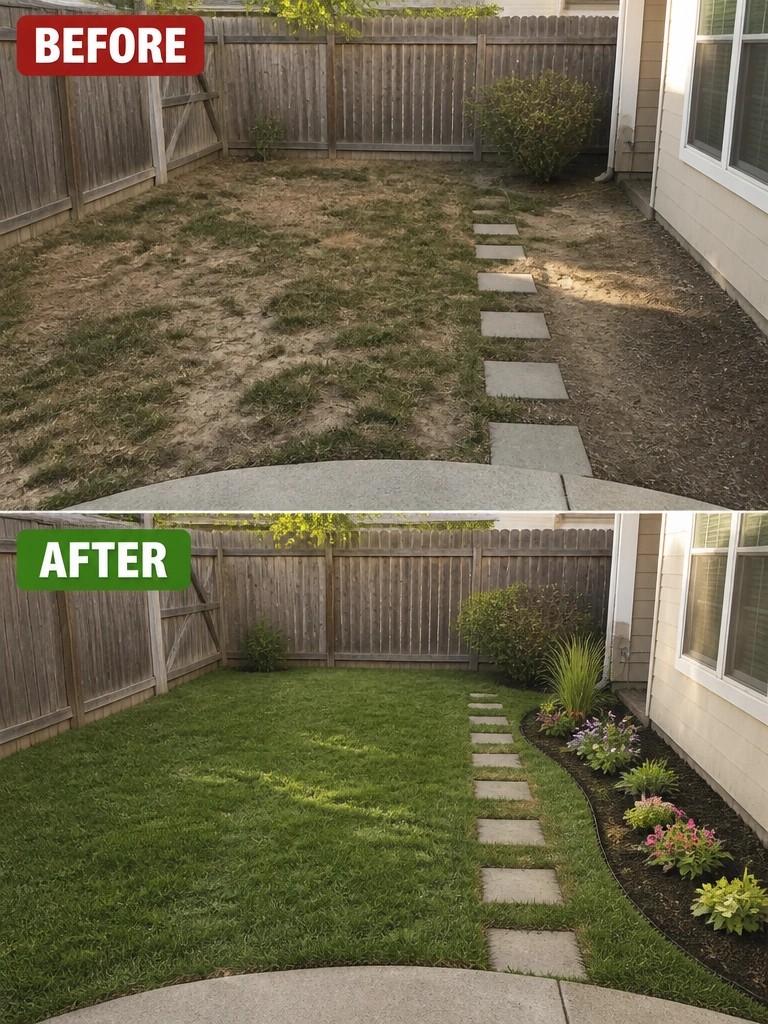
A patchy lawn often feels unfinished because there is no clear way to move through the space. Adding a simple stepping stone path and a planted border along the edge gives the area direction and makes the lawn look intentional instead of neglected. The stones create a route that draws the eye forward, while the curved bed with mulch and flowers softens the fence line and keeps the grass from running straight into the house.
This approach works well in small backyards where you want usable space without a big overhaul. Start by fixing the lawn itself, then lay the path on a slight curve so it feels natural. Keep the border narrow enough that it does not eat into the open grass area. The result is a yard that feels planned even when the budget and time are limited.
Add Structure To An Overgrown Side Yard
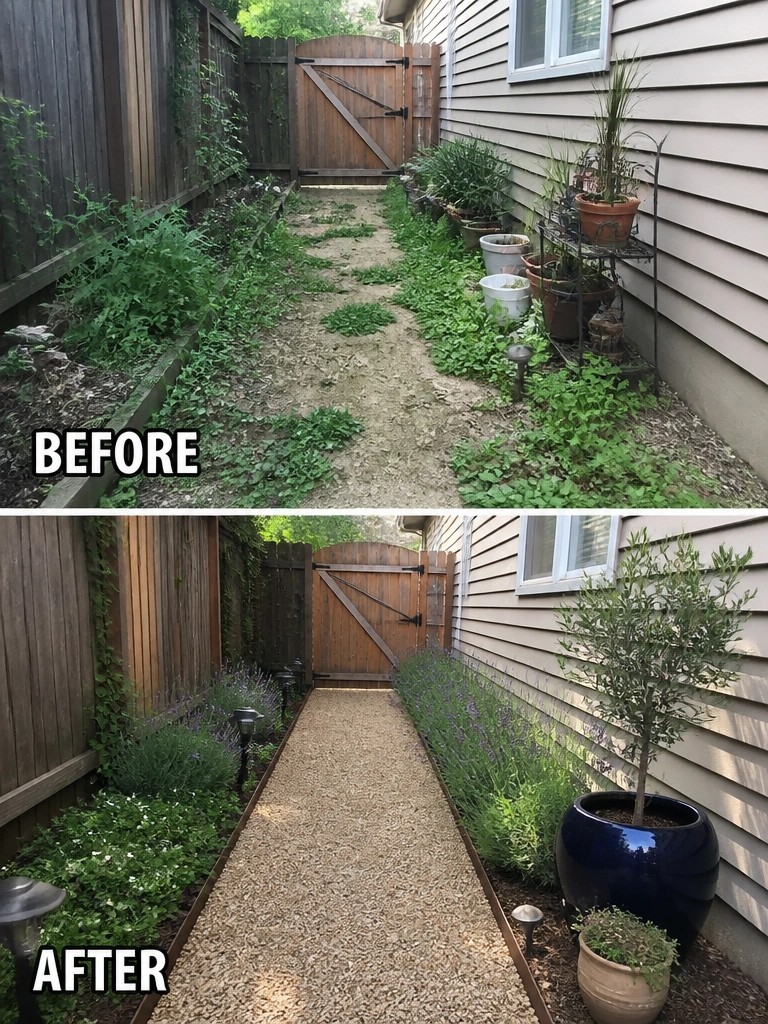
A narrow side yard tends to get ignored until the weeds take over. Adding a simple gravel path with metal edging turns the space from a patchy dirt track into something that feels planned and easy to walk through.
This works best on long, skinny areas where you still need access to the back gate. Clear the worst growth first, set the edging, then fill the path before adding plants along the sides. The result stays low maintenance and keeps the beds from spilling onto the walkway.
Turn A Bare Patio Into A Seating Area

Adding raised wooden planters around the edge of an empty concrete slab gives the space clear boundaries and turns it into a spot where people actually want to sit. The rug and single chair show how little furniture is needed once the planting structure is in place.
This idea works best in narrow side yards or small back patios where the lawn has given up. Build the beds first to frame the area, then add seating that fits the scale so the space still feels open and easy to move through.
Add Edging To Create Defined Garden Beds
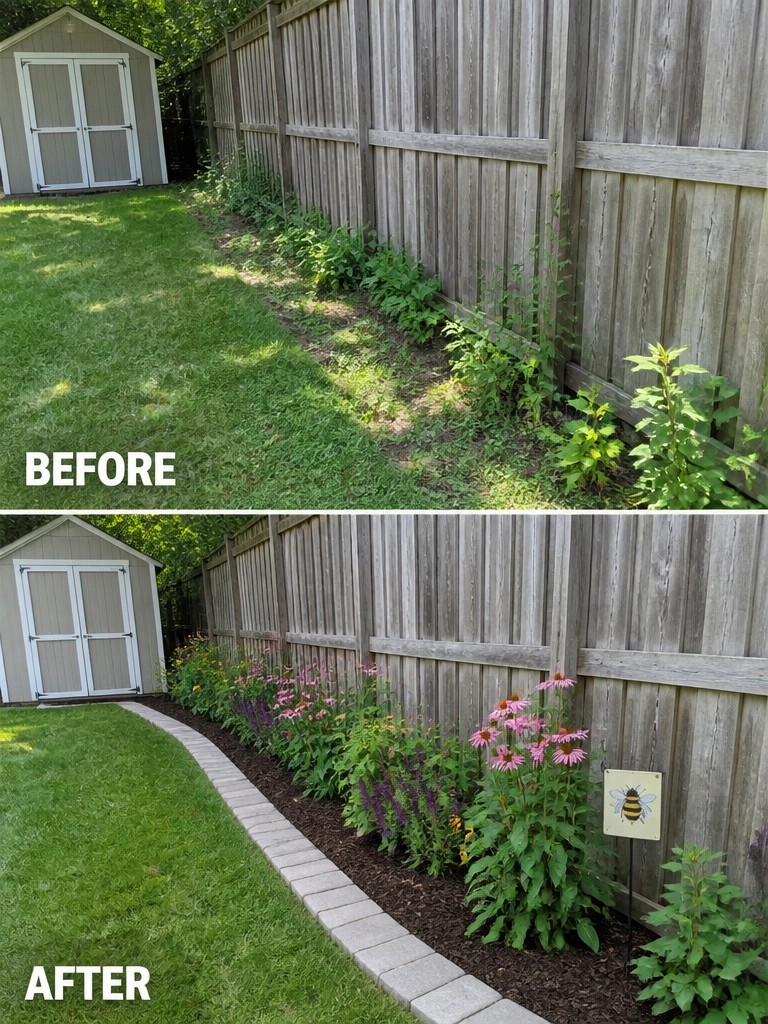
Adding a clear edge is one of the easiest ways to fix a messy border that blends into the lawn. The before image shows weeds and stray plants creeping along the fence with no real separation. Once a stone edge and mulch were added, the area suddenly looks like a planned garden bed instead of an afterthought.
This idea works best along fences, sheds, or any spot where grass and planting areas run together. Focus on the edging and mulch first, then fill in with plants later. It keeps the space looking tidy even when the plants are still small and makes mowing and weeding simpler over time.
Pave Over Patchy Grass To Create A Usable Seating Area
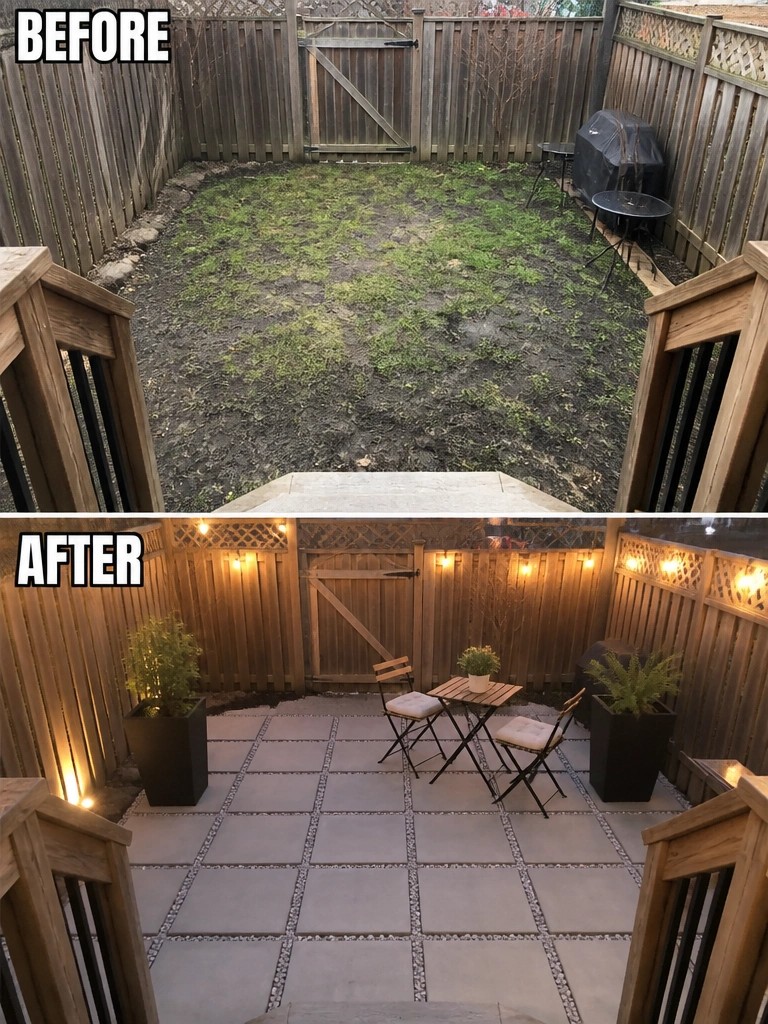
A patchy lawn often leaves a backyard feeling unfinished and hard to use. Laying pavers across the worst section gives you a flat, stable surface that works in any weather. The change turns wasted space into a place where chairs and a small table can stay set up without sinking into mud.
This idea works best in small yards where grass struggles. Keep the paved area modest so it does not take over the whole garden, then add a couple of large planters to soften the edges. String lights help if you want to use the space after dark. Make sure the pavers sit level and leave enough room around them for walking and plant growth.
Add Structure To A Patchy Backyard
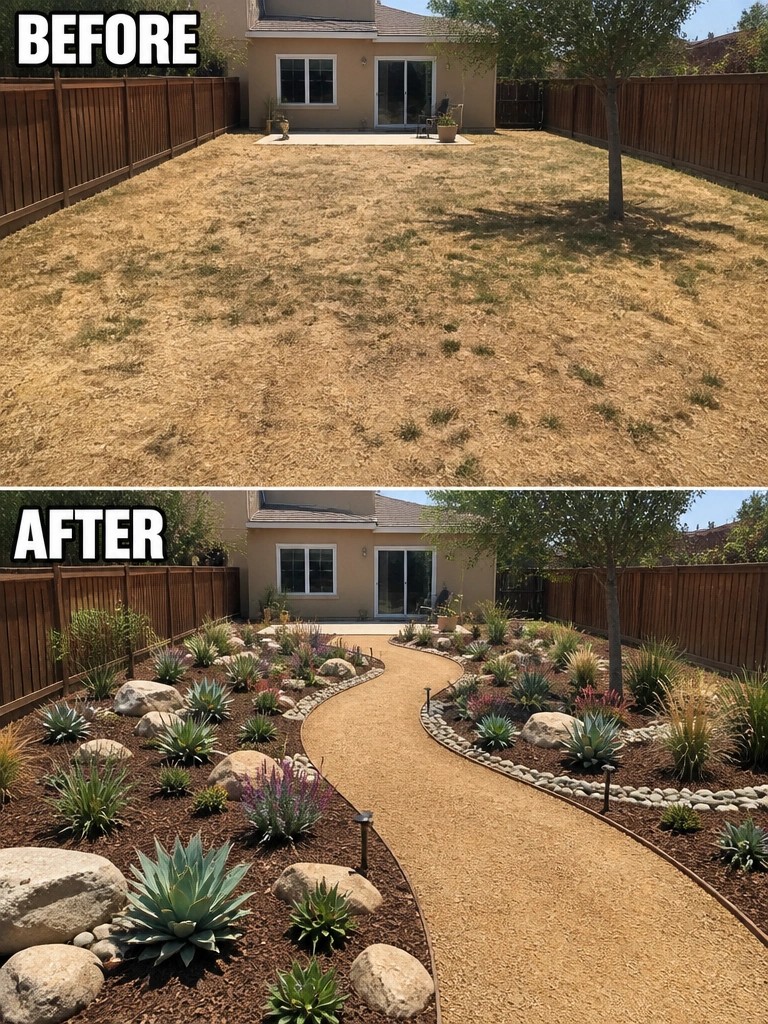
A patchy yard usually feels like an afterthought because there is no clear layout. Adding a path and bordered beds gives the space direction so it stops looking like leftover lawn and starts feeling like a real part of the yard.
This idea works best on flat or gently sloped backyards that need basic organization before any extra features are added. Keep the path width comfortable for walking and use simple edging so the beds stay neat without constant trimming.
Replace Patchy Grass With Artificial Turf
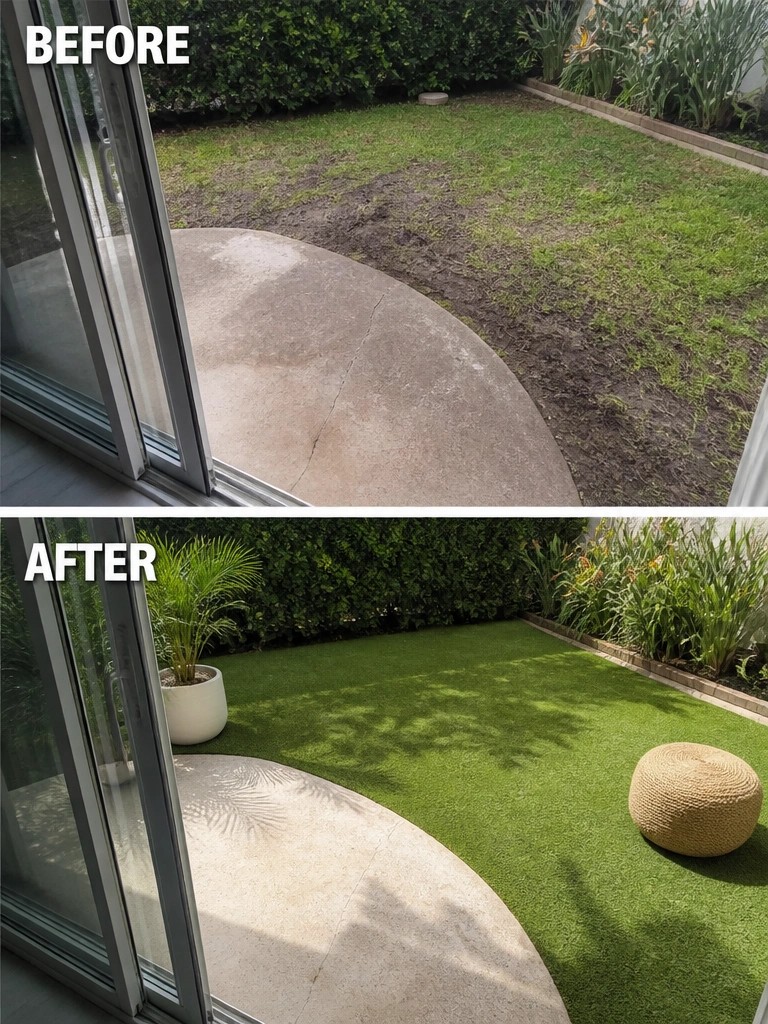
Patchy lawns often look worse the more you try to patch them with seed or sod. Laying artificial turf over the whole area gives a flat, even surface that stays green without constant watering or repairs.
This works best in small yards or side areas that see regular foot traffic. Clear the old grass first, level the soil, and make sure the edges meet the paving cleanly so the new surface feels like part of the existing space rather than an add-on.
Create Defined Garden Beds Along The House

A bare strip of dirt next to the foundation often looks worse than an empty lawn because it draws attention to the problem. Adding a simple planted border fills the space and gives the whole side of the house a finished look without needing major construction.
This approach works best on narrow foundation strips or side yards where you want structure but still need room to walk. Start with a clean edge and mulch, then use a mix of low, medium, and tall plants so the bed feels full from the start. Keep the tallest plants toward the back so they do not block windows.
Add Gravel To Define A Stepping Stone Path

The stepping stones were already in place, but the grass around them had grown uneven and patchy. Adding a clean gravel border on both sides gave the path clear edges and made the whole walkway feel more structured without needing to replace anything major.
This idea works best in narrow side yards or back gardens where the lawn is struggling. Lay landscape fabric first, then add the gravel in a consistent width so the path stays easy to maintain and the beds on the sides can be planted simply.
Build A Raised Garden Bed For A Bare Corner
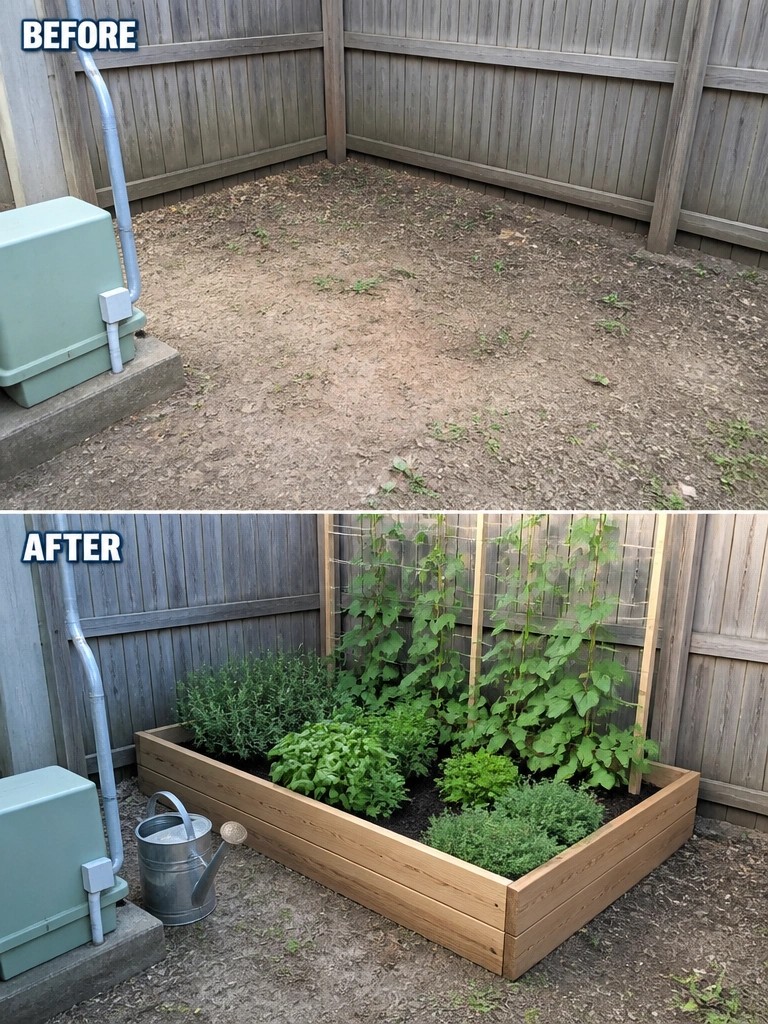
A raised garden bed turns a patchy dirt area into something useful without needing to fix the whole yard at once. The before photo shows an empty corner with nothing but bare ground and a fence. Adding one simple wooden bed with a basic trellis gives the space clear boundaries and lets plants grow upward instead of spreading out.
This idea works well in small backyards or side areas where the soil is poor or uneven. Start with the bed itself, then choose a few easy crops or herbs that fit the season. Keep the bed narrow enough to reach across and leave walking room around the edges so the space stays practical.
Terrace A Slope To Create Garden Beds
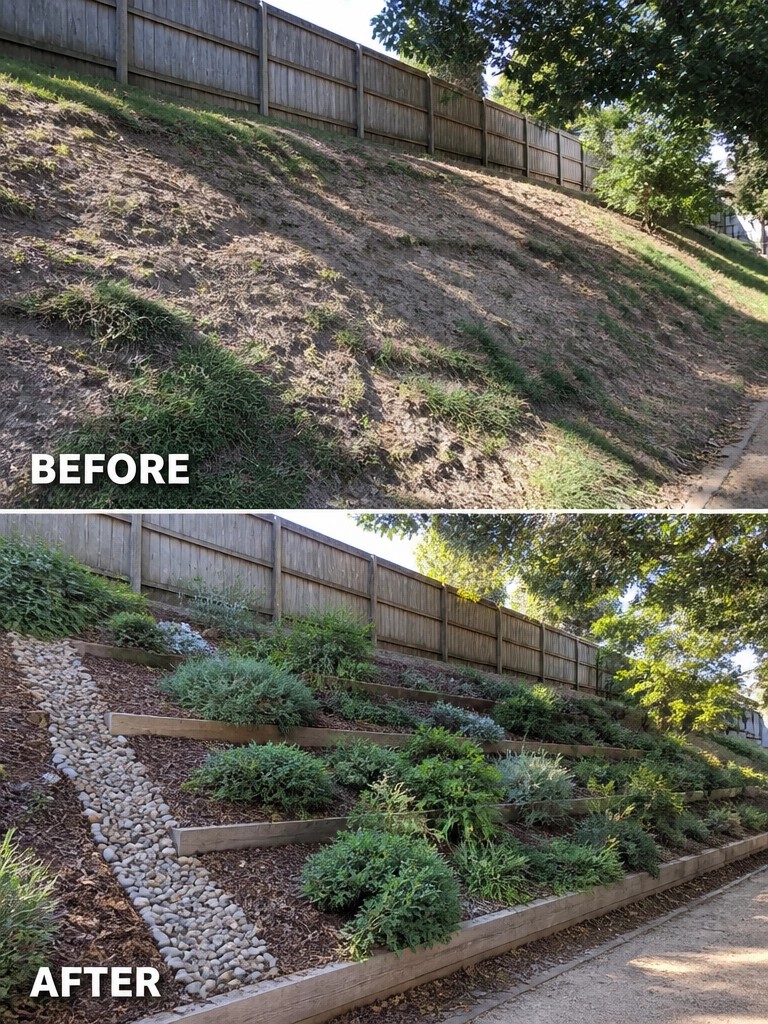
A bare, patchy slope often stays unused because it is hard to plant and harder to maintain. Adding simple wooden retaining boards turns the hill into level beds that hold soil and let plants establish without washing away. The change from loose dirt and thin grass to defined rows of shrubs makes the whole area look intentional instead of neglected.
This approach works best on moderate slopes where full retaining walls would be too much work. Start by clearing weeds, then set the boards along the contour and fill behind them with soil and mulch before planting. It suits homes with backyards that drop away from the house and gives you usable planting space without losing the natural grade.
Add Structure To A Patchy Front Walk
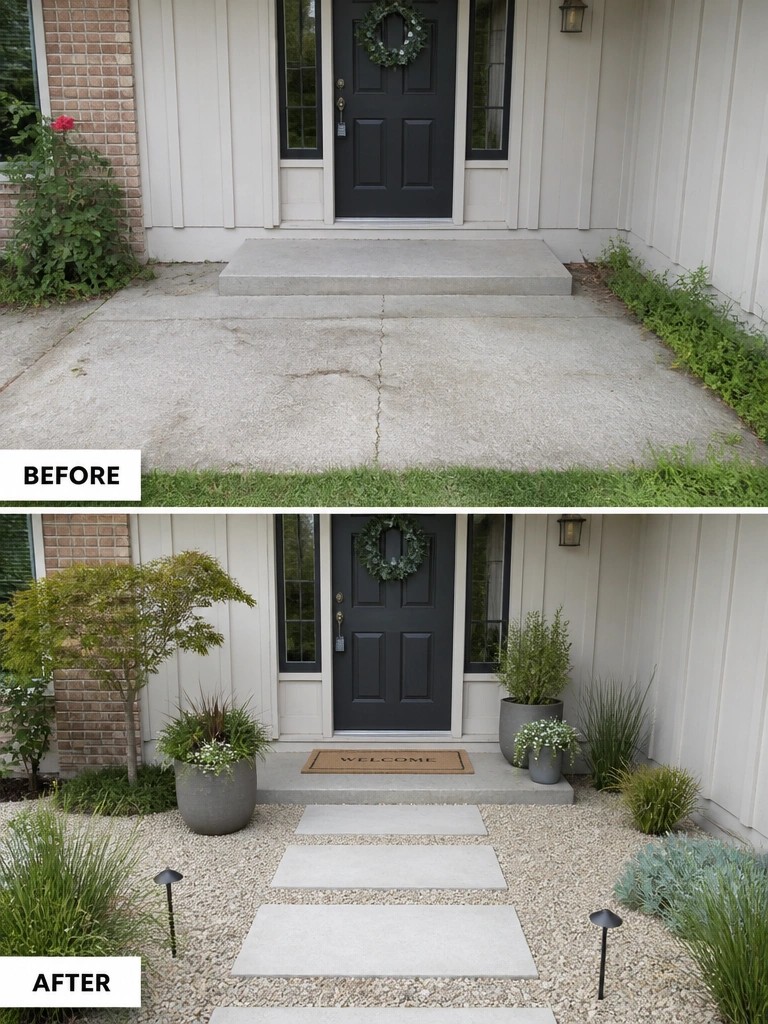
A plain concrete slab can make the whole front of a house feel unfinished, especially when the edges are just ragged grass. Replacing most of that slab with a simple line of stepping stones set in gravel gives the entry a clear path and stops the area from looking neglected. A few larger pots and border plants on either side finish the look without crowding the space.
This approach works best on small front yards or side entries where you want a tidy route to the door but do not need a full patio. Start by deciding the width of the path first, then fill around the stones with gravel so water drains and weeds stay down. Keep the plantings low and simple so the walkway remains the main feature.
Add Structure To A Patchy Backyard
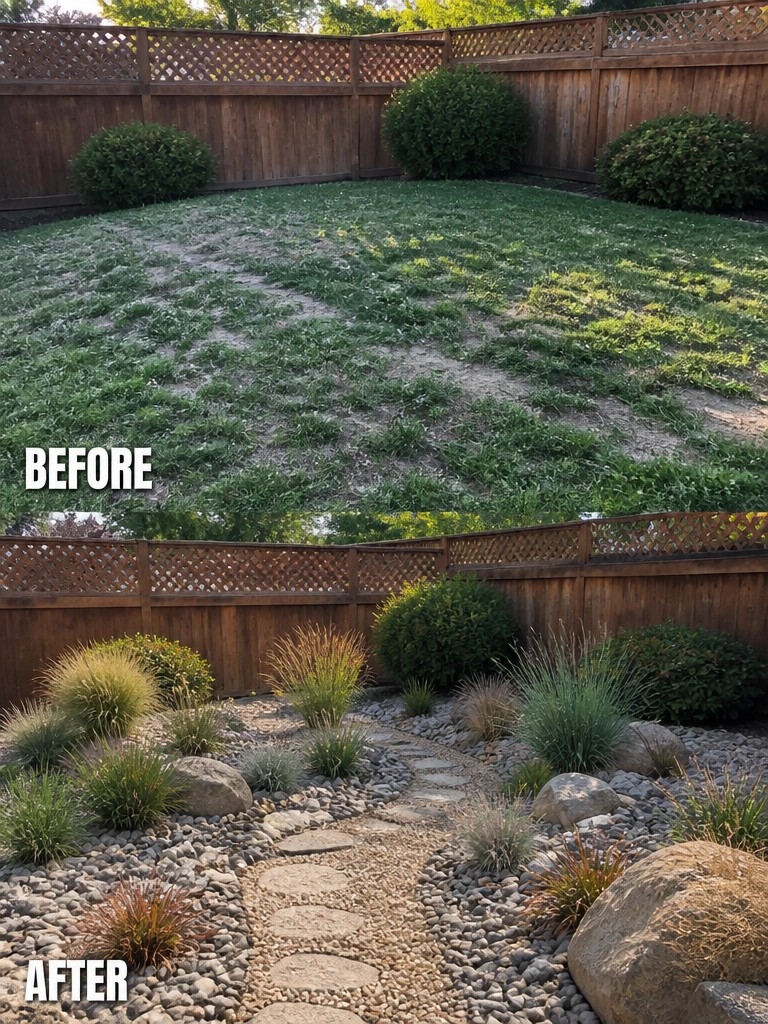
A patchy lawn often looks worse the more you try to fix it. In this case the yard went from uneven grass and weeds to a cleaner layout with gravel, rocks, and a simple stone path. The change gives the space a clear shape without needing constant mowing or reseeding.
This idea works best on slopes or shady spots where grass struggles. Clear the old growth first, then use gravel to cover the ground and larger rocks to hold planting areas in place. A path like the one shown helps define walking routes so the rest of the yard feels more planned.
Replace An Overgrown Path With Clean Pavers

A patchy garden path often makes the whole yard feel neglected. In this case the old stones had weeds pushing through every crack and grass spilling over the edges. New pavers laid in a simple running pattern give the walkway a solid, finished look and keep the surrounding beds neat.
This idea works best in smaller yards or along the side of a house where you need a clear route from one area to another. Remove the old surface first, level the base, and choose pavers that are wide enough for comfortable walking. Keep the plantings on either side low and simple so the path stays the main feature instead of competing with heavy borders.
Replace Patchy Grass With A Flower Border
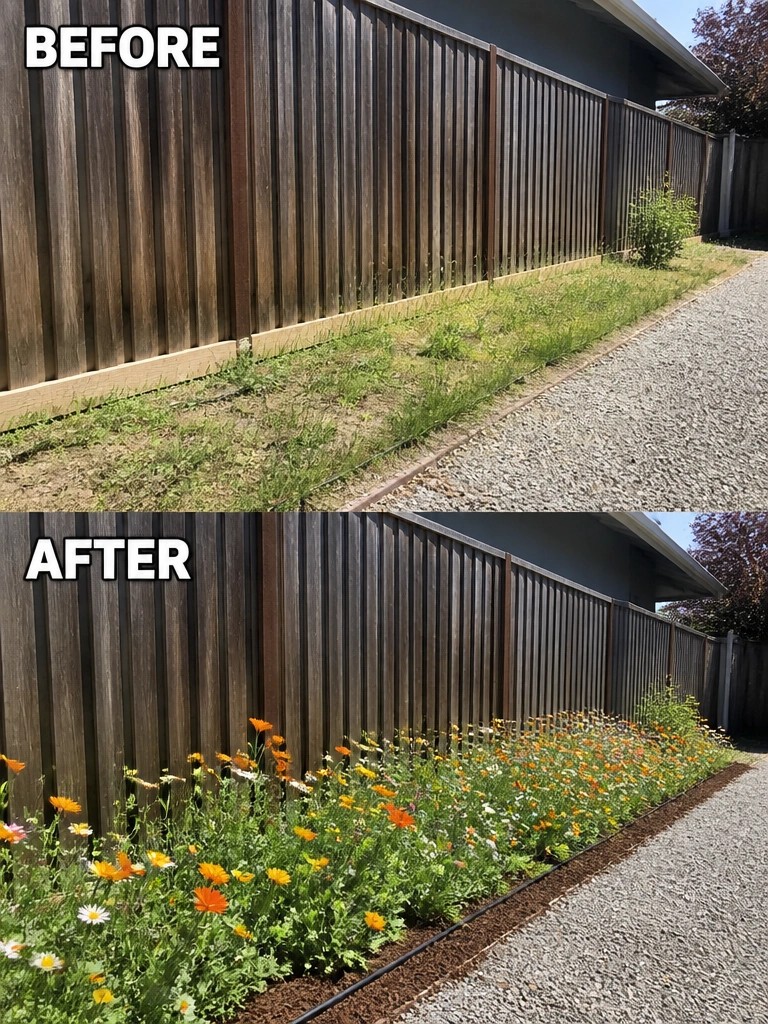
A narrow strip of patchy grass next to a fence often looks messy and hard to maintain. Clearing the weeds and planting a simple row of flowers with mulch turns that same space into a clean border that actually adds color and structure.
This idea works well along fences, driveways, or side yards where grass struggles to grow. Keep the bed narrow so it stays easy to reach and water, and choose low-growing flowers that can handle full sun if the area gets a lot of light.
Add Defined Garden Beds To Patchy Areas

A patchy backyard with moss and bare dirt can feel like wasted space, especially under large trees where grass refuses to grow. The simplest fix is to stop fighting the lawn and instead create clear garden beds filled with shade-tolerant plants. Mulch and a few stepping stones pull the whole area together and make it look intentional.
This idea works best in shady or neglected corners where a full lawn overhaul would be difficult. Focus on tough plants that handle low light, keep the beds simple in shape, and leave enough open ground for walking or future additions.
Define The Edge Between Patio And Lawn
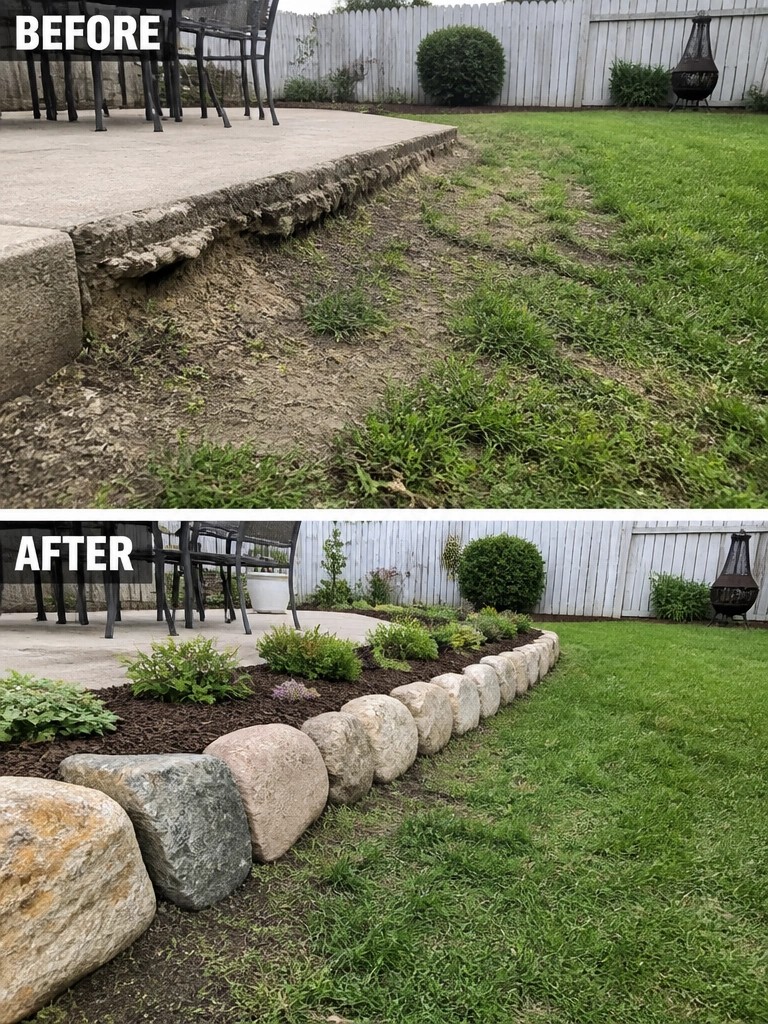
The spot where a concrete patio meets the grass often turns into a patchy, eroded strip that is hard to mow and looks unfinished. Placing a row of large rocks along the edge and filling behind them with mulch and low plants creates a clear division that stops the lawn from creeping in and keeps the patio looking intentional.
This idea works best in smaller yards where you still want an open lawn but need a simple way to handle the transition. Clean up the soil first, then choose rocks or edging that sit at a comfortable height so the mower can pass easily on one side while the bed stays contained on the other.
Use Pavers To Define The Base Of Deck Stairs
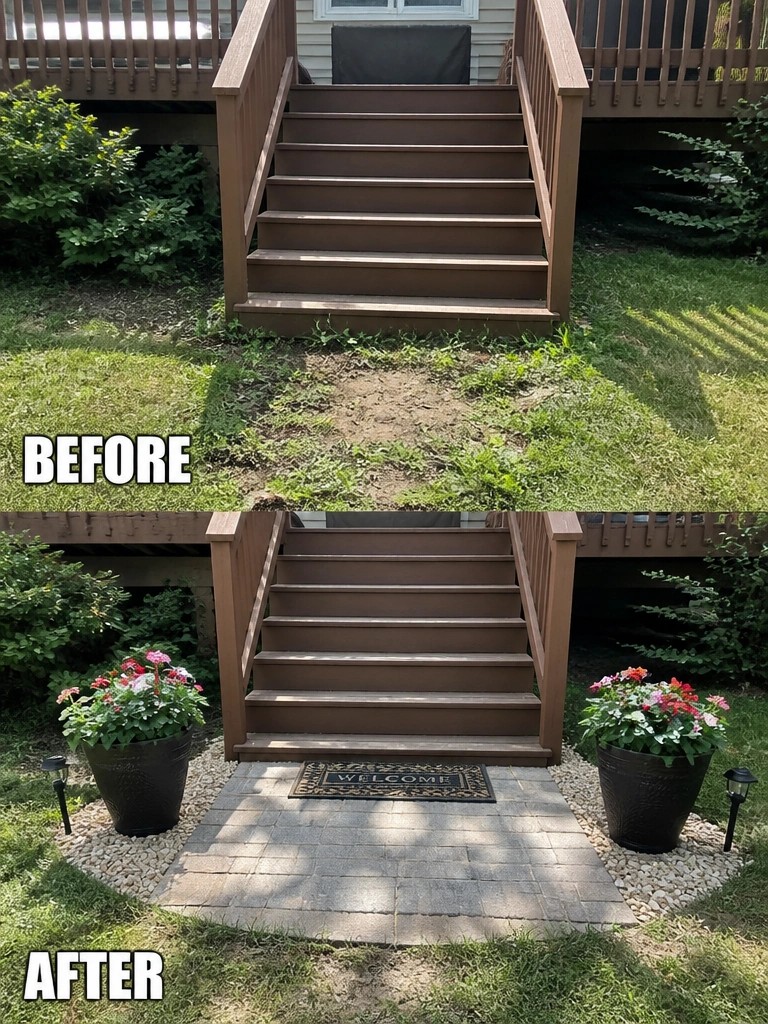
The ground at the bottom of these stairs was just uneven grass and dirt before, which made the whole area feel unfinished. Adding a small paved landing with pavers creates a clear spot for people to step onto and gives the stairs a more solid connection to the yard.
This idea works best on decks or porches where the stairs open straight onto lawn. Clear the grass first, level the soil, and keep the paved section simple and slightly wider than the stairs. Gravel on the sides helps hold everything in place and leaves room for a couple of planters without crowding the walkway.
Turn A Bare Backyard Patch Into A Fire Pit Area
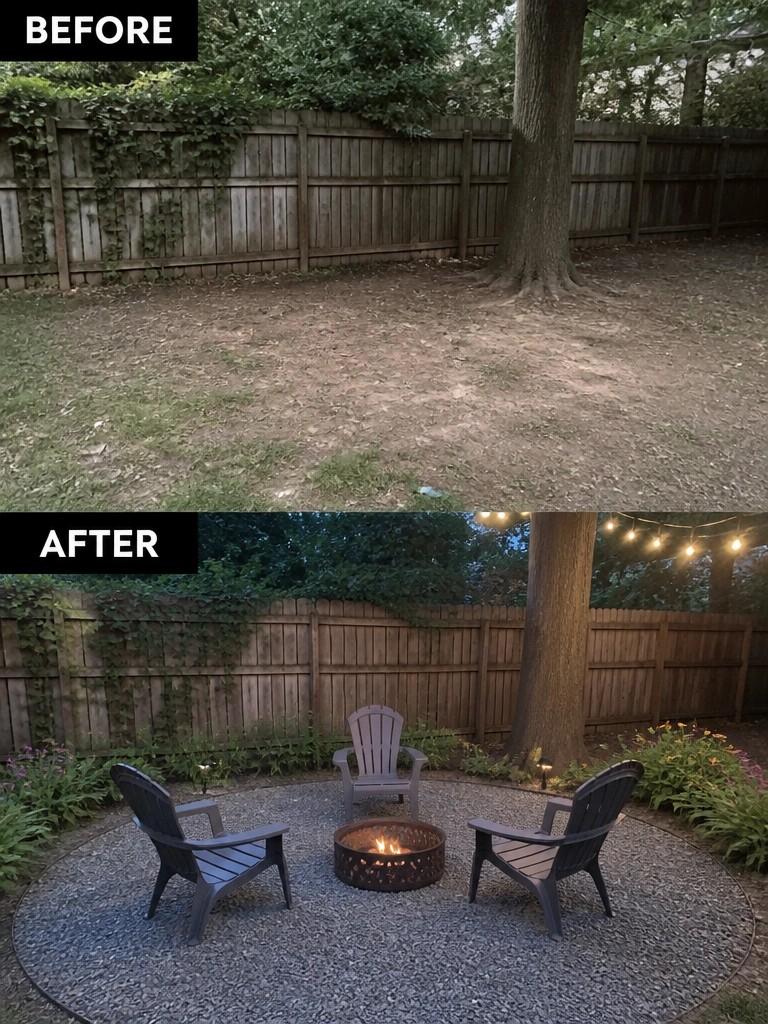
A patchy dirt area often sits unused because nothing defines it as a place to stay. Laying down a gravel circle, adding a fire pit in the center, and placing a few chairs around it gives the space a clear purpose. String lights overhead help too, since they make the spot feel intentional once the sun goes down.
This idea works best in smaller yards where you want one main gathering spot without covering the whole lawn. Keep the gravel edge simple so the area stays easy to maintain, and choose chairs that can handle weather. Start with the base and the fire pit before adding plants or extras around the sides.
Add Defined Garden Beds To Refresh A Patchy Lawn
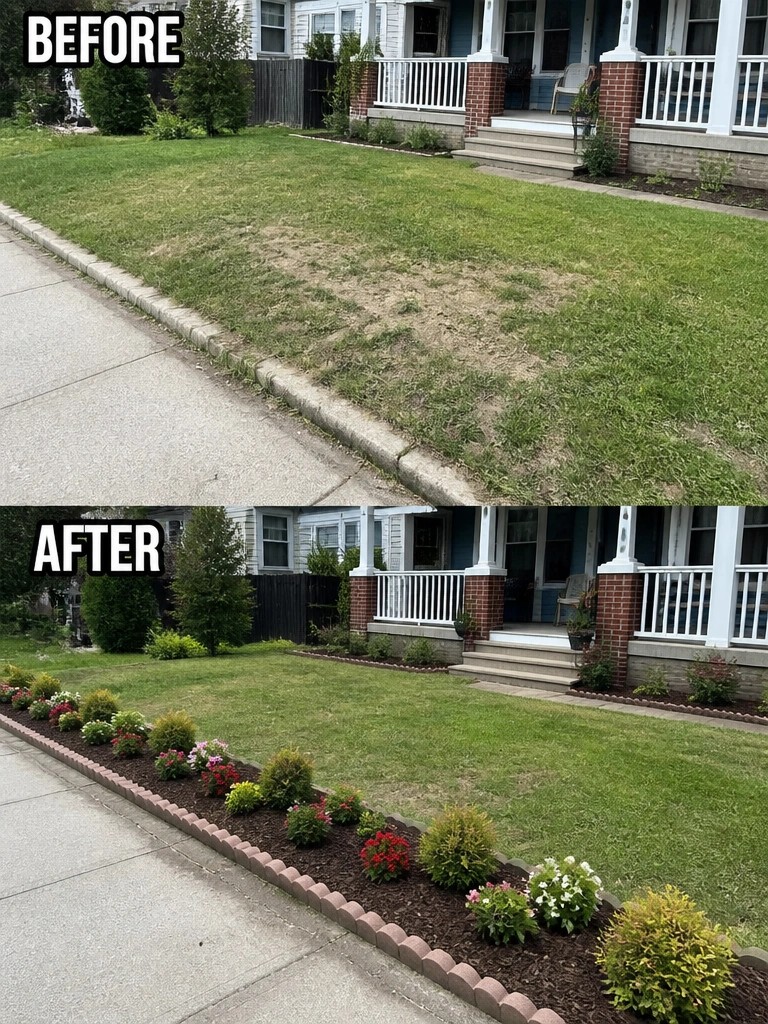
A patchy lawn often looks worse right next to the sidewalk, where grass thins out and bare soil shows through. Adding a simple planted border with edging and mulch gives the whole front yard a cleaner line and hides the uneven spots without needing to reseed the entire lawn.
This approach works best along straight edges like driveways or sidewalks. Keep the bed narrow enough to mow around easily, use a consistent border material, and choose a mix of low shrubs and seasonal flowers so the bed looks full without much ongoing work.
Add Vertical Planters To A Plain Wall

A blank wall next to patchy ground can look neglected fast. Adding a few vertical planters gives the area height and turns scattered weeds into a clear planting zone without needing much floor space.
This works well in small yards or paved areas where you want more greenery but cannot expand the beds. Start by clearing the base, then hang the planters at eye level so the plants soften the wall and the ground stays easy to maintain.
Frequently Asked Questions
Q: How do I pick plants that will fill in those bare patches quickly?
A: Go for fast spreaders like clover or creeping thyme that root as they grow. Set them out in small clumps and they will knit together on their own within a season. Water them lightly the first few weeks so the roots grab hold.
Q: What should I do about the soil if it looks dry and cracked?
A: Rake the surface loose first to let water soak in. Stir in a thin layer of compost right where you plan to plant. This one step keeps moisture near the roots without extra effort later.
Q: Is there a way to cover up the patches while waiting for plants to grow?
A: Spread straw mulch over the bare spots in the meantime. It stops erosion and gives the area a finished look until the new growth fills in. Rake a little aside when you are ready to set plants.
