


I have noticed that many backyards feel scattered until paths give them some order.
Planting along those routes then adds layers that change how the space works day to day without requiring major construction.
I usually test a basic path layout first because it shows right away where new beds will fit best.
Over time the combination of routes and greenery turns a basic yard into something that feels more settled and easier to maintain through the seasons.
A few of these setups work well even when space is limited.
Define A Narrow Side Path With Stepping Stones

A long concrete slab often makes a side yard feel more like a service corridor than part of the garden. Switching to individual stepping stones set in gravel breaks up the hard surface and lets planting run alongside the path without looking messy. The change immediately makes the space feel wider and more cared for.
This idea suits narrow strips between fences where a full patio would not work. Lay the stones first to set the walking line, then add low ground covers and a few shrubs on each side. Simple wooden edging keeps the gravel in place and gives the beds a finished look without much extra cost.
Use A Path To Give Your Garden Clear Structure

A basic lawn with nothing to guide movement often feels unfinished. Replacing a narrow dirt trail with a brick path and adding planted beds along the sides gives the space direction and turns an open yard into something that feels more like a garden.
This idea works best in smaller backyards where you want planting without crowding the lawn. Lay the path first along the main walking routes, then shape the beds around it. Keep the plantings simple at the start so the path stays the main organizing element.
Add Structure To An Overgrown Front Yard

The biggest shift here came from replacing the plain concrete walk with a brick path and trimming the wild shrubs into low, even hedges. Adding narrow flower borders along both sides gave the whole front a clear shape instead of just a strip of grass and dirt leading to the door. The result feels intentional without needing a full redesign.
This approach works well on older homes where the original walkway has settled or cracked. Start by cutting back whatever is blocking the view of the house, then lay a simple path that matches the scale of the entry. Low hedges or flower beds on each side keep things neat and guide visitors without crowding the space.
Add Paths And Planting To Shape An Empty Backyard

A bare yard with just a slab of concrete and gravel often feels like wasted space. Adding a stone path that winds through new planting beds gives the area clear structure and turns it into something you actually want to walk through. The plants fill in the edges and create layers that make the whole yard feel intentional instead of flat.
This idea works best in yards that start out completely open. Lay the path first so it connects the main entry points, then build the beds on either side. Use a mix of taller shrubs and lower perennials so the planting feels full without crowding the walkway.
Add Structure To An Overgrown Garden Path
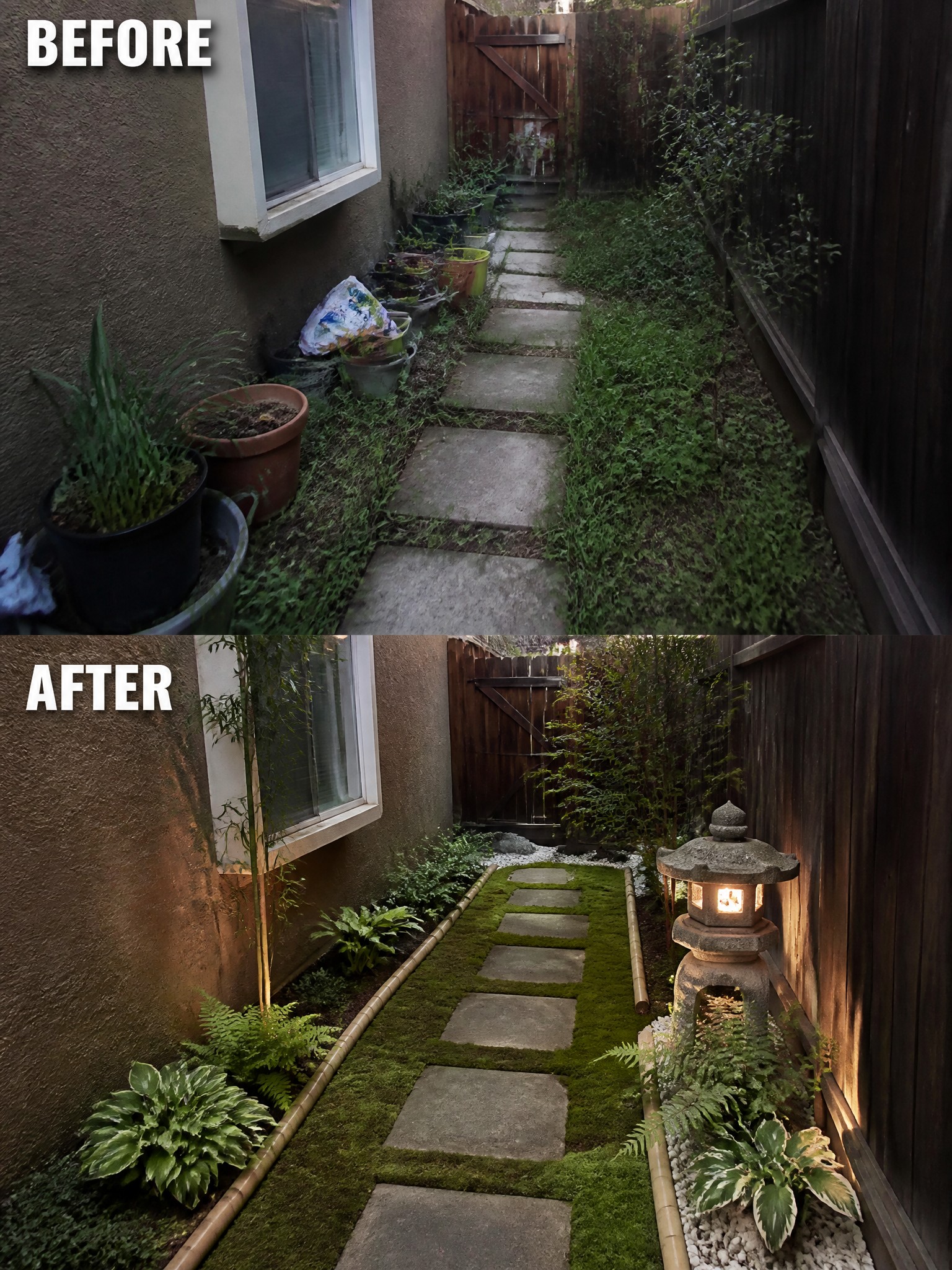
An overgrown path often looks worse than it really is. Clearing the weeds and adding simple borders like bamboo turns a messy walkway into something that feels planned and easier to maintain.
This idea works best along the side of a house or in a narrow yard. Define the edges first, then use low plants or ground cover to keep the path clear without crowding the space.
Terrace A Slope To Create Usable Garden Space
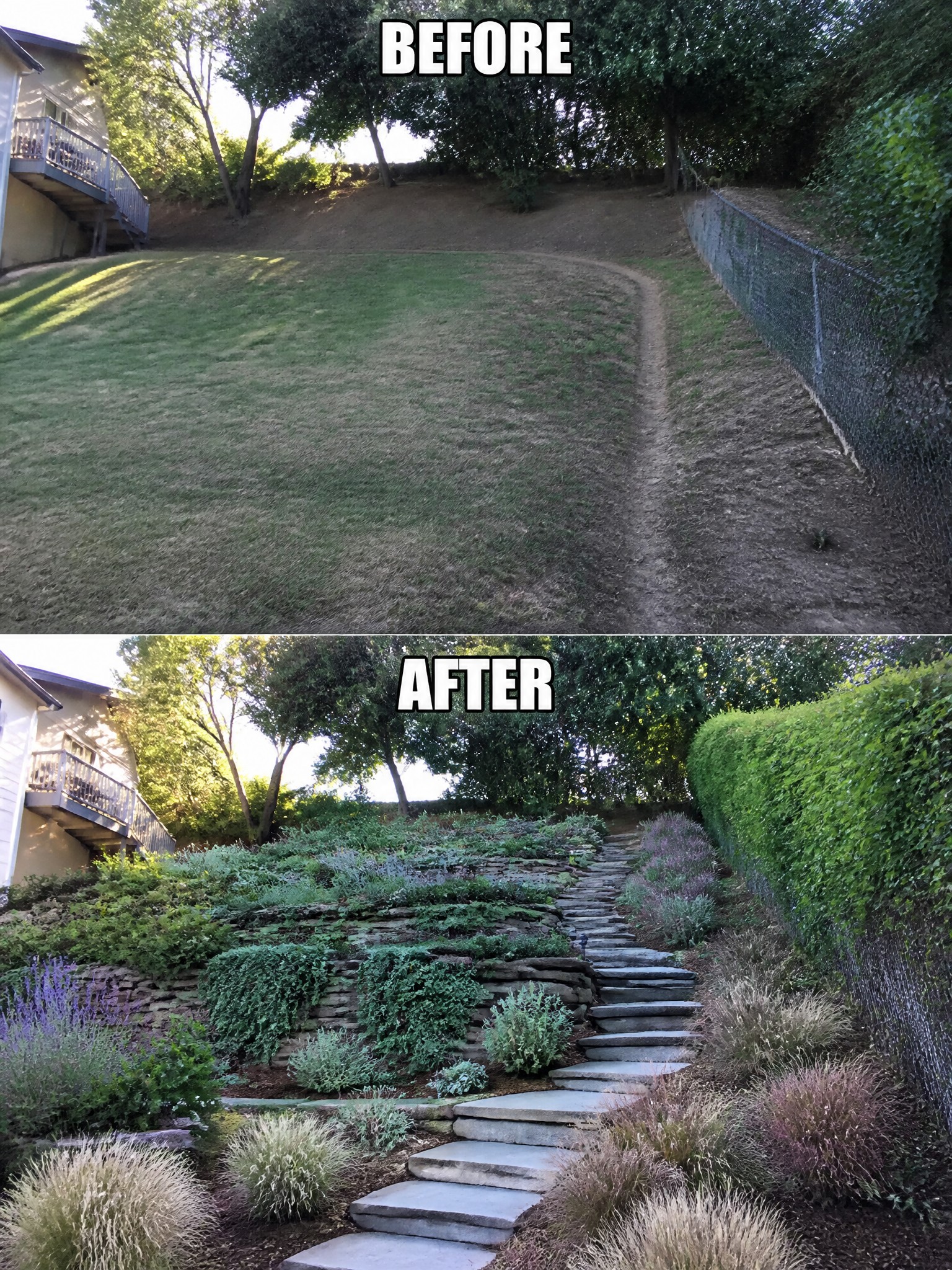
A bare slope with just grass and a worn dirt path often stays unused because it feels steep and hard to manage. Building low stone retaining walls turns the hill into level beds that hold soil and plants, while a stone staircase gives a clear way up and down. The change makes the whole area feel intentional instead of neglected.
This approach works best on yards with noticeable elevation changes where a flat lawn is not realistic. Start with the walls and path before adding plants, and choose low-maintenance varieties that spill over the edges. It keeps the slope stable and gives you room to garden without fighting the grade.
Add A Path And Planting Border Along A Driveway

A bare strip of dirt and weeds next to a gravel driveway can feel unfinished. Adding a simple stone path with a planted border turns that awkward edge into something that looks intentional and keeps the area looking tidy all year.
This approach works well on narrow side yards or along driveways where you want structure without losing space. Start with the path to set the line, then fill the bed with a mix of low shrubs and seasonal flowers. Mulch helps keep weeds down and makes the whole border look cared for.
Add A Path To Organize Planting In An Empty Backyard
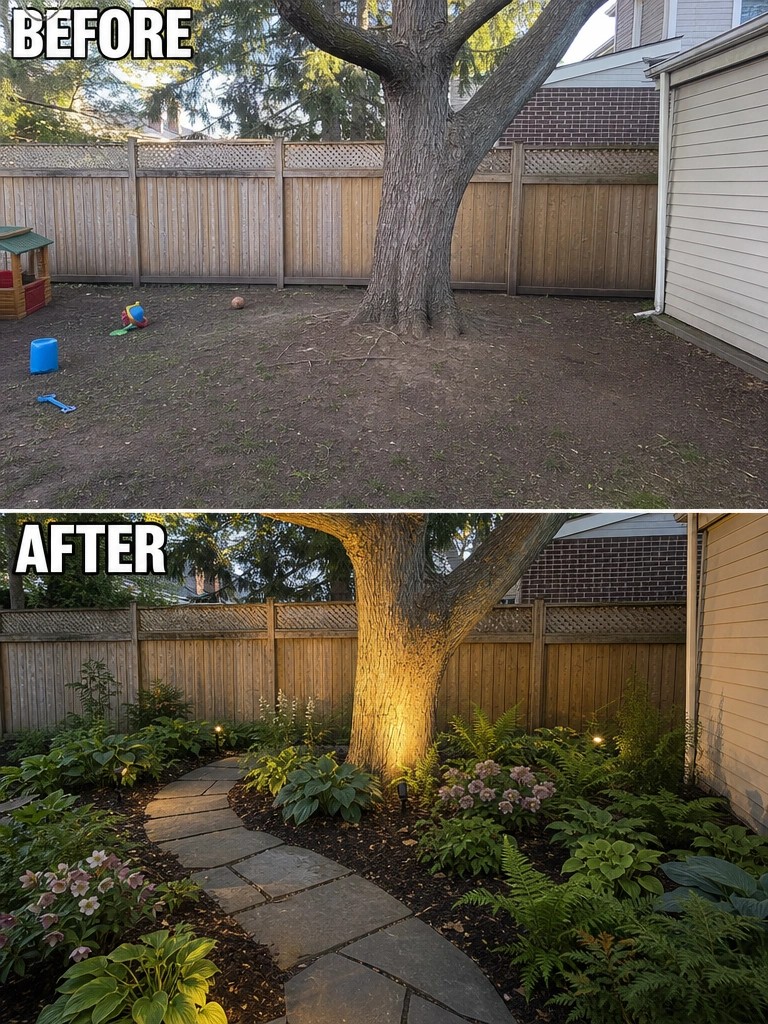
A large tree standing in bare dirt often leaves the yard feeling unfinished. Adding a curving stone path around the base creates clear zones for planting and turns the tree into a natural focal point instead of an obstacle.
This approach works best in smaller or shaded yards where the tree already dominates the space. Start with the path first, then build planting beds on either side using mulch and shade-tolerant plants. It keeps foot traffic off the beds and makes the whole area feel more intentional without needing a full redesign.
Add A Path To Create Defined Garden Beds
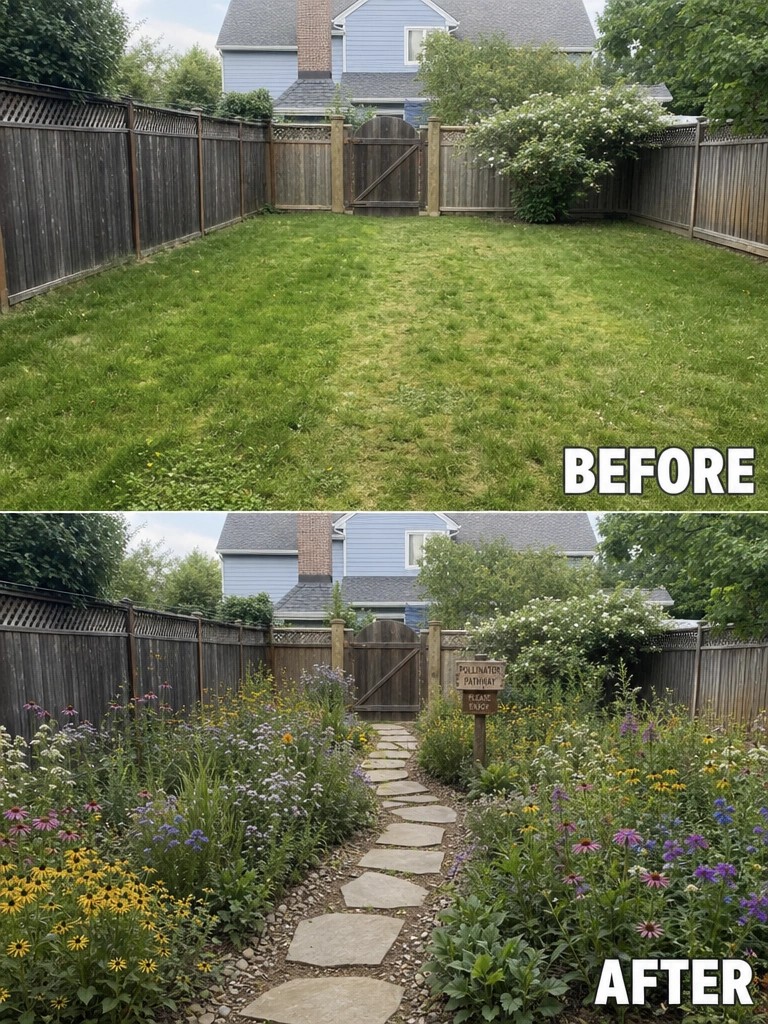
A plain lawn often feels unfinished because there is nothing to guide the eye or mark where planting should happen. Adding a simple stone path through the middle gives the space a clear direction and creates natural borders on each side for flowers and shrubs.
This approach works well in smaller backyards where you want to keep some open grass but still add interest. Start with the path first so the layout feels planned, then fill the beds with a mix of heights and colors that suit your climate. Keep the beds a consistent width so mowing stays easy and the whole area does not feel crowded.
Add Structure With A Stone Path And Hedges
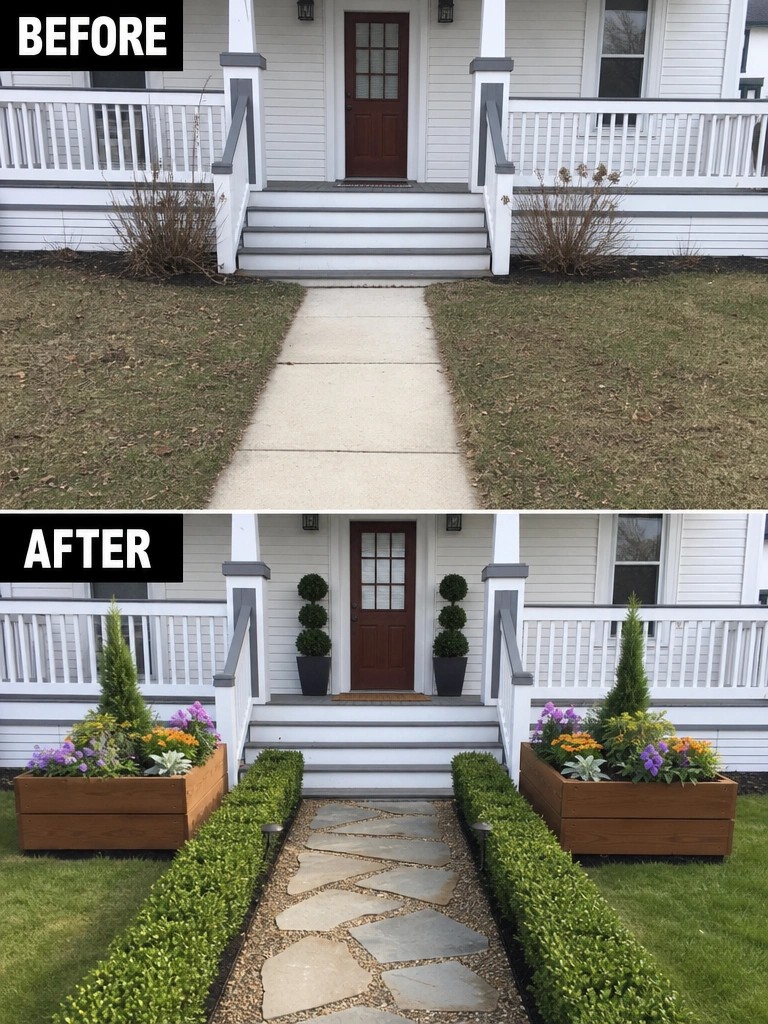
A straight concrete walk can make the front of a house feel flat and unfinished. Switching to an irregular stone path with gravel edges gives the eye something to follow and makes the space feel more settled. Low boxwood hedges on both sides and a pair of simple planters at the steps add the same kind of order without crowding the yard.
This approach works well on any modest front lawn where the main goal is to lead people to the door and keep the planting easy to maintain. Start with the path so the shape of the beds is clear, then choose one or two evergreen shrubs that stay neat year-round. The result is a front yard that looks planned instead of leftover.
Use Pavers To Create Structure In A Small Yard

A bare patch of dirt behind the house often feels like wasted space because there is nothing to anchor the eye or give the area a purpose. Adding a simple paved circle changes that right away. The bricks mark out a clear spot for seating while the surrounding gravel and plants keep everything from looking scattered.
This approach works well in compact backyards where you want a usable area without filling the whole space. Start with the paving to set the main shape, then build planting beds around the edges so the garden feels planned instead of added on later. Keep the center open enough for a couple of chairs and a path around the outside.
Add Structure To An Overgrown Side Yard

A narrow strip next to the house often turns into a weedy mess because it has no clear shape. Low stone walls fix that by creating raised beds that hold the soil and give plants a place to grow in an organized way. Adding a path of stepping stones then makes the space usable instead of just a strip of dirt.
This idea works best in tight side yards where you still need room to walk and reach the plants. Clear the area first, then build the walls and path before planting. It keeps everything contained and easy to maintain without taking up extra width.
Add Structure To An Overgrown Garden Border

An overgrown fence line often looks messy because there is no clear shape to the planting or the path. Adding a few simple arches and a brick walkway changes that fast. The arches give the roses a place to climb and keep the flowers from spilling everywhere, while the path turns a dirt track into something you can actually walk on.
This idea works best along a side yard or back fence where you want the garden to feel planned without spending a lot. Start with the path first so you know where the beds will sit, then add two or three arches and fill in with lower plants like lavender in front. It keeps the space from feeling wild while still leaving room for the plants to grow.
Add Structure To An Overgrown Path Area

A rough dirt track through grass and scrub often feels aimless. Laying down a simple boardwalk with rope sides and gravel edges turns the same route into something you can actually follow and maintain.
This approach works well on sloping or coastal sites where drainage matters. Start with a clear path line first, then add planting along the sides so the new structure has something to sit beside rather than floating in open ground.
Add Structure To A Plain Backyard With Paths
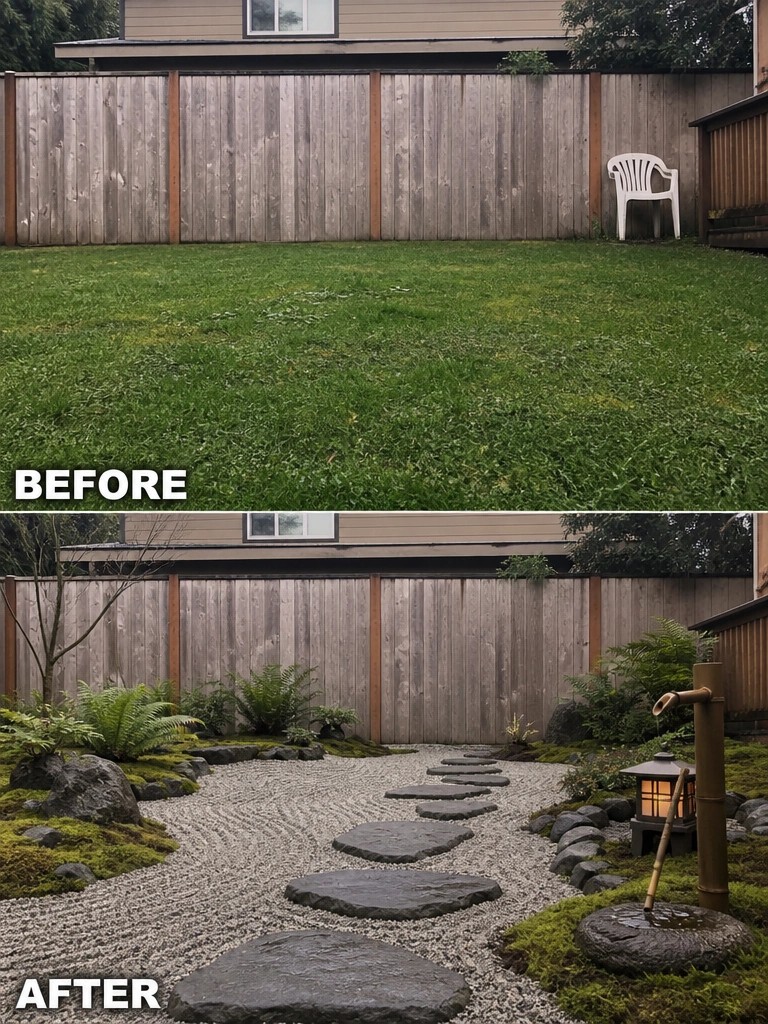
A flat lawn often feels unfinished because there is nothing to guide the eye or create a sense of movement. Adding a clear path made of gravel and stepping stones gives the space shape right away and turns an empty area into something you can actually walk through and enjoy.
This approach works best in smaller yards where you want to keep things simple. Lay out the path first, then add planting along the edges so the garden feels intentional rather than scattered. Keep the materials consistent and leave enough open gravel so the space does not feel crowded.
Add A Path And Vertical Planting To A Small Balcony

A bare balcony often feels like wasted space when it has nothing but a couple of chairs. Adding a clear path of pavers and building a vertical garden along one wall gives the area structure and makes it feel more like an outdoor room.
This idea works best on narrow balconies where you need to keep walking space open. Start with simple deck tiles or pavers to define the path, then add a few wall-mounted planters on one side so the planting does not take up floor room.
Add Structure To An Overgrown Yard

Replacing scattered stepping stones with a straight paved path makes the whole side yard feel planned instead of neglected. The gravel borders and fresh planting beds keep the edges clean and stop mulch from spilling onto the lawn.
This approach suits narrow side yards or back gardens where the path has no clear shape. Clear the old surface first, then choose simple pavers that run in one direction and add a low border to hold the beds in place.
Add A Raised Planter To Organize A Side Yard
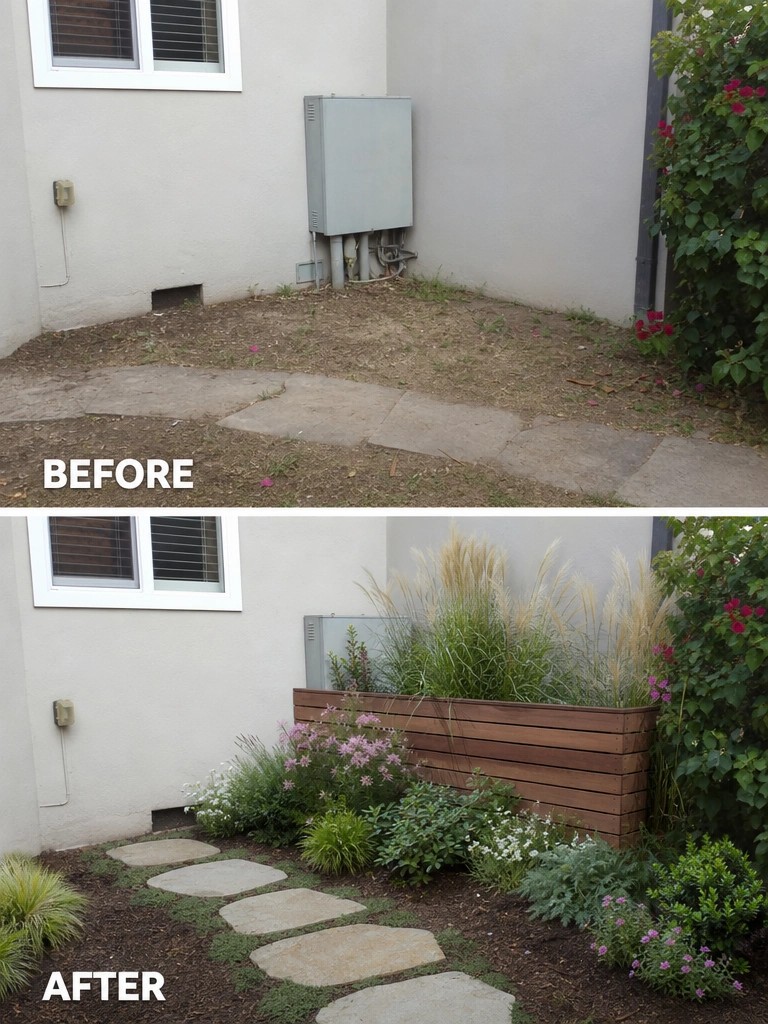
A plain strip of dirt next to the house often stays neglected because it feels awkward to plant around pipes and utility boxes. Adding one raised wooden planter gives the space a clear edge, turns the utility box into part of the planting instead of the main focus, and keeps the path open and easy to walk.
This approach works well on narrow side yards or any spot where you need planting without digging deep or fighting existing structures. Keep the bed a simple rectangle, choose a few grasses and low flowers that can handle the light, and let the wood weather naturally so the whole area feels settled rather than decorated.
Add A Winding Path To Organize Your Backyard

A winding stone path can turn a loose backyard into a space that feels more put together. In this case the old dirt trail was replaced with a clear walkway that curves through the yard, and simple planting beds were added along the edges to frame it. That single change makes the lawn areas feel more intentional and easier to use.
This approach works best in yards that are mostly open grass with no real structure. Keep the path width comfortable for walking and let the planting stay low so it does not crowd the walkway. It is a practical first step before adding furniture or other features.
Define A Narrow Side Yard With A Brick Path

A dirt path next to the house often ends up as wasted space that just gets weedy and ignored. Laying a brick path gives the area a clear route and creates edges that make planting feel purposeful instead of random.
This approach suits long, narrow strips where you need both access and some greenery. Keep the path width comfortable for walking, then plant right up to the bricks so the beds stay tidy and the whole side feels more finished.
Use Pavers To Frame A Small Pond

A bare patch of dirt in the middle of the lawn can feel like wasted space. Adding a simple circle of pavers around a new pond gives the area a clear shape and turns it into a focal point instead of an empty spot. The stone border also makes the planting look more intentional and keeps the grass from creeping in.
This idea works well in smaller yards where you want one defined feature rather than scattered beds. Start with the edging and path first, then add plants around the water. Keep the circle modest so it still leaves room to walk around it and mow the rest of the lawn without trouble.
Use Pavers To Add Structure To A Narrow Side Yard

A long strip of cracked concrete next to the house often feels like wasted space. Switching to pavers breaks up the surface, gives the path a clear shape, and makes room for low planting along the edges. The bench tucked against the wall also shows how one small piece of storage can keep the area from looking cluttered.
This approach works well on tight side yards or service paths where you still need access but want something better than bare concrete. Start with a simple paver layout that leaves space for ground cover, then add plants that can handle foot traffic and varying light. Keep the planting low so the walkway stays easy to use year round.
Add Lighting Along A Garden Path

A simple gravel path can feel forgotten once the sun goes down. Adding low lights along the edges and switching to stone pavers gives the path a clear shape and makes it easy to use after dark. The plants stay, but they now sit in defined beds instead of spilling over everything.
This works well in side yards or back gardens where you want to walk through at night without tripping or using a flashlight. Start with the path itself, then add just enough lights to mark the way. Keep the spacing even so the effect stays calm rather than busy.
Frequently Asked Questions
Q: How wide should I make the paths so a wheelbarrow fits without scraping the plants?
A: Aim for at least three feet across on main routes. That gives enough room to roll through while leaving space for edging plants to spill over a little. Narrower side paths can stay tighter if they only see foot traffic.
Q: What can I plant right next to gravel so the stones do not end up in the beds?
A: Low ground covers like creeping thyme or ajuga work well because they knit together fast. They form a soft barrier that traps the gravel and softens the edge at the same time. Water them in well the first season so roots take hold quickly.
Q: Do I need to dig out the soil before putting down any path material?
A: Yes, remove a few inches of topsoil on the route first. This step stops the path from sinking over time and keeps weeds from pushing through. Add a layer of landscape fabric right after for extra help.
