


Small corners in a garden often end up ignored because they sit behind other plantings or get awkward to maintain with standard tools.
I have noticed that a quick cleanup followed by a simple edging or path line can make those spots feel connected to the rest of the yard instead of left behind.
It helps to start with one change at a time.
Once the basic shape is set the right plants can settle in over a couple of seasons and start to soften the edges without constant work.
That kind of steady adjustment shows how tight areas improve when the focus stays on layout rather than adding more pieces right away.
Turn A Narrow Corner Into A Container Garden

A bare dirt strip next to the house often gets ignored because it feels too small and awkward to work with. Adding a trellis for height and grouping pots on fresh mulch gives the space purpose without needing to dig beds or expand the area.
This idea suits homes with tight side yards or back corners where space is limited. Use a mix of pot sizes, repeat a few plant colors, and keep the ground cover simple so the corner stays easy to maintain over time.
Add Raised Planters To Give A Narrow Side Yard Structure

A cracked concrete path with nothing but weeds along the edges feels like leftover space rather than a garden. Placing two long raised wooden planters along one wall immediately creates clear beds, adds height, and turns the area into something that looks planned instead of neglected.
This idea works best in tight side yards or between houses where there is little room for traditional planting. Use simple, sturdy planters that can handle weather, keep the plant choices low-maintenance, and leave enough walkway width so the space still functions as a passage.
Use Raised Planters To Shape A Tight Corner Garden

A bare dirt corner next to the house often stays empty because the ground feels too uneven and open. Adding a few stacked stone planters gives the space clear edges and enough depth for plants to take hold without fighting the slope or the fence line.
This approach works well on small lots where digging new beds is not practical. Start with two or three planters in a gentle curve, fill them with soil, and mulch the ground around them so the whole area looks finished. Keep the bench and cushions simple so the corner stays usable without crowding the walkway.
Add Vertical Planting To A Blank Fence Corner

A bare fence corner with only gravel and a single pot often looks unfinished. Mounting a simple pallet planter filled with succulents and trailing plants gives the wall height and turns the empty space into the main feature. The ground pots stay low so the vertical planting gets all the attention.
This idea works best in small yards where floor space is tight. Secure the pallet firmly, pick plants that match the light, and avoid overcrowding the base so the corner stays open and easy to walk around.
Terrace A Steep Slope To Create Usable Garden Beds

A bare dirt slope next to the house often stays empty because it is hard to plant and hard to maintain. Adding low stone retaining walls turns the same slope into flat planting areas that hold soil and water better. The change makes the space look intentional instead of neglected.
This approach works well in narrow side yards or corners where a flat lawn is not possible. Start with the lowest wall first, then work upward so each level stays stable. Keep the path simple with a few stepping stones so you can reach the plants without compacting the soil.
Add A Tiered Stand To A Narrow Corner
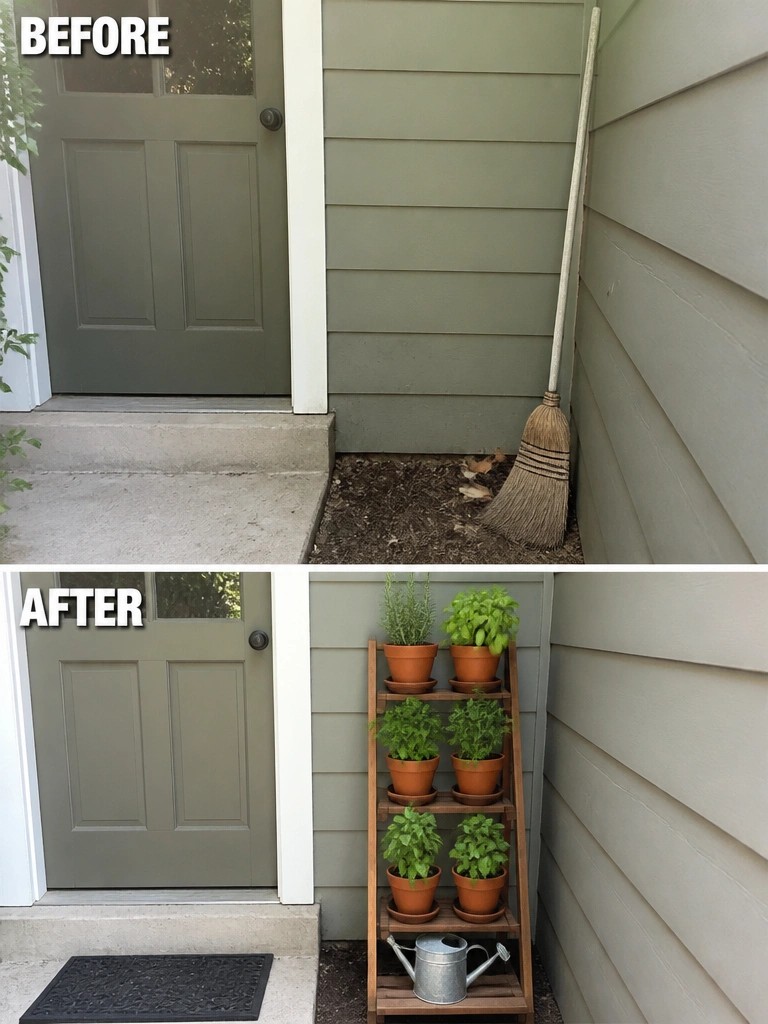
A bare strip of dirt next to the door does not offer much, but a simple tiered stand turns it into a useful spot for herbs. The change works because it adds height and order without spreading out across the ground, which keeps the walkway clear.
This idea suits homes with tight side areas or small entry zones where a full garden bed would not fit. Choose a stand that can handle weather, group plants by height, and leave a little space at the bottom for a watering can or tools so the corner stays practical.
Use A Trellis To Add Height In A Tight Corner
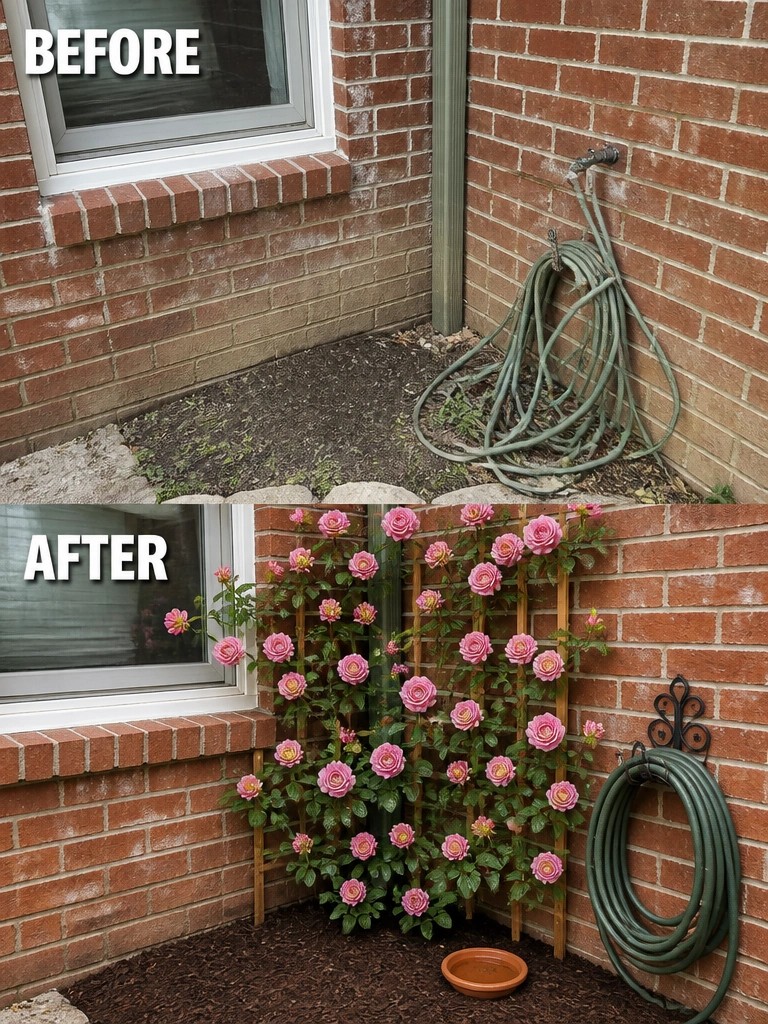
A trellis gives a small corner something to grow on instead of leaving the wall bare. Here the change is simple. A coiled hose against plain brick became a planted trellis that fills the space without crowding the ground.
This idea works best along house walls or fences where floor space is limited. Put the trellis in first, then add one or two climbers that match your climate. Keep the rest of the corner clear so the plants have room to spread.
Turn A Bare Corner Into A Small Fountain Garden
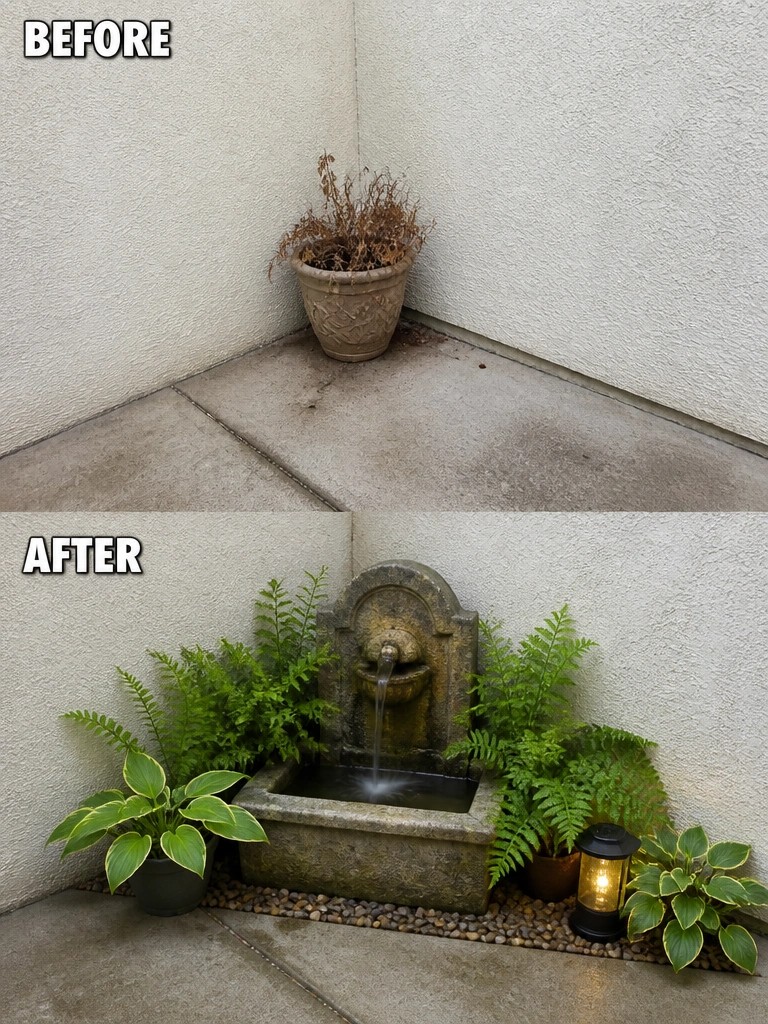
A neglected corner with just one dying plant can feel like wasted space. Adding a small fountain gives the area a clear purpose and turns it into something you actually want to look at. The gravel base and a few well-chosen plants keep everything contained without crowding the spot.
This idea works best in small yards or side areas where you need one strong feature instead of lots of separate pieces. Start by clearing out anything dead, then place the fountain first so the rest of the planting can frame it. Keep the surrounding plants simple and repeat a couple of textures so the corner stays easy to maintain.
Turn An Empty Balcony Into A Seating Area
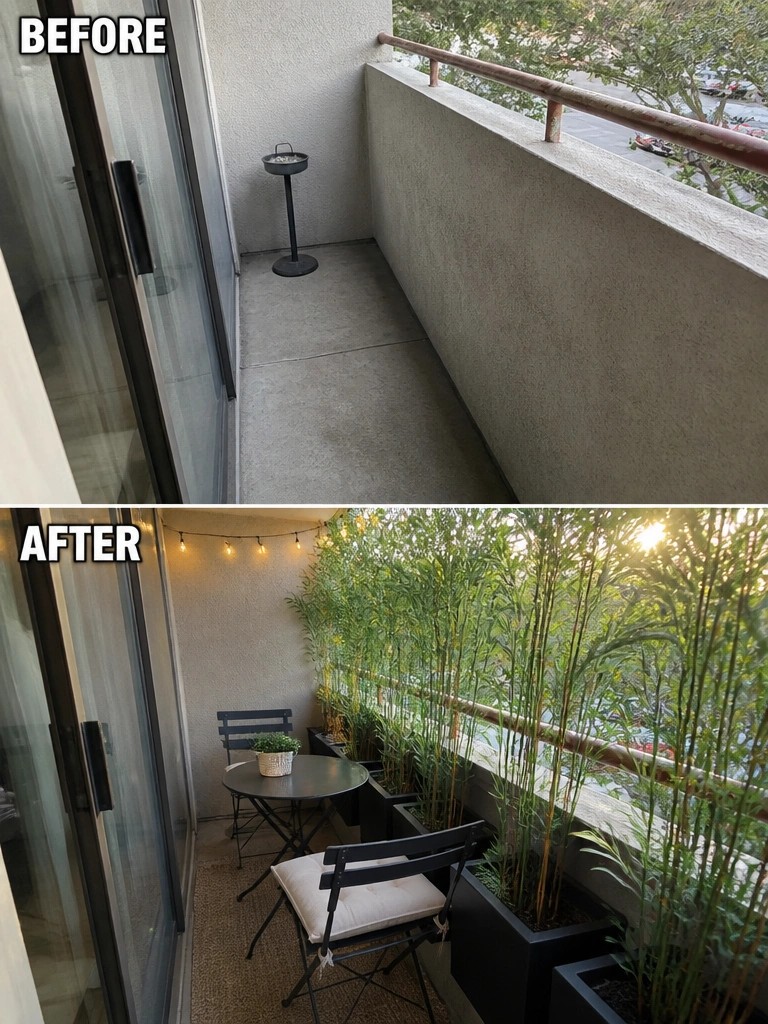
A bare concrete balcony can feel like wasted space until you add a few planters and a small table set. The change comes from placing tall plants along the edge and fitting in compact chairs with a round table, which turns the spot into a place to actually sit and spend time.
This idea works best on narrow balconies where floor space is tight. Choose folding furniture that can be moved aside when needed and stick with a few large planters rather than many small ones so the area stays open enough to walk through.
Define A Narrow Side Strip With Simple Edging

A narrow strip of grass next to the house often looks messy because it has no clear edge. Adding a low border and mulch turns that same space into a planted bed that stays tidy and gives the area purpose. The change works because the edging keeps the mulch in place and stops the grass from creeping back in.
This idea suits tight corners along a foundation or walkway where there is not much room to work. Start with the border first, then add a few plants and mulch rather than trying to fill the whole area at once. Keep the bed narrow enough that it still leaves room to walk by.
Add Defined Beds To A Narrow Side Strip

A narrow strip along a fence is easy to overlook, but giving it clear edges turns it from wasted space into something useful. Laying gravel and rocks first creates a clean border that keeps the area from looking scattered.
This idea suits any tight side yard where you want low maintenance. Use a simple stone edge, add gravel for drainage, and stick with hardy plants that can handle sun and limited soil depth.
Turn A Bare Corner Into A Defined Garden Bed
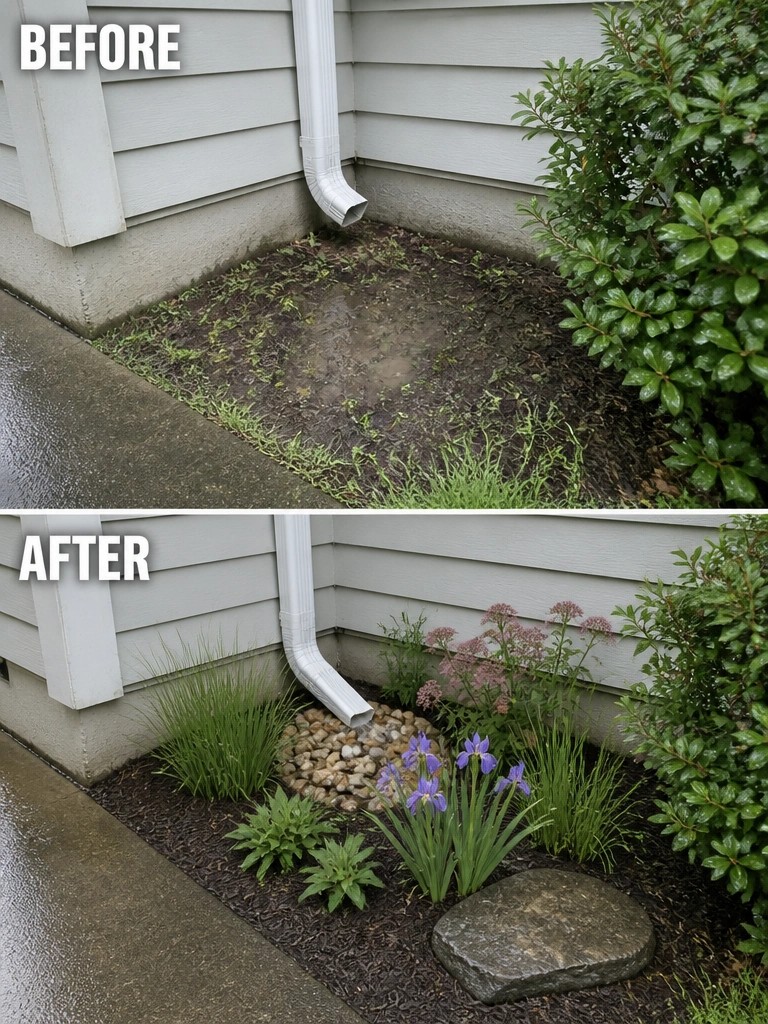
A muddy patch under a downspout is a common problem in small yards. Adding a clear edge, a layer of mulch, and a few rocks around the pipe turns the spot into a proper planting area instead of a place where water just sits and weeds take over.
This approach works well in tight spaces along the foundation where you need drainage and easy access. Keep the plants low near the house, use mulch to hold the soil in place, and leave one flat stone so you can reach the downspout when needed.
Maximize A Tight Corner With Vertical Garden Planters

Many small balconies end up with a corner that just collects clutter because there is not much floor space to work with. A simple tiered planter stand changes that by stacking the growing area upward instead of spreading it out.
This idea suits apartments or homes with limited outdoor room where every inch counts. Place the stand against the wall, add a few side pots for herbs, and keep the rest of the floor clear so the area stays usable.
Build Retaining Walls To Turn A Slope Into Garden Beds
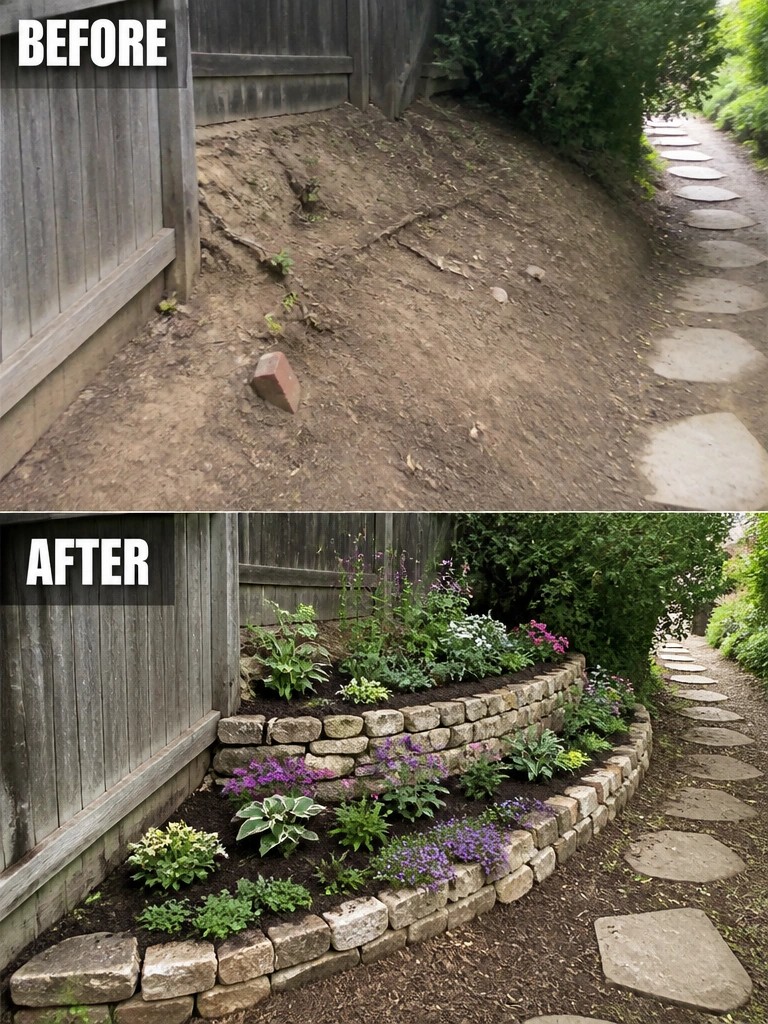
A bare dirt slope next to a fence often stays unused because nothing stays in place and the area feels unfinished. Adding low stone retaining walls creates flat planting tiers that hold soil in place and turn the same narrow space into actual garden beds.
This approach works well in tight corners where a flat lawn is not possible. Start with the walls to set the shape, then fill each level with plants suited to the light. Keep the number of tiers modest so the beds do not crowd the path or the fence.
Turn A Tight Corner Into A Cozy Seating Spot

A narrow gap under the eaves often collects old pots and ends up ignored. Running string lights along the wall and adding one low seat with a plant gives the space a clear purpose and makes it feel like an outdoor room instead of leftover ground.
This works best in side yards or under house overhangs where natural light is weak. Use weatherproof seating that stays low to the ground, and add the lights first so the corner feels usable at night without crowding the narrow path.
Add Wall Planters To A Fence In A Tight Corner
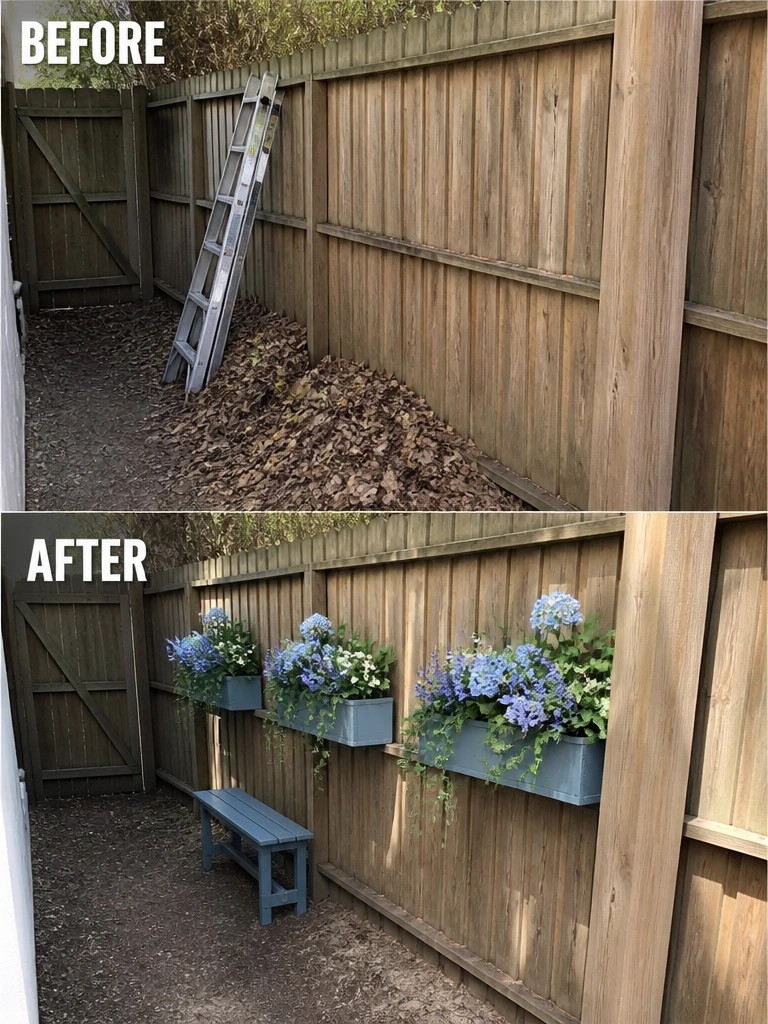
A blank fence next to a gate often becomes a catch-all for tools and leaves. Mounting a row of simple boxes along the wood turns that same wall into a planting area without taking up any floor space. The change is mostly about using the vertical surface that already exists.
This approach works well in narrow side yards or corners where a full bed would feel cramped. Keep the boxes shallow, choose plants that trail a bit, and add one small seat if there is room. The result stays practical as long as the fence can support the weight and the soil drains properly.
Use Pots To Make The Most Of A Tight Corner
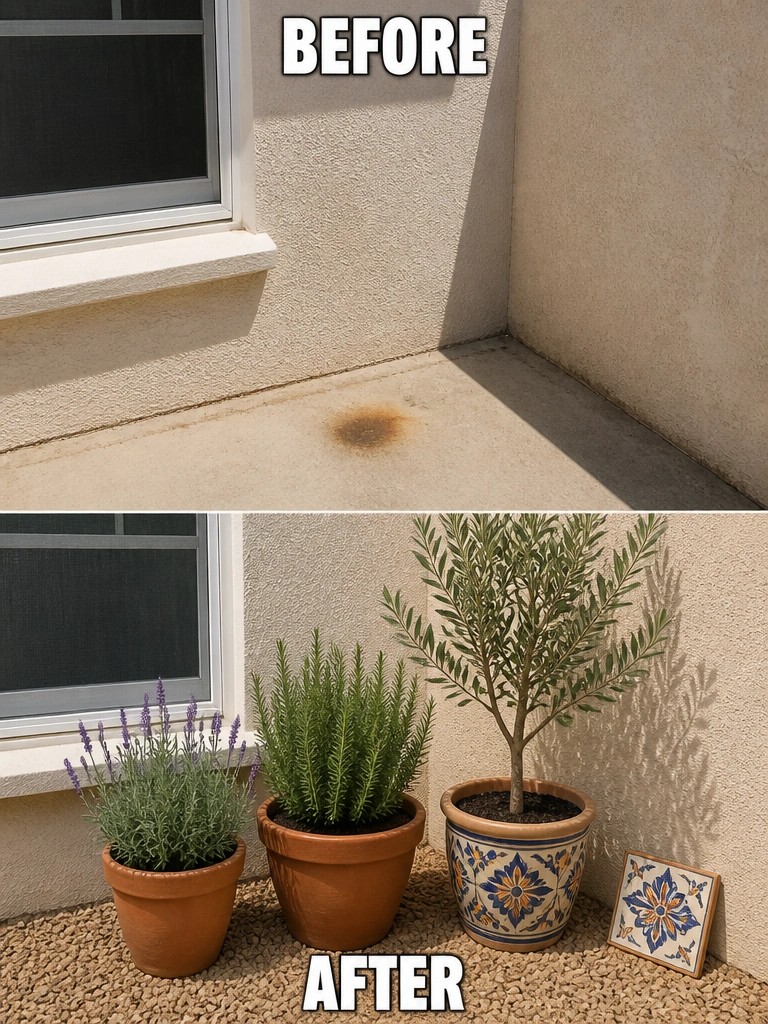
A bare concrete corner next to the house often sits empty because it feels too small or awkward to work with. Placing a few pots of different sizes and heights, then adding gravel over the ground, gives the space a clear purpose without any major construction.
This idea suits narrow side yards or entry corners where soil is limited or digging is difficult. Keep the number of pots modest so the area stays open, and choose plants that can handle sun and dry conditions.
Use Pavers To Give A Tight Corner Garden Structure
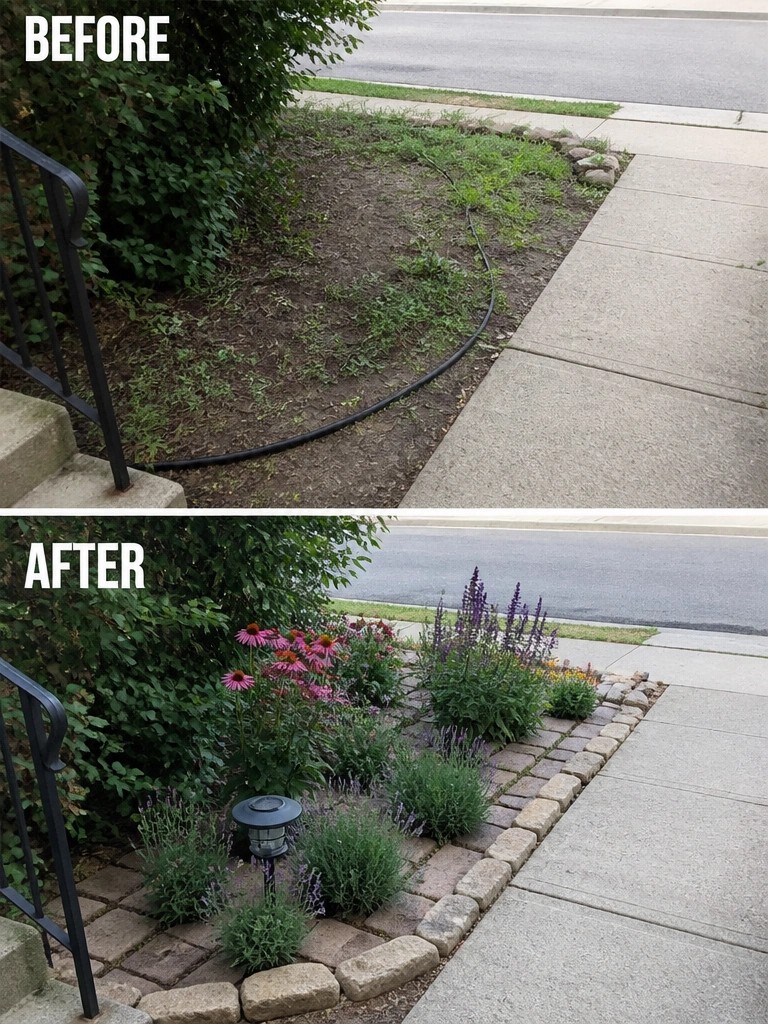
A bare patch of dirt next to the sidewalk does little for a small garden. Adding a simple paver layout creates a clear shape, stops the area from looking messy, and gives plants a place to settle without spilling onto the path.
This approach works best in narrow spots where you need order before adding too many plants. Start with the edging and base, then fill in with low shrubs and a few taller flowers so the bed feels planned instead of crowded. Keep the scale modest so the walkway stays clear.
Frequently Asked Questions
Q: What plants actually stay small enough for a super narrow corner without taking over?
A: Pick compact options like dwarf boxwood or creeping thyme that grow slowly. Check the mature size on the tag before you buy. Trim lightly once a month to hold the shape you want.
Q: My corner gets almost no sun. Will anything still look good there?
A: Try ferns or begonias that handle shade well. They fill out nicely in pots without needing much light. Move them around a bit at first to see which spot feels best.
Q: How do I keep the soil from drying out fast in such a tight space?
A: Water in the morning and add a layer of mulch on top. This holds moisture longer so you do not have to fuss every day. Check with your finger before you add more.
