

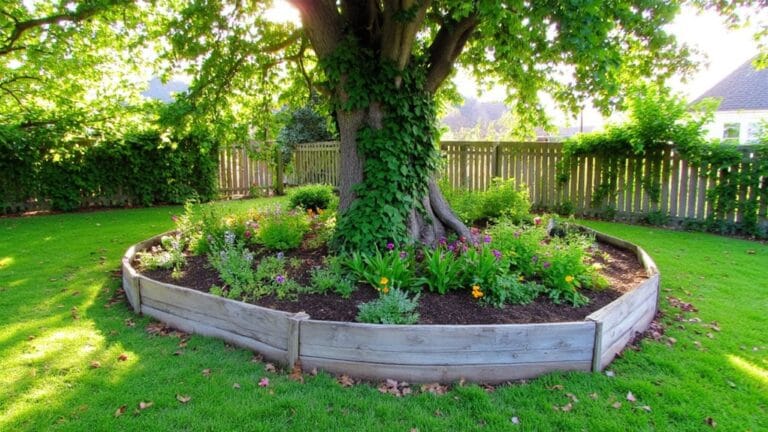
I’ve always adored the charm of raised garden beds circling a tree, offering a touch of elegance to any outdoor space. They enhance the garden’s visual appeal while maximizing the use of limited planting areas. As I explore different designs, I’ll share tips on creating a lovely blend of plants, keeping in mind the sunlight and compatibility with the tree. Discover the potential for transforming your garden into a lively and beautiful haven. Let’s explore the possibilities together.
Benefits of Combining Trees and Garden Beds
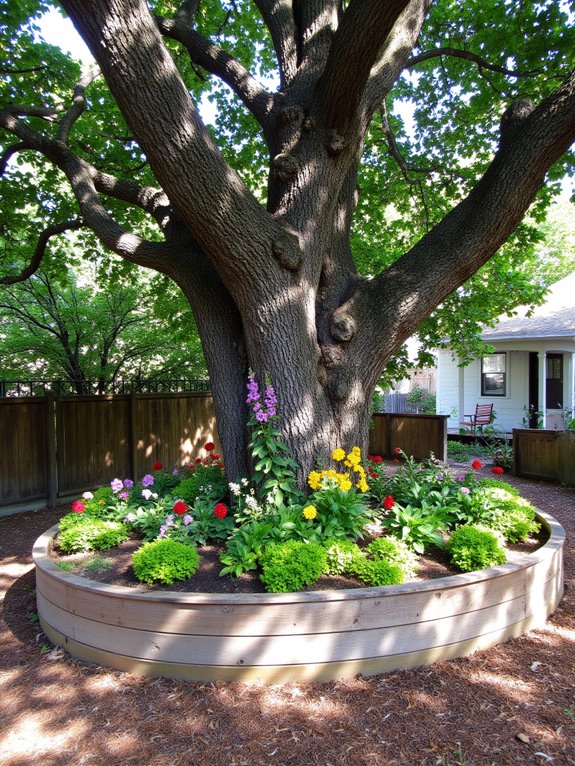
Combining trees with raised garden beds not only enhances the aesthetic appeal of my yard but also creates a thriving ecosystem.
The trees provide shade, which helps regulate soil temperature and moisture for my plants. Plus, their roots stabilize the soil, preventing erosion.
I love how this combination attracts beneficial insects and birds, making my garden feel alive and vibrant.
Selecting the Best Trees for Garden Bed Compatibility
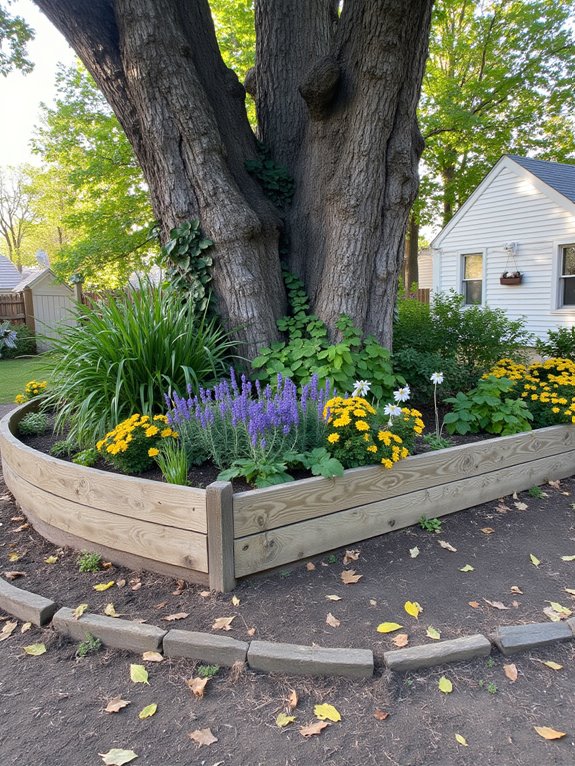
Finding the right trees to pair with my raised garden beds can greatly enhance the overall health and productivity of my garden.
I focus on selecting trees that have compatible root systems and won’t compete for nutrients. Fruit trees, dwarf varieties, and those with shallow roots often work best.
This way, I create a harmonious balance, allowing both the trees and my plants to thrive together.
Designing Your Garden Beds for Maximum Sunlight
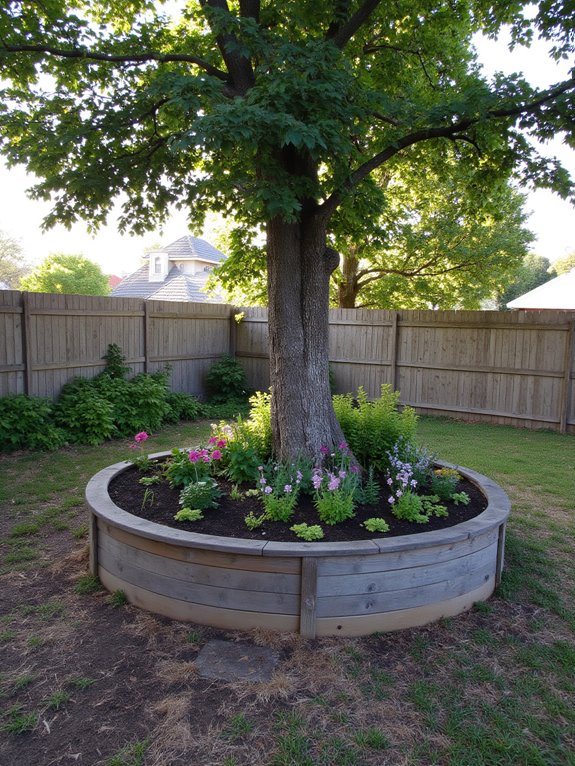
To guarantee my raised garden beds receive maximum sunlight, I carefully consider their placement and orientation.
I position them to face south, ensuring they soak up those precious rays throughout the day.
It’s also essential to avoid tall plants nearby that could cast shadows.
Creative Shapes for Raised Garden Beds Around Trees
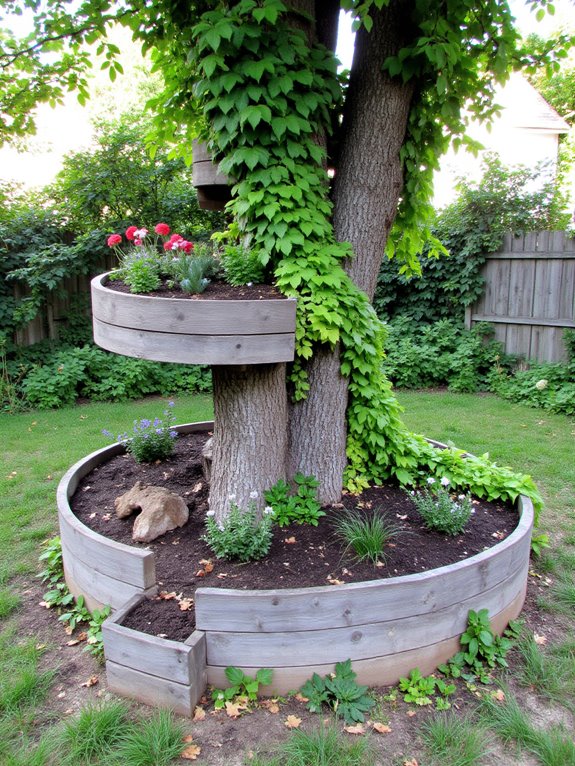
After ensuring my raised garden beds bask in plenty of sunlight, I often look for ways to incorporate them around existing trees.
I love experimenting with creative shapes like circular or semi-circular beds that hug the tree trunk.
These unique designs not only enhance the garden’s aesthetic but also provide ample space for planting a variety of flowers and herbs.
How to Use Trellises and Climbing Plants in Raised Beds
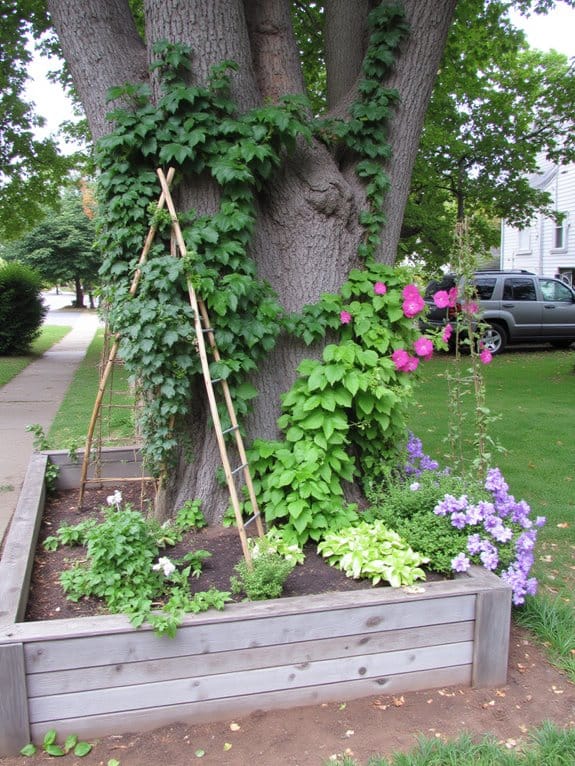
Incorporating trellises and climbing plants into my raised garden beds has transformed my gardening experience.
I’ve added sturdy trellises to support beans, cucumbers, and peas, creating vertical growth that saves space and adds visual interest.
The plants thrive as they climb, allowing for better air circulation and sunlight exposure.
Plus, it’s so rewarding to watch them flourish in my garden!
Incorporating Native Plants for a Balanced Ecosystem
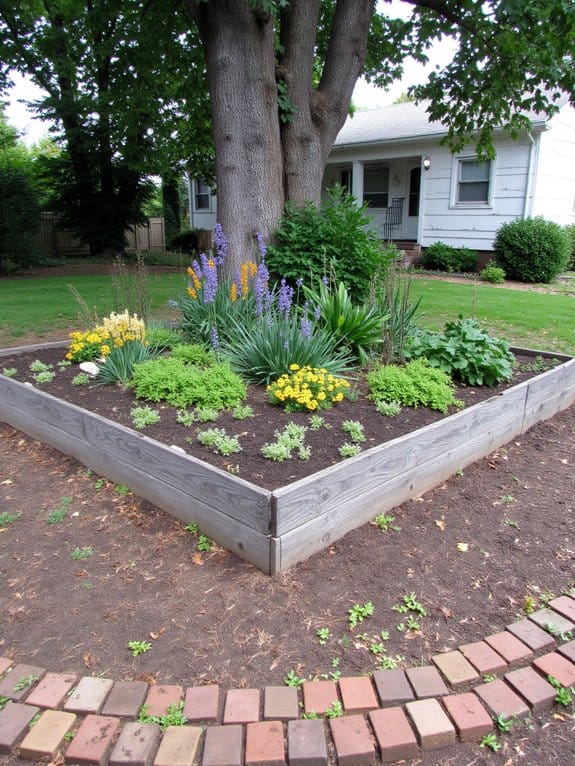
While I’ve enjoyed experimenting with various plants in my raised garden beds, adding native plants has truly enhanced my garden’s ecosystem.
These plants thrive in my local climate, attract beneficial pollinators, and support local wildlife. I’ve noticed a significant increase in biodiversity, which makes my garden healthier and more vibrant.
Plus, they require less maintenance, letting me enjoy my garden even more!
Protecting Tree Roots With Base Frames
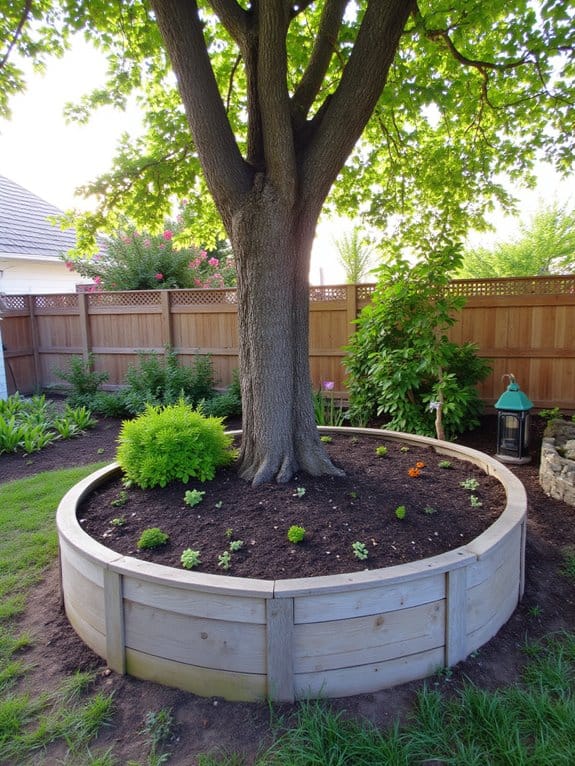
To protect the delicate roots of trees in my raised garden beds, I’ve found that using base frames can make a significant difference.
These frames elevate the bed, allowing for better drainage and preventing soil compaction around the roots.
I’ve noticed healthier trees and thriving plants since I started using them.
Plus, they add a structured look to my garden design!
Best Soil Mix for Healthy Growth in Raised Beds
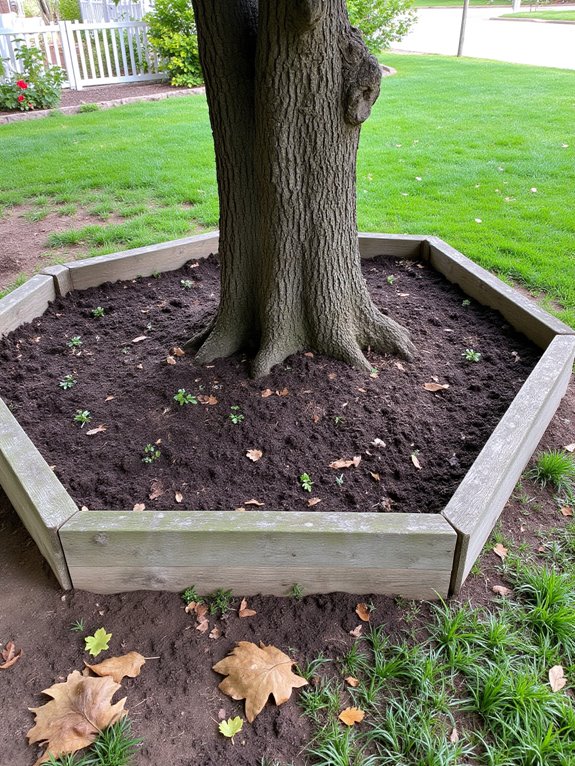
After ensuring the roots of my trees are protected with sturdy base frames, I turned my attention to the soil mix in my raised garden beds.
I’ve found a blend of equal parts compost, peat moss, and vermiculite works wonders. This combination retains moisture, provides nutrients, and promotes healthy drainage.
Healthy soil truly makes a significant difference in my plant growth and overall garden success.
Companion Planting Strategies for Tree Shade
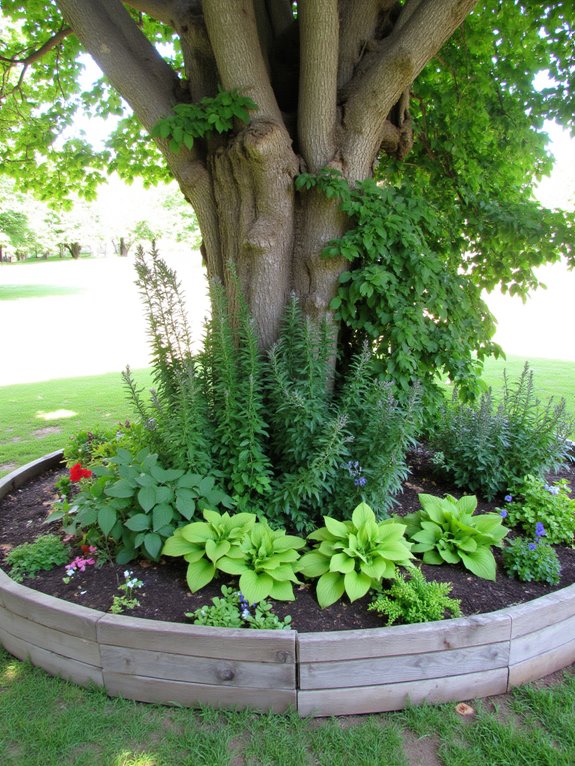
When planning my garden beneath the shade of trees, I’ve discovered that companion planting can really enhance growth and yield.
For instance, I’ve paired shade-tolerant herbs like mint and parsley with my vegetable plants. They thrive together, and the herbs deter pests.
Additionally, I’ve found that planting flowers like nasturtiums attracts beneficial insects, creating a healthier, more vibrant garden environment.
Seasonal Planting Ideas for Year-Round Interest
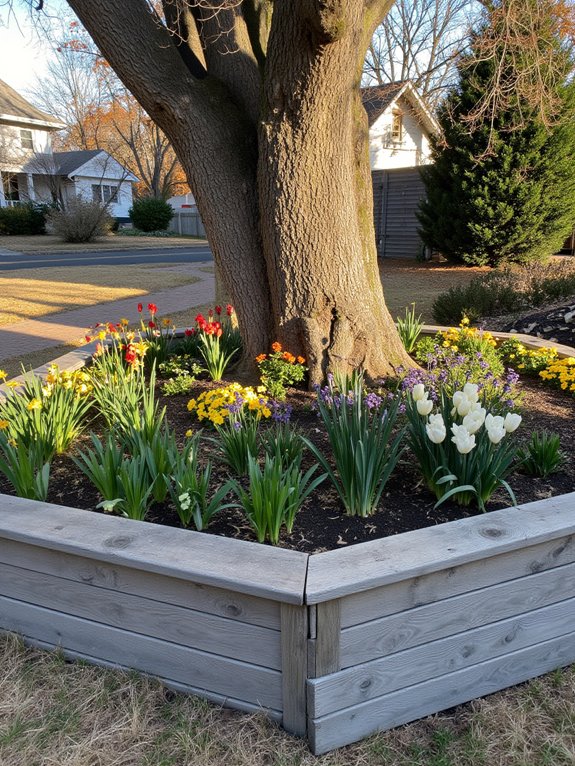
Although it might seem challenging to maintain a vibrant garden throughout the year, I’ve discovered that seasonal planting can keep my raised beds full of life and color.
For spring, I love planting pansies and snapdragons. In summer, I switch to zinnias and cosmos.
Come fall, I enjoy ornamental cabbage and kale, while winter brings hellebores and winterberry for a lovely touch.
Decorative Edging Ideas for Your Raised Garden Beds
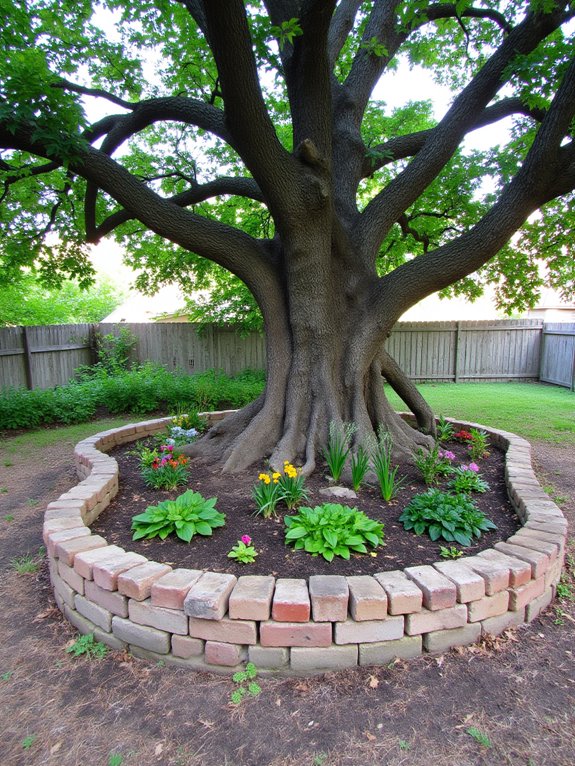
Creating a visually appealing garden starts with the right edging for your raised beds.
I love using natural stone or wooden borders to add texture and warmth. You can also try decorative metal or even recycled materials for a unique touch.
Whichever option you choose, make sure it complements your garden’s style while keeping soil in place and weeds at bay.
Brightening Spaces With Colorful Containers for Plants
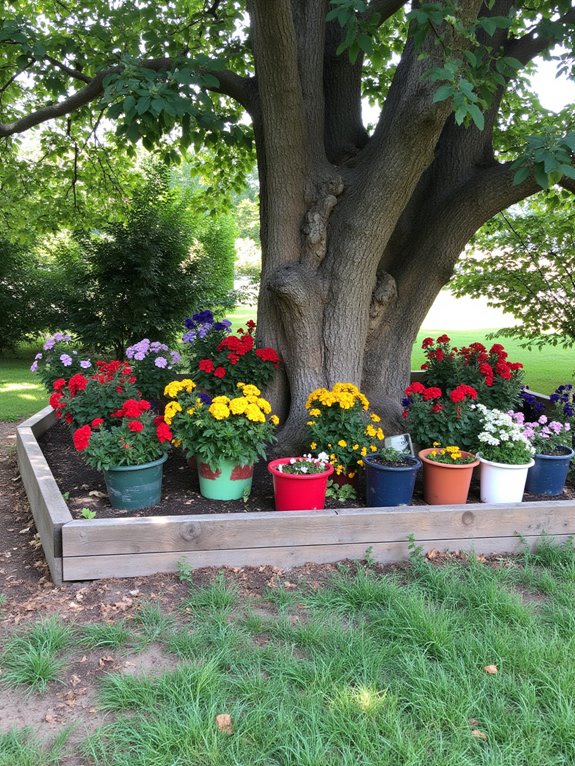
After you’ve set the perfect edging for your raised garden beds, consider how colorful containers can further enhance your outdoor space.
I love using vibrant pots filled with flowers or herbs to create visual interest. They draw the eye and add personality.
Mix and match sizes and colors to find a combination that suits your style and brightens your garden beautifully.
DIY Raised Garden Bed Plans for Every Skill Level
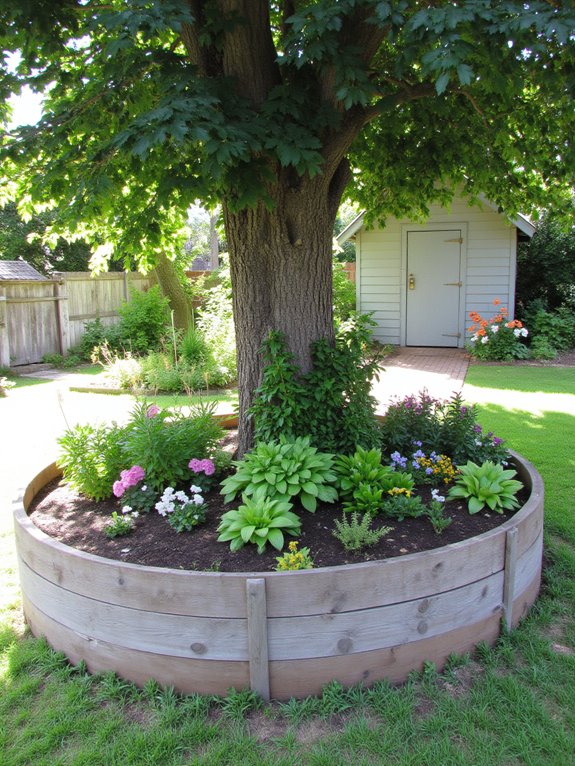
Whether you’re a seasoned gardener or just starting out, crafting your own raised garden bed can be a rewarding project.
I’ve found that choosing simple designs, like rectangular or square shapes, suits all skill levels. You can use materials like wood or concrete blocks, and there are plenty of free plans online.
Just gather your tools, and let’s create something beautiful together!
Installing Efficient Drip Irrigation for Watering
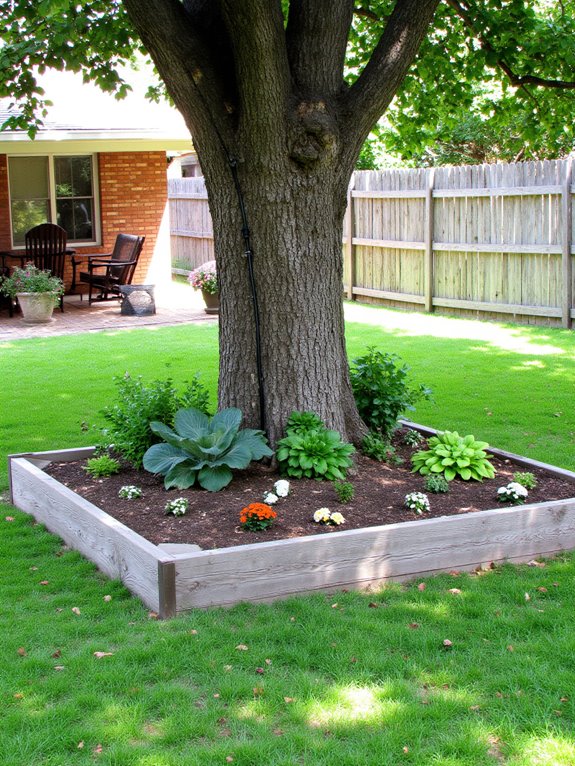
Since I’ve seen how beneficial drip irrigation can be for garden beds, I always recommend installing it to guarantee your plants receive consistent moisture.
Setting it up is straightforward: I lay out the tubing along my beds, ensuring each plant gets adequate coverage. Setting up the tubing is easy—I make sure every plant gets the moisture it needs for healthy growth.
I also use a timer, so I don’t have to worry about overwatering or forgetting to water.
It’s a game changer!
Creating Pathways for Easy Access to Garden Beds
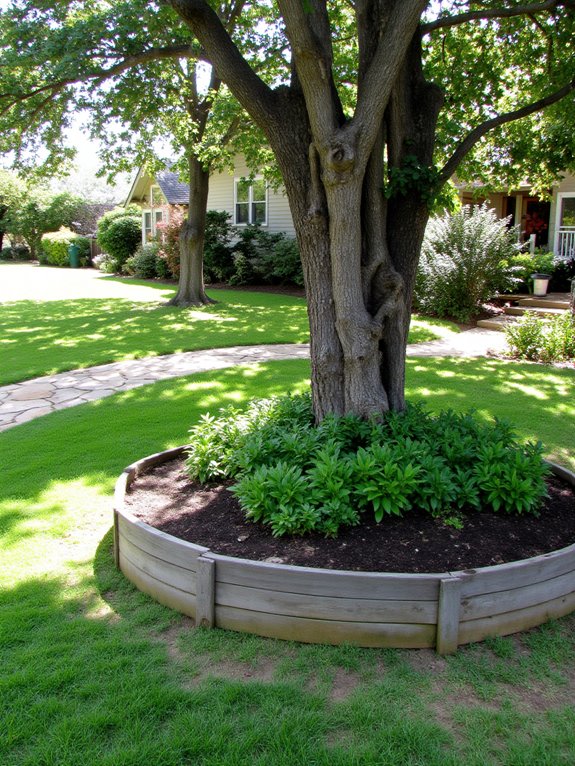
With my drip irrigation system in place, I can focus on enhancing the overall functionality of my garden by creating pathways for easy access to my raised beds.
I carefully choose materials like gravel or wood chips to keep pathways clear and inviting.
These paths not only improve accessibility but also add visual appeal, making my garden a more enjoyable space to work in.
Using Mulch for Moisture Retention and Weed Control
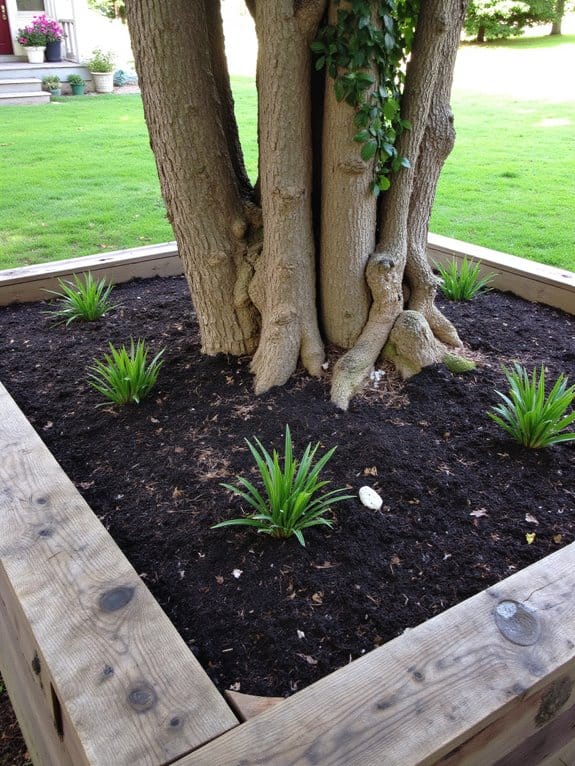
To keep my raised garden beds thriving, I’ve found that using mulch is a game-changer for moisture retention and weed control.
Mulch creates a protective barrier, helping the soil stay damp longer and reducing evaporation.
Plus, it smothers pesky weeds, so I spend less time pulling them out.
Making Your Garden Wildlife-Friendly With Raised Beds
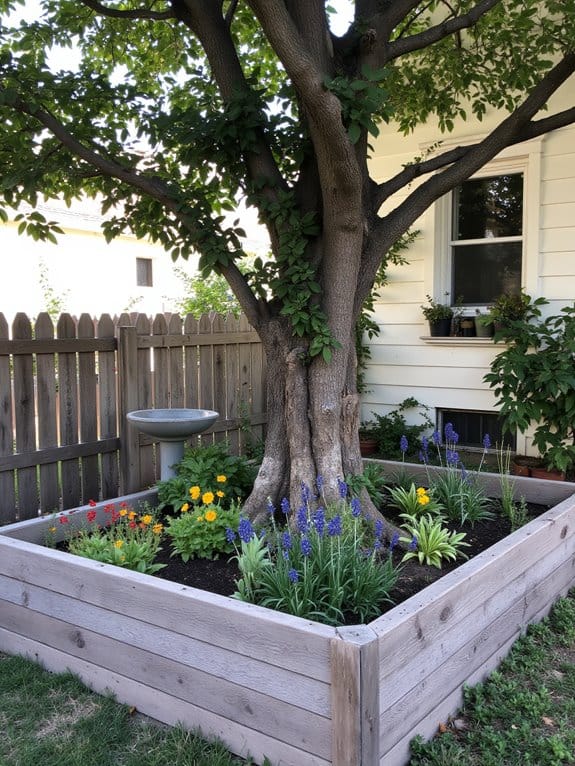
Creating a wildlife-friendly garden can be as simple as incorporating a few thoughtful elements into your raised beds.
I like adding native plants that attract pollinators and providing shelter with logs or stones.
Also, consider leaving a small area of bare soil for ground-nesting bees.
Lighting Options for Enjoying Your Raised Beds at Night
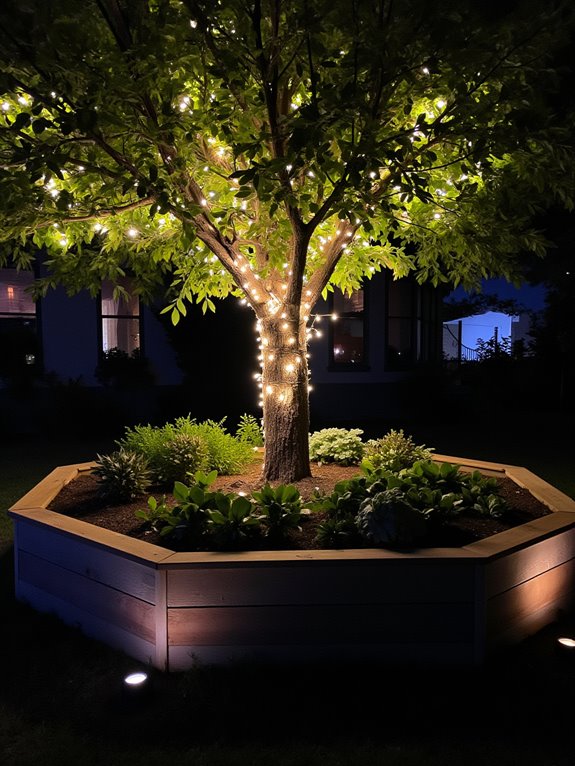
How can I enjoy my raised beds at night?
I love using solar-powered string lights draped around the edges for a warm, inviting glow.
Lanterns also add charm and ambiance, while LED stake lights can highlight specific plants. Lanterns create a charming ambiance, while LED stake lights beautifully showcase your favorite plants.
For a magical touch, I’ve even incorporated fairy lights into the foliage.
These lighting options transform my garden into a nighttime oasis I can appreciate.
Seasonal Decor Inspirations for Garden Beds
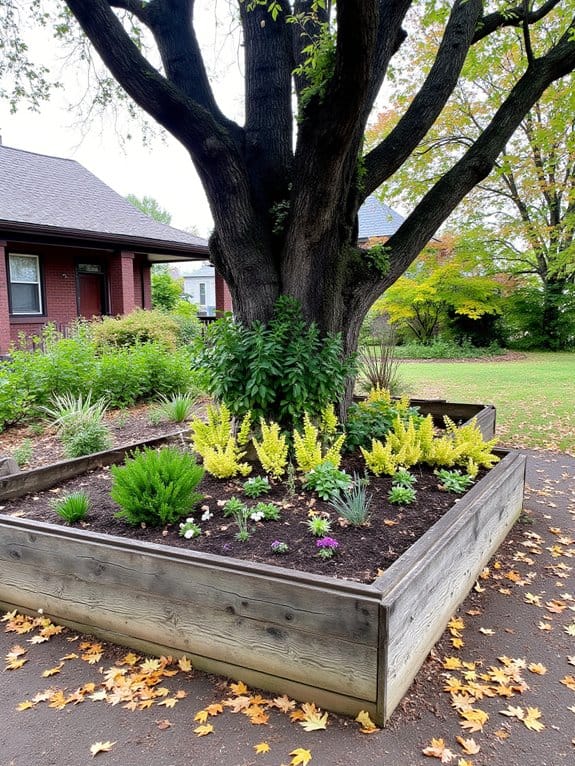
As the seasons change, I love to refresh my raised garden beds with seasonal decor that reflects the time of year.
In spring, I add colorful flower pots and cheerful garden flags.
Summer calls for vibrant cushions and lanterns.
In fall, I incorporate pumpkins and hay bales, while winter inspires me to use evergreen branches and festive ornaments.
It keeps my garden lively and inviting!
Maintaining Your Raised Garden Beds Effectively
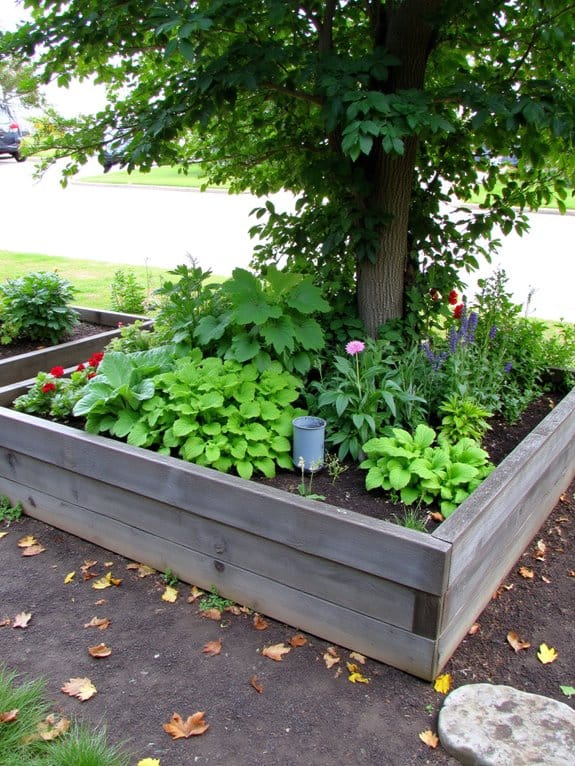
While I enjoy the beauty of my raised garden beds, I know that maintaining them is crucial for thriving plants.
I regularly check for weeds and remove them promptly to prevent competition. I also guarantee proper watering, especially during dry spells, and add organic mulch to retain moisture.
Finally, I rotate my crops yearly to keep the soil nutrient-rich and healthy.
How to Harvest and Care for Plants in Tree Shade?
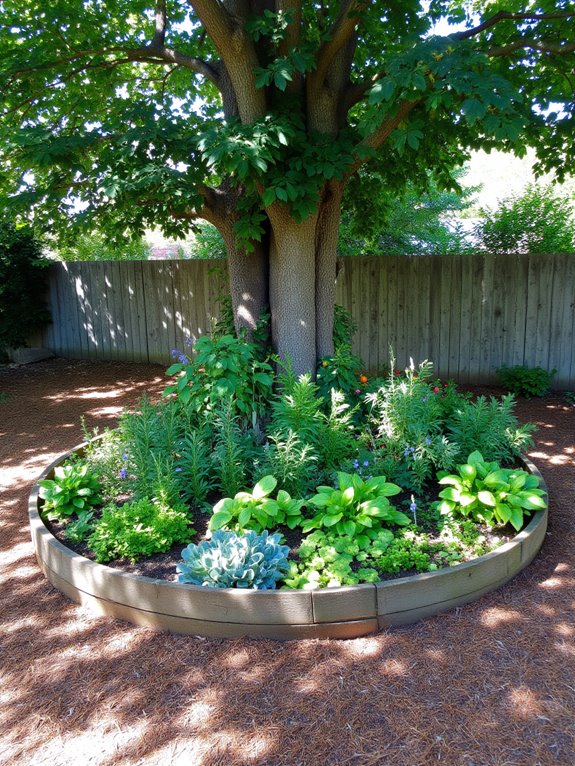
Though growing plants in tree shade presents challenges, I’ve found that with the right care and harvesting techniques, my shaded garden can thrive.
I guarantee my plants get adequate water and nutrients, focusing on shade-tolerant varieties.
When harvesting, I gently check for ripeness, avoiding damage to surrounding roots.
Regularly pruning the tree also helps improve light exposure for my plants.
