

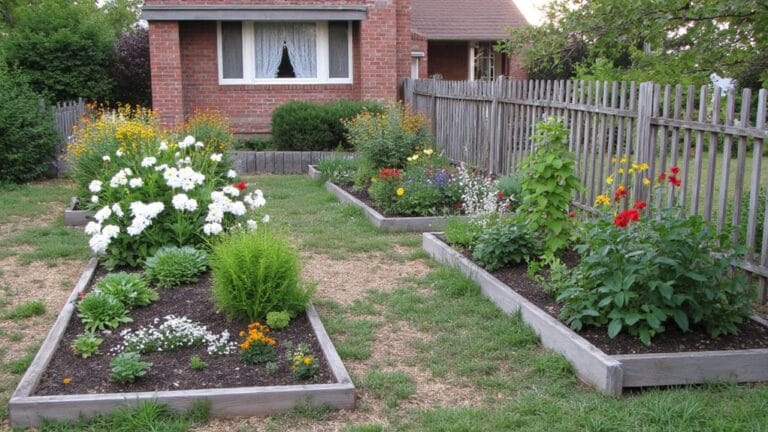
Dreaming of a raised flower garden that balances charm and functionality?
There’s something magical about the way layout choices can enhance a garden’s beauty.
Whether you’re drawn to the quaint allure of cottage styles or the sleek lines of modern designs, the possibilities are endless.
It’s amazing how a few simple adjustments can transform your garden into a flourishing oasis.
Let’s explore some trendy layout ideas that will guide your planting and elevate your gardening journey.
The Benefits of Raised Flower Gardens
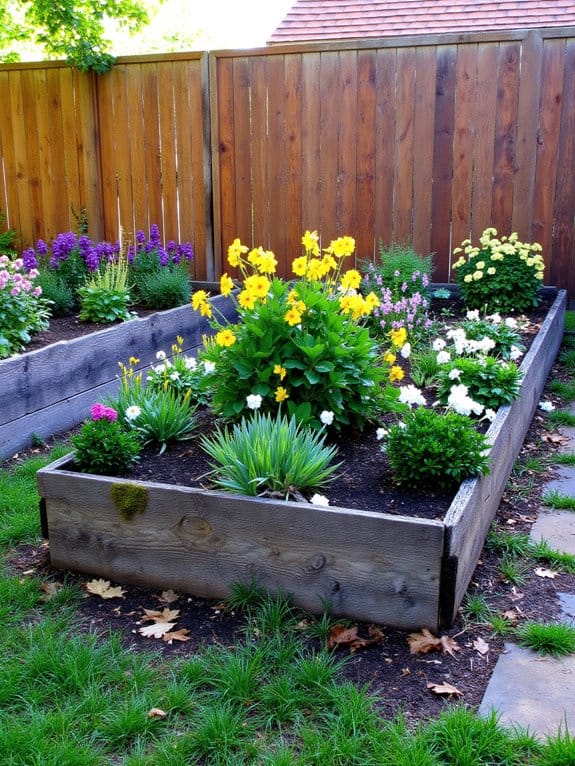
When I think about the benefits of raised flower gardens, I can’t help but feel excited about how they can transform any outdoor space. Raised flower gardens can truly transform any outdoor space, igniting excitement and creativity in gardening!
They offer improved drainage, better soil quality, and easier access for planting and maintenance.
Plus, I love how they can deter pests and provide a defined area for creativity.
Raised gardens truly elevate the gardening experience!
Choosing the Right Location for Your Raised Garden
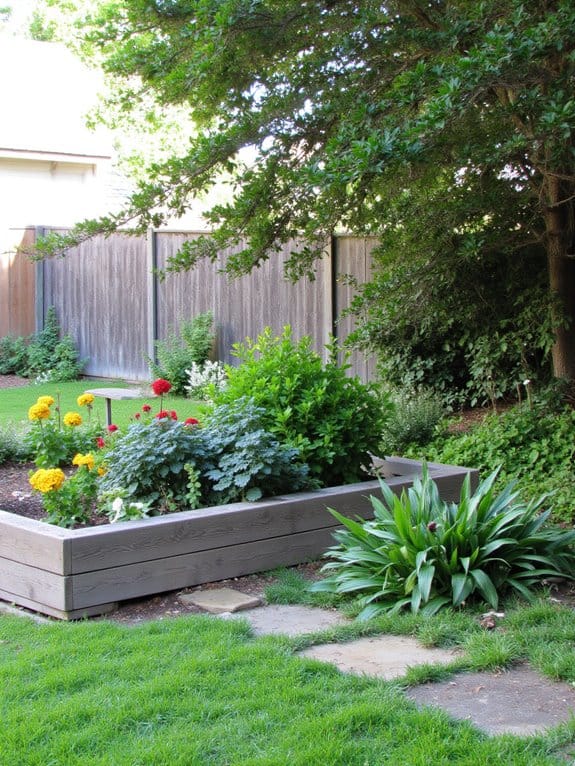
Have you considered how vital the location is for your raised flower garden?
I’ve found that choosing a spot with plenty of sunlight makes all the difference.
Also, avoid low areas that collect water; drainage is critical.
Finally, think about accessibility for watering and maintenance.
A well-chosen location can elevate your gardening experience and guarantee your flowers thrive beautifully.
Ideal Materials for Building Your Raised Beds
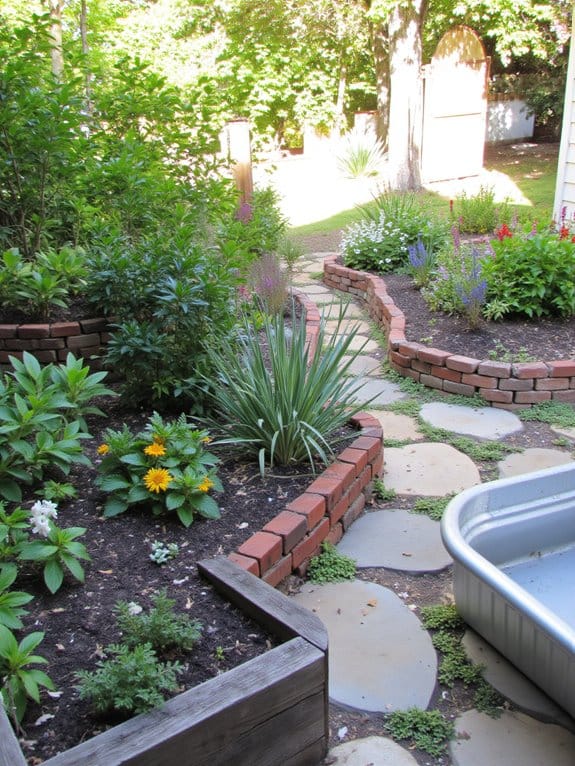
After selecting the perfect location for your raised flower garden, the next step is choosing the right materials for building your raised beds.
I recommend using rot-resistant wood like cedar or redwood, as they’re durable and aesthetically pleasing. Alternatively, metal or composite materials can offer a modern look.
Whichever you choose, make certain it’s safe for your plants and complements your garden’s design.
How to Determine the Size of Your Raised Flower Garden
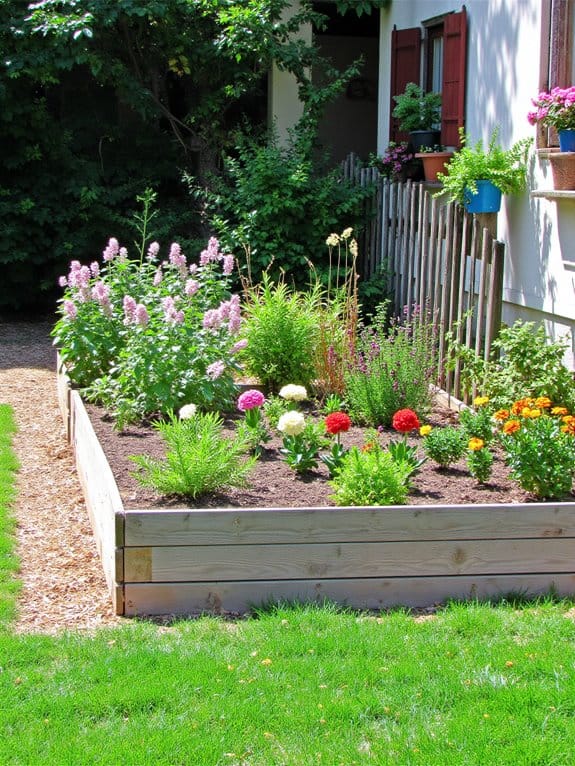
How can I figure out the right size for my raised flower garden?
First, I consider the space available in my yard and how much sunlight the area gets.
I also think about the types of flowers I want to grow and their spacing needs.
Finally, I measure out a few dimensions to visualize the layout before committing to a final size.
Creative Shapes for Your Raised Flower Gardens
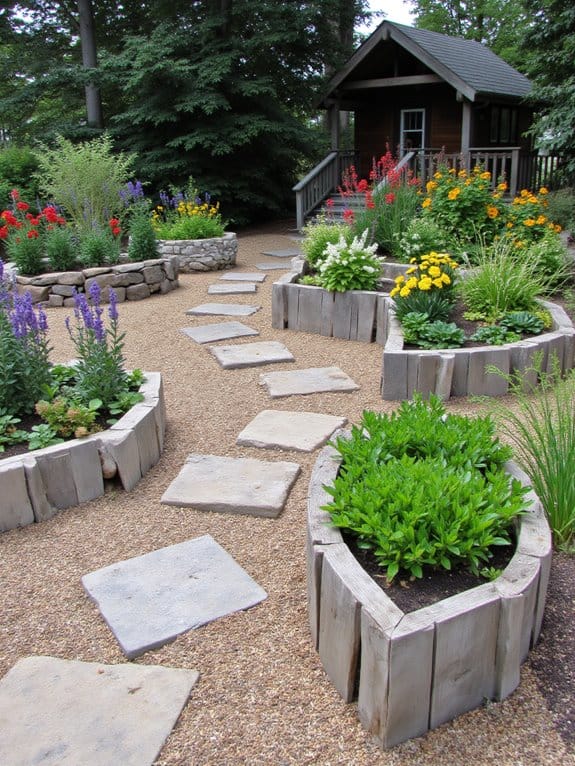
Once I’ve figured out the size of my raised flower garden, the next exciting step is choosing its shape.
I love thinking outside the box! Circular, oval, or even zigzag designs can add flair to my garden.
I often consider incorporating geometric patterns too.
These creative shapes not only enhance visual interest but also make the garden feel unique and inviting.
Layering Plants in Raised Flower Gardens for Visual Interest
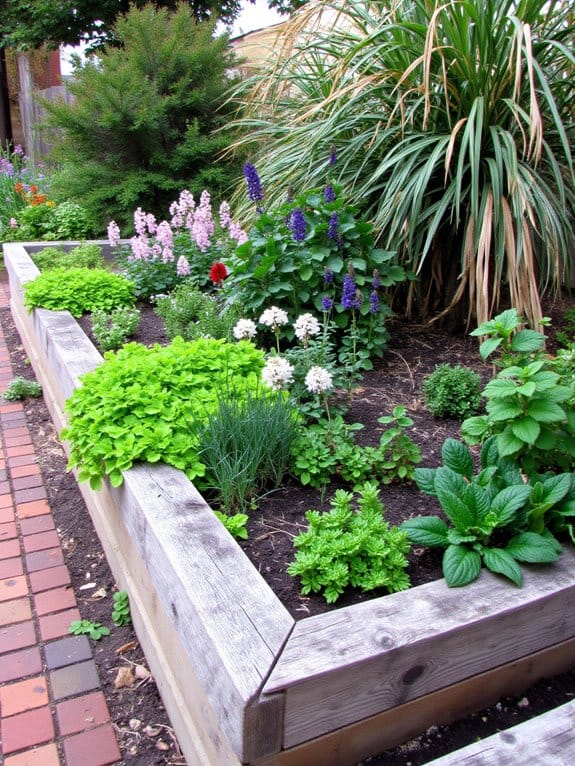
Layering plants in my raised flower garden creates stunning visual interest that can transform an ordinary space into a vibrant masterpiece.
I love mixing tall blooms at the back, medium-sized plants in the middle, and trailing varieties in the front. This arrangement not only adds depth but also showcases each plant’s unique beauty, making my garden an enchanting sight throughout the seasons.
Best Companion Plants for Thriving Flower Gardens
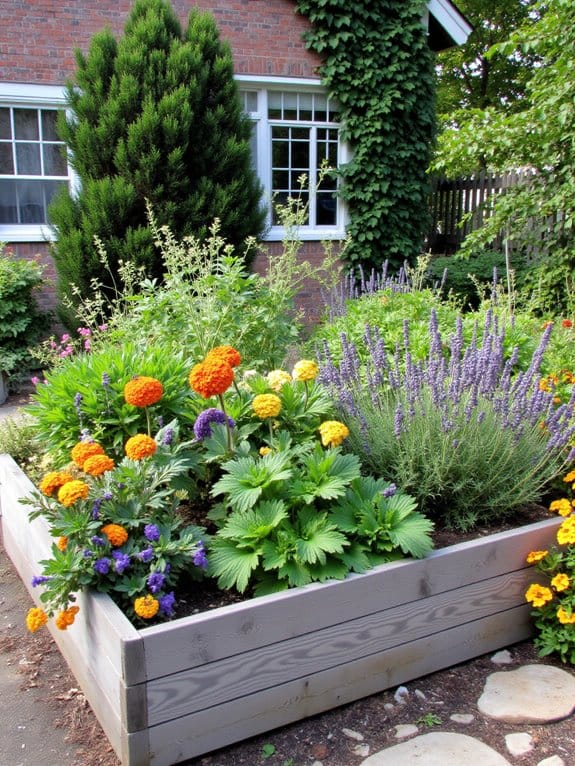
Creating a visually appealing raised flower garden is just the beginning; pairing plants wisely can elevate their beauty and health.
I’ve found that combining marigolds with tomatoes can deter pests, while planting lavender alongside roses enhances fragrance and attracts pollinators.
Consider adding basil near your flowers, too; it not only repels insects but also promotes growth, making your garden truly thrive.
Vertical Gardening: Maximize Your Garden Space
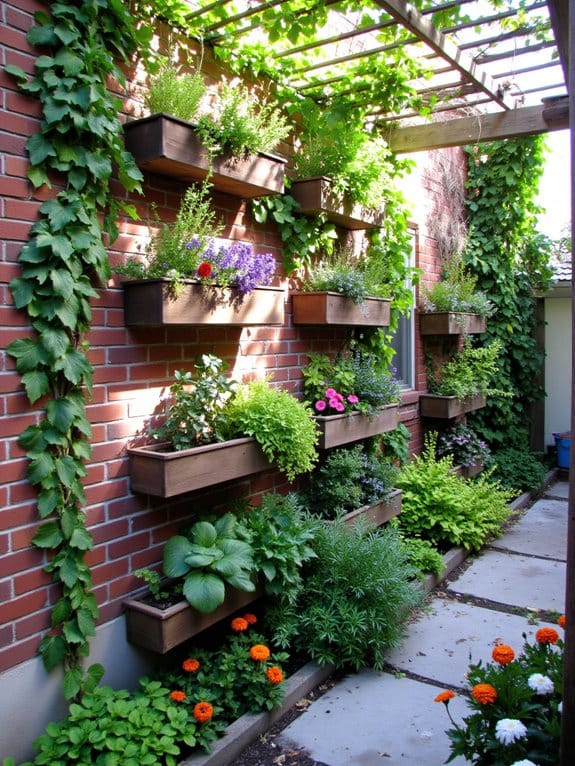
While I love the charm of traditional raised flower beds, I’ve discovered that vertical gardening offers a brilliant solution for maximizing space in smaller areas.
By using trellises, wall planters, or hanging pots, I can create a lush garden that draws the eye upward. This not only saves ground space but also adds depth and dimension to my gardening experience.
It’s truly rewarding!
Incorporating Pathways in Your Raised Flower Garden
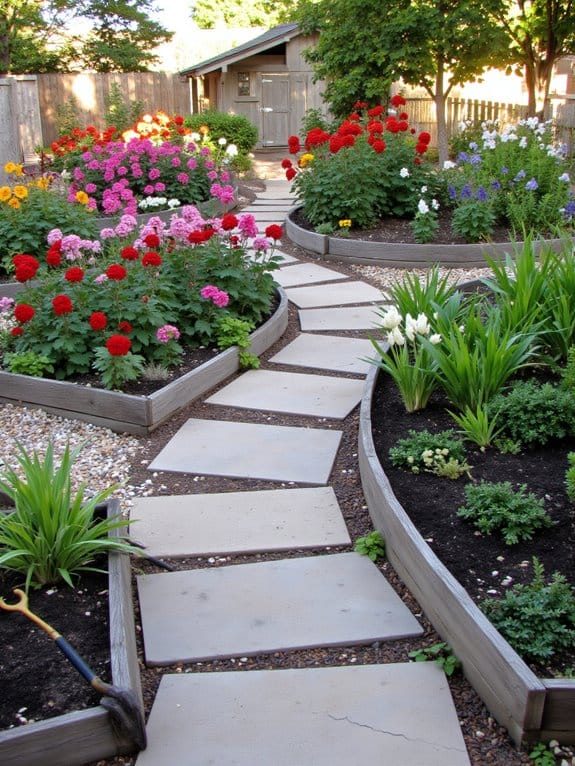
Vertical gardening not only enhances the visual appeal of my space but also opens up opportunities for thoughtful pathways in my raised flower garden.
I love creating paths that guide visitors through my blooms, using materials like gravel or wood chips.
These pathways not only add structure but also make it easier to tend to my plants and enjoy my garden’s beauty.
Effective Edging Techniques for Garden Definition
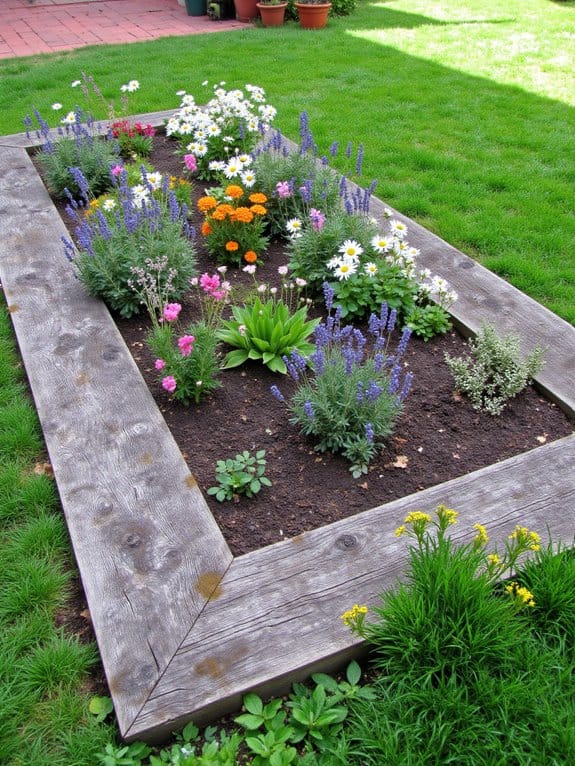
To define the boundaries of my raised flower garden, I’ve found that effective edging techniques can make a significant difference.
I prefer using natural stones or wood to create a clean line, which not only enhances the garden’s look but also keeps soil and mulch in place.
Regularly maintaining the edges helps prevent grass and weeds from invading my beautiful blooms.
Creating Harmonious Color Schemes for Your Garden
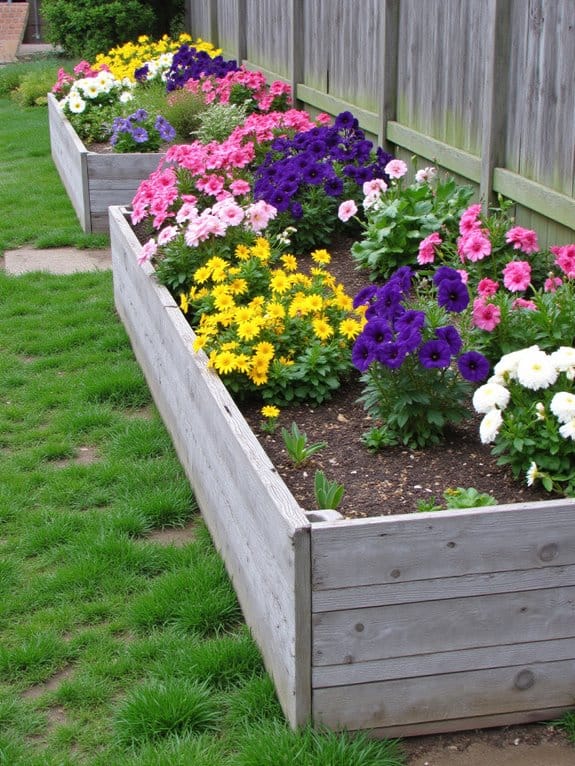
As I plan my raised flower garden, I focus on creating harmonious color schemes that bring out the beauty of each bloom.
I love combining complementary colors, like purples and yellows, to create a vibrant contrast. Soft pastels can also work wonders, adding a calming effect.
Seasonal Planting Ideas for Year-Round Blooms
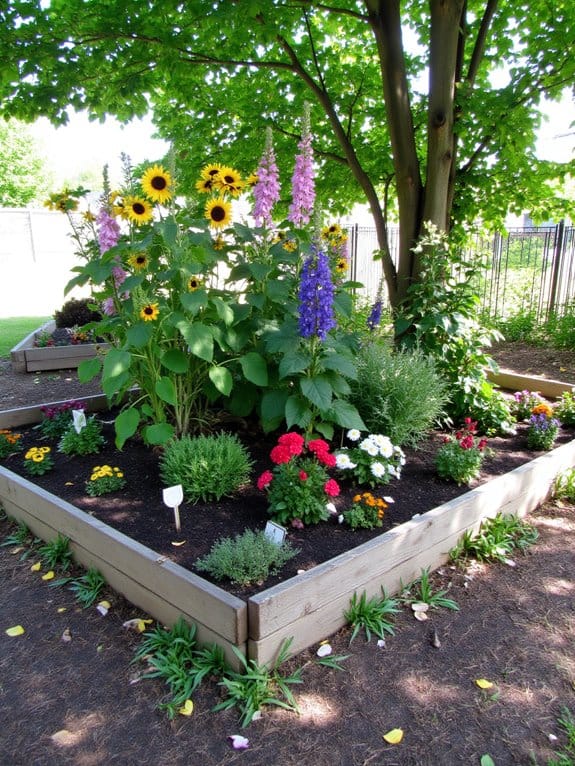
While planning my raised flower garden, I often consider how to achieve year-round blooms that keep my garden lively and inviting.
I love mixing early spring bulbs like crocuses with summer favorites like daisies. For fall, I add chrysanthemums and finish with winter pansies.
This approach not only guarantees continuous color but also creates a dynamic landscape that evolves beautifully throughout the year.
Mixing Perennials and Annuals in Raised Beds
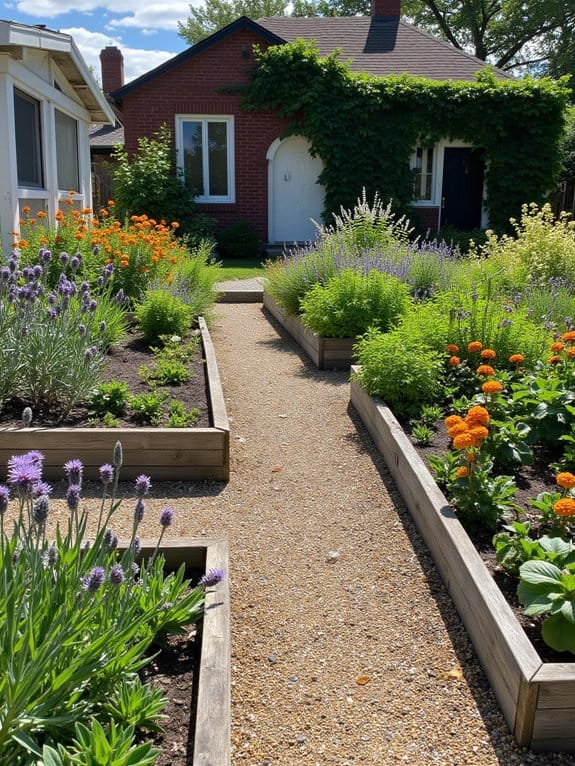
Integrating perennials and annuals in my raised beds creates a vibrant and dynamic garden that thrives through the seasons.
I love how the perennials provide a sturdy backbone, returning year after year, while the annuals add bursts of color and variety.
This combination keeps my garden interesting, allowing me to experiment with different colors and textures throughout the growing season.
Designing a Pollinator-Friendly Flower Garden
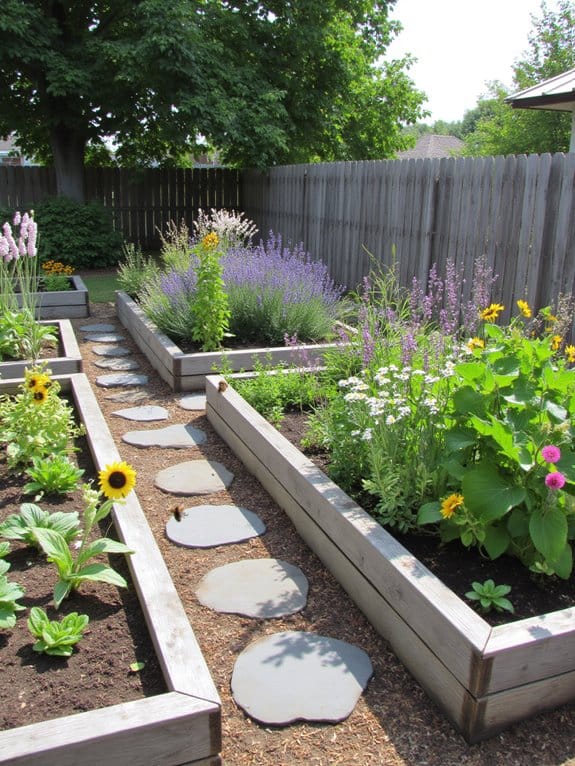
Creating a pollinator-friendly flower garden not only beautifies your space but also supports crucial ecosystems.
I love choosing native plants like coneflowers and milkweed, as they attract bees and butterflies. Mixing different flower shapes and colors keeps the garden lively and inviting.
Adding some rocks or bare patches encourages ground-nesting bees, making my garden a sanctuary for these essential pollinators.
Mixing Flowers With Herbs in Raised Beds
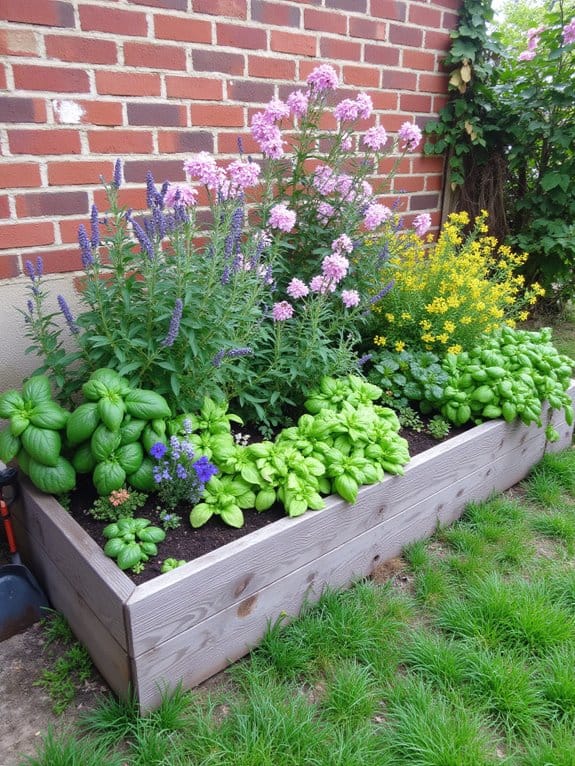
Although I initially thought about keeping my flowers and herbs separate, I found that mixing them in raised beds not only maximizes space but also enhances the garden’s beauty and functionality.
The vibrant colors of the flowers create a stunning backdrop for the herbs, while the herbs can deter pests.
Plus, I love having fresh herbs right at my fingertips while gardening!
Choosing Between Drip Irrigation and Hand Watering?
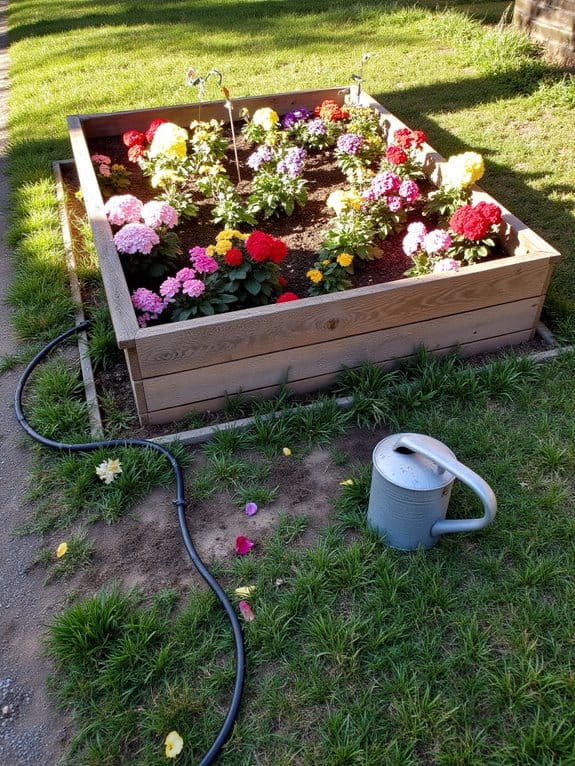
After I decided to mix flowers with herbs in my raised beds, I realized that managing their watering needs became a key consideration.
I weighed the options between drip irrigation and hand watering. Drip irrigation offers efficiency and saves time, but I enjoy the personal touch of hand watering.
Ultimately, I chose to combine both methods for the best results.
Adding Decorative Elements: Trellises and Arbors
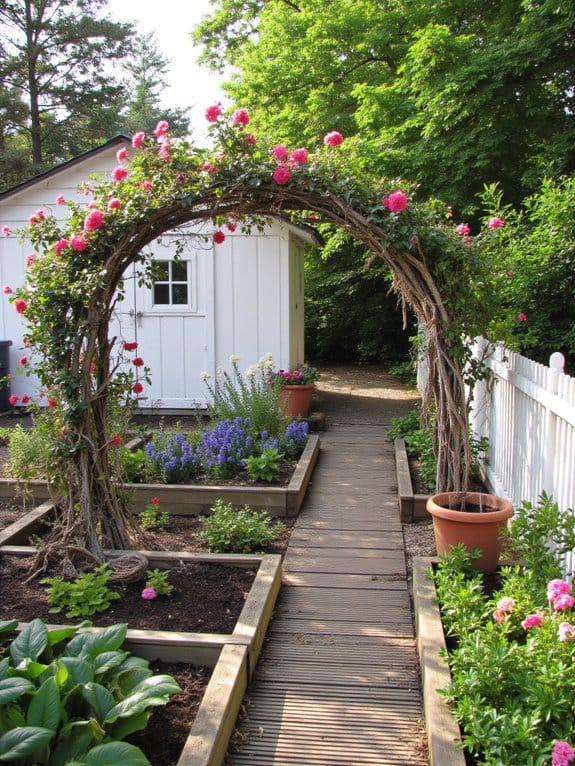
As I planned my raised flower garden, I quickly realized that adding decorative elements like trellises and arbors could elevate the overall aesthetic.
These structures not only provide support for climbing plants but also create vertical interest. I love how they can frame my flowers and add a touch of charm, making my garden feel inviting and enchanting.
They truly enhance the overall experience!
Creating a Cozy Cottage-Style Raised Flower Garden

Incorporating decorative elements like trellises and arbors can set the stage for a cozy cottage-style raised flower garden.
I love adding rustic wooden benches and whimsical pathways to enhance the charm.
Planting a mix of colorful perennials and fragrant herbs not only creates visual interest but also invites pollinators.
With a bit of creativity, your garden can become a serene retreat filled with character.
Achieving Modern Minimalism in Garden Design
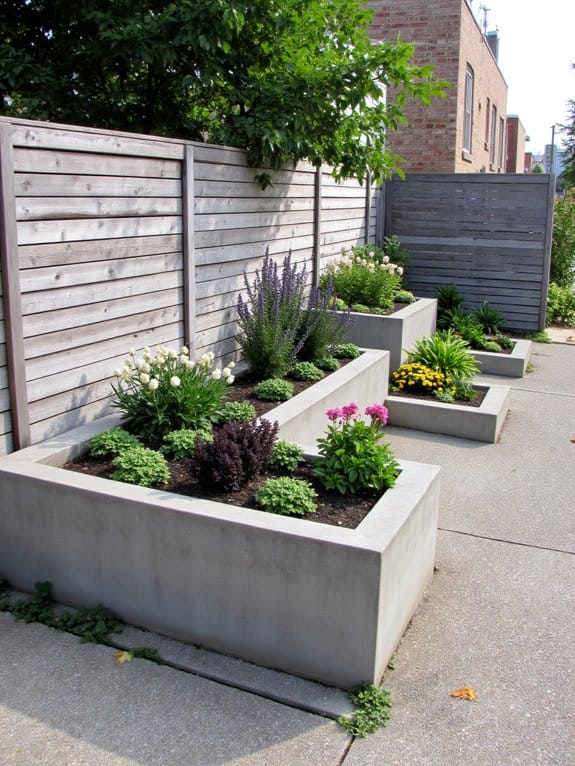
To achieve modern minimalism in garden design, I focus on clean lines and a limited plant palette that emphasizes simplicity and elegance.
I choose a few striking plants, arranging them in geometric patterns or straight rows. This approach not only creates a serene atmosphere but also highlights the beauty of each plant.
Less really is more when it comes to crafting a minimalist garden.
Themed Raised Flower Gardens: Rustic, Tropical, and More
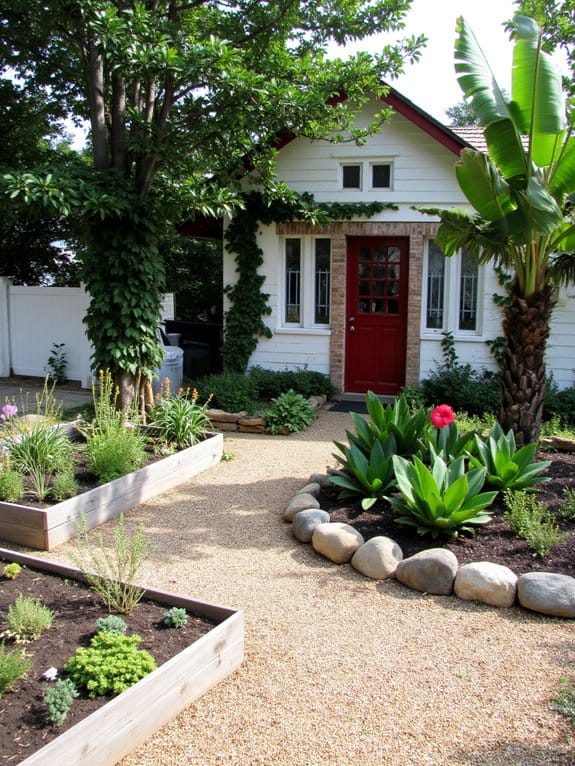
Have you ever thought about how a themed raised flower garden can transform your outdoor space?
Whether I choose a rustic charm with wildflowers and natural wood or a tropical vibe with vibrant blooms and lush greenery, each theme creates a unique atmosphere.
I love how these gardens reflect my personality and invite others to enjoy nature’s beauty right in my backyard.
Utilizing Containers Within Your Raised Flower Beds
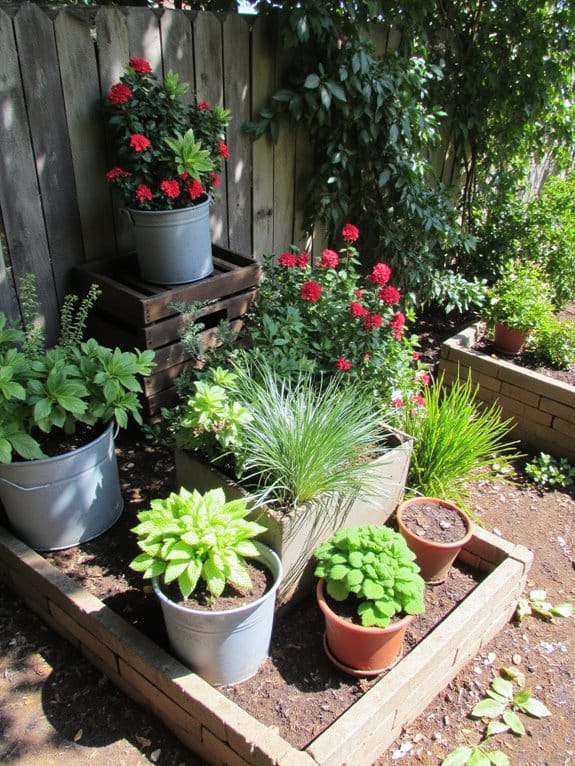
After exploring themed raised flower gardens, I’ve found that utilizing containers within my raised flower beds adds even more dimension and creativity.
I love mixing different heights and textures by placing pots alongside my plants. It allows me to experiment with colors and even incorporate herbs or succulents.
Plus, containers can easily be moved around for a fresh look whenever I desire.
Maintenance Tips for a Thriving Flower Garden
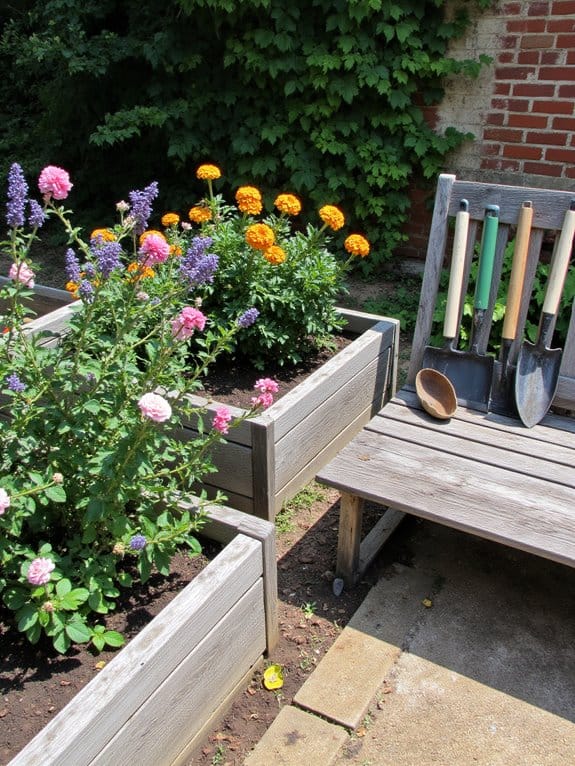
While tending to my raised flower garden, I’ve discovered that consistent maintenance is key to keeping it vibrant and healthy.
I make it a habit to water regularly, especially during dry spells, and I always check for pests.
Pruning dead blooms encourages new growth, and adding organic mulch helps retain moisture. Pruning spent flowers fosters vibrant new growth, while organic mulch keeps the soil moist and healthy.
These simple steps guarantee my garden flourishes beautifully throughout the season.
Seasonal Preparation: Spring and Fall Checklist
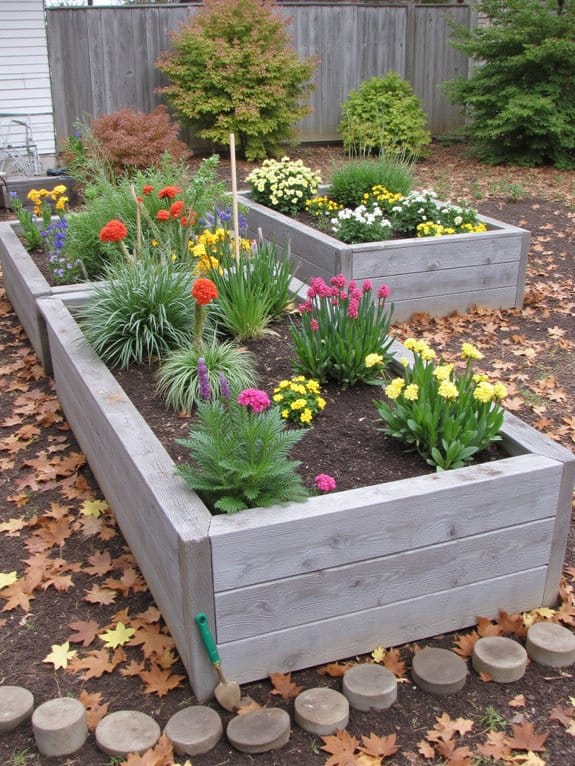
As spring approaches, I get excited about preparing my raised flower garden for the blooming season ahead. I start by cleaning out debris, checking soil quality, and adding compost.
Then, I select my favorite flowers and plan their layout.
In fall, I focus on removing spent plants, mulching, and planting bulbs for spring.
These steps keep my garden vibrant and thriving year-round!
Troubleshooting Common Flower Gardening Issues
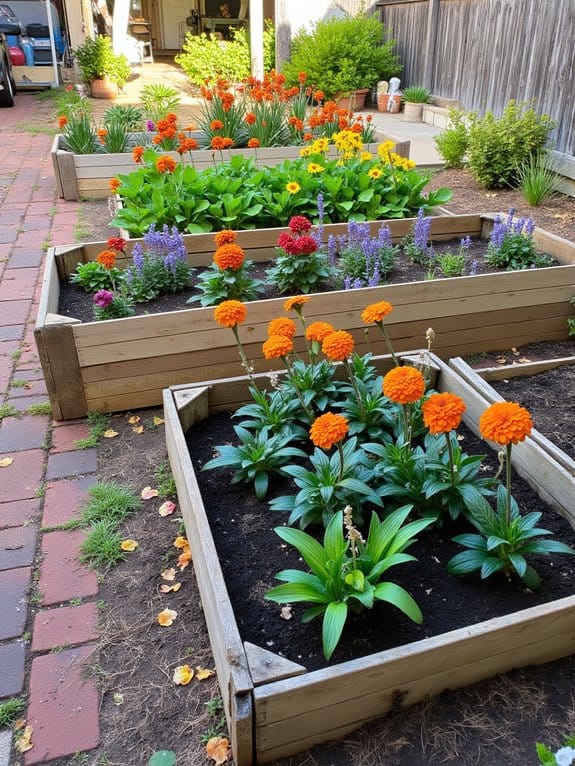
Even though gardening brings joy, it’s not without its challenges, and I’ve faced my fair share of common flower gardening issues.
From pest infestations to wilting blooms, I’ve learned to identify problems quickly. For pests, introducing beneficial insects helps, while droopy flowers often indicate watering issues.
Adjusting soil pH can also revive struggling plants. Troubleshooting effectively makes all the difference in maintaining a thriving garden.
