


Living in a hot climate showed me quickly how a thirsty front yard can drag down the whole street view over time. Drought-tolerant setups work best when you layer low-water plants like agaves and lavender to frame pathways that actually guide people to the door. I swapped out my old lawn edging for simple river rock borders last year, and it made the space feel more put-together without extra upkeep. Those strong planting structures hold their shape through dry spells, unlike grass that browns and flattens. Stone paths paired with spiky accents catch eyes first from the curb, so try adapting one that fits your lot’s slope.
Winding Flagstone Path in Xeriscape Yard
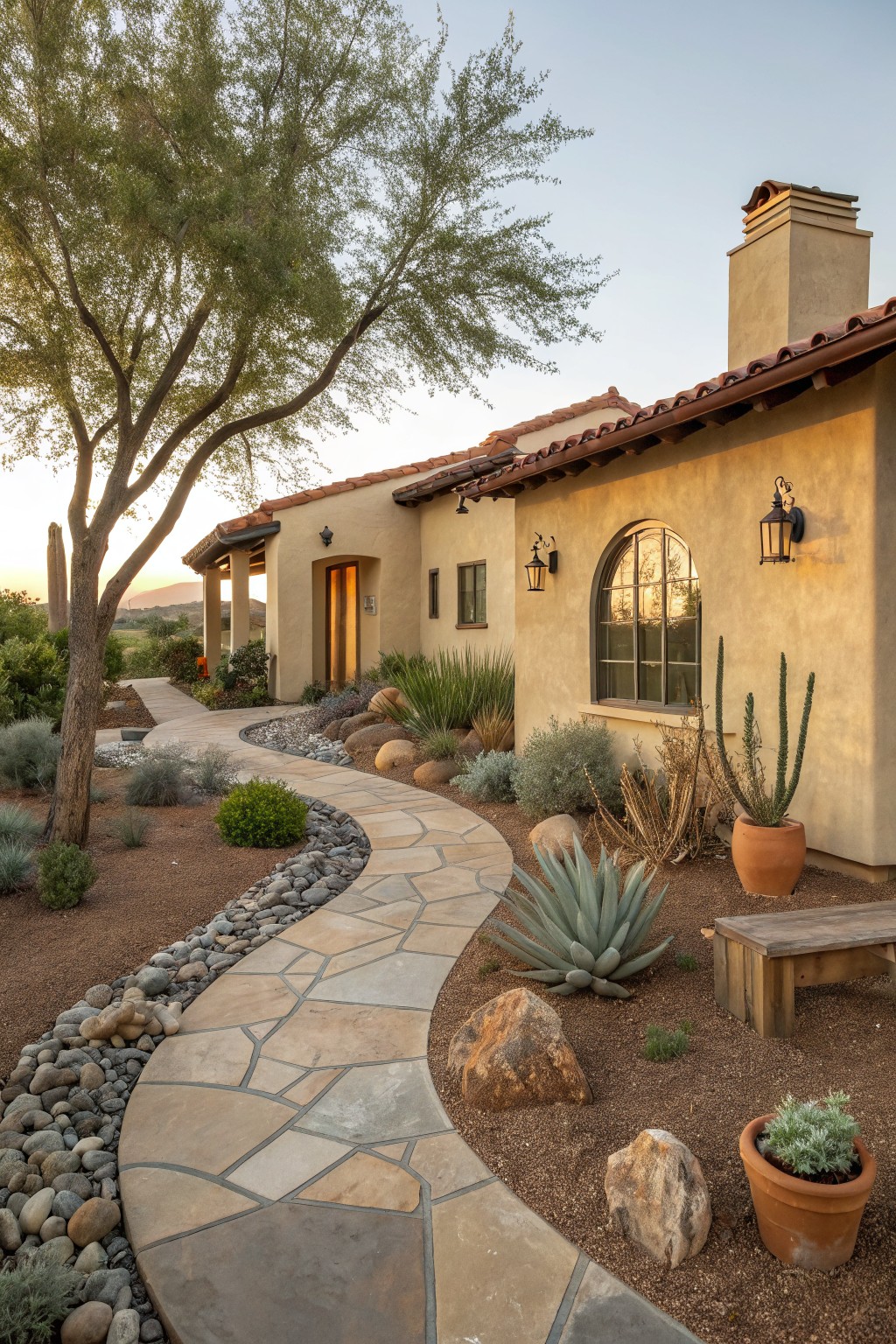
A simple winding path made from irregular flagstone slabs works great in dry front yards. It cuts through gravel mulch and drought plants like agave and tall cactus, guiding folks right to the door. No thirsty lawn needed, and the curves keep it from looking too straight or boring.
Try this in hot spots like Arizona or anywhere water is tight. Lay the stones loose on sand for easy drainage, then edge with river rocks and a few big boulders. It fits low-slung stucco houses best, and watch the spacing so it does not feel crowded.
Raised Succulent Beds with Metal Edging
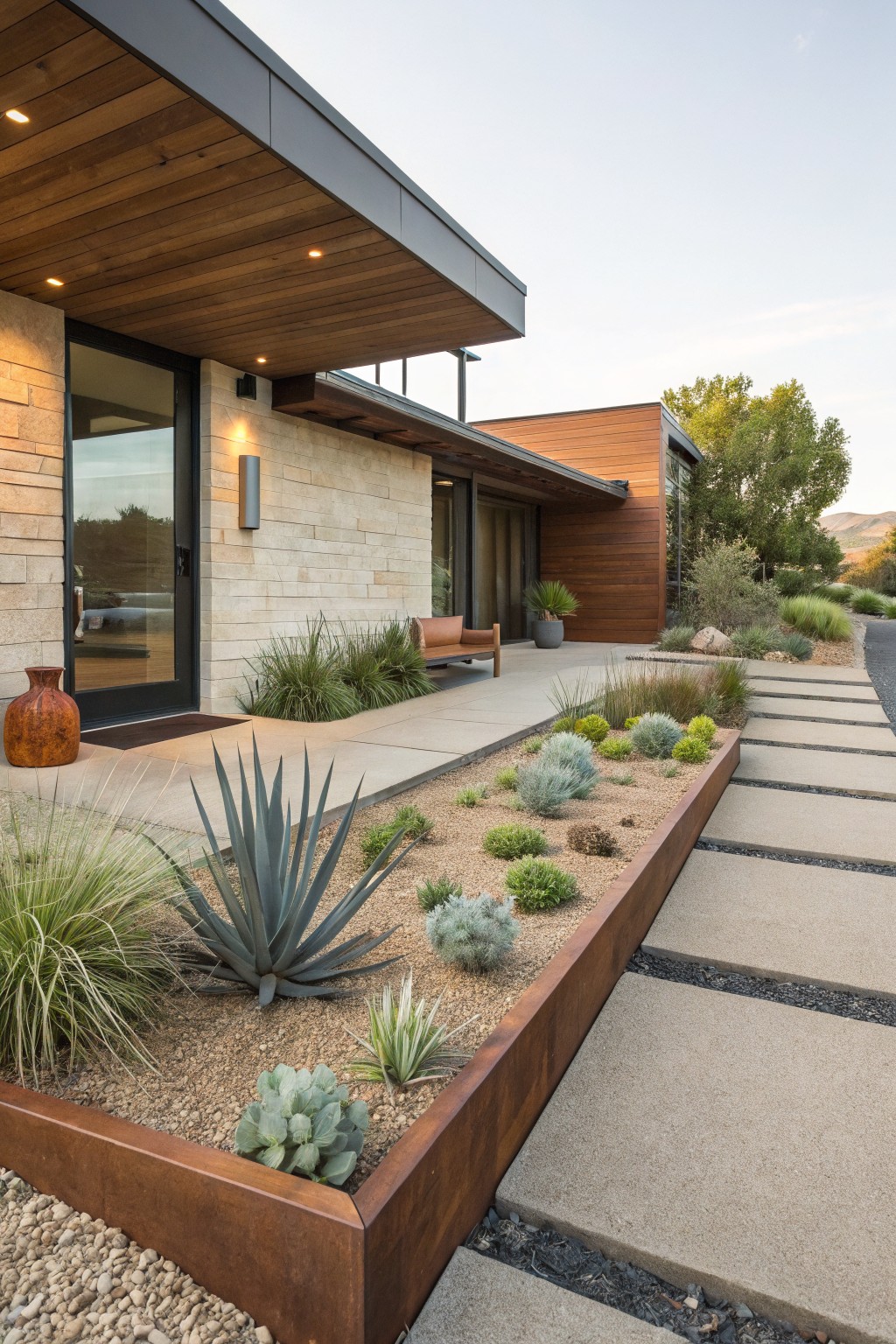
One simple way to add structure to a drought tolerant front yard is with raised beds edged in corten steel. You see it here lining the path to the door, filled with blue agave, fuzzy succulents, and waving grasses over gravel mulch. It keeps everything tidy and contained, while the plants thrive in hot, dry spots without constant watering.
These beds work best in sunny entry areas where you want curb appeal but not the upkeep. Build them low, maybe a foot high, to hug the walkway. Pick tough natives like those shown, and top with small rocks to cut down on weeds. Suits modern homes or any place short on water.
Winding Stone Path Through Low-Water Plants
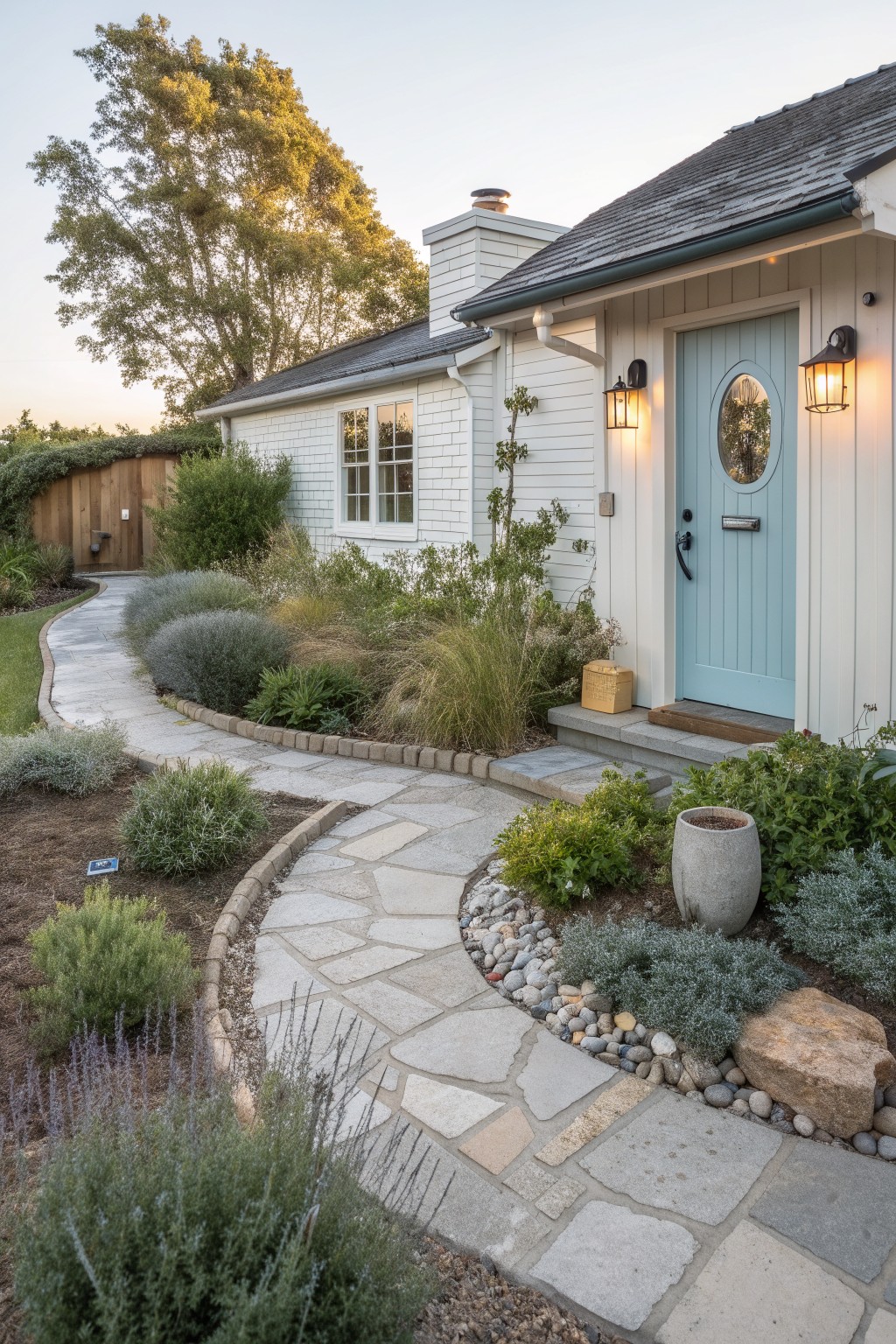
A simple winding path made from irregular flagstone slabs leads right to the front door. It’s edged with gravel mulch and tucked between tough plants like lavender bushes and ornamental grasses. This setup keeps things neat without much watering or weeding. In hot spots it cuts down on bare dirt and makes the yard feel put together.
You can pull this off in any sunny front yard. Lay the stones loose over soil for drainage then fill gaps with gravel. Plant drought-tough stuff along the sides… it grows in fast. Works best on smaller lots where you want curb appeal without the fuss. Just keep taller grasses trimmed so the path stays clear.
Winding Sand Paths with Rock Edges
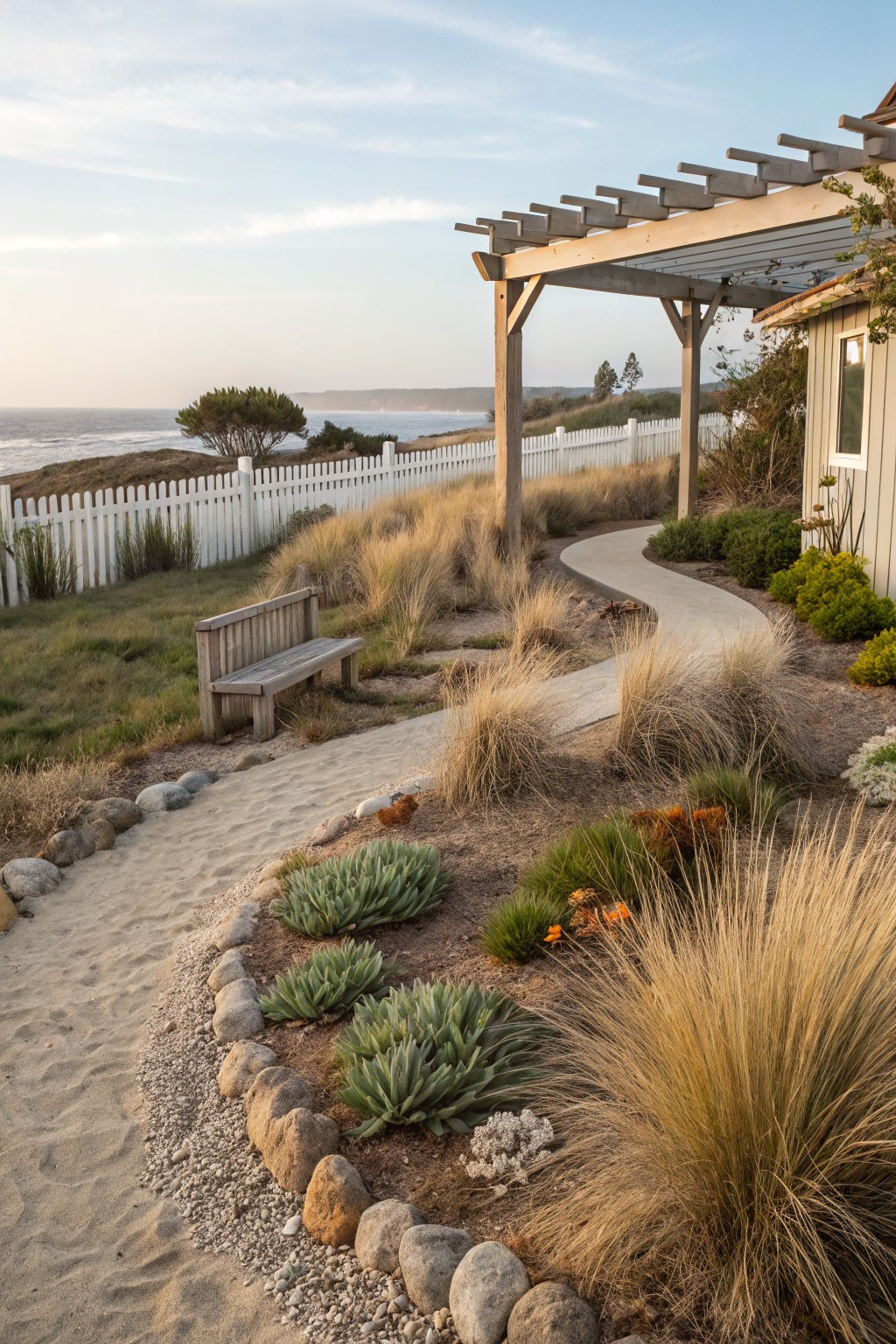
A curving path made from sand or fine gravel works great in dry yards. It winds naturally between clumps of tall grasses and low succulents, with rocks lining the edges to keep everything in place. This keeps the look casual and beachy, while handling hot sun and low rain without much fuss.
Put one in your front yard to guide folks to the door or a spot to sit. It suits coastal homes or anywhere water is tight. Just make sure the sand drains well so it doesn’t turn to mud after a storm, and pick plants like deer grass or agave that grow on their own.
Raised Beds with Gravel and Grasses

One clean way to handle a front yard in a dry spot is raised beds lined with black metal edging. Fill them with gravel mulch and tough plants like these tall grasses and little green shrubs. It gives a neat, modern edge to the path without needing much water or weeding. The low lights tucked in add a nice touch at night.
This works great leading up to a garage or entry door. Line both sides of your walkway like this on a modern house. Stick to drought-tough varieties so it stays looking good through hot summers. Skip softer plants that might flop.
Curved Stepping Stone Path in Gravel
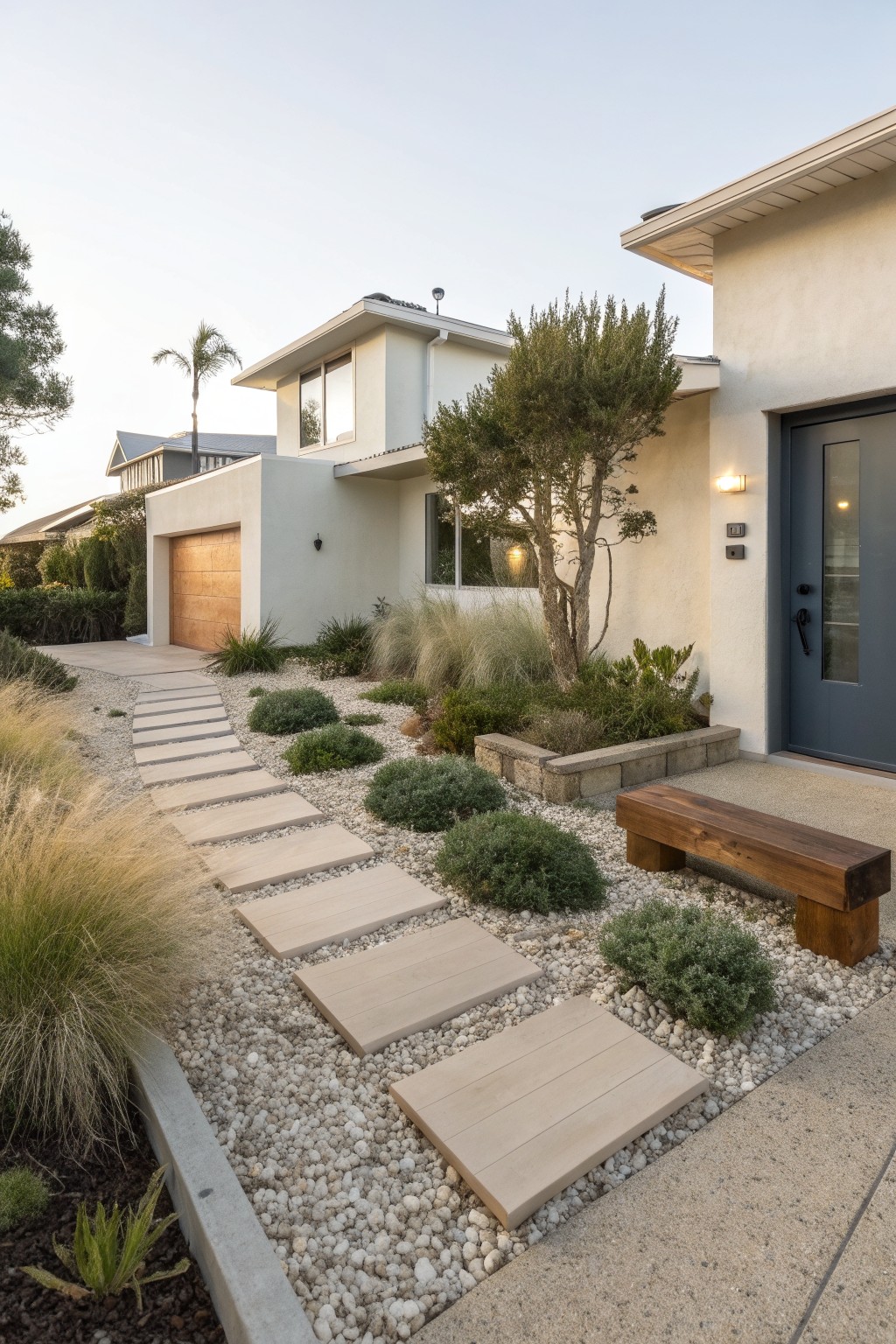
A simple curved path made from large rectangular pavers set into white gravel stands out here. It winds through tall grasses and low shrubs, keeping everything low-water and easy to maintain. No thirsty lawn needed. This setup pulls your eye to the front door without much fuss.
Lay landscape fabric first, then add a couple inches of gravel for drainage. Space the stones about two feet apart so adults can step easily, and tuck in drought plants like miscanthus or lavender around them. It fits modern homes in sunny, dry areas best. One thing. Keep the curve gentle to avoid tripping spots.
Curved Paver Path Through Drought Plants

A simple curved path made from brick pavers winds right up to the front door, edged with tough plants like an olive tree and boxwood shrubs. It pulls your eye along gently without feeling too straight or formal. In hot spots, this setup shines because the plants need little water once they’re settled in, and the path stays neat year round.
Try this in a sunny front yard where you want low upkeep. It fits homes with a bit of Spanish or Mediterranean style, but works on most any house. Just make sure the pavers slope a touch for drainage, or puddles could form after rain.
Stepping Stone Path in Gravel
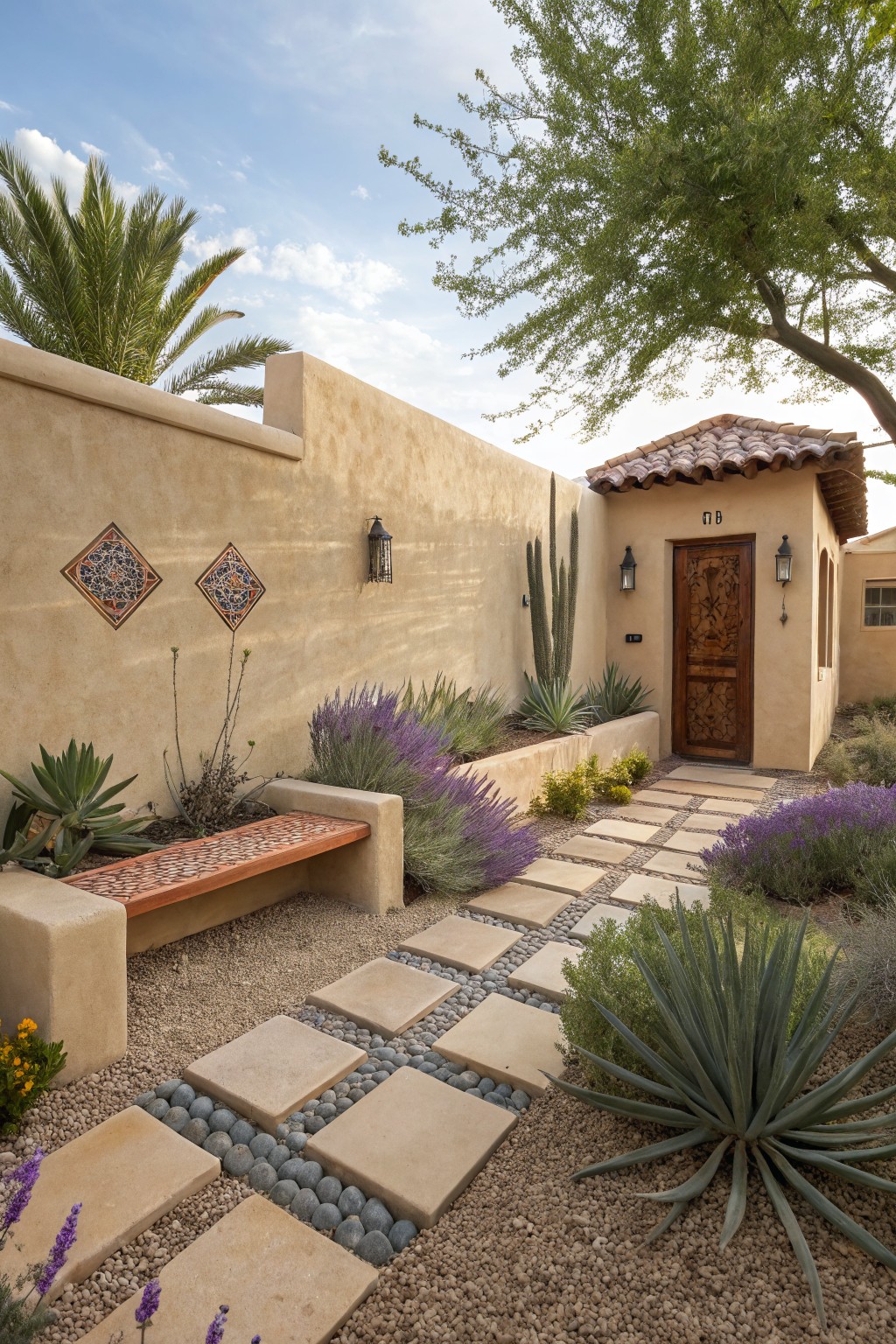
A simple path made from large square pavers set into gravel works great for drought-tolerant front yards. It leads right to the door without needing grass or much watering. Plants like lavender and agave edge it nicely, filling in the space with color and texture that holds up in hot sun.
This kind of walkway fits hot climates where you want low upkeep. Start with a gravel base for drainage, drop in the stones spaced for easy steps, then add tough plants around the sides. It suits smaller courtyards or any entry that needs a clean, practical look… just keep the gravel topped up now and then.
Terraced Stone Walls for Sloped Yards
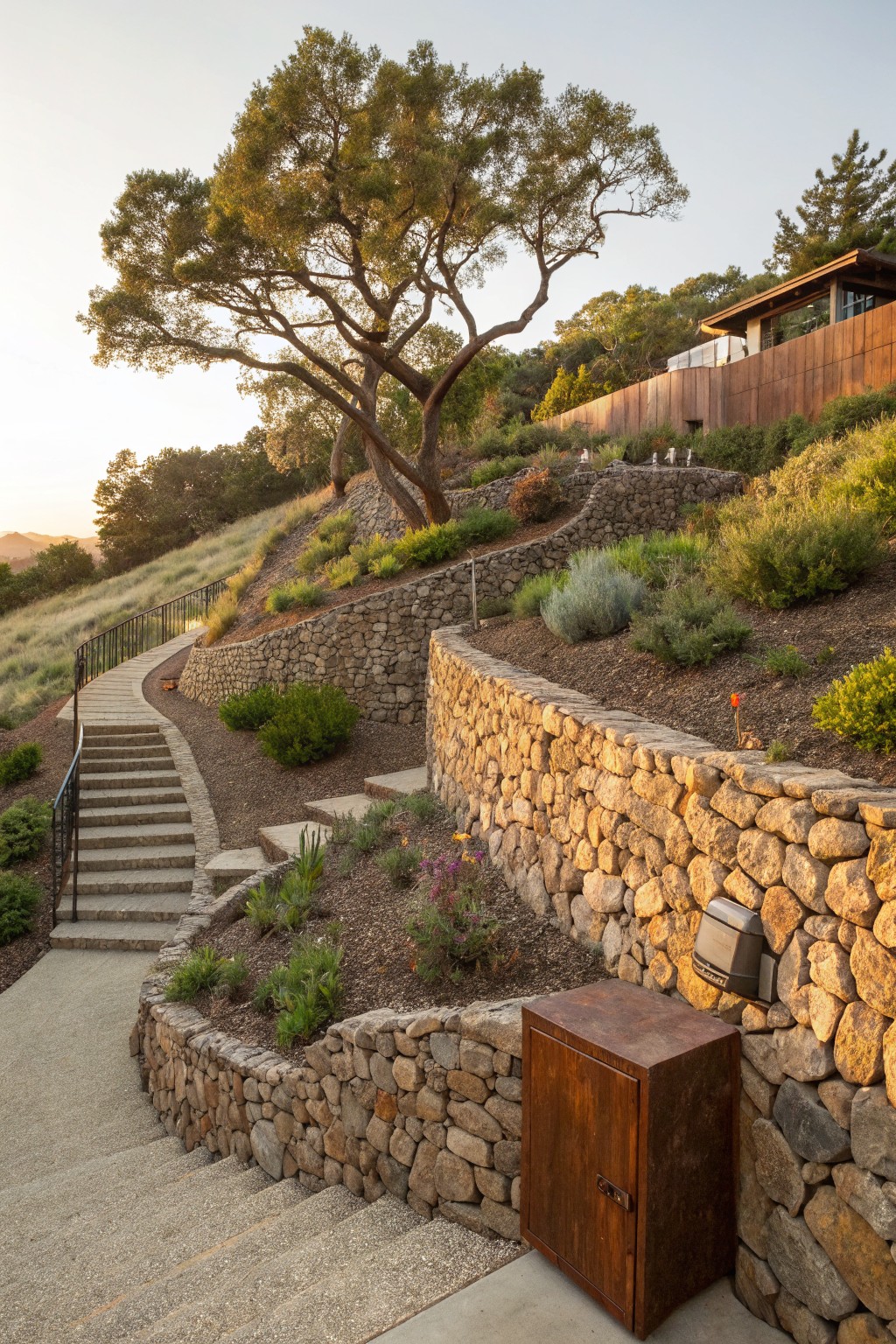
Slopes can be tricky in dry areas. These terraced stone walls turn that challenge into something practical and pretty. Built from natural fieldstone, they hold back soil while creating flat planting pockets for tough, low-water shrubs and grasses. The result is a stepped garden that looks rugged and fits right into the landscape, especially with winding steps tying it all together.
This setup works best on front yards with a decent incline, like in hot spots such as California hills. Use it to ease access to your house door and add some curb appeal without much upkeep. Pick plants that thrive on neglect, like lavender or succulents, and keep the stone dry-stacked for that casual feel. Just make sure the walls are sturdy enough for your soil type.
Curved Stepping Stone Path in Gravel Yard
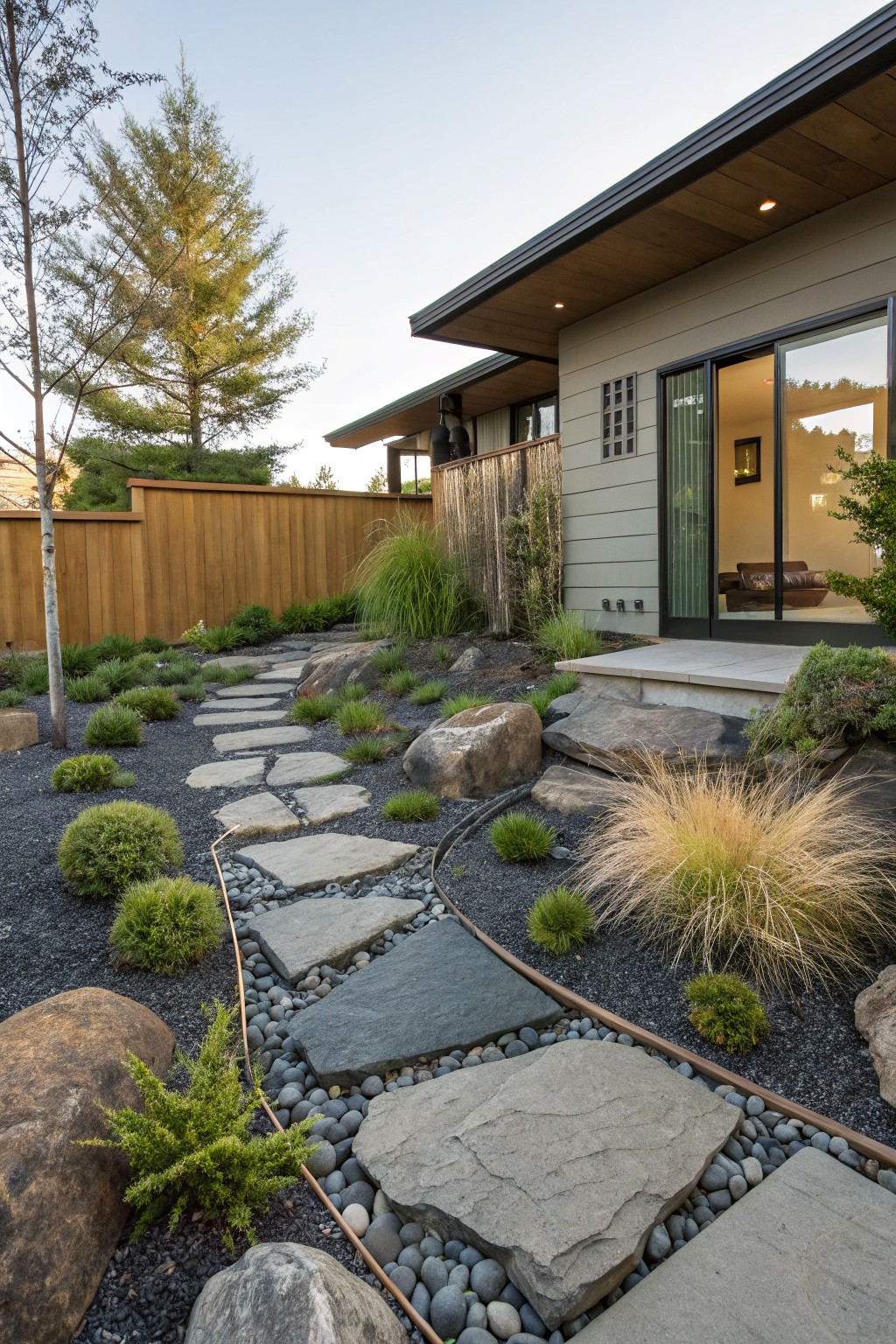
A simple winding path made from rough-cut stone slabs set right into dark gravel makes its way past big boulders and clumps of tough grasses. No lawn to water or mow. Just enough plants to soften things without extra work. In hot climates this keeps the yard looking sharp year-round with almost no upkeep.
Lay it out to lead straight to your front door or side entry. Space the stones for regular steps, maybe two feet apart. Add round river rocks along the edge for a clean border, and tuck in low shrubs like sedum or fescue that handle drought fine. Works best on flat or gently sloped spots. Skip it if your soil drains poorly.
Layer Grasses and Succulents Along Entry Steps
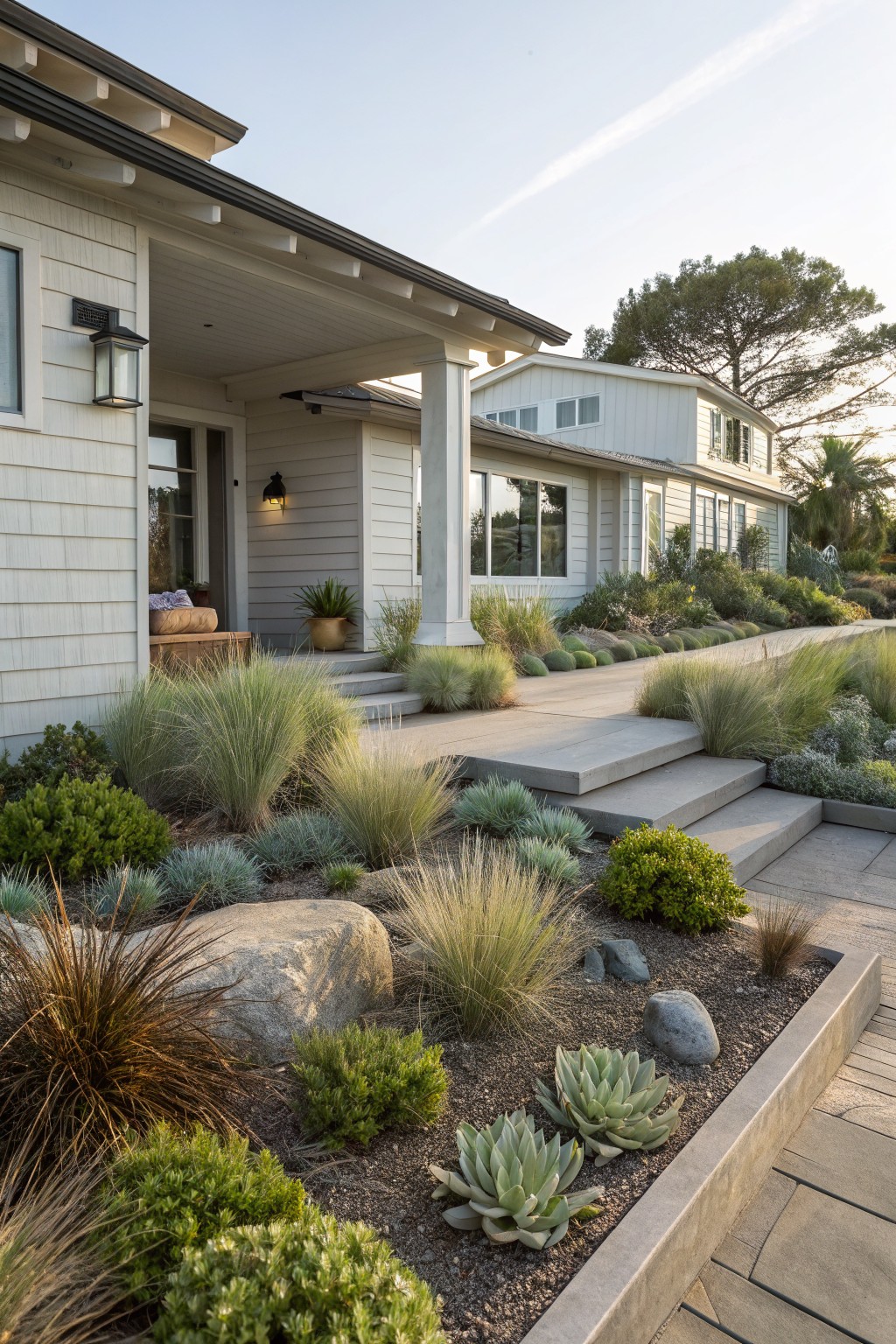
One simple way to make a front yard feel put together in a hot climate is to line the steps to your door with clumps of ornamental grasses and succulents. Tall feather grass sways nicely in the breeze, while agave rosettes add some chunkiness down low. Together they create that full, layered look without constant watering or mowing.
Try this on a sloped lot or anywhere the path needs definition. Edge the beds with concrete or gravel to keep things neat, toss in a boulder or two for scale. It suits modern farmhouses or coastal homes best, and just pick plants suited to your zone to avoid any surprises.
Mosaic Pebble Patios for Dry Front Yards

This kind of pebble mosaic flooring works great in hot spots where grass just won’t cut it. You see those big circular patterns made from smoothed pebbles set in mortar. They handle heat and foot traffic fine, and water drains right through so no puddles or mud. Around them go tough plants like olives and agaves that barely need a drink. It keeps the front yard looking sharp without constant work.
Put this setup in a courtyard entry or along a walkway to your door. It fits homes with a bit of Spanish or Mediterranean feel, but plain modern places too. Just make sure the base is solid so the pebbles stay put. Add a few pots or a simple table, and you’ve got a spot to sit outside even on dry days.
Gravel Walkway with Rustic Stepping Stones
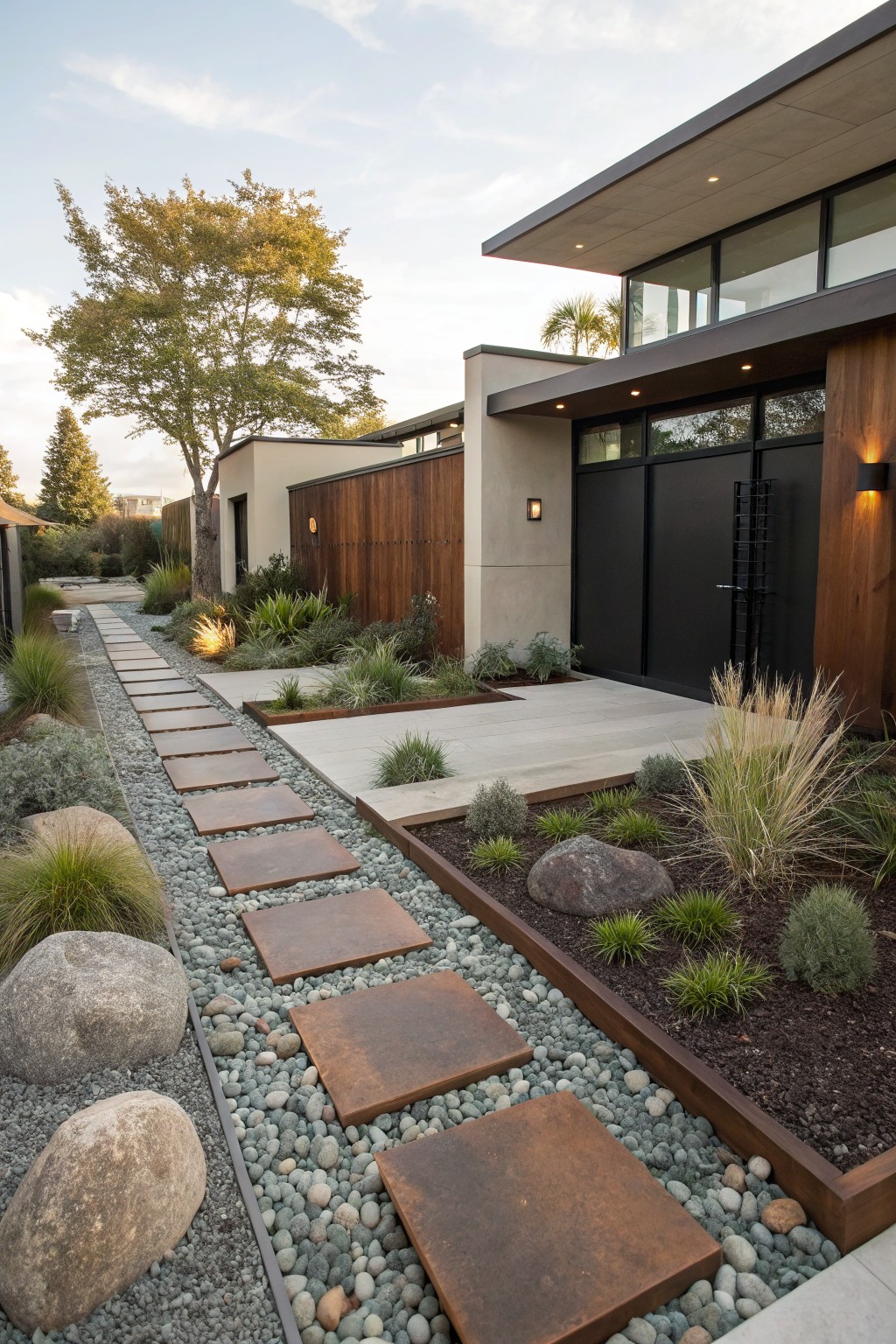
One straightforward way to handle a front yard path in a dry climate is to lay large, rusted metal stepping stones right into pea gravel. It keeps water use way down since gravel drains fast and doesn’t need much upkeep. Those spaced-out stones give a clean line from the street to your door, and the look fits right with drought plants like tall grasses and low shrubs hugging the edges.
This setup works best for modern homes or anything with clean lines, especially where you want to avoid mowing or watering a lawn. Just make sure the gravel base sits firm so stones don’t shift over time. Add a few big boulders nearby for weight, and you’ve got a path that handles heat without fuss.
Winding Gravel Path with Stepping Stones
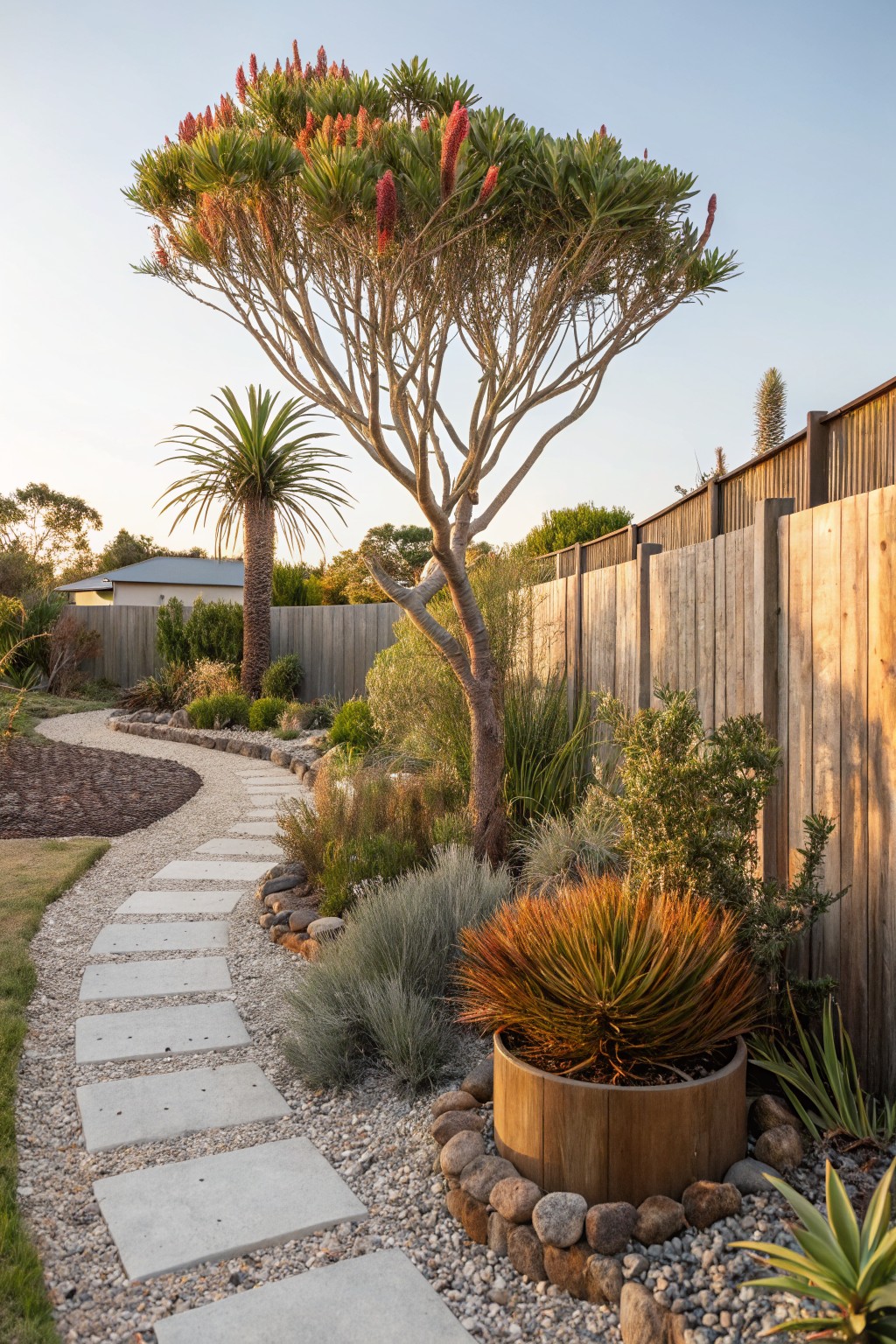
A winding path like this makes a front yard feel welcoming and easy to walk through. The gravel base with wide stone slabs guides you right to the door, while low-water plants like red-hot pokers and spiky grasses fill in the edges. It keeps things simple in hot spots where grass would struggle.
You can set this up in any sunny yard by laying gravel over soil and spacing out the stones for a natural curve. Drought plants handle the heat fine, so no extra watering needed. Suits smaller lots or coastal homes best… just watch for weeds popping up in the gravel now and then.
Stepping Stone Path in a Dry Front Yard
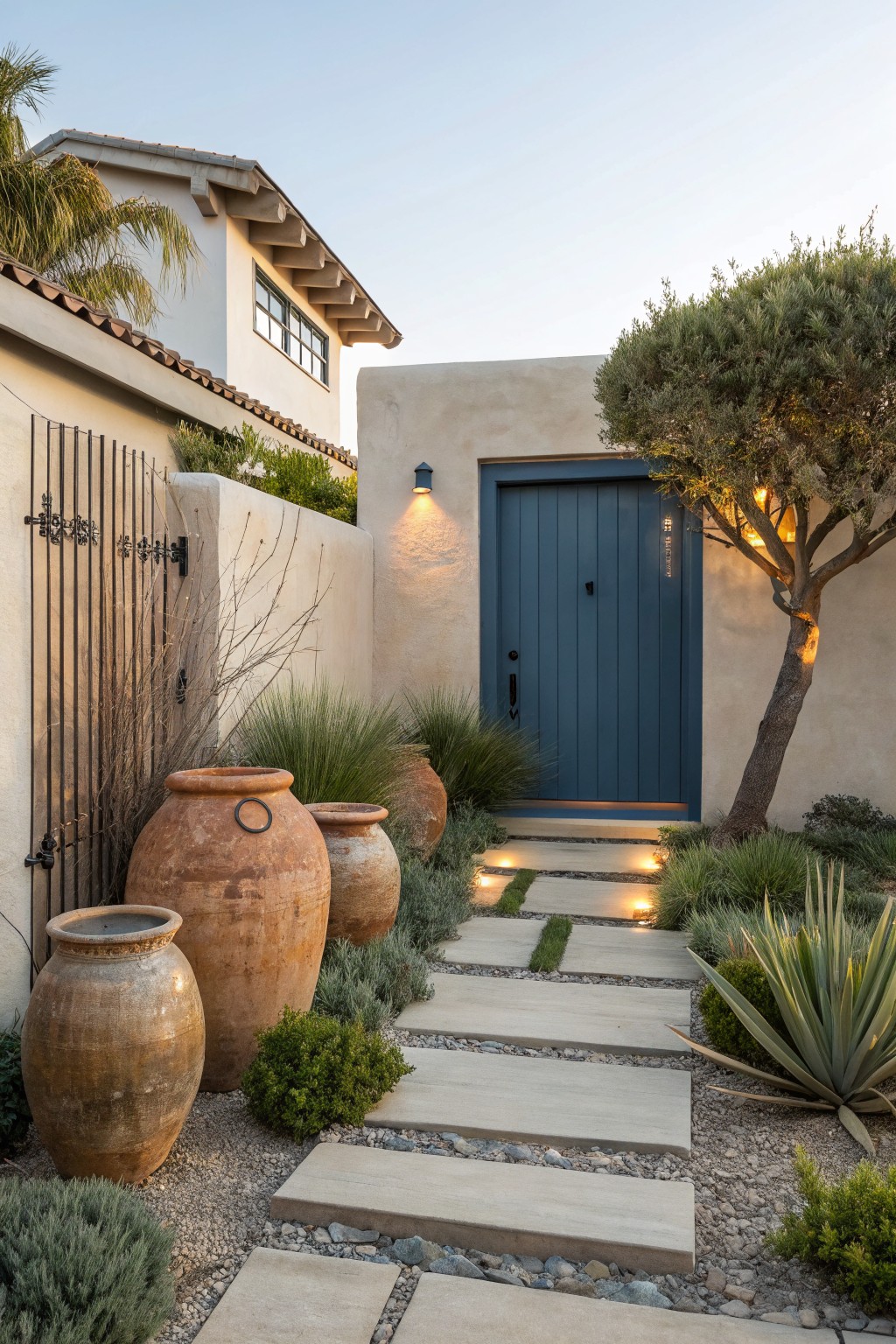
A simple stepping stone path like this one works so well for drought-tolerant yards. It winds gently through gravel mulch with tough plants tucked in around the edges. Big terracotta pots add some weight and color without needing much water. The low path lights make it feel safe and pretty even after dark. Folks in hot spots like this love how it pulls everything together without a lot of fuss.
You can pull this off in any sunny front yard, especially next to stucco or adobe houses. Start with gravel for the base since it drains fast and cuts weeds. Drop in flat stones for steps, then group agaves, grasses, and those oversize pots where they catch the eye. Skip thirsty lawns or flowers. It stays looking good year-round with just occasional trimming.
Winding Stone Path with Drought Tolerant Grasses
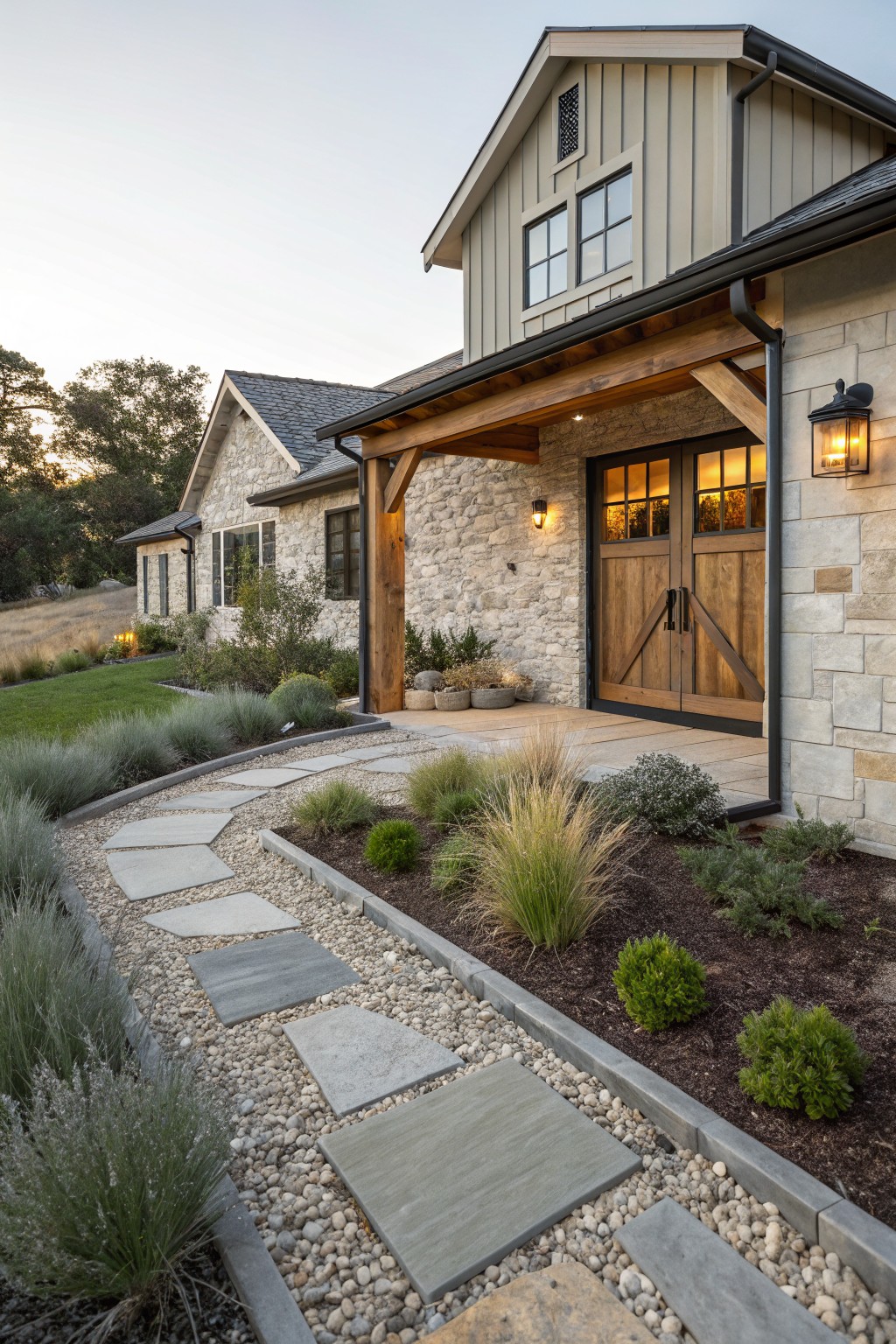
One simple way to handle a front walkway in dry areas is this kind of irregular stone path. It uses big flat slabs set into gravel, with tough grasses and lavender planted right along the edges. The curve feels natural, not stiff, and it pulls you toward the house without much upkeep. Those plants stay green through hot summers on little water, keeping the look tidy.
You can pull this off in most front yards, especially where you want low effort. Lay the stones loose at first to get the flow right, then fill gaps with pea gravel for drainage. It suits ranch styles or modern farmhouses. Just pick grasses like deer grass that match your zone, and space the plants so they won’t crowd the path over time.
Terraced Stone Steps in Dry Front Yards
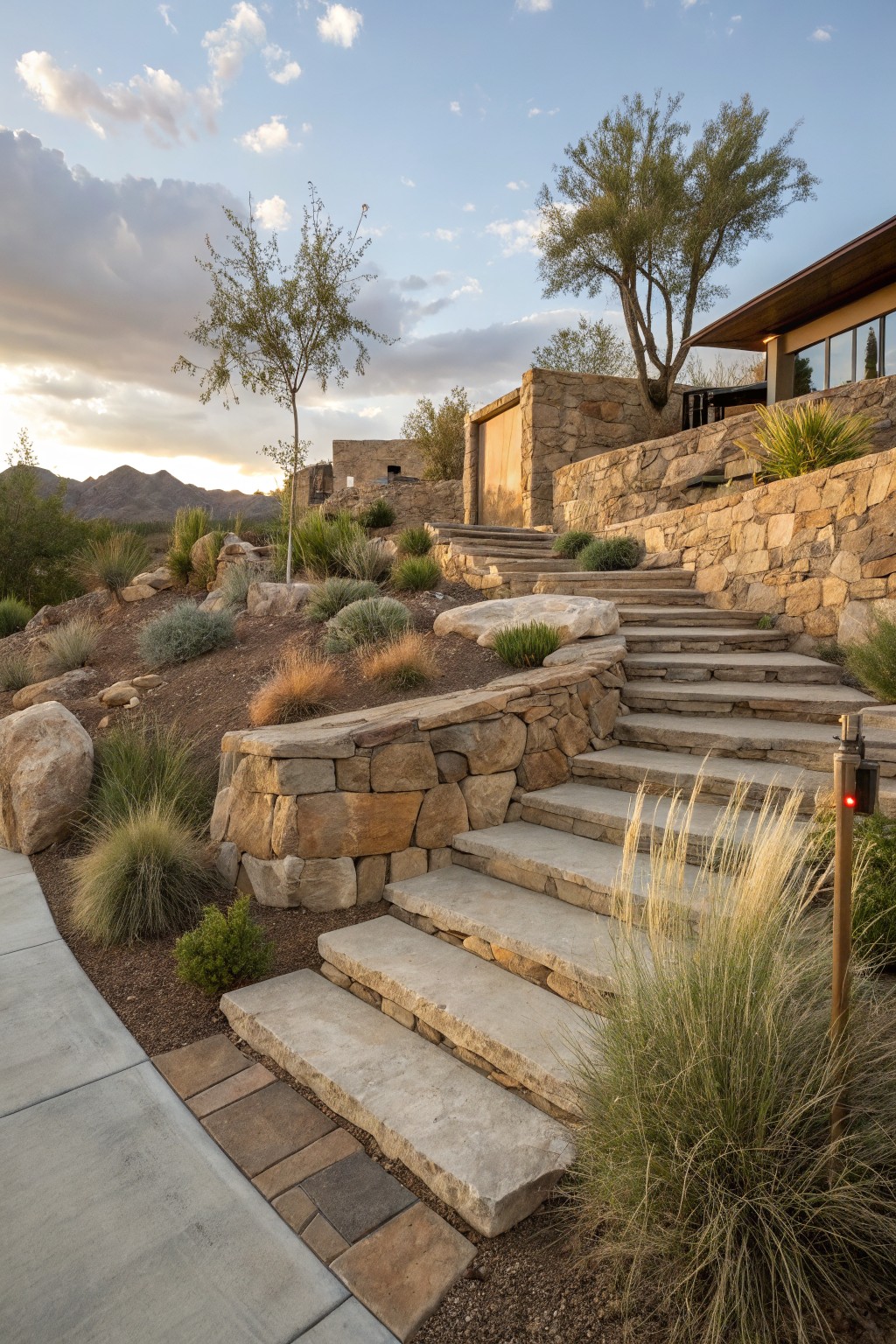
Wide flagstone steps like these climb a slope, tucked between rugged stone retaining walls and clumps of feather grass. Boulders add to the natural feel. In hot climates, this kind of path stands out because it uses tough, drought-tolerant plants that barely need water. The stone ties right into the desert ground, so it looks like it grew there.
You can pull this off on any hillside entryway leading to your house. Pick local stone for the steps and walls to keep costs down, then plant grasses and shrubs that match your area. It handles poor soil fine… just watch for weeds in the first year. Works best where you want low upkeep without bare dirt.
Raised Wooden Planters Along a Path

Raised wooden planters running alongside a walkway give your front yard a clean, organized look without a lot of upkeep. They’re perfect for hot spots where you want some green but not the hassle of thirsty lawns. Here, tough grasses and gravel fill the beds, and a lemon tree nearby handles the dry spells just fine.
Put these in narrow side yards or entry paths where space is tight. Use cedar or something weather-resistant for the frames, layer in gravel at the bottom for good drainage, and stick to plants like agaves or ornamental grasses. They’ll tie right into modern stucco houses and stay neat year-round.
Drought Tolerant Gravel Beds Around the Entry

Gravel beds like this make for easy, low-water front yards that still look put together. You see dark river rocks covering the ground, mixed with tough plants such as an old olive tree, feathery grasses, and low shrubs. It cuts down on mowing and watering, while the clean lines tie right into a modern house. Folks in dry areas love how it handles heat without much fuss.
Put this in a sunny front yard where you want curb appeal without the work. Line a simple concrete path with the gravel and beds, keeping plants spaced out so they don’t crowd. Works best on homes with clean architecture… just watch that gravel doesn’t wash away in heavy rains, so add edging if needed.
Frequently Asked Questions
Q: How do I get started if my yard is mostly dirt and weeds right now? A: Clear out the weeds first with a tough rake or shovel. Dig in some gravel or compost to improve drainage right away. Plant your drought-tough picks in fall if you can, so roots settle before summer hits.
Q: Do these ideas work in crazy hot spots like Arizona deserts? A: Absolutely, pick gravel mulches and natives like agave or yucca that laugh at 110-degree days. Group plants smartly to shade each other’s roots. They thrive once established.
Q: What’s the easiest low-water plant for total beginners? A: Go with lavender. It shrugs off heat, smells great, and barely needs fussing after the first year.
Q: How long until I can cut back watering completely? A: Give new plants about a year of weekly deep soaks to build roots. Then drop to rain-only in most spots. Deep water beats shallow daily sips every time.
