

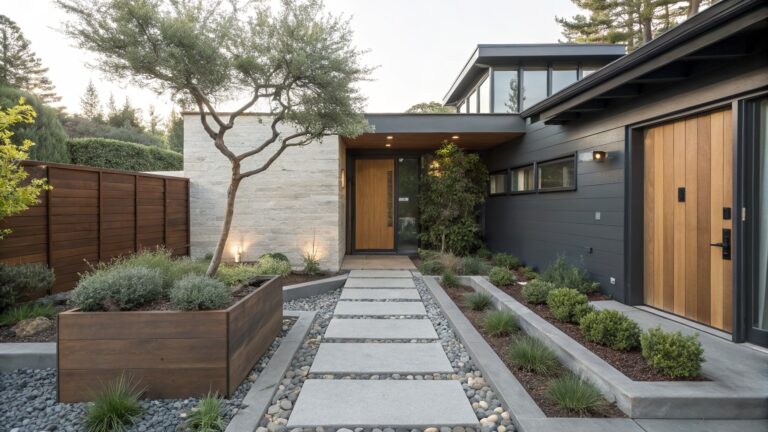
Small front yards can easily feel boxed in by fences or overgrown shrubs, but the right layout opens them up right away. I’ve reshaped ours a couple times now, and what stands out is how a simple winding path draws your eye deeper instead of stopping at the door. Planting in layers, with low growers edging the walk and taller ones framing the back, builds that spacious feel without eating up ground. Over a season or two, the structure settles in and softens everything naturally. These approaches make me think twice about which ones to tweak for next spring.
Stepping Stones in Gravel for Front Entry Paths
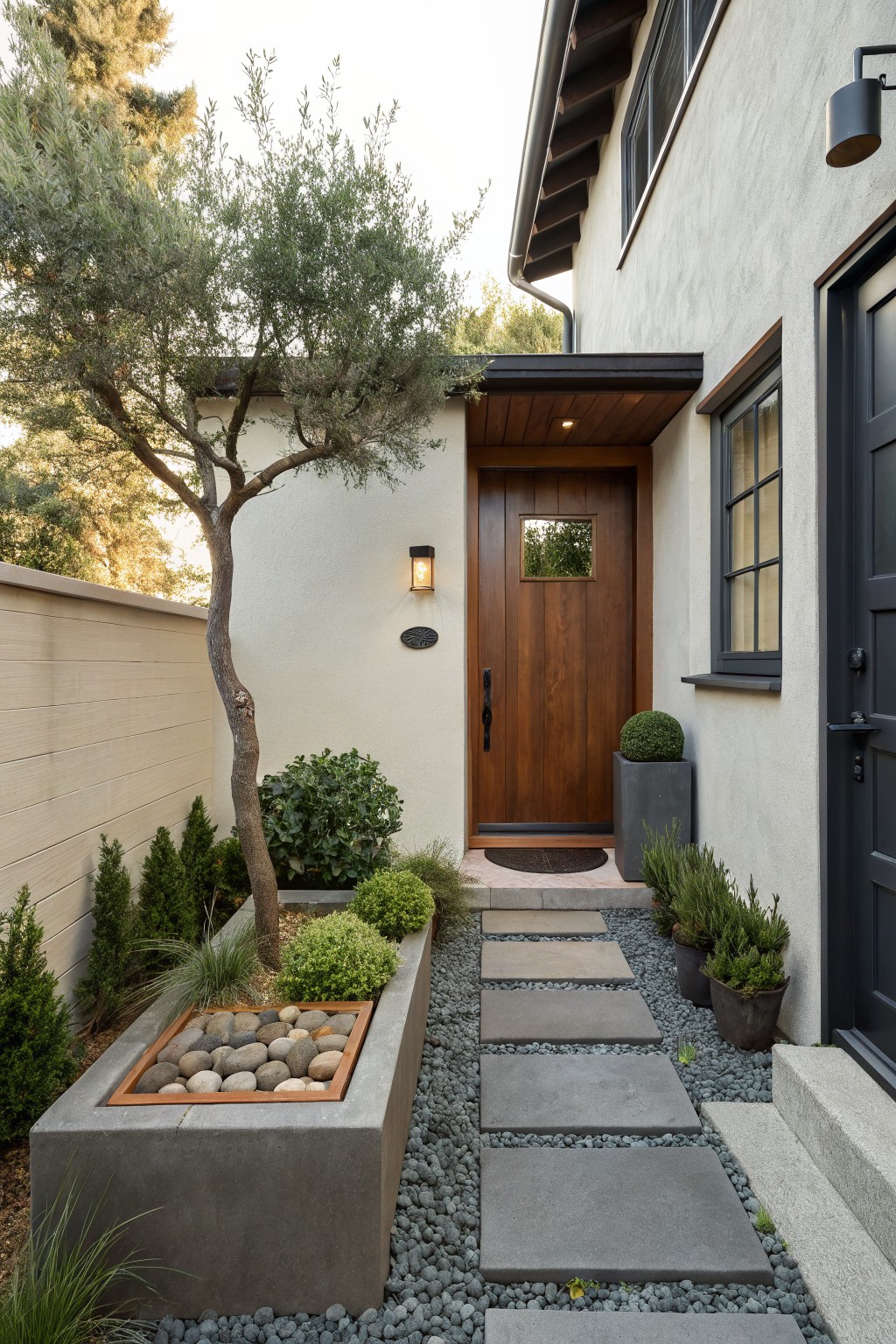
A simple path made from large gray stepping stones set into dark gravel leads straight to the front door here. It cuts through the small yard without taking up much space, leaving room for plants along the sides. This keeps things open and easy to walk, especially in tight spots next to the house.
You can lay this out in any narrow front yard to guide guests right to the entry. Pair it with low boxwoods or grasses in raised planters like the concrete one filled with pebbles and greenery. It suits modern stucco homes best and stays low maintenance since gravel lets water drain fast. Just keep the stones level so no one trips.
Large Pavers for a Spacious Entry Path
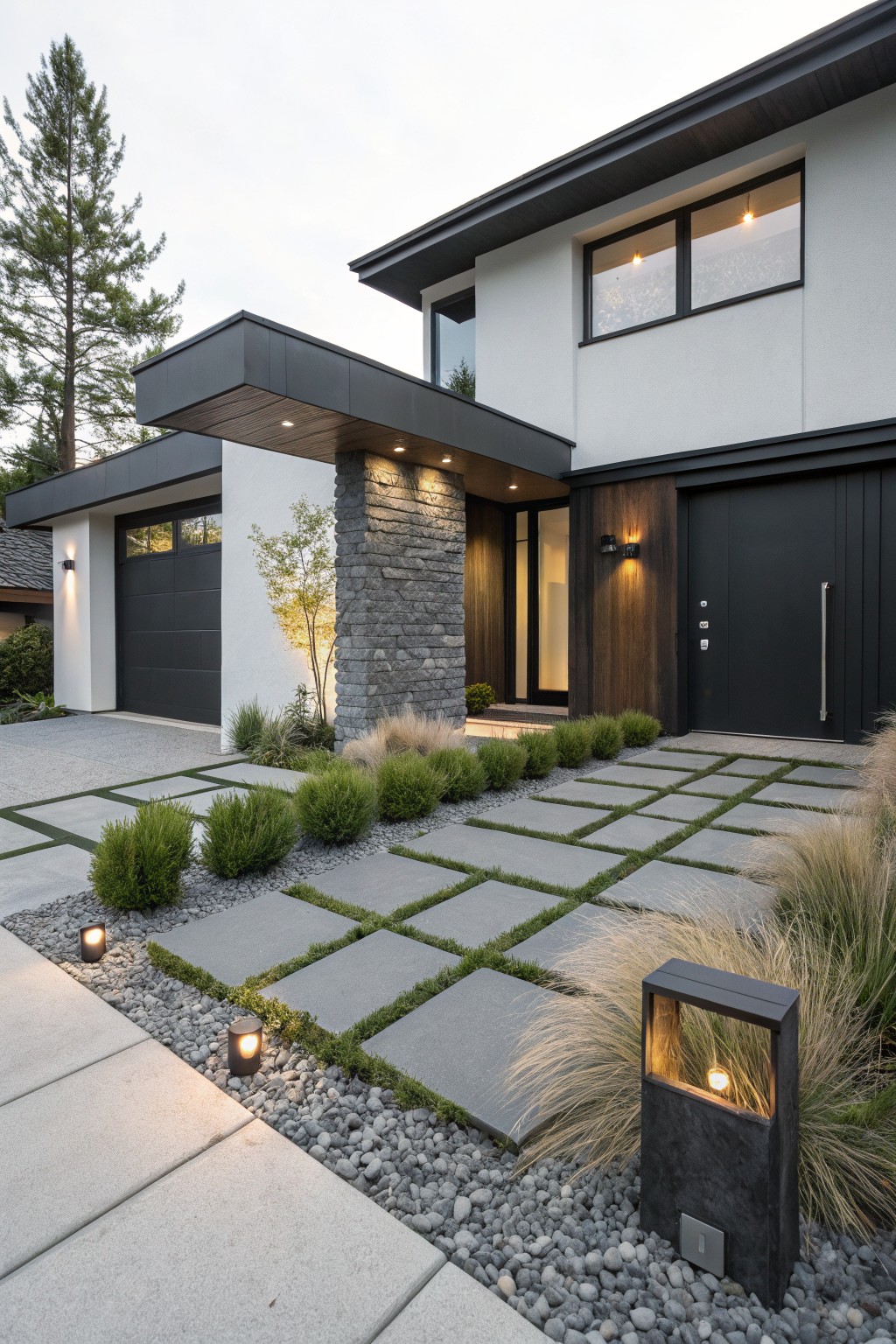
One straightforward way to make a small front yard feel bigger is to lay large concrete pavers in a loose grid pattern. Here, the big square slabs are spaced with grass in between, which keeps things open and easy to walk on. Low boxwood shrubs line the edges, along with some taller grasses, giving structure without crowding the space. It works because the scale of those pavers draws the eye forward to the house entry, making the whole area seem stretched out.
This setup suits modern homes or any spot with a simple driveway turnaround. Go for pavers at least three feet square to get that open effect, and plant neat evergreens like boxwoods to frame it. Skip tiny stones or fussy borders, or it might feel busy instead of calm. Just make sure the grass joints get some sun and water to stay tidy.
Natural Stepping Stone Entry Path
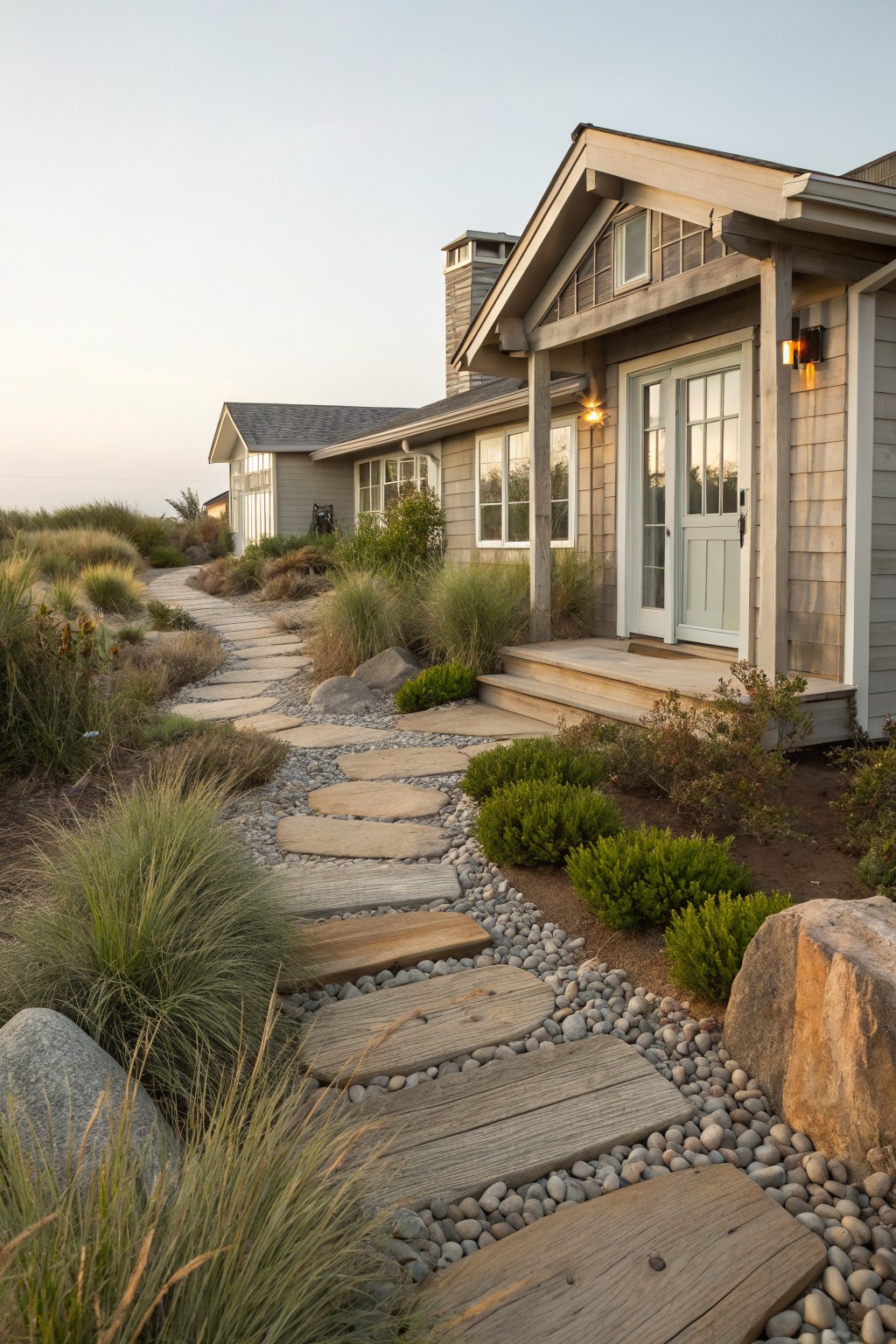
A simple path of round stones and wood slabs set in gravel winds gently through tall grasses toward the front door. It turns a tight front yard into something that feels open and easy to walk. Folks like how it slows you down a bit, makes the entry more noticeable without taking up much room.
This works best in small coastal yards or dry spots where you want low upkeep. Grab flat river rocks or driftwood rounds, space them in pea gravel, and plant bunchgrasses along the edges. Suits casual house styles. Just watch the spacing so it’s walkable, not a stumble.
Winding Stone Paths in Gravel Gardens
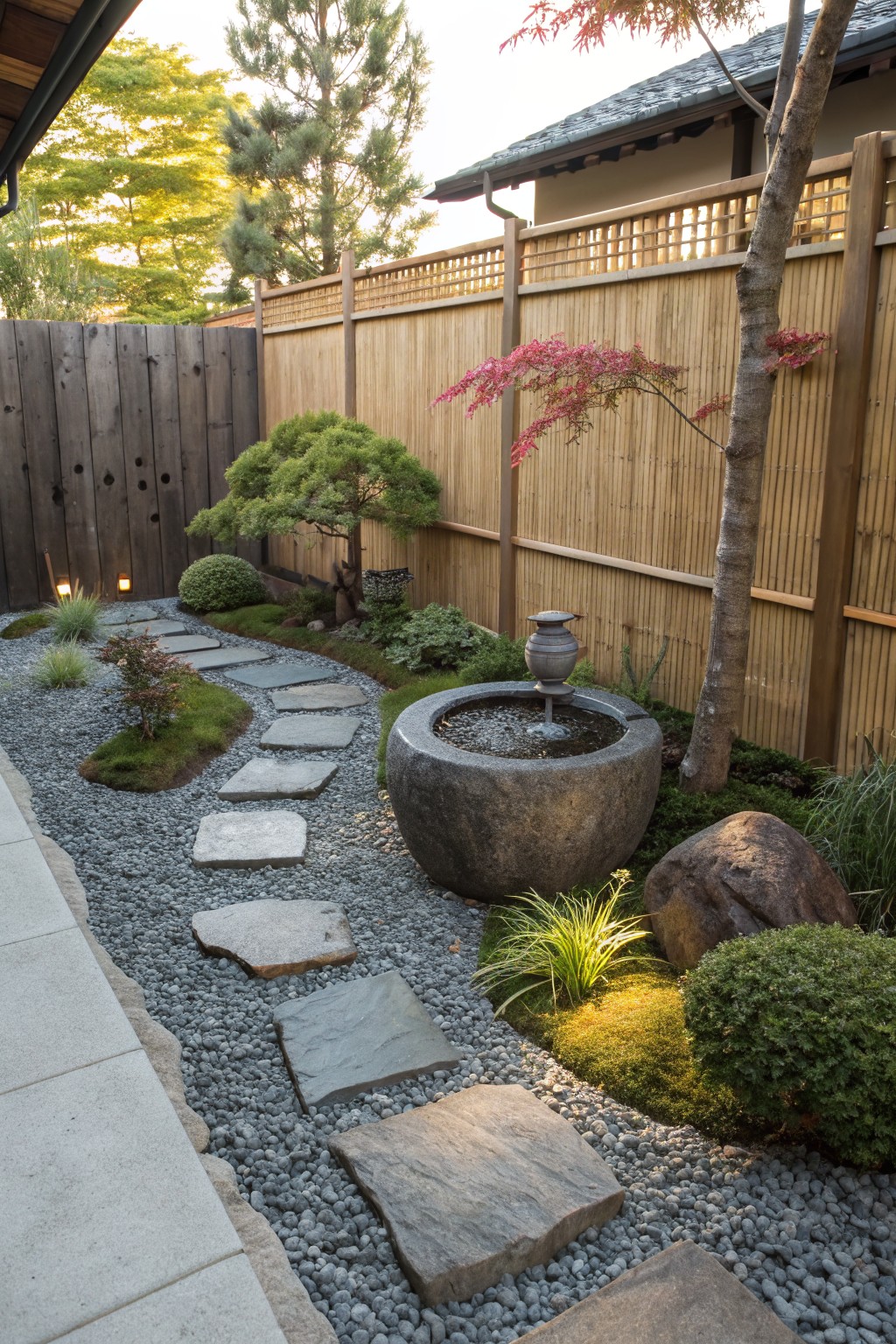
A simple way to make a small yard feel bigger is laying irregular stone slabs into a bed of smooth gravel. The path curves gently, inviting you to stroll slowly past low plants and a stone fountain at the center. It keeps things open and calm, without crowding the space with too much lawn or borders.
This works best in narrow side yards or tight front entries where you want low upkeep. Pick flat, chunky stones in grays or earth tones, space them a step apart in pea gravel, and add a few mossy spots or clipped shrubs nearby. Avoid straight lines… they can make it feel boxed in.
Winding Paths Through Tall Grasses
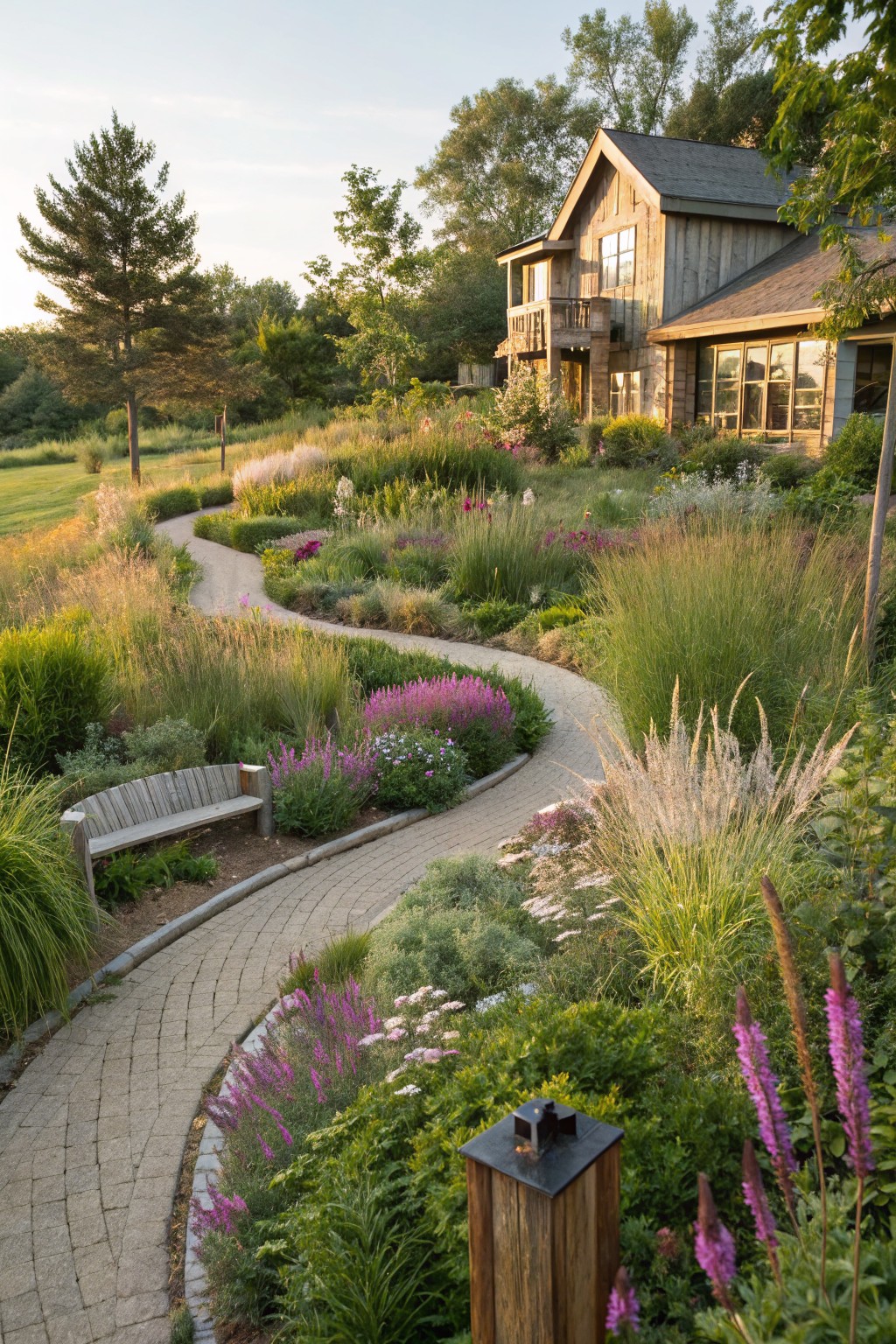
A good winding path can turn a small front yard into something that feels open and welcoming. Instead of a straight line to the door, this brick path curves gently through layers of tall grasses and pink flower clusters. It pulls you along, making the space seem longer and more interesting without taking up much room.
Lay down bricks or pavers for an easy surface that fits most yards. Surround it with low-maintenance perennials and ornamental grasses that sway in the breeze. This setup suits sloped lots or narrow front areas best. Watch that taller plants don’t crowd the path… trim them back now and then.
Container Topiaries Frame Front Steps
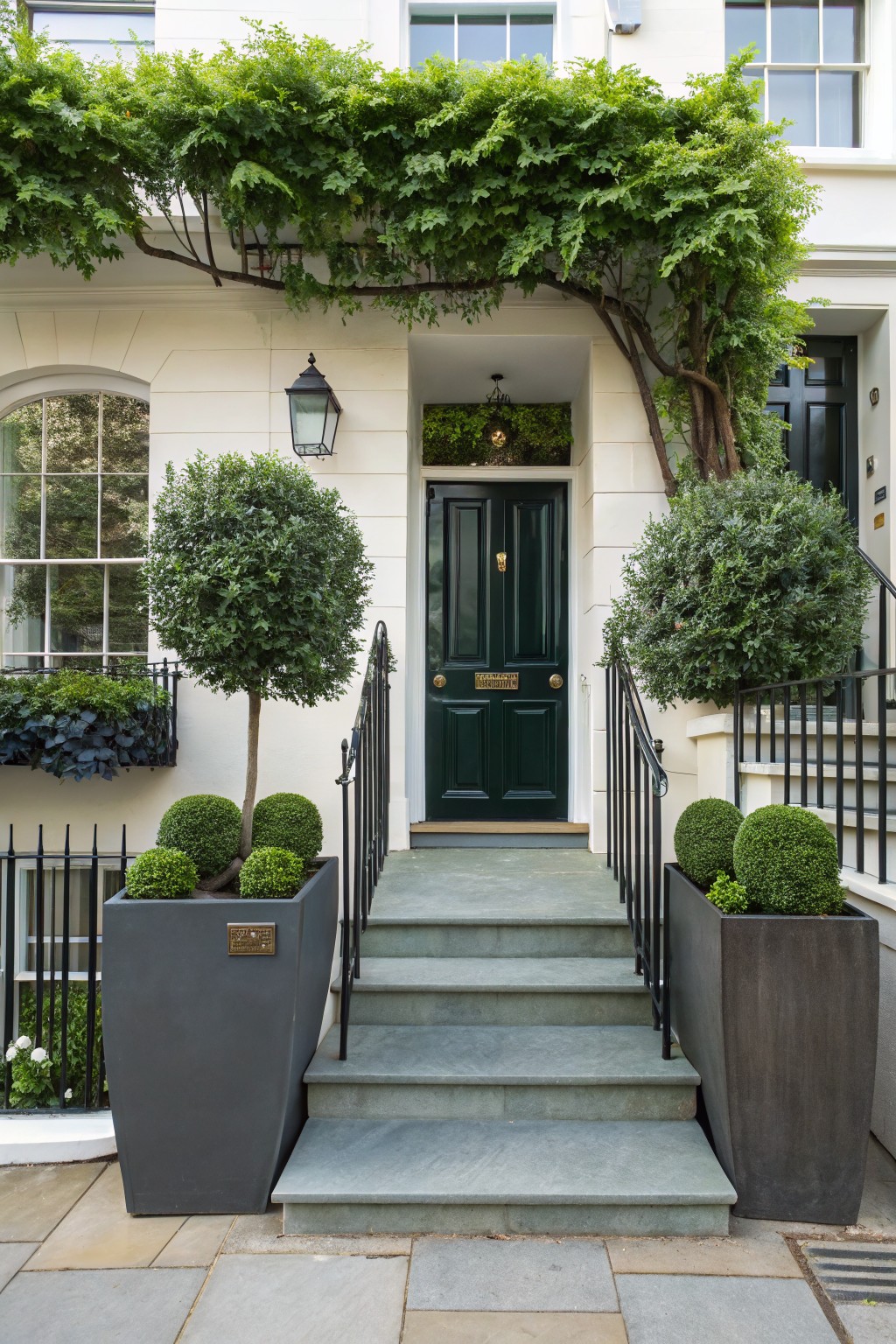
One simple way to make a small front yard feel put-together is to place tall topiary trees in large pots right along the entry steps. Those round-clipped boxwoods add height and shape without crowding the path. They draw the eye up to the door and give the whole approach a bit of formality that fits a classic white house like this.
Put matching pots on both sides of the steps for balance. Choose tough, slow-growing plants that hold their shape with just occasional trimming. This works best in urban spots or narrow lots where you can’t dig beds. Keep the pots simple in gray or black so the greens stand out.
Tiered Stone Steps for Sloped Yards
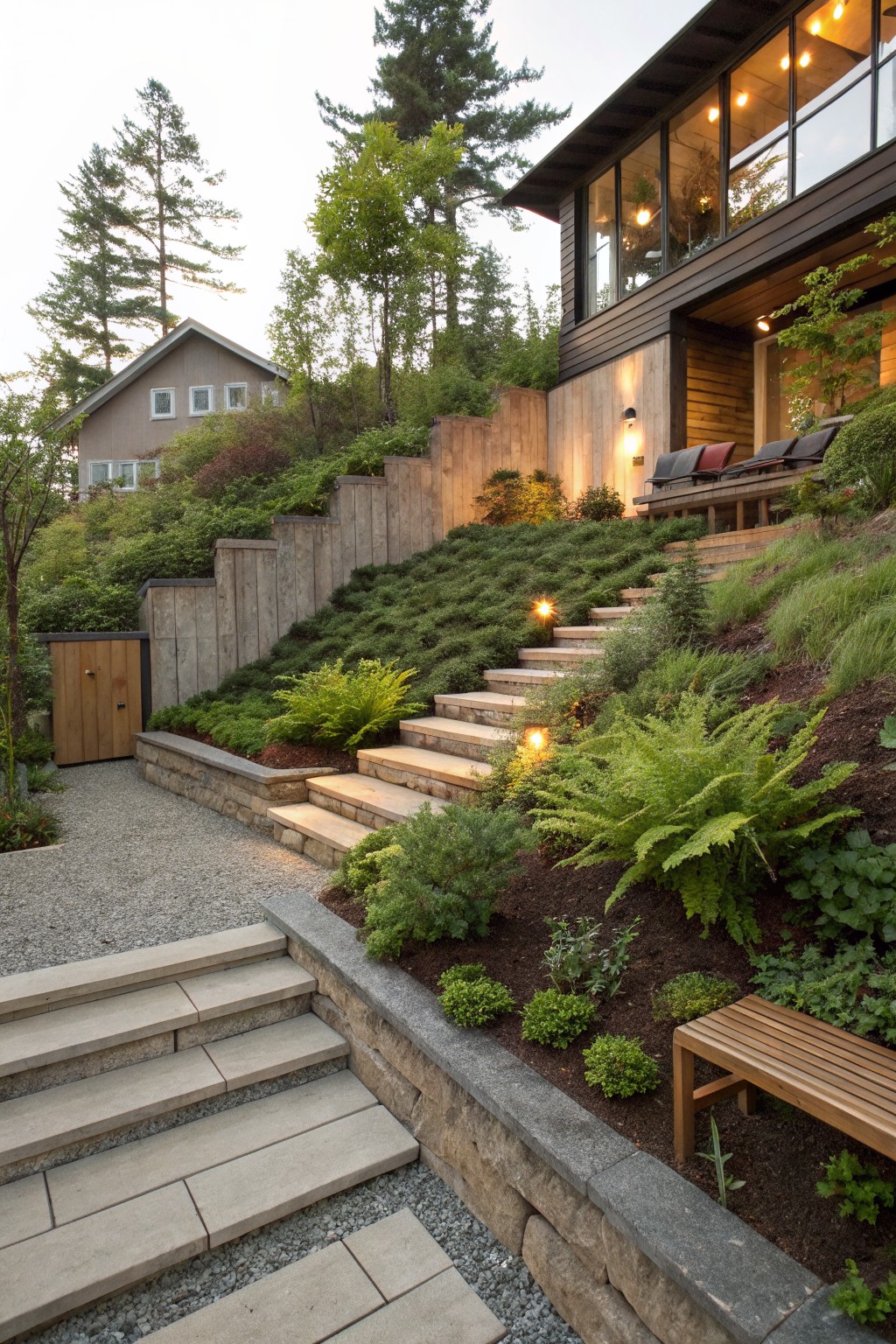
Steep front yards can feel tricky to work with. But wide stone steps like these turn the slope into an easy path that draws you right up to the house. The tiers keep everything stable, and the plants tucked along the edges make it look full without crowding the way. It opens up a small space, giving it that bigger feel even on a hillside lot.
These steps work best where the grade is too sharp for a straight walk. Go with natural stone or concrete slabs that match your house, and fill the beds with tough, low plants like ferns and grasses. Add gravel paths on the sides for footing, and small lights along the risers at night. Skip anything too fussy. It suits modest homes in wooded spots… just check your local codes for wall heights.
Curved Boulder-Lined Path
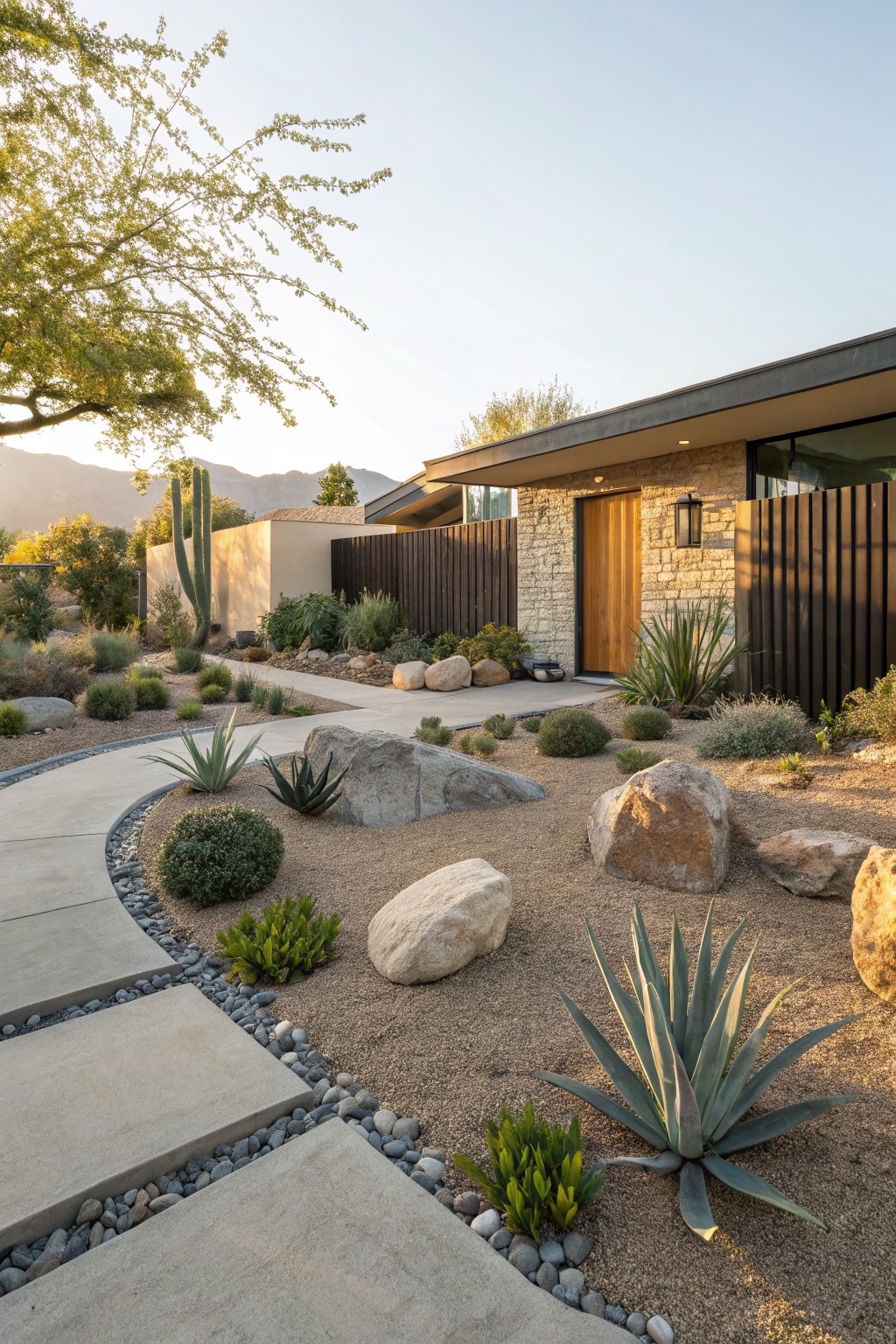
A winding path like this makes a small front yard feel bigger right away. Concrete pavers curve gently through gravel mulch, with large boulders set along the edges and tough agaves tucked in here and there. It pulls your eye to the door without any fuss, and the open gravel keeps things airy even in a tight space.
This works best in dry climates where you want low upkeep. Scale the boulders to your yard size, maybe two or three good ones instead of a bunch of small rocks. Pair it with a simple house entry, and it turns the walk up into something you actually enjoy.
Narrow Reflecting Pool Along the Path
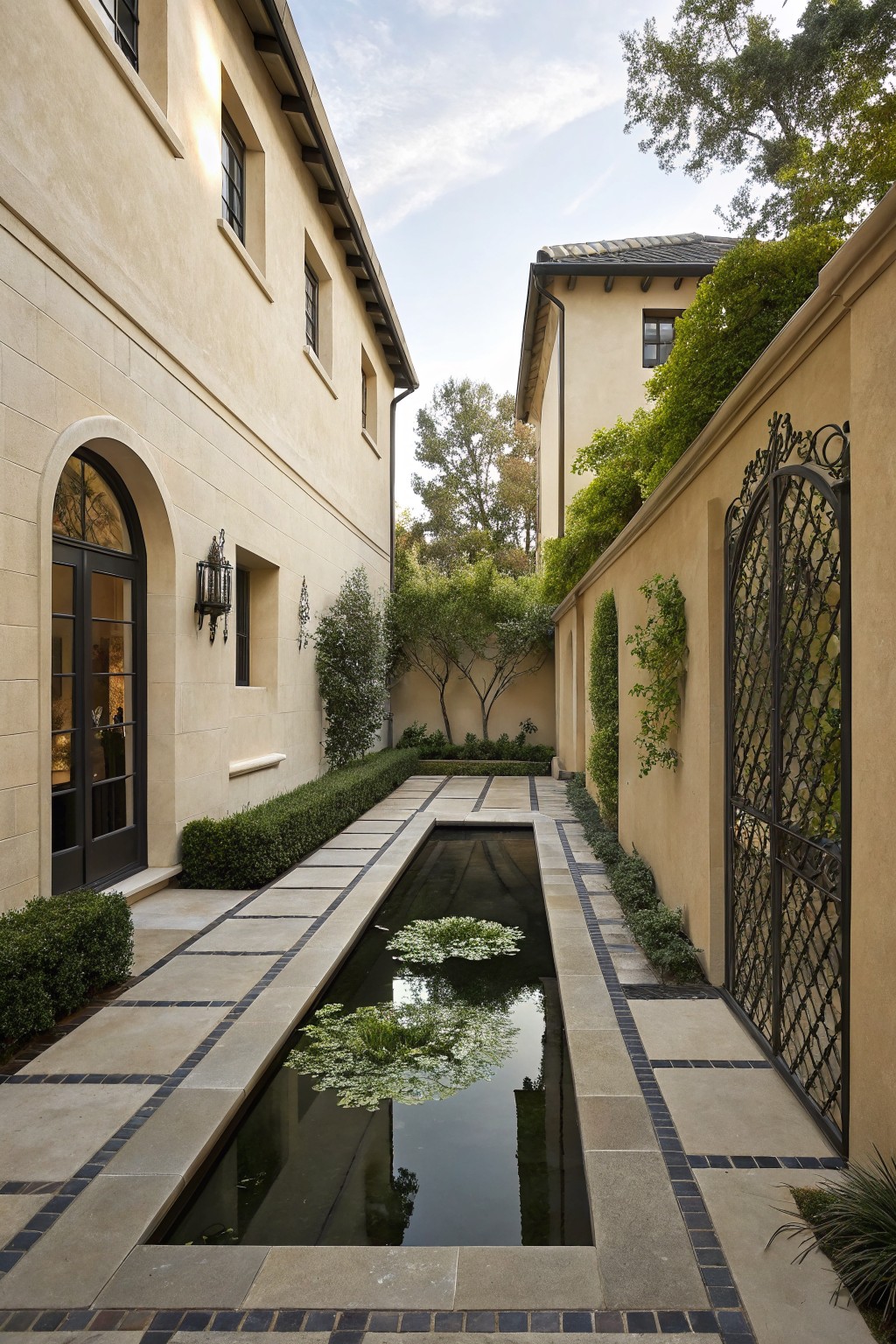
A long narrow pool like this one fits right next to a walkway in a tight courtyard. It pulls your eye down the length of the space, making everything feel deeper and more open. Water lilies floating on top bring in some quiet movement, and the stone edging keeps it neat.
This setup suits small front yards or skinny entry paths where you want calm without crowding. Frame it with boxwood hedges and simple pavers. Just make sure the water stays clean… low-maintenance plants around the edges help a lot.
Curved Path to a Gravel Circle
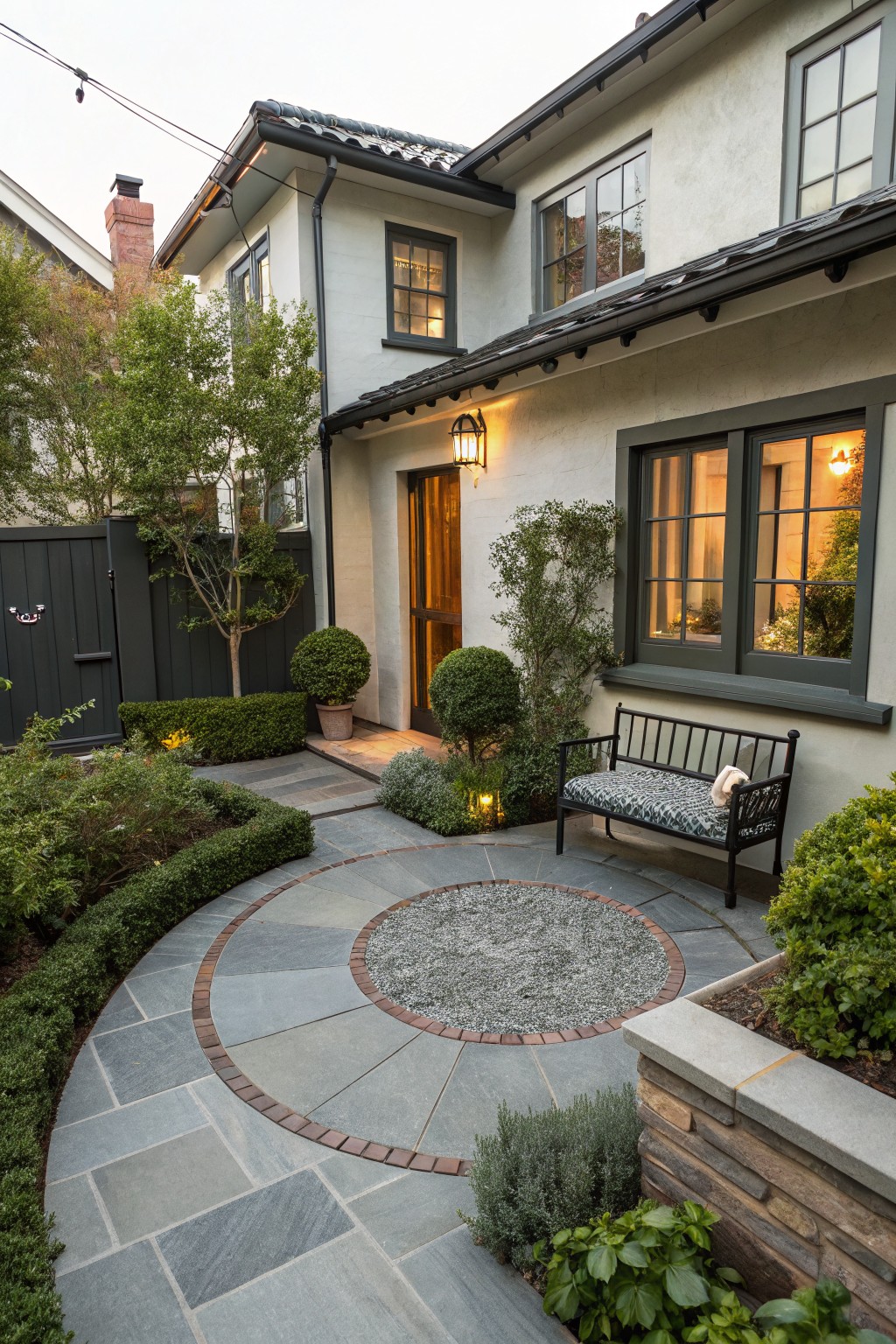
One simple way to make a small front yard feel bigger and more welcoming is a gently curved stone path that ends in a gravel circle. Here it leads right up to the house entry, edged in brick and lined with low boxwood hedges. That circle pulls your eye in and gives a spot to pause, like a little built-in seating area with a bench. It keeps things neat without taking up much space.
This setup works great for narrow side yards or tight front entries where you want structure but not clutter. Use bluestone or flagstone for the path, fill the circle with pea gravel, and add a simple metal bench. Stick to tough, clipped shrubs like boxwoods for easy upkeep. Just make sure the curve isn’t too tight, or it might feel squeezed.
Winding Stone Paths Through the Garden
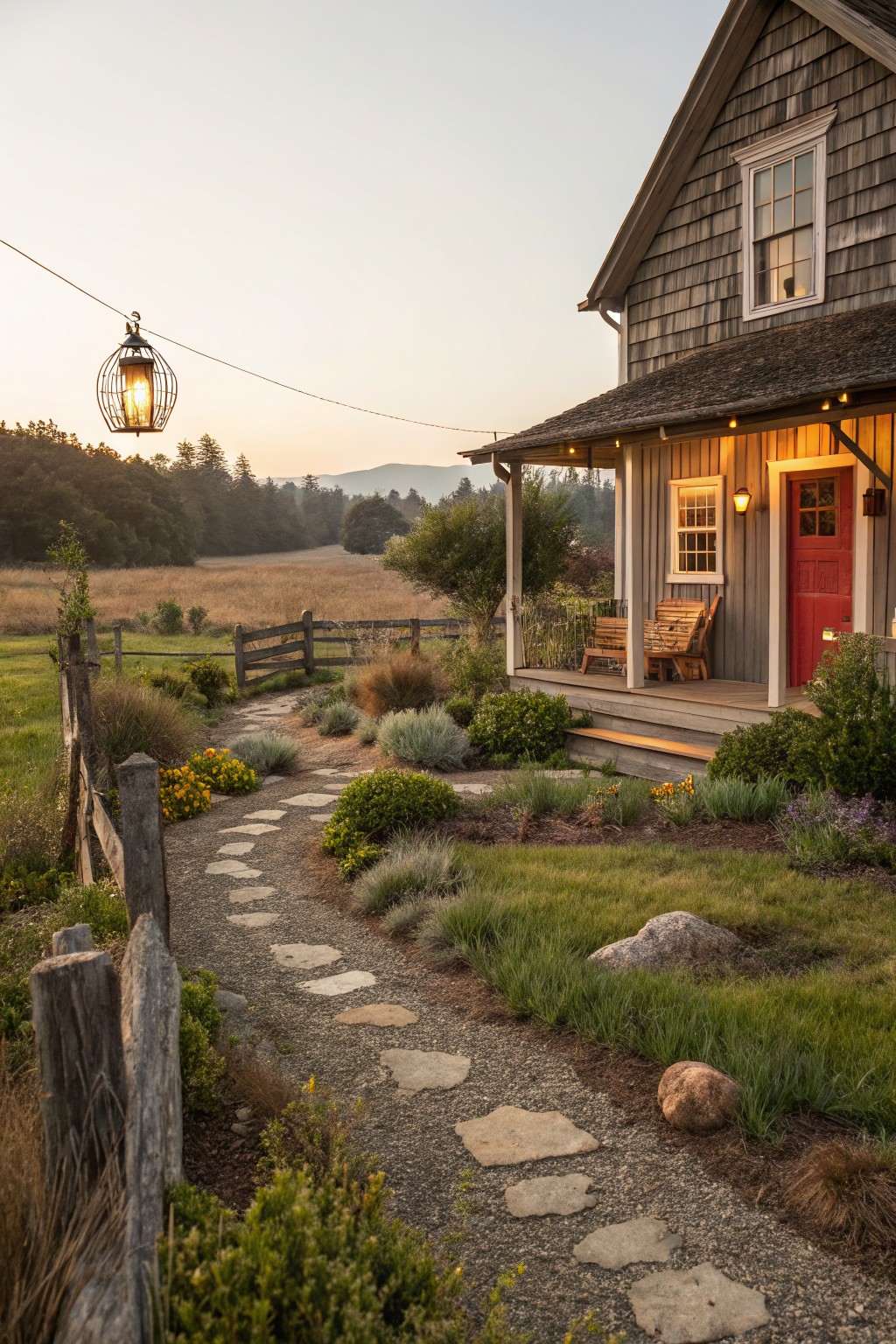
A simple winding path like this one makes your front yard feel bigger and more welcoming. Made from irregular flagstones set right into the ground, it curves gently through low grasses and shrubs toward the house. No harsh edges. Just a natural flow that draws you along without trying too hard.
Try this in a small yard where straight sidewalks feel out of place. Pick stones in earth tones that match your soil, and edge them with tough plants like ornamental grasses or lavender. It suits cottage-style homes or rural spots best. Keep the path wide enough for two people, maybe four feet.
Vertical Green Walls Along Entry Paths
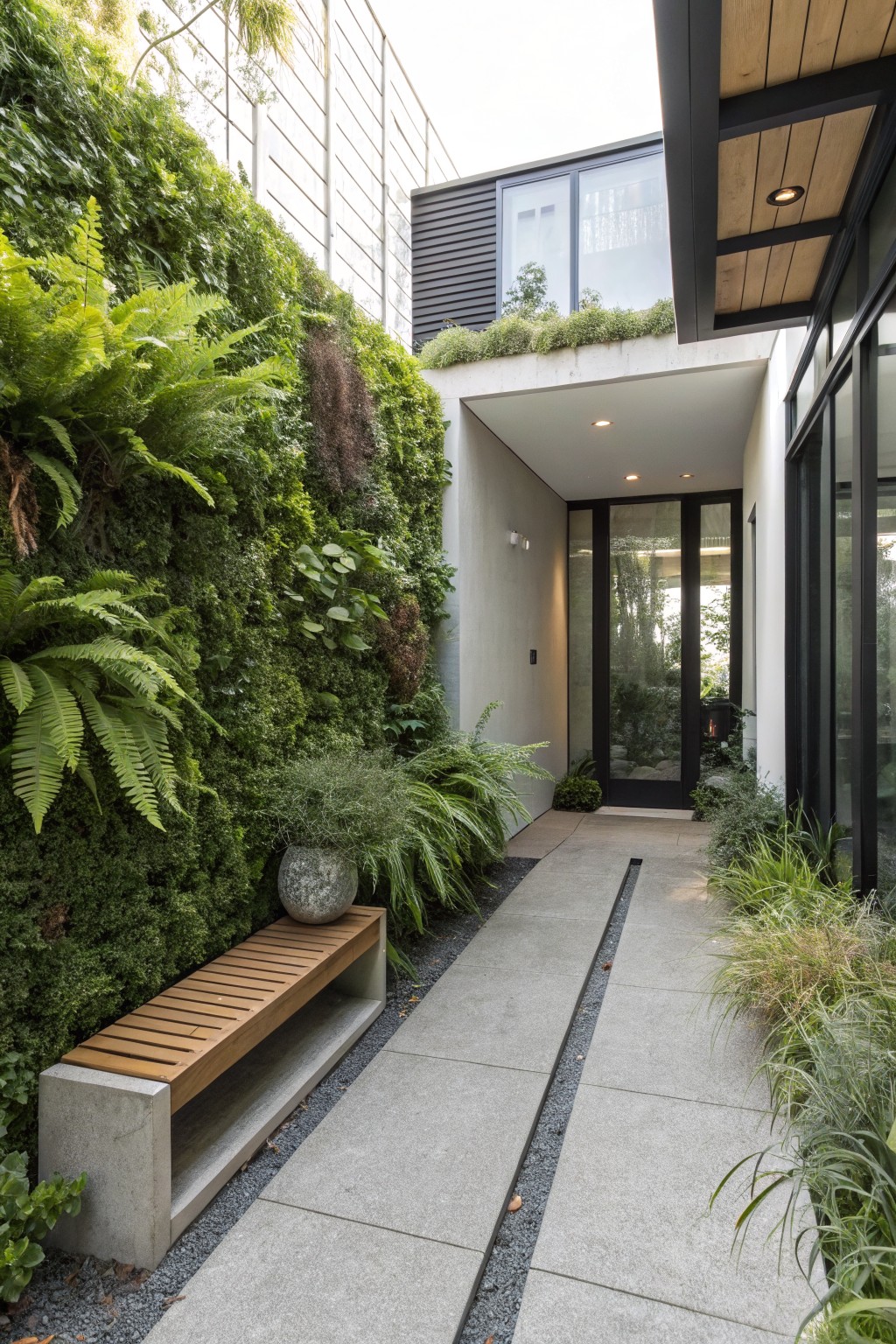
A tall living wall of ferns and greenery runs right alongside this narrow walkway to the front door. It turns what could be a plain concrete path into a fresh, enclosed tunnel that feels surprisingly roomy. The plants add life and privacy without crowding the space, drawing your eye forward to the entry.
This works best in small front yards or urban lots where ground area is tight. Pick low-water plants like ferns that handle shade well, and mount them on a sturdy frame against a fence or wall. Pair it with a simple paver path and gravel channel for drainage. Just watch for overgrowth, trim as needed.
Border the Walkway with Gravel Beds

Gravel beds like this one run right alongside the path, mixed with big boulders, low boxwoods, wavy grasses, and a slim birch tree for height. They replace a solid lawn patch and let the entry area breathe, giving that open feel even in a tight spot up front. The clean concrete edging holds it all together without much upkeep.
This works best on small lots where you want curb appeal but not constant mowing. Line up wide pavers for the walkway so it’s practical for daily use. Go for round river rocks and tough plants that handle dry spells. Skip it if your soil washes out easy…add fabric underneath first.
Line Your Path with a Picket Fence
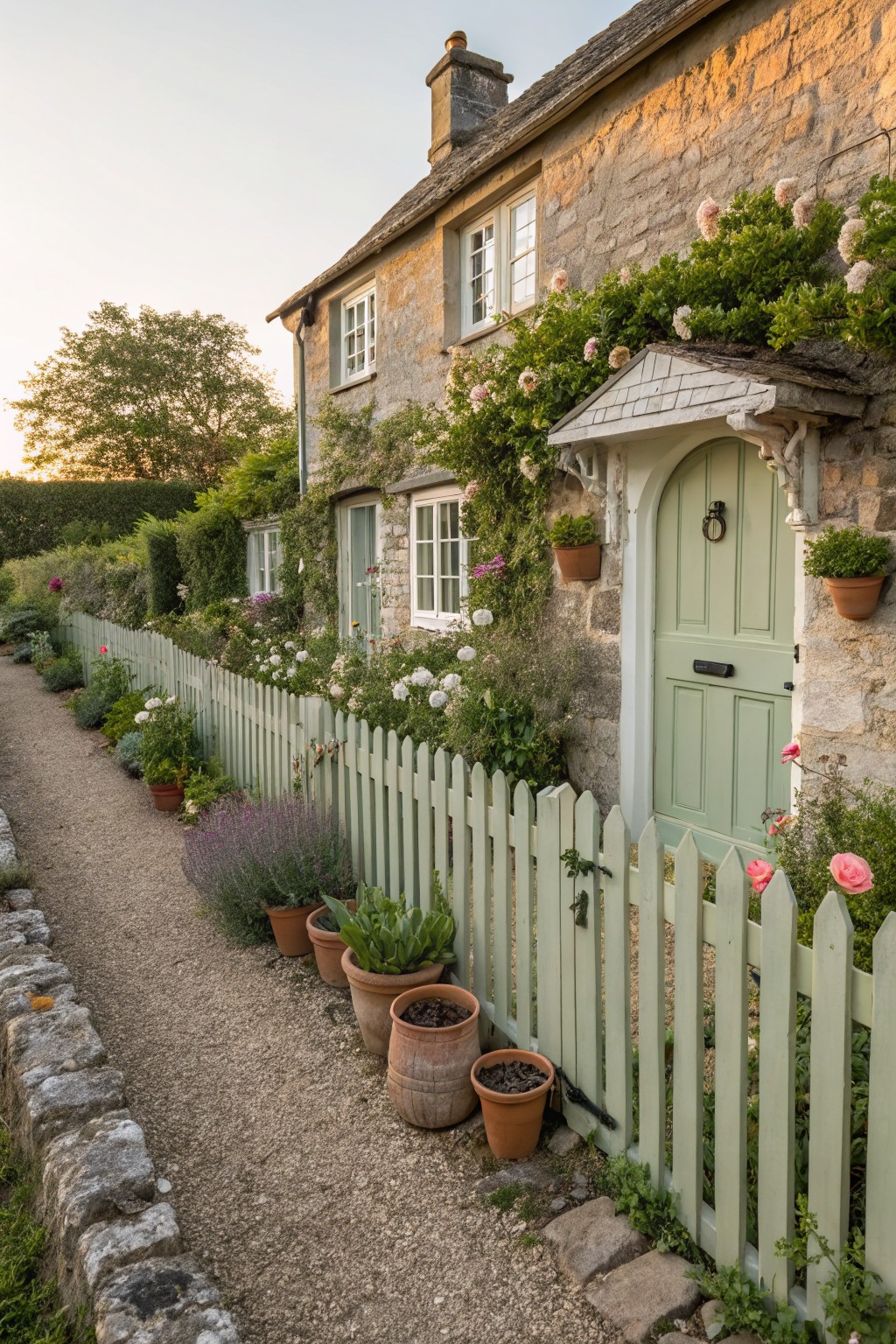
A picket fence running alongside a narrow gravel path works so well in tight front yards. It keeps the plants in check without blocking the view of the house. Flowers and pots tuck right up against it. That setup draws the eye straight to the door. Feels open even when space is small.
Try this on cottage homes or older places with stone walls. Paint the fence a soft green to match the door. Fill beds with easy bloomers like roses and lavender. Skip tall shrubs along the path. They can crowd things. Keeps the walk clear and the yard friendly.
Linear Stone Path Through Grasses
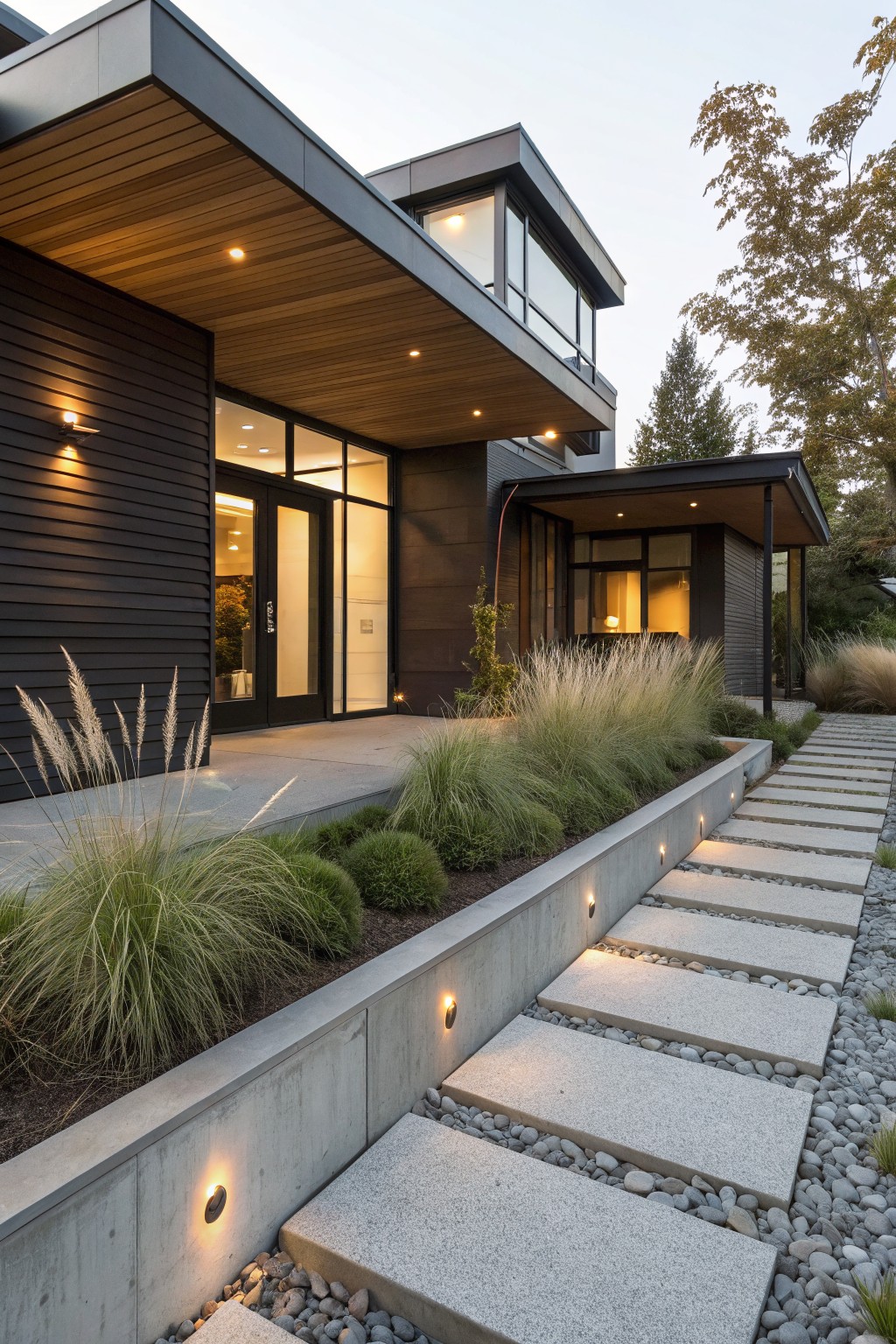
A straight run of wide stone pavers set into gravel makes for an easy path to the front door. Tall ornamental grasses line one side, with a low concrete retaining wall holding back plantings on the other. This keeps the yard simple and open. It guides visitors without taking up much room, and the grasses add some movement as they sway.
Use this in tight front yards to stretch the feel of the space. Pick rough-cut stones for texture, and grasses that don’t need much water. It suits modern houses best, but watch the scale, the path shouldn’t squeeze between too-close plantings. Keeps things practical year-round.
Winding Stone Path in Gravel
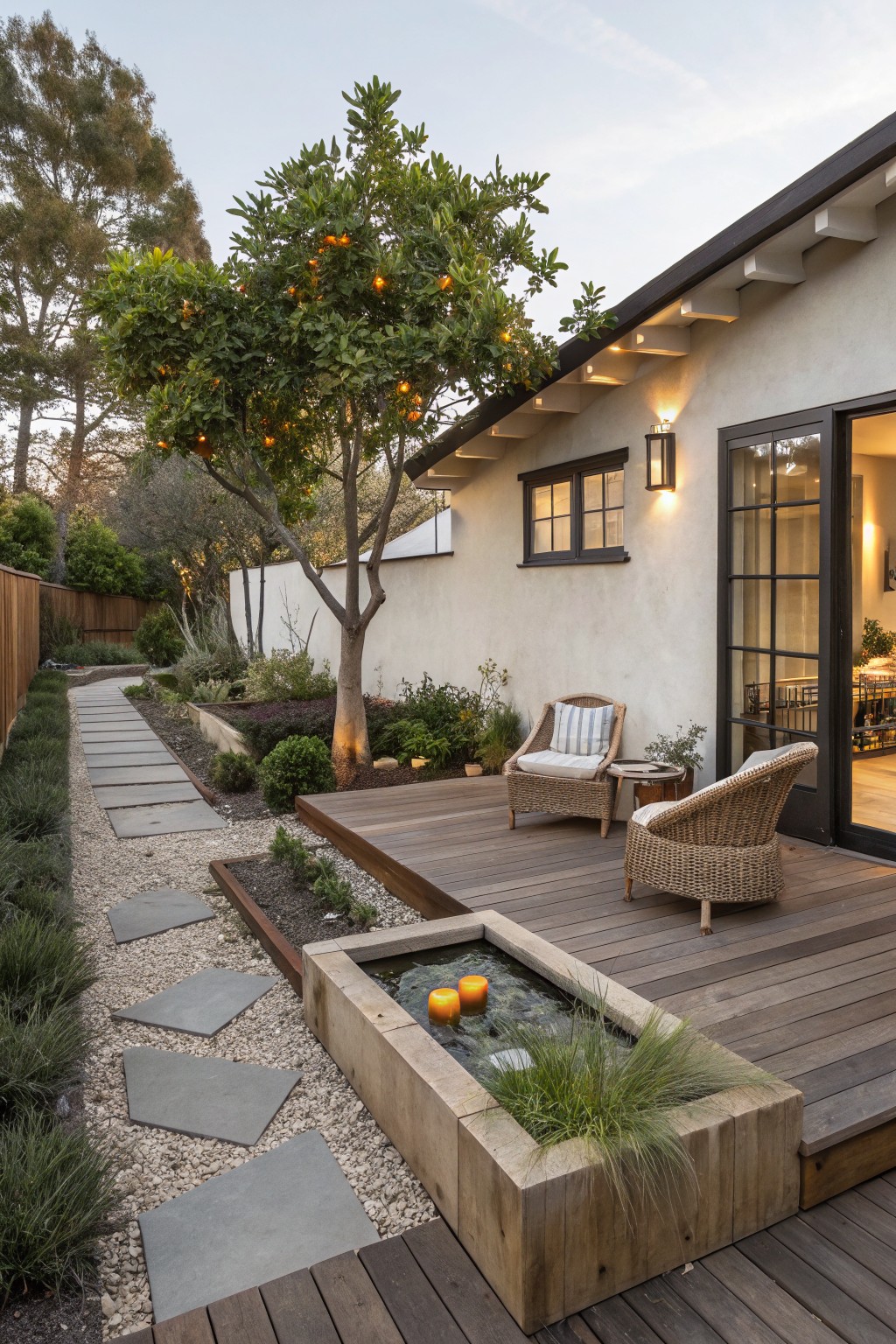
A simple gravel path lined with irregular stone pavers gives this narrow yard a natural flow. It winds gently between low plants like lavender and grasses, pulling your eye toward the deck without taking up much space. That loose layout keeps things open. Feels bigger than it is.
Set these paths in front yards with tight side areas or along a house wall. Use larger stones at turns for stability. Go for decomposed granite or pea gravel underneath so water drains fast. Works well around citrus trees or near patios. Skip it if your soil stays soggy.
Curved Paver Paths for Small Yards
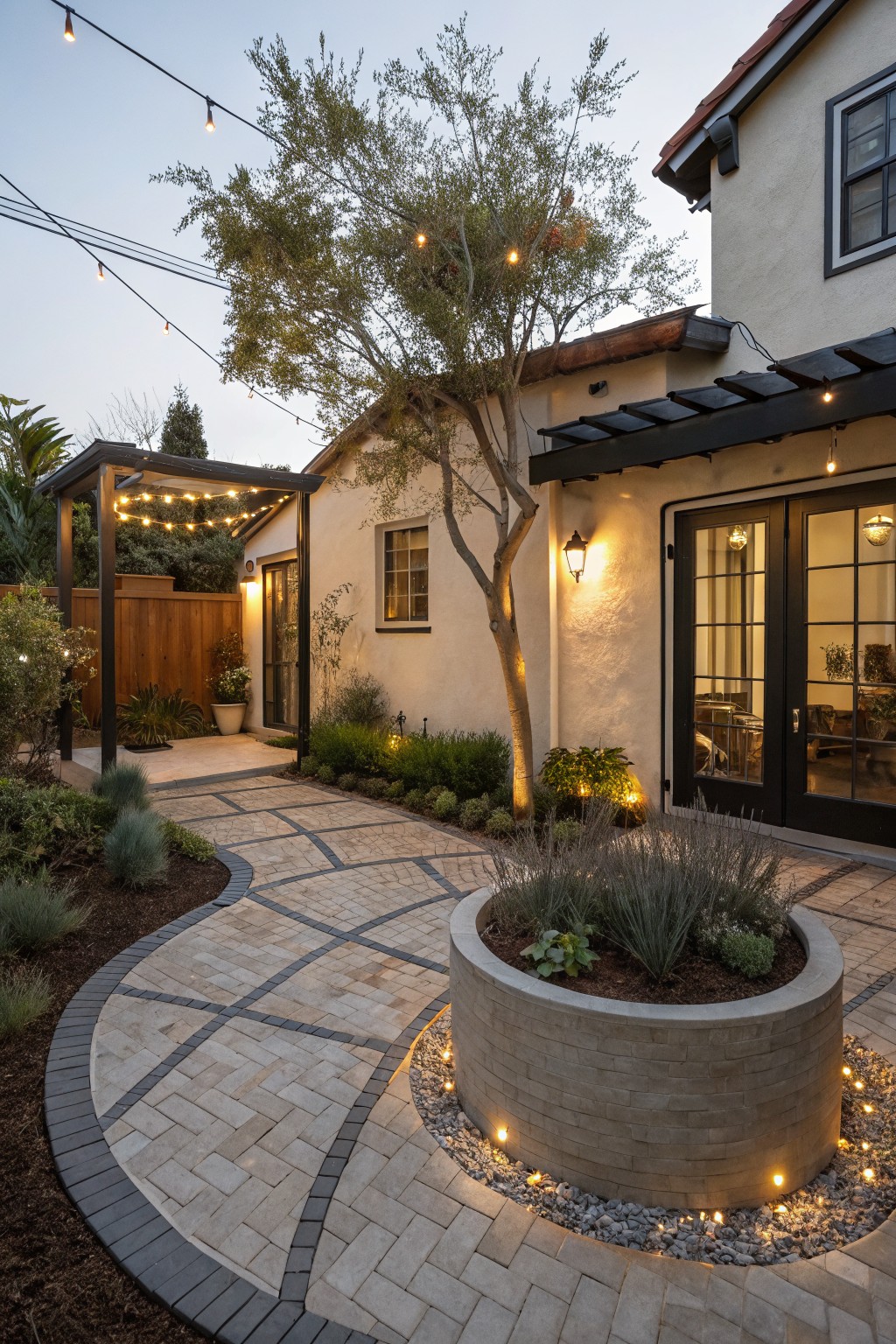
A curved path like this one uses light gray pavers with dark edging to guide you right to the house door. It winds gently around a big concrete planter stuffed with grasses and low plants. That simple curve makes the yard feel longer and less boxed in. No straight lines chopping things up.
You can pull this off in any narrow front yard by keeping the path two feet wide at most. Line it with gravel mulch and a few tough plants like olive trees or succulents that don’t need much water. It works best where space is tight… just watch the curves don’t swing too wide or you’ll eat up room.
Gravel Paths with Spaced Pavers
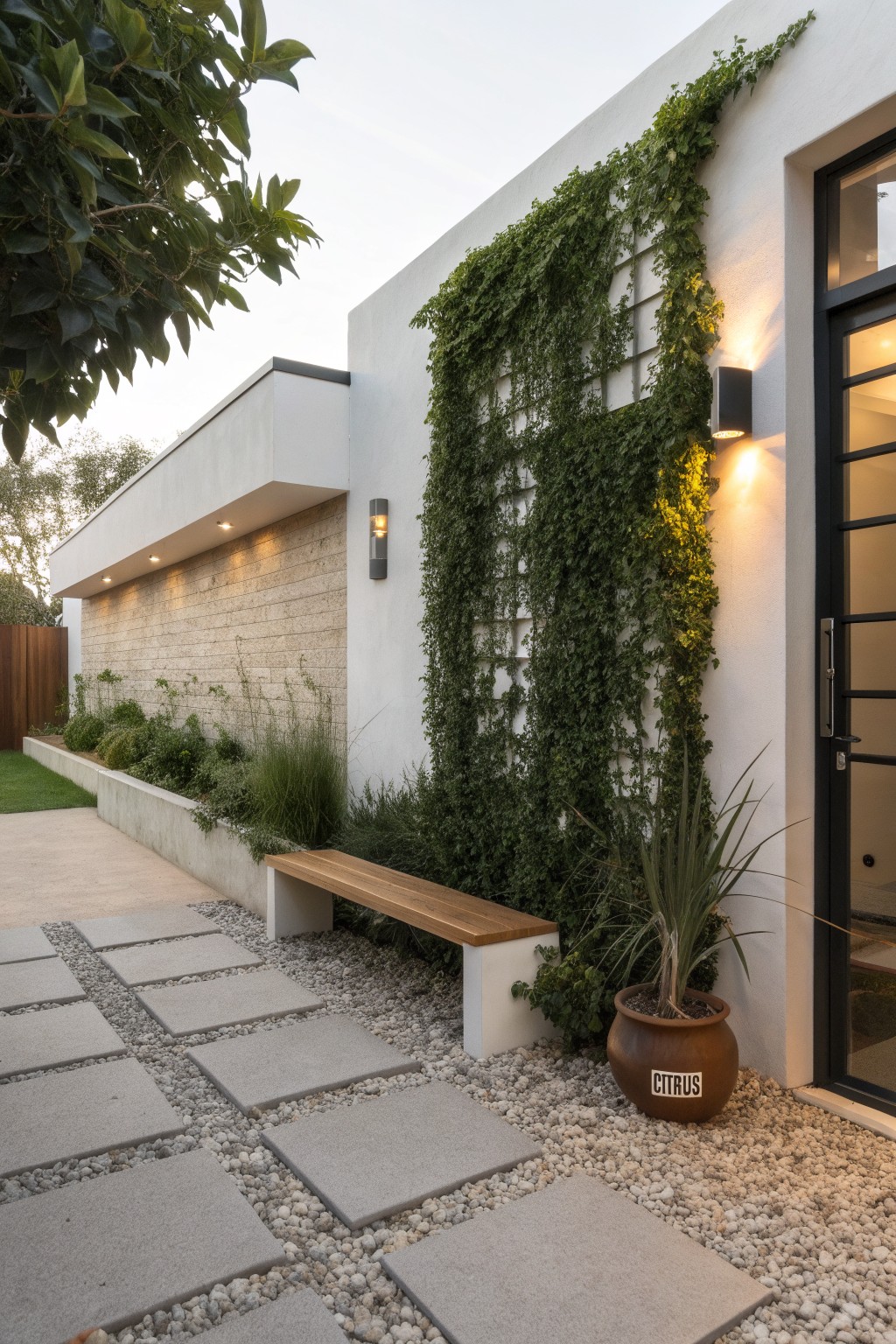
Big rectangular pavers set loosely in a gravel bed make a clean walkway that doesn’t crowd the yard. Here, smooth gray stones lead right to the door, with white pebbles filling the gaps for a light, open feel. The ivy climbing the nearby wall adds green without eating up ground space, and it all stays low fuss.
This works best in narrow front yards or along a side entry where you need direction but want room to breathe. Lay the pavers unevenly for a natural look, tuck in a few tough plants or a simple bench, and it suits modern houses or basic setups. Skip tiny stones though, they shift too much underfoot.
Gravel Pathways with Stone Edging
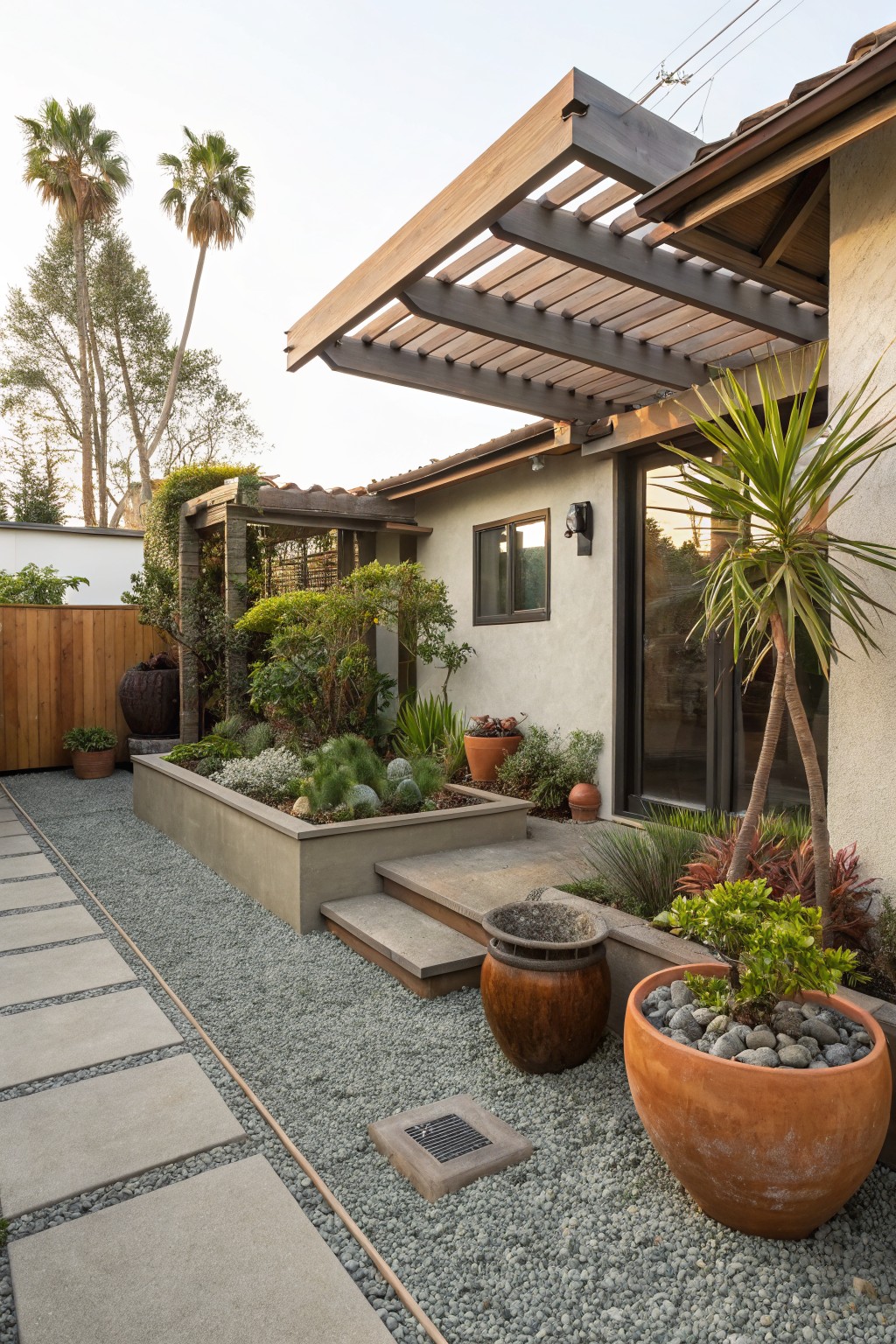
A gravel path like this keeps a small front yard feeling open and easy to navigate. The square concrete pavers set into the gravel create a clean edge that guides you straight to the entry steps. Large terracotta pots filled with grasses and succulents add some life along the way. Without much lawn or busy planting, it stays simple and low fuss.
This works best in sunny, dry spots where you want low water use. Line the path with just a few bold pots and a raised bed nearby for structure. Skip the grass entirely… gravel handles foot traffic fine and drains quick after rain. Pairs well with stucco houses or anything with clean lines.
Curve a Stone Path Through the Garden
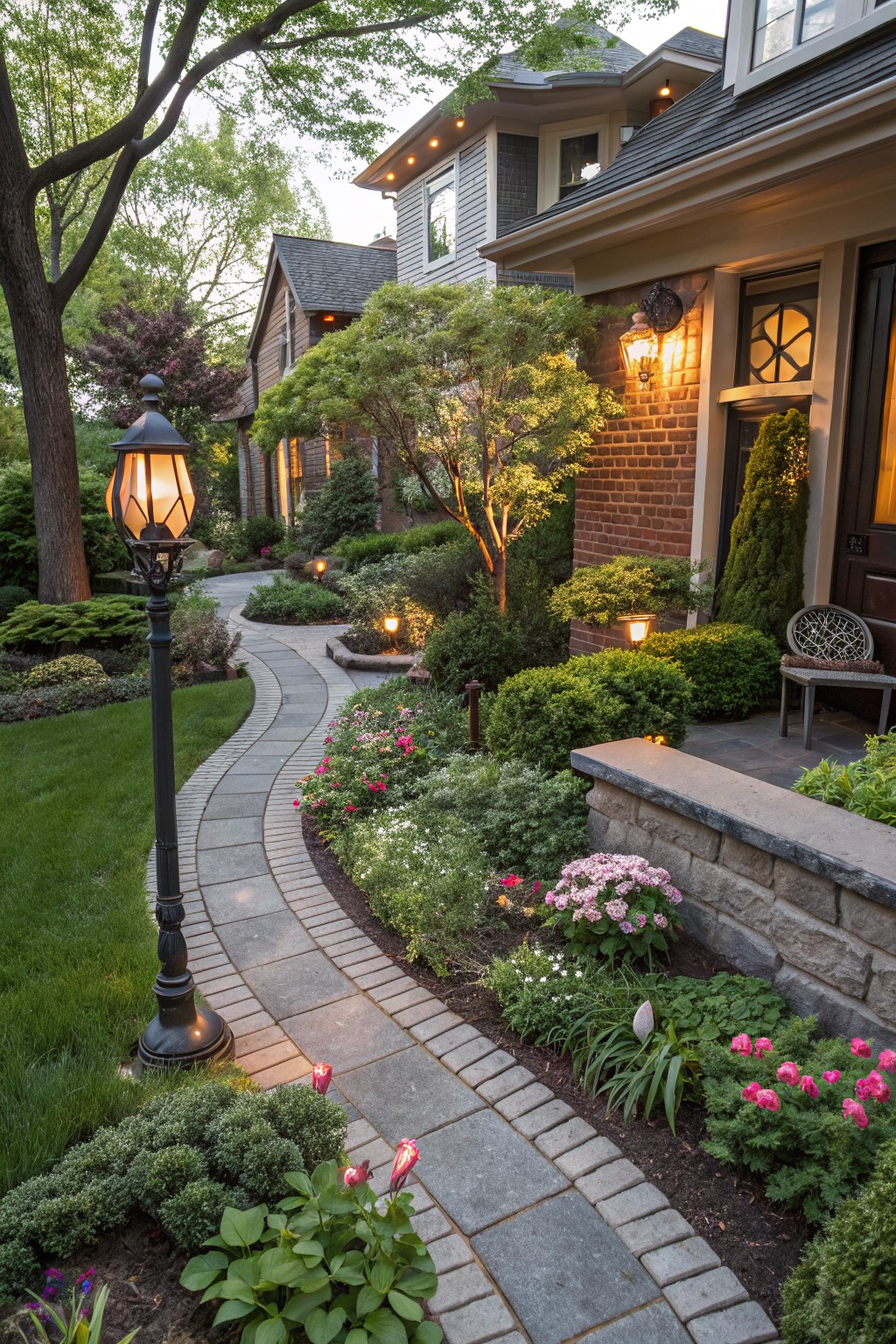
A simple curved walkway like this one makes a small front yard feel bigger and more interesting. Instead of a straight shot to the door, the gentle bend in gray stone pavers invites you to slow down and enjoy the plants along the way. Tall lamp posts and low garden lights give it a soft glow that works day or night.
This setup shines in tight spaces where you want to guide guests without crowding the yard. Line the edges with easy flowers and shrubs that don’t grow too wild. It fits most homes, especially ones with a porch step-up… just keep the path wide enough for two people.
Frequently Asked Questions
Q: How do I pick plants that won’t crowd my tiny front yard?
A: Choose wispy grasses or vertical blooms that sway in the breeze. They fill space without bulk. Space them out so you see through to the house.
Q: What’s the fastest way to add a path that opens up the yard?
A: Lay flat stones in a loose curve instead of straight lines. This pulls your eye around bends and tricks the brain into seeing more room. Skip borders that hem everything in.
Q: My yard’s shady. Do any ideas still make it feel bigger?
A: Hang lanterns or mirrors on fences to bounce light around… Pair with ferns that thrive low and loose. You get depth without fighting the shadows.
Q: Can I pull off these looks on a weekend myself?
A: Grab mulch, a few pots, and clippers. Rearrange what you have first, then layer in one focal point like a bench. It transforms fast.
