

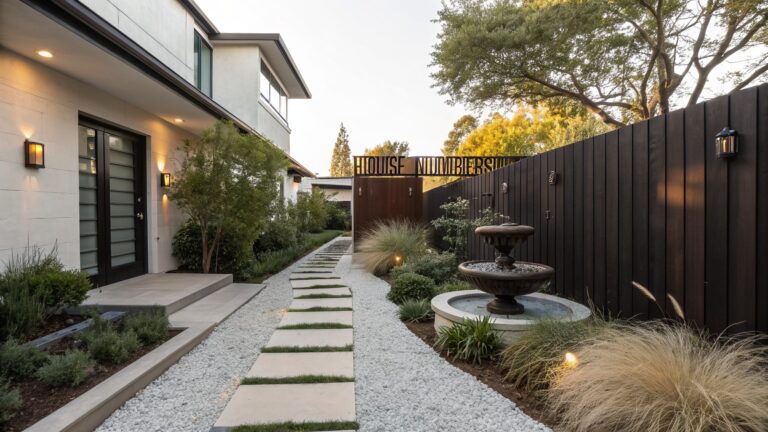
I’ve noticed that a front yard’s layout often decides whether the whole property feels put-together or scattered right from the street.
People tend to zero in on the pathways first, and how they guide the eye through structured plantings instead of letting everything spill over.
You can build that sense of intention with simple edging and budget perennials that mature into something fuller over a couple seasons.
I swapped out some scruffy grass for stepped stone borders in my driveway area, and it grounded the space in a way mulch alone never could.
The ideas here make it clear which tweaks deliver that upscale vibe without much spend.
Straight Pathway with Grass Joints
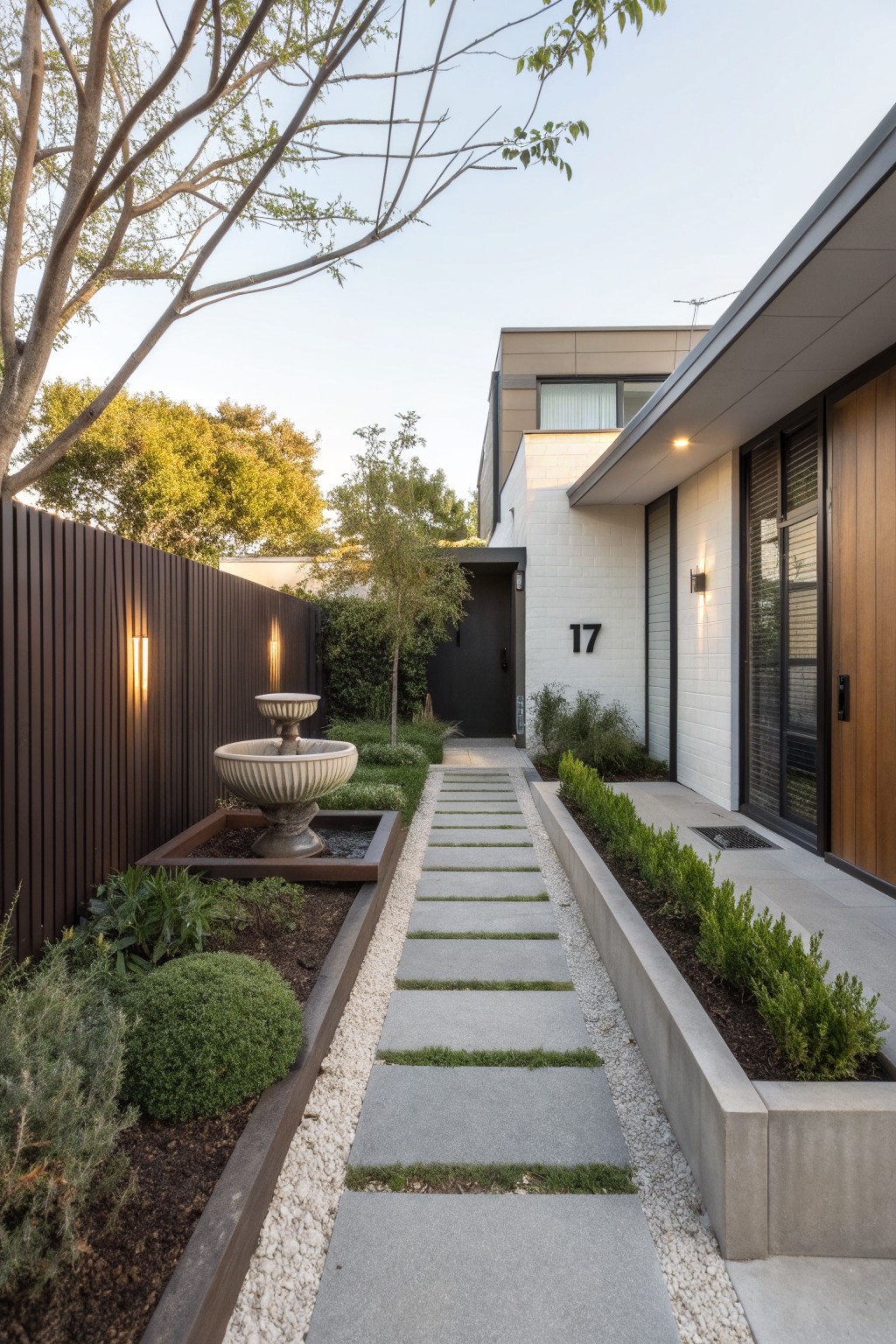
A straight pathway like this one makes the front yard feel put together and easy to follow right to the door. Large concrete slabs spaced with bits of grass keep it simple and low-cost, while the low box hedges along one side add just enough green without overwhelming the space. That central fountain pulls your eye forward too. It’s a clean look that punches above its budget.
You can pull this off in most any front yard, especially narrower ones where you want to avoid clutter. Grab inexpensive concrete pavers from a big box store, set them in gravel or soil with grass seed between, and line with tough, cheap shrubs like boxwood. Skip fancy edging. Watch the scale though… too wide a path can dwarf a small house.
Stepping Stone Entry Path with Gravel Beds
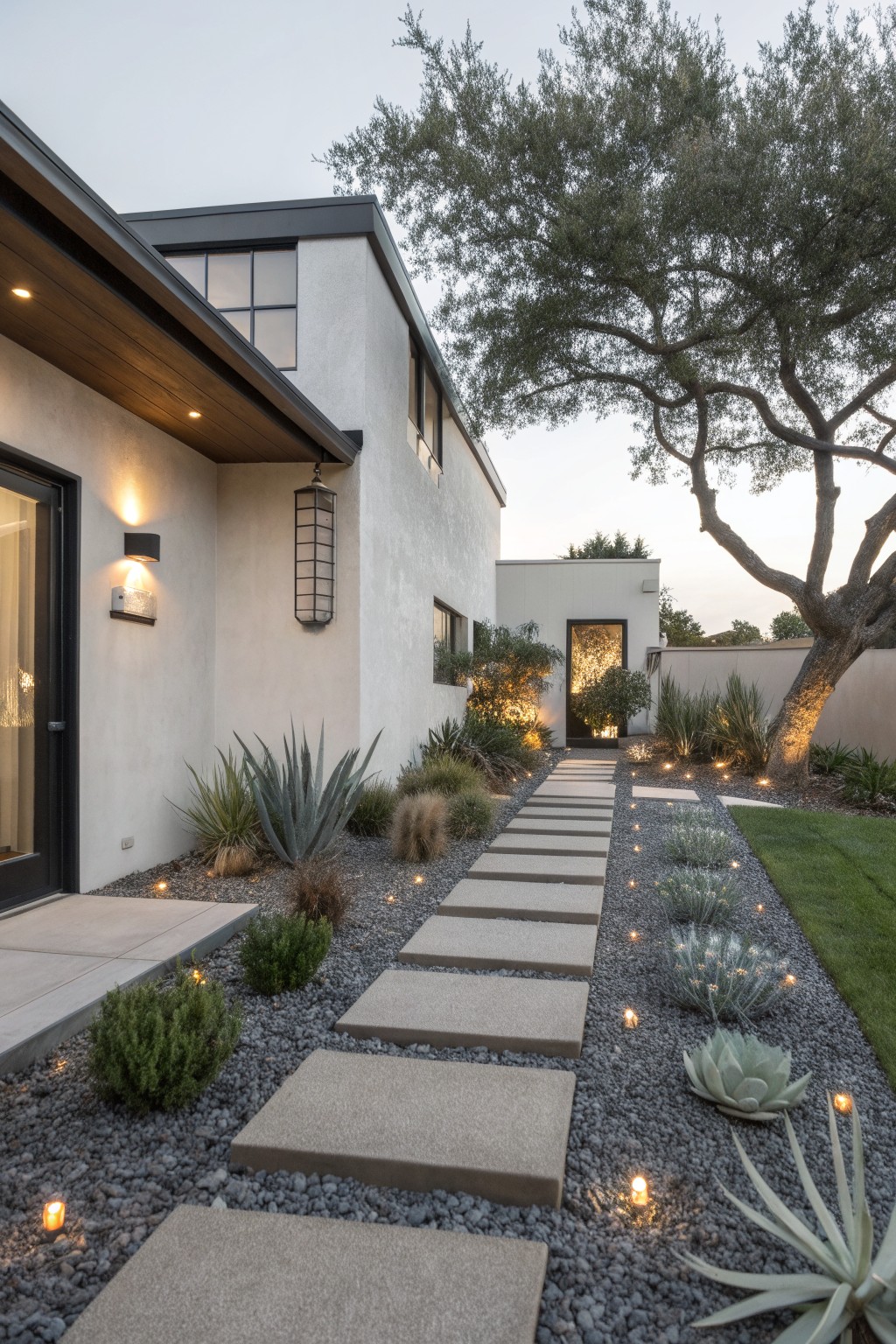
A simple stepping stone path like this one makes your front yard feel put together without much work. Wide concrete pavers set into gravel mulch guide you right to the door, and those little ground lights tucked in along the edges light it up at night. Drought-tolerant plants like agaves and succulents fill in the gaps, keeping things low-maintenance but looking full and intentional. It’s that easy rhythm from path to plants that gives the whole entry a polished vibe.
You can pull this off on a budget by sourcing pavers from a local supplier and using pea gravel instead of pricey decomposed granite. It works best in sunny spots with poor soil, since the succulents thrive there. Just space the stones for comfortable steps, about 24 inches apart, and add solar lights if wiring feels like too much. Avoid overcrowding with too many plants, or it starts looking messy.
Stone Path Lined with Terracotta Pots
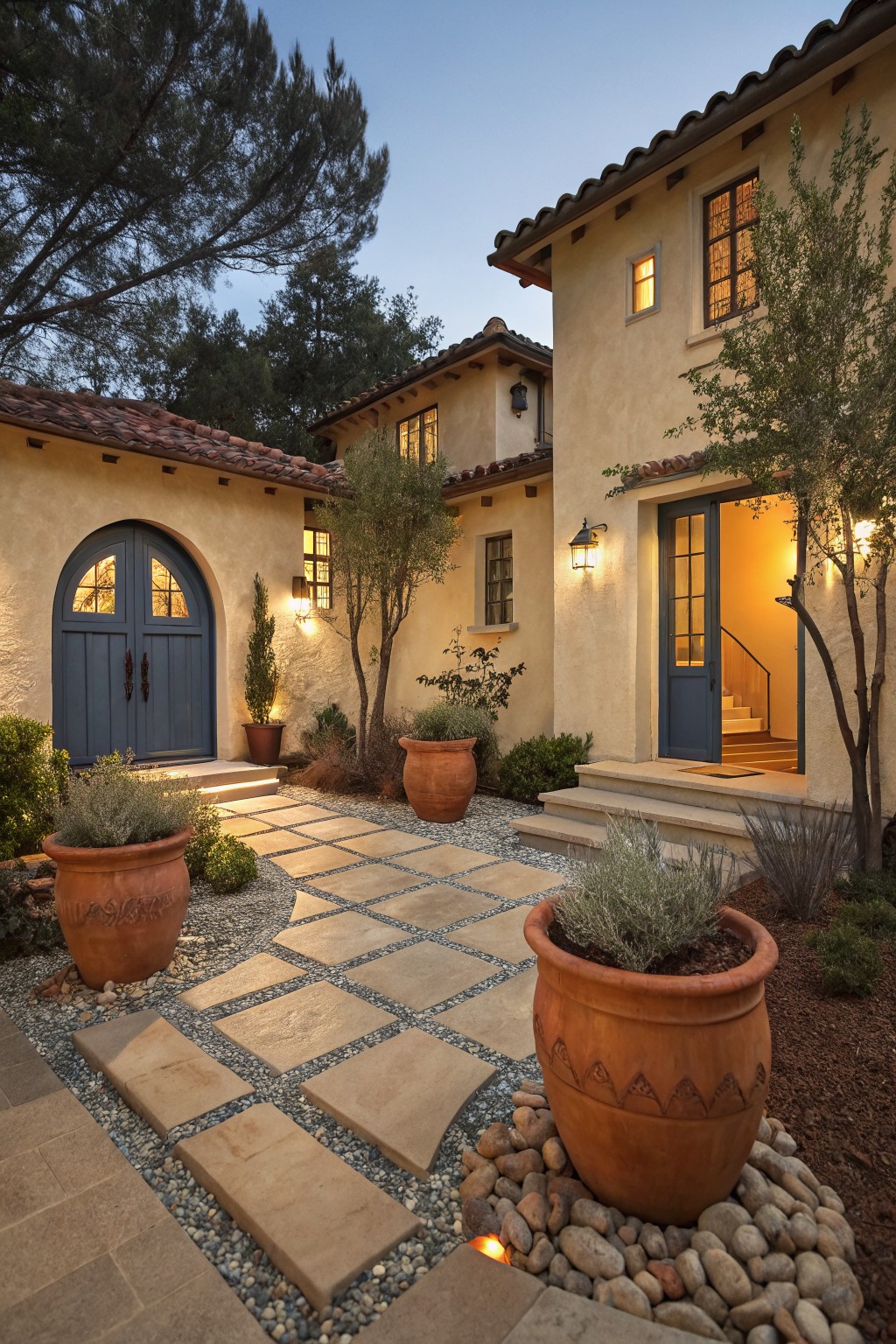
Large terracotta pots placed along a simple stone paver path create an easy focal point for your front entry. They add height and texture right away, making the walk feel established and thoughtful. The mix of pavers with gravel edges keeps it low-key but polished, like something from an old Mediterranean garden.
This works best in courtyards or narrow front yards where you want to guide people to the door without much planting. Pick affordable oversized pots from a local nursery, fill them with olive trees or lavender, and space them every few feet. It suits stucco houses or any dry climate spot. Just avoid overcrowding, or it starts to feel busy.
Gravel Yard with Oversized Paver Path
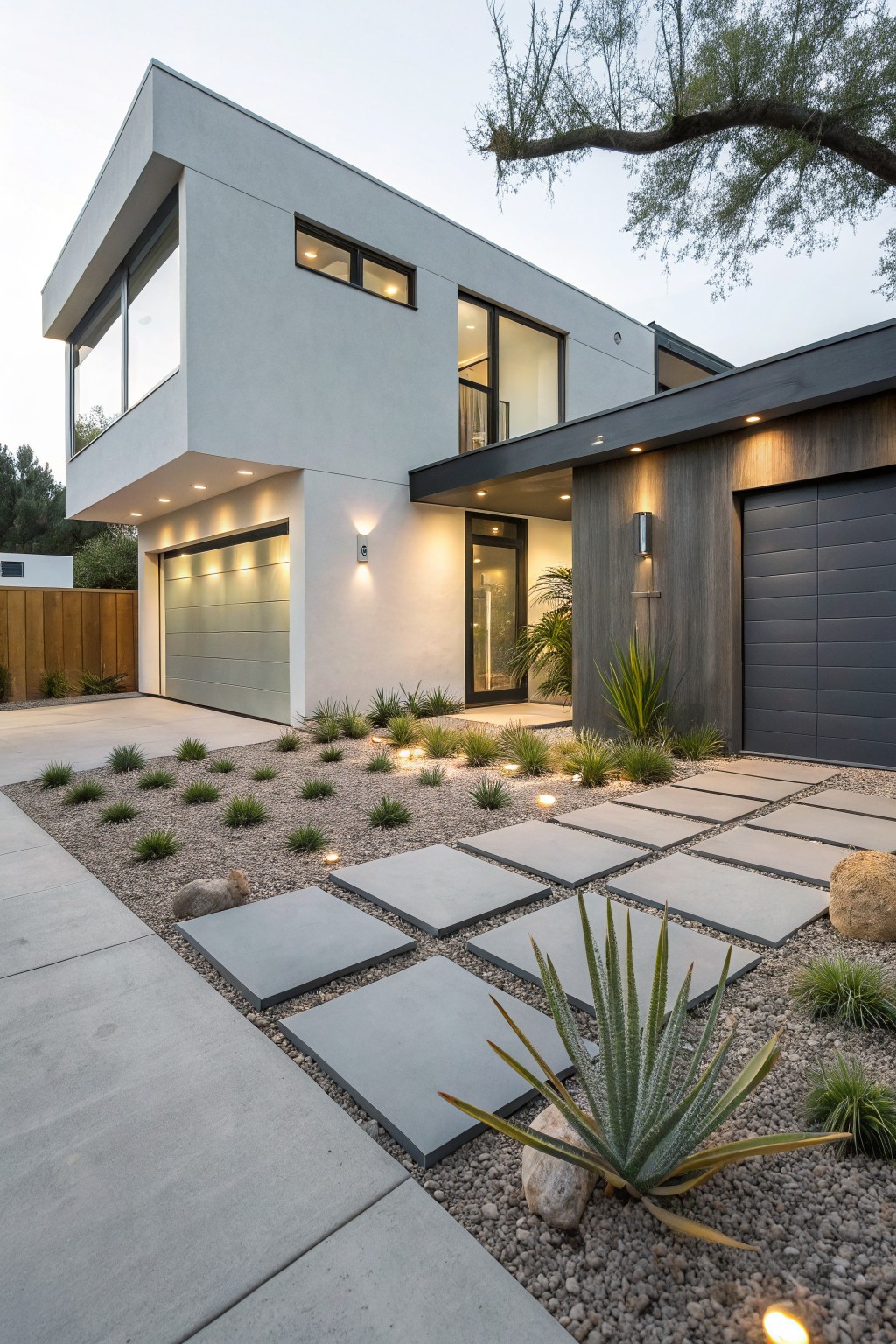
Big concrete pavers set into gravel mulch make a clean path to the front door here. They skip the usual solid walkway and let gravel and tough plants like agaves fill in around them. It keeps things simple and modern. Plus the low grasses add just enough green without much upkeep.
This setup works best in sunny, dry spots where you want low water use. Lay the pavers on a compacted gravel base so they stay level. Space them for easy walking, maybe two feet apart. It suits modern homes or ranch styles looking for curb appeal on the cheap. Watch for weeds in the gravel though… hose them out now and then.
Gravel Path with Driftwood Edging
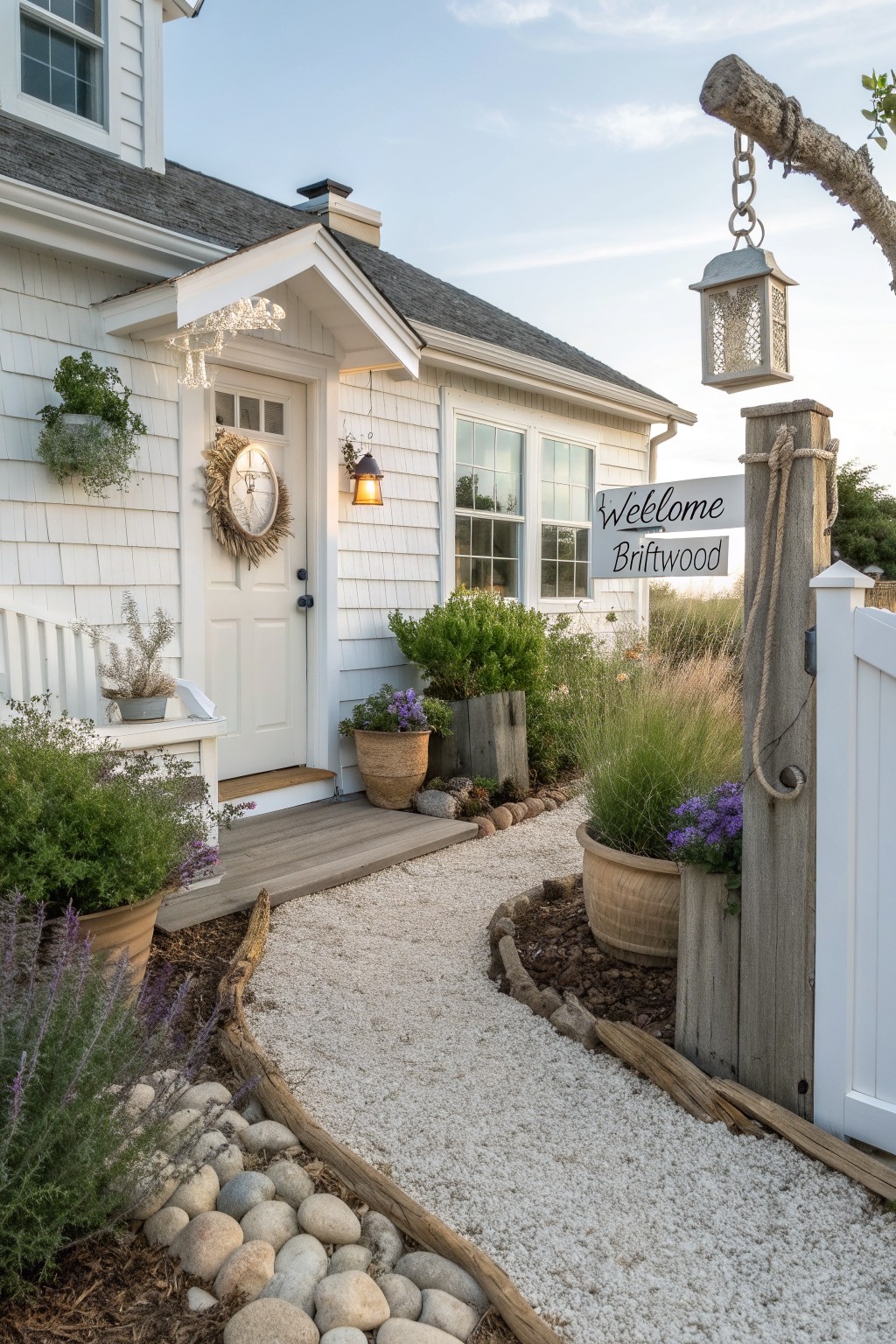
A gravel path like this one winds right up to the front door, edged simply with driftwood chunks and smooth river rocks. It’s an easy way to add that beachy, collected-over-time look without a big budget. The white crushed shells or pea gravel stays bright and reflects light nicely, while the rough wood pieces keep everything from feeling too plain.
This works best in front yards where you want to guide people to the entry without hardscaping costs. It suits cottage or coastal homes, especially if you can gather driftwood locally. Just dig a shallow trench, line it with landscape fabric for fewer weeds, drop in the gravel, and arrange the edges. One thing to watch: refresh the gravel every couple years so it doesn’t scatter.
Stone Pathway Lined with Boxwoods
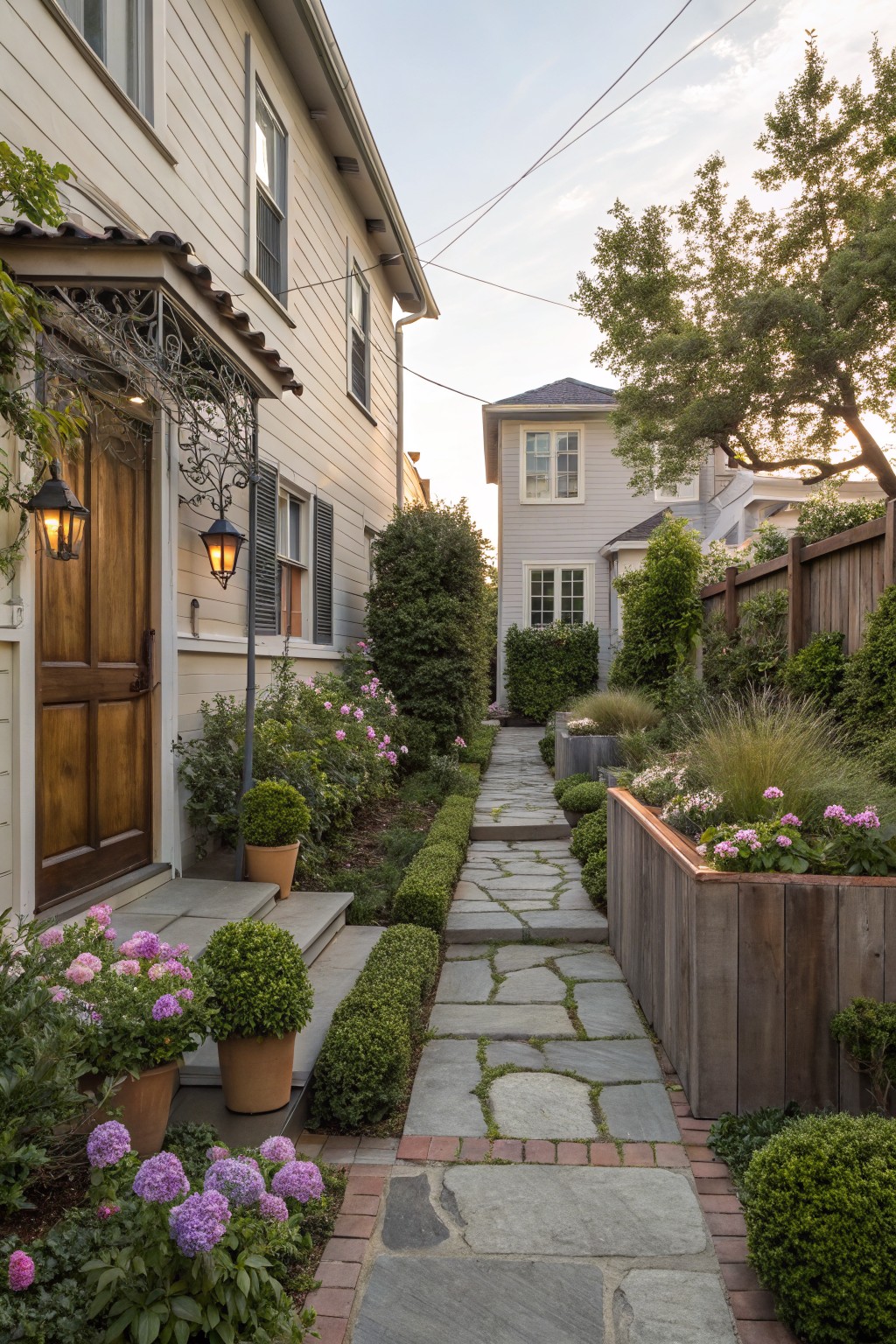
A simple irregular stone path like this one draws the eye right to the front door without much fuss. Boxwoods trimmed into neat shapes run along both sides, giving that classic garden look that feels put-together and a bit formal. Add in some big pink hydrangea blooms in pots or beds, and it punches up the color without overdoing it. This setup looks expensive but mostly just needs basic plants that come back year after year.
You can pull this off in a skinny side yard or front walk on most any house, especially older ones with plain siding. Start with flagstone pavers set in gravel for easy install, then plant dwarf boxwoods close together so they fill in quick. Tuck in affordable perennials or annuals for pops of color. Keep it low by trimming the boxwoods a couple times a year. It hides the fence or wall behind and makes the entry feel special, even on a tight budget.
Stone Steps Lined with Terracotta Pots
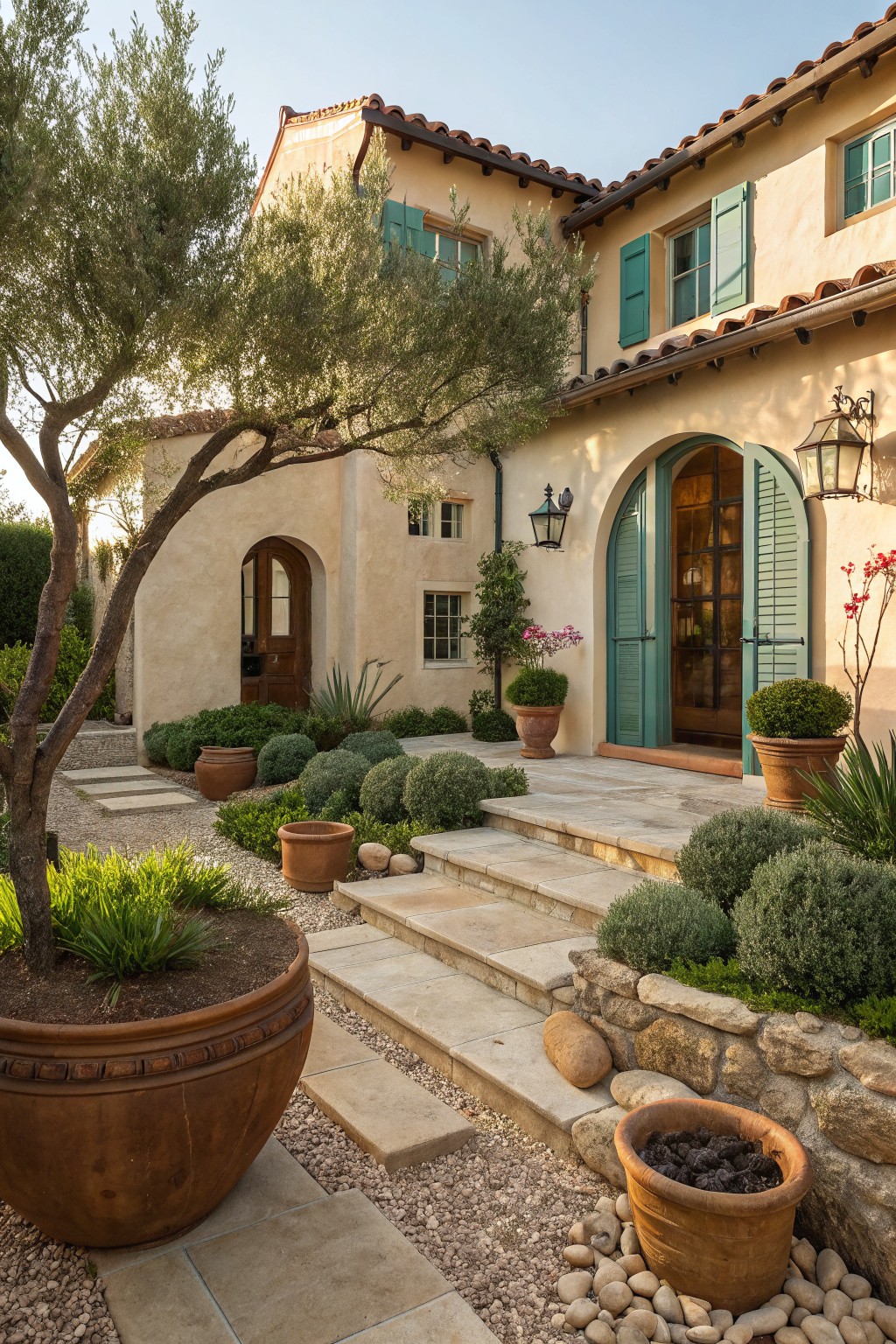
Big terracotta pots placed right along stone steps like this give a front entry real structure. They mix hard paths with soft plants in a way that feels Mediterranean and settled in. The gravel fill and simple shrubs keep everything low fuss but look like they’ve been there years.
This works best in sunny dry spots where you want curb appeal without daily watering. Go for oversized pots at the bottom to anchor things, then smaller ones higher up. Stick to tough plants like agave or lavender, and skip fancy mulch, the rocks do enough.
Tiered Stone Steps for Sloped Front Yards
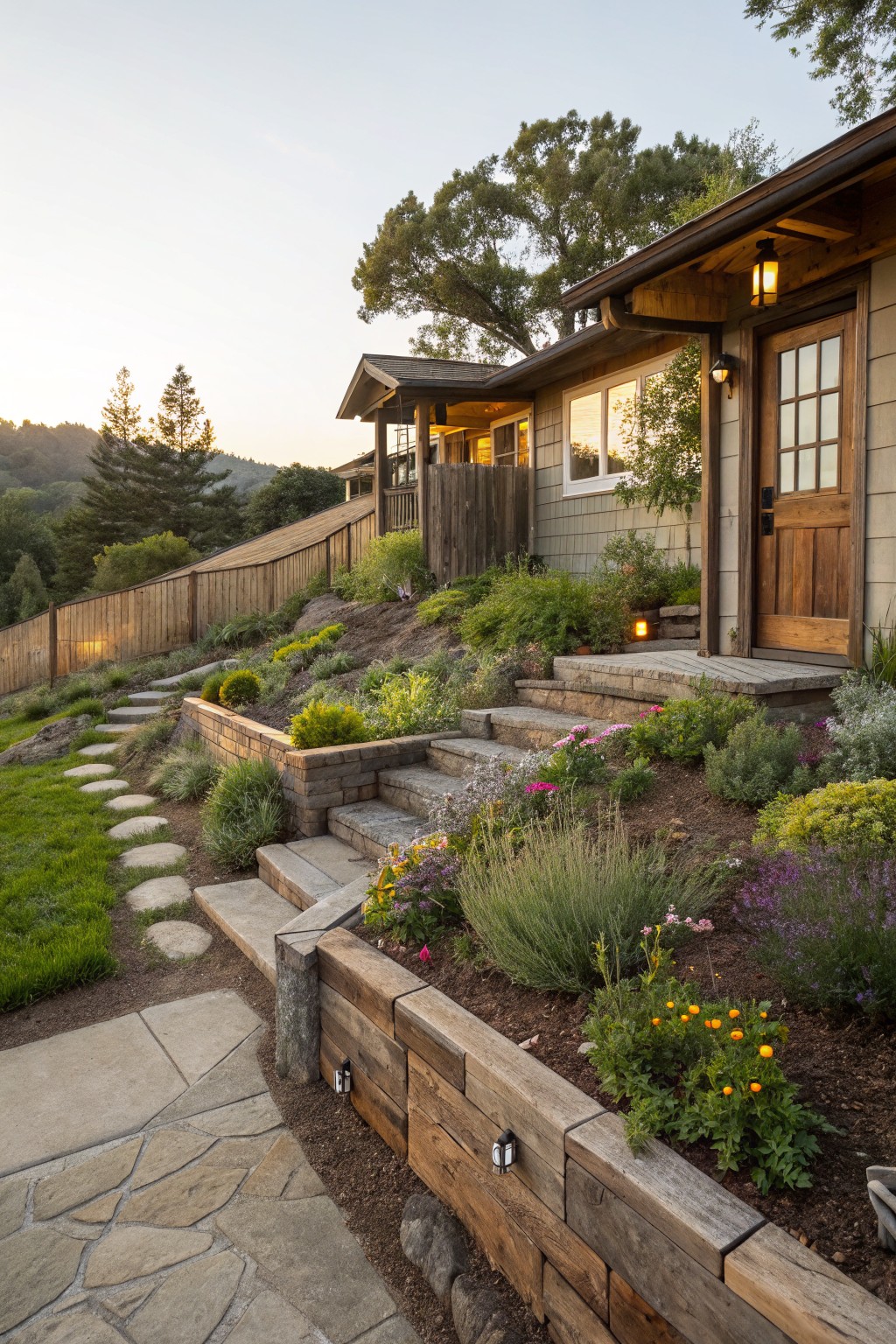
Sloped front yards can be tricky. They often end up looking messy or hard to reach. But this setup uses wide stone steps that terrace right into the hill. The steps mix with low wooden retaining walls packed with plants like grasses and flowers. It turns the climb into something easy and pretty. Folks notice how it feels natural, not forced.
You can pull this off on a budget by using affordable flagstone or concrete pavers for the steps and reclaimed wood for the walls. It works best on moderate slopes leading to your entry door. Plant drought-tolerant stuff in the walls to keep maintenance low. Just make sure the steps are sturdy and wide enough for two people. Avoid overcrowding the plants early on. Let them fill in over time.
Curved Stone Steps to the Front Door
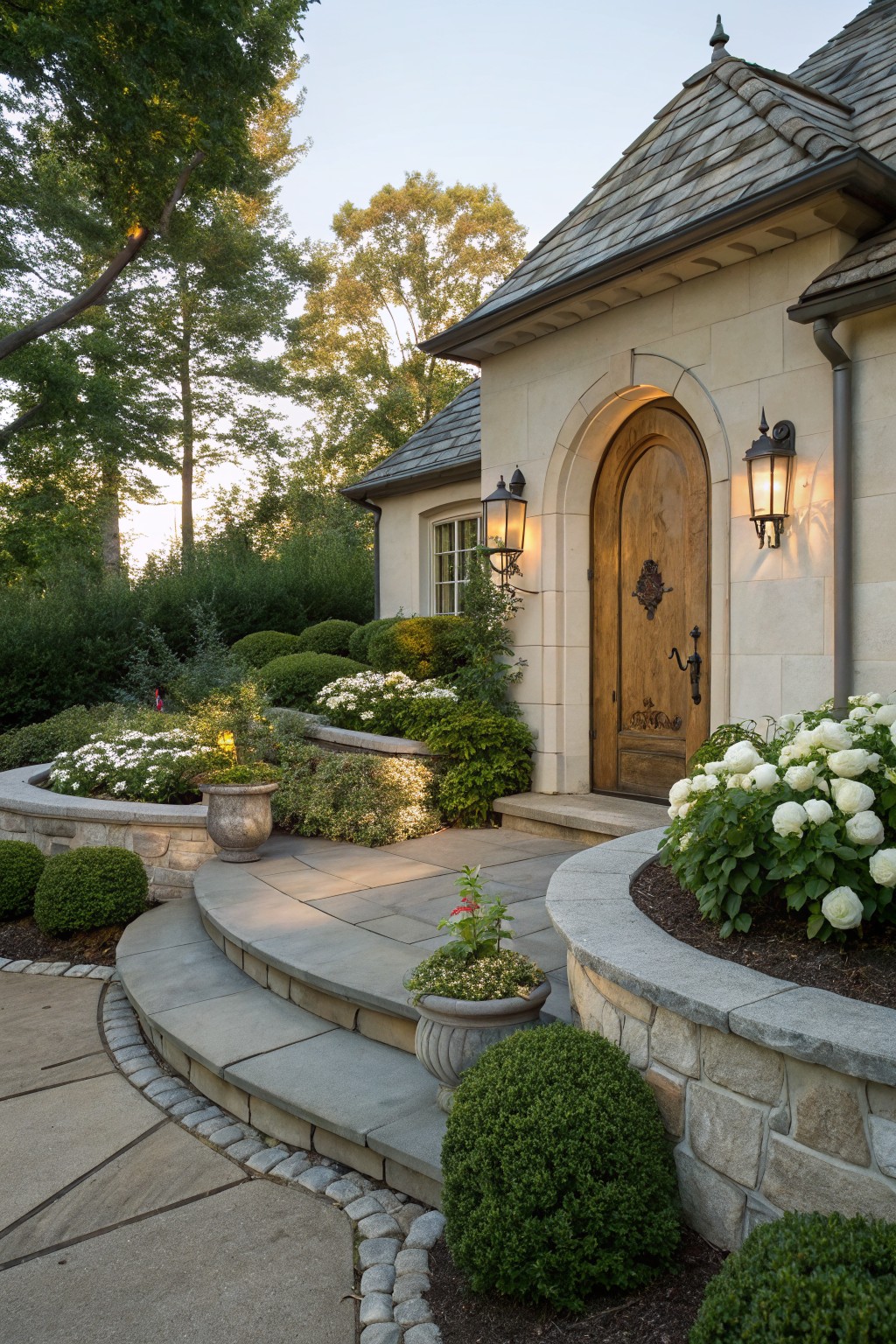
Curved stone steps like these give your front entry a smooth, flowing feel that draws the eye right up to the door. Paired with matching stone retaining walls edged in neat boxwood balls, they turn a simple walkway into something that looks custom-built. The gentle curve softens straight house lines and makes even a budget stone choice feel upscale.
These work best on lots with a little slope, where you can build up raised beds along the sides for plants like hydrangeas or low shrubs. Pick gray or beige pavers that match your house stone, keep plantings simple and repeat shapes for rhythm. Skip it on flat ground unless you want to add a low curve for interest. Just right for cottage-style homes.
Rustic Timber Steps on Stone Walls
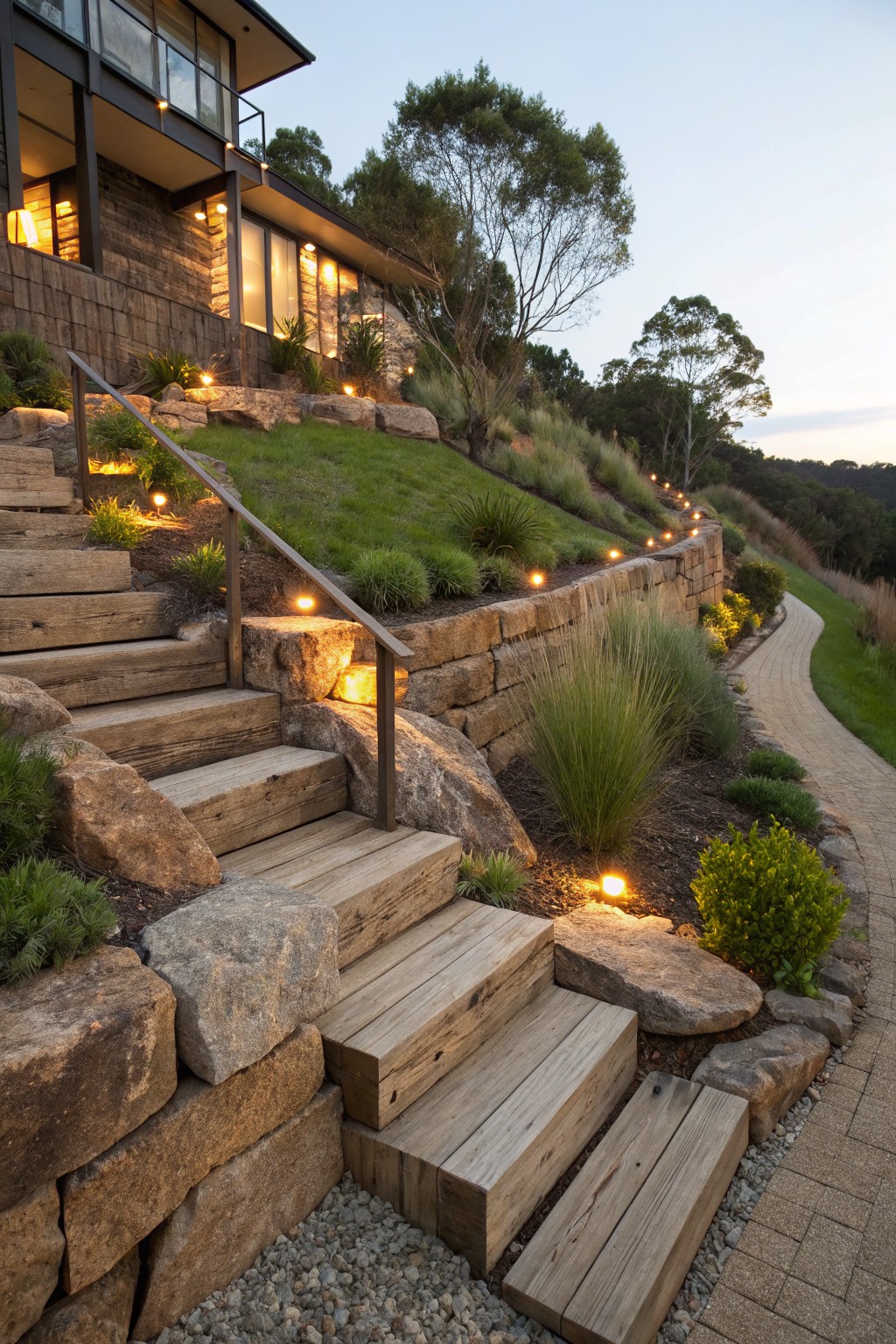
Sloped front yards can be tricky but these rough-cut timber steps set right into big boulder retaining walls make the climb feel natural and rugged. The wood treads look like reclaimed beams which keeps costs down while giving that high-end crafted vibe. Strappy grasses tucked along the edges add some soft texture without much upkeep.
This setup works great for hilly lots where you need sturdy access to the house entry. Use local stone for the walls to save on shipping and pick weathered wood that blends with the landscape. Add low lights under the steps for evening drama… it punches way above the budget. Suits modern or craftsman homes on uneven ground.
Terracotta Pots Pack Front Yards with Greenery
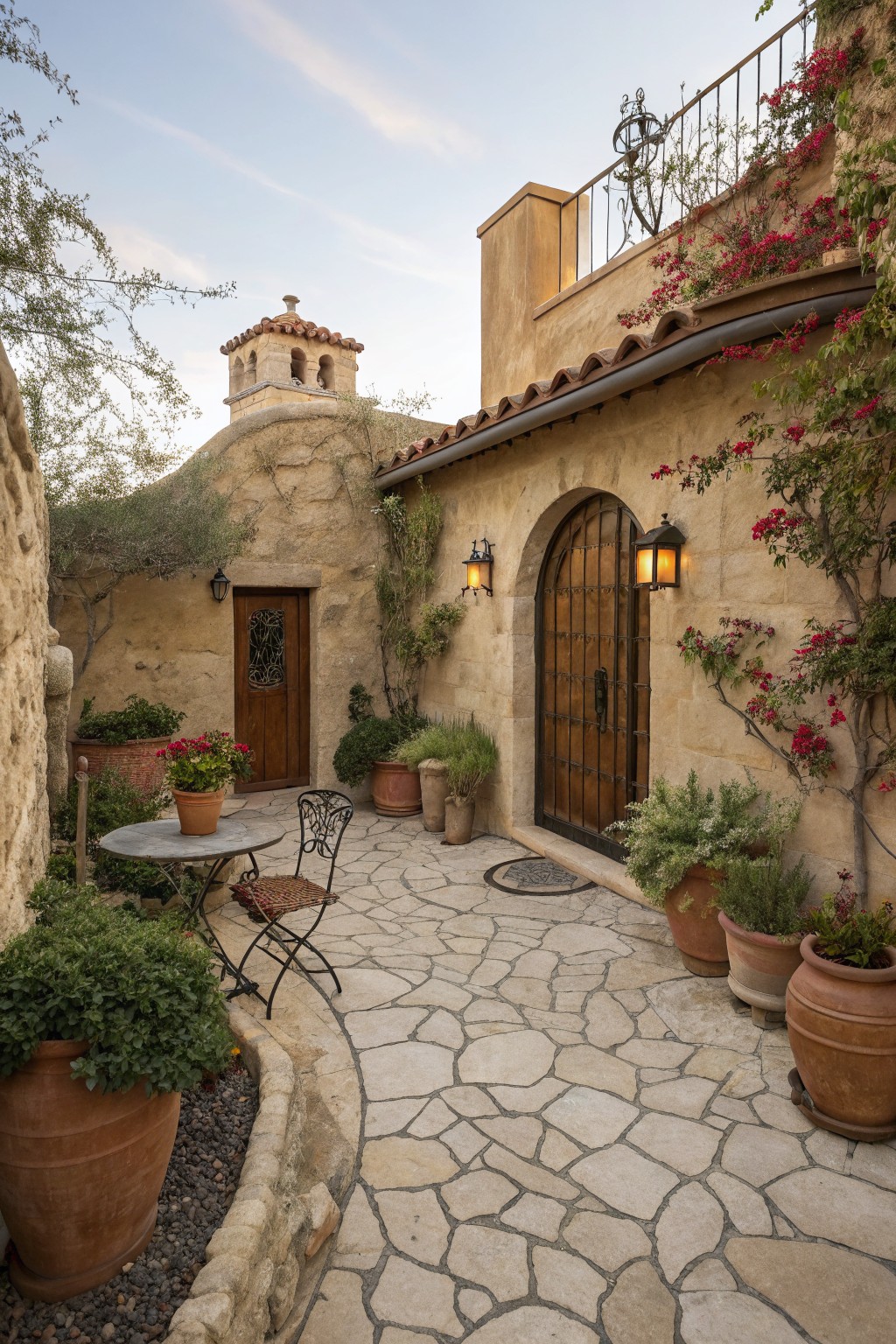
Large terracotta pots do a lot for a front yard. Here they’re grouped around a stone patio and tucked against the walls, holding all kinds of plants from herbs to flowers. The size makes them feel substantial, and the clay color fits right into rustic spots. It builds that full garden feel without permanent beds or big spending.
Place the biggest ones near your entry or path for height right away. They work best in courtyards or sunny patios like this. Go for mature plants from a nursery to skip years of waiting. Just group in threes or fives… keeps it natural.
Gravel Yard with Ornamental Grasses
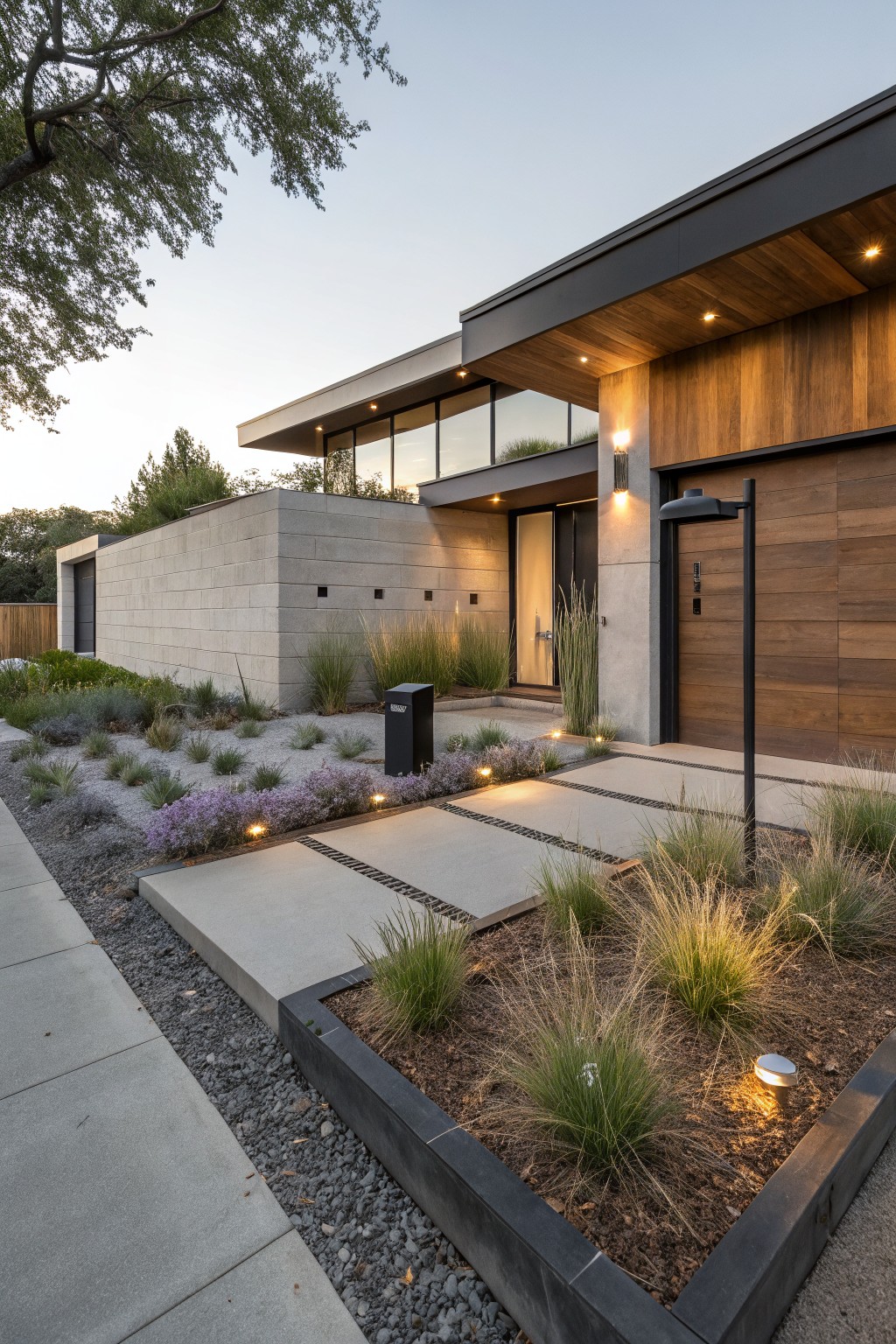
A gravel yard like this keeps things simple and modern. You cover most of the ground with light gravel, then tuck in clumps of tall grasses and low lavender along the edges. It frames the concrete path nicely without much upkeep. The look feels upscale because of the clean lines and subtle plant texture. No mowing. Just occasional trimming.
This works best on a budget for homes with a contemporary vibe or even ranch styles wanting less grass. Pick drought-tolerant grasses like feather reed or blue fescue that match your zone. Edge the beds with metal strips to keep gravel in place. Add those low path lights for evenings. Watch drainage so water doesn’t pool under the slabs.
Winding Stone Path to the Garden Shed
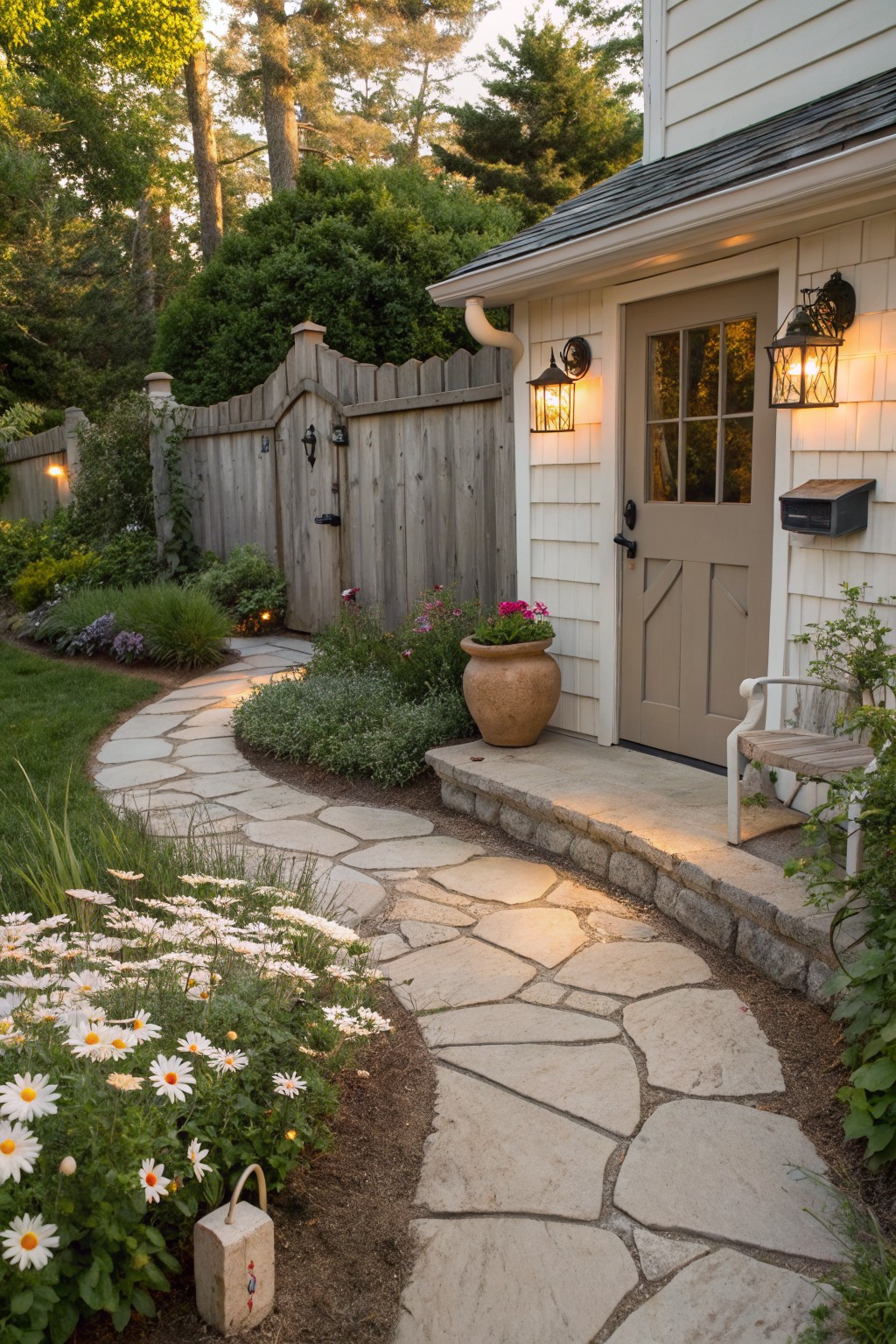
A simple winding path made from natural stone slabs cuts through flower beds and leads right up to a little shed door. It pulls your eye along without feeling too straight or stiff. White daisies and pink blooms spill over the edges, making the whole thing look full and cared for, even on a tight budget. Those low lights along the fence add just enough glow at dusk.
You can do this in any side yard or backyard corner with reclaimed stones or affordable flagstone. Plant easy perennials like Shasta daisies that come back year after year. Keep the curve gentle so it fits smaller spaces too. Works great near a house or fence… just edge it with mulch to stay neat.
Stack Concrete Blocks for Tiered Planters
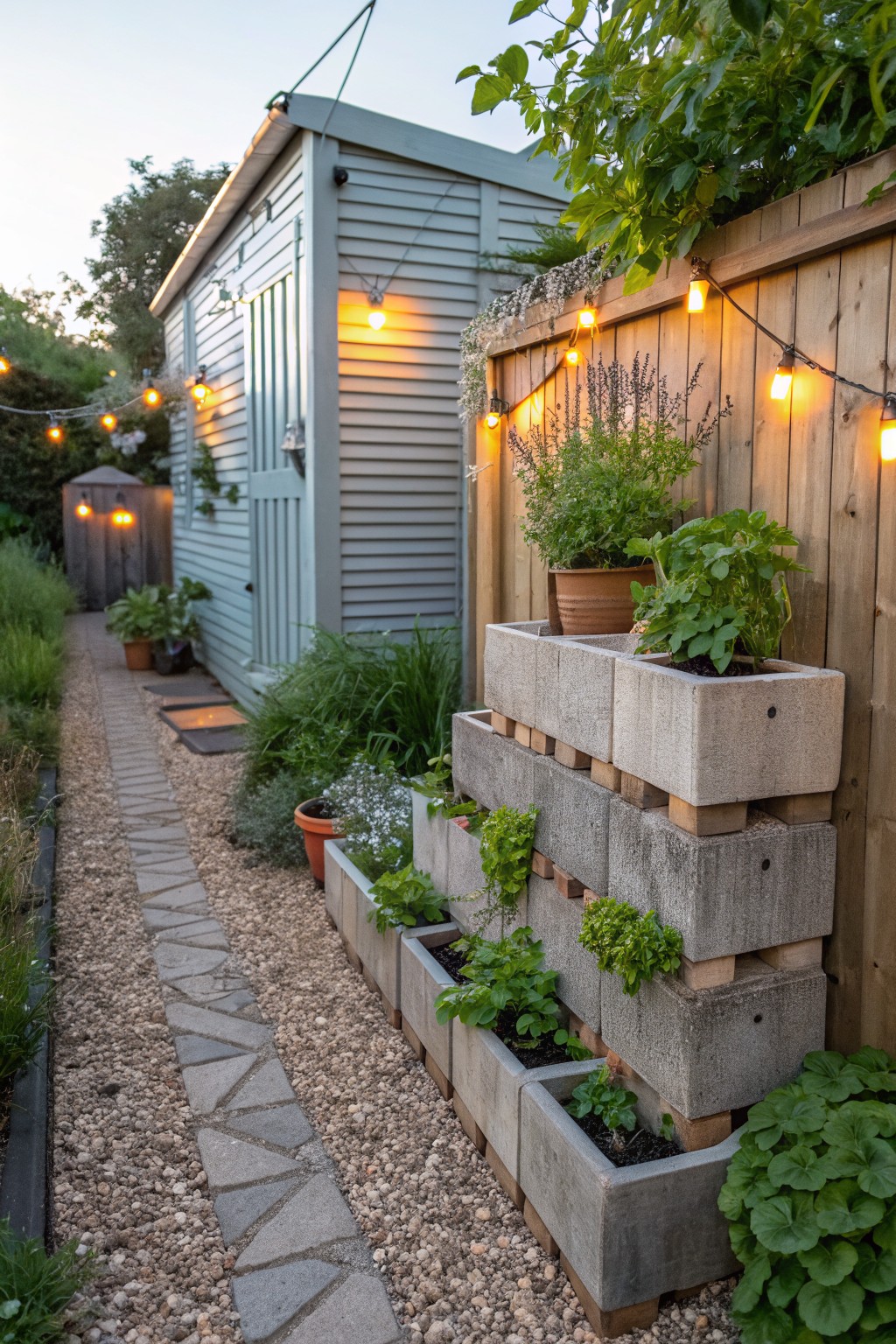
One simple way to add height and interest to a side yard or garden edge is stacking concrete blocks into planters. You see it here along a fence, with herbs and greens tucked into the openings. It looks intentional and full, like something from a high-end garden, but it’s cheap and quick to pull off. Those blocks give structure without taking up ground space.
Just grab standard cinder blocks from a hardware store, stack them a couple levels high, and fill the holes with soil and plants like basil or trailing greens. It works great in narrow spots next to a fence or shed, or anywhere you want to soften a plain boundary. Line them up along a path for that guided feel… watch the weight though, and make sure they’re stable on level ground.
Dry Creek Bed Path Adds Curb Appeal
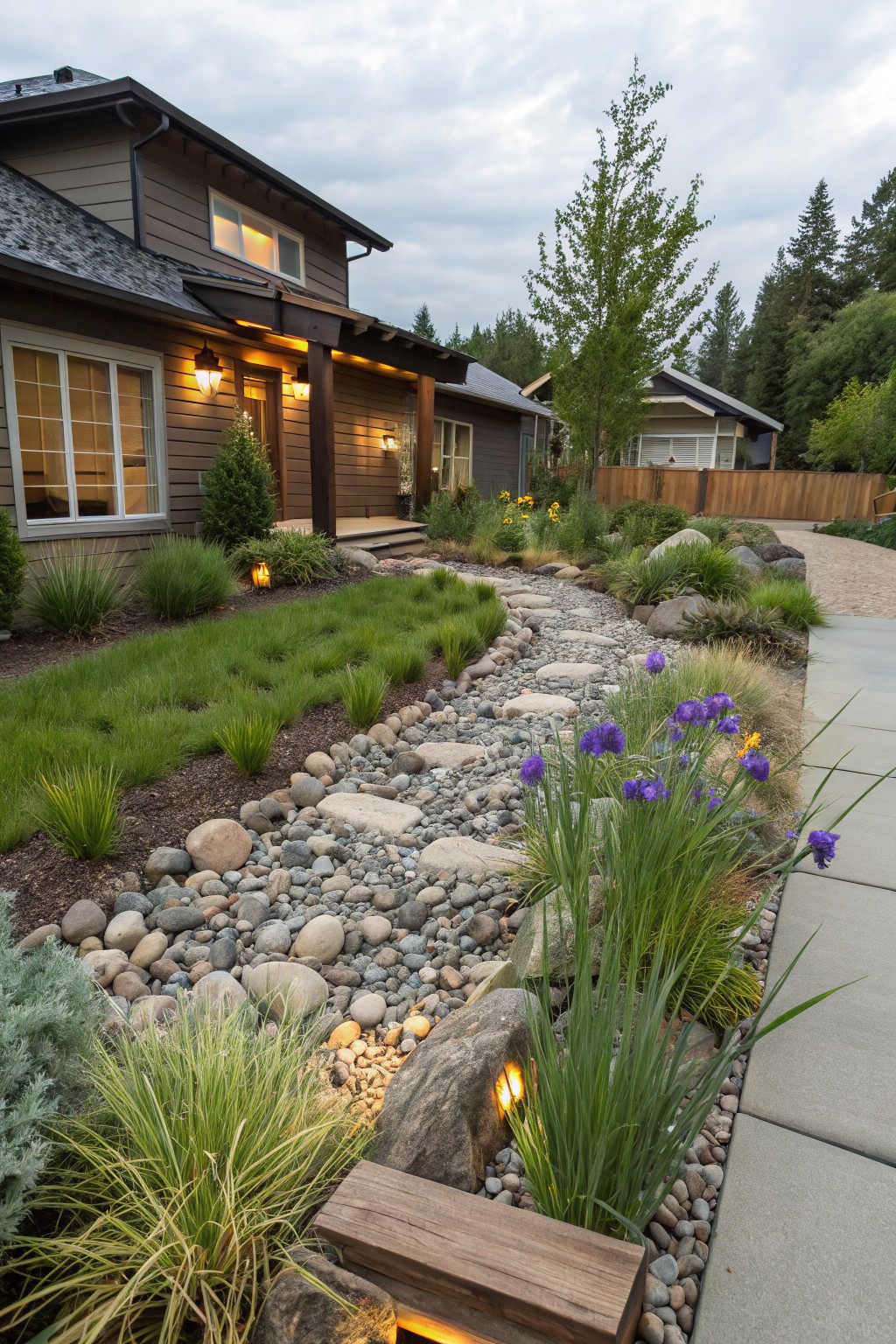
One smart way to make a front yard feel special is a dry creek bed path. It uses gravel as the base with flat stepping stones winding through it, edged by clumps of ornamental grasses and a few colorful flowers like those purple irises. Boulders here and there give it a natural flow. This looks expensive but mostly just needs affordable river rock and drought-tolerant plants. The path draws the eye right to the entry without feeling too formal.
You can pull this off in any front yard with some slope or open space. Lay down landscape fabric first, then add the gravel and stones, and plant low-water grasses around the edges. It works best on modern or craftsman-style homes where you want a relaxed vibe. Once the plants fill in, it’s low maintenance. Just watch for weeds in the gravel.
Grass and Paver Front Walkway
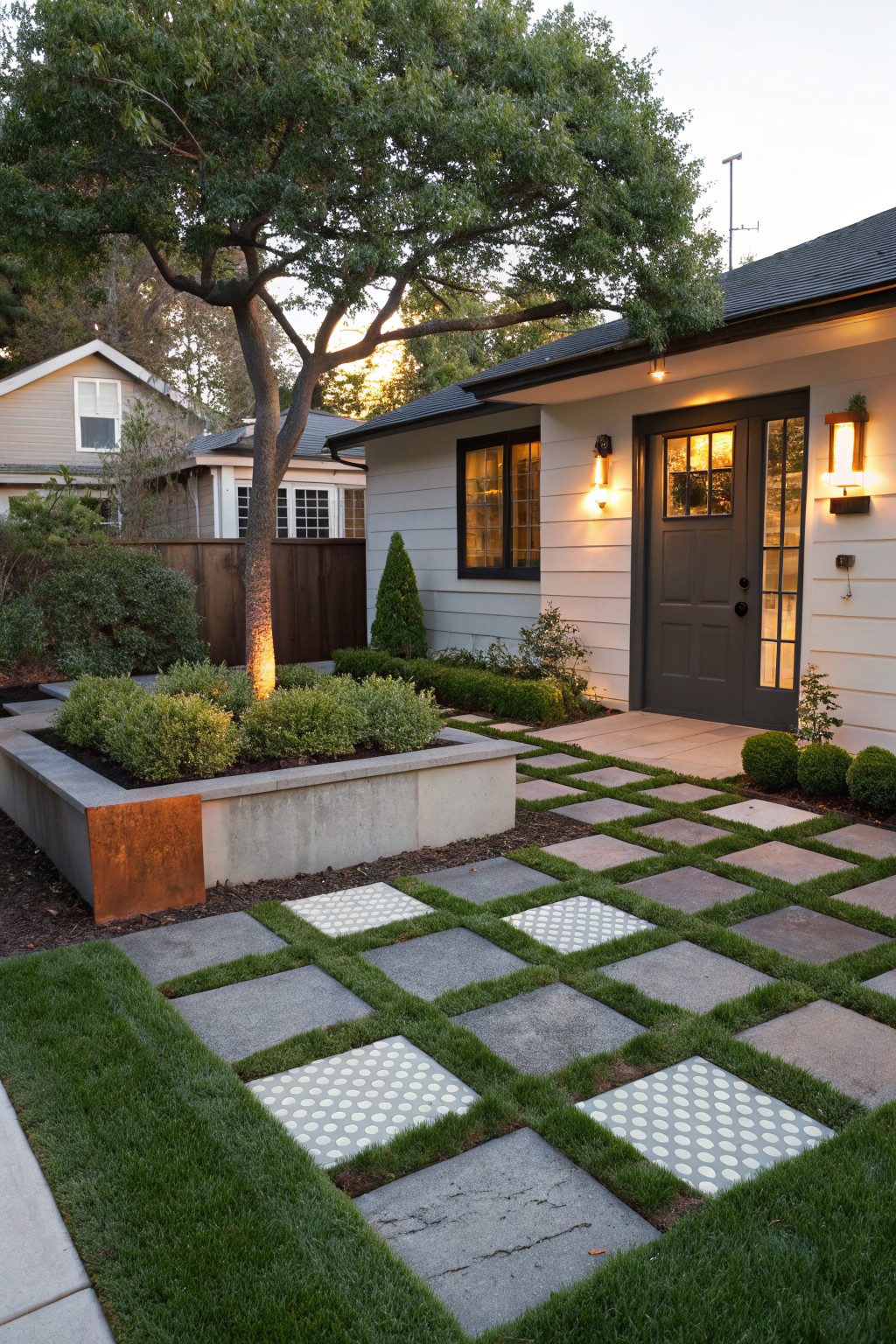
One easy way to upgrade your front yard is a walkway made from big concrete pavers set into grass. The squares alternate with patches of green, some with a dotted pattern for a little extra style. It pulls the eye right to the door and feels custom without much work or money.
This setup works great on a budget since you can use affordable concrete slabs and just seed the grass spots. It suits most homes, especially modern ones with clean lines. Keep the grass trimmed and make sure water drains well so the pavers stay level over time.
Curved Pathways with Stone Retaining Walls
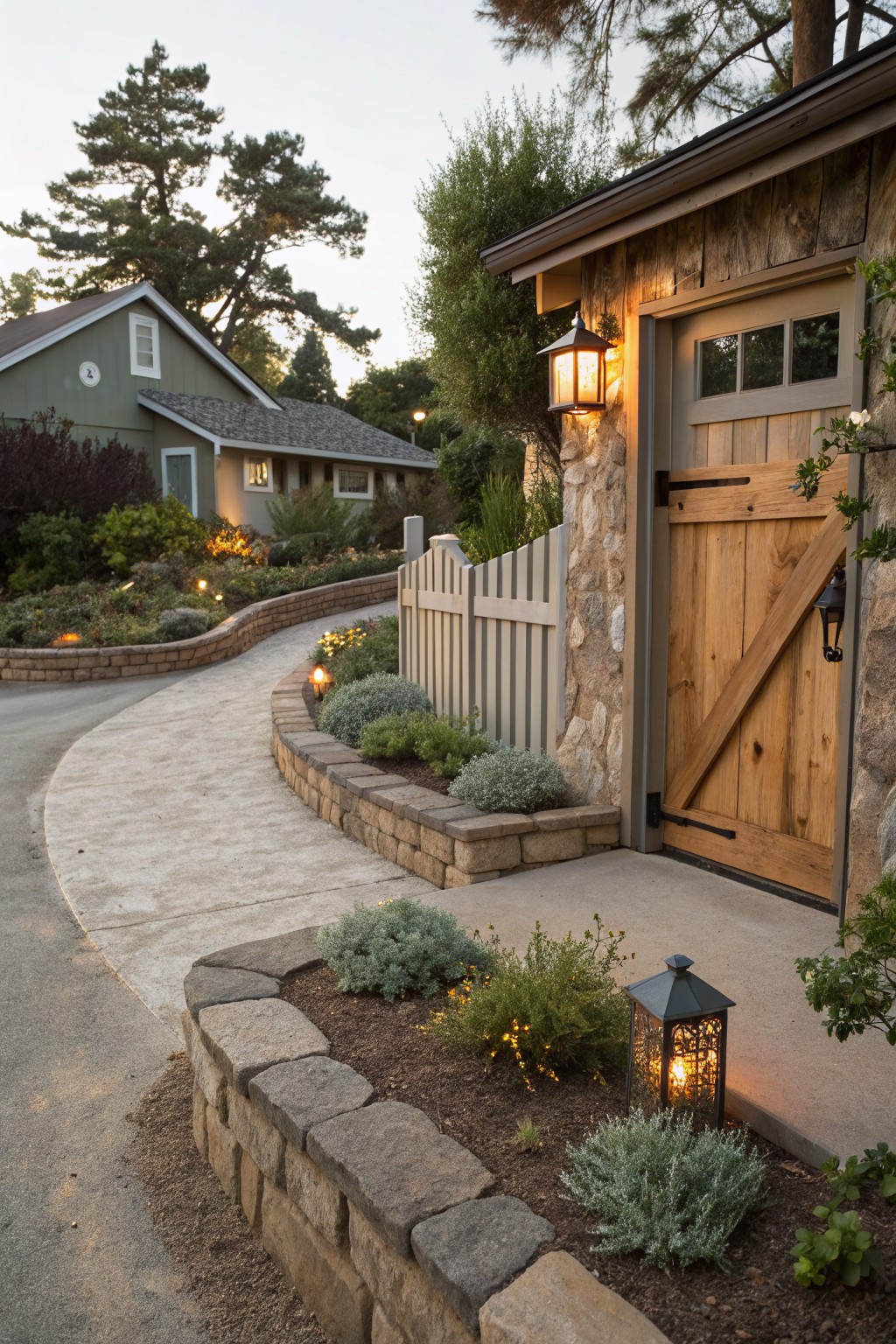
A simple curved pathway like this turns a sloped front yard into something that feels put together and welcoming. The pavers wind gently uphill, held in place by low stone walls planted with silvery shrubs. Those walls do a lot. They keep soil from washing down, add some height without overwhelming, and let plants spill over softly.
This works best on any yard with a drop, even a modest one. Pick affordable concrete pavers that look like natural stone, and fill the walls with tough, low-water plants. Lanterns along the edges light it up at dusk… nice touch for evenings. Skip straight lines here. Curves slow people down and make the walk feel longer, in a good way.
Simple Stepping Stone Front Path
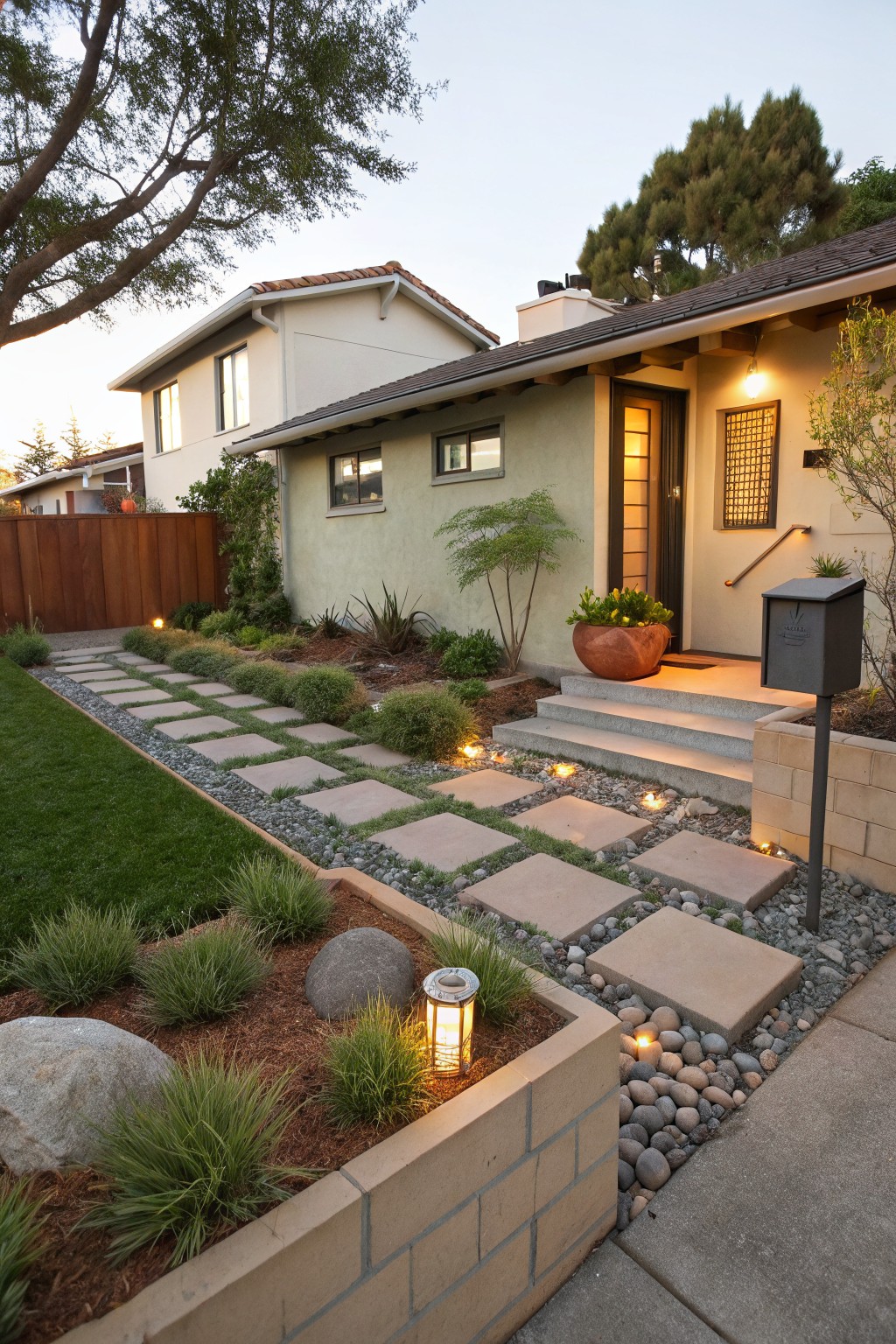
A stepping stone path like this one runs through gravel and low plants right to the front door. The square pavers are spaced out just enough to feel casual, not rigid. Gravel fills the gaps for easy drainage and that clean, finished look. Ground lights tucked along the edges light it up nicely at night.
Grab affordable concrete pavers and river rock from a big box store or landscape supplier. This setup suits smaller front yards or ones with slopes, since it handles uneven ground well. Keep plants drought-tolerant to stay low-maintenance. Avoid crowding the stones too close, or it loses that airy feel.
Frequently Asked Questions
Q: How do I keep budget mulch from looking faded fast?
A: Rake it smooth every couple weeks to fluff it up.
Top it off with a thin fresh layer once a year. That keeps the color popping without breaking the bank.
Q: What plants work best if my front yard stays shady?
A: Pick hostas or ferns. They fill space thickly and hide bare dirt well. Water them deeply but infrequently to build strong roots.
Q: Can I pull off these ideas with a tiny front yard?
A: Stack pots on steps or hang baskets from the porch.
And cluster low growers like creeping phlox along the edges. It tricks the eye into seeing more room.
Q: How do I edge beds to make everything look sharper?
A: Grab a half-moon edger or even a spade. Slice a clean line where grass meets mulch. Do it after rain when soil gives easily.
