

Yards often look unfinished when the boundaries are too open and there is little to block views from neighbors or the street.
I have noticed that building privacy works best when you layer different plants instead of relying on one type alone.
Screens fill the gaps where planting space runs short.
Over time the combination of trees and shrubs creates depth that makes the whole area feel more settled and private.
I would test a simple row of shrubs first to see how much difference it makes before adding anything taller.
Use Tall Trees And Shrubs For Side Yard Privacy
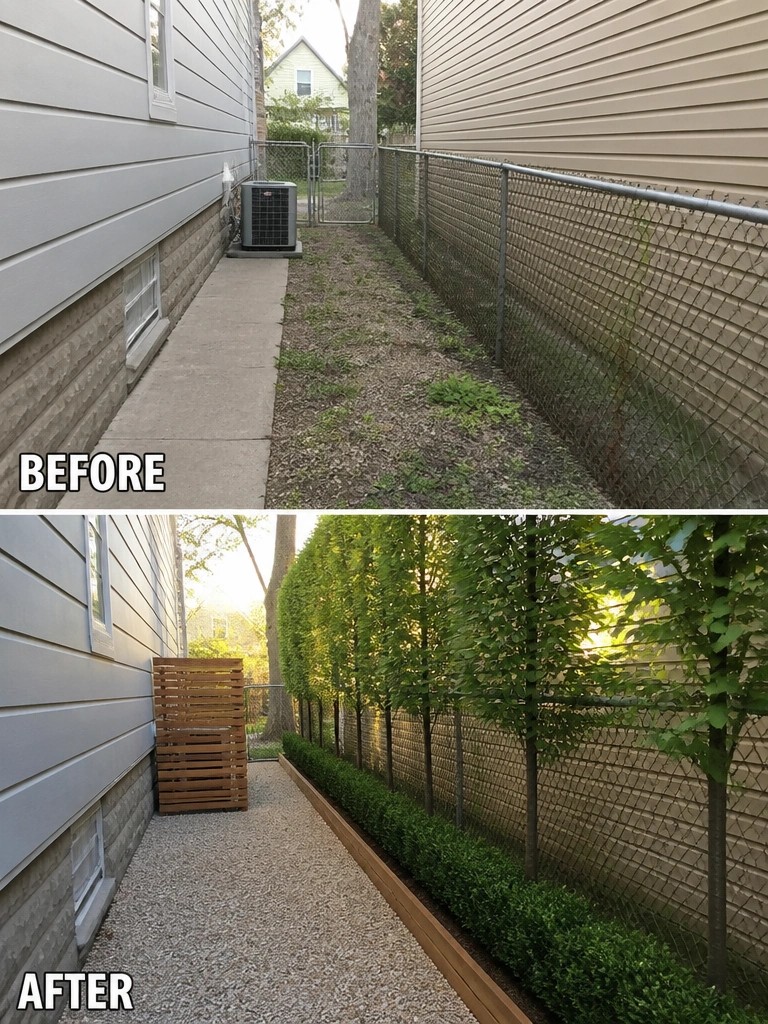
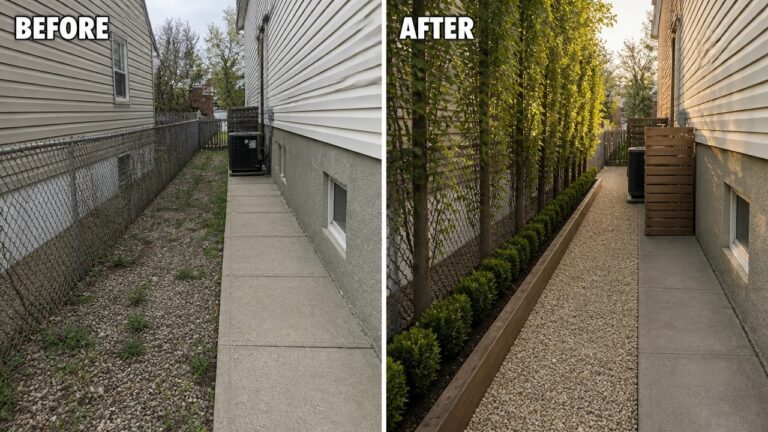
A narrow side yard next to a chain link fence usually feels open and bare. Planting a straight row of trees with a low hedge in front turns the fence into a solid green screen that blocks the view from the neighbor’s side without crowding the path.
This works best in tight spaces where you need height but still want to keep the walkway clear. Choose fairly narrow trees so they do not overgrow the gravel, and add the lower shrubs to close any gaps near the ground.
Add Raised Planters With Tall Plants For Patio Privacy

A bare concrete patio often feels exposed when it sits right next to a fence or neighboring property. Adding long wooden planters filled with tall, dense plants creates a living screen that blocks views while still letting in light and air. The change from open space to a more private corner happens quickly and does not require major construction.
This approach suits small yards or rental patios where permanent fences are not allowed. Place the planters along the areas that need screening most and choose plants that grow straight and stay full. Keep the rest of the space simple so the planters can do the main job without crowding the area.
Create Pool Privacy With Fencing And Shrubs
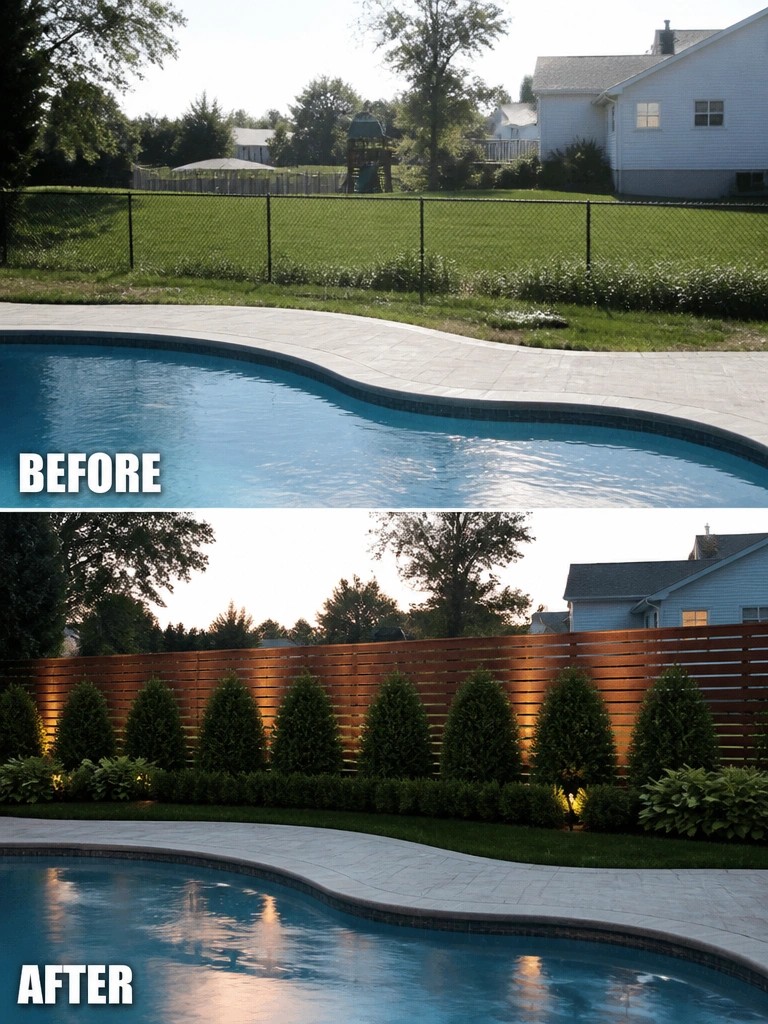
An open chain link fence leaves a pool area feeling exposed to the neighbors and the street. Replacing it with a solid wood screen and a row of shrubs instantly changes how the space feels. The fence blocks the view while the plants soften the edge and add some depth.
This approach works well on any backyard pool that sits too close to a property line. Start with a fence tall enough to give real privacy, then plant a simple row of evergreens in front so the wood does not feel so harsh. Add a few low lights at the base if you want the area to feel usable after dark. Keep the planting narrow so it does not crowd the deck or walkway.
Add A Living Screen For Front Yard Privacy
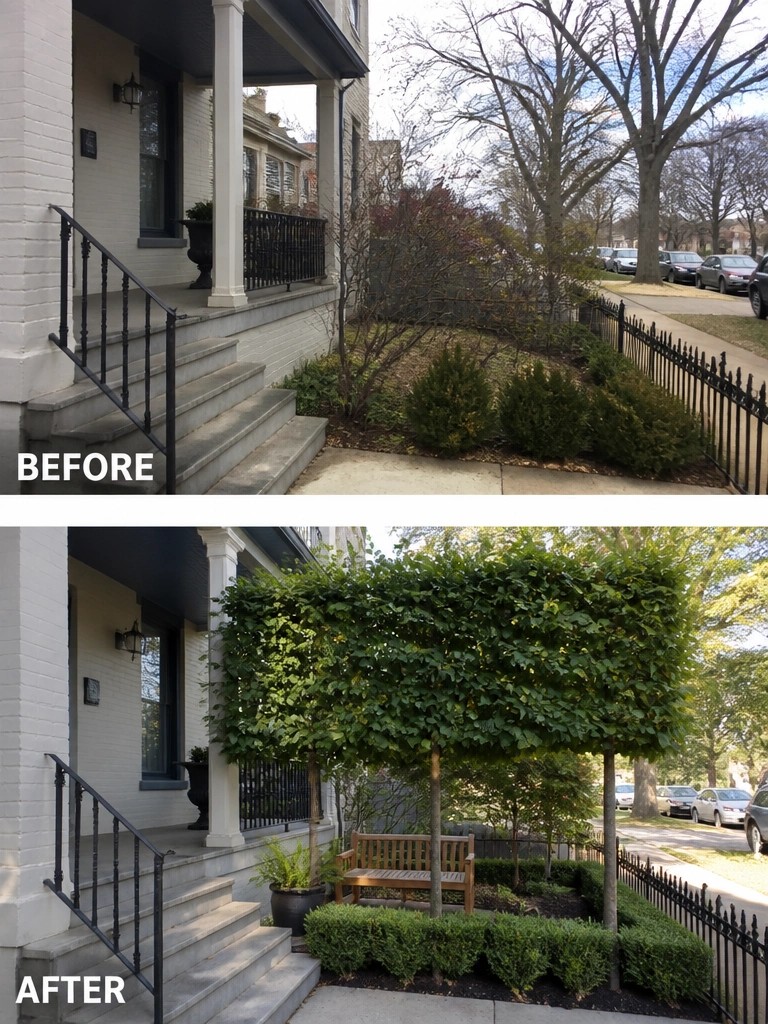
The front of this house went from open and exposed to much more private by adding a row of trees that grew into a natural canopy screen. The change is simple but effective. A few well-placed trees now block the direct view from the street while still letting light through.
This idea works best along the front edge of a property where you want separation without building a fence. Choose trees that can be pruned to stay at the right height, and keep the lower layer simple with shrubs. It suits older homes with small front yards that need structure without losing curb appeal.
Use A Lattice Screen To Create Privacy On Your Deck
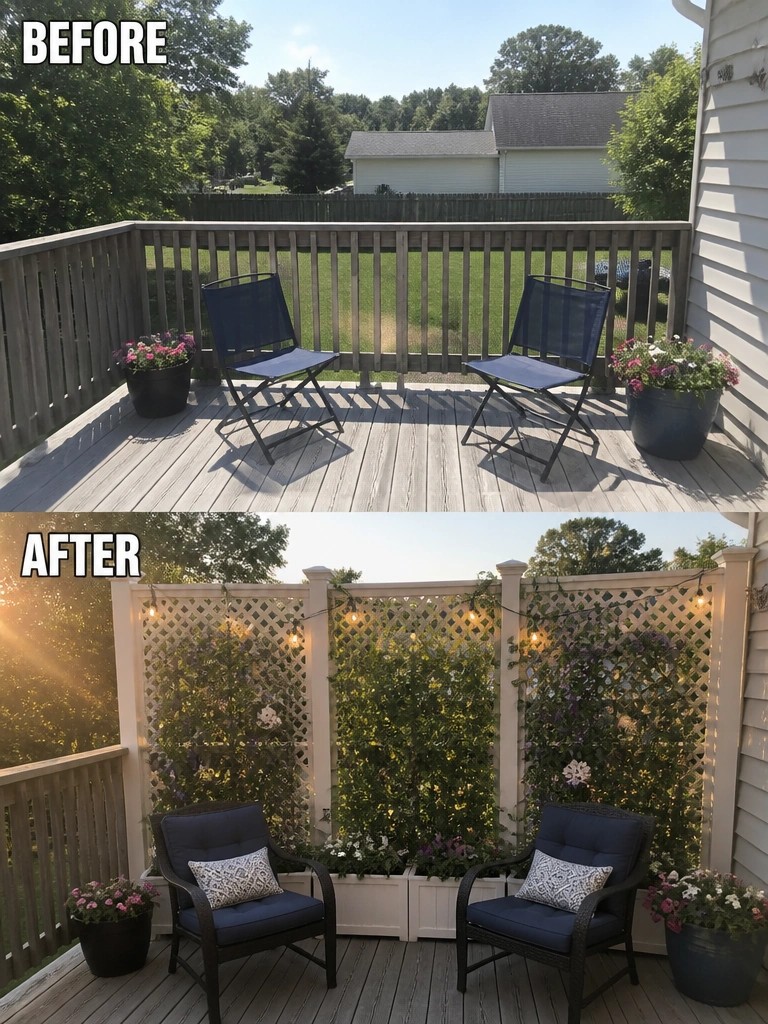
An open deck often feels too exposed when the railing is low and the view goes straight into the yard. Here the simple fix was adding a white lattice screen across the back with vines growing up it. The screen gives height and blocks the line of sight while still letting light through.
This works best on decks or patios that sit close to neighboring yards or roads. Keep the screen color light so it does not darken the space, and choose vines that climb easily and suit your growing season. Add a few string lights if you want the area to feel usable after dark.
Use Tall Plants To Add Privacy To A Balcony
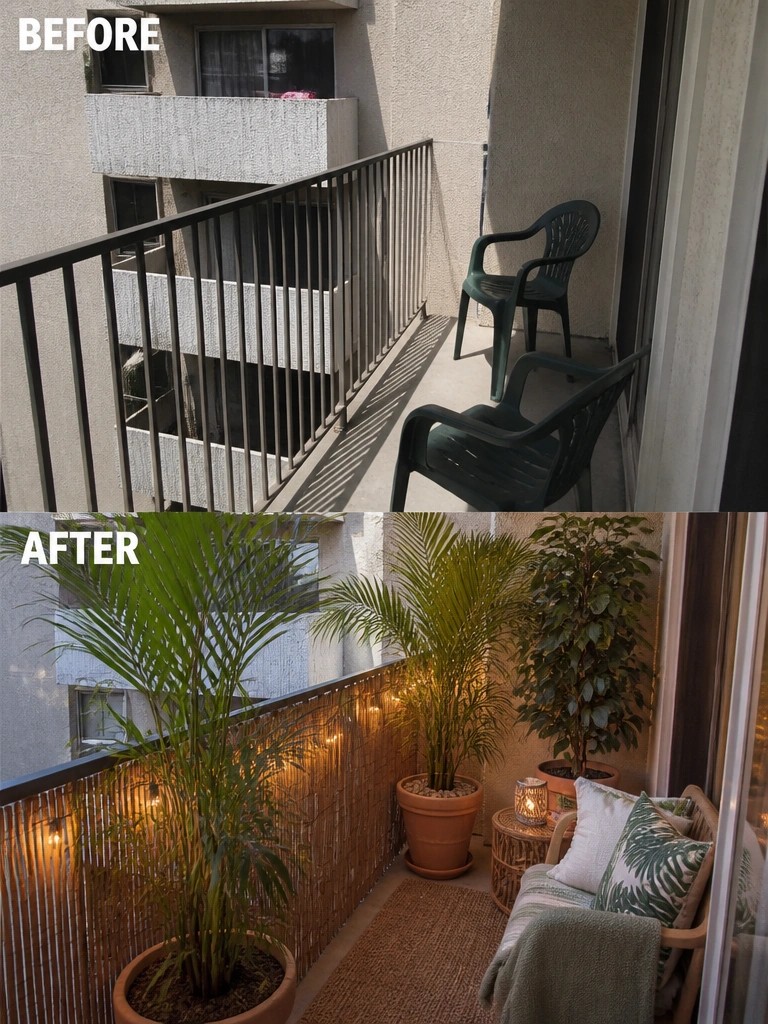
A bare balcony with just a couple of plastic chairs feels exposed and rarely used. Adding a few tall potted plants along the railing changes that quickly. The plants block the view from below while still letting in light, and a simple string of lights along the edge makes the space feel enclosed without any construction.
This approach works well on rental balconies or small outdoor spots where you cannot build a screen. Start with one or two larger plants in sturdy pots to create the main screen, then fill in with smaller ones if needed. Keep the furniture light so the space does not feel crowded, and choose plants that can handle your local weather.
Cover A Fence With Vines For Natural Privacy
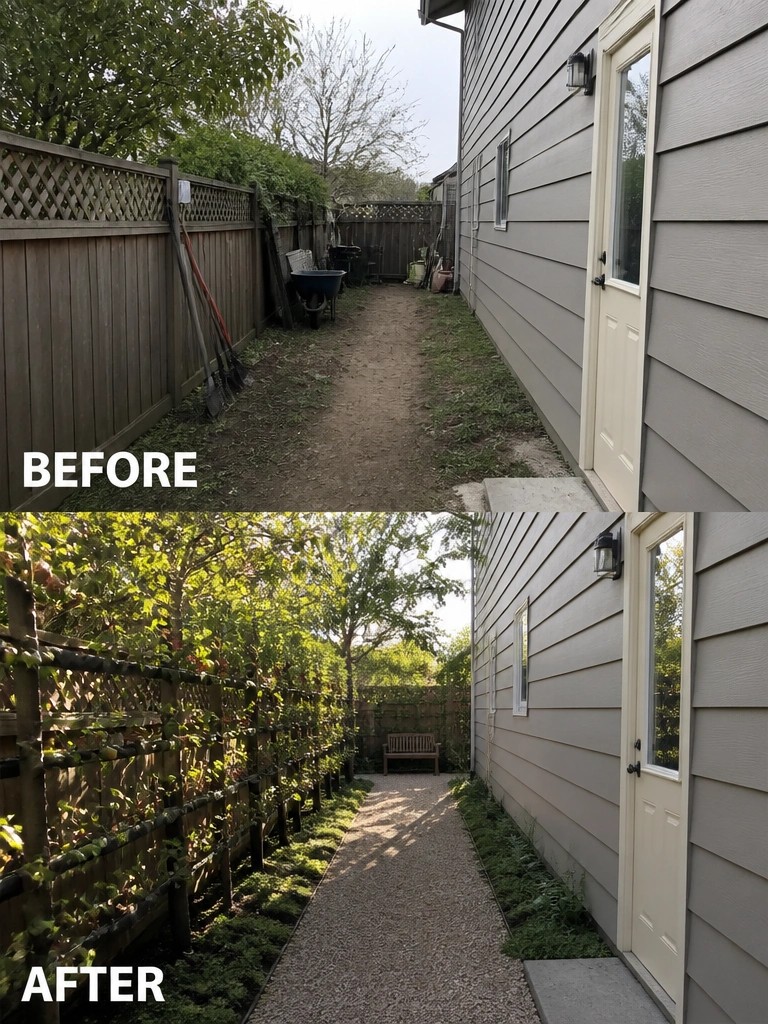
The side yard felt exposed before because the fence sat bare and the whole area looked open and unfinished. Once vines filled in across the panels, the space gained a green wall that blocks views from outside while still letting in light and air.
This idea works best along narrow side yards or property edges where trees would take up too much room. Choose climbers that suit your climate, give them a few seasons to spread, and keep the base weeded so the plants stay healthy instead of looking messy.
Create Privacy With A Screen And Layered Shrubs
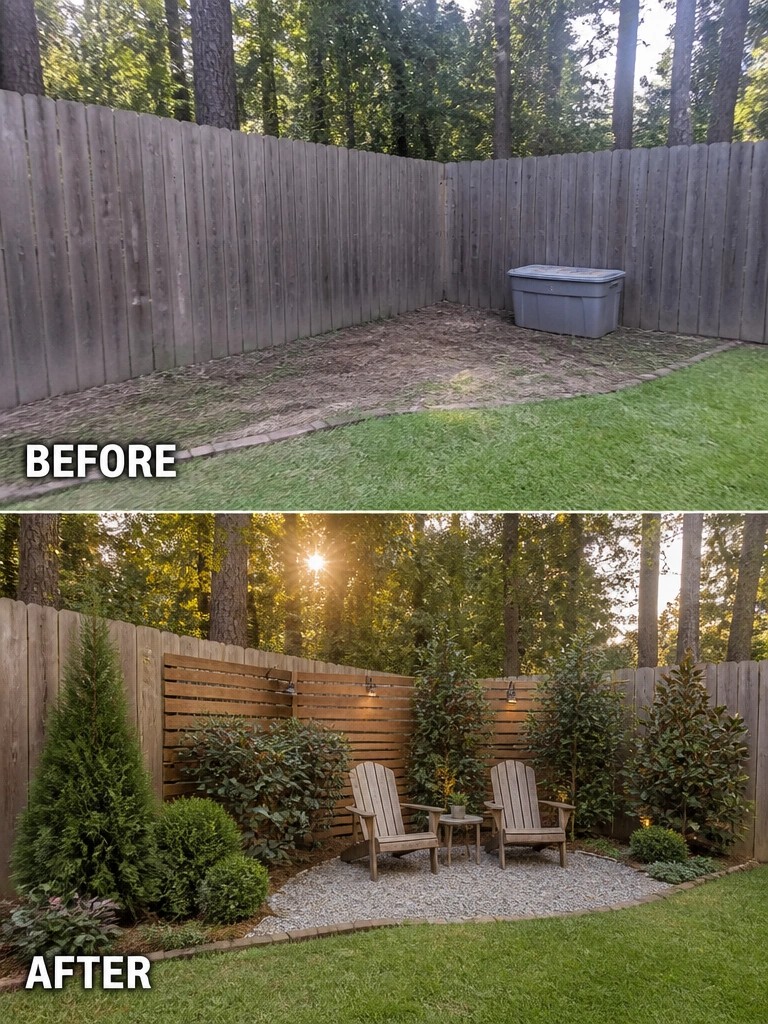
A plain fence often leaves a backyard feeling exposed. Adding a simple wood screen in one section and planting a mix of shrubs in front of it turns the same spot into a private seating area. The gravel base and low edging keep the space neat while the plants block the view from outside.
This idea works best along a fence where you already have a small patch of yard to work with. Place the screen first to get quick coverage, then layer taller shrubs behind shorter ones so the planting feels full without crowding the seating. Keep the furniture scale modest so the area still feels open enough to walk around.
Add Privacy Planting Around A Swing Set
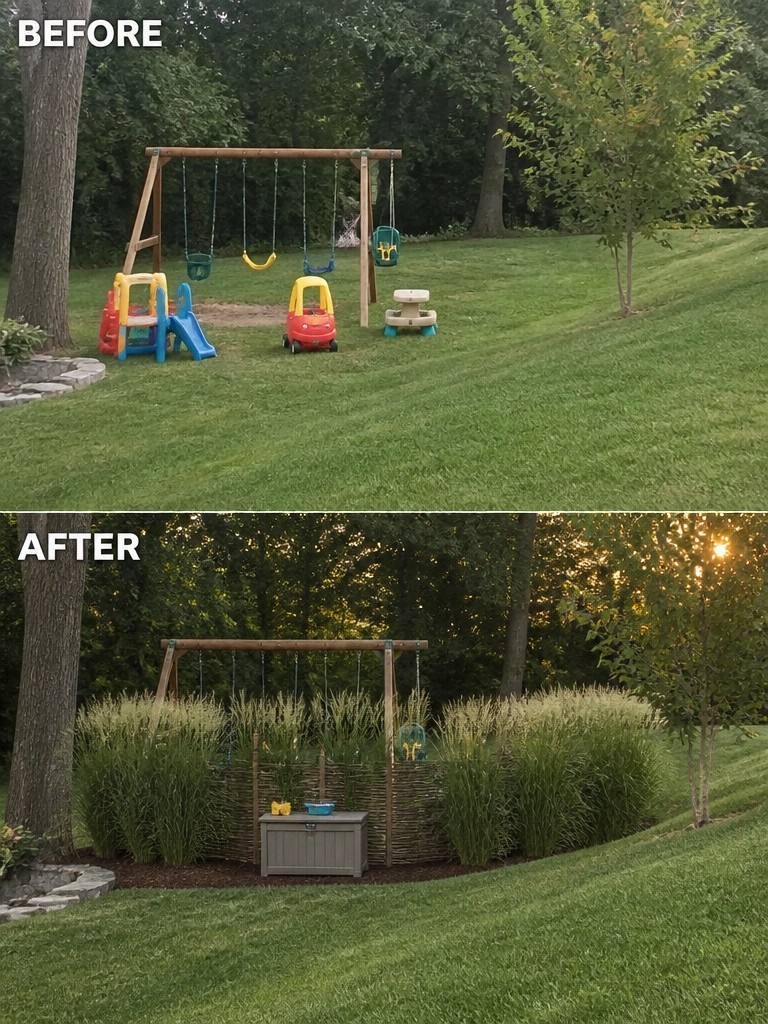
An open backyard play area can feel exposed when it sits right in the middle of the lawn. Adding a ring of tall grasses paired with a low woven screen gives the swing set its own defined space and blocks the view from the house and neighboring yards. The change turns a scattered collection of toys into a more contained play zone without losing the open lawn around it.
This approach works well in medium-sized yards where full fencing would feel too heavy. Plant the grasses in a loose curve so they soften the edges, then add a simple screen or fence section only where you need the most coverage. Keep the mulch bed narrow and use one storage piece inside the planted area to hold toys. The result stays practical while giving the backyard a bit more privacy.
Use Potted Trees To Add Privacy On A Balcony

An open balcony often leaves you feeling exposed to neighbors and the street. Placing a few tall evergreens in matching pots along the railing creates a living screen that blocks the view without any permanent construction.
This approach suits small outdoor spaces where you need quick results and easy changes. Keep the number of pots low so there is still room to move around, and pick varieties that handle wind and sun on an upper level.
Create Privacy With Tall Planting Around A Pool
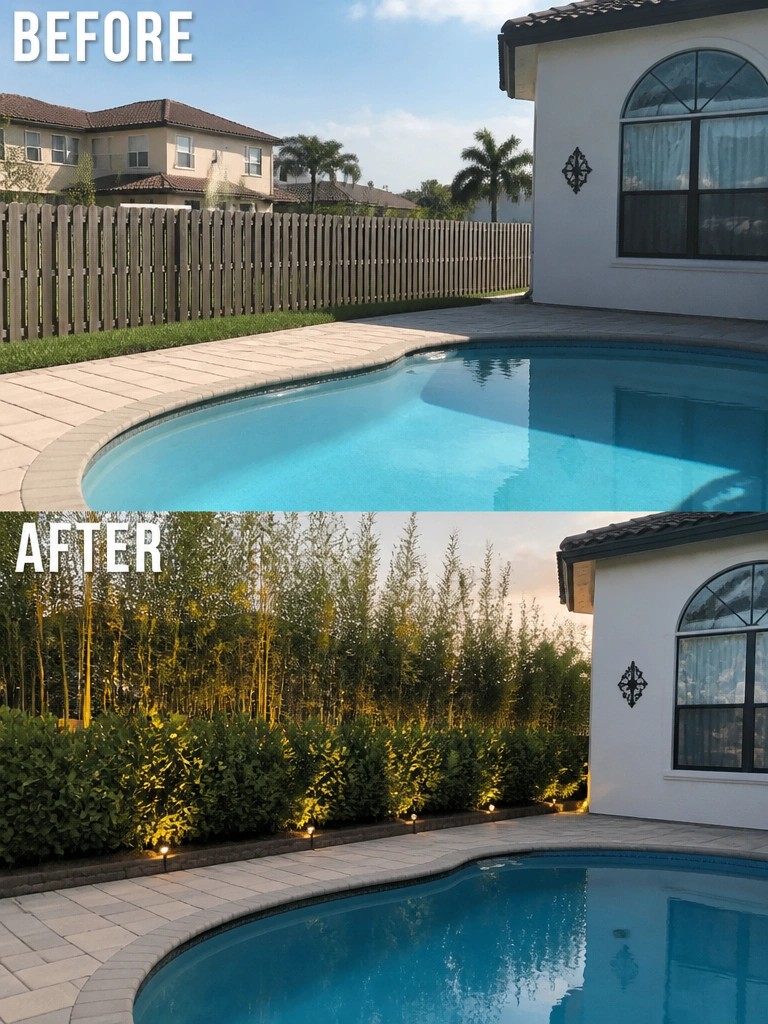
Adding a dense row of tall bamboo and shrubs turned an open pool area into a much more private space. The fence that once left everything exposed now sits behind a living screen that blocks views while still letting in light and air.
This idea works best on pool decks that sit close to neighboring homes or yards. Choose fast-growing plants that reach the height you need, keep the bed wide enough for the plants to fill in, and add simple ground lighting so the area feels usable after dark. Leave a clear path along the pool edge for easy maintenance.
Use Shrubs To Create Front Yard Privacy
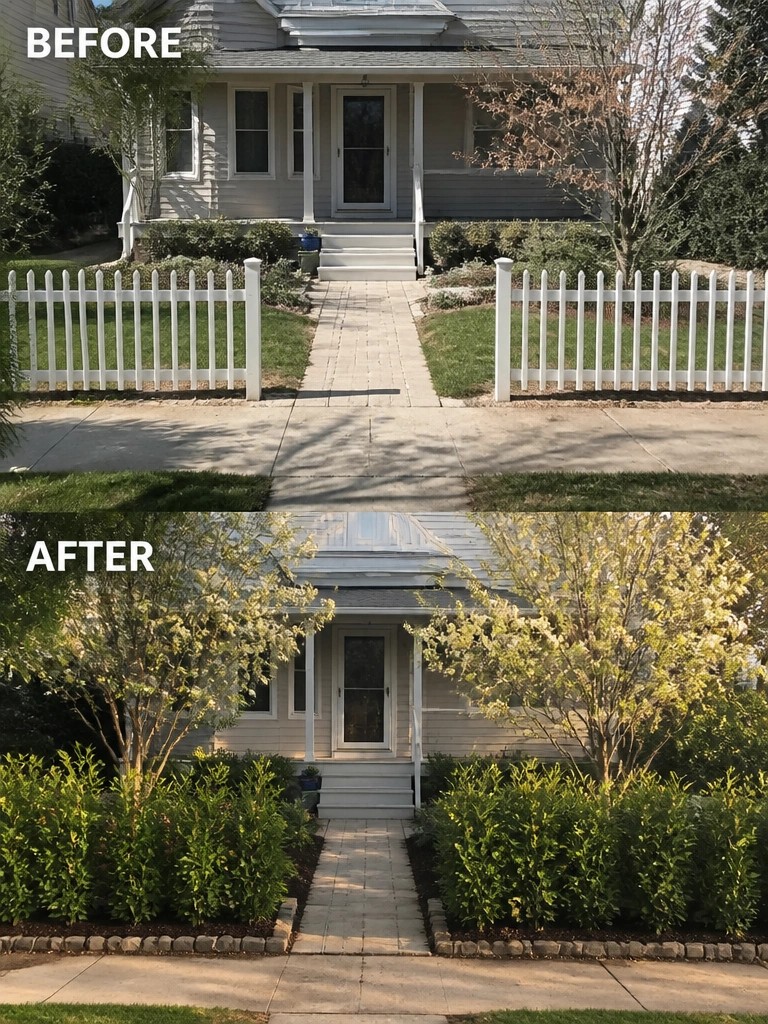
Many older homes still have low fences that do little to block the view from the street. Replacing that open look with a solid line of shrubs gives the front of the house a much more private feel while keeping the space welcoming. The shrubs also add height and fullness that a fence alone cannot provide.
This approach works well on narrow lots or homes that sit close to the sidewalk. Choose evergreen varieties that stay dense year-round and plant them in a gentle curve rather than a straight row. Leave enough room between the shrubs and the walkway so the planting does not feel crowded.
Create Privacy On An Open Patio With A Pergola And Curtains

An open patio often feels too exposed for regular use. Adding a pergola with climbing vines and fabric curtains along the sides gives shade and blocks the view from nearby yards without closing the space in completely.
This approach works best on concrete pads that already have a dining set in place. Keep the curtains in a neutral fabric so they can be pulled open or tied back depending on the weather and how much privacy you need that day.
Use Tall Hedges In Planters To Create Privacy
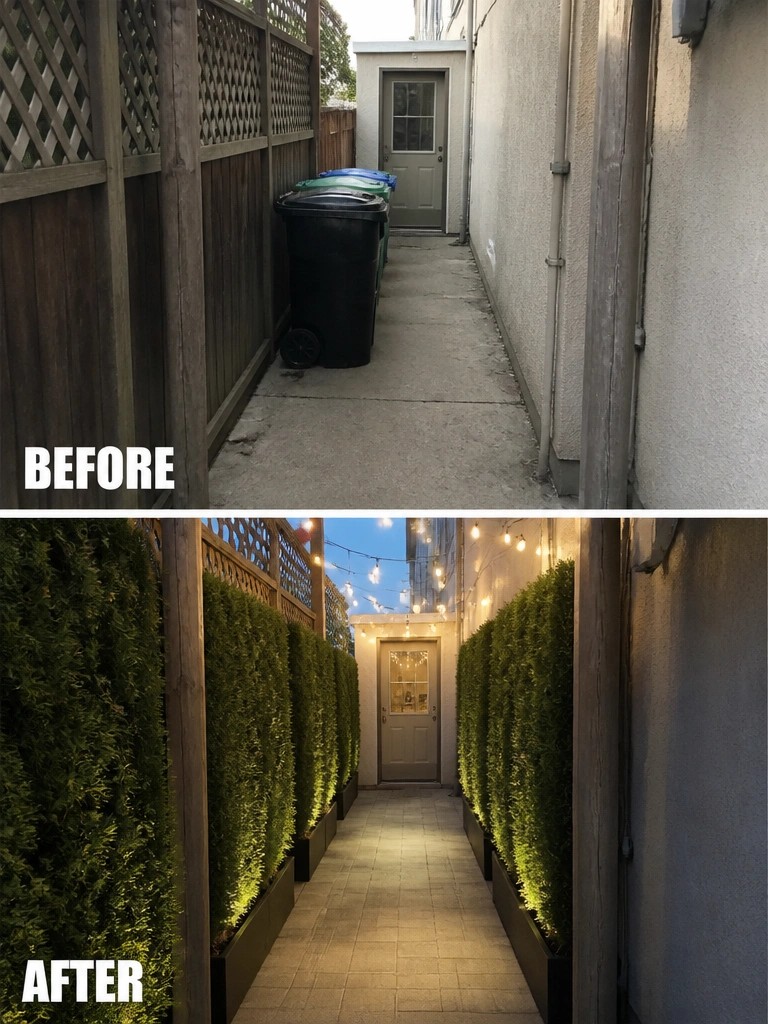
A narrow side passage often feels exposed and purely functional. Placing tall hedge planters along both sides quickly screens the view, softens the walls, and turns the space into something more private without major construction.
This approach works best in tight urban yards or alleys where in-ground planting is not possible. Use deep rectangular planters, choose dense evergreens that can reach eye level, and keep the center walkway clear so movement stays easy. Adding simple string lights helps the area feel usable after dark.
Add Privacy Screens And Plants To An Open Patio

A bare rooftop or deck often feels too exposed to use comfortably. Placing lattice screens with tall potted plants along the edges creates a simple barrier that blocks views while still letting light through. The plants add height and softness without needing permanent construction.
This idea works best on flat outdoor spaces where you want privacy without closing off the sky. Line up the screens where you plan to sit or eat, and choose planters that stay in scale with the area. Leave a few gaps so the space does not feel boxed in.
Add A Privacy Screen And Shrubs Along The Fence
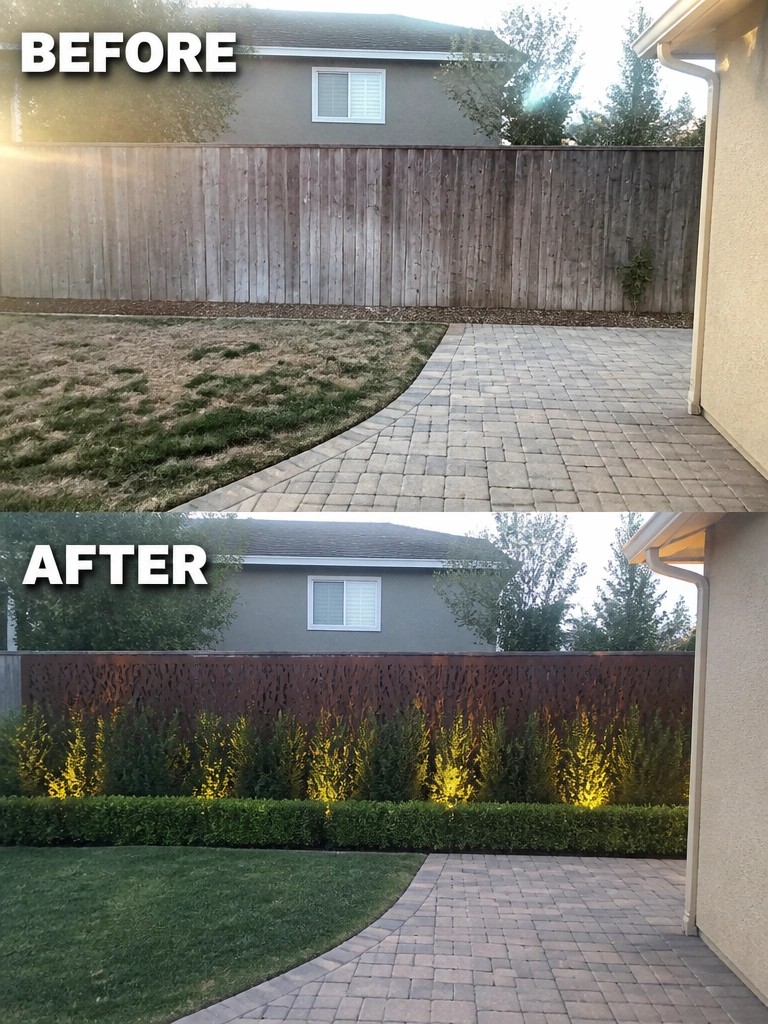
A plain fence often leaves the backyard open to view from neighbors or the street. Replacing part of that fence with a decorative metal screen and adding a row of shrubs in front gives solid coverage while still letting some light through.
This idea works best along a property line where you already have a fence in place. Pick a screen pattern you like, plant shrubs that will fill in over a season or two, and keep the bed narrow enough to leave room for the lawn. It is a simple way to gain privacy without tearing out the whole fence or planting large trees.
Use A Raised Planter To Add Privacy On A Deck
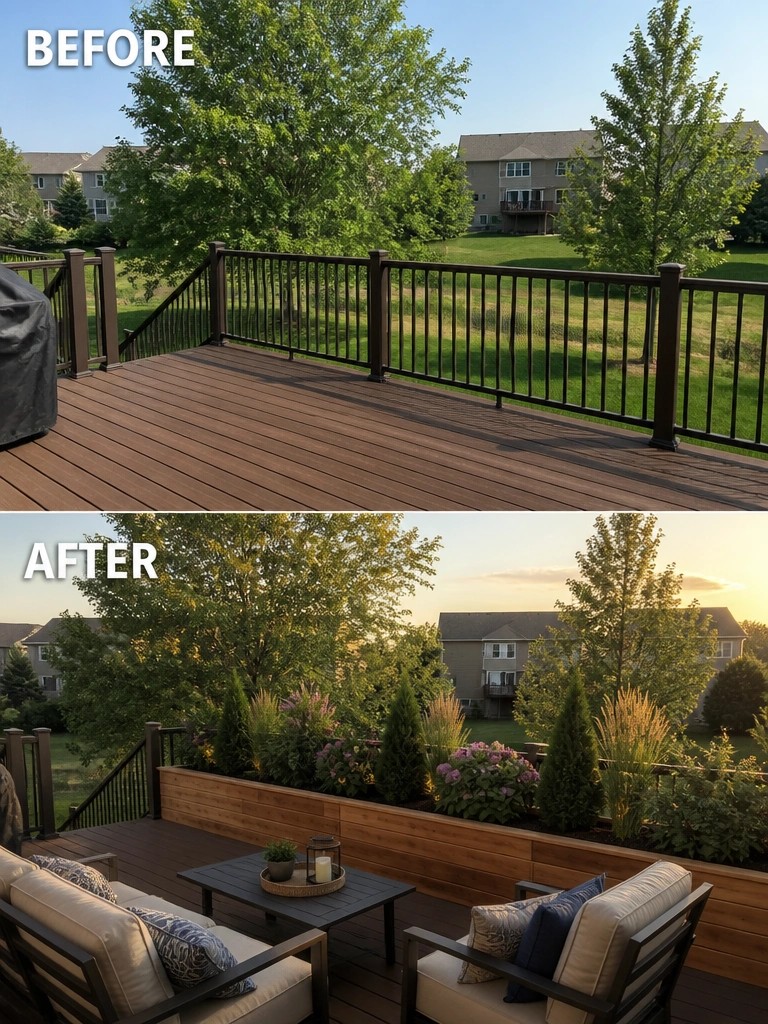
An open deck railing leaves everything exposed to the yard and neighbors. Adding a low wooden planter along the edge changes that fast. The plants fill in the view, soften the line of the deck, and turn the space into something that feels more enclosed without building a full wall.
This approach works best on decks that already have a solid floor and railing. Keep the planter height modest so it does not block light or make the space feel cramped, and choose shrubs that stay full through the seasons. Add seating only after the plants are in place so the layout stays practical.
Use Trees And Shrubs To Create Backyard Privacy
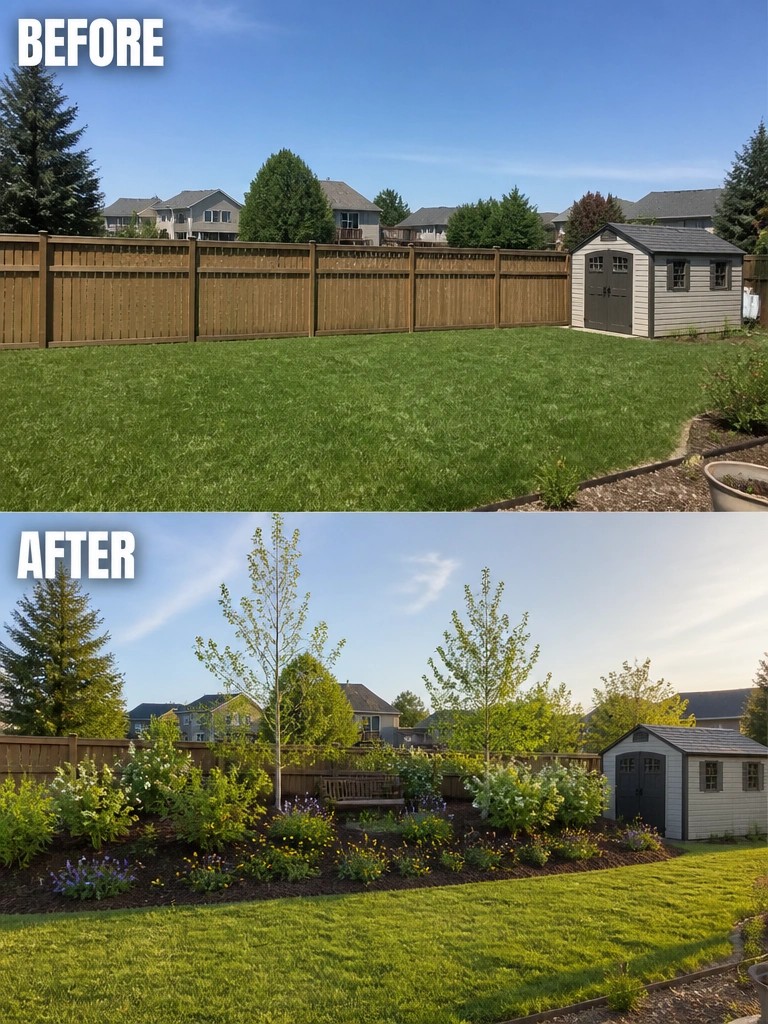
An open lawn with just a fence often feels exposed. Adding a row of young trees and flowering shrubs along the fence line gives the yard structure and blocks views from behind without needing a taller fence.
This approach works best in suburban backyards where you want separation but still want to keep the lawn usable. Space the trees evenly, then fill the gaps with lower shrubs so the planting feels full as it grows. A bench tucked in the middle turns the new border into a place to sit once the plants fill out.
Add A Privacy Screen To Make A Patio Feel Secluded

An open patio next to a chain link fence often feels too exposed for regular use. Adding a tall slatted screen along the back edge and planting shrubs in front of it blocks the view while still letting in some light and air.
This idea works best on small to medium patios where full fencing would feel too heavy. Keep the screen simple, add a few taller plants at the base, and place lights where you actually sit so the space feels usable after dark without overcomplicating the layout.
Add Privacy With Potted Trees Along A Porch
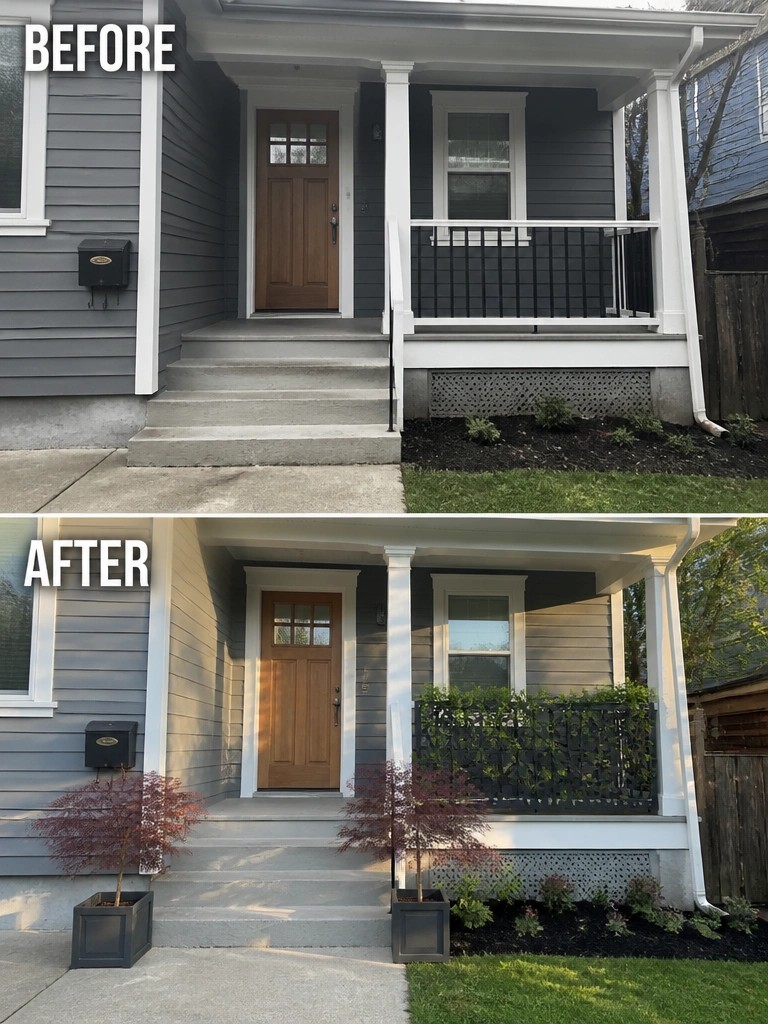
The porch felt open before, with just a railing and no screening from the street. Adding two potted trees at the base of the steps and filling in the railing with greenery gave the space a softer edge and blocked some of the direct view.
This works best on smaller lots or homes where digging beds is not an option. Use containers that match the scale of the entry so they do not crowd the steps, and pick trees that can handle the sun exposure on your side of the house. Move them once or twice if needed until the placement feels balanced.
Add Privacy Screens Around A Fire Pit
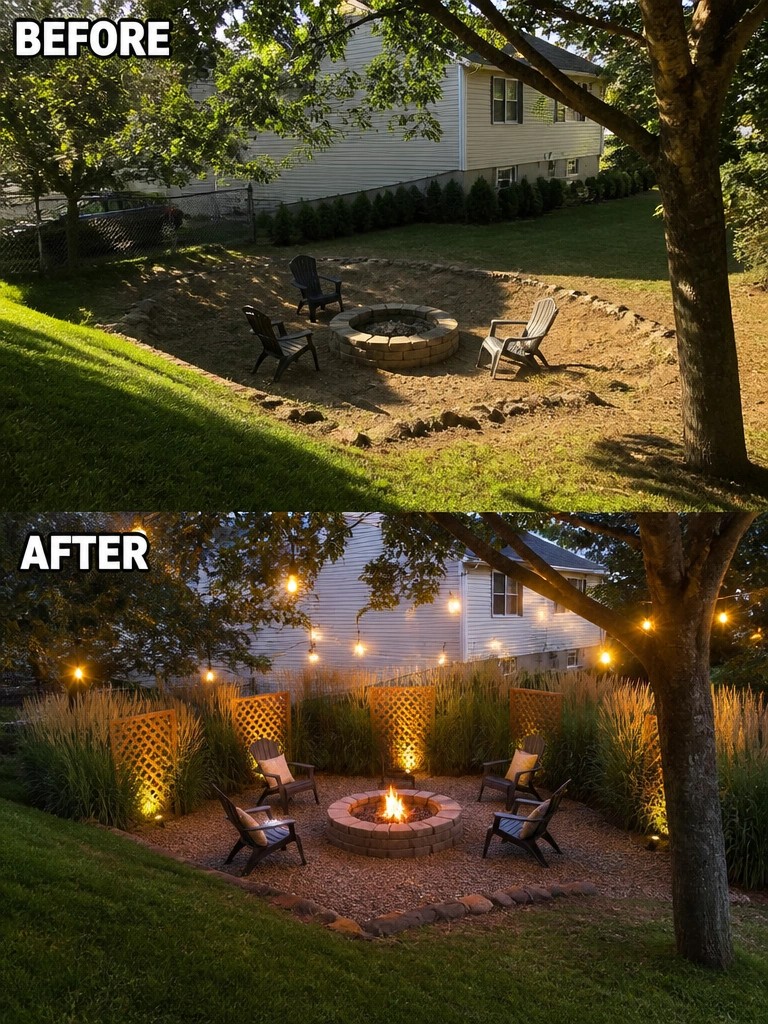
A basic fire pit sitting in open dirt can feel exposed and unfinished. Adding lattice screens backed by tall grasses gives the seating area clear boundaries while still letting light and air through. String lights strung above the space help tie everything together for evening use.
This approach works best in backyards where neighbors are close but you do not want a solid fence. Place the screens behind the main chairs first, then fill in with plants that grow tall enough to soften the edges. Keep the gravel or mulch inside the screened area so the space reads as one defined zone rather than scattered furniture on grass.
Add A Privacy Screen To A Balcony

A bare balcony often feels too exposed, which keeps people from using it much. Adding a simple privacy screen along the railing changes that quickly. In this case the open metal railing became a solid fabric panel that blocks the view from neighboring buildings while still letting in light.
This idea works well on small balconies where full fencing is not an option. Hang the screen from a tension rod or hooks so it can come down in winter, then add a few tall plants in pots along the base for extra coverage. Keep the furniture light so the space does not feel crowded.
Add Vines And Shrubs To Turn A Plain Fence Into A Privacy Screen

A bare fence line often leaves a yard feeling exposed. Adding climbing vines directly to the fence panels and planting a layered row of shrubs in front creates a living screen that blocks views without needing a taller structure. The shift from open dirt and grass to a planted border makes the whole space feel more enclosed and intentional.
This approach works well along side or back fences where you want coverage without heavy construction. Start with fast-growing vines on a simple trellis or wire grid, then fill in the base with evergreen shrubs spaced evenly. Keep the bed narrow enough to leave lawn space open, and use basic edging to hold the look together over time.
Add Screens To An Open Patio For Privacy
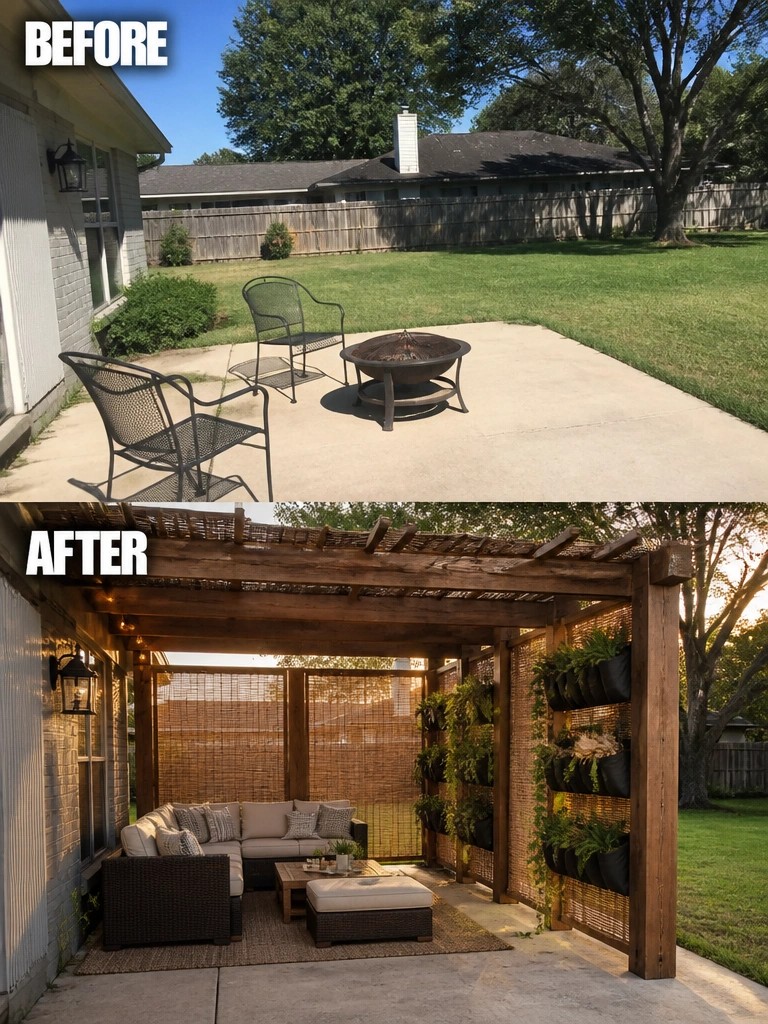
An open concrete patio often feels too exposed for regular use. Adding a pergola with side screens creates walls that block views from the sides while still letting light through.
This idea works best on patios that sit close to the house and already have a solid surface. Choose simple woven panels that hold up outdoors, then add a few vertical planters if you want more coverage without building a full fence.
Add Vertical Screens And Vines For Patio Privacy

A plain concrete patio with a basic fence often feels open and exposed. Installing vertical screens along the fence line and letting vines grow across them creates a living barrier that blocks views while still letting in light and air.
This idea works best on small urban patios or decks where space is tight. Attach simple trellis panels to the existing railing, choose fast-growing climbers, and run string lights along the top so the area feels usable after dark. Keep the ground planting low so the screens remain the main feature.
Frequently Asked Questions
Q: How long before new trees start giving real privacy? A: Fast growing varieties fill in within a couple seasons if you water them well at first. Space them close enough so their branches meet as they mature. Check your soil type before planting to avoid slow growth later.
Q: What works best for a tiny backyard with no room for big trees? A: Tall shrubs planted in a row create a living wall without taking much space. Add a simple screen panel behind them for instant coverage while the plants fill out. This combo keeps things green and effective year round.
Q: Do screens need special care compared to plants? A: Wipe them down a few times a year to remove dirt and pollen. Check the frames after storms since wind can loosen them. Plants need more ongoing attention like watering and pruning.
Q: How can I make sure the setup looks natural instead of like a barrier? A: Layer different heights of shrubs in front of the trees. Let some vines climb the screens for a softer touch. This blends everything together over time.
