


I have noticed that backyards often feel scattered until the edges get some real structure through layered plants and simple screens.
Once those boundaries settle in, the space stops feeling wide open and starts working better for everyday time outside.
Privacy does not always require tall walls.
I usually test a mix of evergreens and a few trellises first because they block views without closing everything off completely.
Over a season or two those additions turn an exposed patch of grass into something that feels settled and easier to keep neat.
Create Privacy With A Fence And Border Planting

Replacing an open chain link fence with a solid horizontal wood fence immediately changes how private a backyard feels. Adding a straight row of shrubs in front of the fence strengthens that boundary and gives the space a finished look without crowding the lawn.
This idea works best on smaller lots where neighbors or roads sit close by. Put the fence in first so the plants have a clear line to follow, then keep the shrubs low and repeat the same type for a clean edge. A narrow gravel strip between the plants and the grass helps control weeds and makes mowing easier.
Add Raised Beds For Privacy In A Narrow Side Yard

A messy side yard full of weeds and random pots can feel like wasted space. Switching to raised wooden beds with tall, dense plants turns the same narrow strip into a private green screen that blocks the fence line and softens the view from the house.
This approach works well on slim lots where you need height without losing walkway room. Start with simple timber beds, fill them with fast-growing tall grasses or bamboo, and keep the ground cover as gravel so the path stays clear and low maintenance.
Replace A Traditional Fence With A Modern Privacy Screen

The old white picket fence gave the front yard a dated look and offered little privacy once the plants grew unevenly. Switching to a dark horizontal slat fence with built-in lights and vines running through it created a clean line along the sidewalk while softening the view from the street.
This approach works well on narrow front yards where you want separation without a solid wall. Keep the fence height moderate, add simple ground lighting, and let the vines fill in over a season or two so the structure feels planted rather than stark.
Add A Vertical Garden For Privacy On A Small Patio

A bare concrete patio with a plain wall often feels exposed and unused. Covering the wall with vertical planters filled with greenery turns the same space into a more private spot while keeping the floor open for movement.
This approach works best on balconies or small patios where traditional hedges will not fit. Start with a simple pocket system or modular panels, choose plants that handle your light and weather, and add a few string lights if you want evening use. Keep the floor clear so the area still feels open rather than crowded.
Use Tall Hedges To Add Privacy Along The Front Path
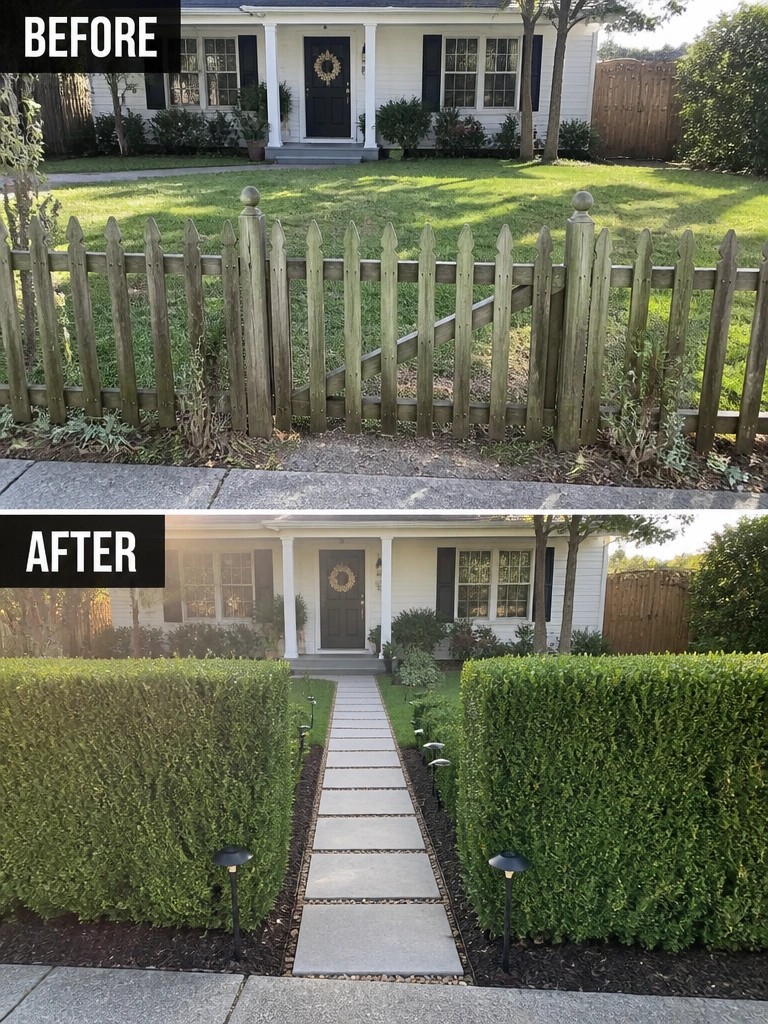
A low fence leaves the whole front yard open to the street. Replacing it with tall, dense hedges on both sides of a new walkway gives the house a much more private feel while still keeping the entry welcoming. The path itself helps too, since it turns the lawn into a clear route instead of just open grass.
This idea works best on homes with a simple front lawn and a straight shot to the door. Plant the hedges a little back from the sidewalk so they have room to grow full, and choose pavers that match the scale of the house. Keep the beds narrow enough that mowing and edging stay easy.
Turn A Bare Patio Into A Covered Seating Area

A plain concrete slab with a couple of plastic chairs feels empty and exposed. Adding a pergola with curtains and simple string lights changes that fast. The structure creates a clear boundary, the curtains add privacy, and the seating makes the space actually usable instead of just open ground.
This works best on patios that sit right off the house but get too much sun or lack any sense of enclosure. Keep the furniture scale modest so the area does not feel crowded, and choose weatherproof pieces that can stay out year round. Start with the pergola and curtains first. The rest becomes easier once the main shape is in place.
Add Structure With A Gabion Wall Along The Fence

A chain link fence often leaves a yard feeling open and messy when weeds grow right up to it. Building a gabion wall in front of the fence creates a solid edge that stops the overgrowth and gives the whole border a finished look. The stones inside the wire cages add weight and texture while the planting in front softens the line.
This approach works well on long side yards or back property lines where you need privacy without replacing the entire fence. Start with the wall to hold the grade and block the view, then add a simple row of tall grasses and a few flowering plants. Keep the bed narrow so it does not eat into lawn space, and use gravel along the front to keep the edge tidy.
Add Privacy With Decorative Screens And Planting

A plain patio with a basic wooden fence often feels exposed. Replacing the fence with taller decorative screens and placing planted containers along the base creates a clear boundary while still letting light through the cutouts.
This idea works best on flat concrete areas where full walls would feel too heavy. Use screens with open patterns, then layer taller evergreens and grasses in front. Low lighting tucked behind the plants helps the space feel used after dark without needing much extra wiring. Keep the number of containers modest so the area stays open enough to walk through.
Add Structure To An Overgrown Slope

A steep, weedy hillside is tough to use and even tougher to maintain. Terraced beds made from simple wood framing give the slope clear levels, hold the soil in place, and turn the whole area into something that can actually be planted and kept tidy.
This idea works best on yards where the land drops away and flat space is limited. Start by building the retaining walls first, then fill the beds with good soil and mulch before adding plants. It keeps the slope from washing out and makes weeding and watering much more straightforward.
Add A Solid Fence With Planting For Privacy
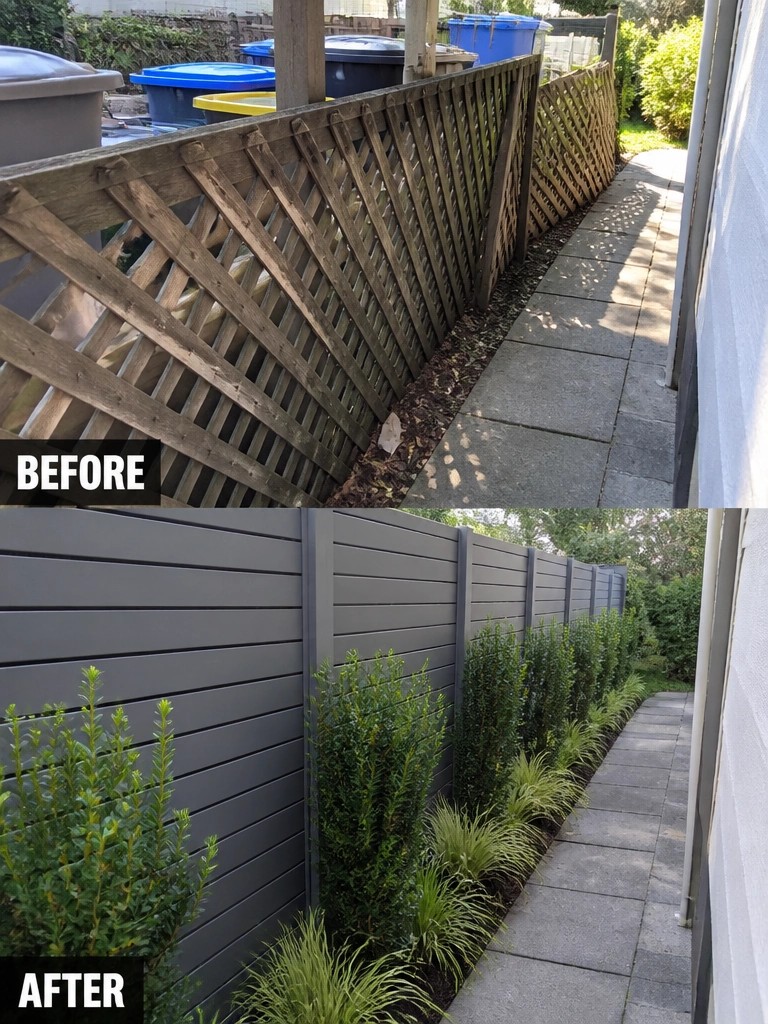
Switching from an open lattice fence to solid horizontal panels gives this side path real privacy while keeping the space looking neat. The added shrubs and grasses along the base soften the fence and create a clean border that feels more intentional.
This works especially well on narrow side yards where you need screening without crowding the walkway. Choose a fence style that matches your house, then plant in layers so the beds fill in without constant trimming.
Add Privacy With Tall Plants In Planters

A bare balcony next to other buildings often feels too open. Placing a row of tall bamboo in long wooden planters creates a living screen that softens the view and gives the space a more enclosed feel without blocking all the light.
This idea suits small patios or balconies where a fence is not possible. Use sturdy planters that can handle weather, keep the planting simple, and add just a couple of seats so the area stays usable instead of crowded.
Add Privacy With A Row Of Tall Plants

Planting a straight line of tall evergreens along the fence turns an open edge into a solid screen. The before photo shows a bare strip of dirt with almost nothing blocking the view of the parking area. After the change, the row of narrow trees creates a clean green wall that gives the yard real privacy without needing a taller fence.
This approach works best along property lines where you want screening but still need to keep the lawn open. Space the trees evenly, add a simple mulch strip underneath, and pick varieties that stay narrow so they do not take over the yard. It is an easy first step before adding any other garden features.
Create Privacy With Panels And Planting

The open black fence left the pool area exposed to the houses and yards nearby. Switching to frosted vertical panels with climbing vines and a low planted bed gave the space a clear boundary while still letting in light. The change feels simple but makes the whole area feel more private and contained.
This approach works well along straight property lines next to a pool or patio. Start with solid panels for the main screen, then add vines that can grow quickly along the base. Keep the planting low enough that it does not block the view from the chairs but still softens the hard edges.
Create A Private Seating Area With A Simple Bench And Lights
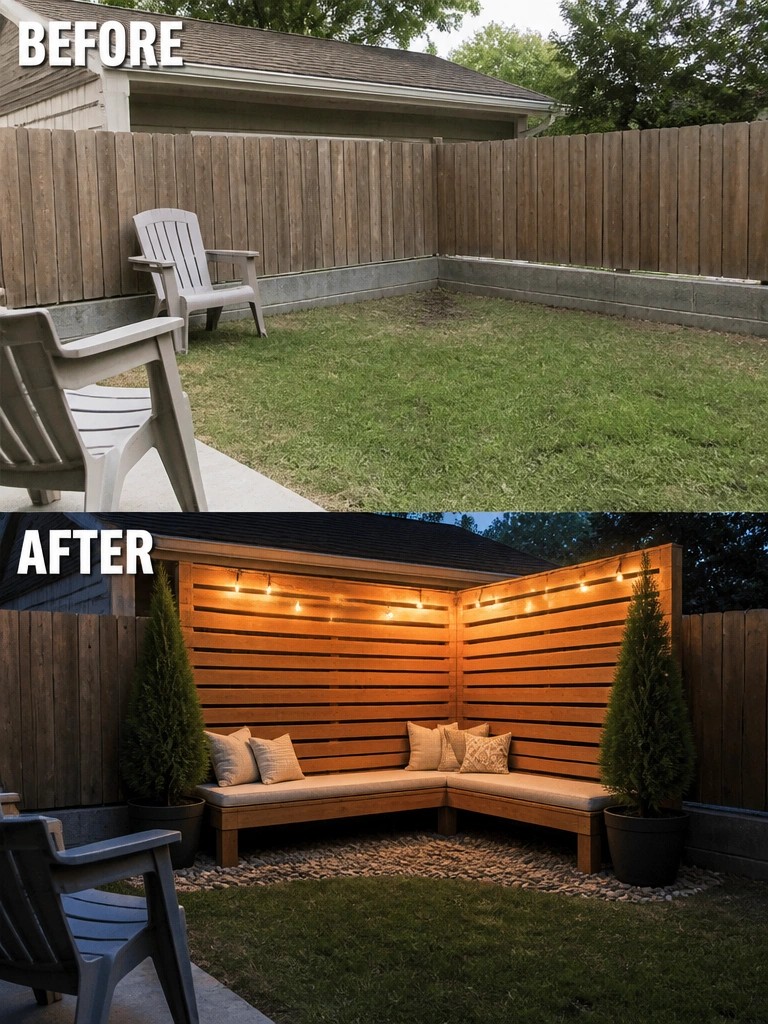
A bare patch of grass against a tall fence does not invite anyone to stay outside. Adding a built-in bench that runs along two sides turns the same corner into a place where people actually sit. The horizontal slats above the bench add privacy while the string lights make the spot usable after dark.
This approach works best in smaller yards where you want one clear spot to relax without filling the whole lawn with furniture. Keep the bench low and simple so it does not feel crowded, and use weatherproof cushions that can stay outside. Start with the seating and lights before adding more plants or decor.
Add Low Hedges For Front Yard Privacy
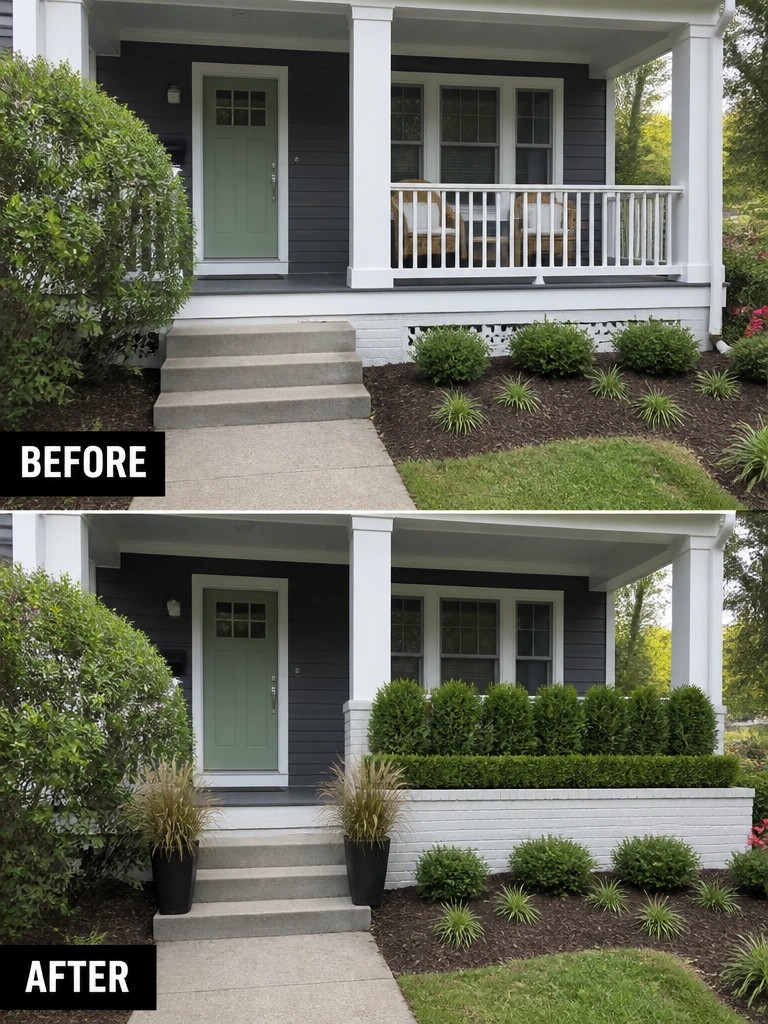
Planting a row of low hedges is an easy way to give a front yard more privacy without blocking light or making the space feel closed in. The before photo shows scattered shrubs and an open slope, while the after photo adds a straight line of boxwoods that runs along the porch and creates a clear border.
This idea works well on homes where the foundation or porch sits a little high and you want a neat, finished look from the street. Use compact evergreens, space them evenly, and keep the bed edge simple so the hedge itself stays the main feature.
Add Privacy Screens To An Open Deck

An open deck can feel too exposed when houses sit right behind it. Adding tall slatted screens with built-in planters creates a clear boundary and softens the view without closing the space in. The change turns the deck from a simple platform into a defined seating area.
This idea works best on raised decks that overlook neighboring yards. Match the screen material to your railing, keep the panels at a height that blocks the main sight lines, and let the plants fill in over time. It stays practical while giving you control over how private the space feels.
Add Privacy With Tall Planters On A Balcony

An open balcony often feels exposed even when the view is nice. In this case, a simple row of tall planters filled with evergreens created a living screen that blocks the sightline from neighboring buildings while still keeping the space bright and usable. The change turns the terrace into a place where you can sit without feeling watched.
This approach works well on rooftops and upper-level decks where fences are not an option. Choose planters deep enough for trees that stay narrow, and space them close together so the screen fills in quickly. Keep the rest of the furniture light so the area does not feel crowded.
Add Privacy Screens To A Narrow Side Yard

A chain link fence leaves a side yard feeling exposed and messy. Replacing it with a vertical wood screen and a row of raised planters creates a clean boundary that blocks views without making the space feel closed in. The wood adds height and structure while the planters bring in greenery at eye level.
This approach works well on tight lots where you need separation from a neighbor or alley. Keep the fence simple and match the wood tone to your house siding. Choose plants that stay narrow so the path stays usable and the beds do not crowd the walkway.
Add A Low Wall To Organize Front Planting Beds

Overgrown shrubs along the street edge can make a front yard feel messy and exposed. Adding a low stone wall creates clean lines, lifts the planting area, and gives the border a more finished shape while still allowing room for greenery that screens the view from the road.
This approach works well on narrow strips between the sidewalk and the street where you need both order and some privacy. Keep the wall height modest so it does not block sight lines, and repeat the same stone or a similar material elsewhere in the yard to tie everything together. Start with the hardscape first, then fill the pockets with a few evergreen shrubs rather than packing in too many plants at once.
Add Layered Planting For Privacy

The before shows a flat lawn with nothing to break up the view along the fence. The after adds rows of shrubs and grasses in different heights right along the edge. This simple change turns the open space into something more enclosed without blocking all the light.
Layered planting works best in yards that already have a fence but still feel exposed. Choose a mix of evergreen shrubs in the back and lower grasses or perennials in front so the bed stays interesting year round. Keep the width of the planting reasonable so the middle of the yard stays usable.
Combine Modern Fencing With Hedges For Privacy

An old fence often leaves a side yard feeling exposed and unfinished. Replacing it with a mix of horizontal wood panels and frosted glass sections, then adding a row of low hedges in front, creates a cleaner line while still blocking the view from the walkway. The result feels more intentional without needing tall plants or heavy screening.
This approach works well along narrow side yards or property edges where full enclosure is not required. Keep the hedges at a consistent height so they stay neat with basic trimming, and choose fence materials that hold up to weather. Start with the fence update first, then add the planting so the layout stays simple and easy to maintain.
Frequently Asked Questions
Q: How do I pick plants that block views but still let in some light?
A: Look for varieties with open foliage like certain grasses or tall perennials. They create a screen without making the space feel closed in. Plant them in groups to fill gaps quickly.
Q: What if the before photo shows a slope in my yard like some of the examples?
A: Terrace the area with low retaining walls first. Then add the privacy plants along the top edge. This levels things out and gives a clean base for everything else.
Q: Can I add these features without spending a fortune on new materials?
A: Start with what you already have around the yard. Fast growers will fill the rest in no time.
