

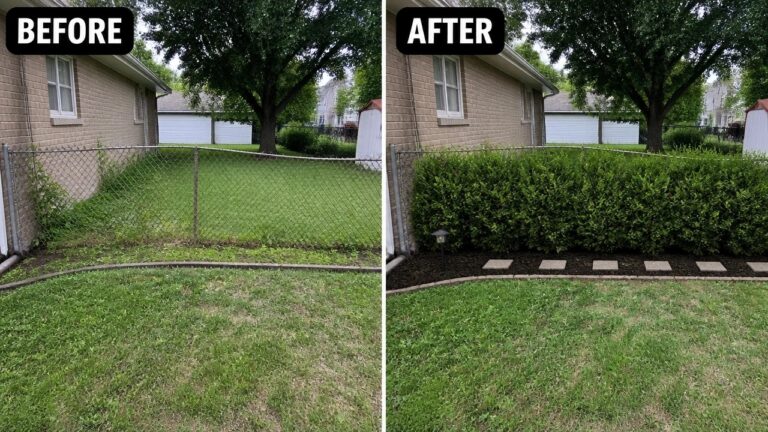
Our yard always seemed too open along the back fence line until I started looking at simple plant groupings that could fill those gaps.
Low maintenance choices like tall grasses or compact evergreens build coverage without needing constant attention or perfect soil.
I usually focus first on the spots right behind where we sit outside since those changes show up fastest in daily use.
Layering heights and textures helps block sight lines over a couple of seasons while the plants settle in naturally.
The space ends up feeling more our own once the rows start to knit together.
Plant A Simple Shrub Border For Privacy
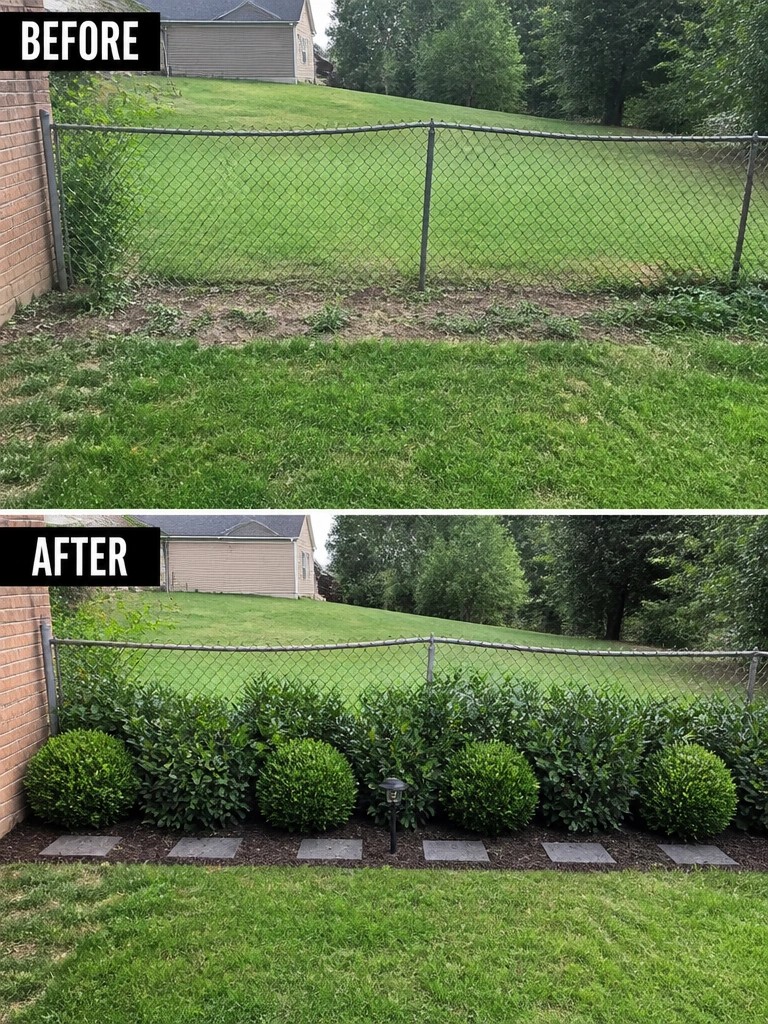
A chain link fence often leaves a yard feeling exposed. Adding a row of compact shrubs along the base creates a living screen that softens the view while keeping the space usable. The change here shows how a plain grass edge became a defined planting strip that gives privacy without blocking light or airflow.
This idea works best in backyards where you want screening but do not need a tall solid fence. Choose shrubs that stay roughly the same height and width, space them evenly, and add mulch to keep weeds down. It is a low maintenance option that improves privacy over time with very little ongoing work.
Add Tall Grasses For Privacy In A Narrow Side Yard
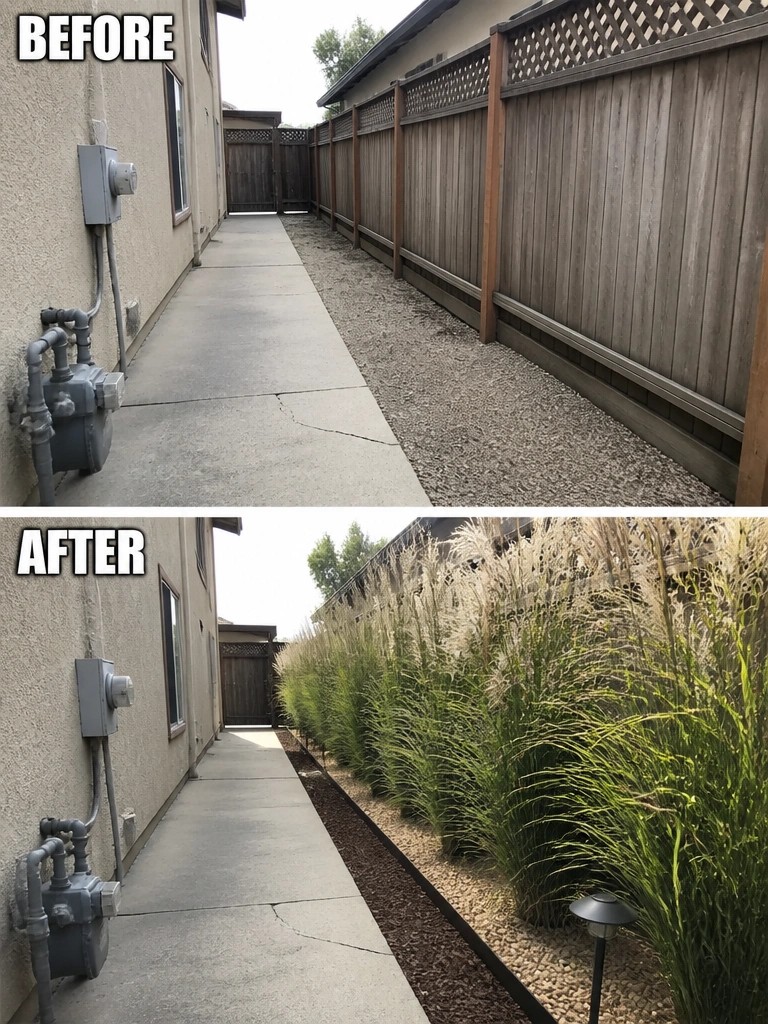
A narrow side yard with just gravel and a fence often feels exposed and unfinished. Replacing the gravel with a simple row of tall grasses turns the space into a soft green screen that gives privacy without much work. The grasses fill in quickly, move in the wind, and need very little watering once established.
This approach works well along any long walkway or fence line where you want coverage but do not want to block light. Keep the bed narrow so the path stays usable, and choose varieties that stay upright rather than floppy. A thin layer of mulch helps control weeds and keeps the look clean with almost no upkeep.
Add Privacy With Tall Planters On A Balcony
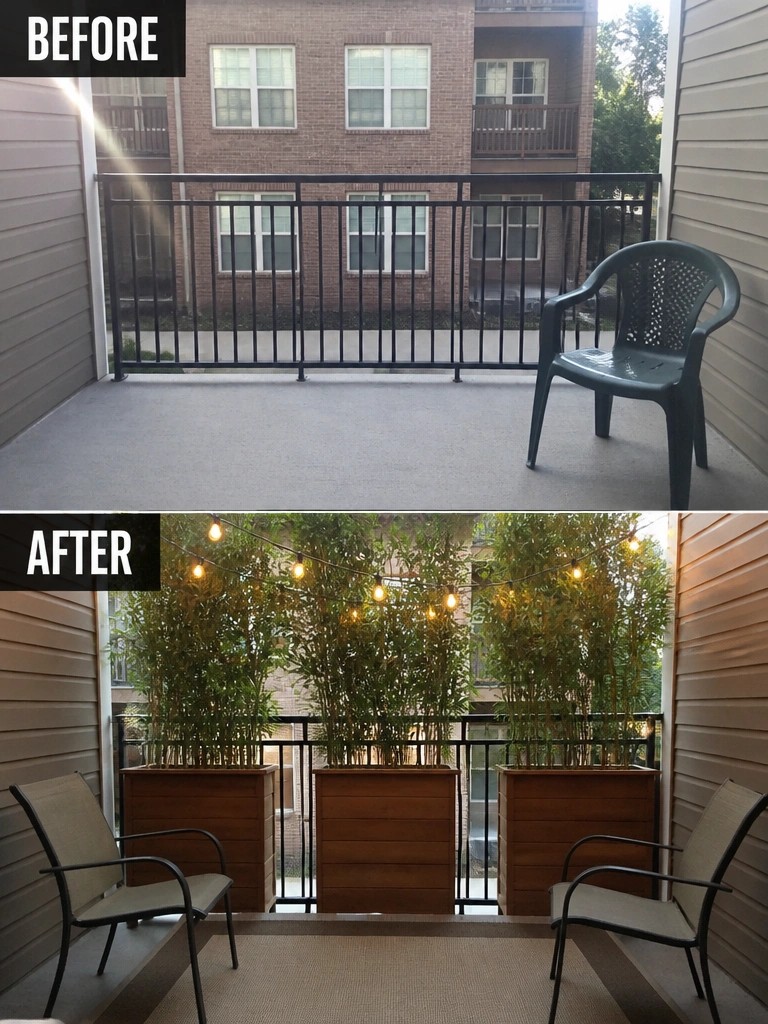
An open balcony often feels exposed because there is nothing between you and the view beyond the railing. Adding a row of large planters with tall plants along the edge creates a living screen that blocks sightlines while still letting in light and air.
This approach works best on upper floor balconies or small patios where permanent structures are not allowed. Use sturdy, weatherproof planters and choose simple, fast-growing plants that stay green with little care so the privacy lasts through the seasons.
Plant Tall Evergreens Along The Fence For Privacy
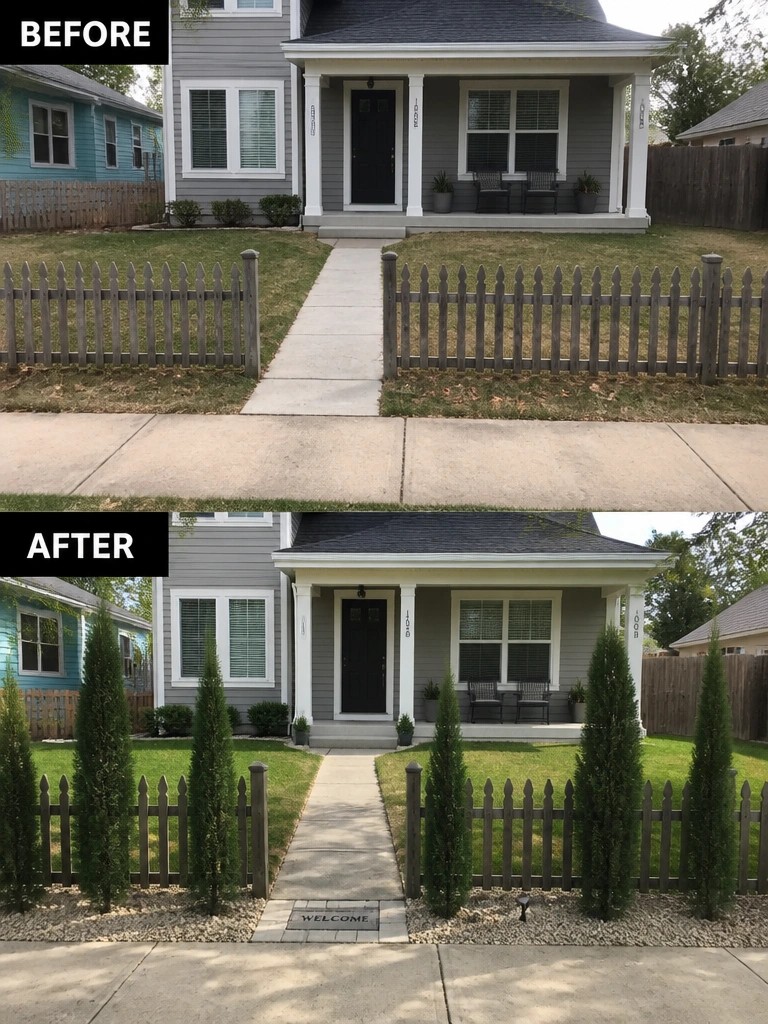
A simple row of tall evergreens can turn an open front yard into a more private space without much ongoing work. In the before photo the yard sits exposed along the fence, but the after photo shows how the trees create a living screen that softens the view from the street while keeping the lawn open.
This idea works best on smaller lots where you want separation without building a taller fence. Space the trees evenly, pick a narrow variety that will not crowd the path, and keep the beds mulched so the area stays neat with little trimming.
Add A Trellis To Create Privacy Along A Plain Wall
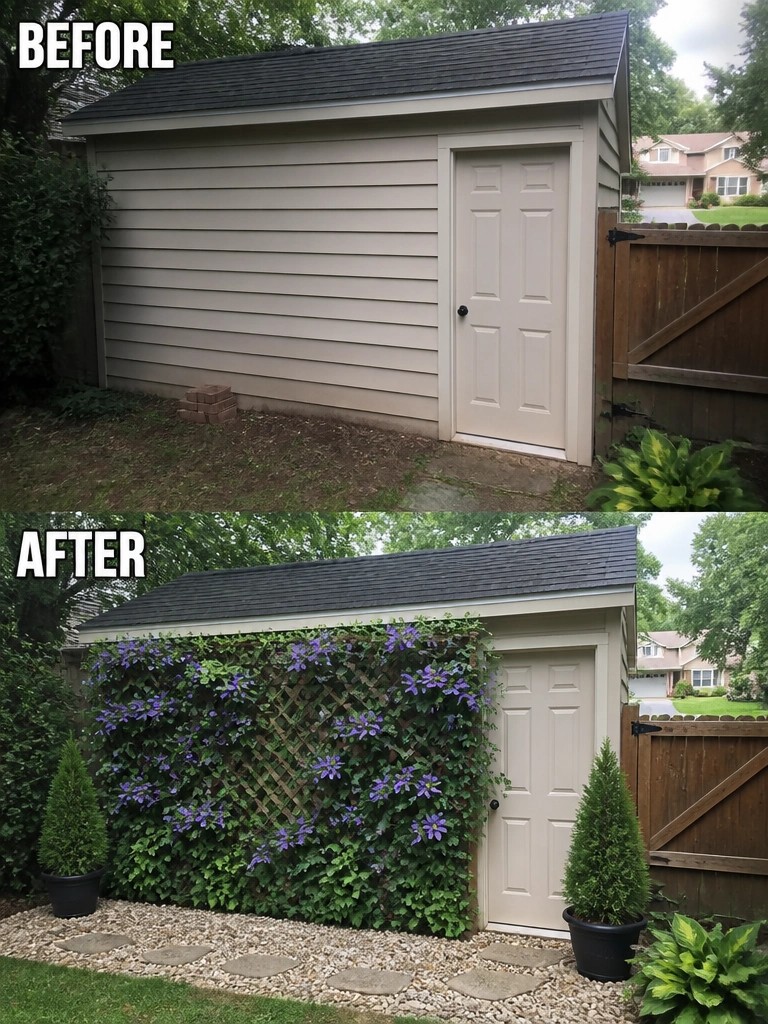
A blank wall next to a shed or fence can leave a yard feeling open and exposed. Adding a simple trellis with climbing vines covers the surface quickly and gives the space a more enclosed feel without much ongoing work.
This approach works well along side yards or near outbuildings where you want screening but do not want a solid fence. Choose a sturdy lattice, plant something vigorous like clematis, and let it fill in over a season or two. Keep the base clear with gravel or pavers so the area stays low maintenance.
Add Privacy To A Balcony With Tall Plants And A Screen
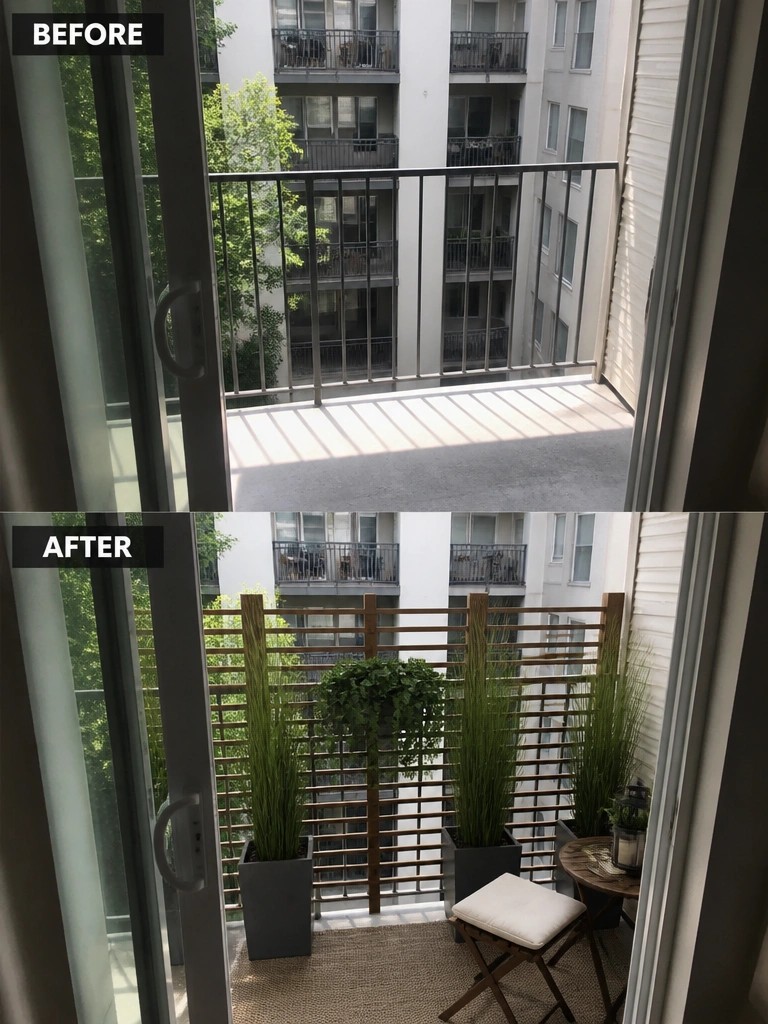
A balcony with just a railing often feels too open. Adding a wood screen and a row of tall plants in pots creates a simple barrier that blocks views while still letting in light and air. The space goes from empty concrete to a spot that actually feels usable.
This works best on apartment or townhome balconies where neighbors can see in. Use sturdy planters with grasses that need little watering, and keep the screen height modest so the area does not feel closed off. Place the planters along the side that needs the most coverage and leave room to walk around the furniture.
Add Layered Planting For Fence Line Privacy
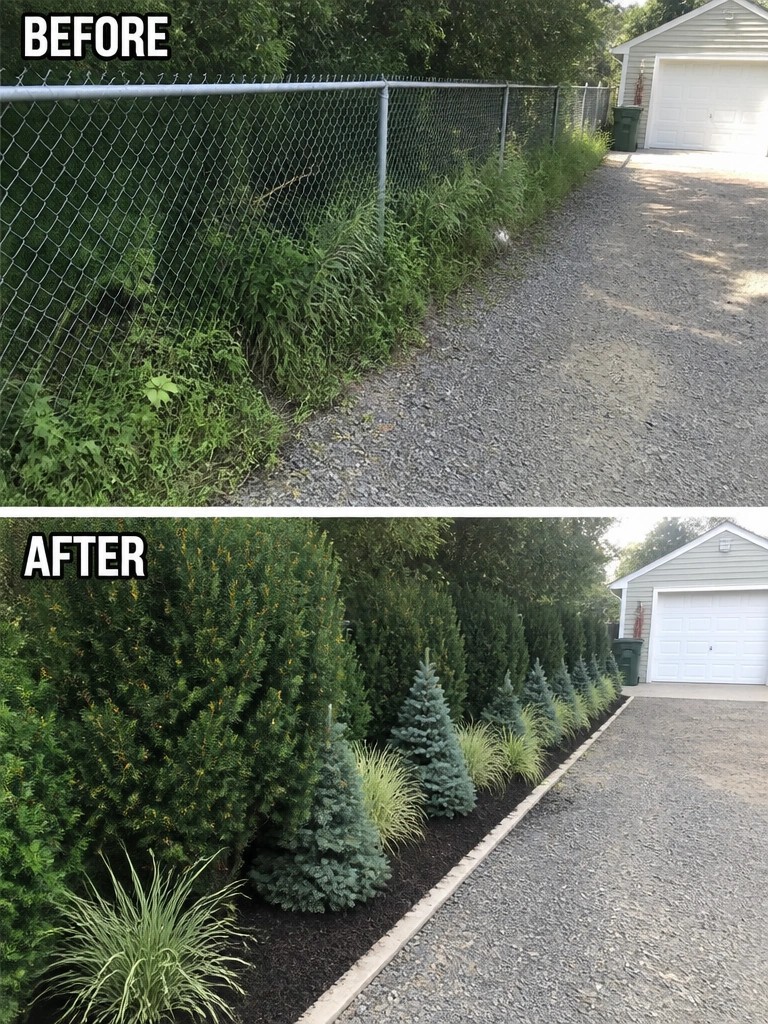
A simple row of shrubs and small trees can turn an overgrown fence into a solid privacy screen. The before shows how weeds and random growth leave the area feeling messy and exposed. In the after, a mix of taller evergreens with smaller plants in front creates a clean edge that blocks the view while staying low maintenance.
This idea works best along driveways or side yards where you need screening without building a new fence. Start with a few reliable evergreen varieties at different heights, add mulch to keep weeds down, and let the plants fill in over a season or two.
Add Privacy With Tall Container Plants
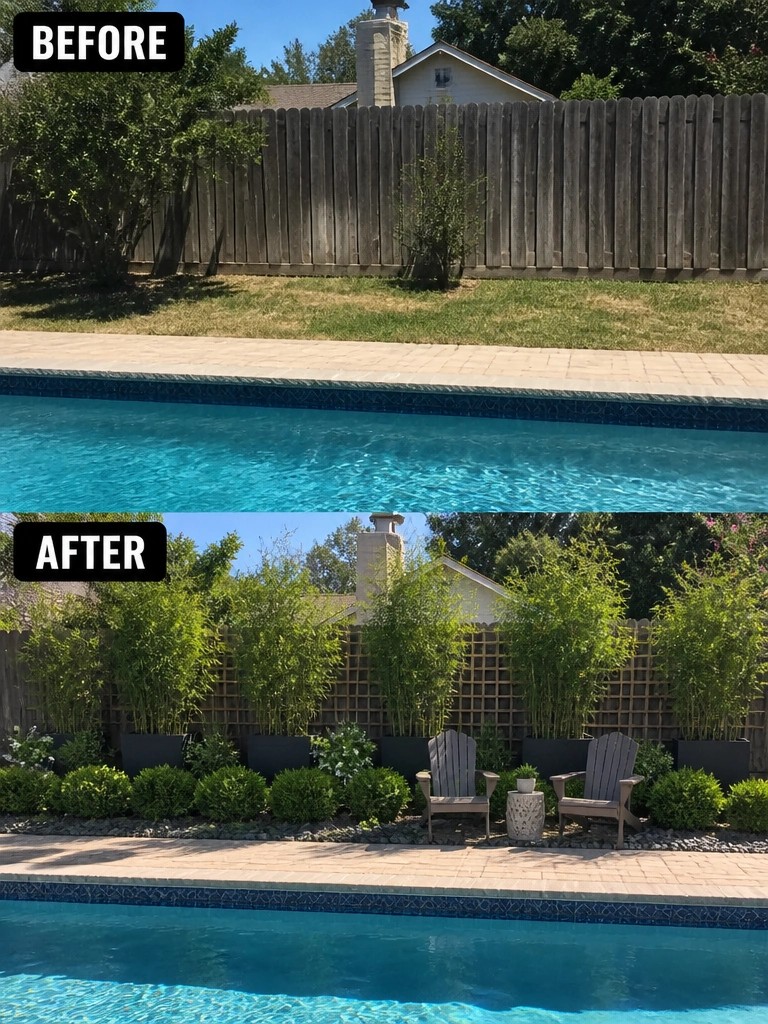
A plain fence line next to a pool often leaves the space feeling exposed. Adding a row of tall plants in matching containers creates a living screen that blocks views without any major construction. The simple change turns the area into a more private spot while keeping the view open above the plants.
This idea works well along property lines or next to a pool where you need height but want to avoid permanent structures. Choose fast-growing evergreens that stay narrow, place them in large weatherproof planters, and keep the bed below simple with low shrubs. The result stays low maintenance and can be adjusted or moved if needed later.
Grow Climbing Plants On A Fence For Privacy
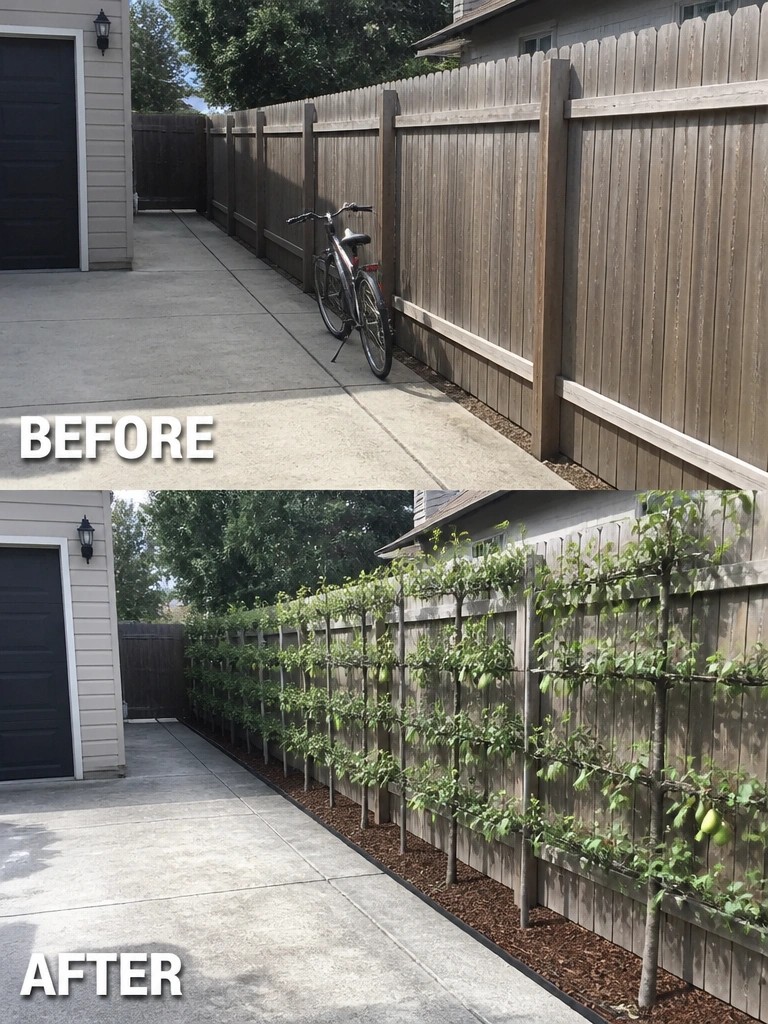
A plain fence often leaves a side yard or driveway feeling open. Training a few climbing plants along it adds coverage quickly and keeps the look simple.
This approach works best on existing fences where you want privacy without adding height or new materials. Start with one or two easy varieties suited to your area, space the plants evenly, and let them fill in over a season or two.
Use Planting To Add Privacy To An Open Deck
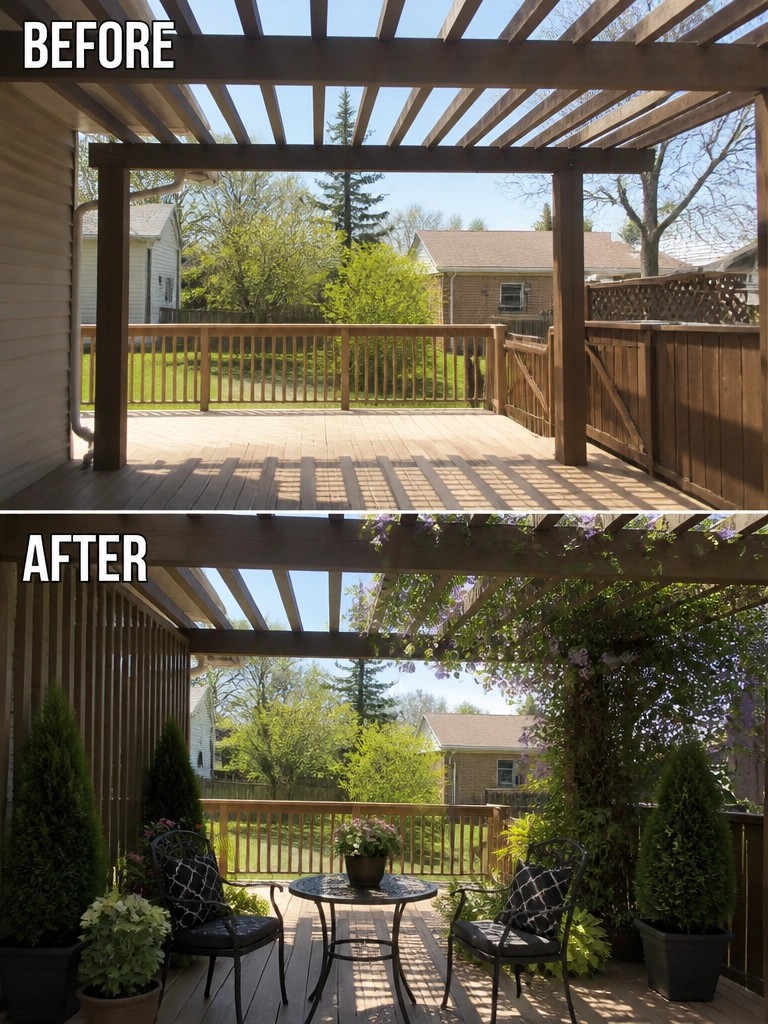
An open deck can feel exposed even when it has a roof overhead. In this case, vines trained along the pergola and a few well-placed pots along the sides softened the view and blocked sightlines from neighboring yards without any major construction.
This approach works best on decks or patios that already have some overhead structure. Choose vines that grow quickly in your climate and stick with a few larger pots of evergreens rather than lots of small annuals. The goal is steady coverage that does not require constant trimming or watering.
Create Entry Privacy With Tall Container Plants
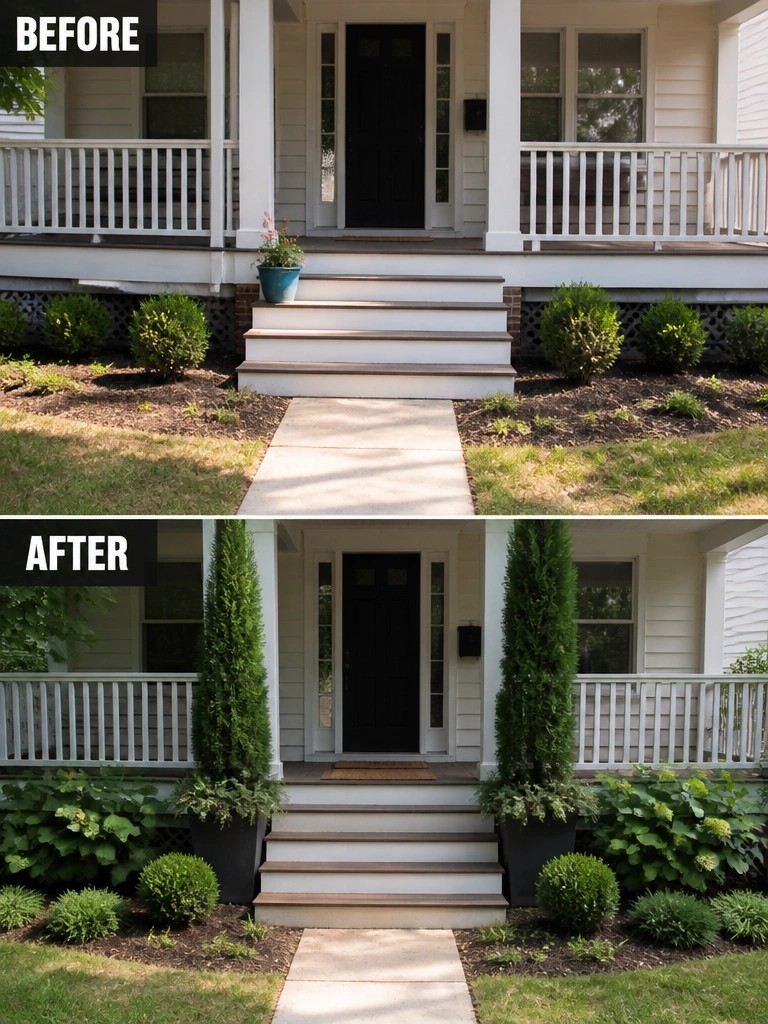
Placing a pair of tall narrow evergreens in matching pots on either side of the front steps instantly gives the entry more structure and privacy. The before photo shows an open approach with nothing to block the view from the street, while the after version uses the height of the trees to create a simple screen without building anything permanent.
This approach works well on small front yards or porches where you want screening but do not have room for in-ground beds. Choose slow-growing evergreens that stay narrow, set them in sturdy containers, and keep the rest of the planting low so the walkway stays clear. The look stays neat year-round with very little trimming needed.
Add A Planting Border For Backyard Privacy
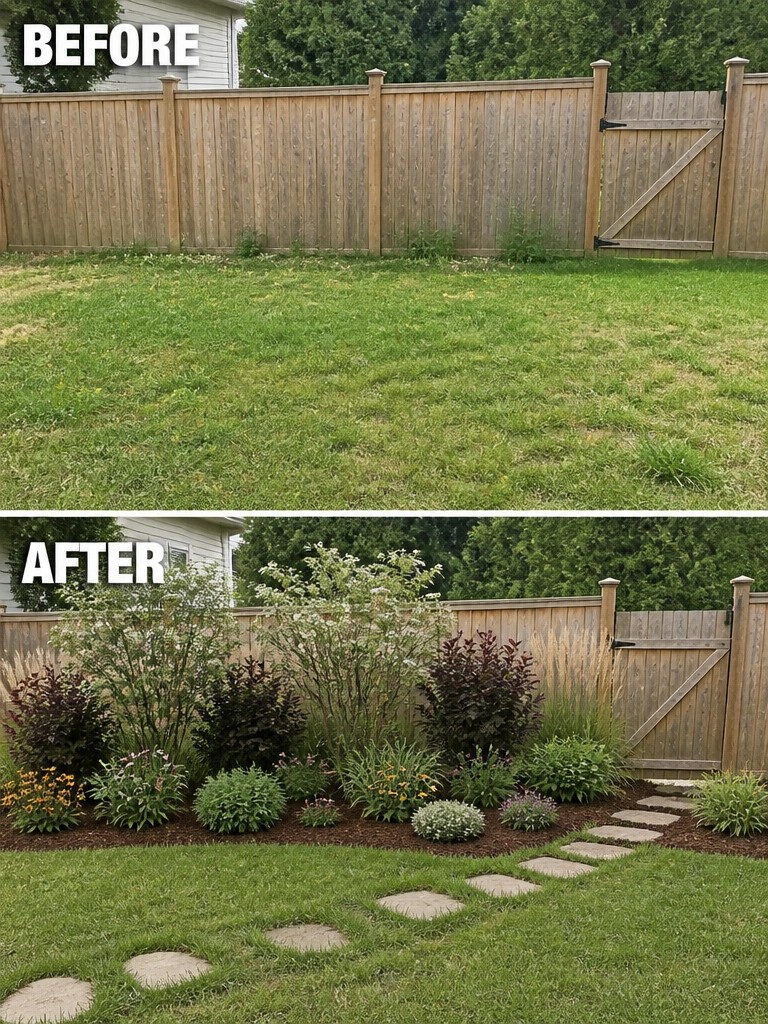
A bare stretch of lawn right up against the fence often leaves the yard feeling open and flat. Adding a mulched planting bed along the fence line with a mix of shrubs and perennials creates a living screen that blocks the view without needing tall structures or constant upkeep.
This approach works best in average-sized yards where you want privacy but still need room to move around. Keep the bed a consistent depth, use mulch to hold moisture and limit weeds, and choose plants that stay roughly the same height once mature so the border does not require heavy trimming later.
Add Privacy With A Row Of Tall Evergreens
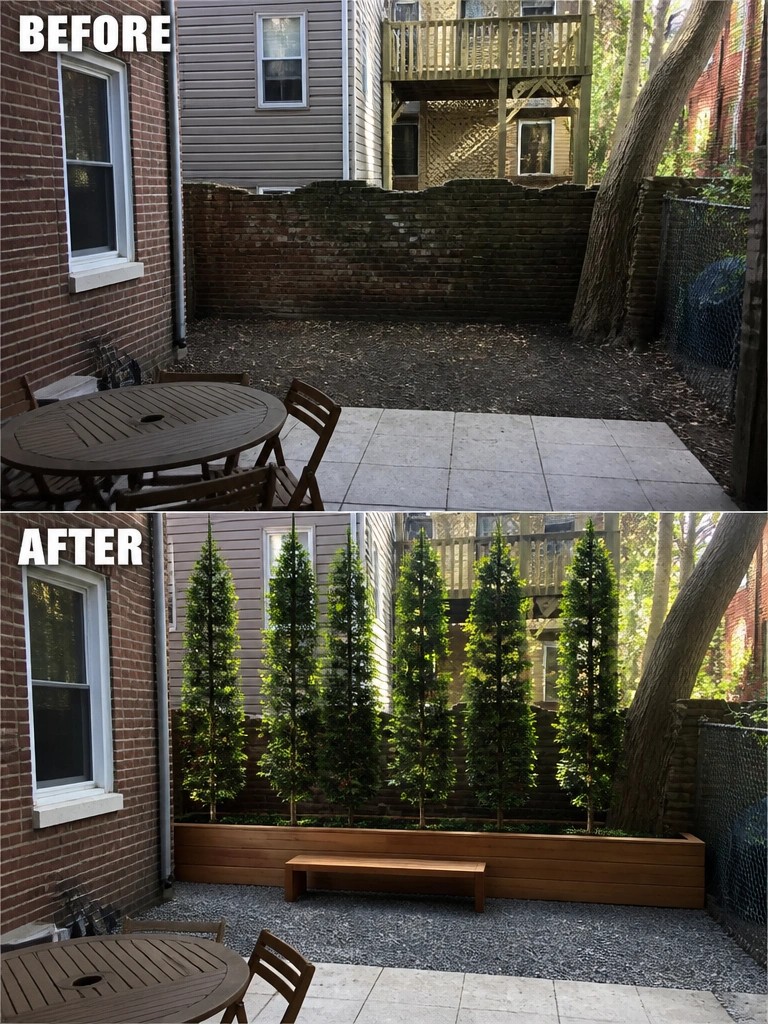
A bare backyard with an exposed brick wall often feels open and overlooked. Adding a simple row of tall evergreens in a raised planter creates a living screen that blocks the view while keeping the space feeling natural. The change turns an empty stretch of ground into a more private area without needing heavy construction.
This approach works well in small yards or side yards where you need height but do not want to build a fence. Use a long planter box to keep the trees contained and neat, and choose evergreens that stay narrow so they do not crowd the space. Gravel or ground cover underneath helps control weeds and keeps the look low maintenance over time.
Add Simple Planting For Pool Privacy
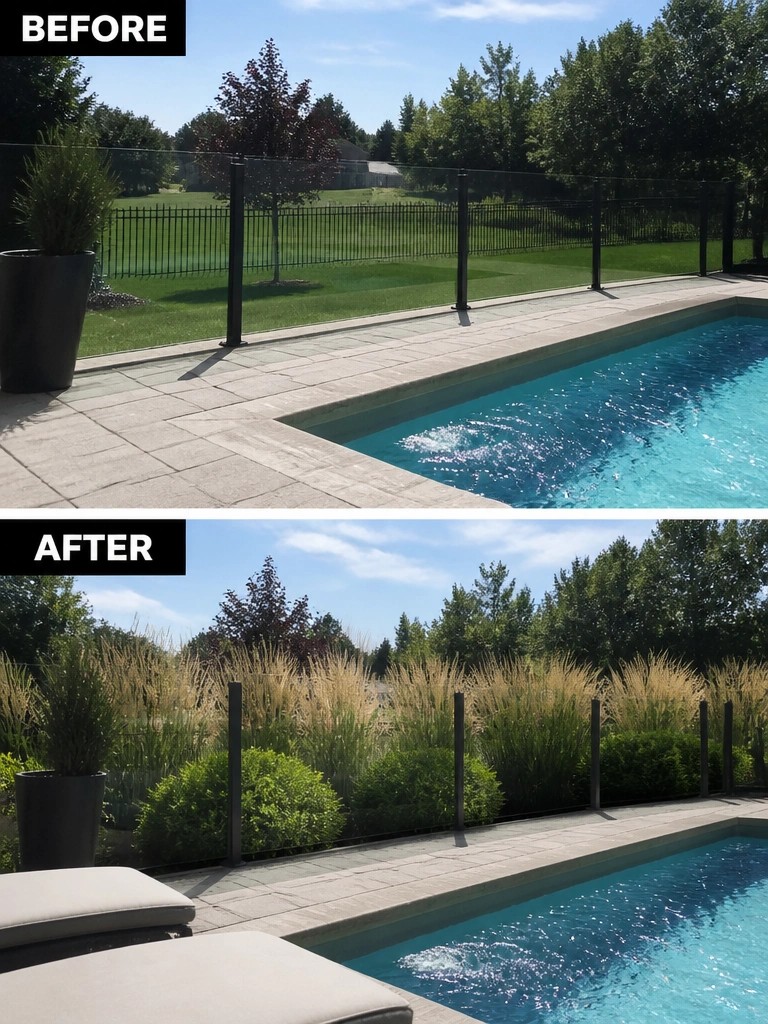
The biggest change here is how a row of tall grasses and shrubs turns an open pool deck into a more private space. Instead of looking straight out at a fence and neighboring yard, the planting creates a soft screen that still lets in light and air while blocking the view.
This approach works well along pool edges or patios where you want privacy without building a solid fence. Choose low-maintenance grasses and evergreen shrubs that suit your climate, plant them in a loose row, and let them fill in naturally over a season or two. Keep the bed narrow so it does not crowd the deck or interfere with walking space.
Grow A Hedge For Simple Backyard Privacy
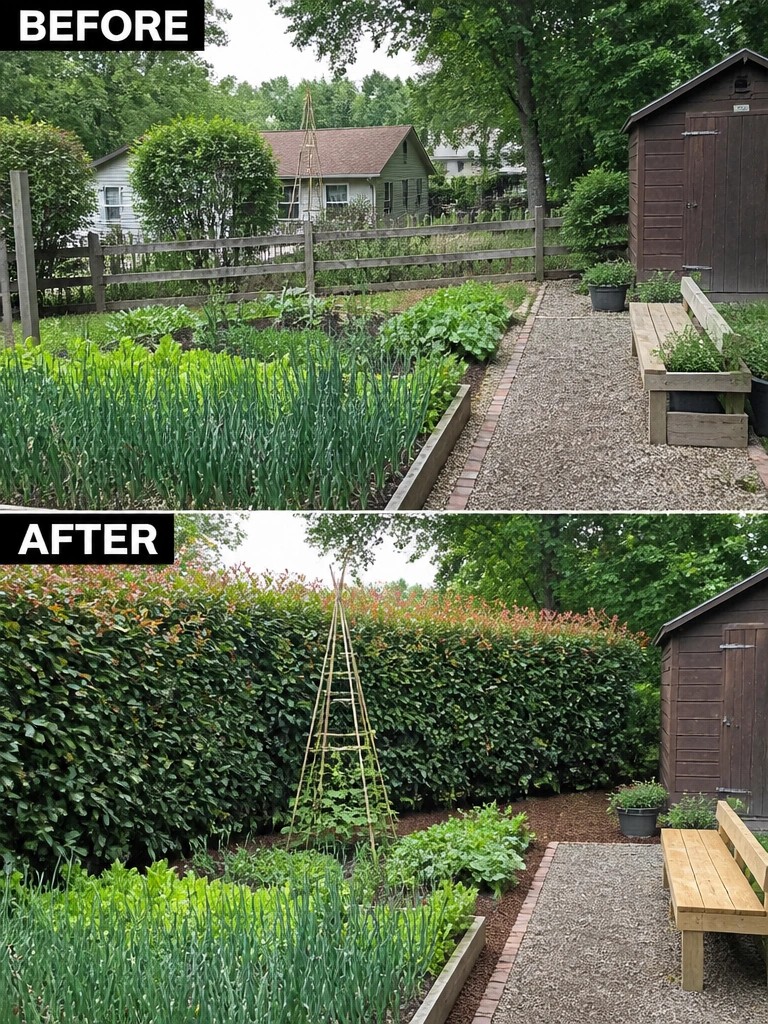
A thick hedge can give you privacy without the look or cost of a tall fence. Here the open space behind the garden beds was filled with a dense row of shrubs that now blocks the view from the other side while keeping the area feeling green and natural.
This idea works best along a back or side boundary where you want screening but still like the look of planting. Pick shrubs that grow thick and stay mostly evergreen in your area, then let them fill in over a season or two before worrying about anything else in the space.
Mount Planters On A Fence For Simple Privacy
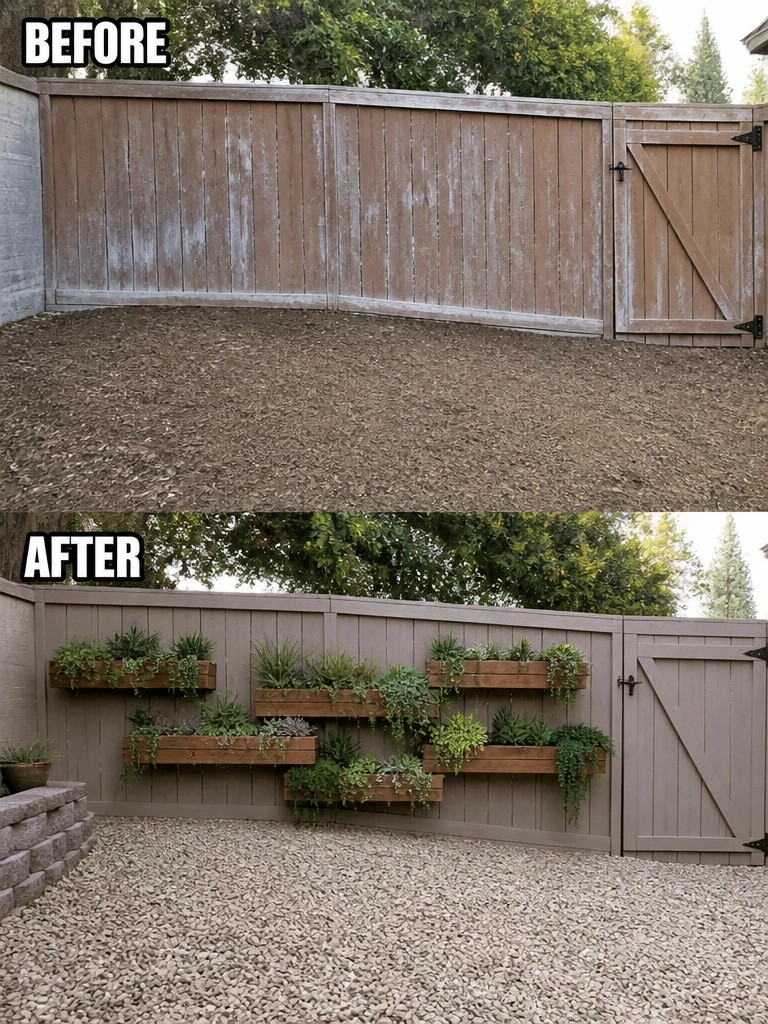
A bare fence often leaves a yard feeling exposed. Adding planters directly to the fence brings in greenery at eye level and creates a softer screen without building anything new or crowding the ground.
This approach suits homes with limited planting space or hard surfaces along the fence line. Use sturdy, weatherproof boxes, space them evenly, and choose low-water plants that fill in over time. The result adds privacy while keeping maintenance low.
Add Privacy With A Simple Shrub Border
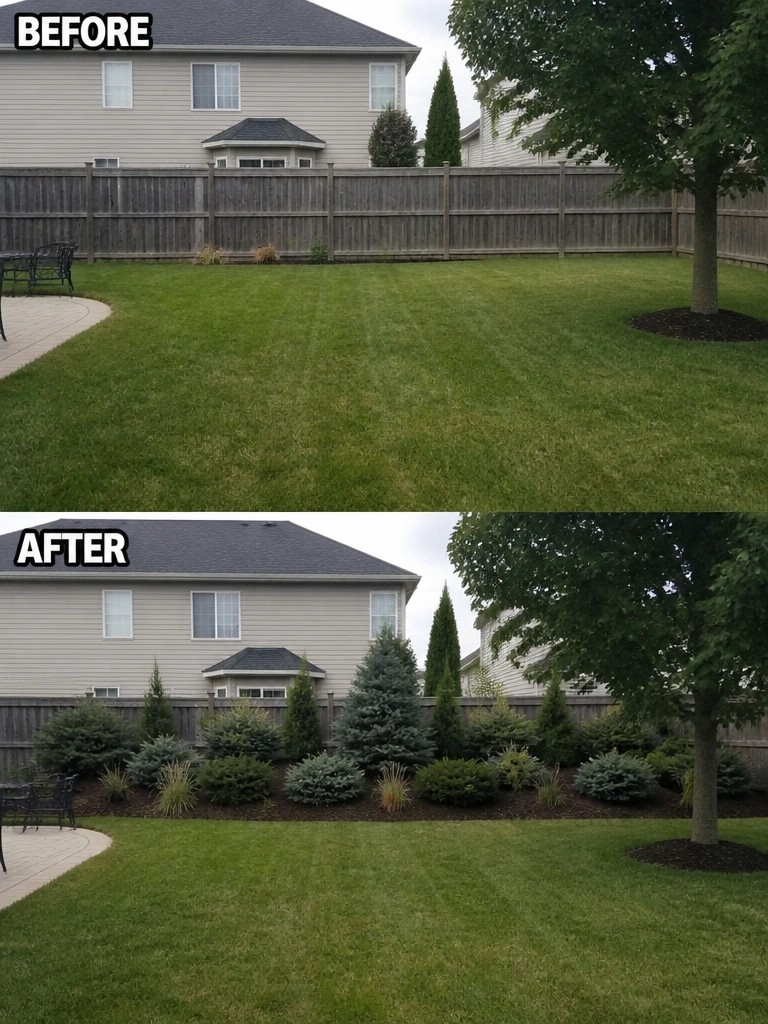
A plain fence and open lawn can leave a backyard feeling exposed. Adding a row of low evergreen shrubs and small trees along the fence line gives instant screening while keeping the lawn open and usable. The change turns the space into a more private area without major construction or tall structures.
This approach works well in suburban yards where the goal is privacy without blocking light or taking up much space. Start with a simple mix of hardy shrubs that stay green year-round, plant them close enough to fill in over time, and use mulch to keep weeds down. It stays low maintenance once the plants are established.
Frame Your Entry With Tall Planters
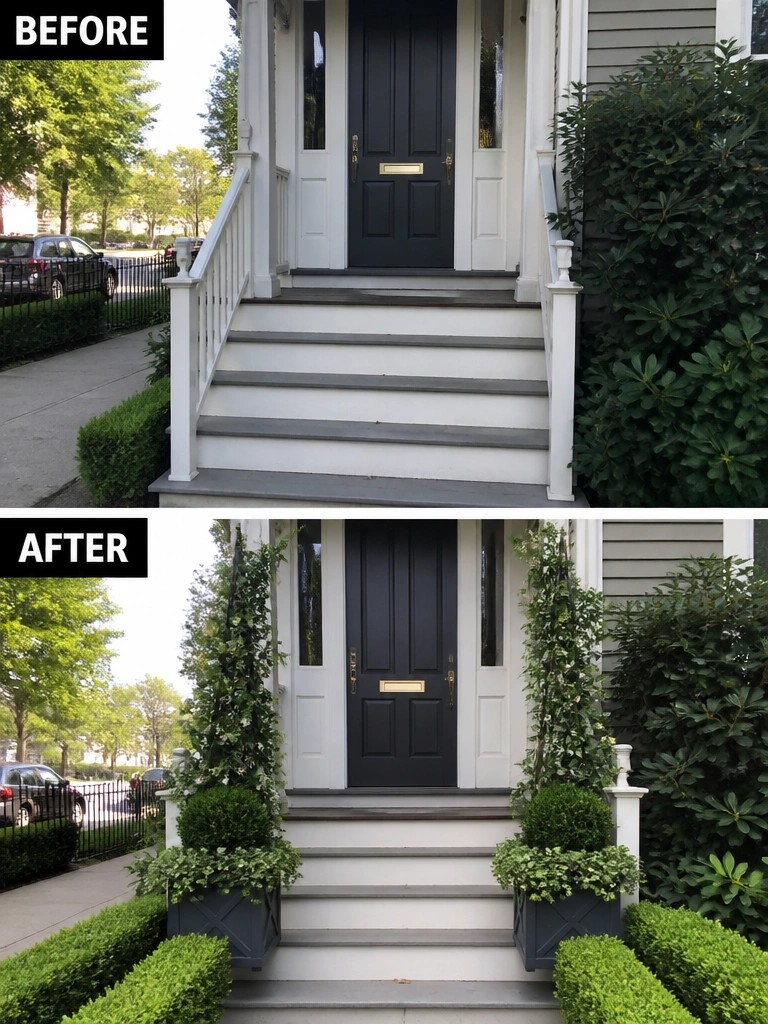
A plain set of stairs leading to the front door can feel exposed, especially when there is nothing to soften the sides. Adding a pair of tall matching planters on either side of the steps gives the entry some height and creates a simple frame around the door without any major construction.
This approach works best on narrow lots or small front yards where you want a bit of separation from the sidewalk. Use containers that match the house trim, fill them with evergreens or climbing vines, and keep the planting simple so it stays low maintenance over time.
Screen A Patio With Tall Privacy Plants
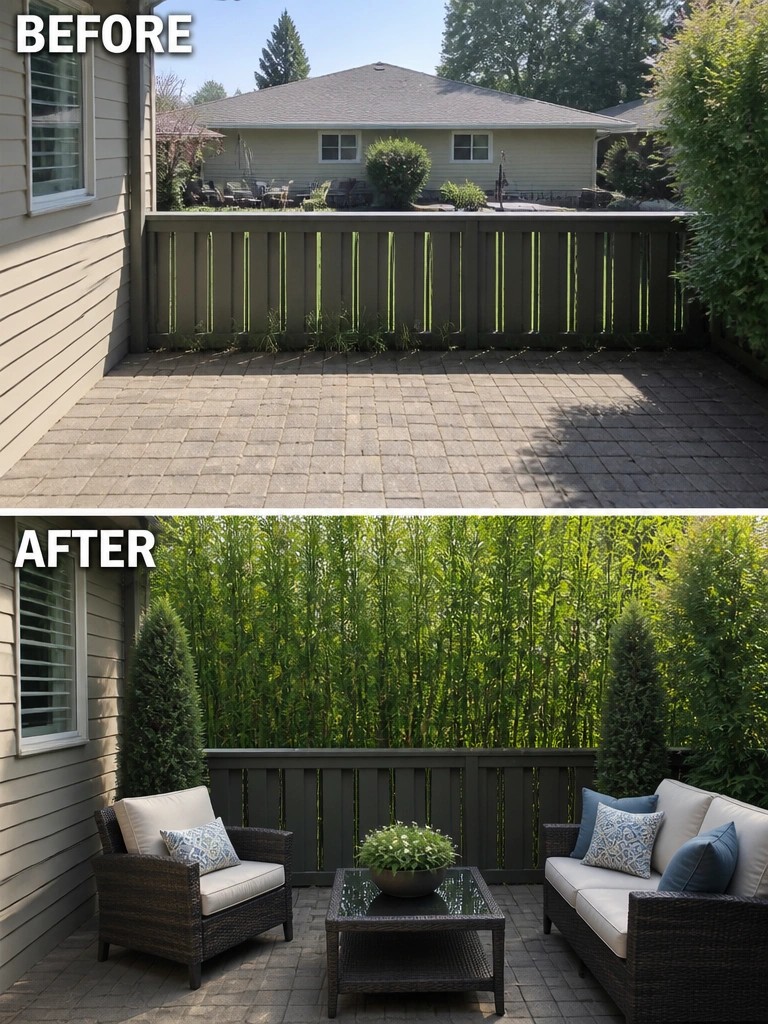
Adding a row of tall plants right behind the fence turns an open patio into a private spot without any major construction. The plants fill in the gaps above the fence line and create a living screen that feels natural while still letting in light.
This idea works best on paved outdoor areas where you already have a basic fence but need more seclusion from neighbors. Use container plants or a narrow bed along the back edge so the greenery stays contained and easy to maintain over time.
Use Tall Planters To Add Privacy Along A Side Yard
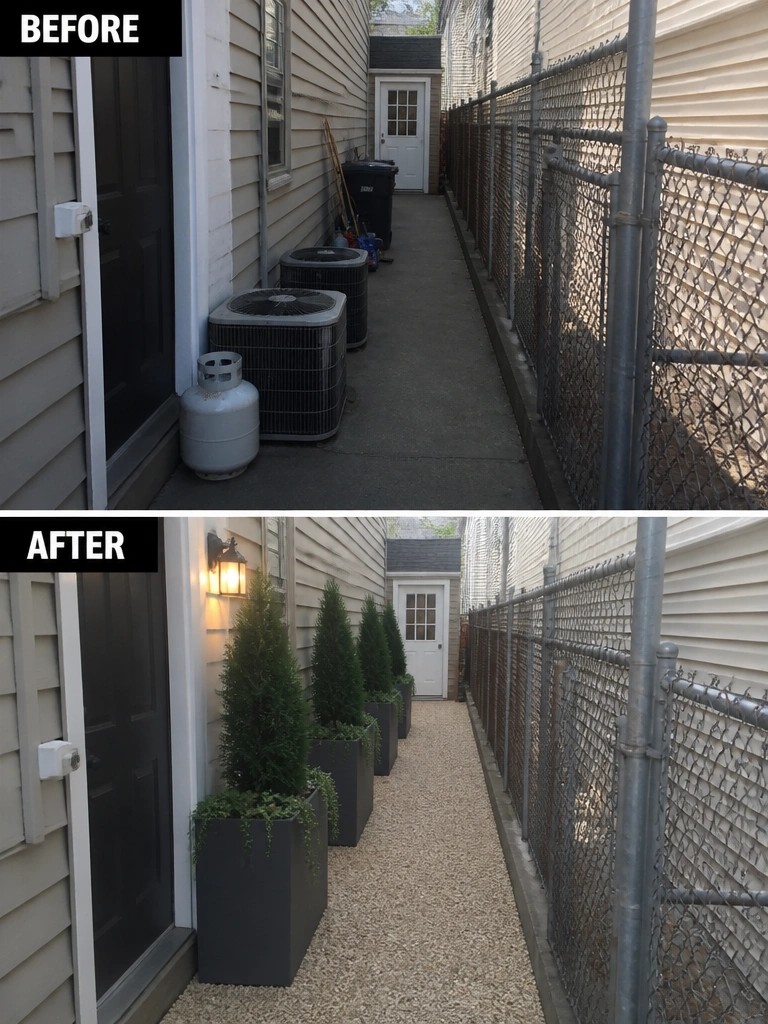
A narrow side yard often ends up as a forgotten strip filled with equipment and clutter. Replacing that open view with a straight row of tall planters holding evergreen shrubs gives instant screening while keeping the path clear and easy to walk through. The dark planters and simple gravel underfoot create a clean line that feels intentional without needing much ongoing work.
This approach works well on tight lots where digging beds is not practical. Place the planters in a single file against the house or fence, choose evergreens that stay compact, and add a low trailing plant at the base for extra coverage. The result stays low maintenance and still leaves room to move.
Add Privacy Planting Along A Fence Line
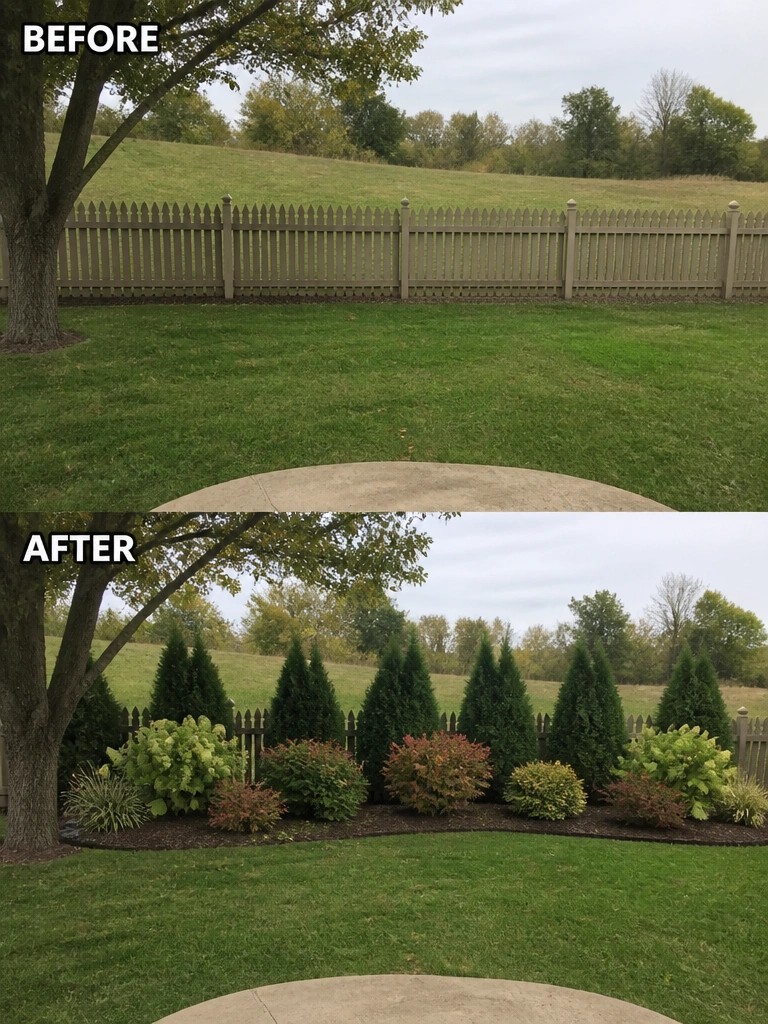
A long fence with nothing in front of it can leave a yard feeling open and exposed. In this case, a simple row of tall evergreens planted right behind the fence, with a mix of lower shrubs in front, instantly creates a softer screen while keeping the lawn open and easy to mow.
This approach works well in any backyard that already has a fence but needs more privacy without building higher structures. Start with evergreens for year-round coverage, then fill in the front with a few different shrubs for color and texture. Keep the bed narrow so it does not eat up too much lawn space, and use mulch to hold down weeds.
Add Privacy To A Deck With Tall Potted Trees
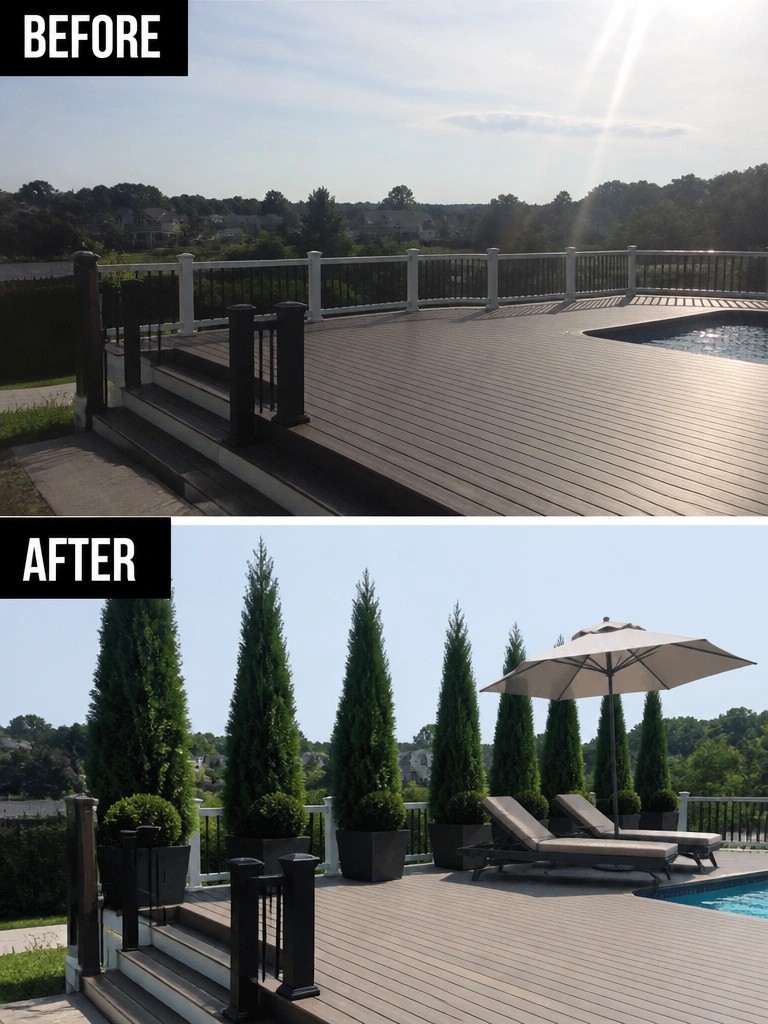
An open deck next to a pool can feel exposed when there is only railing between you and the surroundings. Placing a row of tall evergreens in large pots along the edge gives the space a living screen without any permanent construction.
This idea works best on decks where planting in the ground is not an option. Use narrow evergreens that need little trimming, keep the pots uniform, and leave enough space between them so the area does not feel crowded.
Add A Planting Border For Privacy
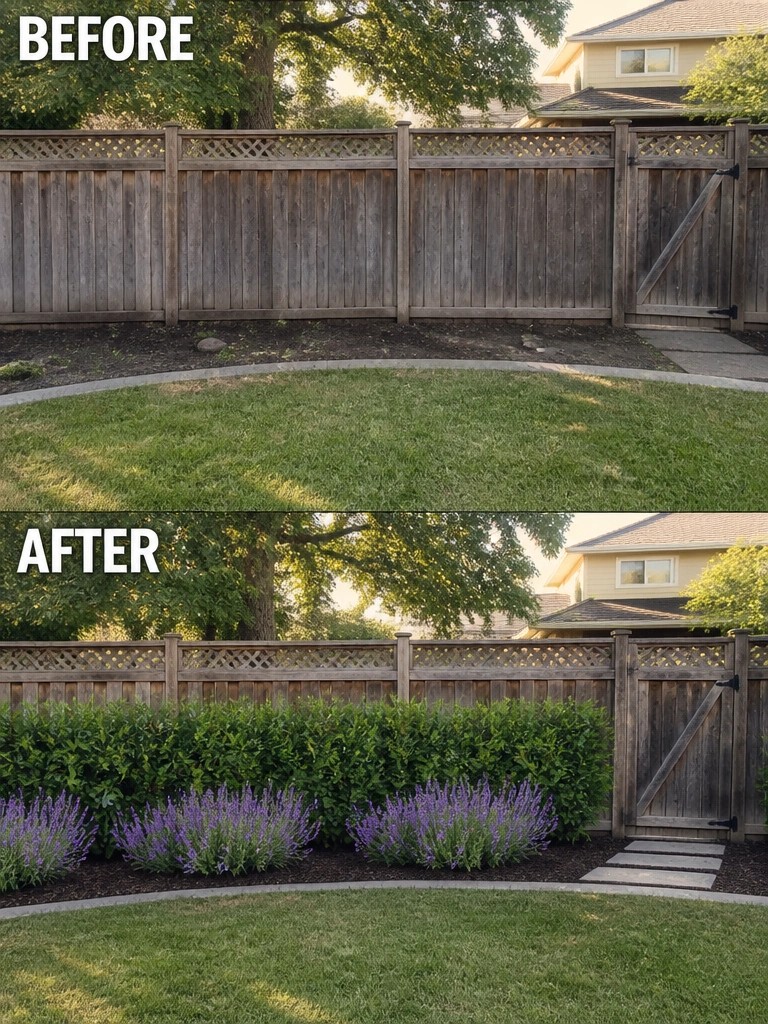
A tall fence by itself can leave a yard feeling flat and exposed. Adding a row of shrubs right in front of it softens the wood and creates a living screen that gives more privacy while still letting light through.
This idea works best along straight fence lines or property edges where you want structure without crowding the lawn. Use a mix of evergreen shrubs for the backbone and lower flowering plants in front so the bed stays interesting through the seasons. Keep the bed narrow enough that it does not eat into usable yard space.
Create Privacy With Tall Planters On A Patio
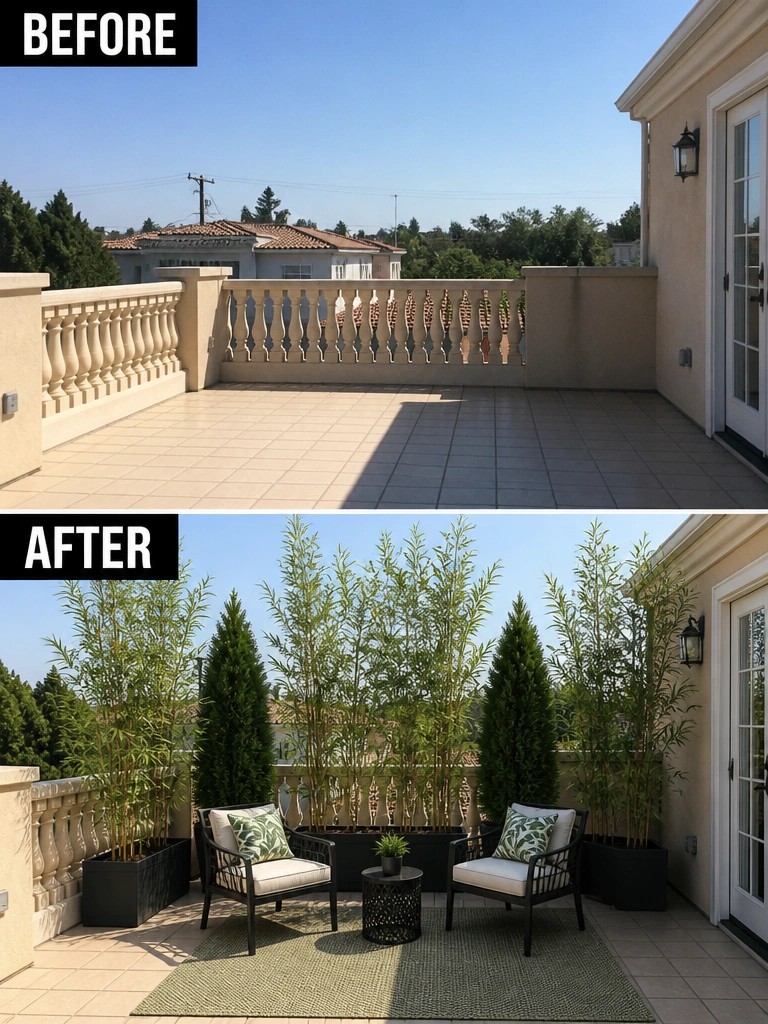
An open balcony or terrace can feel too exposed when the railing offers little screening. Adding a row of large planters filled with tall plants gives instant privacy while keeping the space open and usable.
This works best on upper-level patios where neighbors or nearby homes have a direct view. Group the planters along the railing, choose varieties that grow tall in containers, and leave enough room for seating so the area still feels comfortable rather than crowded.
Frequently Asked Questions
Q: How soon will the plants actually give me real privacy? A: Go with quick starters like tall grasses or climbing vines on a simple trellis. They often fill out enough in the first full growing season to block most views. Keep them watered while roots settle and they take off from there.
Q: What happens if the soil in my yard is mostly clay? A: Mix in some compost when you plant so the roots can breathe and spread. That one step helps the privacy screen hold up without extra fuss later. Most of the low maintenance picks adapt fine once they get that boost.
Q: Do I need to trim these plants all the time to stop them from looking wild? A: Choose varieties that stay naturally compact like certain hollies or boxwoods. A quick once a year shape up keeps them tidy and still dense enough for screening. Skip anything that shoots out long runners if you want less work.
