

I have always noticed how a patio can sit unused when there is no real separation from the rest of the yard.
Adding layers of screening or planting tends to make the space feel more settled without needing a full redesign.
I usually try one or two of these privacy steps on my own seating area first to see what actually holds up in daily use.
Once the spot feels more enclosed the chairs and table start to get regular attention instead of staying covered most of the time.
A few of the approaches in this article line up with changes I would test again on future projects.
Add A Pergola And Curtains To Create Patio Privacy
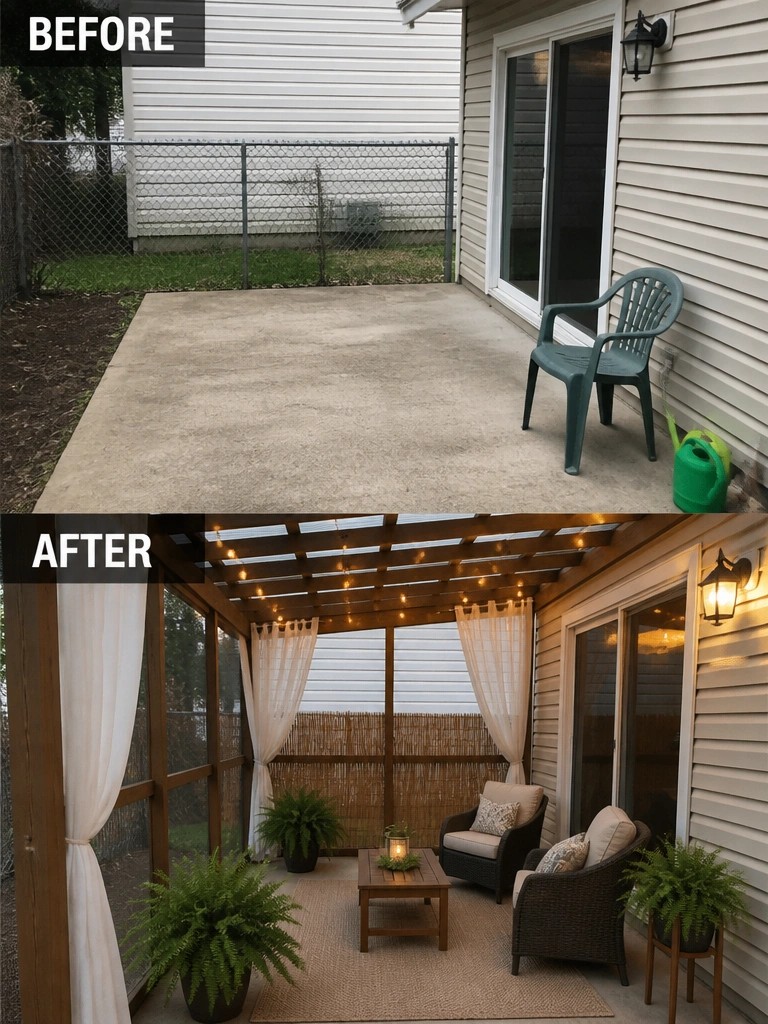
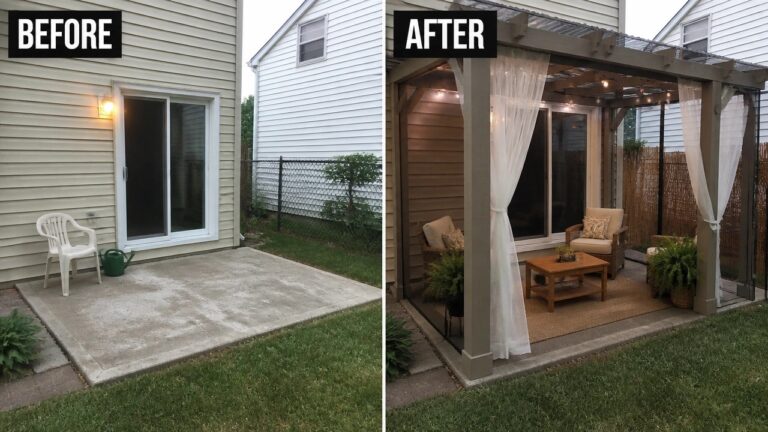
A bare concrete slab next to the house often feels exposed, especially when it sits right beside a chain link fence. Adding a simple pergola overhead with string lights and hanging curtains on the open sides turns the space into a defined room. The curtains block the view from neighbors while still letting in light and air, and the overhead structure makes the area feel sheltered without closing it in completely.
This approach works well on patios that already have a solid floor but lack any sense of enclosure. Keep the furniture scale modest so there is still room to walk around, and choose outdoor fabric for the curtains so they hold up to weather. The same idea can be scaled down with a smaller shade structure if a full pergola feels like too much for the space.
Add A Privacy Wall To Make A Deck Feel Cozy

An open deck with just a railing often feels exposed, especially when neighbors or nearby windows look right onto the space. Replacing the open railing with a solid horizontal wall creates an enclosed feel and turns the deck into a more private seating area.
This idea works best on decks that sit close to other homes or get foot traffic nearby. Use a simple bench along the base of the wall so the screen also provides seating, and keep the height just above seated eye level to block views without making the space feel closed in.
Add Vertical Planters To Bring Privacy To A Balcony
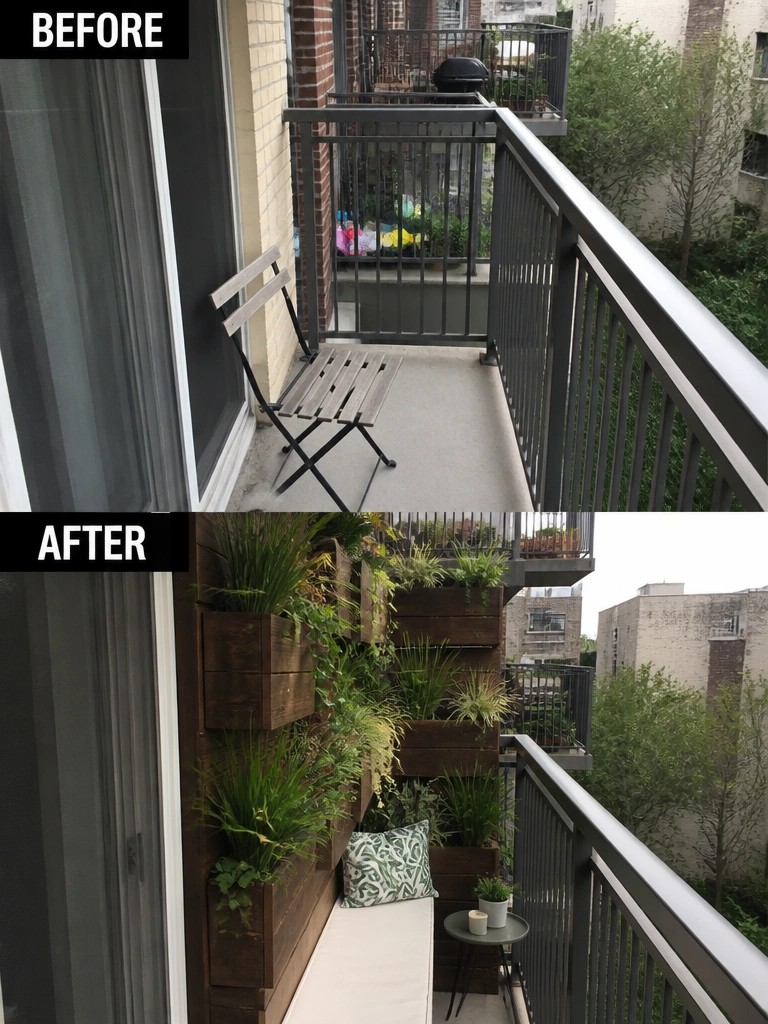
A bare balcony with only a single chair feels exposed and unused. Adding a row of wooden planters mounted along the wall changes that by filling the vertical space with greenery that blocks the view from outside while still letting in light.
This idea fits small balconies or patios where floor space is tight. Start with sturdy brackets and boxes that can handle weather, then choose plants that grow well in your area. Keep the bench or seating low so the greenery becomes the main screen rather than crowding the area.
Add Privacy Screens To Create A Cozy Outdoor Seating Area
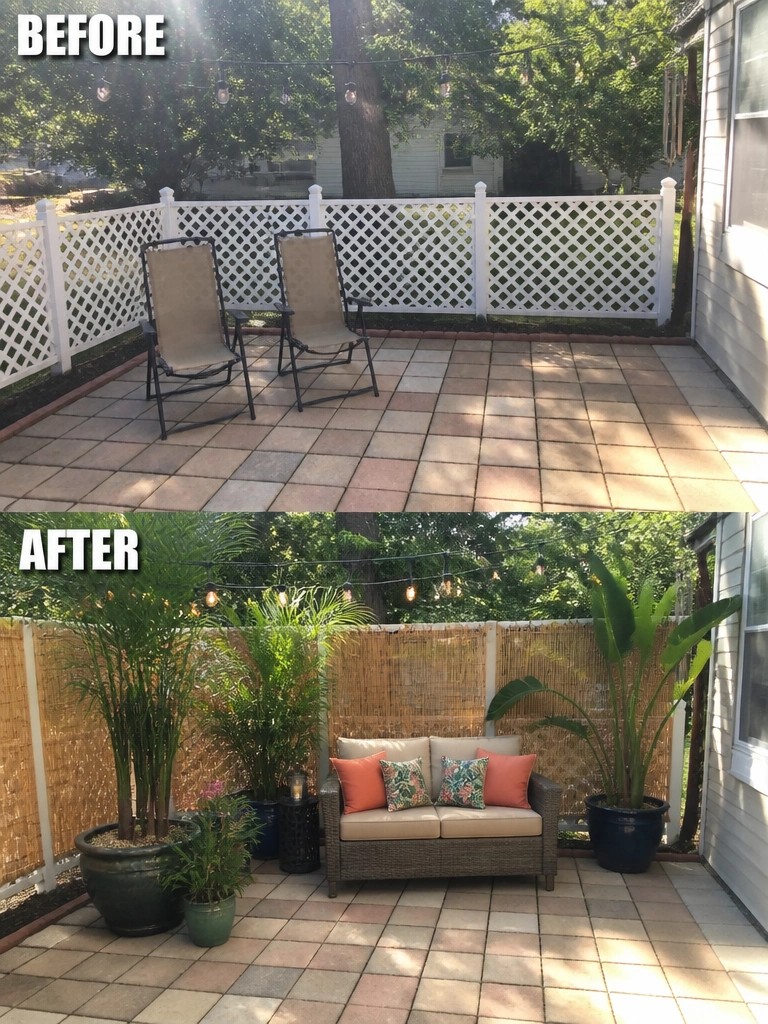
Many patios feel too open because the fence leaves everything visible from the sides and back. Adding bamboo screens along the fence line quickly changes that by blocking the view and giving the space a more enclosed feel. The simple addition of a sofa with a few pillows then turns the area into a place meant for sitting rather than just passing through.
This idea works best on small patios or decks that sit close to other homes. Start with the screens first so you know how much room is left, then bring in a couple of large pots to soften the edges. Keep the furniture scale modest so the space still feels open enough to move around.
Add Lattice And Vines For Patio Privacy
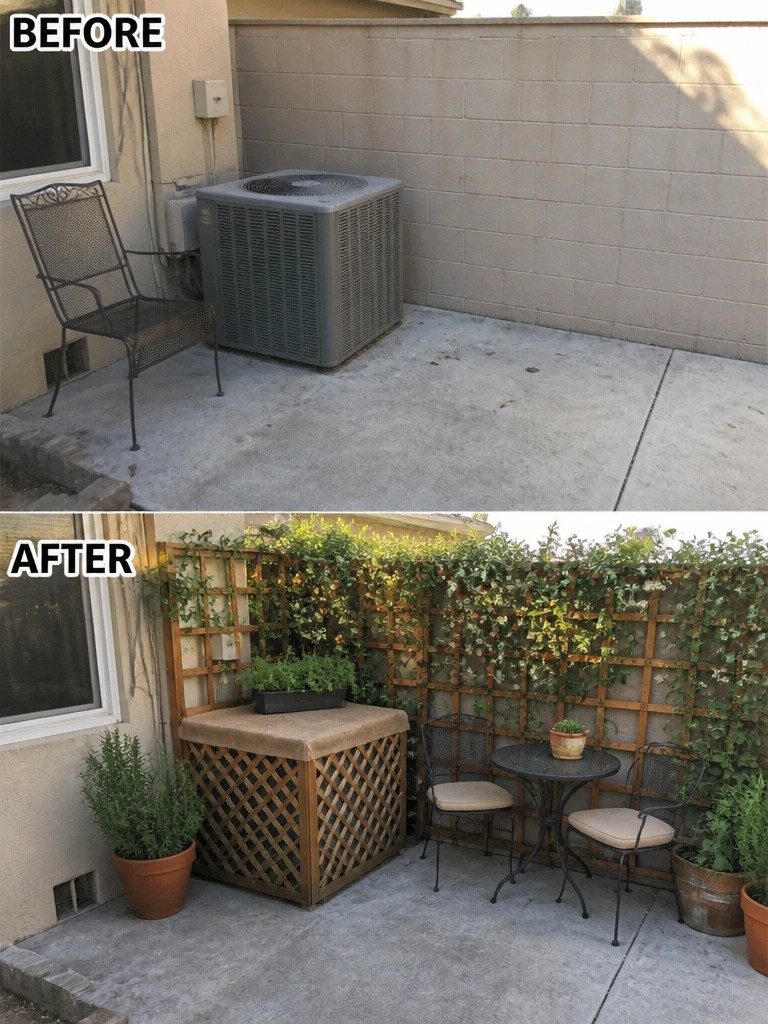
A plain concrete patio often feels too open and exposed. Adding a wood lattice screen with climbing vines gives the space instant privacy and turns the area into a place where people actually want to sit.
This approach works best on small side yards or patios near neighboring walls. Keep the lattice simple, let the vines fill in over time, and add just a table and chairs underneath. It creates a defined seating zone without closing the space in completely.
Create Privacy With Tall Plants Around A Patio

A plain fire pit patio often feels exposed when it sits right against a fence with nothing to block the view. Adding a row of tall evergreens and grasses along the back edge changes the whole feel. The plants form a living screen that softens the space and makes it feel more enclosed without building any new structures.
This idea works well on patios that back up to a neighbor or a busy part of the yard. Start with evergreens for year-round coverage, then mix in a few taller grasses or flowering plants for texture. Keep the lighting low and focused near the seating so the area feels cozy once the sun goes down. Make sure you leave enough room between the plants and the chairs so the space still feels open enough to walk around.
Use Tall Planters To Add Privacy On A Patio
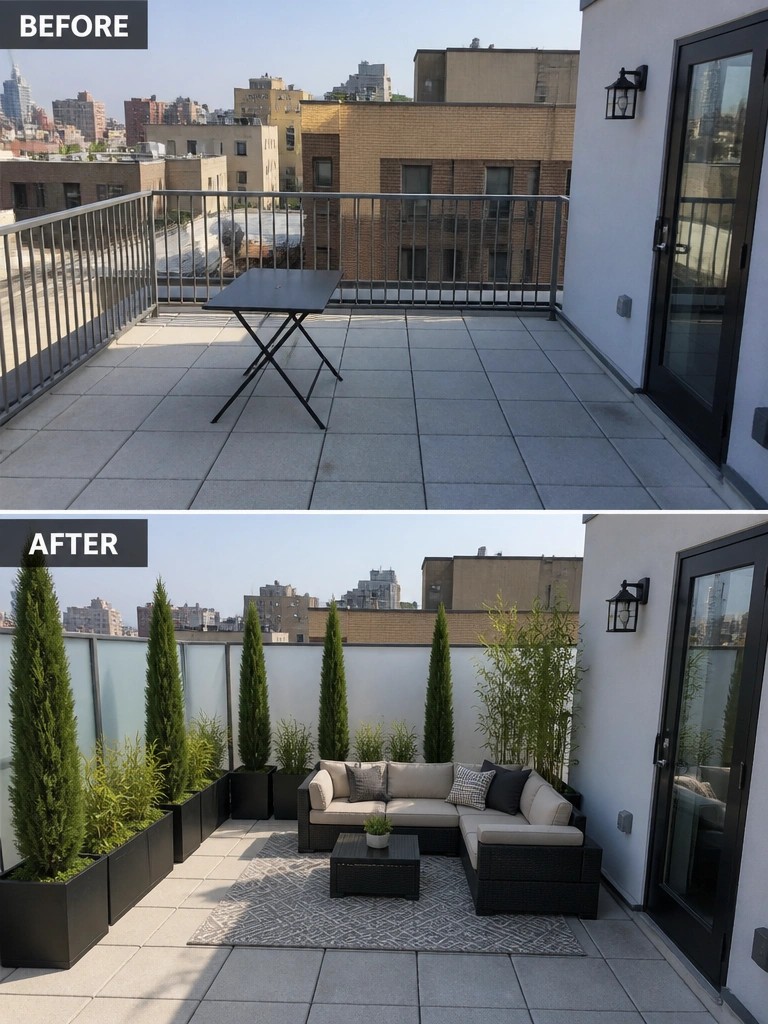
An open balcony or rooftop patio often feels exposed because there is nothing to block the view from neighbors or the street. In this case the simple addition of tall evergreens in large black planters along the railing turned the space into something much more usable. The plants create a living screen without any permanent construction.
This approach works well on rooftops, upper-level decks, or any patio that sits close to other buildings. Start with a few tall planters spaced evenly, then add seating and a rug inside that planted border. Keep the number of containers modest so the space still feels open rather than crowded.
Add Privacy With Plants And String Lights

The main change here is turning a plain fence line into a private screen. Lattice panels break up the solid wood, string lights add a soft glow at night, and a few large potted plants fill in the gaps so the seating area feels more enclosed without looking closed off.
This approach works well on any pool deck or patio that backs up to a fence or neighbor. Start with the lights and a couple of tall planters placed where you sit most often, then add more plants only if you still want extra coverage. Keep the pots simple and weatherproof so the setup stays practical year after year.
Add Privacy Screening To An Open Patio
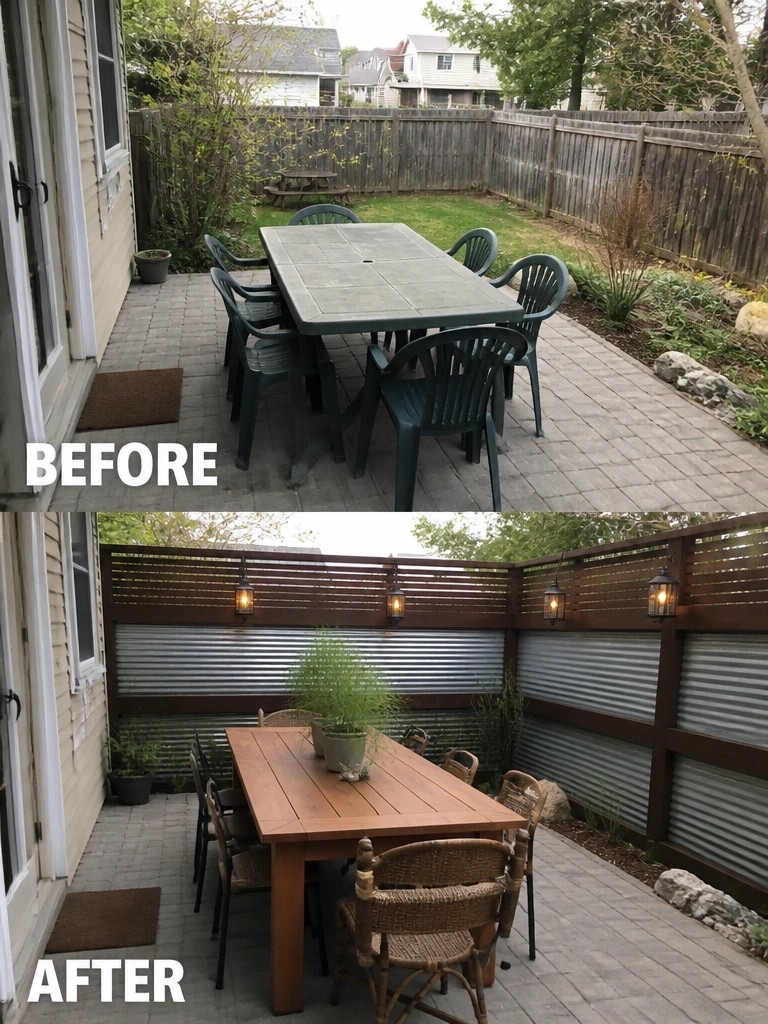
Many patios sit right against a basic fence and feel too exposed. Adding a horizontal slat screen along the top, backed by corrugated panels, blocks the view from neighboring yards while still letting in some light and air. The simple hanging lanterns then turn the space into an evening spot instead of just a daytime surface.
This approach works well on any paved patio that already has a solid base but lacks enclosure. Keep the screen height modest so it does not overwhelm the yard, and choose materials that match the existing fence. Focus on one main wall first rather than enclosing the whole area.
Add A Stone Wall To Create A Cozy Fire Pit Area

One simple way to make a fire pit feel more like a finished space is to add a low wall around it. The open gravel circle with only a basic border turned into something much more usable once a curved stone wall with built-in seating was added. The wall gives the area clear edges and turns the seating into something you can actually lean back on.
This works best in backyards that already have some trees or fencing behind the fire pit. Keep the wall height modest so the space still feels open overhead, and add a few lights along the base if you want to use it after dark. It is a good option for smaller yards where you need structure without crowding the lawn.
Add Privacy Screens To Create A Cozy Porch Nook
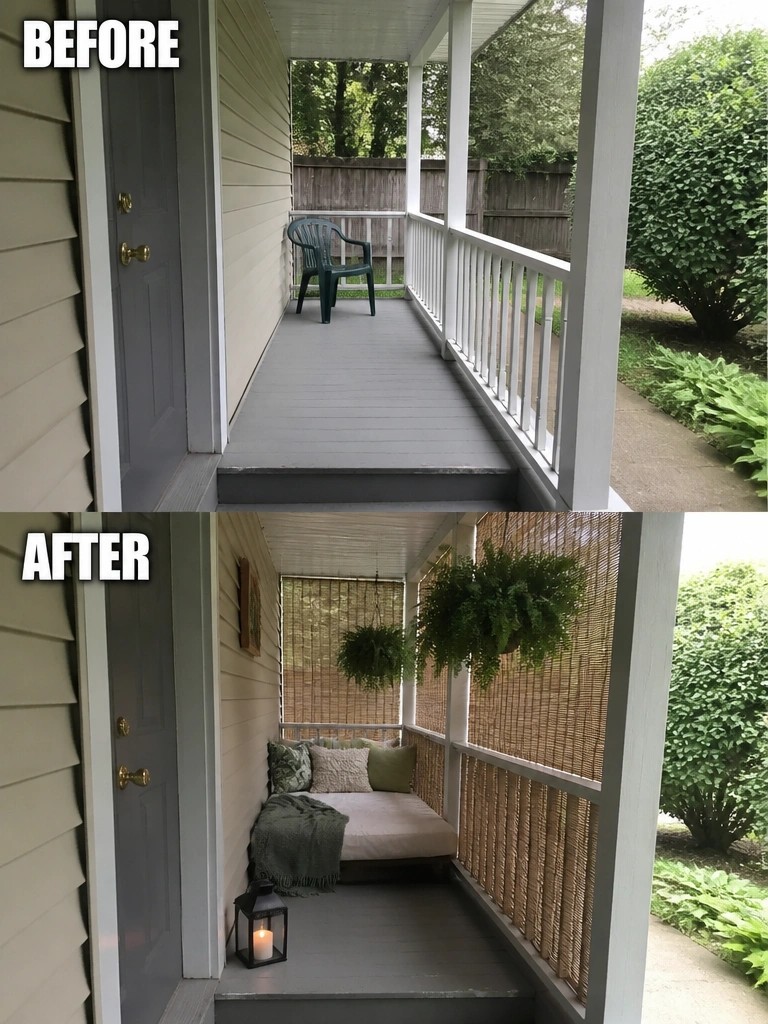
An open porch often feels too exposed for real use, even when it has a roof and floor. Adding woven privacy screens along the sides changes that quickly by blocking views from the street or neighbors. The before photo shows a basic porch with only a plastic chair, while the after adds reed panels that turn the same space into a sheltered seating spot.
This idea works best on side or front porches that sit close to a walkway or yard. Pick screens made from natural materials that hold up outdoors, and keep any seating low and simple so the area stays easy to move around. A small lantern or a couple of hanging plants can finish the look without adding clutter.
Add Raised Planters To Create Privacy On A Patio

A bare patio with just a fence often feels exposed, even when it has a solid boundary. Adding raised wooden planters along the fence line changes that by bringing in height and layers of plants. Tall grasses and low shrubs fill the beds and soften the view while the built-in lights make the space feel enclosed at night.
This idea works best on patios that already have a basic fence or wall but lack screening. Keep the beds simple and run them along one or two sides, then choose plants that reach the right height without much extra care. It is a practical way to gain privacy without replacing the whole fence or losing the open feel of the concrete area.
Add Privacy Screens To An Exposed Deck
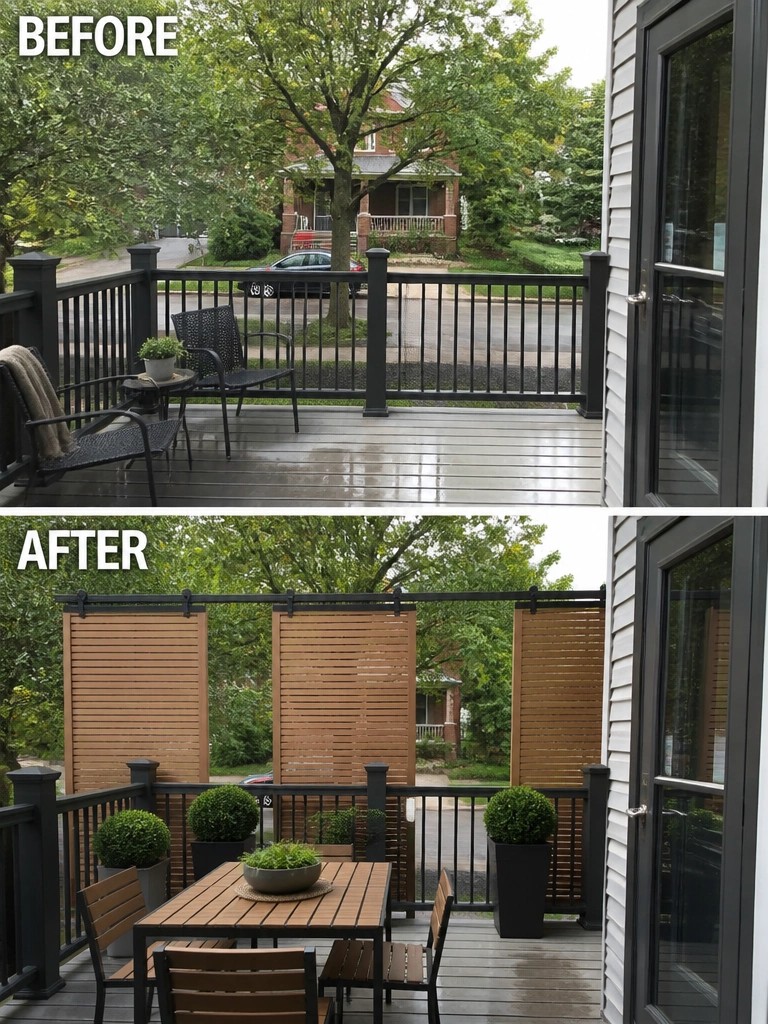
Many decks feel open and exposed because the railing is the only thing separating the space from the street or neighbors. Adding a row of slatted privacy screens along the railing changes that quickly. The screens block the direct view while still letting in light and air.
This approach works best on decks or balconies that sit close to a road or shared area. Use panels that match the scale of the railing so the space does not feel boxed in. Keep a few potted plants at the base to soften the look and make the area feel more settled.
Use Tall Plants To Create Privacy On A Balcony

A balcony with open railings often feels too exposed, especially when it sits right next to other units. Placing a row of tall evergreens in matching pots along the railing blocks the view from outside while still letting in light.
This idea works best on small balconies where you cannot add screens or curtains. Keep the pots in a similar style and size so the space stays neat, and choose plants that handle wind and sun without much fuss. A simple rug underneath helps define the seating area without crowding it.
Add A Living Wall For Outdoor Privacy
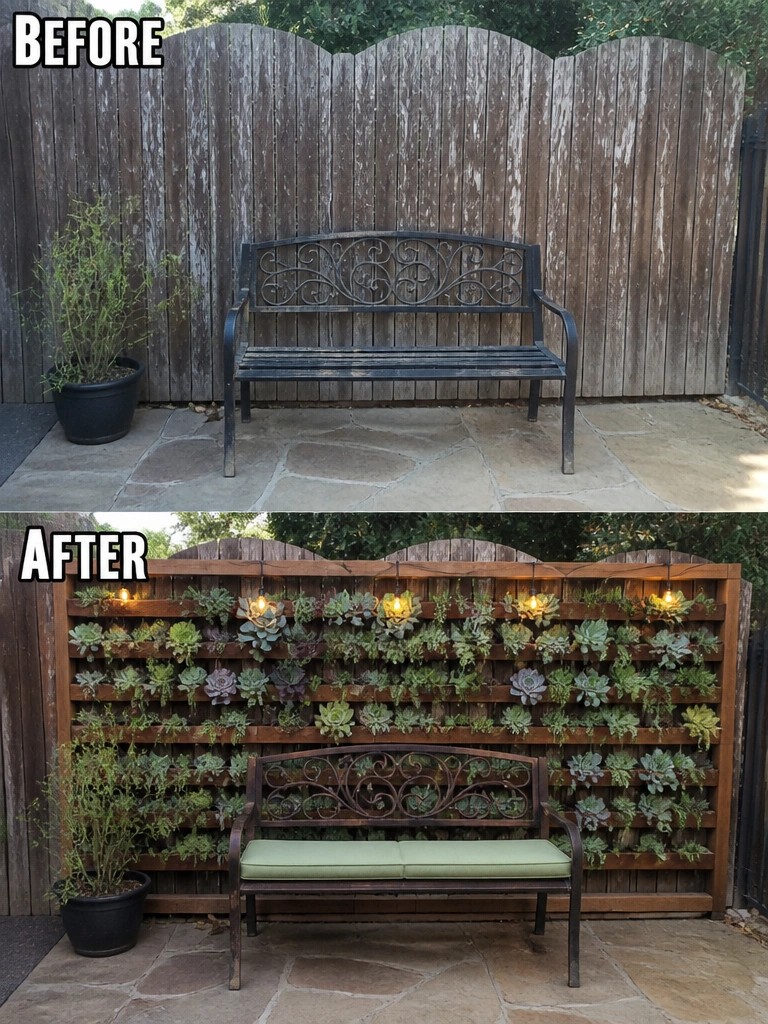
A plain fence behind a bench often leaves the seating area feeling open and exposed. Covering the fence with a planted panel of succulents gives the space a clear boundary while keeping it light and natural. The added string lights make the spot usable after dark without much extra effort.
This idea suits small patios or side yards where a full screen would feel too heavy. Attach a simple wood frame to the existing fence, then fill it with easy plants that match your climate. Keep the seating modest so the wall stays the main point of interest.
Add A Pergola To Create Privacy On A Patio

Adding a simple pergola frame and a few tall potted plants turned this open patio into a more private seating area. The structure gives overhead cover and clear boundaries, while the plants help screen the sides without closing the space in completely.
This idea works best on small urban patios where full walls are not an option. Keep the furniture scale modest so the area still feels open, and choose weatherproof pieces that can stay out year round.
Add Lattice Screens To Create Balcony Privacy
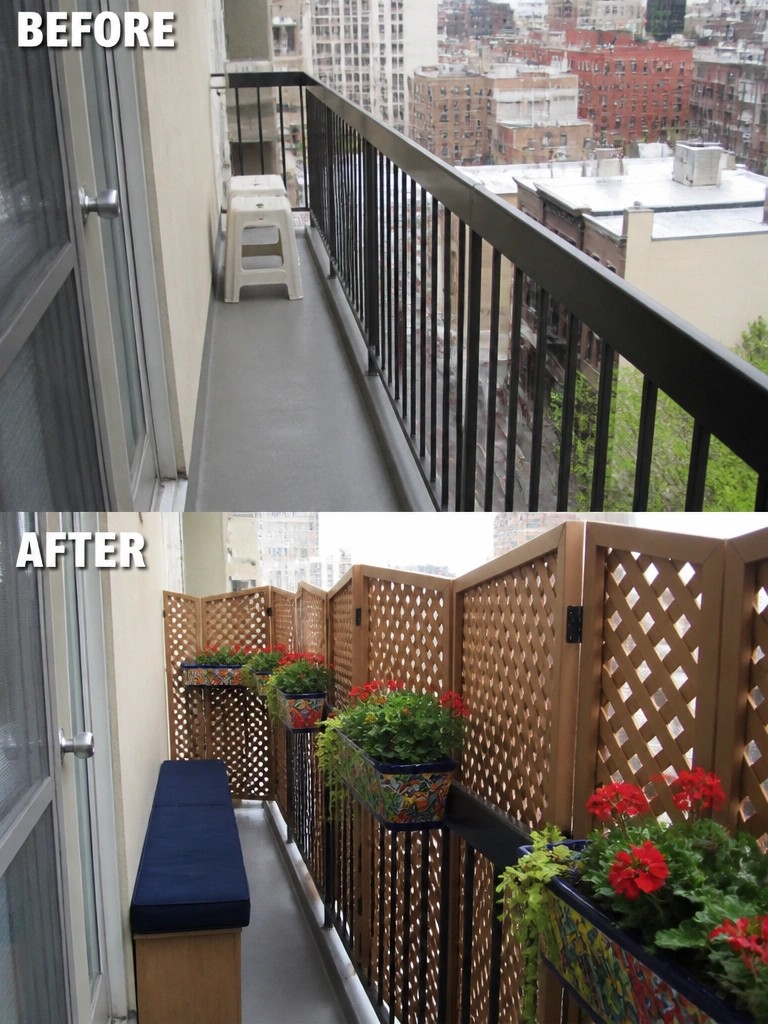
Open balconies often feel too exposed when they sit right next to other units or face the street. Lattice panels mounted along the railing fix that by cutting off direct sight lines while still letting air and light through. The simple bench and row of planters then turn the leftover space into a spot where you can actually sit.
This approach suits narrow city balconies best. Use panels that attach with hinges so they can be folded back if rules change later, and keep the bench shallow enough to leave walking room. One or two repeating materials, like the wood tone and the colorful pots, keep the area from looking cluttered.
Add Curtains And A Roof To Make A Patio Feel Private
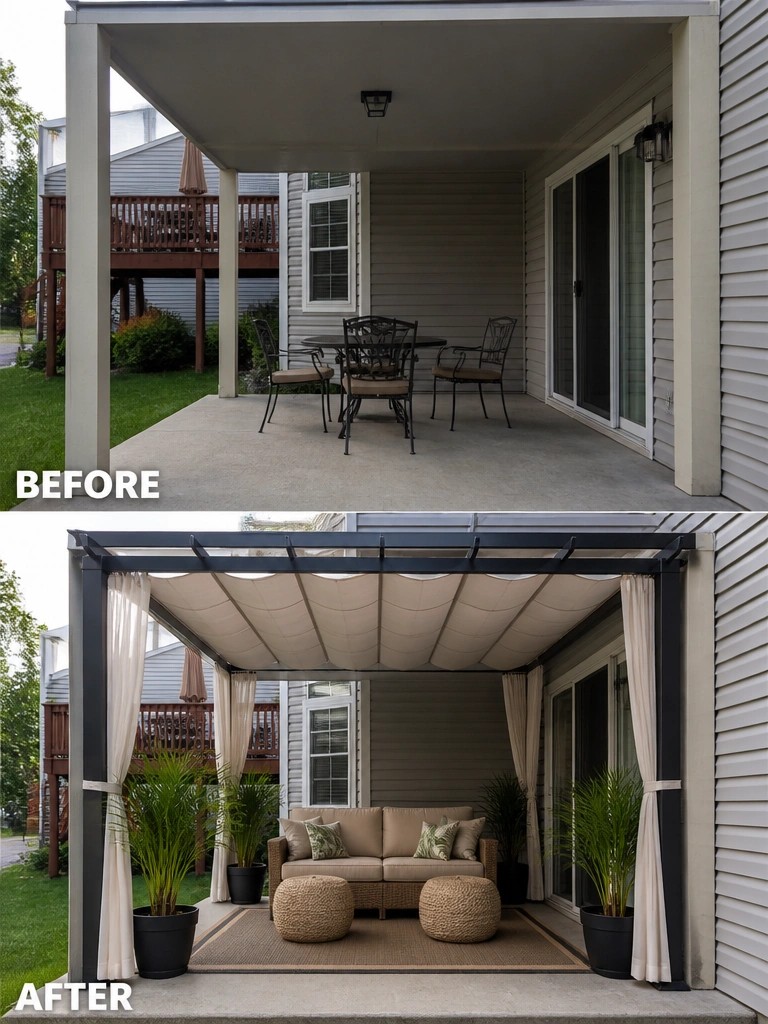
An open patio often feels too exposed even when it sits under the house overhang. Adding a basic frame with a fabric roof and curtains on the sides turns the space into a more enclosed outdoor room. The change from a plain concrete area with just a table and chairs to a defined spot with soft sides makes the patio feel much more usable.
This idea works best on patios that sit near a neighbor or the street. Start with a simple structure for shade if needed, then hang curtains that can tie back on sunny days. Keep the furniture to a few pieces so the area stays easy to move around in.
Add Vertical Gardens For Privacy On A Patio
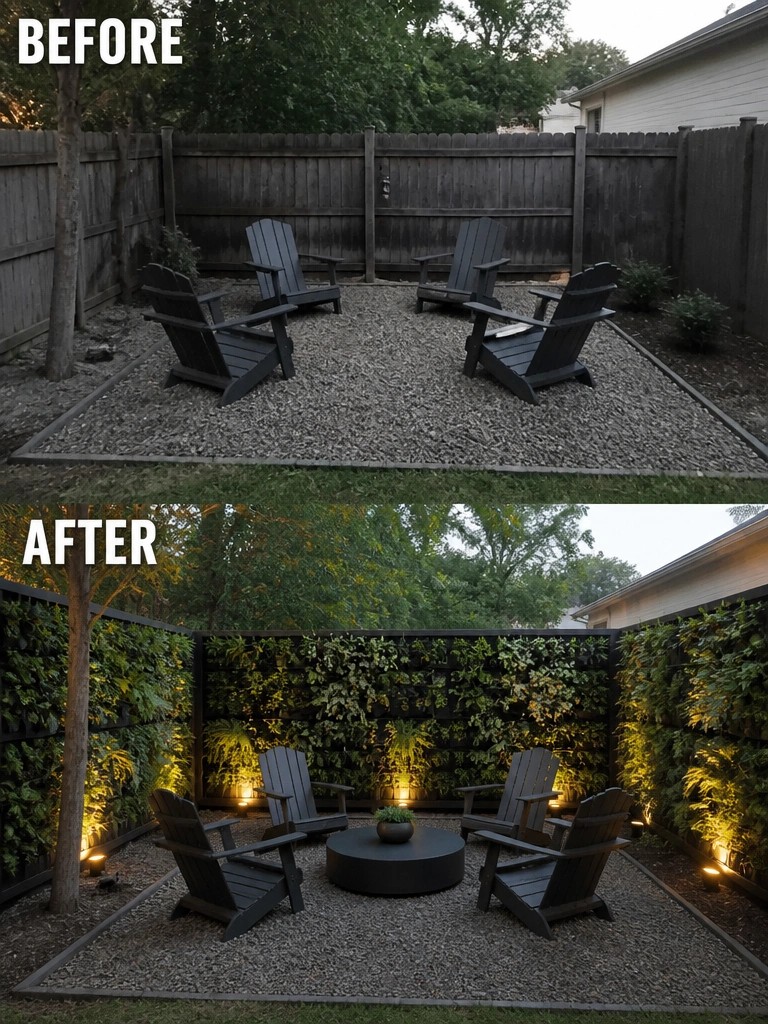
Covering the fence with living walls turns a plain gravel area into a more enclosed seating spot. The plants block the view from outside while the lights make the space feel usable in the evening.
This idea works best on small patios or side yards where you want screening without losing floor space. Start with modular panels that attach to an existing fence, keep the planting simple, and add lights only where people will actually sit.
Turn A Bare Patio Into A Defined Seating Area
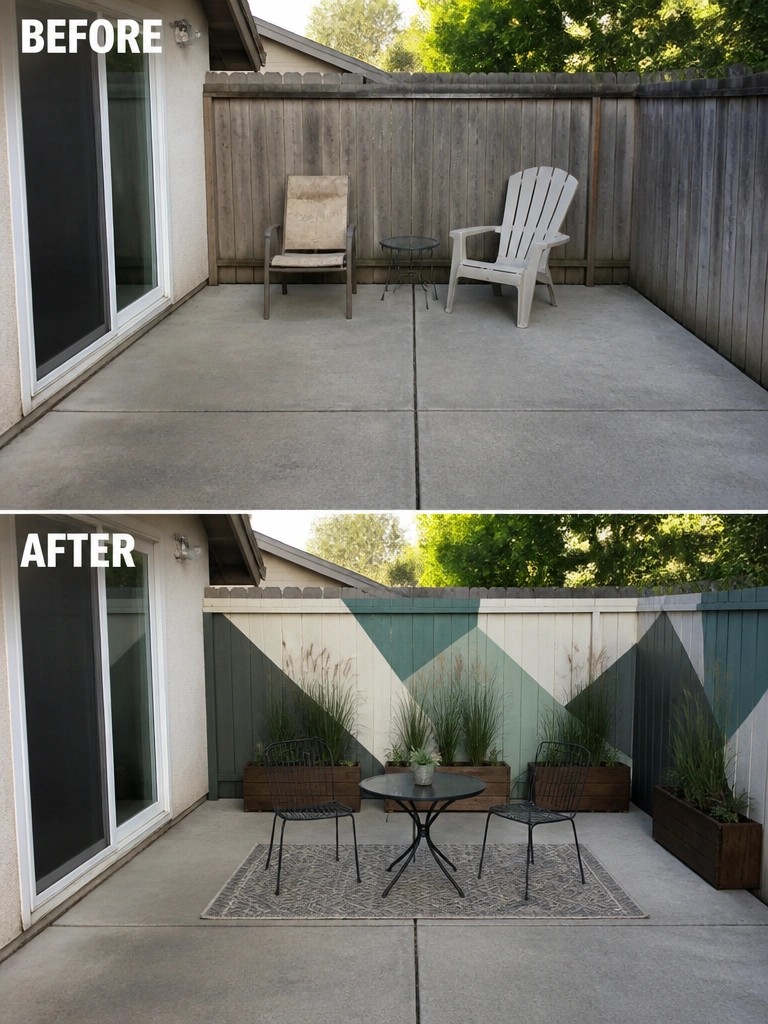
A plain concrete slab often feels like wasted space even when it already has a few chairs. Placing a rug under the table and chairs gives the seating a clear home. Adding a row of tall planters along the fence then softens the edge and creates a sense of enclosure without blocking light.
This approach works best on small to medium patios where you want an outdoor room rather than scattered furniture. Keep the rug and planters in scale with the space, and choose pieces that can stay outside year-round so the area stays usable without constant rearranging.
Add A Privacy Screen To Create A Secluded Patio Seat
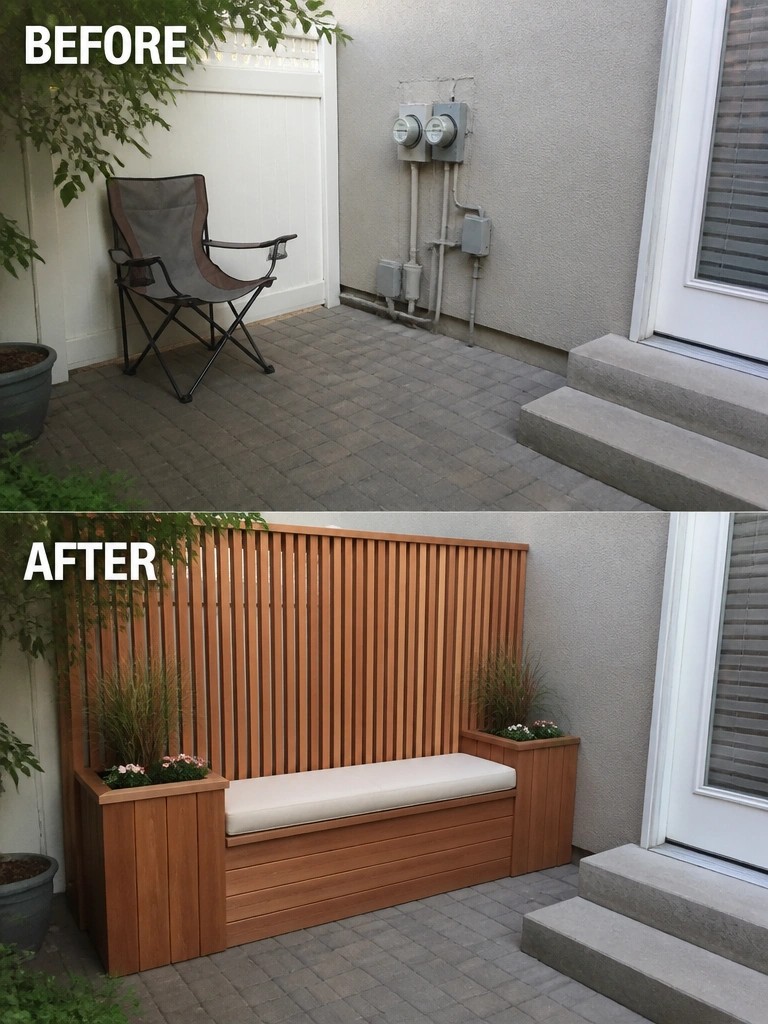
Many patios begin as plain paved areas with little structure or comfort. A vertical slat screen changes that by giving the space a back wall and blocking the view of utilities and neighboring properties.
This idea works well on side yards or small back patios where seating feels too exposed. Build the screen from cedar or similar wood, keep the height around six feet, and add a bench with planters at each end so the area feels finished without crowding the walkway.
Use Tall Planters To Add Privacy Around Patio Seating
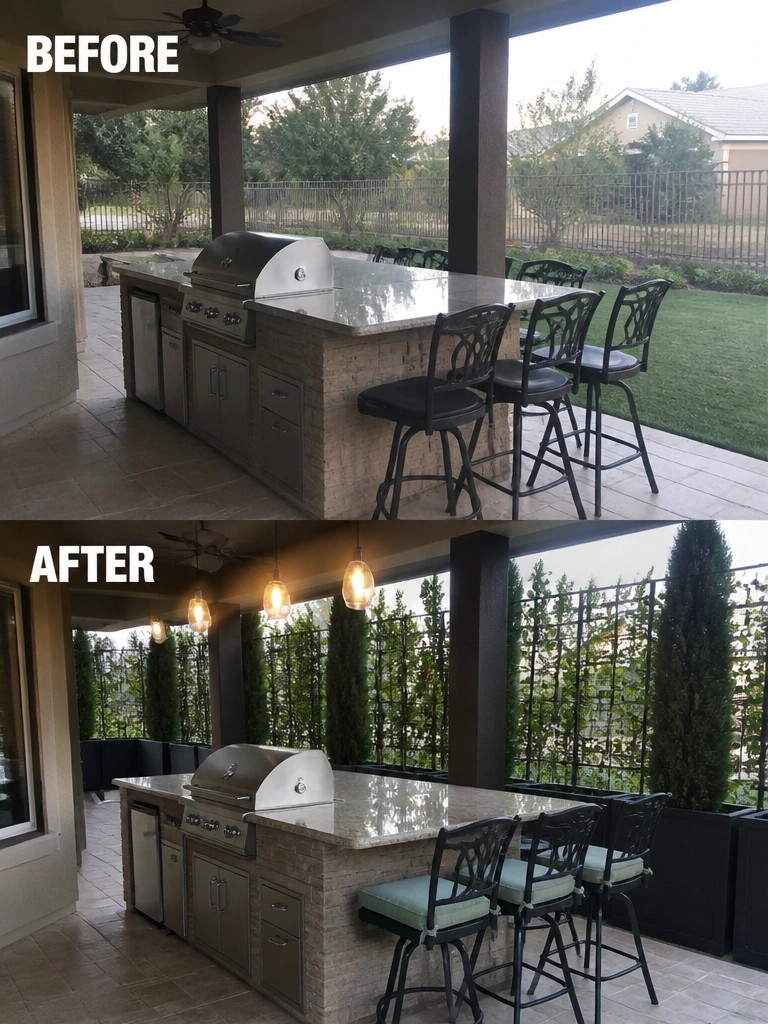
An open patio can feel exposed even when it has good furniture and a solid roof. Adding a row of tall planters along the back edge gives the space a clearer boundary and cuts down on direct views from outside. The change here is simple but effective. A few large containers filled with evergreens turned an open sightline into a softer screen without blocking all the light.
This idea works best on covered patios or decks where you already have a main seating or cooking area in place. Use dark planters so they recede visually, and choose plants that hold their shape year-round. Keep the number of containers modest so the area still feels open enough to move around in.
Add Side Screens For Porch Privacy
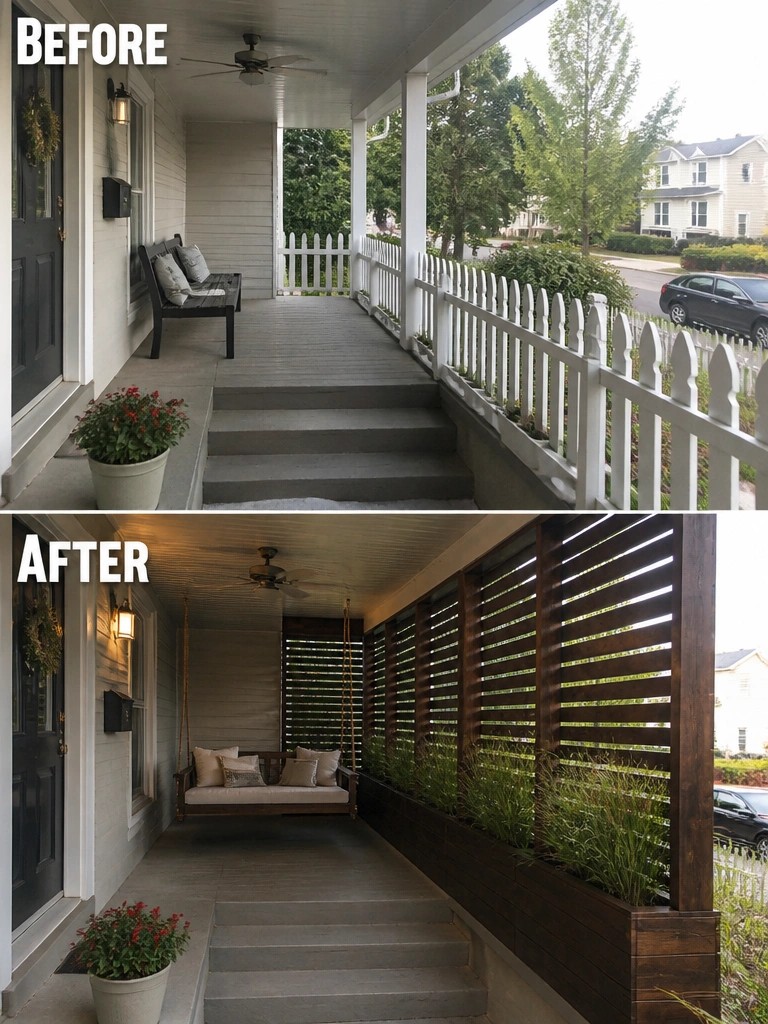
An open porch often feels exposed when it sits close to the street or neighbors. Adding tall screens with horizontal slats along the side gave this porch a clear boundary while still letting light and air through. The attached planter box filled with grasses added height at the base and helped the screens blend into the space.
This idea works best on porches that already have a roof and floor but lack enclosure on the sides. Match the screen material and color to your existing trim or railing so it feels like part of the house. Keep the planting simple and use a deep box so the plants can grow tall enough to matter.
Frequently Asked Questions
Q: How can I add privacy to a small patio without crowding the space?
A: Use slim vertical planters along one edge to create a living screen. They take up little floor room but still block the view from outside. You can swap in seasonal plants to keep things fresh.
Q: What works best if wind keeps blowing my seating cushions around?
A: Anchor lightweight curtains to sturdy posts with ties at the bottom. This stops them from flapping while still letting air flow through the top. Pick weatherproof fabric so it lasts longer outdoors.
Q: Are there quick ways to test these ideas before committing?
A: Hang temporary sheets or blankets from a clothesline to mimic a screen. Walk around the patio at different times of day to see what feels private. Adjust the height until it blocks the sight lines you care about most.
