

Front yards pull people in from the street, but most struggle to hold that appeal through every season without constant work.
I found that when you prioritize sturdy planting layers and simple edging upfront, the space shapes itself over time into something reliable.
Paths work wonders here.
They draw the eye along low-key borders that natives and evergreens fill out without much intervention.
A couple of these setups caught my attention for how they’d scale to a smaller lot like mine.
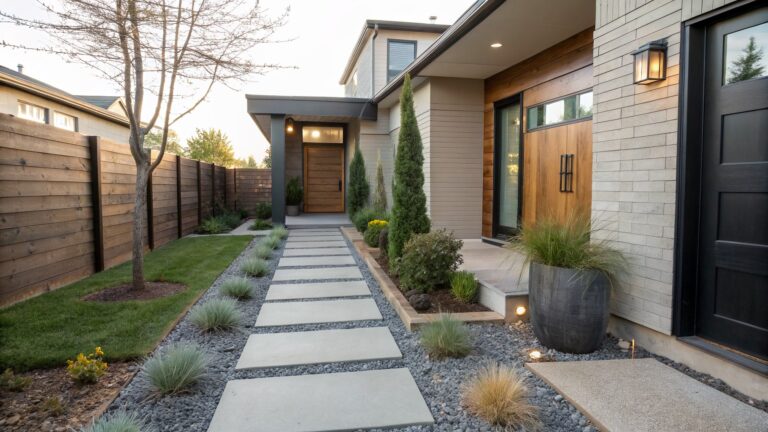
Gravel Edged Stepping Stone Path
A simple path made from large concrete pavers set into gravel works great for low-maintenance front yards. The gravel fills the gaps and lets water drain right through, while drought-tolerant grasses like feather grass line the edges. No mowing needed, and it looks clean year-round even in dry spells. The path pulls your eye straight to the door without much effort.
Put this in any front yard where you want easy access and some style. It fits modern houses with clean lines best, but could work on others too. Go for smooth river rock in the gravel and pick grasses that grow upright. Keep the pavers big so they feel bold, and use metal edging to hold everything neat.
Curved Brick Path with Low-Maintenance Plants
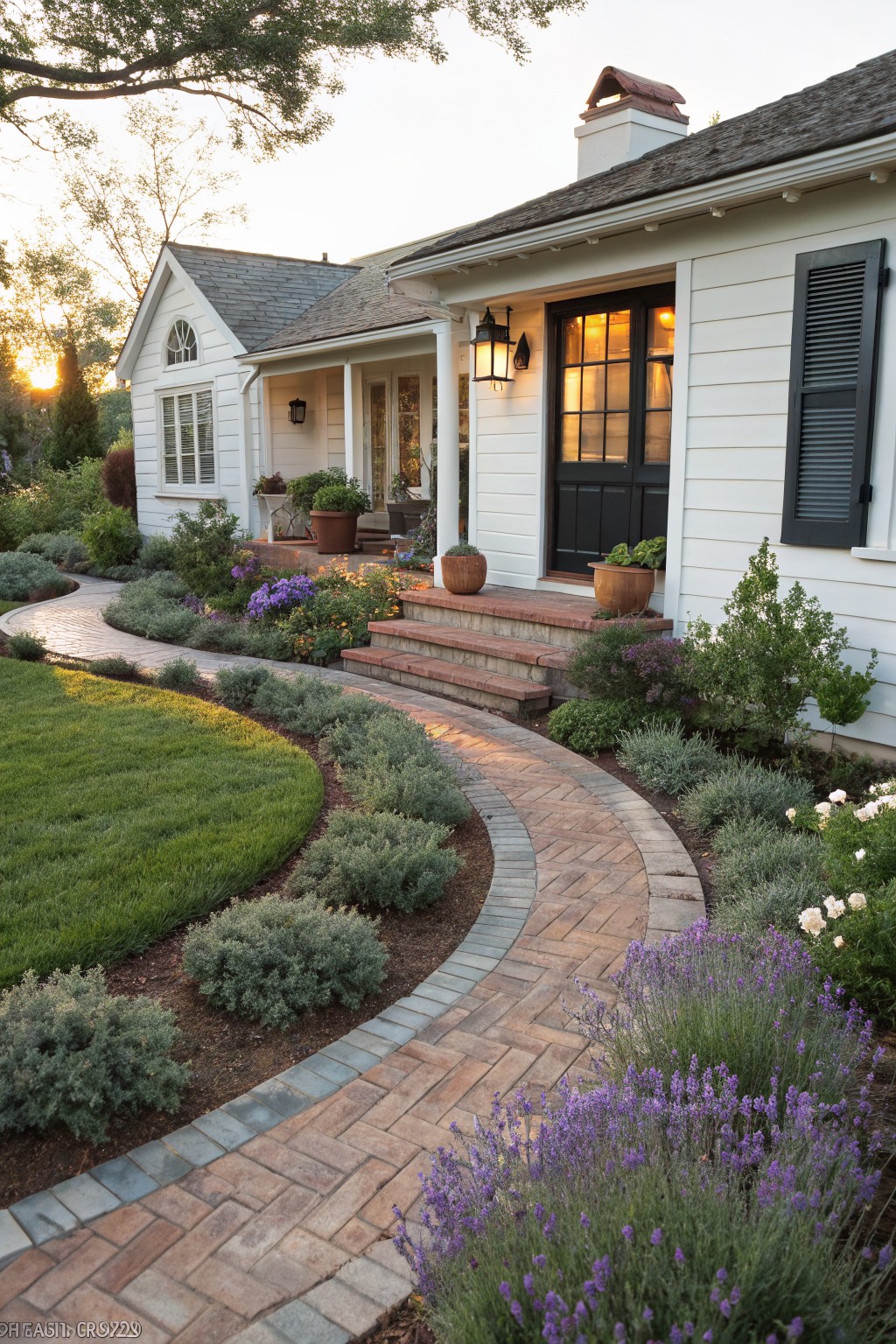
A winding brick path like this makes your front yard feel welcoming without the upkeep. It curves gently through the grass, edged with silvery grasses, lavender, and low shrubs that handle drought and need little trimming. These plants keep color going through seasons, so the yard looks tidy even in winter.
This setup works best on smaller lots or where water is tight. Lay bricks in a simple pattern over gravel for good drainage, then plant natives that match your climate. Skip fussy flowers, and you avoid weeding chores. One note: space plants so they don’t crowd the path over time.
Stepping Stone Paths in Gravel
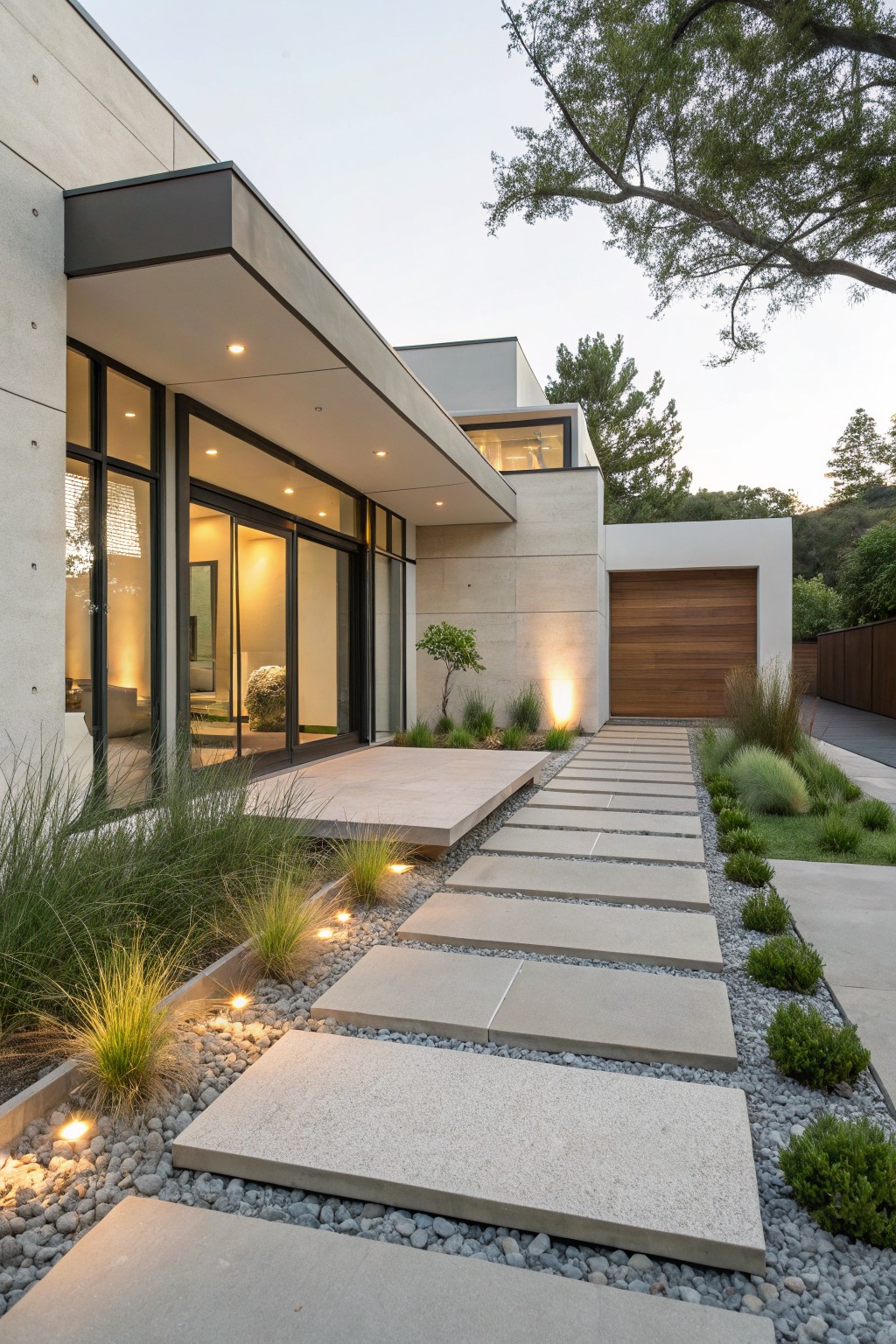
One easy way to handle a front path is with big concrete stepping stones laid right into gravel. Flank them with tough grasses that don’t need much care. The look stays sharp year-round. No lawn to mow. Just rake the gravel now and then. Those low lights along the edges make it welcoming at night too.
This works best leading straight to your door on a modern house or any spot with clean lines. It suits sloped yards since water drains right through. Pick pale gravel to match concrete. Go for drought-tolerant grasses like fescue. Skip it if you have heavy foot traffic. Stones might shift over time.
Winding Stone Paths with Native Grasses
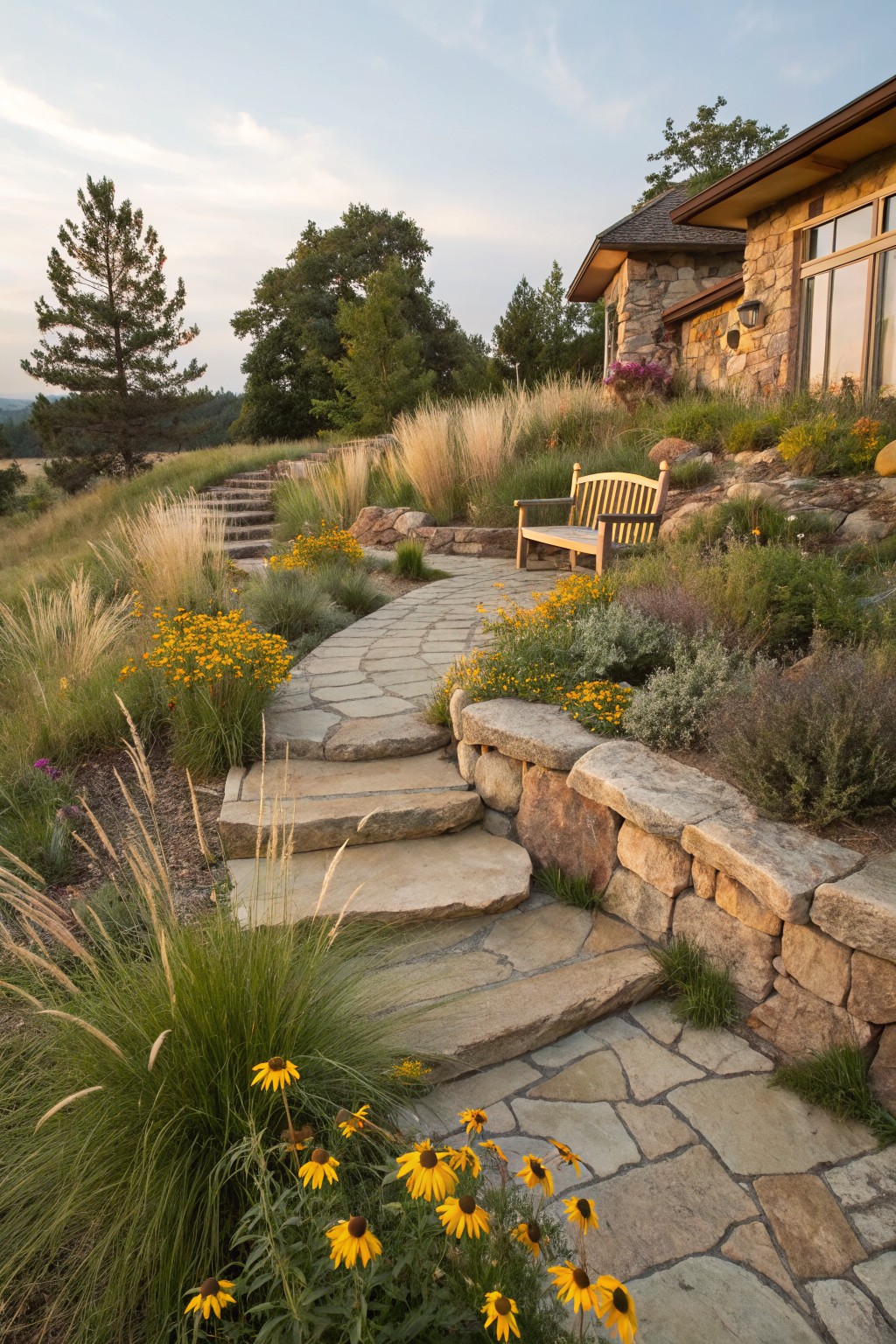
A simple flagstone path like this winds gently up a slope, edged with tall ornamental grasses and clusters of yellow wildflowers. What makes it stand out for low-maintenance yards is how the plants—think drought-tough switchgrass and black-eyed Susans—fill in naturally without much fuss. They sway in the breeze, keep weeds down, and hold color through seasons without constant watering or trimming.
This works best on sloped front yards where you want to guide people toward the entry without a straight-shot feel. Pick irregular stone slabs for that organic look, space them loosely, and plant natives that match your zone. Tuck in a bench halfway up if the spot allows. Just avoid overplanting; let the path breathe.
Winding Gravel Paths Through Native Grasses
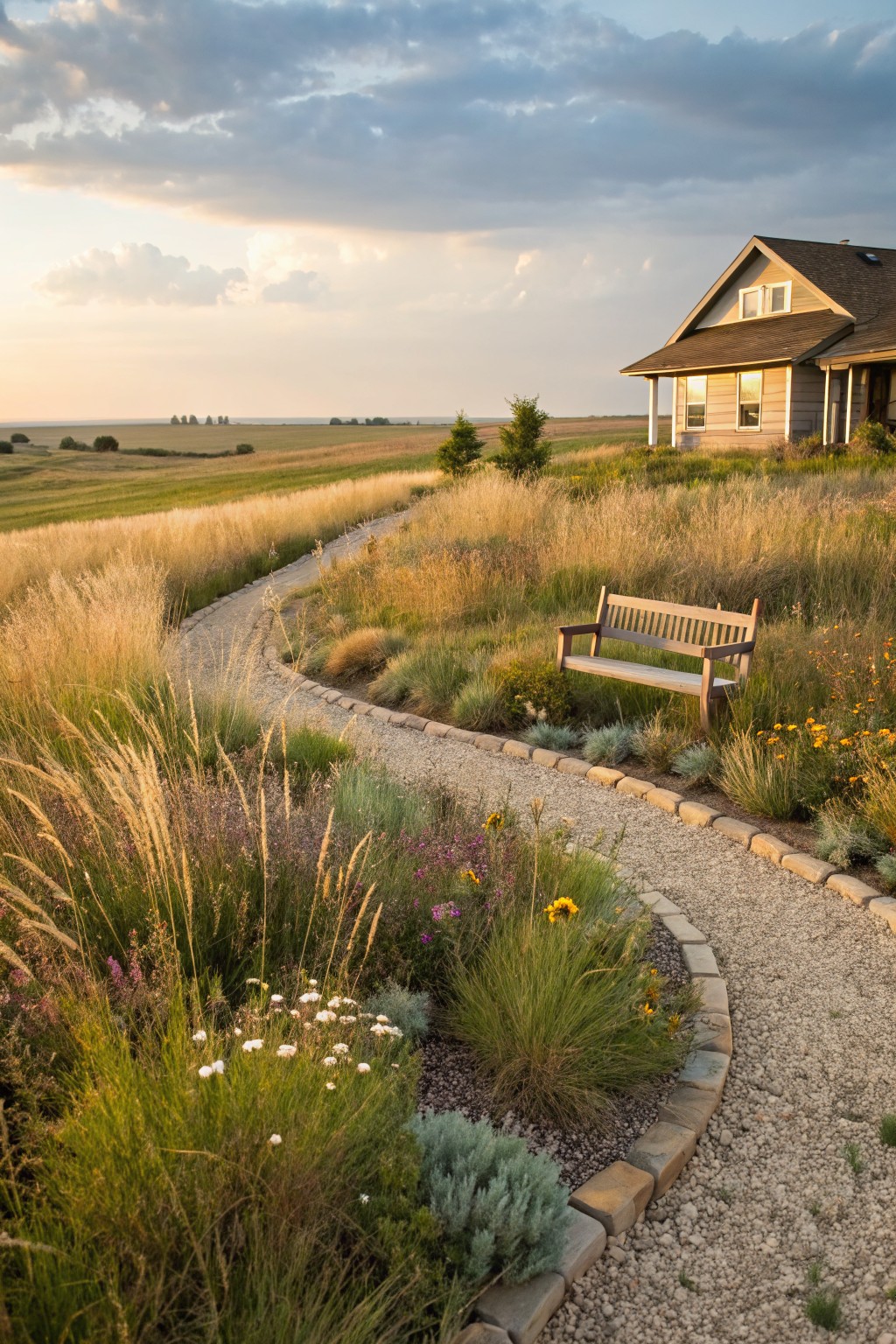
A gravel path like this winds softly through tall grasses and patches of flowers, leading up to the house without feeling too formal. It keeps things low maintenance because native plants handle drought and cold on their own, turning the front yard into something that looks good from summer into fall. That bench halfway along just invites a pause.
You can pull this off in open yards or on gentle slopes where straight paths get boring. Pick grasses like little bluestem or switchgrass, add a few perennials for color, and edge the gravel with flat stones to hold it in place. It suits ranch homes or simple modern ones, but watch the weeds in year one until plants fill out.
Stepping Stone Path in Gravel
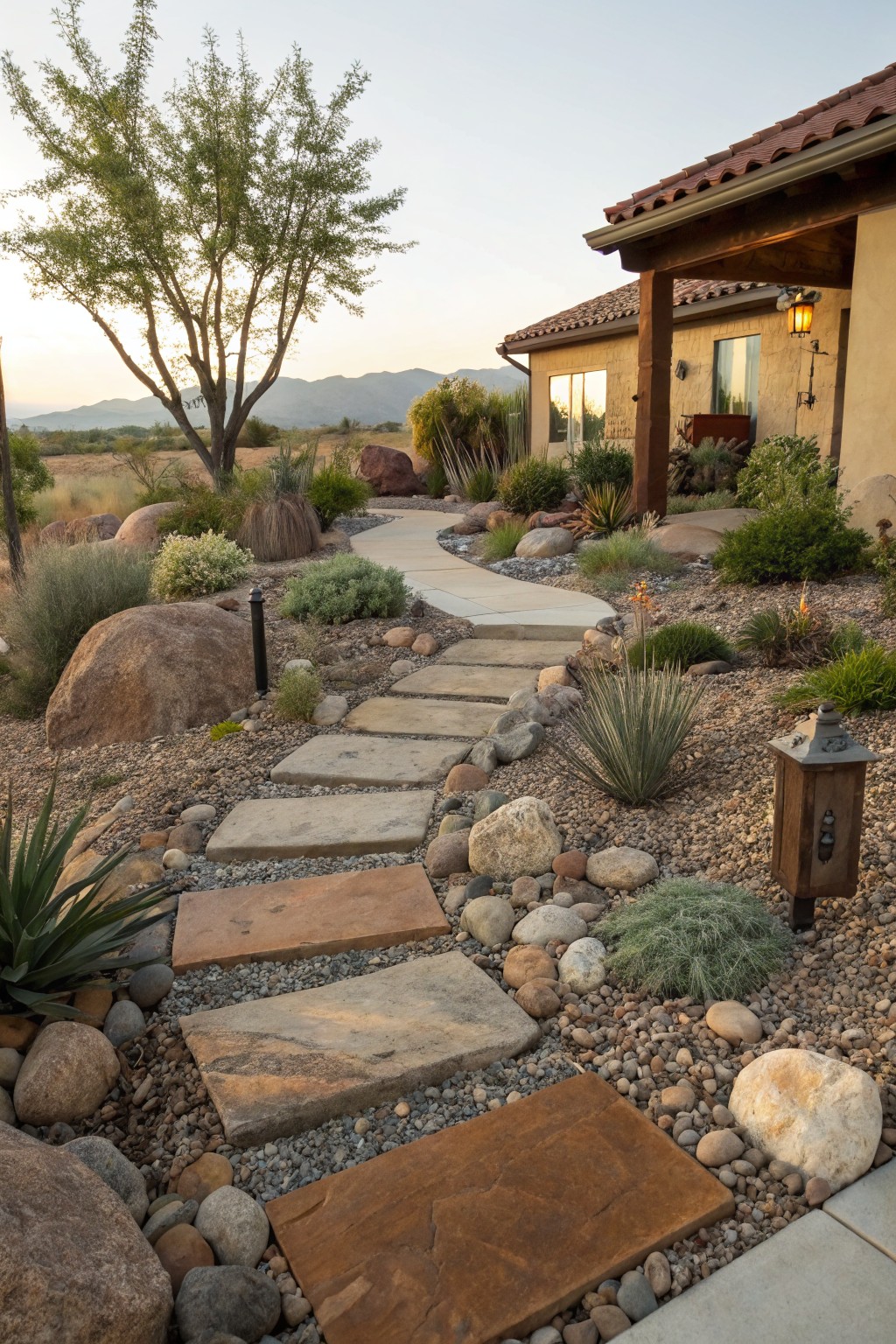
A stepping stone path set into gravel keeps your front yard simple and low fuss. The irregular stones guide you to the door without grass to cut or borders to trim. Around them, boulders and spiky plants like agave add shape but stay put year round.
This setup fits dry spots best, like desert yards or sunny slopes. Use wide flat stones spaced for easy steps, and pea gravel that drains fast. It suits stucco houses with a southwestern feel… just pick drought tough plants so nothing wilts.
Brick Pathway Lined with Boxwoods
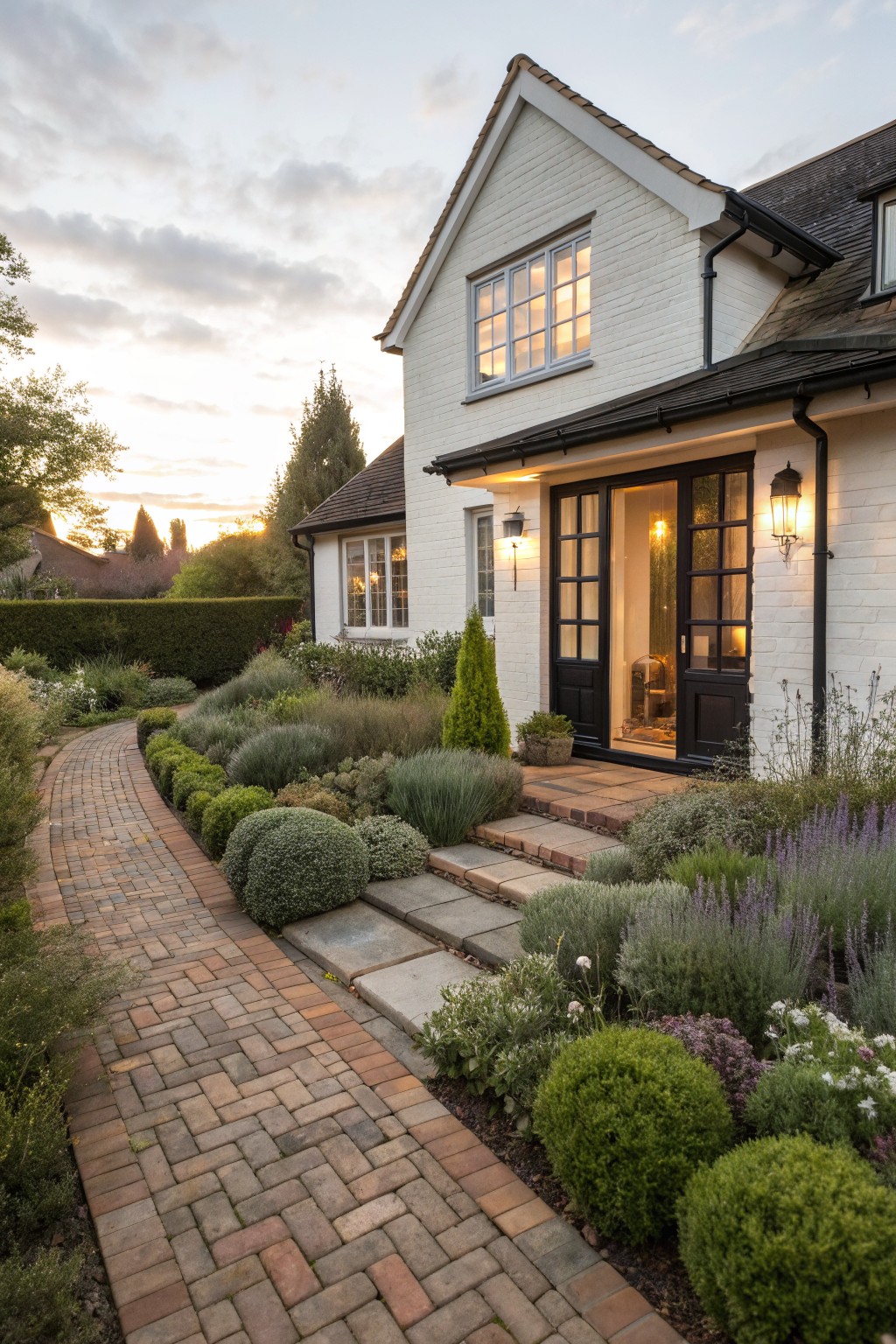
A simple brick path like this winds gently from the street to the front door. It’s edged with round boxwood shrubs and clumps of lavender that give the yard shape without much work. These plants stay green through winter and bloom reliably each summer. The path itself draws the eye right to the entry. No fussy mowing or deadheading needed.
This setup works great for front yards on smaller lots or in mild climates. Use reclaimed bricks for a settled look and space boxwoods about two feet apart. Add lavender or similar perennials for color. It suits traditional homes with clean lines. Just keep the path clear of weeds and trim the shrubs once a year.
Curved Gravel Paths with Stone Edging
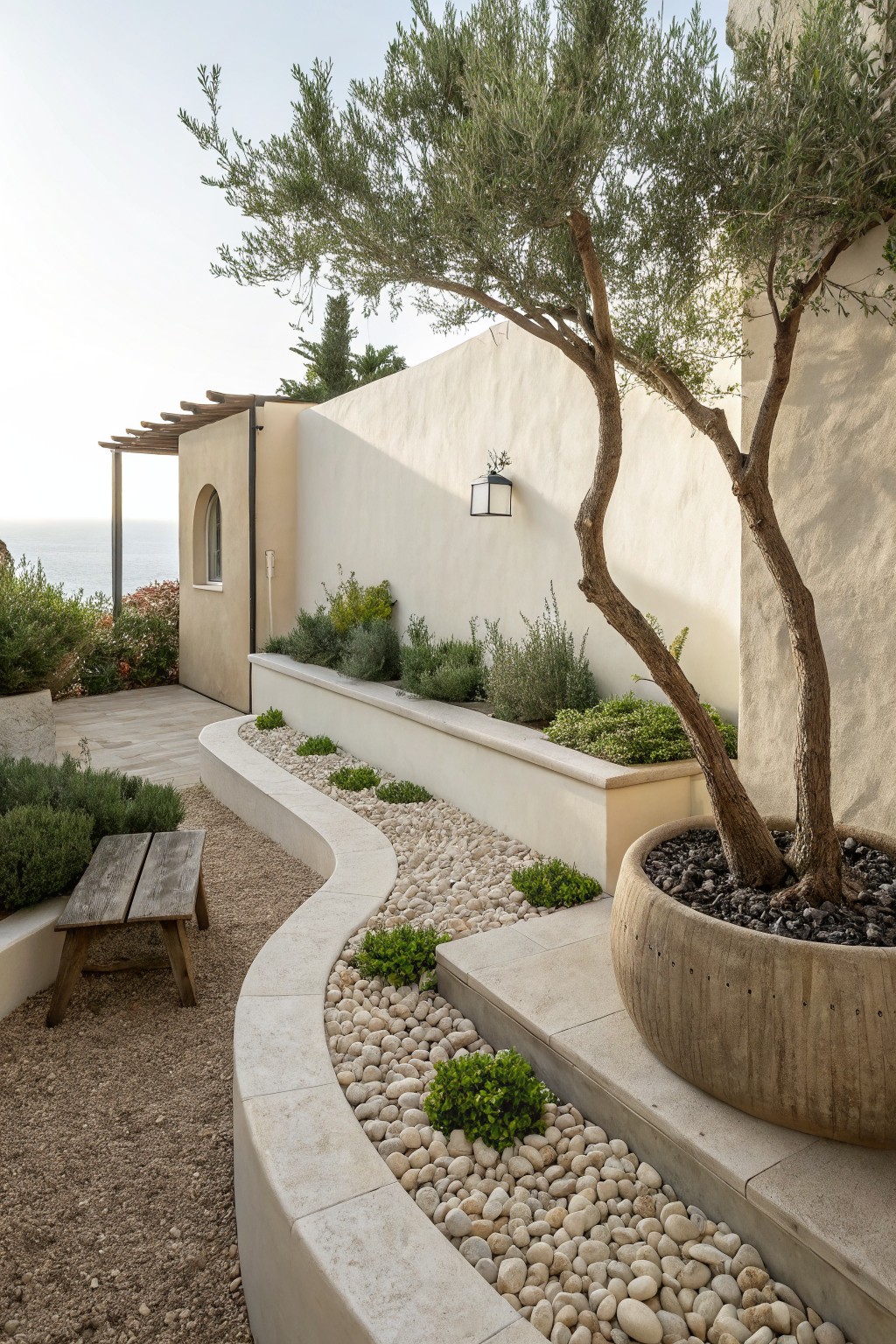
Gravel paths that wind gently like this one keep a front yard looking sharp without weekly mowing or trimming. The smooth curves come from raised stone beds filled with white pebbles and a few sturdy plants, mostly low evergreens and olive branches that hang just right. It holds up in dry spells and feels put together year after year.
These paths work best on slopes or narrow side yards where you want to guide foot traffic without grass. Pick light-colored gravel and matching local stone for the edges, then tuck in drought-tough stuff like lavender or boxwood. A simple bench nearby makes it useful too. Skip anything that needs water or deadheading.
Wooden Pathway with Raised Planter Edges
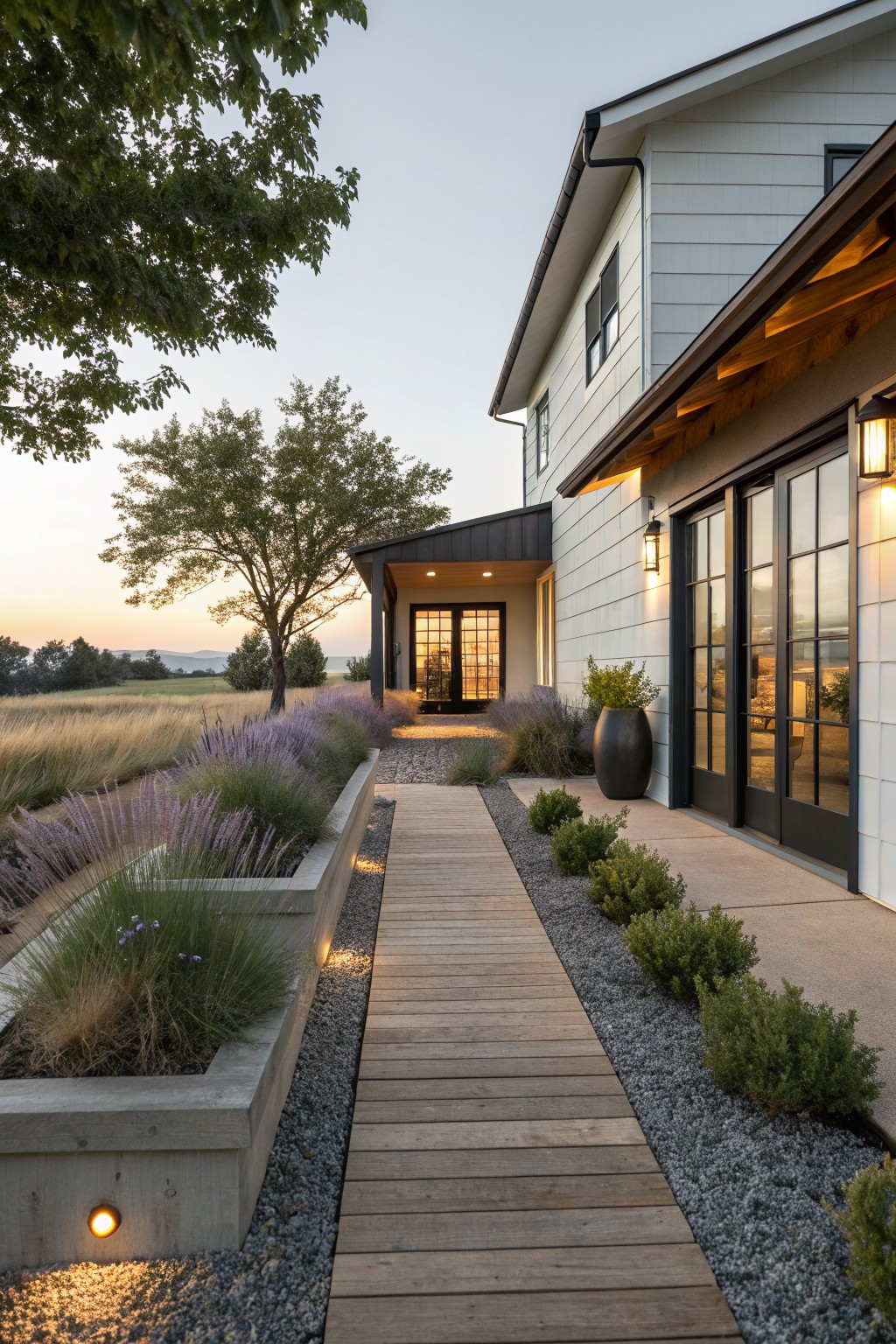
A straight wooden walkway like this makes getting to the front door simple and pleasant. Raised concrete planters run right alongside it, packed with low-water plants such as lavender and feathery grasses. Gravel tucked in between the path and beds stops weeds cold, and everything stays neat without much work. These setups hold their shape and color through dry spells or cooler months.
Try this in a sunny front yard that gets overlooked for upkeep. It fits homes with a clean modern look or farmhouse vibe, especially where water is at a premium. Line up the beds to match your path length, and pick plants that match your zone. Skip anything too thirsty, or you’ll be out there watering more than you’d like.
Flagstone Walkway with Gravel Edges
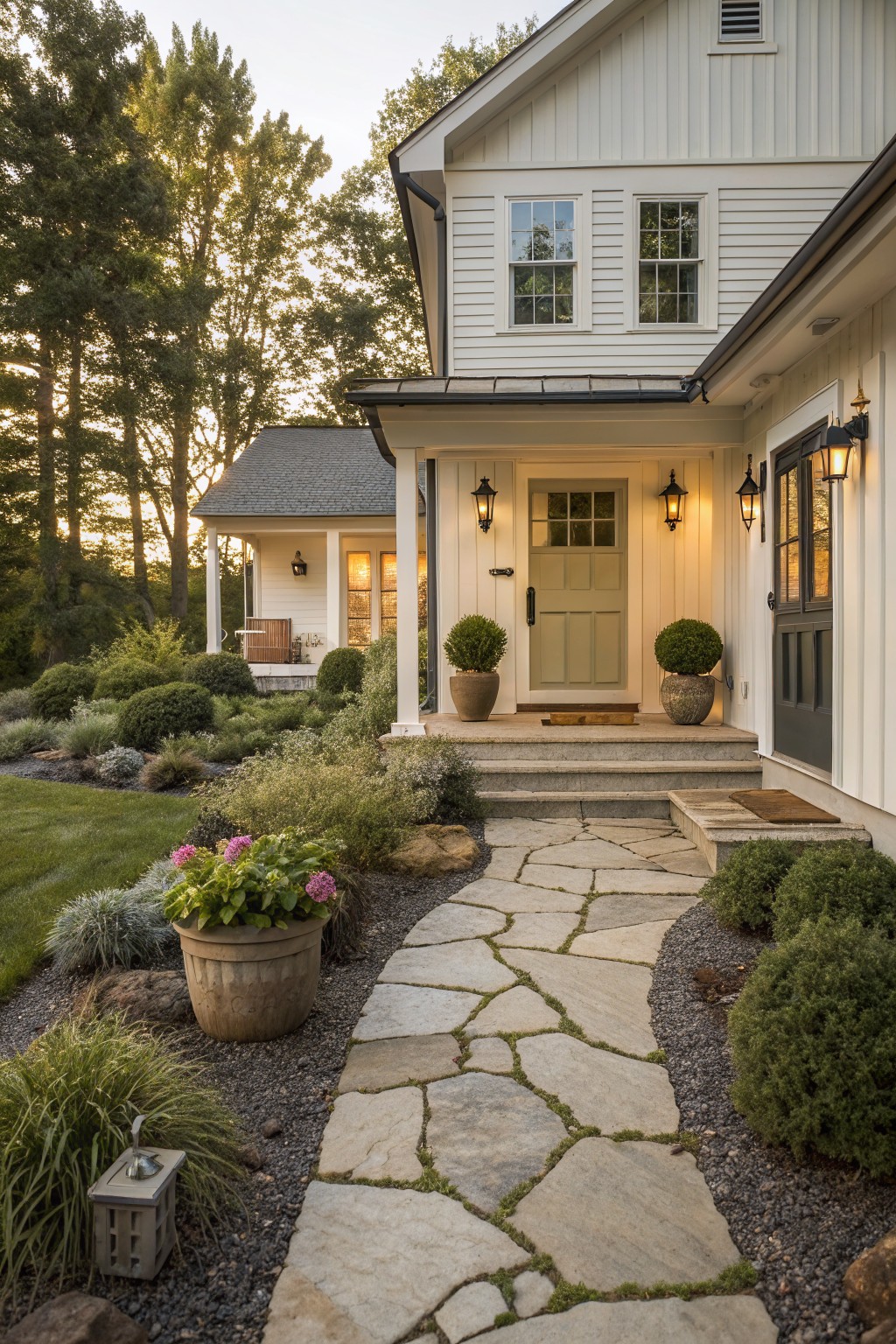
A simple flagstone path like this winds gently from the street to the front door. It’s laid in an irregular pattern over gravel mulch, with low shrubs and grasses tucked along the sides. The gravel keeps weeds down and drainage good, so you barely lift a finger year-round. Boxwoods stay green through winter, and the stones don’t crack or fade.
This works great on any front yard, especially if you’ve got a slope or want to skip the mowing. Pick flat-ish flagstones in neutral tones, edge with larger gravel, and plant evergreens that don’t need pruning. Skip fussy flowers unless you want pops of color in summer. It’ll guide guests right to your door without looking busy.
Stepping Stone Path in Gravel Mulch
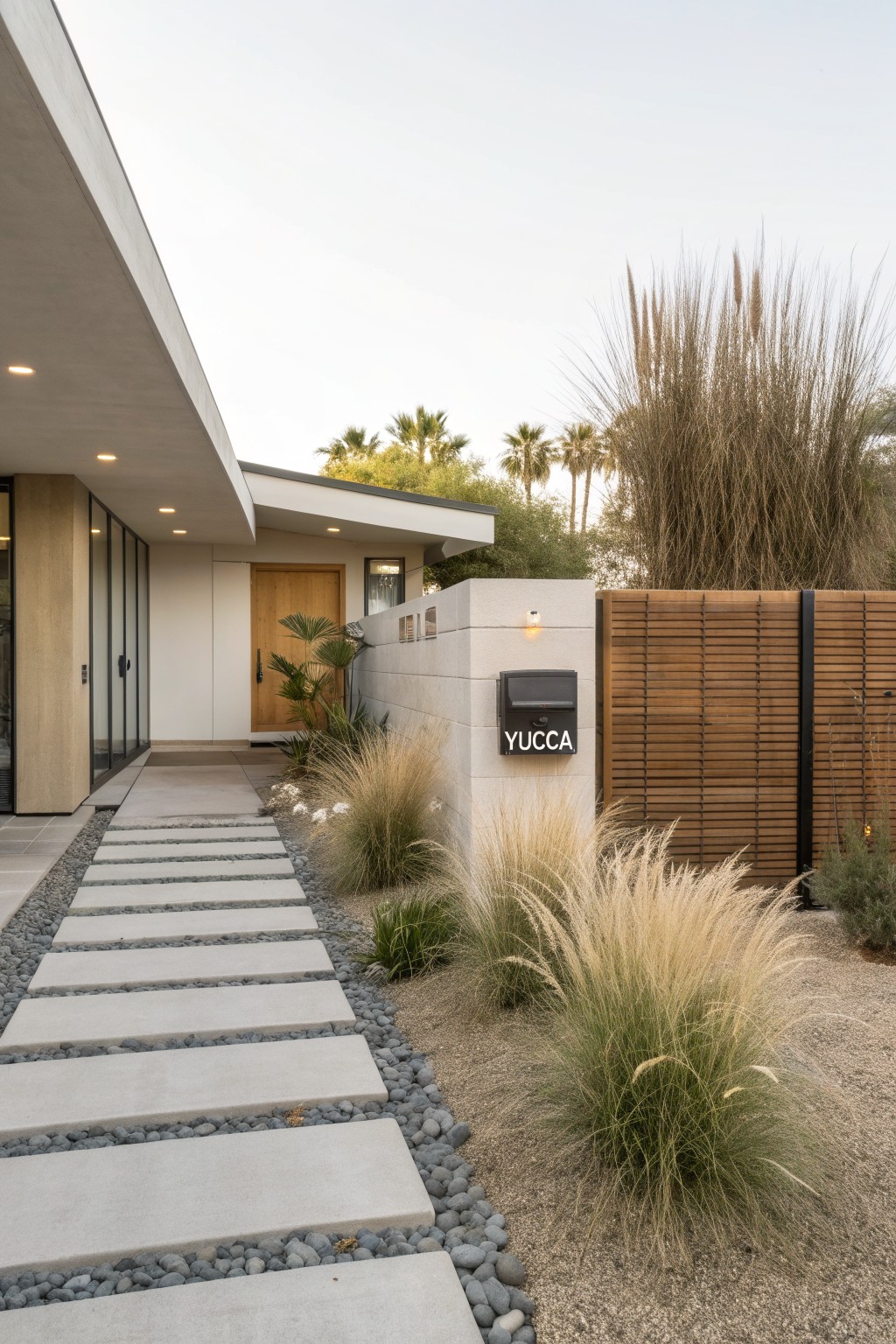
One straightforward way to handle front yard access without the hassle of a full lawn is a stepping stone path set right into gravel mulch. Here you see wide concrete pavers laid in a straight line through a bed of smooth pebbles, edged with tall feather grasses and a yucca plant. It keeps things open and clean, with plants that barely need water or trimming to stay sharp all year. The gravel fills in the gaps, cuts down on weeds, and gives that crisp desert look without much upkeep.
This works best in dry climates or anywhere you want to skip mowing and watering chores. Pair it with a modern house like this one, where the clean lines match the path’s simplicity. Just make sure the stones are spaced for a natural stride, about 24 inches apart, and use larger gravel to avoid shifting. Add a few low shrubs if you need more screening, but keep it sparse to stay low effort.
Tiered Concrete Planters for Sloped Front Yards
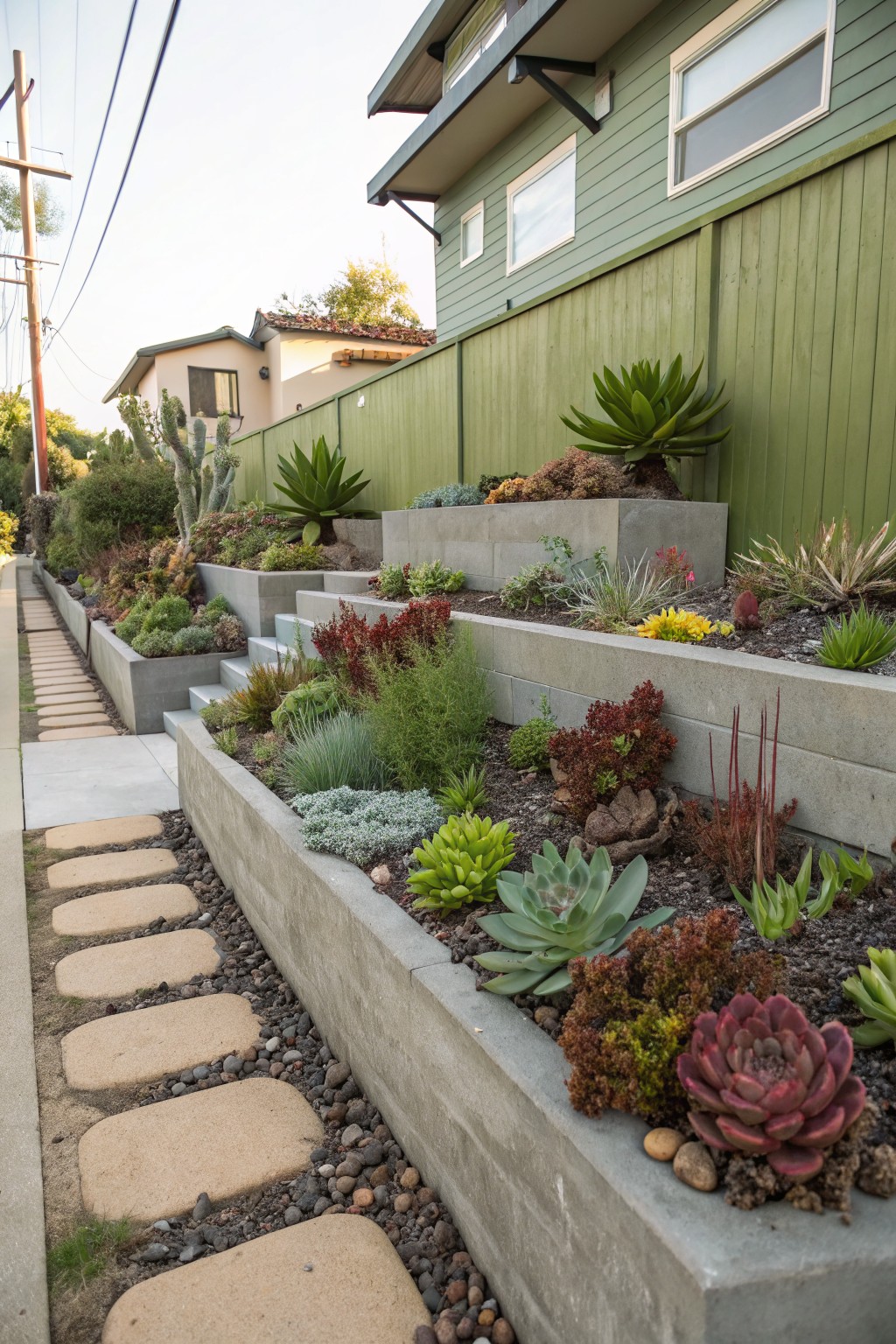
Tiered concrete planters turn a sloped front yard into something neat and easy to manage. You stack sturdy concrete walls to hold back soil and create flat planting pockets, then fill them with tough succulents like echeveria and agave. These plants stay colorful year-round without much fuss, and the clean gray concrete gives the whole setup a modern edge that doesn’t fade.
This works best on hills where grass would just erode away. Build the tiers wide enough for roots, about 18 inches high each, and mix in gravel for drainage. Pair it with stepping stones for access. Skip thirsty plants here… they won’t last.
Terraced Retaining Walls for Sloped Yards
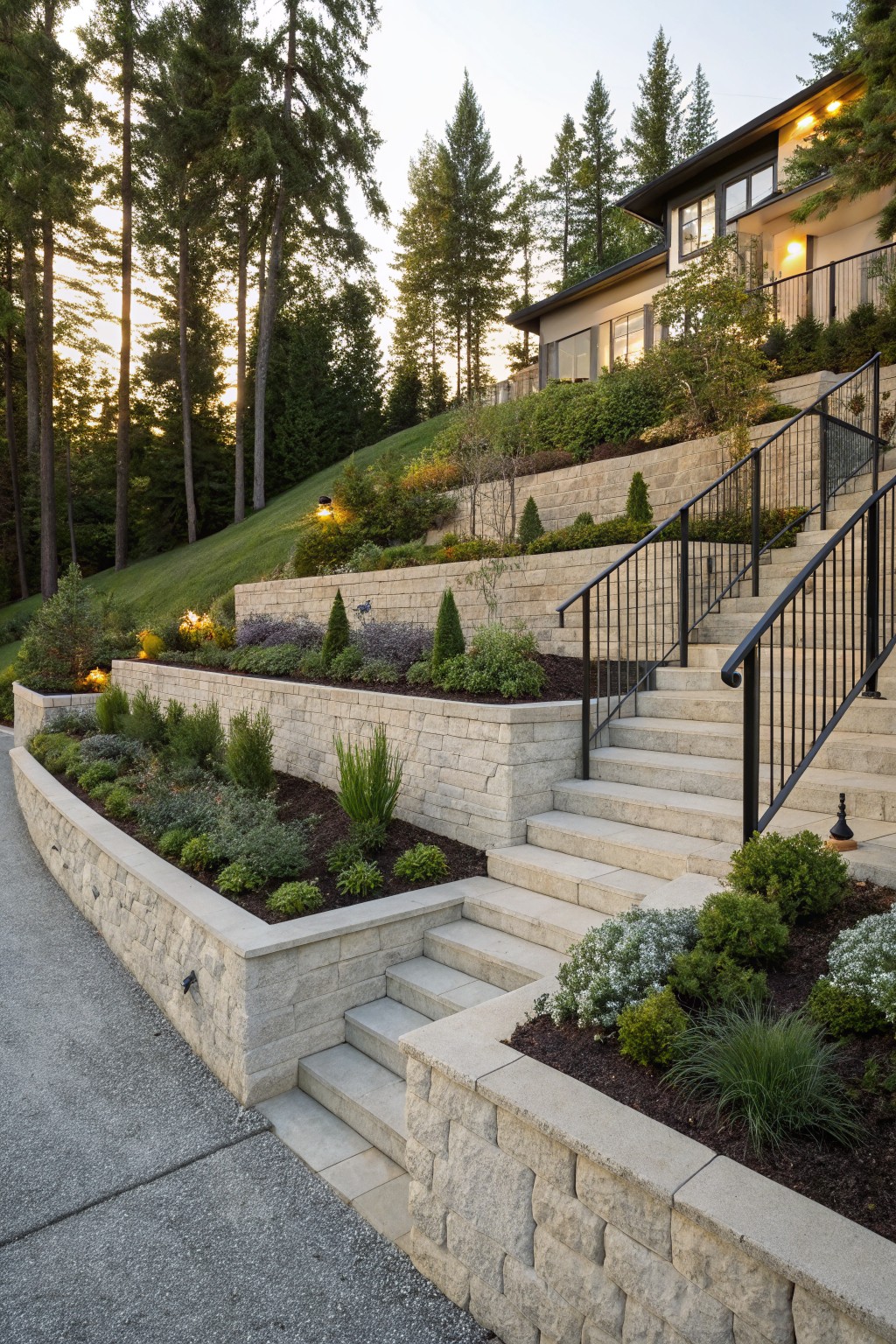
Sloped front yards often turn into eyesores if you just let grass take over. But terraced retaining walls fix that problem nicely. They hold back the soil in neat tiers, turning the hill into planting pockets filled with low shrubs and grasses. These plants don’t sprawl or need constant trimming, so the look stays sharp through seasons. The stone walls themselves do most of the work, giving structure without fancy upkeep.
Build this on any hillside leading to your driveway or entry. Pick a neutral stone like the beige blocks here, pair it with steps and simple railings for easy access. It suits homes in wooded spots or modern builds backing up to nature. Just make sure the walls are sturdy enough for your slope’s height… and go for drought-tolerant plants to keep watering minimal.
Terraced Stone Walls for Sloped Yards
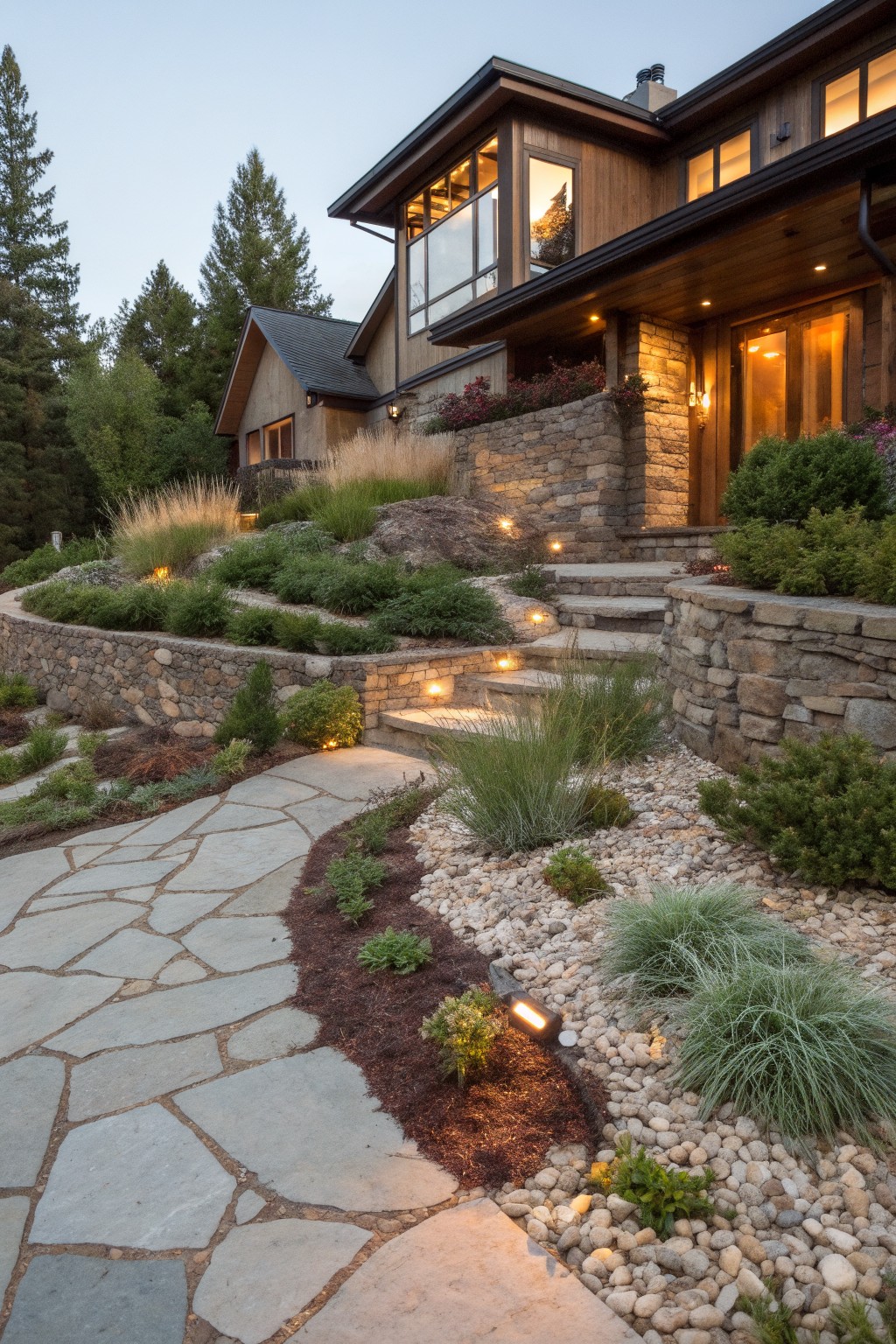
Sloped front yards can be tricky to landscape without a lot of upkeep. One solid way around that is terracing with natural stone walls, like you see here with layers of rugged stone holding back low-growing grasses and gravel beds. It turns a challenging slope into neat, defined levels that look good without much effort. The grasses sway nicely and stay green most of the year, while the stone and pebbles handle drainage without weeding hassles.
This setup works best on lots with a decent rise, maybe 5 to 15 feet up to the house. Pair it with a simple flagstone path that winds through, and add low-voltage lights along the edges for evening appeal. It fits homes with a rustic or modern wood look, keeping things natural and easy on maintenance. Just pick drought-tolerant grasses suited to your zone, and avoid overplanting to keep it simple.
Winding Stone Path to the Front Door
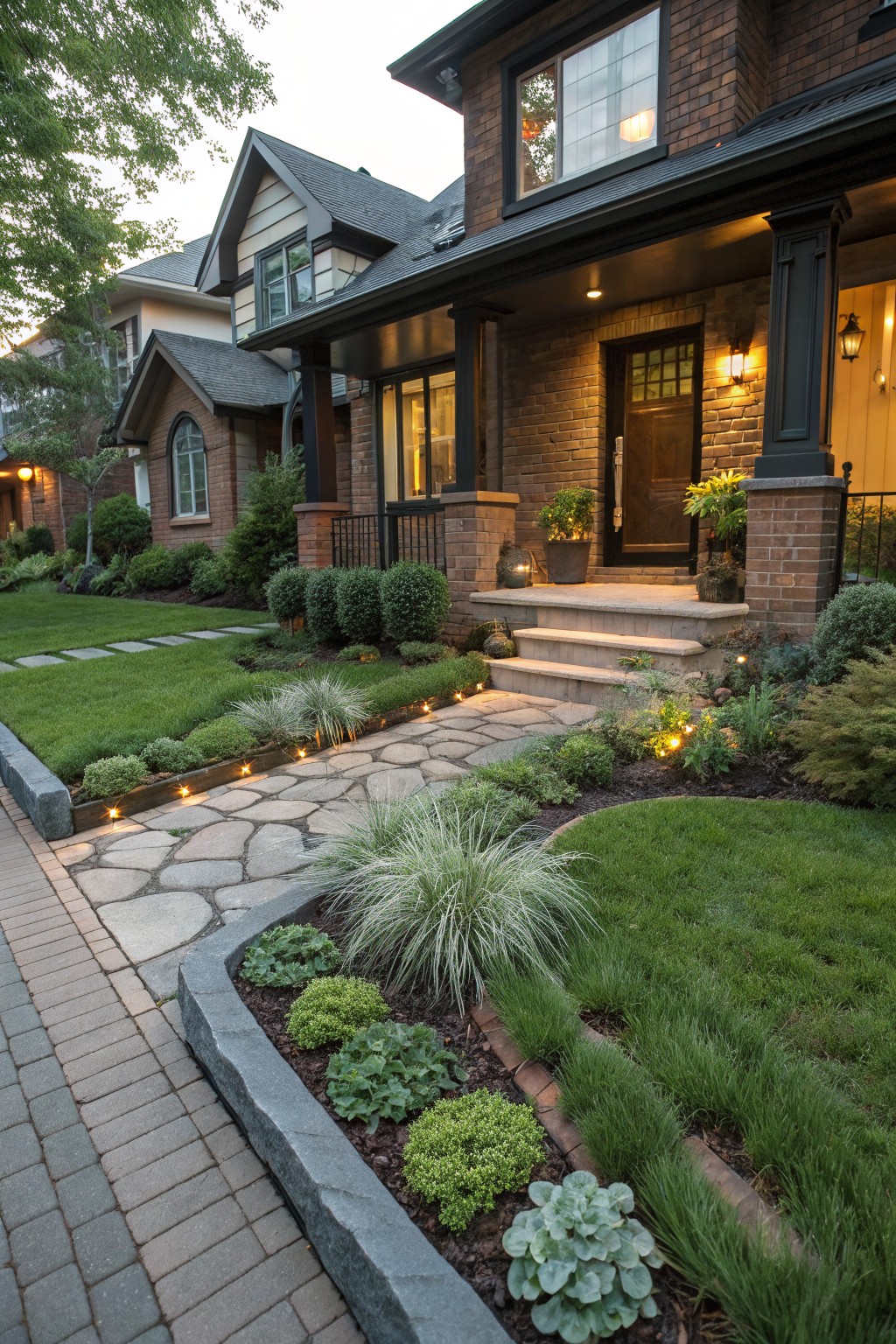
A winding flagstone path like this one pulls you right up to the entry without feeling too rigid. It curves gently through the yard, edged by low clumps of grasses and simple shrubs that don’t need much fuss. Those little low lights along the edges make it safe and pretty at night, and everything stays neat through the seasons since the plants are tough and mostly evergreen.
This setup works great on smaller front yards or anywhere you want to soften a straight driveway approach. Lay irregular stones in a loose pattern for that natural feel, then fill the borders with drought-tolerant grasses like fescue or sedge. Skip fussy flowers, and you’ll have curb appeal that lasts. Just keep the path clear of weeds, and it holds up year after year.
Frequently Asked Questions
Q: My yard gets mostly shade. Which ideas from the article still work great?
A: Go for the groundcover beds with hostas or ferns. They fill in nicely without sun and cut down on mowing. Just water them weekly at first until they root.
Q: How do I stop weeds without spending hours weeding?
A: Spread thick mulch or gravel right over landscape fabric. It blocks light so weeds can’t sprout. Top it off once a year and call it done.
Q: What’s a cheap way to start one of these looks?
A: Grab bags of mulch and a few hardy perennials from a local nursery. Lay down simple paths with stepping stones you already have. Boom, instant curb appeal under $200.
Q: Will these ideas look good all winter too?
A: Evergreens like boxwoods keep their shape through snow. Toss in some ornamental grasses for texture… they wave in the wind without any help from you.
