

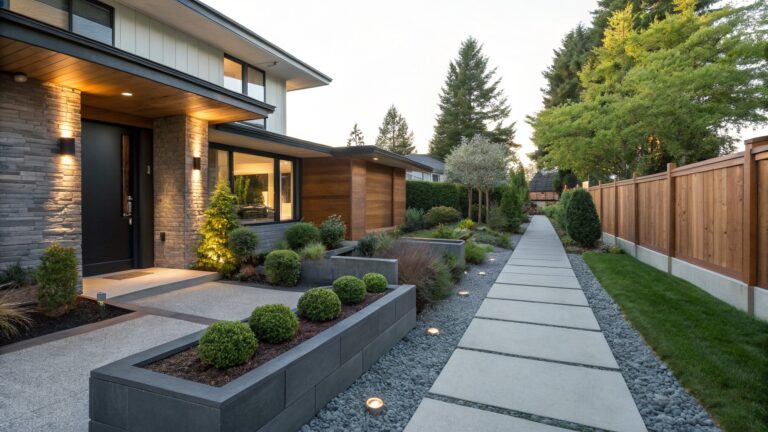
When you approach a home, the front yard’s layout hits you first, and stone borders give it that crisp structure without stealing the show from the plants. I’ve found they work best when they echo the house’s lines, guiding pathways and holding back soil as everything settles over the years. Stone lasts through seasons in a way flimsier edging never does. These setups shape how the yard flows from street to door, letting low growers hug the edges while taller ones rise behind. A few ways to curve them around driveways feel right for testing in a spot like ours.
Linear Paver Path with Gravel and Borders
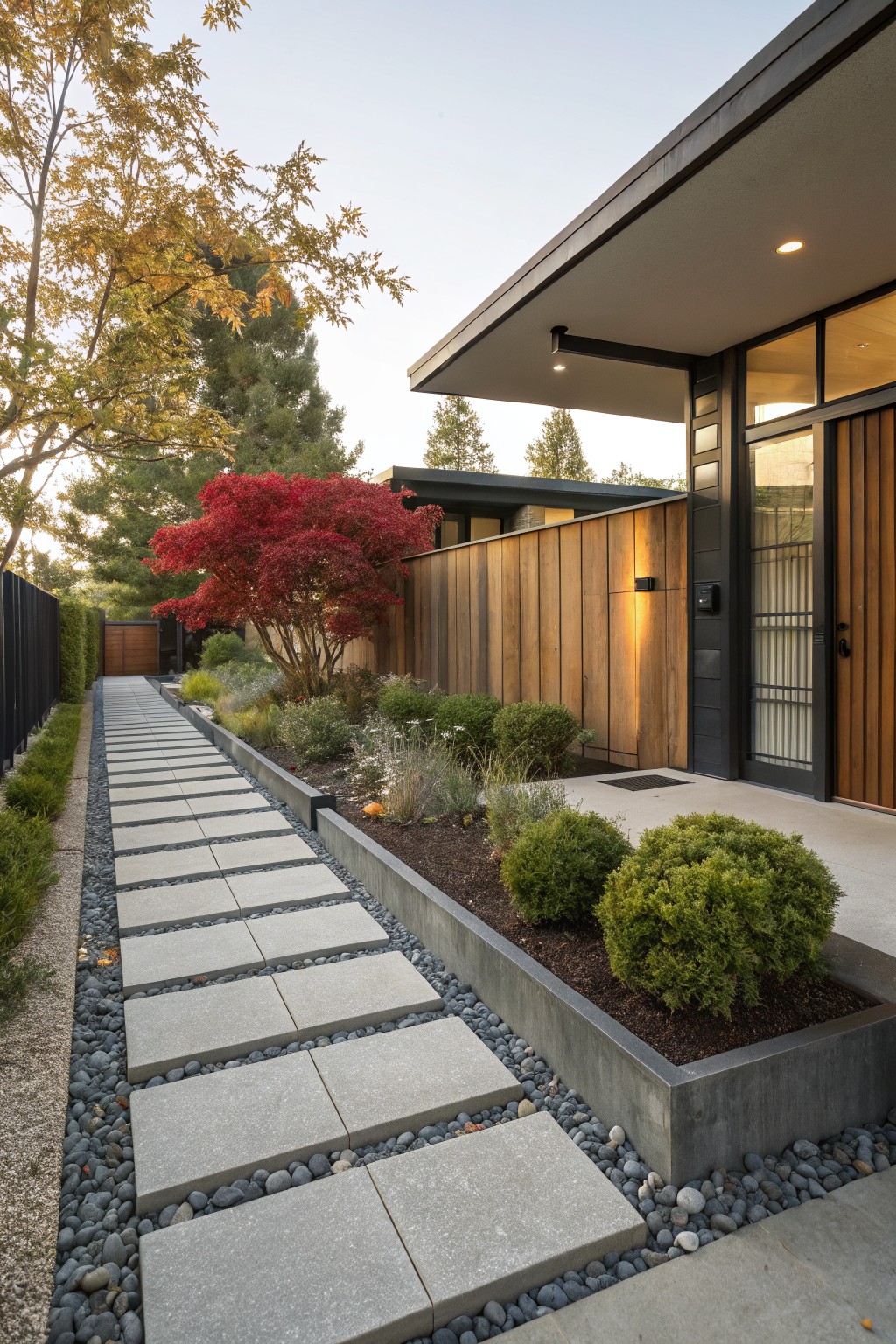
A straight path made from large concrete pavers set into gravel runs alongside a raised concrete bed filled with low shrubs. This keeps the walk clear and direct, while the border adds structure without crowding the way. It fits modern homes well, where clean lines matter.
Try this in a front yard with a simple entry. Space the pavers wide enough for two people, about 4 feet across. Pick tough gravel that drains fast, and use boxwood or similar for the beds. It handles foot traffic fine… low upkeep too.
Lavender-Lined Stone Path
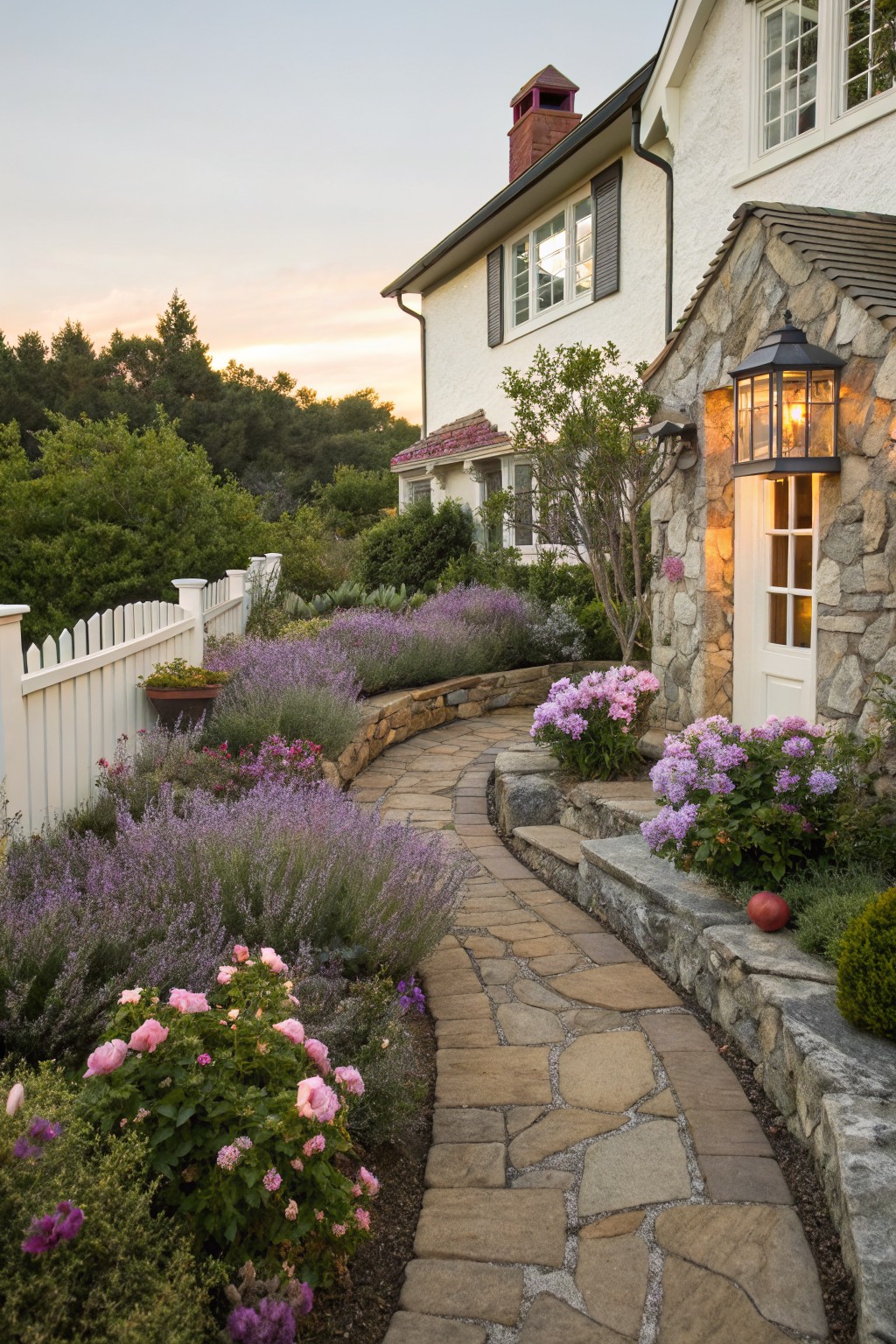
A winding flagstone path like this one makes a front yard feel personal and inviting. The low stone borders keep the lavender and pink blooms neatly in place while letting them spill over just enough. It guides you smoothly to the door, tying the garden right into the house entry.
This works best on a sloped lot or cottage-style home where you want low upkeep. Stick to tough plants like lavender that handle dry spells, and use irregular stone for a natural look. Skip straight lines unless your yard is super formal.
Curved Stone Borders for Entry Walks
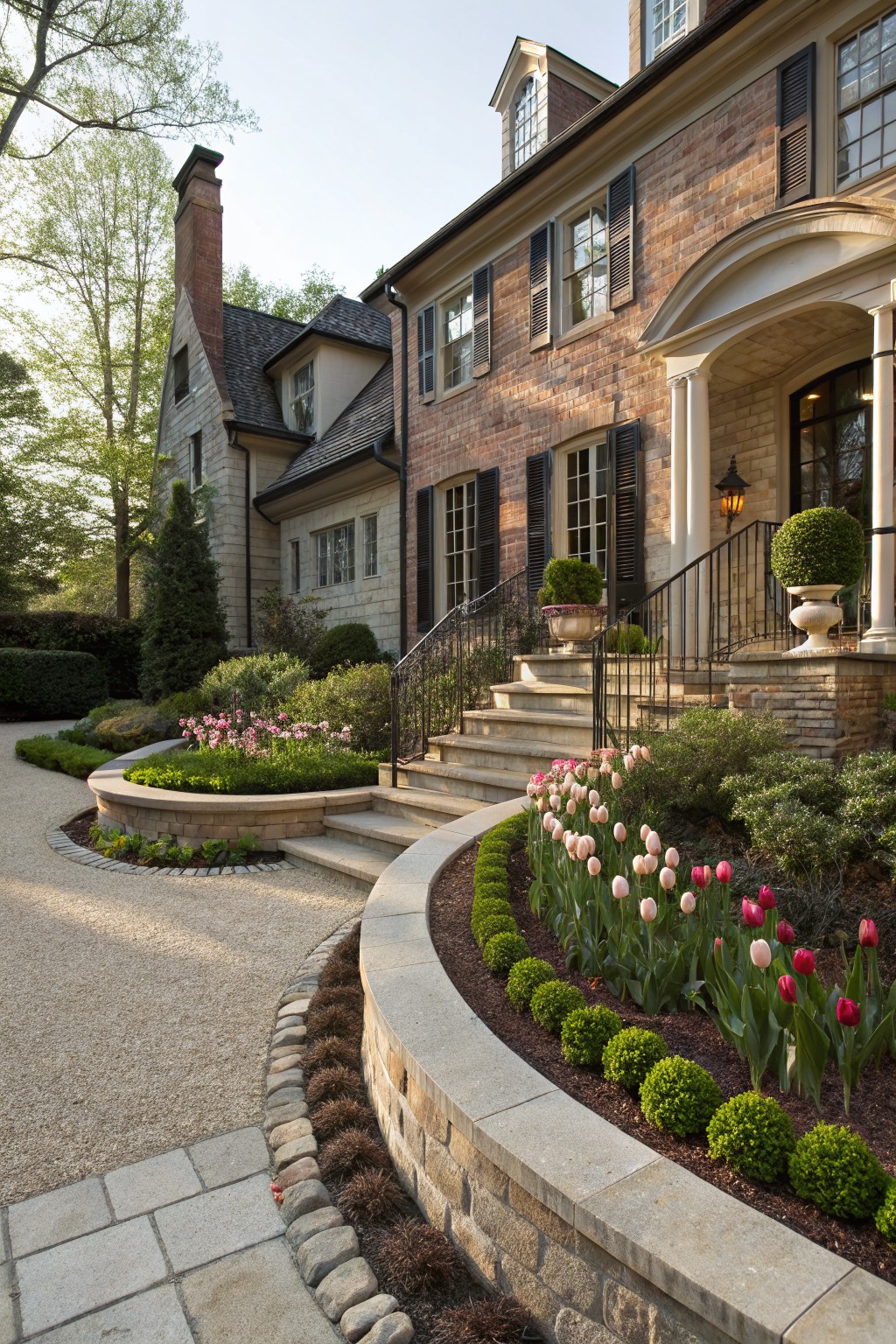
Curved stone borders like these work well to define flower beds along a front path. They create a smooth line that follows the driveway curve and wraps around the steps, keeping soil and plants in place without looking stiff. The low walls here hold tulips and clipped boxwoods, adding color right where you walk up to the house.
You can pull this off on yards with a little slope or even flat ones. Match the stone color to your home’s brick or siding for a tied-together look. It suits older style houses best, but keep plantings simple so the stone stays the main player. One thing, make sure drainage is good behind the walls or you’ll have muddy spots after rain.
Stone Borders for Desert Gravel Beds
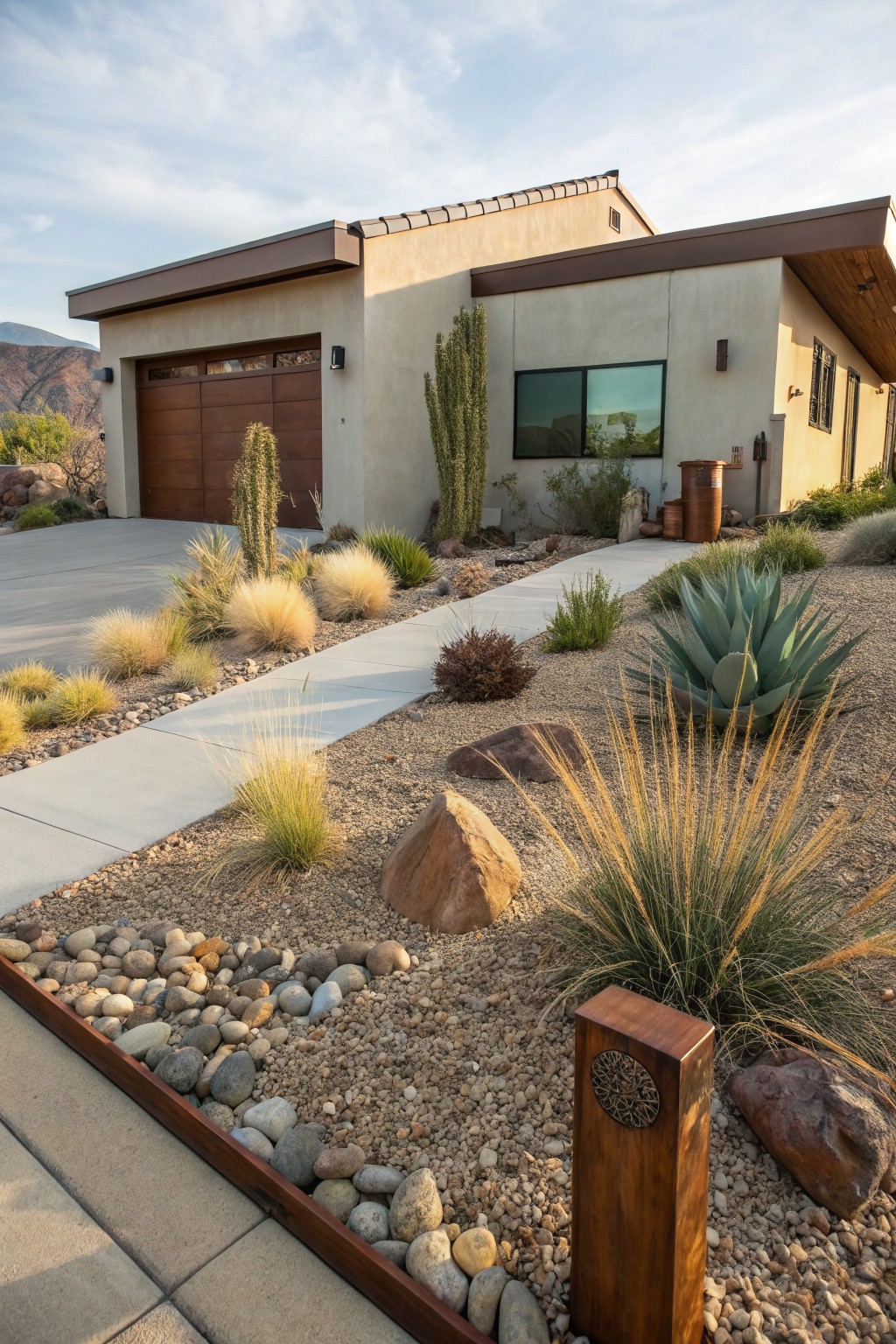
This setup shows how stone borders can neatly outline gravel beds in a dry front yard. Small pebbles and larger rocks edge the plantings, creating clean lines that look natural and hold everything in place. With succulents like agave and tall grasses tucked in, it feels right at home against a modern house facade. Low upkeep too. No mowing, just occasional sweeping.
Try this in arid spots or anywhere water use matters. Lay down gravel mulch first, then border with rounded river rocks or whatever locals stones you find. Pair it with a simple concrete path for easy access. Suits ranch-style or contemporary homes in the Southwest best. Skip sharp-edged stones unless you want a more formal vibe.
Terraced Stone Steps for Sloped Yards
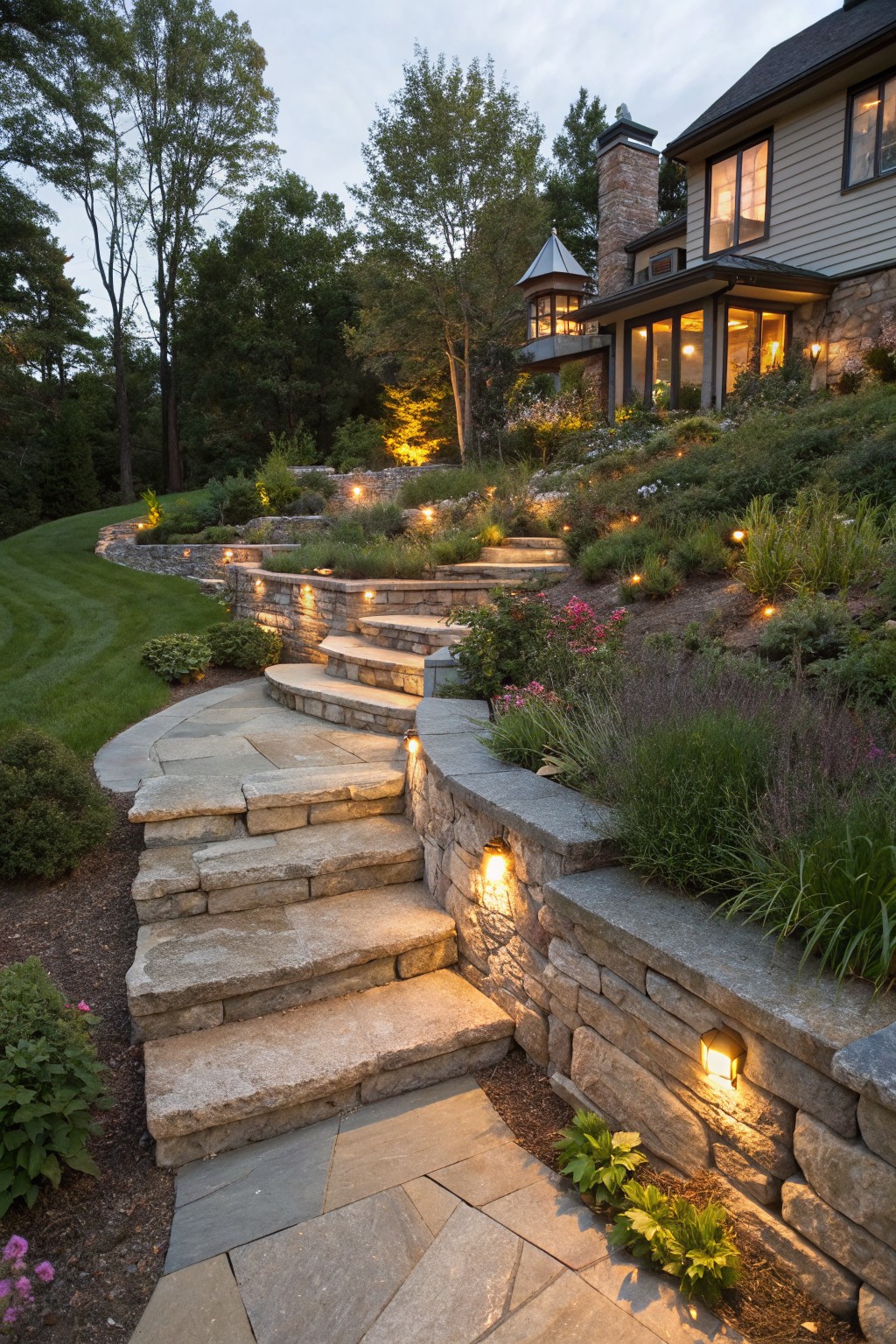
Sloped front yards can be tricky. They often end up looking messy or hard to use. But terraced steps made from natural stone change that. These steps follow the hill’s natural line, with low retaining walls on each side holding back soil and plants. The stone borders give everything a clean frame, making the yard feel organized and easy to walk up to the house.
You see it here with simple flagstone treads and walls that match the house’s stonework. Low lights tucked into the walls light the way at night without being too bright. This setup works best on moderate slopes in wooded or rural spots. Just make sure the walls are built solid to handle water runoff, and pick plants that won’t get too heavy on the edges.
Curved Stone Path with Pebble Borders
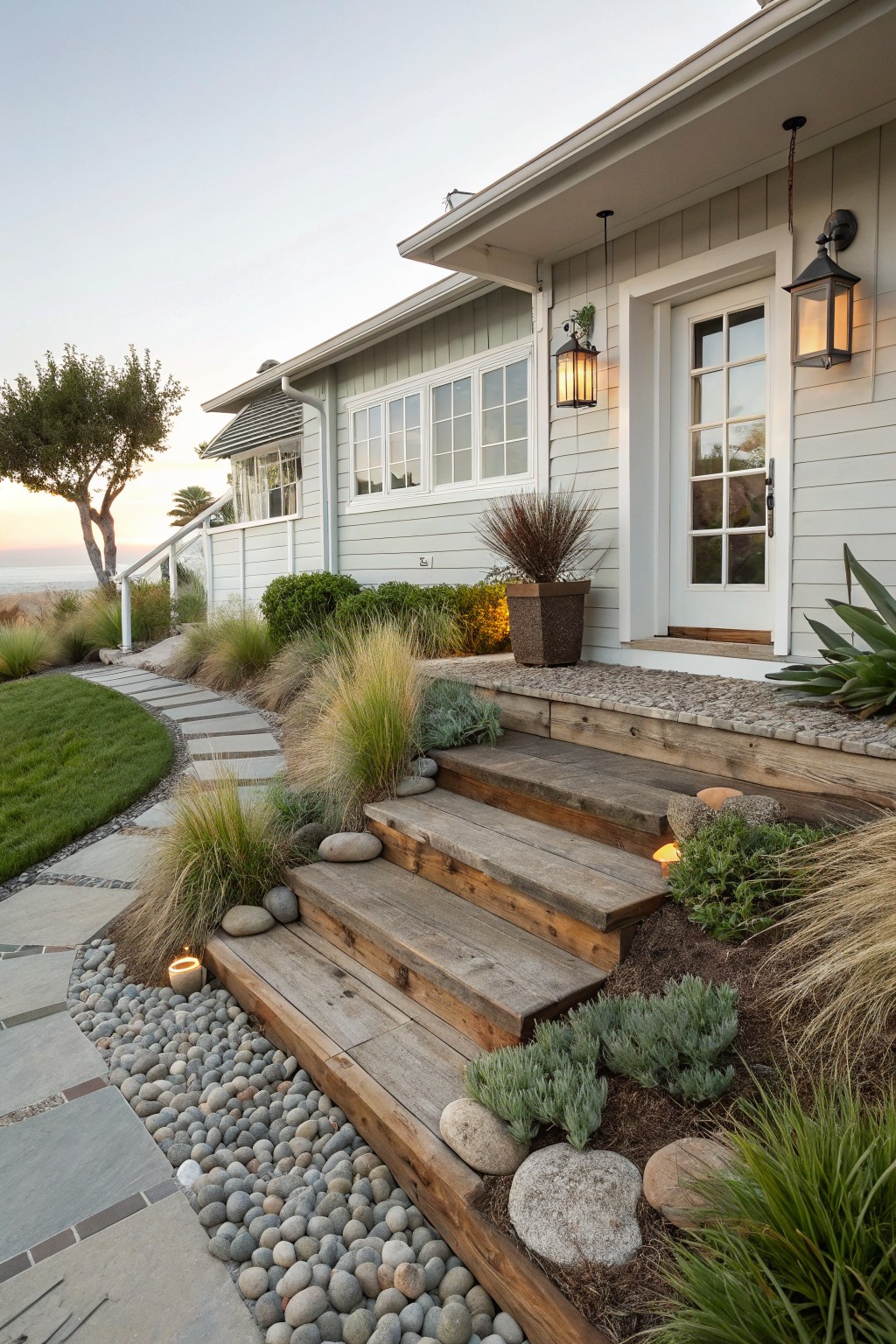
A simple curved path made from flat stone pavers works well here, edged tightly with smooth pebbles and gravel. It pulls your eye right to the front steps without any fuss. Those rounded pebbles add a soft, natural touch that fits drought-tolerant grasses and keeps weeds down easy.
This setup suits sloped front yards or spots near the beach. Lay the stones first for the main line, then spill pebbles loose around the edges. Skip it if your yard floods a lot, since gravel shifts. Pairs nice with wood steps for that casual feel.
Dry Creek Beds Edged in Stone
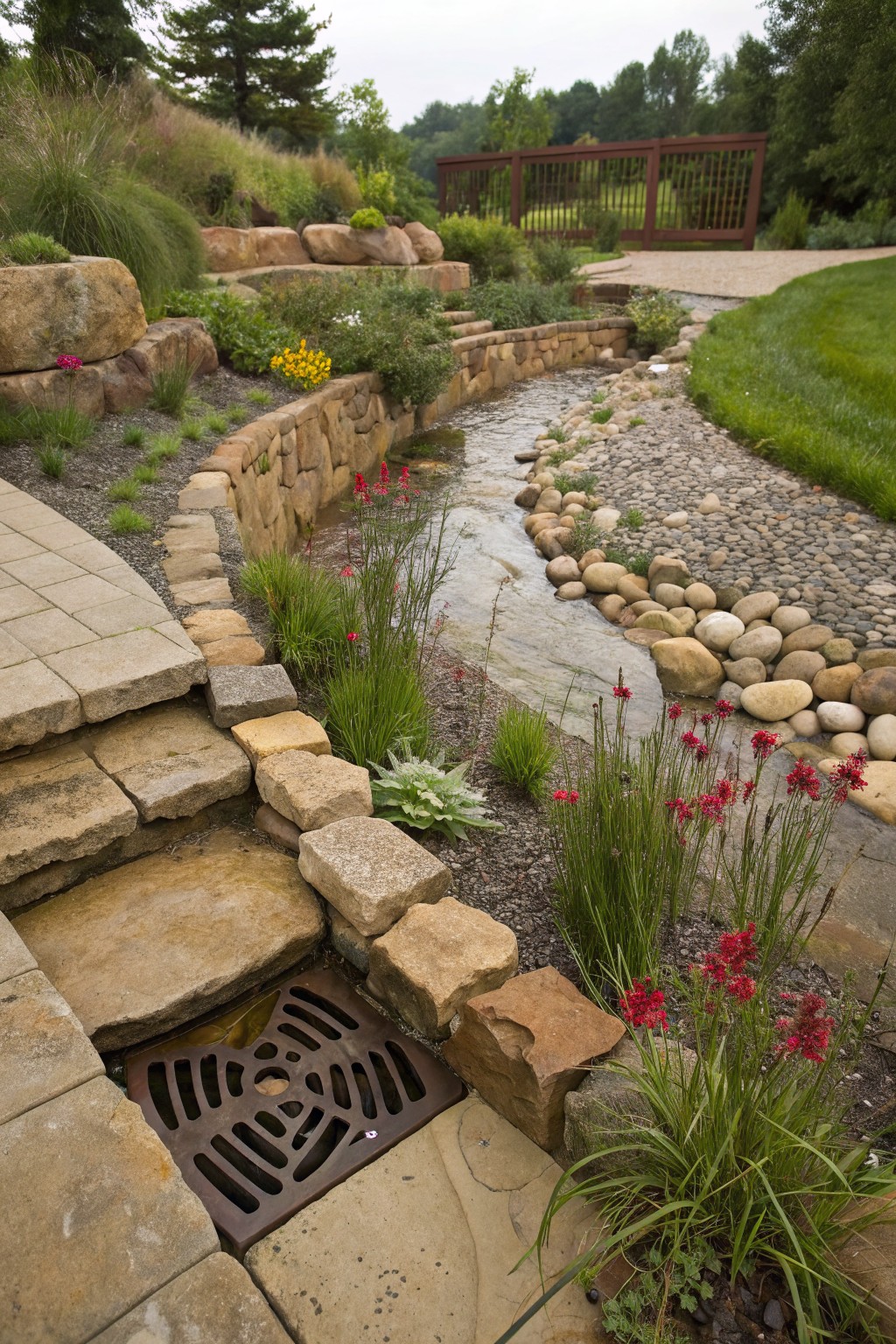
A dry creek bed like this one winds through the yard with low stacked stone walls holding it in place. Gravel and smooth river rocks fill the channel to mimic flowing water, while plants like tall grasses and red blooms poke out along the edges. It pulls rainwater away from paths and steps without much upkeep, and those natural stone borders give everything a clean, grounded look.
Put one in a front yard that slopes or gets wet after rain. Stack local fieldstone for the walls, two or three courses high, and line the bed with larger rocks at the bends. Add a few tough perennials that won’t mind dry spells. Works best where you want movement without real water. Just watch the scale, it shouldn’t overwhelm a small lot.
Stone Retaining Walls for Sloped Yards

Stone retaining walls like these make sloped front yards feel organized and welcoming. They hold back the soil while creating flat spots for flower beds and paths. In this setup, the curved wall follows the slope nicely, with pink coneflowers and other perennials spilling over the edge. It keeps everything from looking messy, especially on hills where erosion can be a problem.
You can use this idea on any yard with a drop-off near the house. Build low walls with local fieldstone or cut granite for a natural fit. Pair them with a simple flagstone path that winds up to the entry. It works best on cottage-style homes or older places with some character. Just make sure the walls drain well to avoid cracks over time.
Brick Path with Lush Green Borders
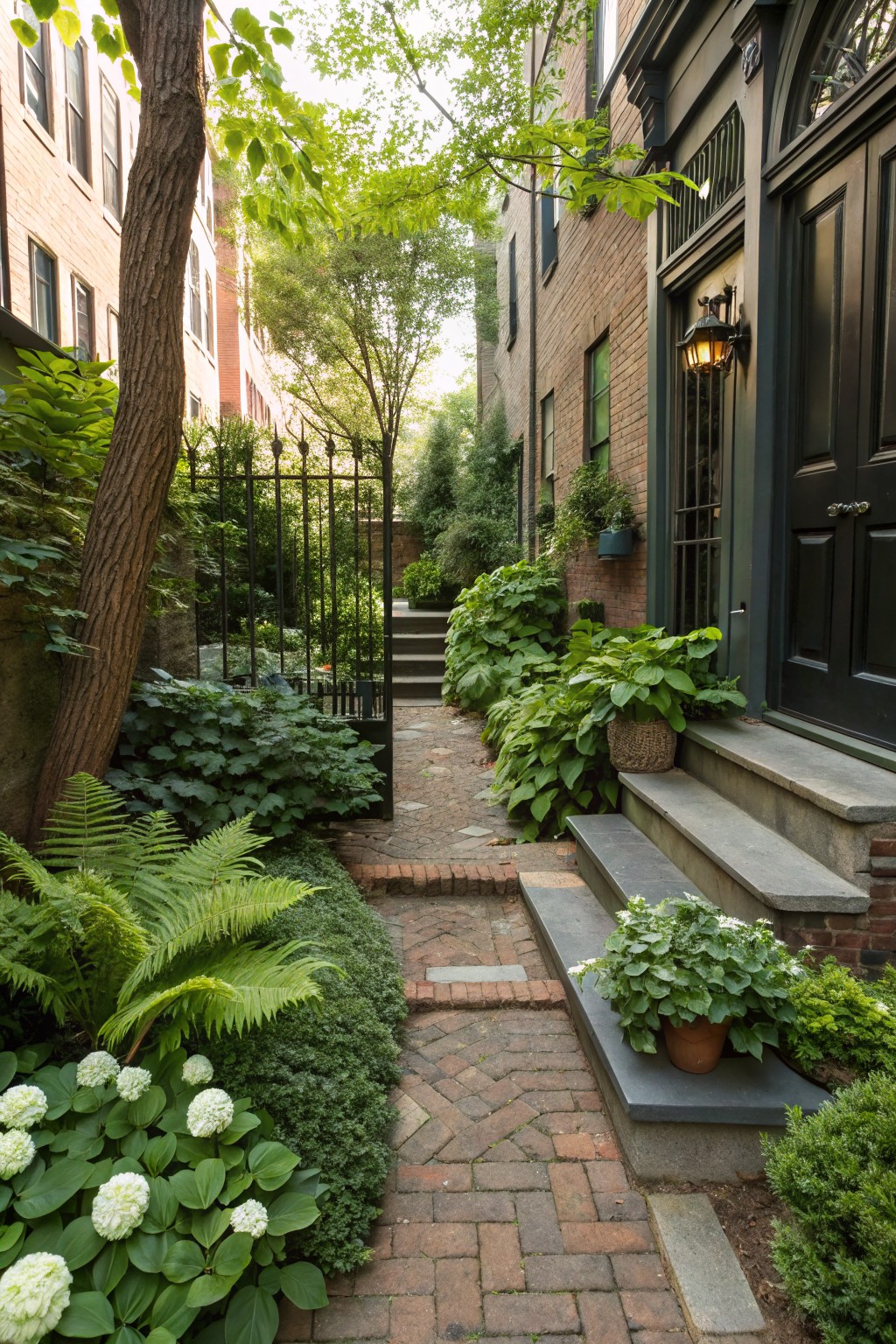
A brick walkway like this one draws the eye right to the front door without feeling too straight or plain. The path sits between low stone steps and thick plantings of ferns and hostas that soften the edges. It turns a skinny side yard into something welcoming and tucked away.
This works best in narrow front spaces or along older brick homes where you want low upkeep. Line the bricks with shade lovers that grow full but stay neat. Just trim back once a year so the path stays walkable. Avoid sunny spots, though. These plants need that dappled light from nearby trees.
Winding Flagstone Path to the Entry
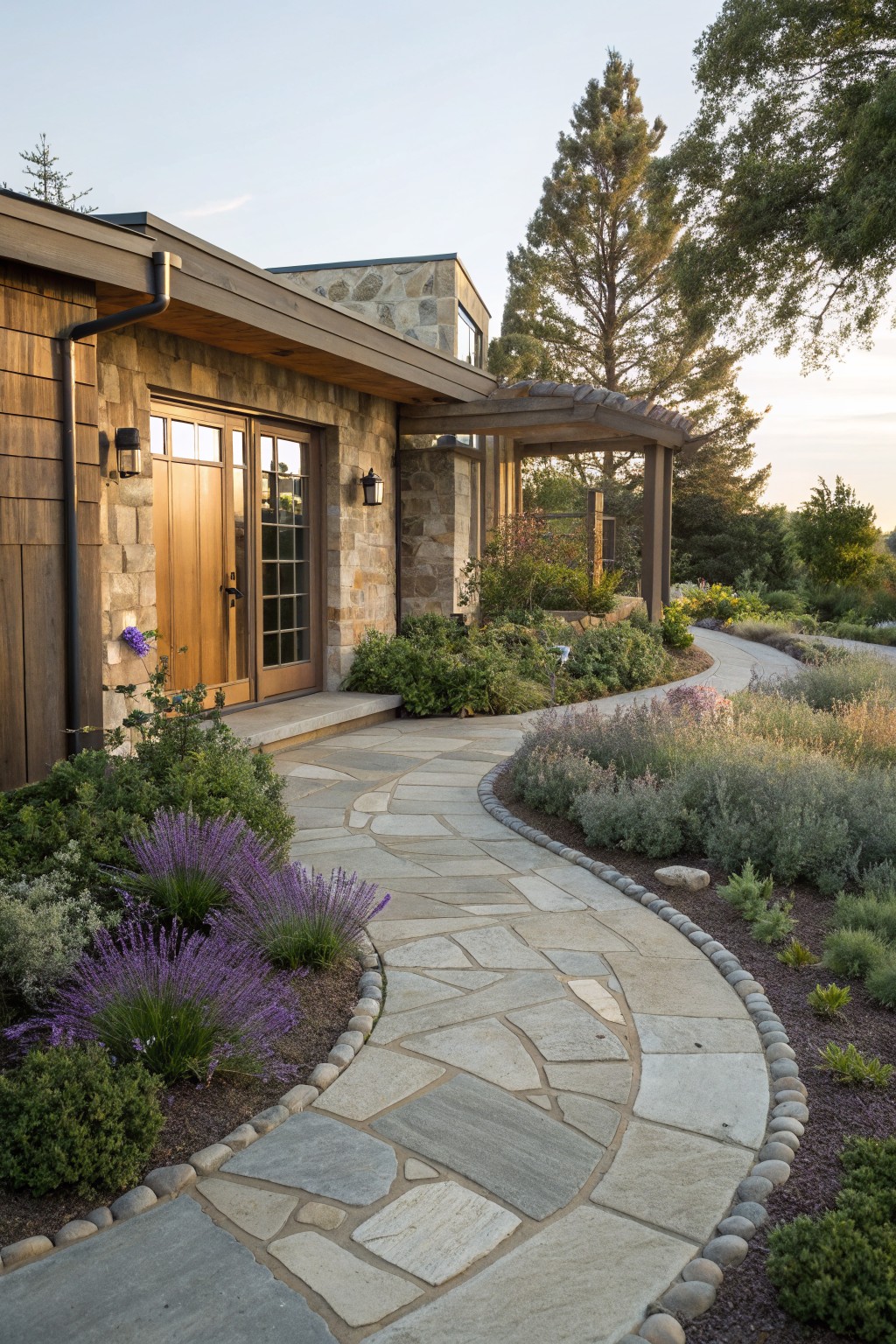
A simple curved path like this one uses irregular gray flagstone slabs laid in a loose pattern. Smooth round pebbles edge both sides, mixed right into low plants such as lavender bushes. It pulls your eye straight to the front door without looking too stiff or formal. Folks like how it fits right into the yard, blending stone with the garden beds.
You can pull this off in most front yards, especially ones with a gentle slope or extra planting space. Pick flagstone in soft grays or beiges to match your house siding. Keep the pebble border narrow, just a foot wide, and tuck in drought-tolerant plants that won’t flop over the path. It works best on homes with a rustic or craftsman feel, but watch the weeds in those pebbles.
Stone Paver Path with Gravel Borders
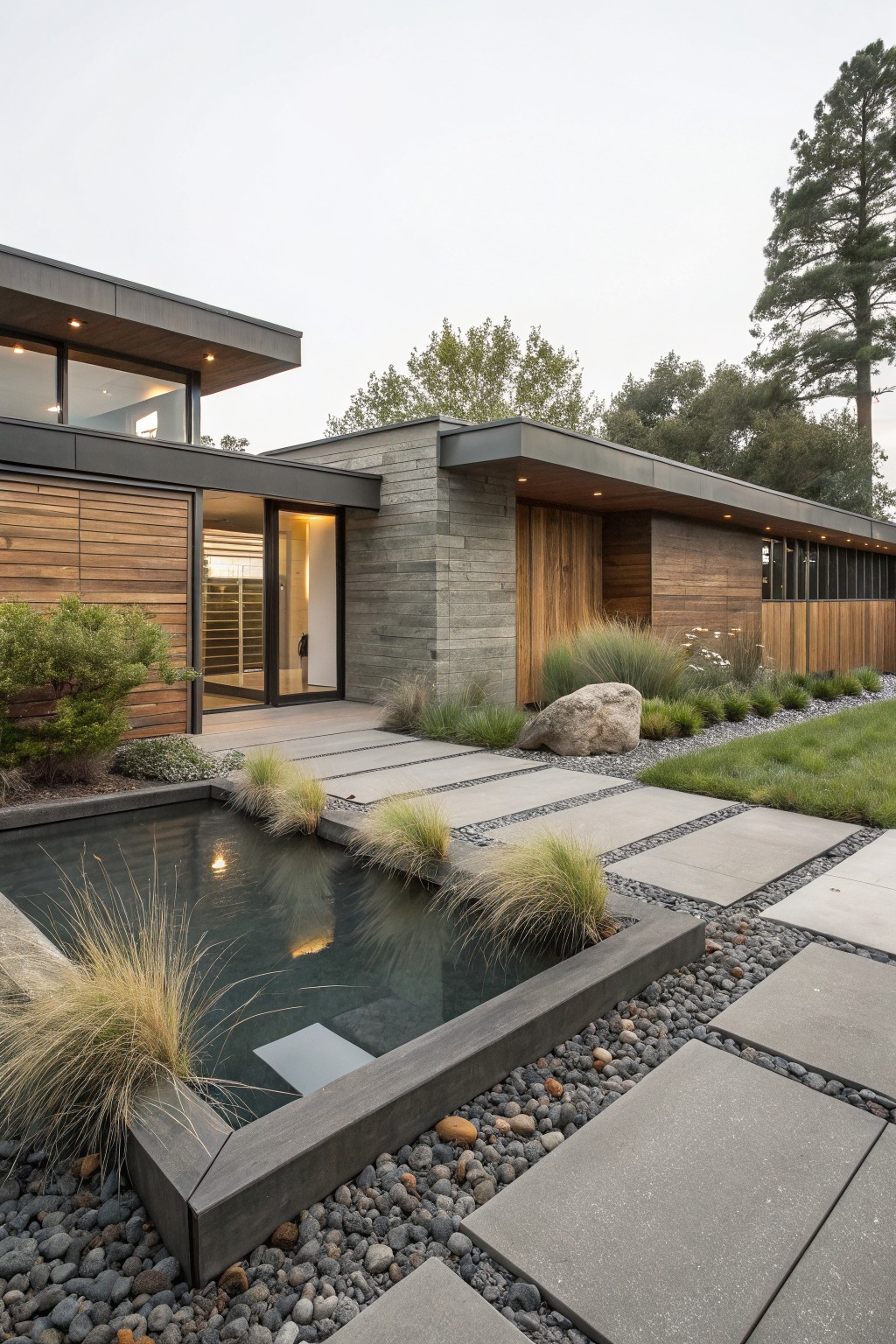
Big square pavers laid out with gravel filling the gaps make a straightforward path to the front door. Here it’s edged by tall grasses and runs alongside a simple water pool with smooth stones at the bottom. The look stays open and modern without much upkeep, letting the house itself take center stage.
This works best in front yards that get full sun, where drought-tolerant plants like those feather grasses fill in nicely. Try it on mid-sized lots around newer homes or remodels aiming for clean lines. Just space the pavers wide enough for gravel to show, and keep weeds in check so it doesn’t get messy.
Gravel-Bordered Curved Walkway
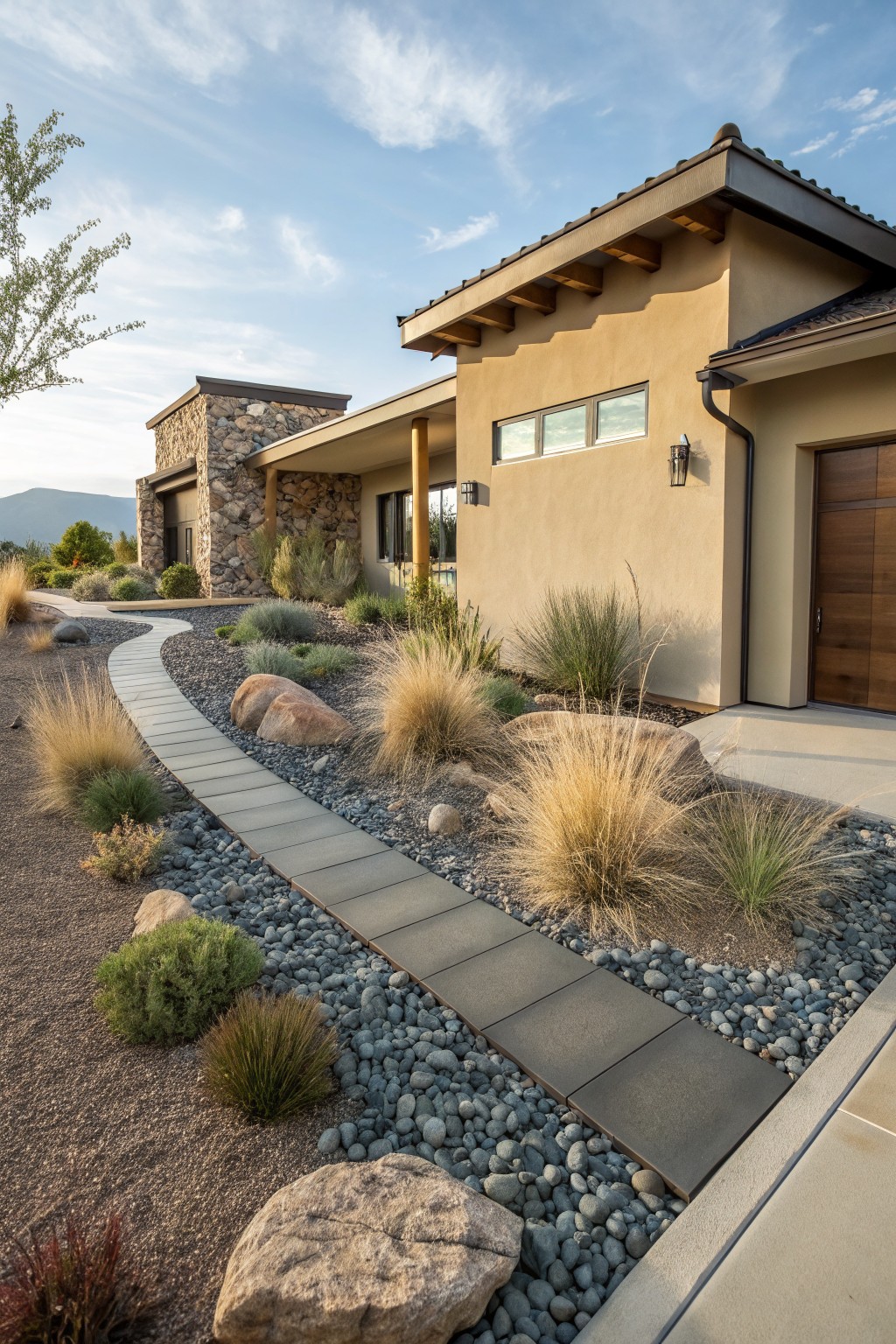
A winding path made from large gray pavers cuts a clean line through the front yard gravel. It’s edged simply with river rock and big boulders, while clumps of tall grasses fill in the spaces. This setup guides you right to the door without much fuss, and it fits right in with the house’s stucco and wood garage door.
You can pull this off in dry climates or anywhere water use matters. Lay the pavers in a gentle curve to soften straight lines from the driveway. Keep plantings low like feather grass or agave so they don’t block the way. Skip mulch, it washes out here. Works best on larger lots where you want some structure but not a fussy garden.
Lavender Borders Along Stone Paths
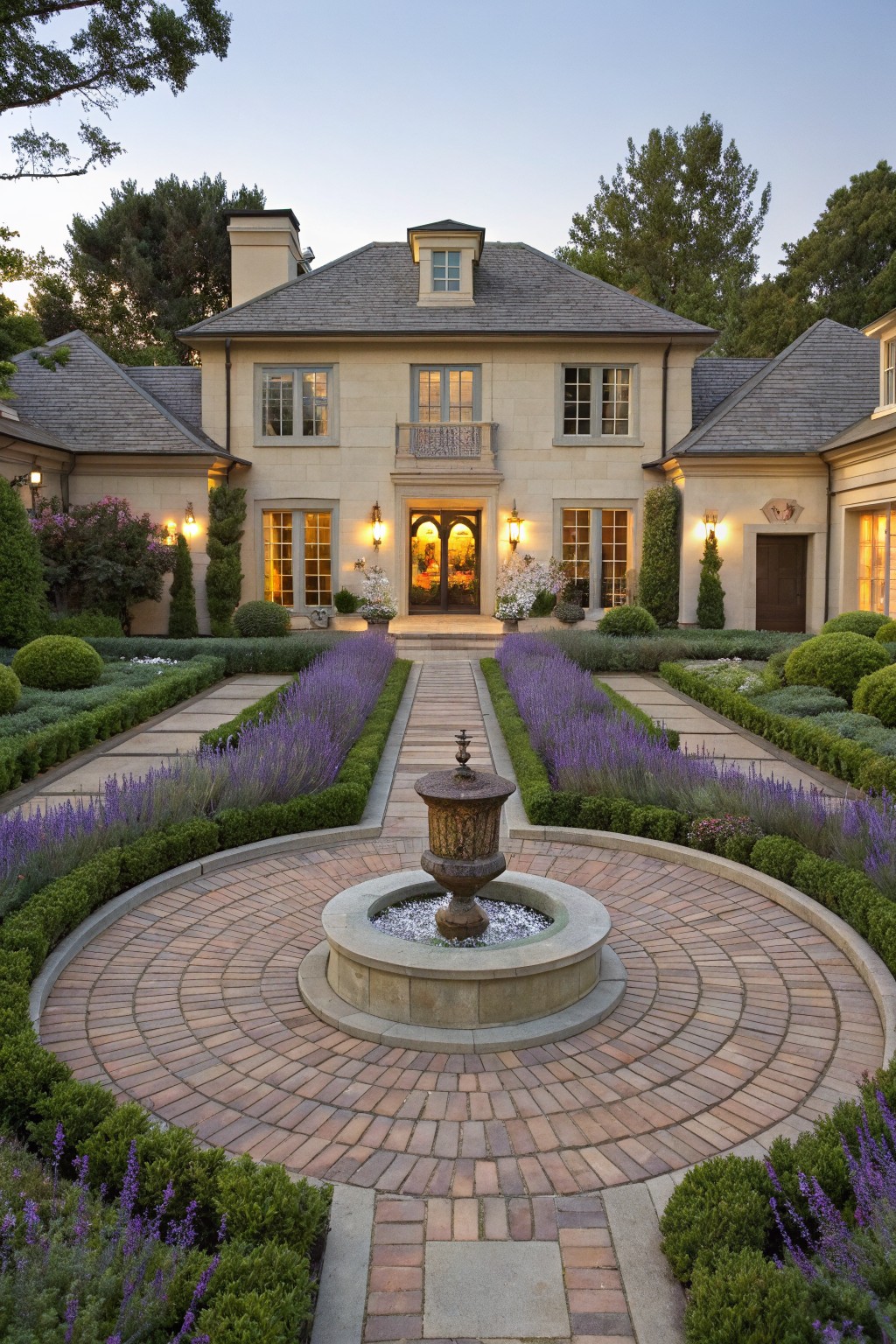
One simple way to frame your front yard nicely is lining stone pathways with rows of lavender plants. The purple blooms add color and a soft scent right where people walk up to your door. Paired with clipped boxwood edges, it keeps everything neat and draws the eye straight to the entry without feeling busy.
This works best in sunny spots on classic or traditional homes. Space the lavender about a foot apart along each side of the path, and use low stone or brick for borders if you want. It’s low fuss once established, just trim the boxwoods now and then. Avoid shady areas though, lavender needs full sun to thrive.
Wooden Walkway Edged in Pebbles and Gravel
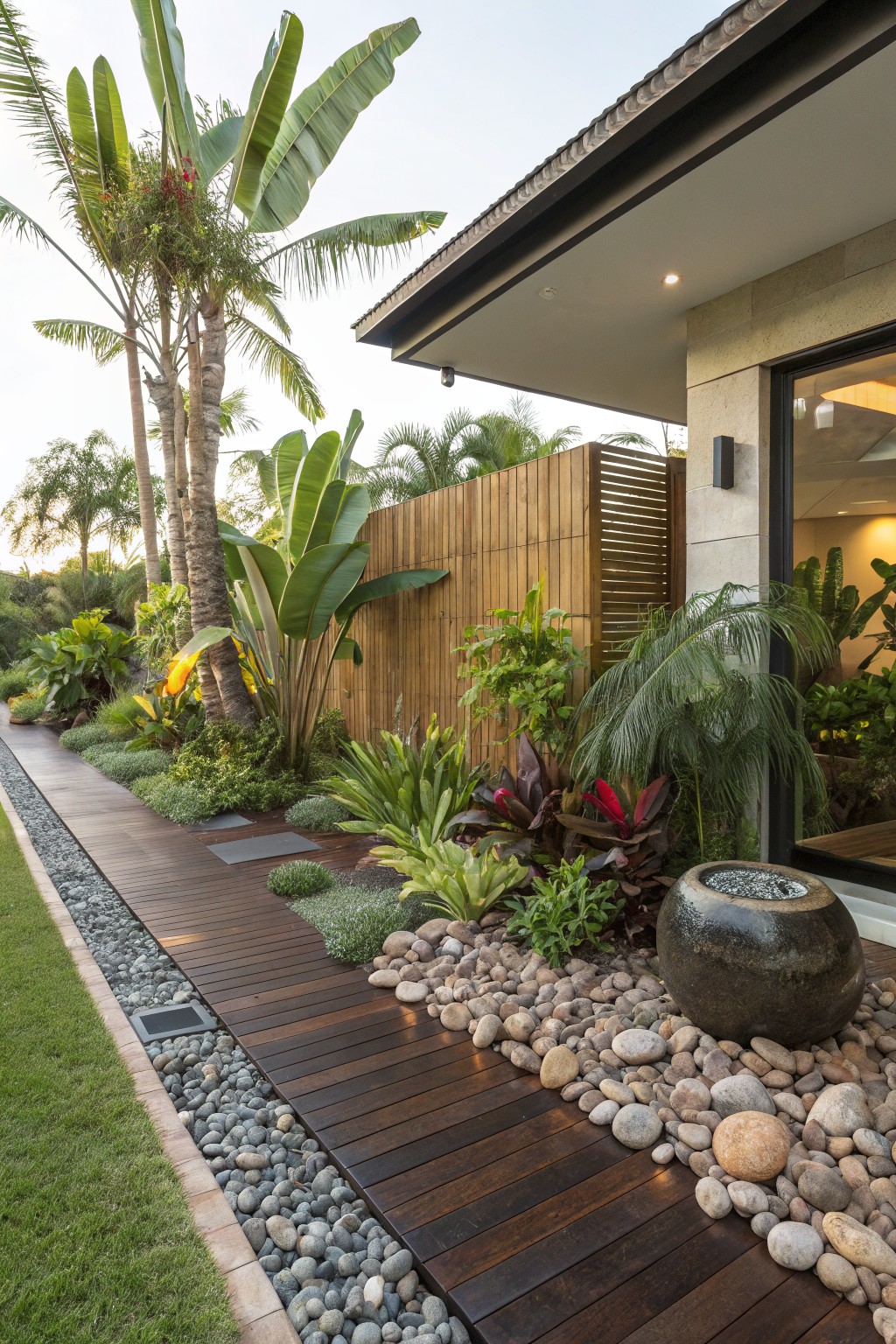
A dark wood walkway runs through this front yard garden, with borders of smooth pebbles and gray gravel right along the edges. That simple stone edging keeps everything neat and draws your eye straight to the house door. The contrast with the wood makes the path stand out, and it lets the tropical plants like those big banana leaves fill in without mess.
You can pull this off in most front yards, especially if you have some slope or curves to follow. Lay down landscape fabric first to block weeds, then add the gravel for drainage and pebbles for a softer look. It suits homes with a modern or island vibe… just scale the rocks to match your space, bigger ones near pots or steps.
Stepping Stone Paths in Gravel
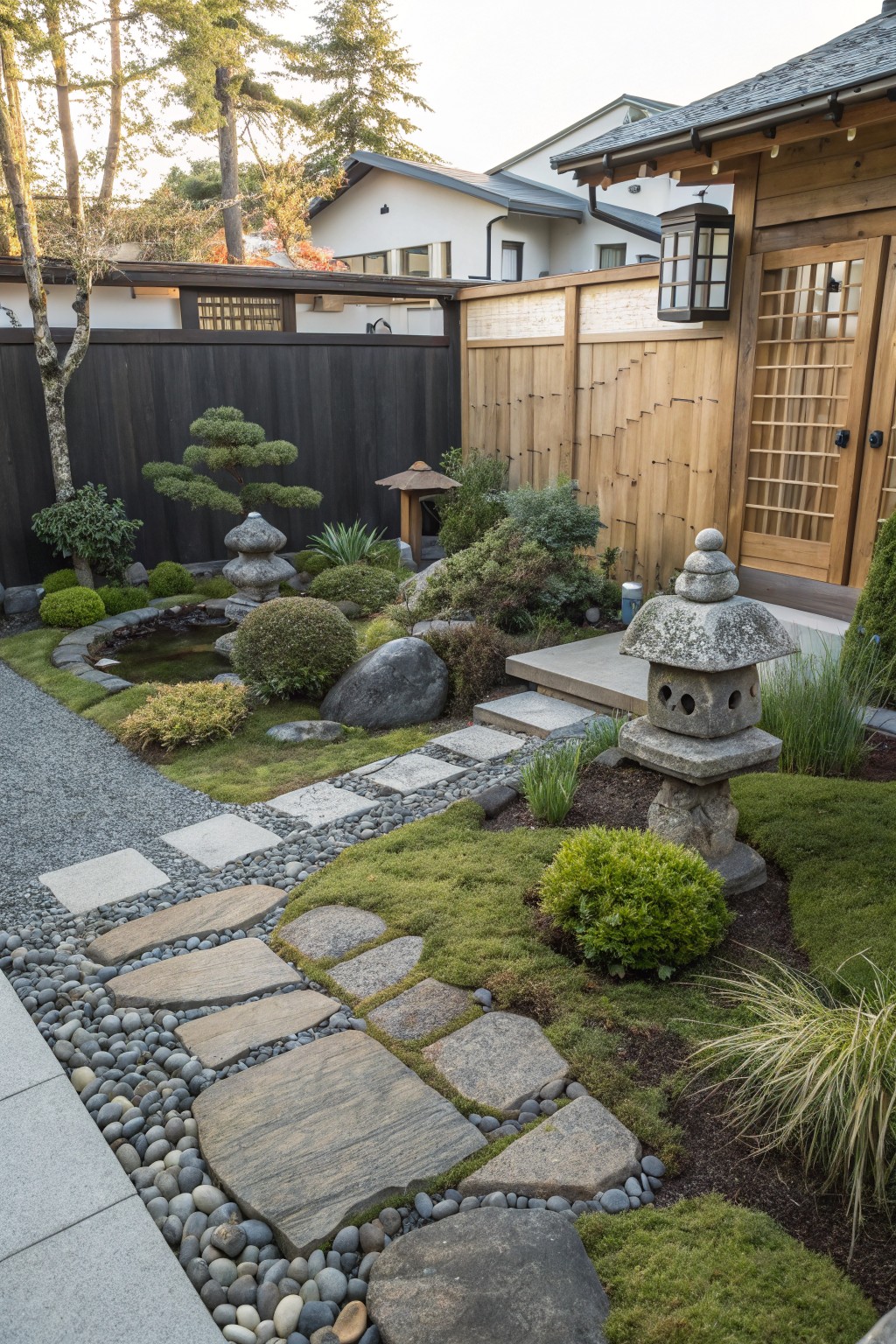
One straightforward way to guide people through a front yard is with large, flat stepping stones set right into a gravel bed. Like in this garden, the irregular shapes make the path feel natural and easy to follow, without needing a full concrete walkway. The gravel acts as a simple border that keeps things tidy and lets moss creep in for a softer touch.
This works best in smaller yards or Zen-style setups where you want low upkeep and a calm vibe leading to the door. Space the stones about two feet apart for normal strides, and use larger gravel so it doesn’t shift too much. It suits modern homes with clean lines or traditional ones wanting more character… just avoid super steep slopes.
Stone Borders Line the Entry Steps
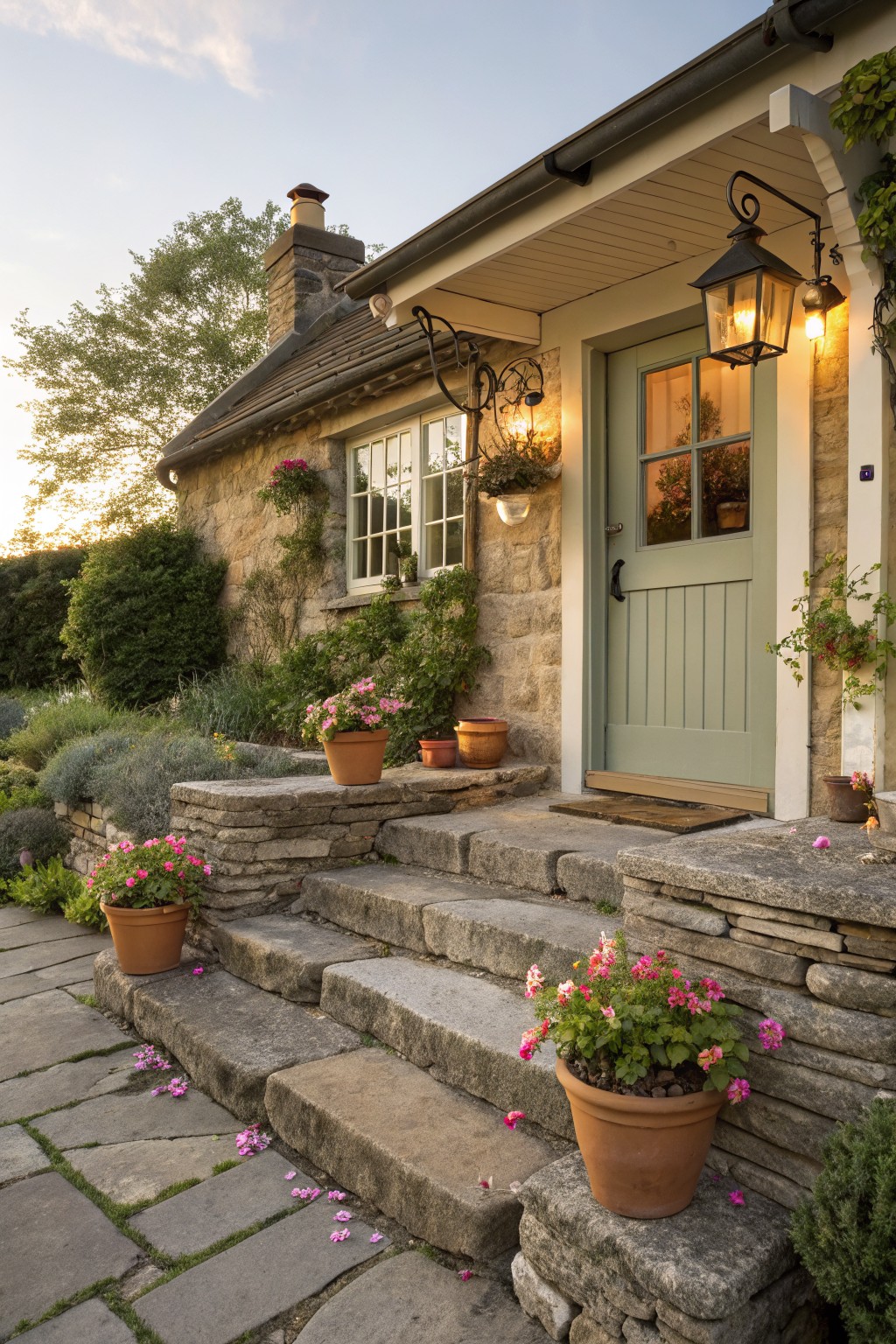
Rugged stone borders like these work great around front steps. They hold back the soil for planting beds and create a clear path up to the door. Paired with a few terracotta pots of pink flowers on the steps, it keeps things simple and ties right into the stone cottage walls. No need for fancy edging. This setup feels sturdy and settled in.
Use it on sloped yards where you need to terrace the ground anyway. Pick stones that match your house, maybe dry-stacked for a casual look. Add low plants or bulbs along the borders, and pots for color that you can swap out seasonally. It suits older homes or rural spots best. Just make sure the steps are wide enough to walk comfortably.
Raised Stone Beds Along Entry Stairs
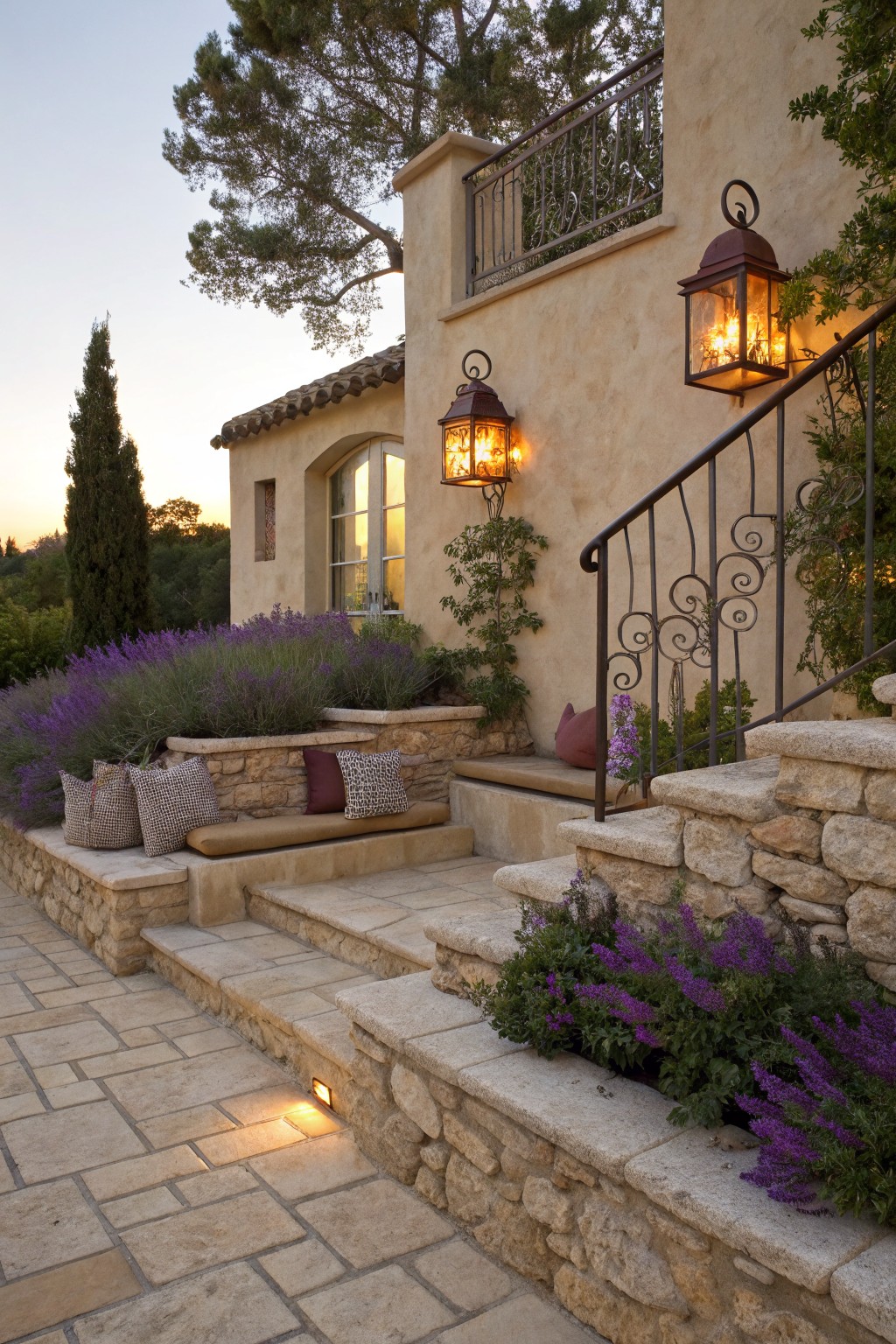
One simple way to tidy up a front yard entry is with raised stone beds planted right along the stairs. Here, thick lavender fills the beds, hugging the steps and path without spilling over. The stone keeps everything neat and ties into the house’s texture, making the walk up feel guided and pretty at the same time.
This works best on sloped lots or where you want to terrace a bit. Pick stone that matches your house, like the rough limestone here, and go with tough plants such as lavender that don’t need much water. Skip it if your yard is super flat… just build low borders instead.
Boulder Borders for Winding Paths
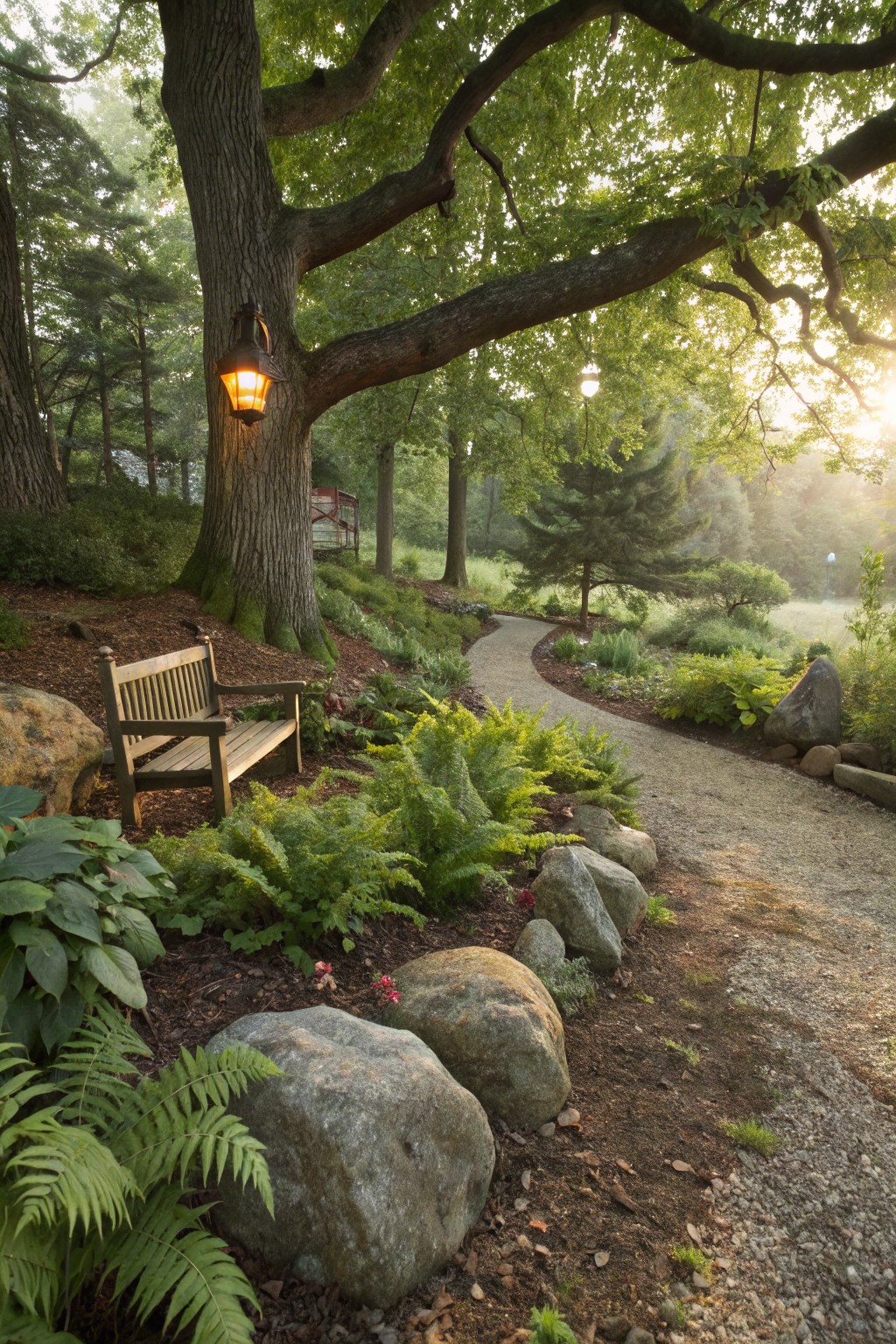
One simple way to guide visitors through your front yard is with large boulders lining a gravel path. These stones create clear edges that keep the walk tidy, while the curve adds a bit of interest. Paired with ferns and mulch, they blend right into a wooded setting and make the garden feel put together.
This works best in shadier spots where bold plants like hostas can fill in. Pick boulders in natural shapes and sizes to match your yard’s rocks. Avoid straight lines if you want that relaxed garden vibe… just let the path meander a little.
Large Pavers Set in Gravel Beds

One straightforward way to handle a front path is laying big concrete slabs right into gravel. You see it here with wide square pavers spaced out just enough for gravel to fill in between. It pulls the eye straight to the door without much fuss. Drought plants like agave sit along the low stone walls, keeping the look spare and easy on water.
This works best in sunny dry spots where grass won’t hold up. Suits modern houses with clean lines. Go for pavers at least two feet across so they feel solid underfoot. Skip tiny pebbles if you want less raking, and add a few grasses for some movement. Just make sure the gravel drains well or it turns to mud after rain.
Winding Stone Path with Low Borders
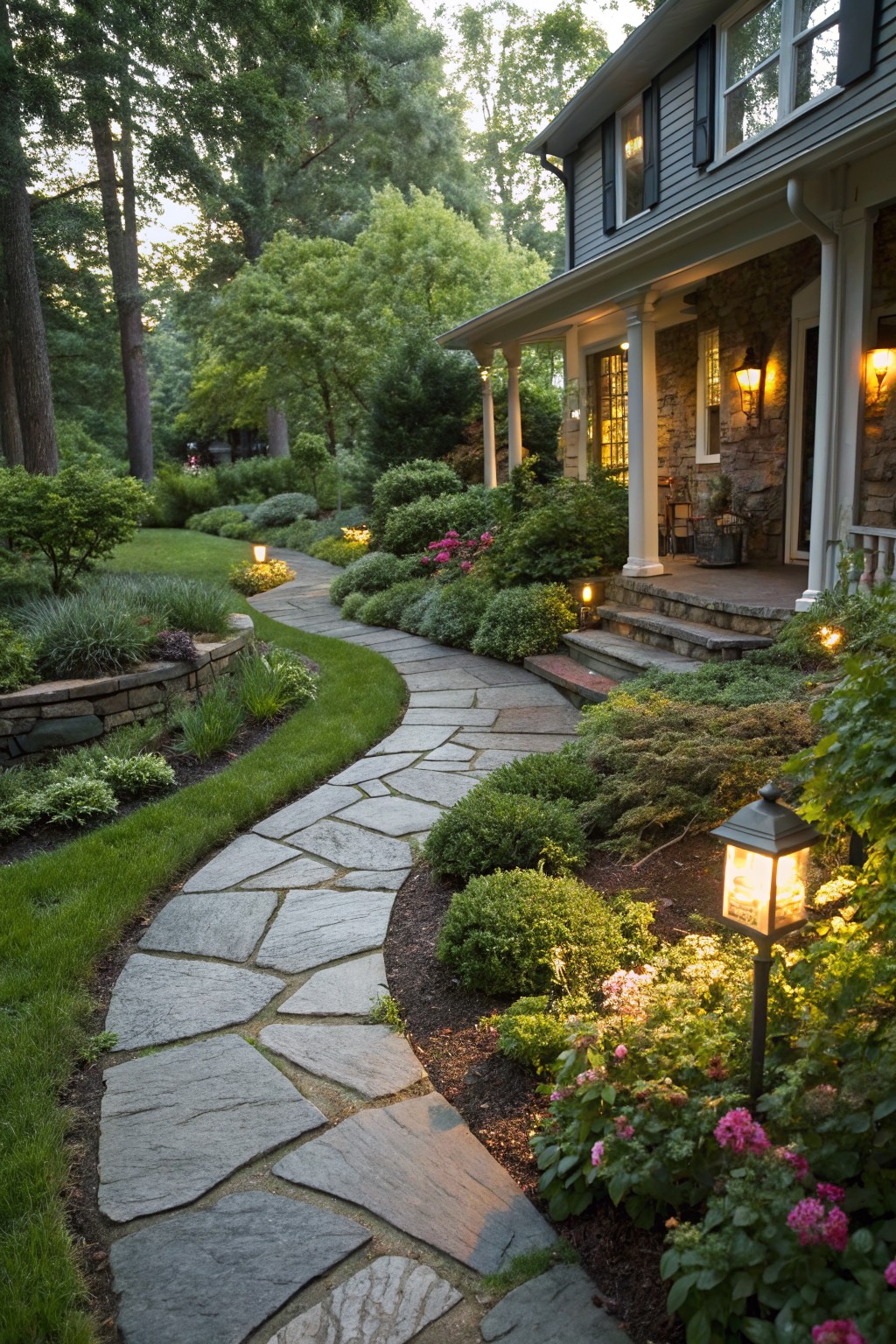
A simple curving path made from irregular flagstones works so well here because it follows the natural flow of the yard. Low stone walls along one side hold back plant beds packed with shrubs, perennials, and groundcovers. That setup keeps everything neat without looking too formal. The path just guides you right up to the door.
You can pull this off in most front yards, especially ones with a bit of slope or trees nearby. Pick stones that match your local area for that grounded feel, and layer in low-growing plants so the path stays the main focus. Watch the scale though. too much border stone can overpower a small lot.
Winding Stone Path with Boxwood Borders
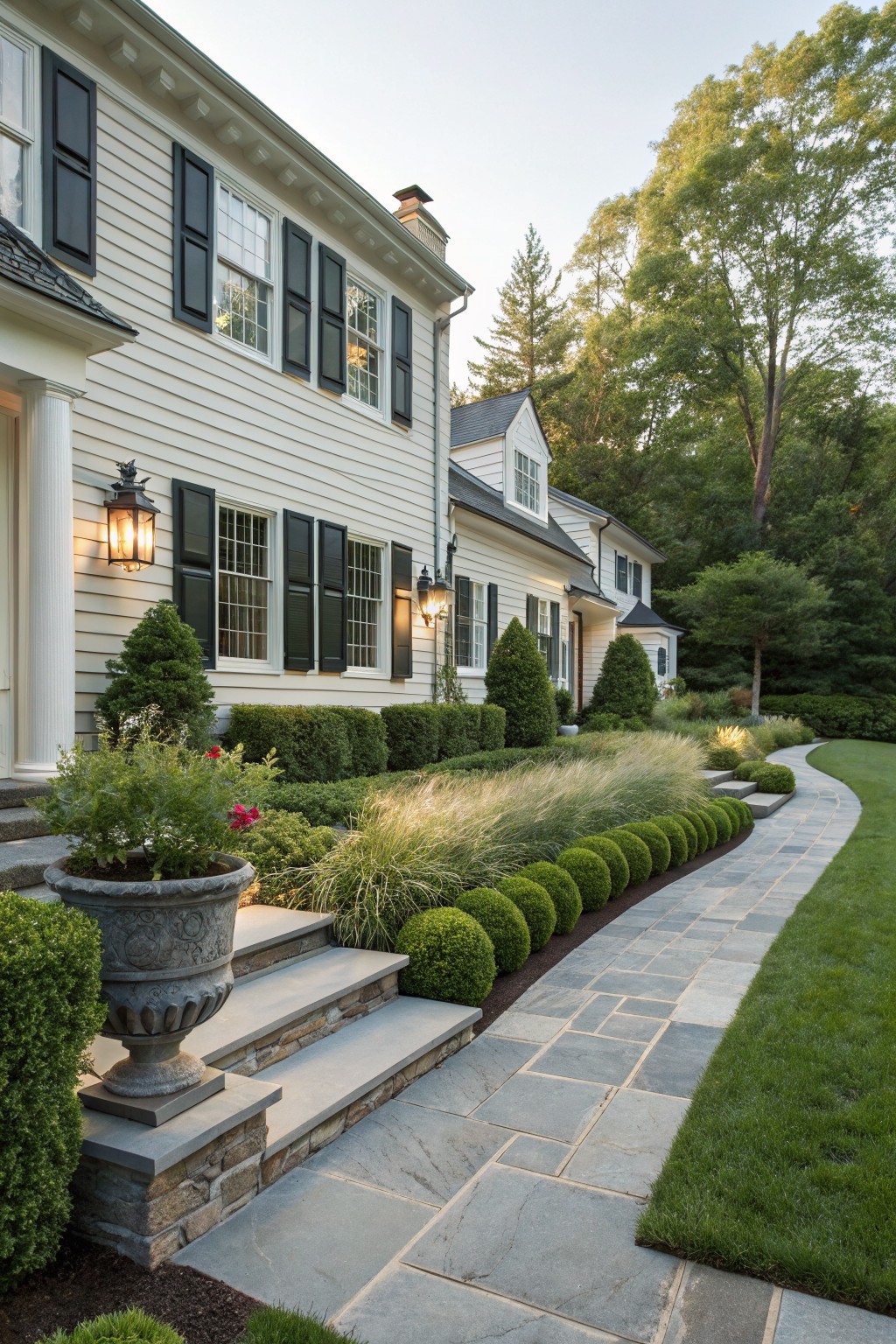
A gentle curve of bluestone pavers leads straight to the front steps here, edged by rows of round-clipped boxwoods and wispy fountain grass. It makes the walk up feel intentional and easy on the eyes. The stone keeps a clean line while the shrubs frame it just right, tying the yard into the house without any fuss.
This works best on homes with classic lines, like colonials or farmhouses, where you want curb appeal that looks put-together year-round. Use low boxwoods for that formal rhythm, add grasses for movement, and pick durable stone for the path. Trim the shrubs a couple times a year… and you’re set. Avoid overcrowding the edges; let the path breathe.
Frequently Asked Questions
Q: Can I lay stone borders myself or should I call a pro?
A: Grab a shovel, some gravel for the base, and level ground first. Dig a shallow trench about six inches deep, line it with landscape fabric, then set your stones snugly. Most folks finish a simple border in a weekend with basic tools.
Q: What stones should I pick for a small front yard?
A: Go for rounded river rocks or flat flagstone, they hug curves nicely without overwhelming tight spaces. Lighter colors open up the area visually. Match the stone’s size to your bed height, like two-inch pieces for low borders.
Q: How do I stop weeds from popping up in the stones?
A: Lay thick landscape fabric under the stones before backfilling gaps with pea gravel. Spot-treat any breakthroughs with vinegar spray early on. Refresh the gravel yearly to smother seeds.
Q: Do these borders hold up on a sloped yard?
A: They do great if you dig the trench deeper on the downhill side and use larger, interlocking stones. And… stake the fabric securely downhill to fight erosion. Test a small section first to see how it settles.
