

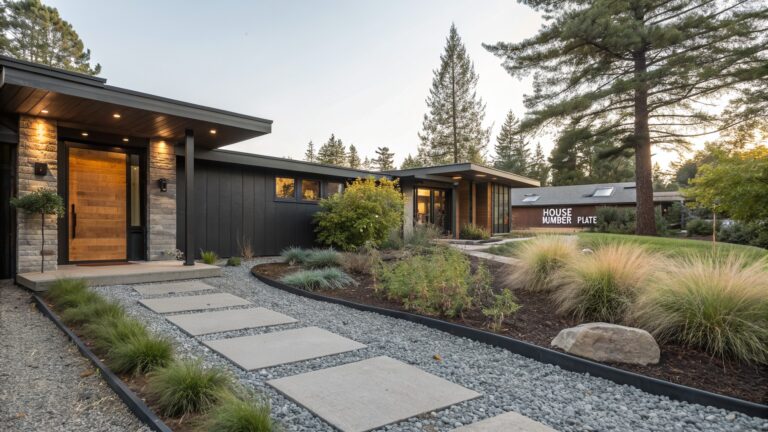
I’ve found that front yards really come alive when edging draws firm lines between the lawn, paths, and plantings.
In my own setup, simple metal strips turned a weedy patch into tidy beds that fill out nicely each spring without much fuss.
Drive by one of those yards, and the edges hit you first.
They shape how the whole space flows and holds up over time.
A few border styles like curved stone or low timber walls have stuck with me as keepers worth adapting to different soils.
Brick Edging for Curved Flower Beds

A simple red brick edge runs along this winding gravel path, holding back the flower beds on one side. It gives the garden a clean shape without overpowering the plants. Lavender bushes and daisies fill the beds nicely, and that low border keeps mulch and dirt in place. The curve pulls your eye right to the house porch.
This edging works best in smaller front yards where you want definition but not a hard line. Lay the bricks flat or slightly raised around curved paths, and pair with gravel for easy walking. It suits older homes or cottages… just avoid tall borders that block the view. Go for reclaimed bricks if you can find them local.
Defining Beds with Stone and Wood Edging

A simple way to shape your front yard is with low retaining walls made from stacked stone and rough-cut wood. They run right along the path here, holding back beds of grasses and succulents. This keeps soil in place and makes the whole layout feel organized, especially on a gentle slope near the house.
Try it where you need to tame uneven ground or just want cleaner lines for plants. It suits coastal homes or dry spots with tough, drought-friendly stuff like feather grass. Go for natural materials that weather over time. One thing, build them sturdy so they last through rain.
Formal Boxwood Edging Around Entry Paths
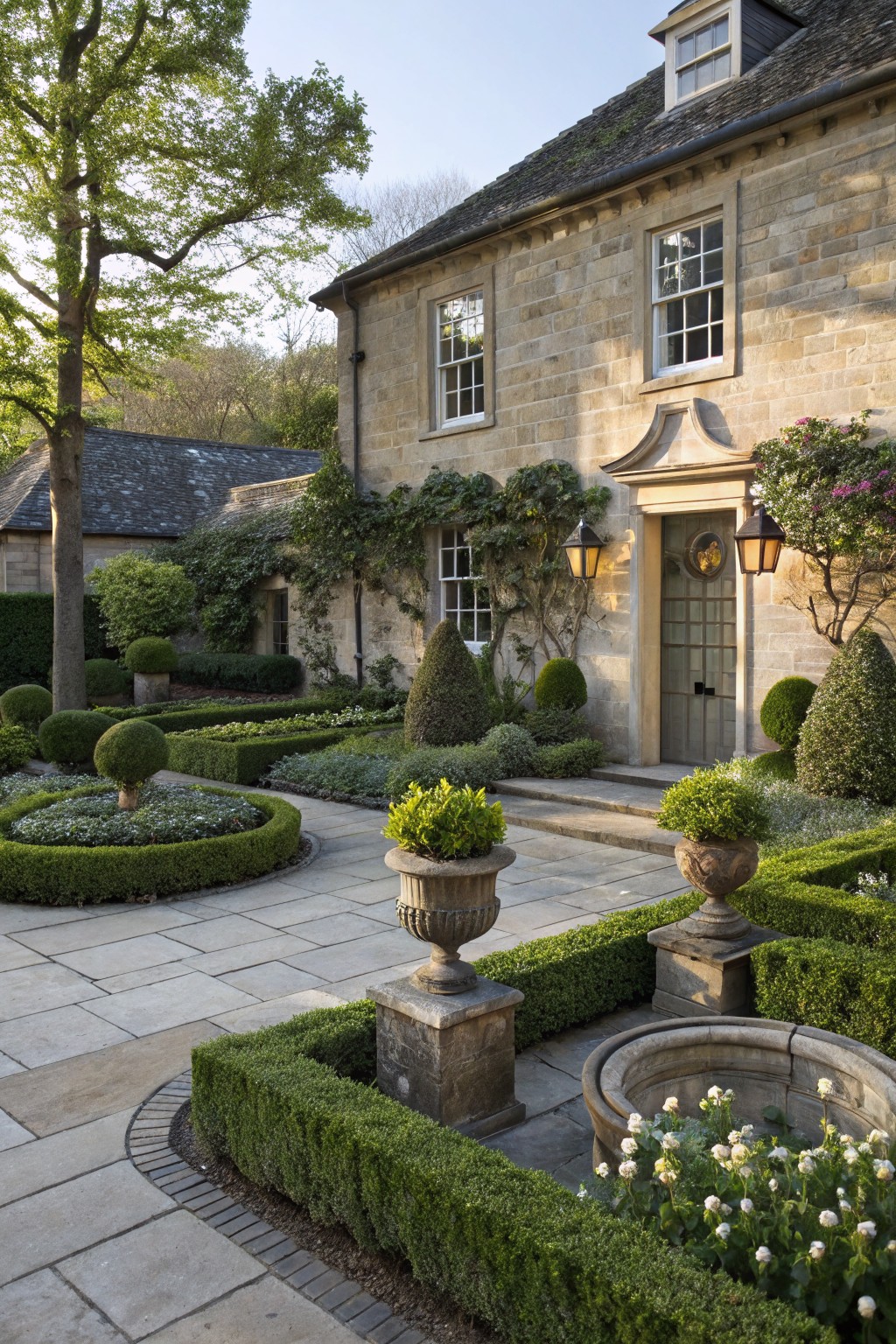
Boxwood hedges work great for lining front yard paths and beds. They create sharp edges that keep everything in place and guide you right to the door. In this setup, the low clipped hedges mix with round topiaries and stone paving for a tidy rhythm that feels put-together.
Try it on homes with stone or brick facades where you want some structure without tall plants blocking the view. Space the boxwoods close along walks, trim them regular, and pair with simple urns. It holds up well in most spots… just watch for boxwood blight in damp areas.
Crisp Gravel Edging Beside Paver Paths
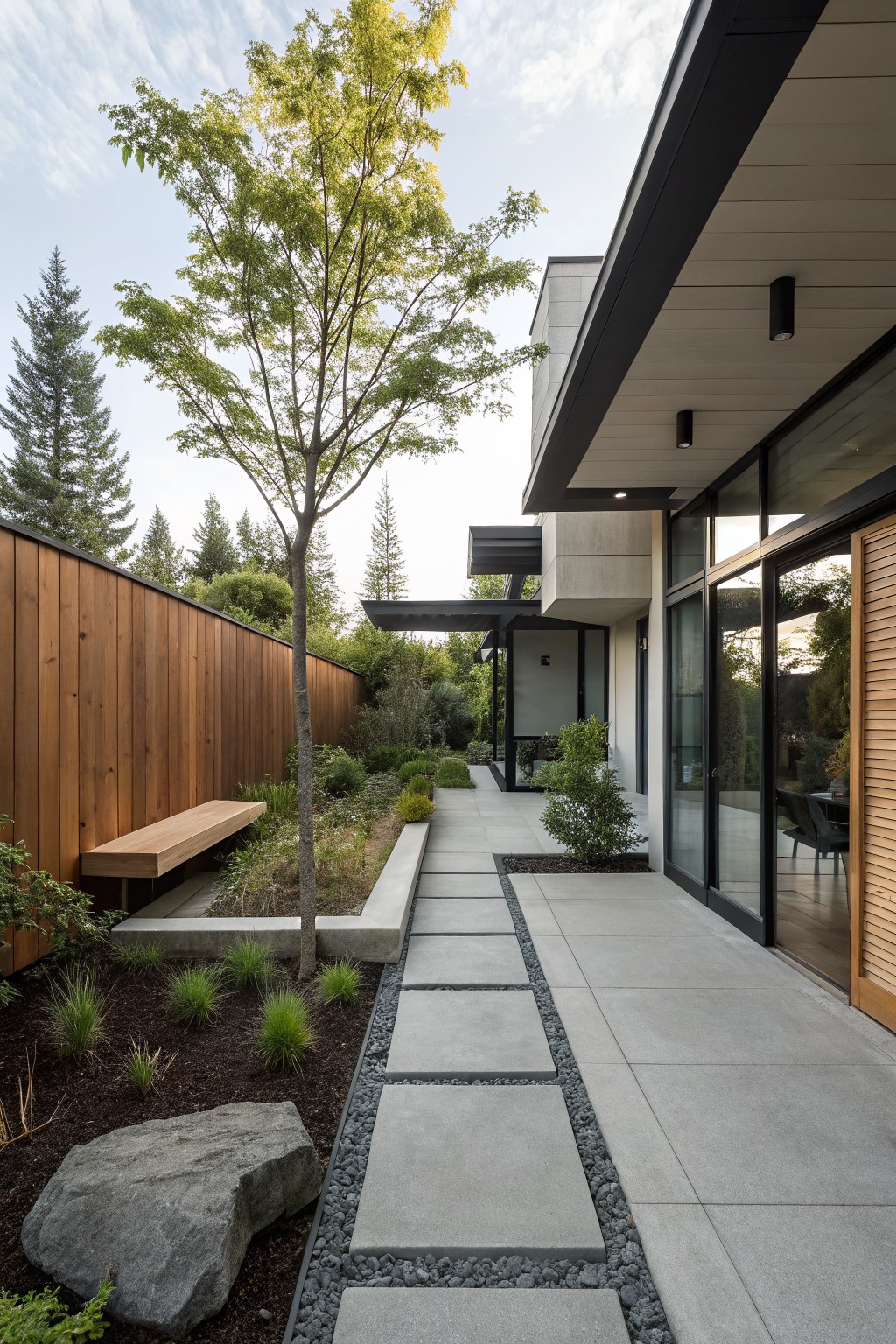
One clean way to define your yard space is with a narrow gravel strip running right alongside a row of square concrete pavers. It keeps the path neat and separate from the planting beds, like how this setup uses dark pebbles to edge the steps leading to the house. That simple divider makes the whole walkway feel intentional without much upkeep.
You can pull this off in a front yard side path or entry approach, especially on modern homes with clean lines. Go for larger gravel so it stays put, and pair it with low plants or a big boulder for some weight. It works best where you want low water use and easy mowing around the edges.
Metal Edging Shapes Gravel Beds
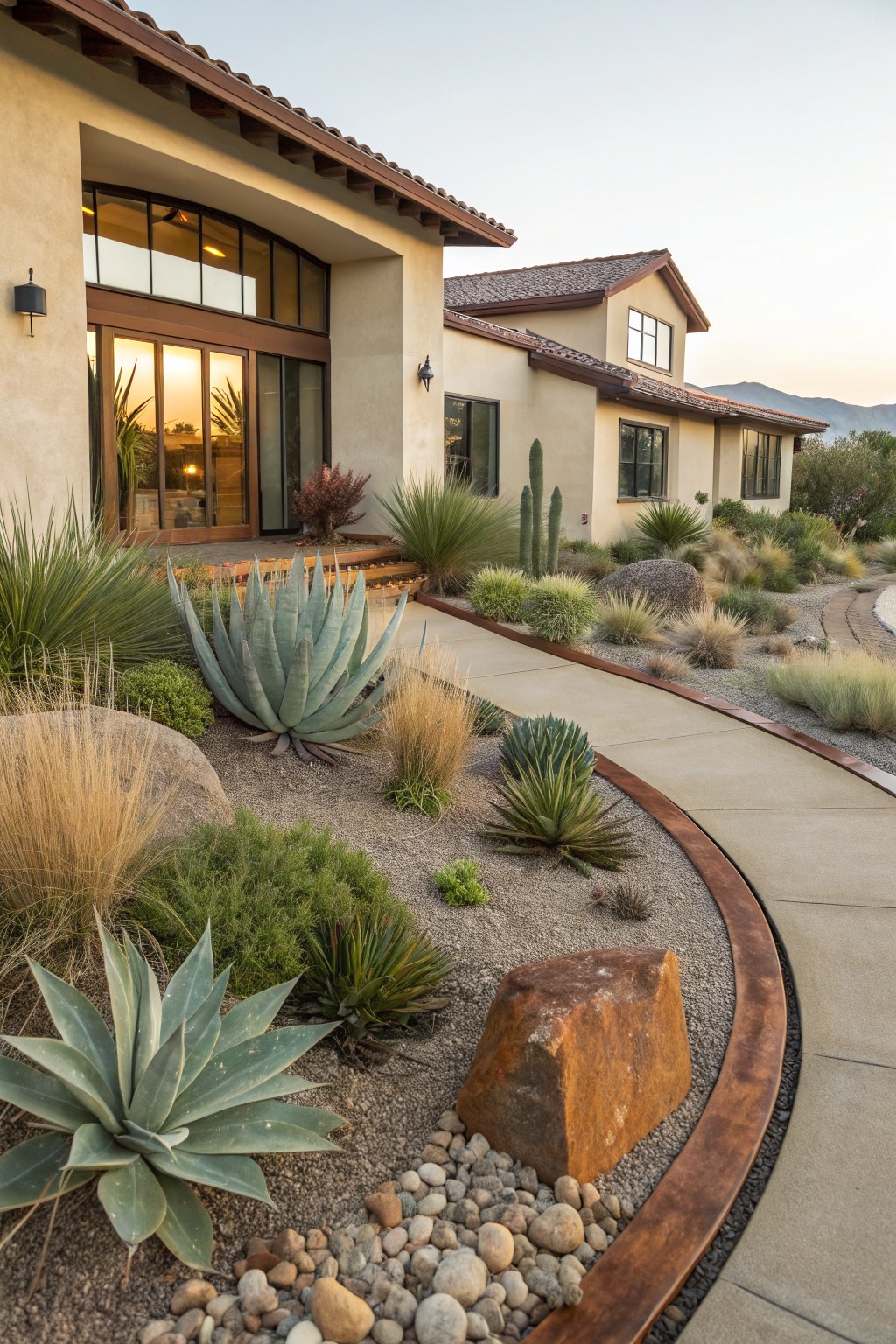
One clean way to tidy up a front yard is with metal edging along gravel paths. Here it runs right beside a smooth concrete walkway, holding back beds of agave and smaller succulents. That simple border keeps the loose gravel and rocks in place. No mess spreading onto the path.
Try this in sunny, dry spots where you want low upkeep. Corten-style steel picks up a nice rust patina over time and blends with earth tones. It suits modern or Southwestern homes best. Just make sure the edging sits flush so you don’t trip.
Gravel Path with Stepping Stones
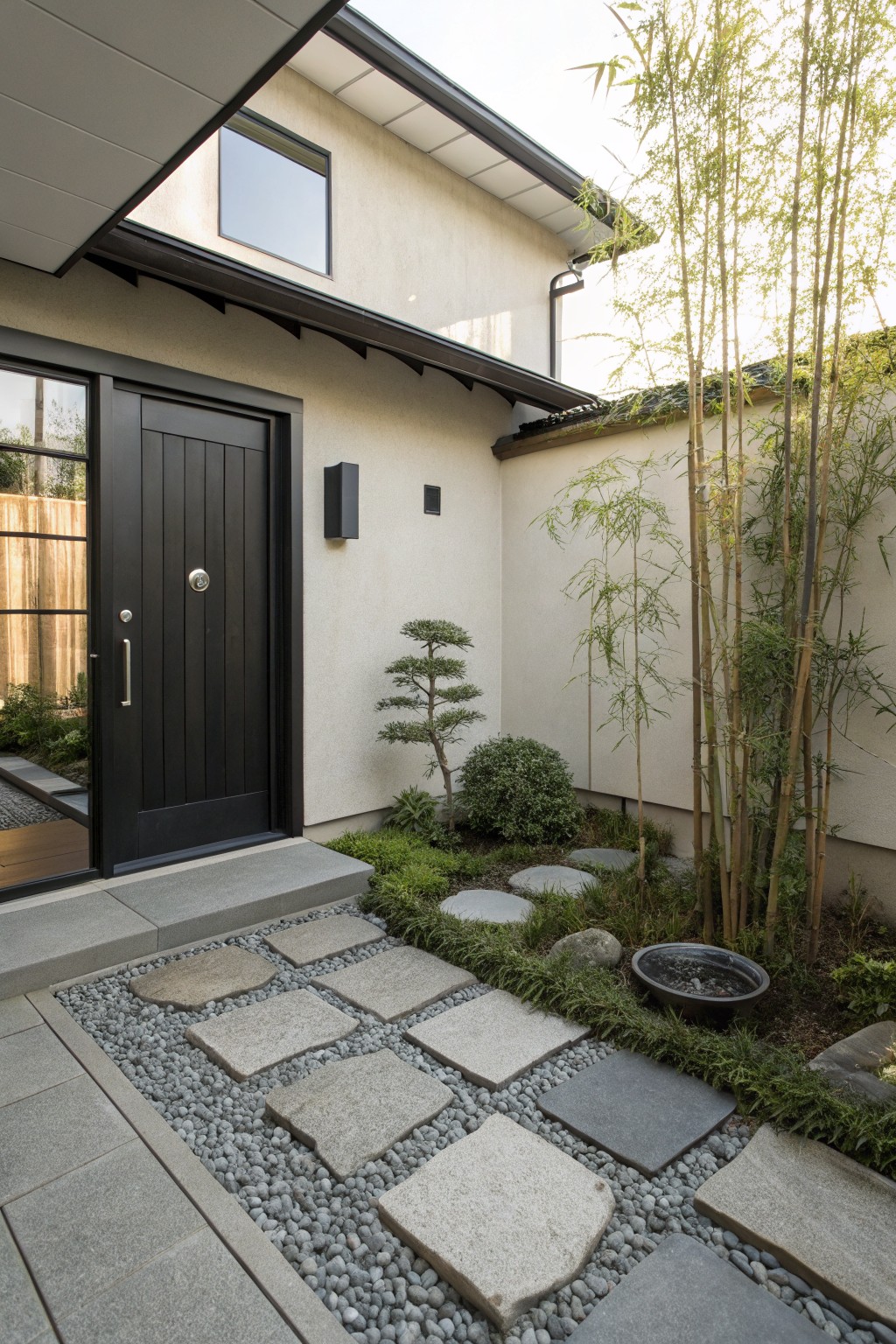
A gravel path lined with rough-cut stepping stones makes a clean, low-key way to guide people to your front door. It keeps things simple and open, especially with that neat concrete edging holding back the plants and rocks. The bamboo and small bonsai nearby add some height without crowding the walk.
This setup works great for smaller front yards or spots with modern houses. Lay down gravel first, set in stones at comfortable steps apart, then edge it all with concrete or stone borders. Skip it if your yard floods a lot, since gravel can shift. Go for pale stones to match light house colors.
Curved Pathway with Raised Bed Edging

A simple curved stone path edged by a raised stucco bed makes this front yard feel organized and welcoming. The edging keeps plants in place and creates a smooth border that follows the path’s gentle bend right up to the door. Big leaves from elephant ears and similar tropicals spill just enough over the edge to add life without mess.
This setup suits warmer yards where bold plants grow easy. Use local greenery if you’re elsewhere, and keep the bed low, around 12 inches high. It fits most entry areas but watch that the curve matches your lot’s shape so it doesn’t feel forced.
Winding Stone Path with Gravel Edging
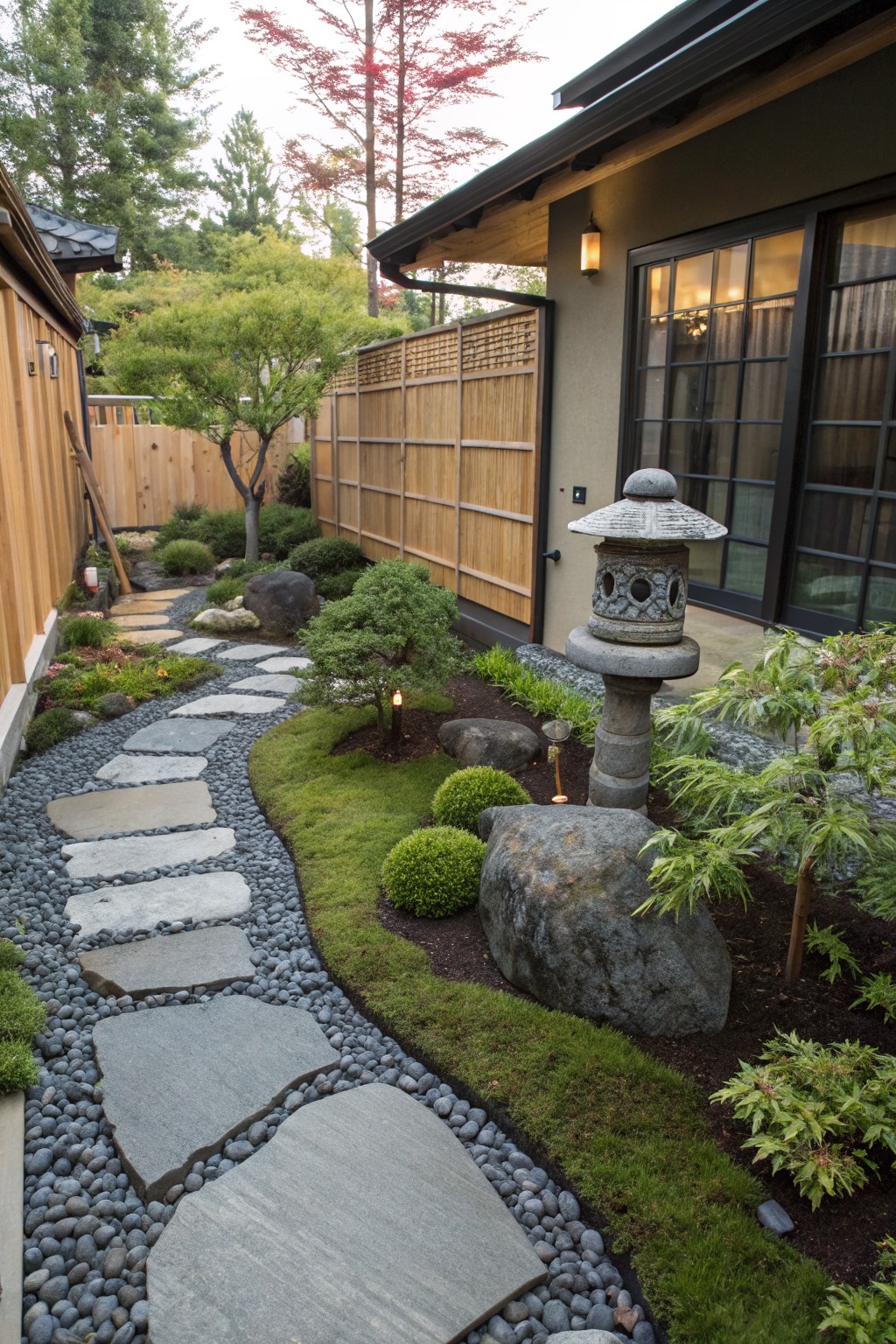
A simple way to define a garden space is with large, irregular stepping stones set right into a bed of dark gravel. Low mossy grass and clipped shrubs edge the path softly, keeping everything contained without sharp borders. Boulders and a stone lantern add quiet points of interest along the way. It pulls the eye forward naturally.
This kind of path works best in narrow side yards or front walkways where you want to lead guests around without taking up much room. Lay it on homes with clean lines, like this one, or even older places needing a calm update. Just make sure the gravel drains well… and go easy on plants near the house to avoid moisture issues.
Brick Edging Outlines Winding Paths

Simple brick edging works well here to keep the winding path and flower beds in check. It holds back the soil along that curve and lines the pavers neatly, so plants like tulips stay put without spilling over. The whole setup feels orderly but not stiff, especially with the low brick wall tying into the house.
You can pull this off on a front yard slope or flat lot. Pick bricks that match your home’s color for a smooth look. It’s sturdy enough for foot traffic and weeds don’t sneak through as easy. Just keep the mortar joints tight if you want it to last.
Raised Metal Edging for Front Yard Beds

One clean way to shape your front yard planting areas is with raised metal edging. Here you see corten steel boxes hugging gravel mulch, grasses, and a few succulents right along the sidewalk. It keeps everything tidy without much upkeep, and the rusty patina fits right in with a modern house like this one.
This edging works best on sloped lots or narrow strips next to paths. Go for corten or similar weathering steel if you want that natural rust look over time. It suits low-water gardens in mild climates… just make sure it’s thick enough to hold back soil, or the beds might slump after rain.
Winding Stone Path with Lavender Edges
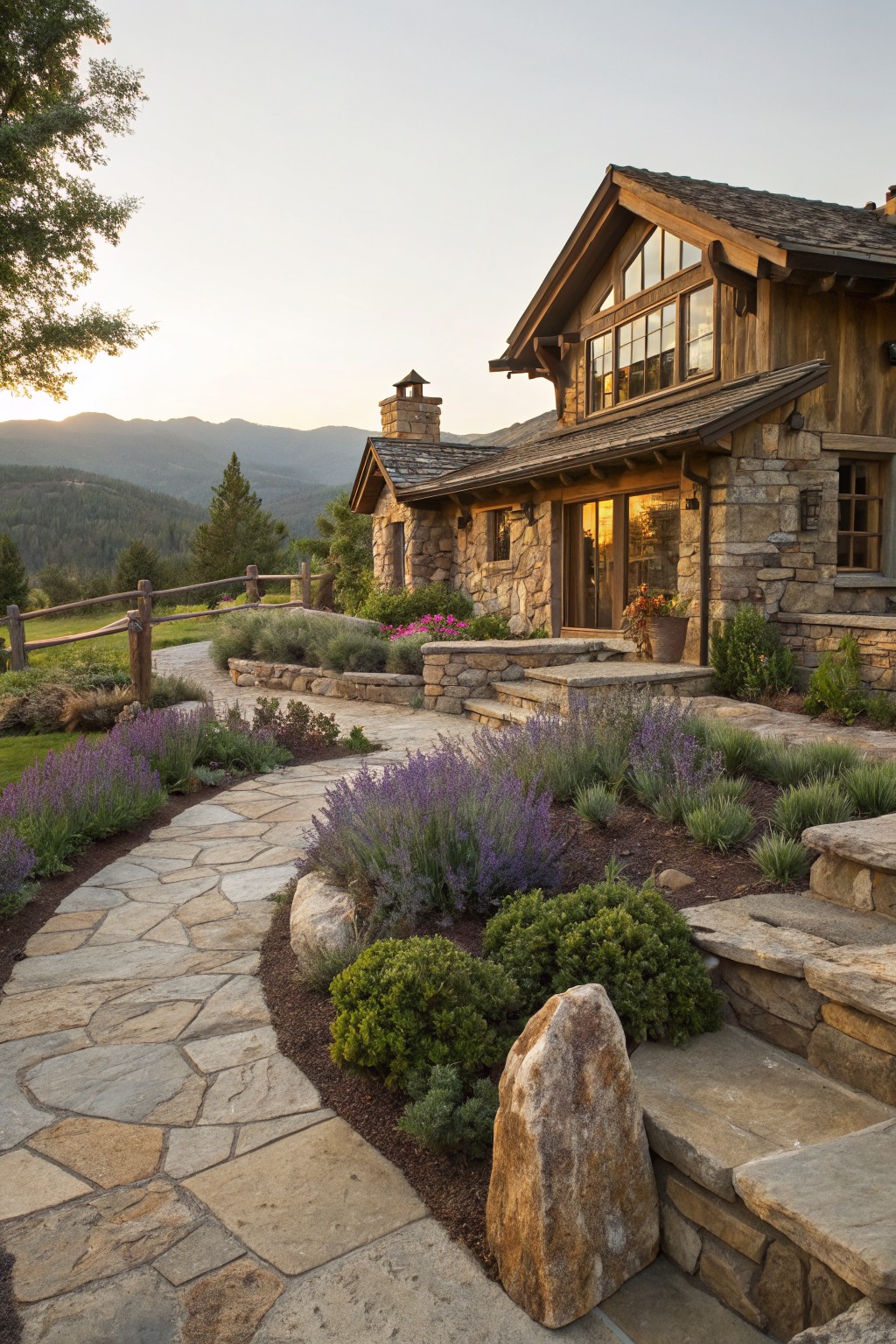
A simple flagstone path curves gently toward the house entry, with neat rows of lavender planted right along both edges. That edging keeps the walk defined but natural looking. The repeating purple spikes guide you in without straight lines taking over, and they hold up well through seasons.
Try this in a front yard that slopes or sits among trees. Space the stones loosely for a casual feel, then fill edges with lavender or similar tough perennials. It suits cabin style homes or any spot needing a low fuss lead to the door. Just keep the plants trimmed back from the path.
Stone Edging for Defined Garden Beds
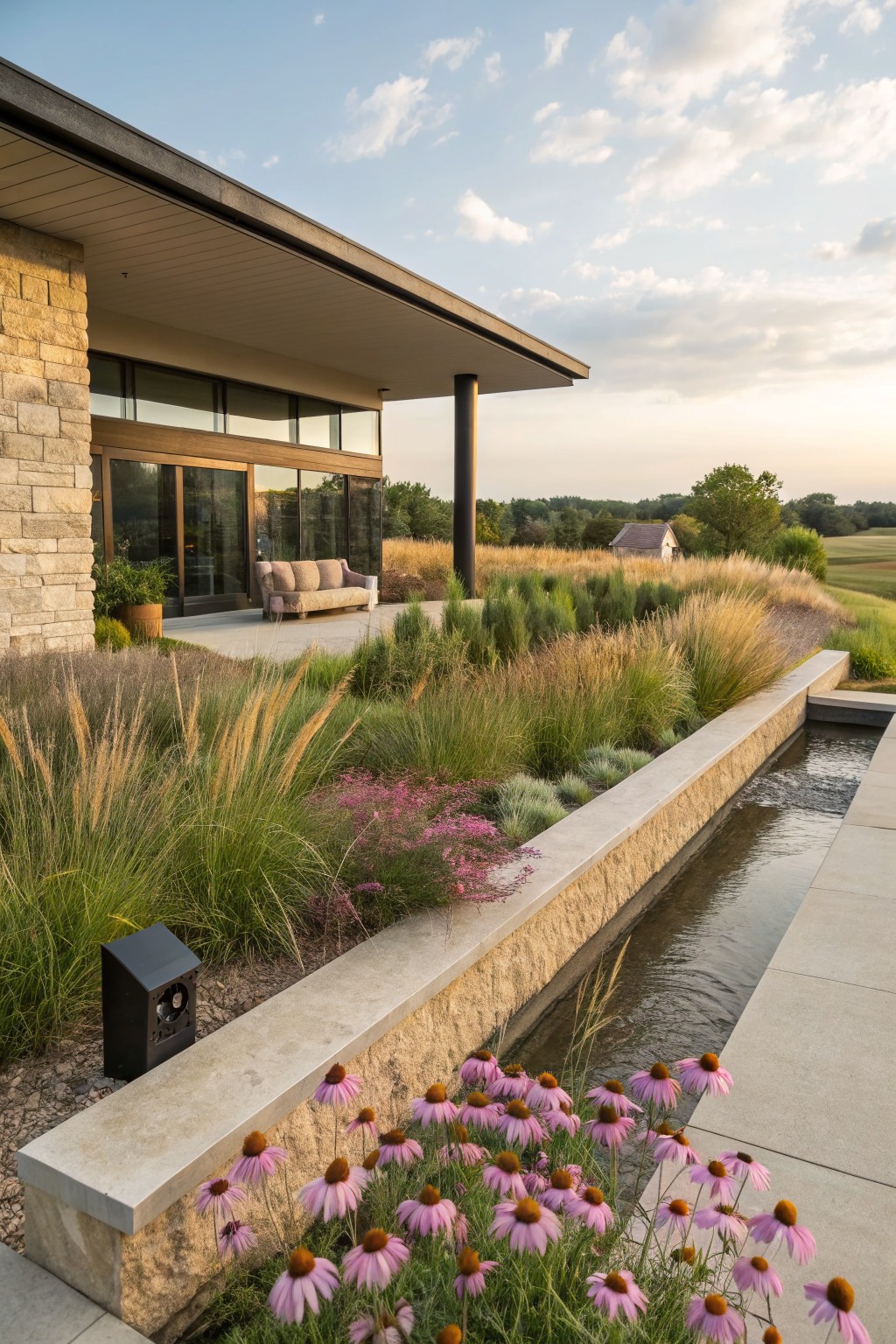
One clean way to shape your front yard is with raised stone edging like this. It holds back tall grasses and perennials without feeling stiff. The low wall lets plants tip over naturally, and that slim water channel running beside it pulls everything together. Keeps the patio clear while the garden feels wild but contained.
You can pull this off in most front yards, especially if you have some slope or want low upkeep. Pick native plants like switchgrass and coneflowers that match your area. Stone blends with a modern house, but watch the scale, keep it low so it doesn’t block views. Simple to maintain once established.
Boxwood Edging for Garden Paths

Low boxwood hedges work great as edging along paths like this one. They keep things neat and contained, especially with a curving brick walkway. The repetition of those trimmed shapes along both sides draws your eye right to the house without any mess.
You can pull this off in a front yard pretty easily. It suits older homes or cottages with stone or brick. Just keep the boxwoods clipped a couple times a year, and plant some flowers in between for color. Avoid letting them grow wild, or the clean lines get lost.
Smooth Concrete Edging for Front Paths
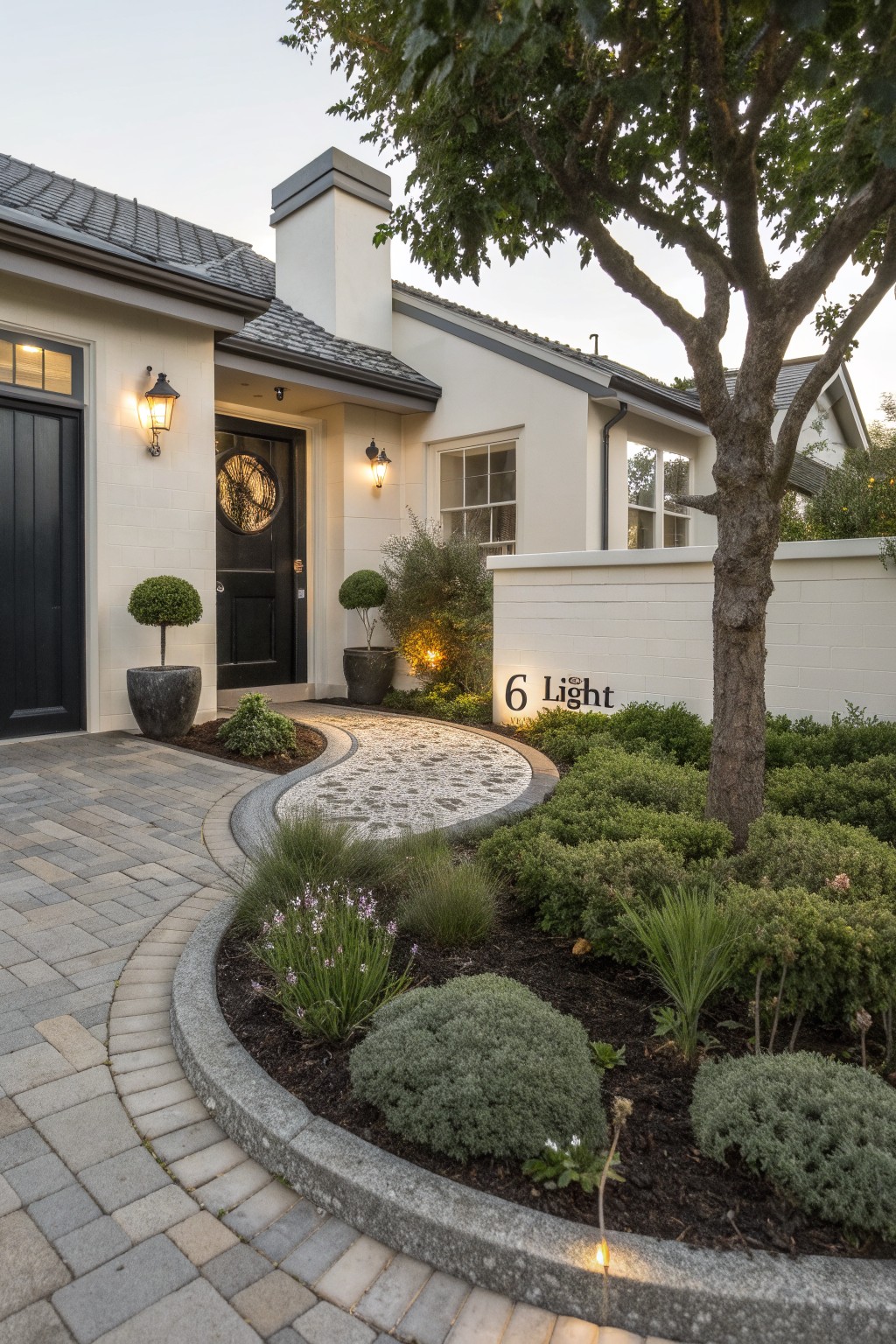
Smooth concrete edging works well here to set off a curved pebble path from the surrounding plants and main walkway. It gives the yard a crisp boundary that keeps mulch and greenery in place. That simple separation makes the whole front area look intentional and easy to follow to the door.
Try this in yards with some slope or curves, where you need to control where plants spread. It suits homes with modern stucco or clean lines, like this one. Go for a rounded curb profile so it blends without sharp edges, and pair it with low shrubs that stay tidy.
Stone-Edged Beds Around Entry Steps
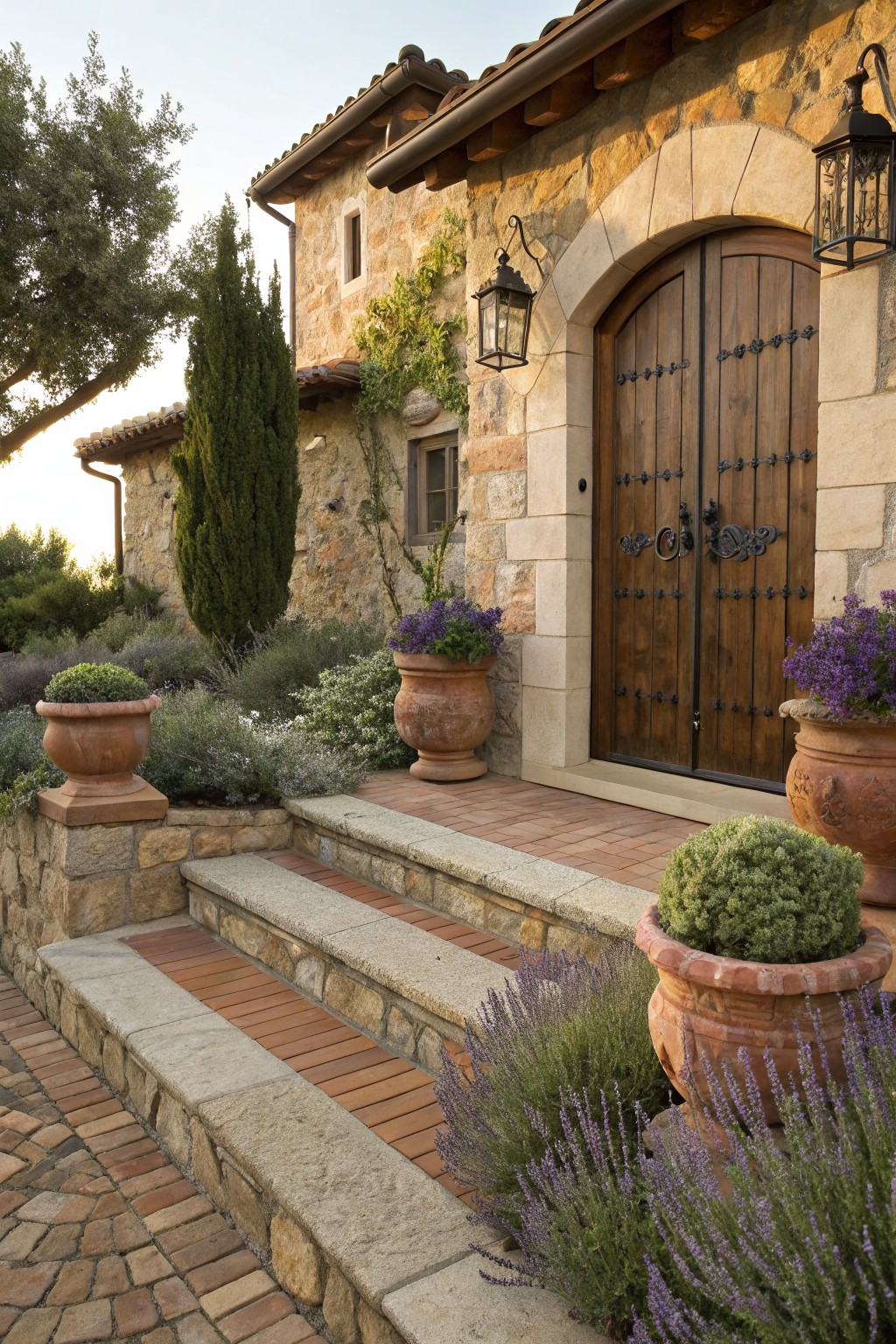
One simple way to make your front yard feel put-together is to edge garden beds right along the steps to your door. Here, low stone walls hold back soil and plants, keeping everything neat while matching the house’s own stone look. Large terracotta pots sit on raised stone bases, filled with lavender and small shrubs that add color without overwhelming the path.
This setup works best on sloped lots or anywhere you want to guide people straight to the entrance. It’s low fuss once planted with tough stuff like lavender that handles dry spots fine. Stick to earthy pots and repeat the house stone in your edging to blend it all. Avoid overcrowding the steps themselves. Keeps the focus on the door.
Clean Front Yard Edging with Dark Borders

One simple way to make your front yard look sharp is dark edging around planting beds. Here it’s black borders framing gravel mulch and clumps of grasses right along the driveway. That edge keeps soil and plants in place. It also ties right into the house’s modern lines without much upkeep.
This works best on homes with clean architecture like gray siding or stone bases. Run the borders parallel to paths or drives for that defined look. Pick tough grasses and smooth pebbles so it stays neat year round. Skip it if your yard’s too shady. Plants won’t fill in as well.
Stone Edged Gravel Paths

A simple gravel path like this winds through the front yard, held in place by chunks of natural stone along the edge. That edging does a good job of keeping everything tidy. It separates the path from the plants and dirt without making lines too straight or stiff. Boulders and low shrubs fill in around it for a natural feel.
You can pull this off in most yards, especially drier spots where grass struggles. Pick stones from nearby if you can, to match the ground. Lay gravel over landscape fabric first, then set the stones firm. It suits ranch-style homes or open lots. Just watch the stones don’t shift over time.
Raised Beds Edge a Neat Front Path
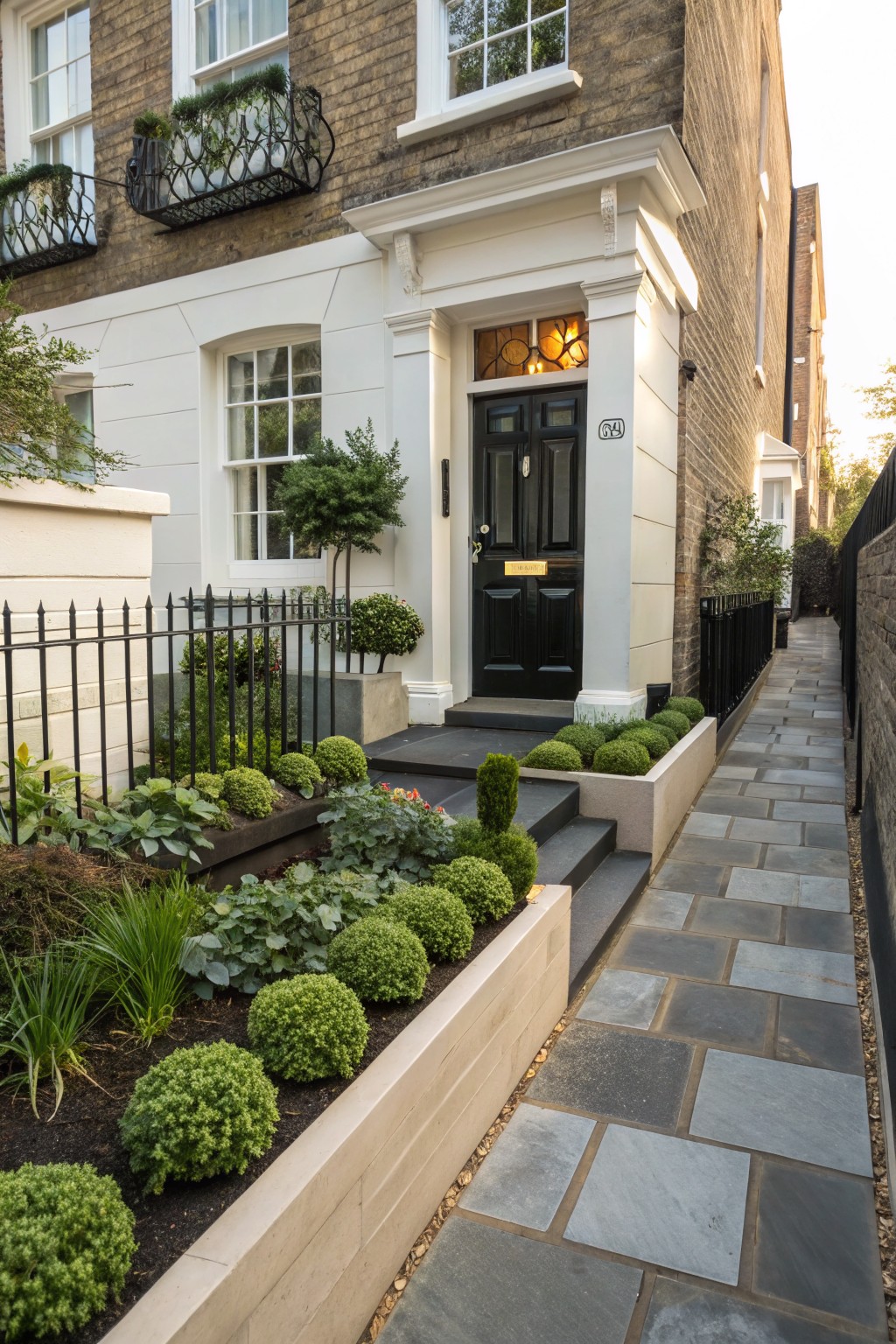
Raised beds like these run right alongside a stone path, filled with clipped boxwood balls and low plants. They keep the edges crisp and draw your eye straight to the front door. No mess, just clean lines that make a small front yard feel put-together.
This works best in tight urban spots, say along a row house where space is short. Pick tough evergreens that trim easy, and pair with simple pavers. Skip it if your yard slopes much… might need steps instead.
Gravel Beds Edging a Clean Front Path

One straightforward way to define your front path is with narrow gravel beds planted with tall, feathery grasses. Here, smooth river rocks fill the beds along a poured concrete walkway, edged simply with wood and concrete borders. The grasses sway a bit in the breeze, giving soft lines that guide you straight to the door without stealing focus from the house.
This works best on modern or minimalist homes where you want low upkeep and clear lines. Pick drought-tolerant grasses like these, fill beds with pea gravel or larger stones, and keep the path wide enough for two people. Skip flowers or dense shrubs so it stays open and easy to mow around.
Stone Path Edged by Hydrangeas
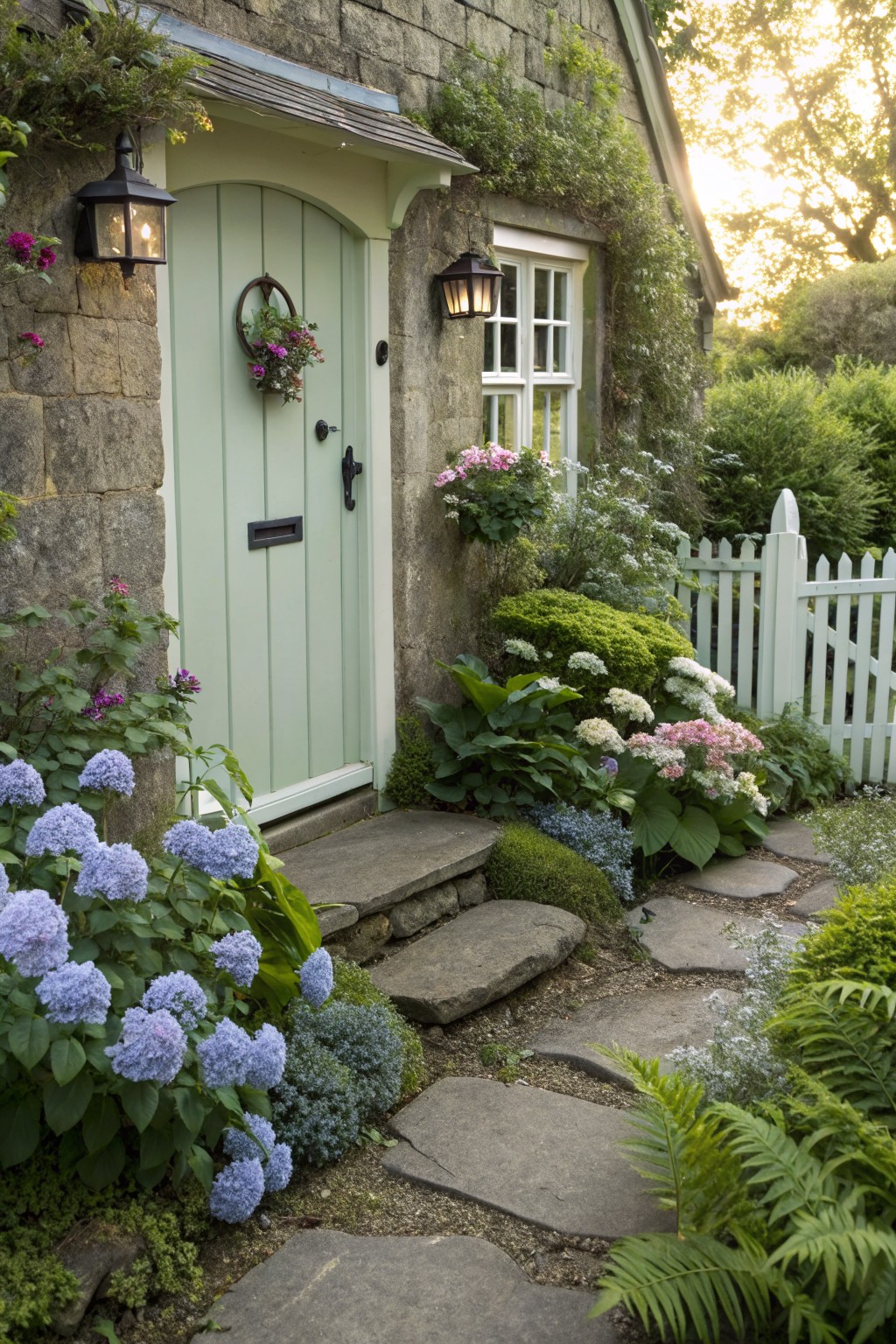
A simple stone walkway like this one gets its shape from the big blue hydrangea bushes planted right along both sides. They form a soft, natural border that keeps the path clear while adding color and height. No stiff edging needed. The flowers lean in just enough to make the whole entry feel pulled together and welcoming.
This works well for front yards with a bit of shade, since hydrangeas do best there. Plant them close to the stones, then fill in with lower ferns or hostas at the base. Suits cottage-style homes or any spot wanting that garden path charm. Just give them consistent water the first year or so.
Frequently Asked Questions
Q: How do I install edging without wrecking my existing lawn?
A: Mark your line with a hose or string, then slice a shallow trench with an edging tool or flat shovel. Drop the edging in place and backfill with the dug-up soil to hold it firm. Water the area lightly so it settles without shifting.
Q: What edging material lasts longest in wet climates?
A: Steel or aluminum edging stands up best to rain and moisture. Pound stakes every few feet to anchor it deep. Brush off dirt once a year to keep it shining.
Q: Can I edge a sloped front yard, and how?
A: Stack stones or use flexible plastic that bends with the hill. Secure the bottom row first, then build up. And pack gravel behind it to stop washouts.
Q: How do I hide ugly spots where edging meets the driveway?
A: Tuck in low plants like creeping thyme along the joint. They spill over naturally. Trim them back in spring to stay neat.
