

I’ve noticed that front yards often look their best when the layout pulls you in right from the street, and rock gardens do that without much fuss over time.
A good one starts with thoughtful placement of stones to mimic natural drifts, edging beds that might otherwise sprawl.
In my yard, I tried stacking larger boulders once to anchor the corners, and it changed how the whole space reads against the house.
Pathways winding through the rocks tend to be what neighbors comment on first.
These setups hold up well through seasons, making some tweaks worth trying in your own front yard.
Stepping Stone Path in a Rock Garden

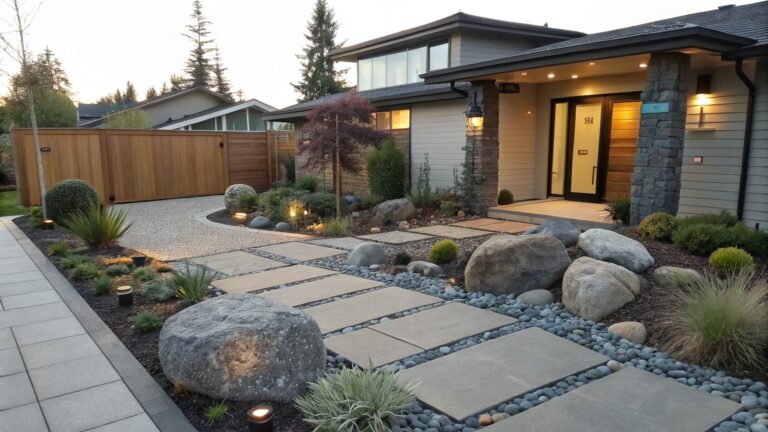
A simple way to add interest to your front yard is a stepping stone path winding through rocks and gravel. Large boulders act as natural anchors, with gravel filling the gaps and low plants tucked in around them. It pulls the eye right to the entry without much upkeep, and the mix feels both rugged and put together.
This works best in modern or craftsman-style homes where you want curb appeal without constant mowing. Lay the pavers irregularly for a casual flow, source boulders locally to match your area, and add a few tough grasses or sedums. Skip it if your yard floods, since gravel drains fast but can shift.
Winding Flagstone Path in a Rock Garden
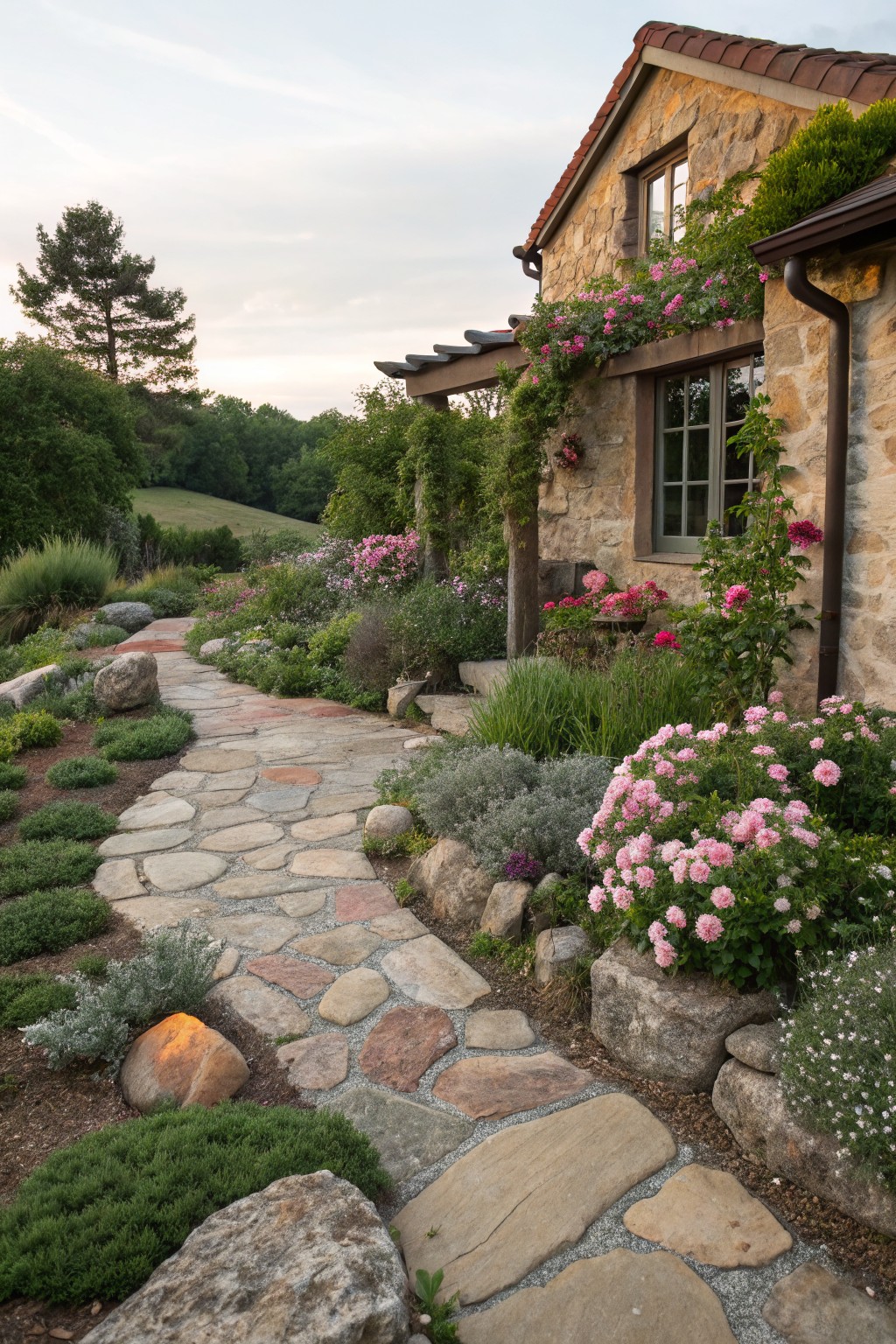
A simple winding path made from irregular flagstones works great in a front yard rock garden. It pulls you right toward the house without feeling too formal or rigid. Boulders tucked along the edges and low plants spilling over keep things natural. That soft curve adds interest as you walk up, especially with dusk light hitting the stones.
Use this in yards with some slope or open space near the entry. Pick stones in earthy tones that match your house, then layer in tough plants like lavender or sedum that won’t need much water. Just keep the path wide enough for two people… and don’t overcrowd with too many big rocks or it gets tricky to mow around.
Rock Wall Terraces on Slopes
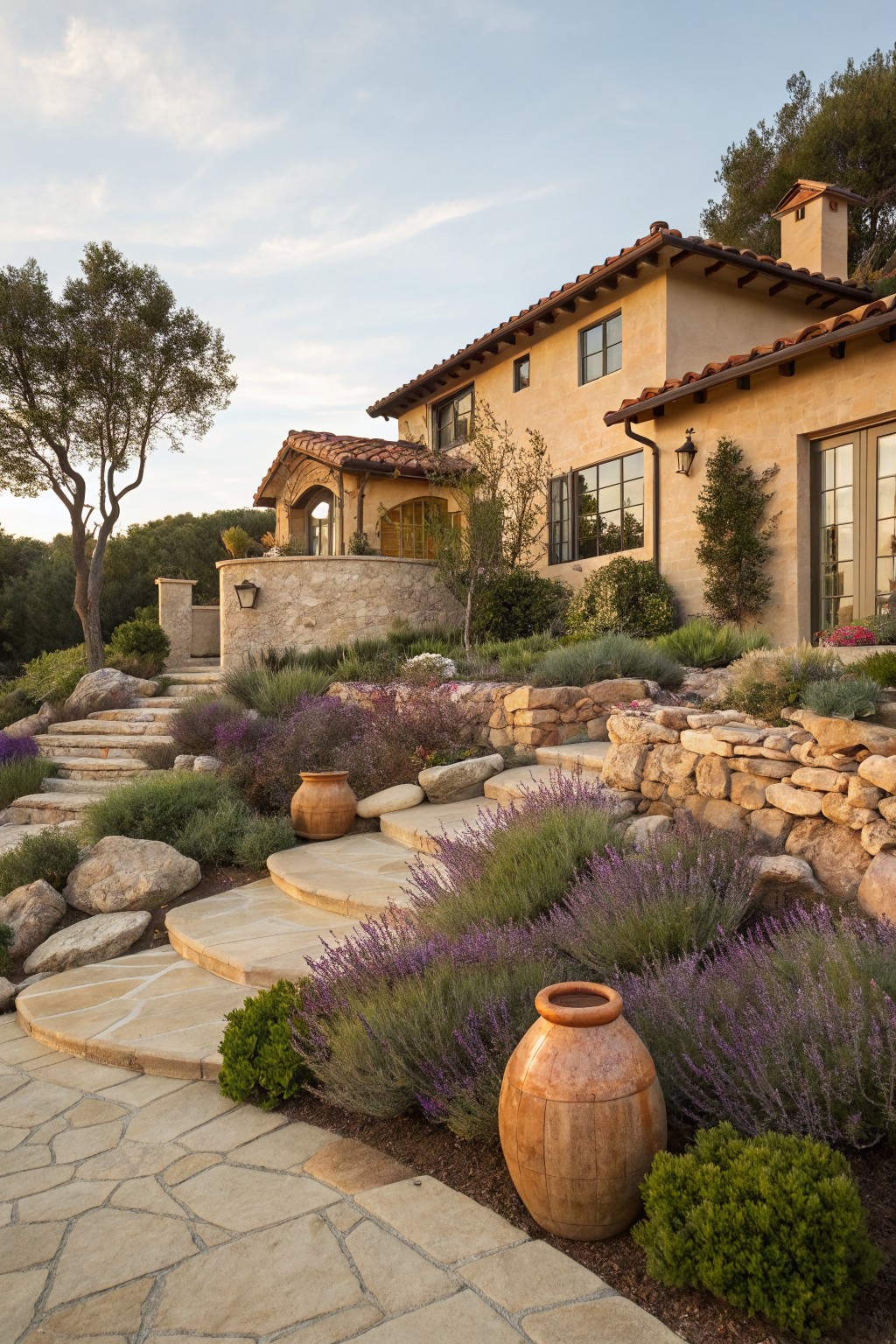
One simple way to handle a sloped front yard is building terraces with dry-stacked stone walls. They hold back the soil and create flat spots for plants like lavender and grasses. Those wide, irregular stone steps make it easy to get up to the house without feeling steep. The rocks look natural, like they grew there, and mix right in with the drought-tolerant plants.
This setup works best on hillsides where you want low upkeep and some structure. Use local stone for a cheaper, blended look, and plant stuff that doesn’t need much water between the levels. Keep steps broad so they’re practical for everyone. Just make sure the walls are sturdy enough for your slope, or get a pro to check.
Rock-Lined Curving Path
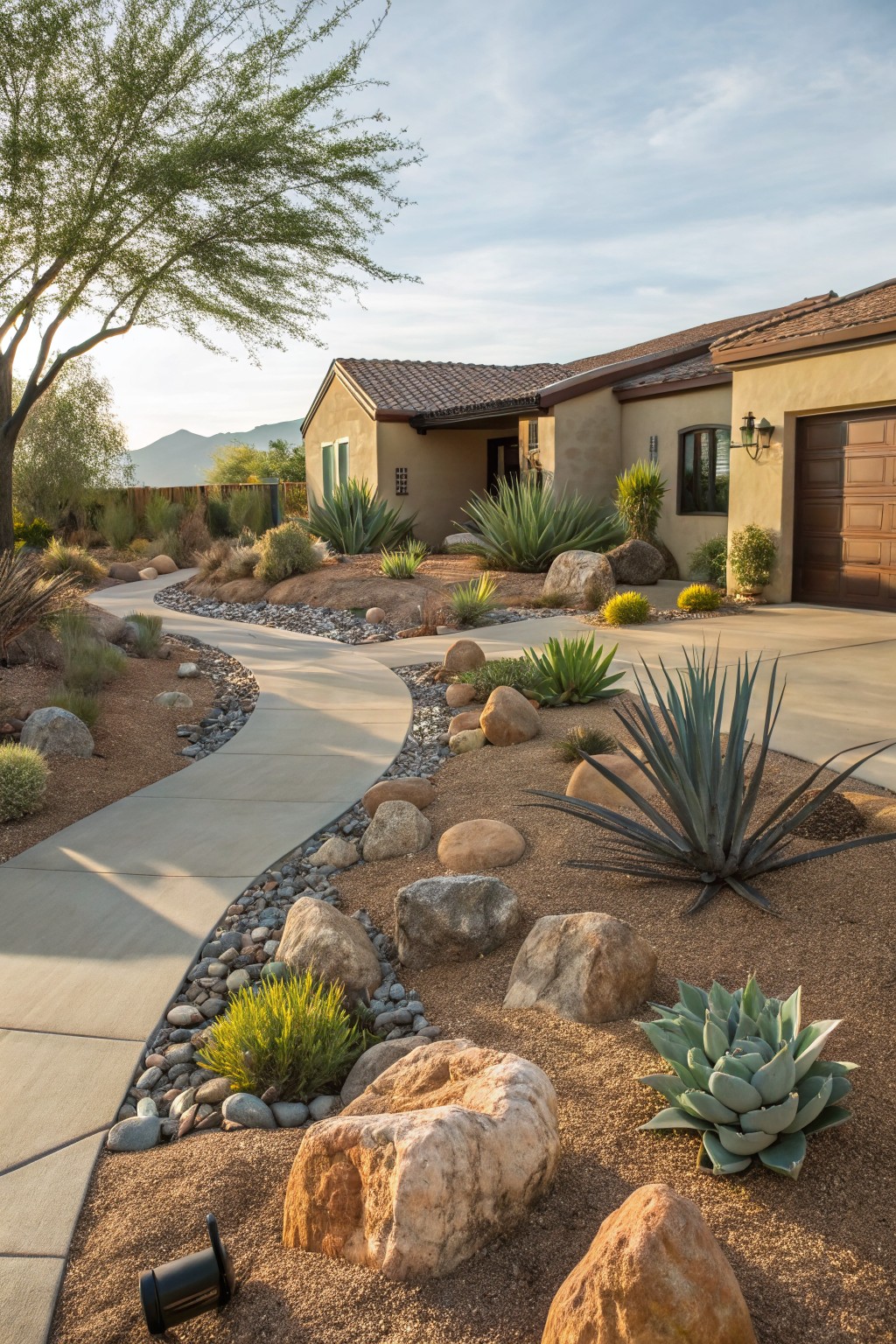
A simple curving path like this one makes a front yard feel more welcoming without much upkeep. The concrete walkway winds gently from the street to the entry, edged with gravel, boulders, and tough succulents like agave. It pulls your eye along naturally. And in dry areas, this setup thrives on little water while looking full and interesting.
You can pull this off in any sunny front yard, especially where grass won’t grow well. Start with a wide concrete or paver path, then layer in river rock and a few big stones for weight. Add spiky plants for punch, but space them out so it’s not crowded. Just keep the curve soft… it guides people right to the door.
Stepping Stone Path Through Rock Garden

A simple winding path made from flat stepping stones set right into gravel and moss gives this rock garden its main charm. The irregular stones guide your eye along without straight lines, mixing in boulders and low plants for a natural feel. That stone lantern nearby adds just enough height and tradition to make it interesting.
You can pull this off in a front yard by spacing the stones two feet apart for easy walking. It works best on slopes or narrow spots where grass won’t grow well. Keep the gravel dark and moss happy with shade… low upkeep once settled.
Winding Stepping Stone Paths in Rock Gardens

A simple winding path made from flat stones set into white gravel works well in rock gardens. It pulls the eye along with big boulders placed nearby and low plants like agave and pink flowering shrubs tucked in. The look feels natural and coastal. Plus it needs little water or mowing once set up.
Use this in front yards on slopes or dry spots to guide people to a door or shed. It suits homes near the beach or in tough soil. Pick stones in natural shapes and sizes from local spots. Space them so you step comfortably. Watch for too many plants crowding the path.
Winding Stone Steps with Rock Walls

One smart way to handle a sloped front yard is to build winding steps right into sturdy rock retaining walls. This setup turns a tricky hill into an easy path up to the house. The natural stone steps fit the walls like they grew there. Add some tough grasses and flowers along the edges. It keeps soil in place and looks right at home on a hillside lot.
These steps work best where the ground drops off sharply. Use local stone for the walls and steps to blend in. Pick plants that don’t need much water, like black-eyed Susans or fountain grass. Watch for good drainage so water doesn’t pool. It’s practical for everyday use and adds that rock garden feel without a flat bed.
Boulder and Gravel Front Path
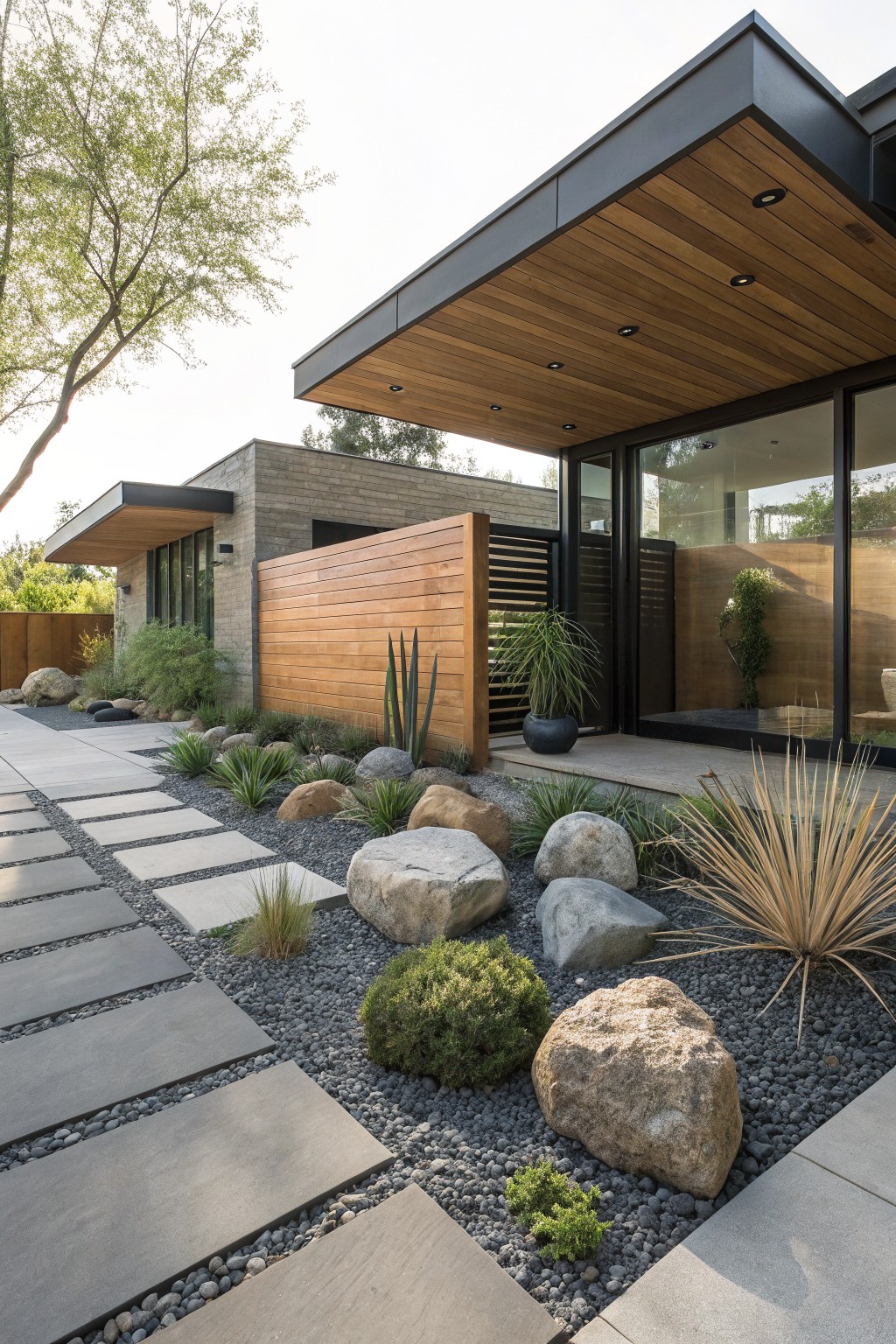
Big boulders placed right along a simple stone paver walkway make this rock garden pop. The dark gravel fills in around them, with just a few spiky plants like agave tucked nearby. It pulls the eye straight to the front door and keeps things low fuss.
This works best in sunny, dry spots where you want curb appeal without constant watering. Start with your biggest rocks near the entry for punch, then layer smaller ones back. Pairs nice with clean modern houses, but scale it down for smaller yards.
Rock Garden Steps with Edge Lighting

This front yard setup uses dark pebbles and tough plants like agave to frame a set of wide stone steps right up to the door. The pebbles give a clean, modern look without much upkeep, and those little LED lights tucked into the step edges make it safe and pretty at night. It pulls the eye straight to the entry without any fussy grass or flowers.
You can pull this off on a slope or flat spot leading to your porch. Go for smooth black river rocks over 1-inch size to avoid shifting, and plant agaves or similar spiky ones for punch. Keep beds edged with low walls or timber for neatness. Works best on modern or midcentury homes, but watch the scale, those big plants need room to spread.
Winding Gravel Paths in Rock Gardens

A winding path made of white gravel works great in a rock garden setup like this. It pulls you right toward the front door with its gentle curves, edged by big boulders and low grasses. The soft lighting from lanterns along the way makes it feel welcoming even at dusk, without needing much upkeep.
You can pull this off in smaller front yards or drier spots where grass won’t grow well. Just lay down the gravel over landscape fabric, add a few statement rocks for shape, and plant drought-tolerant stuff around the edges. Skip straight lines to keep it relaxed, and it suits modern or rustic houses about the same.
Large Boulders in Rock Gardens
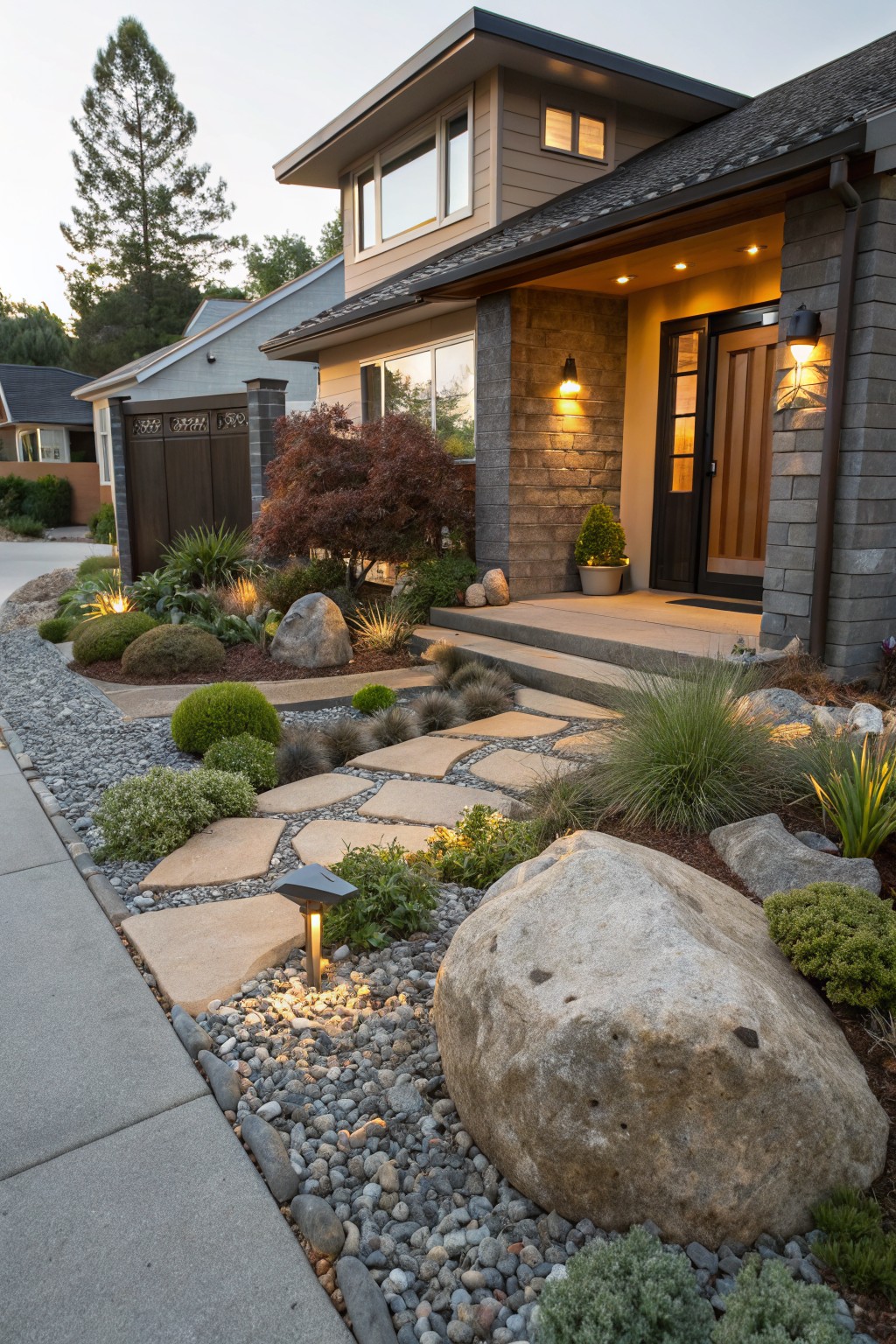
Large boulders give rock gardens real presence. They stand out against gravel and low plants, creating natural focal points that pull the eye along a path. In this front yard, one hefty white boulder sits right by the stepping stones, making the walk to the door feel more deliberate and grounded.
Try placing a couple of these boulders where they frame the entry or edge a walkway. They suit drier spots or low-water yards best, since they need no care once set. Just keep surrounding plants tough and mounding, like sedges or grasses, to avoid a bare look. Works on most any house style.
Big Boulders Shape Desert Rock Gardens

Huge rust-colored boulders take center stage in this front yard setup. They sit right along the entry steps, mixed with tough agaves and a bit of gravel fill. The look feels bold and natural, like the landscape just grew up around the house.
Pick boulders in different sizes to build layers, then tuck in spiky plants that won’t need much water. It suits modern homes in dry areas best. One thing to watch… don’t overcrowd it. Let those rocks do most of the talking.
Meandering Stone Paths in Sloped Rock Gardens
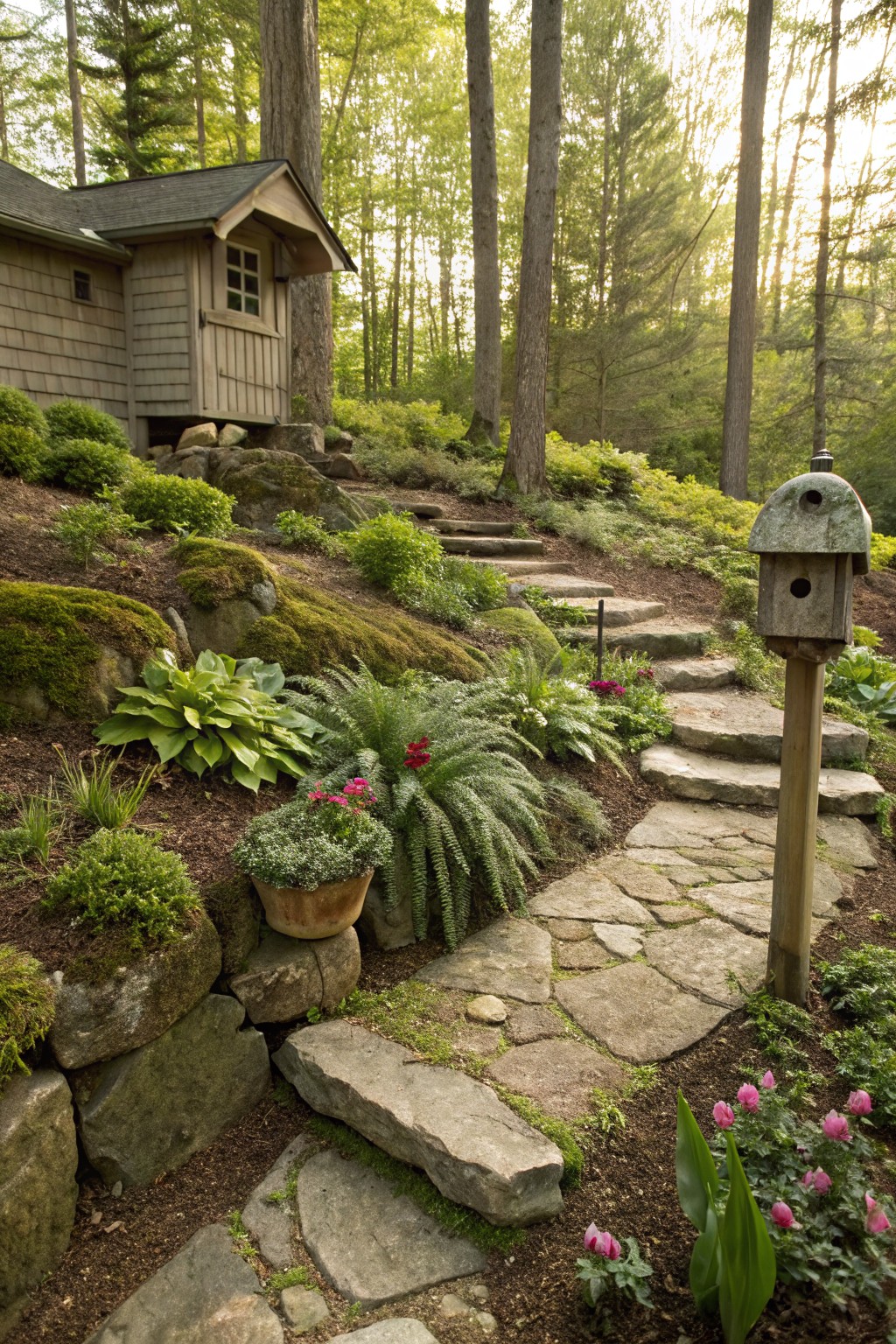
A simple way to handle a front yard slope is with a winding path made from flat stones set into the earth. These paths work well because they follow the natural contour of the hill, making the climb feel easy and turning what could be a steep drop into an interesting walk. Mossy rocks and low plants tucked along the edges keep it from looking bare or too rugged.
You can pull this off in any yard with a gentle incline leading to the house. Pick stones in mixed sizes for that casual feel, and fill gaps with gravel or soil for plants like hostas or ferns to spill over. It suits wooded spots best, where the path blends right in… just watch for slippery moss after rain.
Rock Garden Stepping Stone Path

A simple way to add interest to your front yard is setting large concrete pavers into gravel beds, edged with clumps of ornamental grasses. The path winds gently toward the house entrance, mixing hard surfaces with soft textures from the plants and stones. It feels modern yet natural, and the low plants keep the focus on the clean lines without overwhelming the space.
This works best in drier climates or for low-maintenance yards, pairing nicely with a contemporary house like this one. Space the stones irregularly for a casual walk, and fill gaps with gravel plus tough grasses that handle foot traffic. Skip it if your yard floods often…too much water shifts the rocks around.
Raised Concrete Beds for Rock Gardens

Concrete raised beds give a front yard rock garden a solid, modern shape that ties right into the house architecture. Filled with gravel mulch and tough plants like grasses, agaves, and succulents, they build layers that guide the eye up to the entry. The clean lines keep things low fuss while adding some real structure.
This works well on sloped yards or anywhere you want easy care without mowing. Use smooth poured concrete for a sleek look, then plant in drifts for natural flow. It’s suited to midcentury or contemporary homes, especially in dry climates. Just watch the scale. Too big, and it overwhelms a small lot.
Boulder Retaining Walls for Sloped Front Yards
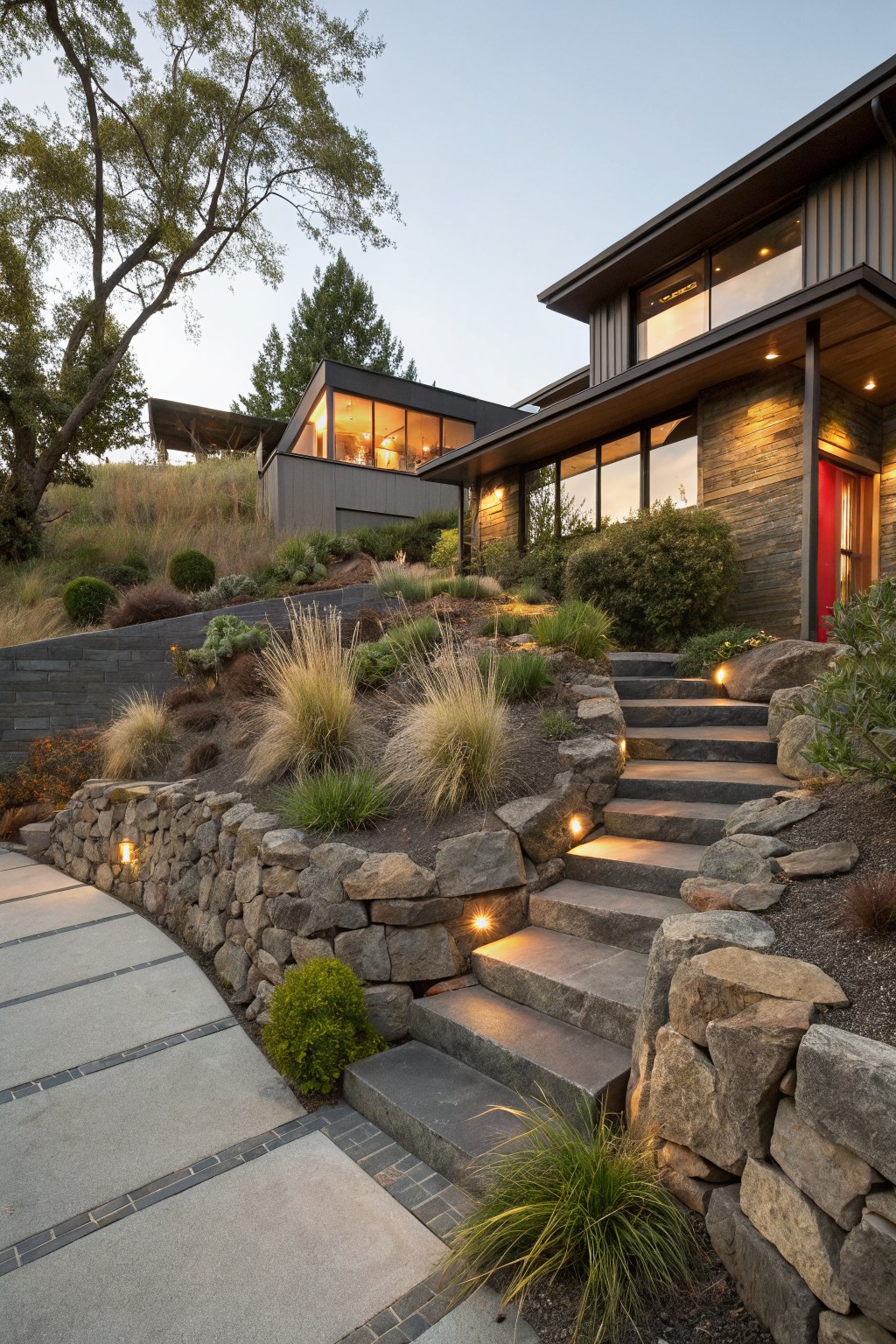
One simple way to handle a sloped front yard is with boulder retaining walls. They hold back the soil while adding real texture and interest right at the curb. In this setup, the walls stack naturally around a set of wide stone steps, and low grasses poke out from the edges. It keeps things from feeling like a plain dirt hill and makes the walk up to the house more deliberate.
These walls work best on moderate slopes where you need both access and some planting room. Use local fieldstone or rounded boulders for a less formal look, and plant tough grasses or sedums in the pockets. Keep the steps broad for easy walking, maybe add low lights along the edges. It’s low upkeep once established, suits modern or rustic homes, but check your soil drainage first to avoid washouts.
Large Boulders Shape the Rock Garden
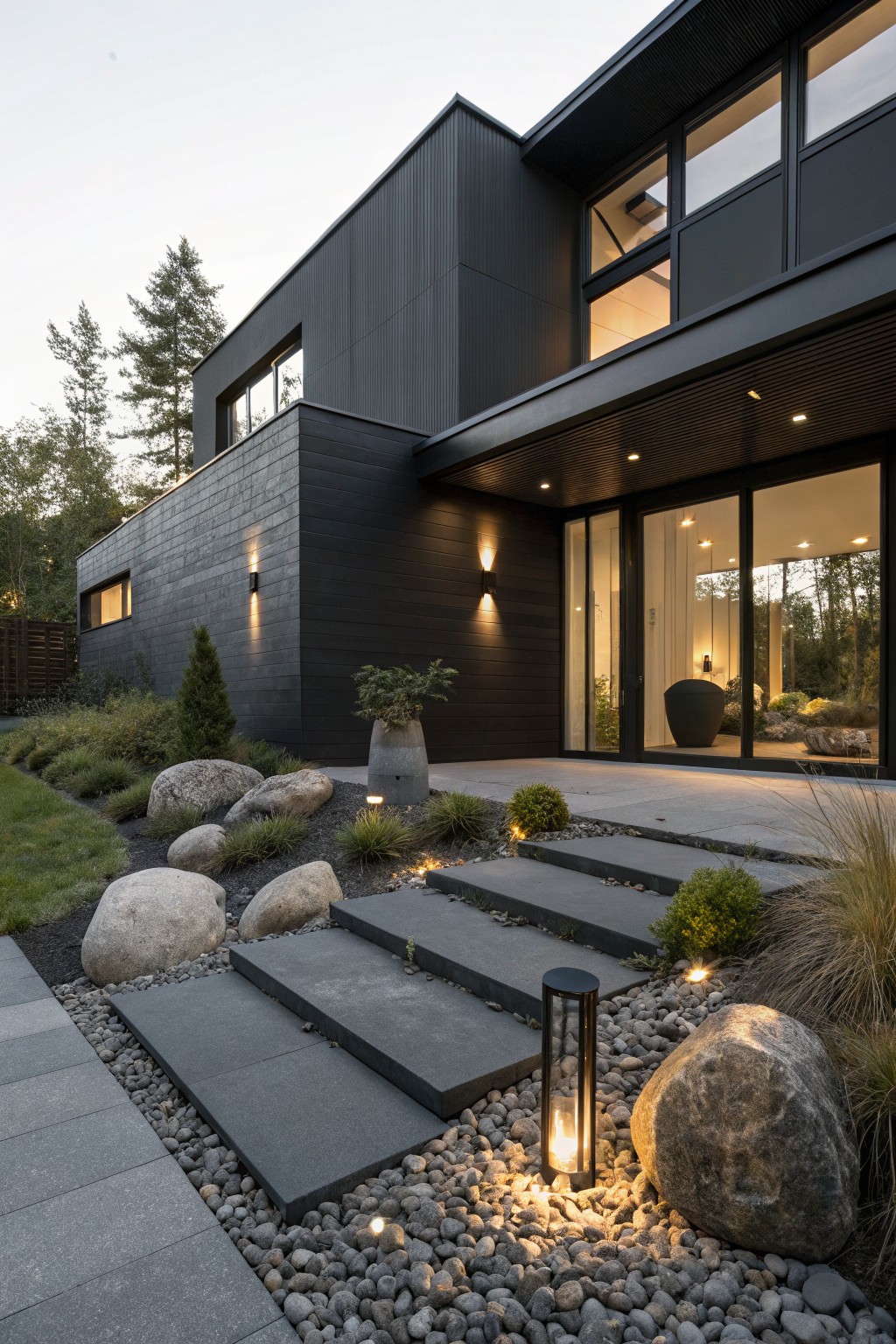
Big boulders make this rock garden front yard stand out right away. Placed around the entry steps and mixed with gravel mulch, they create a rugged path that feels natural and ties right into the house. The scale of those rocks adds weight and texture without needing a ton of plants, keeping things simple and bold.
You can pull this off in most front yards, especially modern or minimalist homes on a slope. Start by picking a few oversized boulders for anchors near your walkway, then layer in pebbles and a couple tough grasses. Skip fussy flowers to keep it low effort, but watch the spacing so it does not crowd the path.
Frequently Asked Questions
Q: How do I source affordable rocks for my front yard? A: Check local quarries, construction sites, or even Craigslist for free loads from landscaping jobs. Neighbors often give away extras too. Sort them by size on-site to save hauling costs.
Q: What plants mix best with rocks in a sunny spot?
A: Go for sedums, lavender, and ornamental grasses. They hug the rocks without flopping over. Water them sparingly once roots take hold.
Q: How do I keep weeds from taking over my rock garden? A: Lay down landscape fabric before adding rocks. Top it with a thin gravel layer to block light. Pull any strays early and often.
Q: Can rock gardens handle a sloped front yard? A: Build small terraces with flat stones to hold soil. And plant deep-rooted groundcovers between rocks. They grip the slope tight.
