

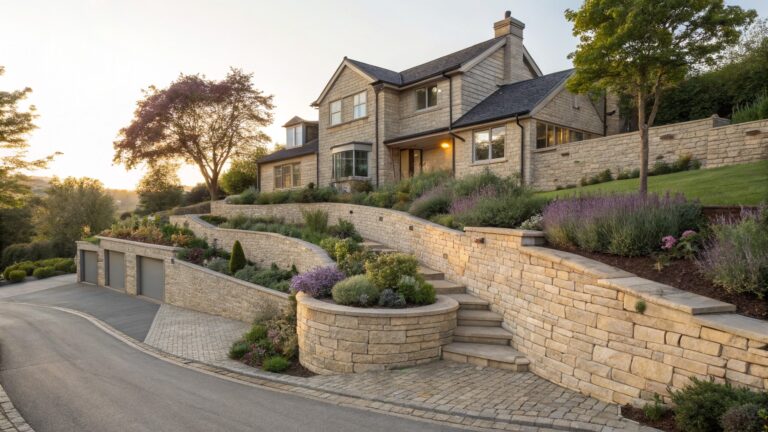
I always notice front yard slopes first because they set the tone for the whole property, either drawing you in or making the house feel unstable. Good designs handle runoff with terraced beds, deep-rooted plants, and subtle edging that keeps soil in place year after year. When I redid a tricky slope at my place, I started with low retaining walls tied into winding paths, and it instantly made the yard read as cared-for from the street. These setups work because they build structure gradually, letting plants fill in over time without overwhelming the layout. Slopes reward that planning.
Terraced Stone Walls for Sloped Front Yards
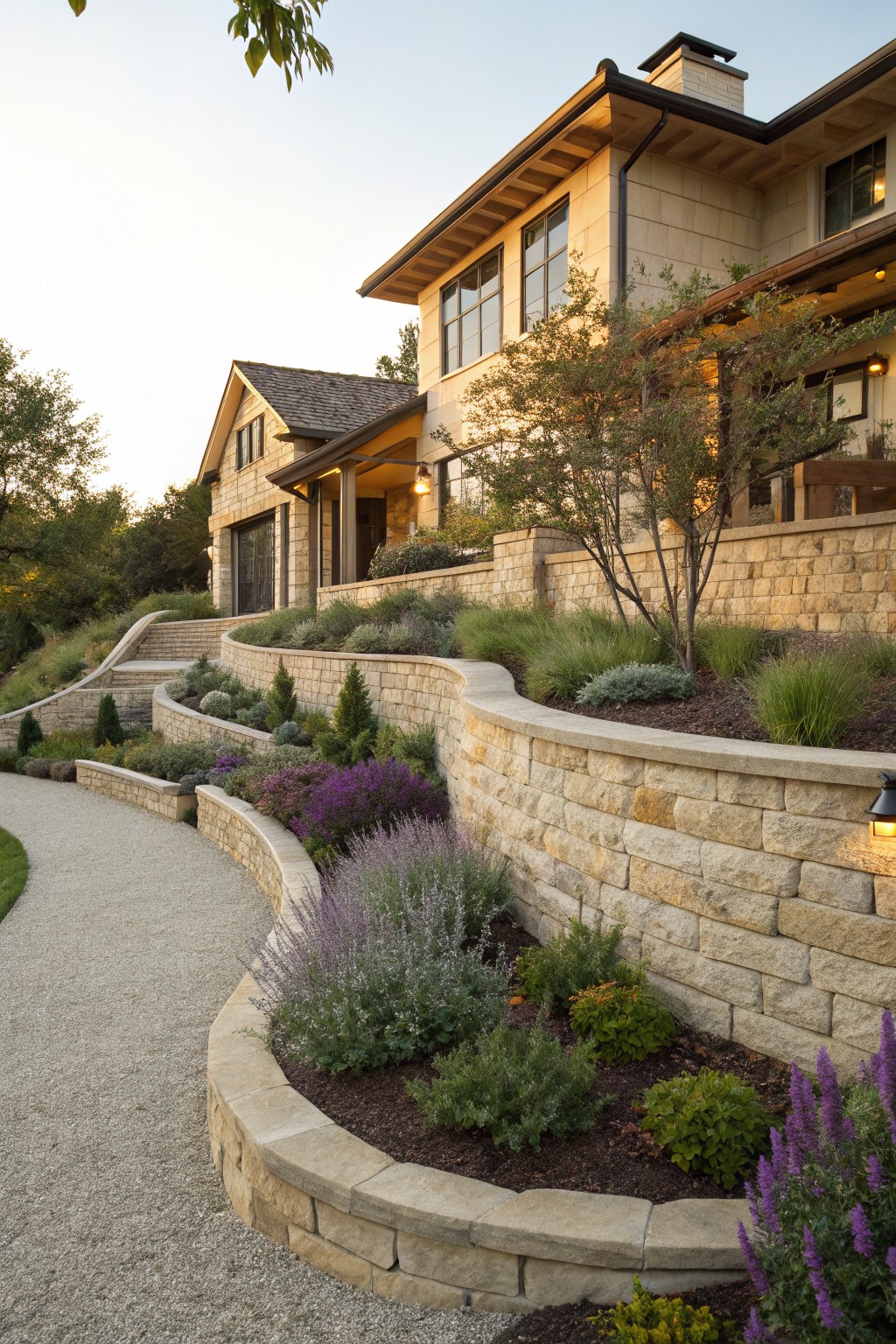
Sloped front yards can be tricky, but terraced retaining walls fix that nicely. These curved walls made from beige limestone create level planting beds that hold soil in place and add structure. You see lavender bushes and grasses tucked in, giving color and texture without overwhelming the space.
Use this on moderate slopes to boost curb appeal and make the yard feel usable. A winding gravel path ties it to the house entry. It suits modern or craftsman homes best. Stick to drought-tolerant plants so it stays easy to maintain.
Terraced Stone Steps for Slopes
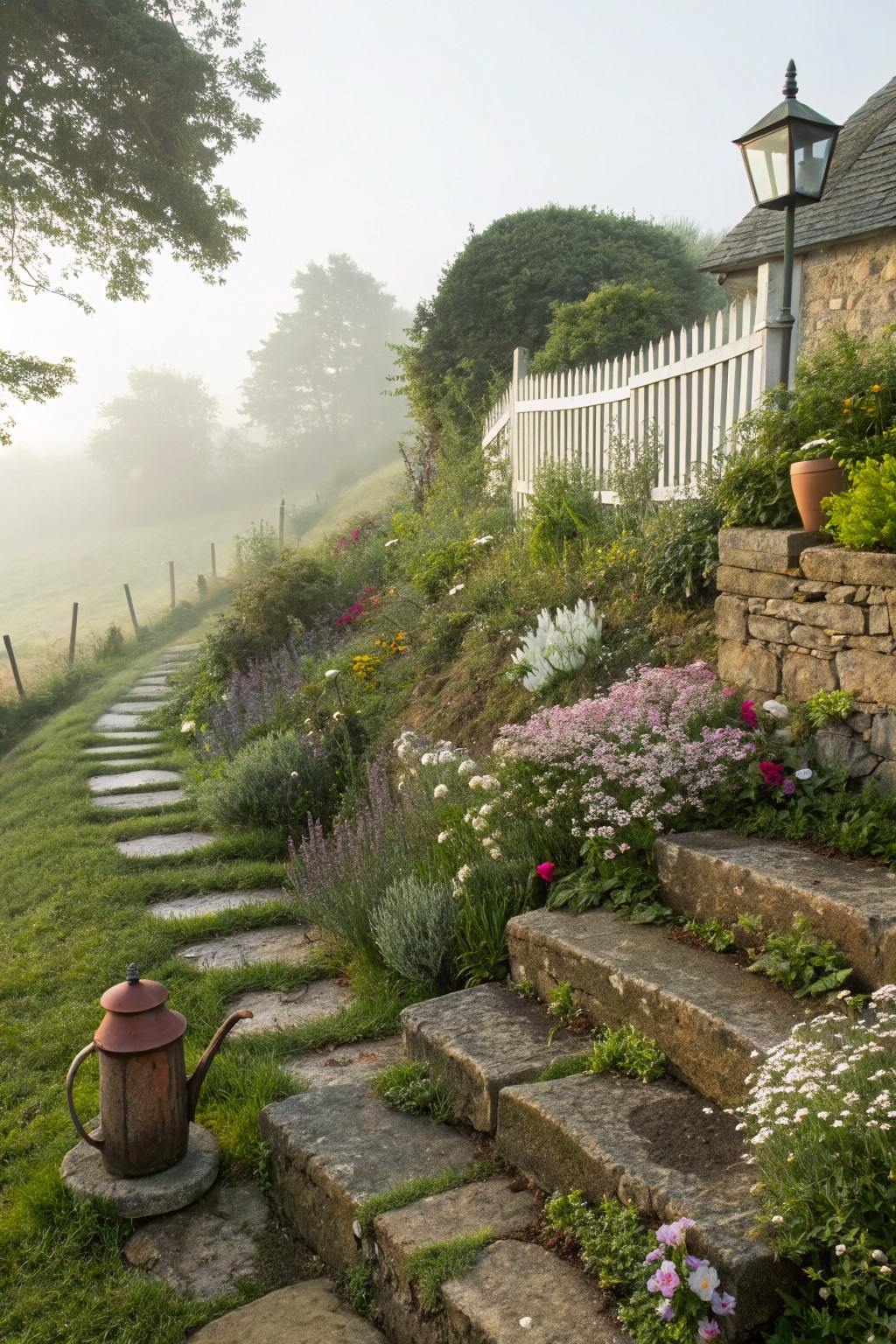
Slopes make front yards tough to use, but building in stone steps fixes that right away. They carve out level spots for plants and create a natural flow up the hill. Here, the steps mix with a simple stone path edged in grass, and flowers fill every terrace. It feels professional without looking forced.
Go for this on moderate slopes where you want low upkeep and pretty views from the street. Pick rough local stone so it ages in, then layer tough perennials like lavender and sedum that hang over the edges. Just make sure the steps are sturdy… no one wants a tumble on the way to the door.
Wide Wooden Steps for Sloped Front Yards
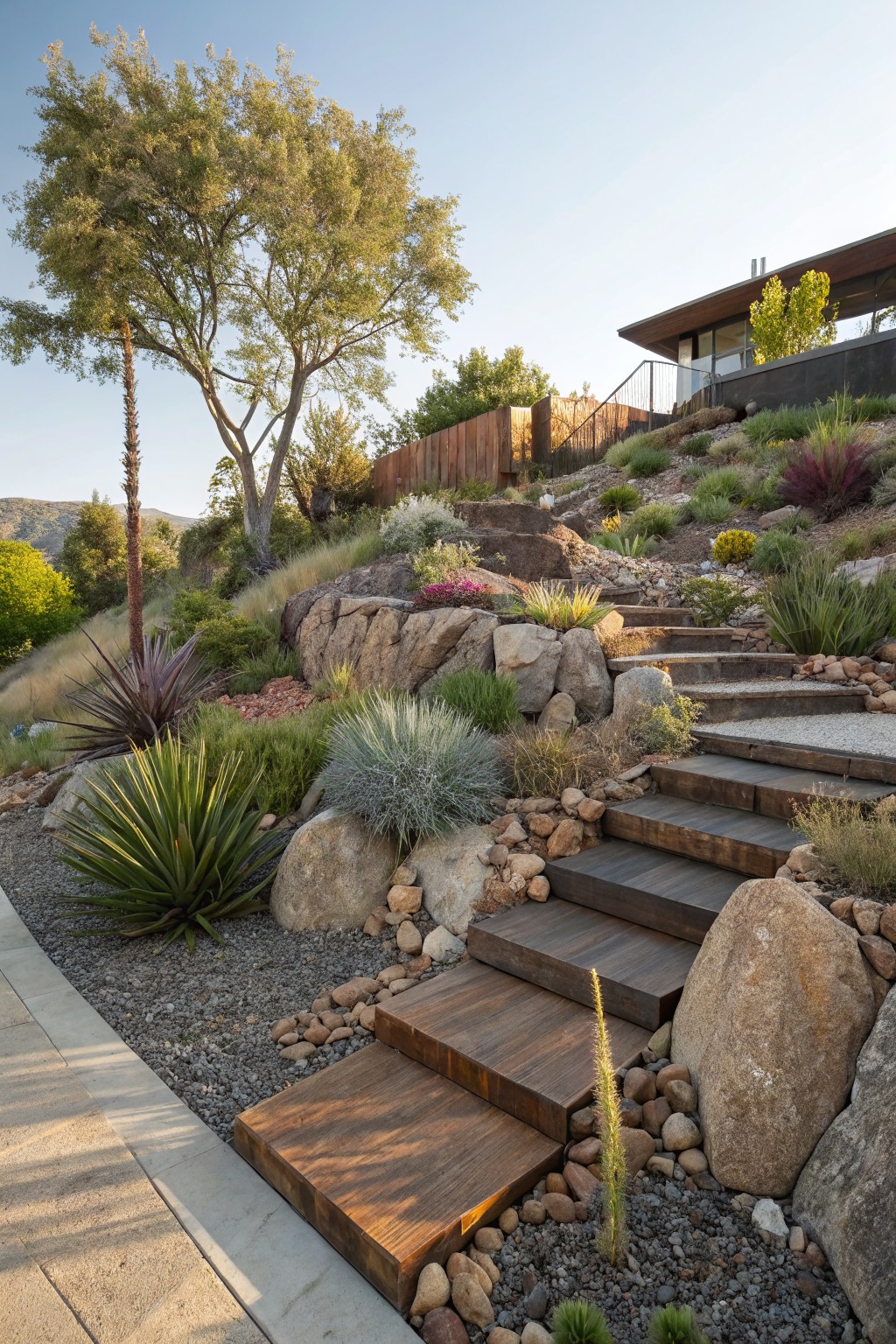
One solid way to handle a steep front yard slope is with wide wooden steps that tuck right into the natural terrain. These steps feel sturdy underfoot and give you plenty of room to step without feeling squeezed. Paired with big boulders and gravel mulch they blend in instead of sticking out. Drought-tolerant plants like agaves and grasses fill the gaps making the whole climb look effortless.
This setup works best on hillsides where you want low upkeep and a rugged look that ties into the landscape. Use pressure-treated wood or cedar for the treads to hold up in sun and rain. Keep plantings simple natives that don’t need much water. It’s great for modern homes or dry areas but watch the steps for wear if your slope gets heavy foot traffic.
Terraced Wooden Steps for Sloped Yards
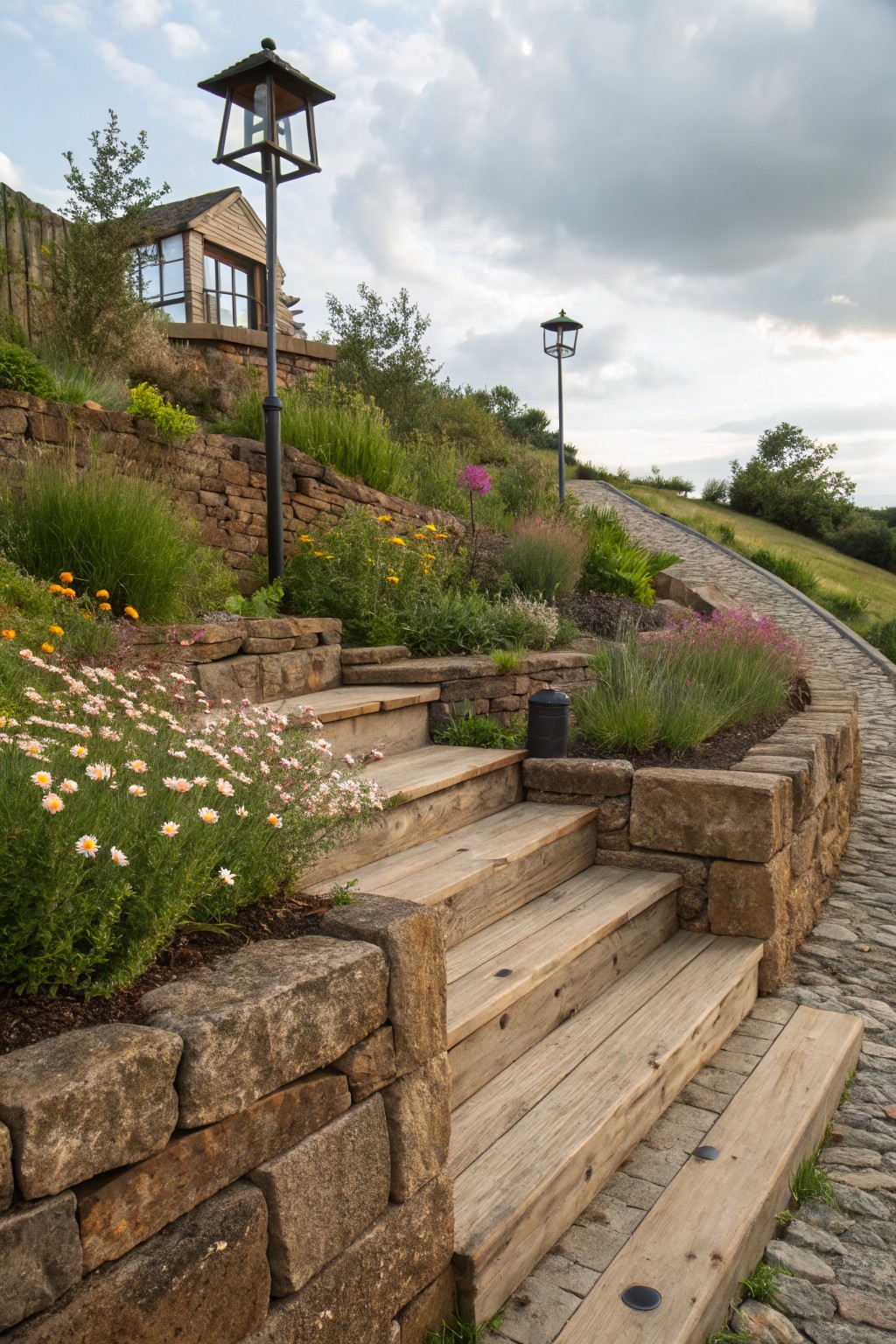
One smart way to handle a front yard slope is with wooden steps built right into stone retaining walls. The steps give you a steady path up the hill without feeling too harsh. Plants like pink flowers and white daisies tuck into the stone beds along the sides, softening everything up. A couple of lanterns add light without taking over.
This idea fits homes on hills where you need real access but want it to blend in. Use rough-cut timber for the steps so they age nicely with the stone. Fill the planters with tough grasses and perennials that hang over the edges. Just make sure water drains away from the steps… or they’ll get slippery fast.
Natural Stone Steps for Sloped Front Yards
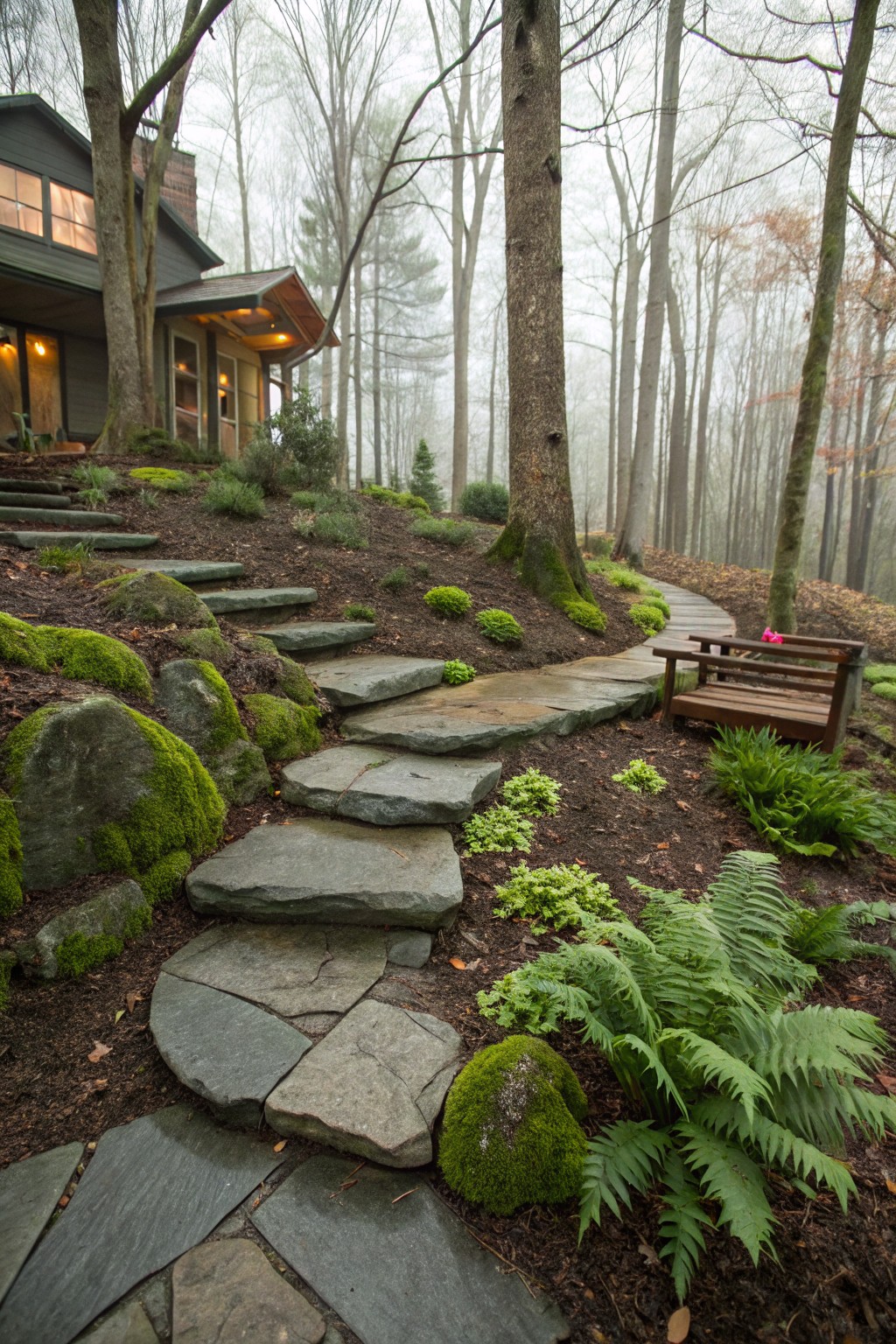
One simple way to handle a steep front yard is with irregular natural stone steps. They fit right into the slope without looking forced. In this setup, wide flagstones curve gently up the hill, edged by mossy boulders and low ferns. It keeps the path feeling like part of the woods, not some add-on.
These steps work best where you want low upkeep and a rustic look. Use them leading to your entry or a seating spot like that bench halfway up. Pick local stone to match your area, and fill gaps with mulch or groundcover. They suit wooded lots or spots with poor soil… just make sure each step is stable for safe walking.
Winding Stone Steps on Sloped Yards
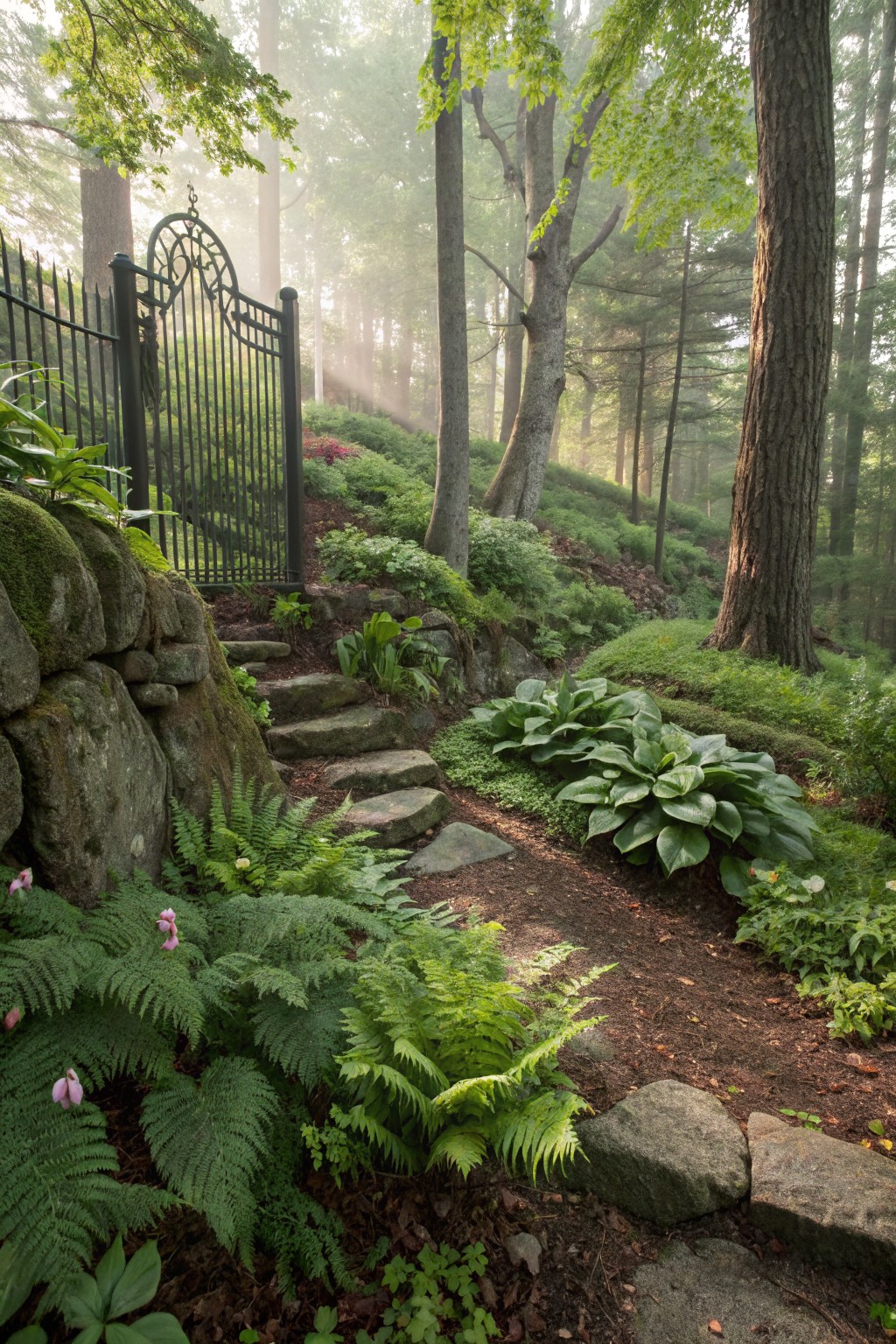
One straightforward way to tame a front yard slope is with irregular stone steps like these. They follow the natural contour of the hill, tucked into the earth and edged with big leafy plants such as hostas and ferns. That setup keeps soil in place and turns a tricky spot into something walkable and pretty. No stiff retaining walls here. Just steps that blend right in.
These paths suit wooded or shady slopes best, where the dappled light brings out the greens. Source flat or rough local stones for the steps, then fill gaps with mossy groundcovers and bold perennials. A simple iron gate at the top adds structure without overdoing it. Watch the footing on wet days, but otherwise it’s practical year-round.
Terraced Stone Walls for Sloped Yards
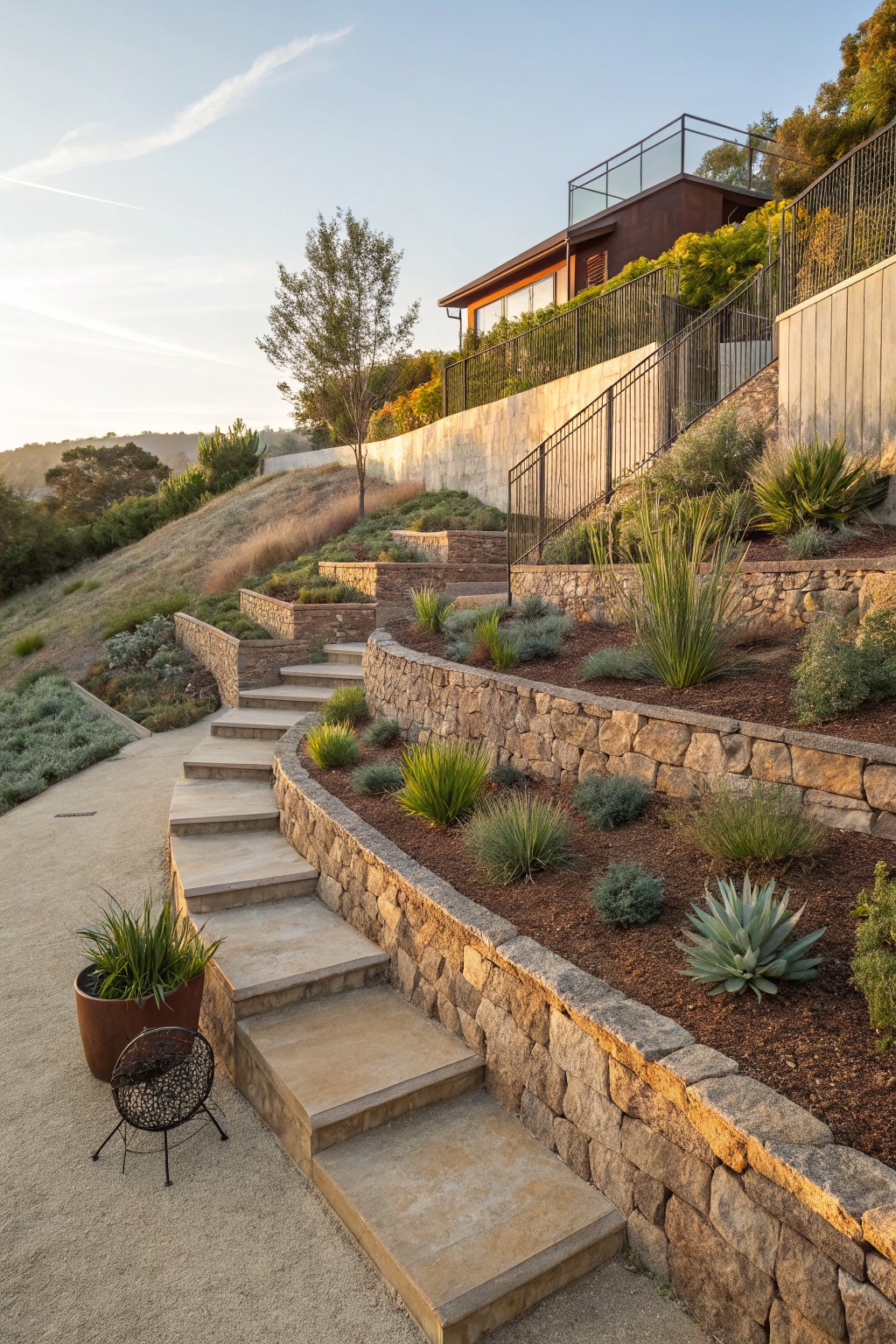
Slopes can be tricky in a front yard. They erode easy and leave little room for plants or paths. Terraced stone walls fix that by carving the hill into flat steps, like these curving ones with wide concrete stairs built right in. Tuck in tough plants such as agave and grasses between the levels. It turns a bare hill into something walkable and green that fits the land.
This setup suits hillside homes where you want low upkeep. Go for local fieldstone so it blends, and keep plantings simple to match dry spots. Build the walls sturdy, maybe with a pro, since they hold soil back. Watch the steps too, for good drainage on rainy days.
Formal Steps and Pool for Sloped Yards

A good way to handle a front slope is with wide stone steps running straight up the center, edged by clipped boxwood hedges. Drop in a narrow reflecting pool right at the base, with a simple fountain bubbling up. It turns the hill into a proper pathway that feels balanced and pulls you toward the house. The symmetry makes even a tricky yard look put together.
This works best in front of a stone or brick home where you want some old-style garden feel. Boxwoods stay green year-round, but they need trimming a couple times a year to keep the shape. Skip it on steep drops, though. Go for moderate slopes under 20 feet high.
Natural Stone Steps on Slopes
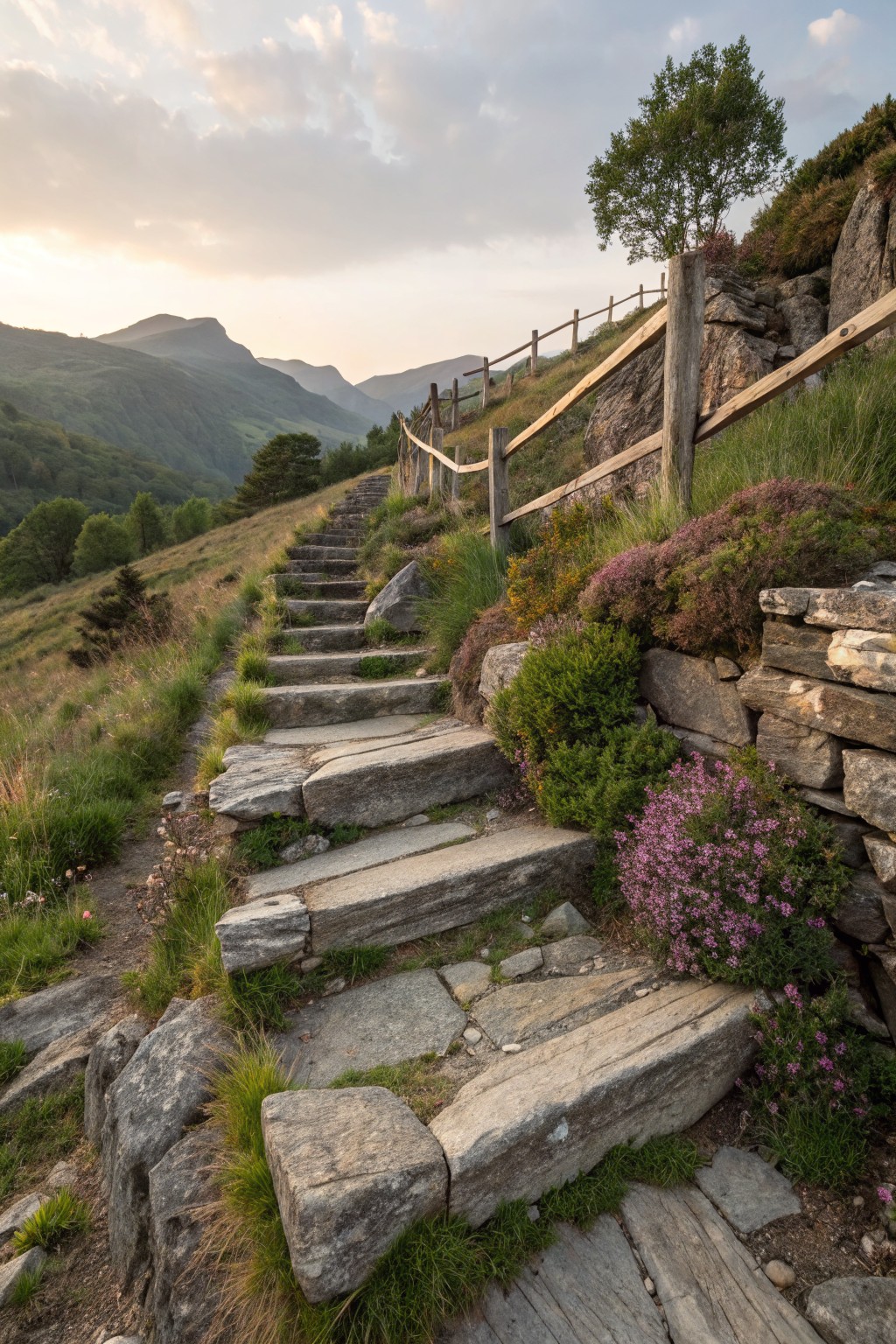
Rough stone slabs make great steps for sloped front yards. They fit right into the hill like they grew there, especially when you pick stones that match the local rock. In this setup, the wide, uneven treads give you solid footing, and low plants along the edges keep soil in place without much upkeep. A simple wooden rail adds safety without looking fussy.
These steps work best on moderate to steep inclines where you need reliable access to the house or garden. Source stones from nearby quarries if you can, to keep costs down and the look authentic. Plant hardy ground covers like heather around the base. Just watch the spacing. Too tight, and it’ll feel cramped. Leave room for grass paths beside them.
Formal Topiary on Sloped Stone Stairs
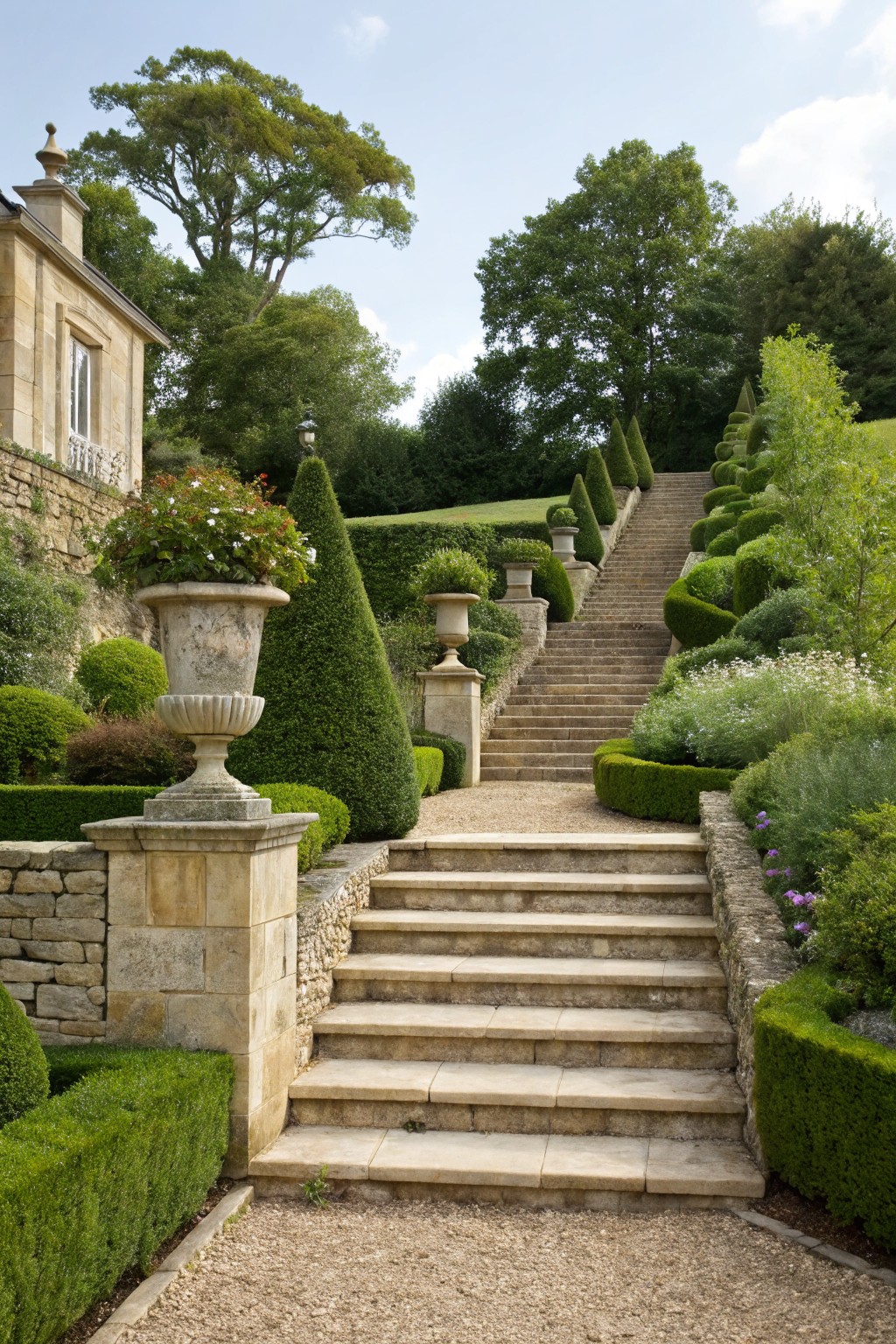
One solid way to handle a sloped front yard is with wide stone stairs that climb right up the middle. Flank them with tall conical topiaries and round boxwood hedges like these. It turns the slope into a proper entrance path instead of just a hill. The repetition makes it feel planned and polished without much color or fuss.
This setup works best on bigger lots near a stone house or cottage. Keep the stairs wide enough for two people and space the plants evenly. Topiary takes trimming though so pick slow-growing boxwoods if you can. Add simple urns with seasonal flowers at the base for a little lift.
Stepping Stone Paths on Slopes
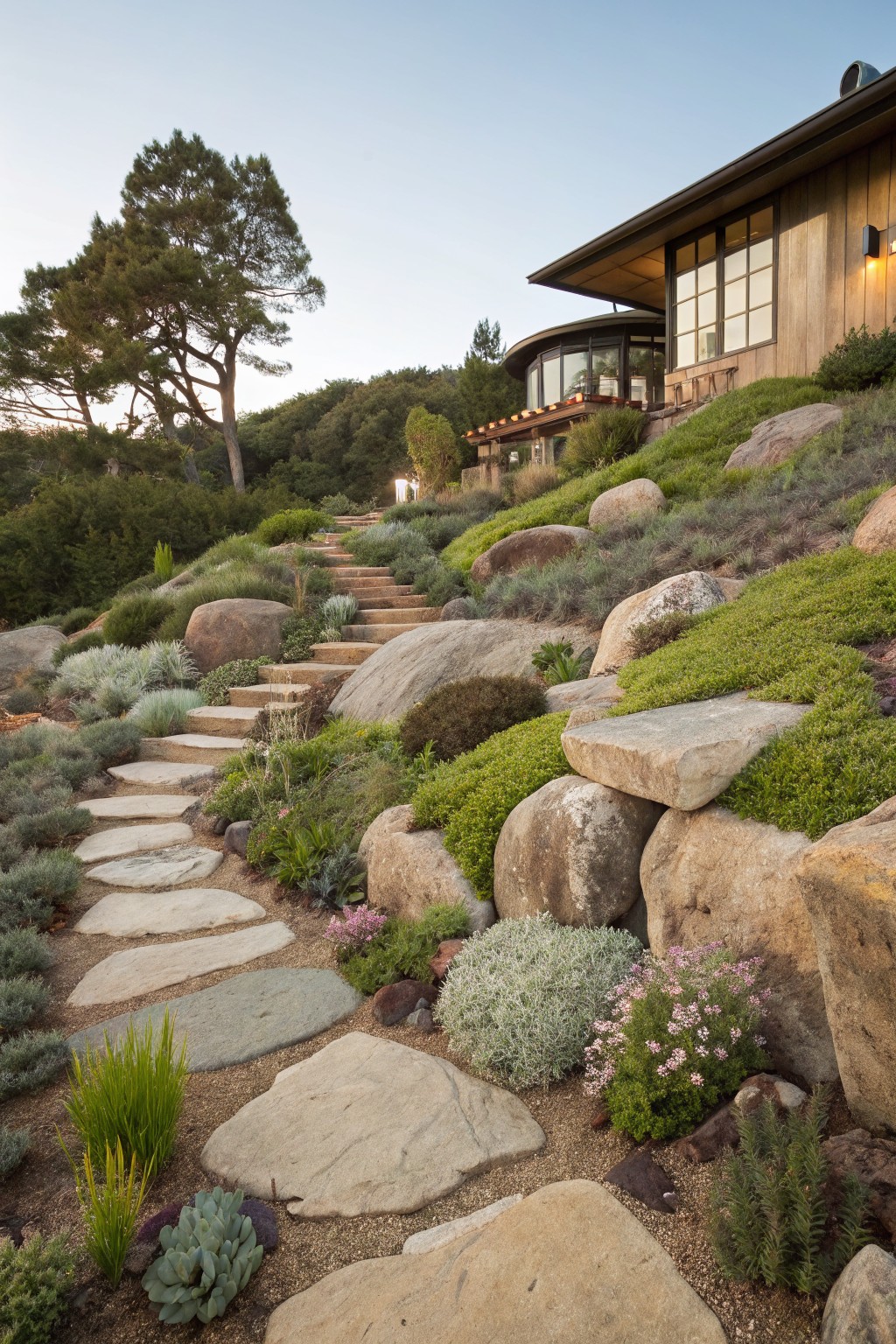
One simple way to handle a sloped front yard is with irregular stepping stones set right into the ground. They wind up naturally between big boulders and low plants, like those silvery grasses and clumps of succulents you see here. It turns a tricky hill into an easy walk that feels part of the landscape, not slapped on top.
These paths suit any home with elevation changes, especially drier spots where you want low-water plants. Lay the stones loose in gravel for drainage, tuck in boulders for scale, and fill gaps with groundcovers. Skip straight lines. They can get muddy in rain, so pair with steps higher up if the slope is really steep.
Natural Stone Steps for Sloped Yards
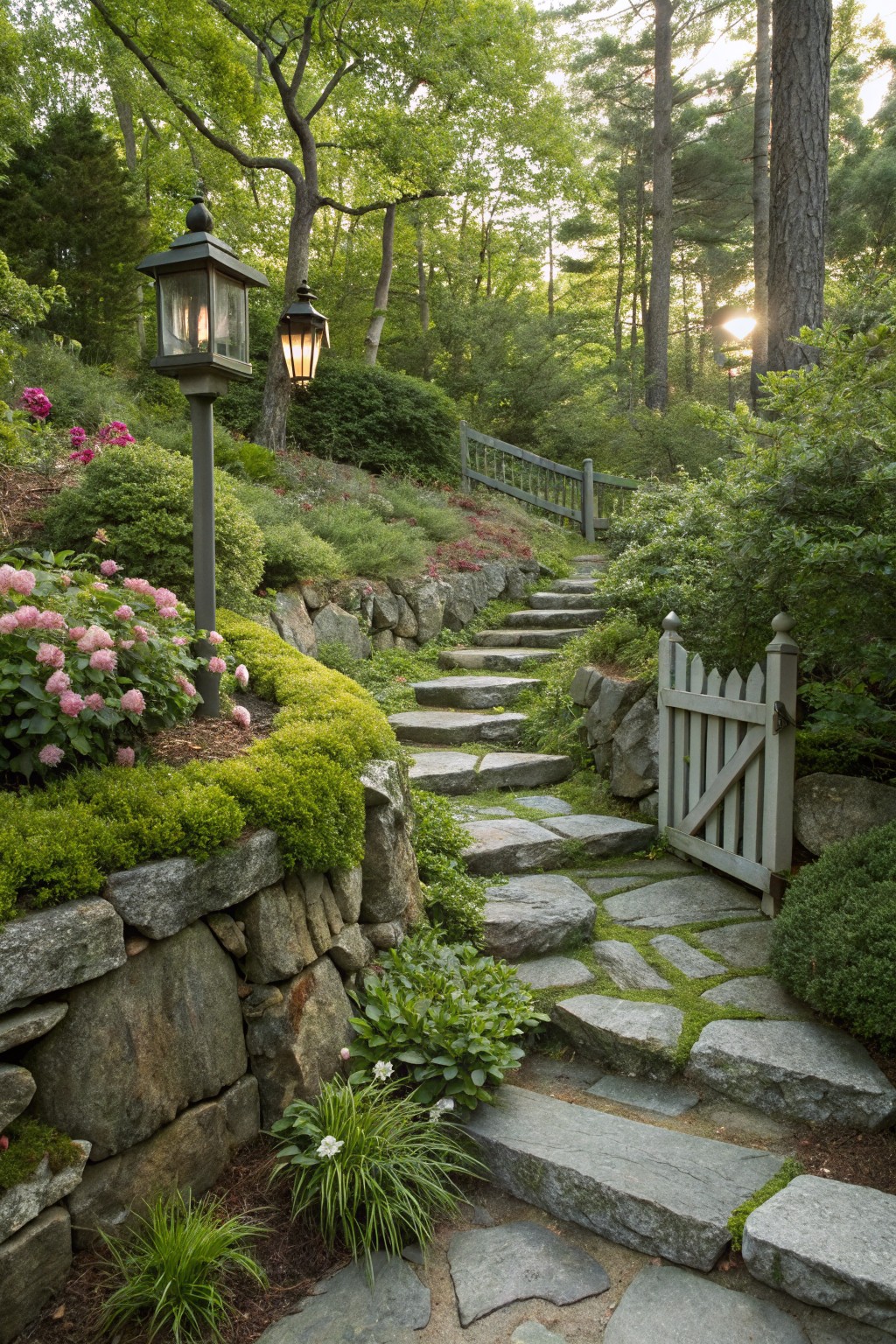
Rough stone steps like these make a steep front yard slope feel welcoming instead of tricky to climb. They follow the natural contour of the hill, with moss creeping over the edges and low plants tucked in beside them. A couple lanterns add soft light for evenings, and it all looks so settled in place, like it’s been there forever.
These work best on moderate slopes where you want low upkeep but some structure. Pick stones from a local quarry to match your area’s rock, then layer in ground covers and shrubs that won’t overpower the path. Steer clear of super smooth pavers here. They can slip when wet, and the rough look ties better to wooded spots anyway.
Tiered Raised Beds for Sloped Yards
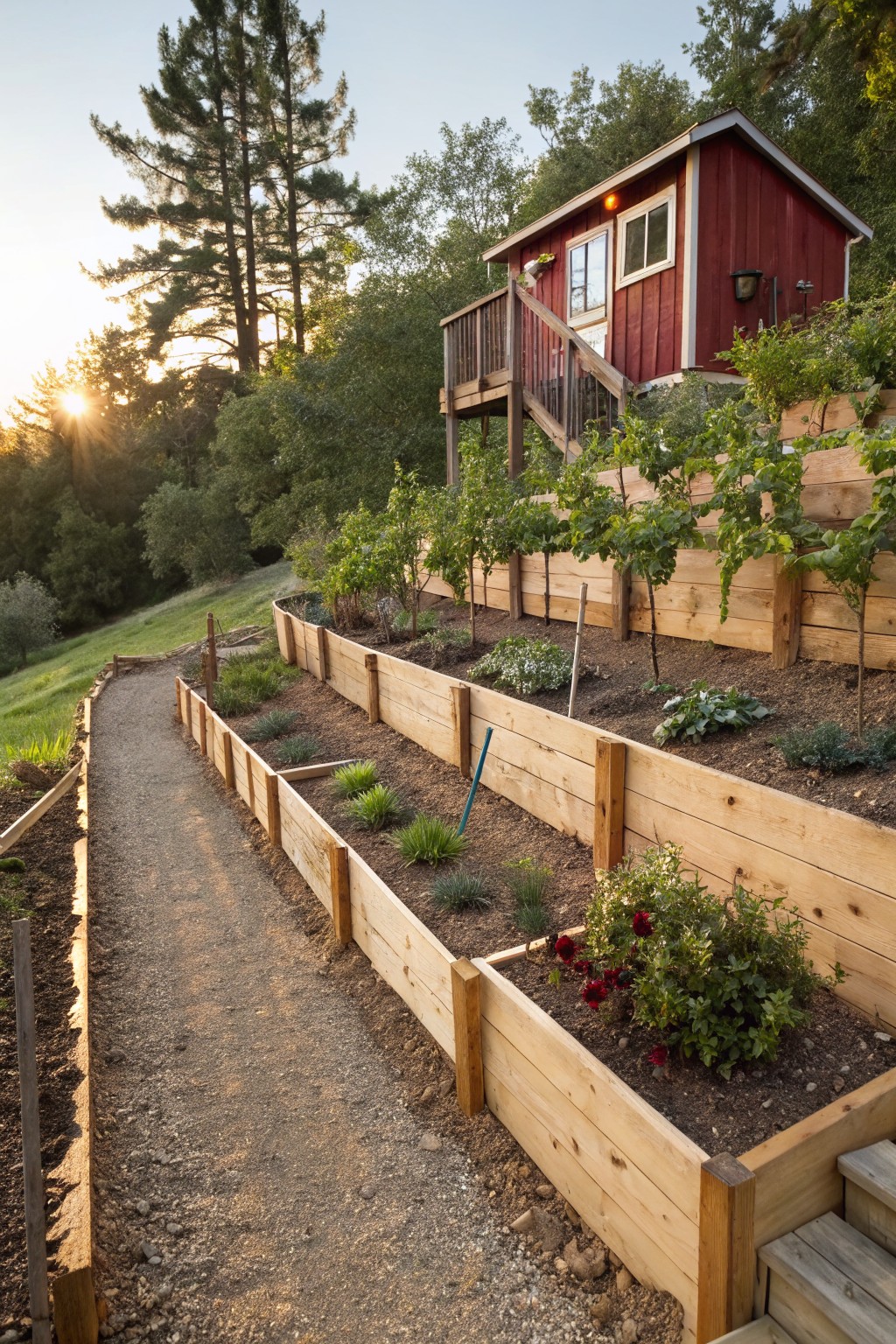
Slopes can be tough for planting. But stacking wooden raised beds like these turns the hill into usable garden space. Each level holds back soil and gives you flat spots for veggies, vines, or flowers. A simple gravel path winds right through, so you can tend everything without slipping around. It’s practical and looks put together.
These work best on front yard hills that drop off moderately, not super steep ones. Go with untreated cedar boards for the beds, they hold up outdoors. Start grapes or berries on the upper tiers, mix in lower plants below. Keep beds about two feet high so they’re easy to reach. Watch the drainage though, or roots might rot in wet spots.
Large Terracotta Pots Line Sloped Stairs
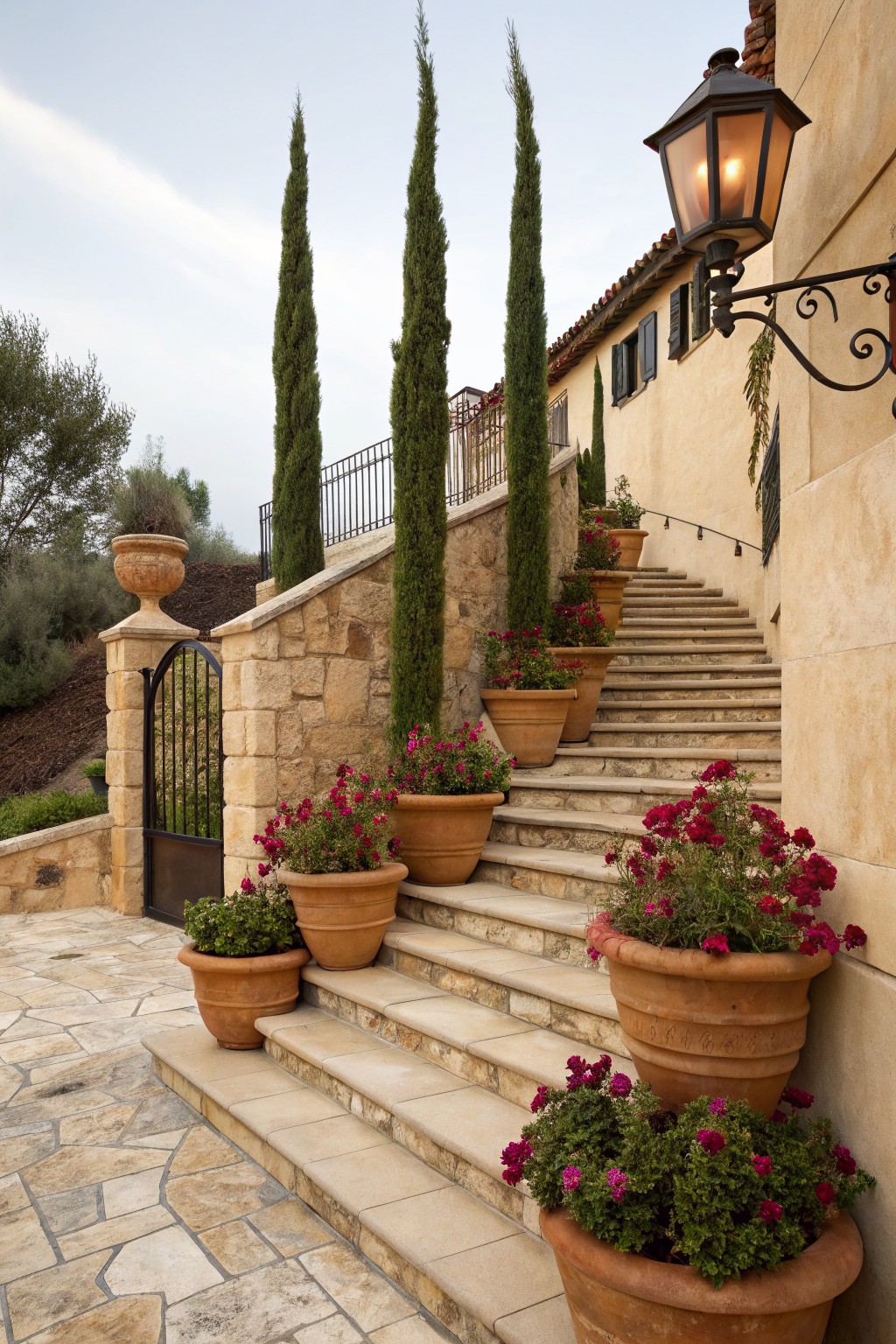
One simple way to handle a steep front slope is lining the stairs with oversized terracotta pots full of pink flowers. Those big clay pots warm up the stone steps and add color without much planting work. Tall cypress trees along the side give some height and frame the path nicely.
This works best on entryways to stone or stucco houses in dry areas. Go for tough blooms like geraniums that handle sun and don’t need constant water. Cluster a few pots per step, maybe in pairs, and keep them filled through the seasons. Just make sure good drainage so roots stay happy.
Sloped Yard Stairs with Recessed Lights
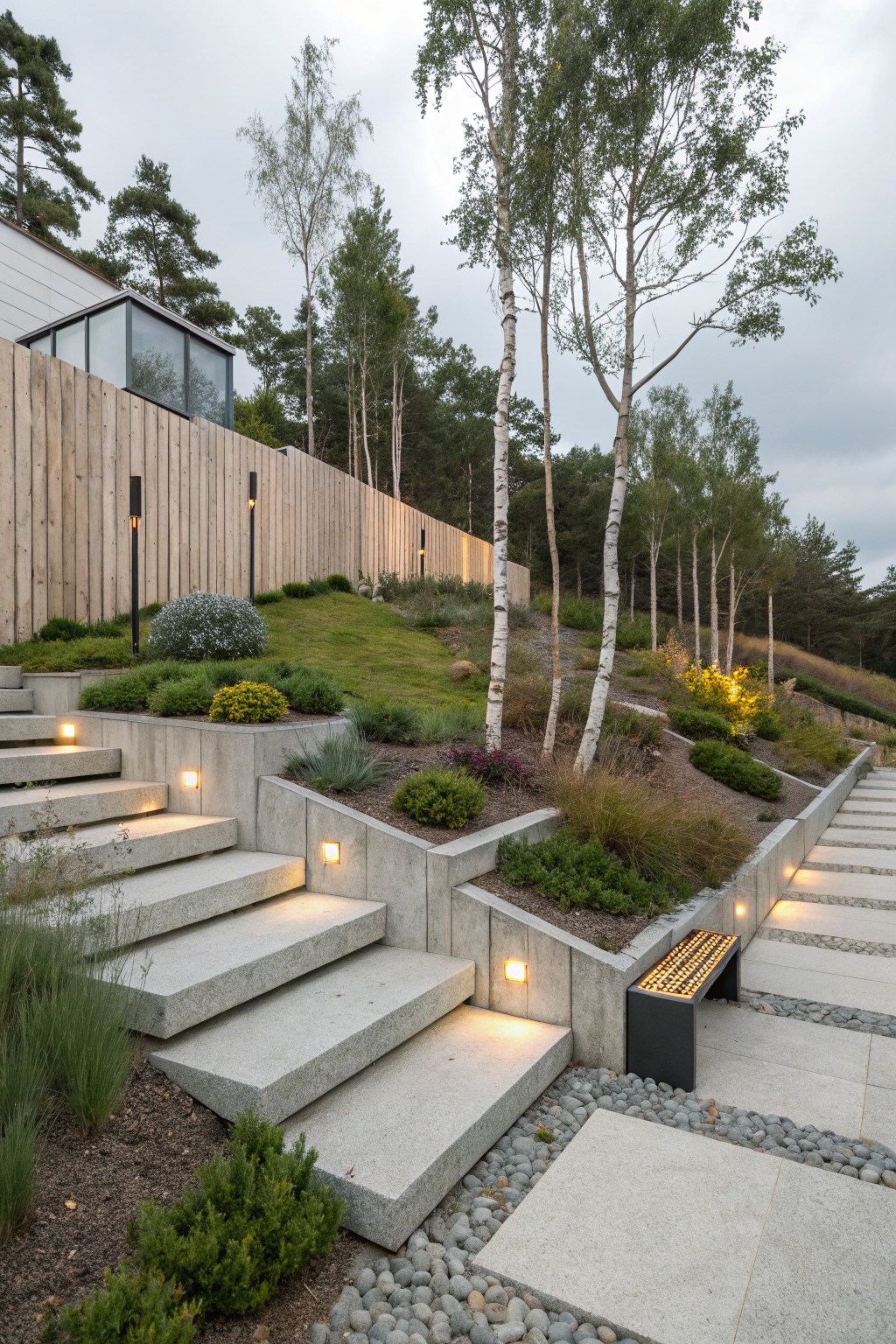
Wide concrete steps like these turn a tricky hillside into an easy walk up to the house. The lights built right into the edges glow softly at dusk, guiding the way without overpowering the plants tucked along the sides. It’s a clean look that fits right into the slope, keeping things safe and pretty.
You can pull this off on any front yard with a decent drop, especially if pines or birches frame the edges. Use sturdy concrete for the steps and walls, then fill the terraces with grasses and shrubs that won’t flop over. Add a bench halfway for a rest spot. Just make sure the lighting is low-voltage and weatherproof.
Stone Steps and Boulders for Sloped Yards
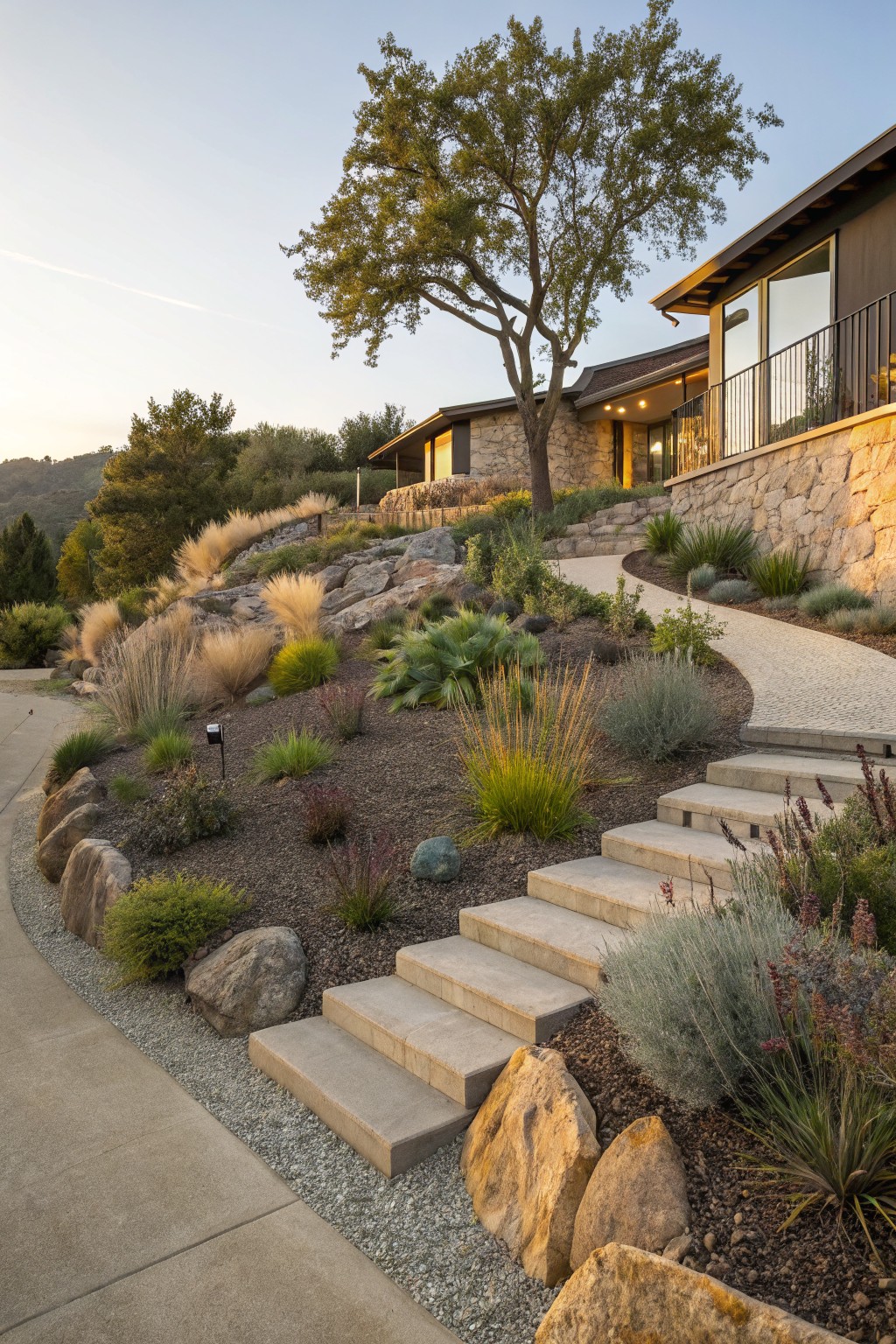
Slopes can be tricky in front yards. But this idea uses wide concrete steps set into the hill, edged with big boulders and clumps of grasses. It turns a steep drop into an easy walk up to the house. The path winds a bit too, which slows you down and makes the yard feel bigger.
You can pull this off on most hilly lots, especially if you want low upkeep. Pick boulders that match your local rock, add tough plants like feather grass or lavender that don’t need much water. It fits modern homes with stone accents, or even older ones. Just make sure the steps are sturdy for daily use.
Curved Stone Steps for Sloped Yards
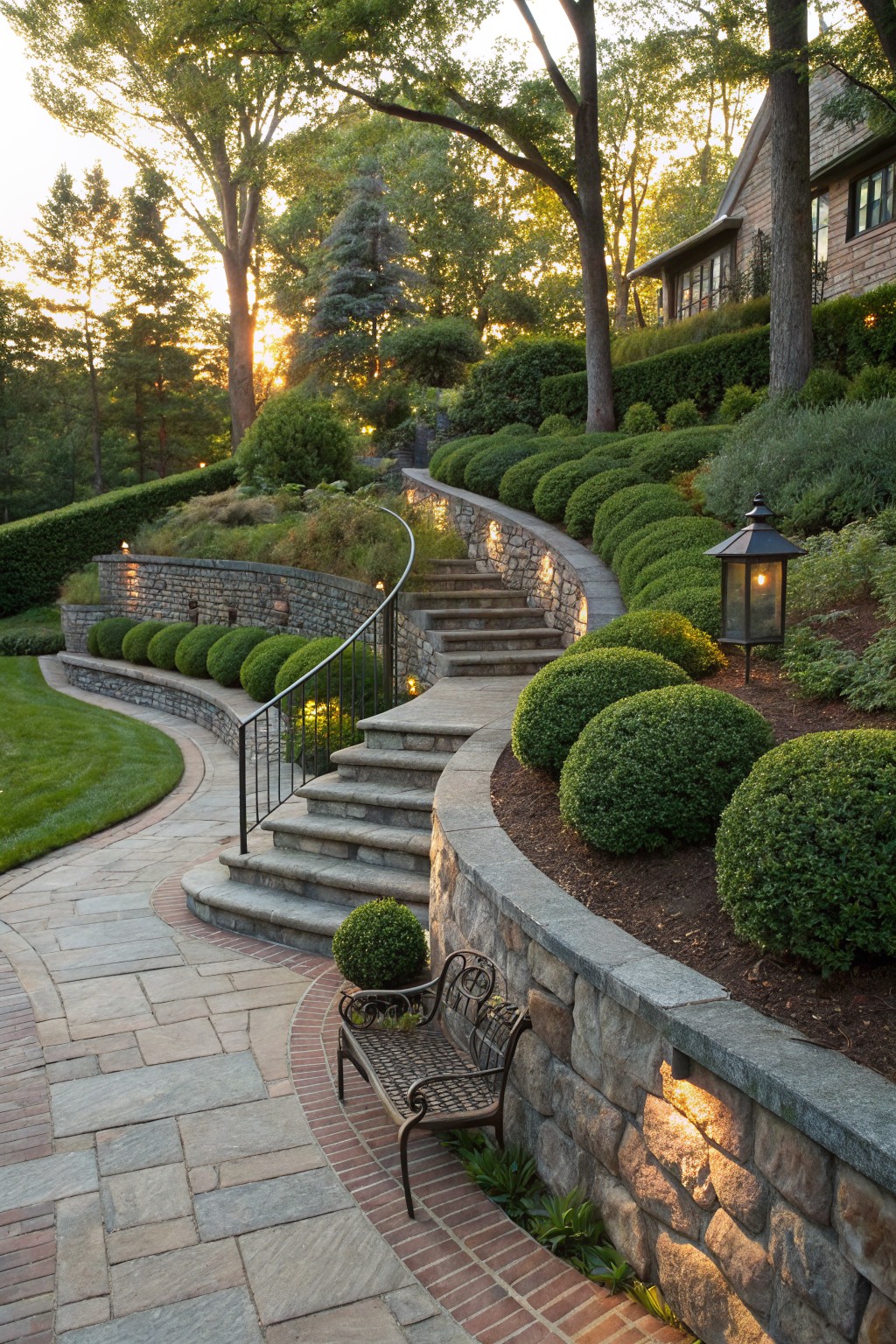
Slopes heading up to your front door don’t have to look messy or hard to climb. Curved stone steps tucked into retaining walls turn the grade into something smooth and intentional. Those round boxwood shrubs lining the edges keep it tidy and give a bit of green rhythm without much upkeep.
This setup shines on front yards with 10 to 20 feet of rise. It fits houses with a classic feel, like shingle style ones. Go for wide enough steps so two people can pass, and add low lanterns for evening light. Just check your soil drainage first to avoid washouts after rain.
Winding Brick Paths on Slopes
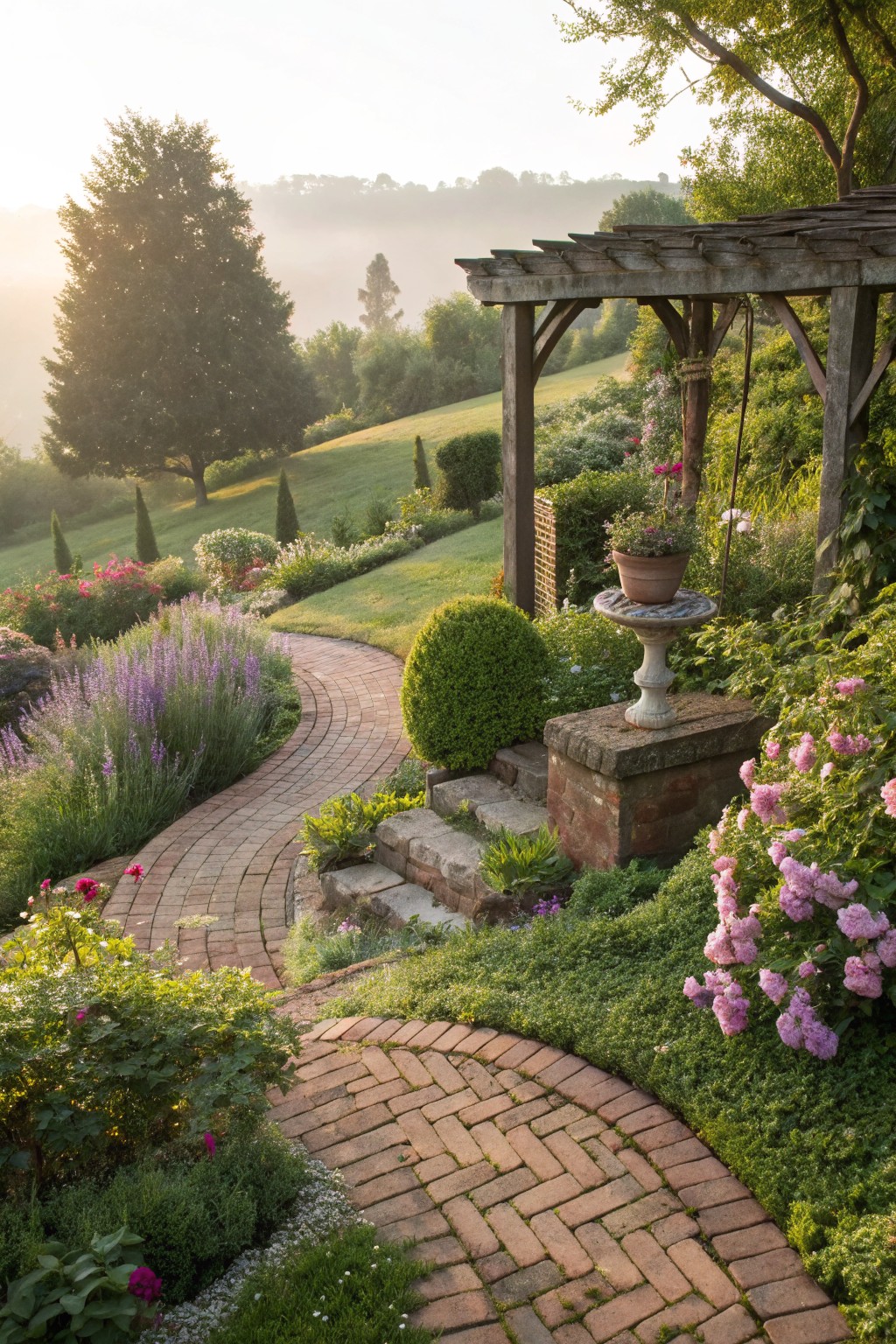
A simple winding brick path like this turns a tricky sloped front yard into something you actually want to walk through. It guides you gently uphill without feeling steep. The soft curve invites a slower pace so you notice the lavender edging and clipped boxwoods along the way. That natural flow makes the whole garden feel put together.
These paths work best on front yards with moderate slopes where you want low upkeep but high appeal. Lay bricks in a herringbone pattern for grip and charm. Pair with terraced beds to hold back soil. Avoid straight lines here. They make hills look longer and less friendly.
Winding Paths on Sloped Yards
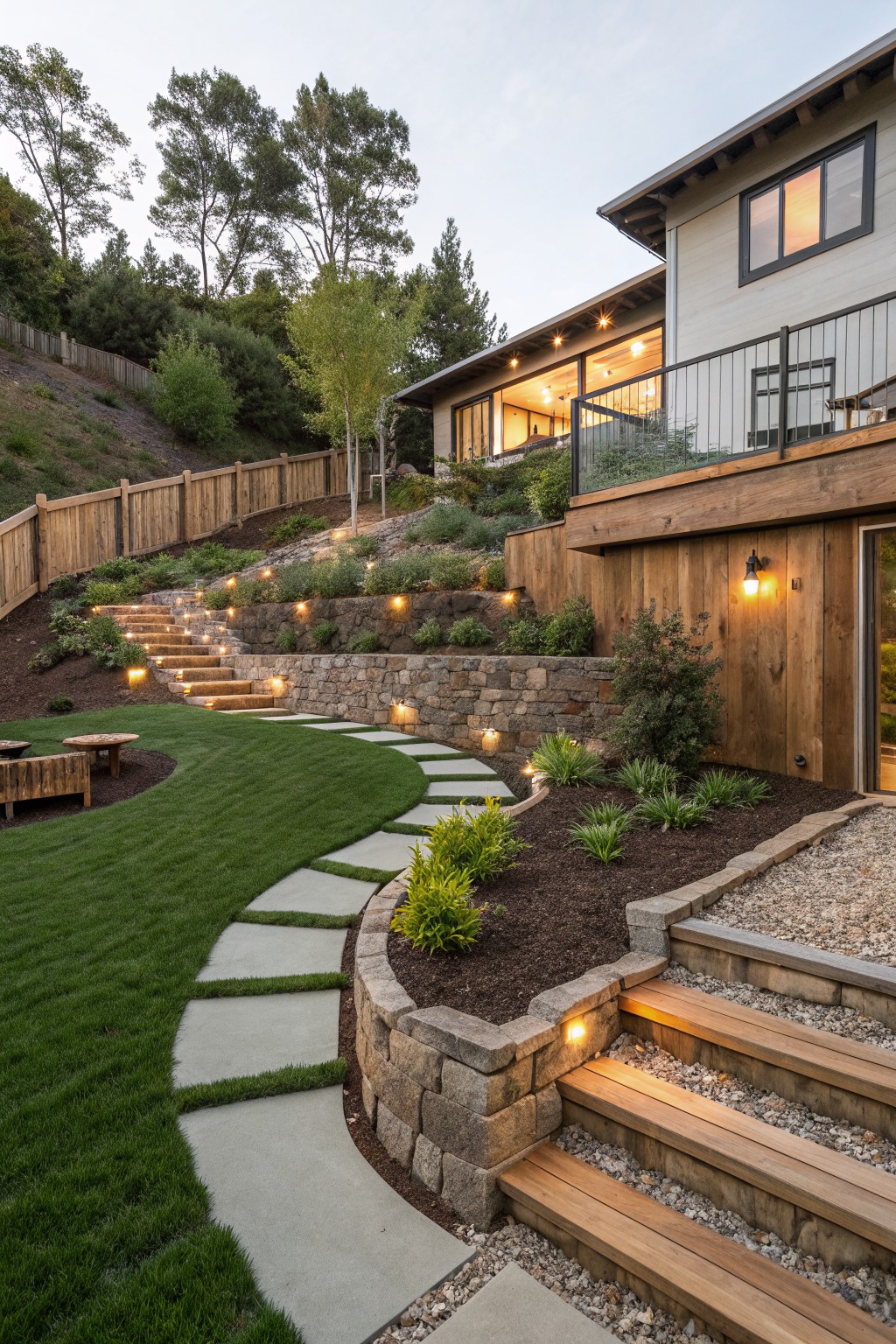
Slopes in a yard don’t have to stay bare or hard to use. A simple fix is a winding path that curves gently up the hill, made from concrete pavers set in grass. Low lights along the stone retaining walls guide the way after dark, making the whole climb feel easy and welcoming.
This setup suits front yards on hillsides, where you need a clear route from the driveway to the entry without staring down a straight staircase. Pick wide enough steps for comfort, and tuck in low plants along the edges. It keeps maintenance low once established… just right for everyday homes.
Winding Stone Steps for Sloped Front Yards
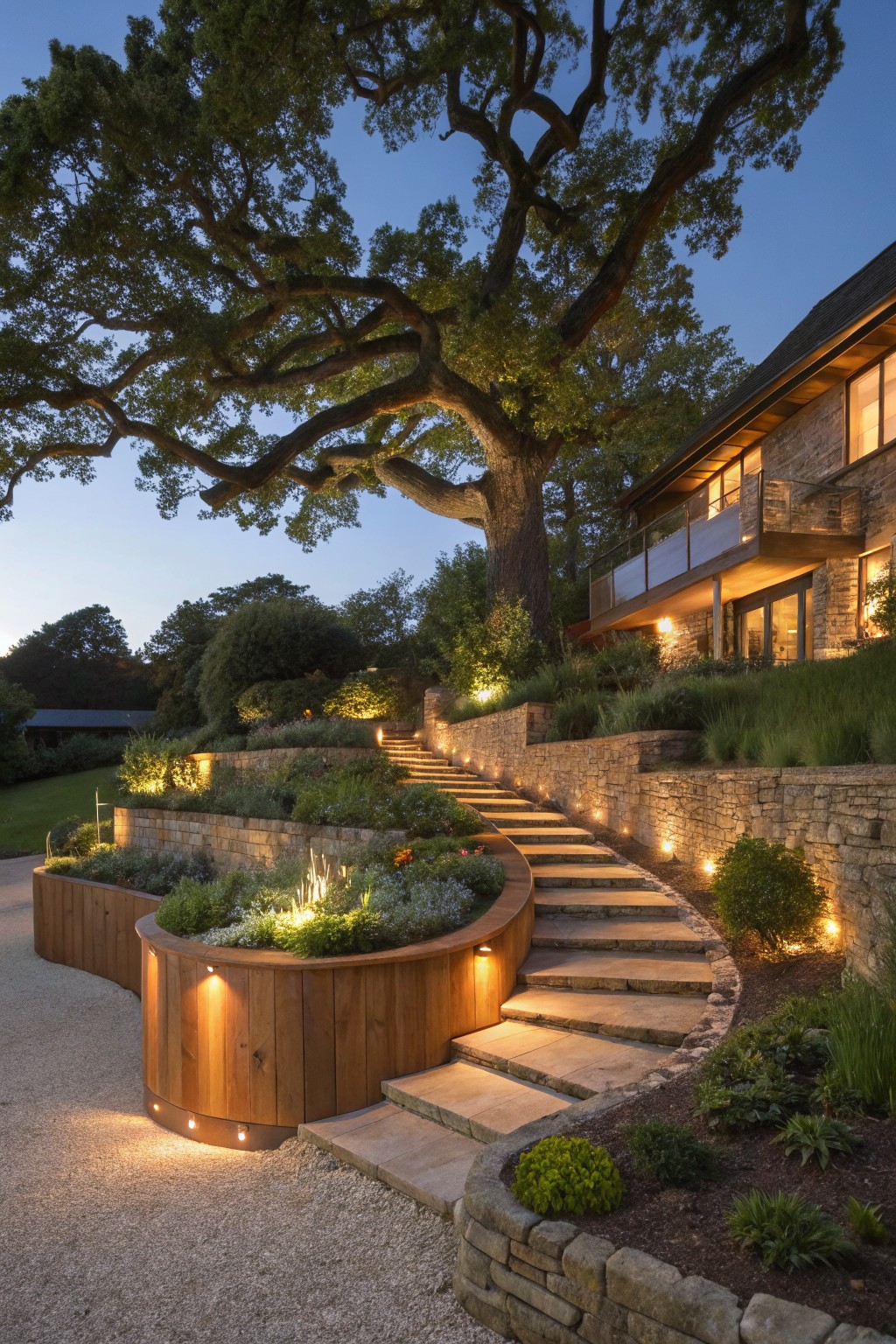
Sloped front yards can feel tricky to work with. But winding stone steps like these turn the challenge into something special. They curve gently up the hill, with low lights tucked into the edges and plants spilling over nearby walls. That setup guides you right to the house without feeling steep or plain.
You can pull this off in most any front yard with a drop. Pick rough-cut stone that matches your area, add simple LED lights for evenings, and fill the beds with tough grasses or perennials. It fits modern houses or older ones too. Just keep the curve natural so it doesn’t look forced.
Winding Paver Paths on Slopes
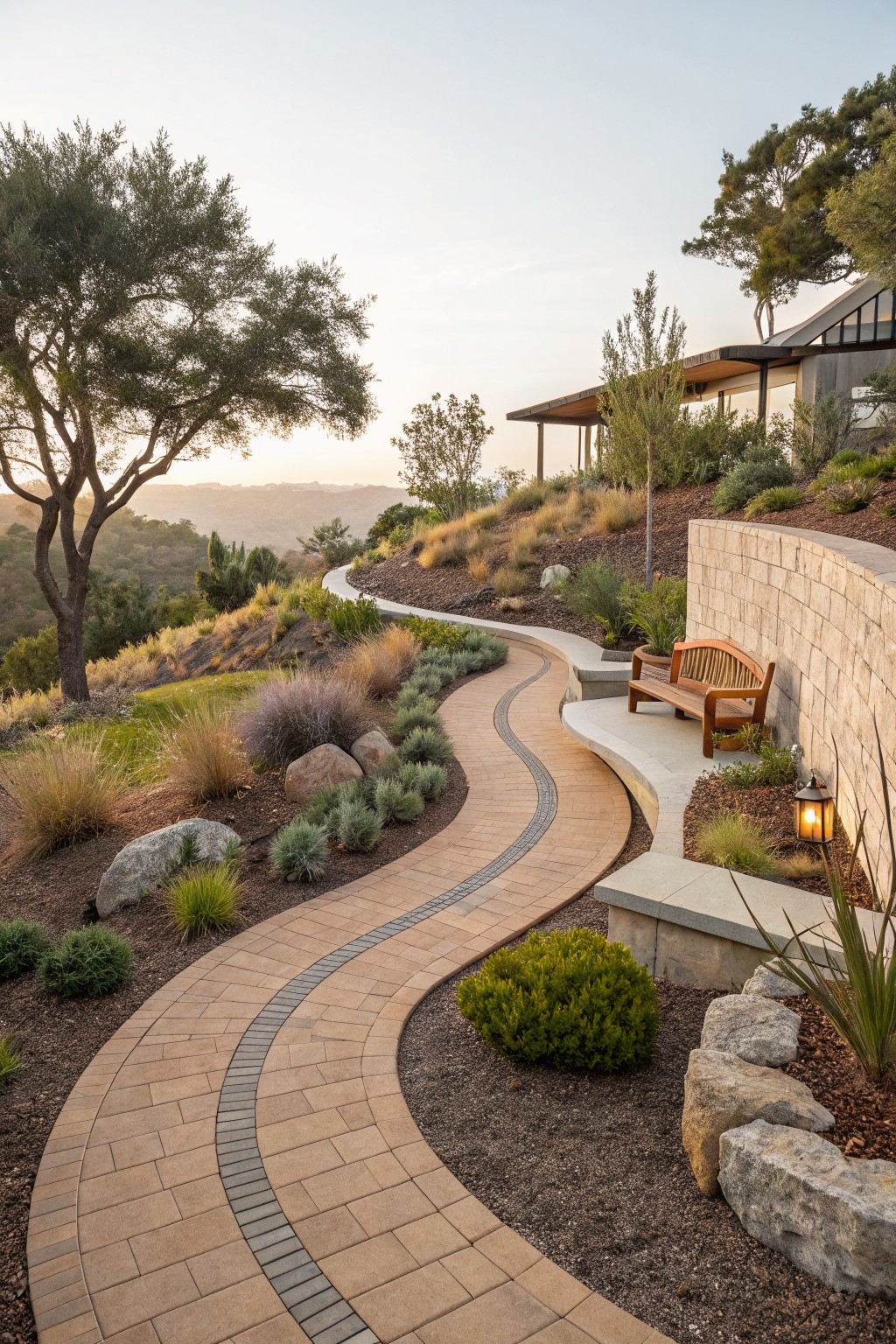
A simple winding path like this one turns a tricky slope into something walkable and pretty. Made from pavers with dark edging, it follows the hill’s natural curves instead of fighting them. That keeps erosion down and makes the yard feel bigger. Plants tucked along the edges, like grasses and low shrubs, plus a few boulders, fill in without crowding the way.
This setup works great for front yards where you want low upkeep. Use drought-tolerant natives so it stays neat year-round. Add a bench halfway for a rest spot, maybe with a lantern nearby. It suits hillside homes in dry areas best. Just make sure the path grade stays gentle, under 1:12, so it’s safe to use.
Frequently Asked Questions
Q: How do I stop erosion on my sloped yard right away?
A: Spread thick mulch over bare soil after clearing weeds. It holds everything in place while roots get established. Water gently at the base to settle it.
Q: Can I build simple terraces myself?
A: Grab some landscape timbers or stacked stones for low walls. Dig a level trench at each step and backfill with gravel for drainage. They make planting flat spots without much fuss.
Q: What grows best on shady slopes?
A: Try pachysandra or vinca for quick ground cover. They spread fast and hug the soil tight. Add ferns up top for height.
Q: My hill is really steep. Will these ideas still work?
A: Switch to deep-rooted shrubs like junipers that grip hard. Build stair-step paths to access plants easily. And yeah, it transforms the toughest slopes.
