

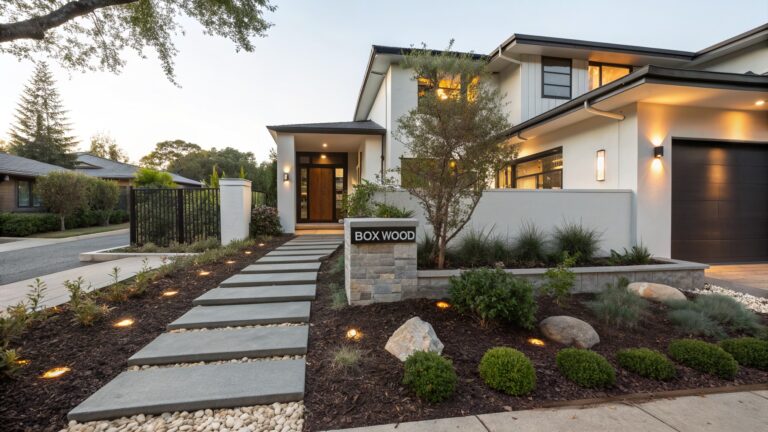
I always notice how a front yard’s layout pulls together when mulch beds frame stone paths just right. Those clean edges and layered textures make the space feel shaped and low-maintenance over the seasons. In my own yard, switching to that combo stopped the weeds from taking over and gave the plantings room to stand out. People spot those defined borders and winding walkways long before the flowers. Some of these ideas scale nicely to smaller lots, so they’re worth adapting if your front needs that polished structure.
Entry Path of Stone Pavers in Gravel
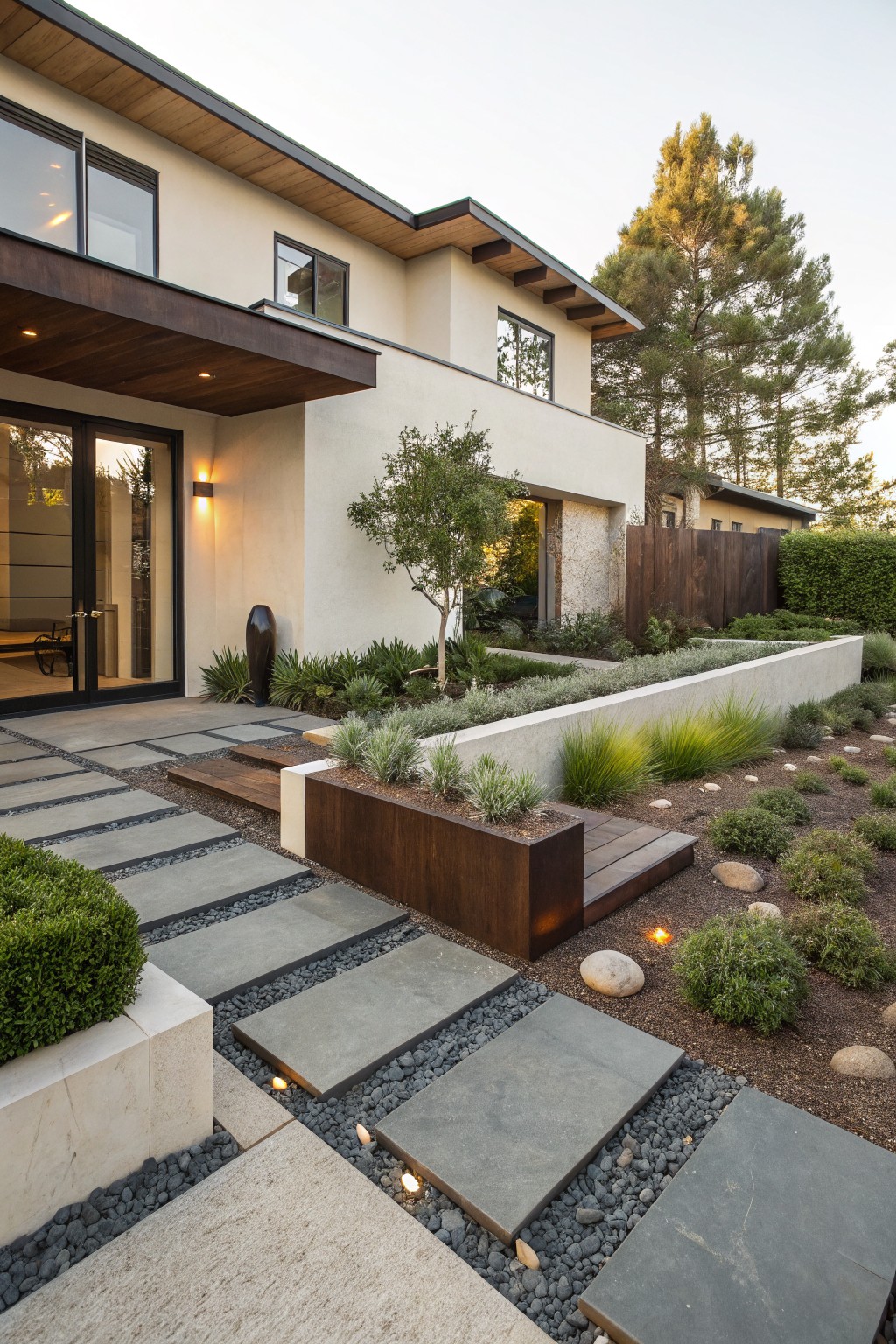
Large dark slate pavers form a simple walkway set right into beds of light gravel. That setup keeps things open and easy to walk on. Gravel fills the gaps and surrounds the path with a tidy groundcover feel. Low grasses and shrubs edge it all, tying the path to the yard without much upkeep.
This works well for front yards on any modern or clean-lined house. Lay the pavers loose in the gravel for drainage, or set them firm if you want. Add plants that stay short, like sedges or little bushes. It handles foot traffic fine and cuts down on mowing near the door.
Curved Stone Path in Mulch Beds
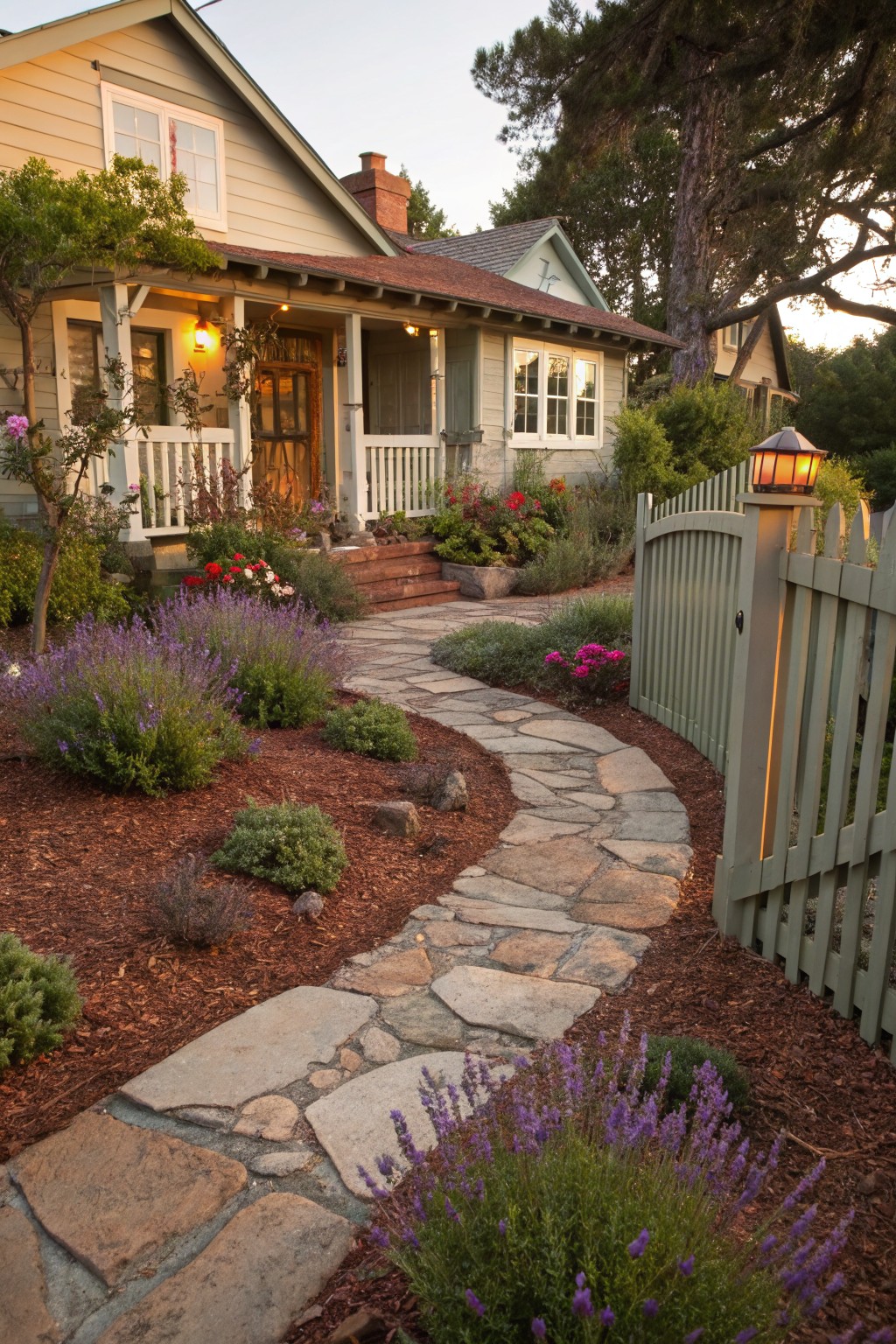
A simple curved path made from flat stones works great when set into mulch beds like this one. The reddish mulch fills in around the stones and holds back low plants such as lavender bushes. It pulls the eye toward the front door in a relaxed way. No straight lines here. Just a natural flow that fits older homes.
Try this in a front yard where you want to connect the street to your porch without much fuss. Pick stones in similar earth tones and keep the mulch about two inches deep. Lavender adds color and smells nice too. It suits sloped lots or narrow spaces best. Skip it if your soil stays soggy.
Circular Stone Beds with Gravel Mulch
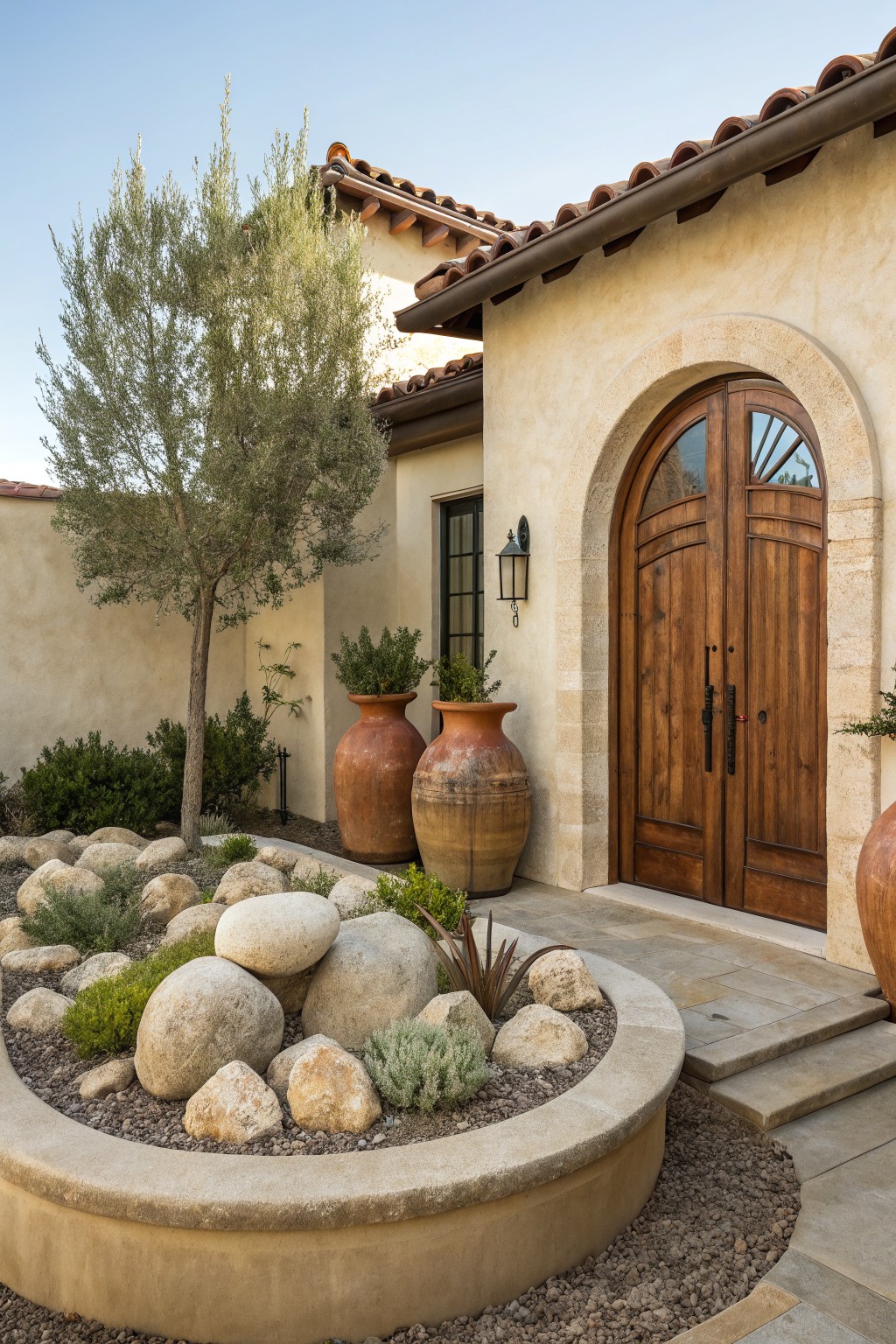
One simple way to polish up your front yard is with a raised circular bed like this one. It’s edged in stucco to match the house, then filled with smooth white boulders, pea gravel for mulch, and a few low plants like agave and ground covers. The gravel keeps weeds down and lets the rocks stand out, giving a clean, finished look that frames the entry steps without taking much water or work.
This works best in sunny, dry spots near the walkway or door. Go for beds about four feet across so they don’t overwhelm the path. Source boulders from a local quarry for that natural feel, and layer gravel two inches deep over landscape fabric. Skip too many plants, or it gets busy fast. Suits Southwestern or Mediterranean homes nicely.
Slab Walkway Set in Gravel
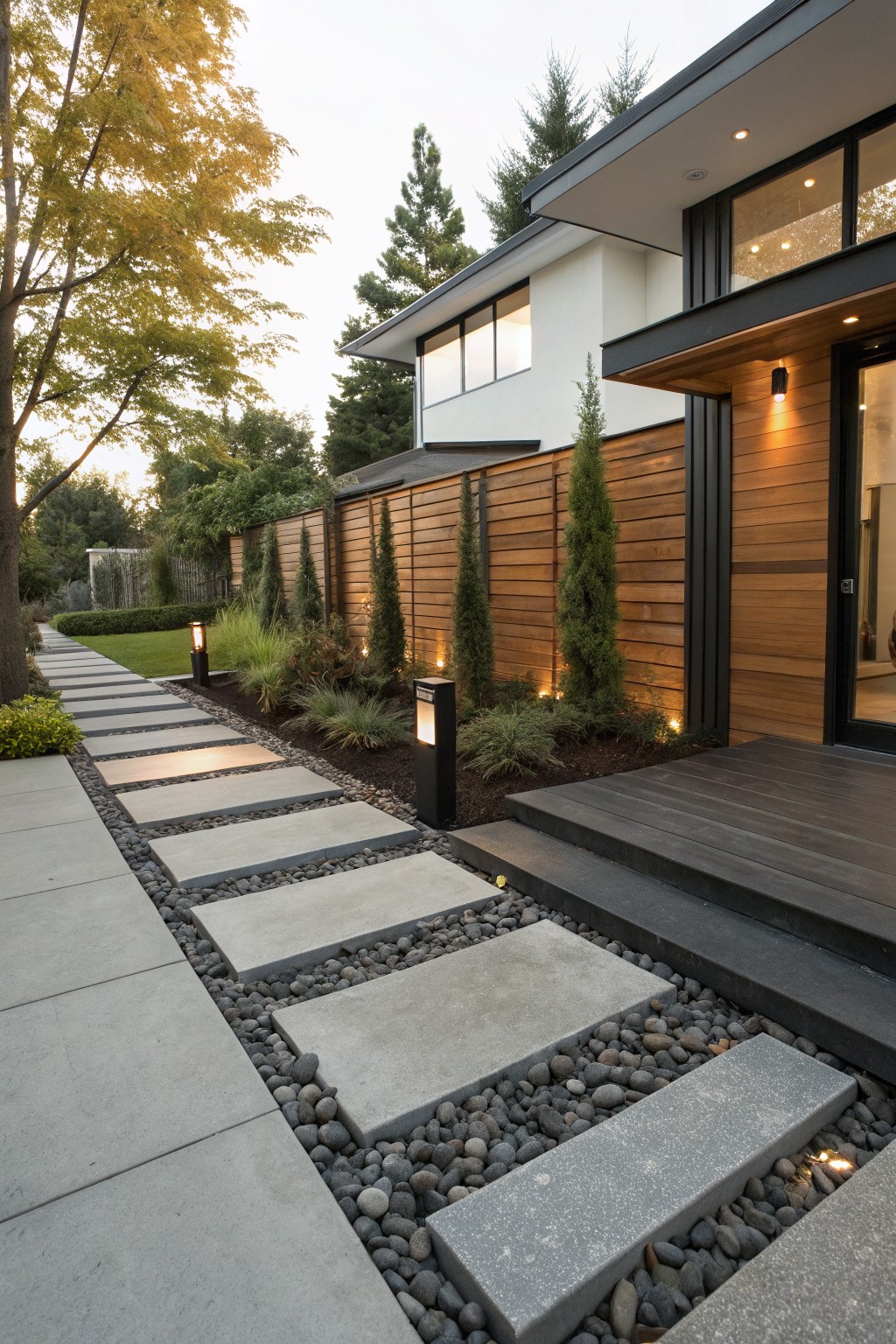
One clean way to handle a front path is laying large concrete slabs right into gravel beds. The slabs give you solid footing where you need it. The gravel fills the gaps and edges. It keeps things simple and modern without a lot of solid paving. Plus it lets water drain right through.
This setup works best on a straight shot to the door like this one. It suits low-maintenance yards around newer homes. Go for bigger slabs if you want fewer joints. Keep the gravel dark to hide dirt. Just watch the edges so they stay neat over time.
Curved Stone Path Through Mulch Beds
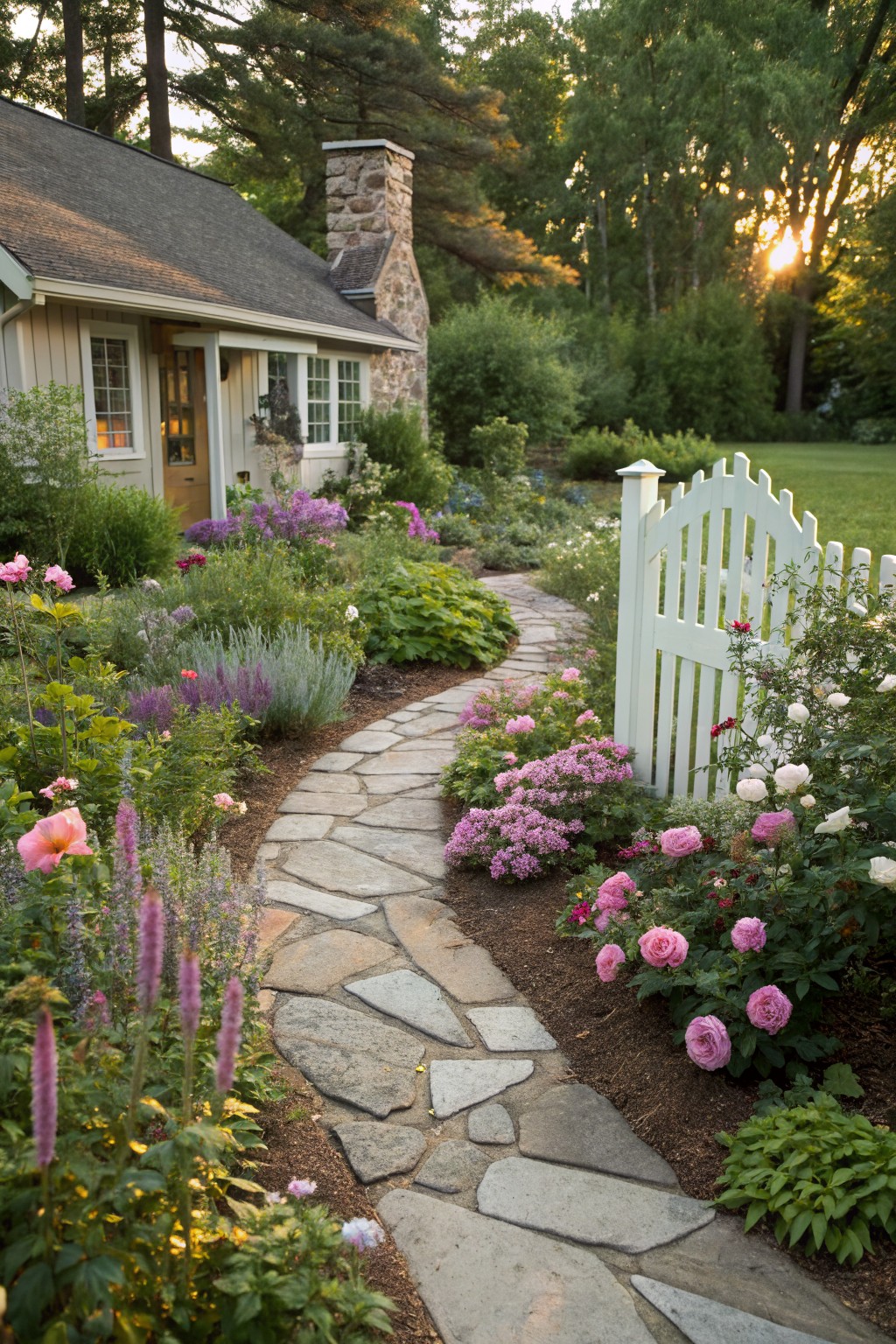
A simple curved path made from irregular stone slabs set right into mulch beds gives your front yard that easy cottage feel. The stones keep things grounded while the mulch holds back the plants and softens the edges. Flowers like pink roses and tall lavender spill over naturally along the way. It pulls your eye toward the house without any fuss.
This works best in smaller front yards where you want a low-key entry that doesn’t take over. Lay the stones loose in the mulch for drainage, then plant perennials that come back each year. Skip straight lines if your lot has turns or trees. It’s practical for homes with wooded backdrops… just refresh the mulch now and then.
Stone Retaining Walls on Slopes
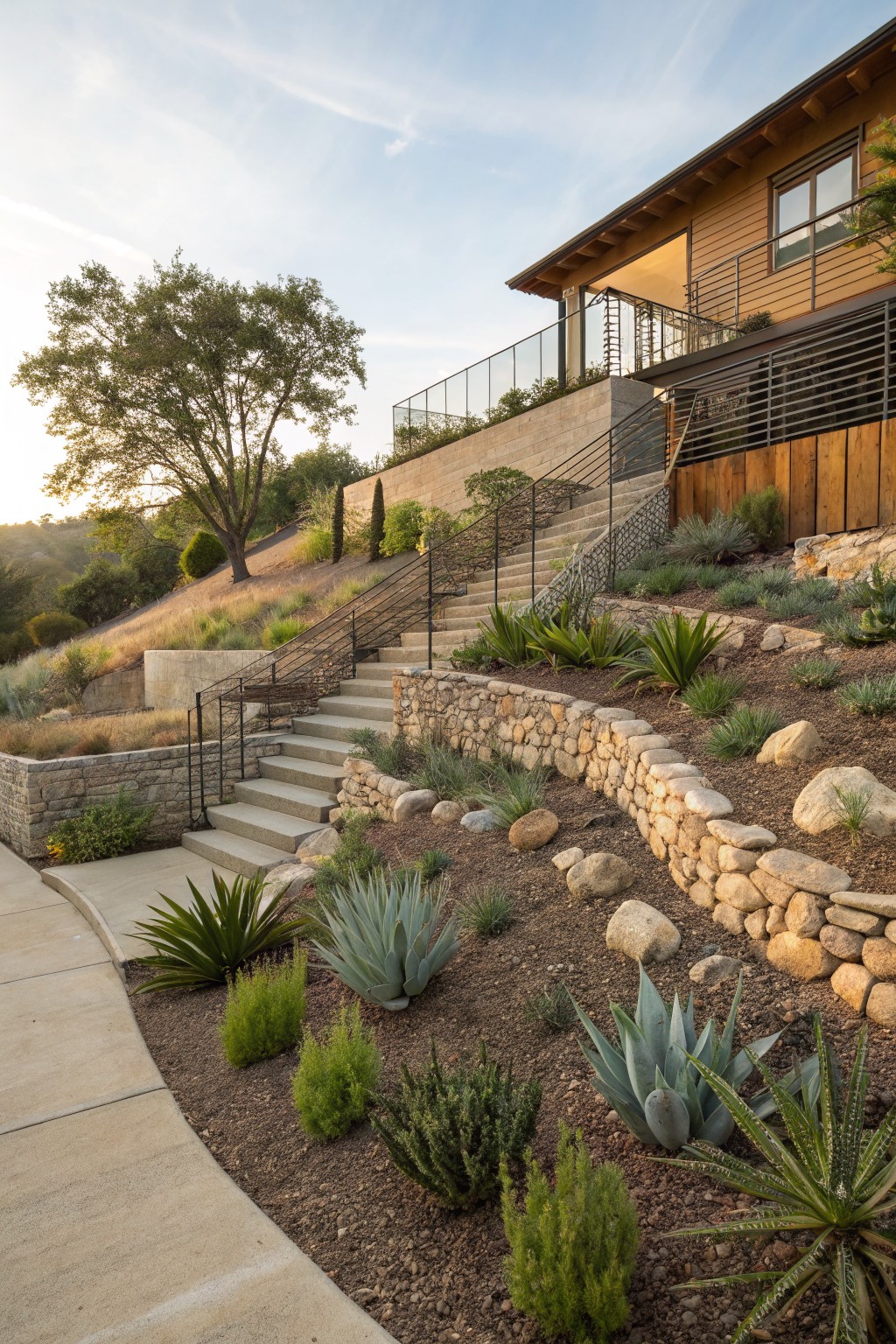
Sloped front yards can feel tricky to work with. Stone retaining walls fix that by creating flat terraces right where you need them. Here, rough stacked stones hold back the hill, with gravel mulch and spiky agaves filling the beds. It keeps soil in place and gives a natural, rugged look that fits the landscape.
Try this on any hillside lot leading to your entry. Stack local stones for walls about two to three feet high, then add gravel over soil in the pockets. Plant drought-tough stuff like agaves or grasses that won’t need much water. It suits modern homes or cabins, but watch the drainage so water doesn’t pool behind the stones.
Boxwood-Lined Gravel Path
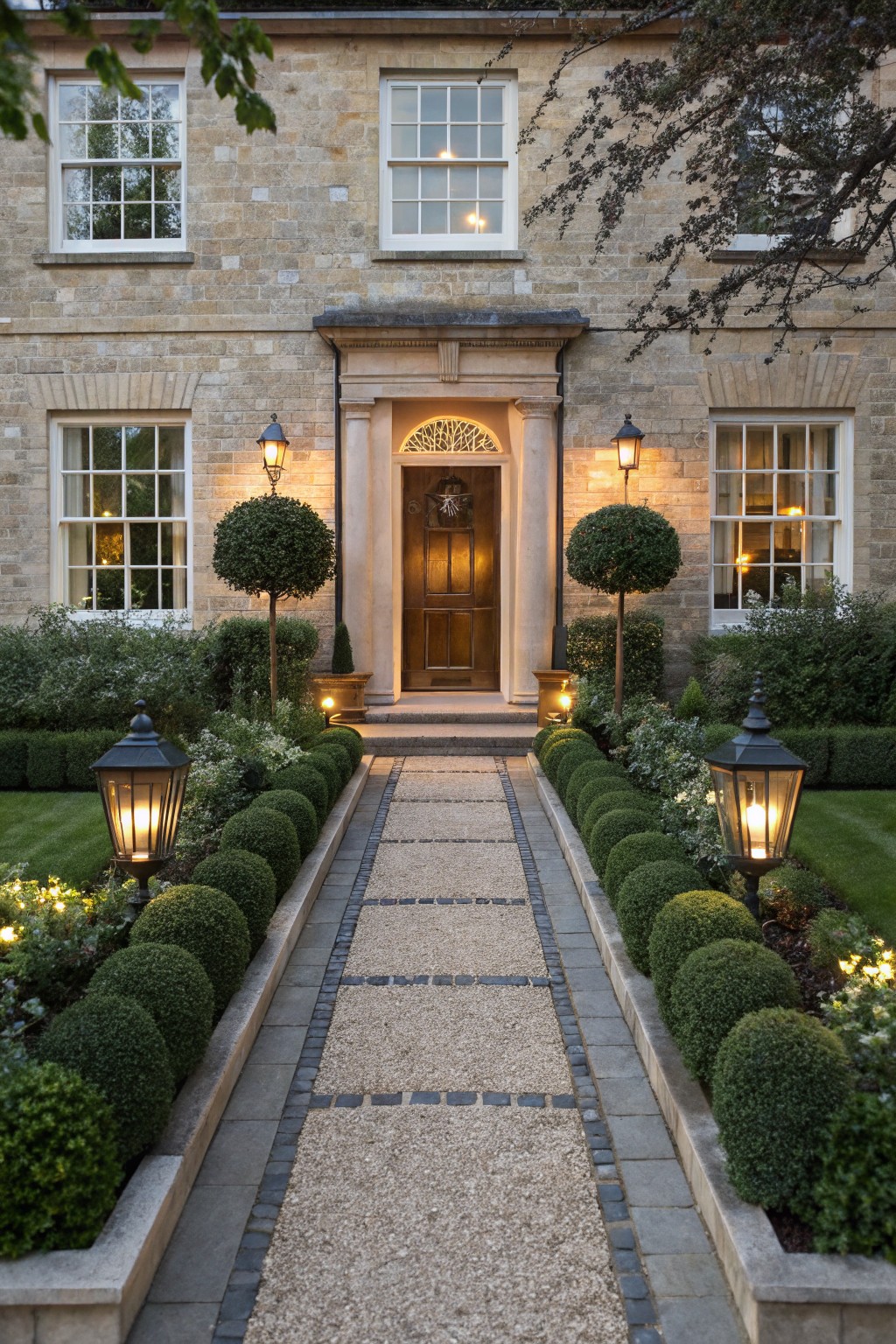
A gravel walkway like this one pulls everything together in the front yard. Those round boxwood shapes line both sides nice and even, making the path feel straight and intentional. The mix of gravel fill between stone pavers keeps it sturdy underfoot but still soft-looking.
It suits older homes or any setup with a formal entry. Just edge the beds clean and top up the gravel every couple years. Add lanterns if you want light at dusk. Not too fussy for everyday yards.
Winding Stone Path in Gravel Beds
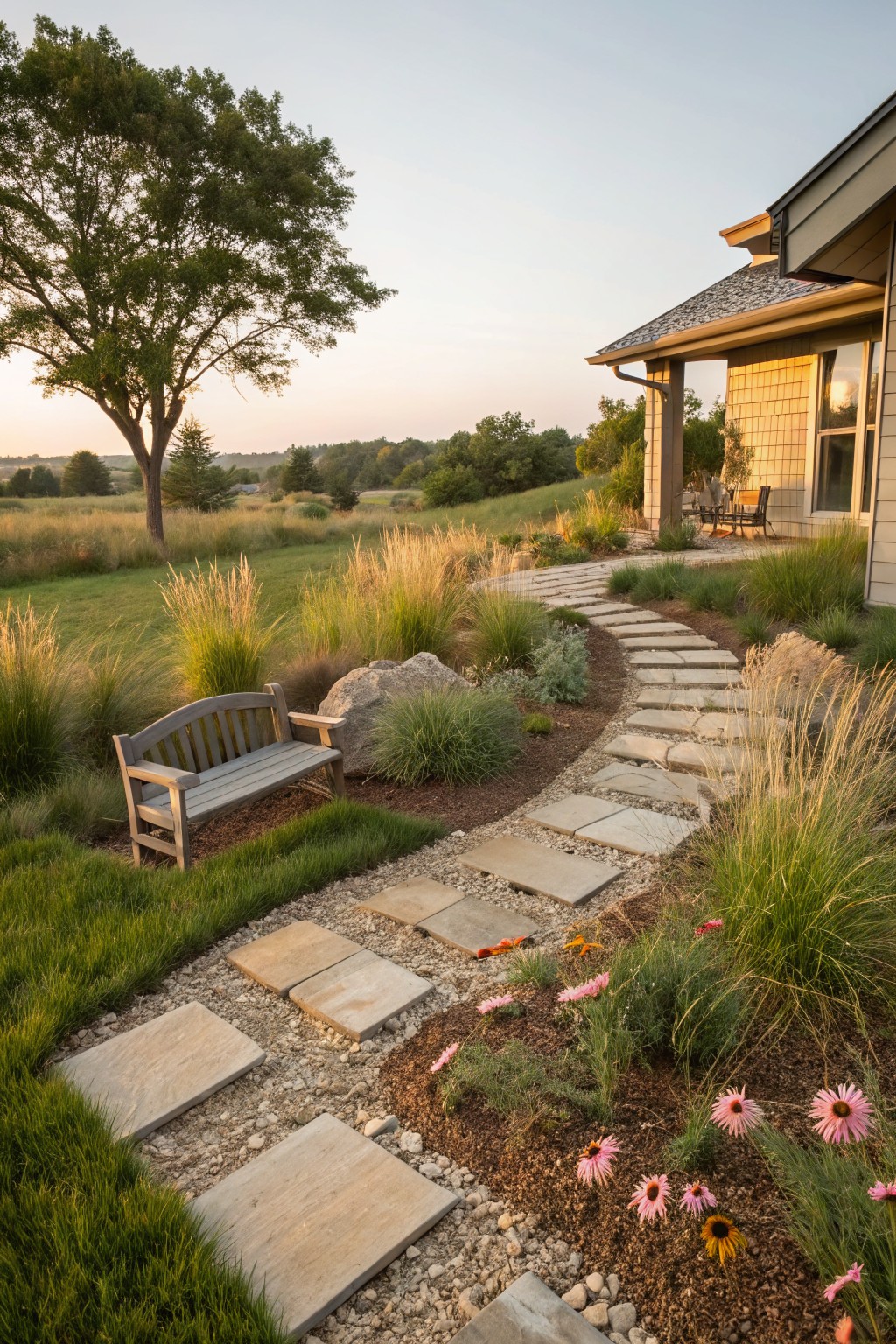
A good front yard path doesn’t have to be straight or fussy. Here, rough-cut stone slabs curve gently through gravel beds mixed with mulch, edged by tall grasses and a few big boulders. It pulls the eye toward the house porch without looking too planned out. That mix of stone, gravel, and plants keeps things low-key and ties into the natural yard around it.
Set this up where you want a casual route from the driveway or street to your entry. It suits homes with bigger lots or a bit of slope, since the gravel drains well and the plants fill in fast. Go for native grasses to cut down on watering, and add a bench midway if space allows. Watch the stone sizes so steps feel even underfoot.
Winding Stone Path in Gravel Mulch Beds
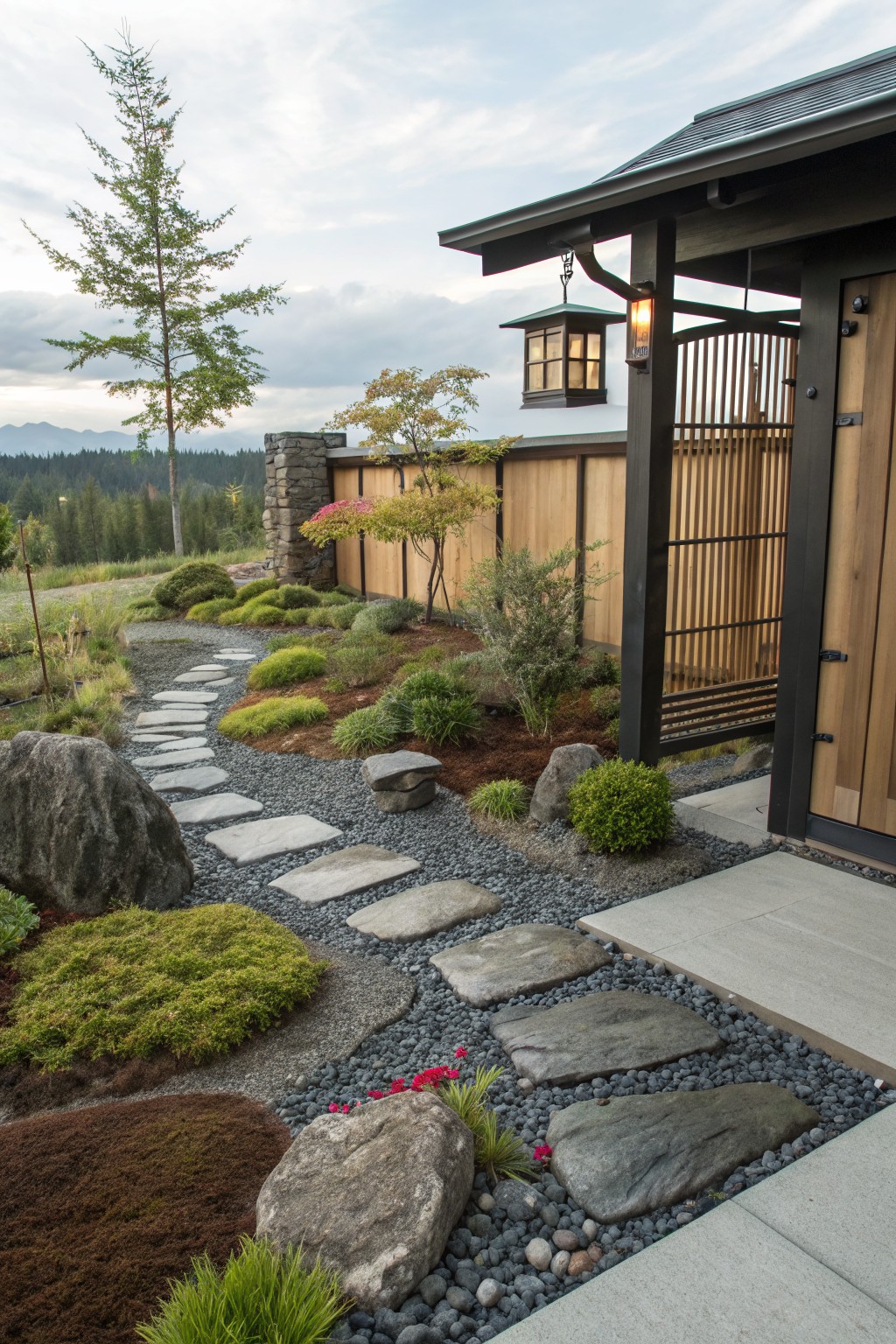
One straightforward way to guide visitors right to your front door is a simple winding path made from flat stones set into dark gravel. It feels natural, like it’s been there forever, and keeps things low fuss since there’s no mowing around the edges. Here you see large boulders tucked in along the sides, with patches of mulch holding back low green plants that stay tidy without much work.
This setup works great for sloped yards or spots with poor soil, where grass just won’t take. Lay the stones loose in the gravel so water drains easy, add mulch borders to define beds, and plant tough stuff like sedum or moss. It suits modern homes with clean lines or even older places wanting a calmer entry. Just space the stones for normal steps, nothing too tricky.
Curved Flagstone Path with Mulch and Pebble Borders
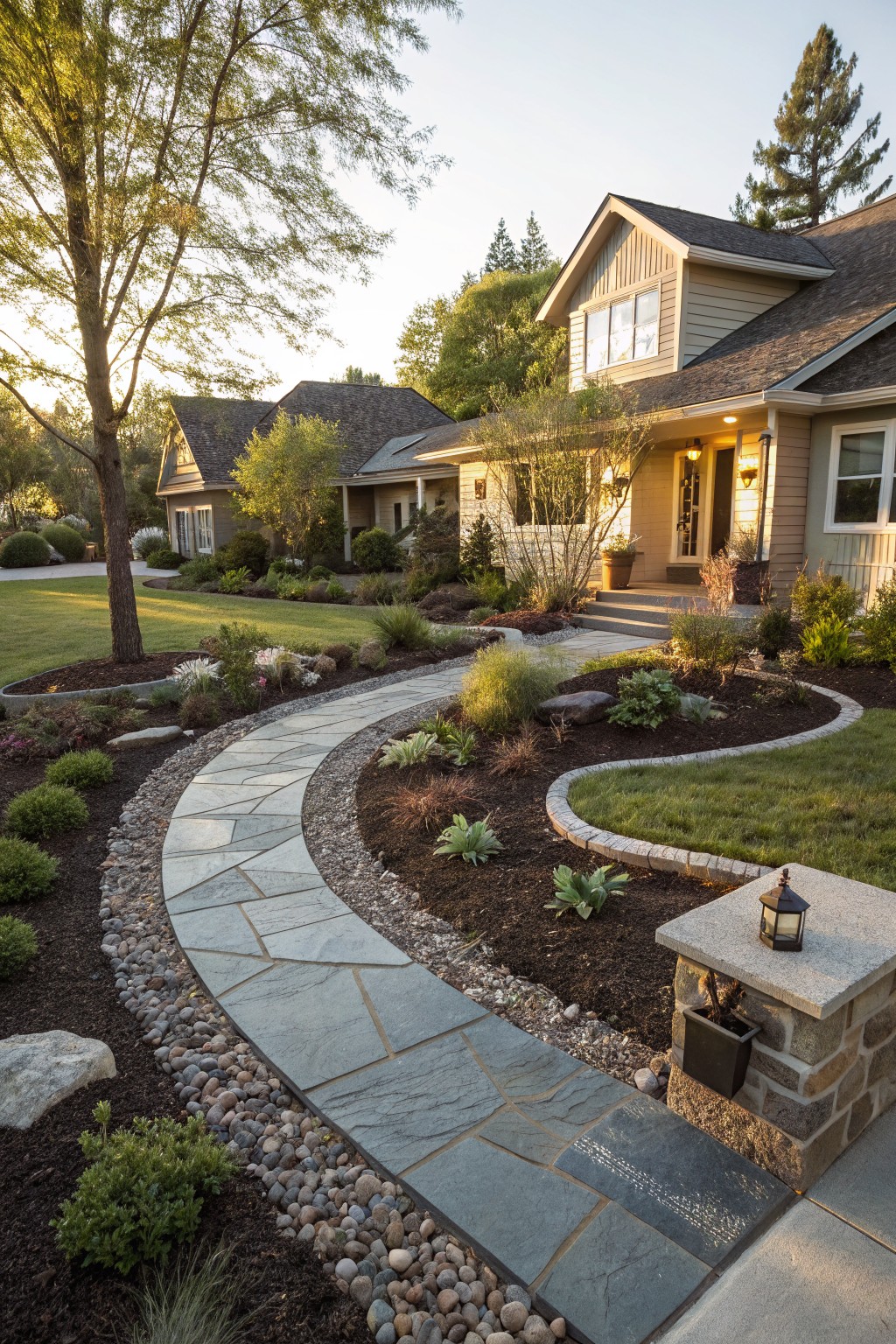
A simple curved flagstone path like this one pulls your eye right to the front door. Dark gray stones in irregular shapes form the walkway, edged by dark mulch beds and smooth river pebbles. That mix keeps things low-key and natural. It softens the straight lines of the house and yard.
You can pull this off in most front yards with a little room to curve. Lay the flagstones on a gravel base for drainage, then fill beds with tough plants that don’t need much water. Skip fussy flowers if you want easy upkeep. Fits older homes or craftsman styles best… just scale the path width to your steps.
Gravel Paths with Mulch Borders
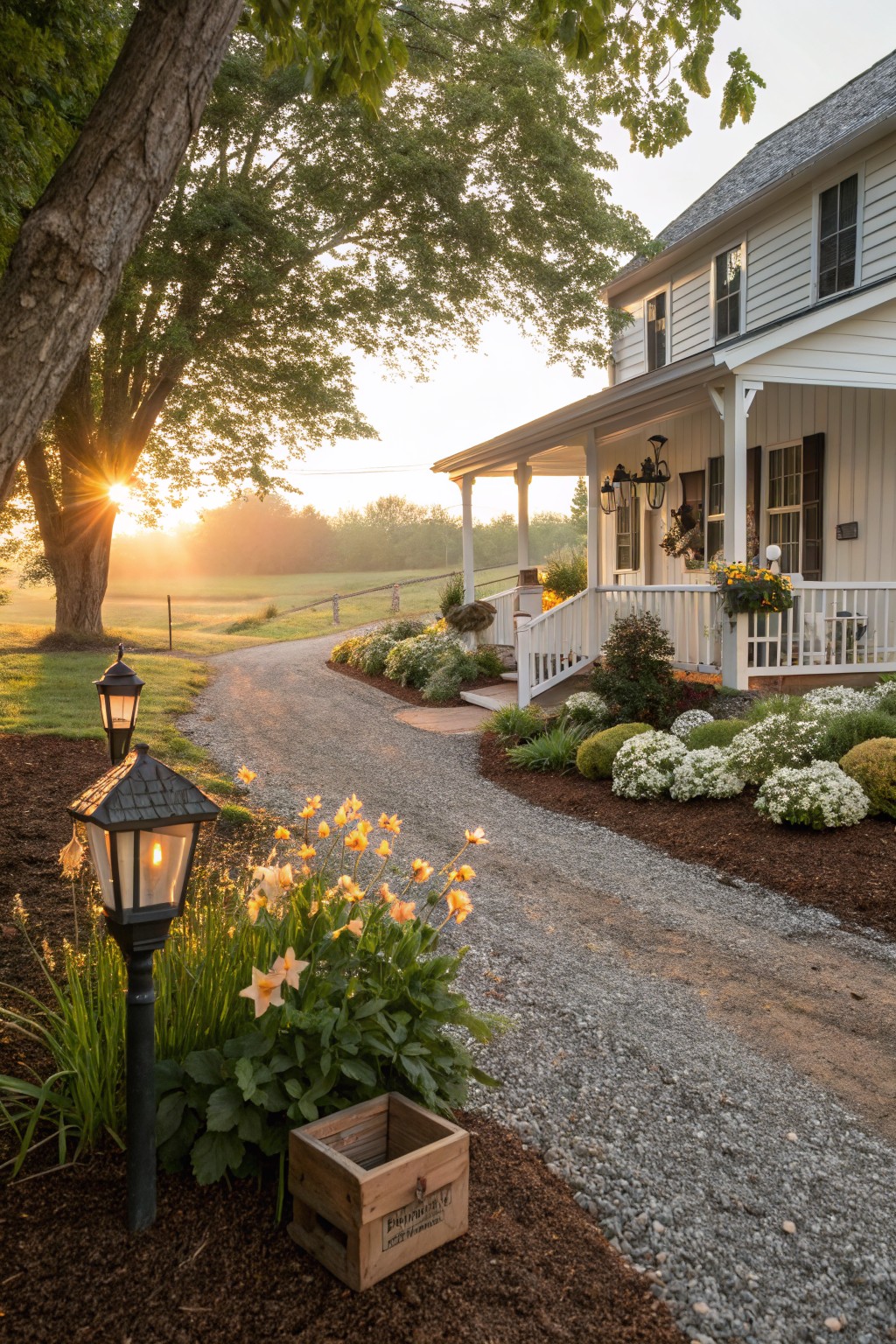
A gravel driveway like this one winds gently toward the house, edged tight with deep mulch beds full of daylilies and low shrubs. The stones give a crisp path that’s easy on the eyes and practical for cars, while the mulch holds everything in place and lets plants thrive without weeds taking over. Stone lamps along the edge add a bit of glow at dusk.
This works well for front yards on a budget, especially older farmhouses or cottages with some land. Start with a solid gravel base to avoid ruts, then pile on two inches of mulch in curved beds. It fits rural spots or suburbs wanting less grass. Just refresh the mulch each spring, and skip fussy edging if you keep it simple.
Stepping Stone Path in Black Gravel
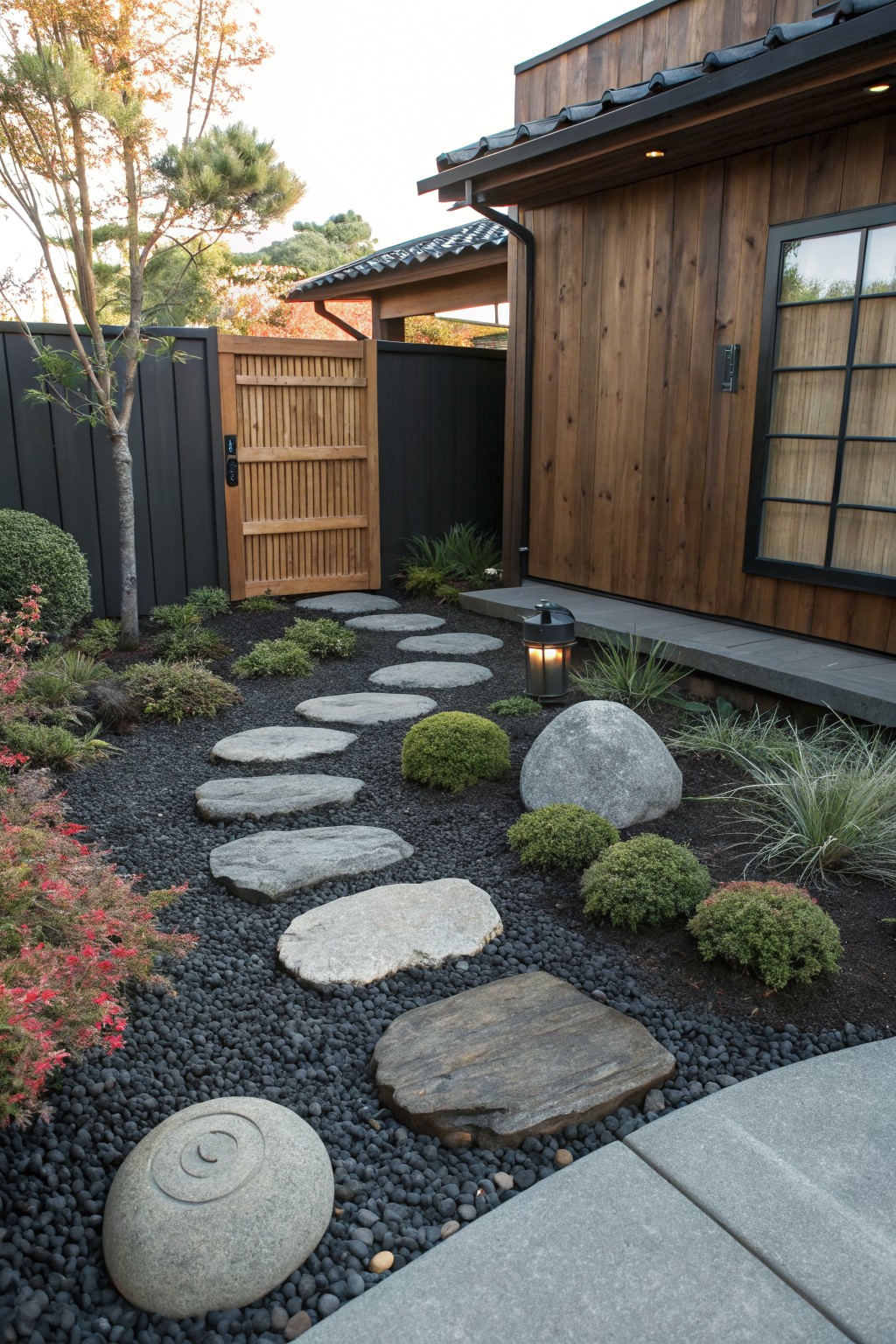
A simple way to guide visitors through your front yard is with irregular stepping stones set right into black gravel mulch. It keeps things low fuss since gravel fills the gaps and cuts down on weeding. The dark pebbles make the pale stones pop, and tossing in a few big boulders adds some weight without much effort.
This works best in smaller yards or entry paths where you want clean lines but not a poured walkway. Suits modern homes with wood siding or any spot aiming for that Japanese garden feel. Just space the stones for natural strides, edge with low plants, and skip the grass entirely.
Sloped Front Beds with Pebbles and Mulch
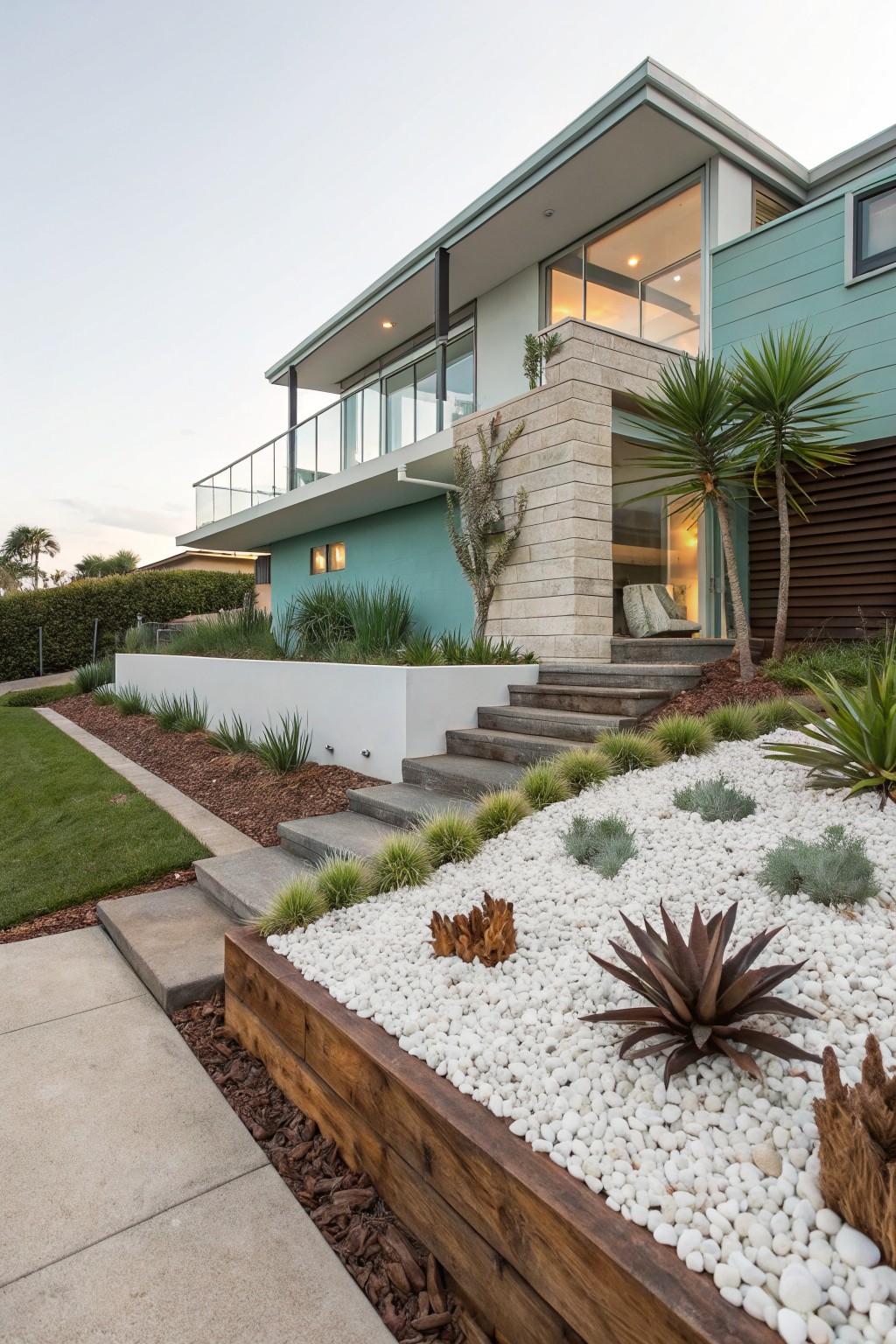
White pebbles fill the beds on this slope, tucked around agaves and grasses, while red mulch lines the lower edges. It keeps everything looking sharp and contained, especially next to those clean stone stairs. The mix holds up well without much upkeep, and the textures play off the modern house lines nicely.
Try this on any front slope where water runs off fast. Line the beds with landscape fabric first, then layer pebbles over it for drainage, and tuck in mulch where plants need it. Drought tough stuff like agaves works best here. Skip it on flat yards, though. It shines around midcentury or contemporary homes.
Stepping Stones Set in Gravel Mulch
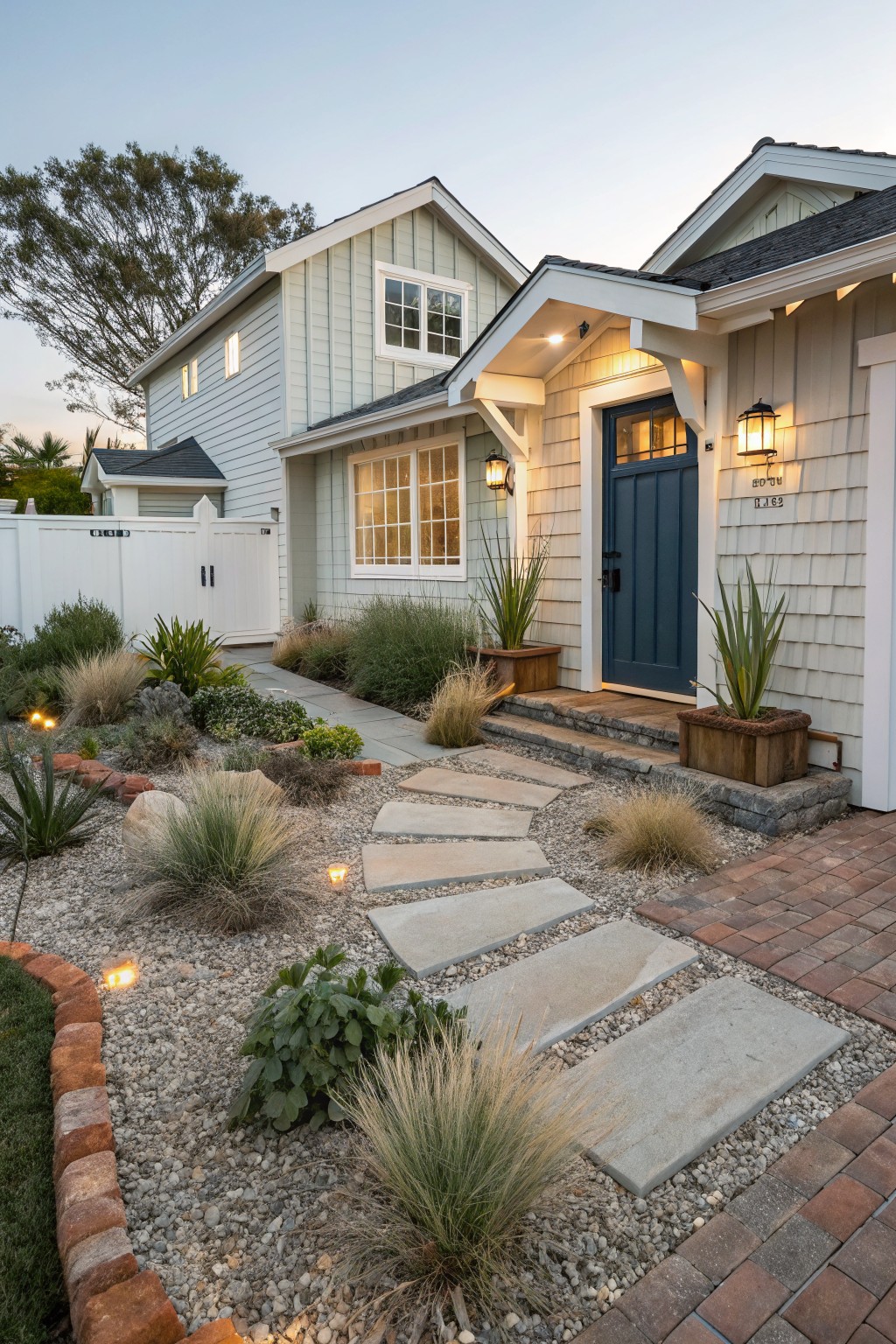
A front path like this keeps it simple with large flat stones dropped into gravel mulch beds. The gravel acts as ground cover around tough grasses and agaves. It guides you right to the door without a full sidewalk. Walkable and neat looking.
Lay gravel two inches deep for drainage. Space stones about two feet apart so steps feel natural. Border with low brick or rock to hold everything in. Best for sunny dry yards or coastal spots. Skip it if your soil stays soggy.
Raised Mulch Beds with Stone Pathways
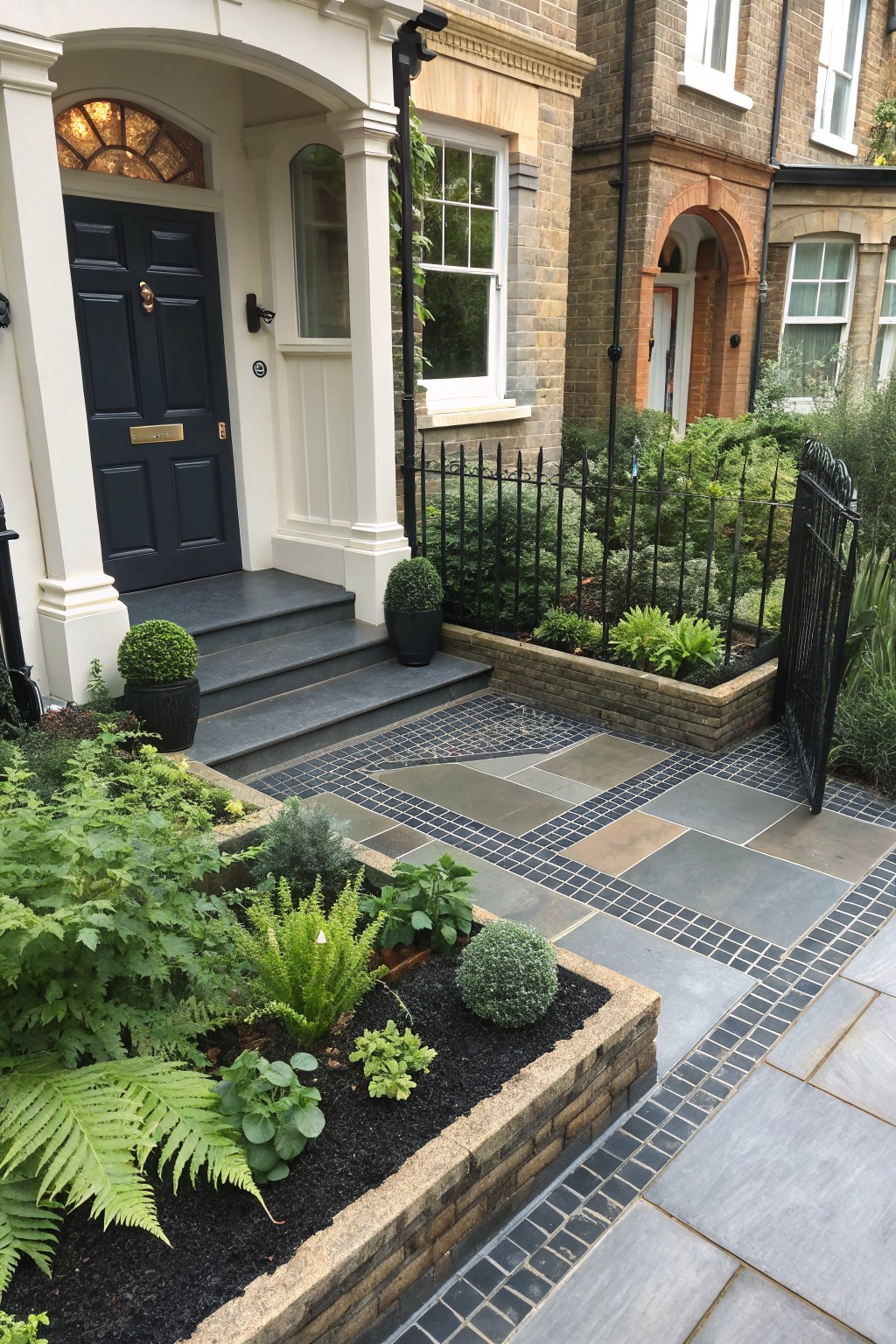
One clean way to polish up a front yard is filling raised brick beds with dark mulch and green plants, then running stone pathways right alongside. The black mulch keeps things tidy and lets the ferns and boxwoods pop without much weeding. Paired with those gray stone tiles in a simple pattern, it leads the eye straight to the door steps. Keeps the look structured but alive.
This works best on narrow city lots or older homes with brick facades. Build the beds low, about knee-high, and stick to tough shade plants since spots like this often stay damp. Skip fussy flowers, they won’t last. Just watch the mulch level, top it up yearly to hold that fresh edge.
Stone Edging for Mulch Beds
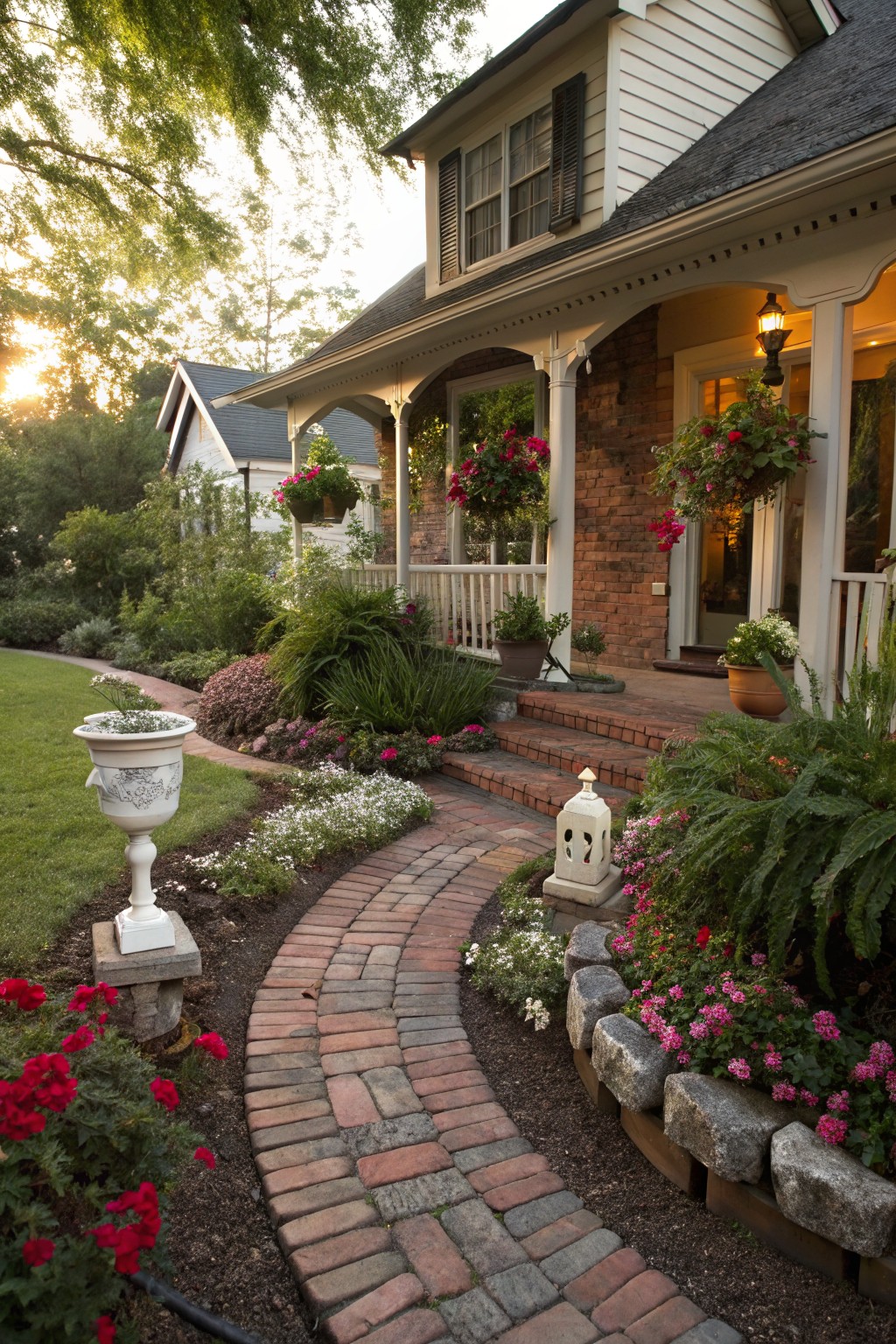
One clean way to polish up front yard beds is stacking stones right along the mulch line. Here it shapes the curves around a brick path, holding back the dark mulch while plants spill over just enough. That edge stops weeds cold and makes the whole garden look put-together, even as flowers grow full.
Try it where you have a walkway to the door. Pick flat stones that match your house brick or siding, lay them low against fresh mulch, then add tough bloomers like geraniums. Suits most any yard size… just keep the stones level so water drains right.
Winding Garden Paths with Pebble Edges
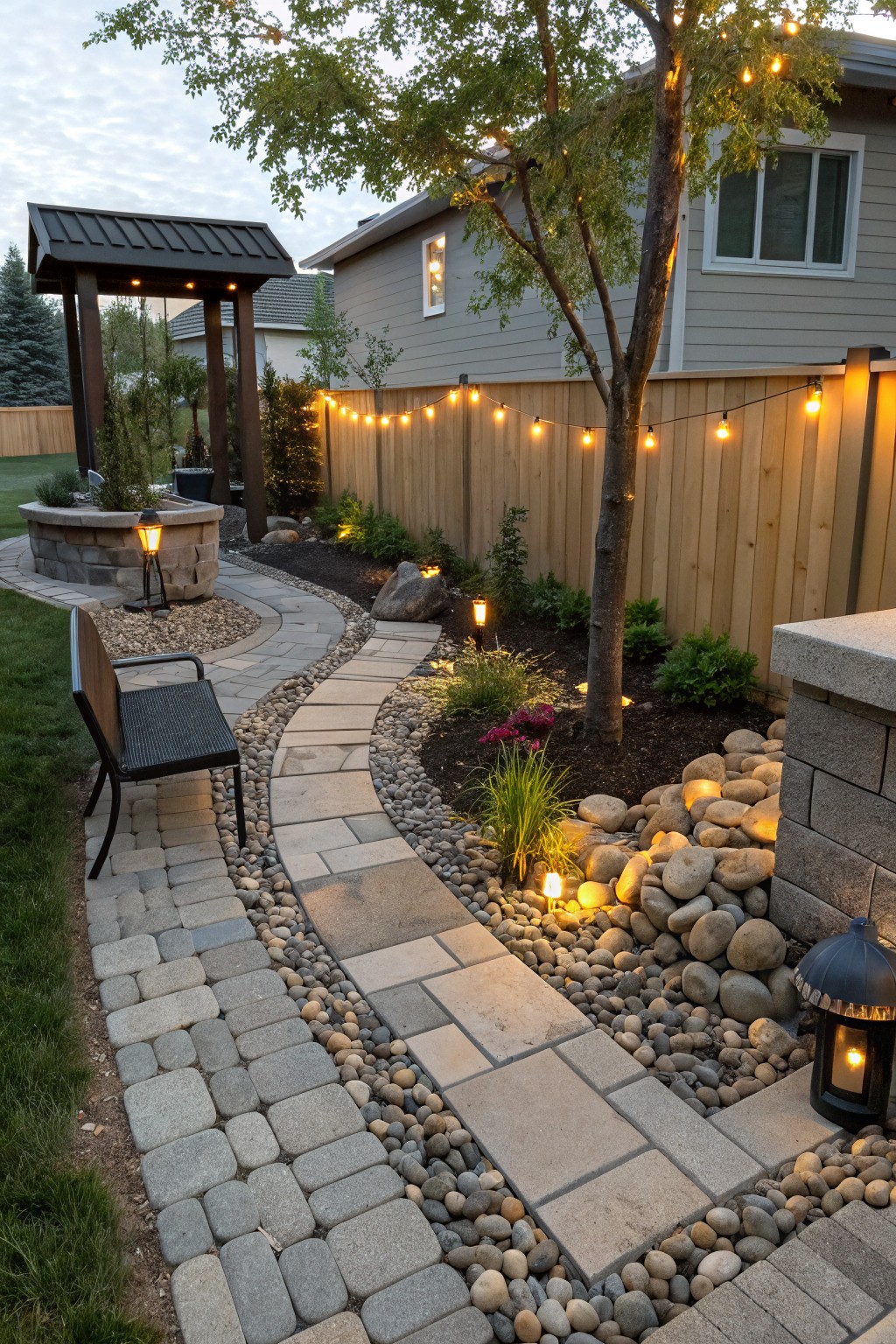
A winding path like this one makes a backyard feel bigger and more inviting. It uses large paver stones set in a gentle curve, with smooth white pebbles filling the gaps and borders. That mix of hard pavers and loose stones gives the walk a natural rhythm. Mulch in the nearby beds keeps everything tidy and low-maintenance. The soft glow from lanterns along the way adds just enough light for evening strolls.
This setup works best in side or back yards where you want to guide people through plantings without straight lines. It suits average suburban lots with some slope or uneven ground. Start with a simple curve from gate to seating area. Use pebbles to soften edges and mulch to suppress weeds. Watch for loose stones on paths that get heavy foot traffic, though.
Winding Stepping Stone Path in Mulch Beds
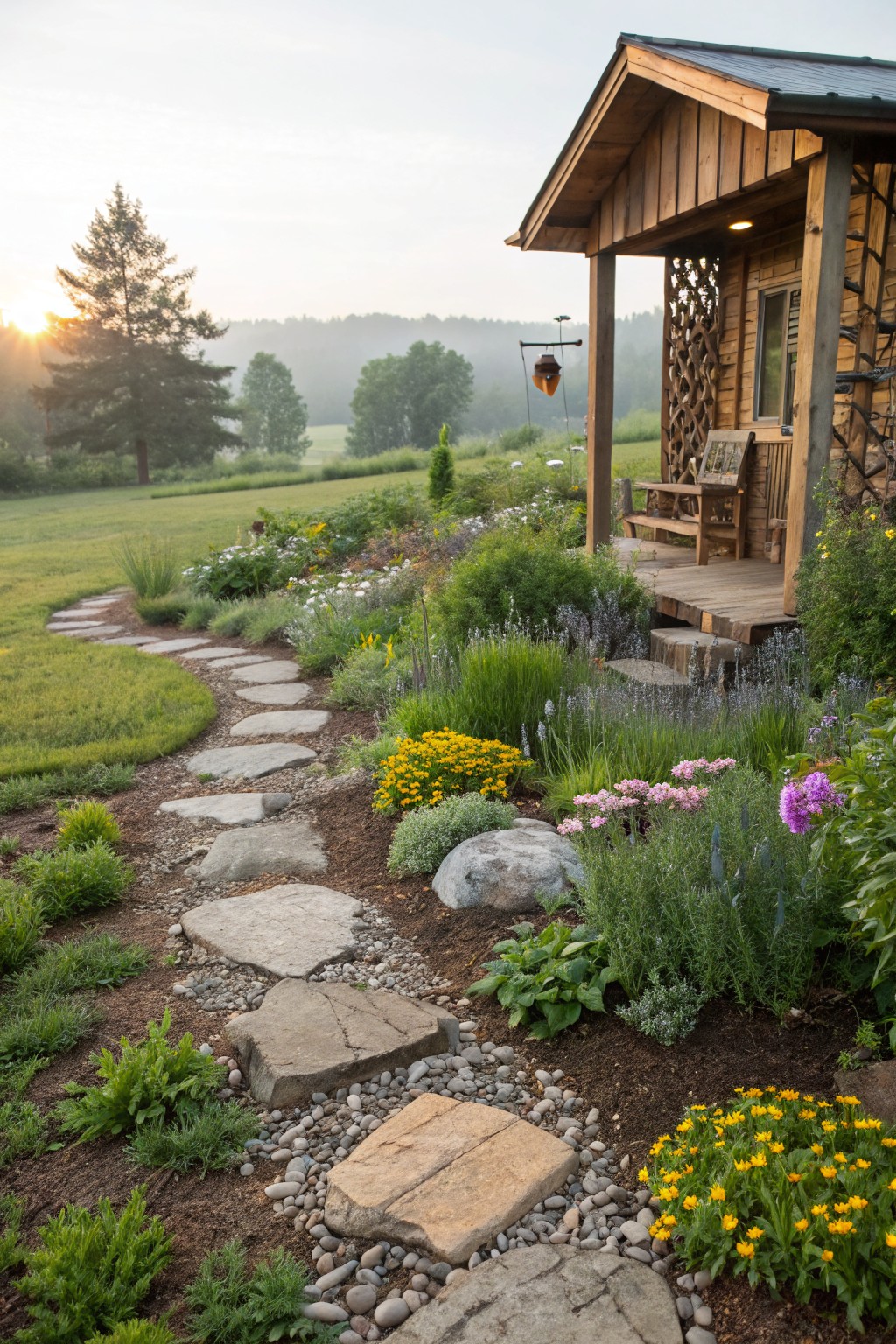
A simple way to guide people to your front door is with a winding path made from flat stepping stones set right into mulch and gravel. The stones here are rough and natural looking, spaced just enough to step across easily while plants fill in around them. It keeps things low key and fits right into a yard without taking over.
This works best in front yards with some curve or gentle slope, like leading up to a porch. Go for larger stones in organic shapes, then edge with mulch to hold back soil and weeds. Add tough perennials along the sides for color that comes back each year. Skip straight lines unless your space is super formal.
Stepping Stones Set in Gravel
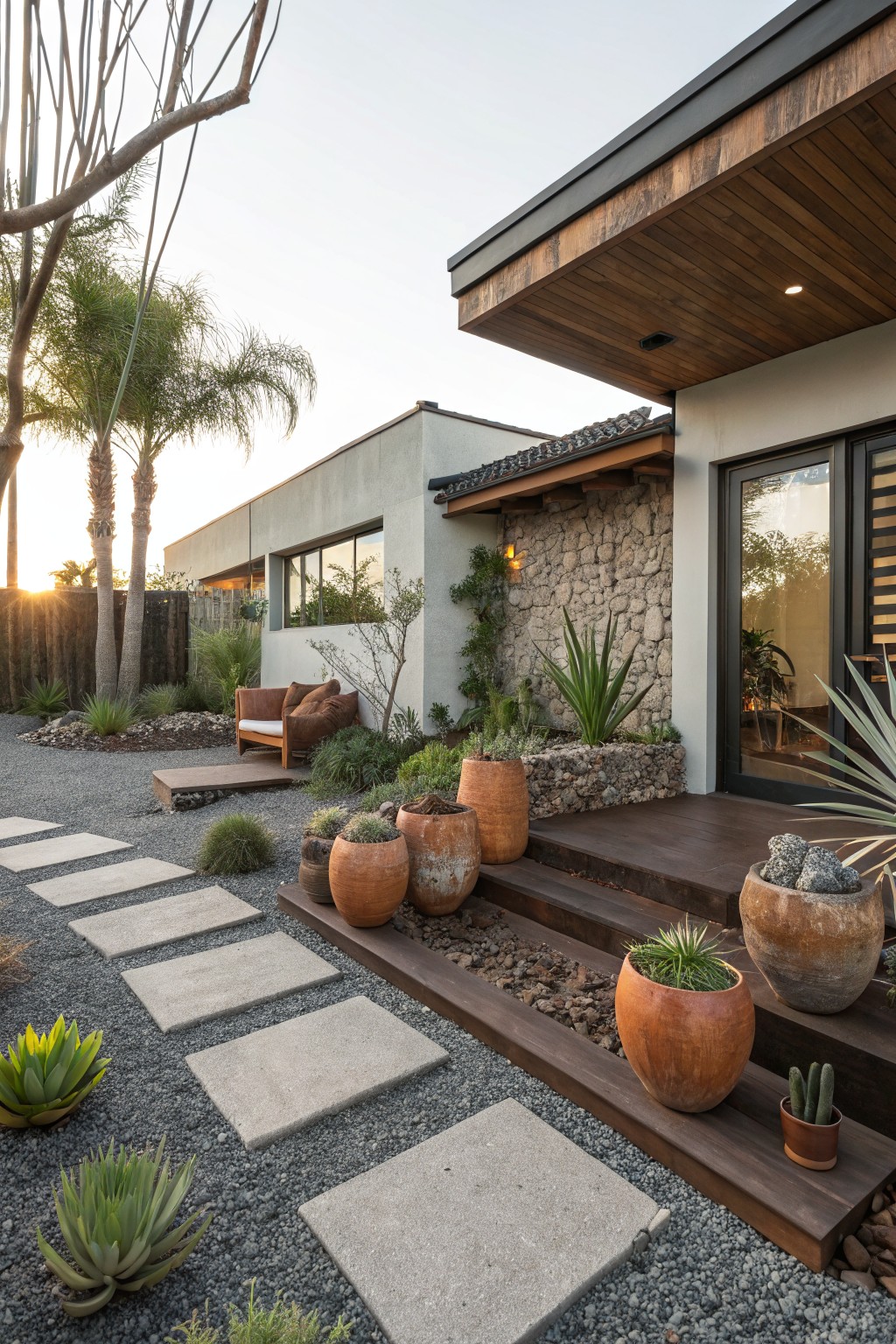
A straightforward path of wide concrete squares laid right into a bed of gray gravel makes getting to the door easy and neat. No grass to trim or weeds to fight. Those big terracotta pots with spiky succulents tucked along the edges add just enough green without much upkeep.
This works best in sunny, dry spots where you want low effort. Line it up straight from the street to your entry steps, like here leading up to wood decking. Skip it on steep slopes though. Pair with a few boulders or small rocks nearby to tie in the stone look.
Frequently Asked Questions
Q: How do I match mulch and stones to my house?
A: Look at your siding or front door color first.
Pick stones in a similar tone, like beige gravel with tan mulch. That pulls everything together without clashing.
Q: Do I really need landscape fabric underneath?
A: Roll it out before you add anything.
It stops weeds cold and saves you hours of pulling later. Skip plants? Just overlap the edges tight.
Q: How deep should the mulch layer be?
A: Spread 2 to 3 inches over the fabric.
Push it snug around plants but keep it loose on top. That depth blocks light to weeds and holds moisture.
Q: What about slopes, will stuff wash away?
A: Larger stones at the bottom anchor it all.
Tuck edging strips along the sides to trap the mulch. Water it gently at first to settle everything.
