

When I pull up to a house, the front walkway always hits me first because it shapes how the whole yard unfolds. Pavers shine in front yards by creating those crisp edges and pathways that hold plants back from spilling everywhere as they mature. In my neighbor’s setup, a subtle paver frame around the lawn made the space feel larger and more put-together without much upkeep. They tie it all together. You’ll spot ideas here worth adapting to your own layout, like mixing pavers with gravel for paths that guide traffic naturally over time.
Wide Paver Walkway with Gravel Borders

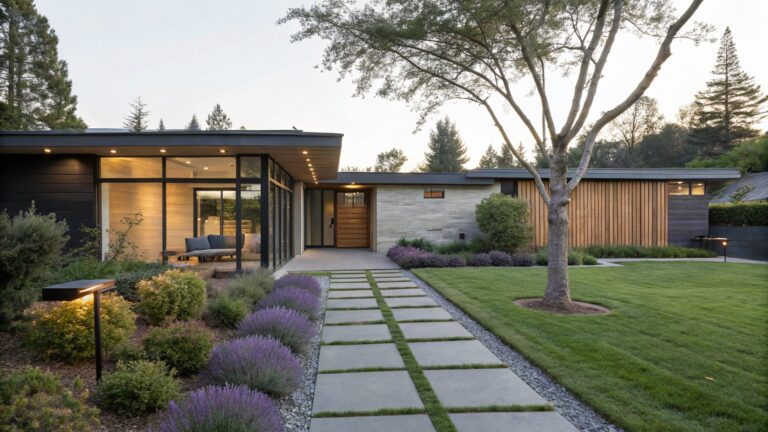
A wide walkway made from large gray pavers runs straight from the street to the front door. Gravel strips and low grasses edge it on both sides, keeping things neat without much upkeep. This setup pulls your eye right to the entry and makes the yard feel put together.
It works great on lots with a clear front approach, like this one with a modern house. Lay the pavers in a simple grid pattern, then add gravel for drainage and plants that won’t grow too tall. Skip fussy flowers here. Keeps mud off your shoes too.
Oversized Pavers Guide the Way In
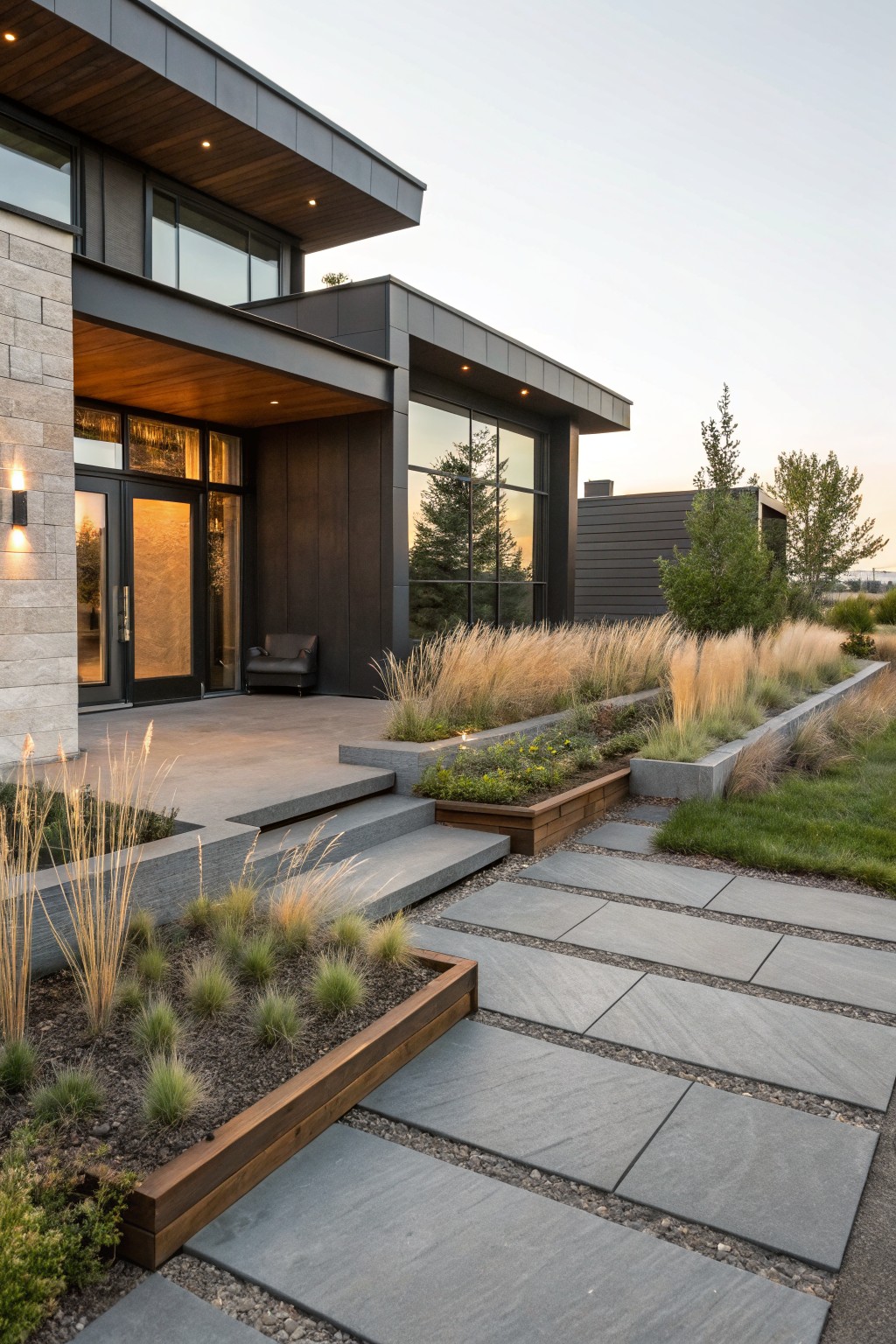
Large gray pavers make up the steps and path here, laid out wide and straight to pull your eye right to the front door. They give the entry a solid, no-nonsense feel that fits a modern house without trying too hard. The wooden planters tucked along the edges add some life with clumps of ornamental grasses, keeping things from looking too stark.
This works well for front yards where you want clean lines and easy walking room. Go for big slabs like these on flat or gently sloped spots, and fill the beds with tough, upright plants that don’t need much water. It’s practical for everyday use, and holds up nice through seasons. Skip tiny pavers though, they can feel busy.
Winding Paver Paths to the Entry
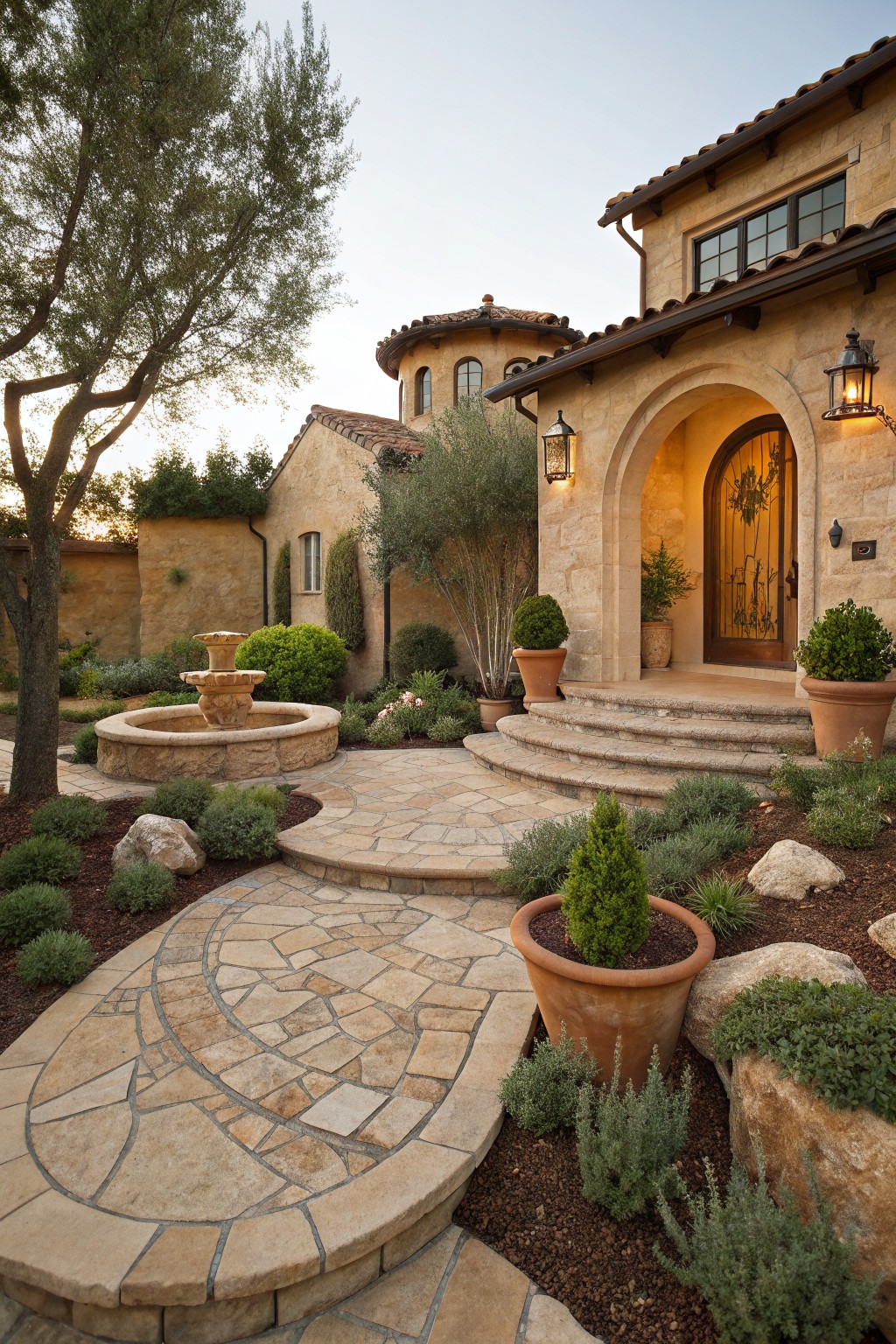
A simple winding path of irregular stone pavers makes your front yard feel like a real garden stroll. It curves gently past a fountain and boulders, edged with low shrubs, right up to the door. That natural flow beats a straight sidewalk every time. Keeps things relaxed and draws folks in without trying too hard.
This setup suits homes with open front yards, especially in warmer spots. Start with rough-cut pavers over sand or gravel for good drainage. Tuck in tough plants like rosemary or boxwood along the edges. Watch the width, though. Aim for at least four feet so two can walk side by side.
Curved Brick Paths with Stone Edging
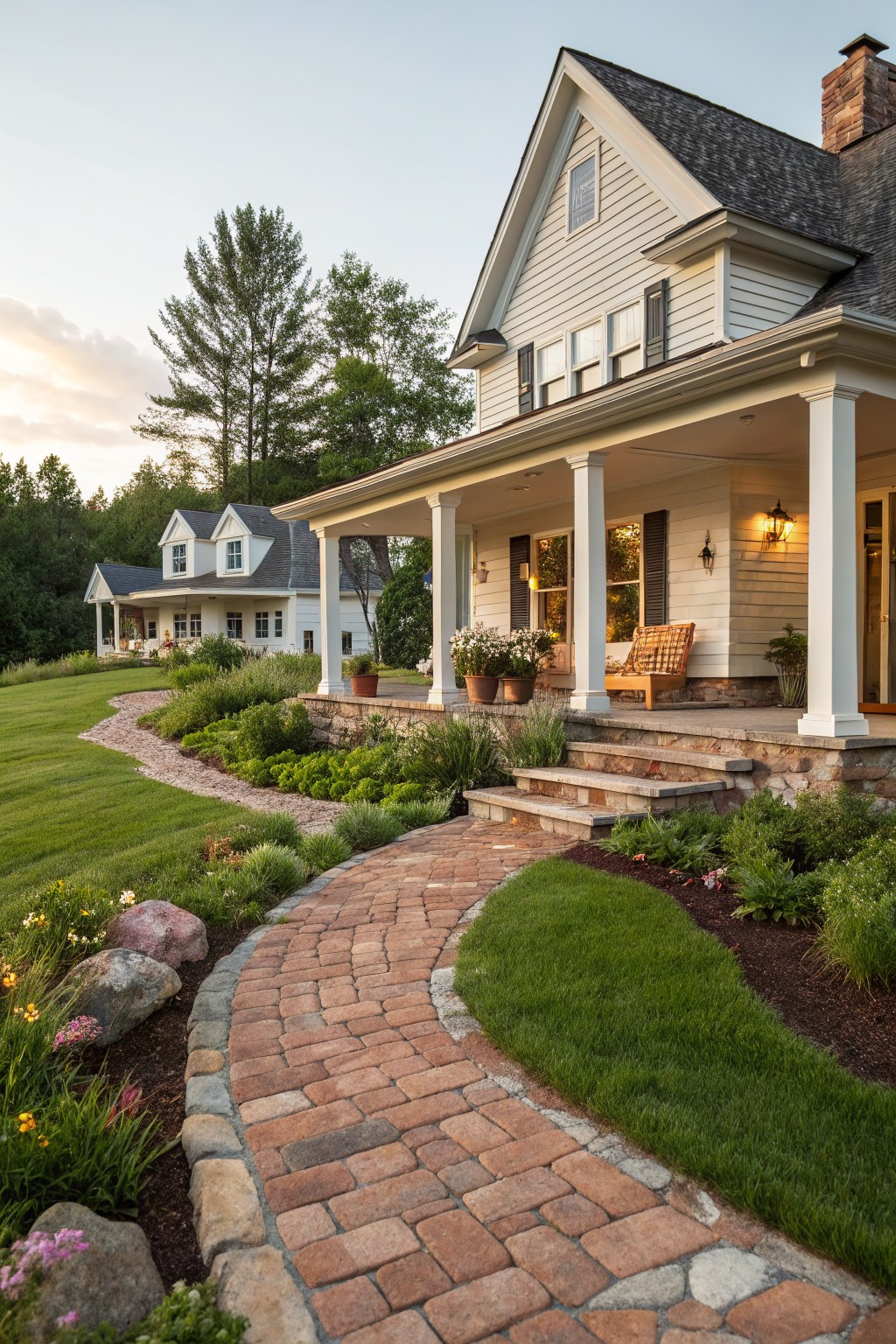
A curved brick path like this one winds gently through the front lawn, edged with rugged stones that keep everything in place. It pulls your eye straight to the porch without feeling too straight or stiff. The mix of red brick and natural stones softens the whole approach, blending right into the grass and plantings around it.
This works best on yards with some open space or a slight slope, where you want to slow people down on their way to the door. Pick bricks with a tumbled finish for that worn-in look, and hunt for stones that match your local landscape. Just make sure the curve isn’t too tight, or it might feel tricky to walk.
Flat Paver Path Set in Gravel
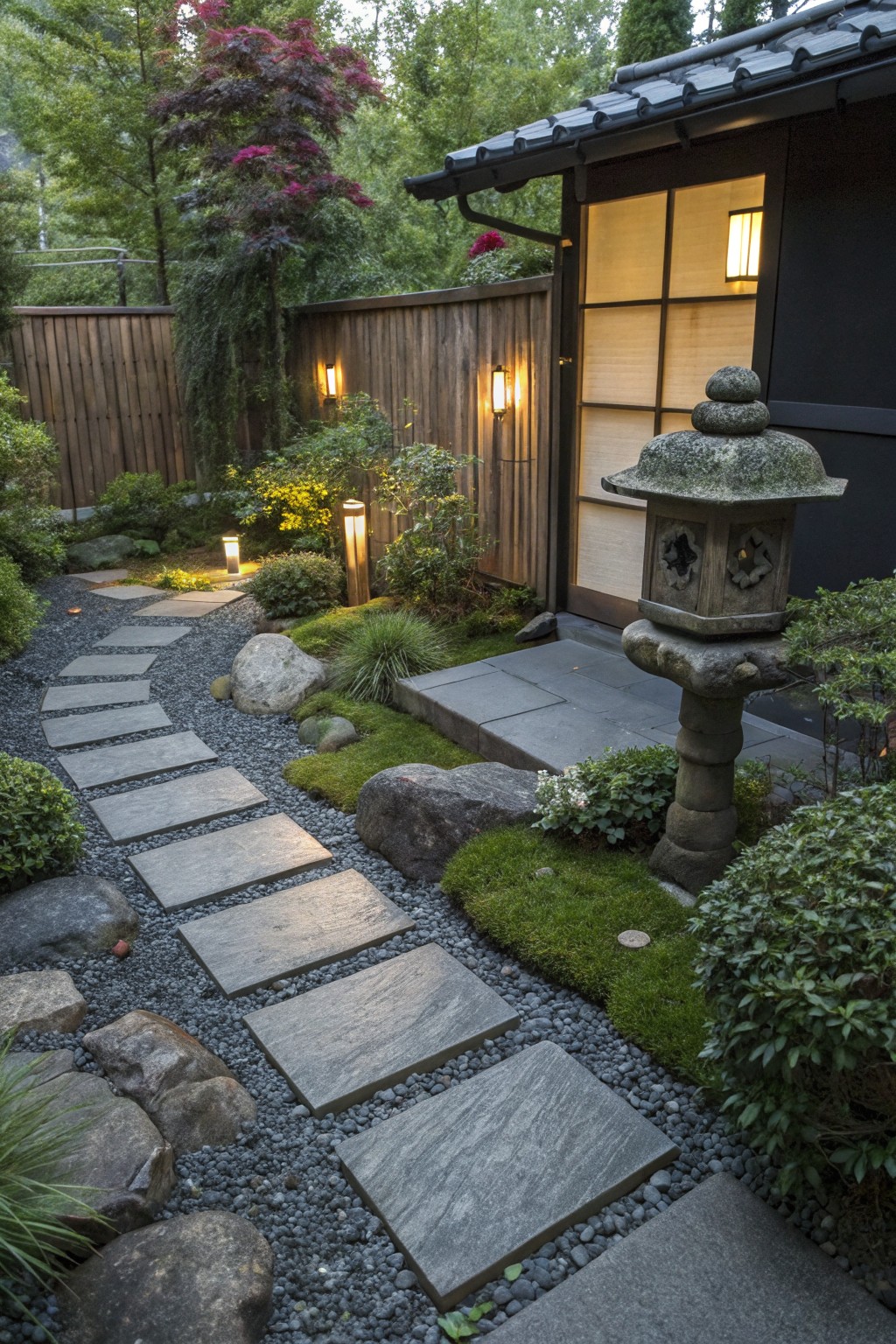
A path like this uses big flat stone pavers laid loose in a bed of dark gravel. It winds gently past rocks and low plants, pulling your eye right to the entry without feeling too rigid. Those stone lanterns tucked along the edges catch the light nicely, especially come evening.
You can pull this off in most front yards, even sloped ones, as long as drainage is good. Go for pavers in a neutral gray or slate tone against finer gravel for that clean contrast. Trim plants short nearby so the path stays the focus… suits homes wanting a calm Japanese garden vibe without much upkeep.
Paver Path with Gravel Joints
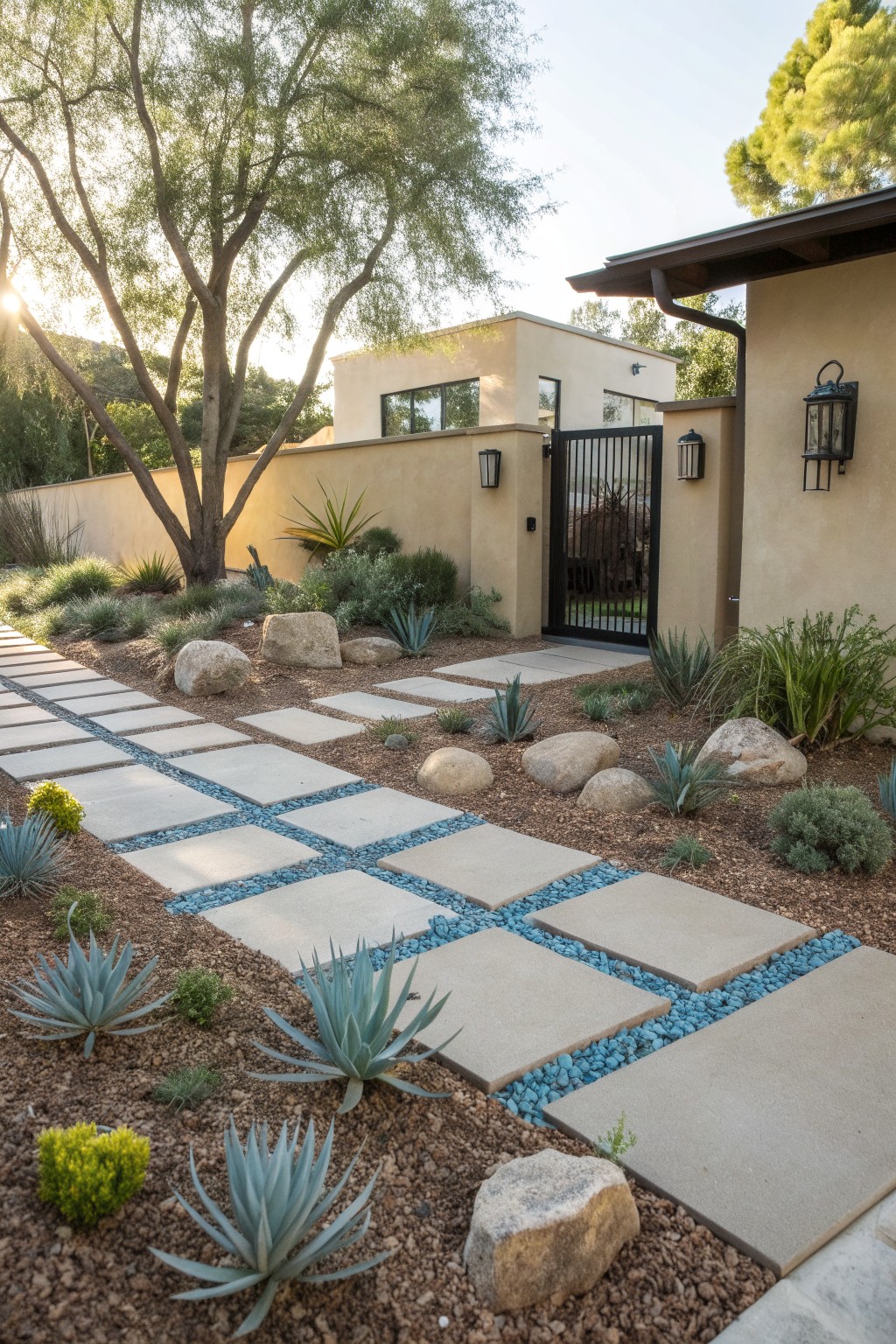
Big square pavers spaced apart and filled with blue gravel make a simple walkway that pulls your eye right to the entry. The gravel adds a pop of color without much upkeep, and it blends with desert plants like agaves and succulents around boulders. It’s practical too. Water drains easily, and weeds stay low.
Use this in sunny front yards with dry soil. Lay the pavers loosely on sand or gravel base, then pour in the colored pebbles. It suits modern or Southwestern homes leading up to a gate. Skip it on slopes unless you add edging.
Curved Paver Path to the Entry
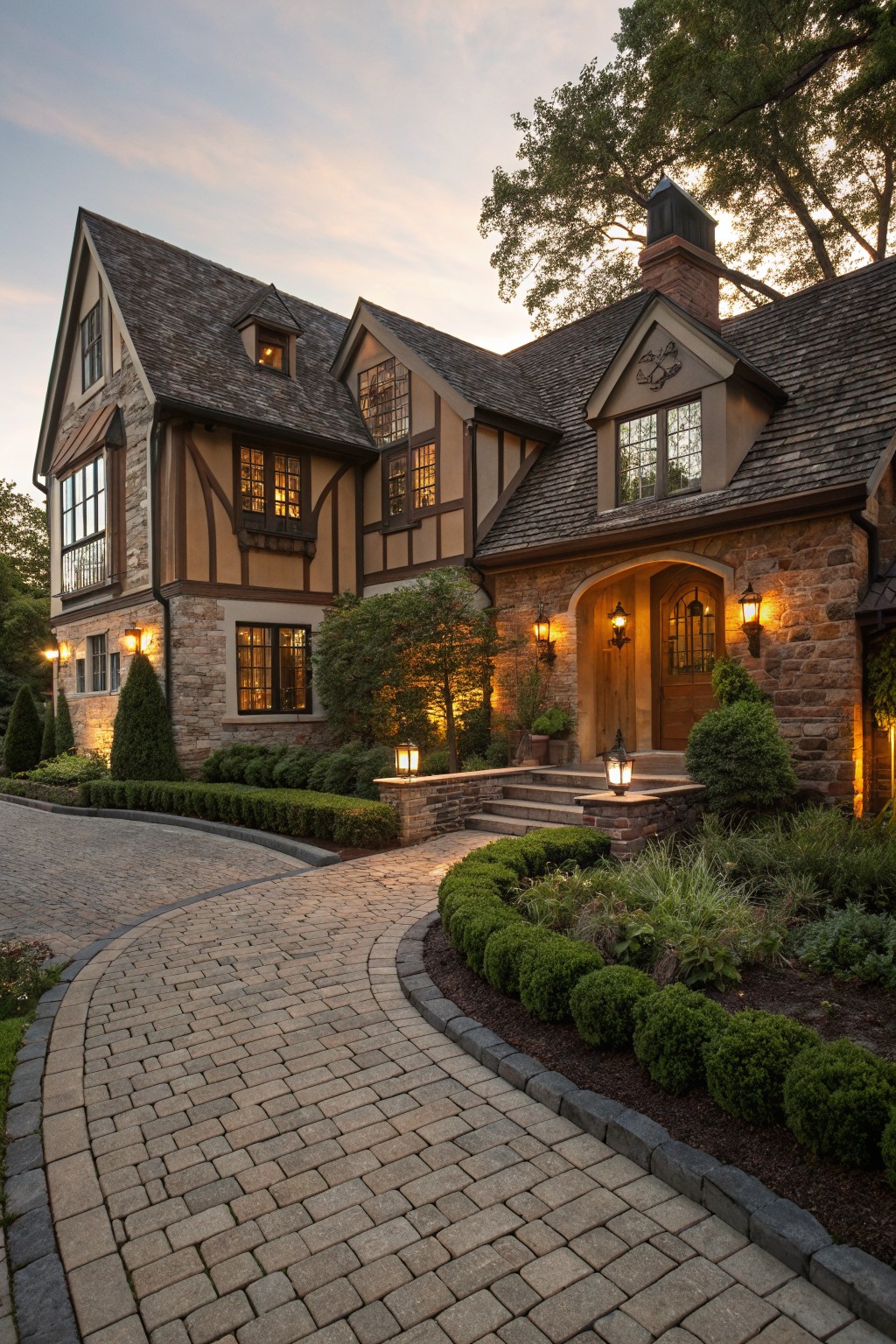
A curving path like this one made from warm-toned pavers pulls you gently toward the house without feeling too straight or formal. The neat row of boxwood shrubs along one edge keeps everything tidy and adds a bit of green structure that ties into the stone entry steps. It’s a simple way to make the front yard feel put together.
This kind of path works best in yards with some open space where you can let the curve play out. Match the paver color to your house stone or brick for harmony, and plant low evergreens that won’t block the view. Skip it if your lot is really narrow… the curve needs room to breathe.
Boxwood-Lined Brick Pathway
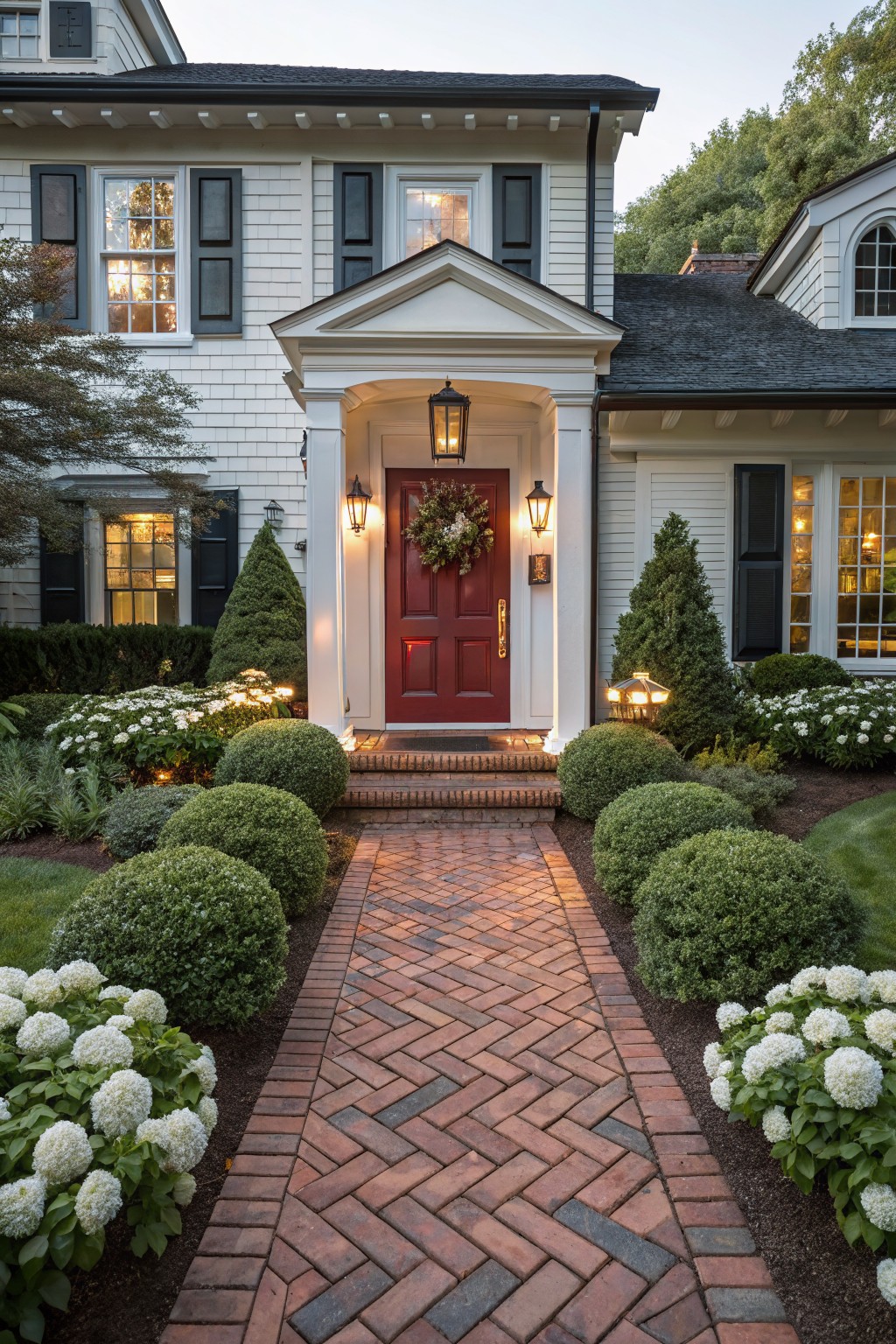
A simple brick path in a herringbone pattern runs straight from the street to the front door. Neat spheres of boxwood line both sides, with white hydrangeas tucked in for soft color. That setup makes the entry feel put-together and pulls people right in. No fuss, just clean lines that say welcome.
It works best on classic homes with some front yard space. Keep the boxwoods pruned round and about knee-high to match the path. Add low lights along the edge for evenings. Avoid overcrowding… let the path breathe. Suits suburbs or older neighborhoods where you want steady curb appeal year-round.
Gravel-Edged Paver Path for Narrow Yards
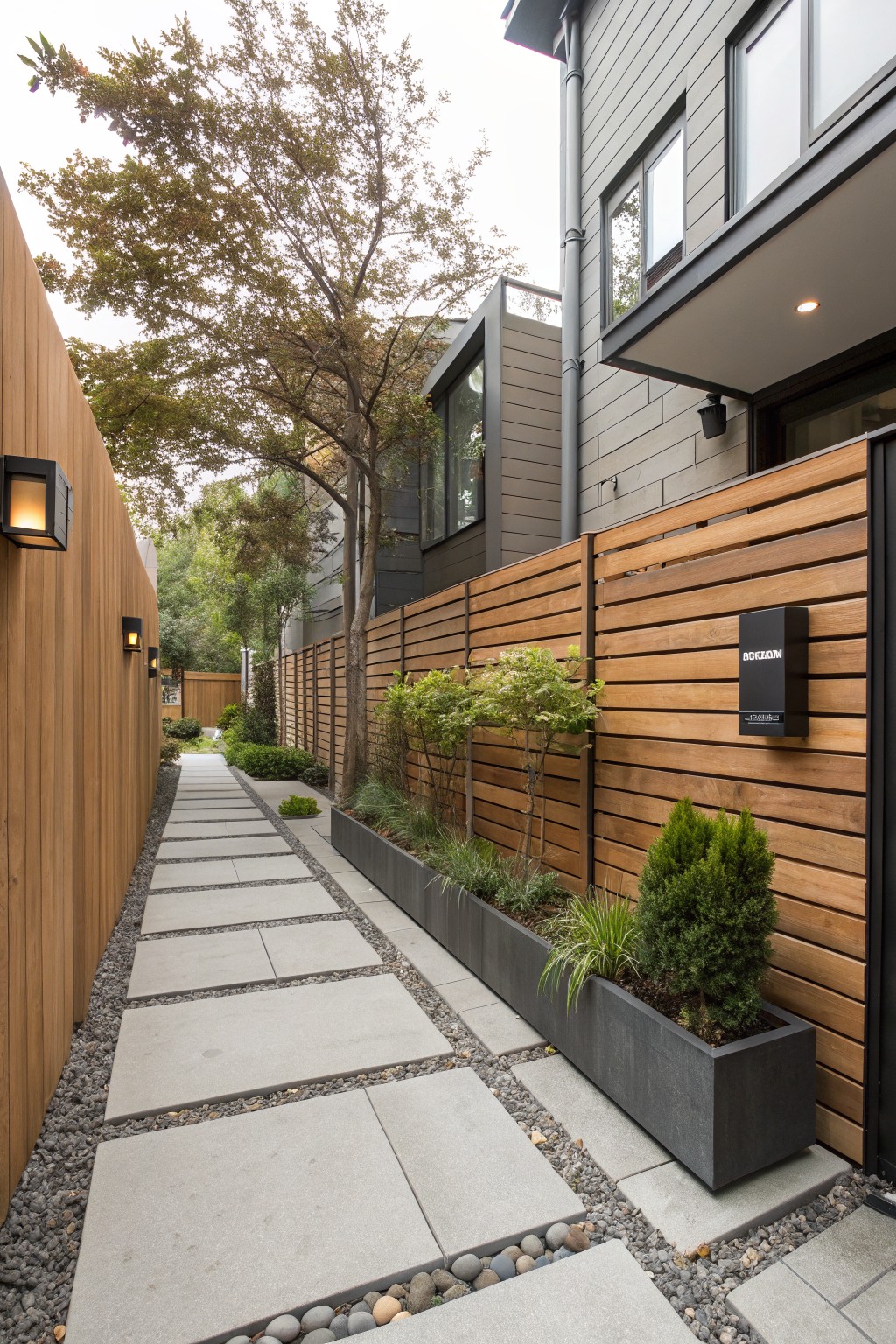
A straightforward path like this runs large concrete pavers right down the middle of a tight walkway. Gravel fills the gaps and edges, keeping things neat without extra mowing or weeds. Paired with simple wooden fences on both sides, it guides you cleanly to the house… no fuss.
This works best in side yards or along a driveway where space is slim. It suits modern homes with clean lines, like the gray siding here. Line one side with a long trough planter for grasses or low shrubs. Just make sure the gravel drains well to avoid mud after rain.
Circular Paver Courtyard Around a Fountain
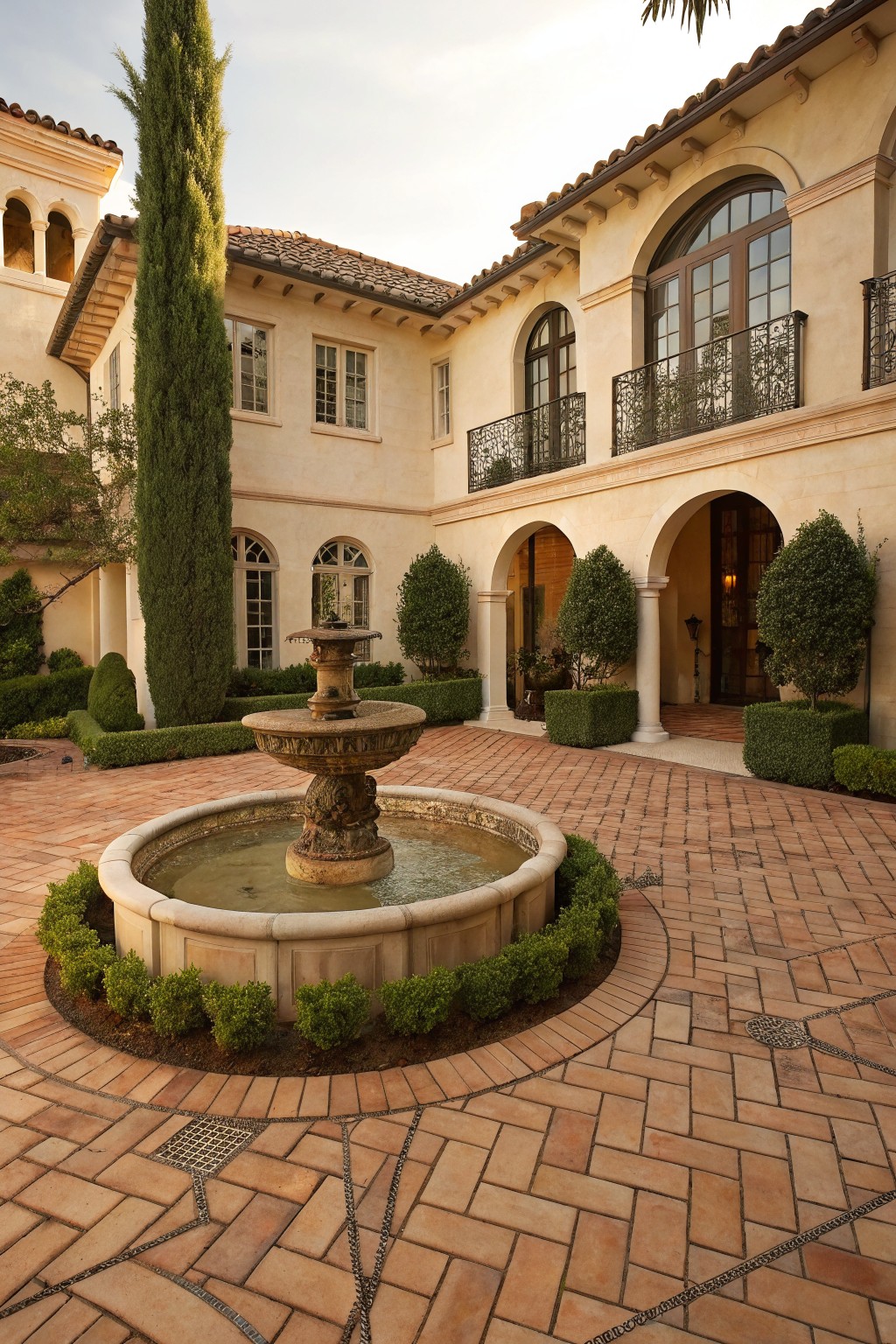
A simple way to frame your front yard is with a circular brick paver courtyard built around a stone fountain. The pavers lay out in a subtle herringbone pattern that draws the eye right to the water feature without much fuss. Boxwoods edge the circle neatly, keeping things tidy and green year-round. It gives the space a formal feel that matches older-style homes.
This works best in front courtyards where you want to highlight the entry without taking up too much yard. Use it on homes with stucco walls or arches, since the warm brick tones blend right in. Just make sure the fountain isn’t too big, or it might overwhelm smaller spots. Easy to maintain too, mostly just hose down the pavers now and then.
Pavers and Gravel for a Modern Entry Courtyard

Large gray pavers spaced out across gravel beds make up the main walkways here. Paired with simple wooden planters full of low succulents, it keeps things neat and structured without much upkeep. The loose layout feels open yet guided, perfect for pulling you toward the front gate.
This works best in sunny front yards where you want low-water plants and minimal mowing. Lay the pavers on a compacted gravel base for good drainage, then fill gaps with pebbles. It suits contemporary homes with clean lines, but add a few stepping stones if foot traffic is heavy. Skip it for super formal spots, though.
Circular Paver Patterns Around a Tree Planter
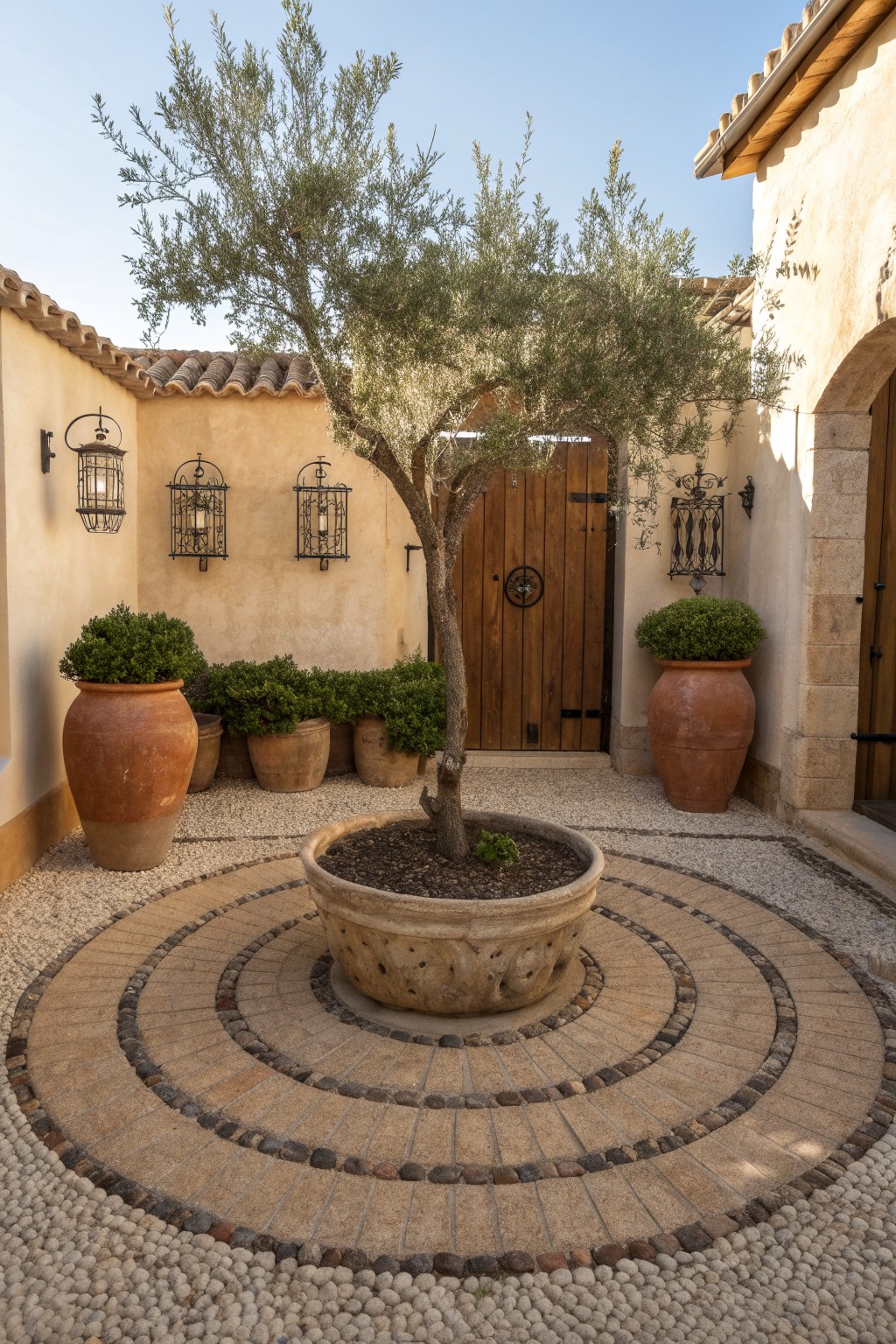
A simple way to give your front yard a clear center is to lay pavers in concentric circles around a sturdy tree planter. That olive tree in the middle adds some natural height right away. The rings of stone and pebbles keep everything neat and pull focus without much fuss.
This setup fits small courtyards or entry areas best, especially where space feels tight. Go with durable pavers that match your house stone, and fill gaps with gravel for good drainage. Add a few big terracotta pots nearby, and you’ve got low upkeep that looks put together year round.
Herringbone Brick Path to the Entry
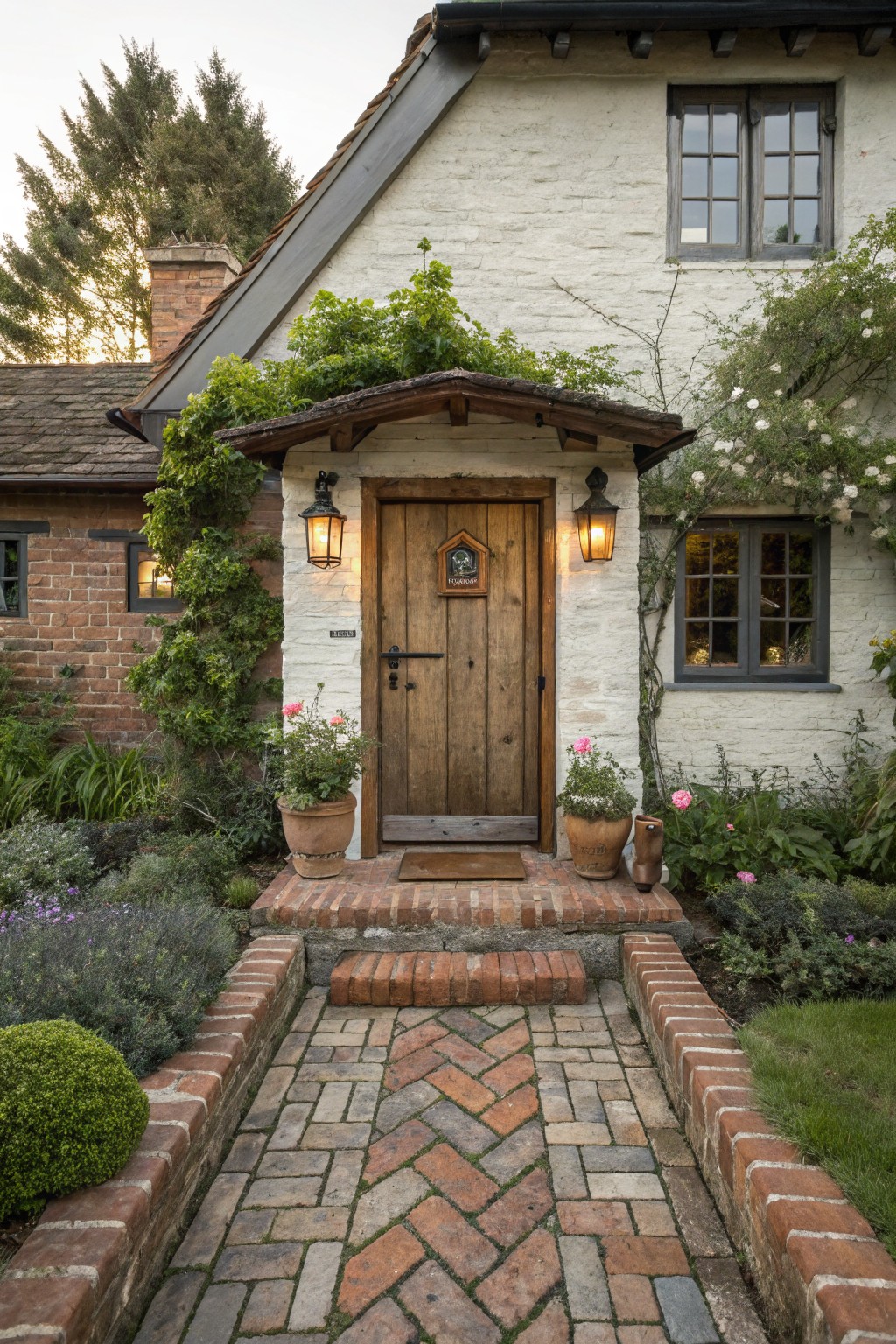
A herringbone pattern in the brick pavers makes this front path stand out. It draws the eye straight to the door without much fuss. The low brick walls along the sides keep everything neat and give the walk a clear frame. That simple layout works well because it feels purposeful, like the garden is pointing you home.
You can pull this off in most front yards with enough room for a straight run. It suits older homes or cottages best, where you want a bit of pattern but nothing too bold. Just make sure the bricks match your house colors, and add plants that spill over softly. Skip it if your yard slopes a lot, though. Keeps things low-key and easy to walk.
Winding Paver Path Through Tall Grasses
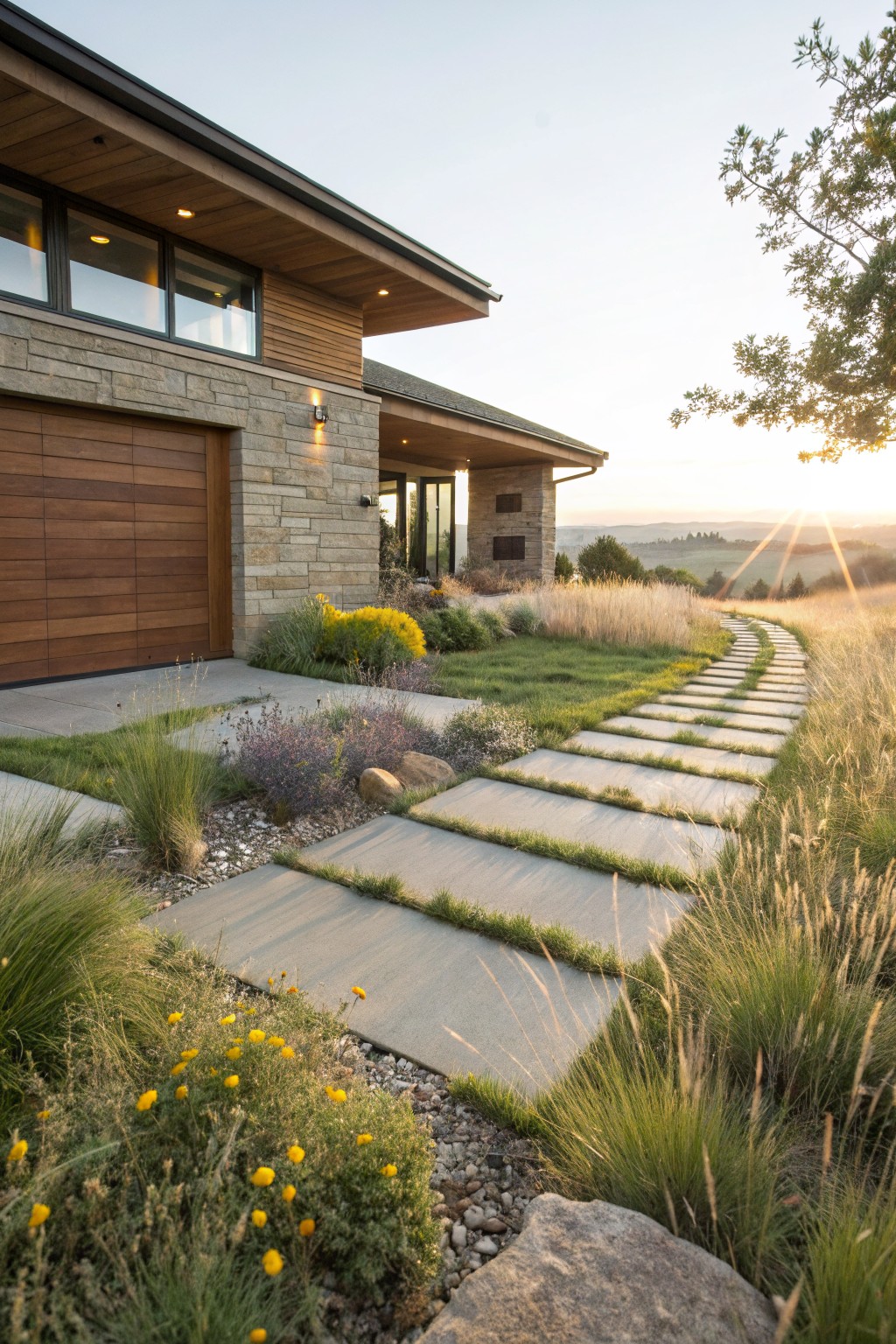
One nice way to guide people to your front door is with a winding path made from large concrete pavers set into a bed of tall grasses. Here the path curves gently away from the house, mixing with native plants like feather grass and yellow coreopsis. It feels natural, not too fussy, and keeps the yard looking full without much upkeep.
This setup works best in open front yards where you want a meadow look that ties into the landscape beyond. Use pavers spaced a foot or so apart, letting grass fill the gaps, on homes with clean modern lines. Skip it if your yard is small or shady. Just plant drought-tolerant stuff around the edges to hold it together.
Symmetrical Paver Path with Boxwood Edges
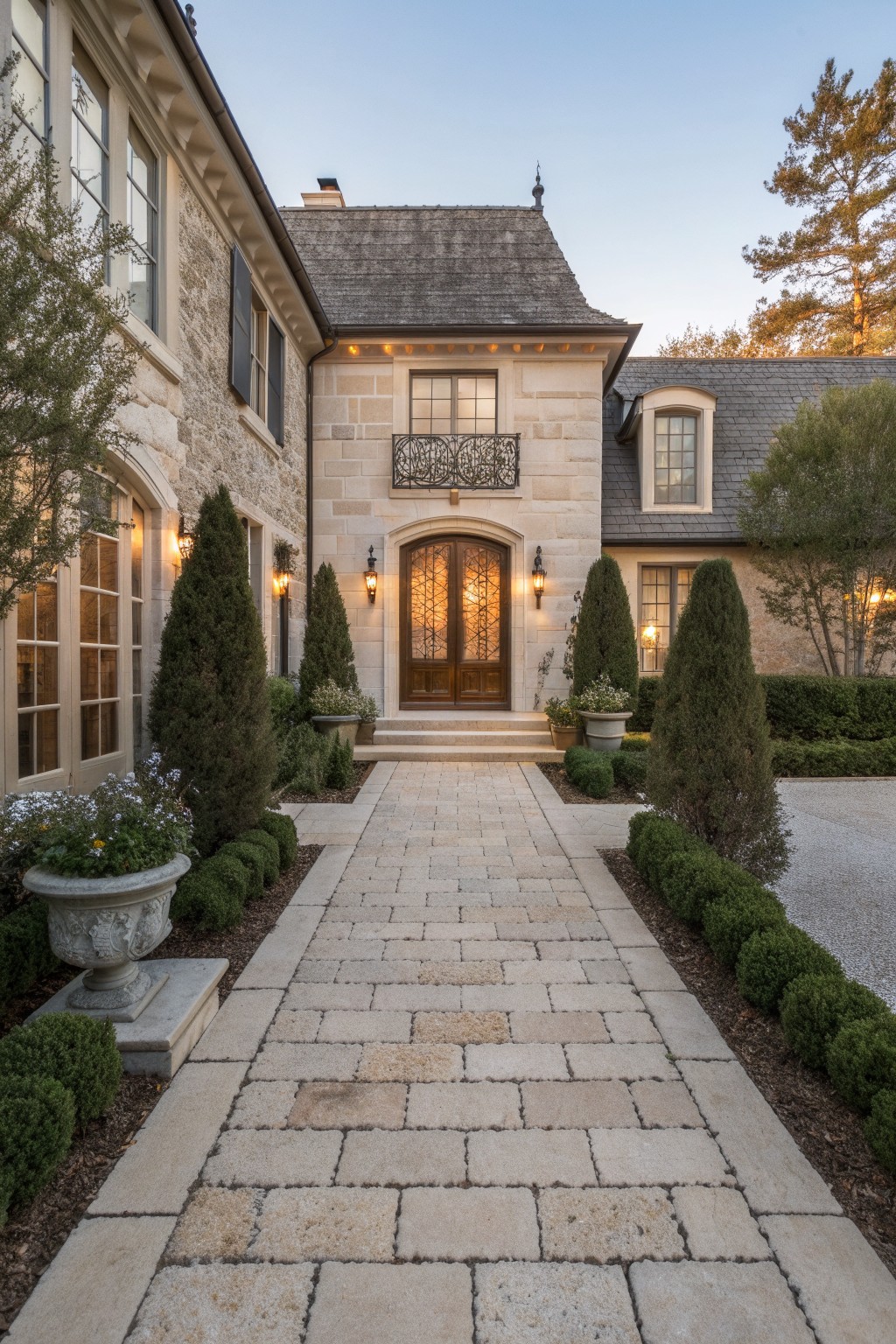
A straight walkway made from large beige stone pavers runs directly to the front door. Low boxwood hedges line both sides, keeping things neat and formal. Tall evergreens stand at the end, framing the arched entry just right. This setup pulls your eye forward and makes the house entrance feel important without much fuss.
It works best on homes with classic stone facades or traditional vibes. Lay the pavers in a simple running bond pattern for stability. Plant boxwoods close enough to touch the path edges, then trim them a couple times a year. Skip it if your yard slopes a lot, or add steps to keep it level. Good for front yards where you want low upkeep and a polished look.
Winding Stone Path Through Lush Garden Plants
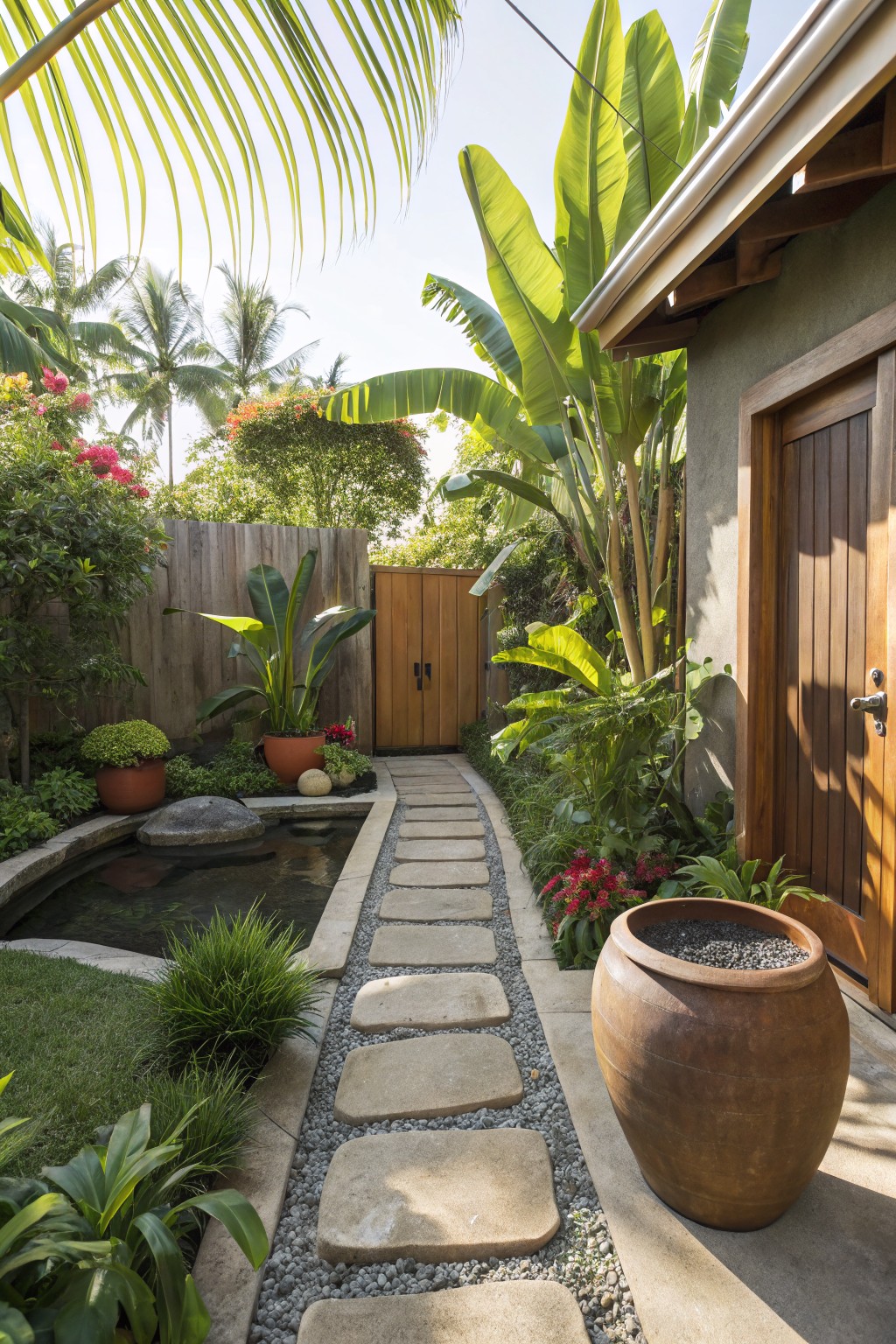
A casual path made from large, irregular stone pavers works nicely here. They sit right into gravel and grass, winding past banana plants and a small pond toward the entry door. It keeps things natural. No straight lines or fussy edges. Just a gentle guide through all that green.
This kind of path suits front yards in warmer spots where tropical plants grow easy. Space the stones so feet land comfortably. Mix in low grasses or pots along the way. It frames your space without much upkeep… and hides muddy spots after rain.
Paver Stepping Path in Gravel
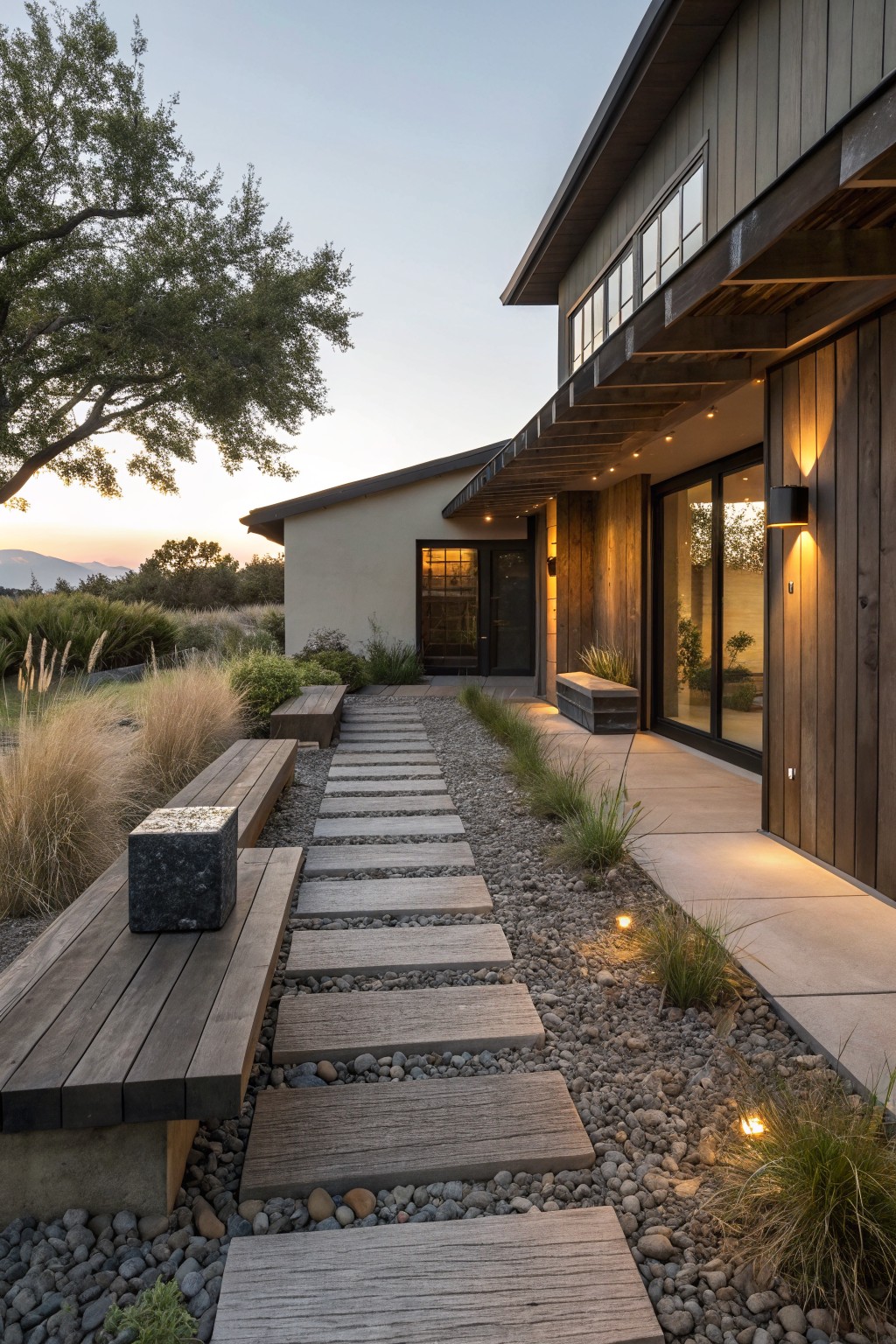
One clean way to guide people to your front door is with large pavers set into a gravel bed. These wide, rough concrete steps create a natural-looking walkway that doesn’t take over the yard. The gravel fills the gaps nicely, and low grasses along the edges keep things from feeling too stark. Benches tucked nearby add spots to pause without crowding the path.
This works best in front yards with a drier look, like around a modern wood-sided house. Lay the pavers wide enough for two people, maybe two feet apart, and use river rock gravel for drainage. Skip it if your area gets heavy rain, since gravel can shift. It’s low upkeep once planted in.
Mosaic Paver Path Through Flower Beds
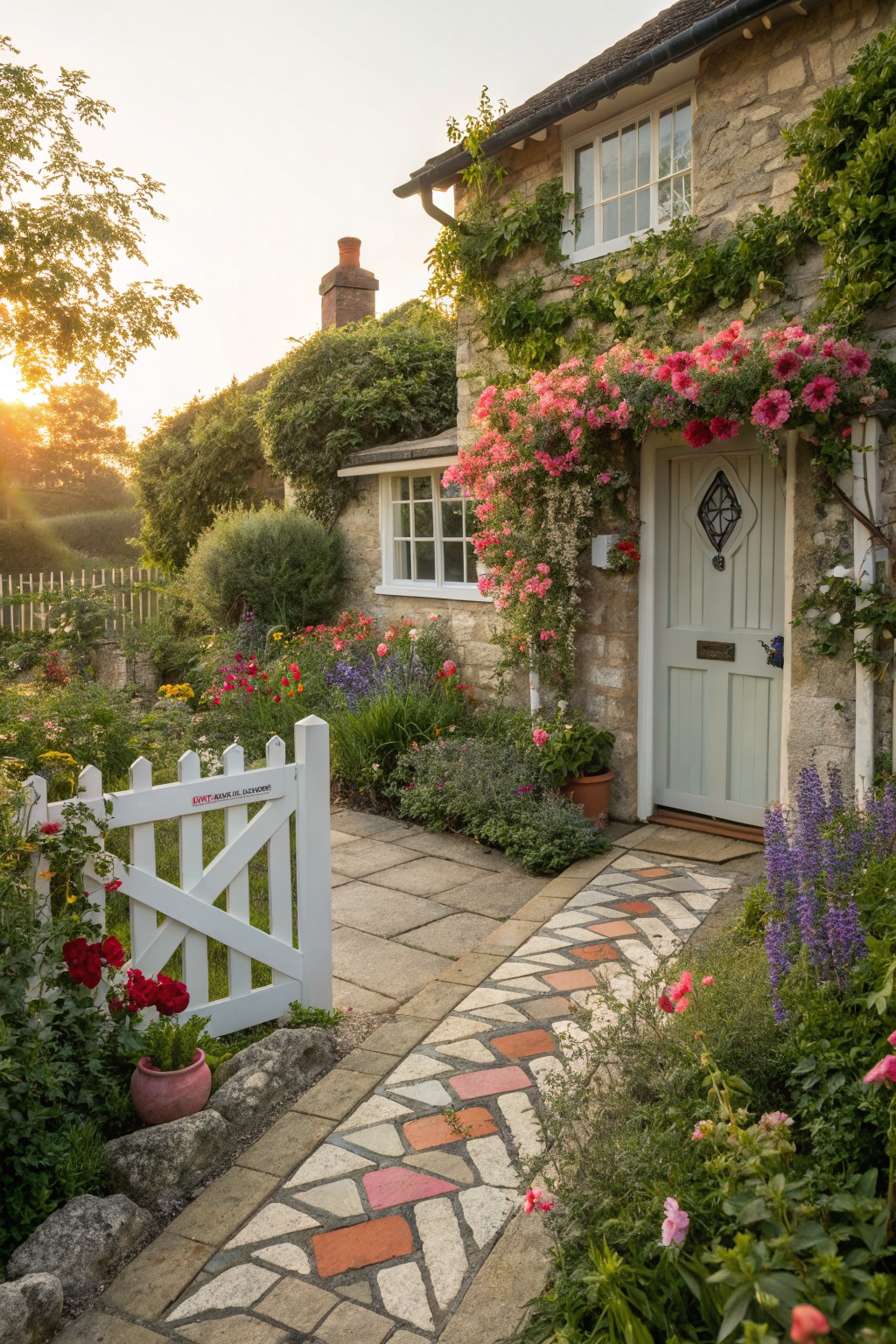
A patchwork path made from mixed stone pavers in soft grays, pinks, and beiges winds gently from the gate to the front door. What makes it work so well is how it pulls the garden together. The irregular shapes fit right into the cottage setting, guiding visitors without overpowering the flowers around it. Those climbing roses and lavender beds make the whole entry feel alive.
You can pull this off in most front yards, especially older homes or ones with a bit of character. Start with a base of larger slabs for stability, then fill gaps with smaller, colorful pieces. Keep plantings low and colorful along the edges… nothing too tall blocking the house. It suits sloped lots nicely, adds that handmade touch without much upkeep.
Dark Paver Path to the Entry
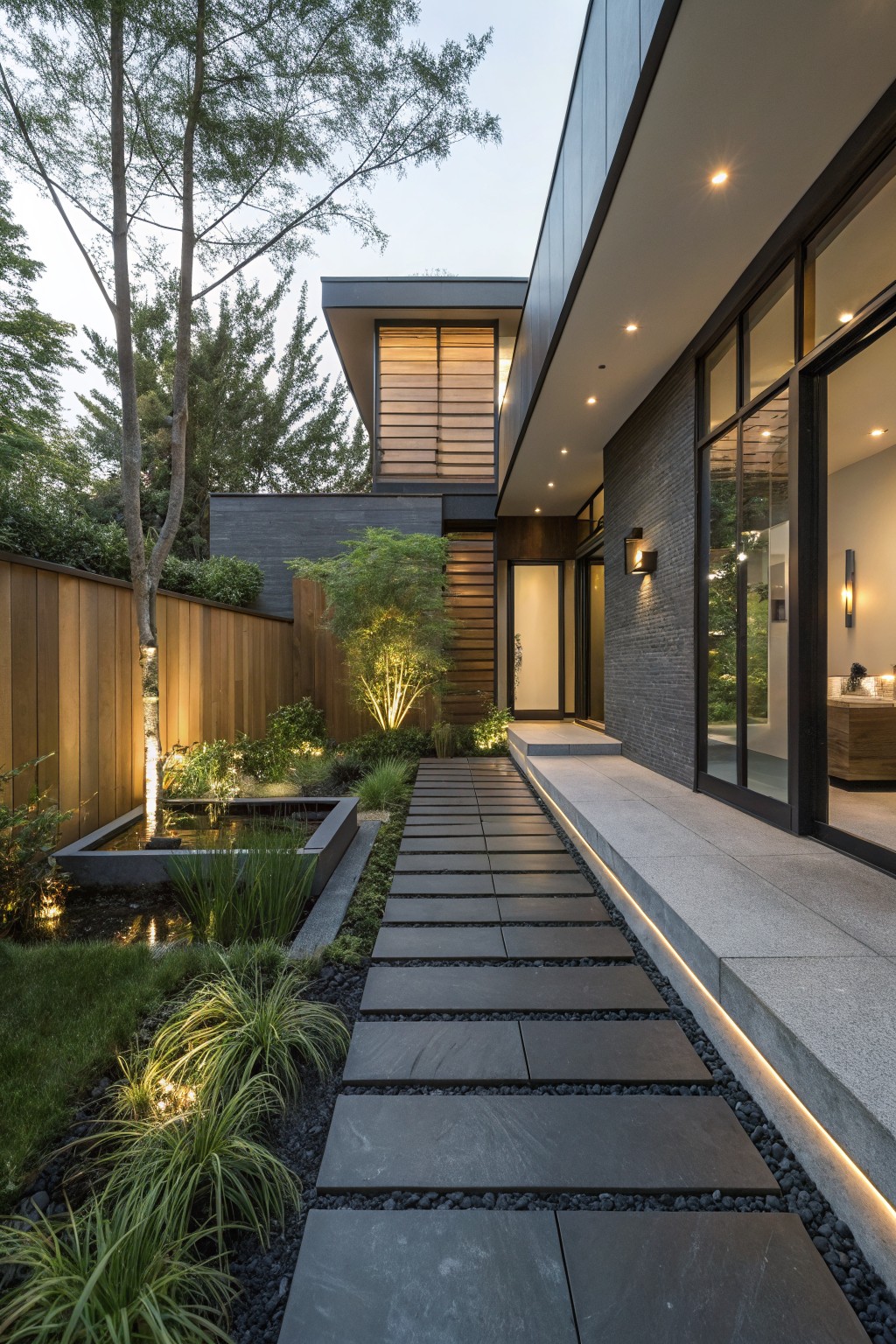
A straight path of large dark pavers cuts through the front yard plantings right up to the door. It keeps things simple and modern. The dark stone picks up on the house’s brick and wood tones without overwhelming the space. Low lighting runs along one edge, making it easy to walk at night.
This works well for homes with clean lines or a bit of Asian garden influence. Lay the pavers in gravel or thin mortar for drainage. Plant grasses and small shrubs right beside them to soften the edges. Skip it if your yard floods a lot, since water sits on flat stone.
Large Pavers with Pebble Joints Guide the Way
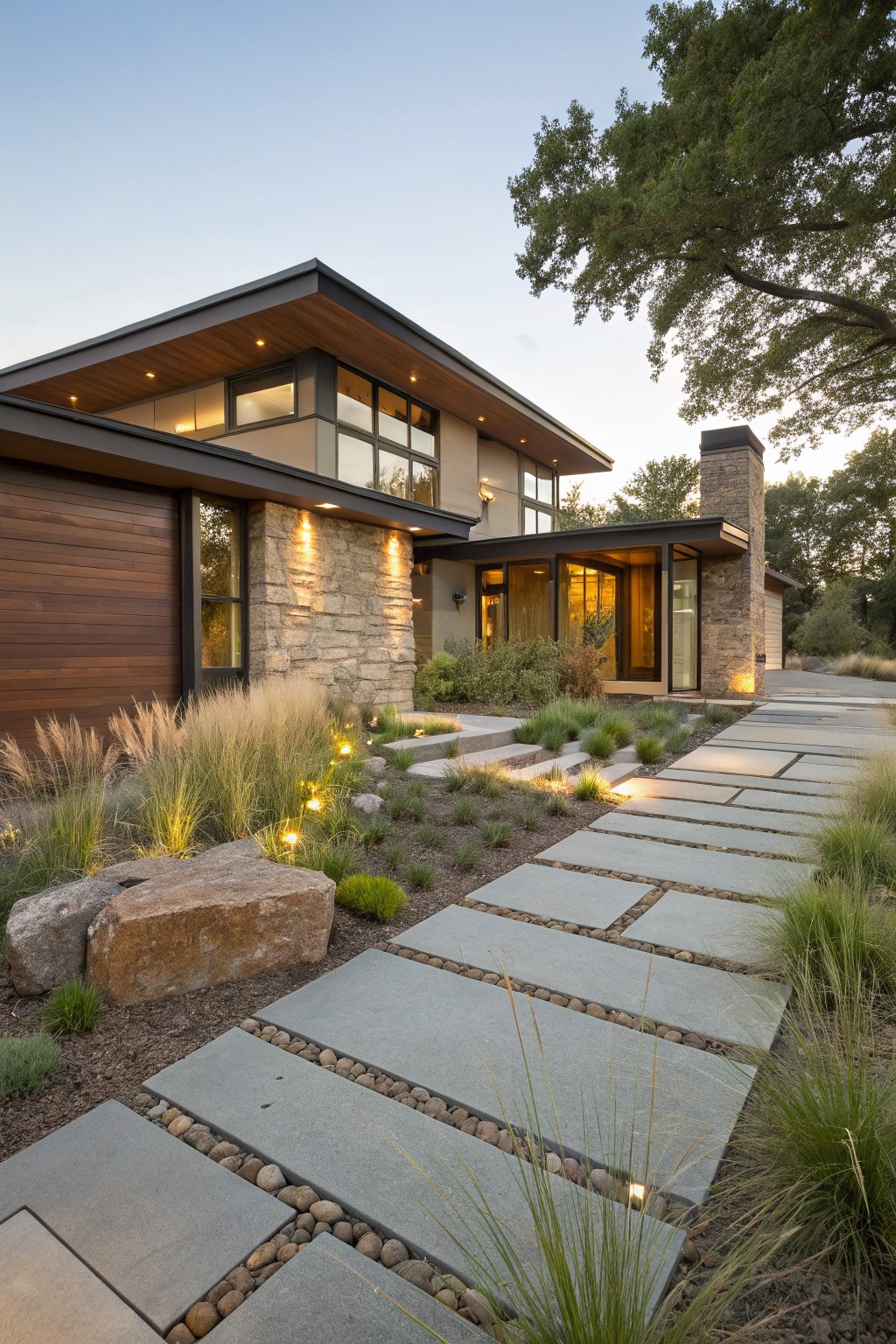
One straightforward way to handle a front path is to lay big concrete pavers with space between them filled by small pebbles. Grasses and low plants fill in around the edges. It looks natural, like it grew there. Keeps things from feeling too rigid, and the pebbles let water drain right through.
This setup works best in yards with a slope or dry spots, since it handles runoff without pooling. Pair it with tough native grasses that don’t need much water. Suits modern homes or ones with stone details. Just space the pavers unevenly for that casual feel… and watch the total cost, since big slabs add up.
Frequently Asked Questions
Q: Can I handle installing pavers myself on a weekend?
A: Rent a plate compactor and start with a flat path.
Dig out 4 to 6 inches of soil, add gravel, then sand.
Tap pavers in place and sweep sand into joints.
Q: How do I keep weeds from ruining my new paver walkway?
A: Sweep polymeric sand into the joints right after install.
Mist it lightly to lock everything tight.
Spot treat any strays with vinegar spray.
Q: Will these paver designs fit a tiny front yard?
A: Scale down to a slim entry path that hugs your house.
Mix in ground cover plants between pavers for softness.
It draws the eye forward… and boom, space feels bigger.
Q: What’s the simplest way to edge pavers neatly?
And bend flexible plastic edging along the sides.
Stake it down firm.
Top with mulch to hide it all.
