

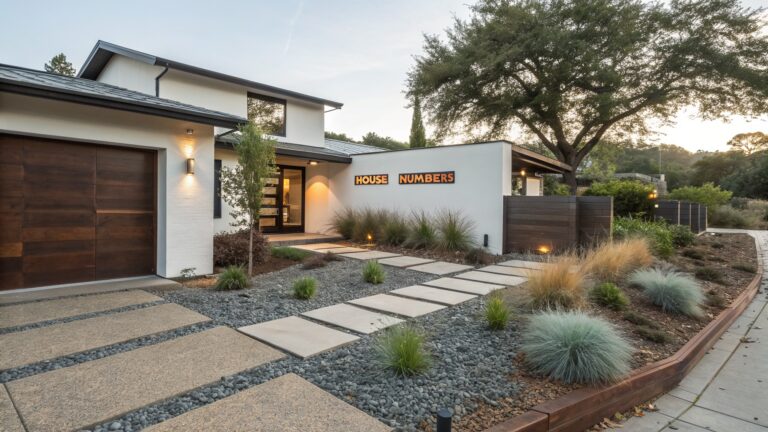
I’ve walked enough neighborhoods to see how front yards gain character from rocks that edge beds and outline paths without stealing the show from growing plants. Those textures create a backbone for the layout, holding everything in place as perennials spread and mature over a few seasons. People tend to notice defined borders first, the kind that keep grass from creeping into mulched areas and make the space read as intentional. In my own yard, I lean toward mixing gravel sizes along walkways because it adds subtle depth that photos can’t quite capture. A few of these approaches are straightforward enough to adapt and watch evolve in real soil.
Curved Path Through Gravel and Rock Beds
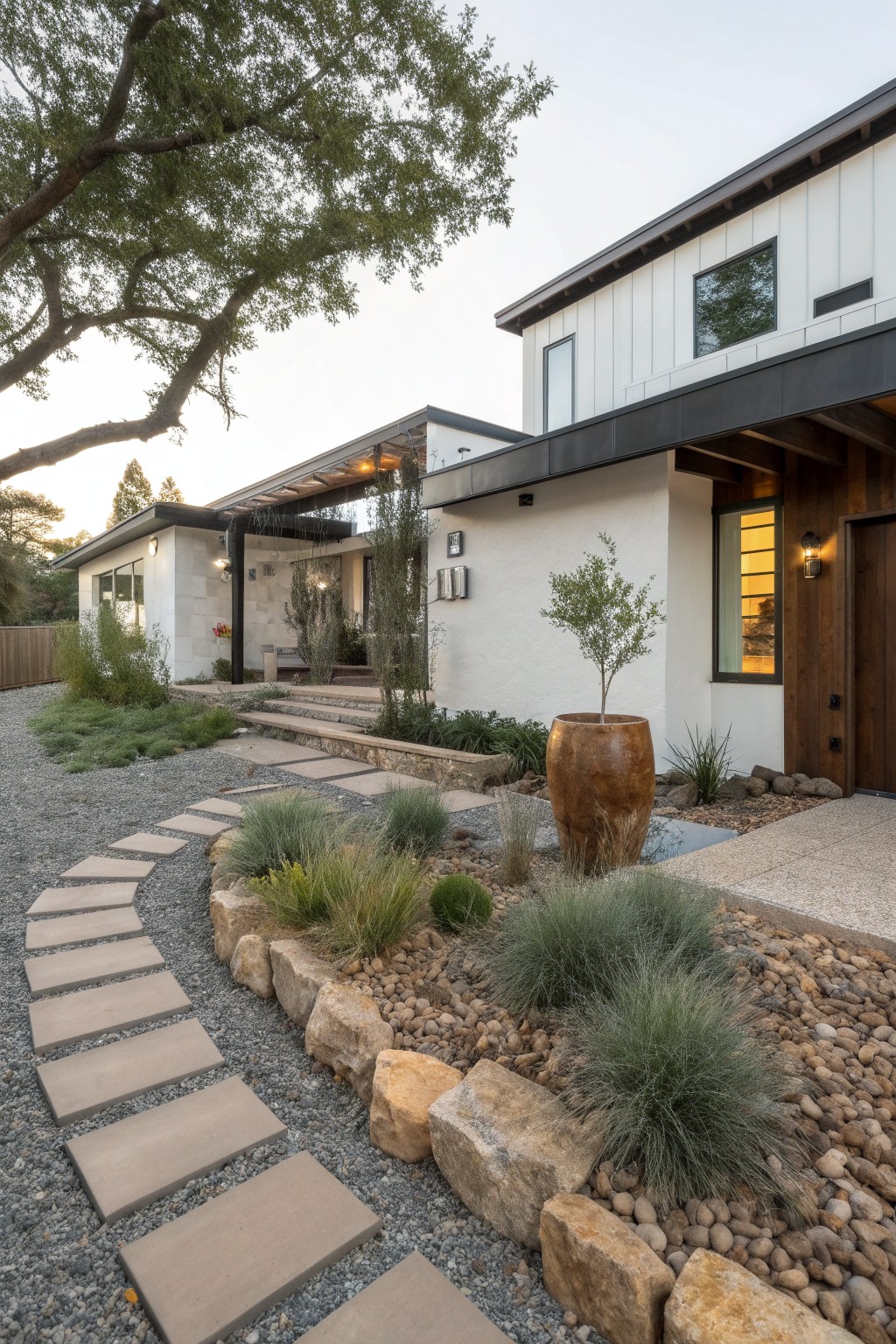
A simple curving walkway like this one makes getting to the front door feel like a little journey. Square concrete pavers set into gravel lead the way, with one side edged by stacked rocks holding back grasses and low plants. That mix of smooth path and rough textures keeps things from looking too plain, and it fits right with the clean lines of the house.
You can pull this off in most front yards, especially drier spots where mulch washes away. Pick pavers that match your gravel color, add a few bigger boulders for weight, and plant tough grasses that don’t need much water. Skip it if your lot is super flat and formal, though. It shines on gentle slopes.
Stepping Stones Set in Gravel
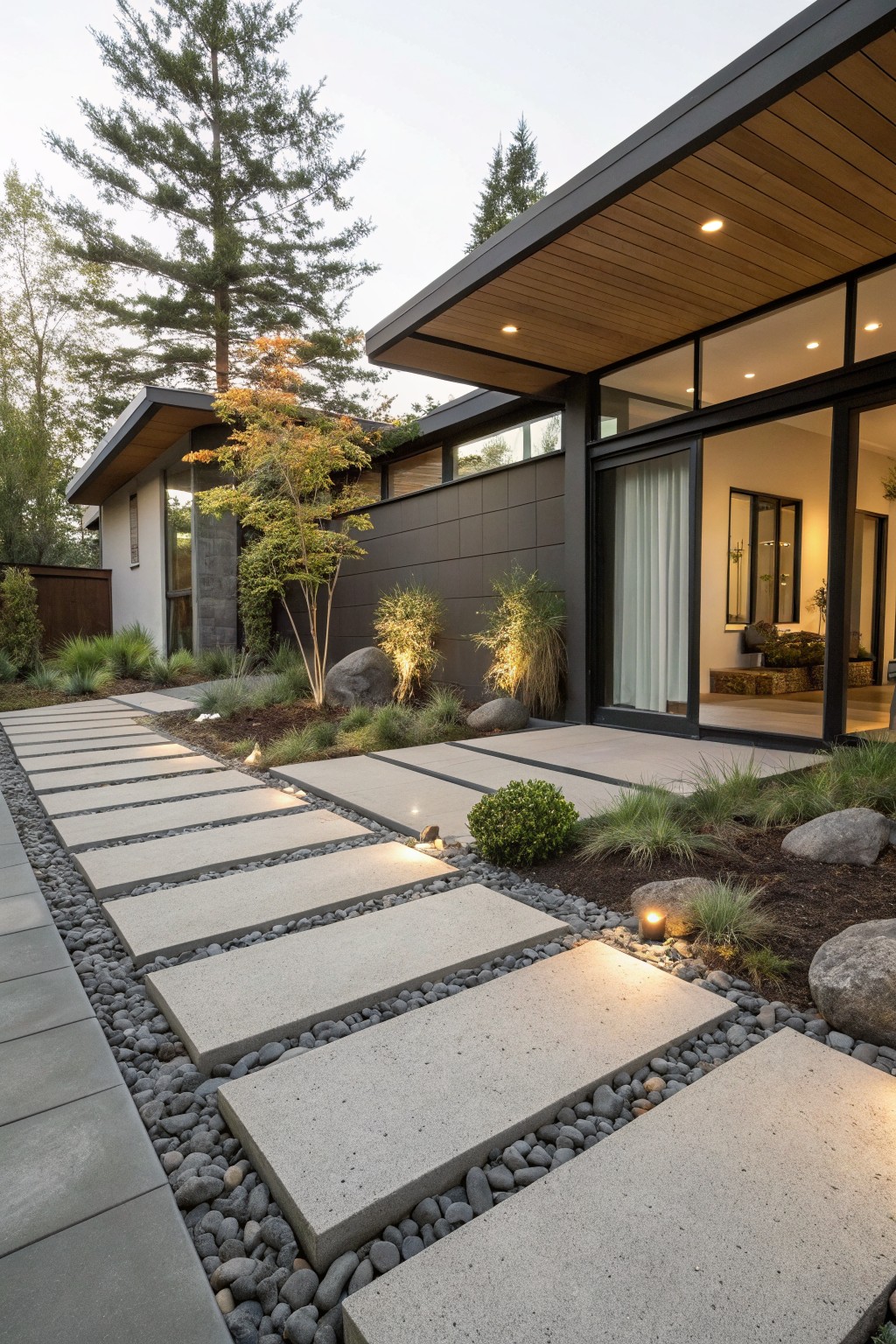
A simple gravel bed with large stepping stones makes for an easy front path that adds plenty of texture without much work. The pale stones pop against the dark gravel, and bits of grass and boulders tucked in keep it from looking plain. Folks like this because it guides you right to the door but feels more like a garden stroll than a straight sidewalk.
Try it leading up to a side or back entry on sloped lots where poured concrete might crack. It suits low-water yards or modern houses with clean lines. Lay down fabric first to block weeds, space stones about two feet apart for natural steps, then edge with tough plants that won’t flop over the path.
Winding Gravel Paths with Stone Borders

Gravel paths like this one give your front yard a casual, walkable feel without the upkeep of grass. Here, the path curves gently toward the house, held in place by low dry-stacked stone walls that match the rustic build. Those rough stones add real texture right away, and tossing in a few big terracotta pots with rosemary or lavender keeps it simple and green.
This setup shines on sloped spots or older homes with stone details. Go for angular gravel so it doesn’t shift too much, and keep plantings tough ones that handle dry spells. It’s forgiving if you’re not big on gardening… just rake now and then.
Textured Rock Gardens with Succulents

One simple way to add interest to a front yard is mixing large boulders with gravel and tough succulents like agave. Those spiky leaves and rough stones give the whole area a natural, layered look that feels right at home in dry spots. No grass to mow. Just clean lines from the curved driveway pulling it all together.
This setup works best in sunny, arid yards where water is at a premium. Plant the agaves in gravel beds around the boulders for easy drainage, and keep it sparse to avoid overcrowding. Suits ranch-style homes or anywhere you want curb appeal without the upkeep… though watch for those sharp edges near walkways.
Rope-Lined Pathways to the Front Door

One straightforward idea for front yard paths is lining them with rope-wrapped posts and simple wooden planters. It draws the eye right to the house without feeling too rigid. The rope adds a relaxed, nautical touch that fits beach houses or cottages nicely, and those planters hold grasses and low flowers that move with the wind. Rocks tucked along the base keep weeds down and add some quiet texture.
This setup shines in smaller yards where you want to guide foot traffic but keep things open. Lay down cobblestones or bricks for the path itself, then build planters from untreated wood to weather over time. Skip fancy plants; go for tough ones like fountain grass. Watch the scale so the rope doesn’t overwhelm a narrow walk.
Paver Path Set in Gravel with Boulders

One straightforward way to guide people to your front door is with wide concrete pavers spaced out in a bed of gravel or sand. Large rounded boulders sit right along the edges here, mixed with clumps of fountain grass and agave for some height and movement. The path feels intentional but not fussy. It pulls the eye forward without much green to mow.
This works best in sunny, dry spots where you want low upkeep. Pick pavers that match your house color, source boulders locally to save money, and add grasses that handle neglect. Skip it if your yard floods often, since gravel shifts. Fits modern or ranch-style homes that lean toward natural looks.
Meandering Stepping Stone Paths in Gravel Gardens
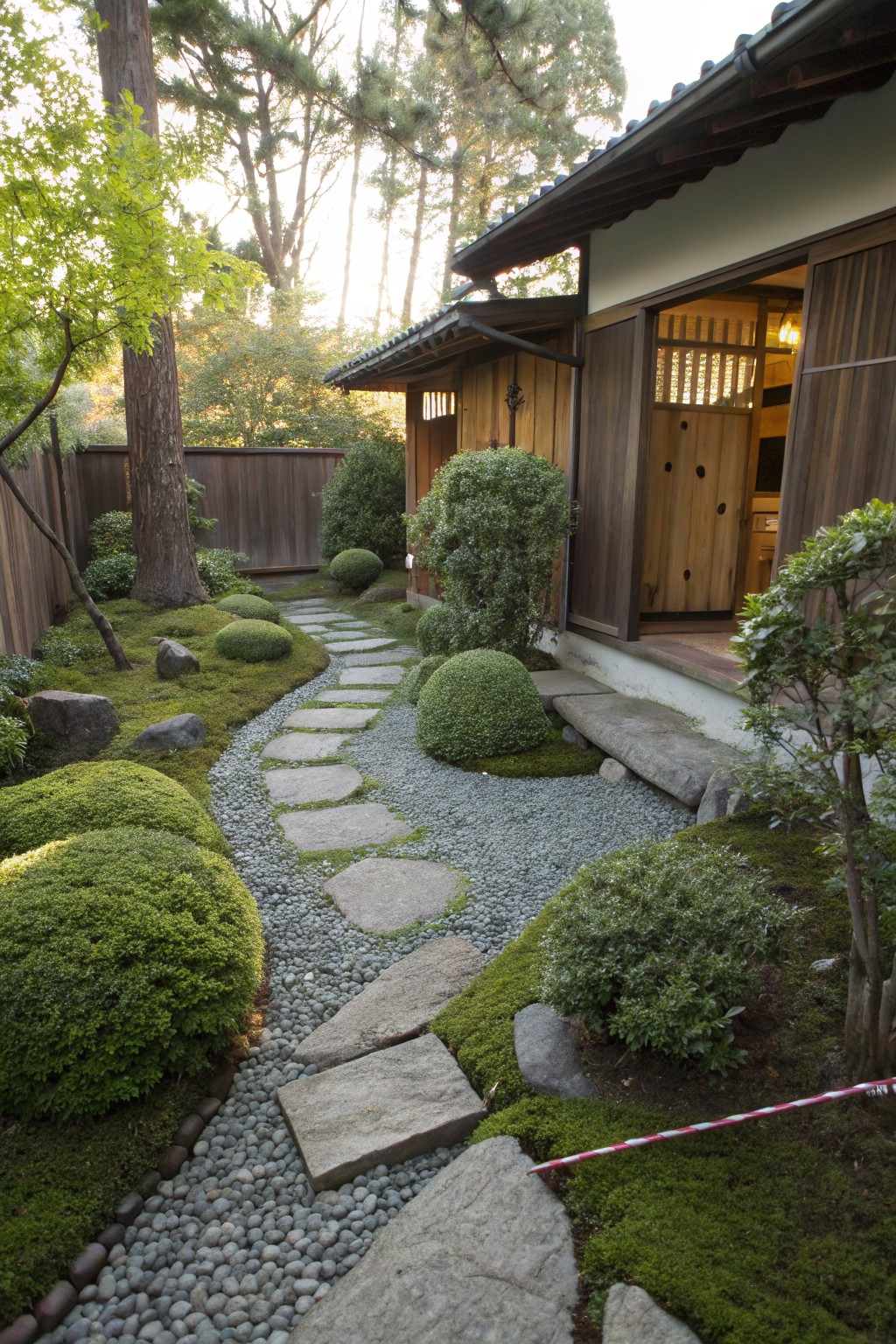
A simple way to add charm to your front yard is laying irregular stepping stones through a bed of fine gravel. The path winds gently, edged by mossy rocks and clipped green shrubs that give plenty of texture without much upkeep. It pulls the eye right to the house door in a natural flow, like you’re strolling through a quiet Japanese garden.
This works best in smaller front yards or side entries where you want low fuss. Pick stones that are flat but uneven in size, about two feet apart, and fill around them with pea gravel for easy drainage. It suits homes with clean lines or traditional vibes… just keep the shrubs trimmed so the path stays the star.
Sloped Entry Steps with Rock Walls
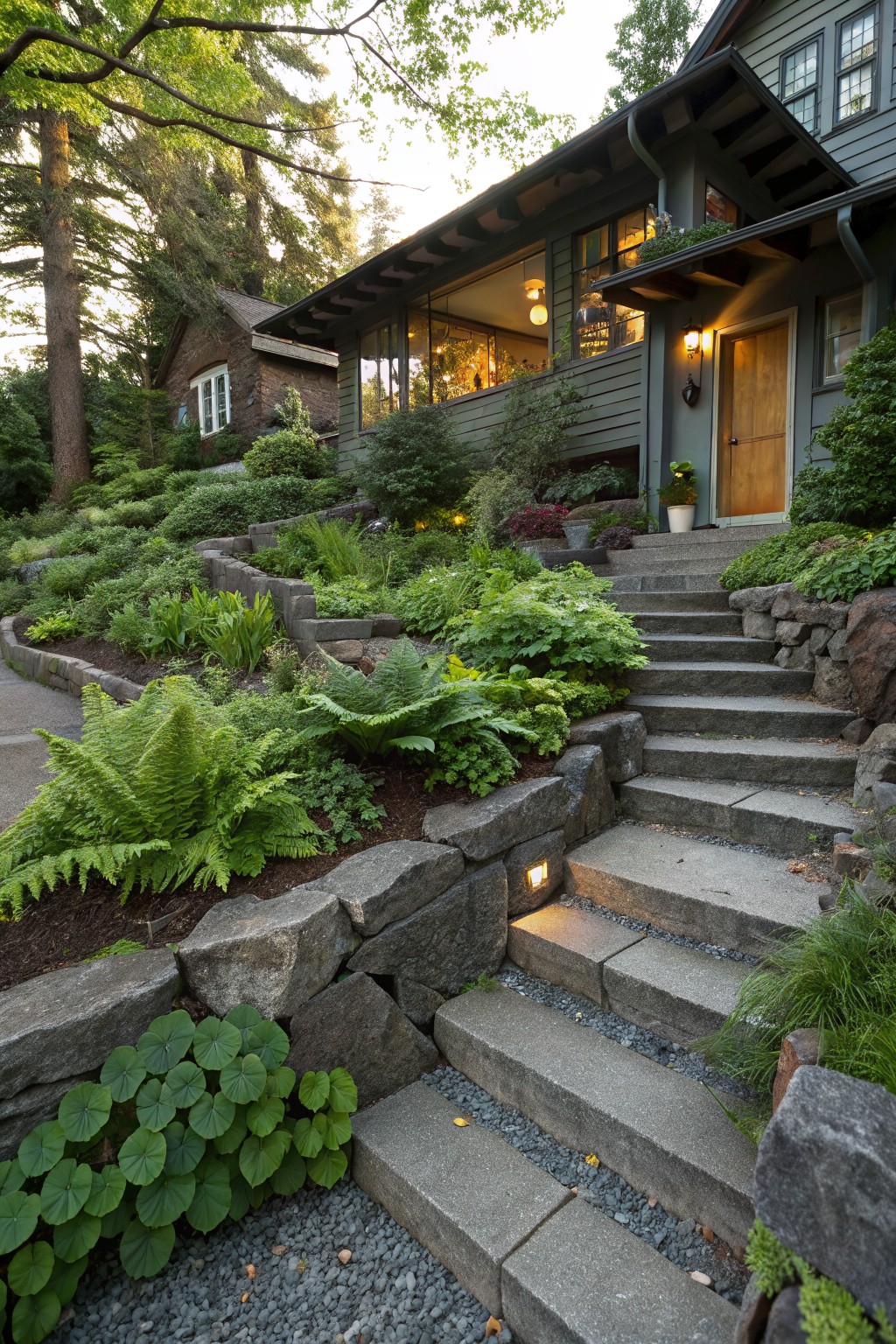
One smart way to handle a front yard on a hill is terraced concrete steps wrapped in rugged stone retaining walls. The steps are wide and solid, making the climb easy, while the rocks add that rough texture people love in natural landscapes. Tuck in ferns and green plants along the edges, and it all blends without feeling forced.
This works best on craftsman homes or any place with a noticeable slope. You get practical access to the door plus a welcoming path that draws folks right up. Just make sure the walls are built sturdy… hire a pro if the drop is steep. Keeps the yard low fuss once planted up.
Irregular Slate Path in Gravel Mulch
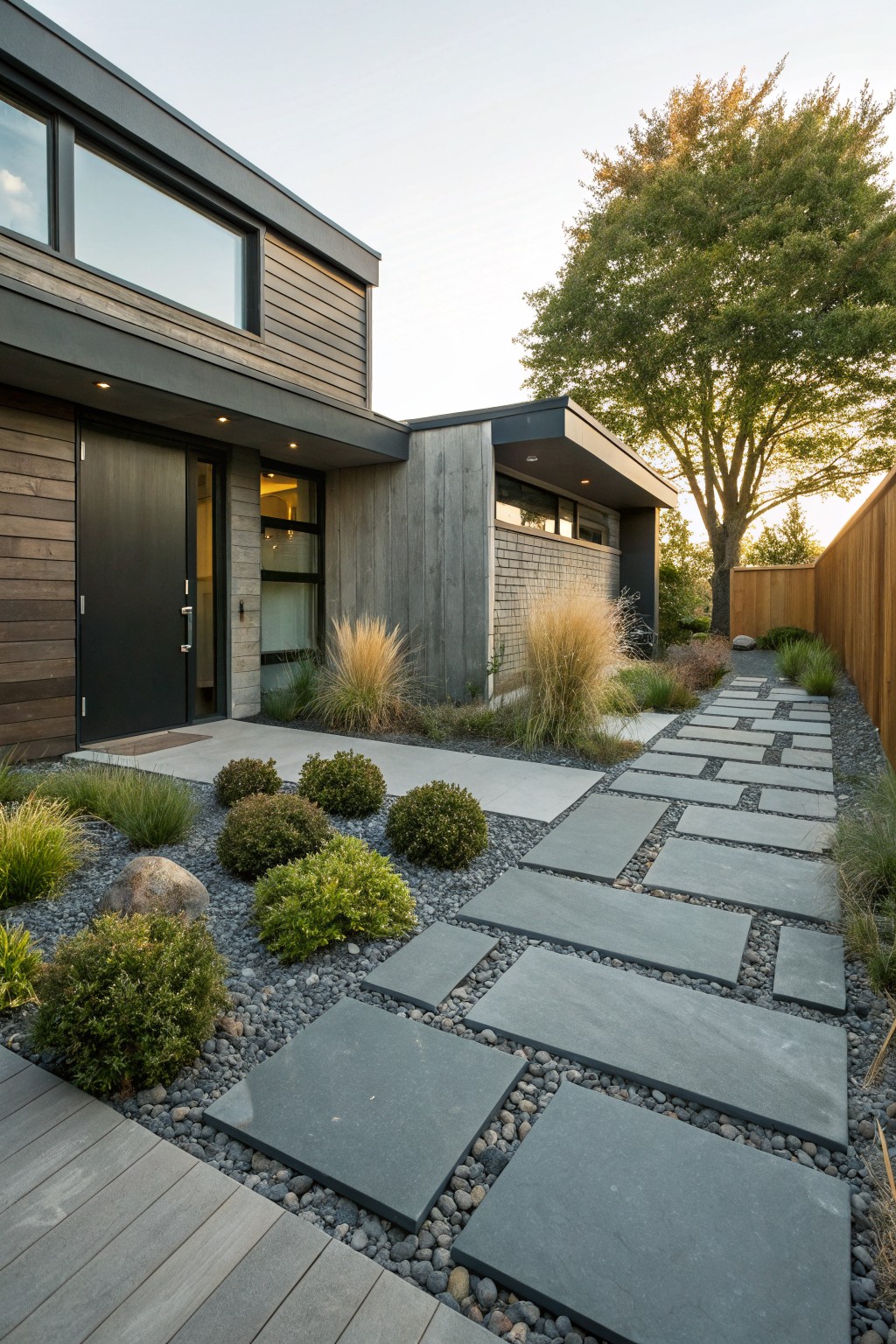
One simple way to guide visitors right to your front door is with large, uneven slate slabs laid into a bed of gravel. This setup stands out here against the sleek modern house, where the dark gray stones pick up on the siding and create a natural flow from the street to the entry. The gravel fills the gaps just right, keeping weeds down while letting water drain easily. Grasses and low shrubs tuck in around the edges, adding some softness without much upkeep.
You can pull this off in most front yards, especially if you want low-water landscaping that still looks put together. Go for bigger slabs to cut down on pieces you need to fit, and keep plantings simple like feather grass or boxwood. It works best on smaller approaches where you don’t want a full-width path taking over. Just make sure the stones are set firm so no one trips.
Stone Retaining Walls for Sloped Yards
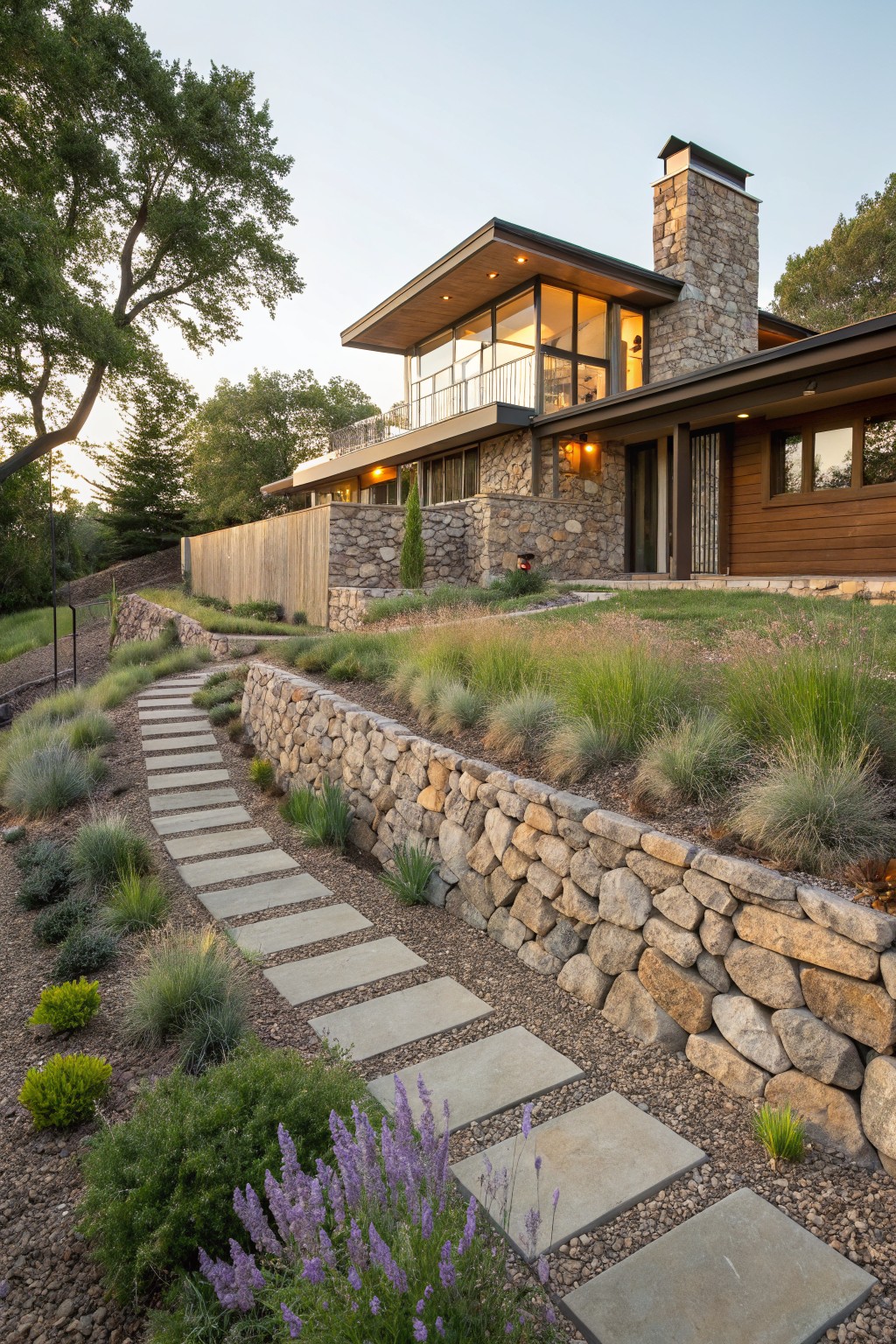
Sloped front yards can be tricky but stacked stone retaining walls turn them into something usable and pretty. These natural rock walls create flat terraces that hold back soil and let you add plants without erosion worries. The rough texture of the stones gives the yard a grounded feel that blends with trees and hills around it.
Run a simple path of wide concrete pavers right along the walls for easy access to the house. It suits modern homes or any spot with a gentle slope and dry soil. Go for tough grasses that hang over the edges… they add movement without needing constant water. Just make sure the stones are set firm to last.
Meandering Stone Paths with Rock Edging
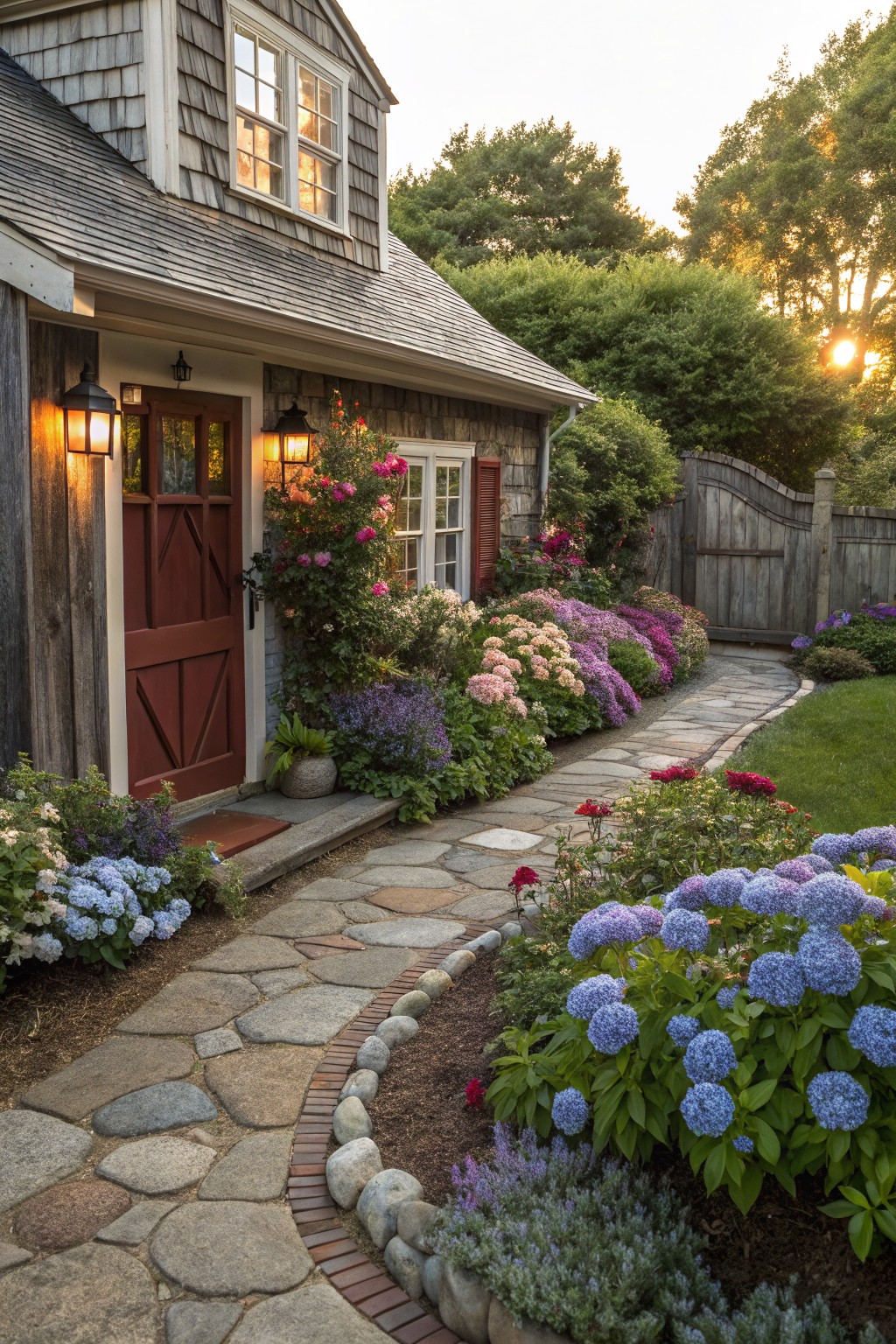
A simple winding path made from irregular flagstones draws folks right to the front door. Here it’s edged with rounded rocks and a low brick line that keeps everything neat but natural. The texture from the stones and rocks adds real interest, especially next to soft blooming plants like those big blue hydrangeas.
This setup works best in cottage-style yards or anywhere you want a relaxed walk-up. Lay the stones close but not tight for that country feel, then fill beds with perennials that spill over a bit. It handles foot traffic fine and stays pretty with minimal trimming. Just pick rocks that match your soil so they don’t shift.
Rock Beds Layered with Grasses and Shrubs
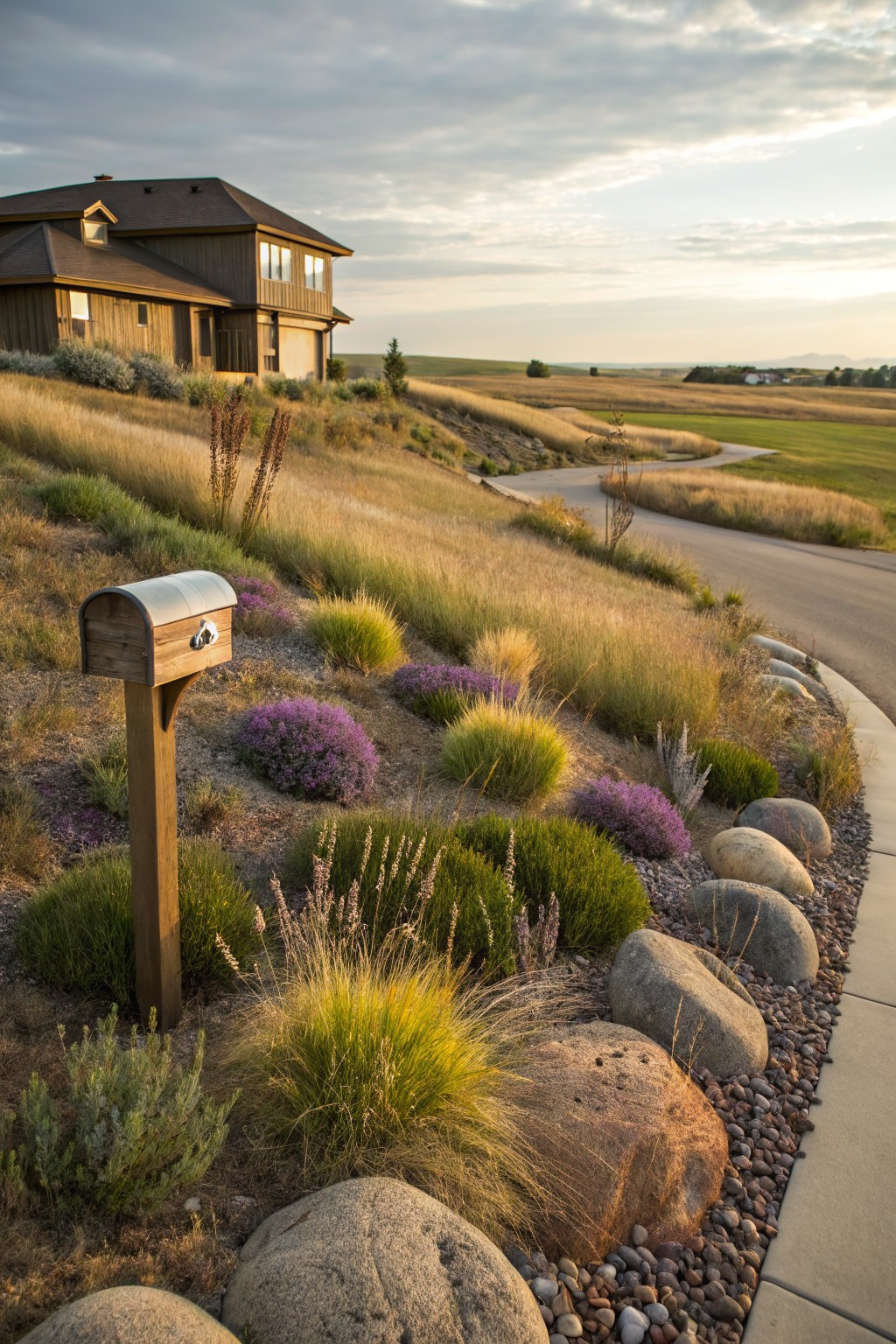
Large rocks mixed into planting beds with tall grasses and low purple shrubs make a simple front yard statement. The boulders provide solid shape to hold back soil on a slope, while the grasses sway and add soft texture. That combo looks rugged yet tidy, perfect for tying into the roadside without feeling fussy.
Try this along driveways or curbs where you want definition but low upkeep. It suits dry or hilly spots, using tough plants like feather reed grass or lavender that don’t need much water. Stack the rocks loosely for a natural feel, then tuck in the plants. Keeps weeds down too… one less chore.
Curved Brick Paths with Rock Edging
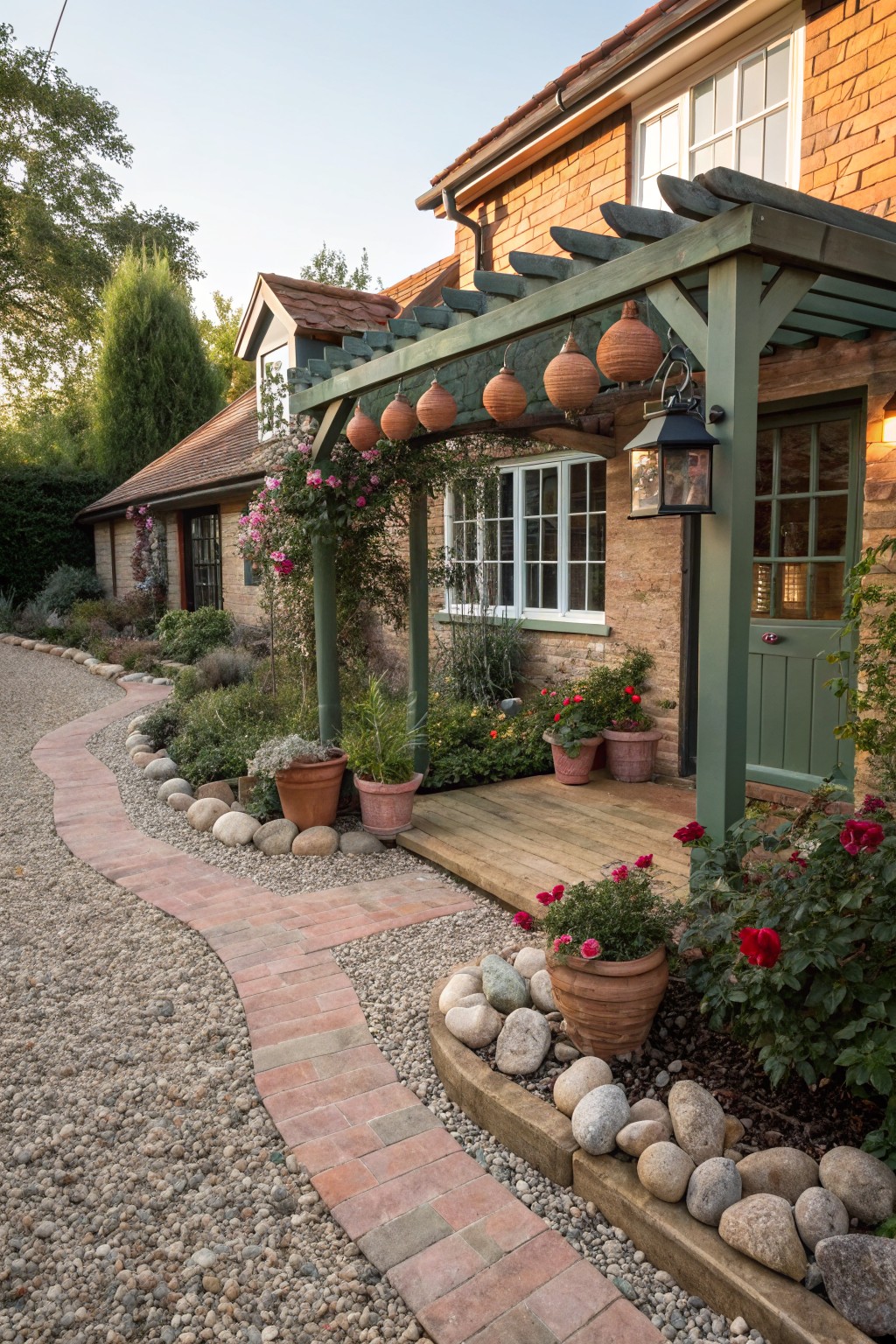
A simple curved brick path like this one draws folks right to the front door without feeling rigid. The rounded rocks along the edge mix with gravel and a few plants to give everything texture and flow. It’s low fuss but looks put together, especially with those terracotta pots tucked in here and there.
This works best in front yards with some space to curve around beds or trees. Suits older homes or cottages trying for that welcoming garden feel. Just curve the path to fit your lot, border it with larger rocks to hold back gravel, and plant lightly so it stays easy to walk. Watch the rocks don’t shift too much in heavy rain.
Entry Gravel Beds with Boulders

One simple way to add texture to your front yard is with gravel beds filled with boulders. Here, smooth gray pebbles cover the ground around the steps, mixed with a few big rocks in different shapes and sizes. Tall birch trees stand right in the middle, giving some height without much upkeep. It keeps things clean and modern, especially against a crisp white house like this one.
This setup works great for homes with a sleek entryway. Just dig a curved bed along the path, layer in landscape fabric first to stop weeds, then add the gravel and drop in boulders where they look natural. Skip too many plants so it stays low effort. It suits sloped lots or spots near the door, and holds up well in shady areas under trees.
Terraced Raised Beds for Sloped Yards
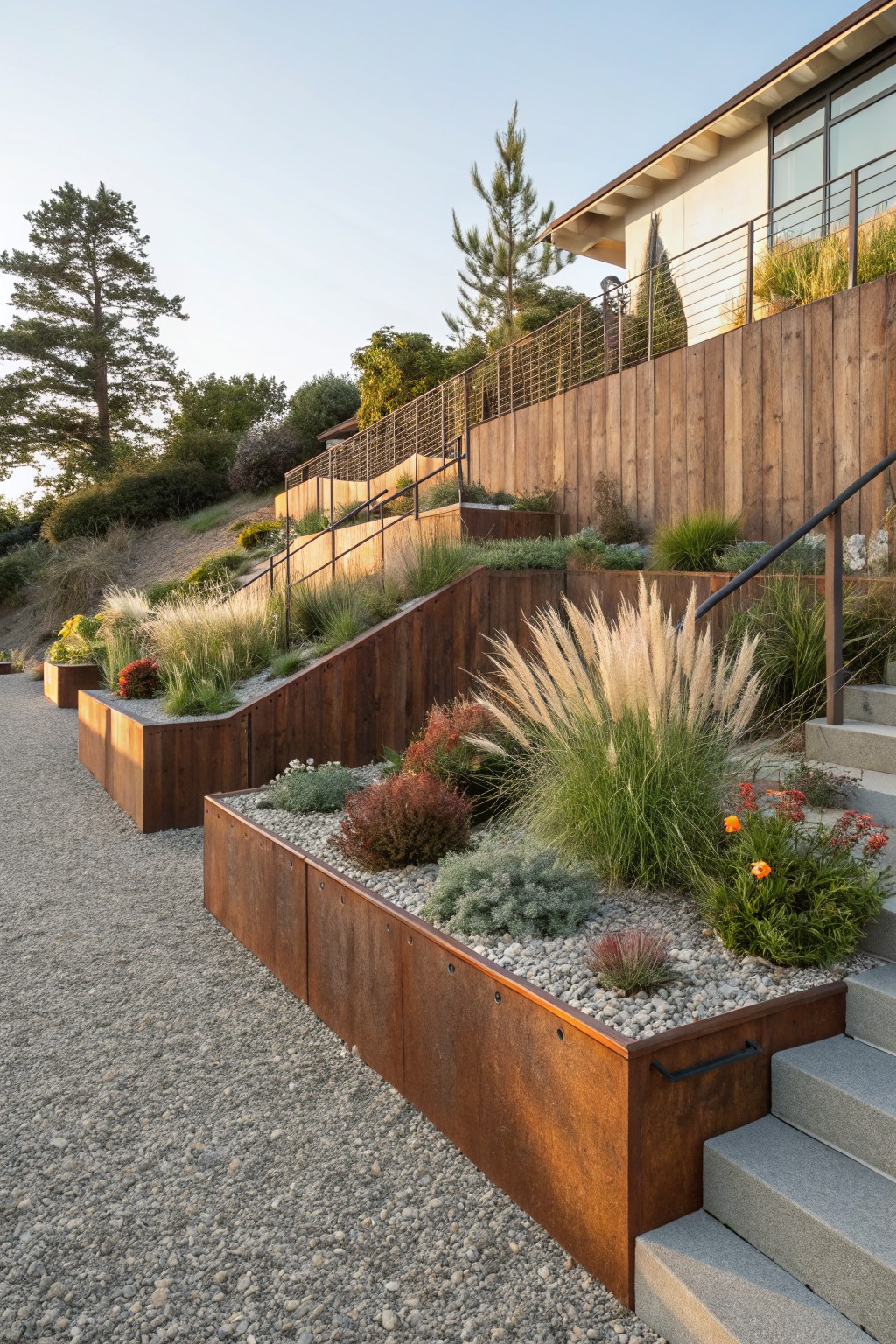
Slopes can make front yards tricky to work with. These terraced raised beds solve that by stepping up the hill in neat metal boxes. The rusty corten steel edges hold back soil and plants like tall pampas grasses that sway in the breeze. It creates levels where you can actually plant and enjoy the space. Gravel fills in the paths between for easy walking.
This setup fits homes on hillsides or anywhere the ground drops away. Go for tough, drought-friendly plants that won’t need constant water. Keep beds wide enough for a mix of heights… grasses in back, lower stuff up front. Watch the drainage so water doesn’t pool. It’s practical and gives your yard some real structure.
Circular Cobblestone Driveway Entry

A circular driveway paved in textured cobblestone makes a strong front yard statement. The pattern of light and dark stones creates subtle interest, and a simple urn fountain anchors the center. Low boxwood hedges edge the circle neatly, keeping things tidy and drawing the eye to the house door.
This layout suits traditional stone homes on bigger lots. It handles cars easily while looking put-together. Skip it on tight spaces, though. The rocks need good drainage to avoid puddling.
Rock Stack Sculpture as Yard Focal Point
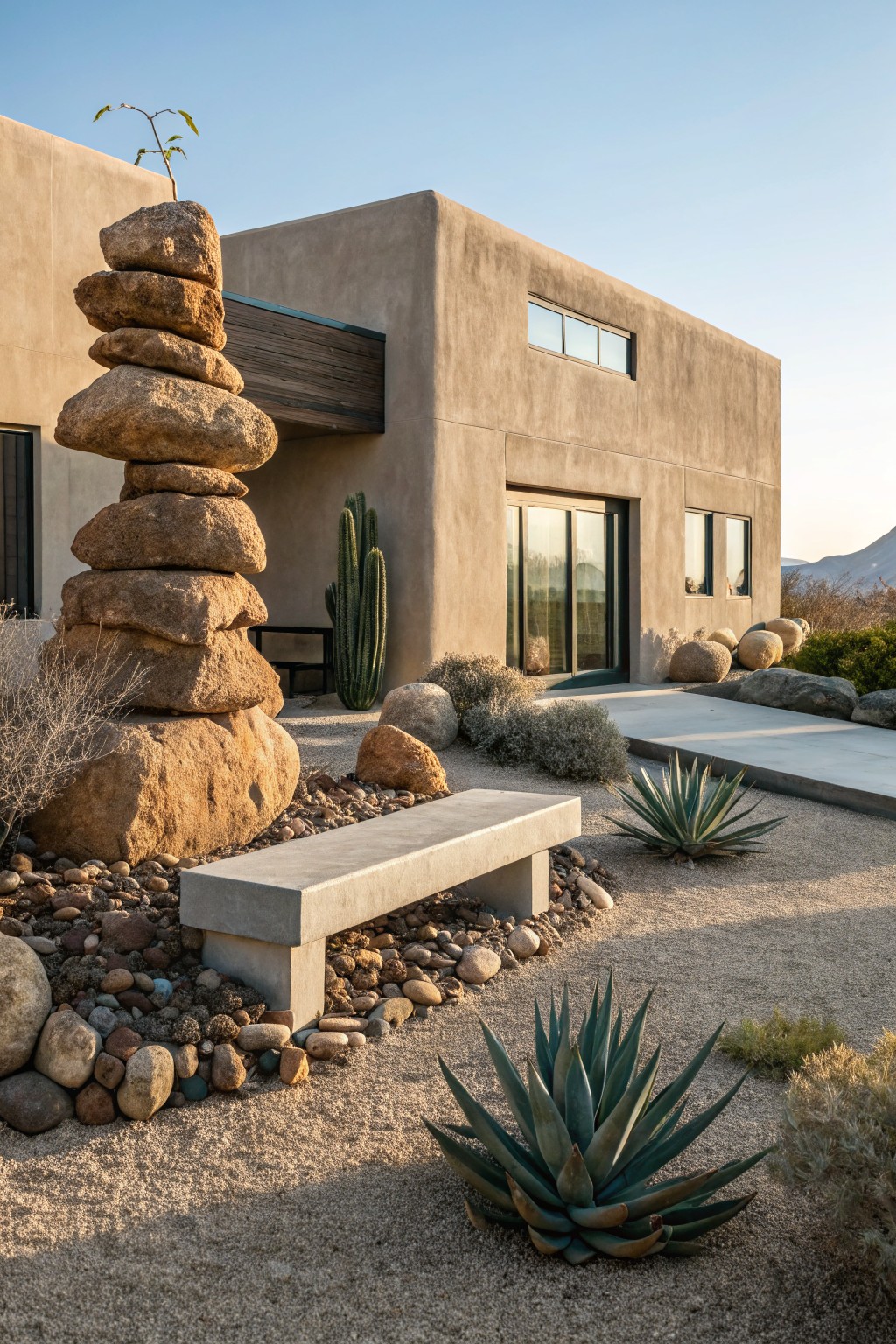
A tall stack of boulders like this one makes an instant statement in a front yard. It stands out against the house wall and gravel ground, turning simple rocks into natural art. No need for lots of color or upkeep. The texture alone grabs attention.
Try it in arid spots where you can haul in local stones. Build on level gravel with wider bases at the bottom for safety. It fits adobe or modern homes best… pair with a bench and sparse succulents for that clean desert feel.
Moss-Covered Stone Steps

One simple way to add texture to your front yard is with irregular stone steps like these. The rough slabs fit right into the ground, and moss grows over them naturally, making the path look like it has always been there. Paired with rock walls and ferns along the edges, it pulls the yard together without much upkeep.
These steps work best on a gentle slope leading to your entry or a garden spot. Pick stones from a local quarry for that real fit, then plant low ferns or hostas nearby to fill in. They’re perfect for shady woodland yards around older homes… just give the moss time to settle in.
Embed Large Pavers in Gravel for Texture
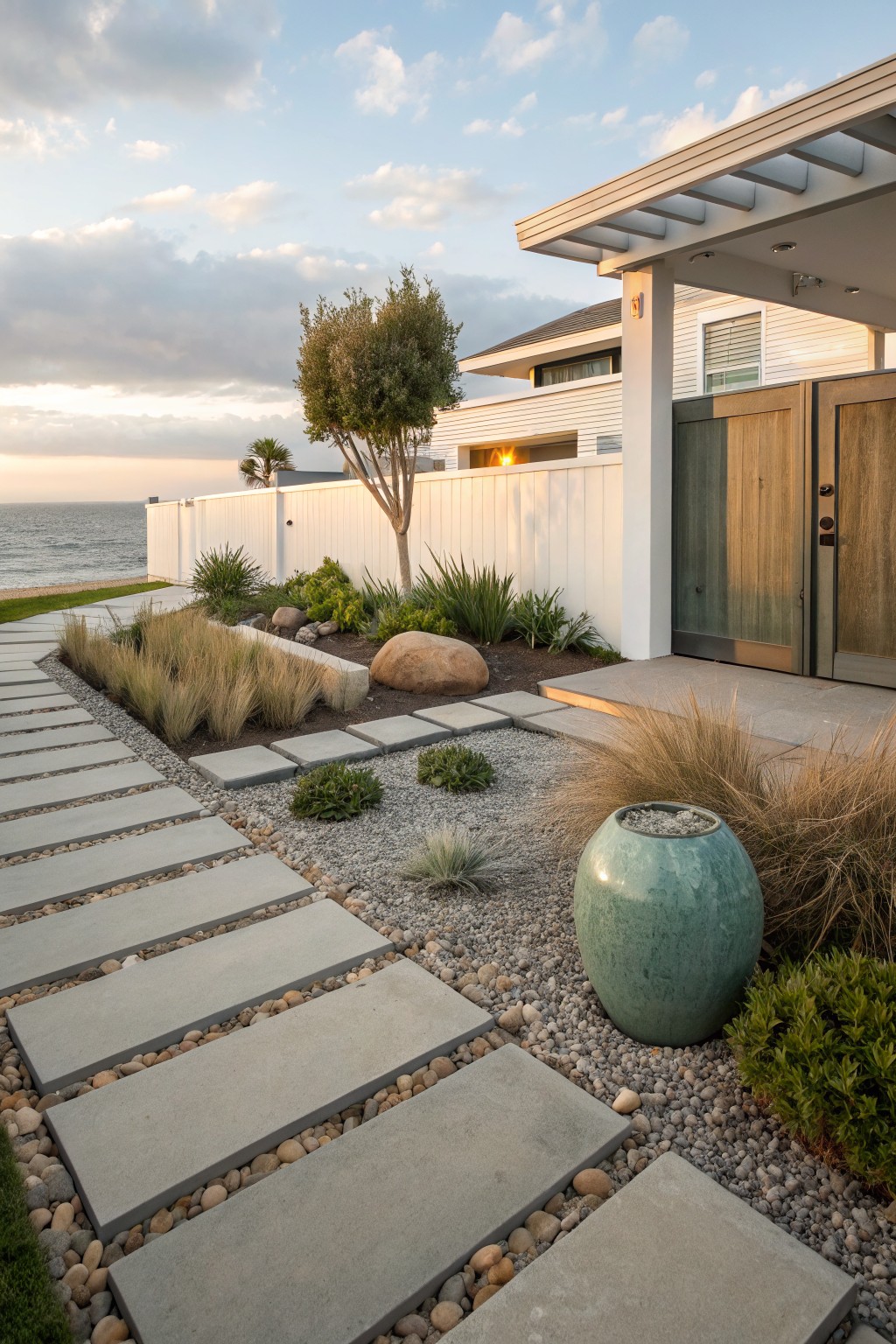
One straightforward way to add interest to a front path is setting wide concrete pavers into a bed of small pebbles or gravel. It gives that subtle crunch underfoot while keeping things clean and modern. The spaces between pavers let gravel show through, creating texture without much upkeep. Pair it with a few boulders and tough grasses along the edges, and it pulls the eye right to your entry.
This setup works great in sunny, dry spots like coastal yards or anywhere water use needs to stay low. Go for drought-tolerant plants like those tall grasses to frame it. Skip tiny pebbles if you have heavy foot traffic, though, bigger ones hold up better. Fits modern or simple homes that want low fuss outside.
Zigzag Paver Walkway with Rock Borders

A simple zigzag pattern in gray and black pavers makes this front path stand out without much effort. It pulls the eye straight to the door while the gravel beds and boulders on either side add texture and keep weeds down. Those round boxwood shrubs along the edge give it some clean structure too.
This setup works best on homes with a modern or Craftsman vibe where you want curb appeal that lasts. Lay the pavers over a solid base and fill the borders with larger rocks first, then smaller pebbles. Skip it if your yard slopes a lot… might need steps instead.
Winding Stone Path with Rock Edges

A curved path like this one pulls visitors right up to the house without any rush. Flat stones set into gravel make the walkway easy on the feet, while stacked rock walls on one side hold back low lavender bushes and grasses. The mix of smooth pebbles, rough boulders, and soft plant shapes gives the whole front yard a natural rhythm that feels settled in place.
This setup works best on a gentle slope or open driveway area, especially if you want something low upkeep. Pick stones and rocks that match your local area for that seamless look, then fill beds with tough plants like lavender that handle dry spells. Just keep the path clear of weeds, and it stays sharp year round.
Sloped Entry Steps with Rock Beds

Wide stone steps like these make climbing a hillside front yard feel easy and intentional. Rocks and gravel fill the beds along the sides, mixed with tough grasses and small shrubs that hug the edges. The low lights tucked into the steps add a soft glow at night, turning a steep slope into something you actually enjoy walking up.
This works best on lots with a noticeable grade, where you want low upkeep but plenty of texture. Pair light gray concrete steps with pale pebbles to keep it neutral against a modern house facade. Skip fussy plants here… go drought-tolerant so it stays neat without much work.
Entry Path Edged with Rocks

A simple curving path like this one draws folks right to the front door without any fuss. Large light pavers with red brick accents run through gravel, and bigger rocks form a natural border around drought-tolerant plants such as agaves and sedums. That rock edging adds texture and keeps everything in place. It feels welcoming, especially with the succulents poking out here and there.
You can pull this off in most front yards, particularly drier spots or sloped areas where mulch washes away. Pick rocks that match your local stone for a grounded look, layer in a few pots near the door, and skip high-water grass. Works best on homes with stucco or wood accents… low upkeep too.
Stone Steps Blended with Boulders

Large boulders placed right along a simple stone step path make the whole walkway feel like it’s grown out of the ground. You get that rugged texture without much upkeep, and it pulls the eye up toward the house entry. Those small lanterns tucked in add just enough glow for evening walks, keeping things safe and pretty.
This works best on a sloped front yard where flat ground isn’t an option. Pick boulders in natural shapes to match your site rocks, then fill gaps with gravel and low plants. It fits homes with a wood and stone look… just make sure steps are wide enough for easy steps.
Frequently Asked Questions
Q: What rocks work best for a shady front yard?
A: Go for smooth river rocks or slate in darker grays and blacks. They hold up without fading and add subtle shine when wet. Layer them thick to keep soil moist underneath.
Q: How do I stop weeds from popping up in my rock beds?
A: Roll out landscape fabric before dumping rocks. Cut holes only for plants you want. Top with two inches of rocks to smother any stragglers.
Q: Can I do this on a budget with stuff I already have?
A: Hunt free rocks from local creeks or neighbors’ leftovers. Mix with gravel you grab cheap from a yard. And reuse old bricks for borders, it looks pro.
Q: How do I make rocks stay put on a sloped yard?
A: Dig shallow trenches along the edges and line with plastic edging. Build up terraces with bigger rocks at the base. Plants with deep roots help lock it all in place.
