

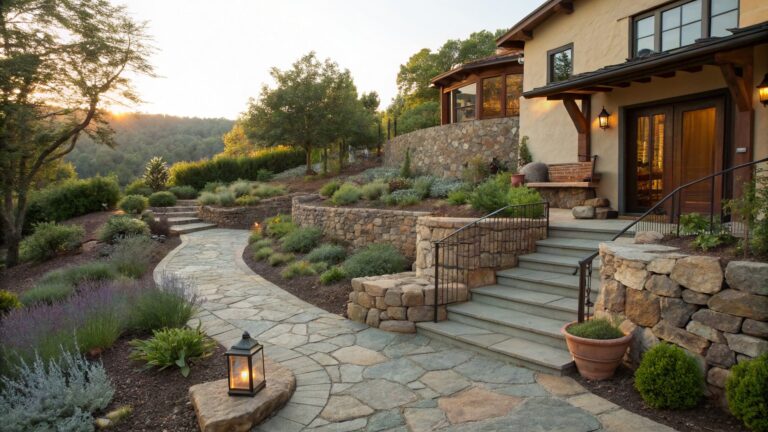
Living on a hillside turns your front yard into a natural stage for plants and paths that rise and fall with the terrain. I once watched a neighbor’s slope erode after heavy rains because the layout ignored how water flows downhill, and it made me rethink everything from root depth to ground cover. Folks passing by usually spot the sturdy terraces or winding steps first, the kind that guide your eye without fighting the hill’s shape. These ideas build on that with thoughtful edging and layered plantings that settle in over seasons, creating yards that feel established right away. I’ve bookmarked a few using boulders and low-growers that I’d adapt next time around.
Winding Stone Steps for Hillside Entries
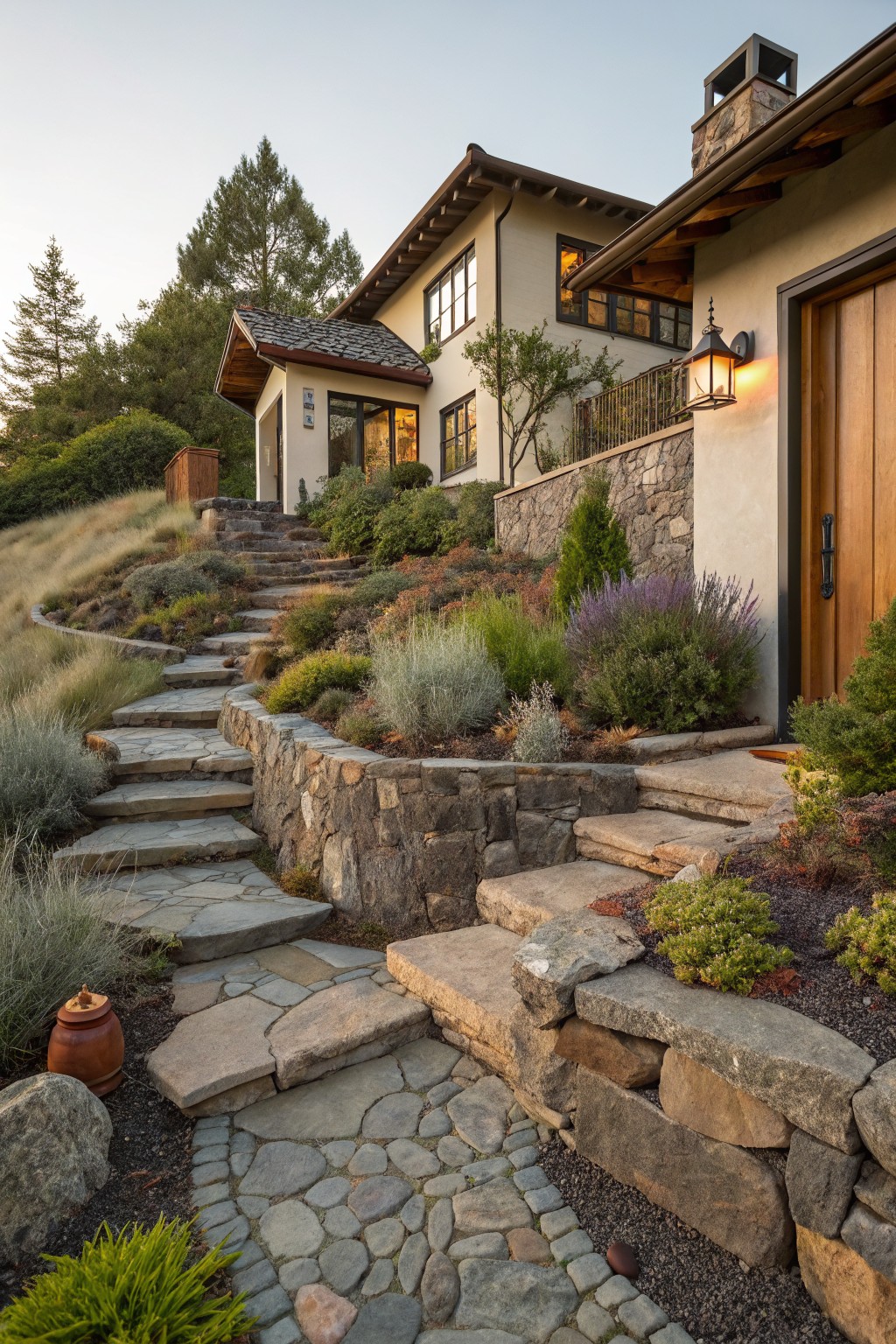
Sloped front yards can feel tricky to navigate, but winding steps made from irregular flagstone change that. They follow the natural contour of the hill, with dry-stacked stone walls holding everything in place. Plants like grasses and low shrubs fit right into the edges, so the path looks organic, not forced. It makes the walk up to the door more pleasant and safer than a straight shot.
You can pull this off in any hillside yard facing a steeper drop. Pick stones that match your local area for the best blend, and keep steps about 5 to 6 feet wide with gentle rises. Add gravel or mulch between for drainage. Watch the budget on labor, though. Stone walls take some skill to stack right.
Terraced Steps with Terracotta Pots
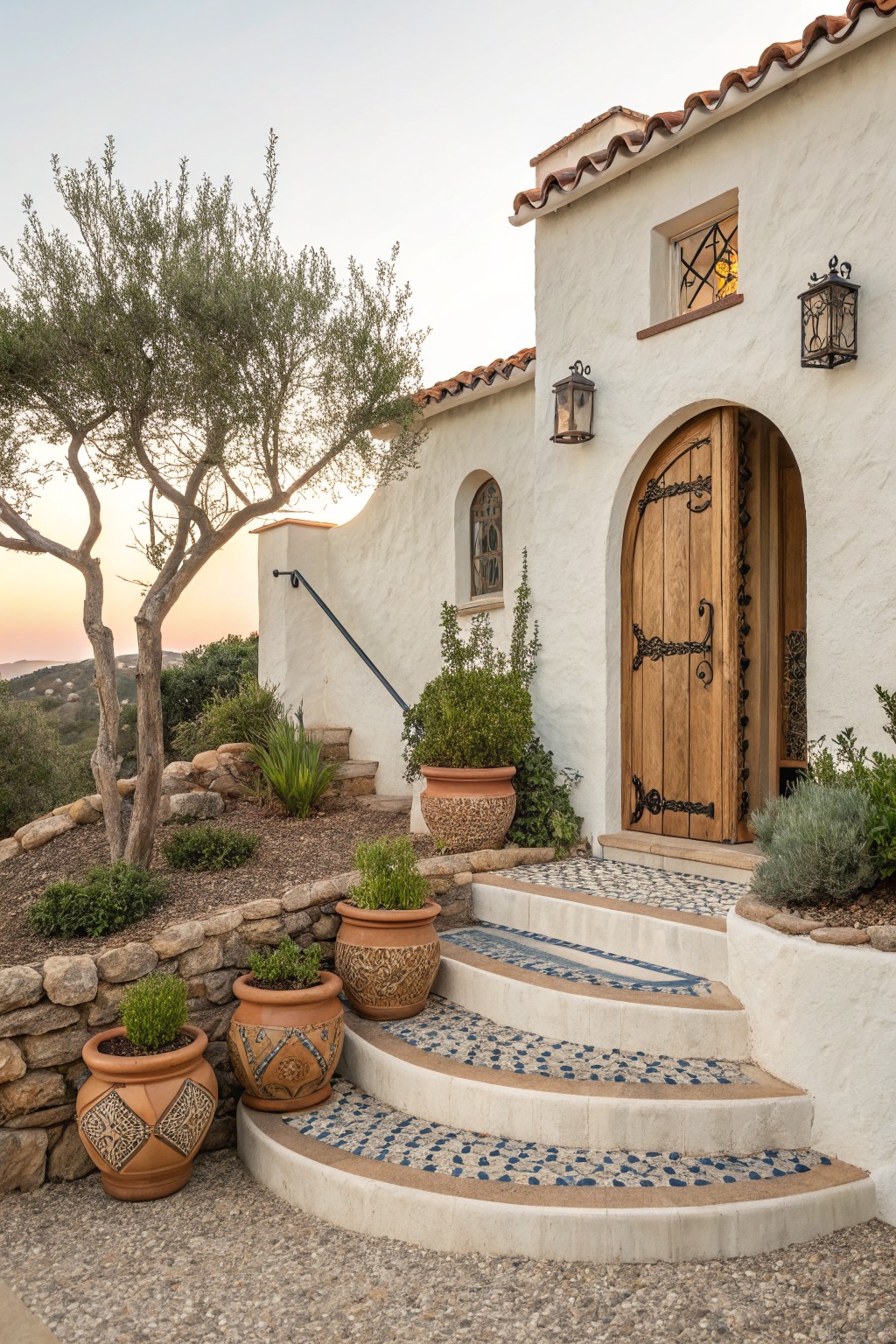
Slopes can make front entries tricky, but terracing them with simple stone walls and wide steps turns the challenge into something pretty and practical. Here, low retaining walls hold back the hill while big terracotta pots sit right on them, filled with olive branches and low shrubs. The steps have those blue tile inserts that catch the eye without overdoing it. It keeps everything stable and adds green layers that soften the grade.
This setup works best on moderate hillsides leading to a door, especially around stucco or adobe-style homes. Go for oversized pots in earthy patterns, plant drought-tough stuff like rosemary or agave, and keep the steps wide enough for two people. Skip too many tiles if your budget is tight. They just need gravel fill between for drainage.
Concrete Steps Terraced with Grasses
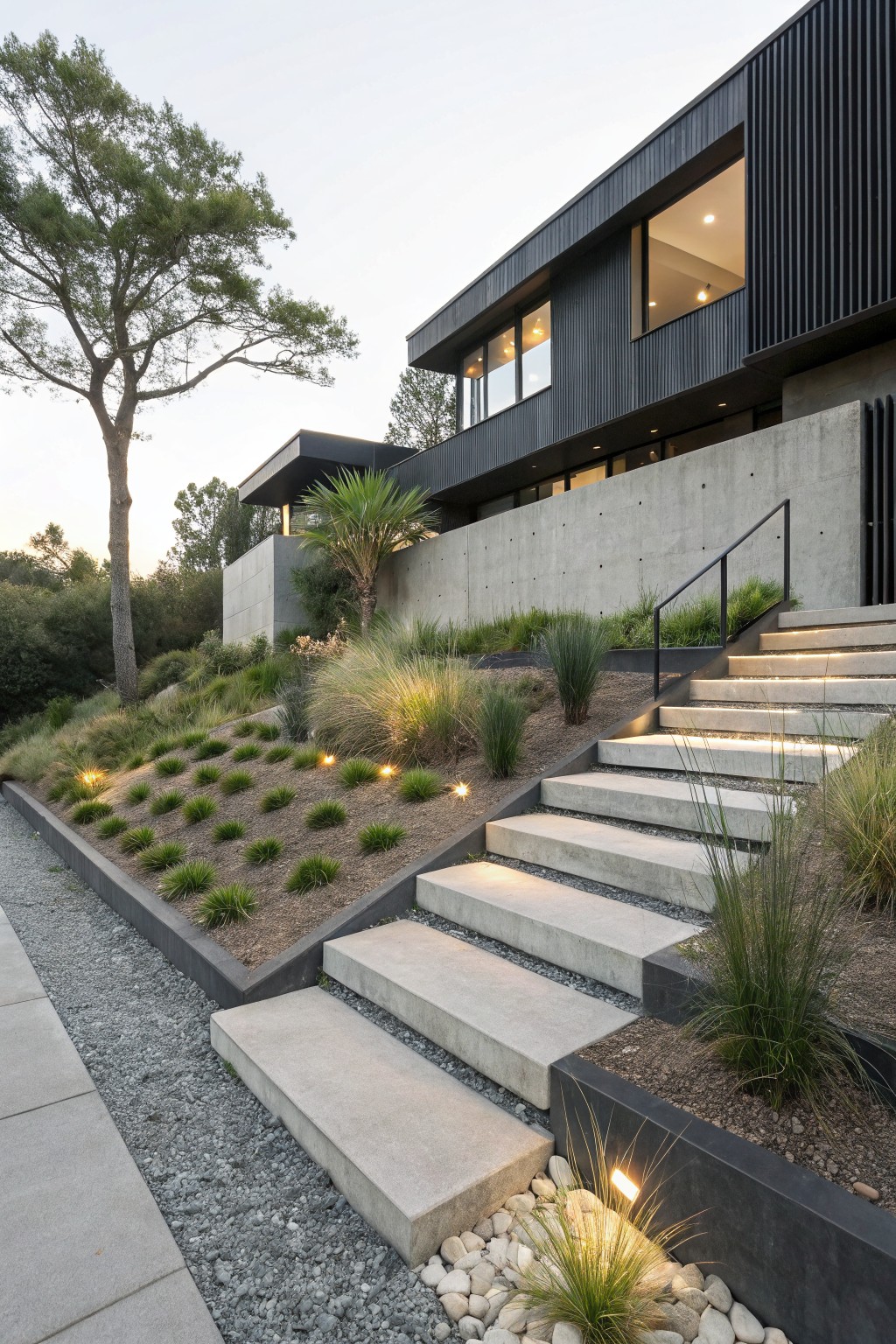
Sloped front yards can feel tricky to navigate, but wide concrete steps like these turn the hill into a series of planted terraces. Grasses and low plants fill the beds along the edges, softening the stark concrete while keeping the path clear and direct. Small lights tucked into the plantings add a practical glow for evening walks up to the house.
This setup suits hillside homes with a modern look, especially where you want low upkeep. Pick tough, drought-friendly grasses that match your climate, and build steps wide enough for two people side by side. It keeps mud off your shoes too, which helps on rainy days.
Winding Flagstone Paths on Hillsides
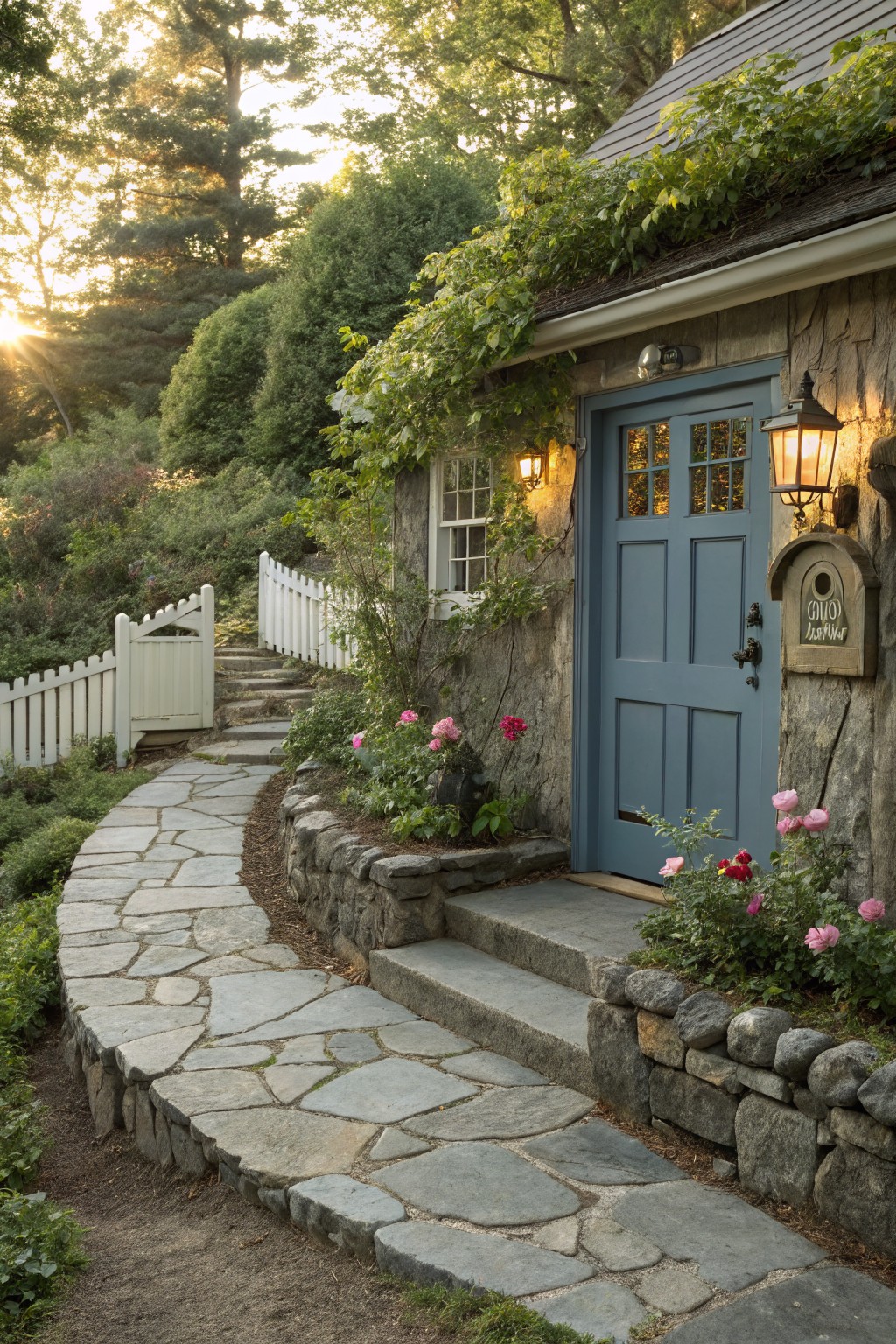
A winding flagstone path like this makes a sloped front yard feel welcoming instead of tricky to navigate. The irregular stones hug the hill’s contours naturally, and low retaining walls keep soil in place while letting plants spill over the edges. It draws folks right up to the door without steep climbs.
Use this on moderate hills where straight paths won’t do. Source local stone for a seamless look, then add tough flowers or shrubs along the sides for color. It suits cottage-style homes in wooded spots best. Just watch the drainage so water doesn’t pool after rain.
Stone Steps for Hillside Yards
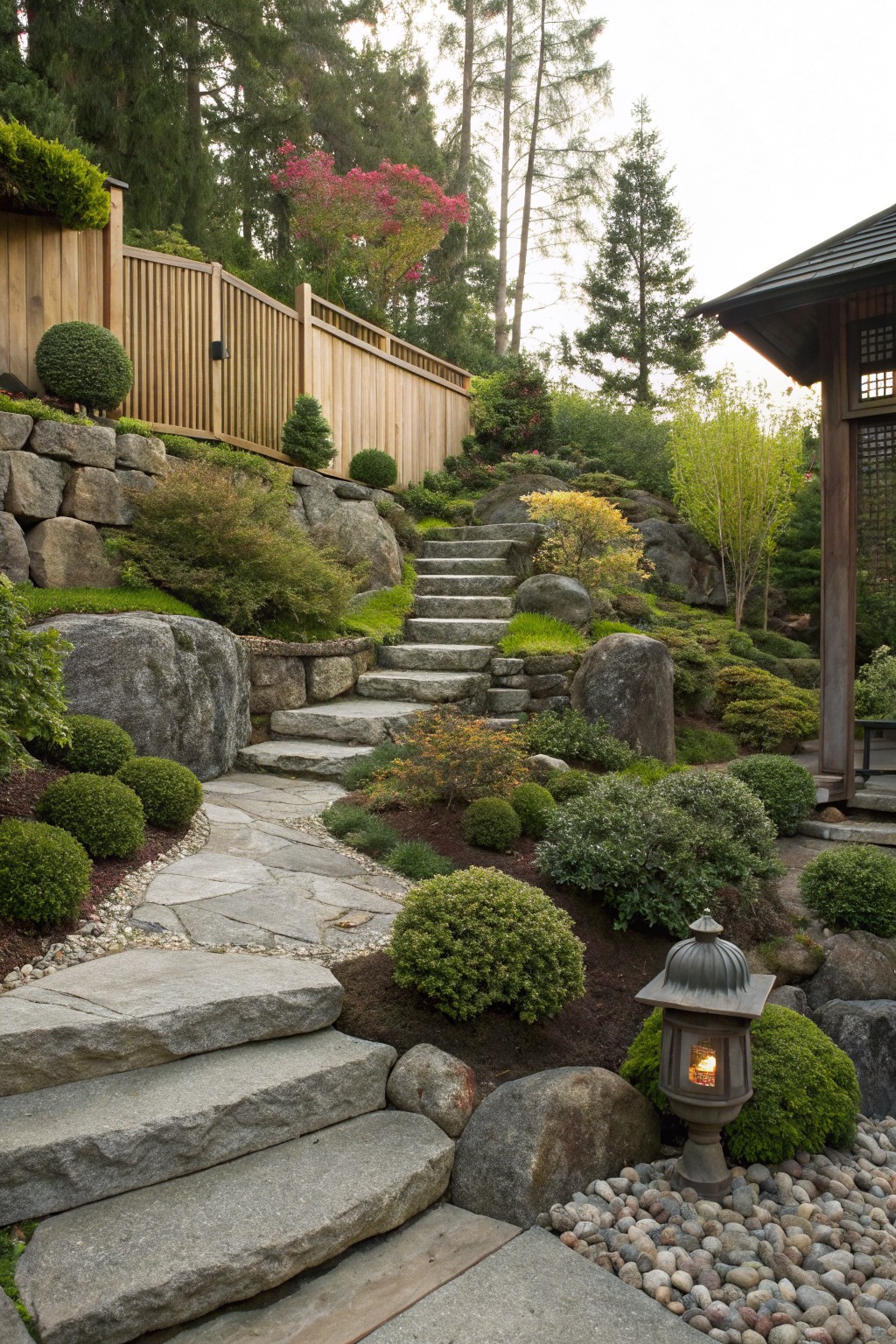
Wide stone steps like these make a steep front yard slope feel welcoming and easy to climb. Set right into the hill with big boulders tucked alongside, they blend hardscaping and nature without looking forced. The steps give you solid footing, and the rocks add that rugged interest folks notice right away.
You can pull this off on most hillside lots, especially if your home sits up high. Pick rough-cut local stone to keep costs down, then fill gaps with low boxwoods or ground covers that won’t need much trimming. Just make sure the steps are wide enough for two people… and watch the drainage so water doesn’t pool.
Tiered Stone Steps for Sloped Yards
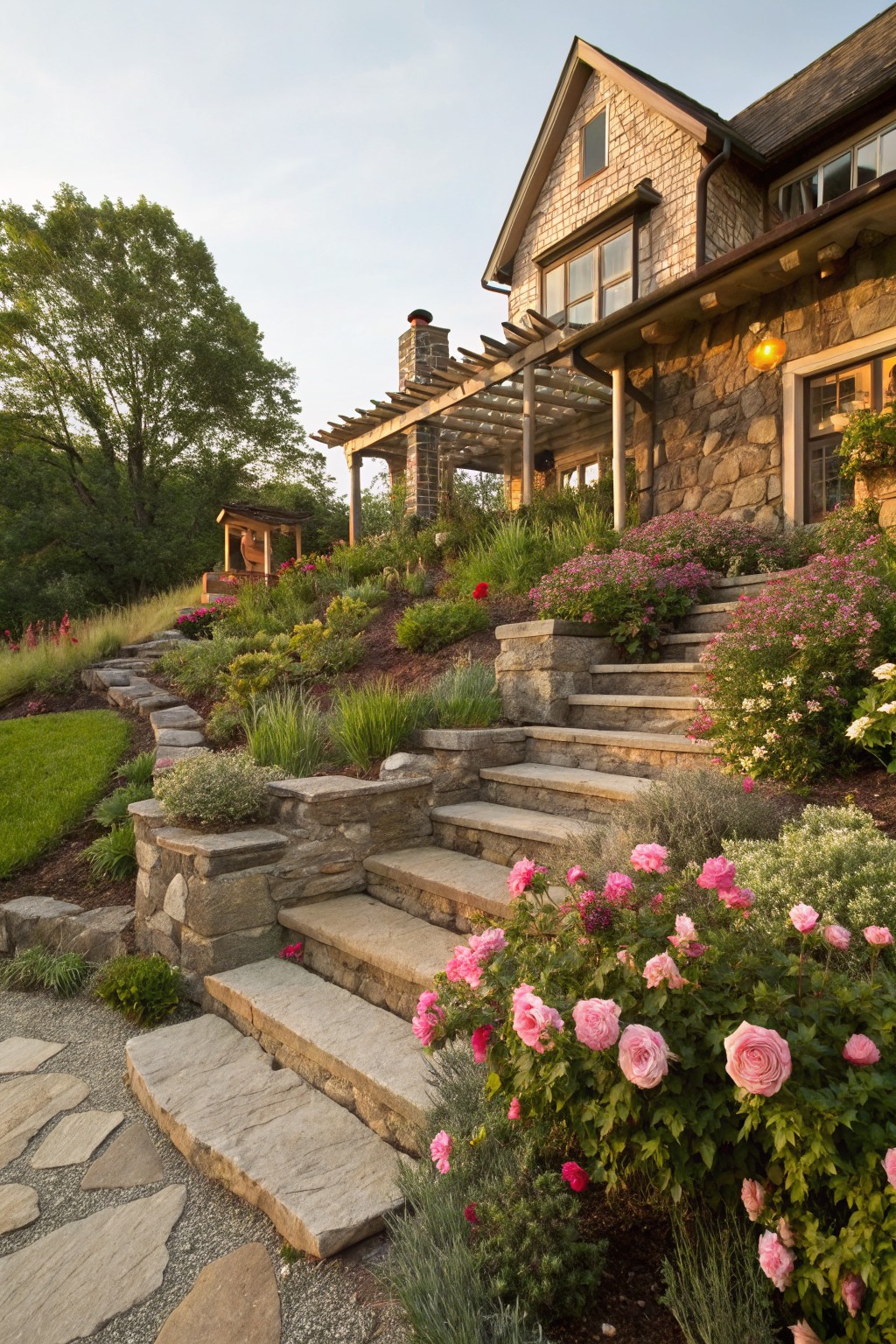
Hillside homes often need a good way up to the front door. These broad stone steps do that job nicely. They terrace the slope with low retaining walls, making the climb feel easy instead of steep. Pink roses and grasses spill over the edges, adding color and softening all that rock.
You can use this setup on any front yard with a 10 to 15 foot rise. Pick flat stones for the treads so they don’t slip when wet. Fill in around them with tough perennials that handle some shade. It cuts down on erosion and gives you a path that looks planted right into the hill. Works best where the house sits high.
Winding Brick Stairs for Hillside Front Yards
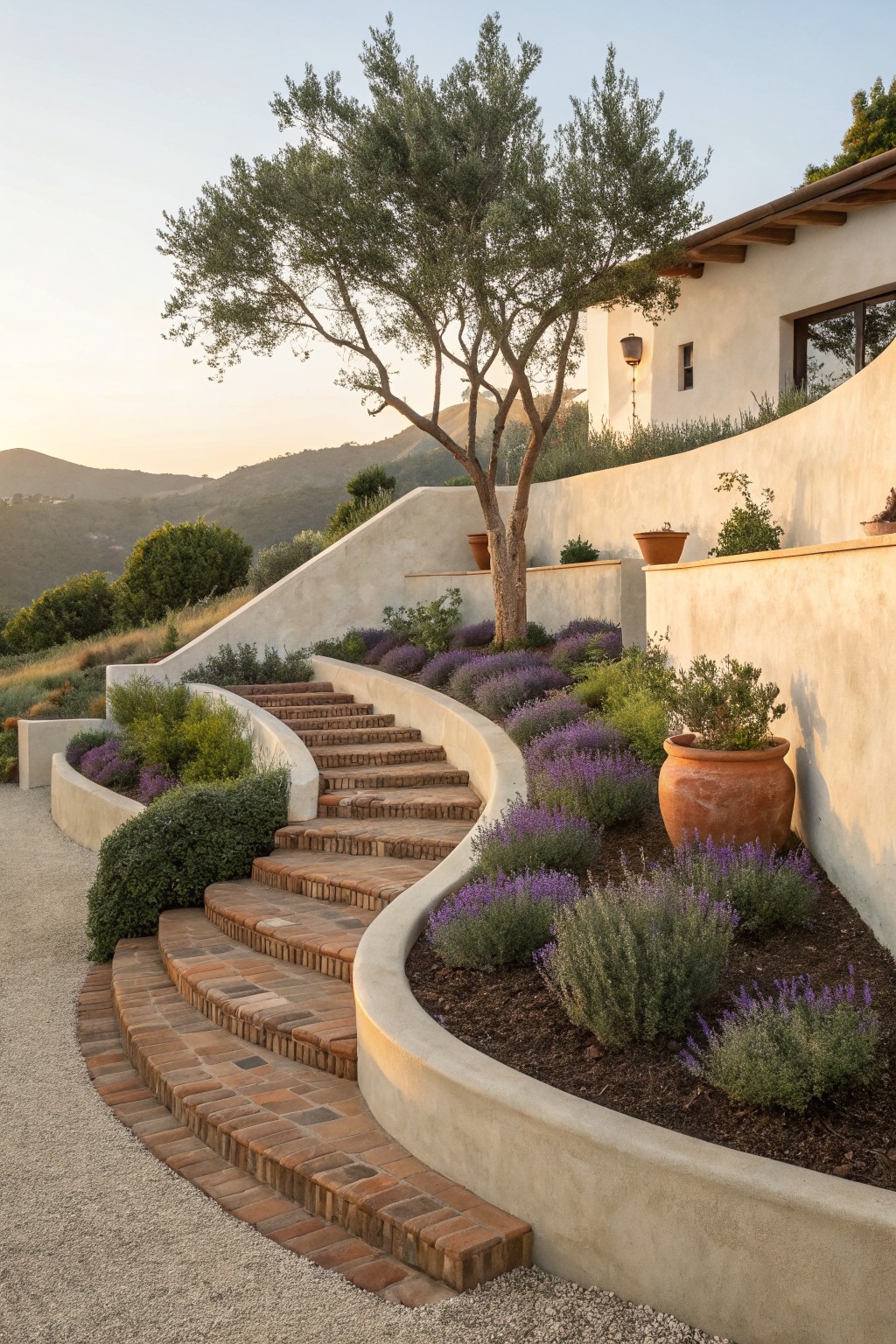
Curving brick stairs like these make a hillside front yard feel welcoming instead of tricky to navigate. They wind gently up the slope, tucked into raised stucco beds planted thick with lavender and low shrubs. The soft purple flowers spill over the edges, softening the hard lines of the steps and walls. It’s a simple way to turn a steep drop into an inviting path.
Try this on any sloped lot where you need good access to the house. Pair the bricks with plants that handle dry spots well, like lavender or rosemary, so it stays neat without much water or work. It fits older homes or ones with a bit of Spanish style, but watch the scale, the curves need room to breathe.
Winding Stone Path for Hillside Yards
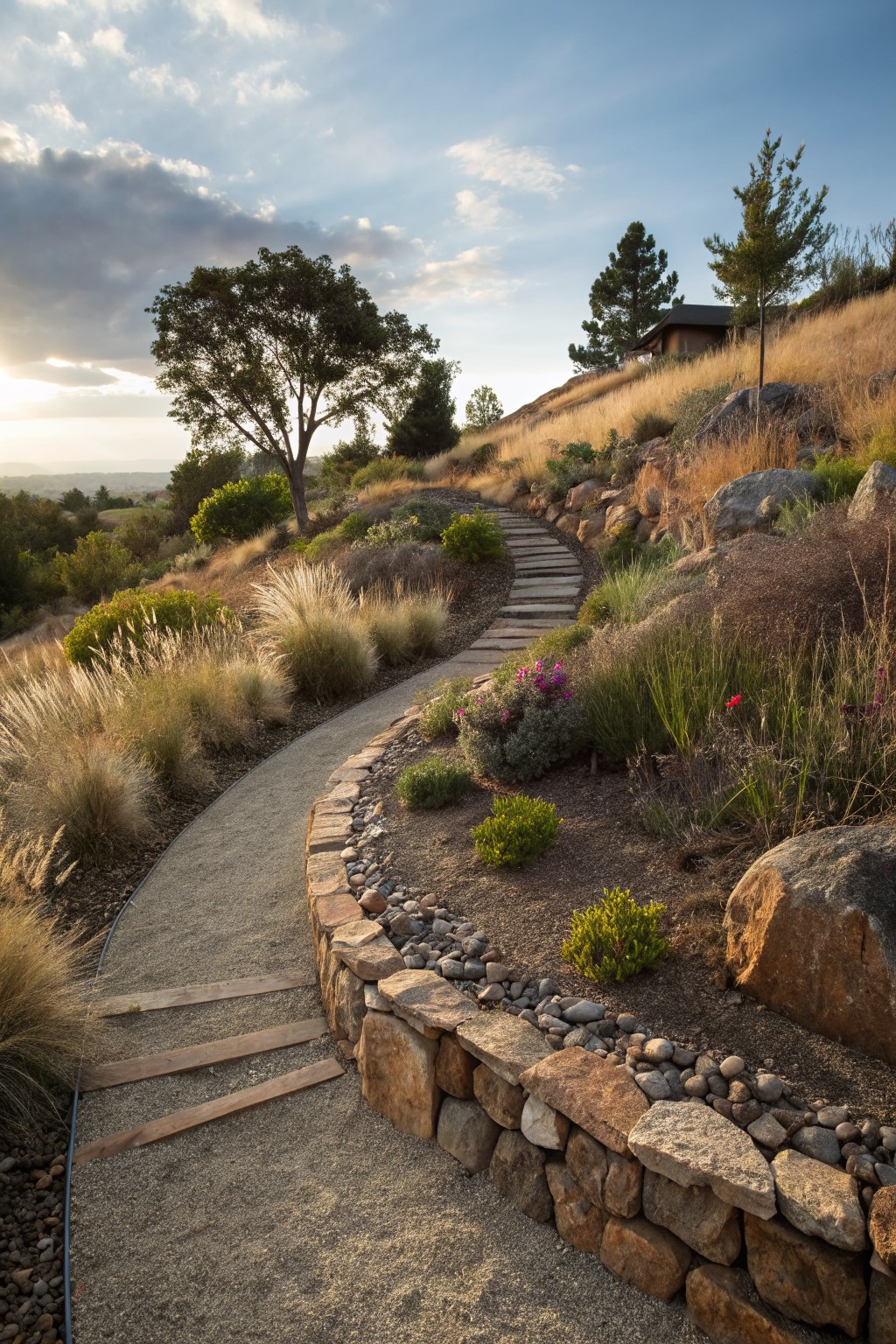
One smart way to handle a sloped front yard is with a winding path like this. It curves gently up the hill using gravel and simple wood steps, edged by a low dry-stacked stone wall. That wall holds back the soil while grasses and small plants spill over naturally. The result is a path that feels part of the landscape, not forced on it. It guides you up without steep climbs and cuts down on erosion too.
This setup works great for homes on hills where straight paths won’t fit. Use local stone for the walls to blend in, and pick tough, drought-tolerant plants like feather grass along the edges. Keep the gravel loose for easy walking. It’s low upkeep once established. Just watch for weeds in the first year.
Stone Steps and Fountain for Hillside Entries
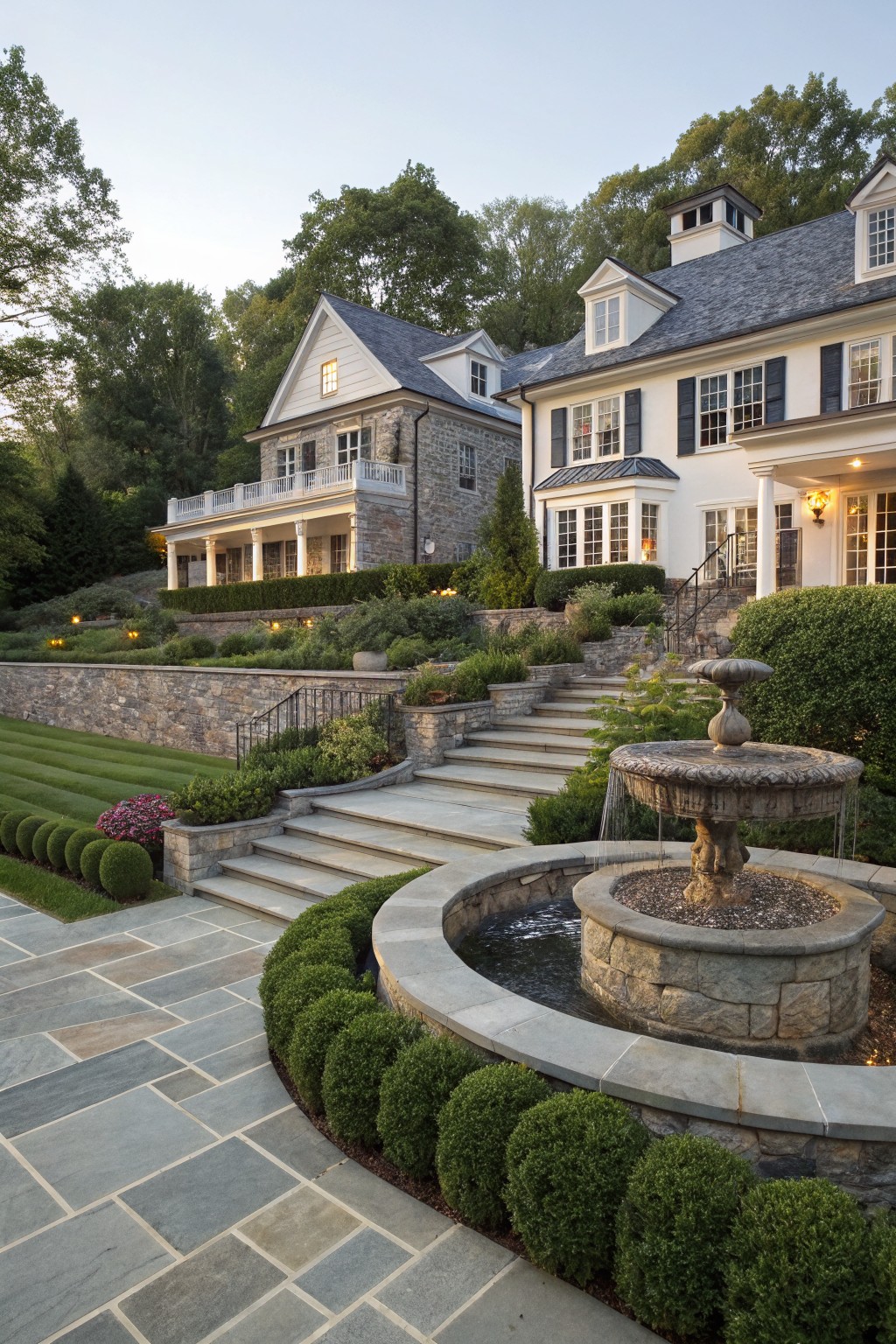
Wide stone steps like these make a sloped front yard feel purposeful. They wind up the hill in a gentle curve, with a fountain right in the center to draw the eye and slow things down. Boxwood hedges and flower beds along the edges keep it neat without trying too hard. It’s a solid way to connect the street to your door on tricky terrain.
This works best on homes with a classic look, where the stone ties into the house material. Start with retaining walls for stability, then add steps wide enough for two people. Pick a simple fountain that won’t overpower. Skip it if your slope is too steep. Local stone keeps costs down and looks right.
Winding Stepping Stone Paths on Hillsides
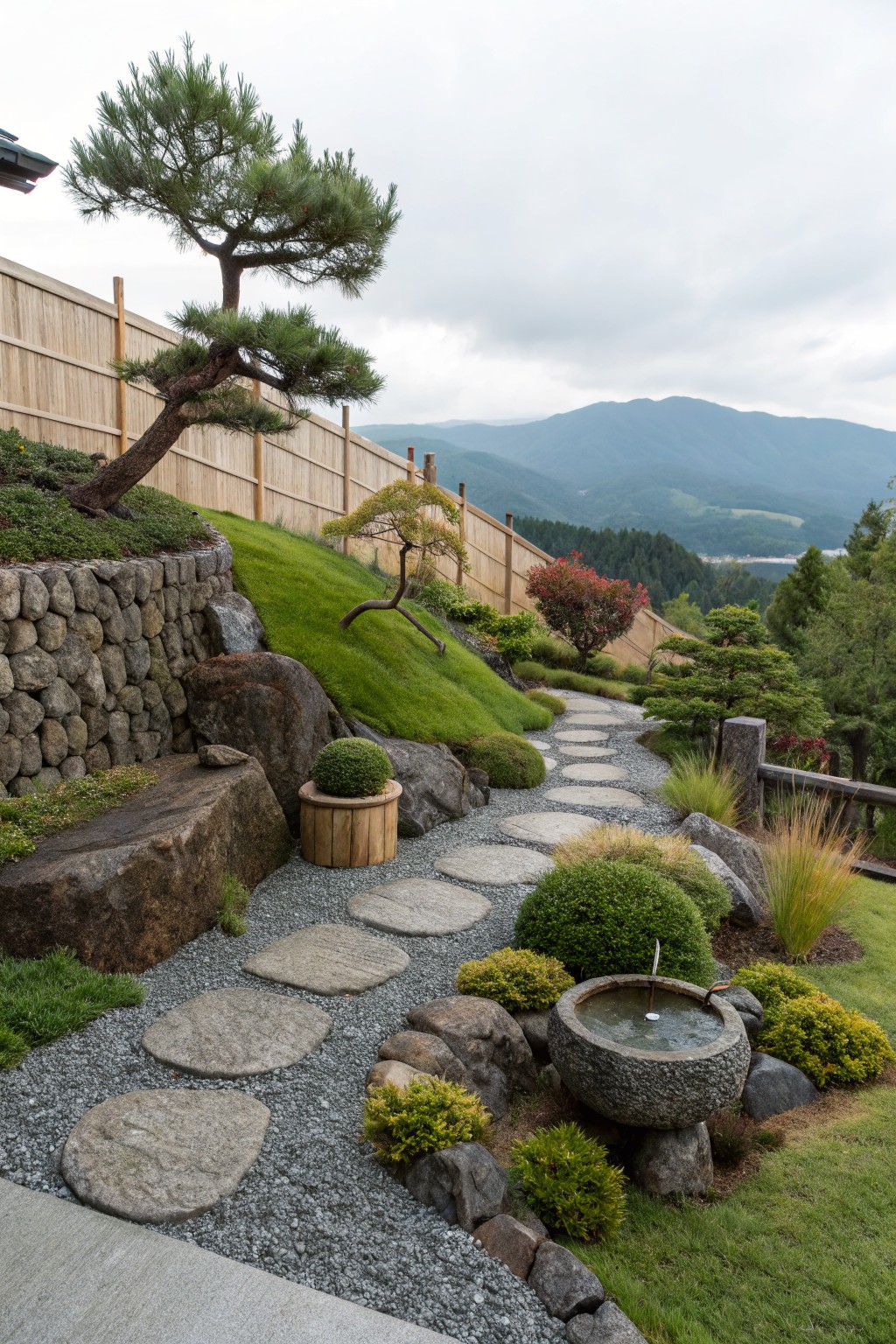
A path like this uses flat stones laid right into gravel on a slope. It winds gently uphill instead of fighting the grade with straight steps. That keeps erosion down and makes the walk feel natural. Big rocks and low plants along the edges add some structure without much work.
Try it in a front yard where the hill drops off quick. It suits spots with a view, like toward mountains. Go for wide stones so feet land solid, and slope the gravel a bit for runoff. Skip it if your soil holds water too long.
Terraced Stone Walls for Sloped Front Yards
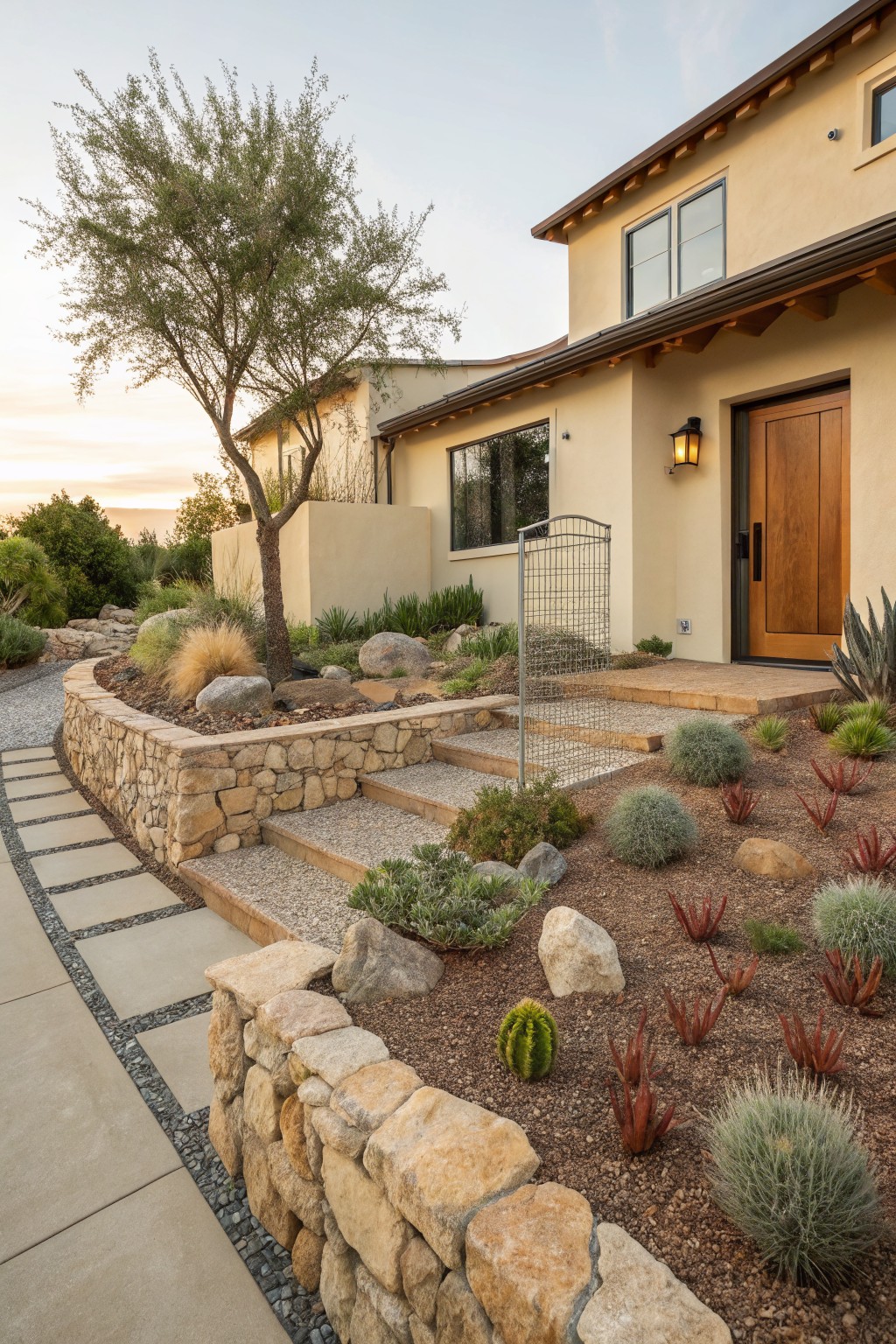
Hillside homes often struggle with erosion and awkward approaches to the front door. One solid fix is building terraced stone walls right into the landscape. These dry-stacked walls hold back soil while creating flat spots for plants. Boulders tucked in add a natural feel, and low-water succulents like agaves fill the beds without much fuss.
This works best in dry climates where you want curb appeal without constant upkeep. Use local stone to blend with the house, and add steps between terraces for easy access. Steeper slopes might need pro help to ensure stability, but even smaller versions make the yard look intentional and welcoming.
Mossy Stone Steps for Sloped Yards
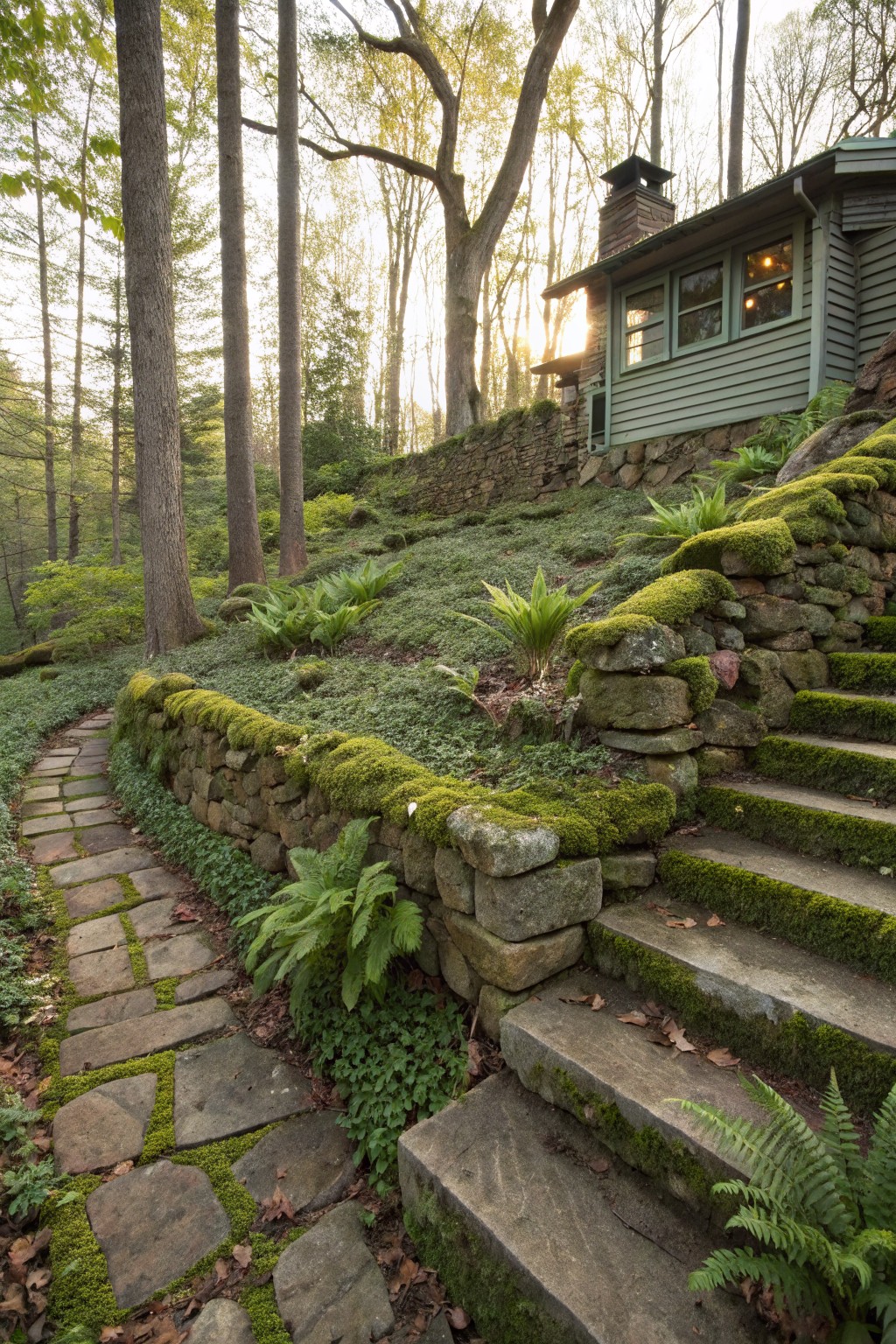
Stone steps like these, thick with moss and tucked into a hillside, make climbing a slope feel more like a stroll through the woods. The rough local stone fits right in with the trees and ferns, and that soft green moss adds a lived-in look without much work. It’s a simple way to handle elevation changes while keeping things natural.
These work best on wooded lots or any yard with a drop, especially leading up to a cabin or back entry. Stack the stones for walls to hold back soil, lay flat paths in between, and just let moss take hold over time. Skip chemicals to encourage it. Watch the footing when wet, though.
Terraced Stone Steps for Slopes
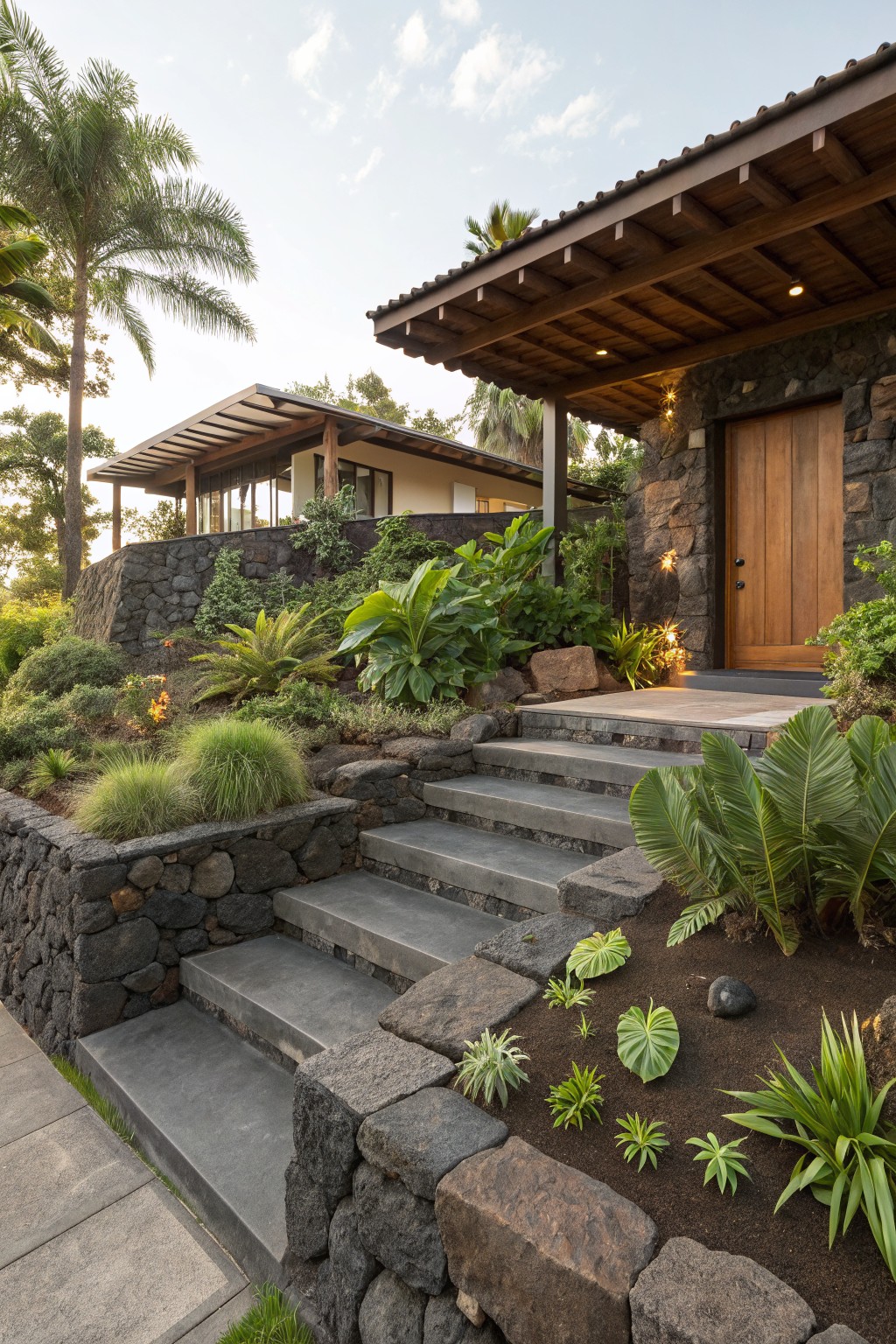
Hillside homes often need a smart way up to the front door. These wide steps made from dark local stone do the job nicely. They terrace the slope with sturdy retaining walls that keep soil in place. Lush plants like big banana leaves and grasses fill the edges, making the climb feel natural instead of stark.
This setup works best where the ground is rocky or steep. Pick stone that matches your area, like basalt here, so it blends right in. Keep steps broad enough for easy walking, and add low plants along the base. It’s low fuss once planted, and it ties the house to the land.
Winding Stone Steps for Hillside Yards
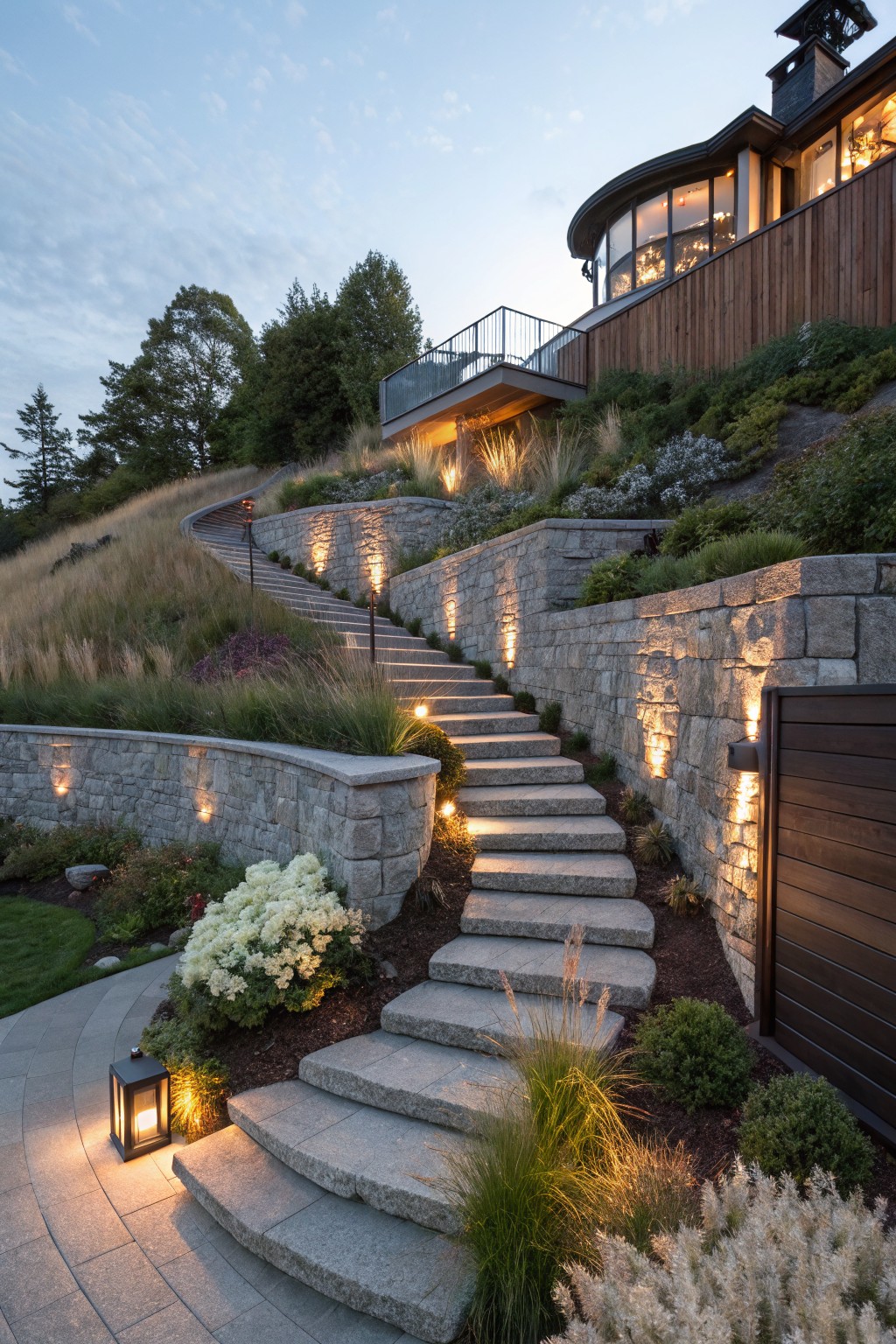
Hillside homes often need a good way to get from the street up to the door without it feeling like a chore. These curved stone steps do that nicely. They wind gently through tall grasses and low plants, with small lights built into the retaining walls. It turns a steep slope into something you actually want to walk.
You can put this in any front yard with a noticeable grade. Pick rugged stone that matches your area, keep steps about 5 feet wide for comfort, and plant soft grasses on the sides to hide the edges. It suits modern or natural-looking houses, and the lights make it safe after dark.
Wooden Footbridge Over Boulder Stream
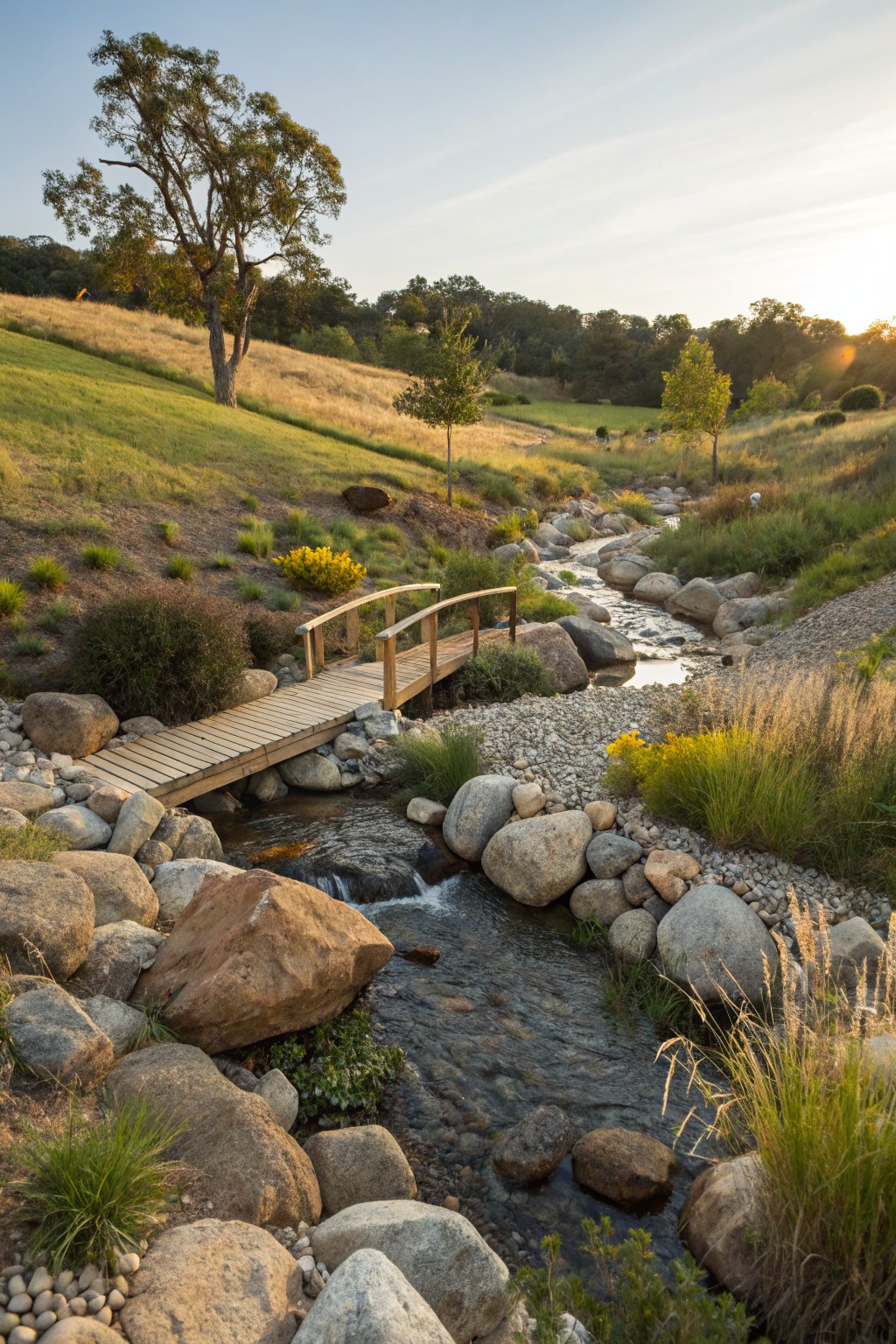
A wooden footbridge like this one makes crossing a hillside stream feel easy and natural. The large boulders line the stream bed, holding everything in place while the flowing water adds a bit of motion. Native grasses and low shrubs fill in around the edges, keeping it low-maintenance and fitting for the slope.
This works best on front yards with a gentle to moderate drop, where you want a path that draws people through the yard without stairs everywhere. Pick sturdy local stone for the rocks and pressure-treated wood for the bridge. Avoid super steep spots unless you add railings. It ties the whole landscape together nicely.
Edge-Lit Stone Pathway for Hillside Access
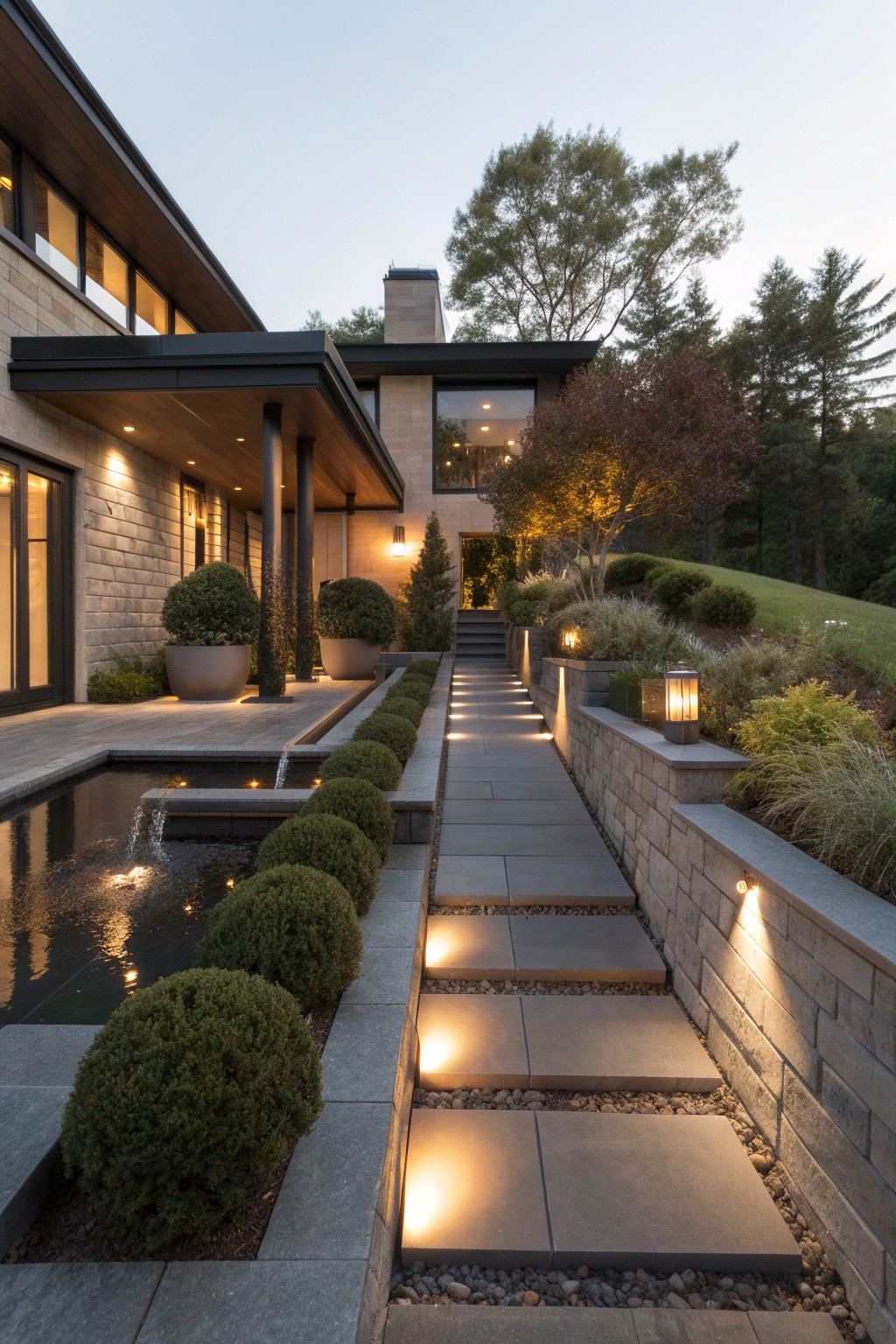
A straight stone pathway like this one makes getting up a slope feel easy and a bit fancy at the same time. The dark pavers with lights tucked right into the edges light the way at dusk without being too bright. It pulls your eye from the small reflecting pool at the bottom all the way to the house doors, and those round boxwood shrubs along the sides keep things neat and contained.
This setup works best on moderate slopes where you want a clear route to the front door. Use it with retaining walls to handle the grade changes, and pick low-voltage LED strips under the stone for simple wiring. It suits modern or clean-lined homes, but watch the plant choices, boxwoods stay tidy without much fuss. Just keep the path wide enough for two people.
Rustic Wooden Steps for Sloped Yards
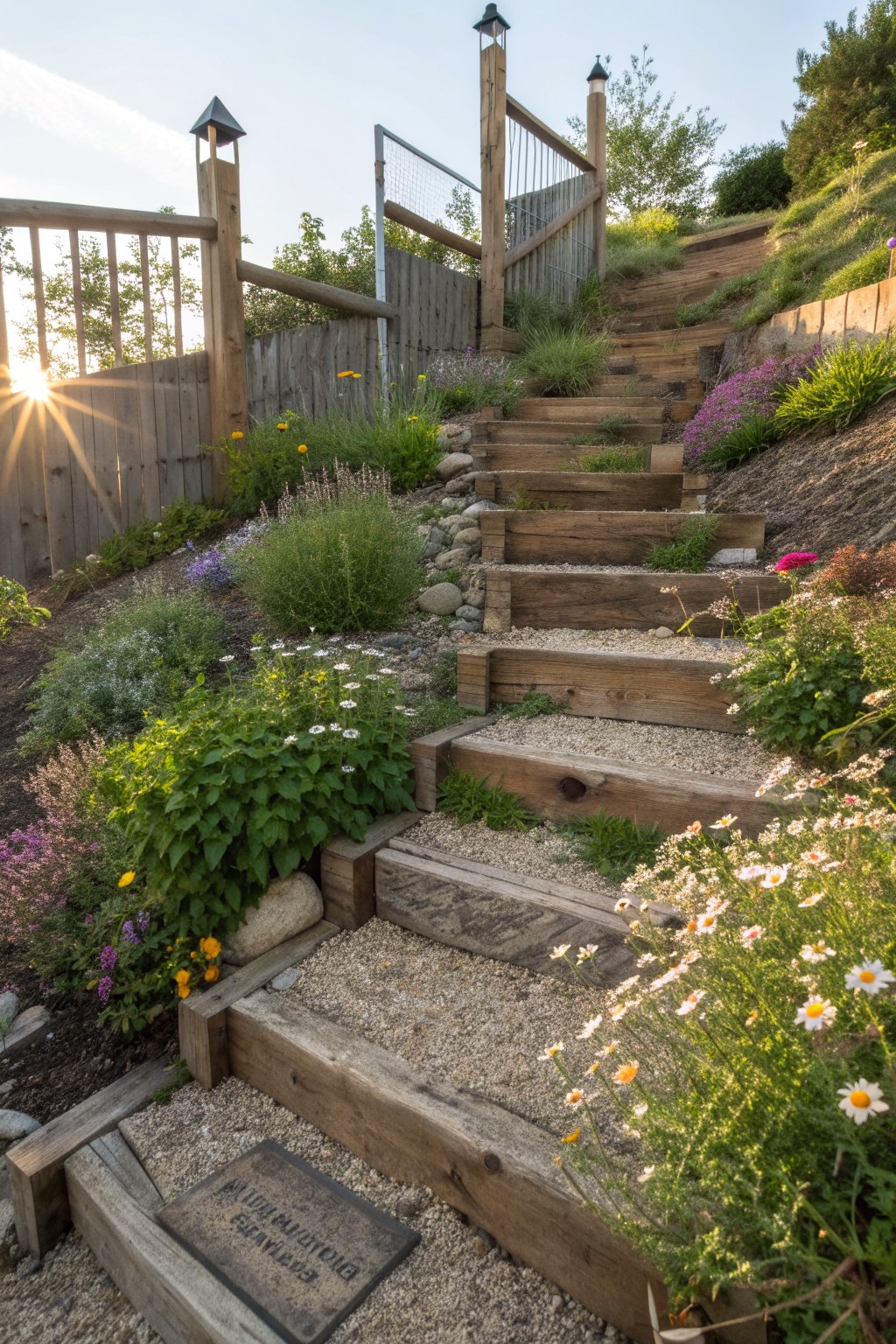
Wide wooden steps like these make a hillside feel less steep and more like part of the garden. The timbers are set into the slope with gravel filling the treads, and plants spill right over the edges. It keeps things sturdy but natural, especially with the rough wood that weathers nicely over time.
These steps work best in front yards where you need good access without a lot of concrete. They’re practical for family homes on any kind of slope… just make sure the timbers are pressure-treated and the gravel is coarse enough not to wash away in rain. Tuck in tough perennials like daisies or lavender along the sides for that easy color.
Glowing Stone Steps Light the Way

A good fix for sloped front yards comes down to stone steps with lights running along the edges. The soft glow picks out each tread at dusk, turning a steep climb into an easy nighttime stroll. Folks notice how it ties the path right to the house without extra fixtures sticking out.
Put this to work on any hillside lot heading up to your entry. Recess low-voltage LEDs under the steps or along the risers, and build in solid retaining walls for support. It fits modern homes with clean lines… or even rustic ones. Skip steep angles though, or it gets tiring fast.
Frequently Asked Questions
Q: My front hill gets washed out every rain. How do I fix that quick?
A: Grab some jute netting and staple it down over bare soil. It holds everything in place while seeds sprout. Add native grasses next, since their roots dig deep fast.
Q: Which plants stick best on a steep slope?
A: Go for tough ones like daylilies or black-eyed Susans. They spread wide and anchor soil without much fuss. Water them deeply at first to get roots going strong.
Q: Can I terrace my yard without hiring pros?
A: Stack concrete blocks or old railroad ties yourself for low walls. Backfill with gravel for drainage, then plant behind them. Start small, one section at a time… it adds up quick.
Q: What’s the easiest budget start for hillside curb appeal?
A: And rip out weeds, then mulch thick over the slope. Pick up free wood chips from local arborists. Flowers pop right through, and it looks tidy overnight.
