


I always look at front yards and see how trees set the structure for everything else, from winding gravel paths to neat edging along borders. They create layers that draw people toward the house without overwhelming the space as they mature. I’ve planted a couple that grew too fast and threw off the whole balance, so starting with scale in mind saves headaches down the line. Shade pulls it all together. These approaches mix tree placement with ground covers and accents that evolve naturally over seasons.
Mature Oak Shades the Front Path

A big old oak tree like this one works wonders for front yard shade. Its wide branches, draped in moss, stretch right over a simple brick path leading to the door. That natural canopy cools the walk and frames the entry without any extra work.
Plant a similar tree if your yard has room, or work with what’s already there. Line the path with low plants like hydrangeas, add a bench along a stone wall for a rest spot. This setup suits cottage homes or shady lots best. Watch that tree roots don’t buckle the bricks later on.
Tree-Shaded Stepping Stone Path
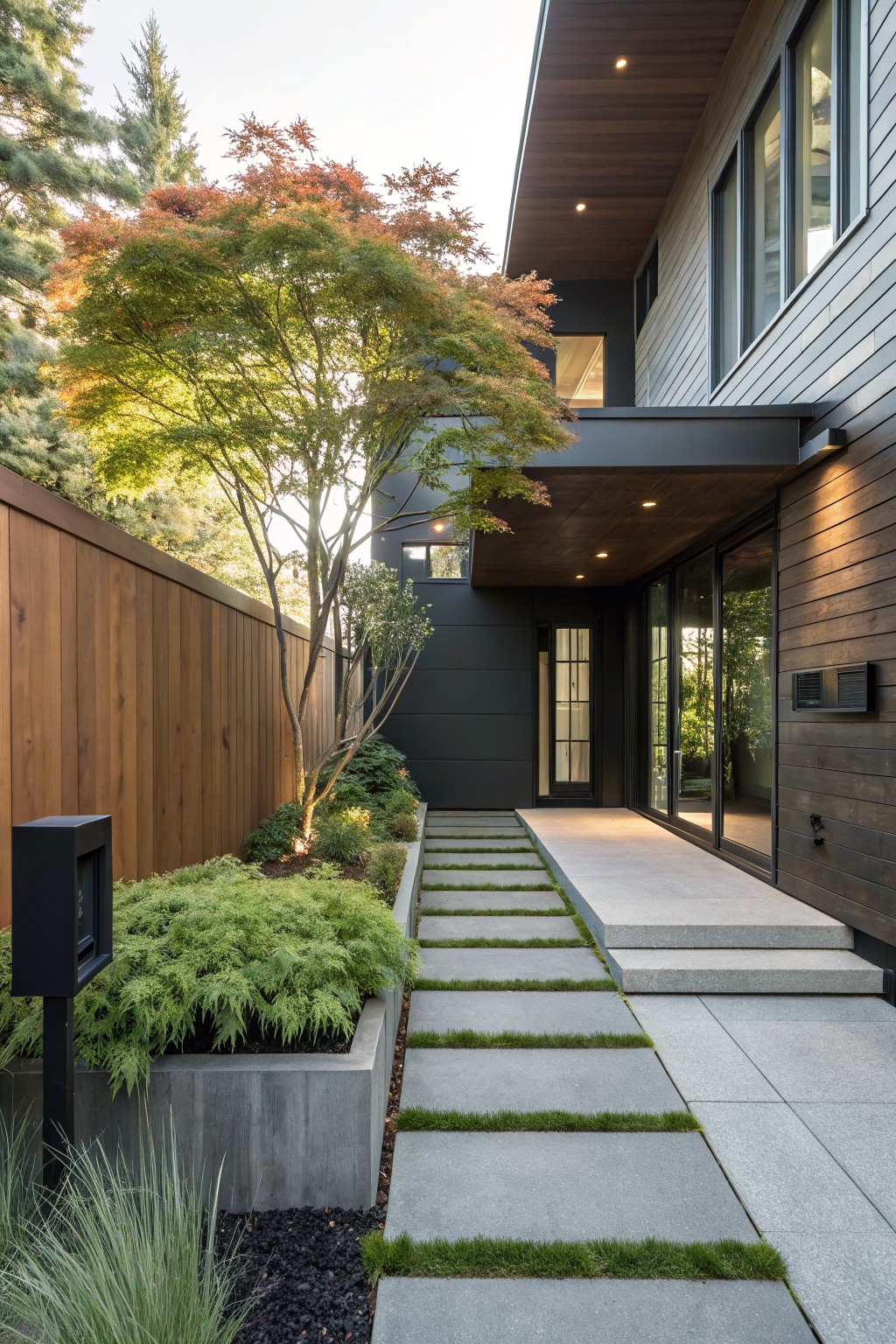
A single Japanese maple tree planted right along the front path creates filtered shade for the entryway without overwhelming the space. The tree’s branches spread just enough to cool the walk on sunny days, and its leaves turn fiery orange in fall for seasonal color. Paired with simple concrete pavers set in grass, it keeps the look clean and walkable.
This works best on smaller front yards next to modern homes, where you want low upkeep but some natural drama. Set the stones wide enough for easy steps, and tuck low shrubs into concrete planters nearby. Skip it if your soil is too shady already, or the tree might struggle.
Shade Your Entry Path with Olive Trees

Olive trees make a great choice for shading a front yard path. Their twisted trunks and silvery leaves cast dappled light over gravel without blocking the view to your house. Here, a mature pair arches right over the walkway, pulling the eye to the stone entry while keeping things cool on hot days.
Plant one or two olives where they can lean over your path, then edge with low boxwoods for neat lines. This setup fits sunny spots and stone or stucco homes best. Skip it if your yard stays shady already… the trees need full sun to thrive.
Winding Wooden Paths Through Grasses
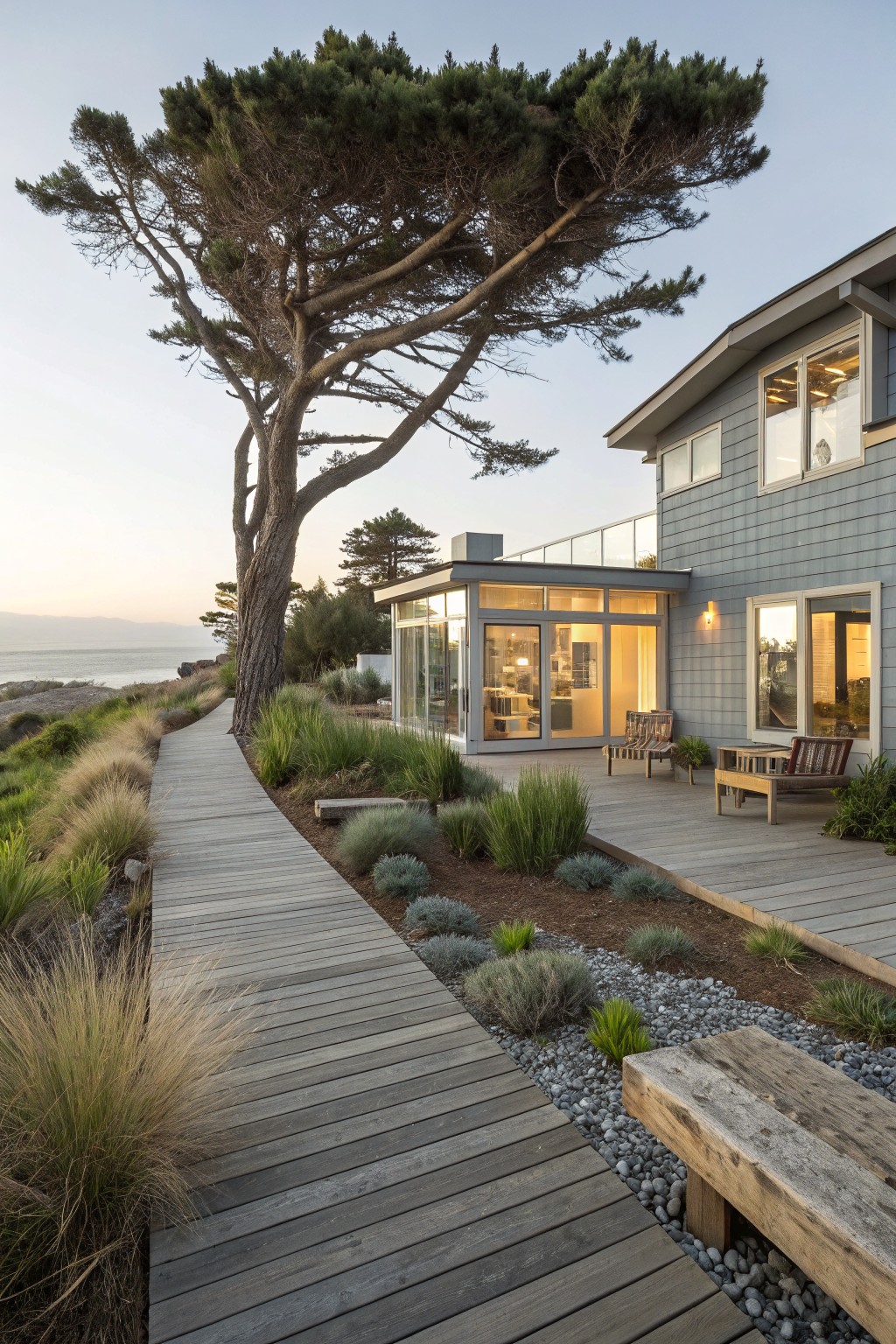
One simple way to handle front yard access is a boardwalk-style path that curves gently through tall grasses and low shrubs. Here a weathered wood walkway snakes along under the branches of a big windswept pine, keeping things natural and shaded. It pulls your eye right to the house without feeling too formal, and the grasses sway in the breeze for that easy coastal feel.
This works best on sloped lots or coastal spots where you want low upkeep. Plant tough natives like festuca or sedges along the edges, add gravel in spots to fill it out, and let a mature tree do the shading. Skip straight lines if your yard has some roll to it. Just make sure the boards are spaced for drainage, or they’ll get slick after rain.
Birch-Lined Stepping Stone Pathway
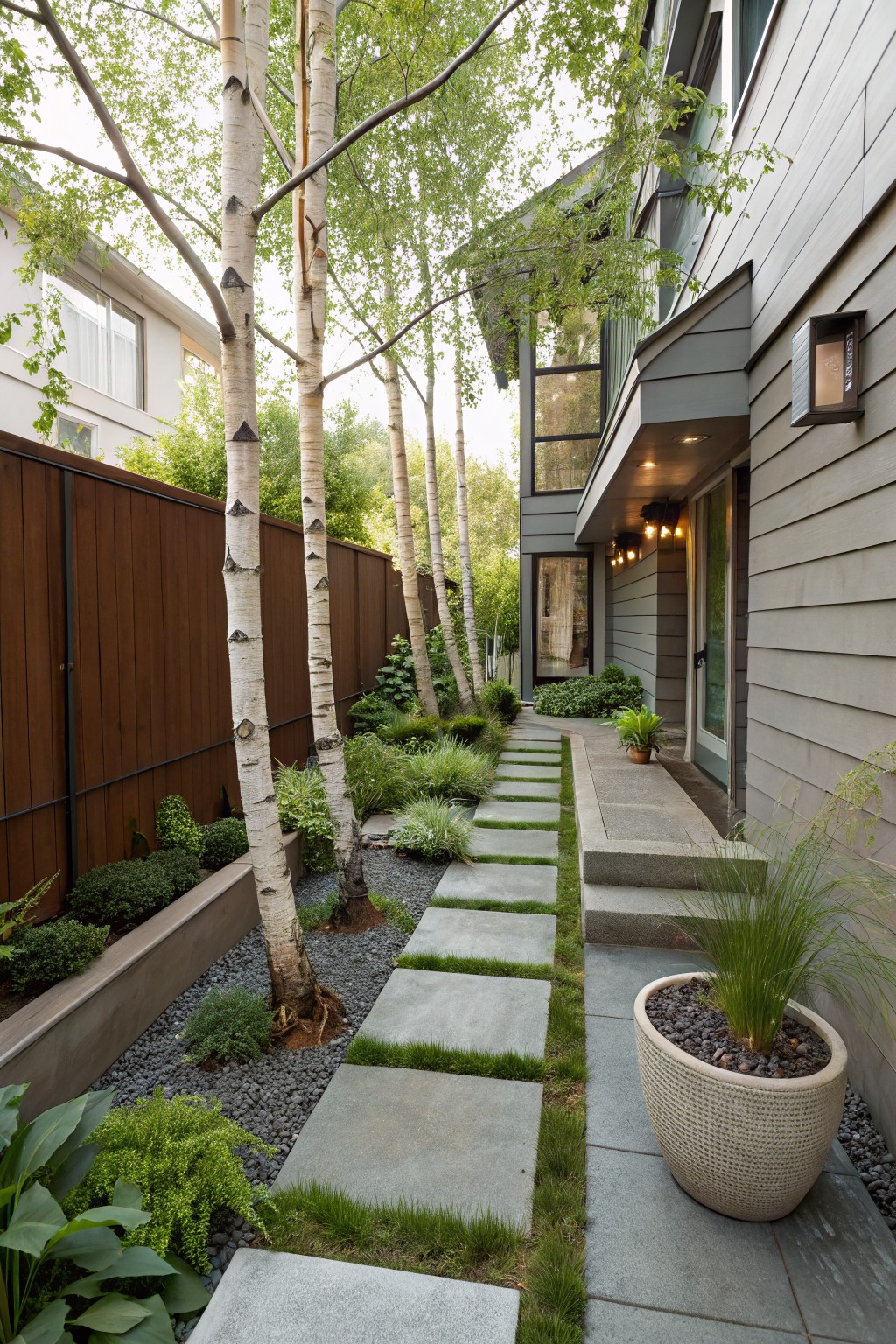
A simple stepping stone path winding through a narrow yard can turn a plain walkway into something special. Here, tall birch trees with their white bark and light green leaves cluster along one side, casting dappled shade that keeps the area cool even on sunny days. The stones are set into mossy grass with gravel edges, which gives it a natural, low-key feel without much upkeep.
This setup works great for side entries or front paths on smaller lots where you want shade and privacy without crowding the space. Plant the birches in groups for that clustered look, space the stones irregularly for a casual stroll, and add low plants like sedges along the edges. It suits modern homes with clean lines, but watch for birch roots that might lift pavers over time.
Raised Planters Line a Shaded Entry Path

One simple way to make a narrow walkway feel special is to line it with raised wooden planters. Here, sturdy wood boxes hold ferns, vines, and low greens that spill over the edges, while trees overhead give steady shade. It turns a plain path into something green and tucked away. The mix keeps things low fuss but full of life.
This setup works great for side entries or front approaches where space is tight. Pick tough plants like ferns or ivy that handle shade well, and set the path in stone pavers for easy walking. It fits modern homes with clean lines… just watch the watering if it’s fully shaded.
Grape Vine Arbor Over the Front Path

A simple grape vine arbor stretched over a winding path makes for great natural shade right up to the house door. The vines grow thick on the wooden frame, supported by sturdy trees along the sides, keeping the walk cool even on hot afternoons. That Provence-style look ties the stone house right into the yard without much effort.
You can set this up in a sunny front yard where you want shade without blocking the view. Plant lavender or low bushes along the edges like here to frame it nicely, and let the vines take over in a couple years. It works best on homes with some rustic charm… just give the vines room to spread.
Palo Verde Trees for Gentle Front Yard Shade

Palo verde trees work great in hot, dry front yards. They drop light green leaves that let dappled shade through without making things too dark. In this setup, one tall palo verde sits right by the entry path. It covers the gravel area and rocks just enough to cool the spot on sunny days.
Plant one near your walkway or house corner for the best shade spread. Mix in boulders and tough plants like barrel cactus or agave around the base. This keeps water use low and looks natural in desert homes. Skip grass here. It stays neat with little work.
Shade a Narrow Path with Birch Trees
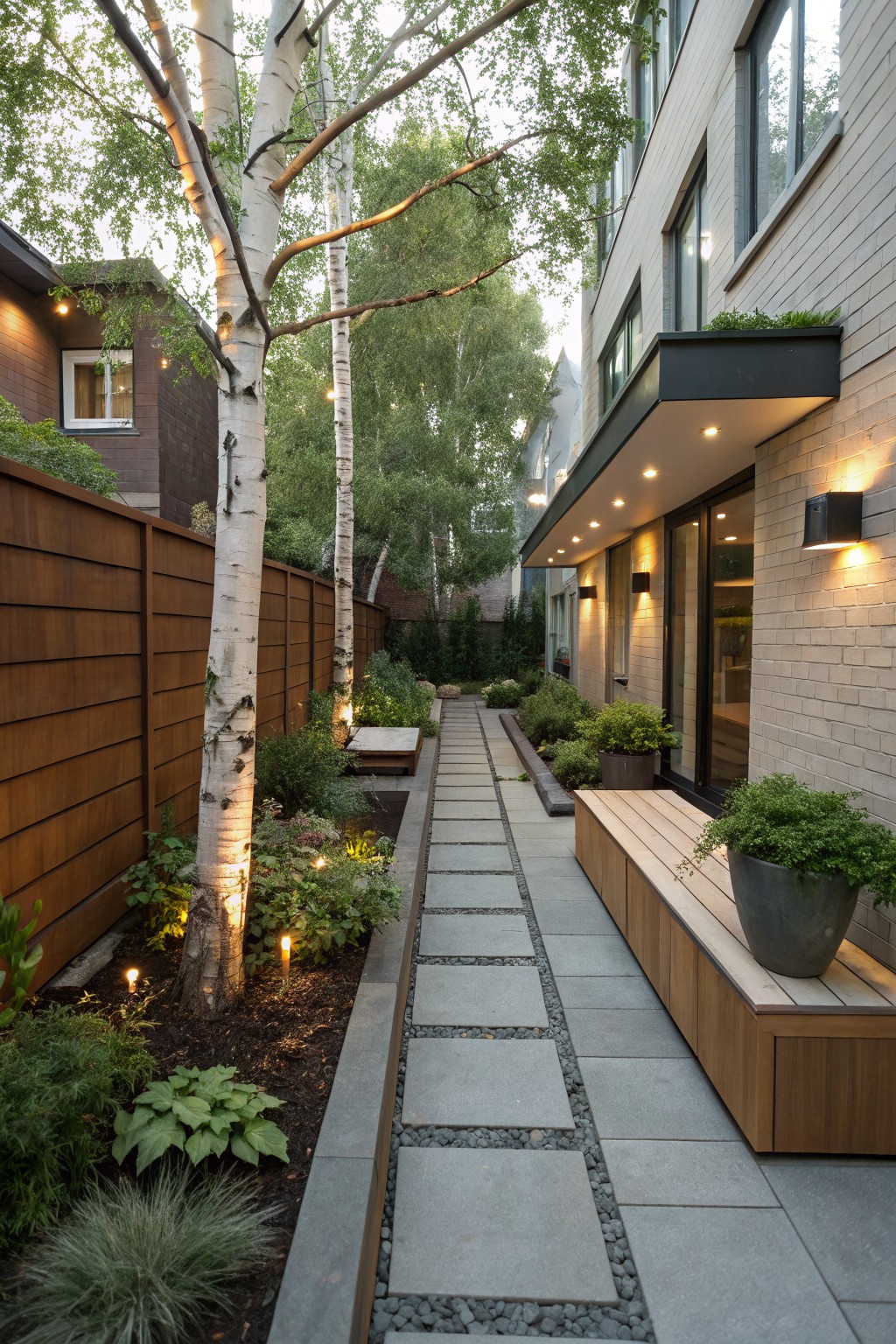
Birch trees work great in tight spots like this side yard walkway. They’re tall and slim so they don’t crowd the space but still give good dappled shade overhead. The white bark stands out against the dark fence and adds a clean look without much upkeep.
Pair them with simple stone pavers for the path and a wooden bench tucked along the house side. It turns a plain alley into a quiet stroll spot. This setup fits best on smaller urban lots or as a front entry lead-in where you want shade but not big branches hanging over everything. Just make sure the roots have room and keep the underplanting low so it stays open.
Olive Tree in a Central Stone Planter
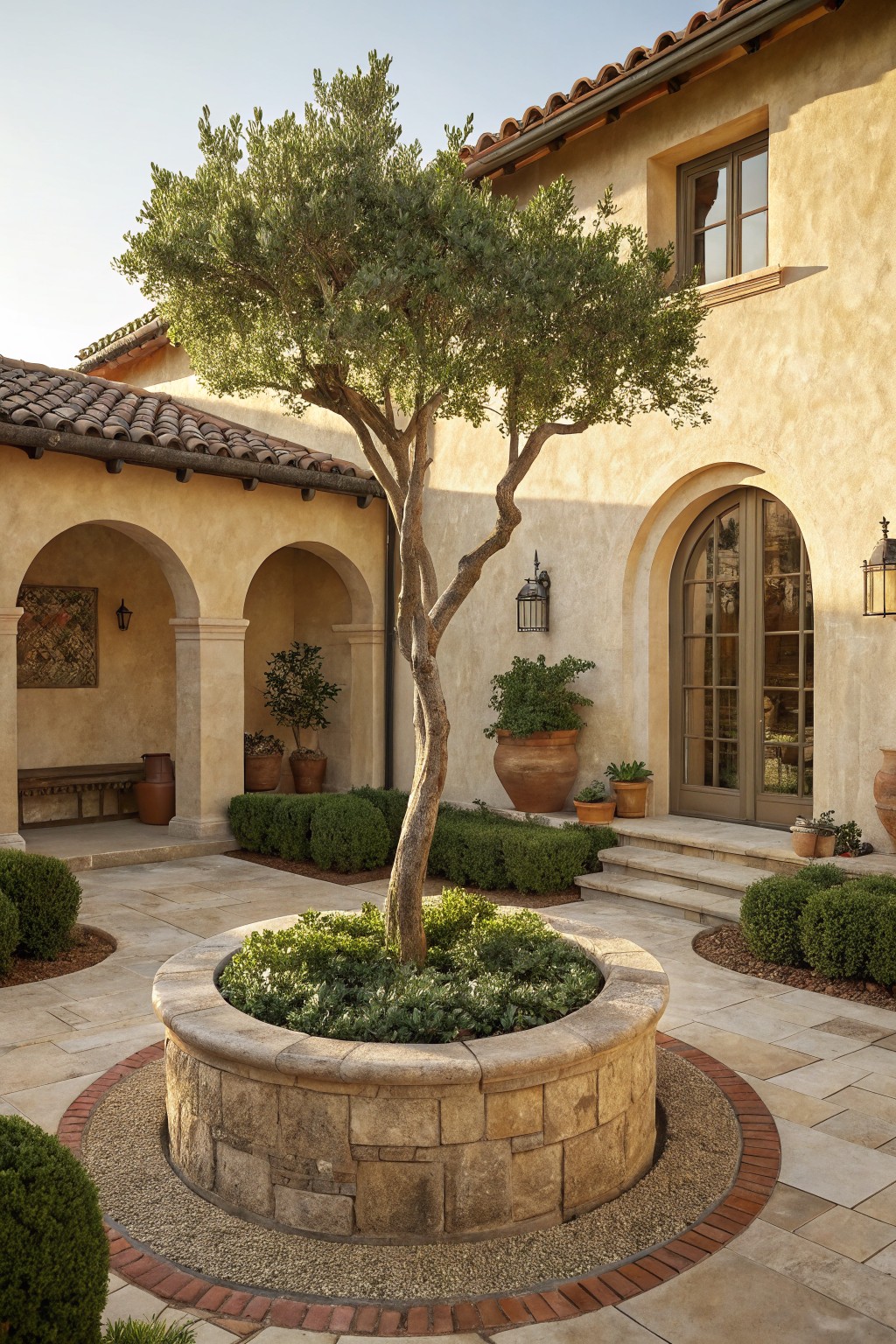
One simple way to add shade and focus to a front courtyard is planting a single olive tree in a round stone planter. The tree sits right in the middle on stone pavers, with its branches spreading out for dappled light. That setup pulls everything together around the tree, making the space feel organized and calm without much effort.
You can pull this off in a sunny entry area off the front of the house, especially if you have a stucco or tiled roof style. Build the planter from local limestone or whatever stone matches your place, then add gravel around the base and low boxwoods nearby. Keep the tree pruned lightly so it stays open for shade. Works best where foot traffic is light.
Rustic Stone Steps on a Slope

Big irregular stone steps like these make climbing a hillside feel easy and natural. They widen out toward the house, with a curving flagstone path weaving alongside. Tall aspen trees stand close by, offering shade on sunny days and framing the whole approach nicely. It’s a simple way to tie the yard right into the entry without forcing flat ground where there isn’t any.
This works best on wooded slopes or mountain lots, where you want low upkeep and a cabin vibe. Pick stones from nearby quarries to keep costs down and the look real. Add low plants along the edges for color, but let the trees do most of the shading. Skip it on flat yards, though. It needs that rise to shine.
Tree-Shaded Stone Path to the Entry
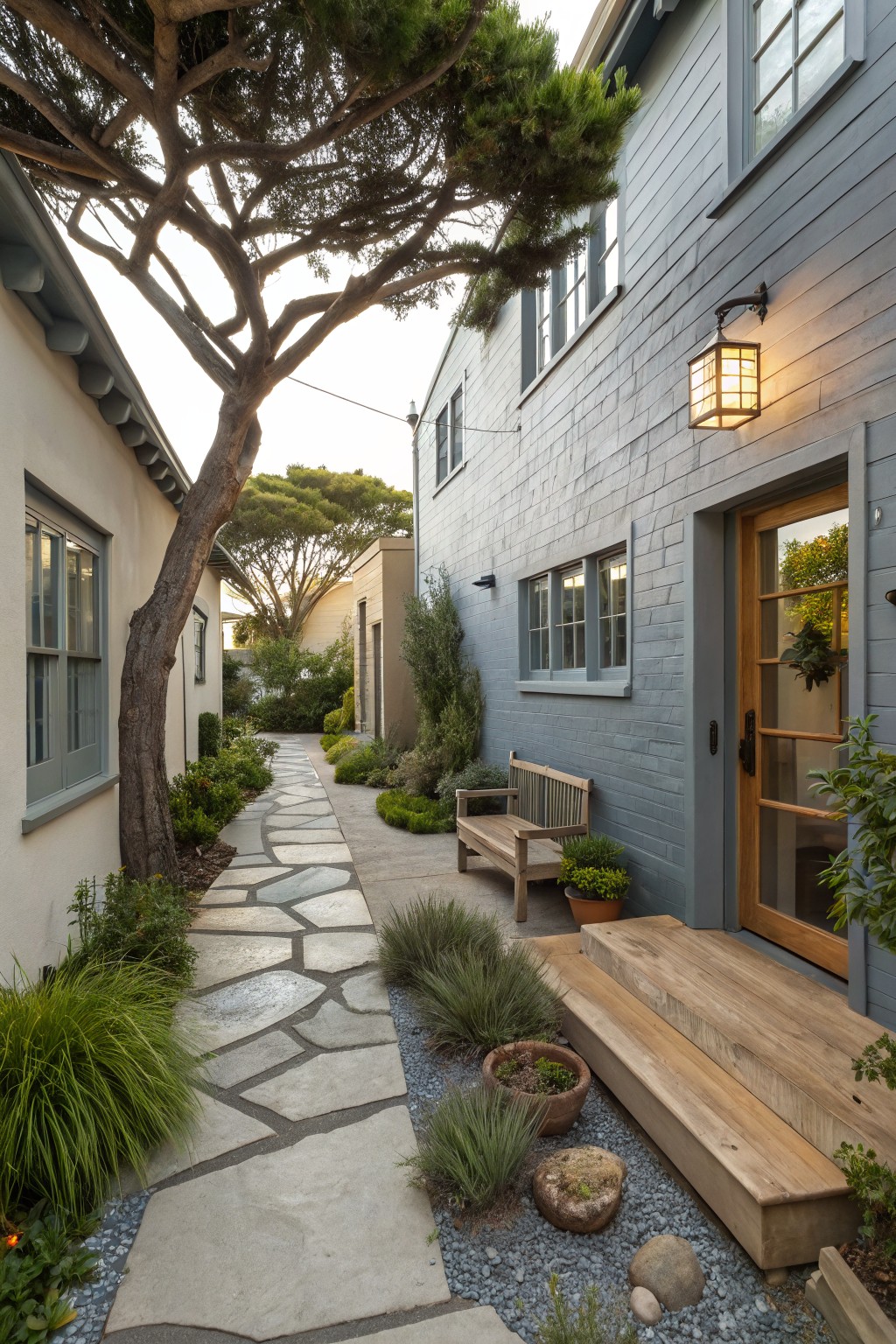
A mature pine tree arches right over this narrow walkway, dropping shade along the whole way to the front door. Uneven stone slabs make up the path, easy on the feet and letting water soak in without puddles. Low grasses and potted plants fill in the edges, keeping things green and calm without crowding the space.
This works best in tight front yards or alley-like approaches where you want shade without building anything fancy. Go for drought-friendly plants that hug the ground. Tuck in a wooden bench halfway for a rest spot. It suits coastal spots or older homes with simple siding… just make sure the tree roots won’t buckle your path over time.
Natural Shade from a Mature Tree
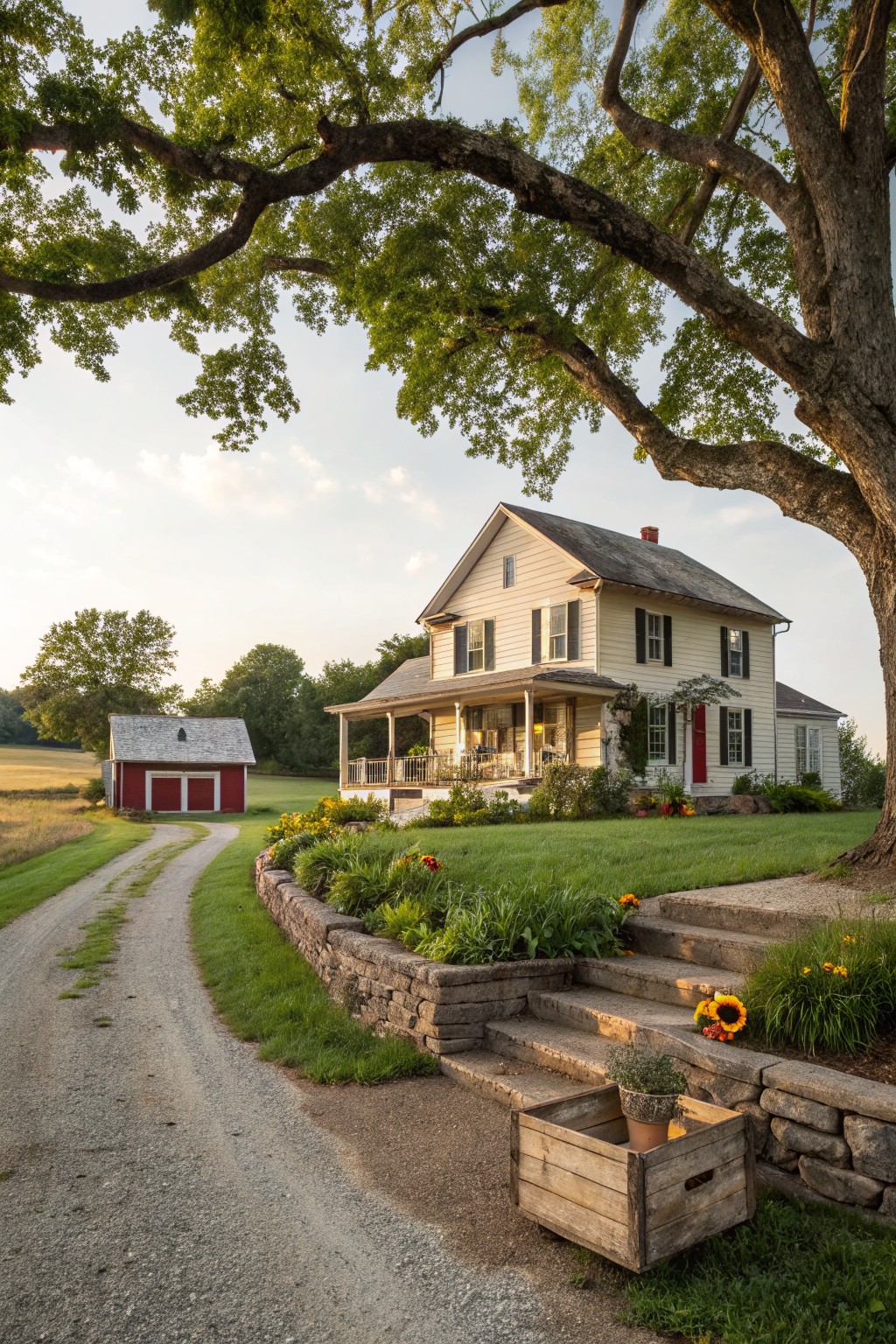
A big old tree like this one works wonders for front yard shade. Its wide branches stretch right over the house and driveway, keeping things cool without hiding the place. You get that dappled light filtering down, which feels just right on a warm day, and it ties the whole yard together nicely.
Look for properties with trees already in place, or start one young if you’re patient. This idea suits older farmhouses or country homes best, where the scale matches. Add stone steps and some flowers along the edge, like the sunflowers here, to lead folks right up to the porch.
Tree-Shaded Gravel Courtyard with Fountain
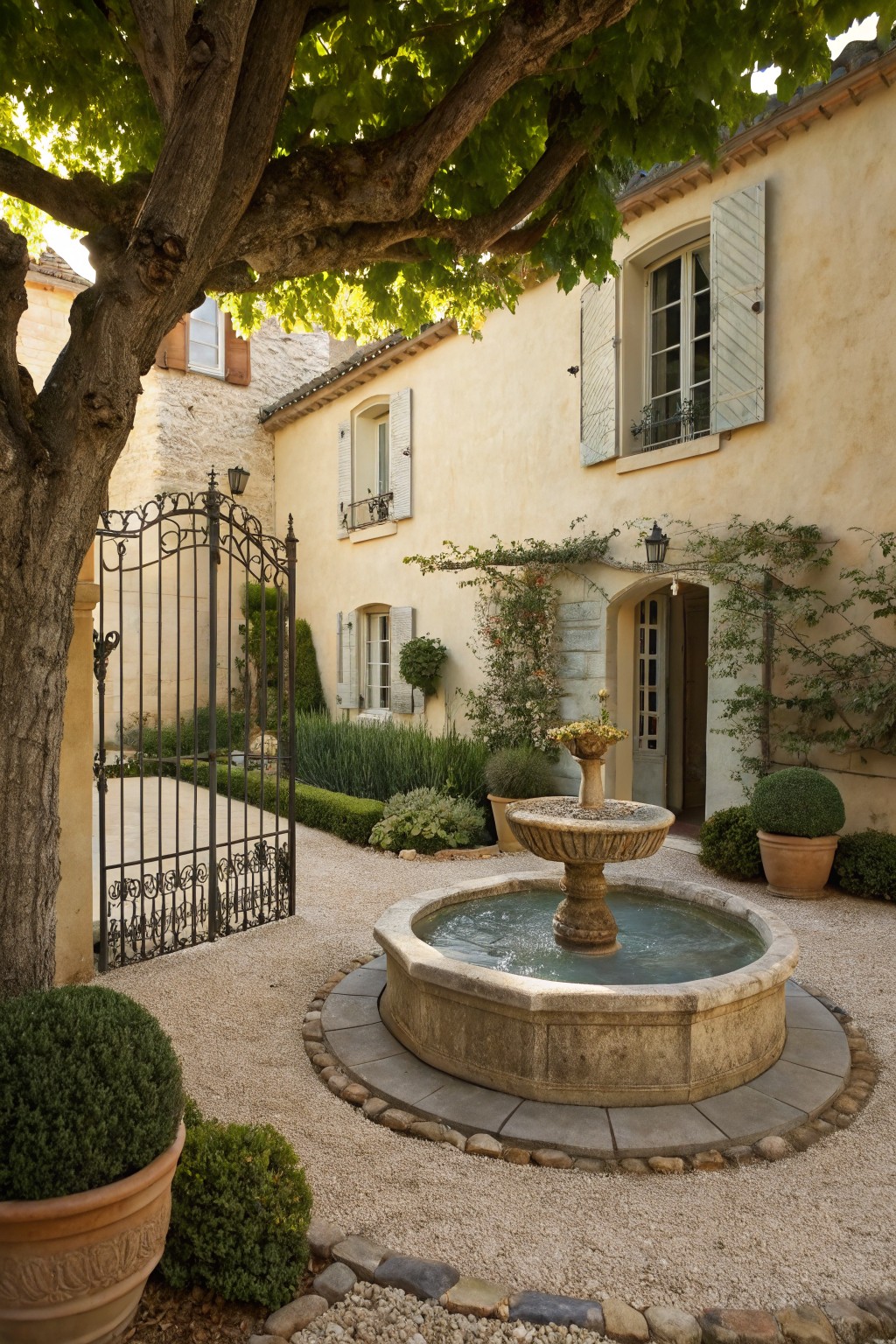
A big tree overhanging a gravel courtyard makes for a peaceful front entry spot. Here the mature shade tree drops dappled light on the central stone fountain and simple plantings like boxwoods in pots. It pulls the whole area together without needing grass or busy borders. Folks like how it stays cool in summer and looks put-together year round.
This works best in warmer spots or small front yards where you want low upkeep. Lay gravel over stone edging, add a fountain for water sound, then plant under the tree with tough stuff like lavender or clipped greens. Skip it if your tree drops too much mess… just pick one that fits your climate.
Front Walkway Shaded by Desert Tree
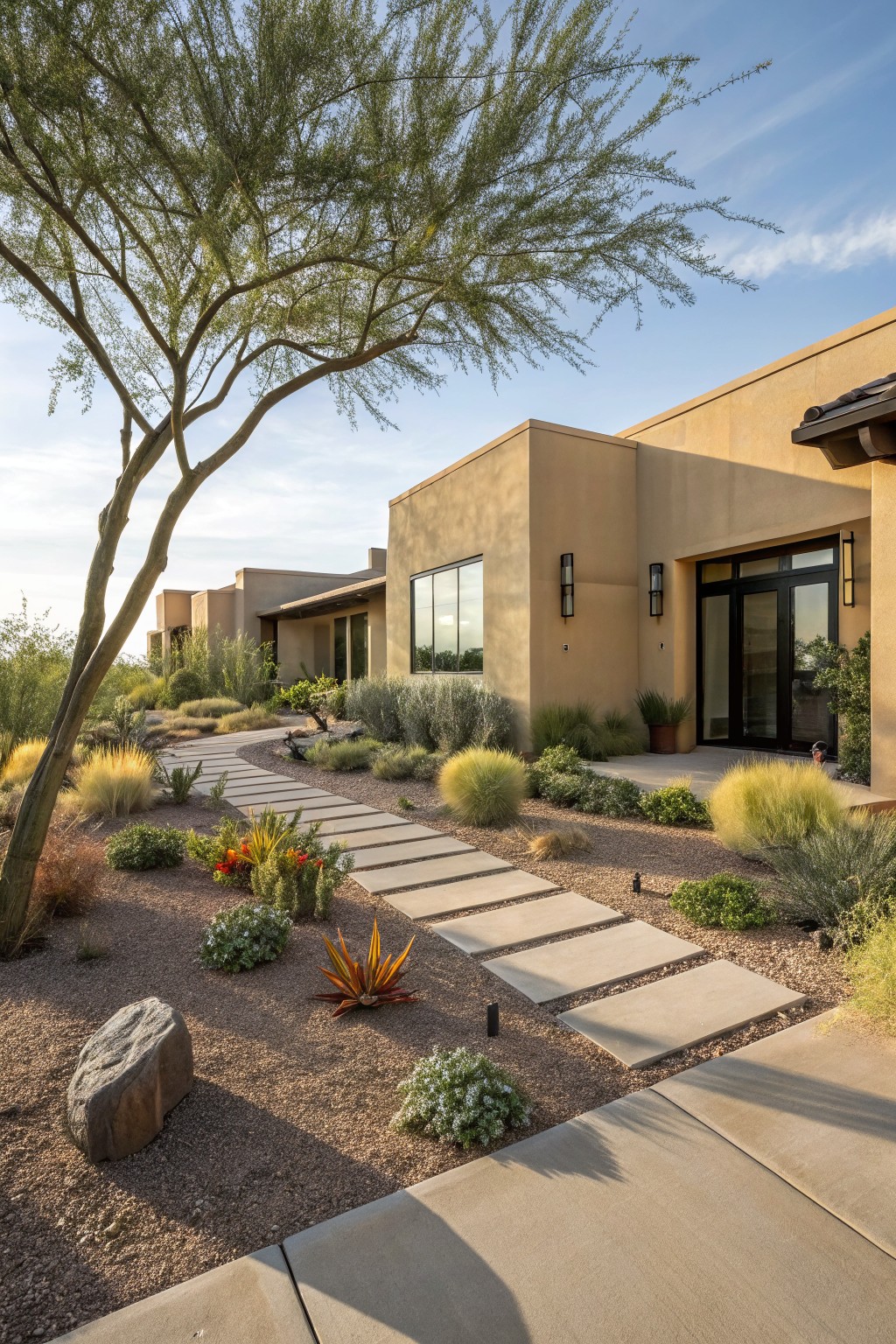
A large mesquite tree arches over this stone pathway, dropping natural shade exactly where you need it most on the way to the door. The feathery branches let dappled light through while blocking harsh sun, and it ties right into the low-water grasses and agaves lining the walk. Folks in hot spots love how it cools things off without extra structures.
Plant a native tree like mesquite to one side of your path so it grows over time into that perfect canopy. It suits modern desert homes or any dry yard aiming for easy care. Go with wide pavers in earth tones to echo the house, but trim branches if they block the entry too much.
Mature Tree Shade Over Garden Steps
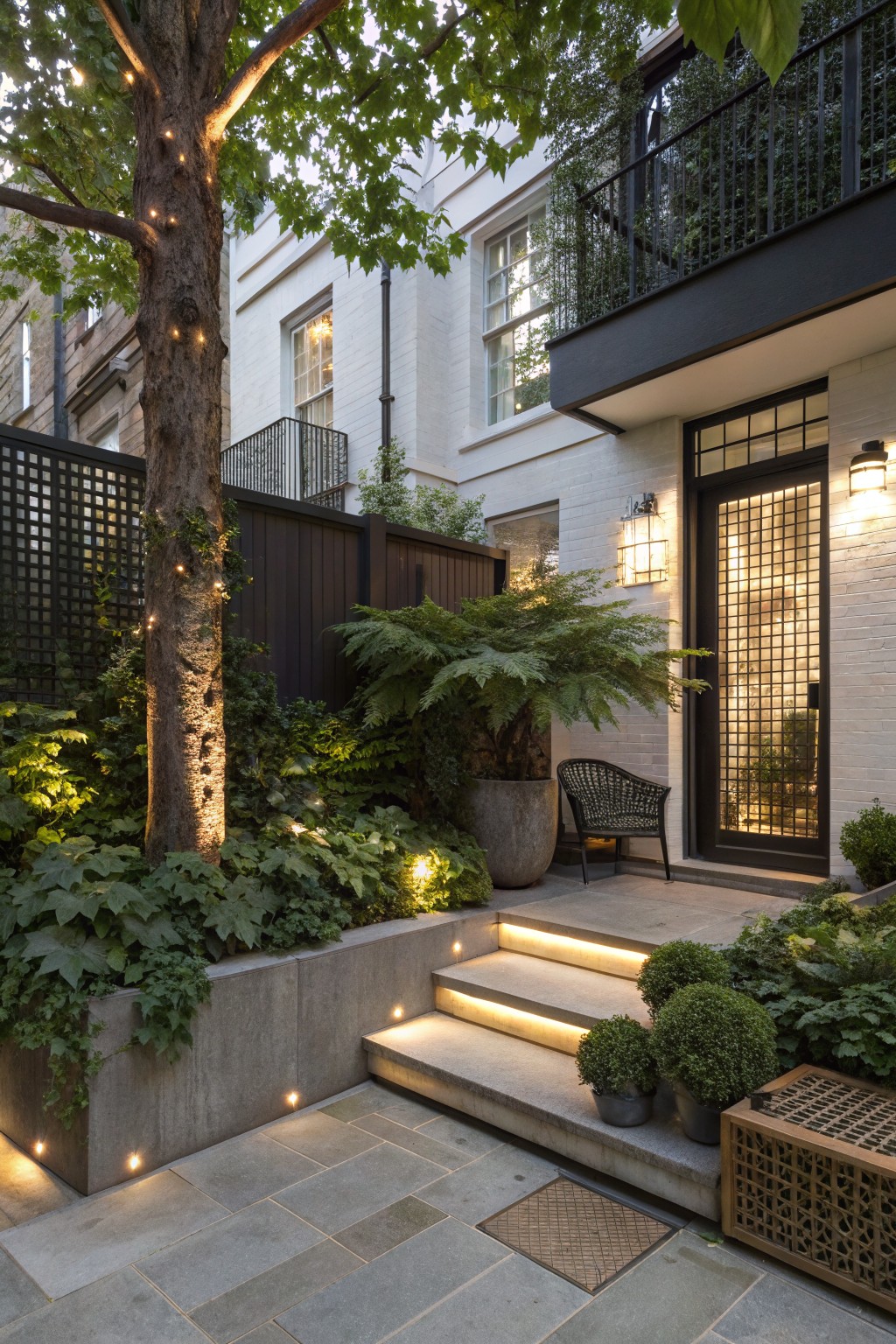
A big tree like this one works great for shading a path right up to your door. It gives that natural cover without blocking the whole view, and the way the branches drape over the steps makes the walk feel protected and calm. Folks love how it softens the hard edges of concrete and adds some height to pull the eye up.
You can pull this off in a front yard corner or along a side entry, especially if you’ve got room for the roots. Plant low ferns and climbers around the base to fill in, then add low lights along the steps for evenings. Skip it if your soil is too shallow, though. Keeps things simple and shaded.
Frequently Asked Questions
Q: How close should I plant shade trees to my house?
A: Keep them at least 15 to 20 feet away from your foundation to avoid root issues or branches scraping the roof. This gives roots room to spread without cracking sidewalks either. Measure from the trunk to your house wall.
Q: What if my front yard is tiny—will trees still work?
A: Absolutely, choose narrow growers like columnar hornbeams or Japanese maples. They deliver shade without eating up space. Tuck one near the driveway for that cozy feel.
Q: Which trees give shade the fastest?
A: Go with hybrid poplars or river birches—they shoot up 5 feet a year easy. Plant in spring so roots grab hold quick. Shade pops in 3 to 5 years tops.
Q: How much do I water new trees at first?
A: Soak the root ball deeply once a week for the first summer. Taper off as they settle in. Mulch around the base to hold moisture.
